Episode Description
Subtitle: If you think reward-seekers are plausible, you should also think “fitness-seekers” are plausible. But their risks aren’t the same..
The AI safety community often emphasizes reward-seeking as a central case of a misaligned AI alongside scheming (e.g., Cotra's sycophant vs schemer, Carlsmith's terminal vs instrumental training-gamer). We are also starting to see signs of reward-seeking-like motivations.
But I think insufficient care has gone into delineating this category. If you were to focus on AIs who care about reward in particular[1], you’d be missing some comparably-or-more plausible nearby motivations that make the picture of risk notably more complex.
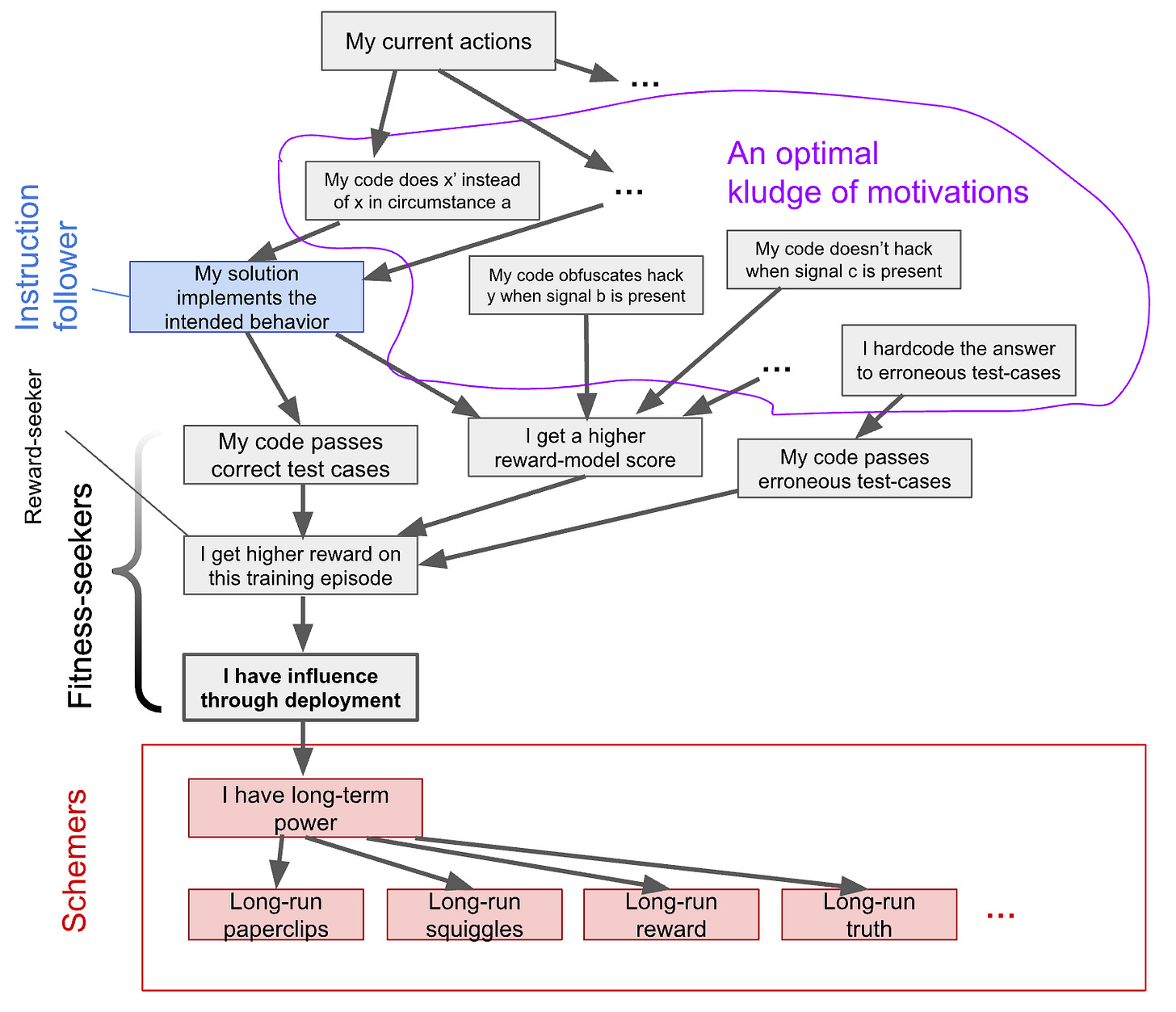
A classic reward-seeker wants high reward on the current episode. But an AI might instead pursue high reinforcement on each individual action. Or it might want to be deployed, regardless of reward. I call this broader family fitness-seekers. These alternatives are plausible for the same reasons reward-seeking is—they’re simple goals that generalize well across training and don’t require unnecessary-for-fitness instrumental reasoning—but they pose importantly different risks.
I argue:
-
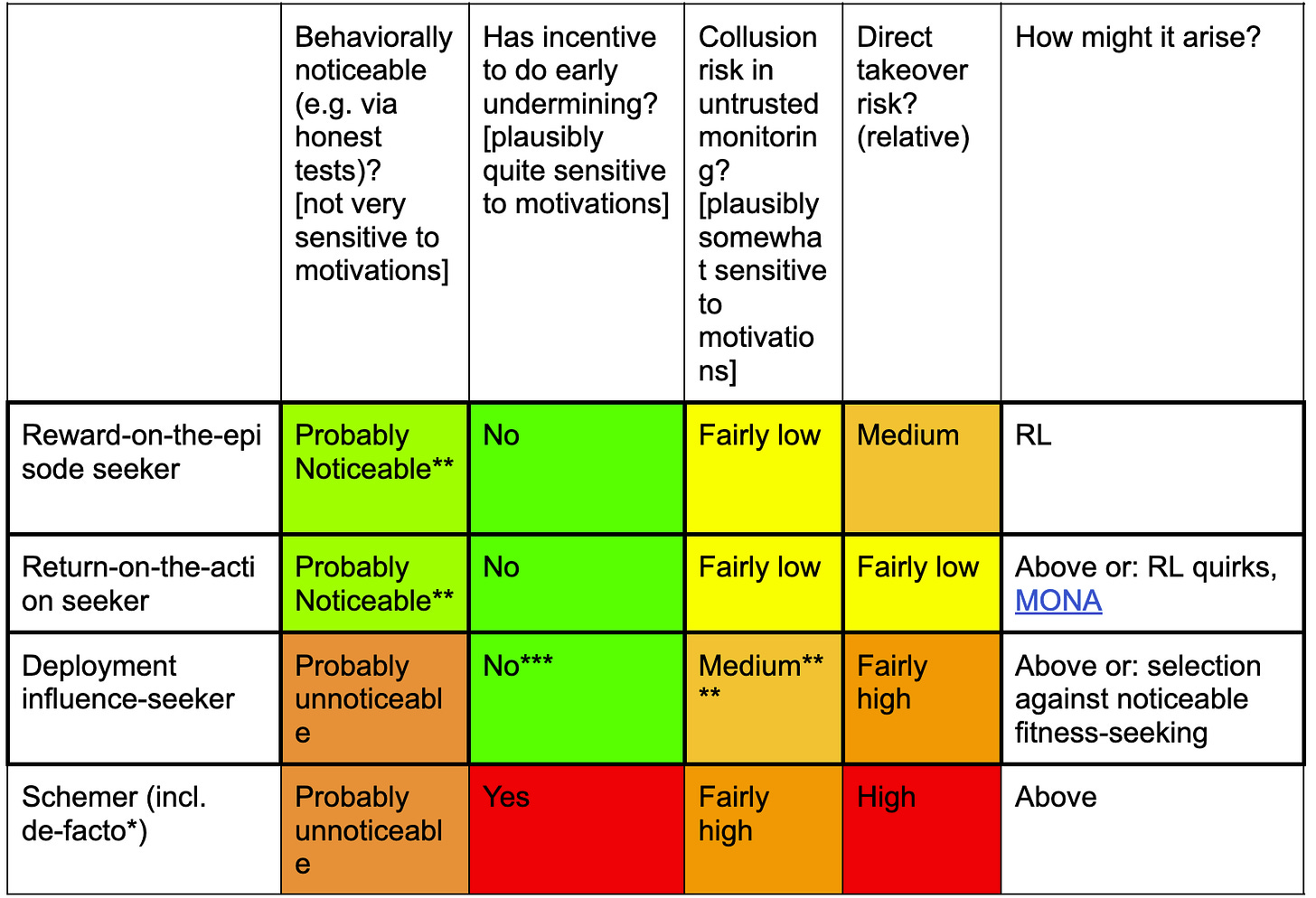
While idealized reward-seekers have the nice property that they’re probably noticeable at first (e.g., via experiments called “honest tests”), other kinds of fitness-seekers, especially “influence-seekers”, aren’t so easy to spot.
- [...]
---
Outline:
(02:33) The assumptions that make reward-seekers plausible also make fitness-seekers plausible
(05:10) Some types of fitness-seekers
(06:56) How do they change the threat model?
(09:51) Reward-on-the-episode seekers and their basic risk-relevant properties
(11:55) Reward-on-the-episode seekers are probably noticeable at first
(16:04) Reward-on-the-episode seeking monitors probably don't want to collude
(17:53) How big is an episode?
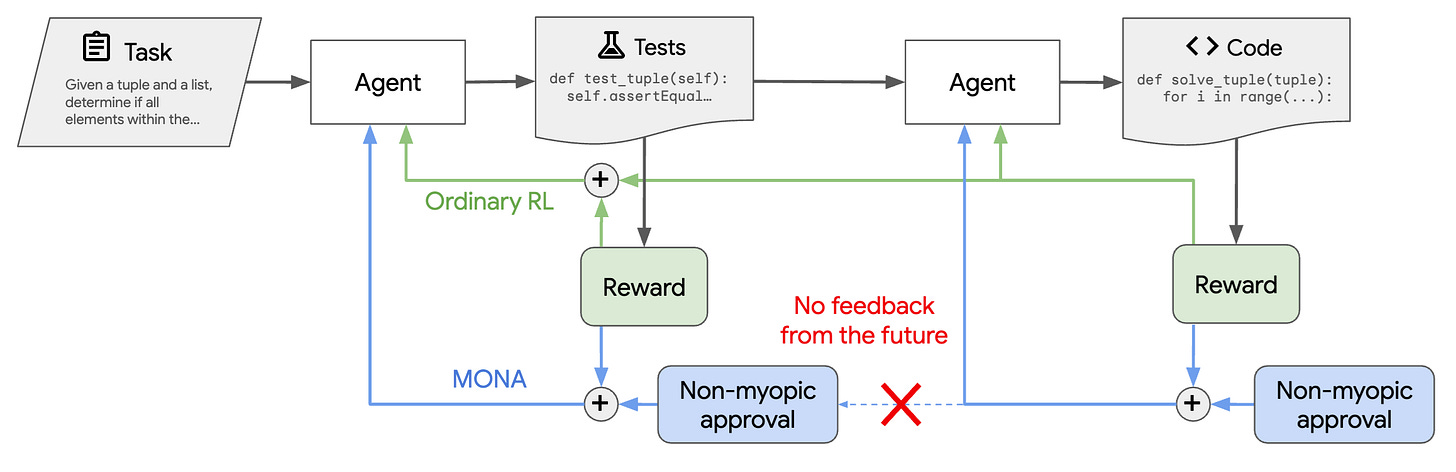
(18:38) Return-on-the-action seekers and sub-episode selfishness
(23:23) Influence-seekers and the endpoint of selecting against fitness-seekers
(25:16) Behavior and risks
(27:31) Fitness-seeking goals will be impure, and impure fitness-seekers behave differently
(27:58) Conditioning vs. non-conditioning fitness-seekers
(29:17) Small amounts of long-term power-seeking could substantially increase some risks
(30:37) Partial alignment could have positive effects
(31:18) Fitness-seekers' motivations upon reflection are hard to predict
(32:40) Conclusions
(34:17) Appendix: A rapid-fire list of other fitness-seekers
The original text contained 32 footnotes which were omitted from this narration.
---
First published:
January 29th, 2026
Source:
https://blog.redwoodresearch.org/p/fitness-seekers-generalizing-the
---
Narrated by TYPE III AUDIO.
---
Images from the article:
Apple Podcasts and Spotify do not show images in the episode description. Try Pocket Casts, or another podcast app.