Unwise Councils
Episode Transcript
Page 94: the Private Eye Podcast.
AndyAndy: Hello and welcome to another episode of Page 94.
My name's Andrew Hunter Murray, and I'm here in the Eye's studio with Helen Lewis, Adam MacQueen and Saba Salman.
We are here to discuss the news of the last couple of weeks.
And because it's Christmas party season, we're having a Christmas party special.
I haven't told you all this, but we're gonna be talking about Your Party.
We're gonna be talking about the Reform party, right?
And later on we're gonna be talking about various corporate parties who are buying each other.
AdamAdam: So I thought for a horrible moment it was gonna be like a normal Christmas party where everyone was gonna fall out with each other and, oh, no, hang on.
That is what it isn't it?
Yeah.
Yeah, yeah.
AndyAndy: Saba welcome to Page 94.
This is your first time on the show and you are, the new Tim aMinoguenal.
I'm, it seems what a billing anyone would see any difference at all?
you are rotten boroughs.
SabaSaba: I am rotten boroughs, me whole host of people behind the scenes Yeah.
cannot who we cannot name
AndyAndy: I saw something really exciting recently because I know you do a little Reform roundup section.
Given that Reform have just taken so many, councils across the country in the, local elections, I saw a really exciting headline saying they've managed to cut 331 million pounds of expenditure in total so far.
terrific news.
How have they done it?
SabaSaba: I think the answer is rhetoric over reality, Okay.
yes, Reform.
Reform has control of 10 local authorities.
they have been shedding counselors left, and center.
or Right.
we say, since they started and they've lost about 40 and rotten boroughs, has on behalf of the nation been keeping an eye on how many and why, the war on waste that you mentioned?
So there's 331 million pound, saving efficiency, that is their big mantra nationally and obviously local government, they've taken that upon themselves to prove to Nigel that it can be done .
When you actually drill down, this is complete guff.
Basically, to put it in technical terms.
Thank you.
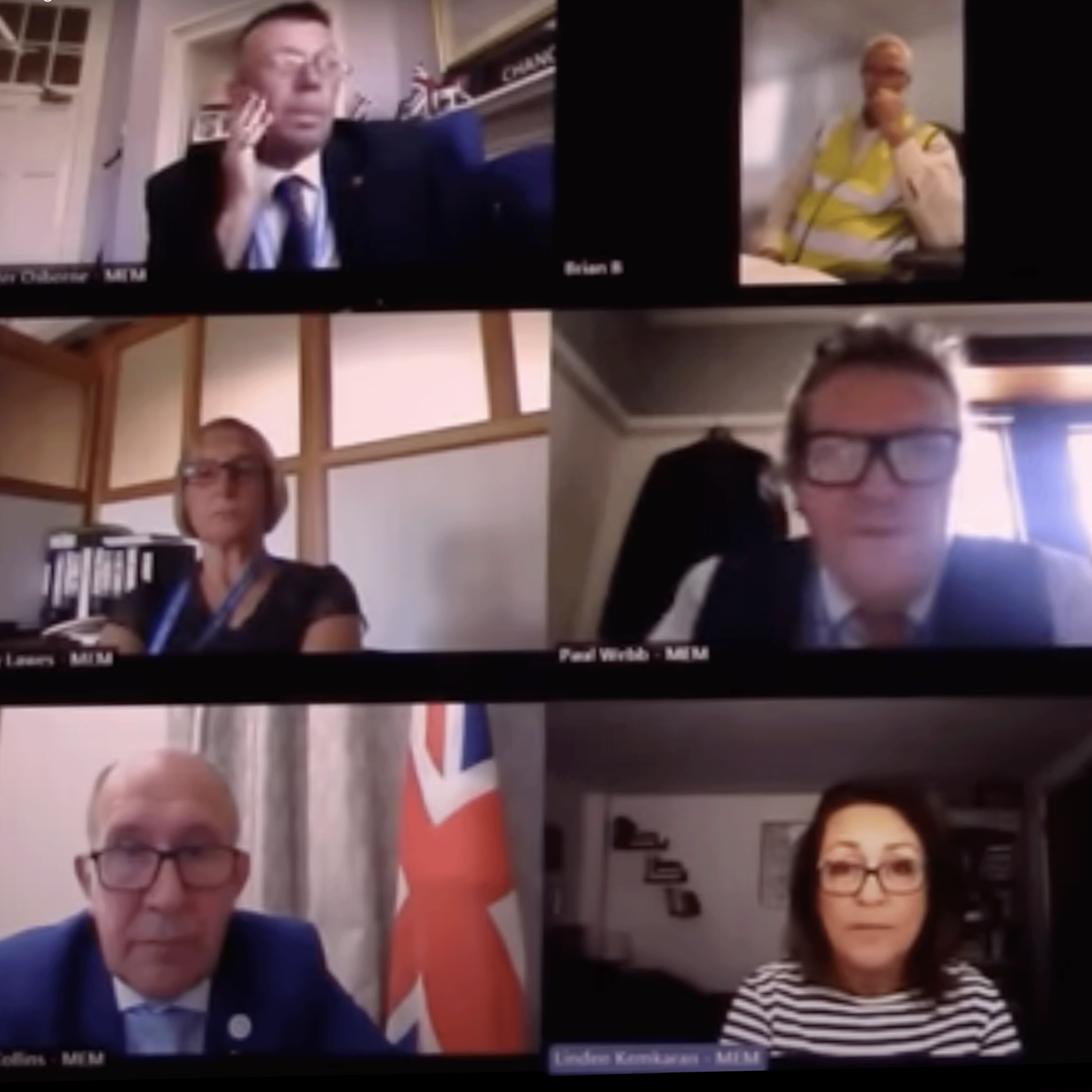
in the current issue, we, mention Kent and Kent is fascinating because it's the flagship borough.
the person in charge is Lyndon Kem Caron, who's a very firm leader and she's very big on taking Nigel's word to, the absolute Maximum.
So she's been doing her war on ways and she's claiming, she's saving tens of millions.
they've cut councilor's allowances, by about 5%, which is great.
Sounds, sounds brilliant, very generous.
but actually what they've done is they've used that money and they've put it into the community fund, which again is fabulous 'cause it's more money for local people.
So what's the commu- What is the community fund?
The, community fund is all local authorities have a fund, which counselors can use to give money to good causes.
So local projects, kids, animals, nice warm fluffy things.
Okay.
Important things.
but the point here is that by cutting council's allowances, which is a good thing, that could be an efficiency.
It's not because actually that money's being siphoned off into this.
Community fund.
So it's not a saving, I presume it's because they can't underspend that money.
Is that it?
As in they have to put it somewhere rather than They do.
local authorities, as any organization, you have a certain amount of money and you have to spend it within the year.
So I think as you get towards the end of the financial year, mm-hmm.
you are left with these pots of cash.
I'm not sure if that's the case in this Kent example.
I think it's more the case that it makes a great headline.
AdamAdam: Can I just ask a really basic question that where does the money come from?
Is it all from council tax?
Is there still some money that comes from central government?
to local government?
There is money that comes from central government, although successive governments have cut that.
so by and large, yes, it's from, council tax.
HelenHelen: Did Reform experience the thing which I think Adam, you predicted when they got all those councils, which is that they went in going, it's terrible, it's all being spent on putting the trans flag above the town hall.
And then they discovered, oh no, all the money's going on.
Adult social care.
Yes, I think that's absolutely right.
With Reform, they've come in guns blazing.
it's political earthquake, it's gonna be fabulous.
We're gonna do all this, we're gonna cut this, we're gonna, get rid of EDR 'cause it's so expensive.
and, we're going to, stop spending on special educational needs.
We're gonna stop, take money from adult.
Adult social care doesn't quite work like that because local authorities have, a duty to provide certain things and do certain things, Now, can I check There's been an accusation leveled against the BBC, that reformer targeting its counselors in particular by reporting on all of the counselors who are sacked or resign or, defect perhaps.
now are you doing the same thing?
they've said, the, BB reporting on 90% of reform counselors who leave in some way or another, and actually only about 15% of, labor or conservative counselors doing the same.
I think there is a balance between a focus on, this particular group of individuals because they have stormed in and they are presenting some wild and wacky ideas, and you have to hold into account.
In a balanced way.
We can't do the same thing with all the other parties simply because we actually do that in the rest of the Borough's page.
Isn't it also the fact that because reform have only got a handful of mps and have never formed a government in any of their various farages iterations, this has been the first real chance to see what the party makeup is like and also how the they handle, actual government responsibility in the same way that the, green control cancel and brighten for a long time got, not an excessive amount of scrutiny, but a higher level of scrutiny because this was a chance to see people, for people to see what the greens would be like in government, which they weren't gonna be able to do at the national level.
So if reform are currently top of the polls, which they have been on and off for months now, Nigel Farage is auditioning to be the next Prime Minister, and this is our chance to see what are his grand
AdamAdam: troops Yeah.
It's quite Interesting.
I'm pre the last election the complaint was constantly, oh, reform, don't get the coverage they ought to.
And actually there's an awful lot of support out for them.
But,
HelenHelen: I think there's definitely something about, particularly
SabaSaba: with, councils like, Kent being the flagship one, that this is, the party of, government potentially.
so there you have it if this is what they're doing on a local level with infighting, conduct problems, the, leader effectively firing, a bunch of her councilors that was Lyndon Kem,
AndyAndy: car.
Yes.
SabaSaba: Kent.
they had 57 counselors elected.
there's now only 48 left, so nine have gone.
So my highly analytical maths
AdamAdam: here tells me that if you use that
SabaSaba: rate, they'd all be gone in about three years,
HelenHelen: But that has always been the problem with Nigel Farage's parties, right?
That they are always the Nigel Farage show.
And when PP had a load of meps, the turnover rate among them was extraordinarily high, far higher than it was for the, what were then the mainstream parties of labor and Conservatives
AndyAndy: But he gains them as well.
he's operating a one in one out
HelenHelen: He's like a nightclub bouncer.
Yes.
And it's operating a situation where there is a real cult of leadership there.
which the Kent leader a copycat example of that.
She's, she has this sort of authority, she has the authority, if anyone remembers Jackie Weaver from of course,
AdamAdam: years ago.
She definitely
HelenHelen: has the authority.
She wants the authority
SabaSaba: and if she does not get that authority.
She boots you out.
that is where some of those counselors, some of the reasons that they've left, so those nine that I mentioned the majority have been sacked, but others have been, suspended.
and there's a few that have left of their own volition.
and some of those have done so because they don't.
Agree with that, sort of leadership cult.
AndyAndy: I was gonna ask if you have other favorite councils or other especially interesting
HelenHelen: that have cropped up
AdamAdam: your first several weeks.
Doesn't everyone have a favorite local authority?
HelenHelen: No, it's weird.
I dunno.
no, Richard Brooks doesn't.
Richard Brooks hast side.
Like we, we can, I think the thing with Rotten, are
AndyAndy: talking about reform now No, I'm in general.
So in general, I think
SabaSaba: really difficult to pick a, favorite or, worse because, rotten boroughs runs a whole range of cozy cronyism, bad conduct.
Huge amounts of money being spent.
I think one of my recent favorites was over in Northern Ireland,
AdamAdam: so this
SabaSaba: Byrne and Castle Ray, it's, a borough northern Ireland.
And, this is a typical, example of, bad conduct.
So this is a case where a counselor called Gary Hines, was in a council meeting and he wanted to talk about a housing issue.
And the chief exec guy called David Burns, said, no, could you wait?
Gary Hines was not happy.
They had a bit of a row, bit of a verbal, disagreement, which ended with Gary Hines, the counselor spinning the chair of the chief executive.
In a bit of a pissy fit.
that would be bad
AndyAndy: enough.
But then on top of that, It got reported to the local government ombudsman over there, the public sector ombudsman, Okay.
rightly But that cost money and also got, reported to naca.
So the police
SabaSaba: were investigating
AndyAndy: this is council taxpayer's
AdamAdam: money.
Someone being spun on a chair, someone being spun on a chair.
Now, And I put it to you.
Can you imagine if that happened in our office?
So there's dissent.
We're in the editorial conference meeting.
Sure.
Our chairs would fall apart.
I was gonna say, they'd just go off.
HelenHelen: we've avoided that problem.
AdamAdam: The Chairs would fall
HelenHelen: apart, but it's just not what you do.
And, I think that is the serious point and why I love Ron Burrows because
SabaSaba: underneath all of these allegedly silly stories, actually, there's a serious point to be made, which is that these are elected members.
public monies, public sector money.
AndyAndy: Yeah.
SabaSaba: that's being wasted.
And these are people who are held to account except they behave like
AndyAndy: this.
Can I ask you how about Yes.
Councilors themselves are not paid tremendously well.
You do see, officers and executives at councils receiving, substantial payments and, payouts, and that's all covered in rotten borough's loads.
why do councilors matter if one, if the, direction of party ownership or if the overall party ownership changes or if it's in no overall control, what difference does that make to me as a resident?
my bins are still gonna be collected, not live from Birmingham.
Andy.
Good Point
SabaSaba: You
AndyAndy: Having any bins collected there.
But is that to do with the makeup of the council or is it, No.
so why do councils matter?
Yeah.
SabaSaba: in a democracy, you need people based in communities who know their neighborhoods, and who are made up of lots of different political parties.
So you have that, range of representation.
and their function is completely different to the offices, many of whom are on absolutely massive fat cat salaries.
the, people that we write about who are on their salaries, they are entitled to that money because the rules dictate they can earn that amount of money.
It just seems to most normal people, absolutely outrageous that someone gets paid, grand and a half a day, to come in to an authority that is struggling financially, Is in deficit, has borrowed hundreds of thousands of money from the government or been handed out, funding to help it survive.
And on top of that, you're then paying
AndyAndy: someone a grand and a half a day.
Yeah.
But it just, it feels so much So many of the things they might have made decisions about in the past or had control over, they now don't, Which is why you do get changes of party happening and then people coming in and saying, oh, we're spending 75% of our budget on adult and children's social care.
Yeah.
AdamAdam: I think one of the problems, both for reform coming in was the assumption that they would be able to make these sort of swing and cuts and things and then finding out how little actually, local authorities do control.
And how much of it is with national government.
But I think also there's a sort of democratic problem in that most, council tax taxpayers and voters also don't understand whose responsibility is what.
and it tends to get used in the same way that sort of elections to the, European Parliament did as well as a sort of protest vote and a judgment on the current national government rather than actually, this is a case where, you can make a difference for the community.
You can change things that you will actually see on the ground quite quickly.
Yeah, and I think just to go back to reform on that, I think what's interesting with reform is that a lot of these new councils who come in are very much towing the national party line, which is that, hard on immigration.
net zero when the council and that.
But actually that is not relevant on the local level because councils don.
control immigration.
have nothing to do with the small votes, in terms of stopping people from coming in.
So I think that was a big wake up call, both to them and to voters again, Absolutely.
where they realized that actually they don't have the power to shut down these asylum hotels, even if they are in their, in, in their local area.
That's just not a absolutely.
it's a perfect storm of, the elected members not understanding what the role is.
having no knowledge, no experience of local government or, any kind of representing any kind of constituency.
And that disconnect between what's happening on a national policy level and, a local policy level in terms of what.
Can actually do.
and that changes as well, doesn't It there, there's already, a division between borough councils and county councils with different responsibilities, for different things.
A lot of that is being changed.
So there were a lot of the local elections weren't held last year because they're being turned into big mayoralties over when I lived down in, Sussex and we, were about to be turned into a mayor for the entirety of both East and West Sussex, which seems like this enormous ungainly area.
Certainly we, you're taking it away from sort of Hastings Borough Council where island, which is very, small and you'd think more manageable area that we are gonna be bundled in with sort of Chichester and Gatwick and Haywood's Heath and things.
That's right.
It just seems to be,
HelenHelen: not Chichester Gatwick.
AndyAndy: and not Gatwick
AdamAdam: it was awful.
People in Hayward's Heath.
Yeah.
Speak a different
HelenHelen: language.
They love doing that though, don't
AdamAdam: Adam, You need to, involve everyone in this.
I think you know that, this LGR thing, local government reorganization, this
HelenHelen: is where we're
AdamAdam: dividing up.
local authorities in a different way.
And it's meant to be efficient and, it's meant to save money.
The problem is not only that I think most people don't understand what
HelenHelen: it is,
AdamAdam: why it's important, but then you've got the fighting in between different authorities because, we don't wanna go with them 'cause they are massively in deficit and officers and elected members at loggerheads about how this should be done.
And there was The sort of first wave of mayors, wasn't there, the sort of Ken Livingstone wave and then they were brought in.
Bristol has already rejected the idea.
They had a mayor for a while, didn't they?
Yes, They've decided to get rid of not only him.
the con the concept of a mayor completely, isn't they?
That's quite.
And for very good reason.
And if you want to know about that, look back at Rotten Boroughs and what we've been doing in,
HelenHelen: Bristol and then didn't, I wanna say Doncaster elect, a football
AdamAdam: mascot.
That was a monkey.
HelenHelen: Angus The monkey Angus.
The monkey,
AdamAdam: Yeah.
Yeah.
And then, yeah, who turned out to be rather good at it.
Didn't he?
Actually, he didn't wear the monkey costume the whole time he was
HelenHelen: mayor?
I don't think, Oh okay.
AdamAdam: But It's interesting.
to think back of that first wave of mayors.
You're right.
Under the Blair government.
It was very much the kind of shiny new thing.
HelenHelen: And it's,
SabaSaba: you
AdamAdam: relatively speaking, quite a sexy thing in
HelenHelen: local government because, we
AdamAdam: don't have mayors.
It's quite exciting.
You've got these, and there's, people are fighting and there's promotion, there's campaigns, and then you compare it to what's actually, going on with what these people have done or not done.
Yeah, I, to, to, expand on my point, that I'm not just a West Sussex phobe.
The, point then seemed to be devolution right down to kinda city level.
And now it seems to have moved into these sort of macro authorities who are gonna take on enormous kind of areas.
And, also the other thing that we, that's common is going as well is police and crime commissioners, isn't it?
Which is brought in by the camera government never caught on no one like those.
And they're off now as well, aren't they?
And that's it.
That's a huge thing.
So I think there's, about 40 of these commissioners, police fir and crime commissioners or police commissions depending where you are.
and they have been, said to be a failed experiment.
HelenHelen: They were on about, they weren't quite a lot of money, weren't
AdamAdam: they?
Yes.
So some of them, I think the average is about 76,000 pounds.
but it goes up from that.
Some of them are part-time, they've got deputies
SabaSaba: They, These commissioners come in and they scrutinize what's going on, with the police now we have got a story, coming up, which of course I can't go into because you have to buy magazine to read it.
but in Northamptonshire, for example, there's been all sorts of problems with the, commissioner there.
the previous commissioner, got sack.
New commissioner came in and has been trying to turn around what the police, are doing.
Not quite gone to plan.
HelenHelen: I guess notoriously reforming the police is very difficult.
Even if you're Theresa man, you're coming in as prime Minister or you're s kh trying to sack the head of the Met.
these are really difficult things.
The idea that someone could bowl in, and go, lad, I've got some great ideas and, be listened to.
I, think I was quite a ambitious from the start.
Yeah.
and I think there's also a cultural thing going on where you've got a lot
SabaSaba: the commissioners are ex elected members.
they're coming in to oversee an organization which is very different culturally.
there's a clash there.
AdamAdam: One of the issues I had with that were right the outset was it immediately divided along party political lines that you were voting for either your conservative plea and crime commission or your labor or whatever.
And in a way, that's I think a problem with a lot of local government and there's no actual real need for national parties to be involved in any of it.
Is there, would independent people who are concerned about local issues not be better than possibly party appic who are looking to go onto the House of Commons later in that career?
And, funnily enough, a lot of the reform counselors who've quit, or been suspended or expelled are, becoming independent.
so yes, a lot of, local authorities have these independent, or independent labor.
so you're not really aligned with the national, but you politically and ethically, you are left leaning, so you are independent labor.
and maybe that's the answer.
Maybe all these councils we write about should be independent, and therefore not be tied to their national political party lines.
I dunno.
Perhaps, we've solved the whole problem there.
We are, right?
We're sorted.
AndyAndy: right
SabaSaba: to
AdamAdam: Early days.
AndyAndy: in the next year.
SabaSaba: issue.
AdamAdam: Excellent.
Now for the next
HelenHelen: section of today's show, we're going to talk about a party that doesn't have
AdamAdam: a leader
HelenHelen: or not
AdamAdam: an effective leader.
And it doesn't narrow it down much.
I know.
HelenHelen: So let's, zero in and say, we're talking
AdamAdam: about two particular parties, which I think
HelenHelen: are very closely linked, talking about the Democratic Party in the USA.
Yes.
And we're talking about your party in the uk.
but these are parties which don't have leaders.
Your party have
AdamAdam: just had their first
HelenHelen: conference and they've voted not to have one single leader.
Yes.
By the cursed ratio.
We've almost pretty much 52 to 48.
Really?
Yeah.
It was really close to that.
And then
AndyAndy: the other thing is that the Democratic party in the States doesn't have a leader.
And I've always found it baffling.
I've never understood.
So you've got your man in the White House over here and.
who
HelenHelen: that's, that is the down one of many downsides, I would say, to a presidential system.
The other massive one, of course, being different from a prime ministerial system being that there's no incentive for the party in government to get rid of a doff leader.
Whereas what happens in a Prime Minister, they go, thank you Liz Trusts, but you've delighted us long enough.
and that's that can't happen in the same way in, in the States, even though even now in the remaking of the Republican party, still the party's still full of republicans who are deeply unhappy about his leadership.
But, sorry, labor the point.
Yeah.
Why does a presidential system mean you can't have some kind of party leader,
AdamAdam: even in a leader of the opposition,
HelenHelen: essentially.
Yeah.
But what, official position would they hold?
Because that's the thing that constitutionally, we have her leader, now his Majesty's loyal position.
They are in the commons.
They get the questions that prime minister's questions, like there is a kind of constitutional role for them.
There's no version of that in America.
There are, obviously, there's the senate and house minority leaders as they are at the moment.
So the, they're the most senior Democrats in the legislature, but they've got three branches of government and no one, there's no executive version of them.
Although every, what's essentially happened is that people have tried to make themselves into that person through
AdamAdam: the medium of podcasts.
How's
HelenHelen: going?
actually not too bad.
as it goes so.
Obviously a very tough and rough defeat for, Kamala Harris at the last election.
She's vibing round.
She was thought to be running for governor of California, but has declined to do that.
Tim Waltz, her running mate, is governor of Minnesota.
He's currently engaged in an ongoing feud
AdamAdam: with Donald Trump, but then
HelenHelen: who isn't?
AndyAndy: Aren't we all?
HelenHelen: I really do not rate his chances of, running again for a number of different reasons.
you have these kind of bigger figures emerging.
Mostly governors actually.
So they, what people were for time, very excited about Gretchen Whitmer in Michigan.
Gavin Newsom in California has just come off this big victory of redistricting, which we can talk about.
I know you're excited about the gerrymander.
but also people like Pete Buttigieg who served in, Biden's cabinet.
he was Secretary of Transportation.
He's, done a podcast around, essentially to pop up.
But, JB Pritzker, the governor of Illinois is another example of a governor who is having profile raising battles with, Trump.
So that's what a lot of the Democratic governors are doing, is trying to turn themselves into the leader of the opposition by being the most effective anti-Trump voice.
Both in their own states and also
AdamAdam: on, on, on tv.
Are they doing that though, specifically to take a run at being, at being presidential candidate
HelenHelen: next time round?
Because that is who can say Adam?
they're not announcing, they're not running.
AdamAdam: Who can, say what the ambitions of It's is it not, I'm like, I'm, I do find it slightly bizarre.
I'm in a situation here of arguing for a system of Kemi Bock.
But having no effective leader of the opposition is quite weird, isn't it?
we don't, we, don't get a single figure who the party un unites behind until the next round of president's primaries, which is two,
HelenHelen: three years away.
Yeah, no, they'll be a, after the midterms it'll begin to, the pack will begin to mention that's November next year.
But is that where they have to have some bloody long choosing the, candidate so that they can actually show their people to the electorate and say, look, these are your potential.
Yeah, the party, there is a real idea that the primary season is about really lots of people, the core, various core votes for the parties getting their say and so one of the thing, one of the big questions about next time is Pete, but is running.
He hasn't announced it, but everyone knows it is he's gay, married to a guy, got two adopted kids.
There is a question over whether the democratic base, which is churchgoing, black Americans, often in southern states are ready to vote for a, gay candidate.
And so people are very tense about him running.
But in 2008, people were very tense about the idea about whether or not white Americans would vote for a black Democrat.
So one thing that you do is have that primary season, and Barack Obama emerged through that primary season as just being the, obvious superstar.
And therefore people felt okay about sending him into the, general.
They didn't feel it was such a massive risk because he had proved himself through that long audition process.
is it not a big disadvantage to whichever party is not in office at
AdamAdam: the moment
HelenHelen: that you have?
AdamAdam: a
HelenHelen: who is very well known and most of the electorate are not paying a huge amount of attention to politics, but.
AdamAdam: but
HelenHelen: they, will know who the president.
is.
Yeah.
That's why they call it the bully pulpit.
That's the, that is the great, benefit of the American presidency is you get to just be the one person who's in charge and there's no one with an equivalent stature.
And quite notoriously, when you have the first president versus contender debate, that contender gets a bump in their polling ratings because for the first time they're on stage with the president.
They move up from this sort of amorphous realm of opposition to being like president versus would be president, the status increases.
and that's often about that.
when you narrow it down to that one person who is the nominee from the other party, that's when they get secret service protection, for example.
There is a, just a, feeling at that point.
They ascend.
Yeah.
but this is compounded at the moment due the fact that the Republicans control the presidency, but also the House and the Senate.
So they've got the, trifecta to use the, oh, I'm gonna use one of my many nobby American words in this.
the midterms are such a big event that Trump has been very keen to consolidate his power.
And basically if they lose control of the house of the Senate in the midterms, that means that the opposition party gets to control.
The legislative agenda.
So what gets voted on, they get to be in charge of the committees, which might do things like investigate some of the actions of Donald J.
Trump, Esquire, that sort of thing.
So he's very keen to retain control.
And so he's been pushing Republican states, red states to change their congressional maps.
And you do that by basically taking a swing district and finding a bit of red and cobbling that on the side.
That's the, gerrymander.
Okay.
However, this has gone not as well as he thought, and I thought we could just take a moment to appreciate.
I love it when someone does something that's really ethically wrong and then it backfires on them and this one looks like it might do that.
So it started really in, in Texas.
They, ma made another five seats that were really much more likely to swing to the Republicans there, even though the Democrats all left the state for the summer to try and avoid having to vote on it.
But that has been, stayed by a federal court basically because someone in the Department of Justice, one Trump's appointees, wrote a letter saying, we're doing this on racial terms.
and of course one of the things that's very much not allowed is to do gerrymanders, to reduce the power of minority voters.
legal.
Maybe we're under the Voting Rights Act, we're against that.
And so she probably should not have put that in writing at the moment.
The, justice Alito on the Supreme Court has let that map go forward for now, but not nailed on that will happen.
So that's five seats the Republicans were hoping to have and then what happened in response to that is California are very blue state.
When.
AdamAdam: well.
HelenHelen: See how you like Jerry.
You can do well.
The Gerry becomes the Gerry Bandee, and they've come up with a new map that adds five Democratic leaning seats.
And being California, they
AdamAdam: had to vote on this.
HelenHelen: They love a ballot measure.
So Gavin Newsom, who very much does want to be president, put this to the people.
The only people opposing it really was Arnie, who was very in favor of the independent redistricting, but he came out and said, terminate the gerrymander, and then didn't really do any other campaigning.
So Gavin Newsom won.
And so sure enough, you're in a situation where the Texas one might not go through the California one.
Definitely has gone through.
Then places like Indiana, Donald Trump is massively pressuring the lawmakers there.
But I thought this was an interesting information point.
There's a, an Indiana state, senator who responded very badly to Trump, sent a true social post over Thanksgiving in which he Kamala Harris's running mate.
Tim was, he said he was retarded 'cause of all the things that he was doing in Minnesota.
And this guy did a tweet that said, I've got a daughter with Down syndrome.
Words have consequences.
I will be voting no on the gerrymander.
And this is very rare, the Republican party, and particularly people at lower levels who don't want to get fire bombed.
people in Indiana talking about their threats, their physical safety don't de oppose Donald Trump.
You get primaried by MAGA people or you get threats to your office and your home.
And this was interesting to me that this guy said, oh, I'm sorry, this.
there are still some lines in American politics.
We don't use language like that.
I wonder if it's the first cracks beginning to show, and a lot of people thinking we're gonna get walloped in the midterms, the incumbent party traditionally does.
And at some point, unless he really does run for a third term, we're looking forward to this post-Trump future.
six months, a year ago, it looked completely hopeless for the Democrats, but this is the kind of thermostatic equilibrium of politics.
so when asked last month, who is the Democrats leader?
AdamAdam: do you know who won?
AndyAndy: Have
HelenHelen: Have
AdamAdam: a guess.
HelenHelen: I would've, I, I'd say Newsom Governor.
Newsom, governor of California has the most name recognition.
Nancy Pelosi.
Barack Obama, Oprah, Kamala.
Don't know.
Oh yeah.
I don't know.
Came in a thumping.
21%.
16% did say Kamala Harris, in third place.
Nobody.
SabaSaba: So
HelenHelen: don't dunno, Kamala Harris, nobody answer to the
AdamAdam: who leads your
HelenHelen: party may actually, that's true.
Maybe Kamala Harris has got, she's not got anything else on.
Maybe she could run for
AdamAdam: the leadership of your party.
HelenHelen: That's the answer that we've all needed.
Great.
So just for any international listeners to this podcast, we have a party in the UK called Your Party, which is our newest party.
It's, a very left wing party, maybe explicitly a socialist party.
hugely exciting.
Got a lot of grassroots energy behind it.
and the two leaders are Jeremy Corbin and Za Sultana.
And just for international listeners, I would say imagine Bernie Sanders and
AdamAdam: a OC.
HelenHelen: If they hated each other, very, cut price version of that.
And they do not get along.
But also they're not the
AdamAdam: two co-leaders
HelenHelen: a result of this.
AdamAdam: which is probably a good thing because they really
HelenHelen: don't get on with each other.
No.
So they've had a conference in which they've elected not to have a leader.
Yeah.
AdamAdam: have agreed on that though.
That's the one thing they
HelenHelen: agreed on, that they won't have a leader.
No.
they'll have, co-leaders that are chosen by, a long process that starts with the executive committee.
They will allow people to be members of other parties as, as well as them.
it's gonna be tricky because we've been talking a lot on this podcast the last couple of weeks about the success of the Greens under Zach Polansky, and that is a party that moved from a dual leader model to just going, maybe let's just let one guy.
Or one woman have a crack at it, and then it'll be a lot more easy to identify the party with a person and a set of positions.
The thing I would say that I really took away from watching, maybe too much of the live stream of the your party conference is that there is a, difficult split between the anti colonialist, pro-Palestine, bits of the coalition and the socially liberal.
Younger, whiter activists part of the coalition.
So already two members of the Gaza Independence, two Muslim mps, male Muslim mps, resigned from your party, say essentially.
'cause they're more socially conservative.
They said they had some concerns about the definition of woman, all that kind of stuff.
and they were repeatedly attacked from the podium as being transphobes, by, younger members, and the chair kept having to say, actually we're here to debate the standing orders.
Thank you.
That, but those are the two who've already left the splitters.
Yeah.
And that's also a bit where, Corbin sits uneasily between the two groups.
And he, did, when he was leader of the labor party, have to bridge this divide.
but essentially your party grew outta the, these Gaza Independence, five male Muslim MPS Plus ge, Jeremy Corbin, and then Zara Tana, who is also from that background, but is much more socially liberal.
gen Z about it bolted onto that and it's a
AdamAdam: slightly unhappy.
She boycotted the first day of your party's conference, didn't she?
yeah.
And that was specifically over, this amused me.
The problem always for parties on the left and for the left side of labor has always been truism and kind of Trotsky sex.
Trying to worm their way in through membership and then affect things in that way.
She was saying specifically right at the outset, we've gotta have ENT truism any, anyone from any sex socialist workers party, whatever other cus want, they've gotta be a part of it.
And that's gotta be part of the foundation of the party.
Is that we allow these people?
in.
So good luck trying to decide anything with, no leader and a committee in charge and then a load of different, different parties worm in the way in there as well.
Didn't she also say that it's a 40 year project?
HelenHelen: The movement luck?
AdamAdam: with that.
Maybe by then
HelenHelen: they'll have agreed.
it's good.
Like the years in the desert.
Yeah.
So
AdamAdam: it's not, a quick fix, this is a, long term.
I'm pretty sure that's what change UK was saying back in the day.
Do you remember them,
HelenHelen: I do remember the independent group and all that.
Jeremy's gonna be
AdamAdam: 14 years old by the time this 14.
Yeah, he won't mind, he'll still be making the same speech.
and People will still be chanting, oh, Jeremy Corbin, it'll be fine.
Now
HelenHelen: as the
AdamAdam: party winds down,
HelenHelen: no, it's only winding up.
'cause there's something incredibly exciting
AdamAdam: happening in British media,
HelenHelen: there, Adam?
AndyAndy: This
HelenHelen: is huge.
AdamAdam: Yeah, it's the sale of the Telegraph.
How long have we been talking about this?
This actually been running longer than this podcast now.
The attempted
HelenHelen: to attempt to sell off
AdamAdam: the
HelenHelen: It's quite, yeah.
You do sense
AdamAdam: of, oh gosh.
Are they, it's Lexi.
It was July, 2023 when, Lloyd's Bank swooped in and said to the, the, Barclay family, you can't pay your debts anymore.
We are gonna
HelenHelen: take your newspapers off of you.
So the Telegraph has been languishing without an owner for good, couple of years now.
And there have been various
AdamAdam: bids that have come and
HelenHelen: gone.
It's emerged in
AdamAdam: the last few
HelenHelen: days that the new prospective owner, of the Telegraph
AdamAdam: he's put in a bid
HelenHelen: is Viant Rother, current owner of the Daily Mail and, the parent company, the
AdamAdam: Daily Mail in General Trust.
HelenHelen: Cameron, can I have a quick, can I have a quick recap?
So basically after that happens, they then try and sell it to a Qatari backed fund?
AdamAdam: no, they, initially, Lloyd's Bank tried to put it up for auction before they could do that, A fund called Redbird.
IMI swept in and said, we will pay off the debts of the Barclays in return for receiving the newspapers.
And at that point, the spectator as well, the magazine, in, in, in, security for those debts.
then the government intervened because there were protests across the newspaper industry and from, journalists on the Telegraph themselves saying we can't possibly have, a fund, which is backed by the government of the United Arab Emirates coming in and taking control of a British newspaper.
And everyone agreed this would be terrible.
So the law, the, whole thing was frozen.
Ever since then, the Telegraph has been effectively being run by some independent directors who were the people brought in by the bank in the first place.
So not people who necessarily know much about running newspapers, which has effectively meant editorially.
They've been allowed to go completely feral and do whatever they wanted to do, which they have taken on with great gusto under editor Chris Evans.
They've been to my, my reckoning.
HelenHelen: Not the Chris Evans, the
AdamAdam: or the one who was Captain America.
No, neither of those ones.
Captain America.
That's,
HelenHelen: Captain America.
AdamAdam: they
HelenHelen: might have done a better job, but this is a very interesting point that we've made somehow in all three sections, is
AdamAdam: Telegraph have not
HelenHelen: had a leader.
AdamAdam: they've run
HelenHelen: lots of leaders,
AdamAdam: over the last
HelenHelen: two and a half years.
You've got your party thing,
AdamAdam: you've got, we've got, this is your policy of actually, you always come back to the Belgian government having, they didn't have one for three years.
Everything was fine,
HelenHelen: we wasn't?
I used to say that, but then No, but there was a terra cell in Belgium and I remember thinking, oh, maybe actually,
AdamAdam: a year and a half is too long not to and there's Alistair Heath and Alice Pearson at The Telegraph?
I this is
HelenHelen: Okay.
The rough equivalent.
But look, the ancient history is over.
Our slightly unstable friend has finally found a new man, and the
AdamAdam: man she's found is.
one of the old people who were originally going to
HelenHelen: bid for it in the first place, VI Rother, who tried to go out with our friend.
I'm gonna continue the analogy.
20 years ago, he tried to buy the
AdamAdam: papers, but didn't manage to, he's had two ghost so far.
He tried to buy them, originally when the Barclays got them from Conrad Black.
that other, interesting businessmen.
in 2004 when he lost control of the Telegraph group, he came back for another go at the initial auction before it went to, the UAE.
at that point, as I said, the law was changed so that no foreign state would be able to take a stake in a newspaper initially, at that point, the Daily Mail group, Lord Roth ME'S Group, dropped out because they were talking, to the Qatari and to various other governments in the Middle East about bringing some money in to make a bid for them.
at that point.
that law has now been tweaked so that foreign governments are allowed to take 15% of a British, newspaper group now, But Lord Roth me back, is saying that he's not gonna need any foreign state funding at all.
None of that will be involved.
which does beg the question, where is the money actually coming from?
Because the other strange thing about this is that he appears to be offering the full 500 million, which the current, impotent owners who aren't allowed to do anything for it, want to pay back what they paid
HelenHelen: in the first place,
AdamAdam: which in recent months, Even the Telegraph had been admitting that they are not worth that.
They've been saying that a more realistic valuation of the newspaper group is 300 to 350 million.
Why is your friend before whack then?
Sorry to ask a really basic question.
It is a very odd question, isn't it?
Most of asked ter.
Yeah, it, it does seem a odd one.
the Telegraph is profitable if he's looking at a long-term kind of investment in it.
there are ways of, making that money back there will be obvious as we like to call 'em in the business world, synergies, or as we like to call 'em in the journalism world, lots of people getting sacked, particularly if I were working in the sort of back, back room kind of things.
with, the IT departments Or HR
HelenHelen: or, the business side of, or, even the picture desk and the subs desk, right?
that's the classic.
We let's
AdamAdam: the Back.
HelenHelen: backroom.
AdamAdam: I was gonna CC come onto that because the other thing that's been going on at the Daily Mail Group over the last year as chronicled in the street of Shame pages since January is massive job cuts at the Daily Mail, which is Britain's bestselling Newspaper, still sells an enormous number of copies.
so the Daily Mail, mail on Sunday and the award newspaper for the newspaper website, formerly known as the Mail online, now known as Daily Mail Co uk, was shunted together and, and a load of, duplications and staff who got rid of, at that point in January.
They've since made big job cuts all the other places that they, own as well.
So that's the ie.
Newspaper, which people forget, is part of the mail group.
It's in a, sort of separate wing of the company to be kept separate, along with new scientists, which they also own.
and then last week, literally a day before it emerged that he was offering, hundreds of billions of hands for the Daily Telegraph Journalists at the Metro were told that an awful lot of them were also at risk of redundancy because they need to make massive cost savings, across the board.
, again, those cost savings probably still not quite enough to raise that 500 million we're
HelenHelen: talking about.
Here is the idea to try
AdamAdam: and create
HelenHelen: another massive media block in the style of Rupert Murdoch's,
AdamAdam: Times Sun, formally News of the world.
This is the fascinating thing actually.
It's gonna be much, much bigger than anything Rupert Murdoch has ever owned.
Rupert Murdoch, was enormous first back in the eighties when he took over the times.
and it was involved the Monopolies and Mergers Commission as them because he was gonna be taking over two, major, daily newspapers and three Sunday newspapers.
This will bring together, when we've just mentioned them, it's, gonna be four separate daily newspapers and a couple of Sundays as well.
So it in terms of a block and in terms of circulation as well, Prescott has done some calculations.
they're gonna be a million ahead of Murdoch's titles in terms of circulation, combined circulation of everything.
If this deal goes through And the mail group take over The Telegraph, and keep all of the titles they've got at the moment, 2.5 million copies a day, they're gonna be selling.
The other thing.
that's changed enormously is of course, is Paper circulation is a very different beast now to what it was in the 1980s.
These are all essentially digital, operations, their websites and the lot of 'em are international facing.
And Rod Me said specifically that the Telegraph, that's the bit he sees as ripe for exploitation.
They're gonna turn it into very much an American facing thing.
They think there's a big market out there for a slightly classier than Fox News, kind of broad sheety type, but very, right wing coverage, which is what is, the direction the mail is moving in?
It's quite maga at the moment
HelenHelen: under Chris.
but the telegraphs the sort of a, b, c one version of that, isn't it?
That's the kind of heritage foundation for the elites, for the kind of the, the Telegraph always used to be known as the paper for the sort of retired kernel in the Shires, and those people in the American context now are maga.
Whereas the American male is still pursuing, it's it's very strongly aimed at like middle, particularly lower middle
AdamAdam: class women, It's very, yeah.
I think they'd see their competition as being things like, people Magazine and Us Weekly.
they're much more kind of celeb focused, on, on, on their American kind of facing stuff.
So I think they've got any sense, and certainly Ron is talking about keeping them as two, two very separate and distinct businesses, although obviously there will be those, combinations to be done on, on, on, staffing between the two of them politically, they're coming from a, sort
HelenHelen: of similar sort of area.
AndyAndy: I just check?
Is
HelenHelen: Sir Herbert gusset now Maga, If he's retired, Colonel Herbert Gusset, fifth Platoon of the whatevers then Yeah.
he's got a massive American flag in his driveway.
He's in an SUV, he's in the gusset wagon, which does about
AdamAdam: two miles to the gallon.
Oh, his grandchildren definitely bought in one of those red, mangar hats a few Christmases ago and got him to pose for a selfie.
Wearing it backwards awkwardly, didn't they?
Yeah.
Yeah.
That's so sad
HelenHelen: to love it.
AdamAdam: of the sidebar of Shame and the Telegraph website.
Yeah.
I don't think they're gonna be doing than the economic pba.
AndyAndy: I
HelenHelen: but presumably, when this was first mooted, this merger, Lord Romy wrote a piece in the Times, which was a sort of weird thing to see that happening.
or was interviewed in the Times saying, essentially his argument was thing, no one reads newspapers anymore, so it's fine if I own loads
AdamAdam: of them.
I think that was in fact, we've got a strange situation where the telegraph is saying, we're not worth all this money, And the man who wants to buy 'em is saying, oh, no one's interested
HelenHelen: in newspapers anymore.
But essentially the argument was like, but people are getting their news from a really wide range of sources like TikTok and social media.
So although this looks like it's edging close, not to a monopoly, but certainly to a huge market share, it isn't really.
But those things are not quite market in the same way.
That's the thing is taken up with Lord Romy.
AdamAdam: it's likely that Lisa and Andy, the Secretary of State, for cultural media and sport is gonna intervene in this one And probably.
HelenHelen: as happened with,
AdamAdam: the last big takeover we had was when Trinity Mirror took over the express titles to create reach, PLC.
and she ordered, investigations by the competition and markets authority and ofcom into that.
and then the effect that would have on the market.
That was way through.
Again, that was an enormous share of the market.
That was way through, partly because those papers were at the opposite end of the political spectrum.
Daily mirror, traditionally labor supporting, express, traditionally very traditionally old school conservative hasn't really carried on that way, given that they're sharing enormous numbers of their pages now and have been shunted together, in a way that, is not working out brilliantly for all the journalists.
that reach BRC.
Very definitely.
There's very few newspapers that are particularly happy ships at the moment, but, certainly the ones owned by reach PLC are particularly, unhappy
HelenHelen: and slightly Quaye.
SabaSaba: Quaye
AdamAdam: at the moment.
HelenHelen: That said, though, it is a good sign about the healthiness of our press and democracy that Lisa Nandy will refer this to a kind of arms length thing.
Whereas if you think about we've talked about this in the last pod, one of the things that Donald Trump has absolutely done is just blocked media mergers that he doesn't like because they've been mean to him personally.
So if this were America, Lisa Nandy would be going, I think we could hate to stand to hear a few nice things about Lisa Nandy, the Telegraph, if you'd like to get
AdamAdam: approval for this.
Couple of things, just to add to that, the, we've talked about how most, readership as migrated online and the difficulties of measuring that, which is something that Lisa and Andy's gonna have to get her hair read.
In terms of profits, an enormous amount of it still comes from sales of paper, copies of newspapers.
It's something like 75% of the reach titles.
I think it's up there.
The Telegraph, I think it's something like 80%.
it's enormous amount of money still come.
they're quite expensive now, newspapers, and you've got a kind of loyal readership who are getting them delivered to their door every day still.
they are an older readership.
They are, sadly, the, nature of mortality means they're not gonna be around for all that much longer.
So that is always going down, but that is certainly what brings the money in much, much more than any online advertising in this country has ever done.
One of the reasons everyone is keen on exploiting an American market for British newspapers, and all of them now have, certainly all of the tabloids have launched specific US facing websites, which are separate operations to the British ones, is that in America there's some valuable advertising out there which people are willing to put on, on, on newspaper and magazine websites.
you can actually make some money off online advertising I hate, which is a thing that no one has ever, found a
HelenHelen: way of making work ever here.
It is also the case, isn't it?
AdamAdam: That quite a lot of
HelenHelen: people in the states like reading about
AdamAdam: rainy porridge Island, I think that's a, they like that.
and They like reading about doing that.
The hellhole that is London or Birmingham and how we're all living under Schreyer law as well.
There is a big cell, You know how awful the old country has become?
and How terribly things are going.
Still the rest of us after Dubai,
HelenHelen: we?
absolutely we are.
Yeah.
I'm really, you can't overstate that, that there is a kind of weird place for Britain and the American, like American Maga Wright imagination.
to the extent that Elon Musk described us as being like the hobbits in the Shire and we're like, and therefore we didn't realize that the, like the Arks were coming and Sarai was coming, Yeah.
And they need to be defended by the men of Gondor, which I think is him
AdamAdam: With
HelenHelen: Tesla.
With
AdamAdam: Oh, he wishes he was aor, doesn't he?
Yeah.
HelenHelen: he's barely
AdamAdam: Gimli man in charge of
HelenHelen: Army of trolls.
Yeah.
AdamAdam: Yeah.
HelenHelen: Meets back on
AdamAdam: the menu last.
Sorry.
And the other thing I would just say is that, the future does seem to be these larger and larger media groups and these huge use takeovers.
even to come back to Rupert Murdoch, he realized a few years ago that with Fox and Sky, he was just not at the sort of scale where he could compete with the really big streamers and the really big studios.
Fox was, sold onto Disney, sky to Comcast.
Now we've got, sky as part of Comcast looking at buying up ITV that the broadcast side of thing.
So I think the future seems to be in everything getting bigger and bigger in order to compete with, those tech giants like, kind of Facebook and Google and people like that.
So we're gonna see a lot more, I think, of these, this kind of like consolidation and growth of, media
HelenHelen: brands going on.
I for one, I'm just hugely relieved that.
the telegraph's gonna be owned by
AdamAdam: someone, at least at Viant level
HelenHelen: because that feels like a sort of, you
AdamAdam: you're
HelenHelen: by that it at a settled
AdamAdam: feels right, doesn't it?
Yeah.
HelenHelen: but I'm reassured.
okay.
That's it for this episode of page 94.
Thank you so much for listening.
Thank you to Adam, Helen and Saba.
If you would like more private eye in your life, the thing to do is go to your local news agent or TG
AdamAdam: Jones, just so I
HelenHelen: give them a little show of hand and buy a copy.
if you want, find out even more, you can get a private life nine.co uk and get yourself a subscription.
What a
AdamAdam: good Christmas present it
HelenHelen: would make for someone in your life, or even the annual are
AdamAdam: here.
Oh, what a good idea.
If you have two friends in your life, that's all your Christmas
HelenHelen: problems sorted.
Isn't it easy?
Brilliant.
we'll be back again in
AdamAdam: a fortnight
HelenHelen: with another of these.
And the only remaining Thanks.
I'll do Matt Hill of Rethink Audio for producing.
Bye for
AdamAdam: now.