The AI Shift in HR: Why BPO Will Never Be the Same
Episode Transcript
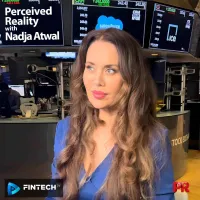
[SPEAKER_00]: Welcome to the show, I'm your host Nadia Atwal.
[SPEAKER_00]: Today we have a fascinating specialist in AI who's bringing it into the offices.
[SPEAKER_00]: Welcome to the show, John Sorsese.
[SPEAKER_01]: Thank you.
[SPEAKER_01]: And having my name pronounced correctly is amazing as well.
[SPEAKER_01]: I appreciate it.
[SPEAKER_00]: John, tell us a little bit about your company and what motivated you to found it.
[SPEAKER_01]: Absolutely.
[SPEAKER_01]: And where it was, where it came from, where it's becoming today.
[SPEAKER_01]: So about 21 years ago, I went to India for the first time.
[SPEAKER_01]: And I was in the HR outsourcing business.
[SPEAKER_01]: And we decided to hire a vendor and do business there.
[SPEAKER_01]: And I've been going for a long time.
[SPEAKER_01]: The business I was in here in the States was that HR service provider or professional employer organization where we do everything for small business.
[SPEAKER_01]: So run their payroll, take give them benefits, pay their taxes, you name it.
[SPEAKER_01]: That company got sold.
[SPEAKER_01]: I kept the people that I had been trying it for five years.
[SPEAKER_01]: I used them with my money, got some friends, and the way we get them, we have a company.
[SPEAKER_01]: It's a day that company employs 600 people around the globe, and we specialize in helping HR service companies or bureaus, whether they be [SPEAKER_00]: So how is it impacting the productivity and companies?
[SPEAKER_01]: Very much so, you know, I went to AI4 recently in Las Vegas, and the fact that it was thrown out to me was it only 10% of companies are using AI, they're all talking about it.
[SPEAKER_01]: One of the things I wanted to cognate of the deal is, let's be ahead, let's not sit around and wait.
[SPEAKER_01]: The traditional business of business process, Al-Sore, seeing as that, somebody else does the same work for you elsewhere in the world, business process, management, where we're going into the application of the course software.
[SPEAKER_01]: So I'll give you an example.
[SPEAKER_01]: We have a partner that does software implementation for HR system.
[SPEAKER_01]: At the end of the day, everybody goes, oh, I forgot all that paper that's in there.
[SPEAKER_01]: My PDFs, my paystubs, my forums, my INIs, everything I did all these years is in there and I got to move it.
[SPEAKER_01]: In the past, human beings moved them.
[SPEAKER_01]: They took a document, moved to here to there.
[SPEAKER_01]: And we were in that business.
[SPEAKER_01]: Today, through the use of robotics, more so than AI right now.
[SPEAKER_01]: We are able to move large amounts of that data in timeframes.
[SPEAKER_01]: It just wasn't possible before.
[SPEAKER_00]: Interesting.
[SPEAKER_00]: So, I becomes one better now on HR systems.
[SPEAKER_00]: And so, how can these tools ensure that they're being used responsibly?
[SPEAKER_01]: You bring him put him my big points.
[SPEAKER_01]: I try to make him security.
[SPEAKER_01]: We are dealing with bank accounts, so security numbers, information that not necessarily you want running around chat, keep it.
[SPEAKER_01]: What I find with large language models is that.
[SPEAKER_01]: we want to believe they won't hallucinate or do bad things, they might.
[SPEAKER_01]: So we have to draw a real cautious line of what kind of data that is protected and what's touching it, what technology is touching.
[SPEAKER_01]: Robotics doesn't kill it.
[SPEAKER_01]: So it's a little bit clearer in that path.
[SPEAKER_01]: I think the HR industry is struggling with that.
[SPEAKER_01]: In that, you know, the data we have is protected by [SPEAKER_01]: every government in the world for a bunch of max and laws.
[SPEAKER_01]: I had to comply with that yet because of it at the same time.
[SPEAKER_00]: So what do you see for the future and this technology and how should businesses prepare for it?
[SPEAKER_01]: I think what kind of like gaps are we used to call a gap once I was involved in a KTR data integration company there's the gaps are getting tighter, there's a gap or a person has to be within, that's going to remain, but how much does the technology grab along the way?
[SPEAKER_01]: We're experimenting now with our own AI, and we find that we give it a task, it does it great.
[SPEAKER_01]: We do it the same task a week later.
[SPEAKER_01]: I do it a little different because it's a party.
[SPEAKER_01]: What people don't understand is that, okay, now I didn't do it right because it tried to be clover.
[SPEAKER_01]: These are the things you have people watching.
[SPEAKER_01]: I think a lot of the transaction HR fasts look great, a new guy.
[SPEAKER_01]: You know, hire somebody to fill out a bunch of gold for her.
[SPEAKER_01]: I put him in payroll, I do everything I'm supposed to do.
[SPEAKER_01]: That would be good automated.
[SPEAKER_01]: There's no doubt at all.
[SPEAKER_01]: However, even being is probably going to be in the audit side of it, making sure that they actually get paid on time, they get paid right if not.
[SPEAKER_01]: But it will take away what traditionally PPO's were in the past but become automated.
[SPEAKER_00]: So I would conclude from that then that companies that are not using or implementing this kind of technology will in the end not be as competitive.
[SPEAKER_01]: Absolutely.
[SPEAKER_01]: My father always said, be a head now behind, and that's what I've told my group here.
[SPEAKER_01]: We're getting into the AI business, whether you all like it or not.
[SPEAKER_01]: It might be a little terrifying to my employees as well.
[SPEAKER_01]: But I tell them, imagine we have the same number of employees that we do twice the work.