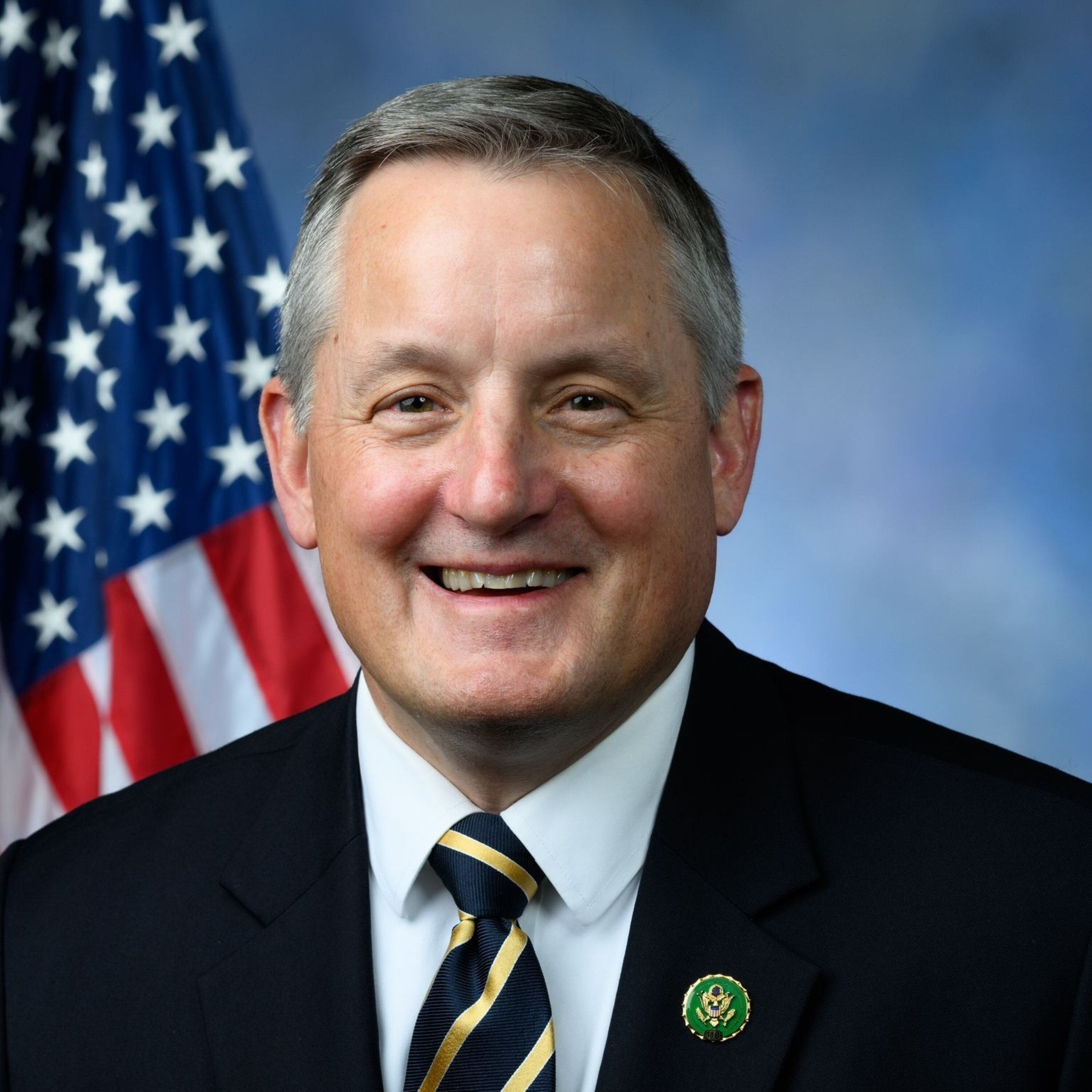
Episode 917: Chairman Bruce Westerman on the SPEED Act
Episode Transcript
In this episode of news World.
Congressman Bruce Westerman represents Arkansas's fourth Congressional district in the US House Representatives, where he serves on the Committee on Transportation and Infrastructure and as chairman of the Committee on Natural Resources.
Prior to serving in Congress, Chairman Westerman worked for twenty two years at Mid South Engineering in Hount Springs.
He served as a board member for the Fountain League School District and was later elected to two terms in the Arkansas General Assembly, where he was the state's first Republican House majority leader since reconstruction.
He's joining the today to discuss bipartisan legislation known as the speed Act, which stands for Standardizing Permitting and Expediting Economic de Almanite Bruce, Welcome and thank you for joining me the NETS World.
Speaker 2Well, thank you, mister speaker.
It's great to be on newts World.
And I'm a fan of your podcasts and I found out about it through my quest to do permitting reform.
I'd read a book by a guy named Philip Howard talking about how We've got to save Americas can do, and I was curious if he had done any podcasts, and I found that you had him on a podcast.
So appreciate what you do and the way you highlight important issues and get the word out and obviously all the service that you've given to our country.
And they're with your wife in Switzerland.
Speaker 1Now you mentioned Howard, He's really a smart guy.
I'm delighted that you've connected with him.
Speaker 2Well, I've not connected with him.
I've just read his book, and I feel like I've connected with him and listened to him on your podcast.
Speaker 1I'm sure he'd be delighted to come and visit because he is a genuine passion for trying to get us out of the bureau percy and back to being effective.
Now you've intrigued me because of all of the talking we have gone on right now about affordability.
It really hit me that a lot of the affordability problems come directly out of the way in which big government socialism fevers more and more regulations makes it harder and harder to get anything done and artificially raises the cost from what it would have been thirty or forty years ago.
And you've said the National Environmental Policy Act, and quoting you now is a more than half century old permitting process that has overdue for a tune up.
If we could start at the basics, because most of us really don't have the kind of knowledge you do.
What was the Act originally supposed to do back when they first passed it.
Speaker 2This was in the late sixties early seventies, when we started putting a lot more emphasis on the environment, and a lot of law has passed in.
You had the Clean Water Act, the Claim Air Act, you had the Endangered Species Act, followed by the Marine Mammal Protection Act, a lot of underlying statutes that were specifically put in place to help clean up the environment.
There were good laws, a lot of good things came from that, but over the years they've been weaponized.
And NEPA was kind of the first environmental law and it was put in place as a process to analyze things before we got stuff like the Clean Air Act and the Clean Water Act, And over time NEPA's become this massive kind of a spider web if you think of it in a flow chart, where you get in these continuous do loops and you can't get out.
And as a result, on average, it takes four to five years to get a permit through NEPA and when you're talking about mining, you can measure it in decades.
The National Mining Association says it takes twenty nine years from the time you find a resource until you're producing that resource in a mind in the United States.
And you know what that's led to.
It's led to China dominating critical minerals and rare earth.
And I'm so glad you mentioned affordability because this bureaucratic morass that's been created by NEPA has created costs that they're not seen out in the open, Their costs that go into producing things that consumers ultimately pay for, and they don't realize that these costs are there.
NEPA affects everything, really with a federal nexus, whether you're trying to build a road, a bridge, build a navigable waterway, or a port or an airport, even managing our forest, developing energy projects, poplines, transmission lines.
There's probably not any one issue that affects every American more than NEPA, other than tax policy that gets everyone pretty much.
But somewhere or another, the NEPA process affects all America rea.
Speaker 1Isn't that fair to say that unless we can reform this, we will never be able to compete with China because they can actually go out and build something as we start with lawyers and we have to litigate for years before we build anything.
Speaker 2They are building things right now at a very rapid taste.
They're building coal fired plants at over one hundred gigawatts a year.
The last coal fired plant built in the United States was in my district in twenty ten, and we've shut a lot of coal plants down.
But China is building one equivalent to that plant in my district about every two days, which is hard to get your mind around.
And you know, we've got this huge demand for electricity for AI and data and also if we want to reshore things here in America, we're going to need more electricity for manufacturing.
And we're really behind the eight ball without the opportunity to build things like we used to be able to build things here in this country.
So getting the permitting is the first step in being able to build in America again and to win the AI battle and critical minerals and rrors and all of that good stuff.
Speaker 1Is it accurate to say that unless we can cut through the red tape that we have a real danger of losing on artificial intelligence, not because of the scientists, but because in base electricity you need in order to be able to run those kind of very complicated.
Speaker 2Systems exactly, and we can't lose that race.
It's a national security issue when you think about AI.
So what's going to happen if we don't build more generation and transmission is the AI companies are going to be competing with residents and commercial users, so you're going to have not enough supply and increased demands.
So we know that means that the price goes up.
So as we talk about affordability, it's crucial that we allow new generation and transmission to be built so that we're not increasing process and making ourselves in short supply on electricity and the data.
Companies are willing to fund these projects, but they just have to be able to build them.
Speaker 1The money can sit in the bank, but if you don't know the bureaucracy's signing off, you're not going to get it out of the bank.
Speaker 2Right, And what NEPA has done and the abuse of our other environmental laws, it's put a wet blanket on investments in our country.
People would love to invest in our country everywhere I travel.
Recently, countries are saying we would like to invest in America because they know it's a good investment, but nobody's going to invest if they can't get a return on that money.
And they've seen examples of the Keystone popeline where billions of dollars were spent and a drop of oil never went through that pipeline.
There's a mine in Arizona that there's been two billion dollars spent on it and they've never mined an ounce of copper out of it.
The process has stopped right now because of an injunction through the NEPA process.
And that's what we're trying to fix with permitting reforms to make it where people will have certainty that they can go through the process in a timely manner, get their permit and build things.
Speaker 1And don't you also almost up to you to like a one stop at a place where you can shop, because otherwise you can end up with so many different regulators with so many different kind of rules that it just becomes mindless.
Speaker 2That's correct, and we do that in the Speed Act as well.
And we also give states a better seat at the table because we get a lot of duplicity on top of having multiple federal agencies in charge.
So we want to streamline it, have one person or one group in charge, and then take down roadblocks and obstacles that have been added on to NIPA throughout the years.
You know, there was this seven Counties decision out of the Supreme Court for a case in Utah where the Supreme Court said in a unanimous decision that NIPA is a process.
It's a procedural statue.
It cannot dictate outcomes.
So we're going to codify that in the Speed Act and make it a streamlined process.
I continue, we will have better environmental conditions because we can permit quickly and do things that are better for the environment by building them here in America.
But I hate to say the left, because this is a bipartisan build with the far left, seems like they just don't want to build here in our country and they're using the permitting process to stop that.
But if you truly care about the environment, you would want to process that allows you to develop new kinds of energy, that allows you to take care of our forest and our infrastructure in a way that is better for the environment in the long run.
Speaker 1Isn't it fair to say that any kind of regulatory process which discourages investment in the US and leads them to occur in China or in a thirderal country is almost guaranteed to be more environmentally destructive than if you have some did it right here in the United.
Speaker 2States, without question, we do things cleaner, safer, healthier, and more efficiently than anybody else in the world.
When we on leash American innovation and we're allowed to do that, it not only puts a wet blanket on investments, that puts a wet blanket on innovation.
That's been our edge in this country for so long that we've been able to innovate and stay ahead of the curve.
But if you can't build what you dream, then someday we're going to lose that innovative advantage.
Speaker 1One of the examples, but I know you know well, is the effort to build a three hundred mile pipeline from Westwodgin in to Virginia.
Can you talk just a little bit about it.
It's sort of crazy how these things to Boo Moon and cost.
Speaker 2Yeah, that's the Mountain Valley popeline, and that was a provision that Joe Manchin basically got spelled out in the I guess that was in the IRA or the IJA.
One of those bills was passed during the Obama administration, and it was some of the most explicit legislation that I've ever seen.
It was almost like it came from scripture.
They shall build a pipeline, and it shall go through this area, and nothing shall impede its development.
But you think about natural gas is one of the cleanest forms of energy that we have.
My co sponsor on the bill, Jared Golden, the Democrat from Maine.
One of his main concerns is they're burning heating oil in Maine and he even came to me and asked if I could help him get an LNG import facility in Maine because they're blocking popelines going through New Hampshire, Massachusetts in New York, and all he wants is affordable, clean energy for his constituents, But you cannot get a popline permitted up through that area.
And people think of the Permian Basin in Texas and Alaska, but the largest deposit of natural gas in the planet is in the Marcellus and Judifacheale there in Pennsylvania and New York and Ohio.
It's right there available for the northeast.
But if you can't get a popline to use it, it's of no use to you.
Speaker 1Say a farmer, if you have two cousins who own farms and warms in Pennsylvania and the others twenty miles away in New York, because New York will not allow them to develop the Marcella shale.
So the cousin who lives in Pennsylvania is making a tremendous amount of money out of this product which is right there on his land, the exact same product twenty miles away.
The kind of get to it because the state Gilmont, I mean, the mount to much New York has itself made people poor with that kind of regulation.
It's just I think crazy.
Speaker 2I don't think that's what our founders were dreaming about two hundred and fifty years ago.
Speaker 1I don't think that George Washington, who was very big on development, would have understood the current attitudes.
Let me ask you, though we have made some reforms then you've been involved in and as I understand that the Fiscal Responsibility Act of twenty twenty three actually made some significant changes in the national Environmental Policy Act.
Can you sort of explain the progress we have made.
Speaker 2Yeah, So that was the famous budget cat deal when Speaker McCarthy was Speaker of the House, and we got some concessions on putting tomlines on doing something called an environmental analysis, and we said that could only be one hundred pages in one year, or an environmental impact statement, so that could be two hundred pages or two years, which never really got implemented during the Biden administration.
But what we found out is that the bureaucrats said, Okay, we'll follow that one year and two year guideline.
There's no requirements on how long we can delay before we actually start the process.
So they're delaying months and years before they ever start the time clock, and then once they get the decision, they'll delay issuing the permit.
So we're fixing that in the Speed Act.
A lot of this should just be common sense, and it's frustrating that you have to pass laws in Congress to try to outthink what the bureaucracy is going to do.
But I think we've got them finally in the corner on this one.
If we can get the Speed Act passed.
Speaker 1Did it strikes whether you do have some people who want to end the government for the purposes of stopping everything, not for the purpose of helping it.
Speaker 2And the system's rigged for people who want to stop something.
It's very difficult to build things, but if you've got enough money and some lawyers, you can stop just about anything in our country.
I came from a background where I did engineering work for twenty or twenty five years.
I understand the frustrations of the people that are really focused every day, working hard, trying to build something, and then all of a sudden, it's like this curve ball comes out of left field that nobody was expecting, and it's somebody that shouldn't even be involved in the process is saying, well, you got to do it this way, or we've got to delay, and the cost just goes through the roof.
McKenzie put out a report in July of this year looking at just public infrastructure projects, and they looked at a four year window because these projects public infrastructure takes around six years to get a permit.
But they analyze the four year window and they said that it's costing Americans two point seven trillion dollars for these public infrastructure projects.
That are held up in permitting.
And part of that is the extra cost of doing the permit.
It's a big part of it is the cost that the project takes on because it's being delayed and you have to mobilize and demobilize and all of that.
But then you've got this big opportunity cost that's lost because you don't have a breach replaced, and you've got traffic congested.
And again, these are hidden costs that every American's paying, and they don't realize that.
At the root of that is the permitting laws.
Speaker 1And I think this is a listening for the average citizen.
Ruiz.
When you get to legislation that is this big and this complicated, it takes time to think it through, to study it, to put together the right language, to make sure that the hearings where people can command and help you improve it.
How long have you personally been working on the speed at.
Speaker 2The policy and the Speed Act.
I've been working on it for eight years.
Speaker 1It's complicated to build a bridge.
It's complicated to write the law to improve regulations.
Speaker 2For building the bridge exactly.
And in this instance, we've got to have sixty votes in the Senate, so it has to be bi partisan.
This bill will not get signed into law without bipartisan votes, So we've got to work with our colleagues across the aisle that will work with us on it.
We've actually built a great coalition with our Democrat co sponsors, and we've got letters of support from all fifty states and over two hundred and thirty different letters from organizations that range from energy companies to data centers to people in construction to utilities.
It's a wide variety of people who realize just how important permitting reform is.
So we've built a huge amount of momentum and there's a lot of conversations taking place on how do we get the Speed Act not only out of the House, but through the Senate and signed into law.
Speaker 1And you know the sense that you'll be able to get it done in this Congress.
Speaker 2Yeah, we plan to get the bill to the Senate before the end of the year, and the Senate is working on their version of permitting reform as well.
Having been the Speaker of the House, you understand there's only so much we can do.
We can give them the bill and then you've got to deal with the Senate.
But you've got to take it one step at a time.
But we are trying to work with the Senate and with the Administration to make sure that we've got all of our bases covered in the bill that we send over.
Speaker 1I think we have a three part process I've begun to work on about affordability, and one part of it is the things that exists in the current system that make everything less affordable.
You can produce out of your committee trillions of dollars that we could take out of the current costs over the next decade that will clearly make America more affordable.
I mean, if that sound about.
Speaker 2Right and more when you think about if we start using our resources and building here.
So the USGS use Geological Survey.
They do a report every year on material that's mined and processed in the United States, and they've been doing this for a long time.
Currently, we produce about one hundred and twenty billion dollars worth of raw material and recycle material.
That's net of imports and exports.
When that material gets processed into metals or the next product.
This includes aggregates everything that you mind, it's worth almost a trillion dollars.
So you take one hundred and twenty billion dollars worth of raw material.
You process it and refine it, and you've got a trillion dollars of material.
You put that into the economy and it's worth three two point seven trillion dollars to our GDP.
So you take one hundred and twenty billion dollars of raw material and it has a three point seven trillion dollar impact in our economy.
You know this.
Over time, the federal tax revenue runs about fifteen or sixteen percent of the GDP, So if you grow the economy by trillion dollars, you're adding another one hundred and fifty billion dollars of revenue to the budget to help reduce the deficit.
You're also employing more people.
For every one percent we increase the labor participation rate, we grow the economy of trillion dollars.
So you've got all these other benefits on top of having better national security, you get better jobs, a stronger economy, and it's just crazy that we've not been doing more of this all along.
Speaker 1Do you find a substantial number of Democrats understand the importance of this kind of economic development and actually the national security crisis that we're going to be in both in terms of minding key things and in terms of energy production for artificial intelligence.
Is there a growing bipartisan awareness of how realness is.
Speaker 2There is and we have to take advantage of that while we can.
The advent of data and AI and the realization of how much energy it's going to take for that, I think has gotten everybody's attention on both sides of the aisle, and also understanding the impacts that can have on energy affordability.
If you've got all this new consumption taking place and you're not able to supply it, that's a big issue.
The other thing is in the Inflation Reduction Act, the Democrats approved a lot of projects that they found out they couldn't get their projects permitted either.
It kind of brought a dose of reality to everyone that if you want to build in our country, you can't do it under the current permitting system.
So I think people are realizing the situation we're in, and it has created a bipartisan effort to get permitting reform done.
Speaker 1Yeah.
I saw a study and said that on the expansion of the New York Subway that it would cost eight to ten times what the same expansion would cost in London or Paris.
Speaker 2Yeah, I think Philip Howard actually mentioned that in his book, talking about the original construction and how much it would cost today.
There's so many examples.
I know you're from Georgia.
The last runway at the Atlanta Airport, it took eleven years to build it.
It actually only took eighteen months to build it, but it took nine and a half years to get the permit to build it.
It's just crazy stuff like that.
Speaker 1I want this also have a significant impact both at the War Department and NASA on making it faster to do the kind of construction and the kind of things they need to get done.
Speaker 2Absolutely.
You know, I've traveled around and talked to military commanders, and I'll never forget a guy out in the Pacific telling me that the Chinese Communist Party understand our environmental law is better than we do.
And at the time China was building an island on a coral reef, like hauling big rocks out in the ocean and dumping them on a coral reef to build an island to put military assets on.
We were trying to redevelop a site on Tinian where the bombers took off with the atomic bombs.
That was one of the largest airfields in the world back in World War Two and had grown up in the jungle, and the military wanted to go in and redevelop a little piece of that total dead end.
They could not get the permits to go in and redevelop this site that was strategic to our national security.
Yeah, it has a major impact on the Department of War, talk about the corp of engineers and the projects that they do.
It creates a tremendous additional cost for government funded infrastructure.
Speaker 1People really often don't realize that the original purpose of creating West Point was to produce engineers.
Robert E.
Lee, for example, it's about part of his early career developing the port at Saint Louis.
And nowadays, in twenty twelve, they were building a second wider Panama Canal, and the studying for whether or not you could improve the Charleston Harbor to take then the larger ships was going to take longer to study.
It was going to take them to build the entire brand new canal.
They would have ships that could not come into Charleston because it'd be too big, and the core literally could not get out of the way of all the different regulatory requirements.
Speaker 2Now, anybody who's ever served in Congress has their core of engineer's horror story that they've dealt with, and it's happening every day.
These are great people that want to do good work where there's a problem in the leadership somewhere in the core and getting projects approved and getting them done.
And we also fund core of engineering projects in a backwards way.
Instead of funding the whole project at one time, we fund them on the appropriations process, so they have to build in are we going to have to stop and wait for more funding?
That whole process needs to be reordered.
Speaker 1The name they figured out years ago.
When they buy an aircraft carrier, they structure a contract so the technically, because the Constitution requires annual funding, technically it has to be renewed.
But they built in such a prohibitive costs for not renewing that Congress will consistently pay for it.
I'm looking at the air traffic control situation where Secretary Duffy I think has a huge challenge.
We have not been able to fix the air traffic control system for forty years because of the point it is made, which says, by the time you get to hangle appropriations, you get to the federal bureaucracy, you get to the various opportunities to file lawsuits to screw up everything.
We literally have not been able to modernize the air traffic control system.
Speaker 2I've been on the Aviation Subcommittee, and in the first Trump administration we looked at updating the air traffic control system.
Now, in the reconciliation bill that we did, we put twelve billion dollars in there for the air traffic control system.
I was with Secretary Duffy last night and we were talking about this.
You know what's holding up air traffic control is getting fiber optics cables to the towers.
And they can't get the fiber optics cables to the towers because of the NEPA permitting process.
They've got twelve billion dollars and they can't run a new fiber optics line.
They're trying to work around that, but it's ridiculous that something so important to safety and to our economy and it's being held up because they can't run fiber to control towers.
Speaker 1When I was a speaker, it was so unusual to have the first Republican speaker in forty years that when we finished the ten items that were in the contract, CBS gave me a half hour to do sort of a national address.
And I actually had a vacuum tube that was part of the air traffic control system that was manufactured in Poland because it was the last factory on the planet that made these vacuum tubes, and we had not been able.
No, I think we've since gotten away from them, but at the time, we literally have not been able to get out of vacuum tubes.
Speaker 2I remember seeing that great job.
Speaker 1Look with your leadership.
I think this is a big deal.
Now it is the Act in the Senate, also called the Speed Act.
Speaker 2No, there's not a bill that I'm aware of that the Senate's filed.
Yet they're working on the policy, and I think the Speed Act will be the center point of maybe some larger permitting reform.
There's some statutes and other committees that aren't in natural resources jurisdiction.
You've got Energy and Commerce in the House that has clean air and clean water and furk.
You've got T and I that's got a clean water nexus.
And then you get over in the Senate and you've got Senate E and R and Senate EPW that has cross jurisdiction, so all those committees are working together, and you know, at some point a lot of other stuff may get added into the Speed Act, the biggest and best permitting reform bill that we can get passed and signed into law.
Speaker 1So in a real sense, if you look at this, this could become as the title Standardizing Permitting and Expediting Economic Development, could be expanded substantially beyond NEPA and still fit within the framework.
Speaker 2Yeah, So I would say if all we can get is NEPA, that will be a huge victory.
But there's opportunity because there's also some areas that have bipartisan support with things like the Endangered Species Act and the Clean Air and the Clean Water Act that could kind of some bits and pieces that get sprinkled in with the NEPA.
Speaker 1Do in the mood that's building in the country.
If we can find a way to communicate an affordability issue, how much, for example, your family will be better off at electricity cost, or how much you'll be better off just in terms of your county or your state building a highway or fixing our bridging there are ways to translate all this so it becomes very personal and more people realize this is really about their lives.
This isn't just some abstract.
Speaker 2Theory, right.
It's really intuitive if you stop and think about it, that if the cost for energy rises, the costs for everything rises.
When the Ukraine War started, we saw an increase in input costs for agriculture.
And what a lot of people didn't realize that was directly related to the fact that there was so much nitrogen fertilizer that's made in the Ukraine and the cost of gas went up there.
And natural gas is the main ingredient in fertilizer and fertilizers of globally traded commodity.
So even though we've got a lot of natural gas in the US, we don't have a lot of fertilizer plants, and you had fertilizer shortages that drove up agg cost and everything in agg The fertilizer that you put on the farmland is like a base input cost for chickens and pork and beef because they end up eating the crops you grow.
So when you have a constraint on supply of energy and the things that are made from that energy.
It percolates throughout the whole supply chain, and that can be both ways.
You can get positive effects or negative effects.
You get those costs low and you get in abundance.
Your affordability is going to be much better, and plus you're going to have better jobs.
Speaker 1I really want to congratulate you.
This is a hard topic.
It's a topic a lot of people have spent years working on.
You have brought it together into a serious reform built which could have an enormous impact on our national security, on our economic growth, on the cost of energy, on our ability to do artificial intelligence.
So, Bruce, I think the work you're doing is sort of Congress at its best.
How it is thoughtful, bipartisan, with a huge impact in the real world.
I want to thank you for joining me, and I want to let our listeners know they can find out more about the work you're doing by visiting your website at Westerman dot house dot gov.
Speaker 2Thank you very much, New it's been great to be with you, and I would add to that list, we're going to do more to protect the environment.
Some people think by reforming permitting, we're going to just say the heck with the environment.
But we'll have better environmental outcomes by having better permitting processes.
Speaker 1I promise you, Chairman, you are providing wheel leadership in the best tradition of the Congress.
Speaker 2I comment you, thank you, nude, appreciate you, Thank you to.
Speaker 1My guest Chairman, Bruce Westerman.
Neut World is produced by Gagers, Sweet sixty and iHeartMedia.
Our executive producer is Guernsey Sloan.
Our research sure is Rachel Peterson.
The artwork for the show was created by Steve Penley.
Special thanks to the team at Ginglish three sixty.
If you've been enjoying news World, I hope you'll go to Apple Podcast and both rate us with five stars and give us a review so others can learn what it's all about.
Join me on substack at Gingwish three sixty dot net.
I am new Gingwish.
This is Newsworld.