·E443
Sinners w/ Briahna Joy Gray and Josh Olson [Unlocked]
Episode Transcript
Okay, welcome to a very special crossover episode of Bad Faith Podcast and Struggle Session.
You know you're a host of Struggle Session.
Leslie Lee the third who of course is with us for this crossover episode.
It's good to see you as always, Leslie.
Speaker 2Good to see you, Bree and Josh Olsen.
Speaker 3It's always nice to have a real life screenwriter, a.
Speaker 1Native of the Hollywood landscape when we're doing some pop culture movie criticism.
Welcome back to Bad Faith and Struggle Session.
Speaker 4Thank you.
It's a pleasure to be here, and it's nice to be We're gonna plug my new podcast, The White Cannon.
It's nice to be talking about a movie that's not White Canon.
Speaker 3So that's a good question.
Speaker 1So, like, do we think that this is a movie that's gonna end up being Black Cannon?
Speaker 3Is it already the movie?
Speaker 4Sorry?
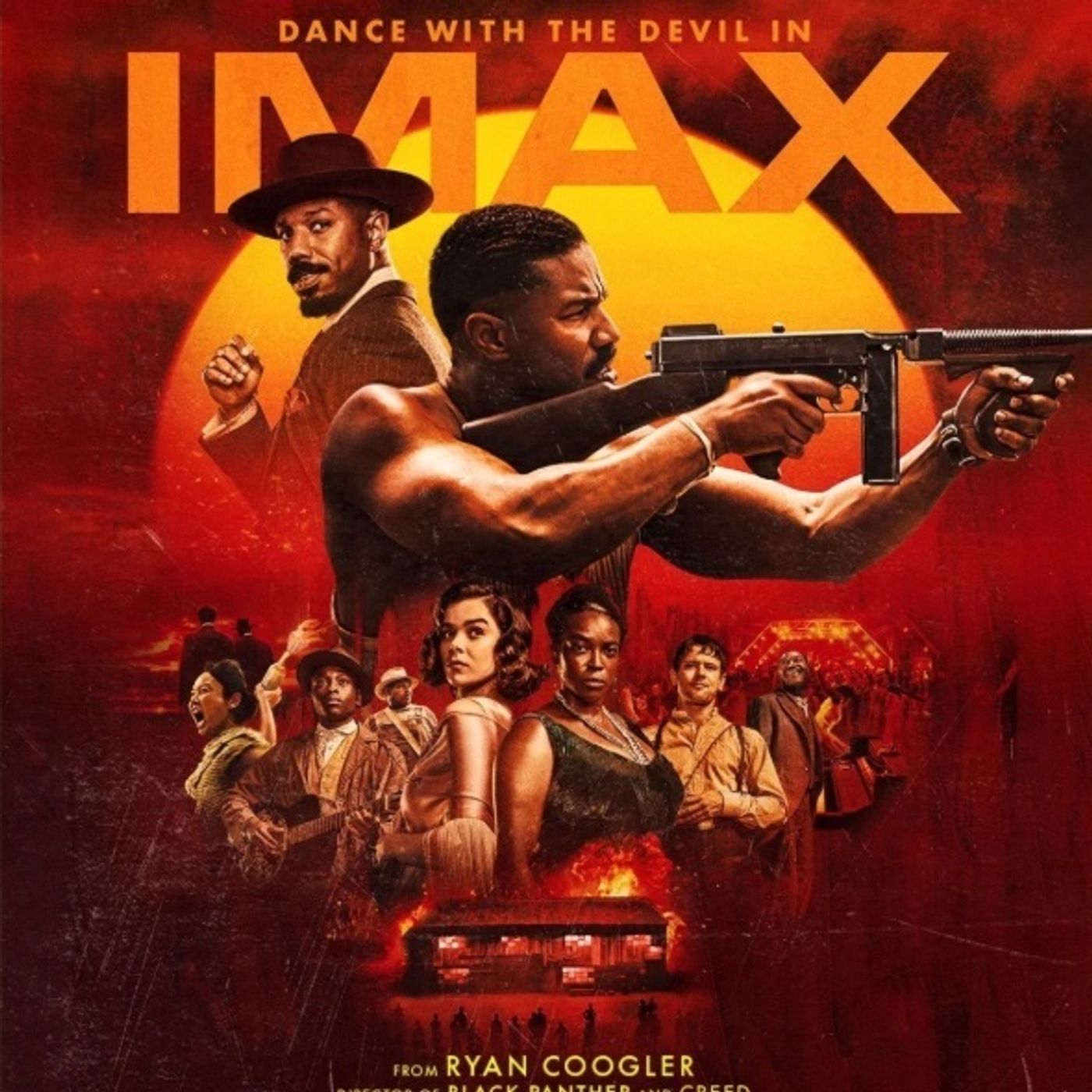
Speaker 1The movie that we're talking about, my apologies is, of course Ryan Coogler's latest Sinners, starring Michael B.
Speaker 3Jordan.
Speaker 1It is a cross genre vampire movie and the Jim Crow South and it has been doing very very well at the box office, especially for an original feature.
Speaker 4Josh, until you know that vampire musical, Let's be.
Speaker 2Clear, yes, absolutely.
It's got a lot of music in it, and I was thinking in a theater, it's like, yeah, this is a half step away from a full on musical.
But that was not a problem.
That's not an insult.
Speaker 4Yeah, oh no, not at all, not at all.
Speaker 1Okay, So I don't want people to I mean, there's some people are gonna hear that, you know, and be like, Okay, I tolerated Wicked, but I don't know.
Speaker 2It's good music.
It's good music, Okay.
Speaker 4It's like anybody here, if you're sitting around and haven't decided whether you want to see sinners that are waiting until these three chuckleheads chime in, just yeah, you're doomed.
Speaker 1So let's set it up a little bit for those who are like, how on earth is music fitting into what I thought was a sort of action packed vampire romp who wants to take take the lead on giving people a sense of what this film is about.
And I think we should go ahead and say there's gonna be spoilers.
I think we'll avoid maybe super egregious spoilers, but you're you're gonna know what this Wait, what do.
Speaker 3You think do you think we should try to avoid it.
Speaker 2I mean at this point, they literally have the spoilers in the trailer.
That's how it.
Like you asked a question, is it part of the cannon?
Yes, it's a certify the classic day one.
Everybody knows.
Everybody.
People don't even get mad if you post spoilers because everybody's seen it.
Speaker 4The first tattoos have already been dropped on pack.
Oh.
Speaker 2Yes, people are obsessed with this movie in way culturally that they haven't been obsessed with a film or any real cultural product except for maybe not like Us.
But I feel like that was a lot different sort of vibe than you know, this movie which has just you know, taken the world by storm.
Even I was shocked.
Actually, I will talk about this, that the white right didn't seem to be mad about this movie when like the first forty five minutes of this movie is I hate these crackers, white people, stupid, these craggers.
But like it's such a good movie.
It brings everybody in.
Speaker 3Okay.
Speaker 1So my hot take is that perhaps maybe the lack of pushback from kind of the conservative white right is because there is a little bit I also love the movie, I should say first, but I think there is a little bit of a confusion around the messaging that resists.
Maybe it's easy categorization as a film that says don't trust white people, or white people are evil, white people are basically vampires, culture vultures, however you want to characterize it.
But so before we get into this, Leslie, you say it's already canon that people are responding.
Speaker 3Very positively to this movie.
Why do you think that is?
Speaker 1And maybe that's a good opportunity for us to just kind of sketch out what the plot of this thing is.
Speaker 2Well, I think the main thing that gets down to is like it's as good as story.
Ryan Coogler was talking about how he was pitching the movie, and it's how all the great you know directors pitch their you know, filmmakers really pitch their films.
It's like they sit down and tell someone a story.
If they get you hooked and you have to hear the ending, that's a real movie.
That's a real movie.
And this is a real movie.
You can imagine him sit down and telling someone about all these characters.
And the character is really what holds this film together because every single character in the film has their own life, even like the villainous klansmen.
You want to know more about all of these people.
All of them are complex, all of them have good and bad size, and all of them are interesting.
Every minute they're on the screen, which, by the way, looks beautiful, looks gorgeous.
It looks like a real movie.
I think people are responding to it because this is how movies are supposed to be.
This is how films used to be all the time.
It looks great, it's filled with stars, but it introduces new who stars.
You know, It has an interesting concept, a very fun plot.
You want to watch it again after you're done watching it.
It mixes up genres in a way that most films don't.
It breaks the formula.
I was actually reading the blog by a screenwriter who was furious at the movie because, like, the first act is about fifteen pages too long.
Oh no, but I saw that was one of the things that black people most responded to, Like that part that fit, that part where the film And I'm sorry for not getting too much into the detail for people who haven't seen it, but the first four or five minutes of the movie is this, for lack of a bad term, world building, it feels like it could be his own movie just about this black community putting together a juke joint in one day, right, and it could be.
It didn't You didn't need to have the vampires in it at all, and people were still hooked, sucked in, laughing in the theater.
They love the characters and the world and it felt like the world that they live in, obviously, you know, the world of you know, black people in the modern day with ties to the past and the future as well, which we see in you know, I'm all over the place because there's so much in this film that people responded to, like the dance scene specifically, which has you know, hip hop and blues and jazz all mixed together.
It's like, so, let's stay with this.
Speaker 1Point that you opened with, which is that we've got like like an hour of narrative building before a vampire.
Ever, Grace is the screen So you're a screenwriter, Josh, what did you make of this set up?
Speaker 4It's great?
I mean it's like, yeah, just a girl friend the other day about how like, you know, I'd love to talk to the screenwriter you were reading, because you know, let's talk about one of the most mediocre films ever made.
Die Hard.
It's I mean, was it that forty minutes before anything happens?
He lands in the airplane.
You see all this stuff happen.
They build your character so you're invested in them, and it's not you know, And I don't even mean to compare it to Die Hard because it's doing all kinds of other things.
And you know, how about Titanic?
My god, what is that an hour and a half before they hit the iceberg?
Like, what's going on with this idiot?
What's he thinking?
It's it's I hate criticisms like that.
The first act is as long as it needs to be.
That's why the movie works.
So is the second act of the third act and all the endings.
Speaker 2Yes, multi, It's just you know, if you're sitting there counting pages or minutes, you're doing it wrong.
Speaker 4And if you're sitting there and you're you're swept up and it who cares?
I mean it, I was boggled by the film.
I will admit can can't talk about my experience seeing it because I got to see it about a month ago or even a little longer as a screening in Imax, this incredible Imax screening room.
There are about ten other people there.
I can't think of the last time.
And we see a lot of movies where they come out and usually my response is like, oh, I can't wait.
People see this, they're gonna like it if it's good.
This one was like, I can't wait to check myself against like, am I nuts?
Because there's so many things about this film that I was a little anxious going into.
Because there's a long history of really successful directors who've kind of built their names doing stuff, finally getting complete creative control, doing something completely original, and then just going insane and making something like you know Spielwork's famous one.
It is nineteen forty one, which is fascinating artifact, one of the worst movies ever made, And there are so many moments in center, so much of it just feels like it's just barreling towards flying off the rails into just complete self indulgent insanity, and it never does.
Everything works.
I'm constantly sitting there the first time I'm seeing it, going like, oh God, please, please, don't don't screw this up.
But you get to the end of the scene, you're like, oh, he did it right.
You get to another scene and you're like, oh, don't do it.
You're gonna oh god no, and then it works.
And you know, the perfect example being that ant scene where like, one of the things that drives me crazy about a lot of period films being made today is filmmakers will have a tendency to like not trust the audience to enjoy music from that period, so I'll try to juice it up.
And I was really thrilled when they start playing music in the film and it's like it sounded right for the era.
And then he goes and he does the thing I'm talking about, but he figures out a way to make it contextual and to make it work.
That dancing is one of the most amazing things I've ever seen.
It's just absolutely incredible.
And again you're like, please God, make it work, Please God stick the landing.
And then he sticks the landing, and you're like, I need to see this again.
Speaker 1Because yeah, okay, so conscious of people who haven't seen the movie, I'll go ahead and set it.
Speaker 4Oh yeah, you guys.
Speaker 1Are desperate to talking about this dancing that I hear you.
But I really need us to say very basically what the plot of this movie is.
Speaker 2Well, it is about the blues.
Speaker 1Okay, well, where we're introduced to these two twin brothers, the stack House brother Smokestack Brothers excuse me, and Stack who were both played by Michael B.
Jordan, were told that they had been living up north in Chicago for some period of years doing illegal shenanigans with al Capone, and they've come back to their hometown in Mississippi with a bunch of money and a dream of setting up a juke joint.
They go and visit a some kind of old barn type building, which they buy off of this slimy white man who denies that there's any clan around that there'll be any problems with this transaction.
And then they go back into town and reconnect with a number of folks that they clearly had positive relationships in the past, including Chinese American grocer's family who agrees to paint a sign for the establishment help out in various ways.
He has liquor down from up north, he taught.
One of the twins reconnects with an ex partner who agrees to fry the food.
So basically they're reconnecting ties with all the family and we get a sense of what the broader community is In addition, they reconnect with their little cousin, Preacher Boy, who is the son of the local preacher makes a lot of sense, who.
Speaker 3They had given a guitar.
Speaker 1As a kid before they left for Chicago, and he has now grown up and become not only very good at playing this guitar, playing the blues, but also has a gorgeous voice that is sort of revealed after some restraint.
And you know, the movie is telling you that this guy is going to be talent, like fore grounding, this guy is gonna have a lot of talent.
But honestly, when you hear this young man saying it really did feel mystical and magical in the way that the movie demands, because what we discover is that this young man's voice sort of not explicitly tacitly a little bit explicitly summons these vampires that have come to the town.
And then there is a showdown of sorts at the jukeback at Night, sorry, juke join at Night, in which the vampires are obviously trying to suck all the blood.
Speaker 3Okay, do you think I give away too much in that description?
Speaker 4I don't think we can talk about this that just completely spoiled.
Speaker 3I think so too.
I think it's my group chat.
Speaker 1I'm in a group, I'm in mini group chats obviously, but my group chat, my black group chat, was like, Brianna, you have two days to see this movie before we stop doing the thing where we blur the text so you can't see the spoilers.
And so I hopped to when I saw the movie and that was like a week ago.
So everyone else just has to go with their loinsing and get over it.
Okay, all right, So we keep alluding to this idea that this movie is like a musical.
Now I want to invite you both to talk about this scene in the juke joint that maybe shouldn't work, maybe maybe it should be quiet.
It was listening to a New York New Yorker podcast where they were discussing it and they described it as corny but that it worked like it.
They were very positive about it.
Who wants to take this because both of you have independently brought this up.
So I want to I want to.
Speaker 4Chance to get into the key to the whole movie, and it's it's why, you know, so I spent a couple of weeks.
It's just where I'm going this movie just slaughtered me the best way possible, and I am fully prepared for everybody to see it and go, what the hell was that mess?
Are you out of your mind?
Because I'm like, maybe it's just sometimes we just taps you in exactly the right way.
And it was so gratifying, and it's been so gratifying to see people just like everyone's just just taken by this thing.
And and that scene is it's just it's literally transcendent.
It transcends its space and it's time.
And there's a question as to whether or not, you know, is it's you know, is it happening, is it not happening.
It's like, who cares, it's a movie, But it's tapping into the notion that the music this kid's playing is like music for the ages, that it's coming from this long standing musical tradition, not just African, you know, with the Asian and Native American and Irish everything, and that it's all part of this continuum leading into the future.
And I think, I mean, I will absolutely see it again.
It is the first time you get have said something's going wacky.
Is when that guy in the Bootsy Collins get up just steps into the scene.
Is that kind of like I don't remember seeing anybody else, and you know this electric guitar full on seventies funk Master, and you're going, what So.
Speaker 1In the film, it's all been leading up to this big party, this one night of freedom.
The kind of freedom and exclusivity of this juke joint off some ways away from town is sort of framed as an escape from the oppressiveness of the Jim Crows House, and so there's this kind of catharsis in this scene where we've been waiting.
We've seen all the planning again, the movie is like an hour with just the planning of this night, and you finally get this big performance where, in a kind of magical surrealist moment, you get a visual representation of the musical traditions that led up to the Blues, including like an African dancer, and then also the lineage of the Blues extending into the future with this afro futurist Bootsy Collins type performer.
And then also in a nod to the Chinese American couple who is friends with this community and helping out in the kind of like tending bar and stuff in the juke joint, a kind of traditional Chinese dancer, and it feels very much like a you know again, it should be a kind of corny.
It feels like a kind of corny wear of the world, all holding hands, look at the synthesis of the melting pot and how beautiful America is moment.
But there's something about the score, the intensity of it, that doesn't feel cheap in the least.
And I was sort of looking around in the music theater and the movie theater like is everyone else buying this?
It's like, am I the only one who's kind of into this because I'm a corn dog?
Speaker 3No?
Speaker 1It really I have not heard a single person say anything negative about this scene.
Speaker 2Yeah, you know, I'm right with you, both of you.
It's like when it first started, I was like, oh my god, because I love the movie up everything up until that point.
That was the first time I was like, oh, this is where it happens.
He directed those, he directed those, Yeah, he directed those, those Black Panther movies.
This is where it happens.
But then about you know, as it keeps going and you start seeing the people from the past, like the more and when the bootsy Goalvilins guy shows up.
That was kind of like when I was like, okay, because, like you said, that electric guitar cutting through, it's like Googler the reason why the scene works.
We're never going to get to the bottom of it because it is the sort of alchemy that the film is talking about that music can do.
This scene does not make any sense.
It does not fit in the movie.
It does not fit even in the genre of horror at all.
But it's the best scene in the film.
Everyone loves it because it brings together so many different things in the perfect way and the way it's shot and paced, and I know if a lot of people know, it's like it feels.
It's not obviously it's not actually one take, but it has that style of it.
I didn't even notice it until when I was watching it because of how it's shot.
It keeps just this energy going and going and just moves you along with it, and that's the magic of film.
It should not work.
This scene should not work.
This should be corny.
This is people have tried to do this type of scene many many times, or try to make points like this many many times.
And like Josh was talking about, like what's the Netflix show is it Bridgton that uses contemporary music and you know discorcordant way, it's like none of it works as well, and maybe it's not fair to these creators, but he just hit it just right and all the maybe even when the people show up in the order in the space, when they show the turntable, everything is very carefully crafted how this scene is shot, and maybe it's just the how he did and he did it so carefully that it works.
And the joy we see from all the characters too, that we've met up into this point that we know are about to die.
That's also like a really like that helps bring it along, Like when you see the Asian the Chinese waitress, like when she's dancing while she's serving, Like that's joyful, that makes you, that brings you up in a way that's just interesting and just that it's really unique to film and cinema.
Speaker 4And then he's so good is the thing.
I'm always like, there's a few movies that do this where you know, because he's making this movie and he's knowing that so much, it is going to hinge on being to pull up, you know, and then I have to pull off this incredible scene that's almost impossible, and then everything will be great, and he's just going about his business and doing that.
I think the two that all has come in my mind are there's a scene in Mulholland Drive where Naomi Watts is an actress, has to go give an audition, and the entire film hinges on it being the best audition you've ever seen.
You're like, how do you That's like that takes just incredible just confidence.
Speaker 3The last dance you what I read perfectly executed.
Speaker 4Or where there's a great there's a great line in The Princess Bride's script where you go with the writer writes, what follows is the greatest sword fight you've ever seen in a movie, and then what follows is the greatest sword fight you've ever seen in the movie.
They're going into this.
They're not going, Hey, we're gonna be you know, we're great, we know what we're doing.
We're gonna kick it.
We're like, we're gonna conceive and and and film and direct and everything.
I'm gonna make a scene that's so fucking good it blows people's minds that almost nobody on the planet can pull off.
Cool.
What day are we shooting that Thursday.
Great, what's Friday?
It's incredible, It's oh my god.
Speaker 1So Leslie, you uh sort of said the music isn't necessarily for the genre of horror.
I do want to say, counterpoint shop of horror movie musical Sweeney Todd and movie musical.
Speaker 3There are a.
Speaker 2Horror horror movies.
Speaker 4There's horror.
Speaker 2But like if it was like, I feel like it's not actually a musical.
It just gets to that point.
That's what I meant.
Speaker 1But but I do think it's interesting because I years and years ago, I dated this guy who was in a like a musical theater program at YU.
Speaker 3There's just a whole cast of characters in my past.
Speaker 1But one thing that he was saying is he was taking this musical writing class, was that a.
Speaker 3Music like people don't like musicals.
Speaker 1Some people don't like musicals because they feel like the music interrupts the scene and it's artificial and YadA, YadA, YadA.
But this is a sign I'm a good musical is that the song should be able to do something narratively that would be very difficult to accomplish, uh with words, with dialogue, it can do it more efficiently.
It can make time past time travel happen.
It can make sort of achieve an emotional connection that would be difficult to demonstrate in like a very short period of time one film.
It should be additive, not just a filler that is duplicative of what's happening in the narrative, and I think that this scene sort of accomplished that.
Speaker 3That being said, I think.
Speaker 1Now we have to get to the nitty gritty of what this movie was actually trying to say and do.
And to do that, I think we need to say a little bit more about what happens plot.
Why so, here are some more spoilers.
The night goes awry because three white vampires show up.
We were introduced to one of the vampires in the very opening scene of the movie.
We see a white man who's mostly naked in sort of almost inflames, sort of like coal simmering embers, running at dawn through like a field up to a house.
He bangs on the door, asks to come in, says he's being chased by Native Americans, and in fact he is.
The white couple who owns the house ultimately let him in.
You see a Ku Klux Klan robe in the background suggesting of course, that they are in the clan.
And after trusting this guy, the woman comes upstairs and sees that he has eaten her husband and also her baby.
Speaker 3And turn them.
Speaker 1Interestingly, we don't hear anything about that baby going forward.
I guess it doesn't get turned, but never mind.
Later the three now vampiric white people show up at this juke joint.
But they don't just show up saying hey, I'm a vampire, let me in.
They have to be invited in per vampire lore, and part of their pitch is that they are a sort of Irish folk group who just is there to appreciate music, that they heard the music coming from inside, and as fellow music lovers and implicitly fellow people who are sort of outsiders who have been discriminated against by the white man, that they should be part of this community too, And ultimately, while the black people are suspicious to turn them away because so many of the guests at the juke joint are unable to pay in legal tender, because it looks like that's some kind of a company town situation where they're paid in nichols by exactly exactly, which.
Speaker 2By the way, I think we should point out for the audience was a thing and continued on past share sharecropping to the coal mining days as well.
Speaker 4Yes.
Speaker 1Yes, So they ultimately decided, okay, let's go send someone out to see if those white people are still around because they might have real money.
And they end up sending out this woman who is an octor room one eighth black who had a relationship with one of the twins, to go and see if she can suss them out, you know, as someone who presents as white.
She ultimately gets turned I mean, this is the biggest spoiler.
Sorry, she ultimately gets turned into a vampire.
It is invited back in because they think she's one of them, and then there's a standoff of some vampires that could turned outside versus the people inside.
Okay, so this music, the beautiful music in the scene that we just described and the incredible vocals and talent of Preacher Boy are juxtaposed in a series of scenes with the Irish folk music being played by these three vampires that are trying to get in.
And then as they are able to turn more and more black people, there is this big, more cacophonous performance that they do that incorporates many of the people, many of the occupants of the juke joint, that.
Speaker 4If the Irish vampire bites you, you now know all the Irish folks as well as becoming a vampire.
Speaker 3That's an important point.
So the Irish people.
Speaker 1Again, any of you can take over describing the plot if you would prefer to do it instead of me.
But one of the things that gets revealed is that when the vampire sucks your blood, he absorbs all over sort of knowledge.
So when the husband and the Chinese American couple gets eaten, suddenly he can speak Chinese.
He's speaking Chinese to the wife, says some very personal things about their sexual behavior.
There's a lot of eating for a vampire.
There's a lot of different kind of eating discussed.
Speaker 4In this film.
Speaker 1And she's it freaks her out.
She's like, what the heck this white man is speaking Chinese.
This is like I was sort of freaked out by vampires, But what's really freaking is this white man is speaking Chinese.
Okay, And ultimately it is her fear that he is going to go with all the knowledge that he has to go back into town and kill the daughter that we saw working in the town that causes her to panic and basically say all right, come in, don't go kill my daughter.
Come in, we'll fight you here and now, which ends the standoff of the inside outside vampires versus the inside people and instigates a big, the big kind of penultonate fight scene.
All that being said, while I enjoyed it narratively, I found myself a little unsure as to what we were supposed to take away from the role that music was playing and what Ryan Coogler was saying about the liminal sort of inside outside status of these Irish folk singers.
How we were supposed to respond to the folk music when it first was played on the screen and was very a very like stark juxtaposition to the kind of soulful blues that we were hearing from the inside.
What did you guys make of this?
What was the movie actually saying?
Speaker 2Well, I don't think the movie was tried to say, for example, that Irish folk music is bad or evil, or or the way in or that ally ship is false or anything like that.
I think ultimately it's a story about the real world and shows the good and bad side, the negative and positive size about many you know things, Every character has positive aspects, even the Klansmen.
The Klansmen are funny.
They're funny and charming in this film.
Okay, So like, this is not a film that's trying to make it see to trying to pass like a specific judgment or a polemic.
It's like telling a story.
Obviously has themes and ideas, But I don't think I hear what you're saying.
I don't think Ryan Kugler wants us to have a reading that, say, like the Asian grosser, because she invites the vampires in that means that you know, Asian can't be trusted.
I don't think that's what he's trying to do at all.
It's just like, that's what that's kind of the sword twist you need to have in the horror movie.
Why would why would the Why would they invite the vampires?
And all the people inside are too smart, they're savvy.
In fact, a lot of people are praising the movie because the black people in this film act like black people say they would act in a movie, right, but still yes.
Speaker 1Can you have it both ways?
Like, I agree that Coogler seems very conscious of the stereotype that in white horror movies, black people die first, even though in real life we believe that we wouldn't do the silly things that white people do to advance the narrative, obviously, but in white horror movies.
And there was a horror movie a few years ago called The Blackening that really played hard on all of those tropes.
I was like, it's pretty surprisingly funny, and in this movie, the black people don't mess up.
And in fact, it is the black partner of one of the twins who deals with who's a kind of they call it whodoo, but a kind of you know, voodoo mystic, who is the one that identifies what the vampires are, who understands how to sess out if someone is a vampire, who knows all the vampire rules, and who ultimately gives them a leg up on being able to hold them off at least.
Speaker 3For a period of time.
Speaker 1So between that and this mostly white woman, the one eighth black woman who is the tool of ultimate betrayal.
Speaker 4Played by an actress who's actually I believe when it's black.
Speaker 1Yes yes, Ales has said infield, how how can the movie escape these characters this sort of characterizations?
How can it get to benefit from being like, oh, yeah, black people don't do stupid stuff in horror movies without also being about, yes, you can't trust the ally ship of white people and Asian people in horror movies.
Speaker 2Well, here's the thing.
Potentially, that character you mentioned, I think Annie, who's played by wound Me Musaku, I think, yeah, she sees the bones and she see and she was in Lovecraft Country, which we talked about and a lot of people are talking about because of sinners.
When she does her reading, she sees that they're all going to die that night, and they were going to die either way because think about and I'm stealing this point from a Tanana Reevedu, who is an amazing writer and in fact a lot of people are recommending her work because she wrote about an amazing black vampire series called the African Immortal Series.
But she pointed out that if you take the vampires out of the movie, entirely was this movie about.
It's about these this town, all the black folks in this town getting together, starting up a juke joint, and then the clan comes and kills them all.
That's what the movie would have been without the vampires, because the clan does show up and they would have killed them all, presumably even if the vampires hadn't happened.
So just to say all that the horror, when you add in the horror element, you just gotta kind of accept that there are going to be plot contrivances.
But at the end of the day, it's like the clan was going to kill them all.
They were all in it kind of together even And I don't know, I don't think Ryan Coogler is trying to make some that sort of point racial point about allyship or anything like that.
It's just like, these are real characters.
Speaker 4I don't think he's making a simple one.
That's because simple sort of with you, Brianna, where like it didn't it didn't hang me up at all, but as it was stuff to conjure with afterwards.
Where because the Jack o'connall character, the Irish vampire at the heart of it, who by the way, I love that actor and he needs to be and you should have been a movie star years ago.
He he's so sincere, and they really are tapping into that.
Uh you know, there there is a long standing when you when you I mean, I'm half Irish.
It's like of all the people in the world, who have sort of suffered oppression, like Irish, are amazing at still being in a position where they identify with the oppressed.
Speaker 3Yeah, there are favorite whites exactly right, for sure.
Speaker 4I mean, but they're you know, they're my favorite whites too.
I meant, you know.
Speaker 2And and we and to get into the real spoilers though, you know, the people who do survive survive because uh, and this is major spoilers, folks, but it's in the trailer now.
A couple of them survive as vampires.
Speaker 4First they come back and let's do us.
Speaker 2Yeah, a couple of them survive as vampires.
So Rhymnick showing up actually saved a couple of people.
Speaker 1Still, about this, specifically, what we're leaving, we've left out an important part of the appeal.
It's not that they just come and they sing the music.
After they're revealed to be vampires.
They make a specific pitch, which is that my people have been oppressed too, that Christianity has been forced upon my people too, that the white people in this town plan to kill you in the morning.
I ate the clan member, and I knew they were planning to come and kill you all anyway.
Becoming a vampire is a means to escape.
It's a means to level up out of Jim Crow and to empower you in a system in which you're never going to be able to succeed because it's rigged against you.
And so the movie does make this very explicit sort of pitch.
The vampireness of it all plays a very specific role in the Jim Crow South as a kind of solution to racial segregation, division, et cetera.
But the outcome of the movie, I don't know this, you know, is I think ambiguous about whether or not the vampire is offering a good dealer or not, if the vampire's pitch is made in good faith, if I.
Speaker 4May, yeah, ambiguity as a vampire coming from a handy it is like, I think, you know, going to turn you into vampire.
It's a horrible thing, but it's made in good faith from the perspective of someone in his situation, you know what I mean.
He's not, but it is playing with a lot of stuff that you're talking about, and it is I think his affection for them and his connection with them is sincere, I think as a vampire, and no matter how sincere he is, he's not trustworthy.
I would say that's a good way to go through life.
Just don't trust vampires.
But he's offering them power.
If you could have the power that I have, you could be like me and you could ultimately abuse that power.
And I hadn't even thought of this.
And maybe this is all stuff that's just on to everybody's mind now, but it's kind of I'm thinking about some of the stuff Tin of Easy Coach wrote about in his recent book, where he's sort of like, you know, I would like to think that if my people ever had the power that these people have, we would not become these people.
And that's an interesting question, you know, and that that is definitely be because here's this.
You know, he's irish, he's he understands oppression, and now he has the power to overcome it.
And how does he do it?
He hurts people, you know.
Speaker 1And by the way he was running away from those Native Americans in the beginning, it was suggest to me that he was not doing something kind to them.
Right, Yes, he praying on all of the people of color, and.
Speaker 2WHOA, that's presumptuous.
We did not see what happened.
For all we know those are cops all right, those are like vampire cops chasing the important but for real, but for real.
It's like there's an ambiguity to this which makes it a good movie.
And I think one thing to point out is like how the vampires are presented in the first part of the film are very traditional movie vampires and they're kind of gross and zombie like, but then at the end of the movie they're like smooth ass and rice style vampires who like you know, are seemingly healthy, wealthy, and rich, which I think just adds more to the am guity because it seemed like a worse deal early on, if because when he bites them, like their wounds don't heal, or any things like I don't want to live forever with like a big gaping hole in my neck.
But we do see, like, I don't know, maybe they can make a life out of it.
Speaker 4Now.
Speaker 2This does bed questions like what have they been doing?
Where were they during the Civil rights movement?
Speaker 4If they do?
Speaker 3Okay, so if.
Speaker 4We will find out before we die this movie.
Speaker 1So I guess I'm just trying to be conscious of, you know, for people who haven't listened and want to don't you know, don't care about spoilers that are listening or haven't seen the movie, that we are grounding what we are talking about.
So if we're gonna jump to the gonna talk about the end.
Speaker 3We should set that up.
Speaker 1What you're talking about these an rights versions of the vampires, Leslie.
But before we get there, though, this idea of the ambiguity that's set up in the movie, because a very sort of the characters have very different approaches to the vampires on what they're offering.
Of course, we have the kind of hoodoo character who makes it very clear that the offer of living forever having more power overcoming white people is not on the cards for her.
That she makes her partner, one of the Googlers, promise her to kill her dead, a permanent death with a stake through the heart.
And because she's sort of like the moral center of this movie, her approach to the vampires, her clarity on the sort of false promise of what the vampires have to offer, did seem to meet a whole kind of special weight, and the movie did seem to privilege her perspective, if I can so that while there is some ambiguity, it did seem more likely to me the prevailing message of the movie was that this is a false bark hand, this isn't the way to do it, which does make an interesting then, to your point, Leslie, when we get this sort of time jump and one of these mini endings that we get at the end into the movie where we see the vampire Kugler and the Octoroon that Haley's Sheddon Field have lived until nineteen ninety two, and we see them in great like mid nineties outfits walking into a jazz club where they bring I'm so sorry, I'm sorry, Michael B.
Jordan's character, sorry, one of the stack House Stockhouse Smokestack brothers and uh, the vampire version of him and the Hailey Sheddon Field character walk into this bar and meet the now old version of Preacher Boy.
And to your point, Leslie, they look great.
They're clean.
There's no open wounds the way earlier in the movie it's suggested that the wounds never heal.
Speaker 2Blow had a Coogie Sweather on.
He had a Cougie Sweather, a fad, a flat top.
He was looking tough.
Speaker 1Yes, yes, And at first, since meniscing him, We're like, oh, no, have they been tracking this guy for like fifty years and other.
Speaker 2I like that.
I like that that.
It was scary at the end, it's like, oh fuck, it's like Salem's allotting him.
Speaker 1Okay, all right, yeah, But then we discover that no, he's made a promise to his brother that the brother says, I'm not going to kill you dead as a vampire.
I'll let you live, but you have to promise to leave our cousin alone.
And so there's this interesting exchange where again we have this other insight into whether or not it's good quote unquote good or worth it to take this bargain and become a vampire.
They offered a turn Preacher Boy now preacher old Man, and Preacher old Man says, no, I'm good.
I have a legacy.
I've been playing this music.
The implication being I'm part of this musical tradition.
I don't I will live forever because I've done it through this music.
I don't need the vampirism.
Speaker 4Buddy guy, for God's sake, I mean, you know, one of the greatest blues musicians.
Speaker 1Ever playing the old versus Yeah, I mean, what do you do?
What do you take a reading?
Because I I kind of got I decided sort of that the movie did not think that the vampiresm was a solution.
That being said, what then do you make of the like that that says to me that this pitch, this this idea of solidarity with these Irish performers that I kind of like for all the reasons that we like the Irish and the way that the Irish music.
At first I found it it fell a little flat next to the the Blues that we.
Speaker 2Had heard, Yeah the number to open with.
Speaker 1Yeah, I mean it felt like a joke, and it played like a joke in my theater, like like black people were sort of laughing on how lame this music was.
But then later when they turned a bunch of the black people and had a bigger chorus, it felt like, oh, this kind of slabs like it's giving old brother Ralph foul Like okay, like I'm gonna start doing a little clog number, you know, And so I I then I felt a little I don't know, I felt a little the more time that I got away from the movie in the theater.
Speaker 4A little.
Speaker 1Frustrated, maybe because as a leftist I liked the idea of this kind of interracial solidarity being successful I liked the idea, particularly of this Irish immigrant being able to lead together with these blacks and the Chinese folks and to sort of empower themselves that way.
And if we're getting a very different message like solidary doesn't matter, like is this overthinking it?
Speaker 2Well or he's go ahead.
Here's how I think about it, and I think it is basic directly to your point.
So we haven't mentioned.
I talked a lot about the fact that this movie is about twins.
We have different personalities and different views and all these issues.
You can take either view, like, yes, you see the older jazz man, he says, I don't need to be a vampire.
But yeah, but this the blues excuse me, very very big difference.
Speaker 4Especially yes, yes, but.
Speaker 2You also we'll see that, yes, the twin is happy to be himself and be a vampire.
He had he was happy and they both said that that was the best night of their lives, you know, before the court that that.
Speaker 1Suggested to me, like he's sort of happy, but he's not that happy.
Speaker 4Well who is?
You know what?
You know?
Speaker 2What can you says?
There's a certain ambiguity to it, right, like you know there's gonna be like there's always going to I mean, think about if, if, but if the blues Man also said that that was the best night of his life.
That's pretty sad too.
He was eighteen.
He's never had a better night than his first night at the Duke Joint where all his friends died.
That's also up until up until up until up until I forgot yes.
Speaker 4And that is I mean, but it's the first moment where he gets to cut loose and be himself fully.
I mean that that's memorable, you know, I did.
I don't know that that seems like a reasonable thing to say, because that is really like the first time I ever got in front of a crowd and really played my heart and it went like that, like hell, yeah, that's the best out of my life.
Speaker 2And yeah, and well, I'm just saying, there's no one, no one, no, no black person in this film gets to have, you know, a perfect, happy, clean ending.
There's there's no right answer.
I think.
Speaker 4No.
I think there's part in the film that you talk like to who's the white guy who comes out of that film?
All right?
Yeah, like all those clan guys are dead at the end.
Speaker 2Yeah, all the clan guys they get killed too.
That was that was the one like revisionist thing that again a scene that kind of doesn't fit in a horror movie, but we love it.
We love to see it.
Speaker 4I tell you why too, because I think so much of you know, you keep sing ambivalent, and it's like I would quibble only slightly by saying complex, but you know, it's it's.
Speaker 2Splitting same saying different when I yes say.
Speaker 4That scene and it's like characters have had to watch people they love die or kill people they love.
You know, it's just this awful thing and and it's so dark and it's so and one of the things I love about that scene afterwards, because this is not this is not a movie that's trying to confound you.
This is a movie.
This is a full course meal.
And he knows I need ten minutes of just pure righteous vengeance and violence.
I need to see there is nothing.
I'm sorry cinematically like I can't eve then watching like you know, a black man with a machine gun wiping out forty seven klanmen and you just sit there going fuck yeah all the way through.
And then not only since we're doing spoilers, does he kill the ball.
He then gets reunited with a woman he loves and their child who died a long time ago.
And I literally was crying at that point.
Speaker 2It was just and we're not even sad that he doesn't make it out alive.
Speaker 4Because he turns in He Caesar, just we're crazy.
Speaker 1It's just like just said, I were talking about the scene.
The morning after the big Vampires showdown, the sun comes up, the Big Batty gets killed.
The surviving Smokestack brother decides to take his weapons from having fought in World War One and to basically lay a trap for the clans members that again he knows are coming to get him because in a weird act the legitimate solidarity or just you know, just a convenient tip that he got from an enemy.
The Rmnick, though, the main vampire tells him that this was all a trap and so he's laying awaiting for in the trap.
So he's lost everything and everyone that he loves, but he's at least able to exact some retribution on the people without whom he would never have been in this precarious situation in the first place, renting this place in the dark and the woods in the barn kind of vulnerable to this vampire attack.
Okay, you felt it sounds like everybody was thumbs up on that scene.
Speaker 4Oh hell yeah.
Speaker 1I felt like that was another one that should not have worked, Like the music scene.
Indeed, it was this little Jago unchained moment and we're just gonna let him have it.
Speaker 2Yeah, very much of you know, straight out of a seventies action movie.
And yes, the hero you know, does get shot and die at the end, but you know, it's so satisfying and thrilling even after like all the vampires are gone.
You just don't see scenes like that in horror movies.
It's not supposed to work.
But you know, for all the reasons Josh already explained, it was like kind of needed.
It was kind kind of necessary.
I actually, when you know Remick died at the well, the vampire gets killed and all the vampires burn up, I was like, I did kind of feel like is that, you know, I did want to see a little viscerally, I felt like I need a little bit more.
Speaker 4You could in there.
Yeah, and it would be a really really good film, but but there's so many you know, each ending provides some other kind of much needed and often just emotional feeling.
I would also you said Jango and Chain moment, But is it the I mean, Django doesn't get a Jango and Chain moment.
The white guy kills Leonardo DiCaprio, Like.
Speaker 1This is sure, I mean, it's been a while since I've seen Jangle, But doesn't he also march through the house and kill a bunch of people and I I.
Speaker 4Mean kids, Yeah, not the villain.
The white guy gets to kill the mat whereas like our guy gets to just fucking lay awayte everyone.
Speaker 1Sure.
Sure, let me ask you this that the New York Times Review very matter of factly describes the white vampires as appropriators.
Speaker 3That people have really been leaning into this.
Speaker 1This is an allegory for cultural appropriation and specifically because of the premissy of music, and I think Ryan Cooler even alluded to this in some interviews.
I watched the one between him and Amy Goodman on democracy.
Now that there is some aspect of the record industry and the exploitive nature of it, especially with white record producers and black talent, they didn't have the resources to defend themselves.
That is sort of difficult not to read into this interaction.
Speaker 3What I saw.
Speaker 1You immediately roll your eyes at that kind of cultural appropriation.
Speaker 4No, just terminology.
I just get frustrated.
It's all.
It's like, oh God, New York Times, just just stop.
But yeah, no, of course those elements are there.
Speaker 2Yeah, But I think the thing is Ryan Coogler, and we haven't talked about how funny this movie is.
It handles that topic with a lot of humor about it.
When remixes is like it has become a meme.
When they ask him if he's clan and he says Glancer, no, and it's like, I would never be one of those horrible white people.
I just want the fellowship with you.
And even when like Michael B.
Jordan, he kind of gets into the pick poor Robin Clean, the I forget which one is which?
People aren't mad at us for not saying which is which, but like the kind of the one with the go to the pimpish kind of one, he really kind of gets into the less serious one, gets into the music and like like you said that Irish jig at the end, like that's good and it's fun.
And Ryan Coogler knows it's good.
He filmed it to be good.
He filmed it to be interesting and exciting for people to watch so I don't think he's ultimately because and even when he shows the when they showed the dance scene with all the cultures, he does have those Chinese, you know, dancers in there as well.
I don't think obviously there's a point to be made by cultural appropriation.
But I don't think he's trying to say, like, I don't know, I don't think he's trying to like give a hard condemnation.
So he's saying like, this is a problem because black artists, you know, did not get paid and we're not taken care of, and most of these blues people died, you know, penniless, you know, and homeless.
Speaker 4And there is that aspect because it's interesting, and I don't know, it's like it is one of the things I should have asked myself.
And again there's sort of the part I'm just like, I just love this movie and I'm not someone who it's not saying anything offensive to me.
But even for War, I'd be like the movie, I love it.
It's it's but I do struggle a little bit because you know, when you get into that conversation where it's like, well, on the one hand, this guy's Irish and they make such a point of that, They make such a point of that connection, which you know is a real thing.
And on the other hand, he is now the vessel for what you're talking about, and it's like, you know, and I think Coogler's too good for that to be like him just going well, we'll just mash the Irish people and generally white people together because who you know, he's not that guy.
So it's like, yeah, is he is he saying something about you know, half my people that I don't want to hear.
I hope not, but maybe, but yeah, I see what you're saying.
And it is something that that I'm kind of interested in in the film.
And it's also like it should be putting.
Not only is Peacher Boy good.
I mean they're really tapping into the whole Robert Johnson myth.
There there is an implication that when you're watching that big scene, you're actually watching something supernatural when he's playing.
Speaker 1So this is this is another sort of question I had this This boy, he sings this hard.
He's an incredible talent.
I mean, the quality of his voice, it's it's a different it's the timber of it.
It's low, gorgeous, gorgeous performance, gorgeous voice, and in the context of the movie, his voice literally calls the vampires to this, to this place, to this jutto, and he says something along the lines of like I need to have that.
Like I am literally an appropriator.
Speaker 3I'm consuming all these things.
Speaker 1I'm eating these people.
I'm learning how to speech ch I mean, like I want to suck you.
He wants specifically Preacher Boy, because he wants that talent.
He's an appreciator, he loves music.
It's not unrealistic or like, you know, overly simplistic to say this guy's a cultural vulture.
Speaker 3It's literally in the script.
Speaker 1I mean, he does want this this kid, because he's so talented.
That being said, I found it interesting that even after the vampires had consumed so many of the black people, who some of whom were musicians in the juke joint, the quality of their music didn't change.
To have kind of set it up in the movie that you consume the person and you get their talent.
They just kept playing Irish music.
I have expected them to like be like, okay, we we sucked up the old blue the old harmonica pianist guy.
Sorry, I'm like not I should have up in front of me yet exactly delray Lindo that that that would inform the music or else, what's the point?
Speaker 4Well, they are backing him up in the in the end, which is I'm sure intentional too, where it's like.
Speaker 3Right, but they're doing but in a Irish.
Speaker 4Just right exactly, They're they're maintaining their thing, but they're taking their their you know, they're taking what they're taking from these these This.
Speaker 3Is why people have this is assimilation.
Speaker 1Well, this is why people are like, well, this is an allegory for assimilation where the promise is that it's a melting pot and come to America.
We can all blend and take from each other and improve.
But an actuality is it really the assimilator's dream or is it a you have to you know, you have to conform and I'm going to take your talents and maybe even be able to profit off them someday, but you're gonna be sublimated to me and my culture and my interest in my song.
Speaker 2I'm looking at the scene now, right and just pulling back.
It just seems like he's the vampire and he needs a musical scene because this is a musical and like it's an Irish jig.
Because of that, I understand all you're saying leading up to that, but I'm also seeing just like structurally like that's what the scene kind of it feels like that's what the scene need to be.
That's what we want to see him have a good How could you have this movie without having the Irish jig in it?
So I don't know if how much to read into it.
Speaker 4I don't don't.
Speaker 2I don't know, because it just seems like it's just like a good scene.
It's just like it just feels to me like a very just like it's a good scene you see, and it's funny too, you see like a corn bread his face is all best stuff and he is Like it just seems like kind of a fun, silly scene that shows how the vampire gets down and wants to party and what he wanted.
He said he wanted to and it was foreshadow like really early on where he said I just want a fellowship with you, and then we got to see what that actually was.
And I don't think we're meant to have a negative reaction to that scene itself.
Most people kind of like the scene.
I don't know.
I don't know how you feel, but like it feels like if we were meant to have more, you know, the political reason that you're talking about about appropriation to see my print presented in a more terrifying way, a scarier way.
Speaker 4Because he's not hitting it that hard, and he is.
He is a guy who's you know, I'm so fasted by him because you know, first of all, like, can we how many filmmakers who've got massive Imax studio films are going on Amy Goodman and have been on before and have been on before with their activist father, you know what I mean.
It's like Ry Cooler knows what he's doing, and he is I think, way more political than a lot of people given credit for, certainly in Hollywood.
And I think, like you go back to we've talked about this, Yeah, well certainly Fruitfeld station.
Yeah, but the Michael Jordan character in Black Panther, who is yeah, kill munger.
And I remember once like having a very like I was.
I was very anxious because I'm aware enough to know that you don't sit in a room full of black folks and explain things to them.
But I thought, wait, I actually have what edge here I'm a screenwriter, because there was a bunch of folks who are like rightly upset with the film because you can the CIA guys a hero and the guy who comes closest to them politically is the villain.
And I said, look, here's something I know.
It's like, the one thing I know about this is that as screenwriters is a long standing tradition of us giving like speaking our true hearts through the mouths of our villains, and because like that's how you can get away with it.
That's how the villains are memorable.
And there's a reason somebody people are getting that character tattooed.
And it's like, I it would like that character is not so compelling because they don't believe in anything he's saying, you know.
And that was kind of the first time I thought like, not only is this guy political, but he's willing to put that stuff into like big mainstream entertainment.
So I can't.
I mean, I think everything that's happening in this movie is happening for a reason and not just a narrative one.
Speaker 2Yeah, but then is the villain of this movie.
So the words that are coming out of his mouth are these things they also Ryan Cooler feels maybe have some legitimacy, and that's why we find them appealing in the film, because oh no.
Speaker 4He's not pure.
I mean, he is the one, and he's pure evil, but on the other end, he's not entirely and he's motivated by real human things.
And I think that's when you when you get to that ending where there's that kind of you know, look, we're not gonna hang and I'll probably never see you again, and you know, I haven't seen you for sixty years, but it is there is a kind of warmth to that last scene with Buddy Guy and then the bar that's still very like, we can't be together, but it was good to see you, you know.
And these are people who've just gone separate ways and have made separate decisions about how they want to live their lives or their lives, and and you know, there's something there about being able to kind of hate the term I apologize for using it, but to coexist, you know, these very different degrees.
But yet at the end of the day, the movie's taking a very strong stand that that you know, the Preacher Boy's approach is the correct one, that the you know, his his wife's approach is the correct one.
You These are the characters who are choosing to live ultimately a moral life.
But there's sympathy and empathy for characters who are through circumstances.
It's not like he chose to be a vampire who are pushed into a situation where they have to somehow find a way to survive in something less than that.
Speaker 3Yeah, I think that's right.
Speaker 1I think what the movie is clear about that the word that keeps coming up is free.
I believe in that last scene when they're in the nineties, many of them, or at least one of them, talks about being able to achieve a certain sort of freedom.
Whether it's because time literally passes and racism gets less, whether it's because you're a vampire and you can only be hurt so much because you can't die, whether you die true death and you escape racism and your circumstances that way.
There are many potential paths, and it's left, you know, ambiguous as to which is the best one.
But what is clear is the the circumstances are worthy of escape the circumstance.
But he pains very clearly and unambiguously, is the heart of the harshness of the of the circumstances.
And I'm glad you brought up the Killmonger example, because I mean, there was a lot of debate around that particular character, Leslie, as I'm sure you remember, and if I recall correctly, I mean it's been a while since I watched Black Panther, but right up until the choice of kill Monger to basically so discord globally by scattering weapons everywhere, just like the CIA, his sort of logic was right and just, and his goals were sort of right in just and it was like an implementation problem.
And comparing him to Rhymnick, as you've kind of asked us to do, Leslie, is interesting.
If we read Rymnick in the same way that we read kill Monger, that he was correct and his more like uh Malcolm X as opposed to Black Panthers Martin Luther King approach was maybe the right one.
And we're not mad at him for being angry.
We're not mad at him for being distrustful of white it's not bad, and for being protectionist or per se.
We're just mad at him for not understanding that using the Master's tools in terms of like the cia strategies to get your.
Speaker 3Way wasn't actually good?
Is that actually a good?
Speaker 1Parallel?
Is that a is there a parallel in Rhemnick?
Do we think this comes out to this question of was what Remnick was offering in good faith?
I could see the argument, but I also saw all of the symbolism around the goal, the money that Remnick had and flashed in front of these black people, like your poor, here's the temptation, and and here here comes this octoroon who has her own privilege out here.
I'm sorry if people are somehow still the term oct reds were charged, and I think.
Speaker 4It always makes me hungry.
Speaker 3I'm big, big apologies to all the oct out there.
Speaker 1Sorry, but I don't you know whatever?
Speaker 3Uh you know, I I kind't.
Speaker 1I'm sorry.
My left his brain couldn't help trying to close some loop about the lure of capitalism and the false promises of being able to like talented tenth th your way out of this and like generational wealth your way out of these bigger systemic problems.
And you know, what does it mean for Remnick to have been a vessel of all of that?
He certainly didn't say, hey, guys, full disclosure.
Speaker 3I'm a vampire.
Speaker 1I'm not trying to trick you, but if you are interested, I can bite you and we can build this solidaristic relationship with us and go take out down the Klan.
Speaker 4You know that's not pure.
Well, what I said about that the other film is is I'm a saying screenwriters always do that.
It's not like every villain is secretly what the but but I felt that way in that movie.
I think in this one, but he's just he's just a good enough writer that it's like, you have to make your feeling compelling and sympathetic.
You have to be able to you know, nobody walks through life going I'm so evil.
You know, he's he's motivated by real stuff, but he also is, you know, to terrible shit.
So I don't think.
I don't think he's like secretly the character we're meant to identify with or appreciate the most.
But he is someone who is Yeah, you assume he's been bitten too, right.
I think they even talk about it and and changed, and I thought that's what you were talking about, sort of freedom, and it's like ultimately the you know, the Michael Jordan character and the Buddy Guy character go there're separate ways, but one of them and they both have a kind of freedom.
But one of them is free by choosing to live the way he's always wanted to live and has resisted certain offers and opportunities that would get in the way of that.
And one of them, as much as he may have been free because of the power he now has, that was a decision made by somebody else for him.
And so it's like one character is fully free in that movie.
That's like it's like if your Buddy Guy and you got your own club and you're one hundred and twelve, Like I would say, that's you.
You win.
You cross the finish slide the right way, you know.
But so the Irish character someone who's already been corrupted and he's corrupting other people.
But that doesn't make him fiendishly evil.
It makes him human, you know.
And the choices he's offering are are bad ones, but compelling ones.
Speaker 1I would, yes, it would be interesting of some of the people.
I'm not trying to rewrite Coogler's script.
I'm not saying it was bad or needed to be changed.
To be clear, I loved this movie, but you know.
I'm just it would be a very interesting sort of scenario if there was someone, if there were someone who freely chose that life, who walked into it eyes open, saying this is really shitty.
My circuface is a really shitt and getting paid in script and I can barely afford this cord liquor and sure fine loud joined the gun, join the vampire gang.
I don't think it would be unrealistic for that sort of a thing to have him.
I want to ask you, guys before we stay on too long about the religion in this and what you felt about the symbolism, the impact of opening the movie with Preacher Boy, who obviously sat Preacher Boy walking with just the neck of his guitar, bloodied and battered, clearly having survived something, walking up to the doors of this white church shot flushed to the camera, banging open the doors and seeing his father standing there with the choir, the father played by Saul Williams.
Speaker 2Green Party millions, the legendary Saul Williams amazing performance in this.
Speaker 1Yeah so, I had the pleasure of meeting him at a Green Party event just before the election.
Uh with Butch Ware in California, and he was extraordinary, and I was watching the movie, I.
Speaker 3Was like, oh, I know him.
He looks awfully familiar.
Speaker 1So he you know, he plays this Preacher character.
And then obviously we circle back to that scene at the end, but while there's a sort of well, before I say anything, what did you guys make of the role of religion.
Speaker 2So again, it's something that is presented in multiple ways and up and all the way from the beginning of the film to the end, because obviously at the beginning, Preacher boy has had a hell of a time down at the hood and nanty, and we haven't mentioned the talk about blues music being satanic and people getting cut and shot and stabbed at a juke joint, whether vampires or there or not, was something that was really a thing and people really thought about.
And black people and lots of older black folks thought blues was the devil's music or the jazz or rock and roll.
Some of us had my grandmothers who felt that way, So that was kind of a real feeling.
And the movie seems to take the position that that's kind of wrong in that Christianity, this christian anity and this version of it is kind of this thing imposed upon black people to keep them sosiety part of colonization, and the vampire mentioned it as well, but he also says, you know, those words were forced on me, but they still bring me comfort.
And you also, I think, is it Preacher Boy who says the Lord's prayer later on after he's gone to the juke joint against his preacher father's wishes, and he's playing the blues, and his main song is about how he's been lying to his father about playing the blues, and we don't really find out quite what that means until the very at least not completely because at the very very end of the movie, and I think a lot of people missed it, we see Preacher Boy, you know, we see the older him.
He's chosen the blues, even after all the vampires, he's chosen the blues.
He's rejected his father's view of Christianity.
He's rejected Christianity.
But the very end movie, he's playing this little light of mind on the guitar and that's the last thing we see of him.
So for whatever, you know, he got the blues.
That kind of spirit started with him learning to play guitar in the church.
So again it's like.
Speaker 4It's just a complexity.
Yeah, because that is where that came from.
Like you scratch any of those those old blues guys, and of course that's where they started.
And you go to I know he's not a blues guy.
I know he's not black.
But I think the most interesting well, I guess let's gonna see Cherry le Lewis had a really interesting relationship with with religion and and you know rock and roll music, where you know, he's just convinced he was going to help, but there's there's also been like I think Little Richard had that same relationship too, where it's like it is just a contradiction and a complexity and a reality that exists in that music.
And and that was such a lovely moment of I thought of like, you know, here's the guy who's just he's he's still yeah, what was the line you just said?
So beautifully he's like, I know there's somebody else's words, but they still can resonate with the character.
Speaker 2Yeah, they still bring me comfort.
Speaker 4They still bring me comfort.
I mean, that's that's what's what's going on there, And the fact that he as in some cartoonish way he just turned his back entirely on all that seems very very plausible, and I think it's a nice and important point to make.
And it does get to like the complexity of the film because his dad is he's not a bad character, but everything he says is, you know, you're like he's wrong.
Speaker 2And positive depiction of who doo in this film perhaps the first in Hollywood.
You know, ever, you're like lots of people who do practitioners.
I've been talking about this in praising how the films particted depicted their belief system.
Speaker 1Yeah, okay, so I was thinking a lot through this movie about True Blood.
True Blood similarly a vampire movie set in the American South, Oh yes, a kind of voodoo practitioner character and tapping into the sort of mysticism of that part of the world, the sort of beloved go spiritual tradition of that type of the part of the world, in a distinctly African American tradition as well alongside this very sort of European vampire tradition made for a very rich sort of visual and cultural product in True Blood.
I you know, I enjoyed it, and that seemed to have maybe not directly but it's hard not to read that as part of you know, you're talking about the positive depiction of voodoo, and then in movies like this and shows like that, it's like, yeah, it's the person who is familiar with sort of this dark underworld who's able to identify what it is quickly get past the cognitive dissonance of oh no, it's a vampire.
Speaker 3That gets you know white.
Speaker 2Let me pause you right there, just to be clear.
The who do practitioners were not just praising the positivity, but the accuracy and their realis so before we compare it whatever's going on in True Blood, you know, Okay, So I don't know how accurate any of that is the actual world, believe.
Speaker 3I don't.
Speaker 1Yes, sure, I wasn't.
I wasn't speaking to that, but just the positive portrayal of it.
It was our protagonist in True Blood that engaged in that sort of a thing.
Speaker 2But back to the.
Speaker 1Christianity of it all, I think Leslie, you said that the the The Preacher was wrong.
The Preacher was ultimately wrong about the idea that, like The Blues, was sent.
Speaker 2I feel like the move the movie, I feel like the movie wants.
I mean, I feel like the movie wants us to think that he's wrong to tell his son not the play.
Speaker 1But it's tough because I'm obviously like young people should be able to do what they want.
Screw your dad, screw already, Like I that's the posture we all come into movies with.
But then low key the guy sings the blues and he calls the devil.
Speaker 3That predicted fully happened.
Like he starts singing, we see.
Speaker 1Remnick somewhere in the field, look in this look in the sky like he just saw a bat signal and he and he comes running a little kill the mall in the sentd in.
I don't think there's an about who.
Speaker 3The sinners are.
They all sinners, they in their senten And we have to.
Speaker 2Be clear, these are not the respectable black folks around town that are in this juke joint.
These are like the one woman who's just there to cheat on her husband, like that's why she's out at the joint.
Speaker 4You feel like they're all at that club that Delroy Lindo quits right to come play there.
Oh my god, I love that.
I gotta think about it, but I love that thing where like you're watching there's just like one tiny note that just puts the air out of the whole thing, and you're like, oh, we gotta go back to the drawing Pard.
I mean, you're kind of right, but.
Speaker 3You know, and and that's not a criticism, by the way.
Speaker 1So the one that I have to get in here is how much I was thinking about The Color Purple through this entire film.
Listeners to this podcast will know that The Color Purple is my favorite movie.
It is also set in the jim Crow South.
Speaker 4Uh.
Speaker 1Visually, it is hard to believe that there are not direct references frankly to the movie.
There's so many parallels.
Specifically, this church scene, so this this big white clapboard church tucked in the woods becomes the scene of one of the most sort of I believe, beautiful and impactful scenes for the movie The Color Purple, where our center character, who is a juke joint jazz blues singer and Miss chug Avery is the daughter of a preacher and they're estranged because of her lifestyle, and you know, towards the end of the movie they finally are able to have a kind of a reconciliation where she leads the patrons of the juke joint, back out through this sort of swamp, through a dirt road up to the doors of the church, singing along with God is trying to tell me something which is being sung by the choir inside.
Burst open those double doors in a like shot for shot matchup way that I've seen some people, you know, do some by side online already in tiktoks or whatever, and then walk up to her father and say, look, daddy, sinners have song too.
Speaker 3Sinners have song too.
Speaker 1Now we're talking of a movie called Sinners that has music playing this enormous role in which a bunch of sinners and a juke joint have song, and we have these ambivalent feelings about whether or not they are still you know, the movie seems to be saying, yes, they're sinners, but they're still worthy.
Their lives were valuable and we were sad when they died.
And even if the preacher is right about some things, the boy was also right to pursue his ambition.
Speaker 3And it strikes me as very odd.
Speaker 1But I haven't seen more people talking about this relationship between these two films.
Speaker 4Well.
I think also because it's such a kind of iconic and mythic relationship.
I mean, the actual history and narrative are full of sort of examples of like the preacher daddy and the kid who's turning their back on them to go pursue something that the father perceives to be satanic.
It's like, I mean, color purple is one, but there's certainly plenty of others.
So I I don't know.
Speaker 1I mean, not just I'm a son of the preacher man.
It's a shot for like the churches could be shot on the same set.
Speaker 4I haven't seen color purple years.
Speaker 2Yeah, Brie, we are losing recipes.
As they say, this generation does not know Generation zombie does not know what the color purple is.
They don't know blade.
They were asking what other black vampires are there, Brie.
They don't know vampire in Brooklyn.
They don't know a damn thing about black eula.
So that's why people aren't making that reference.
I don't even see people talking about like the obvious.
I thought the geeks would go wild about the thing, sing the thing homage where they test for who's a vampire with the garlic, which is just a straight you know, homage to John Carpenter, But not I haven't.
I don't know.
Maybe some people are mentioned.
I'm sure some horror Bus, but I don't see a lot of people talking about it, and I feel like that kind of is to the benefit of the movie.
Like, look, we've had twenty years almost of Marvel movies in between.
Ryan Coogler is obviously a child of the prior, you know, generation of films, and he can bring all these references and they feel fresh and new, and that's part of the reason why people respond to it so much.
We also haven't talked about the black various black other black black movie.
I guess Color Purple is a black movie, even though it's directed by Steven Spielberg.
But the black movies that inspired this film we have from the nineties that we haven't really you know, talked about.
A lot of people haven't really talked about.
It's just been kind of a surface level so far.
I've seen discussion because people just don't reference film like they used to.
They've been spending fifteen years back referencing the MCU with itself, so people don't just don't talk about film as a lineage.
Theistic was broken a point.
Speaker 4Something that just like I just loved about the film throughout, and I've gotten this from Assums before, but never so powerfully is Yeah, as you say, I mean, I think, what is he like?
He's under forty, right, the son of a bitch?
Yeah, he's like, how dare you he?
He is a And And you know, I do a show where we talk to filmmakers about the movies that have literally you know, made them and inspired them, and you know, sometimes it gets pretty frustrated because like, people don't go far back.
And this is a guy who loves movies, and he loves movies that predate his existence.
And one of the things I loved Man not just was it shot on film, but it just it just reveled in that it's just a rich, beautiful, lustrous film.
Speaker 2Movie that looks like a movie.
Speaker 4Imagine, Yeah, it looks like it looks the way there's just still something in me when I throw something on even watching it in like you know, Blue Ear four K, where it's like from the seventies or the late sixties or even the parts of the early as where it's just like, oh, there's something about the film texture that just makes me go, oh, I'm home.
And this had that, and I felt like I was sitting in a movie theater for you know two, where was in some change in which when I stepped outside of that movie theater, I would be in a world where this would be certainly the best movie this month of a whole bunch of other movies, at least two or three of which would have been really fucking good too.
And it's just like, it was like, Oh, I'm living in that world again.
He loves movies, and he's doing them right.
He's telling personal stories, he's using all the tools that he has learned in his life.
He is standing on the shoulders of the people who have come before him and building on top of that.
And it's like, and he's teaching people who, as you say, don't go you know, for whom the color purple is, you know, might as well be the great train robbery, teaching them how to love film as well.
And just I'm I love this movie.
Speaker 1I'm well, I think we're all in agreement about that.
The last point that I, if you'll indulge me, I wanted you to weigh in on, maybe Josh, you can take the lead on this is the sort of weird backlash to the success of the film that was spear pointed by this variety magazine article that in the wake of this sort of record setting weekend for an R rated film, an original R rated film, characterized the movie as having a quote question mark about profitability, sort of framing it in this odd way to suggest that it wasn't really successful when it was Yeah, what did you make of this, Josh.
Speaker 4I honestly don't know.
I mean, I I want to say it's carefully because there's an audience here that that is going to just make assumptions, you know, you know me, I try not to leap immediately to just a wealther racist, because of course they are.
But I'm like, it's something else going on there.
Speaker 1You know, this variety has been the site of a lot of weird political battles.
The way they framed God's related issues with Rachel Ziegler and the snow white of it all and Galgado, Yeah.
Speaker 4Yeah, there's like something there.
And then you also wonder, like there's so many things now, there's so many, there's so many you know, the battles going on at some studio is is you know, there's somebody working for one studio that's upset at the way that this you know, that's important that we make sure that this film from this studio doesn't look like the big hit that it is, and are you working for them?
There's so many different things going on there.
But the thing is it was so if you're going to go after a film like that, you need to be better at it than they did because it just read racist, you know.
Yeah.
Speaker 1Yeah, And all these people came out of the woodwork to defend Ryan Coogler, right, Ben ben Stiller, who doesn't really post like that, yeah, came out and posted in what universe does a sixty million dollar opening for an original studio movie warrant this headline?
Speaker 4Yeah, and again I will tell you, like, these are people who love movies like Ben stillar Olibi is a movie guy, and you come out of a movie like Sinners, you know, just if you're just if you're one of us, if you're one of that tribe, and you're just like tingling, and then you see it become this massive hit and it's like this is so good.
And then you see something like that, I can see big Bedstill are going, yeah, I need to step into this, like people just being like this is ridiculous, this is absolutely like insane.
And then yeah, because he had this amazing deal that he had worked out for himself by being one of the most successful filmmakers on the planet, where you know, he gets a big chunk of the change of it and he will get it back in I think twenty five years.
It's not a unique deal, but it is a rare one.
And there all these people going, well, what did he do to get that?
And that that is that's a combination of racism and agism where people are just like, you know, they think of like directors under sixty as being sort of not worthy.
They're all just kids.
They just make Marvel Money's made Marvel movies too, you know, it's a direct Yeah, yeah, you know how dairy and uh yeah, it's just been wild to watch that.
I don't have one simple answer, but I think it's it's there's certainly racism.
There's probably some kind of like internet and studio war that we don't know about going on.
And there is also some sort of like there's certainly jealousy in a way of like, you know, somehow we're okay with older filmmakers being able to do stuff like this, but here's this young guy.
And also I think there is a there is a certain way that like, you know, he and Michael Jordan have have come up with.
I can't think of any they're not.
They're not Scarcese and de Niro, who work together a lot, they've really like thrown in together and be like, the two of us are going to make our way in this world in a way that hasn't really been done before.
We are going to stand together.
And and they've done things just you know, the whole the whole Creed thing was amazing.
The idea of getting like, if you can walk into a room and get Sylvester Stallone to agree to take his most iconic character and make him a supporting character, you have got powers of persuasion.
I can't even imagine, you know, So there is there is.
I think there's sort of like resentment and and you know people are waiting for him to burn because they're always doing that.
And you know, by the way, he will make a movie someday that doesn't work and then you'll see these people come out.
Then you'll really see them come out after him.
But he'll also be okay, and he'll make a movie that's even better than the last one.
You know, But yeah, it's it's weird.
It is really weird.
There's a lot of stuff going on there, but it's just the fact that it was so naked and obvious what's kind of funny to me.
Speaker 2Yeah, we talked a lot on Struggle session about variety and how like these sources, whether they're work for the same studio and they're upset that they didn't get this deal, or they worked for a different studio and they want to give someone else this deal.
There's all sorts of people, and it really comes down to the outlets because there's so many different ways you can cover all these stories, and they chose to cover it in that way, which you know does come across obviously as a racist.
But there's a lot of factors as well.
But I do want to mention one before we get off, one feat that Centers was able to accomplish.
It's one of the handful of movies featuring black men and sex scenes to make over one hundred million dollars, which is kind of an interesting thing.
Even though there's not nudity in the sex in the news scenes, this is something that yes, yes, he mentioned that, Yes.
Speaker 4That's it.
Yeah, he's got a lot that's to red His husband he's.
Speaker 2An amazing writer.
Please look him up and read them if you like Sinners as well.
Speaker 4But there's a but there.
I feel like that's been broken by now.
There have been a lot of movies now would like male black male sexuality.
I mean a lot, you know, three maybe but that have done that have done really well.
But yeah, he had a longstanding theory that like, there's never been a movie which black characters actually have sex that has made over one hundred million dollars.
Speaker 2Yeah, few and forbringting strangely enough, but this is a movie and it was kind of interesting to see because like, yeah, this is a big screen movie and and also movies now don't have a lot of sexism, sex and them period, you know.
So that was a different thing that this Sinner's brawled.
It was sexy.
It had sex scenes, multiple ones.
Speaker 4And specific kinds of sex.
Speaker 1Yes, yeah, I heard they were almost gonna call it eaters.
Speaker 3Well look, Leslie, Uh if.
Speaker 1People haven't listened, I really enjoyed your the Struggle Session episode about Uh I was with Taylor Lorenz where you talked about the Rachel.
Speaker 2Ziegler Yes situation.
Speaker 1Yes, I think I tweeted it out when I listened to it, but strong recommend if you haven't already listened to that episode of Struggle Session.
I really appreciate both of you sticking with me while I pressed some of It's hard to press on potential flaws or ambiguities or inconsistencies in a movie that we all love so much, but you guys were game, and I appreciate your willingness to do so.
Josh, where can people find more of you?
Your podcasts and your work on the internet and beyond.
Speaker 4Yeah, I mean, the main thing is my My main podcast is the movies that made me.
That I do the Joe Dante where we have guests on usually filmmakers, but comedians, musicians, all kinds of folks and talking to them not about their work but the movies that have inspired them.
And then once a month with your old friend Trevor, I do a new show called The White Canon, where we are talking about movies that are essentially beloved by the sort of mainstream white film culture and kind of either unknown or not particularly cared about by by by other audiences outside of white people.
And that's been really, really fun.
And yeah, I would I would, you know, come on, come on board.
Listen to both of them.
Certain person I'm looking at has recorded an episode of that one which will be coming out a little bit.
But yeah, and every now and then we switch and we do Black Kid.
And I watched a movie that I had never seen before, and that was what what with Well, you'll have to you'll have to wait.
Oh well, i'll tell you when we're done.
But yeah, it's it's a lot of fun and and because of the nature of the thing, like, we were never going to get to Sinners.
So I'm so glad to be able to come on here and do that with you guys.
Speaker 1I'm so glad you were able to Unlike Trevor, who did not get the memo on the group chat that he needed to watch this movie sooner rather than later.
Wait, no, I have no idea, like just for not to get spoiled.
Sorry obviously we did all spoilers, but sorry, I couldn't.
I cannot bear, I cannot be.
I'm on I'm on Twitter too much to not be.
Speaker 4Your mother.
Speaker 2And I been talking and look, y'all know you just go down to the barbershop.
They got it already.
You've got to go to the theater.
Speaker 4Don't worry about it all right.
Speaker 1Well, lessons is also on the Struggle Session feeds.
I don't know that you need to plug it per se, but do you want to say anything before we wrap?
Speaker 4Yes?
Speaker 2Still, the Bad Faith listeners, please check us out patreon dot com slash Struggle Session.
We got video episodes as well, inspired by Breeze, so if you like, you know, seeing our faces talking beautiful faces, you'll get to see it.
Patrion dot com Slae Stargo Session.
Speaker 1All right, and to all of you Bad Faith listeners, thanks for tuning in.
You know you can get extra episodes of Bad Faith podcasts at patroon dot com slash Bad Faith Podcast every week on Mondays and additional to the free Thursday episode that comes out wherever you get your podcast, you can watch full video on bad to faith YouTube, and the premium episodes you can get a usually twenty to thirty minute clip of the full episode of even the premium episodes over on bad Faith YouTube, so don't forget to subscribe there and hit the little notification icon or whatever so you don't miss those when they drop.
Thanks for tuning in and as always, keep the faith.
Speaker 3Thanks