·S2 E31
31 - Could it be perimenopause? How hormones influence the brain
Episode Transcript
As many of you know, I'm passionate about helping women make positive changes for their long term health and well-being.
One of the things we often overlook is how important our feet are.
They're our foundation.
That's why I've been really impressed by Vivo Barefoot shoes.
They're designed to let your feet move as nature intended, improving strength, balance and connection to the ground beneath you.
Vivo Barefoot are so confident you'll feel the difference that they offer 100 day trial with a full money back guarantee so you can try them completely risk free.
And as a listener of this podcast, you get 20% off your first order with the code NEWSON 20.
Just head to vivobarefoot.com and give them a try.
Your body will thank you.
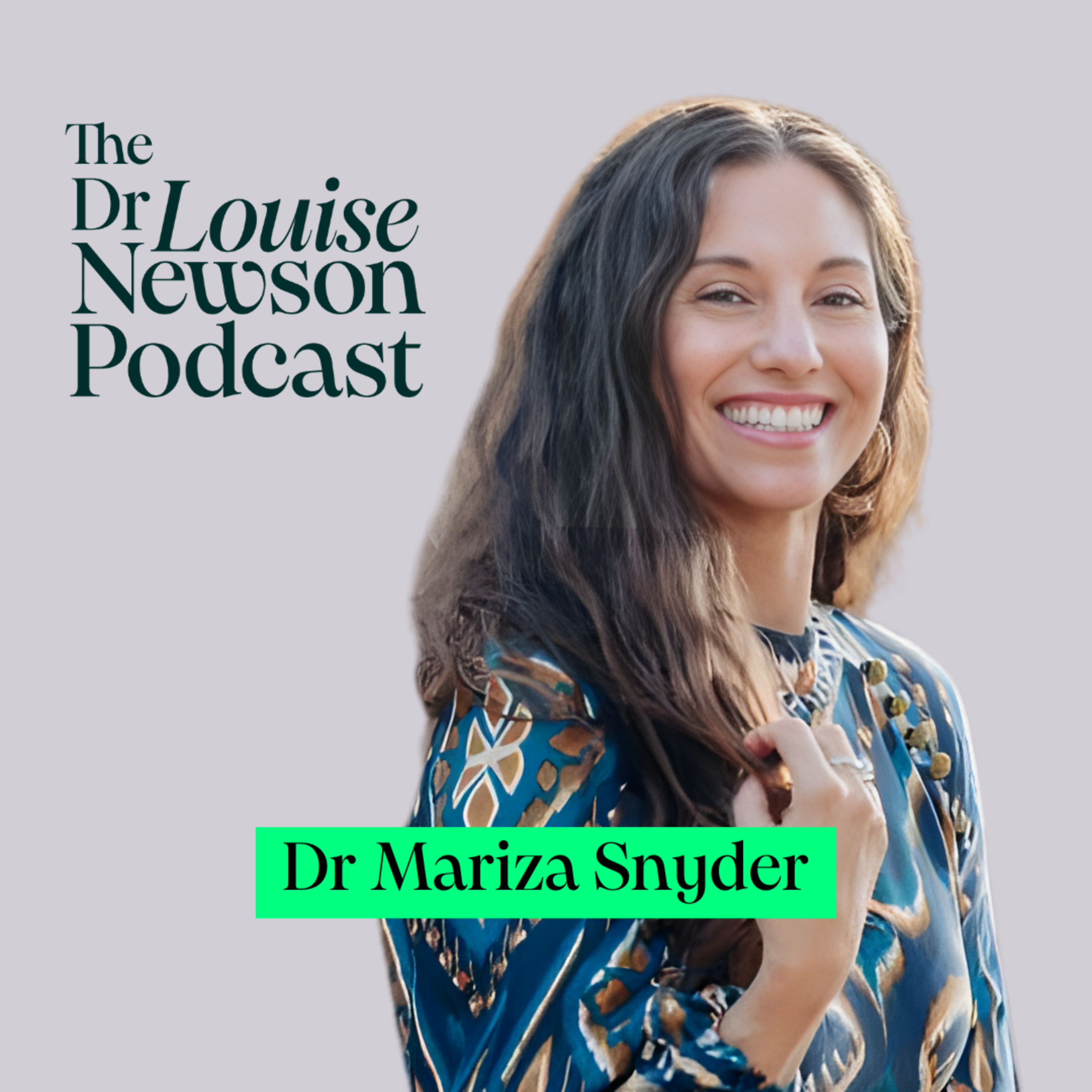
On my podcast, I'm talking with Doctor Maria Schneider, who is a functional Dr.
She's a hormone specialist and an author.
And we talk a lot about perimenopause, how to diagnose it, how to listen to women and how to think you might be perimenopausal if you are, and how to talk to your doctor.
But we also talk about migraines and the big association between migraines and hormones.
So lots we cover.
It's a great episode.
So you're in US.
I'm in the UKI spend a lot of my time frustrated, and I know you do as well.
And, you know, hormones have been around for many, many years.
We've known about them for decades.
But what we still find is that so many of us as doctors are misdiagnosing women and not joining the dots and thinking, and there is so many symptoms associated with changing hormone levels.
And we've got all these labels that we give women.
So perimenopause, menopause, PMS, PMDD, PCOS, like and like in my mind, we should be describing what's going on because then we can get a better understanding.
And there are different hormones and they change at different rates.
And we're all different, aren't we?
So I find like, it's quite hard for women to understand and healthcare professionals to understand how do we make a diagnosis of perimenopause and what is perimenopause?
And I'm still not convinced.
In my mind, I know what perimenopause really is.
I don't know about you.
Yeah, I agree with you.
I mean, I'll never forget being and feeling blindsided by perimenopause.
You know, initially I got a front row seat to perimenopause when my mom went through it about 16 years ago.
I had just entered practice and all of my patients were in midlife and they were struggling with a lot of the brain related symptoms that we see in perimenopause that they were being siloed into, you know, psychiatrist or mental health and be in therapist and being recommended medications for a lot of the the mental health and mood related symptoms of perimenopause.
And I really wasn't connecting the dots back then.
This was in 2010.
But when my mom started going through it, it felt very real.
It felt very visceral because I had known my mom.
I knew how strong and stable and, you know, just how, how sharp she was, you know, obviously having a very high level job with a lot of executive function.
And it was as if her brain turned to mush.
Her moods felt uncontrollable.
She felt untethered.
She was struggling with perimenopausal rage.
And it was just a multitude of symptoms that begged the question, you know, something that something else is happening here that's not adding up.
And that's when I really got to see what happened.
I'm really got to see a front row seat of what perimenopause could be.
And then it happened to me.
And it's so interesting how you can take care of women for a long time and help to support them and educate them, but then it happens to you.
And nothing can really prepare you for the low stress tolerance, for the irritability, for the, you know, the perimenopausal rage.
I remember just feeling at times just this deep sense of dread and that life was insurmountable.
But it was fine days ago, right?
And so how I really describe perimenopause to my patients and to my community is it's a profound silent hormone shift, you know, kind of similar to puberty and even postpartum, where our brains are massively reorganizing and shifting.
I think of it as a neuroendocrine transition.
And I, I, and because of that, it's never surprising to me that a majority of the symptoms that my patients have are brain related.
The ones that I mentioned earlier, the sleep issues, the mood swings, irritability, rage, anger, depression, anxiety, hot flashes, night sweats, you know, lack of mental, you know, alertness and memory.
All of these are in relation to perimenopause and this defining transition, you know, I consider to be a window of vulnerability for us if we continue to be on a default path.
But because it's a window of vulnerability, I think it's also a window of opportunity about how we can support our future health in the second-half of our lives.
Yeah, absolutely.
And it's interesting, isn't it, because the commonest symptoms of those affecting our brain, and we've seen that in our clinic, but also with balance out, we've had hundreds of thousands of women reporting their brain fog, their anxiety, their low mood, their poor sleep, their fatigue.
And we're always taught that perimenopause is that time before menopause.
And menopause is as many people know as supposedly a year after our last period.
But people say it's when the ovaries, you know, the hormones being produced really fluctuate.
But I really think that menopause is more of a brain condition anyway than an ovarian condition.
And I don't know, and I don't think anyone really knows, is it the hormones that have been produced in our brain that are fluctuating rather than the ones that are just in our ovaries?
And we don't really know because the whole focus has always been on fertility and periods and ovarian function.
And we know that ovaries are important because when they're removed in young women, they have often horrendous symptoms.
But you just wonder what else is going on because when women, for example, who have quite severe PMDD, premenstrual dysphoric disorder, when they have their ovaries removed, they can still get cyclical changes.
And that's because their brain is producing these hormones.
So I think knowing how the hormones fluctuate, but also the levels because when I was perimenopausal, sometimes I would have like awful rage and, you know, really irritable.
But a lot of the time, every day I felt exhausted.
Every day I was just couldn't remember things.
The brain fog was persistent.
But looking back, I think I was very testosterone deficient for probably about 10 years before I started testosterone.
And this is where I'm thinking about the labels.
You know, calling me perimenopausal is not that helpful, but saying that I had a testosterone deficiency and a mild progesterone and estudinal deficiency is a lot more useful, actually.
And I think that's really important when we're thinking about how to help women and make the proper diagnosis, isn't it?
Yeah, I think what's really helpful is when women can really connect the dots between their symptoms and how it's impacting their lives and in relation to hormones.
And that's why I think we really need a multi faceted approach when it comes to taking care of our women.
One, we are listening to their symptoms and we're seeing how it is impacting their lives.
You know, like you said, it's, you know, the fatigue every day, not just the rage in the later part of the luteal phase of your cycle.
You know, it's can be so inconsistent.
I think initially women in perimenopause, especially with regular cycles, they, it can be cyclical in pattern in terms of their symptoms.
But then as we get into later, it's just it's a continuum of erratic declining hormones is really what it is.
And the response, the body's response to those declines when we don't have hormones rhythmically binding to receptor sites the way that our bodies have been used to.
And so as we move into that late perimenopausal state where, again, cycles are irregular and everything just kind of feels like it's erratic, it can be really hard to pinpoint if symptoms are cyclical anymore or not.
It can just be, you know, it just all just feels like 1 continuum of chronic fatigue or hot flashes and night sweats, low libido, frozen shoulder, lack of the ability to recover from workouts or even things like blood glucose levels becoming destabilized and overall metabolic markers going out of range, Things like, you know, increased hypertension over time.
And so I, I agree with you, looking at levels, looking at symptoms, how these symptoms are impacting our lives and also what are the goals of that patient?
How is she hoping to feel in the next 60 days?
And then how can we build a plan to really support her not only with HRT and, and medications, also in lifestyle interventions and how she can really tend to herself in a way?
I feel like this transition does really require a new level of support.
There's a lot of things that I feel like we just can't get away with like we used to in terms of, you know, really supporting our sleep levels, supporting our blood sugar levels, moving our body and carving out time just for us.
I think that was those are really important pillars as we navigate this transition, which is really setting us up for the next 40 plus years.
Yeah.
And I think it's really important this word transition because I, I put post recently on my Instagram to say that it's not a transition.
And what I was meaning by that is it's not a transition into something that we have to adjust to and have to change to.
And I think there is this narrative, isn't there, that with perimenopause, that's the chaos time.
And then menopause, things will be calmer and, you know, they transition into something else.
But then in menopause, hormone levels are low and there's even more risks to your future health as well.
And symptoms might change or they might reduce, but you've still got this cardiometabolic problem.
You've still got the risk of inflammatory disorders.
And so I think there's a lot of talk out there, when I say out there often on social media, talking about how you can sort of supplement your way through the perimenopause or you can exercise your way through.
And I think we have to be thinking about those hormones and what important roles they have in our bodies and tissues and organs.
Yeah, I agree.
We have to be thinking about long term health.
I think one of the biggest myths that I hope to dispel is that we get on the other side into menopause and that everything's going to be OK.
What about the muscle loss?
What about the bone loss?
What about the changes in inflammation in the brain?
What about the blood sugar levels and the lipid levels in the inflammation markers?
A lot of this is silent and this is developing during due to erratic, not just declining hormones, erratically declining hormones which can drive inflammation.
We know that these are these are immune system modulators.
And when it's erratic, you know, often we'll see inflammation particularly in the brain.
As you mentioned earlier.
I do believe that this transition is more of a, a neurological transition than any, than anything else because I see my women even on, you know, kind of figuring out dosage for HRT and still, you know, certain times of the month having more brain related symptoms and other times like it can be so inconsistent.
And that's why I think it's important that we're looking at the entire body and we're looking at the the areas that are silently shifting, particularly the cardio metabolic health.
We know that a majority of women in developing countries are going to die of a mostly preventable, you know, heart attack or stroke.
Why aren't we looking at that through line earlier as we start to see the erratic decline of estrogen, progesterone and testosterone in women in their in their 40s in early midlife?
Yeah.
And one of the problems of we all know is that the medical system is failing women actually, because we haven't been taught properly.
No one told us what hormones did to our body.
And I know for many years as a doctor, people would come in with their low mood, their brain fog, their anxiety.
I didn't even think about hormones because no one had taught me and I didn't join the dots.
But actually what has changed over the last 10 years or so is that women have become more empowered and they've become more knowledgeable.
And I think that's the most important thing when we think about changing the scene, changing and improving things for future generations.
Because now women are going to their doctors and saying I have brain fog, I have anxiety, I have low mood.
And you know what, I think it's related to my perimenopause.
And that's happening in the US as well as in the UK, isn't it?
Yes, it is.
The reason why people, you know, ask me a lot is why is perimenopause having a moment?
It's because women are demanding to be heard.
Women are advocating for themselves and they're asking direct questions.
Could these symptoms at 43 years old or 45 or 40 years old, you know, wherever they land in that continuum.
Could this be perimenopause?
Could this be declining hormones?
And can you support me in this journey?
Do you take care of women in perimenopause?
Are, are you trained in menopause and perimenopause care or do I need to find someone else who can really support me?
I think that's the reason why we're having a moment is that women are, they're tired of being ignored.
I, I mean, think about how many generations of women were just given, you know, antidepressants or they were told it was just aging or that this is how it is.
This is how it is for women that we just kind of suffer silently and we need to be stoic.
And women are done with that.
I think one we don't, we're feeling, I don't know if we're feeling worse, but we're beginning to really connect the dots between how we feel and our that are we just don't we don't feel like ourselves anymore.
And it's got to be connected to something bigger than us just aging over time.
And I think, you know, as doctors, we have to listen to our patients and we have to explore it because not everybody with low mood is going to be perimenopausal, but a significant amount are.
And we can't keep ignoring them and gaslighting them.
But you know, I saw someone in my clinic on Monday who's 54 years old.
When she was 47, she started to develop anxiety and worsening headaches and migraines, which she'd never had before.
She's feeling a bit clammy at night time and she's getting some joint pains as well.
So she's been back and forth to a migraine specialist who's tried to optimize her migraines with all sorts of medication, including off license medication of course, and it hasn't helped and cause side effects.
So then she went to see a hormone specialist because he said I don't know anything about hormones but go and see this woman.
And she went to see him and she showed me the letter and it said bloody blah blah, you know, having migraines, whatever.
She has no symptoms of estrogen deficiency, therefore she doesn't need HRT now.
This lady's 54 and she hasn't had a period for two years.
Unsurprisingly, she's menopausal, right?
She's she's in a state of of estrogen division.
Seriously.
So I was there reading the Lesser thinking, right?
Do you have to have awful, awful symptoms before you can diagnose estrogen deficiency?
I don't think you do.
But also, how does this doctor know that her headaches and migraines, her anxiety, her other symptoms, you know, being clammy at night?
Like, why are those not related to estrogen deficiency?
It feels really weird.
I think it's very clear that there is still a big knowledge gap in our clinical research in kind of the bedside manner and the information that we have in a healthcare system.
And you mentioned earlier that we are still continuing to fail women.
We are not connecting the dots.
I was interviewing a dear friend and a fellow practitioner here in the States and we were talking about her symptoms of perimenopause.
I'm doing this, this really kind of this exclusive podcast series called the perimenopause Expert Tell All because I find that a lot of doctors like ourselves, we are always, you know, being the experts.
But I, I want to know, you know, what has been the raw experience?
What happened behind closed doors when you went through this profound transition?
How did it uproot your life, your career, your family, your your just your relationships?
Because it is, it is rewriting your midlife story.
And she was telling me she was in her late 40s, about 4849 years old, and her sleep was severe.
She was struggling with headaches.
She was dealing with mood, most importantly her brain.
It felt like mush.
And I think about women that are very high level and she's written many books and she's supposed to be writing this new book.
And she wondered, she's like, I don't maybe I can't write this book anymore.
Maybe I'm never, my brains never going to recover.
You, you really do feel like you're experiencing early signs of dementia.
And so she went to her Doctor Who happened to be on leave, on sabbatical.
And she got another doctor, another woman who was 65 years old told her hormones are not indicated at this point in time.
They're not indicated for your symptoms.
And, you know, as far as your sleep is concerned, like just grit through it.
I do, I think that's very much that that the kind of the underlying narrative is that women should have to suffer through this and then maybe come up with some, you know, Band-Aid solutions to just manage it all the way through.
And I, you know, I asked her, I'm like, how did it feel to be like so many of your patients who've come to you after they've been dismissed and they've been gaslit about their symptoms?
They're told there's something that they can do about it.
You know, not really.
And she, it was really eye opening.
And so I, I can't tell you how many times I've met hormone doctors, you know, OBGYN's who have gotten the same treatment as the millions of other women that I know out there trying to advocate for hormone replacement therapy and are told that it's, it's not indicated for these symptoms.
Yeah, and it's such a shame.
And you know, there's lots of reasons why women choose to take hormones.
Sometimes it's for their symptoms, sometimes it's for their future health, and often it's for both.
But one of the reasons this woman came to see me was because she had heard me talk about having migraines and she just wanted to get my opinion.
And I know that you're a migraine sufferer yourself, and migraine is a chronic long term condition and it's often a genetic condition.
But it definitely can get worse for many of us when my hormone levels are changing in our brains and it can be triggered by a change in estradiol, progesterone, but also testosterone levels as well.
And for many years, I think people have misunderstood the importance of hormones with migraines.
And I think it's worth just unpicking that a little bit more because there is still some confusion.
People think that we can't have hormones or if we give hormones, it might make migraines worse.
But many cases, including for me hormones have been transformational for for my migraines severity and frequency.
Yeah, I've, as you mentioned, I've struggled with migraines since I was a little girl.
I started getting them when I was 7 years old and I got them under control.
For a while I got pregnant when I was 40I and during that pregnancy they came back with a vengeance.
I averaged probably two or three a week during that pregnancy and they have continued since.
I, I didn't remember or recall having a lot of very early pre menopausal symptoms leading into the pregnancy, but about two years postpartum is when it really started to hit me.
What I think exacerbated a lot of my migraine symptoms and that drove more brain inflammation because I do believe migraines are are tethered to inflammation in the brain was 2 back-to-back concussions that I had in 2023 about two years ago.
And ever since then they've been more pronounced.
However, you know, I have implemented a lot of strategies to manage them.
One, balancing blood glucose, a lifestyle, you know, I'm always mindful like what drives brain inflammation in general.
You know, I know that blood glucose can like, you know, insulin resistance in the brain can do that.
Poor sleep can do that.
You know, oxidative stress from overdoing over pushing.
But most importantly, mine have always been tied to menstrual migraines.
So I, you know, a decline in both probably progesterone and estrogen.
Now, I've been playing with a lot of dosage.
We were talking about this last time I was on your show or you were on my show where I have been noticing when when I'm on hormone replacement and actually a higher dosage of estradiol.
So I'll even increase my dosage about three to four days prior to my period.
I can mitigate them or they're not as severe.
Yeah.
Now I, I just ran labs with a company here is a huge multi lab panel and they wanted to run labs two different times, 1 during my period and then two during like about 10 days later.
And so and it was recommended to not be on hormones at that time.
And I was curious to see what was going to happen.
So I took off the estradiol patch that I normally wear leading into my cycle for these labs.
And as a result, and again, I'm just an end of one experiment and I'm always experimenting on myself.
I ended up with a three day migraine, a migraine that didn't end until yesterday when I was flying here to Washington, DC and it was unbelievably disruptive.
It's the kind of mic and I don't, there's no, I don't know, there's quality and different types of migraines, but but this three day migraine where I just feels like there's no reprieve, like it feels like no medication can touch it.
There are no words for the level of disruption.
Like I it's just it's more of a prayer that I wake up the next day without one.
It, I've, I mean, I've noticed that with, with actually Esterdale and testosterone especially, so if I use a lower dose of oestrogen, then it triggers migraine.
And I've done it before where I've forgotten to change my patches or a few weeks ago.
I, I just, I wear more than one patch and I'd, I'd put them on my back.
So I hadn't realized until I'd taken them off that two had overlapped.
So they weren't actually getting through.
So I was using a lower dose and that week my migraines were just awful.
And then a month or so ago, I was just trying changing from the testosterone cream to the testosterone gel, just just to say about the absorption.
And over the weekend I was really tired, like really brain foggy.
And my husband said, are you all right?
Have you changing your hormones because you act like you used to?
And I said, Oh, well, funny that.
And then the migraine came out of nowhere and it lasted for a few days.
And sometimes if migraines are short acting, it's sort of fine.
I go to bed, I take some medication and I think I'll wake up and I'll be fine.
But when it hangs on and hangs on, it's, you can't think properly.
That's really hard and it's just so awful.
So now back on the testosterone I've been on for many years.
I, I, I'm OK again.
But I see this in patients.
They really respond often to testosterone and there's limited data, but it does make sense because we know that the hormones reduce inflammation.
They help the this even the size of the blood vessels.
And it's really often the missing peace for so many women.
And with migraine, it's not just about hormone, obviously.
It's about taking the right exercise, eating the right thing, having the right routine, thinking about any supplements which may or may not be helpful, but but you can do all that.
But if your hormones are out of because especially in the perimenopause when they're really fluctuating, it can be really detrimental concept.
I agree with you, there's so much that we can do to help maybe mitigate them or lessen them.
However, I mean anti-inflammatory diet, moving your body, getting good deep restful sleep.
So being consistent with your sleep time and your wake time.
Yes, taking supplements like magnesium and vitamin C and activated B vitamins, maybe even melatonin at night to reduce that brain inflammation.
However, I will tell you that I have there's no one more committed through not having migraines then probably us and me.
And I will say that even I can check all the boxes and if I have an erratic drop, which is what's happening in perimenopause again a more frequent migraines than ever before then I can ever remember in my life.
If I am not dialed on my hormones, I, I will, I will have more severe migraines that will last longer.
I will say that walking out of this experiment of not wearing an estradiol patch, a higher dose estradiol patch at the onset of my period just to run these labs was simply not worth it.
It was not worth the three days of pain and suffering.
And so it was just a beautiful reminder to me of like what I am willing to say yes to and no to.
I'm not willing to run labs without an estrogen patch on anymore if it means I have to run them, you know, during my period.
It's just not like I, it's interesting how sometimes we'll, we think we're like, oh, you know, let me make this little, you know, shift and change and I'll, I'll, I'll forego this for a moment for this thing.
And what perimenopause has taught me, particularly with the onset of more migraines, is that I'm not willing to compromise my health.
I'm not willing to compromise my quality of life.
And you know, I'm, I'm, it's my, my health and, and my ability to have a functioning brain is, is the most important thing in my life.
And it's, it's so important.
And, you know, I sort of think migraines are a blessing and a curse in some ways because I can't cheat on my diet.
I can't stop doing a certain exercise or I can't go to bed really late because I know the next day I'll, it will trigger a migraine.
So it, it helps you to be healthy, you know, I can't, I can't just go and buy some junk food and think it will be OK.
And if I do, I know I'll get a migraine and it's just not worth it because they're so awful.
But I do think if anyone's listening who he's getting worse in migraine and it's of any age really, but especially if it's triggering before periods, we've got to be joining the dots.
We've got to be thinking about hormonal changes.
And this is very different to contraception.
So a lot of people find that when they're on contraception, migraines might get worse or in their pill free week, they might be triggering migraines.
So but having the natural hormones, especially like you say, the estrogen as a patch or a gel doesn't have a clot or stroke risk.
So it can be not only safe but very transformational for people with migraines.
I absolutely agree.
Yeah, I know that there is some, you know, concern around contraindication with women with migraines and aura, but I believe that the transdermal patch in gel really helped to mitigate that.
Or cream, whatever.
But as long as it is transdermal and it can make a world of difference.
But I absolutely agree with you as well with migraines and, and anytime we're dealing with chronic issues, you know, it is a blessing and well, it really a hidden blessing in a lot of ways because it does force you to be more intentional about your health.
Another part, another aspect where I, I get to be really mindful.
I don't know if this is true for you, but it's just really, really mitigating stress because I find stress can be a major trigger point for migraines as well or just, you know, again, other inflammatory driven conditions and diseases.
So another thing to be mindful of, you know, there was a lot of years where I could really get away with stressing my system and borrowing from, you know, my norepinephrine and epinephrine and those corticosteroids.
But now I'm in a time in my life where especially when I'm more sensitive to hormone fluctuations, my brain is much more sensitive.
I can feel that in the brain related symptoms that, you know, prioritizing myself, getting alone time, spending time with friends, being out in nature, you know, prioritizing my morning and evening routine.
All of these are strategies and habits that have helped me have less inflammation.
You know, I just got my highly sensitive CRP and it's below .5 milligrams per deciliter here.
And I was so happy because I've been working so hard to mitigate inflammation in my body.
And so it was good to see that.
Hey, even still, it's interesting to see labs and to see labs in optimal range and then to still be suffering with migraines.
So it's important to be connecting the dots between your your migraine symptoms or your chronic pain symptoms and hormones.
I will say that because although if you look at my lab reports, they look like a chef's kiss.
A lot of people would love my labs.
And yet I'm still suffering from migraines when I don't have my hormones dialed appropriately.
Yeah, so it's so important and really great advice.
Thank you.
So before we end, 3 tips.
So three things that would help people who are suffering with migraines and it could be related with their hormones as well.
What three things would you say to these women?
Number one is track your migraines, track when they're happening.
Get as much data as possible so that you can really communicate with your doctor what is going on so they get the right type of care #2 talk about HRT, open the door for that conversation.
Ask your doctor if they're willing to prescribe hormone replacement therapy for migraines that look like they're very much related to hormone fluctuations and most importantly, declining hormones and the number three lifestyle.
Again, treat your sleep, treat your meals.
I always think about what I'm putting on my plate and what I'm eating.
Is this nourishing my future brain More and more than anything I want to know, is what I'm eating nourishing my future brain?
Is it going to give my brain the appropriate substrates that I'm not driving Brain inflammation, sleep, your, I would say also movement and not just the one workout, the one with resistance training workout or the cardiovascular workout.
Do your best moving your body throughout the day, whether that's a couple squats after a meeting or that's walking after meals.
We know that that working out is going to support your mental clarity.
It's going to help you get better, deeper, restful sleep, and it's going to help freak your proof your health down the road.
And that's a lot about what my book The Perimenopause Revolution is all about is 1.
Connecting the dots between our symptoms and declining hormones, advocating for your health because you have this information and data about yourself that can help you steer the conversation to getting the support and the HRT and the the solution that you deserve.
And then stacking lifestyle strategies that are going to not only mitigate symptoms right now because it's important that you feel alive now.
This isn't about surviving through the second-half of your life.
It's about thriving with more confidence, more energy, more mental clarity and more joy.
So having those habits that don't feel overwhelming, that just augment and help to make you feel more alive in your body.
Brilliant advice, thank you.
And just hold up your book so we can just see the title.
Here it is, the perimenopause revolution.
Reclaim your hormones, metabolism and energy.
I am so excited to get this book out into the world.
It has a five week road map and again, is, is, is menopause and perimenopause A5 week plan?
No, it is a full lifestyle strategy that you get to implement.
But the way that I built that five week program is you know, when you get to the the end of this five weeks, my intention is that you feel different.
You feel more confident, you have more wins, you feel more motivated to continue that lifestyle for many, many years to come.
Perfect.
So I look forward to reading it, but thank you so much for your time today.
It's been great.
Thank you for having me.