·S2 E30
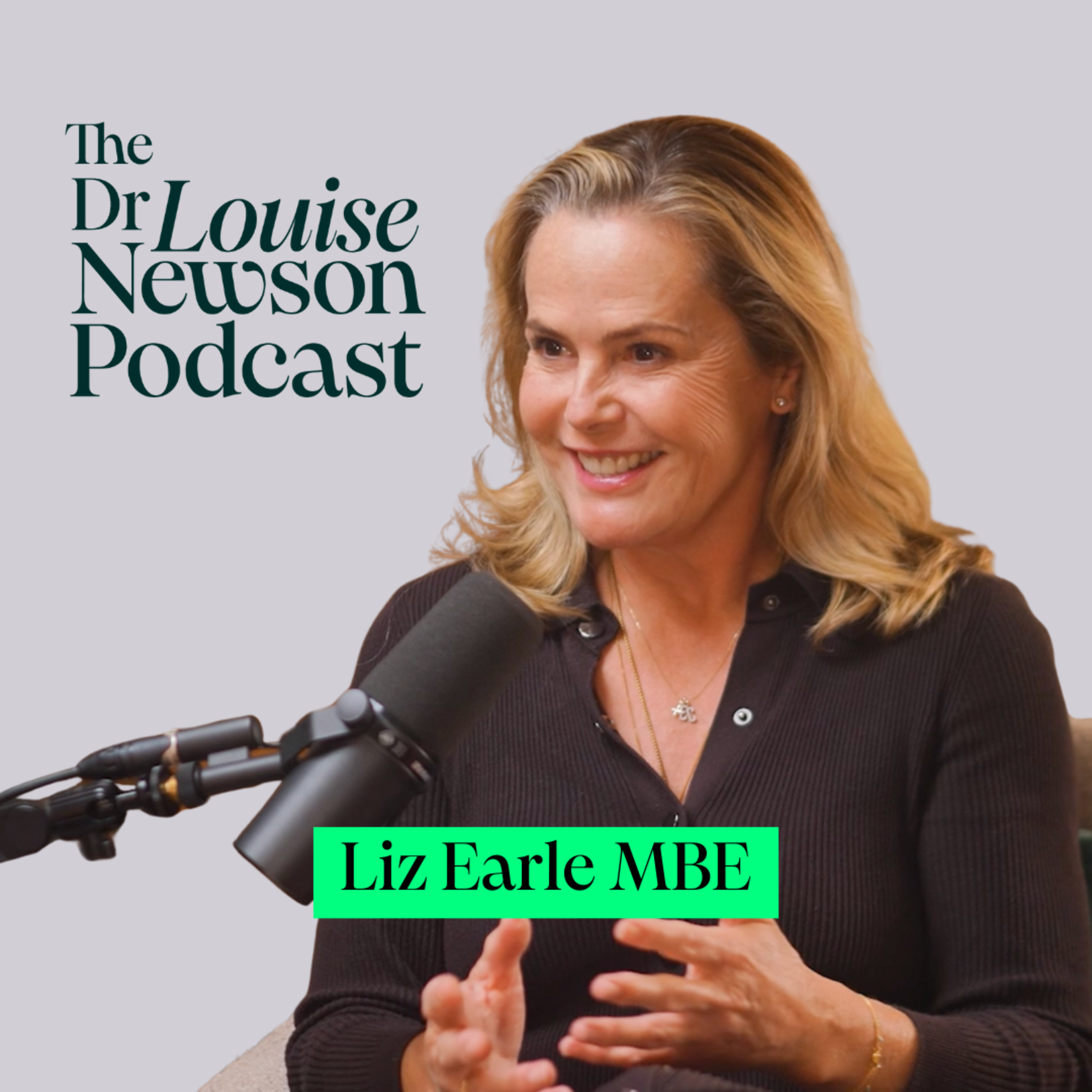
30 - Challenging the invisibility of menopausal women with Liz Earle MBE
Episode Transcript
As many of you know, I'm passionate about helping women make positive changes for their long term health and well-being.
One of the things we often overlook is how important our feet are.
They're our foundation.
That's why I've been really impressed by Vivo Barefoot Shoes.
They're designed to let your feet move as nature intended, improving strength, balance and connection to the ground beneath.
You Vivo Barefoot are so confident you'll feel the difference that they offer 100 day trial with a full money back guarantee so you can try them completely risk free.
And as a listener of this podcast, you get 20% off your first order with the code NEWSON 20.
Just head to vivobarefoot.com and give them a try.
Your body will thank you.
So Liz Earl is my guest today.
We talk about hormones, we talk about keeping healthy and preventing diseases, and we talk about how we can keep well for as long as possible.
See the difference between health span and lifespan.
It's a great episode and I hope it will really inspire you to look after yourself, So welcome back, Liz.
It's nice to be here.
It's really nice.
So we're doing it in real life, in person.
I know, not just online.
In a great studio, so yeah, there's lots to talk about.
I feel like I need to talk quickly because it's only half an hour, but you'll come back so it's fine.
Thank you.
I can't remember how long I've known you for, but it feels like quite a few years now.
Is it nearly 10 years?
It feels.
About that, I think so, because people say to me when did you start HRT?
And I just started obviously.
Well, I think I met you.
Before I was on HRT.
So that and I'm now 62, so it must be more than 10 years because I think I started my HRT around sort of 5150.
Two.
Yeah, because you'd written or you'd sort of reactivated an old book, an old book HRT with all the.
Wrong information.
And then very luckily, one of my researchers found you, who said no, no, no, this is this.
Is all.
Do you know what?
I was so scared speaking to you because, well, you get, you've got to know me now.
But I'm really honest, and I needed to be really honest with you that.
It was and tell me.
The wrong information.
And what I really respected about you is that you really listened and but you didn't just believe me, you went off and did your own research.
And that's really important because there are a lot of people who well, especially over the last 10 years who are on this so-called menopause bandwagon who just learned things, pick things up.
They got their own agenda.
But you, you didn't say, oh, yes, Louise, let's just change it because you've said it.
You've said no.
Show me the papers.
Yeah.
Introduce me to some other people.
Let me hear it from other people as well.
Yeah.
Which has been brilliant.
So.
Well, it was a real eye opener.
It was a real journey.
And I think, you know, for me, all my life actually, I've really tried to campaign and rail against injustice.
You know, whether it's, I started a charity, I sit on the board of the Centre for Social Justice, which kind of, as the name suggests, you know, is all about social justice.
And when you see things that are so obviously wrong, particularly things that affect real people, especially real women, real midlife women, you know, that you really relate to as a midlife older woman, and then staggeringly, things don't seem to change.
I mean, that is the real frustration of it, isn't it?
Sitting here all those years later, you would have expected it to people to wake up and go, oh, well, yes, of course we need to change this.
Of course, we need to have more education and more awareness and more availability for women and better healthcare for for particularly for older women.
Because I remember sitting in the kitchen of your studios, You know, we were filming a Facebook Live, weren't we, many years ago.
And then I came again and recorded a podcast with you.
And I felt like I had this explosion of words.
I don't if you remember, I was like, Liz, I've been seeing people in the clinic and they've been turned away.
They've been given antidepressants.
I hear all these suits because my clinic had only really just started and I was on my own and I was like, this, this is awful.
This is awful.
And I remember it was before you'd sort of started this big community that you have now.
I remember because you're always so lovely and calm and I always feel a bit like chaotic and.
And you were like, yes, that's interesting.
But I don't think you realise, and I didn't even realise the enormity of the problem of women not being believed and listened to.
Yeah.
And not being able to access hormones.
And you know, a lot of my work has been educating people about the difference, as we did with you, between the natural hormones and.
The she's not even just, you know, getting over the whole scary issue of hormones itself.
It's then saying, well, they are very different.
Yes, totally synthetic, totally identical.
And so we've worked together separately in lots of different ways, but a lot of it is about empowering women and enabling them to make choices about their health, their lifestyle, everything.
And there are some women who are really fortunate who can go to their NHSGP.
Yeah.
They can get all three hormones and vaginal hormones if they need them.
And then their next sort of phase is looking at their exercise, their nutrition.
Yes.
Everything then slots in in an amazing way, yeah.
But yeah, that's true.
I mean, I, you know, I work a lot with well-being and lifestyle.
And you know, I always say it's not just your hormones.
You've got to look at what you're eating and you've got to, you know, lift more weights and prioritise your sleep and, you know, have purpose in your life and all of that.
But unless you get the underpinning of the hormones, how then do you have the the warmth, the oomph and the the mojo to actually go and do that?
And you know it for me, you know, I'm far more active now than I ever was.
I lift heavy weights.
I run, which I never did before.
I never would run anywhere, not even for a bus, You know, my 40s or 50s.
Yeah.
And it wouldn't.
I just wouldn't feel capable of doing it.
And I I, I mean, it drives my boyfriend mad.
You know, we've just come back from a long drive.
And, you know, we, we go through these small towns and I see older women who are stooped and hunched and clearly in pain.
We know walking with a mobility aid.
And I just look at them, my heart breaks for them because I think I, I know how much you're hurting physically and emotionally and mentally, and you've probably got raging UTI's and your joints ache and you're anxious and you're, you know, scared to be outdoors.
Because we know that, you know, so much of our, our brain capacity disappears with our declining hormones.
And I I rage with injustice for these women to think how they've been let down and are continuing to to be let down.
Absolutely.
And and it's a global problem.
It's not auk problem.
We're living so much longer, which is great, but actually that whole health span lifespan is completely different.
And we know that the last 10 years of a woman's age is often in poor health and that's often because of the inflammatory diseases.
So osteoporosis that you say with this curvature, heart disease, diabetes, non alcoholic fat, liver disease, cancers, Parkinson's disease, multiple sclerosis, they're all inflammatory condition, autoimmune diseases, but no one's joining the dots really properly and thinking about the role of hormones and all of that.
But we want to keep well.
And that's what you do so well, you personally, but also to educate.
People, I feel really strongly about it.
You know, my, my last book, a better second-half was because at hitting the age of 60, I felt happier and stronger and fitter and more capable than ever in my life more than in my 30s, forties, 50s.
And, you know, I, I fully intend to live 120.
So I am physically hopefully halfway through, barring the proverbial bus outside that might catch me.
But you know, in, in terms of health span, it's about living well for longer.
So those last 10 years that you mentioned are not spent in pain and incapacitated, immobile, loss of cognitive function, etcetera.
So we are living longer.
Like it or not, you know, modern medicine is keeping us alive.
But how do we do that then, and not be in pain?
And how to be mobile and independent and purposeful?
Yeah, a lot of my thinking time and some of my work is thinking about the harms of denying women evidence based hormonal treatments.
And I'm really careful when I say hormones because I think we need to be really specific about the hormones, progesterone, estradiol and testosterone.
And I use those words really carefully because progesterone is the natural progesterone, as you know, not synthetic progesterone.
Estradiol is the good form of estrogen and testosterone.
It has to be the proper testosterone, not a synthetic form.
But those 3 hormones are really hard for most menopausal women to access.
Like the majority of menopausal women in the UK and in every country are not able to access it, which is just scandalous really.
I think what's really shocked me over the years is the fact that so little research was done for women, you know, even on mainstream drugs, you know, they're on, on white middle-aged men of a certain age.
And actually anybody who falls outside that parameter is, is excluded.
And, you know, we know that women are not just small men.
Chromes only.
Every cell in our body is, is different.
Our hormones are different, our pain pathways are different, our fat distribute.
I mean, you can just go on and I don't need to tell you.
You're the medic, not me, But you know, the fact that so little attention was paid to female health care and then you factor in the ageism.
So it's not just a gender inequality, but then it get ageist as well with it and it's just as if older women we just don't really matter.
No, no, you.
Know we've served our function, we've procreated maybe or not.
We've been a caregiver of, you know, whoever is around us at work or at home and actually it's time to just go and just be quiet.
And it, it's, it's just so wrong.
I rage all the time.
Sorry, I've used that word rage so many times.
Haven't I today already?
But it is because it is this whole invisible woman.
But actually we are like not really important for society.
But it's also a personal thing.
Even if I had no dependence, I didn't have a job.
I was living on my own in wherever I still want to keep healthy.
And it's a choice thing.
Yes, they I choose whether I get up earlier to do yoga or not.
You choose whether you do weights or not.
You choose whether to run in the park or use a machine.
We choose what we eat.
Yes, we choose whether we smoke or not.
But somehow the choice about having hormones, it's not even a.
And if a younger woman can, she can choose whether or not she wants to be on the pill.
Yeah, which is a synthetic hormone with far more health risks.
And that suggests, do you go to your GP or, you know, possibly even your pharmacist, certainly in some countries.
And it's just given out without a thought, which I find much of a thought.
Well, it's true though.
I mean, you've got daughters, I've got daughters.
They can get any type of contraceptive.
And why?
Can't I have my natural hormones in a lower dose in a safer form?
It But how much is the narrative changing?
Because from what I see on my social media, Instagram particularly is my main kind of point of contact with people.
I get messages the whole time and comments the whole time from women even now going to GPS primarily and just not accessing, not even a trial.
Because I'll often comment and say, well, I'm not a medic, but this is the data, these, this is the evidence.
Why don't you ask for for a three or six months trial and see if your symptoms improve?
I'm always recommending the balance app because it's free and it has a great checklist and you can it fast tracks your appointment, doesn't it?
To your GP because you can say I've got this, this, this and this because that's the problem, isn't it?
With AGP.
If you say, oh, I've got achy knees immediately, you'll start talking to a rheumatologist.
Or if you know if you have anxiety immediately it's a psychiatric condition and it's antidepressant.
Whereas if you can go in with achy joints and dry eyes and UTI's and hot flashes and whatever, then it might be, oh, let's talk about hormones straight away.
And it's interesting.
I am complete Marmite in the medical community, so there's lots of doctors that really, really thank me for the work.
Especially balance that because they say it really helps our consultation because people come in with their health report, they've monitored their symptoms, any periods, and they literally sit down and say, look, I think I'm perimenopausal, look at these symptoms, can I help?
Whereas other people have said to me, Louise, your work has got to stop because what you're doing is educating people.
And then now they all think they've got a hormonal issue.
We see women in their 20s, thirties, think that hormones are going to help their sleep, they're going to help their headaches, their joint pains.
It's ridiculous.
And I'm there obviously really annoying saying why is it ridiculous?
I don't understand because it could be related.
It could be.
And actually, you know, as you know, I see a lot of younger women who have hormonal changes and they often need hormones for those days where the hormones are changing and reducing, especially before their periods.
And so I think every woman who comes in to a consultation, the question should be, could any of this be related to your hormones, you know, frozen shoulder?
Could it be related to your hormones?
Dry eyes?
Burning mouth syndrome?
Well for me it was my I had a hearing issue and I had tinnitus.
Which is really common.
Yeah, in my early 50s and late 40s, early 50s, and I had this constant kind of faint ringing.
And I was researching it and it was just like, oh, there's not much you can do about it.
I thought, Oh my gosh, I'm just going to have to live with this.
And then I've only, I've been on HRT maybe for about 18 months and I suddenly realised my tinnitus has gone.
And then I looked into it and I think we spoke and it was like, yes, we've got estrogen receptors on our ears.
And yet none of the audiologists had ever said anything.
And the same with dry mouth syndrome.
I was talking to a dentist the other day saying, well, you know, I bet you see lots of, you know, you can pick up lots of hormonal changes, can't you, because you've got lots of middle-aged women sitting in your chair.
And he said, Oh, well, they don't teach us anything about that in dentistry.
Doesn't it just doesn't make sense?
But I had palpitations when I was before I had Lucy, so it was probably about 35 and they were quite bad actually, especially at night time.
Obviously hormone levels are lower at night, but I didn't join the dots.
And it would sometimes actually wake me from my sleep 'cause I sometimes get chest pain, sometimes shortness of breath, which are red flags.
You know, they're concerning symptoms if you've got, yes, palpitations.
But it was more that I was missing a beat.
There was a long pause and then suddenly my heart would beat and it felt like my whole chest was, you know, just in pain.
And I'd sometimes wake pulled up and say, look, I, I think I'm gonna have to go to casualty.
I feel really ill when I was like, no, this is stupid, it will pass, it will pass.
Maybe I'm a bit anxious, maybe I'm a bit depressed.
And anyway, then I went to see a cardiologist, obviously wired up, had all these tests, everything was normal, but no one really said to me.
And they all melted away when I was pregnant with Lucy, of course, because my hormone levels were high.
And then even when they came back, I then started to get other symptoms and it was easy to join the dots.
But just someone saying, do you think it could be hormonal?
Yes.
Let's put it back to the women a bit and ask them, because women are quite intuitive, aren't they?
Definitely.
And I think it it, it's actually connecting those, those all those different symptoms.
You know, I think we, you know, I grew up thinking it was just about a hot flash, yes, and a night sweat.
And then it would pass.
Yeah, you know, that that's also the big, the big reveal that no, it may not pass.
And I think it was the achy joints and the dry eyes and the, you know, the anxiety and the headaches.
I mean, again, I, I haven't got any painkillers in my bag.
And and I look back to when I was in my mid 40s, I would never be without a whole stash of ibuprofen in my back because I would really get a lot of headaches.
And it was difficult time of life.
I was selling the beauty company, you know, Rocky marriage, all of that.
And there were lots of other factors.
And I think that gets blurred, doesn't it?
Of course it does.
So we, we can't, you know, you have to kind of, you know, take that out.
But, you know, I wonder how you cope with it, you know, because you say that you, you, you're quite Marmite for the medical community.
You know, you get a huge amount of praise.
And I always read the comments on your Instagram and there are so many, literally hundreds, thousands of women who say you have saved my life, which is, yeah, just a phenomenal.
And you know that.
I'm sure that keeps you going.
But then there are there are a lot of rock throwers, and that's hard.
It is really hard Liz and I I someone actually a couple of people in my research team last week said have you always been quite naughty and disruptive?
I said sorry.
I said I've never been naughty like I've always conformed like I used to get form prize.
I was a real girly swat.
I'd always just be under everyone's radar and do my best.
And then I went into medicine to help people.
They know.
That sounds a bit cheesy, but I'm not from a medical background.
No one in my family's ever been a medical doctor before.
And I wanted to become a doctor ever since I could, you know, walk and talk really.
And but I did it because I wanted to help people feel better.
And, you know, even after my father died, it was seemed so wrong that someone so young could die even with good medical care.
So it just really drove me.
And I feel sometimes, and I think maybe I'm a bit older and braver, but when these doctors push back, I feel like either don't know whether to laugh or cry because they think, do you not care about the people that you see?
And then when that we get letters of complaint, which we often do, to say, how dare you give progesterone to someone who's had a hysterectomy and their ovaries removed.
And I used to get very worried about these letters and very sad.
And now I think it's laughable that they don't understand.
It's just a natural hormone And someone's had their ovaries removed.
And we've all know and agree that ovaries produce esters hour, progesterone, testosterone.
Yet somehow we only give esters hour back.
We forget about the other two hormones.
And all the receptors for it all over the body and the implication of mood and emotion and all and sleep and, and all of those important things.
And I think, you know, one of the things that I've learned, and I guess through my podcasts and through working with a lot of academics and researchers is there's a great difference in the medical community between real hands on clinicians, people like yourself, and the doctors that you work with so closely who see women day in, day out and listen to them and have that real empathy.
And women who sit well, particularly, unfortunately, women, but it often has women researchers or particularly in your field who sit back.
Yeah, in their academic.
Yeah, libraries.
Or there's that ivory town who don't indeed.
They're not in clinic.
And one of the big questions that I have for women, you know, particularly who are in this world and who are doing the research, is how many patients did you treat last week?
How many women did you actually sit and look at and take their case notes and look them in the eye and actually talk about their symptoms and how you can relieve them?
And that's really important because knowledge is one thing, but putting it into practice is, is crucially important.
And even our education programme, we filmed actors and pretended to have consultations because people learn how to talk to people, how to address sometimes called quite sensitive conversations.
But it is, I mean, I was talking to a lady on Monday who's really at the end of Tether.
She's quite young.
She's tried to take her life four Times Now and she went to a a private clinic, not mine, a few months ago and they said it's not your hormones, just stop everything.
Of course it is a hormones, but no one's really addressing it in the right way.
The the gynecologist had removed her ovaries last year because they said it is a hormone problem.
Let's just remove your hormones and things will improve with something.
No, of course they didn't.
But how I've managed her now is very different to how I would have managed her 5 or 10 years ago because I think she's a lot more progesterone deficient and testosterone deficient.
And everyone's just been giving her different doses of estrogen and, and, you know, just talking to her and getting her to be part of the conversation.
Her partner was there as well.
She just said, no one's ever spoken to me like this before.
No one's really listened.
And I just thought, gosh, these poor women, it's just like they're on a conveyor belt.
She's been under psychiatrist, she's been under crisis team, she's been under obviously other.
Doctors thinking about their hormones.
But you hear this a lot, and you must hear it on your Instagram community, because I do.
Oh, so much.
And I look in the news as well.
And whenever I see a news report of a woman, you know, often in her early 50s, who's taken her own life.
And I know I have two people who I knew personally who are quite high profile who died by suicide at the age of 1, was 51 and one was 52.
And I look back and I think if only I'd known then what I know now.
And just, I mean, it's just so tragic.
And then also you look at historical figures, you know, I mean, I was up in York and not that long ago with kids, graduation.
And I think it was at Virginia Woolf who threw herself off the bridge there, you know, aged whatever she was.
You read her.
Suicide notes and her Diaries.
She was so tormented, but she had so much insight, which is what I see a lot with women who have mental health issues related to their hormones.
And she was just felt a burden.
You know, how she was writing was about I can't do this anymore.
I'm such a failure almost.
And she wasn't.
She was an incredible person, but.
But all throughout history that there are women in that same position.
Of course there was.
I was in Oslo at the beginning of the summer holidays and Edward Monk's daughter and sister was in and out of psychiatric institutions.
And of course I'm sure it would have been related to her hormones and you see it.
But that was then.
Yes, but that was back then.
But you really wouldn't expect.
And also particularly with, you know, there, I say, you know, high profile women who've got access, yeah, hopefully to, you know, any kind of healthcare that they would choose and they still fall through the net because there's lack of information.
And it's not just menopause.
This in the paper today actually I don't know if you've seen there's a lady who drowned with post Natal depression and post Natal depression is associated with an increased incidence and risk of suicide.
Yet these people, if you look at all the guidelines, they never mention hormones.
Really it's all about antidepressants.
But we know that levels of hormones are really high in pregnancy and they fall off a Cliff.
And we've, I'm sure with your various pregnancies you've experienced some sort of baby Blues.
Most of us have.
Yes.
And I'm very, very lucky in that they didn't affect me hugely, but they definitely did affect me.
And actually I was talking to Lily because she's got a one year old and she was talking about the the need for better awareness of vaginal estrogen, you know, after pregnancy and when you're breastfeeding.
And you know, that never crossed my mind.
And she spoke to her GP about it, who said, Oh no, no, I'm I'm not able to prescribe that for you, but.
It's madness, isn't it?
It's.
So safe and it's so you think of what the estrogen levels would have been a few months previously during pregnancy.
Why could it possibly be so damaging?
And during pregnancy we're protected, aren't we?
Our immune system comes in to make sure that we're OK and our new baby's OK and that's why it's giving us so much oestrogen.
So why would it suddenly turn?
Against us it's it's his madness And I I remember being scared after having Jessica when they kept saying day five.
It's always day 5, isn't it, that you might feel a bit tearful, you might feel a bit sad and then night sweats is because so-called your milk comes in.
Well, no, it's because you've got no hormones in your body.
And why I didn't think about just having a little bit of just hormones then just to smooth that would have been accused.
Then so post natally, yeah, you know, for literally for mothers in delivery wards to be given with a pump of oestro gel and just said look, just to help regulate the transition from lots of hormones to no hormones.
Absolutely.
And progesterone is that progesterone is transformational.
So you've probably heard of Katrina Dalton who was a doctor and she was fundamental about progesterone especially for post Natal depression and post Natal psychosis.
And I've spoken to some of her patients actually, who say they she absolutely saved their life.
And she gave quite high doses of progesterone.
But she was hold in front of the General Medical Council, the British Medical Medical Association tried to, you know, discredit her.
She had a very difficult time.
But everyone said she was very formidable, that you didn't argue with her.
And she actually went to my old school and I remember her giving a talk and I was about 12.
Yeah, amazing woman.
But she carried on because the women knew what was going on.
And she was very clear when you read her books that it had to be progesterone, not synthetic progesterone.
It had to be progesterone.
She knew then and she knew then.
And she's written some great papers about PMDD, about post Natal depression, because she realized for herself, her migraines improved when she was pregnant.
Yeah.
And she didn't know what it was.
And then she realised progesterone levels are very high.
Yes.
When when we're pregnant.
Well, even Lily having terrible migraines and I know you've, you've got that in your family as well.
And they will often say, oh, well, wait till you get pregnant and, and it'll be easier.
Well, why?
Why should she wait till she's pregnant?
If you know that it's going to get easier, or it could be, why wouldn't you not try a bit of extra?
Estrogen right now or progesterone?
Yeah.
It seems like it's there.
It's hiding in plain sight, isn't it?
Is.
Isn't it?
And and it's just joining the dots, but I sometimes think, like the frustration that I have about the difference in natural and synthetic hormones is what you've quietly and vocally had about olive oil.
It, you know, do you hear where I'm coming from, don't you?
Because years ago, you were advocating healthy, healthy fat.
Yeah.
It's the yeah, the difference between, you know, they're all fats, but yeah, some are damaged and healthy and yeah, you know, and unhealthy and, and some are, are, are not.
So we've done a full U-turn really with that, haven't we?
Because no ones disagreeing with that now, but there was a long time where you know, low fat spreads with.
Everything, Oh my gosh, you know, you go into any supermarket and you know, you had to put the healthy option into your into your basket.
And yeah, no, I was I was nearly sued by a well known margarine manufacturer for daring suggests that something low fat and full of trans fats and hydrogenated damage fats could be, you know, in in any way deleterious to our health.
And then of course they removed all the trans fats from.
It's interesting isn't it because people realise, but I think what's really changes that people understood.
So the people that were eating these fats and we choose when we go to the supermarket and even Lucy, my 14 year old was saying at one of her old schools, one of the cookery teachers was they were talking about healthy options and she was talking about having low fat yogurt.
And Lucy's putting up her hand and saying actually, yes, Lucy's if I stood my ground because I know what's what and it is this misinformation.
But again, it's about choice.
If people know, then they can choose.
But I want that message to change about hormones because getting back to the natural hormones and the synthetic chemical hormones that are in contraception, they're so different.
But that was the.
Yeah, I did a podcast with Kate Muir with her brilliant book on that with, with the pill and just realising the difference.
Yeah, with and and how and the great unfairness of it that they could make the contraceptive pill with natural body identical hormones, but they don't.
No, because it's cheap.
That's the big problem, isn't?
It and we're just women.
So what does that matter?
No, but I think people are realising.
But the other thing, like we were saying, is once our hormones are balanced, we can exercise more, we can eat more and we'll eat more but eat differently.
Yes, but I do think the exercise thing is so important about individualising exercise, but also knowing that you can change the type of exercise you do because you've really changed.
Like you say, you're doing weights.
And actually, I'm writing my next book for for next year, which is all about longevity.
It's called How to Age and it has a big section on exercise because what I've discovered over the years is that we can create new stem cells and we can get more muscle mass and we can help our our metabolism stay active and fired up simply by changing the exercise that we do.
And I do far less exercise now than I did before.
So it's very time efficient.
I'll just do a few push ups.
I'll do a bit of skipping because I'm jumping up and down.
And so I'm helping with my bone density.
I'm lifting heavy weights, which makes me feel resilient and strong because I am physically strong.
And that's it.
You know, I don't go and do an hour long step class, which is what I used to do, jump around in a unitard, you know, looking like Jane Fonda with leggings, everything.
Which looking back, I mean, it was quite a nice social thing to do.
I used to follow it.
Probably a glass of Chardonnay and a muffin.
You know, I'm doing all the good work, but actually we can do far better than that.
And it it is.
It's about understanding, I think, the dynamics of how our body works.
Yeah.
And I think that's so important.
It's really important tool to know that our body changes, but we can do more and help more.
And certainly looking at exercise changing, I think yes is so important.
I love some of the accounts on Instagram.
There's there's one, I think it's a hashtag.
It's old lady Gaines and and you, there's all these literally octogenarians.
Yeah.
And they're flying around on parallel bars and doing chin UPS, which that's my goal, even just to do 1 chin up.
I know I was watching you in the park on Instagram and.
Working towards it.
It's so.
Hard.
It's really hard.
It's really hard.
I we have, I have I'm trying to hang at the minute, but and then my husband's got this stupid thing where he ties weights around his waist and then does chin ups and it's like so annoying.
But anyway.
Fat distribution is different, but I will get there.
I'm determined for my next birthday to be on Instagram doing a full chin up.
Very good.
So it's there's so much more we could talk about but it's come to the end.
But it's not the end until I've asked for three take home tips.
OK.
So three things that we should be doing in the second-half of our lives that's going to help our future health.
OK, so, well, you've got to prioritize sleep.
Yeah.
You know, sleep is a superpower and we do so much.
The body does so much subconsciously and unconsciously while we sleep.
So anything that we can do, obviously getting our hormones balance is going to help with sleep.
But having a good sleep routine, I wear blue blocking glasses at night to shut off the blue light.
And I don't feel a fool now just wandering around in orange glasses and everything's this lovely reddish haze in the evening in my house.
So, you know, prioritize sleep, whether you've got to take magnesium or lavender on your pillow or whatever it is.
But please just make sure that that sleep, sleep happens.
And you know, weights, you know, you don't have to buy weights.
Do some push ups.
It sounds really daunting, but start standing on a kitchen countertop.
Go down, get on your knees and do push ups.
Just gradually build up, you know, try one literally 1.
And then the day after tomorrow, try to, you know, that's how we start and we've got to have more fun.
Great.
Like that, have more fun.
It's like, you know, once you get everything, once you get your hormones right and you feel physically stronger and more empowered, then let's go and find our purpose and our passion and lighten up with life.
Because I think you realize that life is short and it's frail and it's a gift and you don't want to get to the end of it and look back and think, what a waste.
What was all that about?
Let's just have a bit more fun.
What a great way to end.
Thanks, Liz.
Thank you for having me.