·S4 E92
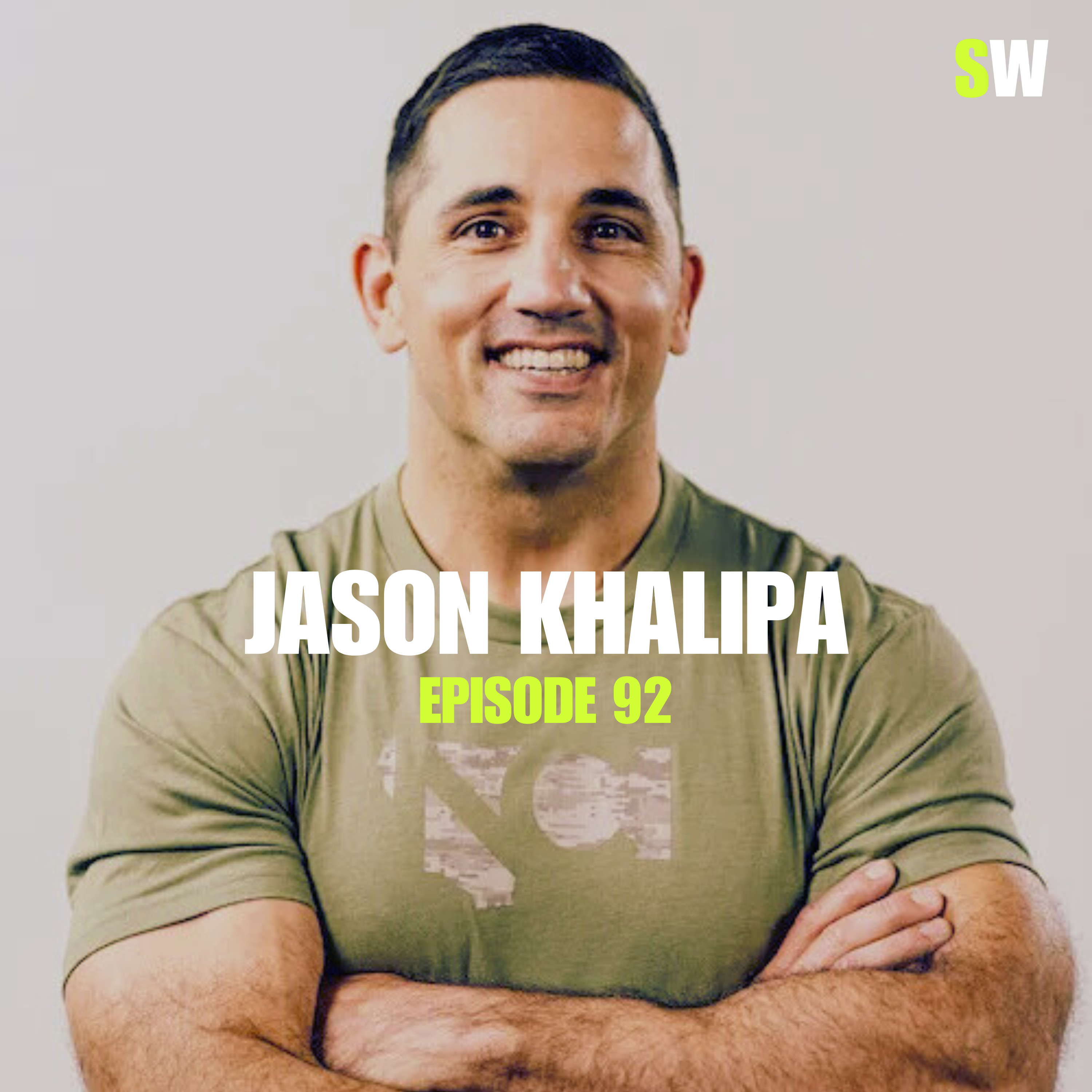
CrossFit Champion Jason Khalipa on Fitness, Family, and Faith | Plus This Week’s Top Health & Fitness News
Episode Transcript
All right, all right, welcome, everybody to the Stronger Weekly Podcast.
I'm your host, Jesse Carriage.
I thank you so much for being here this week.
Certainly hope you're enjoying the start of the fall season.
I know that I am.
Give me the pumpkin, give me the cool weather, give me the football, give me all of the things.
So hopefully your fall is off to a happy and healthy start.
We've got some great health and fitness headlines this week.
By great, I mean, there's some encouraging studies and just things that are happening that we should all be encouraged about.
Also, some somewhat controversial things in the world of health and fitness across America and the globe.
But what I'm super stoked about is our guest this week, Jason Khalipa joins the podcast.
Jason, if you don't know who he is, he at one point was the world CrossFit champion.
He's competed in the CrossFit Games for a while now.
Jason does a lot of different things, which is with his massive platform of those.
He has a Train Hard fitness app.
He does a Train Hard club locally near him where every
Saturday morning, 6Saturday morning, 6:00 AM, sometimes up to 100 guys get together and not just train, but also just grow in community, be honest, be vulnerable and work hard together.
Should I say train hard together to be stronger and better protectors, providers, husbands, fathers, friends, all the things.
He's also got a really successful podcast called the Jason Khalifa Podcast, which I love and just puts out all this really great, informative and encouraging content across the Internet and across the world just to help people be healthier and happy.
So that's just some of the things that Jason does, but I'm super stoked that he's joining the show.
But as always, we're going to kick off this episode with the top five health and fitness headlines.
Let's dive in.
So your top health and fitness headline of the week.
If you haven't heard, you'll hear it now.
Big news around Tylenol, vaccines and autism.
So President Trump used the White House podium this week to suggest prenatal Tylenol and childhood vaccines have contributed to rapidly rising autism diagnosis claims that energized the Make America Healthy Again known as Maha coalition alongside HHS Secretary Robert F Kennedy Junior AKARFK Junior.
But his announcements alarmed medical experts, so multiple outlets reporting, including ABC News reports Trump urged pregnant women to avoid Tylenol, even as the FDA's own guidance is more nuanced.
Calling this topic a quote ongoing debate, scientists emphasized the evidence is inconclusive and warrants further studies warning that avoiding needed fever treatment in pregnancy can be harmful for both mom and baby.
GOP Senator Bill Cassidy, a gastroenterologist, pressed HHS to quote release the new data and said, quote, the preponderance of evidence shows this is not the case, warning women to be left with no options to manage their pain during pregnancies.
And what does it mean for you listening if you're pregnant or planning to be pregnant?
Talk to you, Ruby, talk to your OBGYN.
Don't rely on press conference sound bites.
It's too early.
Use clinical guidance on fever management and vaccine timing.
Your next health and fitness headline.
A huge breakthrough in treating Huntington's disease.
BBC reporting doctors say Huntington's disease has been successfully treated for the first time, the first time ever with gene therapy that slowed progression of the disease by 75% in trial patient Professor Sarah Tabrizi, who led the UK arm at UCL, called the results quote spectacular and said a decline that normally takes one year would now take up to 4.
Quoting we never in our wildest dreams would have expected a 75% slowing to this catastrophic disease.
The one time neurosurgical treatment uses a viral vector to silence the toxic Huntington protein.
This could transform care for a fatal inherited brain disorder and opens the door to preventative traits in gene positive people before symptoms appear.
So if you know someone or you are suffering with Huntington's disease, talk to your doctor, ask about these ongoing trials because there could be hope for you or a loved one.
Next up, personality traits could be linked to longevity and health span.
So new research in the Journal of Psychosomatic Research found that specific personality nuances such as being organized, responsible, hard working and active are associated with lower mortality risk.
Independent of age and health, Professor Renee Motis said that these specific traits may be easier to change than the broad big 5 domains saying quote.
These small, somewhat trainable behaviors, routines, reliability, staying active, stack up over years and could actually be increasing your health span.
So don't overlook the importance of being organized, responsible, hard working and active, not just to be productive because you could literally be here on this earth longer.
Your next health and fitness headline has to do with dehydration and a linked to stress response.
So a Liverpool John Moores University study in the Journal of Applied to Physiology showed that under hydrated adults had a 50% higher cortisol spike during a standard lab stress test versus well hydrated peers.
Lead professor Neil Walsh from the study said, quote cortisol is the body's primary stress hormone.
Under hydrated subject in the study showed a 50% higher exaggerated cortisol reactivity, which is associated with an increased risk of get this heart disease, diabetes and depression.
Team member doctor Daniel Kashi added quote, keeping a water bottle close could be a good habit with potential benefits to your long term health, especially when confronted with stressful situations.
So if you're going to be stressed and you're dehydrated, what this study is saying is that you'll be 50% more stressed.
So we all know hydration is key.
This study shows for more reasons than we might have assumed.
So make sure we drink up, keep a water bottle nearby, hydrate, hydrate, hydrate.
And your last health and fitness headline of the week has to do with alcohol.
If you followed the show for the almost two years, you know I like to beat up on alcohol whenever I can.
So a landmark study from the University of Oxford, Yale in Cambridge, impressive places published in BMJ Evidence based Medicine found that any alcohol use increases dementia risk even at moderate level.
So BBC News reports the analysis combined data from over a half a million people, plus genetic evidence from more than 2.4 million participants across 45 studies.
So lots of people and lots of studies.
Lead author Doctor Anya Topawalla of Oxford said the findings challenge quote the common belief that low levels of alcohol are beneficial for brain health, adding that quote even light or moderate drinking may increase the risk of future dementia and that cutting consumption could be a major prevention tool.
So according to this, there appears to be no safe threshold for alcohol when it comes to protecting the brain from future damage.
So look, whether you drink a little bit, you drink often, you're a heavy drinker, this should be alarming for you.
So take it easy out there with the alcohol guys.
And that's it for the health and fitness headlines for this week.
Just a quick word from our sponsor and Jason Kalipa joins us on the other side.
We'll see you there.
Look, one in ten Americans today struggle with alcohol use disorder and I was one of them.
Did you know that there is a safe science backed daily pill that you can take to drink less or even quit alcohol for good?
It's called naltrexone, a doctor prescribed medication that you get online.
And our sponsor or health is the nation's leading provider of naltrexone to date, OR health has helped over 35,000 people find freedom from alcohol.
And I'm proudly one of them.
To get started, text strength to 710710.
Again, that's strength to 710710 and get started on your journey to finally find freedom from alcohol.
All right, everybody, Special guests of the week is here.
It's an honor and privilege to have the powerful Jason Khalifa on the Stronger Weekly podcast What's up Jason?
Hey, good, good.
What afternoon?
Yeah, it's good to good to be here.
Thanks for having me.
Most people know who you are, but for those who don't, how would you?
Cuz you've done so many things, how would you kind of introduce yourself?
Who is Jason Khalifa?
I mean, I think first and foremost I'm a husband.
My wife and I met when we were 15 and we've been together ever since.
So we've been either 25 years.
I'm a dad of two.
I have a 14 year old daughter and a 11 year old son.
I'm AI call myself a fitness entrepreneur, lifetime competitor.
I competed professionally in CrossFit for a long time, got into jiu jitsu recently.
I'm last couple years been into shooting sports.
But I've I've, I've owned gyms, I've operated gyms.
I still own gyms.
I've that kind of stuff.
So fitness entrepreneurship.
I've written a book, I host a podcast.
So I'd say in general though, I'm just a dude who hosts weekly men's clubs who's on a mission to help elevate guys.
And a lot of things have taken me to that point, but that's where I'm currently at.
And it's a, it's a strong mission of mine and, and, and that's what I'm going.
To do when you talk about showing up, your family, your faith and community, why do you think it's so important for men to focus on these roles now?
Or why is it important in general?
Father, husband, protector, provider.
Yeah, I mean, I think to clarify what I mean by protect and provide, what I mean is my #1 duty as a husband, as a father, is to protect and provide.
And what that means to me is the ability to run, jump, climb, Sprint.
Like you have three kids.
If one of those kids is running towards the street, you need to have the physical capability to go, to go grab them.
My son years ago fell into a bonfire.
He got pushed by his sister on accident.
It's a long story, but I was right there and boom, I left up, left, up and jumped them over right.
Having the physical capability to do that I think is critical.
Sure.
Is there fighting involved?
Do I grapple, Do I stand up fight?
Sure.
But the likelihood of me getting a fight is very, very slim.
But the likelihood of me having to protect in those ways, I think is, is very common for most guys listening to this show.
And I want to be able to enhance their fitness, be able to get there.
The provide piece is even more important, I'd say, or just as important.
I think a lot of people look at that in terms of finances, and I think finances are very important, very important.
I think if you train hard, I think you're going to show up better at work.
But what I also mean is the ability to provide experiences for your kids.
And I don't know how many parents I could talk to who are tired after work, who can't go do things with their kids because they lack the physical fitness to be able to go do it.
And I never want anybody that I engage with to be limited on what they can do for their kids to protect and provide because of their fitness.
You should be able, if your son comes home, like your kids as they get older.
Dad, let's go do this.
Dad, let's go do that.
It's like, yeah, let's go do it.
I don't want to be limited because I'm too tired or physically I can't even do it.
Like my son comes home from school every day.
Let's go to this and I want to be able to do it.
So that's what I mean by protect and provide.
And, you know, and then obviously being a good husband, I think is, is the priority number one.
You know, my wife and I, as far as I'm concerned, like we burn the boats at 14.
Like that's it.
I mean, when we got married in 2009, like we made a commitment to each other and I'm going to do everything in my power to continue that commitment because after the kids get older, it's just back to us anyways.
So keeping date nights, keeping our relationship strong is the number one priority so that our children can see what a good relationship looks like.
And that once they're in college or off from home, my wife and I still have like a relationship.
And we didn't just, you know, get engulfed in the kids and forget about us.
And obviously there's seasons to everything and what not, but I think that parents need to work really hard at keeping their relationship strong.
And if you're not engaging regularly on date nights, you're just missing out.
You're you have to start that tomorrow.
Hey man, where'd you learn this?
Was this?
Was this modeled for you and your household?
Yeah, you know, my, my mom and dad, they definitely grew up different than I did.
You know, my dad came from Iran.
My mom, she lost her father really young to a drunk driver.
So her background was just different and unique.
But yes, definitely they, they raised me in a very loving, caring, supportive family with their relationship being, I think from my view vantage point, very good.
I think for my wife and I, when our daughter got sick with leukemia, one of the first piece of advice we heard was to keep date nights.
And at the time I didn't really understand it.
Frankly.
I, I, I, I, I, I couldn't relate to the, the nurse told me that she's like, Hey, keep your date nights.
I'm just thinking like, lady, like, what are you talking about?
And it turned out to be like one of the most valuable piece of advice I've ever received because it allowed my wife and I when we were in the hospital for months and months and months to break out, go date, sometimes have too many cocktails, but that's what we needed and and recharge and go back to the to the to the hospital.
So yeah, I think it's critical.
Yeah, shout out to frontline healthcare workers, but how long ago was your, if you don't mind talking about it?
How long ago was your daughter diagnosed with leukemia?
She was diagnosed in 2016, So what, nine years ago?
And the way that form of leukemia is treated is it's a 2 1/2 year treatment plan.
So it's a pretty long time to get treated.
It's a lot of ups and downs, lot of lessons learned, lot of very difficult times, learned a lot, grew a lot.
And then after treatment, then five years after, they consider you cured.
So she's in the cured stage.
But that was like a whole, I mean, you know, and I think back on it, you know, I was 3030 maybe, yeah, 30 when when, when she was diagnosed.
And the blessing there is that I'm going to be able to have that perspective for the rest of my life, right.
Like I gained so much perspective to that experience.
I I can't even begin to tell you how much that changed my life.
And yeah.
What you when you were saying I just wrote it down, you said so many lessons learned and it sounds like perspective.
If you had to kind of whittle it down to maybe 234 or just free flow, what is some of the most valuable perspective you and your family took from that experience?
I mean, I'd say to try and front load as much as you can when life is good, you know, I believe that life is going to be hard.
Like the expectation is that life is going to be hard and you need to do whatever is in your power to prepare yourself today to overcome life's challenges.
And that means having good relationships.
That means working hard to develop a financial hedge.
It means showing up at the gym and making sure you take care of yourself physically.
All of those things I think are very important.
So one of the big lessons I learned is like, I'm grateful we had locked in our relationship, we had locked in on finances, we had locked in our fitness.
So when this struggle did hit, we were as best prepared as possible.
That's like #1 #2 you learn a lot about family.
You learn a lot about family and support and just how important it is you.
You learn what it's like to connect with your spouse on a very, very deep, deep level.
And that could only drive you.
You can drive you closer.
You can separate you.
Like while we were in the hospital, I witnessed a lot, I saw a lot of relationships fall apart, which was really hard to see.
And I saw a lot of relationships come together.
And for us, fortunately, we both, we both had the same entire like my wife the night that my daughter was diagnosed.
We're in the hospital, whatever.
And they tell you the news and obviously it's, it's very gut wrenching, right?
And I get the news and I start crying, which I don't really like cry very much.
After that, I started crying a lot more, but I don't cry very much.
And you know, I go in, I and it was my wife and my father-in-law in the room.
He just so happened to be there.
It's like 2:00 AM.
So I take my wife Ashley outside and I'm like, hey, look, this is what happened.
And you know, she's just a rock.
She's just a rock star.
She's like, she's like, all right.
You tell our family what's going on and you tell everybody, there's no tears in front of our daughter.
We're going to beat this.
And then walk back into the room.
It was like a it was like a Super Bowl speech.
That's her first reaction.
First reaction, I swear to you.
I mean, like, like first reaction was exactly that, verbatim.
Hey, we're going to beat this.
Like you tell our family there's no tears in front of our daughter and walk back in.
I remember feeling like, like, like a, like John Matt, you know, like, like I felt like, you know what I mean?
Like, but I'm a on a whole different level, right?
Because this is, this is, this is real life.
This is, this is serious.
And yeah, she's jump started it and it, it changed the way I approach things.
And we connected through it.
So I'd say at a highest level, I saw a lot of empathy, a lot of empathy from a lot of people.
You got to see the good side of humanity.
You know, like a week in the diagnosis, I was like, really broken.
Like just broken.
It's devastating.
What's that?
This is devastating.
I can't even.
I can't even imagine.
Getting yeah, I was just broken, right.
And I'm, I'm, I'm like a pretty generally like pretty positive guy.
And I'm out and I'm like, I'm grabbing a coffee from the shop.
And this guy could tell man, like he we're in like the ICU type area.
Like we, he could tell like, you know, we're not like we're not here for a, you know, pinky.
And the guy's like, you know, he just some older guy just put his arm, you know, like just kind of like, hey, man, whatever you're going through, it's going to be good or something like that.
And then, and then Fast forward, right.
We would take my daughter after she lost her hair to restaurants and you'd watch the way people would react.
And like, I'm, I'm not kidding.
Just like, if you don't believe in humanity, you take a sick kid anywhere.
And I'm telling you, you could have a, a gangster of this or that.
It doesn't matter who they are.
Just roll out the red carpet for you, man.
And it, and it really redefines how, how it just it, I can't speak highly enough about it.
It made me feel a very certain way.
And now if I would ever see that, I'm going to roll out the red carpet times 10 because of the way it made me feel, you know?
Hey, man, yeah, absolutely.
So at that point, did did you and Ashley both have strong faith at the time?
I don't know if you'd say strong.
I'd say that it was theirs.
It was, it was present.
I don't know if I'd say it was strong, but I really tried to regain it.
I tried to build it while we were in that that moment, You know, they had like a non denominational Chapel there at the hospital and I visit it everyday and I was seeking, I was searching, I was praying I was in in I was I was true about what I was doing.
I was I was really trying to create a connection, a relationship.
I think that Ashley kind of.
Worked it in her own way, but I wouldn't say that was like a shared thing that we did together.
I was kind of like on my path, she was on hers and it was working great, right?
It just wasn't something we did together.
Yeah, yeah.
This episode's about you, not me, but I'll just, I'll just relate with you.
I lost my father as a teenager to AIDS.
So I'd spent some time in the ICU there.
And then unexpectedly, you know, a couple decades later, I lost my stepfather, who essentially stepped up in a huge way to replace my father.
I shouldn't say that replace, but you know, be there for me and I lost him and I spent some time in ICU and, and I'll just say sometimes, you know, not to go too preachy, but God can use pain and struggle and hurt and challenge to reach people.
You know, and I think your comment about how like the humanity that comes out when a child is sick like that, even though of course you're, you're desperate and you're afraid and you're doing everything camp for your daughter.
There is some some good that comes when people struggle and you see that humanity kind of come out.
So man, it's, it's a beautiful thing.
It did start to change the way I looked at some people, right?
Like, I mean, I'm telling you it was, it was, you know, because social media has done a lot of positive and a lot of negative.
And I think there's a lot of screaming, a lot of yelling.
And, and I, I watched just, you know, it was, it was special.
It was, it was special what people did for us.
And I'll never forget how that made me feel, you know?
Yeah, so they regained my my faith in humanity.
In humanity.
Amen.
I love it.
I love it.
I'm gonna I'm gonna kind of pull up and go to a post that you recently wrote and it was called The reason most men fail.
What are what are some of the biggest traps or mistakes that men are falling into today that would make them fail?
I mean, I think that they get stuck in like they need to cut the typically it's going to be the crutch, right?
They're going to end up having some type of crutch, whether that's drugs, alcohol, women, social media, pornography, you name it.
I think that more times than not, what I'm noticing and I, I serve many, many men.
I, I engage with many, many guys on a regular basis, whether it's training in the garage or, you know, every week I host a free men's club.
I think tomorrow we'll have 100 people show up and we'll grab coffee after.
I would say that more times than not, what's holding a lot of guys back from reaching their potential is, is I, I think 1 is that they feel like they can't, they don't have any outlets.
They feel very isolated and they need to be surrounding themselves with more men.
I think that's very important.
And by doing so, they get different support.
Like I was actually talking to somebody about this this morning.
When a woman, like when my wife is talking about one of her problems, she's not necessarily looking for me to solve it or say anything.
She just wants me to listen and just listen.
She doesn't want me to try and say, what you got to do is this.
When a guy is sharing a problem with another guy, typically it's like, hey, I'm having this problem at home, right?
And he's looking for insight and feedback and in a direction.
It's just a different way of looking at it.
And by the way, I'm totally using general terms here.
Of course there's exceptions, but I feel like a lot of guys, they need to be surrounded.
Iron sharpens iron shoulder to shoulder and they need to have another guy be like, dude, like you got to go take ownership of this.
Like this is the problem and that might be the jolt they need.
I think that's ultimately what's holding a lot of guys back.
I mean, I had a guy the other day, we were at the men's club and we will grab coffee after and he just clearly said he's like, look, man, I have an addiction to porn.
It's been really difficult for me.
And there was like 6-7 guys there who we've created a very strong relationship.
This group of them.
There was also like another 30 guys, but they weren't in that conversation.
And guys, instead of like, you know, you're a dirtbag, you're this, you're that, it's more like, hey, man, have you had a conversation with your wife?
Have you done this?
Have you done that?
And I think that there's definitely this shame, this escape, this feeling like you can't be vulnerable or talk to somebody because a lot of guys, they're just not thinking about the most guys schedule.
They go to work, they come home, they have their family or whatever is going on.
You know, guys don't do a great job at all of connecting, going out to lunch, going to coffee.
I mean, I can't tell you the last time that a guy and I like and I have a lot of friends.
Like I can't tell you last time I was like, hey man, you want to go to lunch together?
It just, I mean, it's very uncommon, right?
But women have lunches all the time and they do a great job fostering that connection.
Now, I work out with guys every single day.
I connect with guys all the time.
I go on trips with them, I do things.
But that's ultimately what I think is happening is that they get in this cycle where they just feel like, dude, I'm going to work, I'm going home, I'm going to work, I'm going home.
I lack any form of connection.
So I'm getting it this escape by using these different tools and I think a great way for them to solve it.
Dude, just go work out with another dude and you'll be shocked after you're done working out what type of conversation happens.
I, I can't remember last time that you know, someone said, let's go grab coffee and I'm like, no, because it feels like I, it's like almost like not productive it tangibly speaking, right?
It just feels kind of like a threat.
My wife this week, she went on a double date with kiddos to a park.
She grabbed coffee with a friend.
She had her mom over like she's intentional and she enjoys it.
What did I do?
My buddy showed up two days in a row at five O 5 in the morning and we jumped in the cold plunge.
We worked out together.
We were done by 6We were done by 6:30 and then we're off our ways.
And I'm going to tell you, Jason, man, it felt like it felt great.
Like you talk as you're working out, you connect.
But if, for me anyway, it just feels like I'm multitasking and I'm doing two things at once and it just works, you know what?
I.
Mean well guys like to be guys like to have like purpose they like to they like to feel like they're on a mission right like like slaying the dragon type of thing they like to feel like there's purpose to it and like this morning another guy and I sell from mind pump.
We did a 2 hour podcast while working out.
So we hit weights and podcasts and that that, that that conversation really flowed well because we're like, we're pumping iron.
We're getting after it and we're having a conversation.
Same thing happens every day for me.
You know, I invite guys over, we train hard and then the coffee.
So to your point, I can't remember the last time I was like, hey man, you want to go grab coffee?
But every week I go grab coffee with many men and I we sit down and we talked for a long time, but it happens after the workout.
And so I think, I think, you know, the mission I'm on, just full transparency, is that I'm on a mission to to get as many men as possible into a train hard men's club or into a way for them to meet up with the other guys so they can go shoulder to shoulder workout and then go grab coffee.
I think it's going to change.
I think it could change the next generation.
That's how powerful I feel about it.
I love it.
So what is train hard?
Just explain that.
So the my original business was NC fit, Norcal fit, brick and mortar gym owners, all the things.
It was great.
It still is great.
We still own gyms.
Train Hard was launched about 18 months ago with really the vision of helping men train so they can protect and provide.
And I started a men's club about 2 1/2 / 2 years ago where every week for two years we've met in a parking lot.
And it started off with five guys and 10 guys and 15 guys and 30 guys and 40 guys.
You know, last week we had 70 something.
And I think tomorrow we'll have 100.
And it's just been word of mouth.
It's always free.
We bring sandbags.
And I would, you know, one of the things I'm about to do is put out on social media a like Google form.
And I'm going to ask for people's e-mail location and phone number.
And I'm going to, I'm looking for captains.
I'm looking for guys who want to be captains, not coaches, but captains to run a club and not a class.
This isn't about me telling you what to do, It's about me doing it with you.
And we're going to grab coffee after that and we're going to get tons of clubs across the country that are then going to impact the youth of this country.
And it's going to be phenomenal.
That's what we're doing.
Nice.
I hope we can take that sound bite right there.
And I'm going to use that like a year from now when we have, you know, 100, you know, whatever.
I'll send it to you, man.
I know we're recording right now, but you're sitting here thinking, did you have, do you have a what'd you say?
Is it a coach or a captain?
What'd you call it?
Yeah, we're not.
We're not looking for coaches, we're looking for captains.
Yeah, you got a captain in Northern Colorado yet?
There you go.
No, you got it.
See, And the reason why we want captains, not coaches is because, you know, I've been coaching for 20 years.
I've met with the best coaches in the world for CrossFit.
I mean, I competed there for a decade and coaches are great, awesome.
What we're looking for here is more of a locker room, more of a team delivery.
I want to have a captain who's guiding the warm up, guiding the workout, but they're just one of the team, man.
They're just, it's just, it brings you back to high school sports, college sports.
And we're doing this together.
And then afterwards, when we all know how crappy we feel because we just did a bunch of burpees, we're going to grab some coffee.
One more question on that, what do you guys all meet up at the same time?
Is your vision that like every single club would meet up at the same time every week or you just kind of do it whenever you can?
This is the current vision and the current vision is to become a captain, you either need to come to this current vision, you need to come to one of the train hard men's clubs that I'm hosting in California or anywhere else that I go travel to.
So you could feel the culture and the energy and what I'm trying to accomplish.
It's welcoming.
It is, dude.
I don't care if you're £500.
I don't care.
At our clubs, we have a group of guys that are in a rehabilitation for being in like gang life.
We have another group for drug life and we have billionaires that are tech tycoons.
And I don't care who you are, where you come from, how out of shape you are.
We welcome everybody.
That's got to be the spirit.
And there's no winner, there's no loser.
There's not even a range of motion.
Hey, the goal is to kind of get deep on a squat.
If you only go halfway, I don't care.
We're just here to train hard to get after it and then connect.
And so that that's the the culture is number 1.
And we're looking for captains who could bring that culture to life and, and chaperone it.
Like, like to really champion that.
And then, you know, my recommendation is Saturday mornings at 6:00 AM.
But, you know, I don't care when people do it as long as they're doing it.
I'm going to put out a workout every week.
We do it every Saturday at 6:00 AM in the same parking lot and people can kind of figure it out from there.
I love it.
You heard it first here on the air.
If you're looking to join the Northern Colorado train hard group, reach out to hopefully if I qualify your your captain, Jessie Carajet, send me some info.
You got your first.
I don't know if I'm your first, but.
I, I'm gonna, I'm gonna, I got to get you on the, the Google Sheet.
But no, seriously, it's, it's, it's, it's something I feel deeply drawn to.
I feel, I feel like I'm on a mission to, you know, looking at like the proverb iron sharpens iron 2717.
Like dude, I feel like I feel like I've been developing a set of skills for 20 years to help me do what I'm about to do.
Look, life can be hard and stressful sometimes, we all know that.
But when it comes to supplements, why is it that nobody talks about stress and resilience?
For me, I take the Adaptogen stack from Momentous Supplements.
It's a daily blend of ashwagandha, rhodiola and L theanine, all clinically backed to help you stay calm, com focused and resilient.
I'm proudly partnered with Momentous supplements because they are the industry's best.
They don't cut corners.
Everything's third party tested, used by pro athletes and high quality.
Head to livemomentous.com and use code strength for 35% off your first order.
Again, that's live momentous.com code word strength for 35% off your first order and get started today.
Some of your content that I I listened to is one of your podcasts.
You talked about advice to your son.
I just, I just freaking love talking about parenting.
I, I absolutely love it.
I'm in it right now, you know that.
But in that episode you basically tried to distill down like, like what?
What lessons can I should I give to my in this case, you're talking about your son, especially as he moves towards adulthood.
But how would you for any parents listening, mom or dad, right?
What would those lessons be?
What should we be teaching our children's as they get to prepare to go out into this increasingly complicated world?
Yeah, I mean, I have, I have my list of 10, but I think at the end of the day here, I'll, I'll tell you my 10.
These are the 10 that I want to write for my son.
Find your queen.
What that one's all about is, you know, finding your the, the ride or die.
Like they're the person that is just going to have your back no matter what, because life is going to be hard, business is going to be hard.
And when you have someone behind you on your side who's always got your back, no matter what, it's like a superpower for a guy.
And so find your queen or king in my kids case, whatever, train hard, non negotiable, seize, get degrees and that's it.
This kind of got some conflict when I put it up on on I put it up one time on AIG story.
People didn't understand what I meant.
What I meant to say was seize, get degrees.
And that's it means that in life when you're going through school, there's a pass or fail.
Like if you get AC, you get you graduate, but that's like the minimum standard.
As long as you hit it, you get the same degree.
Like if you and I, if you got As and I got CS, we still graduate from the same school with the same degree.
This is true, right?
But when you finish out of school, that's all it gets you.
After that, it's either you reach your potential or you don't.
There's no more of this.
Like OCS are enough to get me to agree.
You're either you're either working hard enough to make the next step or you're not.
So that's what I mean by CS get degrees and that's it.
How do you want to be remembered?
Embrace the AMRA mentality.
That's about being present and focused on whatever you're doing.
Say that one again, Jason, I'm sorry.
The AMRA mentality is this idea of like kind of amrapping each facet of your life.
So when you're doing this with you, I'm focused on you.
When I'm moving on to the next thing, I'm focused on that really being present and focused on each area as you transition through and.
That's a book that you.
Read Yeah, I wrote the book.
Yeah.
Yep.
Find a tribe that Mom would want over for dinner.
That's all about just surrounding yourself with people that you would feel confident when they go in front of your mom, like you're proud of them.
They're not sitting there, you know, jerking around, swearing all over the place, talking bad about people.
They're good people with good spirit that shake a hand, that say hello, that kind of stuff.
As you get older, you'll understand the power and need for faith.
Be open minded and stay curious.
They can take everything but the skills and education you have attained.
This one I got from my dad.
My dad came from Iran with at the time he came from Iran, he was good.
Then the revolution happened and my grandparents came with nothing.
They came from being very rich in the oil industry to having nothing.
So my dad from an early age would always teach me they can take everything away from you but they can't take away your education.
He just kept saying that over and over again and he thought about it more in terms of like school.
I think about it more in terms of attaining knowledge.
So whether that's through school, trade school, this that it's just about being really good at stuff.
Do it right or don't do it.
Final one of the 10 embrace perspective, which means that, you know, be mindful of different people's perspectives, be open minded on your own perspective, that kind of stuff.
I'm going to, I'm going to double click on the faith one, one second just to a little bit deeper and then we'll probably land the plane geeking out on fitness a little bit, if that's all right with you.
Is that all?
Right double click you could you could land the plane.
You can do whatever you want like.
All right, cool.
So let's talk about faith for a little bit because it's came up twice, but I want to talk about a little essential.
So I do listen to, you know, some of your show, which again, why I love the Jason Khalifa podcast.
For anyone who hasn't checked it out, please go check it out.
It's amazing.
It's you and two of your friends, essentially.
And you call it the home team episodes, right?
Yeah, yeah, it's fantastic.
But one of them, you talked about faith.
You shared that you grew up Catholic.
So far so correct.
Yeah.
And then my words, definitely not yours, but not as intentional around your faith.
But then more recently, this kind of reinvigoration around it.
I know that, you know, praying out loud, at least when I the episode I listened to you, I've been doing it for a year.
That's made a huge difference in your life.
But can you talk a little bit about maybe how and why faith came back into your life the way that it did, and also how and why it matters to you now and how it changes you?
I don't know how it came back into my life so strong, but it did.
Obviously that's just, that's just the pool, right?
That's the pool.
I would say that all of my life, you know, I grew up private Catholic schools, so I'm very familiar with the church and there was a lot of religion and not much of a relationship for many years.
And I think that when things get hard, you seek and then things get better and you stop seeking, right?
And I think that I've had to remind myself to like, you know, I, I've been seeking, I've been seeking a relationship.
I've always wanted that for many years, but it wasn't until a couple of years ago that I really started saying to myself, like, this is important to me.
I and so I started reading books like I don't have enough faith to be an atheist.
I started reading a bunch of different books like that really sort of like open my mind and be like, and then I was like, you know what, I just felt called and I'm going to start reading the Bible.
And this was probably, you know, just like on my mind.
I, I was, I was, I was listening a lot of podcasts, whatever.
And then I think what really kind of like put me over the edge was the iron sharpens iron story that I shared a little bit ago on my Instagram where I had heard of the proverb 2717 iron sharpens iron as one man sharpens another.
And it really resonated with me just because of all the work I'm doing.
And I'm in the sauna and I'm researching it and I want to text a few friends and I decide not to.
Then I get out, it's early in the morning and I text only one person.
His name is Sal.
And I was like, look, man, this is just all my heart.
Just check this proverb out.
And the guy goes, that's weird.
I'm literally wearing that shirt right now.
And he text me a picture of him wearing that shirt.
And like a Proverbs 2717 is not a popular shirt.
It's not like people are wearing that shirt every day.
So I was like, OK, maybe God's speaking to me a little bit.
And that really stemmed.
And then from there, I got sent a Bible from a friend of mine that had the same inscription of Proverbs 2717, and he knew nothing about anything else.
And so I chose on that day that when he sent me the Bible, I chose to read from page one on.
So I started at Genesis and I just now got on the Romans.
Starting with page one in the Old Testament gets kind of funky, but it there's a lot to learn and I've learned a lot.
You know, I just finished Acts prior to that, you know, John was really great.
Now I'm on Romans and I feel like that's going to be very powerful.
And I feel like my daily schedule is Bible coffee burpee.
So that what I, what I do every morning because I wake up, I walk outside and I go, I go pray out loud and I express my gratitude for all the blessings that we have.
I come back in, I make coffee, I read the Bible and I go do burpees.
I do it every day and it just has really grounded me and I feel like it's just making me a better person and I've been sharing it more.
I love it.
I love it.
I find, and I've found that often times it's the people around us that that can that can bring us closer to God or to faith.
And those things you mentioned, obviously that they're not coincidences.
You know, you're thinking about a verse your friend's wearing AT shirt.
Someone sends you a Bible.
It's got the verse.
It's like, come on, like put the dots together.
And then and then I'll say that to say, like, I'm, I'm so grateful that you're being open consistently with your faith and how it makes a difference on you without like leading with that, because I think you have the opportunity to reach so many people, men in particular.
And if they get to know you and then they're inspired by you and they understand that faith is a big part of makes you who you are, and then they want to be like you, they're going to be that much more open to it.
You know, So I think it's a beautiful thing, man.
So well done.
Yeah.
I mean, one thing I will say is that there was a time where we would interview a lot of guests on our podcast.
And I would say that a large majority, almost all of them of high performing guys that I, I find to be living a good code.
I'd say almost all of them were were rooted in faith.
Almost all of them.
And, you know, I heard a quote this morning from a buddy of mine told me this quote.
I don't know.
I got to go look this one up.
He said the average divorce rate is 50%.
OK, that's a, that's a fair statistic, right?
We know that.
He said the average divorce rate of a couple that prays together is less than 1%.
I've heard this.
You've heard this too.
Yeah, I have.
I don't know about the one.
I don't know if it was one percentage that I heard it, but I heard something connecting couples that pray together with a very low percentage.
Of the yeah, I mean, 1% seems really low nonetheless, you know, obviously that's, that's that that's interesting to me, right?
Because I think, I think, I think ultimately as you get older and as life throws you curveballs, whether it's, you know, with, with your father, your stepfather or name anything else that comes up, right?
Leukemia.
Life, life, life will come up right.
And, and I think that when you have an anchor, when you can really align with, with something, I think that if you could deeply believe it, I don't know, I, I, there's something powerful there.
And I think more people explore in the Bible and, and more people trying to live like Jesus is never going to be a bad thing.
Like we need more of that than less because there's so much dissension.
But I think when people just try and like, dude, they just try and live love, that's it.
Like, dude, if everybody just did that, we'd be, we'd be crushing it, you know?
We'd be good, but to your point about 35 minutes ago, it's like, go on, go on social media and love can be hard to find something.
Yeah, for sure, for sure.
But you know, it's it's it's, it's funny enough though, and I, I, I, I'm looking forward to hearing about this Colorado chapter.
It's funny enough when you, when you, one of the ideals of this trainer men's club is, is 1 handshake at a time.
And what I believe is just like, hey, we meet.
We, I shake your hand, I look you in the eye.
And I think that when you do that, dude, you might have different political views than me.
You might have different religious views than me.
But I guarantee you we are more in common than we are not.
And I think that we've lost that.
And that's unfortunate.
Yeah, I think we focus too much on the differences, which are, you know, this much, but there's so much we haven't.
I agree.
And humanity being, you know, first and foremost, but but yeah, absolutely so.
And I'm serious about that Northern Colorado chapter.
I'm you're just getting to know me.
I'm dead serious about doing that because I'm already doing it.
I'm already doing it.
Just give me some structure and some coaching and inspire me and I'm I'm in it, man.
All right.
Do you mind if we talk about fitness?
No man, I I, I do not like talking about fitness.
Right, all right, cool.
So again, piggybacking off of a an awesome episode that you did on your show, which was a study around which is the most effective, my words, it was CrossFit style hybrid training, strength and conditioning, right.
So just using that as a launching pad in your mind right now, if someone like me who is focused on efficiency, does not have a very, very specific competitive goal, wants to be strong, wants to look good, be capable, right?
What would you recommend?
I can't wait to see where we go, what style, what.
I mean, it's going to be, I mean it's going to be our train hard daily program on the train Hard app.
I mean, I know it sounds like a it's, it's it, it is a evolution of my training, right?
So CrossFit was all about constantly varied function movements at a high intensity.
And the variance piece was broad from Olympic weight lifting to sprinting to this, to that, to handstand push ups to muscle UPS, whatever.
Where that's narrowed down for me now that I'm almost 40 is just bang for the buck.
So I work with a lot of different law enforcement agencies and we service a lot of different law enforcement agencies.
And my goal is to make those guys as physically capable as possible so they can get home to their families.
And if they're getting injured, that's not helping them.
If they're not training, that's not helping them either.
So my recommendation is our TH daily program is structured on A5 day cycle.
You could also do three days if you want.
We have some days that are kind of like a cross training days where it's a little bit more CrossFit ish, right?
Where it's like some strength work into like a 12 to 20 minute conditioning piece.
We have some days a little bit more aerobic zone 2.
We have some days a little bit more strength focused bodybuilding focus to kind of get some accessory lifts in.
And I think that's ultimately where I settle at is that if someone was in their mid 30s to 40s fifties and they want to get in better shape, I'd recommend to follow our like basically we have Ath 5 nutrition principles.
More or less what that comes down to is trying to get in 45 grams of protein before 9:00 AM.
And the reason why it's so important is that when you front load protein, it allows you to make better nutrition choices as the day goes on.
So what often times happens if you don't eat breakfast and you just grab coffee is that midday comes around and you're just starving.
So by prioritizing protein early, you can make better nutrition choices as the day goes on.
I would focus on that.
I would also say that if you're not physically where you're at, where you want to be and you don't look the way you want, take out alcohol for 45 days.
If you do that, it'll probably change your life.
And I don't mean to say that you can't drink anymore.
I drink, but I've taken it out enough times that I know how to reintroduce it with intentionality and not as a crutch.
So when you take it out for 45 days, you're going to listen, you're going to I, I promise this is what's going to happen about 30 days.
Then you're going to be like, I get why this guy recommended this because what you're going to learn is that there's been many of times you don't really care if you have a drink or not.
And there's very few times where man, you kind of wish you'd have that glass one with your wife and kind of enjoy that moment together.
And those are the signs that when you're done with this challenge, reintroduce that.
So it could become intentional and not just like, dude, I had a hard day at work and I go pop 5 IP as right, that's that's where you're getting in 1000 calories at night and you're not even realizing it.
So I'd say 45 grams of protein, I'd say remove the alcohol for 45 days and follow our train hard daily program on the train hard app.
I can send you a link for it and you'll be rock solid.
If you want to really like ramp it up, start your morning off the way I do by doing 45 burpees as well.
And how long?
Just as long as it takes the burpees.
Yeah, I mean, you can do 5 minutes of nine, you can do 3 minutes of 15.
There's a variety of ways you can do it.
But at the end of the day, the burpee just burns a lot of calories and get your body through a full range of motion.
It's a great way to wake you up.
But you know, I, I think to, to summarize your question, I think I, I think I did that.
OK, But to summarize, every guy, every, every woman, definitely every woman, everybody needs to be weight training.
This idea that a woman's going to get bulky or a guy is strong enough.
It's like, dude, everybody needs to be touching an external load multiple times a week.
Everybody should be pushing, pulling and squatting once a week.
Looking at it in terms of the like, what is the goal of the movement?
Not the muscles we're using, right?
So that's what is the function we're trying to perform, not what muscle groups we're using.
So look, in terms of function, I want to be able to squat, press and lift for the rest of my life.
OK, well, let's do that, right?
I want to have good conditioning that allows me to Sprint after my kid, but also allows me to go run a 10K if I want.
OK, let's do that.
That's ultimately where where I recommend and I would avoid things like the fringe stuff unless that's something you desire to do, like handstand push ups, muscle UPS, snatches.
It's really unnecessary unless that's something you desire to do.
That's a whole different case.
Got it.
How important are barbells in general?
I think barbells are pretty important because they allow you to kind of load.
I don't think like if you were like on a big budget, I'd recommend, you know dumbbells before anything.
But if you had a budget, I'd recommend to get a barbell only because you could load it up more than you can dumbbells.
OK, I'm going to get your reaction to some, I'll call them buzzwords in the fitness world.
Thanks to people like Peter, Peter Otia and Andrew Huberman.
Excuse me, Doctor Otia and Dr.
Huberman.
And I just want to get your kind of reaction to it, right?
So let's start with this one.
How important is frequency in terms of training your muscles frequently?
And I know like a lot of people say, you have to hit muscle groups twice a week.
How important is that in your opinion?
I think consistency above all else is the number one.
Like you can't let momentum get to 0.
So whether you hit your biceps twice or 10 times in a week, it's irrelevant to me as long as I mean, maybe not ten, but it's irrelevant as long as you're consistently keeping your momentum.
You you have the momentum can't get to 0.
You have to continue the sled movement forward.
You don't need to push it hard.
You just need to keep it going.
Because if we could do that day after day, week after week, month after month, year after year, we're going to be very fit over time.
Whether you expose your muscle group once to it, twice to it, or three times a week, in the grand scheme of things, big picture, I think it's irrelevant.
You obviously don't want to overtrain and you want to get exposure, but I think the secret sauce is you have to move your body every day.
You should probably get in five days of training if you really want to like kind of amplify 3 at a minimum.
Yeah.
And it sounds like that program that you started to give an overview of earlier which I will link to and I'll get that link from you.
But it's what what I was hearing was I heard Zone 2 in there.
I heard some functional movements, I heard some high intensity, I heard strength training and I even heard hypertrophy.
You said bodybuilding style.
So feels very well.
Rounded in in one Sprint day, which I think is important.
Like not always like sprinting outside, but Sprint conditioning.
So like 30 seconds on, one minute off, 30 seconds on, one minute off.
These are these are very, very important energy systems that we have to work and you should have a broad inclusive program that allows you to get there.
Good and perfect Segway, that energy system you just mentioned on sprints, high intensity running and things, VO2 Max either for fitness generally now or longevity, how important is that?
I think as long as you're getting on and you're doing like steady state cardio at, you know, a, a fraction of your heart rate and you're trying to consistently go out there for 30-40 minutes, you're winning.
I think that, you know, we're humans of the world and stuff.
I think that they have a lot of knowledge and Peter and Tia and I think they, they drive a lot of awareness and knowledge for these things.
And I think that's incredible.
I think that a lot of us are getting are not seeing the force for the tree, like through the trees.
Like if you're worried about red light therapy, more cold plunges or your next supplement, but you're not just training three to five days a week and getting like you're, you're just missing the big picture.
So you need to go long, you need to go short, you need to go heavy, you need to go a little bit lighter, you need to do high intensity and you stay consistent for decades.
If you do that, your VO2 Max will improve or stay the same as you age and your bone density will also improve.
And I think those are important factors.
I love it.
Well said, man.
You just kind of simplify it in a really helpful way because it don't get caught up in all like the the hype and the hoopla if you're not just focusing on.
The the hype and the hoopla is what get what's get what gets clicks, right.
So it's, you know, if you had a conversation with these guys, they'd be like, yeah, dude, I agree exactly what Jason just said.
But what's going to get more clicks And, and I'm not saying this is what you'll see online is more stuff that's like, you know, a little bit more like a, it's not very sexy to tell somebody, hey, you need to stay consistent for, you know, 10 years.
And you'll, you know, that's, you'll find the fringe stuff that they'll be discussing.
When in reality, you have to have your baseline down.
Like when people aren't happy with the way they look or the way they feel, you just ask some basic, simple questions.
Dude, what does your nutrition look like?
How are you hydrating?
How are you sleeping?
And what does your training look like?
You can learn a lot from that before you start doing a bunch of other stuff.
I don't normally put numbers on fitness anymore because I did for so many years.
But I want to be fit, I want to be capable, and I want to go win a jujitsu competition and go win a shooting competition.
I've had to learn that by me doing these things.
I have to be mindful of having a conversation with my spouse about what that will take in the commitment level that I'm prepared to make.
And that's all I'm saying.
Like when I hear something for guys to be mindful of is that when you set out these goals, before you set out the goal, remind yourself of your bigger why.
Like what is my bigger Why my bigger Why is I want to be the best protector, provider, husband, father I could possibly be.
That's my big why.
And if the goal is aligned with the big why, Hell yeah.
But they start to detract you because you're spending way more time training than you are with your family.
That's where the issue comes in.
Yeah, I might edit that out so my wife doesn't listen to it and turn it in my face and say hey, Jess.
Your goals aren't crazy, but I'm just saying if you said, hey, I want to be an ultra marathon runner and back squat 600 lbs at the same time, Beck all right, well, you got a lot of training to do.
So I think this whole like bro split of upper body, lower body has been pretty popular for many years.
I think there's a surge in full body splits, which would be, you know, some upper body, some lower body.
So you don't tack, tack tacks, but you in the span of a week, you're actually going to hit the muscle group potentially even more.
But you're doing it in a way that allows you to still feel like good and not overly tacked.
So when you talk about hitting Bulgarian split squats, Romanian deadlifts and whatever, and then you're trying to run for 40 minutes at a certain zone pace, it's hard because your legs are going to feel heavy.
You're going to feel like you're running through cement.
But if you took that same day and reduced the volume and increased volume on, let's just say pull ups that day and you did both, maybe your body would react in a way where you're still getting the stimulus, just not so much tax that it then makes you super fatigued.
But what I tell myself, and I'll tell you too, is like I train every day, seven days a week.
I probably haven't taken like a full resting as long as I remember.
I follow our TH daily program five days a week and I add in jiu jitsu on top of that.
I feel great.
But I've had to adjust my intensity.
So if I go for my workouts at RPE 9 or 10, that's rate of perceived exertion and then I do jiu jitsu, I'm toast.
I feel like shit.
I don't perform.
So what I've had to learn and to do is either make my work out of seven or my jiu jitsu is 7 and then balance my RPE throughout the week so I can feel great.
But if you feel great and if you look great, you should just keep doing what you're doing until you don't.
Then at that point re evaluate and then find out the next step.
Well that was super selfish.
Thanks for indulging me.
If you want to send me your Venmo for the private lesson, I can.
Yeah, yeah, yeah.
And.
Percy for that man.
So this has been great.
I'm going to let you go.
You've been so generous with your time.
I guess I'll, I'll close with this.
Jason, you talked about, you know, your vision for the future of having these clubs all over the country.
I think it's beautiful.
I think it's amazing and it's needed.
What else are you excited about as you look forward to close 2025 and 2026?
And where is the best place?
Not that my audience will have a hard time finding you, but where would you direct him to come learn more.
Check out your app, your podcast, and all the things you do.
Yeah, I would say, I mean, obviously I'm looking forward to my kids finishing out their sports seasons and getting on to the next season.
It's really exciting.
So it's very exciting season of our life.
And then go to my Instagram at Jason Khlipa, JSONKHALIPA.
And there I linked to the Train Hard website where you can see the app.
Aside from that, that's probably the best place to go.
So check that out.
I have a weekly newsletter you could you could join in there, which we could probably do a better job promoting.
But every week I put out a newsletter.
That's a lot of fun, too.
Let's go, Jason.
Man, it's been an honor.
Thanks so much for coming on the show.
You're an inspiring guy.
I really appreciate you.
Yeah.
Thank you all.
Right, Jason Kleepa, everybody.
Well, that's it for this week's episode.
Thanks for listening to the Stronger Weekly podcast for your health news, fitness insights and motivation.
Wishing you a strong and healthy week ahead.
See you next time.