·S1 E135
Episode 135 - Allan Chapman - The Victorians and the Holy Land
Episode Transcript
Episode 135 Alan Chapman, the Victorians and the Holy Land This is Matthew, and in this episode of Still Unbelievable, I chat with Alan Chapman, who teaches history of science at Oxford University and has written extensively on history and science, including the relationship between the two.
He is a Fellow of the Royal Astronomical Society and a founder member of the Society for the History of Astronomy.
He is the author of several well received books, including the one we will be discussing in this episode.
I loved reading this book.
I found myself fascinated by the characters that Alan references and the various events that he talks about.
If you have any interest in the history of Christianity, then I recommend this book as an enjoyable read.
As always, see the show notes for links to the book and topics that are referenced in the book.
There are items in the links that we do not specifically cover in this conversation, so please do check them out for a taste of what the book.
Good afternoon everybody.
Welcome to another episode of Still Unbelievable.
This is going to be a bit of a special episode, slightly different from what we normally do.
It is an interview.
It's an interview with a very special guest, one that I am delighted to host here on Still Unbelievable and one whose book I am very pleased to have read.
The reason why it's slightly different is its history rather than specifically science or or religion, and I think we'll all benefit from a little bit of that.
My guest today is Doctor Alan Chapman.
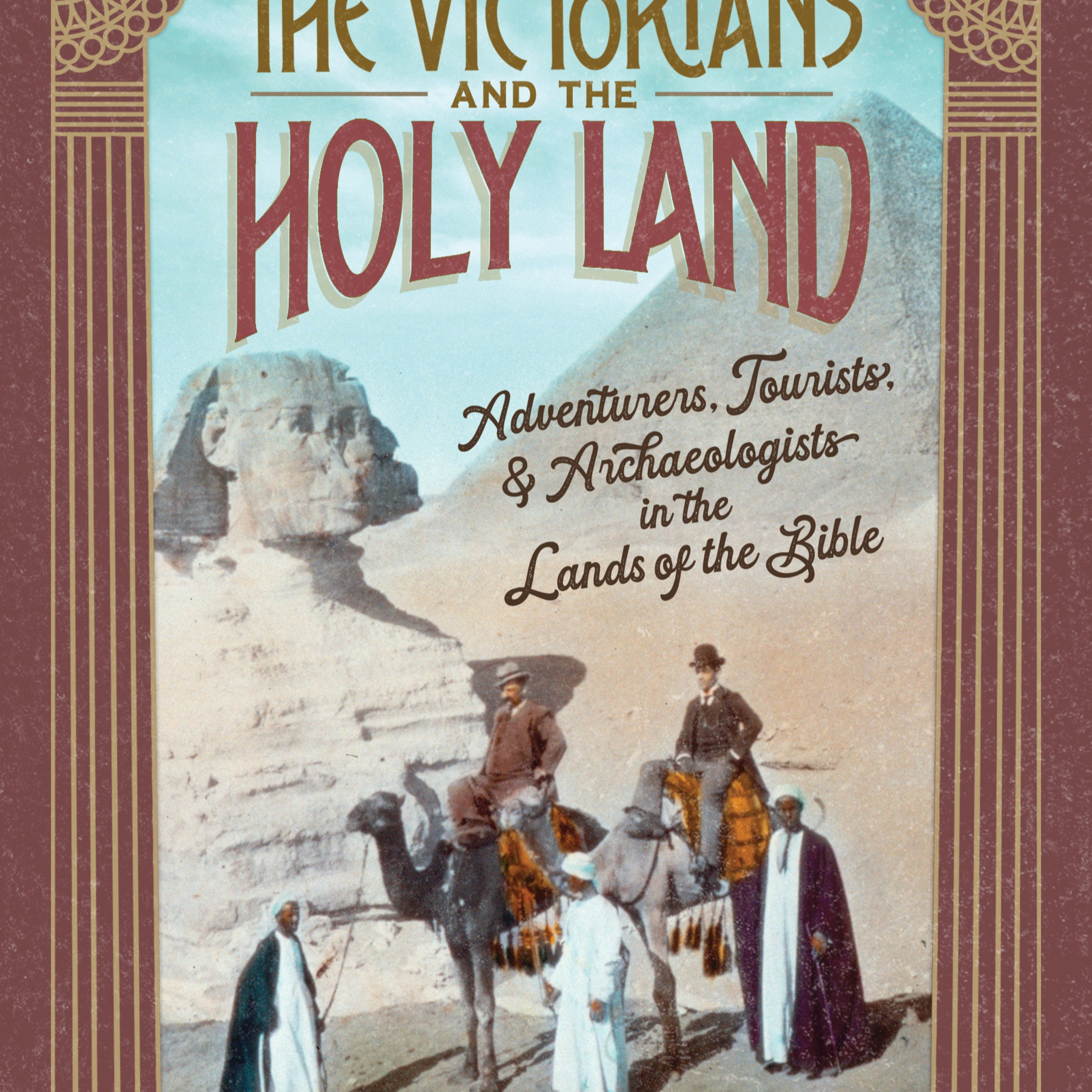
He's written a book called Victorians and the Holy Land.
It's an investigation and an exploration of the activities of the Victorians in the Holy Land, opening it up to investigation both by tourists and by intellectuals.
I really enjoyed the book.
It was fascinating.
I learnt from it.
It was really interesting to read it.
So Doctor Anna Chapman, you are AI believe a professor, a teacher at Oxford University.
And I can tell from, and I can tell from your bio that you've written multiple books, including book books on the relationship between science and religion, but not exclusive to that, mostly on in the historical context.
So you have a long list of books, which I'm sure my readers will be interesting.
But today we're talking specifically about the Victorians and the Holy Land.
Welcome to still unbelievable.
Doctor Chapman.
I think that where I'd like to start with this, because there's so much that I enjoyed and I appreciated about the book, is to set the scene around what what inspired the book?
What prompted you to want to write this book?
What story are you trying to tell and who are you trying to tell it to?
Basically, I've been interested in this subject since I was a Boyer.
I'm really a historian of science, specialising in the history of medicine and historian, so I'm not claiming to be just about original interest.
But I've been reading books on this subject, from being a small boy, going to the librarian, borrowing from the local librarian.
It captured my attention and I thought I should do a book of it because I own understanding, interest and it's also as I always like to do, it's full of interesting characters and interesting incidents.
It is.
And I was genuinely fascinated by it.
And I think 1 little tidbit for the British audience is the name Thomas Cook.
Because anybody who's British will know that name from boards and shops on that High Street.
Because although it's less popular today, certainly in recent decades, it's been a name that's been associated with the package travel industry.
And that name crops up about midway through your book.
And it was really fascinating to read that part of the book.
I, I guess before we get into the detail, who do you want to read the book?
Who is the book aimed at?
What's your audience?
The general reader, Historians and the illusions.
And and as someone who's only vaguely interested and as somebody, I'll, and I'll be honest, I did mention this briefly before we hit record, it's I don't have much of A history of reading history books.
It's not something that I've done habitually, but I really enjoyed this.
I enjoyed this hearing about all these characters from years gone by.
And I think what for me was most fascinating was in the context of the stories of these characters.
They're doing it without any of the modern advances that we have today.
They didn't have mobile phones so they could ring home.
It was letters, which would often be put on a train and then a steamship and then another train.
You know, communication back home either to their families or to their sponsors, could take months.
You.
Don't forget to you had the crucial thing about this, the electric Telegraph and then the election telling her flying to America in 1866 and so you could literally do something in London or whatever and learn about it for the evening's papers in New York.
OK.
So Yep, I did.
I did manage to admit that.
So was that also available then in the area of the world that you're talking about, in North Africa, in the area around Israel and the Promised land?
I think the reason is it was the most accessible, right?
The Nile is the big river.
No matter where you'd be going on the Nile, you found statues, magnificent structures, temples, pyramids, and the stories, of course, in excellence that the children of Israel had been kept there as slaves and that could be what their position would turn into as things.
And it's just so fascinating.
But we knew far, far more about the Egypt than we knew about Syria and Babylonian, because only in the 19th century did the Syria and Babylonian enter the world's consciousness.
A real place.
Yes, and I really loved the Egypt parts.
You know, the the book, the title of the book promises the Holy Land, but you spend an awful lot of time in the book talking about Egypt as well.
Now it that's obviously.
Because the good bit of the Bible story takes place in in Egypt.
Yes, absolutely right.
You can't understand the Holy Land context without actually understanding the history of the story of Egypt and the Exodus from Egypt and all that.
So the the two parts of the world are not just geographically close together, but historically intertwined together.
And that really comes across in the book.
And a very man too, that really Palestine didn't have much of an impact on the ancient world.
A religious instance that his accounts of travels of the in the in the Middle East in the in the ancient Greek, James never mentions Palestina or only just a a passing remark of Palestina, who is conceived as a dependent of the kings of Syria.
Right.
So was Syria a an impressive Kingdom at the time that you're writing about?
Was it a Kingdom with power and clowns?
Was it the time that the religious was there in the 3rd century?
Right.
So it it had a historical impact on that area of the world.
Oh yes.
Oh yeah.
And you, you mentioned earlier about the, the statues along the Nile in Egypt and there's some impressive photos in your book and descriptions of these places.
We're not talking just about the pyramids.
There are other parts of the Nile further South which have also got these impressive statues, which, and I think personally, I found those more impressive than the pyramids personally in terms of the majesty that they, they invoked.
So these kinds of things, are they all the way down the Nile?
Is there evidence of this kind of thing further down?
Around the Nile, around the pilgrims.
I mean, we had genderer right up into the top of Egypt.
Lots of things there.
But there's no evidence that the Jews and the children of Israel ever had anything to do in that place, right?
I mean, Egypt's a big country, a couple of 1000 miles on the twisting banks of the everywhere, Diane.
But the Jews were at the bottom end of the of which we would call the Nile Delta.
Right.
And the area around what would become the city of Cairo.
OK.
So you're saying that there was a Jewish habitation there?
Was there a Jewish habitation there?
By according to Jewish accounts, yes.
There, there was right Exodus.
Sorry, what was that about the Exodus?
They're mentioned in the book of Exodus.
There was no.
Exodus Joseph, who becomes the physiat, a Pharaoh who effectively runs the country was a Jew brilliant Clapper for Suasia, and he was invited to bring his own people over from Palestine, which was suffering, which seems some poverty and starvation at the time.
And they've hit the big time in Egypt.
And it's also by legend that the seven pyramids were were equivalent to the seven years of plague.
Oh right, so that the the the granaries, the storehouses, the pharaoh, and each one according to a plague.
Right.
You, you do do a very good job of disseminating that myth about the pyramids being greenhouses.
I remember as a young child being told when I was out, when I was a young boy at missionary school, as in a school for children of missionaries, that that the pyramids were one of the reasons why the pyramids were built could have been the greenhouses and storehouses.
So we were teaching children that as as as recently as 50 years ago.
Really.
Yeah.
I've been in them certainly so much so you couldn't store anything.
Yes, we know that now.
Yes, it was nice to read that.
And it was nice to read your description of the pyramids and your experience of being inside the pyramids.
It was really quite fascinating and we obviously know so much more about the pyramids now, but for those early Victorian explorers who saw those pyramids for the very first time that they must have been quite mesmerizing, quite awe inspiring, because there was nothing in Europe that matched that.
But nonetheless, they were part of European history.
Any Christian, any Christian parts of Europe would be familiar with the pyramids.
You know, from purely illiterary sources.
Right.
So they wouldn't have been shock horror when you saw them.
Right, because they knew they existed, they just hadn't seen them yet.
Yeah, yeah.
OK.
When it's when travels into steamships and things of this photography came around, it was impossible to see the pyramids and realise how fascinating they were.
Yeah, yes.
And so they, they must have been.
And I know a few people who've seen their pyramids in recent years and they always say they're they are quite inspiring, the way they dominate the landscape.
Yes they are, and they're amazing.
Napoleon bone apartment.
He invaded India, slept in the Vectorian and left it rather frightened, right?
He's sort of like this spooky, though things of this sort of come and get him.
Could this be part of the stories of the curses that are sometimes associated with some of these places?
Associated with the sources and and curses and stuff, yeah.
So.
The curses of the Pharaohs has he had far much to do with journalism regarding history.
Oh I see, right, because my I was about to ask, are those curses anything to do with dissuading people from looting them?
Or is it just a much more modern interpretation?
No.
I mean, yes, we have that modern interpretation, which is exceptional, but there are a large number of people out there who are just simply given over to superstitions.
I mean, I've met people who believe these things, right?
So would that affect their decisions on entering pyramids?
Oh, yes, Oh, yes.
Wow.
I mean, people out there who really believe that there's some chaos attack.
And of course, when Howard Charter discovered you should come home and his his patient died suddenly of an insect bite.
Oh, the present man.
This is the curse of Pharaoh.
That's 1923.
Golly, OK.
So yes, only just over 100 years ago, you mentioned earlier about the not very much evidence about the Israelite, the the biblical story of the Israelites not occupation the Israelites living in in Egypt leading up to to the Exodus.
So do we have any theories as to how the Exodus story came about?
We have the Jewish account.
Right.
But that's pretty well it.
Right.
So it's difficult to unpick what might have been the source source of that story.
OK, when you have a document like the Bible, which is covering itself several thousand years of history, and you know, it's meant to tailor in to show that the Jews are the winners at every stage.
And so it's easy to get this led by themselves.
Right.
And it's interesting you say that because every story where someone comes out the hero, they always have a low point.
And it seems that the slavery in Egypt seems to be the the literary low point from which they triumph.
Yeah, that's it.
Yeah.
They went into Egypt as Joseph's family and Lily and his son.
But then Joseph dies, and the book of Exodus, you know, tells us about his death and Genesis.
Then you know what happens?
Enslave them.
But but I do wonder what slavery means.
I don't think it's the sort of thing that you had in the American South in the 19th century.
Slavery simply means you do your job or you don't eat.
OK, because we the modern world imagines that the Jewish, the alleged Jewish slavery under the Egyptians would have been hard labour under a whip, and you're saying that's probably not the case?
No more so than any Egyptians had the same things.
Right.
Yes, OK.
The thing is, you don't shift those gigantic blocks of stone, they say.
Would you please move that big stone for me?
Please.
You get your rib out.
Yeah, Yes, you.
Did in the 19th century when an English traveller saw that the that, you know, life was cheap and they they fund them meet people, including their own time.
We have to very well that modern standards of human rights and kindness are very, very, very recent indeed of.
Course, yes, that that's right.
And and those pyramids probably took many decades, even hundreds of years to build, I imagine.
Oh yeah, but The thing is the the first, the gigantic 1 was the cheops and allegedly it was during his lifetime, so and the granny was not low.
The granny came to a further.
And so they're dealing with gigantic quarry, the enormous business of changing large rough lumps of stone, then fingering and shaping them to precisely fit individual parts of the bedroom.
It's it's amazing him and shows that the power of organization was there.
I think the thing that amazes me most about the pyramids is when you look at the modern day cross sections of the way they look.
And somebody on a bit of incomparchment must have designed how the internals of this was going to look and then visualize how they were going to move the stone in order to build this internal visualisation.
And I think for me, the architect, the internal architecture of these things and how practically they could have done it without modern computers, without modern aided design, without mechanical assistance, is quite amazing.
It is amazing, and perhaps Smith of course is the amazing who thought that the the pyramids were holding places of divine secrets and he was a struggling role for Scotland.
Nonetheless.
These ideas sound a bit crazy to us today, but the surveying of them is the construction and the precision with which the stones there with each other was phenomenal.
It really was.
So moving on from the pyramids, because the pyramids and again, you, you draw this out in, in your book, the pyramids gave a real spark of intellectual curiosity.
You know, how did the things happen?
What, what are the things in the area in, in in the region.
Can we find that are interesting?
It sparked off archaeology.
What's the relationship then between the archaeological digs in Egypt and then the archaeological digs in Palestine and Israel?
And they were all saying to to him the matter of course, we really did this in a serious way in the 19th century, in the 19th and 20th century was Flinders P trip suffering the speed trip who pioneered archaeology in a serious sense.
And he both in Egypt and in Palestine, and he used the same techniques and he died in 19, 48, something like that, the great age.
Right.
Yeah.
There must have been a very difference in technique because in Egypt, and again you've got photos of this in your book, you know, when they first discovered some of these artefacts like the, the Sphinx for example, in Egypt that was half buried in sand.
So there was a massive job to uncover all that and dig all the sand away.
And that's, and that's done with big mechanical excavators.
But then when you get to the to Israel and Palestine and all that, you've, you're dealing with much smaller artefacts, much different types of materials.
So they must have refined their methodologies and their technologies in order to get smaller value, smaller physically smaller artefacts.
But very advantageous.
They had a totally different religion, the Jews, and that was not about enshrining and deifying a dead man.
It was about God.
It was not about a Pharaoh.
Right, OK, So what was the Jewish attitude then to these sacred places at that time?
What was the Jewish attitude towards their holy sites?
I'm not sure enough.
They weren't necessarily in the the Holy Land island is usually dispersed of.
Course I.
Understand.
And it was only really in the 19th and 20th century that you start getting them coming together again as a nation.
And the first after 1945 was it when they they're finally given the land of Israel as it was in their homeland, which of course it causes all the trouble we still have today.
Yes, sadly that that's very true and that in the so in the late mid to late 1800's, the land of Israel is not the land of Israel that we recognise today.
So the people that are living I.
Think there, but they were minorities, right?
So all the, all the site, all the sites that we call the Holy Land sites today, you know, the, the, the birth place of Jesus in Bethlehem, the, you know, the, the crucifixion location of Calvary, the, you know, the Garden of Gethsemane, the Mount of Olives, all those places, were they revered at all in the 1800s by anybody?
Yeah, very much so.
Because there is to some degree.
I mean, how, how did you know that a certain St.
in Jerusalem was one that down which Jesus carried the cross, right.
Well, basically it's traditional legend, but I've seen no reason why I won't.
You doubt that because if you were being sent from the Old Temple to Calgary, you'd more or less go down that street and it's still there to this name.
Wow, that's quite fascinating to think about.
You know those streets that have survived 2 millennia of variety variations in history.
So who was so at the time when the Victorians were arriving here to explore all these sites?
Who was living on the land and who did the Victorians have to negotiate with?
Yes there is sheikhs and other individuals.
There was no full scale local occupation death because it was basically the Ottoman Empire that ruled it right through this entire later period until 1922 with the abolition of the Ottoman Empire based in Turkey, because Palestine was just part of that empire.
And I've just grown up over the years as the with the growth of Islam about 680 and then gradually taken all before it.
And of course, what you'd had with the Holy Land sheikhs, and they've adopted what they liked from the from the New World aspects of medicine, right?
He's of this sort.
So they weren't necessarily against it.
But what it was, it was really irrelevant to that wider culture.
It wasn't until the abolition of that empire in 1922 that things took on the formula out of jail.
And it was so that the Jews had a right to their homeland.
And of course, they still have that to do.
Look at Netanyahu.
It's the idea of the homeland of the Jews, and you kick out anybody who they know what to win them.
And there's a lot of kicking out happening in the ancient world.
I mean, when you look at the rules of King David, the wagon, David is such an important thing in Jewish history.
He basically put to the soil or kicked out anybody who didn't share his views.
Yes, that's right.
So when when the Victorians were exploring this new land, or rather it wasn't a new land, it was it was a new to them when they were exploring this land, the land that we now call Israel and Palestine, who how did the the local tribes receive them?
Were they well received by the Ottoman tribes?
Depending on what you had in your pocket.
Isn't that always the way?
And The thing is that the West had it had money, it had technology, it had a whole new raft of learning that that that person has never developed.
And the train for instance, or the Steamboat, nothing remotely like it.
In the ancient world, boats on the river Nile had been driven by sail and by oars from the days of well, long before crashed and they're still there today.
I've been on one and shot part of a programme or on for TV.
But once you started to have the big ships that you have now the the big tour liners with their stone boats and their panels and some doesn't remotely like it to the contemporaries.
Likewise, trains are getting there.
Railways are already in the advanced state of technology by the time that the Victorians in the only the only land.
So the the the indigenous Ottomans, those who were living there at the time, must have seen these visitors with this fancy technology and pockets full of money and used every kind of scam they possibly could in order to exchange the to get hold of the money.
Yeah, yeah.
I mean, The thing is, there was more money out there than they could ever make themselves, right?
You come across references to Belzonians on the early Explorer about the way in which the native Egyptians or the native localists that were treated by their masters and it was barbaric.
And the idea if you know, life was cheap and you've ordered them together and I got another one.
As you know, you got your you got your working staff in the same way that you get your coal, your large quality and the unit barely.
That's right away.
But of course, it was a whole new set of Western values, Western money, Western speed travel, all of that.
It must have been quite a sight if you if a.
New kind of world?
Yes, it must be.
I'm just imagining what it must be like if you've never seen a steamship before in your life and there you are and you see this thing turn up.
That's it.
I mean, he would have said asking for me today, for instance, I remember the thing I filmed a while ago in Egypt and they had been survived with this lovely little white donkey, the beautiful little monkey up the road.
And I got off the donkey and that I and other members of the film group started to give the donkey sugar lumps.
And the owners of the donkey were couldn't understand why on earth you were treating a donkey like that.
They were just donkeys treating animals with affection.
It's it's double fun.
Yes, I imagine, I imagine so.
It really gives an indication of the different difference in attitudes between the two cultures.
Absolutely used to know from the gender a a a Seeley College port of my Lutheran college.
And then he'd be the Sergeant major in the Army.
And he said that he once saw a group of peasants slugging and whipping a donkey for some reason.
And he said what he did, he drew history, Father find it in the air to get their attention.
You said you shoot them if they didn't teach their joking world kindly.
So that idea of a British surgeon doing that, you know, is a big, big difference in approach.
Fascinating.
What a great story.
So by the time, I can't remember what the date was, but there was by the time Thomas Cook, who we've already mentioned, arrived in the Promised Land then and started creating the tours that he did.
What was his motivation for creating these tours?
Was it just to make money from a tour from a holiday business?
Never about money.
It was never about money.
It.
Was a first rate businessman and if he could get money for something, he'd get it but that money would go not to his luxurious lifestyle, which he never lived, but to spending knowledge spending, spreading the Christian gospel, right.
Well, that's right before I mean he starts off as a young entrepreneur in Britain.
He's a, a, a minister, an itinerary minister and he suddenly finds that there's a new railway be laid between Loughborough and somewhere else in Dygmis Midlands.
And he was daunting.
He, she told them he believed that the demon drink would get him and he put on a cheap day return for people to go and listen to the speaker.
This is about 1844, a long time ago, and he found it made a lot of money and they were more wanting and he was very good at making contacts and houses and boarding houses.
He took large.
There was the people who did the Great Exhibition in 1851 and then started taking him Aroar.
He vows to find there's demand for people who want to travel and the railways have made it possible for them to travel.
Whether it's just a day out to Lofbra in the Midlands or whether it's to Karnak depends on the technology because what was happening at that time too was in Egypt, the big riverboats were coming along, big steamers which were effectively floating hotels.
And he was very good at cashing in these not cashing it in a a crude stamps, but catching in on a sense that there's opportunity here in his view to spread the gospel and stop people drinking.
And when he saw the Jordan, for instance, he did something which is amazing.
First time I've seen the Jordan, he walked into the river.
I said, let you the place where Jesus had done his baptizing and wrote straight him and dipped his own head in the water, top hat and all, ringing raccoon, because he had done the same thing that Jesus had done.
Wow.
Oh, quite something.
Hopefully he dried off quickly, but it's quite a novel idea in today's world that somebody would make lots of money from an enterprise like that and then immediately turn that money around and drive it straight into the local community.
And The thing is, you think, too, he was checking people who normally couldn't travel.
You know, you had, let's say, come through the shopkeeper or something like that.
Yes.
Very nice about me.
The pillar of their local society.
Yeah, and pillar of their local church.
But there were nothing in the eyes of the wealthy.
He was able to start taking these people to the Holy Land.
And so you find a lot of comments, very angry ones.
I'm sort of the better off.
You go and travel to Italy or to Palestine or somewhere and you suddenly find shopkeepers and people like that.
They should be back at home doing the work, leaving these faces for the better off and the culture.
Just him.
But what he was doing was breaking down social barriers as well.
Yes, it was because it gave people the experience of an alternative culture, of a different culture people who lived differently had.
Different.
Priorities.
Actually, Democrats, he believed in things being for everybody, and Buddy was there to improve the world.
What's a novel idea?
Yeah.
Yes, I, I, I think there are lessons there in his life that we could definitely learn from today and maybe rethink it some some attitudes.
There was something else that you said in your book.
I'm changing, changing line a little bit here, but there was a little thing you said in your in your book, which really struck me.
And that is when talking about dynasties and the the years of reign of certain dynasties.
And you make reference to rounding up dynasties, you know, compressing dynasties into a representation of a single individual.
But actually it actually means several generations.
Is this a common practice at that time to represent multiple generations with a single individual?
Yeah, because they what they didn't use was a zero point of revenue.
And so there was a such a thing happened 10 years after the death of King so and so right, or eight years after, because you have you all your calculation.
But what you said is to find the first thing later on you had your AC and BC datum and that actually then gave you absolute.
Those techniques are then being used by the archaeologists and the philologists of the 19th century, but it didn't make sense of what they were finding.
And so that's what makes it easier for many, many people.
And when you know, you get somebody like of the Layard going to Assyria and finding the winged the winged lions of Babylon, you know, this was absolutely breathtaking when they brought up the winged Landers back to England.
The crowds it was sent between London ducks and the British Museum was so dense you could having it by.
So were these explorers then treated like celebrities at the time?
Were they the modern day celebrities?
They did indeed.
They were great Internet treating them a bit like space men might be treated today.
Right, because they would go on a trip and then.
That time you've been in Lillivar and the lands of the Pharaohs here.
Yeah, because these explorers would disappear and come back two or three years later, wouldn't they?
And then and then do a speaking circuit of what they they did.
Very, very bad.
Getting a winged lion of Babylon back to England.
It needed you first of all to get onto a raft, floated all the way down the tankless river, through the gulf of the river, probably lodged onto a ship there, taken all the way around Africa, up Africa and finally arriving in London.
That was the only way you could do it before 1870.
Odd when you actually had the building of the Suez Canal vastly speed up everything.
But the amount of hard to work even for an English labrier, and we're going to be front of the English labrier, a cane.
I mean, we changed to work the other way around and we will try to actually get people to do more work.
We didn't want them.
We offered them an extra 6 pence a week.
Yes.
Was there a huge thirst for these kinds of artefacts?
You know where there are a lot of people back home in England wanting to see and touch these artefacts.
Half of London When the Great Exhibition was opened in London in 1851, they built a gallery of an Assyrian gallery.
It did not contain necessarily an original.
These were safe in the British Library or the British Museum, but there were authentic models.
So people can go and you gasped at them and you think of the idea that, you know, the captive children of Israel in the Holy Land been taken away by by his could actually see these things that you could you could touch something now.
I mean, I know in in a college where there's such an artefact, it's a royal decoration, accountable decoration, about 3 or 4 feet square and it's on the wall and it's the oldest thing in the college at 2018.
And you know it.
It is amazing to look at him and it was like as a Manipal and he's owning his armour as a Manipal like this.
And there are things on his wrist here.
And these were, of course, designations of status in the Syrian Army.
And then I'm sure that always said they were acid Baby Panel's wristwatch look just like wristwatches.
Yeah, fantastic.
I must say I do feel a little sad that these treasures from these other lands were all hoarded to one nation for for people to enjoy and the people who originally built them and the people who grew up with them lose the pleasure of being able to see them in their original habitat.
Yes, and if you do that it's just becoming available being discovered by layout and other geologists had said it.
I mean the the Assyria was discovered in its non literary sense by Austin Hendrileian and the French Doctor Who were suffering to Australia but decided to go over land and see some adventures over land rather than just a ship over earth.
And what they started to find, because they made these journeys, they found great mounds on the in, in the plain, in this barren plain.
And lo and behold, if you hire, let's say 50 labourers whose labour was cheap and they started to dig through these things, suddenly the winged lions of Troy would appear and all sorts of other things.
And it was just so amazing.
It was in about 20 years he went from ignorance to these things, or just biblical references to them, to actually finding scores and scores in real live artefacts, which ended up in Paris, in Berlin, in New York and of course in London.
And I can only imagine what it must have been like for some of these people digging up these ancient statues, you know, which could have been buried under dirt or sand or whatever for hundreds of years.
And they're the first people to see them for a very long time.
It must have been quite an experience.
It was tremendous.
He found it, yeah, but very judicial for him is that the labourers would go away sometimes and not come back.
This wasn't a Muslim country at that time.
And there was a great horror of the working with idols and they, the Muslims, it was the view that these were the ancient gods of the pagans going back to life.
And we couldn't do that.
And it took a lot of negotiating with tribal leaders and so before we could continue a day.
Yeah, that's really interesting actually, because yes, if you're doing, if you're trying to excavate something and you have a local culture who either reveres or fears the thing that you're trying to dig up and extract you, you've got more than just a cultural conflict going on there.
You've got something that's deeply spiritual that you've got to resolve.
They, I mean, I've got an idea of, you know, just physical objects that's really a 20, well post 17th century idea.
And to them everything has some kind of spiritual value.
I know Pagan gods or Christian gods or Jewish or whatever.
Wow, it's, it's just must.
It's something that we can't comprehend today because there's probably nothing left for us to discover like that since, well.
You never say that.
You never.
Heard the famous last words, you know, but we know so much more about these old religions.
You know, the superstitions there must have been much more visceral than they would be today.
The idea that there were ancient painted gods that they've got buried in the sand and now these chaps are coming along and revealing them.
So it's clearly an indication that China was going to hit on the land.
As a prophet, Muhammad would protect you and would actually tell all those who deal with the wicked horrible practice of bringing the dead gods back to life and to then it would have been bringing in the dead gods back to life.
It wasn't just simply a piece of statuary.
Yeah, and the other thing that I'm really intrigued by in your book is you've you tell this story about their digging up statues, etcetera.
And then at some point the motivation changes and people are now looking at ancient cities and trying to tell the story of the ancient city.
And they're they're now what they're digging up is not old statues and long deceased gods.
It's human habitation and city wars and things that so they're digging up things which are are very different and they're not digging up something to carry home to put on display.
They're digging up something so they can try to tell the story of the place that they're digging.
When did that shift change?
Yeah, in some of those countries today, I wouldn't like to say, I wouldn't like to say what might happen if we do certain things in the Syria or some Muslim countries.
I just, it will affect the Jews as sophisticated culture.
I don't think it will affect obviously the Christians, but there's some other sectarian face that I'm sure still have these these ideas lurking in the back of their collective memory.
Right.
Oh, OK.
But in terms of the Victorian explorers, so who were excavating these lands, when did their motivation change to finding out the history?
No, because they would do the same all the way along.
It's.
OK.
I think, I think when you had, we were doing that fluid, the speed trip where you actually use the objects, no matter how insignificant, a tiny pot or a handle or something like that, all of which would indicate to you where you were actually going historically.
And it changes.
And in the the things that we'd had in the West, there's not actually a superstition.
It would be the marketing value that had Sloane in London had Sloane.
He has a, let's say Johnstone, that's Sloane.
He was a great collector and a medical man and son.
And he has in his basement of his house still there because they can't remove it, built across him a great sarcophagus of one of the Pharaohs.
And I've seen it and he has had not part of the house down really to get it into his private museum.
Wow.
Yes, Johnson.
That must be quite something to have in your house.
OK, Very, very, very wealthy man that bought things like that.
Must have been was the income from some of these artefacts then used to fund further exploration?
I mean Henry Salt, who was the British commissioner in Egypt in the early 19th century and the president in Germany, Belzonian, that they certainly sold them on and they published in the money usually to buy more artefacts, right?
So an enormous market for them.
So lots, lots of trading going on.
Oh yes, you know, with him.
And it was so simple.
You just go out there with the shovel up and find something in value.
Right.
I'm, I'm sure if you, anyone familiar with the Old Testament will know about the, the battles of the judges, specifically Joshua, but there are obviously others.
So we've got cities like AI Nineveh, which we've already mentioned, and others which are destroyed in various miraculous events.
Was there enthusiasm to locate these old cities and to find them?
I mean, look at the news tonight.
Gaza.
Yeah, that was what happened.
And so, you know, we had things on that strip which would have been there for at least from the time of Abraham, and we were a vast age.
Ditto to the the trading city of the North.
I mean, this desire to find these places are very, very wise men.
Oh, yeah.
But the the big cities, many of them still have the same names in his name.
Yeah.
Right.
And what was the motivation in finding these cities?
Were they, was it literally also to find artefacts and say here is some of the wall from the city of AI that got knocked down or were people trying to achieve that?
Yeah, yeah.
That's it.
Right.
OK, But then if you've brought this piece of ancient pottery and call it called it a brick, and you brought it halfway across the world, how do you actually know if this ancient brick is really from the city that you say it is?
Basically, speaking from context where it was found, the fact that it looked like from decoration of the right period of Jericho, but it was, it was absolutely a miss.
But it was his great desire to find these things, and it was the ruins of things like Jericho.
Yes, I meant because everybody's familiar with the story of Jericho, certainly anybody who's read the Old Testament, which presumably most of the people who were doing this exploration at the time.
So what was the impact of these explorations for the average Victorian sitting in the pews back in England did it?
Very nice indeed.
Very nice indeed.
In in depending on their engine because you see you notice that they have going there.
You also now you can buy photographs of them.
You can also, as I say in the book too.
Even the stories are based upon them.
You know the secular stories and then hymns so many hymns in the back are actually rooted in Old Testament and New Testament event when you tell the hymn gave me Oh no, great Jehovah, which is the Jehovah leading the Jews out of Paris, out of Egypt.
And then of course the idea of crossing the lion, crossing the Jordan and all that to his son.
And you might have asked him, what was this fiery cloudy pillar and things of this?
Must have been, yes.
And bringing photos back must have been quite something because again, your book covers, you know, the period where photography was becoming portable.
It was a it was a new technology and advances were being made continuously.
And people are now able to carry a camera and a dark room and transport it and take a photo and develop it there and then and bring back photos of these places.
You've got that, yeah.
So you have also theatre.
You have various things, yeah, to bring this to life.
And it just shows how deeply embedded the Victorian culture as.
Well, wow, absolutely fascinating.
So going back again to the the history then of the people of modern day Israel, their story goes back to Egypt, which is where you place a lot of the book.
What about the journey from Egypt to ancient Israel, That journey that's told in the Exodus and that period?
We have the official story from from the background.
Well, they're they're being kicked out by Pharaoh on the Great Plains and so on.
One wonders how far they had just got on the nerves of the ancient Egyptians.
And they were more I said go.
I mean, you do wonder whether there was a lot of reluctance to stay there because it's just it was a much easier world is get on the roof for somewhere for your own instead of have the Egyptians feeding him.
Because of course, I love these Egypt from making them mug bricks.
And so they had to keep the Jews.
That's what I mean financially.
And so let them go off and do what they want, and you keep your own money to keep your own bricks.
So in reality, what would that journey have been like to travel from Egypt to modern day Israel today?
What would that journey have been like for people to make that journey?
Would it be known through shepherds?
Through travellers, merchants across the recipe?
Get into the the Holy Land basin, cross it, go over to the foreign distance, the the great, the great Gulf, which is the the basis of the Jordan, the Red Sea and let me go there.
There's a well known route.
So you're saying basically traders and merchants would have been travelling that route for decades prior anyway so it was a known Rd.
I think the idea is, is so modern that, you know, I think you forget how ancient it was.
And like I say, the area they're wandering in was not really speaking about the size of South Wales.
Now you get the impression from the moment that they were wandering for, oh, infinite distances.
Yeah.
No, you look at the area where the Terminator that much bigger than South Wales and you keep walking around it.
Yes, it's a few days walk really, isn't it?
Yeah.
And I think what's interesting about the geography of that area, and you mentioned it as well, it's the the Bible talks about a desert.
And yes, there are some desert areas, but it's not all desert.
Is it that?
I mean, how did you keep your sheep and your castle if it was all desert?
Yeah, they'll die.
And you know, there is a lot of grass out there, especially around the edges of the Sangaya Peninsula.
But especially they followed the Sangaya Peninsula to the sea, and around there they were going through areas of grass.
And you know, sometimes they would stay depressed for a long time and they didn't want to move.
Other times they would have to be moved alone.
That's the idea that they were there in sand, no?
No, it doesn't work really, does it?
You couldn't.
You couldn't get bread out of sand.
No, no and get this.
And the local geology, because it's a lot of limestone and that just to have a lot of water trapped in the structure of the limestone and the right breaks at the right places in the limestone will actually produce assembly of water.
I came across one reference in years ago to a British squadron in that part of area and they said Palestinian area around Sanya and a Sergeant took a harem and bashed the side of a rock and overspurted water right well, the children totally barren.
Loves him.
Oh, that's a quite fascinating story there, isn't it?
Oh.
Yeah.
To recap then, about your your your book, Doctor Allen fascinating book.
I genuinely recommend it to to my listeners, the Victorians and how they opened up the Holy Land.
Really interesting lots of characters in that book and to spend a lot of time in Egypt, which is a really fascinating place.
Some of the history there and to tell a bit of the story of the Israelites and their journey and to manage to paint a really good picture certainly for me anyway, of the how exploration slowly evolved in that area and how interest back home and in exploring and then arrival of the camera.
It's a really, really fascinating story.
So listeners, if this kind of thing is a tool of interest to you, genuinely I recommend this book.
I really enjoyed reading this book.
It's.
I certainly enjoyed writing it because I am a historian, but I'm also a natural storyteller when I come from a family that's sitting around the fireplace of a even telling tales as part of the life.
So stories to be in the blood.
Excellent.
And there's so much rich material there.
They're from.
So thank you so much for writing that.
The link in the show notes.
Yes, link will be in the show notes.
Listeners, there was just one more thing that I wanted to mention to you and it's almost an obscure reference you make in the book, but it intrigued me because I spent many of my formative years growing up in Central Africa.
And you mentioned this city or land of Punt in the book and you, you hypothesize about it may have been a trading port or, or a, a place of trade that was S from from Egypt, etcetera.
And you mentioned the wonderful place of the Great Zimbabwe right down in in Central Africa, a place that I have visited and I love, love it.
I really did enjoy my visit to the Great Zimbabwe.
So it very settles the land upon was very Zimbabwe.
Oh, that, that is now settled.
Is it you you think that is the case?
Well, I mean a possibility.
Yes, because that in itself must have been a tremendous journey from Egypt all the way down through half of Africa down.
And one of the thing I wanted to mention about the Great Zimbabwe is there's a hillside right next door to it.
And you climb that hill and you look over what would have been the the residences of the Great Zimbabwe and you get a real image of how huge this civilisation must have been and the the great activity that must have been there.
It's fantastic.
And Jerry Zuni, Matthew.
So I, I loved reading about that.
I, I never thought that I'll pick up a book about the Holy Land and read about the Great Zimbabwe in it.
It was wonderful.
So thank you from me for for that little treasure because it was great for me to to do that.
Thanks for pressing the right buttons to make these recordings.
Computer Dinosaur.
We, we all, we, we all, we can't all be great at everything.
So oh.
Yeah.
So what's left for me is there's there's one question that I like to ask my guests before I say goodbye to them, and that is, do they have a favorite Bible character and who is it?
Yeah, obviously.
Jesus.
It's Jesus.
Yes, go into the Old Testament.
Well, there's a lot of Jamie, Lisa.
There's a There's a lot of great characters in the Old Testament.
Aren't they?
Thank you so much for your time, Doctor Allen.
Thank you again.
Thank you again for the book.
Genuinely enjoyed your book.
Genuinely recommend it to my listeners.
And until next time, everybody be reasonable.
Thank.
You.
Thank you so much Cortana.
I really enjoyed the chat.
Thank you for your time again.
You have been listening to a podcast from Reason Press.
Do you have any thoughts on what you've just heard?
Do you have a topic that you would like us to cover?
Please send all feedback to reasonpress@gmail.com.
You might even appear on an episode.
Our theme music was written for us by Holly.
To hear more of her music, see the links in our show notes.