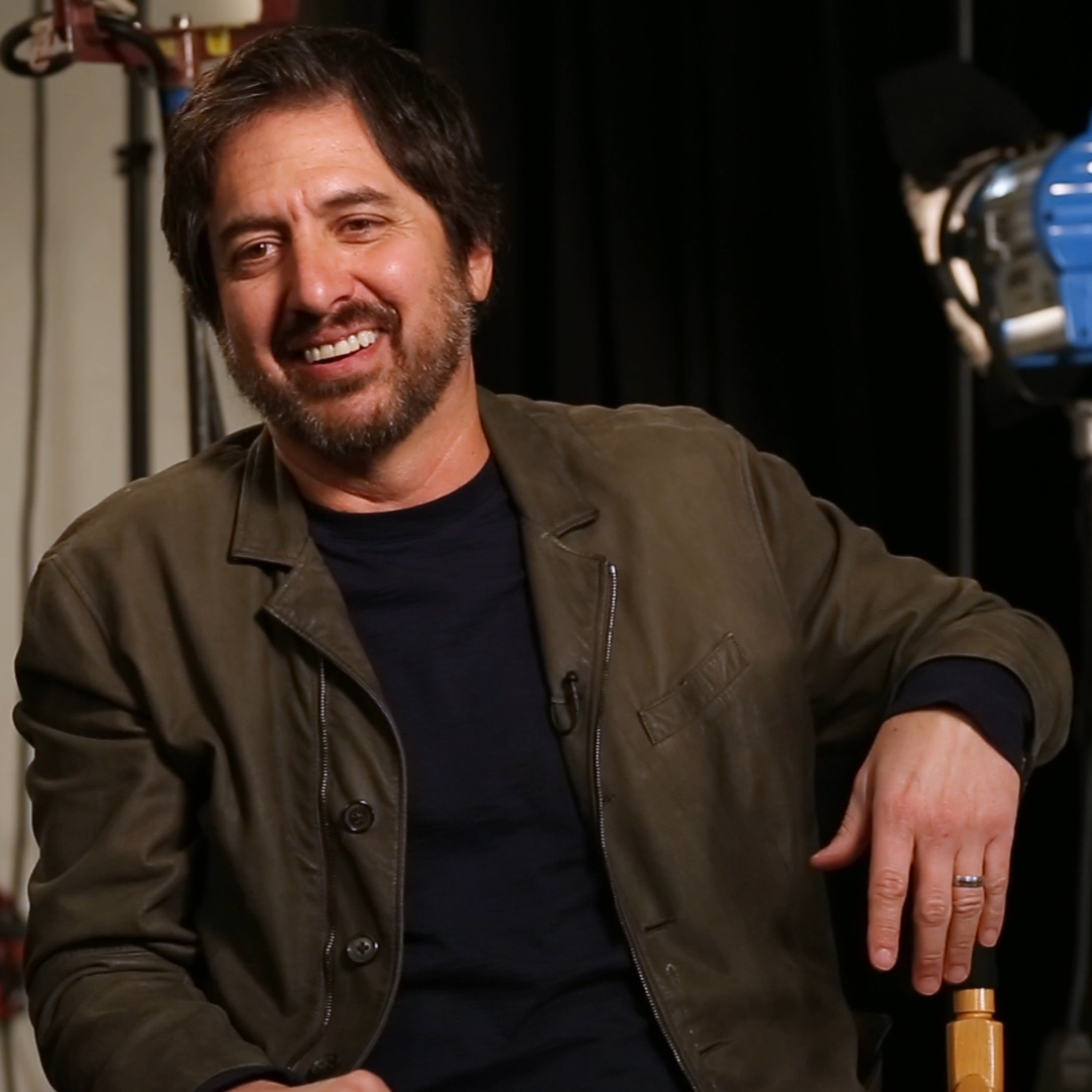
Ray Romano: From gas station robberies to sitcom stardom
Episode Transcript
Ray Romano a stand up comedian from Queens NY who became the star of 1 of televisions best love shows.
This was our thing.
This was our sitcom TV legacy.
The Everybody Loves Raymond actor shares the last minute decision that put him on the map.
The story I'm about to tell you, probably.
Has no validity, but in my head it does.
And the heartbreak of saying goodbye after nine seasons.
After a couple months, wasn't that much fun.
It wasn't no.
And I kind of crashed.
10 years had passed since the Raymond finale when we sat down with Romano in 2015, but he was as busy as ever acting, writing, producing and golfing.
During our chat, he shared embarrassing tales from the Pebble Beach Pro AM.
Well, at the time I was devastated, but now I, I, it's funny now.
Lessons from legendary instructor Hank Caney.
One shot that I hit Hank Caney said.
That's the worst shot I've ever seen.
All that's coming up on the In Depth with Ramben Singer podcast.
So I wanted to start off by talking about some of your early days before you made it big in show business when you were kind of young and hustling, had a variety of different jobs and happy.
There you go.
What do you remember from being held at gunpoint when you were a gas station?
Two times.
Twice.
Twice.
Yeah.
I was working at a gas station by my house in Forest Hills, Queens.
And this, you know, this is back in the day where you didn't pump your own gas.
I was a gas jockey, I guess, whatever you call it.
And a guy came in, young kid looked a little like you.
And I'm not even saying that to be funny, just a just an upstanding looking young man.
I was young and he actually used the payphone.
And remember what, you know what a payphone is?
We used to have surprisingly, Yeah.
And it was the middle of the day and it was me and another worker.
And he just kept pretending that and that it was busy, the line was busy.
And we kept running out and pumping and pumping and putting cash in our pockets and his net.
And then we we just started talking with him and he was a nice guy and we were joking with him everything.
He just you mind if I, Yeah, go ahead.
Boom.
And you hang up and then, you know, he was waiting for a low in the traffic and the cars coming in.
And when the low hit just totally shocked us because never would have suspected that he just pulled the gun out, said guys.
And we turn around and he goes, he goes and he said right away, he says, I like you guys, don't make me do anything.
I go whatever, I go.
We like you too, you know.
And he made us go in the garage and lay down and he took the, you know, he knew we had money in our pockets.
He took it and we had change like bills in a drawer and he took that and he took off and then about literally about 90 seconds later a cop car came by and ran out and got in the car and went looking never and never found him.
And the second time was the same gas station.
Now this was at night, late at night, and where we had a sign saying we don't give change
after 10after 10:00.
And a car pulled up and there was 1 gentleman in front, one gentleman in the back.
And I should have suspected something then that you know why they driving that way.
And the guy in the front said I want $3 of gas.
I only got 10, can you give me change?
I said, and I, I wasn't supposed to, but I said, yeah, I'll give you change.
So he knew I had money on me.
Yeah.
So I was pumping the gas and then from the back I just heard yo.
All right.
And as soon as I heard yo, I just said what have I done?
You know?
Yeah.
And I turned and he had, the guy had a gun.
He's pointing right in my stomach.
And he said, empty your pockets and I had a wad of money, but it was all singles.
But he just saw the wad of money and I just, he goes throw that in here and I just threw it in.
So they were, they thought they hit the jackpot.
It was really like $40 in singles, you know.
And then he said, and then he said, you enter your pockets and I have my wallet and I took my wallet out and he goes, throw that in here too.
And look, I was scared.
I'm not a hero.
It wasn't, you know.
I was as scared as I could be, but I didn't want to have to get a new license.
I don't want to go to the motor vehicle Bureau.
And I said, and I saw, I showed him it had it had one single in it.
I go, can I just give you the money?
You know, and I keep this and the guy to his credit, he took the dollar, he goes, you keep it and he let me keep the dollar and he drove off.
And those are my 2 times ever being held up.
And then my mother and my father told me you can't work there anymore.
So that was the end of your time.
Pretty much.
I think, you know, maybe I lasted another couple weeks there, but I said yeah, let's it's not worth it, you know?
Explain why you went under the alias Jackie Roberts your first night doing stand up.
Jackie Roberts was when the first time I did stand up.
I went to the Improv on 44th and 9th Ave., which doesn't exist anymore, but was the first club ever in the country, and they had audition night on Sundays, the first Sunday of every month.
And I've learned that, you know, I called up and found out the procedure was you go down at noon, in the afternoon, you pull a name.
All the possible addition, the potential addition is that want a chance, come in and pull a name out of a hat.
We give out 20 spots, they give out 20 slots to perform that night.
There's about 40 people there, 50 maybe.
So I brought somebody with me and, and the only one I could come was this was this girl that I was working with at the time.
I was working at the bank at the time.
And I told her I go lit because once you pull the name out, if you, if you have a blank you, you're not going on.
If you have a number, that's when you're going on.
So if you get the number and I had to think of an androgynous name, you know, because the guy's going to ask you your name and write it down.
And then that night I'll just go on.
So I said Jackie Roberts.
It sounds it could be a guy could be sure enough, she she pulled the number.
He said your name Jackie Roberts.
So I went on that night as Jackie Roberts for Silva Friedman, who was the owner of the club.
And I was scared of silver.
You know, she's a lovely woman, but I was scared of her.
And I did well enough to get what they call a call back where they say you can come back next, but she tells you next month you can have a call back.
You don't have to pull the number.
You'll be on the list.
And I wasn't about to tell her.
I really tricked you guys.
I'm not Jackie.
So I for the first like, 3 or 4 months, I was Jackie Roberts there.
Yeah.
And then I finally had to tell her.
I was just.
Trying something out I'm not.
I'm going to go with my real name.
See more Rankowitz, Yeah.
So when you were kind of having for a while struggling as a comic, Saturday night, she would drive all over town in New York, show to show, to show an effort to like, make 300 bucks.
And I was talking to your wife the other day who's great and has lots of stories.
And she's like, you know, God bless him, make the 300 bucks.
But then I'd be furious with him because he did $100 ticket same night.
Well, I lived in Queens and all the work was all the clubs were in Manhattan.
And I, I just drove, you know, I wasn't a subway guy, too claustrophobic for that.
And I had to, yeah, once I became a regular at the clubs on a Friday or Saturday night, you had to, that's where you made your money.
If you didn't go out on the road, you had to hustle and make as much, you know, And the clubs would pay $50.00 for a spot, some would pay 60.
So Friday I do the the 8 O clock at the Cellar downtown the the
88:40.
You know they had three shows, an 8 O clock show at 10 O clock show at 12 O clock show.
So I would do the 8So I would do the 8:15 at the Cellar, the the 8:45 at Stand Up
New York Uptown, the 9New York Uptown, the 9:15 at the Comic Strip, and then come back for the second show.
Here and I pop up, up, up and you can't find a spot.
You got to do your, you know, you got to just park.
You know, There are many times I was just by the hydrant crossing my fingers, and I never got towed.
I got broke.
I got smashed, window smashed.
But yeah, that was, you know, part of the course was make 300 and pay $100 tickets and hide the rest from your wife.
It's a different interview.
1991 You do, Johnny Carson, I do.
How true is it that you almost had a panic attack at some point?
That's very true.
I was, it's 91 November 15th, and I was in the hotel with Rory, with my manager, and I was in the shower, not he wasn't with me.
You waited outside, right?
Yeah.
And I remember because now it's getting close and I remember not being able to feel my arm in the shower, you know, I was like, because I'm just so consumed by them going, I'm about to go on The Tonight Show with Johnny Carson and I got always like, how am I going to make it at this?
I'm still like 2 hours away from this.
And then I, we got in the car, the limo that was taking us there to The Tonight Show.
And I was on the verge of just, you know, having a full blown panic attack or whatever that is.
And how are you feeling?
Yeah, I'm, I'm, I'm, I'm, I'm numb in spots.
I'm, it's surreal.
I'm, I'm, I'm scared that I'm going to go up there and freeze.
Hearts going a little, hearts going fast.
And we got about a block away from the hotel and I realized I left my.
Notes in the room so he so he goes let me go around I go.
No, no, no, let me just get out and I get out and I ran full steam.
You know, because we were cutting it close with time to the hotel up down, ran full steam back and that kind of saved me because whatever that did that, you know, the energy that I expelled was good enough to calm me down a little.
I still don't remember the set, you know, you're still kind of in your own world.
But I didn't freeze.
Otherwise, if I don't run back and forth, we're in, I'm here, you're there, and the whole world is crazy.
You really, you really think that would have?
I mean, you would.
Have no, but I do have a story.
Well, I don't know what would have happened on that.
But you know, I don't know that that would have made a make or break my career because you know the thing that it changed my life doing The Tonight Show just as a as a performer, you know, reaching the mountaintop.
But what changed my my career?
Was doing Letterman and I my theory is and I'm I know I'm jumping ahead.
And that's what you always wanted to do though, right?
You'd done Carson, you'd done The Tonight Show a couple times.
But Letterman was.
Yeah, I only did the night show once, OK.
I did it once with Johnny and I did it twice with Jay.
Right, right.
And then and then Johnny left and Dave was the guy.
Yeah.
And I and I was also eleven years doing stand up at that time.
So it was also the idea of because they were given shows to comics.
They were given, you know, a lot of comics were getting development deals.
You know, Roseanne got a show, Tim Allen got a show, Brett Butler got a show.
You know Seinfeld, of course.
Is that ever going to be even something?
That's not why I'm in the business.
I love doing stand up but you know, I'm 37 years old now.
What's the next step?
I got 3 kids and.
Your wife says Rory was telling you at the time you're his best kept secret.
Yes, and and then my wife would say, well, well, let him out.
Don't, don't keep it a secret anymore.
You know, I was making money and I was OK.
But yeah, as a, as a road comic, you have good months, bad months.
And so there were times where I had to borrow money from my dad just to pay a couple bills.
And then there were times, you know, I made OK.
So but look, I was doing what I love to do when we weren't starving.
But what's the next thing?
And what I am I going to get a show?
Am I going to get am I going to get that chance?
You know, I had taken a couple acting classes.
Who knows?
And everybody had seen me.
I'd done everything.
I'd done that HBO one night stand, I did all the evening at the Improvs.
I did The Tonight Show, I did whatever.
And it was a little bit of a point where I was thinking, you know, I'm 37, Maybe it's just this is it's not going to go to a different level.
And that's OK, you know, But you know, am I going to be 60 doing stand up on the road?
Let's see, you know there are worse things and you know I'm doing what I love to do.
But thoughts were creeping in your head there maybe.
Yeah, that that, that maybe I've reached as far as I'm going to get.
And then Letterman came the the the the opportunity to do Letterman.
And you were bumped the first two times, I think.
That's right.
I was bumped on the way there.
Somebody went long.
So I was bumped on the on the ride there, on the, I think on the bridge on the on the 59th St.
bridge, I was bumped.
But anyway, so then when we did it, I, I remember Mel Gibson was on the show.
He was the 1st guest.
And Dave now, now just, I'm jumping ahead, but Dave, Dave produced Everybody Loves Raymond, right?
Without Dave Letterman, there is no Everybody Loves Raymond.
And, and, and again, we're not sitting here and Mel Gibson was on the show and Dave it was the spring and, and Dave did a bit, and I'm making a lot out of this when the, the, what I'm the story I'm about to tell you probably has no validity, but in my head it does.
Dave did a bit where he cut people's pants for the spring.
He goes, I'm going to summarize your pants.
And he took someone from the audience and he cut their pants and, you know, pulled their legs out and now they had shorts.
Hey, crowd went crazy.
And then he did Paul Shaffer's pants.
He summarized Paul Shaffer's pants and then he did his own pair.
He goes, well, I'm not a good sport from anything.
He does his own pants.
So they all have Mel Gibson comes out.
He cuts Mel Gibson's pants into shorts.
So I'm backstage and I'm first time on Letterman.
Nobody knows me and one of the producers comes over with a scissor.
And I'm starting, I'm starting to think, what do I do?
And he goes, you got to cut your pants.
You have to cut your pants.
And we had.
This I go, really?
You think?
Yeah.
And we were about to cut them and I stopped and I said, you know what, He's going to introduce an unknown comic.
You've never seen it.
You're going to see an unknown young guy walk out on stage.
I just started thinking, if I come out without pants, all of a sudden I'm there's an air of I'm one of the guys.
I'm I'm, I'm already in.
I'm already part of the joke.
I'm already with you guys.
So I decided not to cut.
I go, you know what?
I'm not going to cut my pants.
And again, I'm making more of this.
And I went out and I had, you know, I'm hard on myself, but I had one of the.
Best TV spots I've ever done and that led to Dave calling me and signing me to a vellum deal and I think had I cut my pants, I.
I'm delivering your futon.
Do you?
I mean, do you really think that I do in my?
There is a part of me that thinks, who knows if the dynamic is different if I go out without my shorts.
But they don't, you know, And you know, you get off to a bad start and you never know.
Who knows, maybe Dave looks at me different.
Maybe, maybe somebody, you know, I told that story to Dave and he said I'm sure it would have been fine.
And it was, I think, two weeks after that appearance that you get a call at your home on a Saturday afternoon saying they wanted to develop the sitcom around you.
But how do you view Letterman?
How do I view him?
Well, I think he's brilliant.
I think he's, you know, a genius.
I think he's the best at what he does.
People ask me if I'm friends with him.
I'm friends in the sense where I know he likes me.
I genuinely think he likes me.
That doesn't mean we hang out and talk because I don't know if there's a lot of people who do.
I know he's, you know, he's hard on himself.
He's a, he's a, he's a perfectionist.
And you know, I don't, I don't know socially how good he is, but I still love him.
What about your final appearance, son Letterman made it so emotional for you?
Well, because what made it emotional was that's where my life changed.
I mean, first of all, it was just to get on the show and be and, and, and you know, have Dave give me the accolades he did and all that is good enough.
But then for what happened after that, I mean, my life change, like my children's life.
I have my family, my everybody's everything changed for me.
So and he was like a hero of mine.
So, and, and over the course of the years, then it's 20 years later, I've been on the show over 35 times, you know, and it was always my favorite thing to do.
And every year I would write down stuff in the back of my book whenever I thought of something funny.
I go, that's good for Letterman.
That's good for Letterman, you know, because I always had to have like 15 minutes of new stuff every time I went.
So when it was ending, it was just the, you know, and now I'm and I'm in my 50's, the show's over.
I look back at that time, there's this such a magic to it.
You know, my kids are little and I'm out there, you know, trying to make it in the business and and this was the moment.
If I have to pick one moment, this is the moment it's all going to end.
You know, he's he's going away and it's not going to be the same.
And it just.
It all, it caught up with me, you know.
So that appearance what's what leads to Everybody Loves Raymond in the first season of Raymond that I think you start in like 77th and ratings, you eventually become the most watched show on television.
But I think it turn around like that's pretty much unheard of.
That first season though, the ratings were lousy.
Critics liked it, but ratings weren't great.
CBS stuck with it.
You were at a crappy time period Friday nights when CBS moves it to kind of the coveted Monday night time period.
To what extent is that kind of do or die for you guys?
It was do or die.
It was absolutely do or die.
He he told us.
It was do or die.
That being, let's move as the CBS head.
Because we were, we were on Friday nights and we we were in like you were being generous 77th, we were in like 100th and something place I used to say in my ACT, we got, we got Moisha right on our ass.
There was a show called Moisha, which was right behind us.
But Friday was a bad, you know, so nobody was really watching and the critics were giving us some love.
So he was kind of torn, Les Moonves from canceling us because he'd get some heat from the critics or whatever.
And he knew he kind of was had faith in the show.
And you think it was close though?
He told, he told not Phil Rosenthal.
He said the last six weeks of the first season, he said, we're going to put you on 930.
I think it was 9I think it was 9:30 on Monday at 8:30 after Cosby, Cosby's second run was was gone and that was a top 10 show that year.
So we're going to put you on after that because if if you don't perform in that slot, he goes, there's pretty much nothing I can do.
So the pressure was on.
It was kind of there and we I think in the first, first week.
Cosby came in like 14th place and we came in 12th.
We went up a tick on the first night and you know, you still don't know if are they going to come back and and they came back and we stayed on Mondays for the rest of the run we stayed.
That first season, your family was living in New York still.
You were in a crappy little apartment in Lai think you were commuting back every three weeks.
When did it get to the point or what made you realize it got to the point where the show's going to make make it Or you can, you know, bring the family and.
Well, I mean, it was, it was that Monday trial.
I will say this though, it was, I remember the episode.
Because you have doubts the whole way you don't know is you're just getting to know the actors and you're just getting to know your character.
And they can, the audience doesn't know your character.
You know, the audiences that would come in, they literally would pay.
This sounds like a joke, but they would pay senior citizen homes and drug rehab places to bring people in.
Yes, for real.
Yes, for real.
So they would fill our audiences.
I mean, it wasn't full with them, but.
But, but just to fill half of it.
And I've been both drug and now I'm in the seniors.
Yeah.
No.
So they don't know your character.
They don't know when Doris Robbins walks in A room that she's going to, if she overhears her saying, oh, my God, that's going to cook because they don't know the dynamics of the family, the characters they got to get to know.
So it was a little rough, you know, in front of these, in front of these crowds.
We believed in the material and all that.
But but you weren't getting any feedback from the audience that you should until about, you know, then it aired, and then you know.
Maybe 12 at 15 episodes in 12/10 episodes.
Some people, some people are in that audience now who have seen the show and then know a little bit.
But it was about episodes.
I don't forget the number of the episode.
I remember the episode where because I because you have your doubts, you don't know.
And then there was 1 episode.
It was called standard deviation.
That was the name of the episode.
And it was so fun to do and it was so cool.
And where I started to think there's a there's a chemistry here between the characters that's really good.
It's really unique and and it's real.
And yeah, we're doing a sitcom and the jokes abroad sometimes and all, but but there's a realness to it.
And there's, there's some, there's a, you know, heart to it too, but that doesn't mean you're going to stick around, you know?
And it wasn't until the Monday, you know, my wife wasn't going to move the kids out for that.
But then when we got picked up after the after those six episodes on the last six and we got picked up for the next year, you know, I had twin 2.
Year old boys maybe then and a four year old girl and my wife was was handling that herself and we got picked up and it was next year she said this bull, I'm coming out there.
So you and executive producer Phil Rosenthal decide to end the show after nine seasons, 210 episodes, 12 Emmys.
You have the financial incentive to continue.
I mean, you're making almost 2,000,000 bucks an episode on top of whatever you get on top of whatever you get, you know, on the back end in syndication.
So I mean, how difficult was that decision for you in terms of when to end the show?
Well, it was difficult for for some of those reasons.
It wasn't difficult creatively because to be honest, to be totally honest, Phil and I wanted to end it in the eighth season.
Oh, you did.
Yes, after the 8th season, I mean, to be, to be honest, you know, we had thought at that time, the last thing we want to do is overstay, overstay and, and, and feel like we're, we're on a decline and then we pull out.
You know, you don't want to be the guy who who keeps playing baseball and he and he because he can hit six homers a year instead of 35.
And we felt we were, we were still at our peak that way, but we could see that we were running out of ideas that sometimes we were repeating.
We were stealing from ourselves a little bit.
And we and Phil and I, and again, it's easy for us.
We Phil Phil has a big percentage of the show.
I had a smaller percentage.
But you know, we financially wasn't a motivator.
It wasn't, we weren't motivated by for financial reasons.
It was all about this was our thing.
This was our our baby.
And you know, this was our sitcom TV legacy.
And we want to protect it and go out, you know, with dignity and, you know, again, but you also have to take an account the other actors and they're, they're reaching a point where they're making substantial money And, and they they have families and this and that and, and, and, and you want to be fair, but not at the expense of the show.
So we thought and Phil, Phil came up with this.
He goes, let's see how many new fresh ideas we can get for season 9.
Let's have a let's sit with the writers and if we can come up with eight, we can come up with eight ideas that we're proud of, that we that we know are new, then then we can probably do 16.
We come up with eight, we'll come up with 16.
So that's what we did.
We came up with eight that we thought, you know, we're just as good as any of them.
And so we told the network we'll do 16.
We only did 16 in the season 9.
But but, you know, we, I, I I don't think Phil and I regret one second leaving at that point.
Yeah.
Still to this day.
Yes, yeah, sure.
And unfortunately, Peter Boyle was had gotten a little ill little little less than he then he he was still he could still knock it out of the ballpark.
But but.
We were.
We were.
We were.
We were.
You know, a little worried about that, you know, and and we just and the right and it was just the writing.
You know, it was it was all about how how much you going to milk it.
You know, you don't want to feel like we're milking it.
What are you able to have a life when the production's going on those nine seasons?
Oh, yeah, no, I mean, I always say that I felt like I was in a, in a, in a bubble because I was, I, I, I was in probably at least 95% of every scene of every show I was in.
There were very rarely where I was not in two scenes in an episode.
So I was constantly on the floor acting, but then when I wasn't, I was in the writers room.
You know, as soon as I was done acting, I would run to the writers room and sit with the guys And then editing.
Editing wasn't as difficult as some, but it was part of it.
So it was all consuming.
And when it ended, it felt like like this submarine came up and I came out and I was like, I live in California now my wait a minute, my kids are 12.
She still won't have sex with me.
What's going on?
But in the beginning, it was kind of fun to to have the time and all that.
And then after a couple months wasn't that much fun.
It wasn't no.
And I kind of crashed about 3 months, you know, I was seeing, I was seeing a therapist, you know, but my whole life I've been seeing a therapist.
And, and when, when the show was ending, when it was when it was about to end, he said you want to start coming twice a week.
And I said, no, I was, I was, I've run out of things to say now, you know, But within three months, I was going to, I was seeing him twice a week because it was, it was.
It's not easy.
What wasn't easy about it?
Just, you know, you, you throw everything in for nine years and all of a sudden there's this low and this, you know, if it's it, the show became part of who I was and then all of a sudden you got to figure out who you are again.
You know, and I always, you know, the one thing I'm I'm I thank God is, you know, my family and is the most important.
My kids are the most important thing to me.
But, but I will admit I am also, you know, what makes me happy is, is, is creating and doing and, and, and doing something and performing in some sense.
And one thing I can always do stand up.
You know, an actor.
I, I sometimes think the actors really have it hard who maybe reach an age where they're not getting work or, or, or something ends and, you know, they're looking for that next thing.
I always have that creative outlet of, of, of, of stand up.
But it took a while to to get my feet again after the show ended, you know?
Yeah.
How did you go about?
I did stand up.
I started doing stand up again and, and I, I started, I increased the meds a little, but I did start trying to do new stand up.
And then about, I want to say probably six months later, Mike Royce and I had a conversation and he was a writer on Raymond and a good friend of mine.
And we started talking and we and we started sharing these, this kind of search and this emptiness.
And we and we, this, we came up with the idea of let's, let's write a show about that.
Let's write a show.
But you know, it won't be about perform people in show business, but people, because this is true for everybody.
And we came up with men of a certain age and, and we created that and.
How immediate did that start to make a difference in how you were feeling?
Oh, yeah.
Oh, no, it did.
Yeah.
By the way, I wasn't, you know, I wasn't clinically depressed, but I was going through a rough time.
I will say I was going through a rough time.
But yeah, once I jumped in it, it helped enormously.
But.
But but, you know, it's not like I need to have a a project and a show that I have to be working 24 otherwise I'll catch up with myself.
You know I don't need that, but.
But you've done one thing for 9 or 10 years and all of a sudden it's.
Just all of a sudden trying to redefine, trying to figure out who your purpose.
Now your who are you?
So it took a while and and and the show kind of helped me because men of a certain age, because even though when that went away, it was OK, well, let's find the next thing.
You know what I mean?
It wasn't so drastic a feeling after that.
I want to take you back to when you were growing up.
I don't know if you remember the story, but the 7th grade dance.
Well, I don't know.
So I know I may.
I know I wasn't.
I wasn't Casanova.
I know that.
Why?
What do you?
What do you keep?
Going that you just, you know, found like the one of the most attractive girls in school to a dancer and then.
You know, I think I know what you're talking about.
I asked this girl who was I I like, I know I wasn't one of the cool kids in the in the school.
I wasn't the Super nerd kid, but I was somewhere.
I was more on that side than the cool side, that's for sure.
And I remember asking a girl to dance and slow, slow dance in 7th grade, you know, and when you're holding and this is going to, this is going to be sad.
This is going to be pathetic.
But I remember her shaking and thinking, I wonder if she's nervous.
And then really, I felt like she was looking at her friends and laughing because she's dancing with the goofball.
This is Oprah all of a sudden.
But.
I'm funny now, but kind of devastated.
Yeah, it was.
It was a little, a little devastating when I realized, oh, he's laughing at me.
Yeah, still had an erection.
Oh, we can't put that in.
No, we can put that in Oh.
God.
So you flunked science, you flunked Spanish, you flunked social studies.
You're talking about high school?
High school.
Yeah.
You finally graduated from your third high school.
After seven years in two colleges, you drop out of college.
What was going on?
Went 3 high schools, two colleges, right?
Just, you know.
I wish it was something sexy and interesting.
It was, it was just being a slack off, just being a guy who, who didn't know what he wanted to do.
I know I didn't want to study and do all that.
Just just, you know, irresponsibility, that's all.
And just, I would get student loans.
So I would have a little bit of money, register for school and then never go to class.
And then the little money leftover from student loans would be great.
But I would leave the house.
My parents thought I was going to school and I'd go to the the student lounge, play pinball or whatever.
Yeah.
I wasn't doing drugs or anything like that.
You know, I would, I would just like anything, hang out with the guys on the weekend, drink a little here and there, but just just that kind of thing.
Just irresponsible and immature.
In the back of your head, did you always know you were going to make it?
No, but I knew I wanted, I knew I was attracted to show business.
I knew I was attracted to performing, you know, when we were, when we, when I was.
15.
Maybe I did a church play and I was the lead of of some silly comedy based on the the comic strip The Wizard of ID.
I don't know if you're with haggard or haggard, the horrible one of those.
And, and I did and, and I got this is like really my first taste of being on stage and getting laughs.
And then when we were 17, when when Saturday Night Live came out, we would stay home on a Saturday night to watch it.
You know, Saturday was the party night and we that we were so into this show.
So we put on a sketch comedy show, me and me and six guys from the neighborhood.
And we, we, the church used to have a teen club every Sunday night.
So we said one of those Sunday nights, we're going to put on a show for these guys.
We're going to, it's going to be a no talent show.
And we called ourselves No Talent Incorporated and we wrote the sketches, did the thing and we did, I think we did about three of those.
And there's still, there's still an 8 track recording of them.
And that was another taste of performing.
And so then when I went to college and it was exhilarating.
And then when I went to college, I started, I took a drama class, this and that, and we put on the plays.
I would pick would be, you know, Neil Simon plays, comedies, whatever.
I was attracted to performing.
I was attracted to comedy.
Didn't really know.
That stand up would be the root, you know, I just knew.
I just felt like something, something's going to happen there.
I'm going to do something in that area.
But I wasn't like this driven guy who sat at home and said I don't need math and science because I'm going to be on Broadway.
A little later on, but well before Raymond Joanna Bexon's acting class, you give a monologue to an empty chair before a live audience, describe the setting, and explain what you talked about.
I already cried once Joanna Beckson is this wonderful woman who teaches and acting.
I think she still does, but back then she and she's special, not in specialized, but she would give discounts to stand up comedians who wanted to take acting and we all and this is when I was starting in stand up and all of us kind of thought, you know, it's always.
Good.
You know, this is maybe TV.
This was way early.
And a couple of us signed up for a class and she she one of these, yeah, one of the things she has to do was for us to write our own monologues.
And then she put on a little recital and they they put it on in like an A walk up in Manhattan, an actual apartment where we would go room to room.
The people, the audience would follow you room to room.
And in this room, Susie put on her monologue with with this and then and in this room and then.
I put on.
My monologue and my monologue was, I don't want to sound sappy and schmaltzy, but it was a conversation with my father.
It was like I was having a conversation with my father.
So it was funny.
He was talking about all the my father thought he was a very dry comedian and he would put, he would have these jokes that nobody would laugh at except me and everybody else.
My wife would be pissed off at him.
But he also was very it was he, he was a guy.
This sounds cliche, but never said I love you, never couldn't be demonstrative, you know, just.
He had a.
Rough time growing up.
I don't, you know, I don't hold this against him.
That's just who he was.
And you know that this is like a common denominator with, with stand up comedy, with performers in general.
There's always some negligent parent, I guess, which I guess you can.
Thank God there'd be no entertainment.
We'd all have to join bowling leagues, but so I had my I had it out with him.
I kind of, I kind of just addressed that in this acting monologue of.
What'd you say?
Oh geez, what did I say?
I think I remember saying.
I remember telling him I had been on an audition like a maybe a month before in real life.
And one of the they, they asked you these candid questions.
And one of them was, who's your hero?
Who would you say is your hero?
A lot of guys were, you know, John F Kennedy, Martin Luther King.
And the first thing that popped in my head was my father.
And I remember in this monologue telling my father that I I said you were my hero.
And I couldn't figure out why.
And it's just dawned on me because I that's who I want you to be and I want you to be my hero and cut all this.
And, and it got, yeah, it got a little, I mean, yeah, it got a little for.
Clamped, as they say.
You were really proud of how you did in that performance, so I don't.
Know if I was proud I got good feedback.
As was everybody that was.
I didn't throw the mic down and say follow the act next lady, but I got, I got good feedback.
It was probably the first time any of any of my friends or my acting coach or teacher or had seen me do something with a little little gravitas to it.
You know, it was my first venture into that.
How do you think his lack of affection when you were growing up impacted you?
Well, like I say, I don't know the is that.
Is that why you become a performer?
I don't know.
You know, I can't say that I'm a I'm AI do this because but I always joke.
I do.
I do have that joke.
If my father hugged me once, I'd be an accountant right now.
I wouldn't need to do any of this.
You know, one hug would have been all it would take.
But I do try to do, you know, I, I do find myself trying very hard to be affectionate myself with my kids.
And, and it's not easy.
It's not, it's not a, you know, from, from my background and all it's, it's, it's, I do it, but it doesn't come easy.
I noticed that.
You grew up in Queens.
One of your brothers was a cop.
Another one of your brothers was a teacher.
You met your wife when you were both working at the the bank.
Is it true that you didn't ask her out until after you left the bank?
Because you were concerned that if she said no, you don't want to have to see her every day.
Well, what she didn't tell you was she?
She wasn't the 1st girl I asked.
She told me that too, yeah.
Yeah, yeah, yeah.
It it it it.
Wasn't that I waited for that to happen, It's just that it made it a lot easier, made it a lot easier because I already been turned down already at that bank.
So yeah, this was easier.
And, but also we started hanging out a little more.
But now that we weren't working together, we hung out with a certain click from the from the bank or from work and in the neighborhood.
And it just there was less pressure because I could have sworn it was going to be no.
You thought that.
You thought you'd.
I don't know.
I mean, my batting average wasn't that good, so who knows.
You said she took a gamble on you.
She took a gamble.
I used to.
I mean, I was 20.
I lived at home till I was 29.
OK, but she already started dating me.
She thought Damian was 26.
But I was riding my bike.
I was 25, riding my bike to the bank.
And pulling it in Ding Ding Ding Ding where my little bell and and being a bank teller.
You're right, 15 minutes late on your bike with everybody.
But I live at the bank, had to.
Arrive 15 minutes.
Away, I live 3/4 of a mile away and I would be late and yeah I I.
I don't know that I was a list material, you know, as far as potential boyfriend slash husband, but she wasn't materialistic then.
No, she, you know.
I deserved perk though now of having yeah.
Deserved perk I tell her like I always tell her whenever she and this is this is very old.
I've said this many times, but whenever she complaints about jokes, I do whatever I tell her to go crying.
A bag of money, yeah.
Why you said this before?
Why are you suspicious of your success?
It's a.
It's a.
Dichotomy, and that's the biggest word I'll use in any interview This for the last decade.
You, you, I think you're useless and, and, and worthless, but you also think you're wonderful and great.
There's it's a weird thing that goes on.
I've always said getting nominated for like an Emmy is the best thing for me psychologically because I go and I get attention and I get all these accolades and then I lose.
So I get both things.
You know you're a winner.
You're a loser.
You won.
I did win.
That was horrible.
I didn't know what to do.
Was that uncomfortable?
No.
Well, here's another narcissistic thing.
But I've been nominated five times, I think, and I won once.
The Times.
When I really wanted to win.
It was when I had a funny acceptance speech prepared like I would, I would go over my acceptance speech and if I knew this is for this is good, this is good, then I would be disappointed when I lost, you know, And luckily the night I won, it was a good night because of my mother, my mother and father.
And it fell into my lap.
I made a joke about about them but.
Yeah, you know, you're always.
I think that that's a common feeling among.
I don't know about stand ups, but if it's only stand ups, but it is common stand ups is you you you always wonder if you're really good, funny, you know you're only as good as your last show.
You could have 20-30 years.
I've been doing it If I had a bad show the night before, I got to get back up there and prove to myself I can do this again.
I don't know.
I mean it's.
I don't know if it comes with the territory, but it seems to be a common denominator among amongst us.
What challenges do you miss of being an unknown comic?
Well, I miss, I do miss.
And this is going to, I don't want to sound obnoxious, but because people know me now and and, and when I go on stage, they're already on your side.
You know, they're already there for you and they want to laugh.
That's great.
That's I'm not complaining.
It's a good problem to have.
But that's one of the best things in stand up comedy is going up on stage in front of strangers who have paid money, who are drinking, who had a rough day, who had no.
Not don't know anything.
About you, except what you're the, the, you know, the presents you're about to give and you win them over that, that I remember those, you know, all those nights, even it's a rough audience and you're like, OK, you got to rope a dope a little.
You got to, you got to take a different tactic with this audience or it's a loud audience.
You got to be a little this.
You know, that's what I do miss it.
And by the way, I don't miss when it didn't go well because it didn't go well a lot.
So you know, the good, the good and the bad go together, but that's such a rewarding feeling to know you've won over these these strangers.
Did you really avoid going on stage for two years?
Like after you bombed?
I think it was the third time you did stand up.
Yeah, I quit twice.
In the beginning.
I quit once for two years and then I quit for a year.
The first time was.
Like quit, quit.
Yeah, yeah, yeah.
Well, I wasn't really.
When I say quit, it's not like I was doing it for a living.
I was attempting stand up, you know, did well, did well the second night did well, maybe the third night and started thinking this is easy, this is I can do this.
And then the fourth night bombed a horrible death, no different than any other comic, but it was my first taste that what it's like would flop sweat and not know how to handle.
They didn't laugh, and not yeah.
What do you remember from it?
I just, I just, I don't, there's no specific, I know, I know what bombing feels like.
You know, bombing is different now because now they know who you are and you can make fun of it.
But back then, when you're inexperienced, you know you.
I've always thought you can tell an experienced comic from an inexperienced one when they're not doing.
Well, because when a, when a guy, when a, when a pro or whatever is not doing well, he can handle it.
He can gracefully handle it.
He can so it's not uncomfortable for the audience.
You know, he can address it when a, when a guy is new and he's bombing, he, he goes faster, he goes louder.
He, he laughs at himself.
He's, you know, he says the punchline, he punches it and they if there's and he hits it and if there's no laugh.
Oh it's like a douche.
Chill.
I was watching the 95 Miles documentary and there was one show you tell some joke, I think it was like an oral sex joke or something like that, and everybody in the audience laughs.
Except I think you find out at some point there's some executive in the audience who didn't think it was funny and that bothered you the rest of the night.
How much does stuff like that get to you?
Well, it does.
But you know, now I've been beaten over the head enough.
And again, again, I'm not complaining.
I had a show called Everybody Loves Raymond.
So, but anytime you have a show like that, people are going to come at you to say, well, we don't love, you know?
So I've been, I've got my negative stuff.
And yeah, it's, I can't say it doesn't bother me.
It does.
And I never learned my lesson.
I, I, I look at like, I'll go online and like the last show I did parenthood.
I used to go.
Online after every episode and see, you know, because I, you know, my character was, was fighting for Lauren Graham with Jason Ritter, who's 30 years younger than me.
And I used to go online and see the people.
What she wanted and I just, you know, it used to be back and forth.
They were in his camp or my camp, and I would read it.
Then I would call my assistant up and say, did you read this?
And she's like, what are you doing?
Why are you on those?
Sites.
Yeah.
So I've learned my lesson not to try not to.
But even every time I think I've learned my lesson and I'm better, something will come up and someone will say something and it'll it'll throw me.
Your wife says you're you get insecure with that stuff.
Yeah, yeah, yeah, yeah.
No, I'm, I'm, I, I can't really.
I do bother her with it.
But she believes in tough love.
And by that I mean telling me to shut up.
Because she knows that's the only thing at least she'll be like, oh, get over it, It's not, it's stupid people online and blah blah blah.
And yeah, I'm very.
Insecure.
It doesn't change.
It doesn't change with I don't think it changes with success.
It's just a different.
Well, the joke I always used to tell was, you know, before I used to think my cab driver hates me and now I think my limo driver hates me.
It's just, it's just relative.
You know, you get better at it.
You get better at it because, you know, regardless of how many people say negative things, you know that you did good work and you know it's successful.
You're always, you know, you, you finally realize you're always going to get that no matter who.
I don't care who's out there.
I don't care how lovable they are.
Tom Hanks gets negative reviews.
You know, everybody does.
Some people get it more, but.
If something happens in real life that you find funny and can potentially use in your ACT, what will you do from that point?
If something happens like most recently, and this is exactly how it happened, my son just got his driver's license, 16 years old, and he ran out of gas on the one O 1, which is A5 Lane highway.
Called us up and said as as casual as I'm saying right now, yeah, I'm out of gas.
I said, what are you, Joe, where are you?
And even more casual.
I'm on the one O 1 and of course I said, so you must be on the side.
Nope, middle lane.
This is word for word.
Then this is exactly the exchange we had because I'm panicking.
What?
What's the traffic like?
Well behind me it's bad, but it's moving in front of me.
I swear to you he said that word for word.
I said I'm going to kill you.
So I wrote it all down and I go that's you can't get better than that.
So I wrote it down and I took it to and that next time I was at the Hermosa Beach Comedy Magic Club and on the drive there with my buddy Tom, who was at 95 miles to go, we, we, we drove to Hermosa Beach.
I started reading it out loud and I started and of course then.
Where can I go next?
What's next?
You know, and I started thinking, you know, and so on the way I, by the time I got to Hermosa Beach Comedy Club, I had came up with the idea that my wife would probably defend him and say.
And so I, I, I, I made this up about my wife saying.
Well, he doesn't panic like like astronauts.
Maybe he'll be an.
Astronaut and then what's my retorted and my report is I don't want to disappoint you, but if he can't interpret the gas gauge on a Mazda.
He's not getting in the space shuttle.
And that became my bit and, and I, I try it that night and it kills and it did, it did very well.
But then I have to tweak this and tweak that and then add this and and and so that's how it all.
What do you tweak from that, from the Hermosa Beach Comedy Club to when you told it on Letterman?
Oh, that's right.
You knew it from Letterman.
Yeah.
Yeah.
Well, what happened with Letterman was there was another story of my son getting bit.
My son played ball with this will be sports related with Aaron Holiday, who's Drew Holidays brother.
Drew Holiday is a pro in the NBA who played at our school.
And then my son got to play with Aaron Holiday, who's now on UCLA.
He graduated, he's on UCLA and he's going to go pro.
We're almost certain he's going pro.
So my son got to play with him.
My son is 6/5.
This guy is 6/5.
And, and, and Aaron bit my son on the head by accident one day in practice.
And my son is 65, but he's not, he doesn't have enough offense.
I wish he would practice more.
And then when So when the trainer called her house and said Aaron put Joe in the head by accident, my wife got very nervous.
And is he going to need stitches?
And then she got mad at me because this was actually true.
I, I told her, I go, maybe it's like a spider man bite.
You know, maybe Joe can dunk now at 6 foot 5.
OK, so I have that bit and I said that's funny too.
I'm going to try and do something with that.
And then when I did Letterman, I threw it out to my rider friends, Mike Royce, you know, Phil rolling with all the guys who were on Raymond.
I always do this for every letter and I go, guys, here's what I'm doing.
I send, I send, I send a joint e-mail.
I go give me anything.
You got any ideas?
This, that, this that.
And, and to their credit, they'll come up with a lot of stuff, but it's so specific for me that that that very little gets in.
But one thing with that got in was Mike Royce said, you do the you do the spider bite thing for us.
You say maybe Joe can, maybe it's like a spider man.
And then you do Joe driving and the astronaut thing.
And the tagline is, you know, you know, if he can't interpret the gas gauge on a, on a Mazda, he ain't getting the special.
And the tagline is that kid ain't going to be an astronaut unless an astronaut bites him.
So that's what I, so that was my tagline on, on the, you know, so it was a collaboration.
He helped me.
But you know things.
That's how that's how it goes.
You think you have a bit, then you keep going.
Then if it grows and it grows, and then you never really done writing a bit until you retire it.
How long does it generally take until it's in its best form?
Well, a lot of times I would do Letterman this way, like I would come up with ideas for a Letterman spot and the guys would help me with it and.
And I would come up with a with a little 5, you know, whatever 3 minute little chunk do it on Letterman.
So I've, I've just written it, do it on Letterman and then I would be upset because I would then transferred into my stand up and do it in stand up.
And like 3-4 five months later, it became so much better and I honed the bit and I go, I wish that I could do that on Letterman now because now it's a better bit.
So it, it keeps going.
But I've, I've on rare occasions, I've had bits that I call back after three or four years and I put, I try it out again and I come up with something new.
Wow.
What about this angle?
You know what I mean?
That's rare.
But it usually the great thing about being in Manhattan was you could write a bid on Monday and by Saturday night.
That bit is totally home because I've been on stage 17 times already, you know, 5 shows on Friday, 4 shows on Friday, 5/7 shows on Saturday, 2:00 every night.
You know, so you could, you could hone a bit really quick back in the day when I was doing it.
Now I'm, I go to Vegas 4 * a year, I go to Hermosa Beach 3 * a year.
You know, I do corporate charities and this and that.
I don't have a lot.
Of time to to work on new stuff.
You played stickball, softball, handball growing up.
You coached.
You forgot.
Horribly.
Horribly.
Yeah, No, not horribly, but very averagely.
You coached Little League baseball with your brother for a while as well.
How big were you into sports growing up?
Yeah, sports.
Very big.
I, like I said, I wasn't.
I wasn't stud.
I wasn't great at everything, but I played.
Everything and I was a little.
Above average in everything.
I would say my sport, I probably probably, you know, I did play baseball.
And then of course you get older used to play softball, but but fastpitch softball was probably what I was best at.
Basketball.
I'm very average.
My son couldn't beat me in basketball.
And now of course I've graduated the golf.
But sports was, you know, we didn't, you know, look, I don't want to sound like grandpa, but you didn't have the videos and the things and the whatever.
You had to go outside and we went outside every day.
I played basketball in the schoolyard every day we played, I played, I played stickball with my friend Louis Rile.
We had a perfect schoolyard stick ball court.
It was the little school yard and and it was a chimney that was a perfect, you know, of course you make the lines for home play the box and that was perfect.
And over the fence was a home run.
And, you know, and I was always the Yankees.
He was the Mets.
And we were so into it.
We would keep like a record.
We loved it.
And, you know, I mean, again, I sound like, Grandpa, you missed that.
I missed that for my kids.
You know, there's a lot of reasons why it doesn't happen to, you know, where we live is different and everything.
But.
But sports was was everything.
Yeah, I did.
I, I, I mean, it was, it took up all my my recreational time with sports.
Yeah.
You mentioned big into golf today.
We're taping this on the Warner Brothers lot not far from Raymond was filmed, which we're going to see that that that stage here in a bit.
But CBS ends up buying a golf membership for you to play at the course across the street from the lot.
How nice was that?
Yeah, well, that's not what got me into oh, I was obsessed with golf.
That's why they got it for me.
But yeah, that was a great little, little present.
On that a bad lunch perk.
In year 2, they bought me a membership at Lakeside, which is right across the street.
And if you want to tell Perk, if you want to talk about Raymond Perk, see the Masters is on CBS and the day after the Masters Monday, CBS all, it's called press day.
I don't know if you've ever been around there.
Monday after the.
Master, it's so CBS was allowed a foursome.
Les Moonves probably Year, yeah, I guess year 4.
Invited me and I told I had to tell my wife, you know, now again we have 3 little kids, 4 little kids then and I'm occupied with the get with the show and now I got to tell her Les Moonves is taking me on a golf trip and she knows zero about any.
Sport.
And I have to explain to her what Augusta is like.
You know, how do you what analogy can I use?
You know, I told her, just imagine if someone invited you to Bon Jovi's house.
OK, this is what it's like for me.
So there was no way I wasn't going.
And we got to play on the day after.
And Kevin James too.
Kevin James, I think the first year was me.
But then Kevin James came for five years in a row and I played the same Tees, the same pins as the Sun as what they played on Sunday.
And my goal was to break 100.
Just break 100 on exactly what?
Ernie Ailes or or VJ Singh just won the green jacket on.
And I never did, never broke.
102 was the closest I came, but that was one of the best perks of being in show business on CBS and then when it ended when my show went off the air.
Never again were you waiting for were you?
No, of course I wasn't waiting.
I wasn't waiting for the invite because he has to use that.
But but I remember being in Atlanta a couple years later and I'm saying let me call everybody.
I called Les, I called Phil Mickelson, I called Jim Nance.
And and you know, I'm not complaining about them.
They tried.
Never played Augusta again.
Really.
Yeah, yeah, yeah.
And that's the way it should be, you know?
That's that's funny, you've been auditioned.
Augusta, Saint Andrews, Pebble Beach.
I know one year you were concerned with Pebble Beach because you didn't get the call till like 3 days before.
Well, that three days, it got a little close.
It got a little, you know, I this is, I told Jim Nance, Pebble Beach is my favorite week of the year.
You know it's.
The AT&T.
The AT&T program I've been playing at 13 years in a row and I really, I, I bring my buddy who I grew up with, he caddies for me.
And it's, it's, it's the most glorious week of the year for me.
You know, you get to play in the pros.
It's like a kid playing in Yankee Stadium during an actual game.
You're actually playing with the pros during a pro.
And now, Ray, you know Raymond.
Look, I'm not a fool.
I know.
You, you know, the time changes, the new era, the new people come in and Jim and Jim Nance has a dinner every Saturday night and he has it in a, in a, in a basement there.
And he has an eclectic group of people.
And I'm, and I've always been invited and everybody has to get up and talk.
You know, I don't know if you've met Jim Nance.
He's, he's such a guy, you know, and he loves to, he loves these kind of things.
And everybody gets up and says a little thing about how much Pebble Beach means to them, that kind of thing.
And I told them last year before I go, I go, you know, someone once asked me if, when are you going to do Dancing with the Stars?
I said, well, I don't think I'm, I'm going to do it.
But I'll tell you this, you know, the, the celebrities get to play on Saturday at Pebble because that's the TV day.
But some of them don't.
Some of them play on on Spyglass or whatever on the Saturday on the rotation.
And I go, my time was always prime time 12, you know, I was always tea.
I was always by the 16th hole at
22:00, you know, and then little by little, now by the 16th tea
by 1by 1:00, you know, when they, when they come on the air.
And now I'm on at 11th, 30, they don't even come on the air.
So they tape something and then they go, yeah, when I'm at Spyglass on a Saturday, I'm doing Dancing with the Stars.
That's.
What I'm doing, yeah.
Because it's it's I mean, again, Augusta was the purpose.
This, this is such a cool thing that I hope never goes away, but it will one day.
How is playing with Tiger?
Tiger, I played with the my first year doing Pebble, first year ever invited and the following week was the Buick Open and it was very significant because the first year.
I remember I got a lot of heat, a lot of.
Negative press?
Not a lot.
There was one article written about me in Sports Illustrated.
I don't know if I know.
You're great with research.
Did you?
Did you find this article?
I'm I'm not sure, I'm maybe not.
You know Alan Shipnick is.
Sure, golf writer.
He wrote a scathing article about about, not about me, but I was a lot in it about how this is when Tiger was going for eight in a row.
He was trying to beat Brian Byron Nelson's streak of winning tournaments and he was saying how the celebrities in front were slowing down tight and I was in front of Tiger that week.
And I was, and my ball went on the beach once and I said, all right, I'll pick it up.
And my pro said go, go get it, It'll be good television, which is I think, what they said to the guy, the agony of defeat guy.
Because it was.
I went down and the tide came up and I had to run away and they all got it on camera.
And it was hysterical.
And then the a week later Allen Allen ship or a couple later Allen ship mix article came out about how Tiger was behind me and he, he quoted Tiger.
He quoted what he's what Tiger was thinking.
He said when Tiger was asked, when Tiger was asked, what do you think about what's going on in front of you?
He said something like, well, you know, whatever, I just blah, blah, blah, blah, because what Tiger was thinking was and he put in quotes, I'm I'm chasing the ghost of Byron Nelson and Ray freaking Romano was holding me up on every shot.
And you know, it wasn't.
He was 6 1/2 hour rounds.
And, and, and what's literally let me write a rebuttal to him, And one of the things I said was, listen, I know there was 6 1/2 hour rounds on Spyglass.
There was 6 1/2 hour rounds on Poppy Hills.
I know I'm bad, but I'm not bad enough to cause a delay on three other courses, you know, two other courses.
But whatever, I have it hanging up.
It's it's great.
I have that article hanging up.
So you like it?
Well, at the time I was devastated, but now I, I, it's funny now.
It's just funny now because I don't know.
It's just, it wasn't, you know, whatever.
You were on the show of Tigers former coach Hank Caney, where he coached you on your golf game, The Haney Project.
Best lesson you learned from that?
From Haney From Hank Haney I'll tell you the funniest thing that happened was on one shot, and this is on camera one shot that I hit, Hank Haney said.
That's the worst shot I've ever seen.
And Hank Haney, of anybody in the world has seen more shots, horrible shots, because he's a think of all the coaching.
And he had Barkley.
Exactly, exactly.
But I love Hank Haty.
He was he was he was great and he was like a like a saw a drill Sergeant.
I love him.
I mean, I think one of the best things he told me was don't think about your score.
And, and he uses me in a, in an example, he said when he gives, when he gives golf speeches, he, he uses my name as an example when he going to give seminars or whatever.
Because on my goal is my lifelong goal is to break aid.
I've never broken aid.
I'm a 14 handicap and I play by the books.
I play every, I count every stroke, very anal about everything.
And I had I was in the fairway at Lakeside Golf Course.
And if I got on the green, I was 100 and 140 out.
If I got on the green 2 parted, I'd shoot 79 and I texted Hank Andy from the because, because, because I had just about a year ago, I'd finished with him and then we wanted to break 80.
We never got to it.
I texted him, I said if I get on I 2.79.
And then of course, 10 minutes later I texted him took a 782.
And he uses that as an example when he gives speeches, motivations of what not to do what to, to be in your own head about your score and worried about the number, you know, just worry about performance.
Tell about the mind bets you play with yourself when it comes to golf.
Oh boy, yeah, I do mind bets to keep myself from gambling because I can get carried away gambling.
I used to get carried away when I was younger.
And thank God, before I made any money, I, I, I took control of it.
So now what I do is I make mind bets instead of money bets.
But they're the law.
If I make a mind bet, in other words, if I say, if I don't break a 90, I can't watch TV tonight when I go to sleep or for a week, people think, oh, that's silly.
So just watch TVI.
You know, I make, I swear to God, I do everything.
I I, if you, you can't get me to do it because of too much karma, everything I, I, I, it's too much for me.
So I don't do it.
And I and, and, and I was, you know, it it that got carried away.
I remember going on the road with my buddy John Manfolotti and we love to golf and I told him, listen, when we go to Dallas, I can't golf for that week because of a mime.
So don't bring your clubs because I can't golf.
You're never going to use this line.
But this is exactly what he said He.
Goes.
He goes.
He goes because your father stuck his thumb when you were when you were eight.
I can't golf now.
Your wife says you'll do it.
One of the things you can't watch TV when you're laying in bed, so you will literally sit in the chair at the front of the bed and watch TV.
Yeah, whenever they come in, whenever my kids or something come in and I'm sitting in the the little lounge chair by my bed watching TV, they'll just go.
What'd you shoot, Dad?
What'd you shoot?
Because they know I've lost the mind bed, so I can't get in the bed.
But I found a loophole.
Like I'll watch it in my little lounge chair.
Yeah, it's.
But you know, it keeps me from losing a.
Lot of money.
What?
Thank you very much.
Fix that.
Let's see you get a show out of that.
Thanks for listening to my chat with Ray Romano.
Head over to youtube.com/graham Bensinger to watch Ray display his impressive World Capital knowledge while we hang out on the Warner Brothers lot.
And if you enjoyed this podcast, please take a moment to rate, review and subscribe.
Thanks again for listening.