The Network Effect: How Campus Media Connects Students and Storytelling
Episode Transcript
Heather Bigley: It's important to show our students that they're not alone out there.
They can get together with other people of other faiths and of no faith and solve problems.
If we can teach them that through this podcast and they can teach other people that through this podcast, then I think we've done something that's really important.
Neil McPhedran: Welcome to Continuing Studies, a podcast for higher education podcasters to learn and get inspired.
I'm Neil McPhedran, founder of Podium Podcast Company and Higher Ed Pods.
Jennifer-Lee: And I'm Jennifer-Lee, founder of JPod Creations, podcasting is broadcasting.
We want you to know you're not alone.
In fact, there are many of you Higher Ed podcasters out there and we can all learn from each other.
Neil McPhedran: You're right, Jen, and just, I know that we, I think in our pre, one of our previous episodes we mentioned, we brought up PodCon again being in Cleveland this upcoming July, so we're committed to that.
We are gonna be opening up the website for early registration in the next week or so.
So we'll be, we'll be putting out a notification about that and we're already starting to look for keynote speakers and things like that.
So if anyone out there is listening, if you have ideas, we'd love to hear and we'll let you know when that, uh, when the, uh, website opens up for, uh, early registration.
Uh, we're really excited for year two, expanding to two days, um, and just a lot of, uh, we're gonna build upon all the amazing stuff that we, all the amazing community that we built in year one, and build upon all that knowledge that we all garnered coming out of it.
Jennifer-Lee: And great guests like who we have on the podcast today.
Neil McPhedran: Yes.
Just so happened to have another one of our friends from the first PodCon, which is amazing.
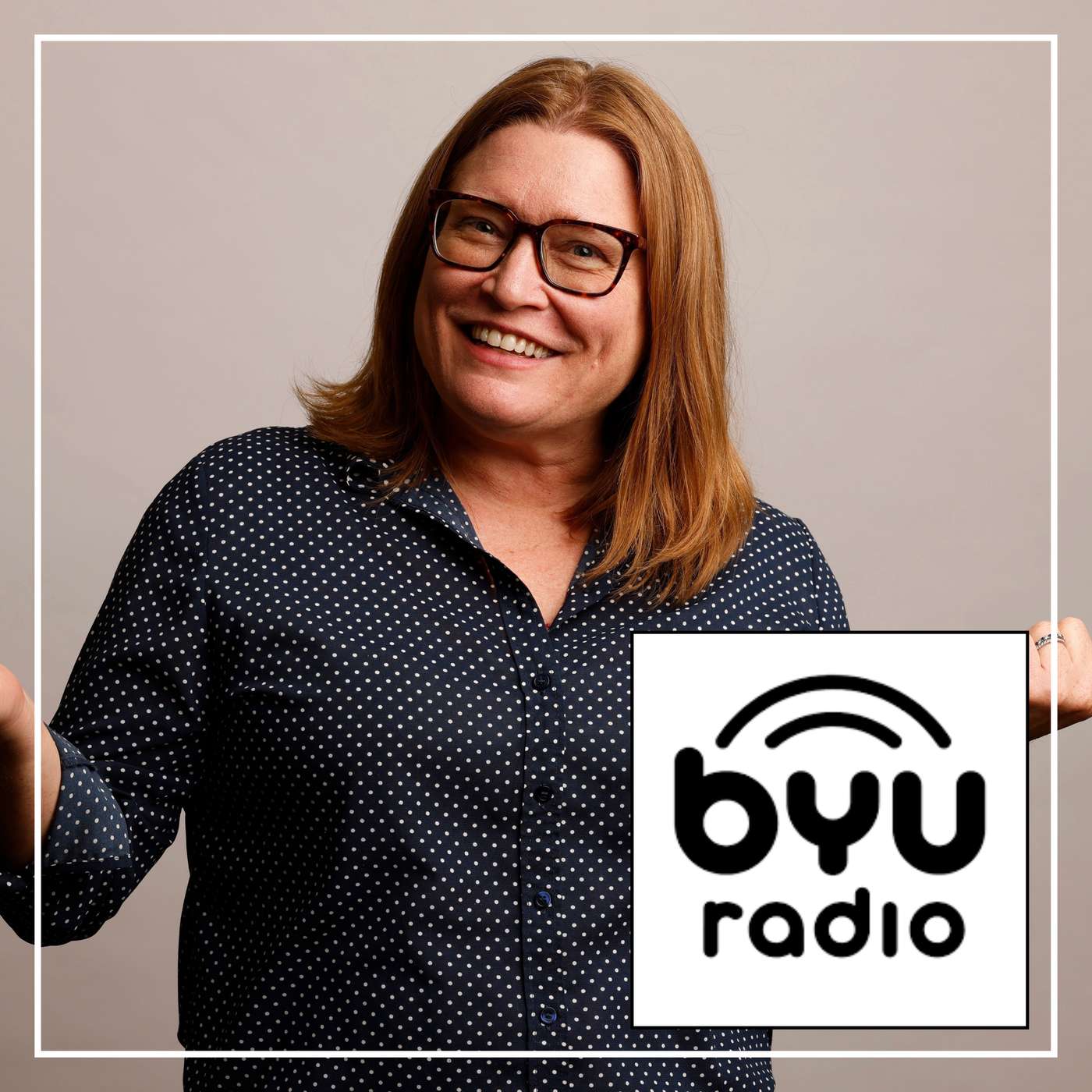
So in this episode, we are chatting with Heather Bigley.
She is a senior producer at BYU Radio.
BYU Radio is part of the larger BYU broadcasting team, and that's obviously Brigham Young University in Provo, Utah.
So we had a really cool conversation here with Heather about, uh, uh, about BYU Radio and how podcasting fits in.
Jennifer-Lee: Yeah, and they have fancy studios and, and we discuss it more, but they really do have resources for faculty or students that are looking to build a podcast.
So very exciting.
So let's get into it.
Neil McPhedran: Let's do it.
Welcome, Heather.
Great to have you here on the Continuing Studies podcast.
Heather Bigley: Thank you.
I'm excited and a little nervous and excited.
Neil McPhedran: No need, no need to be nervous.
Jennifer-Lee: Where are you broadcasting out today?
Heather Bigley: So I am at BYU Radio, which is part of BYU in Provo, Utah, the lovely Provo, Utah.
We, in fact, tried to convince Higher Ed PodCon to come here next year and, um, lost.
And that's fine.
Jennifer-Lee: That's too bad because Utah, I've been to Utah, it's actually very beautiful and there's a lot of great things in Utah.
Heather Bigley: Yes.
I was like, I know it's a 40 minute ride from the airport, but once you're here, there are like canyons every 10 minutes that you can just disappear into and it'll be beautiful.
But maybe another time.
So Provo, Utah, home to the Cougars, and also neighbors to UVU, which was recently in the news, sadly enough.
So yeah, they're kind of our local competition, if you will.
And yeah, what should I say about BYU Radio?
It's an interesting place because I think most colleges have a college radio station and that's aimed at students, and students run it and students learn all kinds of skills.
And this has always been sort of, we're community radio, but it's run by full-timers who develop shows.
We have a ton of students who come in and, you know, for instance, I have five students currently on my team, and they do all kinds of video editing and audio editing and producing for us, but it's not necessarily that student led organization that people might be more familiar with at other universities.
Neil McPhedran: Interesting.
I just have to say that spending some time digging into BYU Radio, I think it's an amazing resource.
We'll absolutely put a link to it in our show notes.
I would encourage all higher education podcasters to check it out.
I think it's really amazing how you've put together radio and podcasting.
So maybe you can explain to us how does podcasting fit into the BYU Radio entity?
Heather Bigley: Yeah, so I was hired three years ago when they were making a pivot away from radio into podcasting.
So they had always had a radio show.
In fact, we have two radio stations, um, that broadcast stuff out of here, and they decided three years ago to pivot to podcasting.
We still have the radio stuff and most of our stuff goes out locally on what we call linear stations to our local audience.
But our new idea is because we are basically from the church of Jesus Christ of Latter Day Saints, our core audience originally has been members of the church.
And we have so many members of the church who are all over America and even all over the world, it made sense to make content that would be available to them, to the folks living in, I wanna say Michigan.
We have folks living in Boston and DC and North Carolina and LA and all over who might want access to our content.
So that was the original impetus and now it's more that we're not actually aimed at that core audience anymore.
We're trying to aim at fellow people who are interested in faith forward content.
We're trying not to be specifically quote unquote Mormon, but more like, you might be interested in interfaith content.
Let's invite you into the conversation that we're having and how we're talking about faith and living life here in the United States.
Lots of different shows, right?
So we've got top of mind, which is contemporary issues.
And then I also produce In Good Faith, which is an interfaith show.
We interview people from all faiths about their relationship with the Divine.
We have The Lisa Show, which is a lifestyle show for basically Gen Xers.
We have Constant Wonder, which is a show about awe in science and history and all kinds of places.
And then we have Take a Leap, which I think is what I was sort of invited on here to talk about, which is aimed at a youth audience.
Jennifer-Lee: Yes.
Before we get into that, I just wanna know more about what is your actual role.
Heather Bigley: So I am a senior producer and originally was hired to work on In Good Faith and just start producing that on consistent level.
Now I am executive producer of Take a Leap.
And I also have my own show called Voiceover.
We talk to people about the movies that move them because I have a PhD in film.
Neil McPhedran: Right.
There you go.
So, okay, so back to Take a Leap.
How does Take a Leap fit into BYU Radio then?
Heather Bigley: So Take a Leap evolved out of the fact that In Good Faith we were having all of our student producers on mic.
Basically, as you create your own intro and outro, we were doing that with our interviews and because our students were also helping to edit the interviews and produce the interviews, we would bring them in and say, okay, so what, in this interview with this Muslim leader was really important to you?
What stuck out to you as something that is gonna leave an impression.
And so they would get on mic and say these short little things and we had trained all of these students and then we were like, we should have a student, 'cause we're at a college, we should have a show aimed at young people.
The difficulty with Take a Leap is we're trying to decide do young people actually listen to podcasts, right?
That's been our issue.
And in fact, some research that, uh, one of my students did was, she dug deep and saw that young people actually are more likely to listen to shows that are established for adults like Joe Rogan or whatever it is, Smartless or whatever, than they are to listen to shows aimed, quote unquote them.
So that's been a difficulty, but it's a show that my students produce.
They pick all the guests, they interview all the guests, they edit everything.
They put it through our distribution networks, and I'm really there just to like, especially when we're training new students, is to go through and edit and say, maybe we should lead with this question instead of that question.
So I'm really in a training capacity in a lot of ways, and I also am the person who signs the digital release forms, right?
Like that's my job.
I guess in a way, you know, because I'm hiring the students and I'm helping to train them to some degree, i'm shaping the show, but really it is about what are they interested in?
Who do they wanna interview?
And the interview, the people they choose are people of faith who are out there motivated by their faith to change the world.
That's our hope, is that we're finding people who wanna solve problems and they're solving those problems because they feel, whether they're Baháʼí or Hindu or Muslim, like, I feel like this is what I should be doing because of my religious upbringing.
So, that's what we're trying to do.
Neil McPhedran: And Take a Leap, correct me if I'm wrong, but it, it differs from a lot of those other podcasts you mentioned in that this one is really more sort of student focused, student led, student produced as well.
Do I have that right?
Heather Bigley: Yeah.
So the students.
I mean, we kind of said to the students, do you have any ideas for podcasts?
And they, they were like, yeah, we have some ideas.
And they went through like a year long pitch process where, you know, again, I would look over documents and I would make suggestions, but they put the documents together, they pitched to our administration, they created the pilots, you know, so it really was them taking the lead.
I have to say, I have to point out, because I know this is different different places, but they're paid for that work, right?
Like we have hired them to do that thing.
Now, BYU has tons of students who do podcasts.
We have tons of faculty who do podcasts that are not under the BYU Radio rubric, and sometimes we reach out to them and say, we'd love to have your show on our network, or we'd love to have your show on our linear station.
For years, there was this great podcast called The Non-Member Project, and it was a woman who was not Mormon, who was doing her undergrad here at BYU, and she was interviewing all the other people who were not Mormon at BYU and saying, let's be friends because it's weird here, right?
Like, you know, there's all kinds of cultural things that we have to get used to and we came here for a reason, but there's this culture shock we're going through.
A great project, but not part of BYU Radio.
She was just doing that on her own with resources at BYU on campus, main campus.
So a lot of that exists outside of our net, if you will.
Jennifer-Lee: I love the fact that you know that though, because a lot of the times when Neil and I talk to a lot of universities, they actually are shocked how many podcasts that like are actually going on and they said, oh, you brought our attention because Neil has HigherEdPods.com.
Neil McPhedran: We, we've actually introduced, Jen and I through this podcast, have introduced multiple on campus podcasts to each other who haven't known each other.
Like, we interviewed two different Yale podcasts and they didn't know each other and we introduced them.
Heather Bigley: That's really crazy.
Yeah.
Well, I mean, granted, universities are massive and departments tend to silo, right?
That happens all the time.
But at the same time, I think I, I mean, I remember 10 years ago thinking, oh, this is the way we can get our research out and to more people.
We have to learn how to present it, you know, maybe to the average lay person, but this is gonna be exciting for academia.
So I guess we should just be expecting that there are professors everywhere with a microphone.
Neil McPhedran: Yeah, absolutely.
So can other podcasters on campus who aren't part of the BYU Radio network, can they access the resources?
Like, for example, the studio you're sitting in and we, we sort of talked about off the top.
Heather Bigley: So when we made this pivot three years ago, we did, I mean, the reason we know who these podcasters are is that we started going to these other podcasters and saying, I mean, often these other podcasters had huge audiences that we didn't necessarily have, or some of our shows didn't necessarily have.
And we were like, let's see if we can work something out where you could come in here.
And we've actually done projects and kind of collaborations where we bring people in and they use our studios and, or they use some of our students to accomplish things.
But I would say for the most part, that's not happening.
They are either, you know, with a USB mic in their office or they've created enough of a presence for themselves that they're getting some kind of funding or support from their departments to do what they're doing.
But you know, that's a tricky thing.
I was just listening to your, your episode about, I forget her name, but the woman who made sure her podcast was her LLC and that like could go with her when she changed.
Jennifer-Lee: Sarah Holton.
Neil McPhedran: Yeah.
Heather Bigley: Yeah.
I was just listening to that and I was like, yeah, I can see why that would be really important.
Like, this is mine.
It is not yours.
And I'll be able to travel with it.
And do with it what I will.
Neil McPhedran: It doesn't mean it wouldn't preclude someone like that from still getting access to some of the on-campus resources.
I just think there's such an opportunity for struggling college radio, which I think we see research, and we know that there's a struggle there, to collab more with podcasters and to open up that.
Typically, those are amazing spaces.
Typically, like there's an investment in studios and equipment and walls and all that kind of stuff you have to put in there.
So I just feel like it's such a great opportunity that I think, we've come across some that are doing a really good job at it, and then others it sort of seems like it's such a great opportunity.
But I would encourage anyone listening to go check out what BYU Radio is doing 'cause I think it's a great example of what to aim for.
Heather Bigley: I totally agree.
For instance, I taught for a while at Northern Arizona University in Flagstaff.
I know that their radio is primarily like student led.
I was like, what would it mean if they just went to the professors on campus and said, you know, can you get us a 52, 50 cut of this or can you get us a 28 minute cut of this and we'll play it every week for you?
That might be a really great way to bring in the local community to listen to all these professors who are an excellent resource, who are experts in their field.
Like how amazing.
Neil McPhedran: Yeah.
Or the academic podcast that's already producing great content about the teams and all that kind of stuff.
Like it just sort of seems like there's such a good opportunity there and whatnot.
Heather, you were one of the presenters at the Higher Ed PodCon, and your presentation really leaned into this student led production.
So maybe we can get into that a little bit.
Some of the challenges around student led production and sort of navigating that.
How are you set up?
I mean, you talked a bit about it already.
I think that's pretty unique in your oversight, but maybe you can sort of tell us a little bit more about how you've structured the process.
Heather Bigley: Yeah, so one of the things that's important is that the student podcast has access to all the resources of the regular shows here.
So they have access to like Asana and Slack, and we use Riverside, and they can schedule all the studios.
In fact, we just went through this massive renovation of our studios.
My students have been in those new studios more than I have been with any of my other shows.
And I'm always like slightly jealous, like, wow, you guys look amazing.
You have great lighting now.
So they have access to all of that stuff.
And once we've trained them on how to use all of that stuff, for instance, that new studio requires a board operator and a camera operator.
They schedule that just like I would schedule that for any of my other shows.
So they have access to all of that stuff.
And that has been really important.
And again, my main thing is to go through and sort of do some training on, let's lead with this, and then we'll put this in.
Or, you know, this is interesting, but I think that it might lose, just like some basic editing.
Like, we're not gonna keep everything, we're gonna try to keep this under 25 minutes, making choices like that.
So once, you know, I'm constantly there, but I'm also pretty much like once I feel like people are trained, I'm in a position of let me know if there's something I can solve.
Otherwise I trust that you're doing, doing the job, you know?
And I do occasionally pop in and say, hey, I don't see this file.
Like, is this file been uploaded to the distribution network?
Like, can you let me know about that?
I do some spot checking, but they're doing all of it, and I think that's really important.
I think there's one thing, like in our culture, in Mormon culture, we say a lot that our youth are like the best and the brightest.
Not just like Mormon youth, but like youth today, they're the best and the brightest.
They're amazing.
They are so important, and I think if we can get out of their way and let them do the things, we'll actually see that happening.
We'll actually see that they are the best and the brightest, so.
Neil McPhedran: I like that.
So more high touch upfront training, but once you feel like they've got their training wheels off, it's really get out of the way and spot check.
But let them really, like back to what I was calling it student led, and you called it student led, like truly student led.
Jennifer-Lee: And I just find it really fascinating that they're excited about a studio because I feel like nowadays of TikTokers and a lot of podcasts, like we're doing a virtual podcast today, that there is so much content, especially from the younger generation that is generated at home in your bathroom, in your bedroom.
It's a totally different way that they're like, oh, I wanna go into a studio, because I feel like they'd be like, oh, that's so old school.
Heather Bigley: Yeah.
When we pitched the show, one of the things the students wanted to make clear was, yes, of course we're making a podcast, but we are social media forward, so we wanna make content that's gonna play on TikTok and Instagram and YouTube and that people are gonna see it and maybe they don't come see the podcast.
Maybe that's too big of a jump, but they're gonna, they're gonna come in contact with us there.
And so, yes, they are very much like, the two students we have right now as hosts, they both have like marketing and advertising background and they're like, let me at the Reels, I am ready to produce.
And that's, I would say that's what they're most actually excited about is like, let's, we're gonna go down on campus, or we're gonna go over to UVU, or we're gonna go up to Salt Lake, or we're gonna do a reel.
Where we do this, you know, so.
And it's really funny being in meetings with students because I will sometimes say, oh, have you thought about this?
You know, based on my own old lady scrolling of my Instagram feed, like, this is really funny.
Wouldn't you love to do something like that?
And they just kind of nod and they're like, that's a great idea.
Long pause.
And I'm like, okay.
Jennifer-Lee: I think that's sometimes too, when we are doing podcasts, everyone gets stuck on the listen factor, but there's so much more.
If you drive an audience to your TikTok or your Instagram or whatever because you've got great content and it looks like you have a podcast, it doesn't really matter if you're getting like thousands of views on your TikToks versus not many views on your actual podcast because again, it depends what you're wanting it.
It's a neat way of how they think about it.
That's why I'm always like, I, I'm not great at social media.
I really need to just hire someone that's really young that just gets it.
Heather Bigley: Yeah.
Neil McPhedran: I think that's the way though.
You have to think about it though now.
Like for me, doing this for years and doing both, the social media and then the, the podcast, I feel like I've had a reframe in the last six months of thinking that the podcast is the whole thing.
It's not produce a long form piece of content and then spin off a few shorter pieces of content to try to get people back to the long form content.
It's thinking about the whole, the whole thing.
There's gonna be a chunk of your audience, as you so well said, Heather, that is going to just consume the Reels and then there's gonna be a chunk of the audience that is just gonna be consuming the long form.
And then there's gonna be a hybrid of the two.
And I think we gotta think about that just like we think about the podcast is gonna live on Spotify, Apple, YouTube, et cetera, et cetera.
I've now been thinking about that and it's on Instagram and it's on Facebook, and it's on TikTok and you know, so on and so forth, and I think that's just native to those students.
That's, that, to me, that was like ah-ha moment.
Heather Bigley: Right, right.
Well, and it changes then of course, what kind of reel we make, because now, instead of making Reels, and I think a lot of people know this now, but this was an ah-ha moment for me, instead of making a Reel that says, and we'll tell you the cool thing, if you go listen to the podcast, they're just like, hey, here's the cool thing.
Isn't that cool?
Thanks.
See you later.
And so that kind of thinking about the Reel is really like what you'll see on their Instagram and their TikTok.
They're, you know, what's interesting about the social media is they have, like, we wanna do the funny stuff and so they do the funny stuff.
And then we also have like, well, BYU Radio also is invested in, we have what we call like a, a values scale where we say, yes, we want stuff to be like clean where, you know, it's clean.
That's, that's like the bare minimum for us.
But then somewhere in the middle of that value scale is, we're talking to people about important values that make their lives better.
So what is the important value?
Is it, oh, I learned that it's important to work with other community members in order to get this project off the ground.
And regardless of what our different, you know, whether you are a secular humanist or you are Baháʼí, or you are Jewish, we're all gonna work together and we're gonna do this thing.
Like that should show up in the Reels, right, as well.
So the Reels, I hope it all comes together and makes sense as a piece.
Like, you know, here we are being funny and this is a funny thing for our hosts, but also here's an important thing that our guest taught us that we're gonna take forward from this moment.
Neil McPhedran: Great.
What else did you, because you did a whole presentation about this at PodCon.
Not to put you on the spot, it was months ago you did it.
But anything else that was in there that you could share with the audience that they are producing a student led or thinking about producing a student led podcast?
'Cause there's some great nuggets that you had shared back in July.
Heather Bigley: Um, you know the thing I'm, I want to answer that question, but I can't.
I think what I can answer is the thing that stuck in my brain is the stuff I learned from the other people who are doing student podcasting.
So I can't remember her name, but she was at Stanford and one of the things she talked about was like, yeah, my students are coming, doing a podcast.
How can we interface with all the other students doing podcasts and how can we build community there and support each other?
And maybe that'll lead to networking that gets us more listeners and maybe it'll just lead to everyone's feeling supported and solving problems together.
And that's something that I brought back and was like, yeah, we should be reaching out to the student podcast as a Take a Leap team to sort of understand where they are and what they're doing.
And now that I've said that out loud, I'm actually gonna have to do it.
We had several meetings where I was like, yeah, this is a good idea.
And then things got lost in the shuffle.
But, so that to me was really great.
And this idea of just making sure everyone's trained.
That everyone knows how to do everyone else's job.
When you get into the middle of the semester, right, and midterms come up and someone says, I have this Japanese exam and I'm not gonna be able to make it today, I need the other people on the team to go, that's great.
I will do that thing that you were supposed to do because I have your skills as well.
So they all come in with different skills, but we're hoping that over the course of working together, they end up all knowing how to do all the things, whether that's editing in Premier, or whether that's reaching out to guests or whatever it is.
Jennifer-Lee: I love it.
Neil McPhedran: That's great.
Jennifer-Lee: I feel like you answered it all for us.
Neil McPhedran: I think that was Stacy Peña from Stanford, from the Knight-Hennessy group.
Uh, that's a great student led podcast as well.
Any sort of last, uh.
Heather Bigley: I would say the one question that stuck out to me in your list was like, why is it important to have a youth interfaith podcast?
And I would just say, religious freedom is really important to us here at BYU.
Religious freedom is a scary word for a lot of people.
I understand why that is, and how that term has been used in the past.
But I would say, you know, it's important to show our students that they're not alone out there.
They can get together with other people of other faiths and of no faith and solve problems.
If we can teach them that through this podcast and they can teach other people that through this podcast, then I think we've done something that's really important for America.
Neil McPhedran: That's wonderful.
Jennifer-Lee: Very well put.
Neil McPhedran: This is great.
Thank you so much for joining us today, Heather.
I think we covered a lot here and I'm really impressed by what you guys have created at BYU Radio.
I think there's a lot that we can learn from that.
Jennifer-Lee: And we hope to see you, we know it's not in Utah, but we hope to see you in Cleveland.
Heather Bigley: Thank you so much.
I really appreciate you guys having me on.
I was really flattered that you reached out.
Jennifer-Lee: Thank you so much for coming on.
Neil McPhedran: Well, Jen, another great conversation.
I really enjoyed our chat with Heather.
They are just doing some really cool stuff at BYU with the BYU Radio and I really enjoyed digging into how the radio side of it and they're using the studios has really helped to springboard podcasting.
But also how when you go to that resource, BYU Radio, yes, there's the quote unquote radio shows, but then podcasting is all a part of it and it's one big entity of content.
Jennifer-Lee: Yeah.
And it's a great studio that they have.
And of course they have many different types of podcasts, and I really like that it gives everybody a chance to say what they wanna say or talk about a topic that they wanna talk about.
Neil McPhedran: Right.
Yeah.
It's a voice for the campus, whether it's faculty, students, whatnot, and then how she explained, a voice for the larger community that the BYU campus is in, but then this larger voice for outside, whether it's faith-based or not.
But it, I just really like how they're using podcasting as such a key component to, you know, localize it, but then as well reach out to the world with all these amazing things that they're doing there and with all their different, uh, podcasts.
Jennifer-Lee: And she's a great speaker.
Of course she spoke at the Higher Ed PodCon.
And so we were lucky to have her back.
Well, actually first time on our podcast it felt like she was on our podcast 'cause we met her at the conference.
That's a wrap.
Thank you for tuning in the Continuing Studies podcast, a podcast for higher education podcasters.
We hope you found the episode informative and inspiring.
If you enjoyed the show, we encourage you to follow and subscribe to our podcast on your preferred platform so you never miss an episode.
But if you found this episode particularly valuable, please consider sharing it with your friends and colleagues who also might be interested in a higher education podcasts.
We also invite you to join your peers on HigherEdPods.com, where you can connect with other podcasters on higher education and learn from others in the field.
Thank you for being part of our community.
We look forward to continuing to bring you valuable insights and conversations around higher education podcast.
See you in the next episode.