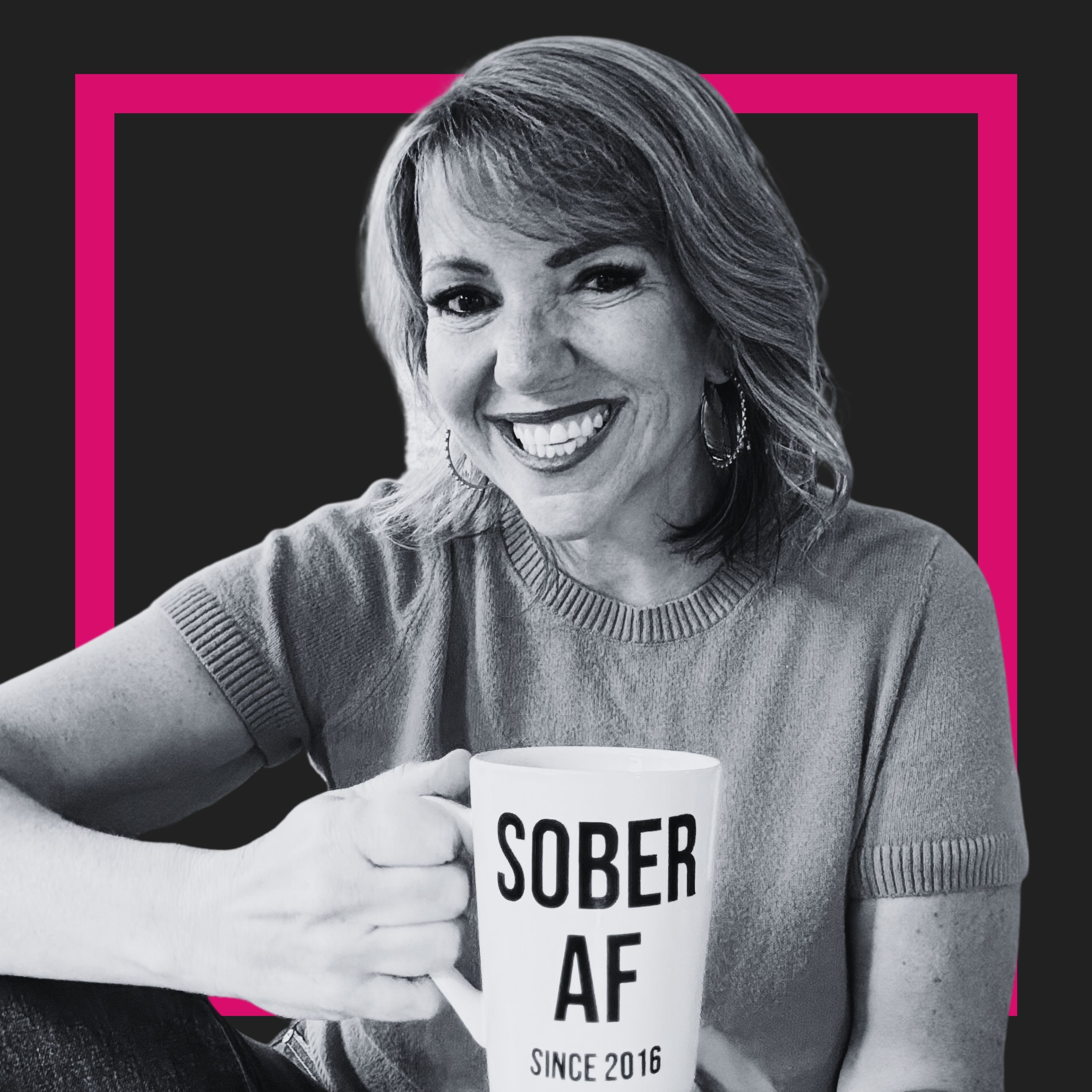
Casey McGuire Davidson: Dry January Advice for Burnt Out High Achievers
Episode Transcript
[SPEAKER_01]: Fried Fam, I am bringing back another guest today one that we haven't seen since.
[SPEAKER_01]: Geez, I just looked it up and then I forgot.
[SPEAKER_01]: Since a long time ago, you were one of the first way, I mean, it was a long time ago.
[SPEAKER_01]: 2021, October 17th, 2021.
[SPEAKER_01]: Can you believe it?
[SPEAKER_01]: Since that time, Casey McGuire Davidson [SPEAKER_01]: A top 100 mental health podcast, she already had it then, but now it's a top 100 mental health podcast.
[SPEAKER_01]: The Hello Someday podcast for sober, curious women.
[SPEAKER_01]: We've got over 2 million downloads and you've helped thousands of people through your program.
[SPEAKER_01]: You are an x-red wine girl who spent 20 years climbing the corporate ladder while holding on tightly to the love to her love of wine.
[SPEAKER_01]: Casey, stop drinking a decade ago and it's passionate about helping busy women stop drinking and create loves lives they love without alcohol.
[SPEAKER_01]: Her work has been featured on Good Morning America and PR have post the New York Times and NBC News.
[SPEAKER_01]: So just some like small places that maybe you haven't heard of.
[SPEAKER_01]: Casey, welcome back to Fred.
[SPEAKER_00]: Thank you.
[SPEAKER_00]: I am so excited to be here.
[SPEAKER_00]: And I love talking to you the first time.
[SPEAKER_00]: I can't believe it's been that long, but I guess time flies.
[SPEAKER_01]: I can't believe it's been that long either.
[SPEAKER_01]: I looked at it a second ago.
[SPEAKER_01]: And then when I went to just double check right now, it was because in my mind, I said, really?
[SPEAKER_01]: Really?
[SPEAKER_00]: Yeah.
[SPEAKER_01]: So we just, you reached out to me and I was so grateful and you were like, let's do another episode because it's been a while.
[SPEAKER_01]: It's sober January.
[SPEAKER_01]: It's dry January time and some things have grown in change.
[SPEAKER_01]: You guys will link the other episode where we can go into Casey's whole story and and all of that stuff.
[SPEAKER_01]: But today, can we talk about all of the things that you know [SPEAKER_01]: This is going to be a very leading question, about how stress leads people to drink, which leads people to stress?
[SPEAKER_00]: Yeah, absolutely.
[SPEAKER_00]: I mean, it's such a common cycle.
[SPEAKER_00]: And it's especially a common cycle amongst high-achieving women in mid-life.
[SPEAKER_00]: I mean, because we were taught, [SPEAKER_00]: that drinking is what adults do and it's sophisticated and it'll help you destress and it helps you sleep and it helps you relax and all that stuff.
[SPEAKER_00]: When the younger generation right now, Gen Z, younger millennials, know so much more about what alcohol does to your body and your emotions in your mind.
[SPEAKER_00]: When I was growing up and hitting my 20s and hitting having kids in the home mommy, wine culture, we literally were told through [SPEAKER_00]: totally biased and untrue studies that people who drank quote unquote moderately were actually healthier than people who didn't drink at all right red wine is good for your heart whatever it is not it is so not I could talk forever about why those studies have been just disproving a hundred thousand times but in the past five seven years the news has come out [SPEAKER_00]: any alcohol raises your risk of like seven different kinds of cancer, especially breast cancer with women.
[SPEAKER_00]: And more than that, it spikes your anxiety, it spikes depression, it hurts your sleep, so so much.
[SPEAKER_00]: And it messes up your nervous system, so you were less emotionally stable, then you would be with them.
[SPEAKER_00]: And so the younger generations have heard this, right?
[SPEAKER_00]: But [SPEAKER_00]: People my age and I'm a gen X or older millennials and especially baby boomers are still huge drinkers and it's part of our culture.
[SPEAKER_00]: It's part of how we grew up and honestly like no one wants to look at their drug up choice and be like I because we don't want to give it up and I get that because I was there.
[SPEAKER_00]: So I started as you know, [SPEAKER_00]: a drinker in college, I loved it, it was super fun.
[SPEAKER_00]: And then as I grew up, I kind of like just changed what I was drinking to my life phase, right?
[SPEAKER_00]: So I went from Kege's beer to cocktails and dancing to dinner parties, eventually to a bottle of wine and night.
[SPEAKER_00]: I was a director at a big Fortune 500 company.
[SPEAKER_00]: I had two little kids.
[SPEAKER_00]: I was super successful by every external manager.
[SPEAKER_00]: would come home, begin drinking, and try to turn off our mind.
[SPEAKER_00]: So the problem is that we are taught and told, and it's just like circular firing squad.
[SPEAKER_00]: It's not just through marketing.
[SPEAKER_00]: It's through our best friends, it's through our parents, it's through social media, right?
[SPEAKER_00]: Now, pour yourself a glass of cold, cold, cold bus.
[SPEAKER_00]: Yeah.
[SPEAKER_00]: And you go out on a date night with your husband and you've been married for 16 years, and you go out once a month.
[SPEAKER_00]: The first thing you do is take a picture of your cocktail because it's signifies of duty and it's signifies, you know, sophistication and it's signifies you're not a mom right now or whatever it is.
[SPEAKER_00]: And so you go on a business trip and you get to let loose and all that shit.
[SPEAKER_00]: But [SPEAKER_00]: It doesn't do that for you.
[SPEAKER_00]: And we've talked about burnout before and how I was burned out.
[SPEAKER_00]: And you think it's the solution that's just making the problem worse.
[SPEAKER_00]: But if you are drinking and if you are listening to this and if you're like, Lala, Lala, I don't wanna hear this.
[SPEAKER_00]: It's like, I get it.
[SPEAKER_00]: I get it.
[SPEAKER_01]: Yeah, I think that one of the things that surprised me, I have two things that I want to talk about, and I'm going to write them down so that I don't forget, the first thing is the sleep.
[SPEAKER_01]: And this is been like years for me, so why really slow down drinking probably four or five years ago.
[SPEAKER_01]: I have been went through some health stuff, stop drinking completely.
[SPEAKER_01]: I now have a cocktail a quarter.
[SPEAKER_01]: And the...
[SPEAKER_01]: the amount of or the lack of knowledge that I had as someone who pays attention to their body, who has been a healthcare practitioner for over 20 years, who's studied these things.
[SPEAKER_01]: I mean, the lack of awareness I had for how much alcohol interrupted my sleep.
[SPEAKER_01]: was insane, because now, but I think it was maybe a month ago, I had one glass of white wine with dinner.
[SPEAKER_01]: We had dinner at seven.
[SPEAKER_01]: I didn't go to bed until 11.
[SPEAKER_01]: I had water and a tea in between.
[SPEAKER_01]: And my sleep was shot.
[SPEAKER_00]: I mean, let's talk about that because I was there too, and for a long time, I was completely clueless about the negative parts of alcohol other than obsessing about it and always wanting more and wondering if I had enough wine at home or whatever, and hangovers, right?
[SPEAKER_00]: But the other aspects, I really did not understand the connection.
[SPEAKER_00]: So I used to drink a bottle of wine and if I was being good, just three glasses, whatever.
[SPEAKER_00]: And then I would wake up at 3 a.m.
By the way, if you wake up in the middle of a night with anxiety, that is alcohol, right?
[SPEAKER_00]: We think it's our job and our stress and our to-do list.
[SPEAKER_00]: That's what alcohol does to you.
[SPEAKER_00]: But I would wake up at 3 a.m.
within Somnia with anxiety.
[SPEAKER_00]: So I would go to my therapist and I would be like, [SPEAKER_00]: Oh my god, my job is to stress part wake up every night at 3 a.m.
You know, and on the questionnaire, they're like, how much do you drink?
[SPEAKER_00]: And you're just like, or at least me, I'm like, eh, a couple of drinks, a couple nights a week.
[SPEAKER_00]: Nobody's like, a bottle of wine and I think that's because damn your therapist is just going to judge you and want to talk about that and I don't want to talk about that.
[SPEAKER_00]: I want to talk about my stress, right, whatever.
[SPEAKER_00]: But [SPEAKER_00]: I told her that without full information and she prescribed me ambient, right, sleep beds, which by the way is so freaking dangerous and it's not her fault, but like [SPEAKER_00]: Drinking the amount I was drinking and taking a sleep med sometimes people don't wake up from that.
[SPEAKER_00]: But I didn't know.
[SPEAKER_00]: I actually didn't even know that the sleep was related to the alcohol.
[SPEAKER_00]: So if you are wondering about this and so many of us think that alcohol helps us sleep because it does.
[SPEAKER_00]: It's a depressant.
[SPEAKER_00]: and a stimulant in this really weird way.
[SPEAKER_00]: So you drink in y'all of a sudden you're like deep breath out, but even less than one drink for women, which who the hell, I mean, one drink technically is five ounces.
[SPEAKER_00]: I probably had three of those in a glass.
[SPEAKER_00]: But less than one drink for women decreases your sleep quality by 9% right?
[SPEAKER_00]: It's less in two drinks for men, moderate amounts of alcohol and we are talking a single drink for women.
[SPEAKER_00]: decreases your quality of your sleep by 24% and more than one drink, think two drinks, and again, their counting drinks is like five ounces, which is nothing, decreases your sleep quality by 40%.
[SPEAKER_00]: So you have two glasses of wine and your sleep quality is down 40% which leads to all the other terrible things that you feel, right?
[SPEAKER_01]: And the thing that's hitting me now is like, I had Kristen Holmes, the head researcher from Wup on a while ago.
[SPEAKER_01]: I would love to have her back.
[SPEAKER_01]: She's done some interesting stuff lately.
[SPEAKER_01]: But one of the studies that she did in the past couple of years showed that when a leader in an organization, a leader or a manager, misses 45 minutes of sleep.
[SPEAKER_01]: they have less and then I remember the numbers, so I'm not going to say them, but they have a lessened ability to emotionally regulate and their team members automatically feel less psychologically safe, even if they do not act or say anything different.
[SPEAKER_01]: Wow.
[SPEAKER_01]: So your lack of sleep as a leader is messing with your entire team's sense of psychological safety.
[SPEAKER_01]: So if it's alcohol, that's messing with your sleep, then you're drinking at night before bed is messing with your team psychological safety.
[SPEAKER_01]: And if they're also drinking at night and they're bringing in their lack of emotional regulation, then you have a team member and a leader coming in at the same time and people are wondering why they can't get along.
[SPEAKER_01]: Well neither of you are stable enough to have like open and honest conversations without going into the defensive without going like, [SPEAKER_00]: Yeah, yeah, and not only that, but like we think that drinking makes us happier, we think that drinking makes us more relaxed, aka like better able to deal with your kids and better able, you know, I used to come home and [SPEAKER_00]: Have a glass of wine while playing candy land or legos with my kids like okay, you know, I'm multi tax relaxation and treaty myself with child care so many women do the problem is that alcohol and I'm talking even if you drink just on the weekends.
[SPEAKER_00]: It spikes your dopamine really high, right?
[SPEAKER_00]: You get that quick flash of dopamine, and your body wants to regulate what you have.
[SPEAKER_00]: And so what it does is your body suppresses the natural level of dopamine you would have and your body your happy hormone.
[SPEAKER_00]: So you literally are navigating life less happy with less joy and pleasure than you would be.
[SPEAKER_01]: like lower your happiness baseline.
[SPEAKER_00]: It does and the other thing it does is it lowers your serotonin, which is your mood regulation hormone.
[SPEAKER_00]: So it spikes, you know, it spikes your dopamine and depresses it.
[SPEAKER_00]: It depresses your serotonin and it spikes your cortisol, which is your stress hormone.
[SPEAKER_00]: It takes 30 days to get back to your baseline where all of a sudden women are like, [SPEAKER_00]: Oh my God, I felt joy and I got all teary and this overwhelming sense of pleasure and calm came over me.
[SPEAKER_00]: That is how you should be negotiating life on the regular and you're not.
[SPEAKER_01]: And that's why things like sober October and dry January have gotten so popular, right?
[SPEAKER_01]: Because if you can feel that in 30 days and then people give themselves those 30 days and have those experiences, [SPEAKER_00]: Yeah, absolutely.
[SPEAKER_00]: And it's really grown with the, quote, unquote, super curious movement and with the younger generations.
[SPEAKER_00]: But at this point, I mean, it is mainstream, meaning that last year, one out of three American adults participated in dry January.
[SPEAKER_00]: Like you are not alone.
[SPEAKER_00]: This is you.
[SPEAKER_00]: Any media in January you are going to see stories on dry January from the New York Times to the today show to Good Morning America to L to glamour to whatever.
[SPEAKER_00]: It is everywhere.
[SPEAKER_00]: So you will not be alone.
[SPEAKER_00]: Nobody questions like, oh my god, do you have a problem with drinking?
[SPEAKER_00]: If you do dry January, it is a [SPEAKER_00]: And also last year, 54% of Americans who drink said they want to drink less.
[SPEAKER_00]: So this is no longer this strange thing that you will do that everybody's going to be like, what is going on with you.
[SPEAKER_00]: And I know that's hard to believe if you hang out with drinkers because that's a drinkers tend to hang out with other drinkers.
[SPEAKER_00]: But I got to tell you if anyone is drinking heavily, meaning think of your best friend, who's your drinking buddy or your partner.
[SPEAKER_00]: They are thinking about their drinking.
[SPEAKER_00]: They are waking up in the mold the night.
[SPEAKER_00]: They are worried about it and they don't want to say anything.
[SPEAKER_00]: So doing dry January is a really low risk way to test out how you feel without alcohol.
[SPEAKER_01]: And what I love is that, you know, I worked in restaurants for a very long time before I was an acupuncturist during my entire college career.
[SPEAKER_01]: I was waitressing and bartending, so I spent a lot of time just in that mode because that was my life.
[SPEAKER_01]: So I was drinking because I was behind the bar, you know, like that was just normal.
[SPEAKER_01]: What I love to see now is that you know that this is becoming a movement when restaurants [SPEAKER_01]: Oh yeah, it's so normal now.
[SPEAKER_01]: And I think what's great about it for, I mean, restaurants are a hard business to make money out.
[SPEAKER_01]: Most of their money comes from alcohol.
[SPEAKER_01]: And so when alcohol sales are going down, now they can create this mocktail menu and good for them that they can make like 400% mock up on these like cheaper drinks that don't have alcohol in them because they're usually only a dollar or two cheaper than the alcoholic version.
[SPEAKER_01]: Yeah, you know what I think like that one way for restaurants to be successful these days because it's it's hard out there folks.
[SPEAKER_00]: Yeah, and not only that, but like you will look around.
[SPEAKER_00]: I mean, I've studied this in depth because of the work I do.
[SPEAKER_00]: But the fastest growing segment of the out called industry is non-options.
[SPEAKER_00]: It is the only one that is growing.
[SPEAKER_00]: And because of that, when you look around, they are being forced to create not alcoholic options, right?
[SPEAKER_00]: They are not doing this out of the goodness of their heart, alcohol is addictive.
[SPEAKER_00]: They make 80% of their money from the top 20% of drinkers, right?
[SPEAKER_00]: They do not want to do this.
[SPEAKER_00]: And yet, Guinness has a zero point zero version, corona has a zero point zero point.
[SPEAKER_00]: You know what?
[SPEAKER_01]: I'm going to stand on the side of [SPEAKER_01]: alcohol companies for a moment, because I actually know a lot of people that work in the Bev industry.
[SPEAKER_01]: And I know that the people within the industry are actually interested in creating those like the non-alcoholic versions.
[SPEAKER_01]: Like there are people that actually do want to.
[SPEAKER_01]: This is not they're not, they're not being forced or coercive.
[SPEAKER_01]: They're following the market, sure, but they they want to.
[SPEAKER_01]: Like I work a lot with with Beam Centauri and and things like that.
[SPEAKER_01]: And like they [SPEAKER_00]: They're doing it.
[SPEAKER_00]: All right, I am very glad to hear that because from studying the industry, I know how much money is being spent on lobbying to stop.
[SPEAKER_00]: labels being changed on alcohol to actually mention the connection to liver disease and cancer.
[SPEAKER_00]: Other countries are doing it.
[SPEAKER_00]: The United States, the lobbying and the amount of money that is being put in to stop that is incredible.
[SPEAKER_01]: Also, but that doesn't say anything about the people that are working.
[SPEAKER_00]: No, not about that.
[SPEAKER_00]: Those are the people individually want to do that.
[SPEAKER_01]: Yeah, exactly.
[SPEAKER_01]: Exactly.
[SPEAKER_01]: All right.
[SPEAKER_01]: The next thing that I want to talk about that we didn't mention directly, but you know, you said you are, you know, Gen Z and you were talking about elder millenials.
[SPEAKER_01]: I'm, I'm a geriatric millenial or an elder millenial as they like to call us.
[SPEAKER_01]: Drinking in parry menopause.
[SPEAKER_01]: Oh gosh, a few years ago, one of the reasons, in addition to the fact that my husband stopped drinking one of the other reasons that I really, really slowed down was that I couldn't have a cocktail without having a histamine reaction.
[SPEAKER_01]: And by histamine reaction, I mean, my face got red, I would get real hot.
[SPEAKER_01]: Like my face would be like red, like I just exercise for two hours.
[SPEAKER_01]: Like my whole body was reacting poorly to it because of hormones.
[SPEAKER_00]: Yeah, so I mean, there are so many studies out there's about how women's bodies in particular do not process out call as they move into pairing menopause and menopause the way they used to and it is biological and we talked about this with burnout, the one of the big issues is that the symptoms of.
[SPEAKER_00]: not processing alcohol well in this age are similar to the ones of Perryman and pause, right?
[SPEAKER_00]: Sweating, brain fog, irritability, anxiety, you name it, and poor sleep.
[SPEAKER_00]: Same way as burnout.
[SPEAKER_00]: And one of the things that's really important that I found, and a lot of women also [SPEAKER_00]: Drink as a way of self-medicating against, you know, if you have everybody talks about going on anti-insidimids or anti-depressants or going to therapy these days.
[SPEAKER_00]: Like it's no longer a stigma around that or at least it's not with everybody I know.
[SPEAKER_00]: Yeah, but it is very hard to separate.
[SPEAKER_00]: what is caused by your drinking versus what is caused by an underlying issue that does need to be addressed.
[SPEAKER_00]: Same with perimenopause.
[SPEAKER_00]: So if it's dry January and you think about even removing alcohol for one month, that will help you see what your baseline health level is.
[SPEAKER_00]: And a lot of women [SPEAKER_00]: But I still deal with anxiety.
[SPEAKER_00]: Turns out I have a mild mood disorder.
[SPEAKER_00]: I never would have understood that if I was still drinking.
[SPEAKER_00]: I would have blamed myself for quote-unquote not being able to cope or being hungover or drinking too much.
[SPEAKER_00]: You name it.
[SPEAKER_01]: Yeah.
[SPEAKER_01]: Yeah.
[SPEAKER_01]: And I think that this I'm wondering, or I have been wondering recently if and this is totally off of hand.
[SPEAKER_01]: Like, but I've been thinking a lot because I'm writing a new book [SPEAKER_01]: But chronic stress in the workplace and why it's happening more now, why the burnout numbers keep going up even though the pandemic was five years ago and [SPEAKER_01]: And why there's like so much GLP-1 use in the pandemic was five years ago, like, I'm thinking about, like, how much did COVID, whether the vaccine or the disease process itself, the virus itself, I had both, so who knows what's in my body anymore, I got COVID the day everything shut down.
[SPEAKER_01]: Well, they were like, even with that was, yeah, you know, it was like, they shut the shut things down on a Friday and on Monday, my husband and I were both sick, brutal, but anyway.
[SPEAKER_01]: So how many things that we're going through now and how our bodies are reacting are because of some sort of like long COVID that none of us really understand because how the hell are we supposed to understand that this was only five years of information.
[SPEAKER_01]: I think that the opportunity that you just mentioned, the reason that I bring this up is because I think that it provides an opportunity, the opportunity that you just mentioned, to find out what your real baseline is.
[SPEAKER_01]: Yeah.
[SPEAKER_01]: Is so important.
[SPEAKER_01]: Your real baseline might be fucked to be clear, but at least you know that.
[SPEAKER_00]: And then I can start to dig into finding solution.
[SPEAKER_01]: Exactly.
[SPEAKER_01]: And I think that's just like such a gift to yourself to be like, well, when I take away the extra bullshit, like what is [SPEAKER_01]: real for me.
[SPEAKER_01]: What is my body doing on a day-to-day basis?
[SPEAKER_01]: What's happening?
[SPEAKER_01]: How am I sleeping?
[SPEAKER_01]: What is my anxiety level?
[SPEAKER_01]: Like, I haven't, you know, like I said, I don't really drink now, but my anxiety, especially lately, has been through the roof.
[SPEAKER_01]: Yeah.
[SPEAKER_01]: I couldn't even, I tried to do a yoga and a draw earlier today.
[SPEAKER_01]: I put my headphones on, I laid down, and it took her seven minutes to get to the point where she was like telling me to relax my forehead and I was like, bitch, that took too long.
[SPEAKER_01]: I shut it off.
[SPEAKER_01]: I walked away.
[SPEAKER_01]: I was like, [SPEAKER_01]: Thank God I'm not drinking.
[SPEAKER_00]: Yep.
[SPEAKER_00]: Yes.
[SPEAKER_00]: Yeah.
[SPEAKER_00]: I mean, I think that so many things have happened in the past couple years.
[SPEAKER_00]: It is hard to piece them apart and figure out the cause.
[SPEAKER_00]: versus the effect versus something you're not even considering.
[SPEAKER_01]: Well, there's a lot of causality to most things.
[SPEAKER_00]: Yeah, completely.
[SPEAKER_00]: During the pandemic, and this was insane to see these statistics, but binge drinking among women rose 40%.
[SPEAKER_00]: Binge drinking among parents of kids under the age of five, [SPEAKER_00]: The truth is that whether or not you believe it, [SPEAKER_00]: I'll call it's addictive, right?
[SPEAKER_00]: In the same way that cigarettes are, right?
[SPEAKER_00]: You drink, you smoke, you go into physical withdrawal, which makes you wanna drink again.
[SPEAKER_00]: There is of course a genetic component, no one in my family drinks a lot.
[SPEAKER_00]: There is also just the substance.
[SPEAKER_00]: So if you hang out with a big drinking crowd or if you start drinking because you're burnt out or you start drinking because of the pandemic, you will buy definition, go down the path of wanting to drink more and wanting to drink more often.
[SPEAKER_00]: It's just the way that works, there's absolutely nothing wrong with you, and yet, taking a break, it might be difficult.
[SPEAKER_00]: You will learn so much about yourself.
[SPEAKER_00]: You will learn.
[SPEAKER_00]: that you can get through a Friday night without drinking, you can go on a date with your partner, you can get together with girlfriends, you can sleep through the night.
[SPEAKER_00]: Like, you can parent your kids during a tantrum or when there are teenagers and being a nightmare, just we have all these limiting beliefs about what alcohol does for us.
[SPEAKER_00]: And when I work with women, I'm like, just give yourself the opportunity to find, like, aren't you curious to see who you might be and what you might do, [SPEAKER_00]: if you weren't checking out without color, if that wasn't your one reward for getting through the day or getting through the week.
[SPEAKER_00]: Like you deserved to know.
[SPEAKER_01]: Yeah.
[SPEAKER_01]: So this episode comes out January 4th.
[SPEAKER_00]: So there might be some people that are like, is it too late to start?
[SPEAKER_00]: It is not too late.
[SPEAKER_00]: It is absolutely not too late.
[SPEAKER_00]: Jump in the water spine.
[SPEAKER_00]: So how how how [SPEAKER_00]: Okay, I love dry January and I love it for a bunch of reasons.
[SPEAKER_00]: I mentioned that so many people are doing it.
[SPEAKER_00]: And if you go to restaurants or you go anywhere, they are setting you up for success, right?
[SPEAKER_00]: There are going to be not a college beverages.
[SPEAKER_00]: People are doing it.
[SPEAKER_00]: You are not alone.
[SPEAKER_00]: That said, I went for many years trying to cut back on my drinking and never made it past day for.
[SPEAKER_00]: And it was just, you know, and then I was drinking a bottle of wine every four days and I was like, well, that's a lot better than [SPEAKER_00]: You know, seven bottles of wine a week or eight, which it is, and yet you never get out of that drinking and withdraws cycle.
[SPEAKER_00]: You never actually reset your body.
[SPEAKER_00]: So I know I mentioned it, I drank a lot.
[SPEAKER_00]: This applies even if you don't, but if you drink like I do, there are thousands and thousands and thousands of really smart, successful women and men who do it too.
[SPEAKER_00]: So just so you know you are not alone.
[SPEAKER_00]: the way to get through dry January is to do a bunch of things.
[SPEAKER_00]: Number one, tell everyone that you're doing it.
[SPEAKER_00]: Like that accountability, that's, you know, everybody talks about those smart goals at work or whatever.
[SPEAKER_00]: Like you are two to three times more likely to make it if you tell people what you're doing.
[SPEAKER_00]: get the alcohol out of your house.
[SPEAKER_00]: Like if you have family members who drink like, say, will you do this with me?
[SPEAKER_00]: Like, this will be so good for us.
[SPEAKER_00]: Let's do it together.
[SPEAKER_00]: Even if they are unwilling to do it, that's that's them.
[SPEAKER_00]: Ask them to not have alcohol in your house for 30 days or for the month if they won't do that and part of me is like dude my husband ate salmon and a spare guess every time I was going on a health kick when he really wanted to burger like it is not too much to ask for them to support you, but even if they are not willing to.
[SPEAKER_00]: ask for what you want, set a boundary, at least get rid of your beverage of choice, right?
[SPEAKER_00]: You are going to have a stressful day.
[SPEAKER_00]: You are going to create alcohol.
[SPEAKER_00]: If there is a beat where it is not available to you or you have to drive out and go to the store, you will be so much more likely to succeed.
[SPEAKER_00]: Number three, hunger.
[SPEAKER_00]: Hunger is your number one trigger, right?
[SPEAKER_00]: So set an alarm for 330 or 4pm to eat something with protein.
[SPEAKER_00]: have it ready.
[SPEAKER_00]: Know what you're going to eat.
[SPEAKER_00]: I can't tell you how much easier this is.
[SPEAKER_00]: get non-alcoholic options, like they're, you know, the world has changed.
[SPEAKER_00]: Is this full on alcohol beer?
[SPEAKER_00]: This is for, okay, it's no longer owed duels and crap that you're like athletic brewing company is the number one fastest growing non-alcoholic beverage option.
[SPEAKER_00]: It tastes just like beer, literally I love this stuff.
[SPEAKER_00]: And having something non-alcoholic helps you more than you know.
[SPEAKER_00]: Keep the ritual change the ingredients.
[SPEAKER_00]: It's psychological.
[SPEAKER_00]: So there is not a color beer.
[SPEAKER_00]: There's not a color per seco.
[SPEAKER_00]: There's not a color like bubbly rosé.
[SPEAKER_00]: You can get not a color fog the room like they're all these brands.
[SPEAKER_00]: They're incredible.
[SPEAKER_00]: So substitute and number five you need sober treats right so many of us have busy lives have stressful lives and we use our cause our reward.
[SPEAKER_00]: right?
[SPEAKER_00]: And you do need a reward.
[SPEAKER_00]: You do need to relax.
[SPEAKER_00]: You do need to celebrate.
[SPEAKER_00]: It's just we've gotten so lazy.
[SPEAKER_00]: A drinking is the easy button to check out and spike our dopamine.
[SPEAKER_00]: So I want you to feel like January's a period of extreme self care.
[SPEAKER_00]: Like you are like yikes.
[SPEAKER_00]: I'm spoiling myself.
[SPEAKER_00]: But like Friday night, schedule a pedicure, schedule a massage, get take out [SPEAKER_00]: go to a coffee shop and sit alone and read a trashy book you never read or join a gym and sit in the hot tub and get the smoothie and like get the milkshake when you're going out instead of the red wine, the white wine, the cocktail, like substitute it and most importantly tell yourself [SPEAKER_00]: This is my reward for not drinking, right?
[SPEAKER_00]: Because you're you're mentally shifting that and like coffee or tea in the morning quiet in your house without a hangover with sleeping through the night, this is my treat for not drinking this moment, this feeling.
[SPEAKER_01]: All right, so number one, making an announcement, tell everybody.
[SPEAKER_01]: So this is number one, folks, if you're like, you know what, square where I'm gonna do this, tag me.
[SPEAKER_01]: Okay, don't even speak Tag, KC at KCM Davidson on Instagram and let us know, announce it.
[SPEAKER_01]: Let us do these, I announce it.
[SPEAKER_01]: Let us know, tell us number two, ask for help, ask for support.
[SPEAKER_01]: Tell people what you need to get the alcohol out of your house if you can, right?
[SPEAKER_01]: What's number three?
[SPEAKER_00]: Number three is set of protein snack.
[SPEAKER_00]: Oh, set of protein snacks.
[SPEAKER_00]: So, yeah, an alarm to have a protein snack.
[SPEAKER_01]: Yeah, this is huge.
[SPEAKER_01]: So I don't know why I don't have a protein snack helps with to help balance your blood sugar, help balance your cravings.
[SPEAKER_01]: Number four is change the ingredients.
[SPEAKER_01]: Keep the routine, change the ingredients.
[SPEAKER_01]: So if you're normally gonna have a glass of wine, find something that's glass of wine like or make yourself a cocktail in a wine glass so that you can still enjoy it in some way shape or form.
[SPEAKER_01]: I love that.
[SPEAKER_01]: And number five is extreme rewards, extreme self-care.
[SPEAKER_01]: just giving yourself all the good things for doing it.
[SPEAKER_01]: And giving yourself all the things ahead of time, don't wait for day 30, do it the whole time.
[SPEAKER_00]: Yes.
[SPEAKER_00]: Yes.
[SPEAKER_00]: And if I can add number six.
[SPEAKER_00]: Yes.
[SPEAKER_00]: get support, right?
[SPEAKER_00]: You are not doing this alone.
[SPEAKER_00]: Like, and there are sober podcasts like mine with all the tips and tricks that the hell of somebody podcast for sober theories.
[SPEAKER_00]: Women, I have a sober new year 100 program that's open now where you have all my support.
[SPEAKER_00]: You have a group of really cool smart women who are all doing this together.
[SPEAKER_00]: You get all the tips and tricks so you're not trying to figure it out on your own and you're going to feel better.
[SPEAKER_00]: Folks, listen.
[SPEAKER_01]: I want to also possibly combine numbers three and four for a minute because I will tell you that because of my own perimenopause and the need to get more protein and more soluble fiber in my system, I have had to create things during the day that I'm getting extras of.
[SPEAKER_01]: I love I grew up loving orange Julius, do you remember orange Julius?
[SPEAKER_01]: Yes, just basically orange and vanilla, it's nothing special, but I love the flavor combination.
[SPEAKER_01]: in the afternoons and orange juice with isolized isolized something like that way protein powder that has no flavor to it not vanilla protein powder just like protein powder that will that will blend up in cold drinks a scoop of sun fiber which is seven grams of fiber so it slows down that sugar rush that you get from from the oj putting a drop of vanilla extract in it blending it up with one of those little hand blenders and having that as my mid afternoon [SPEAKER_01]: to me instead of replacing alcohol or drink, since that's not part of my normal day anyway, it's replacing ice cream.
[SPEAKER_01]: Or, you know, like it's replacing like a sweet snack and it's still plenty sweet.
[SPEAKER_01]: And yes, there's lots of sugar in it but it's balanced out by the protein and the fiber.
[SPEAKER_01]: Yeah.
[SPEAKER_01]: And so like there's, you can do your snack in a way that also grants you a midday mocktail.
[SPEAKER_01]: Yeah.
[SPEAKER_01]: Yeah.
[SPEAKER_00]: Oh, can I add number seven?
[SPEAKER_00]: Yeah, so do a trick, there's two.
[SPEAKER_00]: I beg of you, don't die it.
[SPEAKER_00]: I beg of you.
[SPEAKER_00]: In January, we're also tempted.
[SPEAKER_00]: I did this for years where I was like, I'm going to stop drinking.
[SPEAKER_00]: And because I am giving up my absolute favorite thing in the world, like stopping drinking was my worst nightmare.
[SPEAKER_00]: I loved it.
[SPEAKER_00]: I had the love hate relationship with it.
[SPEAKER_00]: I would be like, I'm going to run every day, I'm going to die in about a month, five pounds a month.
[SPEAKER_00]: It is too much.
[SPEAKER_00]: I promise you that if you just remove alcohol, don't change anything else, right?
[SPEAKER_00]: Eat the cookies if you want because you're going to crave sugar in the beginning.
[SPEAKER_00]: Do not.
[SPEAKER_00]: Just eat salads or whatever.
[SPEAKER_00]: Don't overthink your food.
[SPEAKER_00]: You will look better and feel better.
[SPEAKER_00]: And the best thing I want you to do is take a selfie on day one, January 4th, whatever day you start, take a selfie every week.
[SPEAKER_00]: You will notice the changes in your face, your eyes, your hair.
[SPEAKER_00]: You will be less bloated.
[SPEAKER_00]: You will look better even if the scale doesn't budge.
[SPEAKER_00]: But it is so much healthier for you not to drink.
[SPEAKER_00]: So like, [SPEAKER_00]: don't say yourself up to fail.
[SPEAKER_00]: And the biggest way to do that is to diet at the same time.
[SPEAKER_01]: Yeah.
[SPEAKER_00]: Not drinking that is plenty health kick for January.
[SPEAKER_00]: You can stack habits on top of that afterwards.
[SPEAKER_01]: Yeah, one thing at a time.
[SPEAKER_01]: And listen, fried fam, if you do not understand how important this is after how many times I have told you over the past 340 episodes that [SPEAKER_01]: You can only do small steps, doing all the things at the same time doesn't work.
[SPEAKER_01]: You've got to do the things one by one and let the, I mean, if I haven't said that a million times, I haven't said anything.
[SPEAKER_01]: So please listen to this.
[SPEAKER_01]: I'm going to go over the list one more time.
[SPEAKER_01]: Make an announcement.
[SPEAKER_01]: Tell everybody what you're doing.
[SPEAKER_01]: That's number one.
[SPEAKER_01]: Number two, ask for help and support and get the shit out of your house.
[SPEAKER_01]: Number three, make a 330 protein snack.
[SPEAKER_01]: Set an alarm, get a protein snack.
[SPEAKER_01]: Make it your mocktail the day if you want to.
[SPEAKER_01]: I do.
[SPEAKER_01]: Number four, keep the ritual change the ingredients.
[SPEAKER_01]: right, love that.
[SPEAKER_01]: Find a way to give yourself the thing that you're used to having get a non-alcoholic version, create, look up some fun mocktail recipes that you're actually excited to try.
[SPEAKER_01]: Make them friggin' mud slides if you have to, because you have the sugar craving without the alcohol in them, right?
[SPEAKER_01]: Number five is extreme self-care and extreme reward.
[SPEAKER_01]: Just give yourself all the good things along the way.
[SPEAKER_01]: I'm not drinking today and so I deserve to have this thing.
[SPEAKER_01]: All the time as often as you want, as often as you need, like pile it on, all the good things.
[SPEAKER_01]: Number six, get support.
[SPEAKER_01]: There is no way that I would have gotten to where I am without support.
[SPEAKER_01]: And there's people like Casey that have been through this that have gone down this road that have the right support for you.
[SPEAKER_01]: The links will be in the show notes.
[SPEAKER_01]: Go get it.
[SPEAKER_01]: And number seven.
[SPEAKER_01]: Don't add any other diet exercise new routine morning routine writing routine goals is none of the things don't add anything else just do the dry January for 30 days.
[SPEAKER_00]: That's it, and you will rock it, and it's worth it.
[SPEAKER_00]: And say you go back to drinking after dry January, you will still have this information.
[SPEAKER_00]: They always say that like taking a break ruins you for drinking, even people who take a month off, they tend to drink less for the rest of the year.
[SPEAKER_00]: Now I'm a sober coach.
[SPEAKER_00]: If you struggle with alcohol at all, I'm gonna be like, dude, it just starts getting even better after 30 days, but like the information [SPEAKER_00]: 31 days, whatever, it will serve you for the rest of the year.
[SPEAKER_01]: I love it.
[SPEAKER_01]: Casey, do we have any last-minute messages that we think we need to get out there?
[SPEAKER_00]: What I would say is that try to separate all the crap that you've ever been told about people who are quote unquote responsible normal drinkers and then quote unquote those people over there who struggle and have a drinking problem right.
[SPEAKER_00]: Think of removing alcohol or being sober curious as a health and wellness choice, right?
[SPEAKER_00]: If you were to decide that you were gonna try to not eat meat for a certain period of time as a health and wellness choice, people who pressure you to have a bite of their burger or give you crap because you're deciding to not eat meat [SPEAKER_00]: They're kind of assholes, right?
[SPEAKER_00]: Like you're just like, why do you care if we go to dinner and I have the mushroom bravierly and you have a burger, like why is it important to you?
[SPEAKER_00]: So people who pressure you to drink, shake them off, they've got their own crap around drinking.
[SPEAKER_00]: And you can still have fun, you can still have pleasure, you can still do all the good stuff, you can take a break, you can drink later, [SPEAKER_00]: There is a reason this is growing.
[SPEAKER_00]: There is a reason all the health information is out there.
[SPEAKER_00]: There is a reason people are like me or like, oh my god, stop intriguing.
[SPEAKER_00]: Literally the worst case scenario in my life.
[SPEAKER_00]: And best decision I ever made.
[SPEAKER_00]: And you deserve to see if like, have you a grown alcohol?
[SPEAKER_00]: are you happier with on it?
[SPEAKER_00]: Just experiment.
[SPEAKER_01]: Yeah, and I think it's important to say like that, you know, the extreme sort of self-care and reward process that you're in, you can afford it because you're not drinking.
[SPEAKER_00]: Oh my god, I saved $550 in my first month not drinking.
[SPEAKER_00]: And I was drinking like $14, but also mine, right?
[SPEAKER_00]: I was not, you know, in the $50 range.
[SPEAKER_00]: And over a hundred days, which is what my program is, what I recommend, I say $1,600.
[SPEAKER_00]: Now that is a lot of money for massages and pedicures and babysitters and yoga retreats and all the rest.
[SPEAKER_01]: $1,600 and $1,100, it's insane.
[SPEAKER_01]: I'd take the $1,600.
[SPEAKER_00]: Plus you'll feel better, and you'll look better, and all the good stuff.
[SPEAKER_01]: Yeah.
[SPEAKER_01]: I love it.
[SPEAKER_01]: Casey, thank you a million times over.
[SPEAKER_01]: Remind everybody where they can find you and all that and all the things.
[SPEAKER_00]: Yeah, if you want to join my sober new year 100 program, which is by the way, going to be awesome, go to www.sobernewyear.com.
[SPEAKER_00]: My website is HelloSumDayCoaching.com.
[SPEAKER_00]: I have so much information free information there for you.
[SPEAKER_00]: And my podcast, wherever you listen, just like fried, it is the Hello Someday podcast for sober curious women.
[SPEAKER_01]: Fried Fam, I hope that we have encouraged you to just give this a whirl.
[SPEAKER_01]: I just want you to think about the fact that there's going to be a few thousand people that [SPEAKER_01]: to give this a world.
[SPEAKER_01]: I want to just do, I'm going to do quick math.
[SPEAKER_01]: So say everybody, say everybody, saved $500, we're just going to just do an average over the course of the month.
[SPEAKER_01]: And 1750 people do it.
[SPEAKER_01]: That's almost a million to 875,000 dollars.
[SPEAKER_01]: Wow.
[SPEAKER_01]: $875,000.
[SPEAKER_01]: That's almost a million dollars in a freaking month.
[SPEAKER_01]: In a month, that people on this podcast could save.
[SPEAKER_01]: If you guys want to send me that money afterwards to support the podcast from now into our free free.
[SPEAKER_01]: Listen, $875,000, $1,700 people, $1,750 people.
[SPEAKER_01]: So that's about half of [SPEAKER_01]: We get about 20,000 downloads a month, it's about 7,000 listeners.
[SPEAKER_01]: So if half of all the listeners of the podcast do it, we're looking at $1.75 million.
[SPEAKER_01]: Dollar saved in 30 days.
[SPEAKER_00]: Yeah, amazing.
[SPEAKER_01]: Talk about the impact, you guys.
[SPEAKER_00]: Yeah.
[SPEAKER_00]: And you inspire other people and other people do it with you.
[SPEAKER_00]: And it's cool.
[SPEAKER_00]: look around in the media right now.
[SPEAKER_00]: Like you cannot throw a stone without somebody writing or talking about dry Jan.
And what that means is awesome, right?
[SPEAKER_00]: Sobacterious is the new black, whatever.
[SPEAKER_00]: Just do it.
[SPEAKER_01]: I love it.
[SPEAKER_01]: Casey, thank you so much, fried fam.
[SPEAKER_01]: Go save some money and your liver and your sanity and your sleep.
[SPEAKER_01]: Be good to yourselves.
[SPEAKER_01]: Be gentle with yourselves.
[SPEAKER_01]: And I'll see you next time.