·S2 E2
The Kursk Raid Suicide
Episode Transcript
CAUs Media.
Something strange is going on.
Another member of the Russian elite has been found dead.
Speaker 2Reports suggests that he fell out of a window poisoned with mushrooms.
Speaker 1He died of heart failure, died of carbon monoxide poisoning.
Speaker 3How comes you are they?
Speaker 4Dozens of Russian oligachs, politically motivated millionaires have died in the space of three years, most of them in suspicious circumstances.
Many have hidden links to the Kremlins.
This is sad Oligach Season two, an ongoing investigation into these recently dead Russian power brokers.
Sad Oligach is created by me jake Hanrahan and my Ukrainian colleague Sergei Slipchenko.
This is a H eleven Studio and Coolso Media production.
June seventh, twenty twenty five, fifty three year old Russian oligarch Roman Stovoid is having a very bad day.
Storovoid is the Minister of Transport, a prestigious position in Putin's regime.
Well, he was the Minister of Transport.
Stovoid has just been fired.
Allegedly he's been involved in dodgy dealings in Kursk, a region of western Russia.
The Ukrainian forces attacked during a cross border raid in twenty twenty four.
Speaker 1Lord.
Speaker 4This was completely humiliating for Putin and his ongoing invasion of Ukraine.
Speaker 1Ukraine had seized parts of the Western Russian region in a surprising cursion.
Speaker 4Imagine that you invade a country with what was then known as the second most powerful military in the world, and they invade you right back.
The joke at the time was that Russia was now only the second best army in Russia, Ukraine being the first.
How embarrassing.
Starovoid is being blamed for a lot of this commotion by a deputy in Kursk.
He's hardly innocent himself, as he's been arrested on embezzlement charges, but he is singing like a canary, corruption, fraud, theft, he says.
Starovoid is involved in all of it, and so he's fired from his role as the Minister of Transport and sent home back to his sprawling Moscow mansion.
Later that day, Starovoid gets in his car and goes for a drive without its security detail.
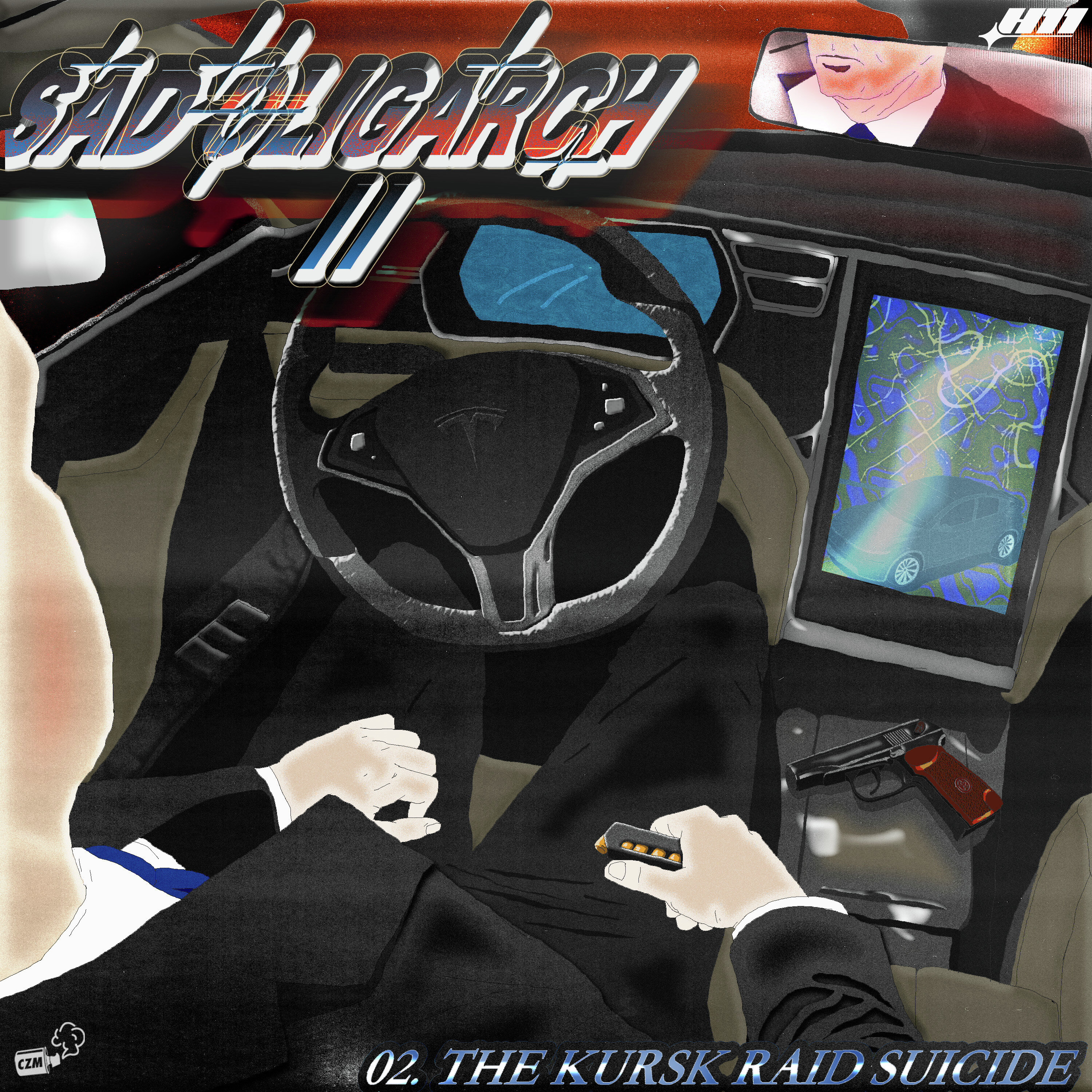
He brings with him a commemorative Makarov pistol.
It's a very nice looking weapon.
The Soviet Union's official standard military sidearm.
The Macarov is a semi automatic that holds eight rounds in a detachable box magazine.
It's a specifically reliable and accurate pistol.
Some call it the Ak forty seven of handguns.
Speaker 1At some point on.
Speaker 4His journey, Starovoid pulls up to malovich Pak, what looks like a manufactured nature reserve for the rich and powerful, started with corporate art installations that think they're far too clever than they are, perhaps the perfect location for a now unemployed Russian oligarch.
Parked up in his tesla, Stovoid takes the Macarov in his hands, slight weight less than a kilo.
The barrel is short and smooth.
It's got a burgundy bake light handle grip with the red Army star embossed in the center.
Sterovoid puts the macroov to his head, steadies his and and pulls the trigger.
He blows out his own brains inside the car, or at least that's the official story one of them.
So who was Roman Starovoid?
Well, as is the norm inside oligarch, he was an extremely wealthy individual with many different properties across Russia.
Tracking his true fortune is difficult, as he basically funneled his money through several different avenues.
But put it this way, Sterovoid made his hay while the sun shined during the collapse of the Soviet Union.
Russian oligarchs who did that when they were young men are usually filthy rich by now.
Sergei explains the come up for Stovoid and unusually young oligarch.
Speaker 3He graduated in nineteen eighty five from Baltic State Technical University, Saint Petersburg.
So nineteen eighty five, you know, putting sun period.
But he he is quite a significant figure in Saint Petersburg, and he's already a kind of uh Sagary is consolidating power Starovoids straight out of university.
He did essentially an engineering degree, but he goes straight into asset management firm from nineteen eighty five thousand and one.
Speaker 1So this I find interesting.
Speaker 4Starovoid studied engineering, but as soon as he left university he went straight into asset management.
Now that can mean many things.
Officially, it enables an organization to examine the need for and performance of assets and asset systems at different levels.
Speaker 1Whatever.
Speaker 4Many oligauchts in Russia and the rest of the world, specifically the West, find asset management to be an industry in which they thrive.
Personally, I think the obduse nature of it all is perfect for people look into either hide or divert funds.
Sterovoid worked for a company called First Industrial Alliance, a non state pension fund.
On page seventy five of a report by the Koc Institute titled Action Plan on Strengthening Sanctions against the Russian Federation, it's detailed how the company was designated a Russian defense entity that we're hit with sanctions due to their role in the Ukraine War.
We'll hear more about that in a bit, but needless to say, Starovoid was involved with entities that would later prop up Putin's war from back back back in the day, favors are always called in back to surgery.
Speaker 3There's not much information about this time period, but I mean, even the fact that he's just graduating and then straight into an asset management firm, I assume he has some kind of connections.
His father doesn't seem very notable.
All I have I could find was just brief mentions that you know, Starovoids was born in Kursk, and then his father, who worked at a nuclear power plant in the course, was transferred to Petersburg, and that's kind of how he got there and why he grew up there.
So all we really know is asset management firm nineteenninety five thousand and one.
Then he is the owner of a stroy Invest, a construction company.
This is between thousand and two thousand and five.
I'm sure, as you've seen in this as we've been reresearching in construction firms, really good way to earn money.
Speaker 4It's a really good way to hide money and.
Speaker 3Wash yeah, yeah, you know, you make deliveries.
He specifically sold materials, but also was involved in some building projects by cheaper material than you promised or you know, delivered cheaper or less keep the money and things like that.
It'll come up later.
Speaker 4This is what we call foreshadowing.
Trust me, Storoboids messing about with building works led to serious catastrophe for him and Russia as a whole.
Speaker 3This is where he probably learned the ways of the trade, and then after two thousand and five he enters the government.
Basically, it's kind of interesting that he goes straight from the company to leading the investment in strategic projects for c Saint Petersburg, so like the municipal job.
At the same time, he's studying, from my understanding, kind of like government administration, and he graduates in two thousand and eight.
This is simultaneously as he's working for the city, he's studying, and he keeps this job until twenty twelve when he becomes a deputy director of the Department of Industry and Infrastructure.
This is for the federal government.
Speaker 1He only works there briefly from.
Speaker 3My understanding, just like a few months, until he becomes the head of rosof door.
It's basically a federal agency which oversees construction of roads, bridges, et cetera, like anything else.
Speaker 1Related to federal roadwork.
Speaker 3He's in charge of it and he works for quite some time.
He allegedly got sanctioned because he was part of the project building the Crimea bridge back in after twenty fourteen.
Speaker 4So he would have been he would have been sanctioned for that because he was essentially building a bridge.
Speaker 1On occupied territory.
Speaker 4Russia invaded even back then, okay with little Green men, but we all know annexed and essentially took Ukrainian land i e.
Crimea, and he was part of construction.
I think this is where he first for what I can see, this is the way he first kind of ends up involved in the Ukraine War essentially from day one.
Speaker 3Yeah, this is where he kind of becomes more notable in that whole thing.
Right before that, he's kind of off the raidar doing doing his thing first in Saint Petersburg, then on a thal level, but still just you know, deputy directors are pretty high role, but also not entirely you know, involved in kind of the the whole like on a global scale kind of thing.
But here after Russia invade, you know, annexed to Crimea.
Speaker 1The I don't know.
Speaker 3If people remember there's once was pretty look warm, but there were some sanctions and stuff.
Speaker 4Okay, now it's time for a quick adbreak.
All right, enough of that, now back to the shop.
Let's talk about Crimea in twenty fourteen.
It's the catalyst as to why Roman Starovoids ended up with a bullet in his head eleven years later in twenty twenty five.
Crimea is almost an island to the south of Ukraine.
It sits on a peninsula stretching out between the Black Sea and the Sea of Azov.
This area is called the Kirk Straight.
Crimea is attached to Ukraine by a small seven kilometer strip of land and now to Russia via the Kirk Bridge.
That bridge was not always there, and Crimea was not always occupied.
For now at least, it's currently part of Russia.
So towards the end of February twenty fourteen, whilst Ukraine was in the throes of the Midan Revolution, unidentified military men entered Crimea and surrounded the airports.
They were all dressed in green military fatigues, masked up and with no identifying chevrons, patches or IDs on their uniform.
They quickly became known as the Little Green Men.
They were, of course, Russian forces.
Within a month, the Crimean Autonomous Assembly was seized by pro Russian separatists with the help of Russian forces in the skies.
The new makeshift administration declared independence and held a shotgun referendum to make Crimea part of Russia.
According to the Kremlin, ninety five point five percent of voters supports the union with Russia, and so they annexed the area.
The results of this referendum are obviously not recognized internationally.
Whilst the region is majority Russian speaking, many people there identify it as Ukrainians.
They did not and do not want to join Russia.
Many either fled or went into hiding.
But to this day there are pro Ukrainian underground militant groups in Crimea.
They launched clandestine sabotage attacks on the occupying Russian forces.
Some even sneak into Russia proper.
The most recent attack happened in September of this year when Tatar rebels burned down a Russian air defense plan in the Russian city of Tula.
They're unseen, but they're active.
Others left Crimea for mainland Ukraine and joined the armed forces to fight against Russia.
I spoke to one of these people last year as she fought on the front lines in the east.
Her name is Kafa.
She was there on the ground when Russias wept into Crimea.
I think it's important to hear her first hand account to fully understand the bloodshed.
Starovoid later profited.
Speaker 5From I am from Crimea.
I was born in Crimea, and for me and my family, it started way back then in twenty fourteen.
I am in my twenties, so I was a teenager back then, and it was really messy at the time, during the so called Russian Spring in Crimea and witnessing it all and everything that came after you.
For the record, I lived, me and my family lived under the occupation until twenty fifteen.
It was a shit show.
Everyone was really scared.
It's our family home and we had like elderly grandparents, so we stayed.
And Russia just started immediate politicizing the children, so basically us like we had to sing Russian and them, I mean we didn't sing.
It was it was funny, like political resistance started there because me and some other kids had a small resistance group.
We were speaking Ukrainian, so we were doing that and then some Cigare police came whatever, and then later we decided that it's a better idea to flee because it did not look good.
Speaker 4What was it like when like the day Russia just arrived in Crimea.
Was it like instant everything started to change.
Speaker 5No, it was first really unclear.
Everything just got shut down, so no transport, no infrastructure working.
We didn't go to school.
Some armed men are around.
You are not supposed to leave your homes, like lockdown kind of situation.
Then some like armed riots kind of things, protests in front of the Parliament building, people being killed and shipped.
Then at some point it got very clear there is no help coming at the Ukrainian military basis.
Well, basically Ukrainian military were either captured or shot dead by Russian military, some of them decided to switch sides, some of them managed to evacuate, So I guess it was also crazy for military personnel, but for civilians it was messy.
I don't know.
When the full scale invasion started.
I very quickly realized I just can't stay where I am.
I started to train some friends of mine who are already serving in the ninety third on different positions drown pilots, engineers.
Then I just got in because I already was a qualified person.
I very quickly passed all this documents military stuff, and I finished the drone pilot course, so I was ready to fly.
Speaker 4Basically, Russia needed a way to ferry its military back and forth into occupied Crimea from the mainland.
Remember, the country isn't actually connected physically to the peninsula, and so in twenty sixteen a huge construction project began.
The Kirch Bridge, also known as Crimea Bridge.
As Sergei says, this is more than just a way to get for a to B.
Speaker 3The point of the bridge isn't just to connect Russia and Crimea.
It's almost like a symbolic thing showing like, well, we're connected.
This is a part of Russia.
Speaker 1So there's a lot of.
Speaker 3Symbolism in there, and even from the technical kind of logistics point, you know, it's important to have that connection.
Speaker 4According to the Environmental Science and Technology Journal, the Kirch Bridge is a seriously heavy duty project.
Speaker 1Quote.
Speaker 4The Kerch Bridge consists of a bridge structure for a four lane highway and a separate structure for a parallel double track railway line.
The shipping canal in the Kirk Straight spanned by two two hundred and twenty seven met along tied arch bridges with a clear height of thirty five meters.
The motorway bridge is sixteen point eight kilometers long and has two lanes separated by guardrails.
Each carriageway has a structurally separate superstructure made of an orthotropic slab on two load carriers.
The railway bridge is eighteen kilometers long and its tracks lie on ballast beds and a superstructure made of steel two cell hollow girders with orthotropic plates.
The bridge stand on five hundred and ninety five pillars with a spacing of fifty four to sixty four meters, which are founded on around seven thousand piles.
This makes the bridge structure the longest in Europe.
The construction period was four years and it cost three point six billion dollars.
You need to know this information to get a full picture of the sorts of resources and involvement Roman Starovoid brought to Putin's largest project, the War on Ukraine.
Starovoid played a significant role in the construction of the Kerch Bridge with his direct help.
It was his company that provided money, assistance, materials.
As you can see, that is no small feat.
Storovoid was eventually internationally sanctioned for his involvement.
He didn't realize at the time, but his part in all of this the Crimean Bridge lined him up for his eventual downfall in Kursk.
Speaker 1Remember.
Speaker 4Kursk is where Roman Starovoy is originally from.
He was born there in nineteen seventy two, when the Soviet Union was still up and running.
From humble beginnings to having properties all over the place.
The boy done well.
From what we can see, Starovoy owned at least five apartments, including luxury real estate, in Moscow and Saint Petersburg.
He also had a big country mansion on a plot of almost twenty acres.
It looks like going straight into asset management having studied engineering was the right move for Starovoid.
Okay, now it's time for a quick adbreak.
All right, enough for that.
Now back to the show.
So let's fast forward to October eleventh, twenty eighteen, seven years before the gunshot in the Tesla.
By decree of the President of Russia put in himself, Roman Starovoid was appointed as the acting governor of the Kursk Region.
Everything he'd done in Crimea had kept his profile in favor with the dictator as a local lad.
This appointment was, of course a big deal for Starovoid, probably a dream come true.
A year later, he completed what is arguably the most ironic training he could have taken, part in an anti corruption program.
This was part of the Higher School of Public Administration, a sort of finishing school for governors to ultimately make sure they don't come out as corrupt as many of their predecessors.
Following this, he fully entered in a circle the Kremlin power structure.
What I fin an interesting is how he was being directly promoted by Putin.
You don't really end up working your way into that position unless you're ready to do essentially whatever the state wants you to do.
Speaker 5Right, Yeah, like.
Speaker 3Being handpicked by Putin is a pretty big deal.
Speaker 1Oh.
Speaker 3Additionally, in twenty twenty, he became a member of the State Council.
It's sort of like the minister's cabinet where they're essentially they advised Putin and they decided all the policies, etc.
They're basically the ones deciding what's going to happen in Russia, what the laws are with the policies it says internal and for it.
So they essentially oversee everything.
And it's basically like the cabinet, right, they oversee various parts of the country and they make all the rules and start of what it was part of this cabinet.
From my understanding, who's just a member and he wasn't the head or anything, but still even being the member is quite a big deal.
And this cabinet or this council was created by Putin himself, they're essentially handpicked by Putin to be in this cabinet, and from my understanding, they're like a step down from Putin in terms of power in Russia, like there's no going higher than that.
In a sense, that's kind of I'd say that the highest position he could probably reach.
Speaker 4Storovoid fully embraced his new role.
He wanted to be the governor of Kursk almost indefinitely.
He said in August twenty twenty two that he wants to rule the region for at least the next eight years until twenty thirty.
In the UK we call this brass neck, extremely brazen behavior.
This is the kind of guy he became.
Storovoid was all up from his admittance into Putin's in a circle.
He felt big, important.
He became a man about town.
He even received a Putin sponsored award from one of Russia's internal ministries.
The trophy a commemorative Makarov pistol, the very weapon he shot himself with.
Around twenty twenty three, Star of Wick got involved in the war again.
Russia invaded Ukraine a year previous, and the bloodshed was extreme.
Whole cities were flattened by Russian warplanes, ten ninety tanks rolled through Ukrainian streets.
Young men and women took up arms, military battalions, volunteer units, clandestine saboteurs.
Speaker 1The war has been brutal.
Speaker 4I've seen it myself firsthand, reporting on the ground in Boradanka.
As an air raid siren, Basically it means there's Russian jets in the sky where a rocket's been fired nearby.
Apartment blocks were blown to bits, the children's toys strewn amongst the rubber.
Dozens of civilians were handcuffed here and shot in the back of the head by Russian forces, executions, war crimes, and nightmare.
It's amongst this chaos that Stovoids saw an opportunity.
When the war kicked off in full, when Russian armor moved into Ukraine, volunteer units formed on the border.
These were Russians who won't in the military but still wanted to play a role in the conflict.
Sterovoids seemed to have a similar desire.
He consolidated the patrolling volunteer units and became their de facto leader.
The Russian media referred to him as being the general of these factions.
Now bear in mind that Stovoid had never served a day in his life.
He'd always worked behind desks, not on the front lines.
But still he sought an opportunity to act the tough guy and show Pootin that he was fully committed.
He took control all of a group called the Voluntary People Squad began recruiting many new fighters.
This put him firmly into the sludge of the Russian war underbelly.
It's here where he came into proximity with p MC Wagner, the far right Kremlin backed mercenary force.
Wagner is known for its rampant brutality.
They've even filmed themselves executing their own members with a sledgehammer to the head.
Let's hear from journalist John Lekner.
He's been documenting Wagner for years.
He wrote a whole book about them called Death is Our Business.
Speaker 2Essentially, Wagner Group was a Russian private military company PMC that very much had very close ties to the Russian state itself, but ultimately it was founded by Yevgeny Pregosian, a guy who was sort of a small time gangster in Saint Petersburg who managed to raise himself up to being a restauran tour and then moved his way up through the Russian elite to eventually get the gig of providing meals to the Russian military and schools, and ultimately came together with a former Russian military intelligence officer, Dmitri Utgen in twenty fourteen to provide mercenaries for the Russian State to support rebels in eastern Ukraine and dnbas as the war was cooking off there in twenty fourteen and twenty fifteen, and then eventually back in Ukraine in twenty twenty two during the full scale invasion, where Wagner played an outsized role, especially in Bachmut In the meat Grinder, when Progosion recruited up to fifty thousand convicts to fight for him to try and take the city from Ukrainian four.
Speaker 1PMC.
Speaker 4Wagner recruits act like maniacs on the front lines.
There were dozens of videos of them committing war crimes, chopping off people's limbs, heads, all sorts.
It's grim.
It's this group that Roman Starovoid chose to fall in with.
He made his way to a Wagner training base after hearing about their infamy.
He stayed for almost a week, he shot assault rifles and grenade launchers.
He drove around in an armored personnel carrier.
He was shown how to properly throw hand grenades.
We found an image from this time where Starovoid is dressed up in full military fatigues.
He's acting like a soldier.
He's wearing a helmet and a plate carrier with a PMC Wagner patch stuck on the front of his chest.
Behind him are four Wagner recruits with rifles simulating some kind of frontline scenario.
The now incinerated leader of Wagner Getny Progosion confirmed at the time that Starovoid trained with the fighters and slept in their barracks as far as we can see, though he did not actually go out to fight on the front lines.
Dued up off the back of his ghoulish adventure holiday, Starovoid began running his mouth about the strength of his regent Kursk.
He bragged officially about how well fortified the area was.
Ukrainians could never get in.
Kursk is solid.
He'd had the barriers built up.
Speaker 1Since twenty twenty two.
Speaker 4In fact, Starovoid went as far as to say that the territorial defenses and voluntary units he'd taken over were the most powerful in Russia.
On August six, twenty twenty four, Ukrainian forces launched a daring cross border raid into Kersk.
The troops smashed through the border and began taking out any armed resistance from the Russians.
It was the biggest foreign attack on Russia since World War Two and was at the time one of the biggest battlefield gains for Ukraine since twenty twenty two.
How embarrassing for Starovoid.
Russian reservists were hurried to the area and nearly two hundred thousand civilians had to flee their homes.
In an official statement, Putin said that the Kersk operation was an attempt to undermine Russia's stability.
Not shit, we will deliver a worthy response.
Speaker 1He said.
Speaker 4Things got so bad that by August thirteenth, Russia had to launch rockets, armed drones and even airstrikes on Kersk, its own land.
They were trying to dislodge the Ukrainian forces by any means necessary.
It made Putin look silly and even harm the economy.
As a result of this chaos, the value of the ruble ten month low.
Ukrainian forces controlled parts of Kursk for up to half a year.
The battle was drawn out and costly.
The Kremlin was humiliated.
The curse grade was a total catastrophe.
And who was meant to prevent this from happening?
Roman Stovoid?
So what went wrong?
Was this just an unstoppable crisis, a freak event that no one could have truly prepared for.
Well, I imagine that's what Starovoid argued when summoned to answer for the raid.
But as I said at the start, there is more at play here.
In April twenty twenty five, two of Stovoid's curse deputies were arrested.
The criminal case was opened into the theft of state funds that were allocated to the construction of the Kursk border with Ukraine.
It turns out that one too four billion Russian rubles were stolen.
That's a maximum of fifty one million dollars.
The deputies were not going down on their own for this.
They snitched on Roman Starovoid, saying he was part of the raquet.
How could he not be, He was the head governor of Kursk.
He'd apparently stolen the millions.
Whilst bragging about how strong the defenses of his region were.
Remember, Starovoid was part of Putin's inner circle.
He was running around curse playing action man with Wagner, telling everyone how strong his oblast was whilst stealing so much money from the coffers.
That the fortifications weren't constructed properly.
Speaker 1That's a big deal, and who knows.
Speaker 4Had Storovoid kept his hands clean, Ukraine might not have been able to breeze through the border.
There were some reports that Putin personally fired Starovoid in July.
After that, his card was punched, his brain was shot at the back of his head.
It's quite pos that the case of Roman starovoids mysterious death is actually some sort of murder by proxy, as in, he understood, if you fuck up this badly, you're gonna get taken out anyway.
Don't make it difficult for them, it will probably be worse for you.
He knew what was coming.
Perhaps that's why Roman Starovoid put the gun to his own head, or maybe it didn't happen like that at all.
Stay with me, this is where things get weird.
Russia's official State Investigative Committee says that Starovoid was found in his card July seventh, shot in the head, gone.
Speaker 1We know this.
Speaker 4However, there are reports from Russian media that contradict this.
Some say Starovoid was actually found in the bushes slightly away from his car.
Okay, maybe he got out and shot himself outside.
Whatever, But then there is a bigger claim.
There's footage filmed from a distance that shows Starovoid's corpse being retrieved from a ravine.
A young woman can be seen identifying the body.
Here's a quote from Russian site Business Gazetta explaining this footage.
A girl moves away from a ravine, accompanied by several men.
She refuses their help, squats down, covers her face with her hands, and cries.
Perhaps the recording shows either a girl or an assistant to the former head of the Ministry of Transport Starovoid.
According to some reports, the girl is twenty five years old and once graduated from Kursk State Medical University.
Judging by the reaction she identified the body, That twenty five year old woman was Paulina Korneva, Stovoid's girlfriend.
The policeman for her to come and identify his body for what is going on here?
Initially on the state press release, Starovoids shot himself inside his tesla.
But actually it seems he was pulled out of a ravine and identified by his girlfriend.
Maybe we could just chalk this up to confusion and press hastiness.
Speaker 1Details got confused.
Speaker 4Due to reports that came out in the immediate aftermath of Stoboid's death July seventh, Right.
Speaker 1Well, maybe not.
Speaker 4It turns out that day is not even certain now.
Some reports say that his death was actually either July fifth or July sixth.
Some say he was already dead by the date of the official statement.
Perhaps someone with previous knowledge of a plant hit on sterovoids accidentally put out the info too soon.
Who knows.
None of it makes any sense.
Starovoid left no suicide notes.
He exited his office without saying by to anyone after his firing.
He then either shot himself in his car or in a ravine.
How the fuck do you shoot yourself into a ravine.
That's a Looney Tunes death.
Things don't happen like that.
It does not add up.
Due to the grip the Kremlin has on most of the Russian media, Russian dissidents, anyone against them, we don't have all the answers but one thing is for sure.
This case stinks, and there's one more thing.
Turns out, Starovoid wasn't the only oligarch type to die on July seventh.
It wasn't even the only one to die within his industry on that day.
A man named Alexi Cornychuck also died on this date.
He was the deputy head of Property Management of the Railway Transport Agency.
In an extreme coincidence, he died in the office building of the Ministry of Transport, Starovoid's workplace.
Apparently, corny Chuck died during a meeting.
Sources say he stood up first, then collapsed and died.
Speaker 1What are the chances you've been listening to?
Speaker 4Sad Oliga Season two Produced by H eleven Studios for Cool Zone Media.
Writing, editing, producing, concept and recording by myself, Jake Hanrahan, Research and reporting by Sergei Slipchenko, Me and Victim Mihail.
Executive producing by Sophie Lichtman.
Music by Sam Black, artwork by George Jutful.
Sound mixed by Splicing Block.
See my other projects at Hanrahan dot tv.
Get me on social media at Jake Underscore Hanrahan.
Speaker 1That's h A n i a h p n