·S2 E5
Hanged in a Secret Nuclear City
Episode Transcript
Media.
Speaker 2Something strange is going on.
Another member of the Russian elite has been found dead.
Speaker 3Reports suggests that he fell out of a window, poisoned with mushrooms.
Speaker 2Died of heart failure, died of carbon monoxide poisoning.
How comesy are they?
Speaker 1Dozens of Russian oligachs, politically motivated millionaires have died in the space for three years, most of them in suspicious circumstances.
Many have hidden links to the Kremlin.
This is sad Oligach Season two, an ongoing investigation into these recently dead Russian power brokers.
Sad Oligach is created by me jake Hanrahan and my Ukrainian colleague Sergei Slipchenkov.
This is a H eleven studio and Coolso Media production.
December seventeenth, twenty twenty three.
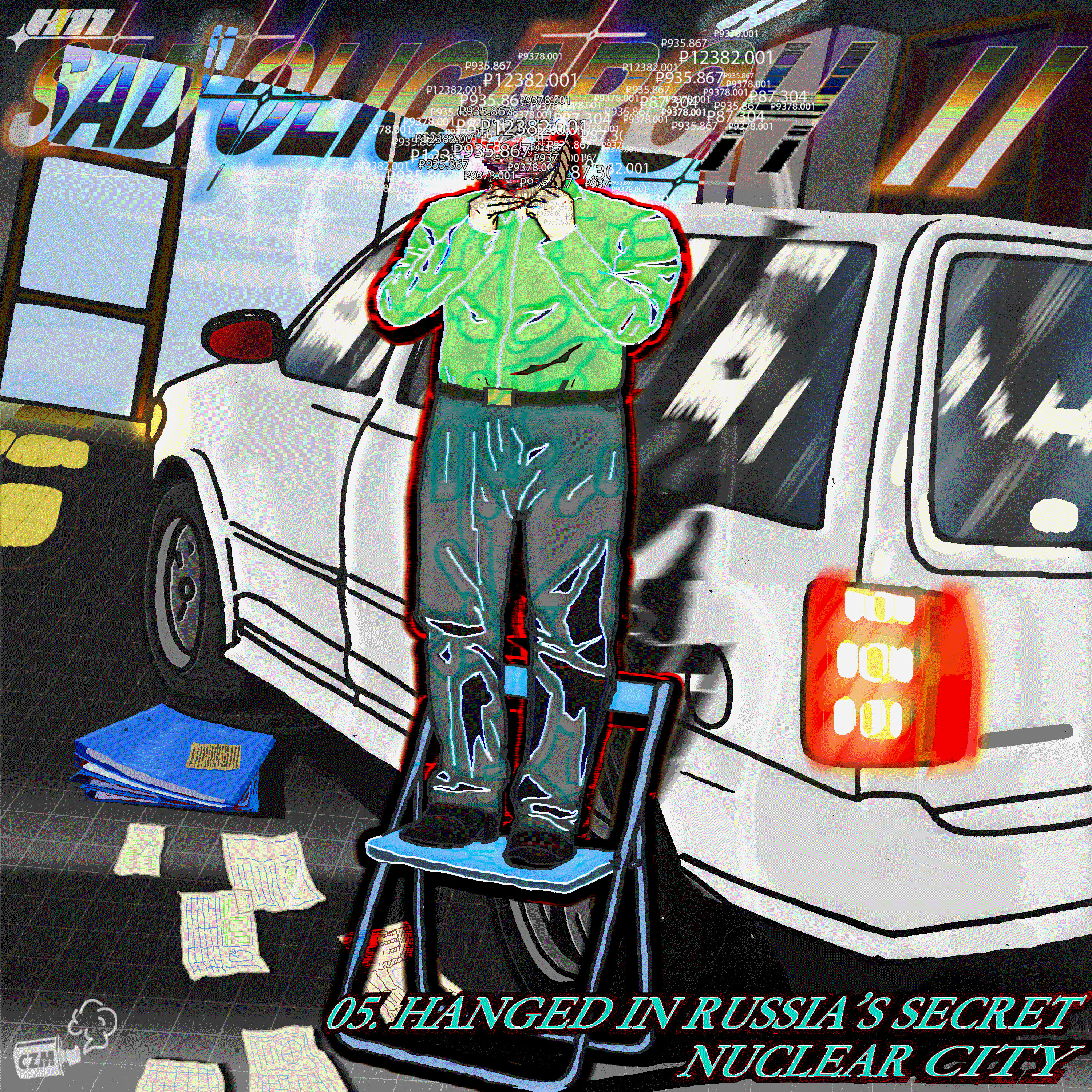
Fifty year old senior accountant Evgeny Postragan is in the garage of his private home in the closed city of jelen Nogorsk, hidden away in central Siberia.
This is a place unlike any other, its secret clandestine.
Postragan works for a state satellite development company.
Postragan is tying a knot.
Speaker 2In a thick rope.
Speaker 1He pulls the ends toward test the slack.
He's making a noose.
Even in the garage.
His breath catches in the cold.
Small wisps of white eke from his lips as he fixes the rope.
At this time of year, it's deadly freezing outside.
Jelein Agause hits lows of around a minus twenty in the winter.
A few feet beyond the garage walls, everything is snow and ice.
This is the Siberia Agent after all.
Postragan has finished his noose.
He pulls off a stool, stands on it, and ties it to the rafters.
Above a tear drop loop of ropes weayhs inches from his face, the vast unknown expanse of the afterlife just moments away.
Posture Gan pulls the noose over his head and kicks away the stool.
He drops, his body weight slowly chokes him.
The rope tightens stiff around his neck, his legs dangling and kicking in the air.
Everything goes dark.
Eventually he stops struggling ef Guinea, Postragan chokes to death by his own hand.
Sadly, Postragan's wife found him hanging from the rafters, his feet dangling his heart still, his life gone.
This is the official story from the Russian State of how Evgeny Postragan died.
Of course, the Russian State is most definitely not a reliable source.
Before we get into what kind of a man Evgeny Postragan was, let's have a look at the kind of place Zeleno Gorsk is.
In short, it's a clandestine city in Russia built up to produce nuclear weapons for the government.
Serious location with a shadowy mo.
I speak to journalist Matthew Gault.
He runs the publication Angry Planet and is extremely knowledgeable on all things nuclear.
So I think maybe the first thing would be maybe to kind of explain why these closed ease happened, why would they started up, and what was their purpose.
Speaker 3They predate nuclear weapons because there were like some there were some planned cities that they were making kind of east of the Ural mountains before nukes because they needed like an industrial base kind of overnight to produce weapons.
But then like it really gets going in nineteen fifty when the Soviets go real big on nukes and they kind of adopt this model that they'd seen the Americans use.
The Americans when they were doing the Manhattan Project set up these secret cities Oakridge, Los Alamos, where they brought in all of the scientists and the scientists' families and all of the labors that they needed and kind of built these closed cities almost overnight.
And the Soviet Union does the same thing at like a massive scale.
And they need them because, like, nuclear weapons are very secretive and you don't want people to know where your stuff is, and that's why they get started, and like why there's so many of them, like in the Siberian area in like in eastern Russia in general.
Speaker 1This place was from what I understand, primarily made for the production of nuclear weapons.
Right, there's plutonium.
How does that all work?
Is that something they would mine?
Is that something they would produce?
It's going over my head a little bit, I'll be honest.
Speaker 3So it's pretty fascinating the project that happens in this city specifically.
Have you seen the Have you seen like the city's flag or it's cut of arms.
Speaker 2It's incredible.
Speaker 1It's one of the coolest flags of the bear right in the atom.
Believe it or not, this clandestine closed city actually has one of the coolest, most eye catching flags I've ever seen.
Speaker 2The background is bright red.
Speaker 1On top of that, there's a yellow bear inside an atom symbol at the center.
The bear, with an angry face, is trying to break apart the atomic core.
It's cracking in two, literally split in the atom.
Now this isn't some relic from the Soviet era either.
Back in those days, jelener Gorsk was actually called Krasnoyask twenty six.
Its flag back then was a blue and orange checkered background with a red and yellow lion's crest in the center.
The lion is holding a shovel and of course a sickle.
The current flag, though for Jelen a goorsk with the bear and the atom symbol, was approved and put into use in twenty twelve.
The closed city's description of it, which varies quite differently from mine, shows just.
Speaker 2How proud they are of it all.
Quote.
Speaker 1In a scarlet field, there is a silver sign of an atom with three intertwined orbits, and inside the orbits there is a golden bear threaded through them with silver fangs and claws, rising straight and turning to the right, tearing the silver core on the sign of the atom with its front paws and resting its hind paws on two of the three orbits end the quote Jellen and Gorsk might be private and closed off, but Russia is most definitely proud of its current utility and history.
To be fair, the way they built the place is a serious feat of engineering.
Speaker 3So the city, you think it got up to about one hundred thousand people like in its heyday.
And what they do is they bring in a bunch of goolag labor.
They hollow out a nearby mountain and they build three nuclear reactors in there.
And the nuclear reactors are dual use, so they produce they like heat and cool the city.
They do like they power the whole city, but they also produce plutonium that is used in the manufacture of nuclear weapons.
I think like at the end of the day, something like a third of all of the plutonium that was used in the Soviet nuclear weapons is produced in this mountain.
Speaker 2It's hard to explain.
Speaker 1It's it's like almost a warehouse setting, but it's actually hollowed out in the mountain.
Speaker 2Is that what you mean.
Speaker 3Yeah, it's almost like they it's almost like some supervillain stuff.
Speaker 2Yeah, it sounds very James Bond, you know.
Speaker 3Yeah, Well, they have this huge mountain, they hollow it out, they build these nuclear reactors under there, and they ferry.
The mountain is like a I think it's like twenty thirty kilometers away from the city itself, and people live in the city and take shuttles back and forth, and they're the whole city is kind of based around this, like producing plutonium for the Soviet nuclear weapons program.
And it's really interesting because at a time when it's not great to live in Soviet society, this is the place to be.
Speaker 1The thing with the society of the USSA is that it was, of course communist ostensibly anyway of communist friends who tell me real.
Speaker 2Communism has never been.
Speaker 1Tried, and I tell them they've never tried real life.
But anyway, in the Soviet Union, private ownership was highly restricted.
What you got would often depend on class status, which was often linked to someone's employment.
Really not much different from the systems we have now.
Similarly, the elite of the USSR group fat and had whatever they wanted, but the workers were not so lucky.
Jelly n Gorsk, though, was a rare place in Siberia that gave employees a lot more access to otherwise restricted goods.
Speaker 2It was not just a job.
Speaker 3For like forty years.
These are probably some of the best treated citizens in the Soviet Union.
They've got the best foods, they've got the best clothing, they've got the best you know, the best housing.
It is good.
Do they have chocolate, which like other places don't have.
Some of the stories are about how much chocolate they got to eat.
Speaker 1Yeah, I read it was one of the few places where you could have a car as well.
Okay, now it's time for a quick outbreak, all.
Speaker 2Right, not for that.
Now back to the shore.
Speaker 3Now.
The downside is that it's sealed.
There are there are guards at the entrances and exits of the entire city, and it's monitored by Soviets secret police.
Like the whole place is watched over.
So like it's it's a gilded cage, but it's still a cage.
Speaker 1Say you were living there, obviously, you work there, you live there.
It's how it works.
It's kind of feudal in a way.
But if you're living there, can you just freely go in and out?
Like it's not just to stop people getting in, from what I understand, it also kind of stops people getting out.
Speaker 3Yeah, no, No, they don't want you to leave because there's like if you work in the plutonium and if you work in the plutonium factories, like you have secret knowledge of how the Soviet unit is producing the fuel that makes its nukes.
And this is a It's also interesting because like Los Alamos are like Oak Ridge, the culture is very mixed, meaning that you've got people that are laborers and like working class people, but then you also have nuclear scientists, like some of the smartest people that are in the country live in this live and work in the city and are doing like fringe science and so and they you don't want those people leaving either.
So that's why you build it like in Siberia, which is an easier place to like keep people in and yeah, you aren't getting in or out of there.
Speaker 2That is crazy.
Speaker 1So the proximity to the plutonium production, how how does one produce plutonium?
Speaker 3The would do is they would bring in the minerals from outside and they would put them in these reactors, and these reactors would they would both power the city and then they would also spit out plutonium plutonium.
I'm gonna screw up the designation.
It's like two thirty six, I think, which is what they would use in their weapons program.
And the way they would this is kind of wild.
They would cool the reactors with the nearby river, which also flows downstream and has a bunch of other cities that are feeding off of it.
Especially this time, nuclear reactors are not they're pumping the waste into the ground, but also like it's backsplashing into that river that they're using to cool everything, and if kind of irradiating all of the citizens and everybody that lives downstream from them, so like incidents of breast cancer and birth defects in that city and then like everybody that lives downstream from the city are pretty high.
They keep producing plutonium there for a while.
So at the end of like when the Soviet Union collapses, they shut down two of the reactors, and the way the reactors work, they can't keep going and not make It's like always going to be outputting plutonium that you can only kind of use in weapons, and so it becomes this weird problem.
Like in the early nineties, when they shut the reactors down, Russia is like dismantling nuclear weapons.
They're left with this one reactor that is like spitting out plutoni like weapons grade plutonium constantly and like piling up, and they don't know what to do with but they can't turn it off because then the city, like the city doesn't have power.
Speaker 1Basically, eventually, in twenty ten, with international help, Russia managed to shut down all the old reactors.
In that time, though serious pollution had damaged the area, still business had to keep on moving weapons to build profit to make new state companies of the New Russia took over when the Postagon ended up working for We'll hear more about that in a bit, but for now, just understand that we live in a time where nukes are very much back on the table.
This could be relevant.
This place is jelen Agusk.
It's potentially a lot more significant, especially considering the war in Ukraine, which a lot of this points to that.
You know, they were talking about tactical nukes and now you've got Trump talking about nukes.
If there's ever a time when the uptick of production or watchful eyes on the region of this closed platonium place in jelen a Gausk, I feel like it will be now.
Speaker 3Yeah, I think so.
But unfortunately it's really wild.
What's happened like in the past ten years.
It's like after the collapse of the Soviet Union, we had this nice twenty year period where we have some really great treaties.
People were kind of drawing down their nukes.
America was in the Soviet Union a whole lot helped with a lot of the cleanup and a lot of the study and a lot of the shutting down of the reactors in that mountain.
Now, post Trump won, post COVID, like all the old treaties are on hold.
Russia's not coming into American inspecting anything.
America is not going over to Russian inspecting anything.
If you were doing something in that mountain you didn't want anyone in the international community to see, now would be a great time to do it, because no one's watching anyone in the way that they used to be watching anyone.
Speaker 1It turns out that there is plenty going on in Jelling of Gauze that shouldn't be.
We've dug deep and eventually we found some payda.
First, though, let's take a closer look at Postragan.
December seventeenth, back on the night of his death, Evgenny Postragan headed out of the house before he hanged himself, where too no one seems to know, came back and did the d Perhaps he went out for a walk just to clear his head and decided that he was definitely going to take his own life when he got back.
Speaker 2It's more than likely.
Speaker 1Another possibility he went out to meet an undisclosed person who gave him some very bad news, so bad that Postragan could see only one way out.
The cloak and dagger nature of a closed nuclear city in the heart of Siberia means there's very little to go on.
But what we have found out is that Postragan was largely liked by his peers and the local community.
One person anonymously describes him as a quote kind and decent man.
Locals say they don't feel he would have committed suicide.
It would have been his fifty first birthday, four days.
Speaker 2After his death.
Speaker 1Apparently he didn't seem depressed or preoccupied.
No, not to them, who knows what's going on in someone's head.
According to state media, Postragand had actually been posting depressive messages on his VK page.
He allegedly posted up pessimistic Japanese poems hayakus of melancholy.
Perhaps the works of the famous Japanese poet Matsuo bashoal sick on a journey my dreams, wonder the withered fields over still fields of snow, or winter solitude in a world of one color, the sound of wind, or weather beaten skeleton.
That is all the remains of a once gallant samurai who knows.
We didn't get a chance to see which depressive Japanese poems Postragan posted.
His VK page was disabled shortly after his death.
In fact, all of Postragan's social media was wiped as soon as he died.
It was all gone disabled with haste.
What we do know, however, is that he was last online on VK at six thirty three pm on December sixteenth, one day before he died.
It's also this day that he went out on his own again, with nobody knowing.
Speaker 2Where he went.
Speaker 1Could just be a walk to clear his head, or it could be something else.
If Postragan's suicide was actually just a suicide, why did he do it?
Why take his own life?
Well, according to state controlled Russian media, it was maybe because of quote a lot of funds from the company he worked for, reshet Nev Information Satellite systems really rolls off the tongue.
This company is a subsidiary of the Russian space agency ros Cosmos.
We know from two episodes back that you do not mess with ross Cosmos.
As we heard earlier from Matthew Gault Zellner, Gorsk is a closed area with multiple defense manufacturing facilities.
They produce weapons grade plutonium.
The line of work Postragan was involved in, though, was to do with the satellite systems.
Russia's satellite network is supposed to arrival the GPS system we have in the West.
It's also used by Russian military to assist with Putin's ongoing invasion of Ukraine.
Okay, now it's time for a quick outbreak.
All right, enough of that, Now back.
Speaker 2To the shot.
Speaker 1As you've probably noticed through series one and two of sad Oligarch, feels as if all roads lead to Ukraine.
It's through the prism of Putin's disastrous invasion in twenty twenty two that oligarchs and the power brokers in their orbit began dropping like flights.
However, Postragan was not an oligach, but he was most definitely in the sad Oligarch sphere of influence.
Speaker 2And disaster.
Speaker 1His role as a senior accountant at reshat Nev possibly put him in the crosshairs when the company's coffers began to run dry.
Speaker 3Where is the money going to come from?
Speaker 1The lost fun the Russian media spoke about in the report on Postragans suicide begins at about eighty billion rubles, that's almost a billion US dollars in twenty twenty three.
This was the amount of money rashat Nev lost.
They lost almost one billion dollars.
That's a hell of a problem.
We've been chipping away at this case, and whilst on the surface it might seem like a cut and dryer suicide, there is obviously a lot more going on, specifically with postra Gans place of employment.
Speaker 2Let's talk to sergery.
Speaker 1It's funny, I think we see this connection with basically almost every single suspected or suspect death in this series, especially where it all seems to tie back to Ukraine, especially with this company the same as Ross Cosmos, like rockets, that kind of thing.
It's all the same technology, and this again it's a it's a company that's directly tied to the state, like the Kremlin owns this company.
Speaker 2Essentially, right, yeah.
Speaker 4One hundred percent.
So again, ros Cosmos, the state like space agency, essentially owned this company one hundred percent.
Ros Costmos is the parent company and they basically own it, they oversee it ros Cosmos, But more so the government kind of decides the leadership and stuff like that.
Right, So if there's a change in the CEO or whoever, like the director general, it's going to come from Moscow, even though this this thing is like, you know, thousands kilometers away from Moscow in Siberia.
Yeah, Like ros Cosmos is the main owner of this company.
Speaker 1And as is with pretty much every company that we've come across, there's there's a lot.
Speaker 2Of corruption at this place.
Right.
Speaker 1So again it seems to be this pattern at the minute of very little information out there.
But then and when we dig in and have a look, there's embezzlement seems to be at the center of all these cases.
Post Gan he himself was let's say, attached by a proxy at best and completely involved in the embezzlement at worst.
Speaker 4Right, Postergen was the CFO, I guess we would call him right in the West, chief financial officer.
I think they called him the head accountant of the place, so he was leading the financial department.
From by understanding, he started as just an accountant of the company, like back in two thousands, and over the years he ended up leading the place.
The person that was in charge of the actual company was Nikolai Destodov.
I don't know if he's officially under an investigation, but he was definitely involved with the comms directors fraud investigation, who has been criminally, if not charged, definitely investigated for fraud and embezzlement.
Speaker 1It's here we start to understand where the missing billions might have gone.
Everyone from the communication officers to the boardroom execs seems to be some way involved in mass embezzlement at rishat Nev.
As the head of financial management at this company, how could Postugan not have known.
Speaker 4It would be hard to deny that, you know, the head of the financial department had no idea about any fraud or embezzlement.
It would kind of seem like the thing that he should, if you know, if not at least be involved, be aware of or understand that money is going somewhere where it's not supposed to.
But there's yeah, the company was corrupt.
The Sutlan and Bashkova.
She was in charge of the direct communications and she basically had a company that it looks like it was a fake company, but she created Prometheus Medium and she would get like contracts for the company to create like in the in the court filing, it was like media products, so I think like videos, maybe like advertisements, things like that.
And despite the act company like Rashnatiev actually having their only press corp press service or whatever, like basically media people who could do this already, and she would sign contracts.
It says that like over I think it was like six years, she basically gave this fake company that she created over one hundred contracts totaling like forty three million rules when all the work was actually just done by the team that they already had.
Speaker 1This is some next level brazen theft of company funds.
The communications officer made a fake company, gave said fake company media contracts from her own job, and then just got her staff to do the media work she was meant to hire out to a creative third party.
The audacity of this scheme, coupled with the higher up embezzlement, will have no doubt enraged Moscow when it was discovered it.
Speaker 4Was supposed to be like a third party contractor that she claimed had like equipment that they didn't, when apparently the company is like a balanced it or whatever listed all this equipment that was used in the end.
So it seems like she just kind of used it as like a way to funnel money out of the company.
Speaker 1So it's the sort of thing where, especially the department that he's in, I'm gonna say, it's very unlikely he wouldn't have seen this happening, right, especially if it's embezzlement, it's money, He surely would have seen this.
He's got to deal with the accounts.
Speaker 4Yeah, Like this money isn't just appearing out of nowhere, right.
This is a state sponsored or state owned company, so this money is coming from Moscow, probably being approved by in the budget.
Like this should be accounted for.
He should know where things are going, what's happening.
And again it's kind of hard to imagine that he just is blind to over like what five years, six years, almost fifty million rubles just disappearing.
There must have been kind of an understanding of like, okay, something is not right, And it sounds like, again the CEO hasn't been charged from what I could see, but it seems like at least the CEO knew, and then if the CEO was in on it, it wasn't like just Bashkova, not just the comms director doing all this stuff.
I find it hard to believe that the guy in charge of all the finances for the entire company had no idea that something was wrong.
If not, you know, be directly involved.
Speaker 1Once again, it comes back to this thing of stealing from the state.
Do you think it's possible that he realized he was going to get caught, he was going to be in some hot water, and he said, you know what, the pressure of this, I might as well just kill myself again, another kind of murder by proxy via suicide, if that makes sense.
Speaker 4I think this is one of the more clear cut cases for that.
So in twenty twenty two is when the previous CEO Testodov.
I don't know if resigns or I think one thing I saw was somebody said basically replaced.
Like I said, like Moscow is kind of in charge of right, whether it's at Roskosmos, whether it's somebody closer to putin or even putin himself, a person from Moscow comes in.
His name is if Ganianisterov.
He's he's much younger for reference, like the previous CEO's like a seventy three year old academic, kind of Soviet era person who actually like worked on some satellites and you know that tech.
I guess he like works his way up to be the CEO.
He again either quits, you know, maybe forcefully retires or whatever.
He's not at the company anymore.
Twenty twenty two, a young guy forties, but you know, compared to these other people, he's pretty young.
He comes in.
He ran some startups in Moscow.
He I think he taught at a university or something like that related to kind of like the space and satellites.
And he comes over in twenty twenty two, and it kind of looks like he's there to clear house because shortly after he joins, Boshkowa quickly retires or quits, like she kind of gives in her resignation from what I understand, and then soon after she's you know, undergoing these criminal charges.
Very soon after Pastriking kills himself.
And then there was I think I mentioned to you the smaller cases where like employees receive like a bonus of like it wasn't too big.
It was like a million rubles, which is like I think a couple thousand dollars.
But three people get arrested for giving out these bonuses and then keeping them for themselves.
So clearly like it sounds like this new person nested of came in to kind of get rid of this corruption and figure out what's happening, because I mean, there's sanctions and things like that on this company that's making you lose money, but it's losing a ton of money, you know, money going down the train when this is supposed to be a big like defense company.
Speaker 1So with all this knowledge of posture, guns, corrupt employment, does this look like an actual suicide?
Speaker 2Still?
Speaker 1I think it's still quite likely.
All the embezzlement pressure and the huge one of Harry losses at the state company Postragan worked at would have no doubt caused serious stress, stress that does not go away.
I don't for a second believe Postragan didn't know all this was happening.
He lived in the closed state run city where secrecy and stepping in line are paramount.
He then killed himself shortly after a new government appointed boss is brought in to fix the leaky ship.
He would have known full well that the Kremlin's shadowy operatives set examples and punish people who steal from the state.
Ultimately, Postragan was in charge of the money.
As the money went missing, where is the money?
As the sad Oligach pattern shows in Putin's Russia, the head must roll.
As I said, suicide to avoid worse fate at the hands of the government is quite likely.
There are, though, a few other things about this case that have me curious still.
For example, I would be interested to know if Postragan met with anyone in the moments when he went for a long walk alone in the deadly cold of the Siberian winter twice in two days before his death.
Will probably never know.
And there is the other possibility that Postugan was got rid of when the shit hit the fan for what was effectively a Zelenegorusk embezzlement ring.
Get this, Exactly one week after Postragan's death, a deputy head at rashatnv's parent company, ross Cosmos was arrested for fraud, large scale fraud.
It's alleged by the state that he stole of four hundred million rubles.
That's over four million dollars.
This guy's name is Oleg Frolov.
Along with two other accomplices, he stole money from budgets that were allocated to purchase equipment.
This is similar to the brazen embezzlement of Reshetv's fake media contracts.
At the same time as all of this, another man named Yevgeny Formachief was arrested for a different case of fraud roz Cosmos.
They're all at it.
And then prior to this, there were even more claims of corruption.
Remember the Russian satellite navigation system we mentioned earlier.
The people running that accused reshet Nev of purposely delayed joint operations in order to quote suck in more money from the funding.
Remember, the satellite work has direct implications on the battlefield in Ukraine, a very touchy subject for the Kremlin.
So with all these mounting issues, all fingers are pointed at the senior accountant at the center of the scandal, Evgeny Postrogan.
As this house of Kurds falls apart, many elite Kremlin adjacent professionals are headed for their day in court.
It's fair to assume, considering his role the Postragan would have had a stack of evidence to maybe dig himself out of this hole and cooperate with the case.
But I guess we'll never actually know.
The man with his eyes on the accounts as all of this fraud happened, is now dead and dead men tell no tales.
How incredibly convenient for the acute us.
You've been listening to sad Oliga season two, produced by H eleven Studios for Cool Zone Media.
Writing, editing, producing, concept and recording by myself, Jake Hanrahan.
Research and reporting by Sergei Slipchenko, me and Victim Mihail.
Executive producing by Sophie Lichtman.
Music by Sam Black, artwork by George Juteful, sound mixed by Splicing Bloc.
See my other projects at Hanrahan dot tv.
Get me on social media at Jake under School Hanrahan.
Speaker 2That's h A n R A h A.
Speaker 3A cat like cot Ca canty
Speaker 4Ca ca cas Catholic, Catholic