Taking Risks and Traveling the World, with Tom Freston!
Episode Transcript
You're listening to Part Time Genius, the production of Kaleidoscope and iHeartRadio.
Speaker 2Hey there are podcast listeners.
Speaker 1I'm Monga's starticular ak Mango, and Will is off today.
Speaker 2But I've gotten an incredible treat for you.
If you've listened to the show, you know how much I loved Nickelodeon as a kid.
My friends and I in third grade used to practice for Doubledare every day in the summer, just waiting for the execs to call spoiler alert.
They never did, but I love the way Nickelodeon felt like it was talking to me and really providing this channel for me.
Speaker 1And then years later it was the same with MTV and then Comedy Central, and weirdly enough, these channels were something that I thought a lot about when Will and I founded Mental Flaws years and years ago.
Anyway, the reason I am telling you any of this is that for today's show, I am interviewing the wonderful Tom Freston, one of the co founders of a scrappy little TV channel called MTV, which grew into a massive, massive bohemo.
From MTV, he became president of MTV Networks, guiding Nickelodeon VH one, Comedy Central, TV Land and all these other channels through incredible eras of creativity.
He is such a hero to me.
Then he became CEO Viacom.
But the truth is, none of this is the most interesting stuff about him.
After college, he hitchhiked across northern Africa.
He spent years in India running a clothing company.
He even helped launch a media network in Afghanistan.
He is a world traveler, a philanthropist, and best of all, he is an incredible, incredible storyteller.
So I was really excited when he agreed to sit down with me and talk about his new book.
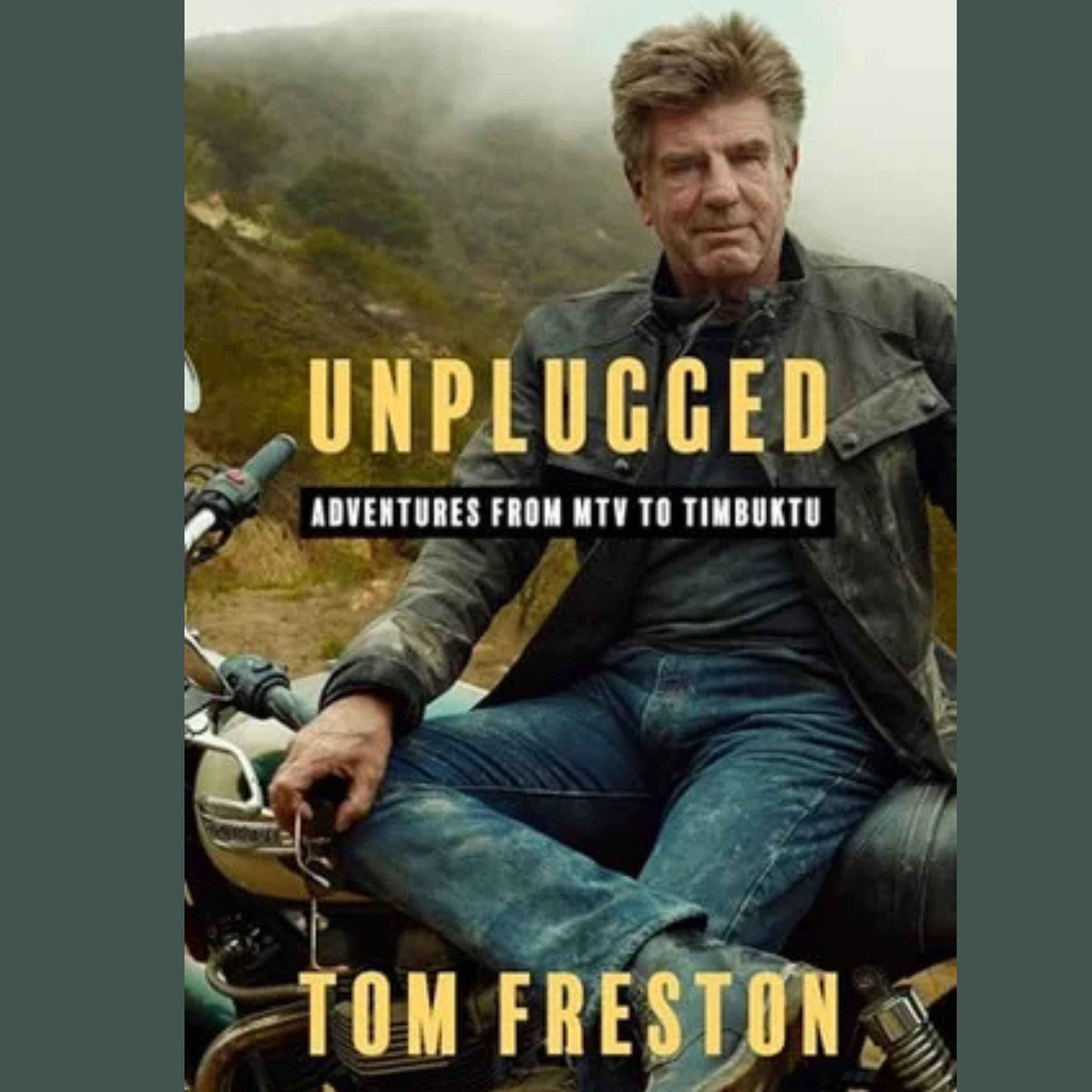
It's called Unplugged Adventures from MTV to Timbucktoo.
It is so good, such a wonderful read, and we're going to talk about it here.
Let's dive in.
Speaker 3So I'm here with Tom Preston, author of Unplugged Adventures from MTV to Timbuck two.
It's out now.
It is an extraordinary book.
I've got to say, this book reminded me of two books I really love.
One is The Man Who Time Forgot and another one called Barbarian Days.
And Barbarian Days is about like surfing and chasing this high of travel in a way.
And the Man who Time Forgot is about britt Hadden, who was the co founder of Time magazine, and the way that they were just so creative and inventive in the way they started that magazine and so like, there's something about both of those that really was inspiring to me.
But first I want to start with just who this book is made out to.
It's made out to your brother and your sons.
Can you tell me about why you dedicated to them?
Speaker 4Well, I love my sons, that's obvious and it would be true for any father.
And my dear brother who was my only sibling.
He was a couple of years younger than me.
He helped me out a lot in life, and he had a tragic death this last winter in the Caribbean.
He fell down a flight of stairs.
I mean, you never know when it hits you, and kind of went into a coma and never came out.
Speaker 3And what do you want your sons to know from this book about your life?
Speaker 4That their life is full of possibility, that they don't have to be trapped into one thing.
They can change lines and find things that are maybe suited for them.
This is a time of great change in the employment area, and a lot of businesses that have sort of lost their luster, new ones that are emerging, and they should not be afraid to start different chapters in their lives.
Speaker 3I love that, you know.
I love openings of books.
And the opening to your book starts with the chainsaw, which is just such an incredible image.
Can you can you talk a little bit about why you started your book there?
Speaker 4Well, I started my book because the opening scene is me getting fired after you know, twenty six years at this company, the company that started MTV and evolved into something so much bigger, to several incarnations, and the chainsaw was sent to me years earlier.
This is sometime in the nineties by the heavy metal band Anthrax.
You know, they were heavy metal band.
They'd all autographed it, and I used to get a lot of you know, gold records since that jacket, stuff like that.
But this was a useful gift.
And I was clearing out my office after I got fired.
I got fired in Los Angeles.
I came back to New York and I only wanted to take a few things that were sentimental.
But I thought besides the sentimental photos and whatnot, you know, I could use that chain, so I didn't have one, and it'd be a useful gift, So I put it in a banker's box with a few other things that was a small one, and made my way down the elevator to a lobby to exit.
Speaker 3You talk about the exit from Viacom and you merge there and they're just a sea of people waiting to say goodbye to you, and love for you is palpable.
And it's funny because one of the producers on this show worked at Comedy Central after you'd left, and she says, like people still talk fondly about the Tom Freston era, which is so sweet and also just a testament to like all the fun and excitement and things you brought there.
Speaker 4Well, we had a really unique culture, and I always put the idea of us having a creative culture and innovative culture really in the forefront.
Is as how I wanted this company to be, to edgy, to be you know, casual and non hierarchical and risk taking and a place at treasured creativity.
And in my exit, as CNBC said, there was like a thousand people in the lobby cheering me on, cheering me out, give me a Heroes exit.
I had thought I could just sneak out, you know, I have a bit of the imposter syndrome and a mask had been ripped off now and I was depressed, no doubt about it.
But this gave me a great lift off that still stays with me.
I remember getting down, getting through the lobby was all in slow motion.
Down the escalator into Times Square.
I too my stuff into a taxi got in rolled by the Broadway theaters, and I said, you know, that was a good way to go.
Speaker 3It's such an incredible career and obviously not where it stopped, because there are so many amazing things that go on after that.
But take me back to the beginning of your first interactions with TV and what meant to have a TV in the household initially.
Speaker 4Well, I kind of grew up in a Leave It to Beaver Way, if people out there remember what that was about.
That was sort of an all American post war family, two brothers, a mother, and a husband, stay at home mom.
I grew up in the fifties.
I was an early baby boomer, and you know, television came out black and white.
We had one TV and we would sit around and watch the shows of the day, and you know, I mean one of the great moments was in nineteen fifty six sitting around my family and seeing Elvis Presley on the Ed Sullivan Show.
I think there was like sixty million people watching.
It was like like the Beatles on The Ed Sullivan Show years later, but it was like a hurricane passed through the room, and my mother and father were disgusted.
My brother and I were elated, and we kind of knew.
I was in sixth grade, we kind of knew that we were going to grow up in a different world, with our own music, with our own clothes, with our own style, and we were sort of part of a new generation that was really setting sale from the prior one, the generation they would call the Great American Generation, the people who fought in World War two and so forth.
So television was always there, and I followed a lot of the shows, but I was in truth more interested in the music of the era and spent a lot more time listening to the early rock and roll radio stations.
Speaker 3You know, one of the things that I've heard a lot about the early MTV days is that most of the people were hired were people who hated television.
Did you fall into that category?
Speaker 4Well, when I got my job interview, they said, you know, we're looking for people with absolutely no experience in television, which is an unlikely line at a television company.
But it was the early stays of the cable programming era and we were sort of the tip of the speer out there with CNN, ESPN and cable was really just beginning.
It was mostly in rural areas, but they couldn't afford to hire people who worked at the broadcast networks.
There was really only three or four places to work in those days if you include PBS, and they didn't want anyone bringing along any kind of expensive production habits, so we had to sort of start from scratch, an event from zero, And in retrospect, it was a brilliant move to hire school teachers and people from radio stations and record companies and me I came out of eight years of living in Afghanistan and India, so it was a great mixing pot of eccentrics and people who wouldn't normally work in any kind of normal company.
And we were all on crusade either to you know, take Nickelodeon or MTV across the nation and infuse it with our own spirit and make it a very obvious counterpoint to the traditional program that was being done on the networks.
We were the early narrow casters, as we were known, just programming one thing to one audience as opposed to general interest stuff like ABC, NBC and CBS.
Speaker 3It's funny, there's like an old Garfield comic where they're joking about narrowcasting and talking about like a food network, and it's just a picture of lasagna, and I'm like a picture of like a refrigerator or whatever, and not really realizing that like a food network could be a massive thing, or a music network could have a tremendous influence on the world.
Speaker 4Yeah, we used to joke there could be a time network, there could be all kinds of useless networks.
But I remember a man from the music industry, Bob Krasnow, came to me once.
He says, I got the greatest idea in the world for you.
This was nineteen eighty nine.
I was then the CEO of MTV Networks, which ruled over you know, Comedy Central and pH one and MTV and Nick and I got the greatest idea in the world for you.
Says, food is going to be the new rock and roll.
Chefs are going to be the new rock stars.
I thought he was crazy.
I was too trapped in my own thing and didn't have the vision to think that this could possibly be true.
But sure enough, everything he said came out to be true.
And I missed the boat on that one.
Speaker 3Well, you mentioned that before where MTV you had been traveling abroad.
You've been in Afghanistan.
Tell me about you as a child.
Were you adventurous?
What were your thoughts about the world beyond Connecticut where you were growing up.
Speaker 4You know, we never went anywhere.
My father fought in World War Two and when he came back, he was in the Pacific Theater.
He didn't want to go anywhere, and we only took one trip and that was like sixty miles from our house to a mystic Connecticut where they had some smelly old whaling ships.
That was a day trip.
That was our only trip.
So I was sort of trapped there listening to radio from New York City and gradually buying some record albums.
And I was a young boy.
I was a stamp collector, and I was always fascinated by exotic stamps, from you know, Africa and Southeast Asia.
I'd have stamps from Zanzibar and all these faraway places.
And you know, that, mixed in with some shows of television about the French Foreign Legion in Algeria and so forth, really captured my interest.
But I had only been in two states, New York and Connecticut when I left to go to college on a bus.
Speaker 3And how is it that you end up working in bars and various vacation towns during and after college.
Speaker 4Well, I went to graduate school primarily to get out of the draft.
I went to business school, which turned out to be a blessing in disguise.
And when that was done, I realized I'd been eighteen years in school.
I could use a break.
And I had been sort of entranced by the literature of the Beats, which was all about you know, experience is a key thing in life, not so much money, travel around.
It's the world's greatest classroom, build up a body of experiences.
So that was one thing.
And then at the time, this was the late sixties early seventies, freedom was in the air.
Every other song had something about hitting the road or leaving the road.
Joni Mitchell had a big album out called Blue, which I loved and played incessantly.
It was all about her internet adventures, and my appetite was sort of wet and ready to go.
But I spent a year after school tending bar in various resort towns Aspen, Saint Thomas, and the Virgin Islands Martha's Vineyard that was known as sort of life on the circuit.
This was before mass tourism, so I really was lucky in the sense that I had a window to be in the Caribbean before the big cruise ships and the resorts that you never leave.
Martha's in her Nassen were nowhere near the lux vacation towns for billionaires.
They were mostly filled with hippies and outlaws.
Speaker 3Yes, hippies and outlaws, But you also ran into some incredible company when you were in some of these places, right like James Taylor shows off and some incredible musicians Sale.
Speaker 4Or Well, he was the big on Martha's Vinyard.
He had just sort of come out with his Sweet Baby James album, and you know, it was sort of the beginning of the year of the singer songwriters.
And his brother Alex, who I grew to New he had a record store in town and they had speakers outside and they would play incessantly James's two records all the time.
But I met James, I met Tom Rush, who was a folk singer, and some other people, and that would be something that that would be bumping into people for the rest of my life.
Out of the music business.
Twenty six years at this company, the company that started MTV, and we're evolved into something so much bigger.
Speaker 2We've got to take a quick pause.
Speaker 1But back with Tom Freston right after this break.
Speaker 3You know, on one hand you mentioned this like imposter syndrome, and on the other hand you've talked about how your dad is like really charismatic in this book and can talk to anyone.
Did you have a problem approaching celebrities and things like that or did you grow into a comfort with that.
How did that emerge?
Speaker 4You know, I was never a starstruck.
I find it kind of natural to talk to him, because, you know, if you were able to get beyond the managers and the record companies and talk directly to artists, you'd find out they didn't have this huge aura around them.
They were approachable and they liked to talk you'd talk to David Bowie, He'd want to know what books you were reading.
They'd be interested in you as much as you be interested in them, so you could really speak to them as if they were normal people, even though they might have been traveling in many cases with a big entourage around them.
But I would say, of the everybody I met, and over the years, I think I met every pop star, movie star, president, magazine editor and so forth, it was really the Beatles and David Bowie who were hitting shoulders above all else and sort of the musical pantheon.
But even them, even those two, I got to know a bit over.
Speaker 3Time, which just feels astounding the fact that you end up later in Asana with David Bowie and Paul McCartney and I want to talk about that, but before we get to that, I am so fascinated with My twin interests are like media and travel.
Right Like, I was an anthropology major, and one of the things I love is just your ability to pick up and go to Morocco and start traveling from there, and what drove you to just leave everything and do that.
Speaker 4Well, after I spent a year on the road on the circuit.
If you will you know, tending bar and resort towns.
I got a job in a big New York ad agency and I got on the fast track.
My first account was Gi Joe.
This is an anti war period, so we had to give him sort of an honorary discharge and make him an action man.
And then I had a variety of other accounts that were Procter and Gamble accounts.
That was a big piece of business for the agency.
And I was going to be assigned to charman toilet Paper, who had a big campaign at a time called Don't Squeeze, a charman with this character named mister Whipple, who research would show by nineteen seventy three he was like the third most known and admired man in America, which seemed incredulous.
But I couldn't really face the idea of selling toilet paper.
And an old girlfriend who was in Paris called me up and said, you know you can't do that, Tom.
Why don't you quit your job and come with me.
I'm going to go across the Sahara Desert, which sounded really appealing to me, as like impetus I needed.
I had five thousand dollars saved, so I was on a plane like a week later.
That sort of set in place.
One of the major decisions of my life kind of really freed me and I was able to go out into the greater world and learn a lot, build up my confidence, and learn things that would ultimately help me a lot in my business life.
Speaker 3You know, It's funny.
Before I went into magazines and my friends and I started a magazine, I had worked in advertising in India for a summer and I spent the whole summer making a washing machine ads and like, it was so creative and so fun and the people around me were just like brilliant creatives.
And on the other hand, to spend your whole life making people feel like one washing machine was better than other washing machine when they were the same washing machine was just like hard to imagine.
But it feels like you found a way to align your business and passions.
Starting with being in Afghanistan.
Speaker 4Yeah, in my travels, I ended up in Afghanistan and India.
India was sort of the holy Grail in those days in terms of traveling.
And I had met this girl in Greece who had lived in Nepole and she used to make clothes in India and Afghanistan and put them in trunks and take them overland and sell them like in beach hotspots in Greece and Italy in the summertime.
She had her own little vertically integrated enterprise.
So I fell in love with Afghanistan from the first day I got there.
It seemed like people think Afghanistan's a place at constant war, but this was a tail end of fifty years of what they called the Golden Age.
There was no war.
Afghanistan was steadily moving into trying to embrace a form of marginity, and the people were welcoming.
And the few tourists would see a poster there that said visit Afghanistan and see the world's friendliest people.
If you went, then that's what you would think.
But there were no cars.
You were totally there was no advertising.
You were totally removed from modern life, which was sort of intoxicating for me.
And there was just a grand you know, vistas and beautiful geography, and I developed a fascination with the people.
That really led to like a five decade love affair for me.
And I went on to India, which was like the crushing India of the seventies that was their most turbulent decade.
Sixty percent of the population was below the poverty line, and it was crowded, and I was fascinated, though I was just skimming the service, but I thought, maybe there's something for me here.
How could I start a business doing what that woman had done, scale it up and get a house in New Delhi and begin to live in a totally farign place and making design clothes and sell them to better stores in the US and elsewhere.
And what was a dream became a really solid, multimillion dollar business.
It grew faster than I ever had imagined.
I had to hire staff, open showrooms, warehouses, and it ultimately consumed me.
But in the end, having made a lot of money, I lost it.
All bad things happened.
We had the Russians invade Afghanistan, and then Jimmy Carter he put an embargo and huge tariffs on any clothing from India, much as like we see today with Trump, and my business went under.
I came back to New York after eight years of that, with my tail between my legs, looking for a new career in a new leson life in a new lane.
Speaker 3But what you accomplished was insane the way that you got these clothes into boutiques and larger stores.
But did you imagine yourself living the rest of your life out in Asia at that time or had you thought always that you'd come back to the States.
Speaker 4No, I thought i'd stay.
I mean, listen, I was young, I have anything to lose, and I felt so alive there.
Life is so vivid, and it was so different from the conformist Connecticut that I had grown up in.
And I had a circle of friends.
I had developed a lot, and there was a circle of foreigners around that were kind of like minded.
I developed a wide circle of friends in Afghanistan and India who were local.
I said, man, this is the life for me.
You know, I'm with kindred spirits.
I'm seeing new places.
I wanted to learn as much as I can about those countries, travel as far within them as possible, and go on to Southeast Asia.
And yeah, I thought this was it.
I had stumbled into something that, you know, met all my needs.
But it was not to be.
Speaker 3So tell me about your interview with MTV.
Speaker 4Well, when I got back, I I knew I had to start a new line of work, and I had bought the only self help book I ever bought in my life, What Color is Your Parachute, the premise of which was, you have transferable skills.
You can do different things in your life.
You can have different career paths, and you can transfer those skills, and you should align your skills again with something that you love.
And they had a whole little analysis to help you figure out what that could possibly be.
I had loved being in Asia and being there, but then this analysis show them my other love that I had some knowledge of was rock and roll.
How do I get in on that?
So I began looking for jobs in the music industry, which was, you know, at a difficult but interesting time in its evolution.
My brother lined me up with an interview at a company that was going to start a series of specialized networks.
It was called want Aramic Satellite Entertainment Company.
They started the Movie Channel, they started Nickelodeon, they had plans to start a thing called a music channel.
And my brother got me an interview there and they told me we're looking for people with no experience in television.
So I kind of said, they didn't even have television where I'd come from.
And I got hired as the head of marketing.
I mean it was amazing, amazing confluence of time because if it had been a month later or a month before, these jobs wouldn't have been available.
So, you know, serendipity kind of put me in the right place at the right time, and all those skills.
As I said earlier, that I had developed sort of my heart scrabble close to the ground life in Asia, where I worked really hard would helped me out immensely in my career and where I ultimately was, you know, the CEO of a creative enterprise full of eccentric people.
Speaker 3What was it about taking on the MTV job that might have felt intimidating and then what felt easy because you'd done it before.
Speaker 4Well, I had a lot to learn about the media business, but I did a lot of research.
I was always a good researcher.
I would dig up Wall Street Analyst reports.
People would send me about where this where the cable television programming world was going.
I knew the music, I knew in tuitively.
I had to figure out how we would promote this thing so people would want it.
But that almost became a fatacom plea because when I would go out to the early markets.
The few markets where we existed, people had seen MTV on television.
It had kind of they woke up one day and it was on their cable system.
They didn't have to sign up for it.
It was in the basic package, and it was so groundbreaking and innovative.
It's hard to imagine today that MTV was like that.
This wasn't like a flying car or something, but it was something radically different on television that had a whole new visual style.
It was music.
If you liked music, you know, you couldn't tear yourself away from looking at music videos, which were really a whole new program form.
At that point in time.
Most people had had no exposure to music videos before the advent of MTV.
Speaker 3I grew up an era where Nickelodeon had really found us footing and loved that and then graduated to MTV, and obviously it affected me a lot in terms of just like feeling like it was built for me.
Both those things, both those brands really taught me a lot, I felt like as just a consumer.
But then watching the way India was affected by MTV and the way that it sort of over the course of a summer changed how people dressed, how they thought about the world.
It just showed me the power of the medium and just an extraordinary way that I'd never thought about before.
Speaker 4Well, you know, with VH one and then later Comedy Central, we kind of built a business that was all about kids, teens and young adults, and we had a sizeable sort of research cohort.
We would try and get into the minds of these people and find out what could we do that these people would find interesting, What could we do to be a step ahead of them, And really, if we could make that connection with the audience and build up loyalty in an era that was going to have more and more choices and be more and more competitive, if we could solidify that relationship and continue to refresh it, you know, everything else we needed in our business would kind of fall into place.
So we really kept our finger on the pulse and we had a lot of creative people doing that.
And when we went to India, which was a thrill for me to be back back on the street hawking something new in India, which was just coming out of an era where they had like one TV channel called Dordischan and now satellite and cable were taking over India, making it for a long time the most vibrant television market in the world.
It was a thrill to hire young creative Indians who could put together their own version of what they thought an Indian MTV could look like.
And yes, that and other channels really had a huge cultural impact on the country.
Someone did a research study once saying that soap operas produced in what was then Bombay, in sort of middle class neighborhoods, when they were bound by satellite into Indian villages, which was where like seventy percent of the population lived, had a huge impact on women in terms of their desire to see their daughter educated, their desire to kind of shrink, their desired family size, aspirational things about what to wear and dress.
And they said that like in one month you could get what normally would have been six months worth of social progress.
So it was interesting and I believe that I saw that with my own eyes.
Television is a great cultural influencer.
Speaker 1We've got to take a quick pause, but back with Tom Freston right after this break.
Speaker 3One of the things that's so fun about this is that the book is full of adventures and not just the travel adventures, but also the ones at MTV.
And you talk about chasing down David Bowie to do a campaign.
Will you tell that story here?
Speaker 4Sure?
Well, I wanted this book to be I didn't want it to be a business book because there's so many of those.
I thought, well, if I could.
The pandemic is when I wrote it, so I had time on my hands that if I can make this more of an adventure story, it'd be interesting to me.
And let's pick out ten to fifteen of my favorite adventures, if you will.
One involved how we kind of saved the network from the dustbin.
We had got into like two million homes.
But we found out that the cable operators, this is in the early eighties, who had geographic monopolies everywhere, they didn't want to add MTV out to their cable systems because they didn't believe one people would want to watch music on television.
Two they want to pay us ten cents a month because that would cut into their profit margins.
And three they didn't like the kind of music we were playing anyway.
They were more like Elvis Presley fans.
So we deduced that in places where we were the fans were very avid and Rabbit.
If we could know harness them to demand that they cable companies they had would add MTV to their systems, it would conceive it would be the only thing that could save us from going out of business because we would use the customers to basically demand it, and then we would roll out across the country, which we did.
So we ripped off an old campaign called I Want My MAPO, which Vermont kind of quasi oatmeal manufacturer had used to reach the young baby boomers to torment their parents so they would buy this cereal instead of corn flakes or something which worked.
So we figured if we did that, it would help if we were legitimized by having the characters and the ads be rock stars.
So we got Nick Jagger, we got Pete Townsend of The Who, David Bowie, Hall and Oates the Billy Idle.
I mad go down a list because I was involved in making those advertisements for a couple of years.
In three years, we basically wrapped up the whole country market by market.
But in the case of David Bowie, which I was assigned to do, is like, well you get him to do this, and we had found out that it was easier to reach the artist.
I called his manager and she said, well, he's skiing in Stott, Switzerland.
He'll do it if you want to go over there.
It won't take long.
So he said, yeah, I got a crew.
We jumped on a plane.
We flew to Geneva, we got on a train to Stot.
We went out to this little hillside outside the main ski area and met David and he was looking trim and in a good mood and blonde hair, and he was in his Let's Dance era and he wanted to ski down.
He knew what he wanted to do.
Ski down and then swish at the bottom and say I want my MTV.
We did a few takes.
We said we'll take that back and post production will put the logo in there.
And he wanted the logo to be on skis.
So when it was finished he said, anybody want to go skiing or hang out?
And you know, I had nothing else to do.
And then at the end of the day he said, hey, Tom, you want to go for a sauna later at the Palace Hotel, which was a Grondam hotel in Stadd.
I said sure, So I went back to our hotel tell where the crew was staying, which was a couple of levels above a youth hostel.
I said, I'll see you losers later, and I went to the spa and saw David and we got outfitted in our towels and went into the sauna.
There was only one other person in there, and he was high up on a platform, and it was Paul McCartney.
So here I am, this kid from Connecticut and now in a sauna with my two biggest heroes, you know, and wrapped in a towel.
And they made it very comfortable for me.
You know, we throw water on the fire.
They wanted to know all about MTV, which was easy for me to talk about.
You know, it was not intimidating at all.
And I've been dining out on this story for years.
Speaker 3That's just an incredible story.
And you say that one of the things that's important to do is make a lot of mistakes.
Can you tell me about some of the mistakes at MTV as you were trying to reinvent yourself and what you learn from them.
Speaker 4Well, you know, we took a lot of risks, so we put a lot of shows on the air and they just wouldn't work.
So they'd disappear, they would die a rapid death, and we back with something else that it would work better.
It was the same with Nickelodeon and VH one and whatnot, and we certainly had our share of turkeys.
I remember we had an animated show we really liked.
It was by these guys in Scandinavia made it called The Grunt Brothers of All Things.
We put that on the air.
We thought that was going to be really cool and great.
It was not.
So Somewhere someone sitting around with six episodes of that in a drawer.
Maybe they'll come back one day.
I don't know.
But why I encourage people to take risks, and that involved trying stuff because you never know what's going to work.
I mean in the movie business they always used to say, you know, the most movies fail.
On television, most shows don't succeed.
We had a higher batting average in a lot of places, but still most of the stuff we tried didn't work, and it would just kind of go away and onto the next thing.
Speaker 3How did you know when to put more money into something and when to keep the reins really tight and allow creativity to change a format or build something new.
Speaker 4Well, we always had a budget we had to live under, and we dellocate money to certain things in development, and if we saw something was working, we'd put more money into it.
Sometimes you had to put up a lot of money up front, and that was sometimes, you know, kind of less in our ability to do things.
For example, at one point we had decided, at one point, if we took ten percent of the one hundred and sixty eight hours a week we were on and did things other than straight music videos, we can make MPTV a bigger place by being about some of the things that pop culture was about, something that the music was about, be that fashion or sports, or live events or movies.
And at one point we someone came in and said, you know, Fox Network has started.
They're targeting younger audiences.
They have these great popular soap operas.
Why don't we try doing a soap opera but make it a little edgier, a little more gritty.
And it turns out for us to do it, we would have had to hire writers.
They came to meet this fellow, Doug Herzog came to me with the presentation, and we could do a soap opera, produce something every day and we'd have to have writers and regular actors.
And I said, you know, this is a great idea.
We probably could do it, but we don't have the money.
So they came back.
He went to these producers Una Murray with their names, and they came back and said, well, okay, we were good at post production, so why don't we just rent Aloft and Soho and put some hidden cameras in there and get like six to eight people, you know, cast them real regular people, not stars, and have them live together and let's see what happens.
Because we knew that young people love to see cues from people their age of how they were living and what they were thinking.
You know, every time we turned the cameras on the audience, they really enjoyed that.
So that was the birth of the Real World.
And that started and kicked off really a whole movement towards reality television, which doesn't always bring out the best in American character, but nonetheless was a huge hit.
And it was always driven by the fact that people wanted to see what kids their own age were doing.
The problem was, as he went on, I mean the early cast, they had no idea what it was going to become.
They went into the show no pretensions or errors or intentions.
But then later on, as they realized all these people became famous.
When you began to cast people, they would pretend to have more outrageous personalities.
So these shows became more exaggerated in terms of, you know, the norm of human behavior, but the audience ate that up as well, and then they were as different category as a reality show, celebrity reality shows.
We kind of kicked that off with the Osbournes following Ozzy around with Sharon, his wife and the kids, and then you know, they came along and Dey's contests like Mark Burnett did with The Survivor, and these things are still on the air.
Speaker 2I'm curious.
Speaker 3You've done so many things that have influenced so many people and created something brands from like Nickelodeon, MTV, Comedy Central and then Vice and television stations in Afghanistan, and you've been involved in all sorts of incredible charities as well.
What do you think is closest to your heart in terms of all the stuff, like what is the show or the production or the thing you made that feels most special to you.
Speaker 4Well, there were a lot of successes in my media career, and I was most proud of the management team I assembled, people like Judy McGrath, Thug HERZG, Bill flannag and Van Toffler, Jerry Labor and Herb Scannal.
I mean, we had like the best management team in the business, unbelievably talented in terms of creativity.
They also had business acumen and we were able to for year after year after year after year create and put out groundbreaking, genre breaking shows.
And just being around those people was a thrill.
I mean, they really deserved the bulk of the credit of the stuff be invented.
My job was sort of protect them from corporate overseers outside world old and to give them the ability to be able to execute on what they thought, and of course I'd be part of the process.
So that was highly enjoyable to me.
You know, starting out in the animation business is a great example that was a thrill.
These days, you know, I'm really involved with work I've done in the sort of do gooder category.
My long relationship in Afghanistan ended up with me going back there after I was fired and helping launch the first television stations, which were really a civilizing force and what they now called the American occupation of twenty years, which we really badly bungled, But that's a whole o their story.
But what wasn't bungled was the civilizing effect of the medium on the Afghan population and making them more tolerant and more connected to the outside world, more nuanced, more aspirational, and things they wanted to do in their personal life.
And then in Africa, I work with this thing called a One campaign that's about justice and where you live shouldn't decide whether you live or die.
And we have fought on the global health front for preventable diseases, influencing politicians to swing billions of dollars into programs that have saved millions of lives.
And I love going to Africa and seeing the impact of that.
And I love going to Africa just to go to Africa and hear the music and you know, partaking the culture there.
And by twenty fifty, one out of four people on the face of the Earth is going to be African.
It's it's really a place with a totally exploding population and dynamism, and it's going to be the continent to watch.
Speaker 3Oh thank you so much for this time.
I really appreciate it.
Such fun talking to you.
Speaker 4Great to talk to you, magneshow was really nice.
Thank you.
Speaker 1Well.
That does it for today.
Big thank you to Tom Preston for speaking with us.
His book Unplugged Eventures from MTV to Timbuktoo is out now and you can get it wherever you get your books.
We'll put a link to in the show as well, just to make that process faster for you.
It really is a terrific read.
Also, if you like the show, be sure to follow us on Instagram or Blue Sky.
Speaker 2We're at Part Time Genius.
Speaker 1We will be back next week with another brand new episode, but in the meantime, from Will Dylan, Mary, Gabe, and myself, thank you so much for listening.
Part Time Genius is a production of Kaleidoscope and iHeartRadio.
It is hosted by my good pal Will Pearson, who I've known for almost three decades now.
That is insane to me.
I'm the utter COO host Mangeshatikular aka Mango.
Our producer is Mary Phillips Sandy.
She's actually a super producer.
I'm gonna fix that in post.
Our writer is Gabe Lucier who I've also known for like a decade at this point, maybe more.
Dylan Fagan is in the booth.
He is always dressed up, always cheering us on, and always ready to hit record and then mix the show after he does a great job.
I also want to shout out the executive producers from iHeart my good pals Katrina and Norvel and Ali Perry.
We have social media support from Calypso Rallis.
If you like our videos, that is all Calypso's handiwork for more podcasts from Kaleidoscope and iHeartRadio.
Visit the iHeartRadio app, Apple Podcasts, or tune in wherever you listen to your favorite shows.
That's it from us here at Part Time Genius.
Speaker 2Thank you so much for listening.