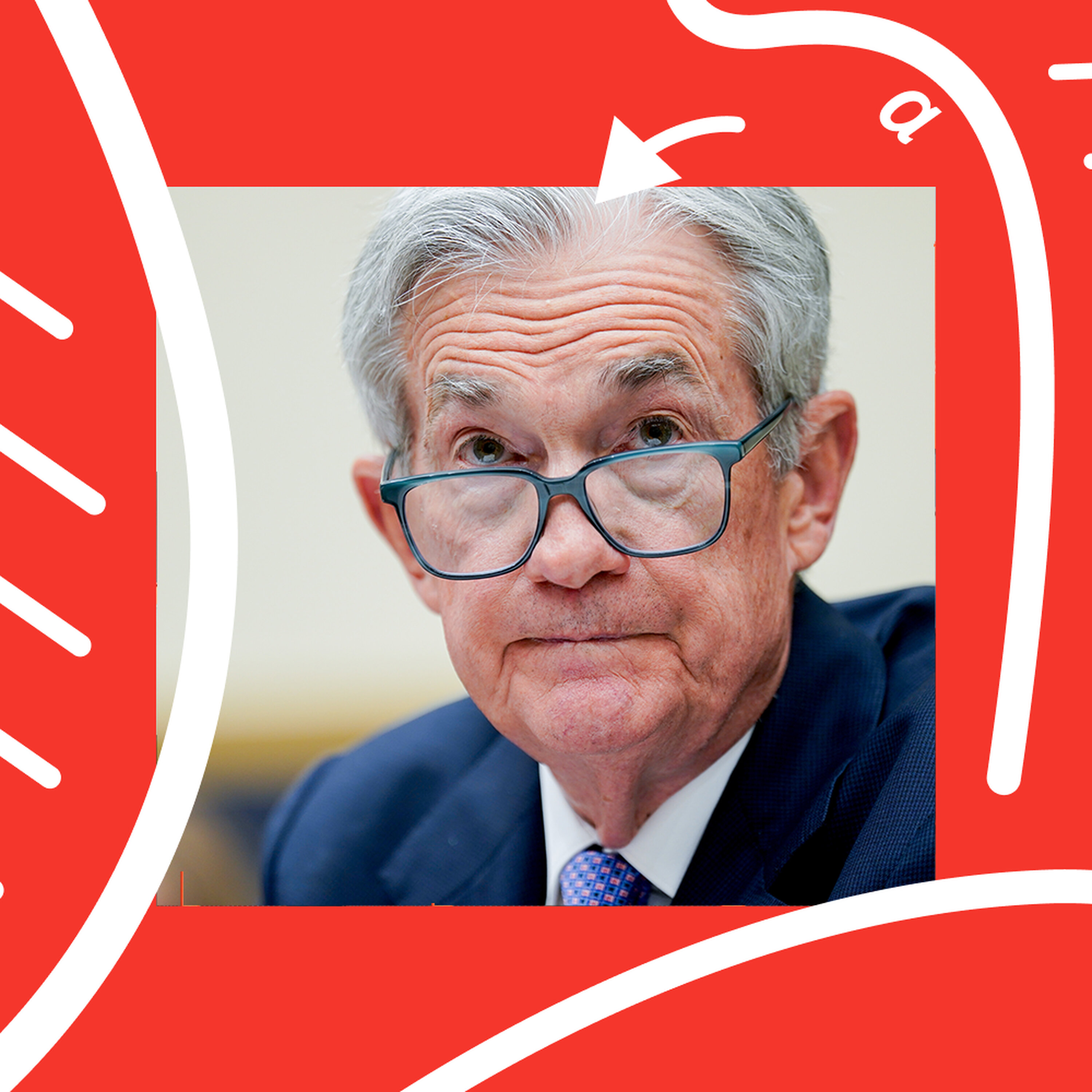
How the Powell Probe Could Blow Up Trump’s Fed Plans
Episode Transcript
Bloomberg Audio Studios, podcasts, radio news.
He's billions of dollars over budget.
Speaker 2So he either is a competent or is crooked.
Speaker 1I don't know what he is, but he does it certainly doesn't do a very good.
Speaker 3Job on the verge of naming his own Federal Reserve chief.
The Trump administration has taken one more shot at the person in the job now and in the process maybe triggered a Washington backlash that could derail his whole campaign to tighten control over the Central Bank.
We're recording this on Tuesday morning, Washington time, and that is all that everybody in DC and financial markets is talking about.
The Administration's renewed attack on Chairman J.
Powell and the FED matters, because, for better or worse, America's Central Bank is still the central cog around which much of the global financial system revolves.
If it's under attack, then to some extent, the global system looks less secure.
But that part of the story we'd heard before.
What's new is that the broader reaction to this latest assault from Republicans in Congress and even some of the president's own cabinet may just have revealed a red line.
A constraint on the relentless expansion of presidential power since Donald Trump returned to office last year.
Oh yeah, and it also turns out there's a limit to j.
Powell's patients.
Speaker 4This new threat is not about my testimony last June or about the renovation of the Federal Reserve buildings.
It is not about Congress's oversight rule.
The Fed, through testimony and other public disclosures, made every effort to keep Congress informed about the renovation project.
Those are pretexts.
The threat of criminal charges is a consequence of the Federal Reserve setting interest rates based on our best assessment of what will serve the public, rather than following the preferences of the president.
This is about whether the Fed will be able to continue to say interest rates based on evidence in economic conditions, or whether instead monetary policy will be directed by political pressure or intimidation.
Speaker 3I'm Stephanie Flander's head of government economics at Bloomberg.
Welcome to Trumponomics, the podcast that looks at the economic world of Donald Trump, how he's already shaped the global economy, and what on earth is going to happen next.
President Trump took his fight against Federal Reserve Chair Jaypowell one step further this week when federal prosecutors began investigating Power for his role overseeing renovation work being done on the Central Banks headquarters.
What was different in this time, as I've mentioned, is that Pale got mad, and almost simultaneously so did senior Republican lawmakers on the Senate Finance Committee.
One way or another, that reaction from senators and from Powell himself could make it a whole lot harder for the President to put more of his people in charge of us official interest rates.
Could also make it more difficult for the people who are there now to support the lower interest rates the President so wants to see, even if the economy is calling for it.
So possibly not such a bright move on the administration's part, which might be why the President is distancing himself from the Department of Justice's decision to serve those subpoenas, why even the Treasury Secretary, Scott Bessant has said he disagrees with them.
A lot to unpack there, joining us to discuss it all.
From DC Senior Washington correspondent Slaiah Mosen, author of Paper Soldiers, How the weaponization of the dollar changed the world order.
Welcome Selaia at short notice.
Thank you very much.
Speaker 2Great to be here, Stephanie.
Speaker 3And Trumpenomics regular and former FED official Anna Wong, chief US economist for Bloomberg Economic.
Anna, always great to have you.
Speaker 1Great to be here.
Speaker 3So Leah, let me start with you.
This effort by the Department of Justice, which obviously we're reading as yet another kind of assault on the FED and on Chairman J.
Powell in particular.
How quickly has that unraveled?
And what surprised you about the last few days.
Speaker 2I found it very surprising that senior White House officials were shocked by the subpoena from the DOJ.
Any president, particularly President Donald Trump, has his own governing style.
He likes to be the one making the decisions.
He doesn't like those kinds of surprises.
But it seems like his officials, his staff now are trying to, I don't know, maybe impress him by taking action unilaterally and say, hey, look what I did for you, And this one has supremely backfired.
I thought it was really surprising that Trump said to NBC News he did not know about this.
Now there's a few ways to read that, because at the end of December, Trump did say, oh, I might file a lawsuit against J.
Speaker 3Powell.
Speaker 2Maybe he had heard it might be coming.
But it seems very clear that senior White House officials plus Donald Trump did not give a final sign off to this action.
Speaker 3He has often after the fact, distanced himself from some of these slightly more contentious things that the DJ has done.
But you think this goes beyond that they genuinely were surprised.
Speaker 2I do.
I think it's reasonable and appropriate to apply that kind of skepticism when you hear that from anyone in power.
Always questioned what they knew when they knew it.
But in this situation, Trump has such a keen eye turned toward what he wants to do with the Federal Reserve.
He talks about it frequently.
He likes to tease it out.
He has really enjoyed this apprentice style public auditioning process for the FED chair.
He likes the attention.
He likes that markets are so curious, hanging on each and every turn.
He would not want to take his eye off the ball, particularly when it comes to markets.
He really watches how markets moves.
He understands these things.
He talks to CEOs, banks, CEOs industries, other companies.
He knows that this is a big one.
In his officials, his senior economic team, they also know how keenly he's watching this.
You wouldn't see Treasure Secretary Besant take a step like this without making sure that the commander in chief new.
Speaker 3And indeed Scott Bessant has apparently, at least we're hearing from Axios and others, he's said that he thinks this is a mistake.
Speaker 2Yeah.
He told Trump, according to Axios, that this whole thing has messed up the somewhat organized process that he had put in place to keep markets calm, to keep Trump focused on the larger target when it comes to choosing a fed chair replacement for Powell coming up in May.
Since June, we've seen a somewhat organized process if we have eleven candidates and then it's going to be whittled down.
He's been communicating everything working pretty much, and locks up with Trump and then Poulty comes in and orchestrates the firing of Lisa Cook when Scott besson is not in town.
That's a matter of public record and also what you can piece together from what we know publicly.
On Friday, when the DOJ sent the subpoena notices.
Bessant was in Minnesota, so once again he was not in town when this move happened.
He found out later.
Speaker 3And we should explain who Bill Pulty is.
Speaker 2So Bill Poulty is the Federal Housing Finance Agency director.
It is not usually such a public role.
It's not a senior cabinet officer level like a Commerce or Treasury secretary type role.
But he has really come out as this bulldog for Trump on a lot of issues, from housing affordability in obviously the Federal Reserve.
And this is kind of how Trump works.
He likes to have his bulldog there, a disruptor Trump.
For a long time, we've been hearing from sources that he really likes Paulty no matter how much have he's wreaking, how mad Bussont might get it Pulty, Let's just remember that Busn't a couple of months ago had a run in with Pulsy over housing policy and a couple of other things where maybe he was stepping on Treasury's toes and Busn't said, let's stop outsiding in a be here.
So it's a tense relationship, but Trump enjoys this kind of theater.
Speaker 3Anna, I couldn't help thinking of you as a pretty long time Fed official in various capacities before you came to us.
What do you think when you saw that really unprecedented video message from Chair Pale the weekend?
Speaker 1I thought that the Trump administration's DOJ probe has awakened the dragon.
Powell has a usually very calm demeanor.
He doesn't get ruffled by a lot of things.
Speaker 3He was pretty restrained last year when they were touring in their hard hats, touring the renovation, and Powell was picking Trump up on his numbers.
Speaker 4So the two point seven is now three point one.
Speaker 1Yeah, it just came out.
Speaker 4Are you including the Martin renovation?
You just add our entire capital?
You just you just added in the third buildings?
When that is that's a third building.
Speaker 2It's a building that's being built.
Speaker 4You know, it's been it was built five years ago over as part of the overall.
Speaker 1So just looking at the past year, he has refrained from commenting or pointing out that the administration interference into monetary policy.
But this time you could see that he has lost his call.
Speaker 3And Seleia, the story we had today was that the whole effort was going to potentially derail the president's efforts, in part because this is going to make it much less likely that the current chair J.
Powell, leaves his place on the board when he stops being chair in May.
That's what we're hearing from really anyone who knows Powe well or as close to him.
We had our own columnist, Bill Dudley, former New York Fed chair, say that on Bloomberg in the last day.
Is that your belief?
Speaker 2Yeah, you know.
And this is something that administration officials are also worried about.
All last week.
I was hearing from officials and sources, people inside and outside the administration that what if Powell doesn't leave.
He hasn't said he's going to step down in May.
Traditionally a chair will announce it, he will actually step aside.
Powell had this one piece of leverage, and he has used it.
It seems in ways that the Trump administration didn't quite foresee, and maybe Powell himself didn't see just how important and significant it was to just keep that to himself.
Looking at the tea leaves, talking to people close to Powell, it seemed like he would leave in May.
He was just kind of holding that little card in abands in case he needed to play it.
And now not only could he play it, the subpoena could backfire so significantly that not only could Powell to side.
Oh fine, I'm going to stay.
I can sit quietly in my office at the headquarter and not oversee any big subcommittees, not the chair, and I can just go in on FOMC meetings and cast my vote and make sure I'm a guard rail against any political interference.
He could also end up staying chair for longer, because we're hearing now from Congress they are finally standing up.
We heard from Senator Tillis.
It was pretty significant that he said he will not confirm Trump's chair pick unless this is resolved.
We've heard from french Hill on the House side and other senators on the Banking Committee that are Republicans saying and realizing they need to protect the FED.
So if there is no chair that has been confirmed by the Senate, that means Powell stays on until there is one.
Speaker 3And do you also think this is going to make him less likely to leave in May?
Speaker 1I thought that there are two paths that this could play out.
Not leaving and May is potentially one but not my baseline.
And the second one, rather is that think the more consequential unintended consequences of this is that Chris Waller could be on the ascendants as the next FED chair.
Speaker 3That's Chris Waller, who's been on the Board of Governors since twenty twenty, and he's one of the considered to be one of the three main candidates for the chair position.
Speaker 4That's right.
Speaker 1Why I didn't think that Powell would leave, He's just tired.
He has been at the FED since twenty twelve.
You could tell in the video that on one hand you can see outrage, anger, but on the other hand there is weariness.
He's just not the kind of confrontational person who would sit in a boardroom in every meeting and just passively sabotage the next person.
He's just not that type of person.
He's either gonna openly fight or leave.
But on the other path, why I think Chris Waller is ascendant is that given the voting situation that in the Senate, we have the number of Republican voices from the Senate that has said that there are potentially going to oppose any confirmation of FEED chair nominees, suggests that the person who now who can get through and whose views aligned with Trump and who the financial market really respect as Chris Waller.
And also if it were Chris Waller, Powell would probably be resigned to leave, knowing that the FED independence would be safeguard for sure.
Speaker 3Celia, it seems odd that he would stop being chair but still be on the board.
Remind us how that works and how many places the president theoretically had to play for places he was potentially going to be able to fill on that key committee and the FED, and how this is how this might be affected.
Speaker 2Looking at tradition, Yes, it would be odd for a FED chair to no longer be chair but hold onto his governor's seat, But that's not the weirdest thing that's happened in twenty twenty six in the first week.
Speaker 3And I guess we should say people come into their positions as governors and that's kind of independent of the role they hold.
So if they have to be on the board, to be a vice chair of Banking Division or to be the chairman of the whole FED, but their sort of seat as governor operates separately and on a different timetable.
I noticed there's also Michael barrs he's not technically supposed to finish his term until twenty thirty two.
He was expected to also go this year, but there's some question that he would stay for similar reasons.
Speaker 2Right even, you see the seat that Stephen Myron, who is on leave from the White House as head of the Council of Economic Advisors to Trump as a fed governor, filling a seat left empty by Adrianna Kugler when she resigned under some six cloud back in August.
That term expires in a couple of weeks, and he could roll over and stay or be reconfirmed Powel's seat.
Right now, as governor, he has another two years, but his time as chair expires in May.
Of course he could stay if there is no sitting chair.
If you look at the rest of the board.
Michelle Bowman Chris Waller both were nominated by President Trump earlier during his first term.
Lisa Cook.
We will hear whether the Supreme Court will uphold her bid to stay on the board.
Otherwise that's an open seat.
We don't know what will happen to the Stephen Myron seat, if he will be asked to stay in that slot, or if that becomes the Kevin Hassett slot, and then of course the whole administration, including Trump.
We're just wondering do we also get the Powell slot to fill.
Speaker 3This threat from Senator Tom Tillis, which I noticed came out almost moments after his statement came out moments after the FED released its video, which to those on the outside looked a bit like coordination.
But who could possibly comment but that threat to not confirm any new Trump nominees to the FAIRE until this potential criminal case is resolved.
How seriously do you take that?
We haven't had a lot of fighting back by Congress in the last year.
Speaker 2No, we really haven't.
And Trump doesn't seem to care about Congress, and he's been able to steamroll them on a lot of things, including possibly his activities in Venezuela.
But what we're seeing is Tillis.
Yes, he came out very quickly, very strong.
It was a big deal, but just a reminder that he is retiring.
So yet another politician who has.
Speaker 3You know, terribly brave as they Yeah, he's another.
Speaker 2Praise that probably isn't for air, but very brave for standing up to Trump.
Okay, let's take it.
Who we haven't heard from Yanda.
Senator Tim Scott.
He is the chair of a Senate banking committee, a powerful Republican in the Senate.
He hasn't said anything that's not completely uncharacteristic.
He does tend to stay kind of mom on issues.
But Tillis will need some support.
But even others who, as they say, they have disagreed with power and think he's a terrible chair still say, oh, but I don't think he's a criminal.
And then we heard from House Republican French Hill.
I'm sure he doesn't.
He has doesn't have a role in confirming the next chair or FED personnel, but he is a very strong voice on the Republican side, and he said, this isn't what the FED needs to be focused on.
Is someone going to be indicted and thrown into jail.
They should be focused on the economy.
Speaker 3Anna.
Of course, one of the key goals that the President has in this whole effort one is to just control the FED as much as he can.
But in theory it's also a means to the end of lowering interest rates.
So you know, how does this potentially affect that decision?
Because you know, it did seem like things were kind of falling into place, you know, lower interest rates this year, regardless of who was head of the FED.
So does this make things difficult for people who are making that decision inside the Fed, whether they're appointed by President and Trump or not.
Speaker 1Yes, definitely.
Before this incident, the data was cooperating right.
So for example, we just had a CPI release which was surprisingly low.
This is following another CPI report that's very low, and Powell himself said in December that he expects core goods prices to peak in the first quarter and for tariff path through to have peaked.
So inflation is definitely improving.
And on top of that, we have a productivity boom that's happening in the second half of twenty twenty five.
We estimate that non farm productivity is likely going to be a run at a pace on average of five percent, and that basically helps with the inflation trajectory as well.
So if everything just let the data play out, long term rates would have declined this year and now if the administration won't back down from this attack.
But there's a risk of risk premium rising on the perception that FED independence is being eroded, and also internally there might be some fears that this kind of assault could broad into other Fed of OMC officials who are perceived as hawkish.
Speaker 3Just to sort of unpack that a little bit, so you're saying, whoever's Fed, and we know there will be a new FED chair, whatever else happens, and they will be appointed by President Trump, and there will have been all of this lead up to that appointment.
It becomes harder for them to convince the financial markets that they're doing something for the right reasons when they cut rates, and long term interest rates could still be higher even though they've cut short term rates.
But you're saying, there's that credibility problem with the markets, but there also is potentially a credibility or a persuasion problem internally with FED officials.
That's right, And how much do you think they're feeling that now?
You've talked on previous programs about how important it was going to be for say Kevin Hassett to spend a few months doing the hard work internally to bring people around.
Do you think that is just now a lot harder.
Speaker 1Well, in this scenario where Powell's stayed on long after his May expiration as chair, I think it will be harder even for Powell.
And Powell has played a critical role in the lowering of rates last year.
Had it not been for his leadership, we would not have seen that twenty five bibs cut in December.
So Powell is trying to do the data dependent objective thing as opposed to you know, the majority of the FOMC who are hawkish and who are regional presidents, who who despite the data, are leaning on concerns about upside risk to inflation.
So I think this incident makes it harder for Powell to play that role that he has been playing in the last a year.
So basically the administration is taking out a dove.
Speaker 3That is interesting.
So you think interest rates are lower now than they would have been under another chair, Yes, yes, because other chairs might well have been more concerned about the inflation risks.
Speaker 1Yes, that's right.
It's either Powell, Waller, Bowman, or Steve Myern.
These are the four doves on the committee.
And out of these four, Powell and perhaps Waller have the soft power to persuade the other hawkish regional fed And so now this formula has broken down, Powell has lost this call.
So what's up in the air.
Is whether he can still be that really objective, honest broker between the Hawkish and the Darvish folks on the committee, or would he rather be like I have had it, I'm going with the Hawkish faction because right now we need to safeguard the optics of FED independence, even if the data would have pushed him to cut further.
Speaker 3Finally, to Usulea, we're focusing on the independence of the FED and what it means even for monetary policy, which is what we should do because we're Trump and Noomics.
But I did mention at the start that for many people this is also about a kind of broader question of are there going to be any limits to presidential power in this administration?
And are there red lines that the president finds he can't cross in trying to extend his purview as president.
Over the months, when I've talked to people, even inside the FED, they see themselves as partly that this battle is about the independence of central bank, but also about kind of the rule of law in the US.
Do you think some of these people who are concerned about this decision is that part of their justification or is there just a special case when it comes to the Central Bank.
Speaker 2I think it's both, or I wonder if it's both.
It's really something that in the week where the Trump administration blocked for their investigation of the shooting by an ICE agent of an American citizen in Minnesota, the same administration as saying, we're going to investigate Jerome Powell, and then we also.
Speaker 3And the second of those is what's really caused the most republican outright and at.
Speaker 2The same time, in an interview with The New York Times on Wednesday, I believe it was last week, not even a week ago, he said to them.
In a question about Venezuela, which also happened just in the last couple of days.
He was asked about Venezuela, what are the limits?
He said, It's not international law, it's my own morality.
And I think we should expect him to apply the same rubric when it comes to the Central Bank.
It's not laws necessarily, it's what he himself is or isn't willing to do.
Speaker 3But it's also about what others around him, and specifically people in Congress.
And I guess we might even see this week people in Supreme Court judge is appropriate for a president?
Do you think this has signed nilled an overreach in his sort of broader expansion, or as I said before, is it just about the Central Bank?
You can take everything else, but protect the Fed.
Speaker 2Let's see what the Supreme Court says.
I feel like this is we have to protect the FED because that's our economy.
That's inflation.
That's how much the purchase and power of every American domestically and internationally.
And when that goes away, every politician, every lawmaker, every administration official knows that's when voters just a revolt.
And we've seen that in recent years.
We're looking at a generation who you know, I was born in the eighties.
I only learn about inflation and the double digits from my parents.
We haven't experienced this, so people are going to get very mad.
At the same time, you know, the Federal Reserve and those who support the independence of the Federal Reserve should feel fortunate that we have J.
Powell as the chair right now in twenty twenty six.
He is a lawyer, but also he has deep decades old relationships on Capitol Hill, and I I think that is really paying off right now.
Not every predecessor of his spent as much time cultivating those relationships on both sides of the aisle.
Speaker 3Wow, Okay, we're going to maybe see what it takes to see off an effort like this from the Trump administration, although, as we said at the start, one that many members of the Trump administration, including the President, seemed to be quite keen to distance themselves from Anna Wong.
Thank you so much, thanks for listening to Trumpomics from Bloomberg.
It was hosted by me Stephanie Flanders.
I was joined by Selaiah Mosen, Senior Washington correspondent for Bloomberg News, and Anna Wah, chief economist for Bloomberg Economics.
Trumponomics was produced by Summer Sadi and Moses and with special thanks to Bob Bragg.
Sound design was by Blake Naples and Kelly Garrett.
To help others find the show, please rate and review it highly wherever you listen to podcasts.