·S15 E18
Caged
Episode Transcript
I'm Pete Wright.
Andy NelsonAnd I'm Andy Nelson.
Pete WrightWelcome to the next reel.
When the movie ends
Andy NelsonOur conversation begins.
Pete WrightCaged is over.
Pile out, you tramps.
It's the end of the line.
Alright.
We're watching Caged, which is another in the litany of films that celebrate Andy's fetishization of putting women in prison.
Andy NelsonIs that my thing?
Yeah.
I think it's your thing.
I think it's funny that last week we talked about, no.
Not last week.
But for our member bonus episode, we talked about the gunslinger.
Or no, the gunfighter, which came out this same year nominated for an Oscar.
And that's the one Roger Corman worked on.
Not this No.
Pete WrightThis one's too serious.
This one takes itself more seriously.
Andy NelsonRight.
Right.
Yeah.
Yeah.
This is part of our platinum performances, the 1950 best actress Oscar race.
And this is the the third in this most recent series, but we've already talked about All About Eve.
So we're getting close to the end of this.
We will have very soon talked about all of the actresses nominated this year, Pete.
We're getting close.
Pete WrightI I can almost feel it.
Almost feel the complete resolution of this long podcast arc.
Andy NelsonYes.
I know.
Yeah.
And then after this, we get to go to 1925.
It'll be a journey.
Pete WrightI know.
Do you think we'll ever hear a movie that I picked for this We've we've done we did the aura.
The one.
We got one.
Andy NelsonWe did one movie for you.
I need to throw something in there to placate you a little bit.
Pete WrightThis is the weirdest season where we're split down the Jan pretty much January.
Yeah.
Andy NelsonPretty much.
Yeah.
Once we get kind of like the end of the year beginning of next year, then it's yours.
It's just all going I think I have one in there for me.
Yeah.
Pete WrightWell, what a treat.
Yeah.
Okay.
Caged.
So John Cromwell, director, as you said, $19.50.
It's a tight ninety six minutes.
Delightful watch there.
It is I don't know.
It's a it's definitely a prison drama.
It's got some good good people in it, people taking their roles seriously.
It doesn't have the exploitation that one has come to expect if you listen to this podcast and watch the movies along with us.
Yeah.
The Roger Corman series for sure.
Yeah.
Everybody's wearing normal, I guess normal.
What do I know from nineteen fifties prison garb, but they're wearing much more modest outfits.
And we get, yeah, we get some good, not quite sociopathic, but still mean spirited warden y kind of material.
What'd you think of it?
Andy NelsonYeah.
We missed out on the torture the torture equipment in the basement, which I
Pete WrightWe sure did.
Andy NelsonThat was a real miss.
That's a huge miss.
Pete WrightYeah.
I I don't know if it's if it does it even count in the genre of women in prison movies if there isn't the torture?
Andy NelsonIt's you're right.
You know, it's interesting because this is the first in line.
There you know, I've been watching movies that were nominated for best picture.
And so I'm I've worked my way backward to 19 to the nineteen fifties, and now I'm working my way forward from the 1927, '28 Oscars.
And I recently just did 1929, 30, and in that lineup was a movie called The Big House, which is the first prison picture.
And it's like, we follow somebody who gets put in prison, and it's like, the movie is about life in prison.
And that's kind of where it started.
And the people did all this research to figure out, like, what life in prison was like, and they were showing the real thing.
And that kind of created this whole, life in prison subgenre, whether it's drama or crime or action or or thriller or whatever the case may be.
This is the first dip into showing life in women's prisons.
And so we're really kind of getting a sense of that that side of the story now.
And to that end, it is kind of a first.
And we look when we look at women in prison pictures, I suppose that you need to start with a serious one that's getting nominated for Oscars before it turns into something that gets exploited.
Like, in order to have exploitation, there needs to be something there first to exploit it.
Right?
Pete WrightYes.
Yes.
And and in some respects, I I think I use this term, liberally.
There is a purity to Caged that allows it to be exploited later.
A purity in production, in performance, in like, it's taking itself as seriously as a film could.
Andy NelsonYeah.
Which, I mean, it you know, that makes sense for something that ends up getting made by a studio playing in in theaters across the country, Oscar nominations, all sorts of critical acclaim, etcetera etcetera.
So it absolutely makes sense that this is what we're getting here.
And then you can see why it's something that's kind of fun to exploit.
Bette Davis was asked to be in this film, and she's just like, it's a dyke picture.
Why would I wanna be in that?
Jesus.
Pete WrightJesus, Davis.
Andy NelsonI know.
But Davis was a little, tough at the time.
Wow.
And that was kind of one of the views of this film.
And you can see it in the film for sure.
There is that element that we have between two of our characters.
That is something that you can see filmmakers and storytellers and audiences saying, let's tap into that more and exploit that because that makes for a seedier type of story.
I mean, seedier in quotes type of story that audiences will flock to.
You know?
Pete WrightMhmm.
Mhmm.
So do you think I don't wanna spoil the awards section, but Eleanor Parker, what do we think of of Eleanor Parker's performance?
Did you did you buy the sort of fatalistic arc of of hers going from the naive innocence to what she turned into?
Andy NelsonI really did.
I thought she was great.
I thought the story captured that journey well.
I like Eleanor Parker.
I haven't seen her in a whole lot, but the things the the few things I've seen her in, I I enjoy her generally.
And she came across at the beginning of the film, like what you would expect in kind of a fifties movie with kind of like the Good Little Housewife.
Like, she seemed like a good girl that was had never had any exposure to crime of any sort.
And it was only because she married this guy who decided to rob they were they were struggling for money.
He couldn't get any work, and he decided to rob a convenience store and got shot in the process.
And she ran to him to hold him.
And so because of that, they booked her as an accessory to to the robbery, to the crime.
That was her first exposure to anything like this.
And so watching her journey from completely panicked and scared about being put in prison, And I will say, I mean, it's tough in prison, but it's much they're much nicer in this version of prison than even Shawshank Redemption where, you know, they're like, let's see who's the squealer tonight.
Right?
Like, they're very purposefully trying to, like, pick on people to make them break.
But she she moves into this she she toughens up.
She has to as she learns how the world treats prisoners, how how prisoners are treated by their own wardens or their matrons.
Right?
And over the course of the story, she kind of there is that arc that I bought into where she was staying firm against there was this offer put forth by by Kitty Stark who had a connection to the outside that could get them a, quote, real job, when they got paroled that actually wasn't.
But it was very difficult for women to find a job, like for the parole officers, parole board to actually find work for these women.
And so I can't remember which character it was, but one of them was stuck in prison.
She'd been paroled, but there was no work for her outside.
And until they found a job for her, she had to stay in prison.
And that was like a terrible, strange, unfortunate situation.
Companies hadn't learned to exploit prisoners yet, clearly, in 1950 as they do now.
But Kitty had a way where you could get this, quote, job that really was just a front.
And then what you would do is end up working for the a criminal organization as a pickpocket or something else.
And and Marie, Eleanor Parker's character, had been offered this by Kitty, she stayed firm not wanting to do it up until that very end when she finally hit a point where she had just had enough and needed to get out.
And that was when the new person came in, was at Elvira.
And she she just gave in and she said, get me out of here.
And so she's gonna join the shoplifting gang.
And so I bought it.
And her conversations that she had with Agnes Morehead's character, it does come across a little bit safe, I guess, you know, but it is 1950.
And so in context of knowing that this film is 75 years old, I I bought into all of it.
Pete WrightI did too.
It's it's an interesting film that sort of, you you know, I I wanted this to be stylistically maybe harder core, maybe more noir.
I mean, it already has kind of the language of that fatalism, the sort of borrowed filmic language of film noir, and yet it's really an antecedent of social reform films.
Right?
Like, the knight and Aaron Brockovich, and it's definitely much more about what human systems do to humans in unchecked environments.
And and so it's it's designed to my mind to make you stop and think about what we do to each other.
Right?
Kind of a socially conscious melodrama, and it turns people into a sort of diorama for for our own prison hypocrisy.
And and I you know, in the spirit of what I couldn't help but think throughout the entirety of my ninety six minutes with this movie was how does it seem like we're still telling this story?
Why is it we're still telling this story in prison films?
What have we not learned?
And I think that's the point.
That's the the point of the movie.
So on that front, like, it sort of transcends its individual performances, which is a lovely experience of a movie this tight and and this not sensationalized.
Right?
It's pretty straight across the bow.
It doesn't give us a lot of, you know, hyper contextual violence or anything like that.
It's it's pretty straight.
Andy NelsonIt is pretty straight.
And I think for that, I think they did a pretty good job with it.
You know?
I I mean, we're getting kind of the the the social setup of how prison the prison system works within our country, and I think there's a bit of indictment with that with, you know, Agnes Morehead's character perpetually talking about how she is working to reform this place.
She's the, I don't know.
Is is it the warden?
I can't remember what her specific role is.
But, essentially, she's the one who runs this place.
Right?
And she's working hard to get better funding so that they're they're getting a better updated medical system.
Like, the doctor's horrified when he comes into the place.
And to to help, Marie, we didn't mention when she shows up in prison, she's pregnant, to help her give birth.
So, like, this place is falling apart, and Agnes Moorhead's character, the the warden, is working to make that change.
So we're seeing this system, and we're seeing people who want to improve it.
But then we're also seeing the flip side of that with our with the matron who is kind of running this place, Evelyn Harper.
Like, she's abusing the system.
She she uses it to, curry favors from the women, you know, so that she can make out with all sorts of extra stuff.
She is abusive, and she also is tapped into higher ups within the system.
So every time that, the warden is trying to fire her, she can't because Harper just makes a phone call to her connections, and and then they say, you have to stay you have to keep her.
And so you can see this the the way that this system is broken, and and it's a very difficult one to fix.
People don't wanna fix it because again, prisoners can kind of be used as slaves.
You can get them to take care of other things and do stuff that you can't get other people to do for low wages and everything.
And so it's a system that's hard to, hard to get out of.
And we still see that.
Like, the prison system today has gotten even worse, if anything, and more abusive.
I I think that's the the one of
Pete Wrightthe most interesting things you you said.
Mean, we we're talking about Agnes Morehead's character, and I think what she reflects, this idea that you can be reform minded, you can have all of the best intent intention in a gridlock system of corruption.
She is actually, for me, the the sort of saddest character in this film because she wants so badly to see change for these women.
She wants so badly for the the place to be something more than it is, to be a place of rehabilitation.
She talks about how, gosh, you know, to the to the men who to whom she reports these things and gets money that, you know, she asked for 80,000.
They gave her 8, which there is no way to make institutional change, you know, without the funding to to do so.
Everyone above and below her, and even in some cases, the prisoners stand against her need to move things forward in the the prison and to make it a a place of positive rehabilitation because corruption has so calcified.
It this isn't a movie with a ton of, like, overt violence.
It's not a movie that's just full of of horrible, like, you know, vileness.
It is just insidious corruption around every corner.
It is it is a great presentation of hopelessness even though it it doesn't feel necessarily prison violent.
Andy NelsonYeah.
Right.
It's I mean, we certainly have violence in the prison, but it's not that's not necessarily the focus.
We see it.
But yeah.
I mean, we do see I I think that describing her character as the saddest one here, I think that's true because she believes in humanity.
She sees Marie as a good person.
She sees Marie as somebody who's made some mistakes, got herself into a bad situation, but not a bad person and somebody who can actually get out and still make something out of herself if this system that she's running and trying to change doesn't break her.
And that's essentially kind of the crux of the story we're watching here as we're seeing her trying to move Marie particularly, but the system forward in a way where Marie can get out and find that way forward again.
We see that in the it it, you know, it's it's heartbreaking in her first attempt at going to the parole board when she's up at her 10 mark.
And this is after she's had a baby and had to give it up for her adoption because her mom refuses to take it, And her aunt and uncle, she, doesn't ask them but doesn't wanna burden them with it.
And so she's already had a hard time.
10, she's kind of convinced that she's been doing well enough she'll get out.
I think even and it's the superintendent, superintendent, Benton thinks that she might be able to get out, but the parole board doesn't see it.
Right?
And that's how so often these situations are run.
These people that you're that you're trying to convince your case to, they're just not seeing it.
And she panics, and she freaks out, and she essentially tries to run out of the prison, and only making things worse for herself.
And that's kind of, you know, the the you have these perpetual breaking points for her.
That's one of them.
Another one is when Harper brutally decides to get back at her and shaves her head.
And, like, that's a big a big thing for Marie to have to go through where she has to suffer that humiliation of getting her head shaved and put into the, solitary.
Leading to I mean, you can see, really see how that gets us to where we're gonna be at the end.
And you can see other people break.
Like Kitty definitely gets broken through being stuck in solitary for a while, and she ends up stabbing Harper to death, actually, which was pretty shocking scene.
But I mean, it's we're we're seeing some tough stuff and how the system really can break a person.
And like that's the thing though.
It's like when a when a society already views everybody who's put here as bad and unreformable, it kind of creates this system where people care less about it.
And it's hard to get people to understand that there is a way to reform and make these changes.
And I think that John Cromwell coming onto this story saw an opportunity to shine a little bit of a light on things.
You know?
Pete WrightYeah.
I do too.
I mean, it feels so much like he's presenting us with an ensemble kind of repertory theater presentation.
Right?
Like, he I I really appreciate the way every character gets its sort of due.
Right?
We have a lot of characters that are playing, that are interplaying with one another in in a way that I think works very, very well.
The the cruelty sort of emerges from the procedures of the prison and not major set pieces or gambits or heists.
It's just like there is a low simmer of cruelty in this place, and it is inescapable.
And he lets the performances sort of shine through that darkness.
I think it's really it's a compelling and and propulsive watch.
It doesn't lag at all because I think he gives these actors some real opportunity to shine.
What's her name who who is the repeat offender?
Comes in early.
She's get she's told, you know, take her around the corner.
You've been here before.
Like, she she's
Andy NelsonThat's Emma Barbara.
Emma Barbara.
Pete WrightI I I love the way if there's ever a slow moment in the film, Emma Barbara has one liner.
Right?
Like, she's constantly saying stuff just one after another one after another.
Like, if there's ever slowness, Emma Barbara's there.
Used very, very well.
It's paced well.
You know, we we walk through the entire life cycle of a prisoner, of an inmate through our protagonist.
Right?
We get we go through intake.
We go through the orientation.
We go through the first sort of compromises that they're forced to make.
Then we we get into the to her kind of survival calculus, like trying to figure out what's it gonna take for me to actually exist here, and eventually her breaking and becoming this thing that she never imagined herself becoming were it not for the circumstances.
And I think that is all played out in again, I'll say it again, a taut ninety six minutes.
It's a lot of life on this film.
Andy NelsonYeah.
And it tells it tightly.
It tells it cleanly.
It gives us a sense that just how broken things are and how much the system has changed Marie when at the end when Ben's assistant or whoever says, should I what should I do with her file?
And she's just like, keep it open.
She'll be back.
And that kind of tells us, okay.
Yeah.
Marie is now a lifer.
She's gonna be one of these people like the old woman who's been here sixty years and is, you know, here for life now.
It's like that's that's gonna be her.
She's not gonna be able to break out of this system.
Her mom essentially kind of abandoned her by I mean, it's kind of like by not taking the baby, there is this sense that mom is essentially also abandoning her.
Right?
Did you like Yeah.
Pete WrightYeah.
Oh my god.
Dude, that that scene, honestly, more than the stabbing, more than anything else, was the most heartbreaking sequence in the film when she she asks her mother, please take this baby.
It's just gonna be a couple months, and I'll be out.
And mom says, no.
That her husband would never have it.
Right?
He won't allow the baby in the house.
In that circumstance, in that context, that mom would turn around and make it so much about her is excruciating.
It's excruciatingly painful to watch that.
Andy NelsonWell and it's tough.
And, also, I think this is another element of the film that we're getting here is just how much men end up putting women into these situations.
Right?
Like, Marie never would have ever stepped into a place to rob it.
Like, the only reason she's in here is because she got out of the car to go to the aid of her husband who had been shot.
And because of that, she's now in prison, accused of being an accessory.
Same situation here.
Her mom is, you know, married to this new man, her stepdad.
And her stepdad is the one who says, I don't want a baby in the house.
I don't want Marie to come out.
Like, she doesn't have a place to live.
She can't live with that with her mom and dad.
That's one of the thing in the pro the things the parole board brings up when they're like, you don't have a place to stay.
Where are gonna go?
Because your your stepfather won't have you he says, you he refuses to have you live with them.
That's another of these elements that's putting her into this situation of, like, every little piece is driving her into this situation.
The parole board, it's all men.
Like, we're seeing a systematic oppression of women here where they just can't get out of this.
And it's prisoners too, but in this particular film, it's very much, I think, also speaking to the nature of women and men.
Pete WrightOh god.
It's so gross.
Yeah.
So gross.
Women and men in the nineteen fifties, because there are still a lot of problems in depictions and relationships between women and men.
They're just different problems in in films we get now.
And and I think you're I think you're absolutely right.
I think the the way that we get the portrayal of these of the struggles of these women by their psychological framing, by the response to the negative stimulus that they're getting, the the relationships to the parole boards, every one of the women who has a meeting with the parole board comes in zombified.
Right?
They're just the the way they are portrayed is shocked and empty to the point where one of them takes their own life.
Right?
Like, that's a it it is haunting the way these men have such a diabolical and sinister, unintentionally sinister, culturally sinister hold over these women.
I don't think any one of the men on the parole board is out to see these women suffer the way they are.
I think they just don't care.
Andy NelsonYeah.
Right.
Exactly.
I think that's a big part of it.
And, again, it's just they're stepping into a prison.
They have already made assumptions about the people who are gonna be before them.
Right?
Yeah.
Like, this isn't a reformatory.
It's a prison.
And I think that's the viewpoint they're stepping in here.
And they're like, why do I wanna unleash this person back on the world when clearly they're a problem, even if they're not, you know?
And so it makes it very, very difficult.
Pete WrightYeah.
Yeah.
Who else do you wanna talk about?
Andy NelsonWell, I wanna talk about Harper a little bit more.
Hope Emerson plays her.
And I'm curious in the scope of the story, if she comes across a little too one note?
Or if you feel like is it too stereotypical?
Or is it just, again, this is kind of creating the stereotypes?
Pete WrightI guess I'd see it as the latter.
We don't get a huge sort of slice.
It's just a slice of her life.
Right?
We don't get a huge sense of who she is outside of her experience in the prison.
And she lives there.
Right?
I mean, that's my sense of it.
She goes out on the date at some point.
But when we see her in her little office, there's a bed, and she's on it eating bonbons.
Andy NelsonAnd Yeah.
I couldn't quite figure that out.
I guess I didn't know, like, is she just a night shift person?
And so she's kind of checking and making sure things are going, and then she kind of rests for a while.
Or does she actually live there?
I I wasn't exactly sure because that was strange.
I'm like, why would she live in the prison?
You know?
It's not like they're on some remote island where it's like you have to take a boat to get on and off it.
Like, it's just it's in the mid heart of the city.
Yeah.
Pete WrightRight.
Right.
So I that is uncertain.
I did not understand that as either.
But I do find, like, she is like, we look at it doilistically, right, she plays this role as of the the sort of negative stimulus to everybody else.
And the movie needs her to just be bad so we can see how everything else, you know, works around her.
And I guess you could call that one note one note of necessity.
Necessity.
It didn't feel overindulgent in that one note to me.
Right?
It felt like she was she was the thing that others had to react to, and and I sort of I got it.
I also don't think she played it as like, she's she's not a Cruella de Vil kind of character.
Right?
She's not actually melodramatic in her portrayal of this thing.
She's she's a naturalist performer, and and I think the way she transitions from, hey.
I'm eating bonbons and welcoming the new fish into the floor, and then turning so subtly to from, you know, no.
You're not gonna do laundry.
You're gonna be scrubbing the floors, and that's just the way it is, I thought was was particularly, you know, telling of that character's intention.
She doesn't have to be broad in performance to actually demonstrate her her sinister side.
Andy NelsonI think that's what works so well for her.
Like, she's a really interesting and kind of just a fun character to have.
And I mean, like I said, she kind of became the stereotype.
She wasn't a stereotype yet, but this essentially became the stereotype for what people would expect as what you would see in a women's prison movie.
This tough big matron who would just kind of lord over the people who were there.
And I think she plays it really well.
I enjoyed, seeing what she brought to the brought to the table.
You know, she was she was fun.
And she's one of those faces that I I feel like I've I've seen her in just a few other films like Adam's Rib and stuff, but I I think that she's she's a fun one to kind of see pop up in things, you know.
She seems like very much of that that guy or that gal type of performer.
Pete WrightYeah.
For sure.
She also has a voice that's kind of, hard to forget.
Right?
She's she sounds familiar to me as much as she looks familiar.
Andy NelsonYeah.
And and she died just a decade after this.
So she's only 62 when she when she ended up dying from a liver ailment.
Pete WrightLiver.
That's not a way you wanna go.
Yeah.
It's a tough one.
Andy NelsonAgnes Moorhead.
I don't know if we've talked about Agnes Moorhead before.
Have we has she been in anything that we've discussed?
Pete WrightI don't think so.
Andy NelsonI mean, she's somebody who's been around for a while because of things like Citizen Kane and part of Orson Welles Mercury players, you know.
Pete WrightI look at her and I think she is she strikes me at why do I have an image of her as a villain?
Andy NelsonWell, I don't know.
But I'm sure we both grew up watching her on Bewitched because she was the the she was her mom.
Right?
Pete WrightYeah.
But I don't I I saw her as sort of clueless in Bewitched, not evil.
Andy NelsonWell, that's the like, I'm just thinking witchy, but I'm trying to think villain.
I don't know where I I guess I can't I'm not sure where you're seeing her as a villain.
I don't know if I've seen her.
I mean, I haven't seen a ton of her stuff, but I don't feel like I've seen her play a villain before.
Pete WrightSo much like, you know, fifties, sixties era, seventies era TV in addition to Bewitched.
Yeah.
I I cannot place why I have this image of her as a villain.
But honestly, the whole the entire time I'm watching the movie, I'm I'm imagining Hope Emerson and Agnes Morehead switching places.
Andy NelsonInteresting.
Interesting.
You because you see her as villainous.
So Yeah.
You know why?
Okay.
I I have a sense as to what it is.
I don't know.
Tell me if you think I'm right.
Okay.
She looks like Judith Anderson who plays missus Danvers in Rebecca.
Like, there's there's a similar look between her like, I don't know if Rebecca's a film that you're that familiar with, but she she's kind of like the the evil
Pete Wrighthouse lady.
Andy NelsonShe does.
Alright?
She's kind of the the takes care of Manderly, and she's always looking down on and judging Joan Fontaine.
Really interesting pull.
Pete WrightOkay.
I can I can see that?
It's it's less her face specifically, but more of her type of face that is cast in in these I mean, just look at her IMDb profile.
It looks villainous.
It looks like she is gonna go shave a puppy.
Right?
Wow.
Okay.
Andy NelsonThat's so funny.
Pete WrightAnd yet here she was very, very nice.
Is very nice here.
Yeah.
Yeah.
Andy NelsonAlright.
You know, it's funny.
Eleanor Parker, we we already talked about her, but I just have to say, like, I don't think that I ever would have been able to pull this.
But, like, The Sound of Music, she's the baroness in The Sound of Music fifteen years after this.
And that's probably where, like, I had seen her so many times in that without ever being able to place her.
And I've only seen her a few things, like detective story and a couple others.
But it's like, that's the movie that I probably can picture her best from because I've just seen it so much.
Pete WrightThat's really funny.
Yeah.
I would not have pulled that without looking at her list.
Yeah.
Andy NelsonYep.
John Cromwell, is an interesting director.
Have you seen well, we talked about Anne and the King of Siam.
Pete WrightYep.
That's one we've got.
Andy NelsonYep.
A strange one to have added to our list, but we have talked about that on the podcast.
People aren't.
Pete WrightAnd now we have two of Cromwell's four best known for from IMBB.
Right.
Out of 50 credits, we've got two
Andy Nelsonof them.
Right.
Right.
Right.
So funny.
Yeah.
Before this film, during when Hughack was active, the house on American activities committee investigating and everything, he was a person of interest linked to supposed communist subversion going on in Hollywood.
He described himself as a liberal democrat and really wasn't that politically active until Roosevelt's third term for the White House.
But with all of this, he started getting pressured and ended up on this list of names of a bunch of supposed communists.
And he kept telling people, am not.
I'm not.
He was working with RKO, and this was around the time that, Howard Hughes ended up buying it, and he was very anticommunist.
Cromwell got a script that from RKO that they wanted him to make, and it was called I Married a Communist.
And this is a quote that he said.
He said, they just sent me a script and said, this will be your next assignment.
I looked at the script and the name was, I married a communist.
And I thought this was kind of funny.
I never read such a bad script in my life.
The more I thought about it, the more convinced I became that it could never be made, but I decided to stick it out.
He started working on it.
There was assigned, the screenwriter who he says, quote, was one of the worst anti communist witch hunters in Hollywood, and I saw that this was pretty deliberate.
So he started getting a sense that basically, RKO had put him on this project because they were essentially trying to get rid of him.
They they wanted him out.
There were delays in the project and everything, and it got to a point where production had actually threatened to to trigger a triple salary provision in his contract.
And so RKO was just like, fine.
We want you out of here.
They loaned him to Warner Brothers to make this movie.
So that's how he ended up coming on to this project.
And so, yeah, it's kind of funny how that ended up happening, but he was just, like, having a terrible time, with RKO.
And that film did end up getting made and ended up being renamed to the women.
The woman on Pier 13, Robert Stevenson, ended up directing it.
But and then he would go on Cromwell would go on getting blacklisted in the fifties, and no one wanted to work with him for a time, so he ended up kind of out of the film industry for quite a while.
Pete WrightYeah.
I mean, you look at his so he made this movie in 1950.
He he has two more films after this that came out in '51, and then nothing else until '58, '59, and '60, and then he's gone.
Andy NelsonYeah.
He passed away in or he he worked through '79.
He passed away.
He well, he died in '79.
So yeah.
Pete WrightYeah.
You know, it's interesting that you we you know, when you look at this movie through the era, right, it dodges a lot of the production code sort of issues.
Right?
It it sort of threads the needle, I guess.
Right?
We it depictions of institutional brutality and corruption and pregnancy and prostitution, but only by suggestion.
And, you know, I think we we've got a lot of observation rather than explicit depiction of things that would have caused some sort of a response.
And I I think he still expertly crafts a film that is that tells a a dark story.
Andy NelsonI think it really does.
I think he well, by keeping it tight, by keeping it clean, by, just allowing it to the actors to just deliver the story, I think it makes for kind of a dark, brutal, clean film that just it just gets its message across and gets out.
You know?
Yeah.
And, yes, you could call it a message movie, I suppose, in some way.
But I think it's because the characters come across as honest and very, realistic.
It never feels overtly like that's the only reason that the film exists.
Pete WrightThat's an interesting take on it because I I compare it to movies that actually do scream that this is why they exist, and yet I think you're right.
I think this this movie, maybe only in hindsight to me, has that has that message.
I I wonder if I'm sitting in the theaters in 1950, if I'm having that feeling.
You know, I wanna go write up a sign and start protesting the prison system, or if it just, at the era, is is a movie that makes me feel and then forget.
Andy NelsonYeah.
Yeah.
I don't know.
Pete WrightInteresting.
Andy NelsonIt's also interesting is depiction of, lesbian characters.
We do have a couple in here of that relationship between Kitty Stark, which is such a, like, a Marvel name, and Elvira Powell, who ends up showing up in prison.
And clearly, they had had a relationship before, and now they're very antagonistic toward each other to the point where that's the whole thing that really brings Kitty Stark down when she finds out that Elvira is coming into the prison, and she ends up having a terrible time, ends up in solitary, and then ends up murdering Harper.
And Elvira ends up kind of taking over her position as kind of the the chief inmate of the or like running the place.
Right?
Pete WrightYeah.
Things things go dark when she gets there, and
Andy Nelsonshe definitely has a a posse.
But I don't think unlike the exploitation films that would come, I don't feel like it ever was like, denigrating the lesbian characters.
I don't know.
How did you read that?
Pete WrightI don't think I thought of it that way for sure.
As not a lesbian myself, I don't know.
I didn't feel like it did.
I felt like it more denigrates the the natural culture that evolves in a prison community made up of just women.
Women who are, many of them, actual criminals.
Yeah.
Right.
Right.
Because that that's another big part of it.
Right?
That this movie is is reminding us that we have somebody who was not a criminal, and the prison system made her one.
Andy NelsonYep.
It's gotta feed itself, Pete.
It's gotta keep feeding itself.
Yeah.
Pete WrightYep.
For sure.
You wanna talk about Carl Guthrie?
Oh, yeah.
We didn't mention a thing.
I don't know.
Do we have any other Carl Guthrie's on the list?
I don't think so.
Andy NelsonCarl Guthrie, the cinematographer.
Things like House on a Haunted Hill, we haven't talked about, but I think probably one of the films that Guthrie is is known for.
I think that the cinematography, I think, is stark and bleak as it needs to be.
It works.
Shooting in black and white purposely for this makes sense in a story like this.
I think it I think it plays well.
Pete WrightYeah.
I do too.
He does play with it.
He plays with it particularly for Marie.
Right?
Like, it starts she's very soft, and we get nice, lovely lines and framing and light from her.
And then as she changes, he moves to, like, harsher side light toward the end, and it's just it it highlights some really stark angles on her face, and her close ups get really kind of diabolical.
And I love that.
I love that he uses light to frame her character change.
That's the point of having somebody who knows the film so well clearly make this thing.
I think it was it was it's also kind of easy because I mean, it's easy to it's easy to shoot a prison and make the prison look mean because prisons look mean.
You don't have to have you don't have to think a whole lot about light and shape in order to make a prison look mean.
I think he does that.
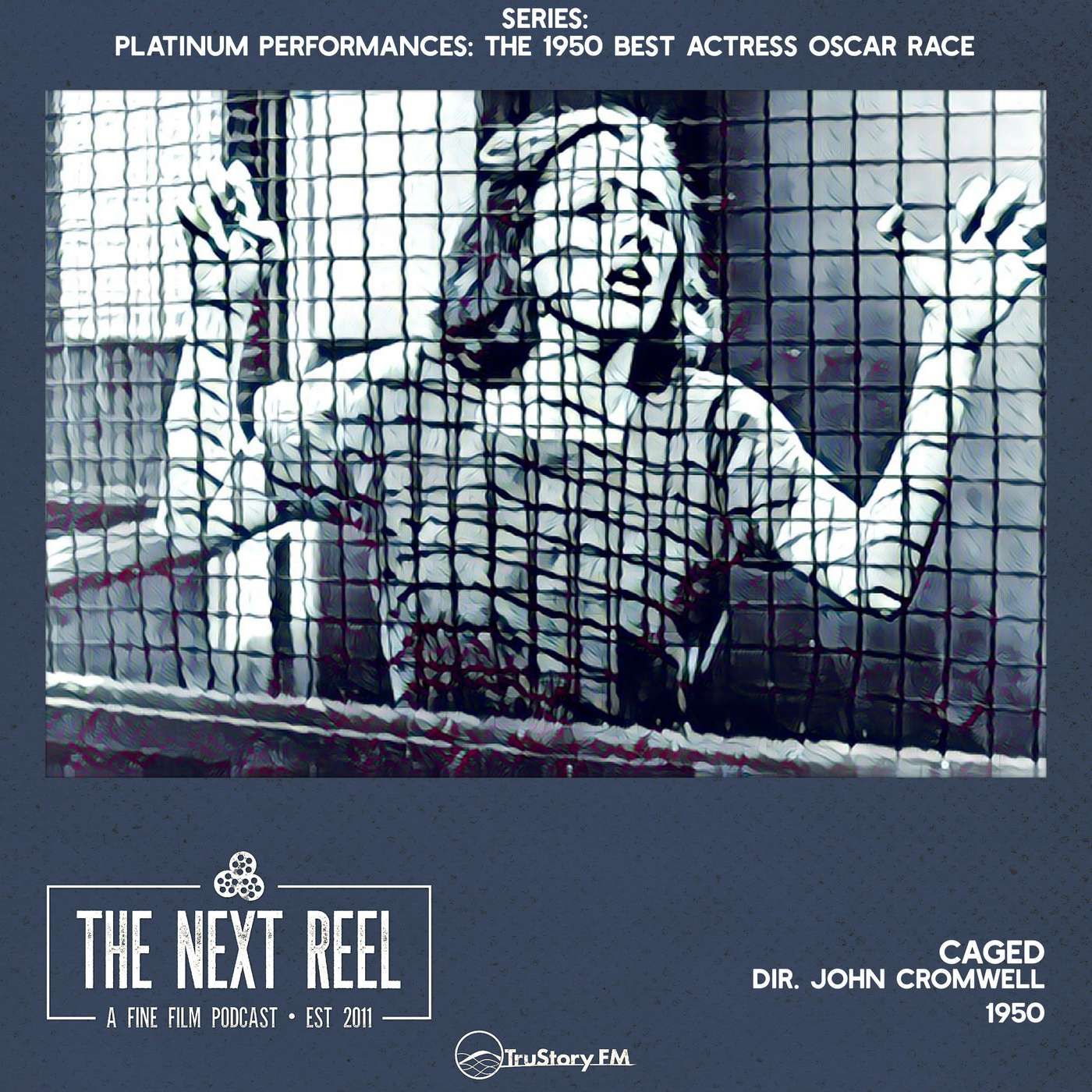
Lots of grids, lots of shooting through bars, you know, all the stuff you kind of would would imagine, mesh, window, lattices.
There's lots of window stuff.
There's lots of stuff where we have the characters.
We're behind the characters, and we're looking through the windows at trains going by and and things like that.
The the feeling of of loss and exclusion from community by way of grid imagery, which I think works really well.
So
Andy NelsonAnd I think that was just mentioning the train.
I thought that was one of the more interesting moments that we had in this film, where we have conversations happening, arguments happening happening.
All of the women though stop as this train rolls by outside their window, which must not happen that often for them to react this way.
But it it's the real reminder of the outside world and the connection that they have to it.
It's like their only connection they have.
And they all stop and they watch as this train rolls by, and I thought that was really interesting moment.
Pete WrightIt's like a religious moment.
Andy NelsonSolemn.
Yeah.
And we did talk about Christmas in Connecticut.
That was another thing that Carl Guthrie
Pete WrightOh, did sure.
Shoot.
So Yeah.
Very that's a different kind of film, you might say.
Andy NelsonYeah.
Well, you can see the difference in in technique, right, between a Christmas film and this prison film.
Pete WrightAlthough some might say there there's a Venn diagram in which those two films overlap, so in some ways.
Andy NelsonThey do have a Christmas scene in this film.
So so does that make it a Christmas film?
Pete WrightYeah.
It's a Christmas movie.
Oh my goodness.
Andy NelsonJust one last little note.
This is just a small one, but in the scope of Warner Brothers potentially getting sold and no longer being a thing anymore after all these years, I just wanna call out there's something that I always enjoyed with Warner Brothers and the composers, Max Steiner on this film being one of them, who would allow like, they allowed their the theme of their when their logo would show to be integrated into the score.
And we see it in Casablanca is one I'm thinking of.
But to this one, where you've got the Warner Brothers logo theme playing, and then when it hits that last note, it gets it goes into a minor key, and it turns into the score that leads through the credits, which is all inside this paddy wagon of the women going to prison.
Like, that's how the film opens.
And I love that Warner Brothers would and Max Steiner would do that with the score, where they would play with the logo in ways to integrate it into the the start of the actual score.
So I I thought that was nice.
Pete WrightYeah.
It's it's really fun to see it that long ago.
Right?
Because you I you forget how long they've been doing that sort of playfulness.
Right?
Yeah.
And and the other companies too.
Universal does it all the time, and it's really it's just sort of a a playfulness with their corporate branding that is, I think, it's neat.
It's neat to see them do that.
Andy NelsonIt's yeah.
I feel I always felt like it was a fun modern thing, but it's fun to be reminded, oh, they were
Pete Wrightdoing this back in the forties and fifties also.
When when they were arguably, I don't know, more precious, less precious about branding.
I I don't even know how to how to characterize how I imagine Jack Warner felt about the branding of the logo, the the title splash.
Andy NelsonYeah.
Right.
Right.
Alright.
Alright.
Well, that is it for now.
So we'll be right back.
But first, our credits.
Pete WrightThe next reel is a production of True Story FM, engineering by Andy Nelson, music by Jakob Pietras, Electric Zoo, Out of Flux, Oriole Novella, and Eli Catlin.
Andy usually finds all the stats for the awards and numbers at d-numbers.com, boxofficemojo.com, imdb.com, and wikipedia.org.
Find the show at truestory.fm.
And if your podcast app allows ratings and reviews, please consider doing that for our show.
They say nobody walks into Letterboxd innocent.
Maybe you thought you'd just log a movie or two.
Maybe you figured you'd remember what you watched last month, but that's how it starts.
Before long, you're ranking every noir film from Cage to Double Indemnity and arguing about runtimes like it's your only shot at parole.
But listen, there is a way to make your time go easier.
Join Letterboxd and get 20% off pro and patron membership with the code NEXT REAL.
It works on renewals too because everyone deserves a second shot at rehabilitation.
Inside, you'll get all the perks, advanced stats, filters, and streaming service tracking.
You'll see exactly how deep you've sunk into that filmography, and you'll like it.
You'll start to understand the system, the star system, the heart system, and you'll realize you're not trapped.
You belong here.
The guards call it obsession.
We call it appreciation.
So do your time with dignity.
Use the code nextreel when you join or renew and take 20% off that sentence.
Keep your diary straight, your watch list longer than your rap sheet.
And remember, on Letterboxd, eventually, everybody gets out clean.
See you in the yard.
We'll be the ones arguing about whether Caged really does count as noir.
Sequels and remakes, Andy.
Is there a sequel?
What happens to her?
Andy NelsonCage two.
Yeah.
I know.
Pete WrightIt's just Agnes Moorehead's character.
Just it's just an office comedy with Yeah.
Agnes's I was just trying
Andy Nelsonto remember her.
Right.
Now there's there's no sequels unless you wanna jump into all the Roger Corman exploitation films that No.
Pete WrightI don't.
Andy NelsonCould be could be considered spin offs.
No.
I don't know.
But this film was specifically satirized in a 1977 SCTV comedy sketch called Broads Behind Bars.
Minnie was renamed Cheryl portrayed by Catherine O'Hara.
Cheryl was depicted as a teenager in the mid to late fifties who, after smoking pot, ended up in prison after being framed for armed robbery and also learns later she's pregnant.
Kitty is played by Andrea Martin, and John Candy in drag plays the role of the matron Harper called Schultzy.
A knife fight between Kitty and Harper occurs in the skit instead of a fork as in the film, while both both Kitty and Schultzy die.
Schultz die.
Kitty is fatally stabbed by Schultz, and Schultz is later killed by Cheryl.
Her action, Cheryl is then told she can be released from prison.
However, she responds by only laughing and declining the offer, echoing Kitty's remark in the original film.
No dice.
The skit in the end presents itself not only as a parody of women in prison movies like Cage, but also as a spoof of the anti marijuana films that were presented to students in many American high schools during the the late fifties and early sixties.
Pete WrightWow.
Boy, I'm not sure that I would I would expect something like that even on SCTV.
Andy NelsonThat's funny.
I'm gonna have to see if I can find that clip on YouTube.
And maybe if I can, I'll throw it into the show notes because that's, that'd be an interesting one to watch.
I can see John Candy as a drag matron named Schultzy.
Pete WrightBut everybody died.
That's horrible.
That's why it's funny.
Andy NelsonI don't know.
Pete WrightOkay.
How to do at awards season?
Andy NelsonThe film, you know, again, this was the type of film that Oscar voters were wanting to see.
It had two wins, five other nominations.
At the Oscars, this is why we're here, Eleanor Parker was nominated for best actress.
But as we discussed last week, she lost to Judy Holiday in Born Yesterday.
Hope Emerson, plays Harper, is now nominated for best supporting actress, but lost to Josephine Hull in Harvey.
And the film was nominated for best writing story and screenplay, but lost to Sunset Boulevard.
At the Venice International Film Festival, Parker won best actress.
John Cromwell was nominated the golden lion, which is the highest prize given at the festival, but lost to the French film Justice is Done.
Interestingly, another film about justice.
At the Laurel Awards, Agnes Morehead was nominated for top female character performance, but lost to Spring Byington in Louisa.
And at the Photo Play Awards, this is the monthly magazine.
Again, in July, we talked about this or we'll talk about this in our member bonus episode looking at the gunfighter.
But, Eleanor Parker won best performance of the month for the month of July.
Pete WrightOkay.
There's a I like that we break it down monthly.
Yeah.
You gotta love PhotoPlay magazine.
You gotta love PhotoPlay magazine.
So once again, carrying the torch, I can't wait again till we get to January when you get numbers again.
This is an embarrassment for this segment, and I wonder why you're still showing up for it.
But here we are, Andy, how to do at the box office.
Andy NelsonI just shaked my head at you.
I blame you, actually, for all of this.
I don't I'm blame
Pete Wrightsorry.
What?
What?
The nerve, sir.
Andy NelsonI know.
Now, I really have no idea how much Cromwell had to make this movie, I don't have, Warner Brothers was not keeping as good track as other studios.
It did open 05/19/1950.
I have that.
And it ended up earning 1,500,000.0 or 19,700,000.0 in today's dollars.
That's all she wrote, folks.
I don't have anything else.
Pete WrightDo you know what?
Just to make up for it, why don't you just do that whole bit again four or five times?
Just keep going.
Just read the keep reading the same thing just so we really internalize Alright.
Good grief.
Yeah.
I I find it hard to believe that there isn't some mob boss somewhere with a ledger that Jack Warner was tracking Jack Warner's expenses in this era of Hollywood.
Andy NelsonWell, there might be, but that's might make it even harder for me to find.
Unless I get in with the mob and start going through their ledgers.
I'm sure I'm sure I'd be totally fine doing that.
Pete WrightAndy, if anyone could find it going undercover, it's you.
Andy NelsonOkay.
Well, I liked this film.
You know, I I think it it has a place in, film history.
I think it's interesting as as we kind of see the the evolution, kind of the birth and evolution of prison films, of women in prison films, and we get a sense of kinda like the the frustrating system that they are.
So, you know, it worked for me.
I enjoyed it.
Pete WrightYeah.
It worked for me too.
I I really did enjoy the film, and I I can see myself returning to it.
It's vastly superior to so many of the Roger Corman films we've watched.
It's nice to come back to its spiritual ancestor.
Andy NelsonTo one that, yeah, has a little more meat on its bones as they
Pete Wrightsay.
Exactly.
Andy NelsonYeah.
Exactly.
Well, it's a good stuff.
A good film worth talking about.
And that is it, everybody, for today's conversation.
Next week, we are looking at the final episode in this series, talking about Billy Wilder's Sunset Boulevard, starring Oscar nominated Gloria Swanson.
We'll be right back for ratings.
It's, you know, just it's interesting that color films had actress nominees that we're talking about are all black and white films.
Pete WrightAre in black and white.
Isn't that interesting?
Yeah.
Andy NelsonHey.
Fresh meat.
Yeah.
You with the white eyes and the trembling lips.
I know what you're thinking.
You're thinking you don't belong here, that this is all a big mistake.
Well, let me tell you something.
In here, we're all innocent, and we're all guilty.
But there's one that keeps us going, one thing that keeps us from losing our minds in this concrete jungle, and that's the power of cinema.
You see, this is the next reel.
It's not just a podcast.
It's a lifeline, a way to escape these four walls even if it's just for an hour or two.
And with the membership, you can have that escape whenever you want.
With a membership to the next reel, you'll get early access to episodes, ad free listening, exclusive bonus content, like having your own private movie theater in your cell.
And it's not just the next reel.
Oh, no.
Cinemascope, the film board, movies we like, sitting in the dark, they're all part of the same network, all pumping that sweet, sweet cinema straight into your veins.
But it's not just about the escape, it's about the community.
In here, we stick together.
And the next real, it's like our secret society, a way to bond over something other than our rap sheets and our regrets.
So what do you say, fresh meat?
Ready to join the club?
Head to truestory.fm/join and sign up.
$5 a month for $55 a year.
It's a small price to pay for a little taste of freedom.
Think about it, but don't wait too long.
In here, you never know when your number might be up.
The next reel.
Truestory.fm/join.
Welcome to the big house kid.
Pete WrightLetterbox, Dandy.
Letterbox.com/thenextreel.
That's where you find our HQ page.
Make sure to follow us over there, and you'll see all of our reviews and all of our lists.
We've got so many lists.
Oh my god.
You guys, so many lists of great, great films.
Andy, what are you gonna do for this fair film?
Andy NelsonThat's what I I really enjoyed.
I enjoyed the characters.
I enjoyed the my time with the film.
I think that it's fine as a three and a half for me.
Three and a half in a heart.
I think that it's a a good enjoyable, film.
You know, it's not one that I'll necessarily return to often, but I think that it was strong and worth checking out.
Pete WrightYeah.
I'm with you.
But as you know, Pete, half stars.
Right?
The question is, am I optimistic on the four side or pessimistic on the three side?
I think I'm gonna go on the three side.
It is it's just Pessimistic Pete.
New nickname.
Pessimistic Pete, but I am gonna give it a heart, a big throbbing beating heart.
Maybe a cow heart with multiple chambers.
Oh, no.
Stomach.
I'm giving it a cow's stomach.
That's I don't even know.
Somebody does.
Somebody out there knows, and this is that's for them.
Andy NelsonThat just went to strange, strange place.
Pete WrightThree stars on a cow's stomach.
Andy NelsonLet's talk to Letterbox, see if they can get that integrated We're
Pete Wrightgonna need to change that.
Andy NelsonFor the caged.
Just for the caged entry page.
Pete WrightThat's right.
That's right.
They do that sometimes.
Andy NelsonYeah.
Yeah.
Like like Barbie, you get I don't know what you get on Barbie.
Pink
Pete Wrightstars was a good story.
Andy NelsonOr charts, green clovers, blue diamonds, purple horseshoes.
Pete WrightAndy, I forget.
Did you have any numbers for this movie?
Andy NelsonAlright.
That averages out to three and a quarter, which rounds up to three and a half over on our account, on Letterbox, which you can find at the Next Wheel.
You can find me there at Soda Creek Film, and you can find Pete there at Pete Wright.
So what did you think about Caged?
We would love to hear your thoughts.
Hop into the Show Talk channel over at our Discord community, where we will be talking about the movie this week.
When the movie ends.
Our conversation begins.
Pete WrightLetterbox give it, Andrew.
Andy NelsonAs letterboxed always doeth.
Pete WrightAlright.
Did you go high or low?
Andy NelsonI went high.
Pete WrightOkay.
Why don't you go first?
Andy NelsonOh, does that mean you went low?
Okay.
I went with d Selwyns or is it d s l wins?
Anyway, whatever it is.
Or is d Selwyns?
Anyway, that's what I'm going with.
Five star DSL wins.
DSL wins.
Okay.
There you go.
Five star at heart.
Elvira and Kitty are powerful butch for butch con artist ex girlfriends.
Okay.
Pete WrightAlright.
I like it.
Morak 99 gives it one star and says, I'll give it credit for having its heart in the right place in terms of the social issues, but this is just a bad movie.
It feels like the movie that stereotypical dumb young people complain about when they say they won't watch black and white movies.
Massive overacting to the cheap seats, too obvious dialogue, mustache twirling villainy, hammy score, etcetera.
There are just other pictures that are better about prison abuses, both from the time period and now.
Also, screw this movie for subjecting me out of nowhere to violence against a kitten.
I'm a recent first time cat owner, and I was not having that.
Thanks very much.
Well We didn't even mention kitten villainy.
Andy NelsonWe didn't mention the kitten.
That's because it was too traumatizing, Pete.
Pete WrightIt was too traumatizing.
It was brutal.
Andy NelsonOh, well.
Pete WrightYeah.
Thanks, Letterboxd.