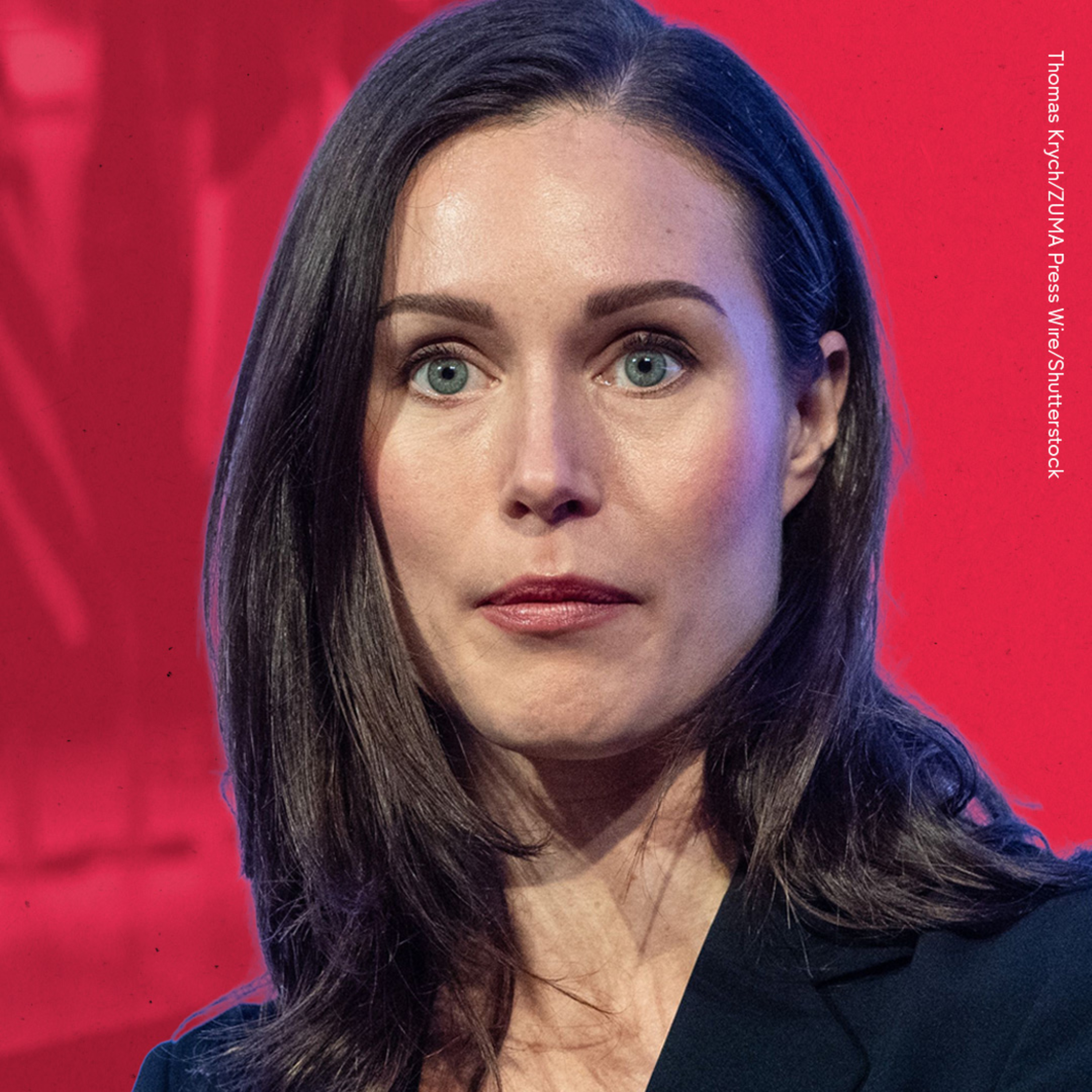
Sanna Marin on populism and a fragile Europe
Episode Transcript
Europe isn't as weak as Europe is acting.
If we only let China and US lead the way when it comes to technology, we will be vulnerable in the future and we shouldn't put ourselves in the same place with technology than we did with energy.
It's nobody else's job to question individual women choice except the women that are making the choices.
So wear whatever you want, be as colorful as you want.
Live your lives just the way who you are.
Hello and welcome to Ways to Change the World.
I'm Kristian Guru Murphy, and this is the podcast in which we talk to extraordinary people about the big ideas in their lives and the events that have helped shape them.
My guest this week is the former Prime Minister of Finland, Sun and Marine.
She became famous as the world's youngest Prime Minister aged just 34, and she faced controversy over slightly absurd things like what she was wearing in photo shoots and a famous video in which she was seen dancing at a party with friends.
She gave up politics and went on to work for the Tony Blair Institute, working closely with Ukraine.
And she has written a memoir called Hope in Action, in which it documents her constant efforts to try and change the world.
Sana, welcome.
How would you change the world?
Well, I think this answer is very obvious.
If I would have all the power in the world, I would stop climate change and loss of biodiversity.
The biggest challenge is that humankind is facing.
But unfortunately I'm just an individual and I can only work on my own small part.
But we need action on these matters, or otherwise we don't have any future at all now.
You, you, you talk, you know, really impressively about wanting to change the world.
You know, unashamedly.
It's a big, big ambition.
Where did that come from?
I mean, you have an unusual childhood.
I come from quite humble background.
We didn't have wealth, money or or that kind of family connections that would usually lead to the career in politics.
So I come from quite humble background, but I when I was 20, I just felt so passionate about the about the matters that I cared deeply, like climate but also gender equality, human rights.
I was raised in a rainbow family.
My mother had a companion that was the same sex and I saw the injustice is a far society.
When I was growing up, I grew up in the 80s and 90s and at that time we didn't recognise different kind of families and different kind of people equally.
And I wanted to change these things.
I wanted to do do reforms within our society that meets everybody at the same way, give give people the same rights and the same opportunities.
And I committed my life for this change.
So even though as growing up I didn't think ever to become a politician, it looked very far away from the reality that I came from old men in Gray suits talking about important matters.
Still, I felt so passionate about the things that I saw that were wrong in our society and in our world, and I wanted to change that.
And I also realized that it's not only my opportunity and my possibility to do something, it is also my responsibility because it wasn't easier before when the older generations we're we're building our welfare society or, or doing the changes in, in our world, I could also do things.
And it's my responsibility to do things, I mean.
That that's what's really unusual though, because I think most people who feel frustrated with the world or angry about the way people are treated or an issue is not being tackled, they they don't feel they have the power to make a difference.
You clearly did at a very young age.
Where did that belief and confidence come from?
Maybe it was more frustration.
I think the strongest emotion, one of the strongest emotions beside love, is actually feeling unjust and feeling unjustice happening.
So I felt that unjustice that I saw around me, and I wanted to act on those unjustices.
So I think that people actually have power.
They can do things.
Nobody can do things alone.
We need each other.
And I think this is also something that is wrong with our societies and our world today.
You know, Western democracies that we are so individualized that we don't understand that we need to work together.
And together we can make structural changes.
Together we can make big changes in our worlds.
And as I mentioned before, it wasn't easy to build the rules based international order after the Second World War.
It wasn't easy in the Nordic countries to build our society in a way where women would have the same equal opportunities than men.
It was never easy to build the welfare society.
It all took extremely amount of work and work together.
And I think we need to let people feel that that they can do things, that they can act on things and that they can act on the act on things together.
Nobody can do things alone.
If we are alone, we are small and then we cannot cheat this change.
But working together with each other and also feeling that responsibility of of acting, I think that's the key.
And the message of my book is also that hope isn't something that just falls from the sky.
It is something that we create from our actions.
Now across Europe, a lot of people who are trying to bring about change are moving right.
They are moving towards populist parties.
You chose to be a Social Democrat.
Why did you choose that route as?
I said I come from such an unprivileged background.
My mother was raised in an orphanage.
She had me when she was 23, broke up with my father only couple of years after because he was a severe alcoholic.
So we never had a lot of money, we never had connections, we never had much, but we had the welfare society.
I was so grateful to be born in Finland and then have those opportunities because we have extremely good daycare system and schooling system and we have universities that don't.
You don't have to pay tuition.
So I had opportunities in my life because of the generations that build it, our welfare model.
And I understood very early on that I wouldn't have any chance in life without these structures.
So that's why I chose Social Democrats that had always been building this equality in our society that enables everybody to pursue their dreams, whatever are their backgrounds.
And I want that to also continue this work, but also reform our society because the world is changing, our societies are changing.
We cannot be stagnated and think that all structures will work forever.
We also have to reform those.
What do you think is the best way to take on this shift to the rise and the attraction of populist parties, which many people argue is the the natural kickback reaction to the failure of social democracy?
I think there is a pendulum movement always.
So when when we see that things aren't working the way we want and then there's a pendulum movement to some other direction, we are seeing this with the far right and the populistic movements rising in Europe within our democracies, but also wider authoritarian countries are questioning the international rules based order.
And there's this big, big bendo movement, this frame where we are now seeing the geopolitical changes.
But I think we have to meet people's frustration and their dissatisfaction and their problems in their everyday lives very seriously.
We shouldn't discard those.
Those are real, real problems that people are facing.
They are worried about high inflation.
They are worried about are they able to provide themselves and their families.
Do they have opportunities?
Do their children have opportunities and they see that they are not now better off than they were before?
That actually things are now harder than it used to be.
And I think we have maybe discarded these feelings, these emotions.
And as I said before that one of the strongest feeling of a people, of people is the feeling of unjustice.
And I think we haven't met the feeling of unjust is enough.
And that's when people turn to easy answers, to populism, to far right, because they are of course blaming.
It's the immigrants, it's the others, it's somebody else taking our opportunities and our jobs.
That is not that.
Those are not facts.
Those are not the correct answers, but they are easy answers.
And it's easier to lean on them than to believe that there will be change gradually happening within our society.
So we need to meet people's feelings, their their their emotions, their frustration and their real, real problems that they are facing.
I.
Mean it's easier said than done, isn't it?
And Social Democrats around Europe will will say, well, we are trying our best, you know, you, we can't wave a magic wand.
We're facing, you know, deep entrenched post pandemic problems, post banking crisis problems.
You know, so are, are you saying Social Democrats need to be, you know, more creative, bolder to, to think about things that they haven't thought about before?
Because they, they will all say we're trying.
Definitely bolder.
I see that we are now lacking, and I'm not only talking about Social Democrats and and our parties, but in general, we are lacking now real leadership in Europe.
Unfortunately, I think we have been in this dream world, this naive, naive world where we want to think and believe that things can go back the way it was.
That's not going to happen.
The authoritarian mindset and the shift to this idea that that there are strong men and strong men and ideology that strength and forced matters.
And then we don't anymore have these rules that we have been creating together.
So there is this this this book push back on on the rules based order.
And we have been naive and we haven't seen this change happening so radically in our world.
And now we would need that strong leadership.
So you should always know your core values and then you should have a clear direction based on that, that those values you have.
You should have understanding of your realistic options.
And the realistic option isn't going back.
The realistic options are on the table.
If, for example, we give Russia what it wants when it comes to Ukraine, it will only continue its aggression, as we've seen before when Russia annexed Crimea and the response from the international community was so weak.
So we haven't actually realized what are the realistic options.
And then when you have those options, then you could form a strategy that would work.
And now we are actually lacking in Europe in all fields of leadership values, the direction, the realistic options and also forming a strategy based on this.
So when Trump says Europe is weak, he's right.
Europe isn't as weak as Europe is acting.
We have a lot of resources, we have a lot of capabilities.
We have know how we have talent now.
We just should believe that we have, and we should stop acting weak when we are actually much more stronger than we give ourselves credit for.
I know you, you've been now now at the Blair Institute, you've been working closely with Ukraine and you talk in the book about how Europe failed to take on Russia's behaviour when it was when it was, you know, early not not just the invasion of of Crimea in 2014, but Russia's authoritarianism at home, it's oppression of LGBTQ plus communities in Russia.
Are are we perhaps in danger though of having the same turn away?
Don't take it on attitude towards towards what's happening in America.
I think that we discarded quite a long time to changes within Russian society.
Russia didn't turn to this aggressor that started the full scale invasion in Ukraine overnight.
That happened gradually within 1510 to 15 years, first suppressing minority groups such as the L GB TIQ community, attacking opposition, attacking journalists, silencing the civil society.
So it happened gradually and Europe looked the other way because we'd wanted to do business, especially when it came to energy with Russia.
So we discarded the things that changes that were happening.
Then we acted weak when Russia annexed Crimea.
And after those those reactions, weak reactions from us, Putin thought that he can just March into Kiev, change the government, turn it into some kind of Belarus and the international community.
Europe wouldn't do anything because we we didn't do much before.
And now we are maybe repeating the same mistakes.
If we are not careful.
We should see when it comes to the situation in Ukraine and now there's peace negotiations and peace discussions between the countries.
We should understand that if there's a bully in the class that bullies everybody around and steals other students things, and the teacher and other students would just say, OK, take what you want, would we think that that behaviour would stop or would it continue?
And the same thing is with Russia, if it gets what it wants, land other victories in Ukraine, it would only continue.
We would only see more aggression in the future, more war in the future.
And now we should stop that bullying and we should stand with Ukraine and make sure that there will be peace.
That would be just and fair and and the kind of deal that that Ukraine could also support.
And unfortunately, we are also seeing this similar kind of changes within a society when it comes to US.
And I think this looks that we are on a fast tracked, fast track when it comes to US society.
There are a lot of people that are scared now, especially when it comes to universities, when it comes to international students, when it comes to people from from different countries.
There is this fear that is sensed that wasn't there before.
And we need to also notice this and also the changing relationship between US and Europe.
At the same time, we have to understand that US is a strong democracy.
There are people that are protesting, there are people that are that are responding.
So we need to of course believe and hope that that that strong base of democracy will will carry through.
But do do you see, do you see signs of, of things that could lead to repression there as well in the use of federal agents in the approach towards the media?
You know, these are some of the tactics, aren't they?
We have seen US shifting now with Trump second administration still from the outside.
It's always very difficult to go within one country and and say what is right and what is wrong.
It's a democracy.
People have voted, they have chosen their president, they have chosen their leadership and there will be other elections and then people can choose again.
We need to make sure in Europe, from our perspective that that we are strong ourselves, that we don't just lean on to US and its capabilities, but that we will have capabilities of our own, especially when it comes to defence.
We need to boost our spending when it comes to defence and our capabilities also when it comes to technology.
So we need to understand that the change between our relationship with the US that is not maybe permanent forever, but it has changed now and that's a fact.
And now we have to act accordingly.
So strengthen our own capabilities and make sure that we can take care of ourselves as well.
And if you were still a a Prime Minister and you say we need strong leadership and bold leadership in, in Europe, and you you say we were wrong to, you know, not to call out where Russia was going when it was clear where it was going.
Would you also now be standing up for European values, rejecting Trump's national security strategy, calling it out as meddling, supporting nationalist parties?
You know, is that is that what European leaders should do now?
Because we see this very strange situation where they are constantly appeasing Trump, flattering Trump, saying, you know, they're very grateful to him, while his official policy is literally now to undermine them and support populist parties.
Well, I think that there's of course a healthy amount of realism with this.
And as a former leader, I do understand the actions of, of leaders we have been appreciating and it has been extremely important to have that close transatlantic relationship.
And of course, from European perspective, we don't want to lose that.
We don't want to lose that relationship.
We don't want to drift apart as a democratic world because then only the authoritarian regimes and powers would win.
So we need US and and we want to keep and continue with this transatlantic relations.
But that doesn't mean that when there are changes and shifts within the US administration or when there are things that we don't accept, that doesn't of course mean that we should keep our mouths mouth shut, that we cannot say things from our perspective.
So of course it shouldn't mean that.
I think now we have to focus on strengthening Europe's capabilities, as I said before, boosting our military expenditure, also focusing on technology.
I think that we are now also witnessing the same thing that happened with Russia and with energy.
When it comes to technology, we were extremely dependent on Russian gas and oil and then it caused us a lot of problems when the war full scaling weight invasion of Ukraine started because Russia started to reduce those gas deliveries and deliveries of energy already six months before the war started.
And then our storages were not full and that was tried to use against us and and to lower the support for Ukraine and its citizens.
And it caused high energy prices, high inflation, a lot of problems to our societies, to our citizens lives, to our businesses.
And now I see that we are maybe hopefully not, but but we are, I think repeating the same mistakes when it comes to technology.
We have the talent, we have good companies in Europe.
We have good startups, we have intelligent people, but we need to back them.
We need to make sure that there are European champions when it comes to AI, when it comes to quantum technologies, when it comes to space technologies, we need European champions.
And this need also public support.
And I'm not only talking about pouring money into these companies.
I'm talking about regulation, discussion, cooperation between public and private sector.
Because if we only let China and US lead the way when it comes to technology, we will be vulnerable in the future.
And we shouldn't put ourselves in the same place with technology than we did with energy.
Now the book is a really fascinating the chronicle of your time in power of the big challenges you faced, which were Ukraine joining NATO, the COVID pandemic.
But it's also obviously really fascinating about how you were treated by others, being the youngest Prime Minister of the time and being a woman as well in politics.
At the end, when you decide not to to to go ahead as a leader, had you lost your belief that you could change the world or.
I hadn't lost my belief that I could change the world on my own small part.
Of course, as I said in the beginning of this interview, nobody can change the world by themselves.
We need each other.
But I didn't maybe lose the belief that I can do things.
I had seen that I can do many things.
I think our government was extremely successful, not only with COVID or the response of the war in Ukraine, but also we fulfilled 90% of our extremely reformistic governmental program.
So of course I I have sown that that we could do things and we could have, we did make change in our society and hopefully also in the world in our small part as Finland.
But I had lost passion towards politics and it was the combination of many things.
I have been working tirelessly as a Prime Minister 24/7 and I had missed out a lot of my daughter's life in during those four years.
And of course when I took the position, when I started in the office, I realized already then that it would mean many things for my personal life that I was.
I would be at work all the time, but it took a tool and my daughter is now 7 years old.
She was just under 2 years old when I started.
And when we didn't enter first in the elections, even though we came popularity and more seats, but we didn't enter first.
It gave me a personal space and possibly to revaluate my own life and my own choices.
And I decided then 2023 to step away from party leadership and from the parliament because I wanted to spend more time with my daughter, focus on other things, because our children are small forever.
They are children young, only certain period of time.
And, and I really value that because I missed out four years and I didn't want to miss out the next four years as well.
So how much had the had the press worn you down?
I mean, you know, you, you write about, I mean, you call them scandals that should be in sort of inverted commas, really, because they're the most sort of ridiculous scandals.
They are Finnish scandals, nothing too serious with corruption or misuse of Public Music or power, but but they are scandals in Finnish standards.
They're about what you were wearing and what you were doing.
And you know the famous video of you at a party dancing, you know, how much had that worn you down?
How much was that also responsible for taking away your your passion or your joy from the job?
It did of course effect and it had a heavy effect.
Not only the scandals, those were individual events and and they lasted a certain period of time, too long for my my way of thinking.
I think they were exaggerated quite a lot.
So it went out of proportion, I think all of those scandals, but still it wore me down that the media was more and more focused on my personal life and my appearances and the nonsense and not anymore only keeping the focus on the work and the things that I did.
And I think this is something that women in all all different occupations face, that we are not only viewed through our actions and through our performance when it comes to the job itself, but our looks, our appearance, our behaviour is also moralized and watched.
And there were a lot of stories concerning my personal life and my personal things and, and I felt that very frustrating and very tiring because of course, as a politician, you want to be viewed through your actions and through your work and not about the things that don't actually affect anybody else's life.
And I think this is a general thing for women and it's, it is tiring.
And we need to, we need to do something about this because we cannot miss the talent of women and we cannot push them away from participating because they are.
I may be afraid that what these things will do to my mental health if I join political party or run for office or or participate in public debate.
I think it's a real issue in general and and we need to do something about it.
What?
What would you advise of other young women going into?
There have never been and there will never be like this right mold for women.
We have seen on the commentary, whether you are too grey or too colorful or too old or too young or too beautiful or too ugly or something, there's always, always a lot of opinions what women should be.
And the thing that we should actually tackle is the societal view and the societal attitude that it is everybody's job to actually question women's own choices.
And it's nobody else's job to question individual women choice except the women that are making the choices.
So wear whatever you want, be as colorful as you want.
Live your lives just the way who you are because there were never will be this mold, this moralistic narrow mold that you will fit.
That's a trap and that's not realistic.
So I would just embrace with womenhood, with everything that we have.
Wear heels and make up or don't if you don't want to, and just focus what you want to do.
We are actors, we are doers.
We are not objects that everybody else should watch and view and then judge.
I mean.
Isn't, isn't your story, though, quite off putting for a lot of people?
You know, you know, and politics and public life is off putting for people in all sorts of ways at the moment, partly because of the scrutiny, partly because of, you know, the way people will be criticized, partly because of the volatility of public opinion.
You might be in one minute and out out the next.
I mean, is it really an attractive option to go into public life to try and change the world?
Well, especially nowadays when I started in politics, we didn't yet, even though I'm not that old compared to many politicians, but still social media wasn't a thing when I started in in politics.
And nowadays it's a different world where people live, they are constantly evaluated and they made quite harsh negative attacks and and commentary online on social media platforms.
And especially if you're a woman or if you're from minority group, you will meet extremely hostile environment out there.
For women, the commentary is usually sexualized and it's also usually can be very violent.
It can be massive attacks on individuals, and not only politicians, just individuals raising their voices.
So we need to understand that this is a side of problem of our democracies and we should be able to protect people, to create safe spaces to participate for everybody and not put this burden on individual shoulders, but do changes in our legislation in our societies that would protect and give this safe space to participate.
And I understand that that these stories and also the the scandals, how I was viewed or or treated might be off putting for somebody.
They might be afraid of participating.
But I would only say that we should never let our fears to guide us.
We should conquer our fears and change things because we can do that.
And as I said, it's it wasn't easy before.
It wasn't easy for the 19, first 19 we female parliamentarians that started their work in Finland because we were the first country to grant women full political rights, also the right to run for office.
It wasn't easy for them in our parliament, in our political system to fight for childcare and elderly care, social and healthcare, educational reforms, equality, making legislate legislation, legislative changes.
It wasn't easy but they did it and I was able to enjoy that when I was growing up.
And now it is our job to make the changes for the new generations, that they will have it easier and not harder.
And when we see this backlash on women and girls and equality, we shouldn't accept that.
We should push back and we can.
So let's not let the people that are trying to silence us, online or otherwise, win, and not let's not let our fear to guide us because we are powerful and we can make things happen.
Sana Marin, thank you very much indeed.
Thank you sharing your ways to change the world.
Thank you for your time.
Thank you.