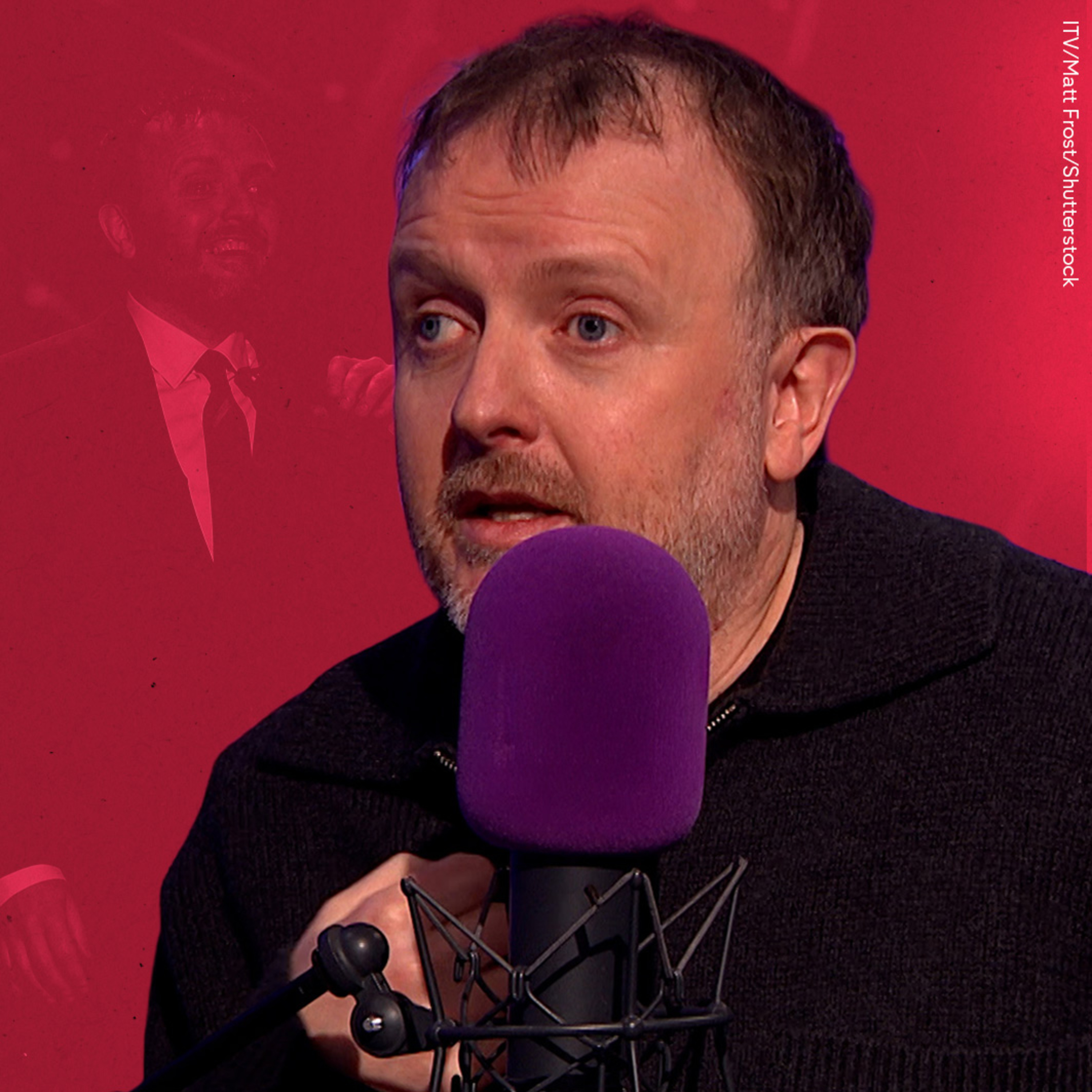
Chris McCausland: Why disability does not define me
Episode Transcript
I'm aware that I might be a lot of people's only exposure to somebody who's blind or disabled.
I might be the only blind person they see, and they might have low expectations of somebody who's blind.
If I can surprise people and challenge people, then the next time they encounter somebody that's blind, maybe they have slightly higher expectations.
Maybe they talk to them differently.
Maybe they talk to them and not the person they're with.
It's far healthier to make people forget about the one thing that they think defines you, them bash them over their heads with it all the time.
Hello and welcome to Ways to Change the World.
I'm Christian Gary Murphy, and this is the podcast in which we talk to extraordinary people about the big ideas in their lives and the events that have helped shape them.
My guest today is one of the country's most loved comedians, Chris McCausland, who is now perhaps best known as the first blind contestant on Strictly Come Dancing and the show's 2024 champion.
His famous waltz with dancer Diane Boswell even won a BAFTA as the most memorable movement on TV now.
Chris started losing sight as a young boy due to a genetic condition and was fully blind by his early 20s, but he has never let disability define him.
In his latest autobiography, Keep Laughing, he details his journey as a boy from Liverpool who goes on to win the hearts of the nation.
Chris, welcome.
Thank you for joining us.
Oh.
Nice one mate.
We always want to start this podcast by asking people, if you could wave a magic wand and change the world, what would you do?
You know, a, a lot, a lot of the people that are trying to change the world are trying to change the world in, in a way that's not very healthy for, for, for most people.
So let's wave a wand.
Let's sort their heads out.
Yeah.
And hopefully the world will be happier for everybody.
I, I, I just, I just think we need, we just need more tolerance, don't we really?
That's that's it.
More tolerance for other people that aren't like ourselves.
More understanding, yeah, you're, you're, I mean, when you talk about.
I am a comedian though, by the way.
It's quite a deep question for that.
I don't know if you know if you've booked here.
Well, The thing is about comedy on the TV now.
A lot of it is topical and political.
Yeah, and panel shows are all topical and political.
And you're not a political comedian.
No, no, no.
But I do love doing.
If I got news for you, you know, So I love the challenge of it and I love the fact that you start the week with nothing.
And, and I, I really put the work in, you know, I read, I read the papers online and, and I, I, I come up with a, a list of ideas and an awareness of what's going on and some jokes.
And I instantly forget 80% of it.
But I, but it makes me feel prepared.
And then, you know, doing things like have I got news for you?
A lot of the, the funny stuff happens in the room.
It just comes from having the conversations and, and, and, you know, trying to make things silly.
And that's what I try and do on that really is, is try and make things silly, try and bring a little bit of daftness into it and and take the Mickey out of everybody rather than turning up with agendas and opinions and trying to bash people over the edge with them.
But I I wonder whether you think the industry forgets that that's actually what people like.
Because if you think about, you know, the Michael Mcintyre's of this world, you know, wholesome comedians if you like family comedians who often get the the Mickey taken out of them by other people on the comedy circuit.
They're not being clever enough, they're not being original enough, you know, and ultimately people want to laugh and they want to.
They want a holiday from what you do, Christian.
I want a holiday from what I do, yeah.
But you know, it's, it's, it's, there's, there's, there's so much happening in the world that people don't want to be reminded about when they go out to have a laugh.
And Michael does that very well.
You, you, you talk about him actually in the book as somebody you really admire.
Yeah, yeah.
I mean, so like I, you know, I, I grew up getting into comedy throughout the 90s and throughout the 90s, you know, all my favorite comedians were people like Jack Dee and Alan Davis and, and Frank Skinner and then Eddie Izzard and people like that.
And these were comedians that, that talked about anything and everything and there was no, there was never a theme to a show.
They were never bashing you over their heads with opinions.
It was never topical.
It was always just funny because it was funny.
It was like a smorgasbord of ideas and comedy.
And you know, I think what we found in comedy, especially as the number of comedians has increased on the circuit and Edinburgh's played a bigger part in it.
A lot of comedians start tours off which shows that they've written for the Edinburgh Fringe.
Which the way you make yourself stand out of the Edinburgh Fringe is you write something with a theme, you write something with a point, you try and make yourself different to what everybody else is doing.
And it it, it has its value in Edinburgh and it's proven to have its value for a lot of comedians.
But ultimately, I think more often than not, it's not what travels the best outside of that fringe environment.
What travels the best is that comedy that I grew up living in the throughout the 90s, you know, which isn't really about anything.
And so that's, that's what I love.
That's what you know, that's what Michael loves.
Michael McIntyre, you know, and doing the circuit.
Michael's one of those comedians that I did a lot of the clubs with before he went stratospheric.
And he was always the best, the best comedian on the bill.
He was always the comedian that would get the best response.
And he was always, I think he would, he would always be different every set.
And I really admired that and I appreciated that.
And it was, again, the comedy that I grew up loving, you know?
I mean, did you ever think that doing Strictly would be transformational for your comedy career?
I mean, it's been transformational for your life, I suppose, in lots of different ways, and we can talk about that.
But when you decided to do it, did you think this will be a good career move?
No, I thought it was going to be a disaster.
I thought it could be a disaster, and I thought the chances of it being a disaster were far greater than the chances of it being a success.
And it was representations only positive if it's good.
You know, it's only, it's only positive representation if it sends out a good message.
If I go on strictly and it's a disaster, it does nobody any good.
And I didn't know really what it was I was being asked to do.
I didn't understand what the show was beyond the fact it's a dancing show.
It's it's hard to explain.
Because you've never seen.
It, no, never seen it.
So you don't know how technical it is.
You don't know how good it is, how good the good people are, how bad the bad people are.
You don't know how fast they're moving on the floor, really what the lifts are.
You can't describe them in in any way that compares to looking at a video.
And so I was asked a few times and I said no because there was fear, There was the unknown.
And there was the idea that I'd, I'd just come off the back of a tour that ended at the Shepherd's Bush Empire, which, you know, is it was a, it was a decent tour.
I was playing 1000 seats of rooms, you know, And I, I'd built an audience up by being funny, by being on shows that people liked, the comedy that I did.
And then I was presented with this opportunity to jeopardize all of that, you know, by doing something that could be a failure in a way that made people feel sorry for me.
Because if if I go on to that list, I was on with Paul Merson.
Paul Merson was brilliant to do it with.
Yeah, he was such a funny bloke.
And but he was always people, people would say about him always dancing was a bit goofy, goofy dad dancing or whatever.
And people can go on strictly and, and can't not, not do as well as other people and can kind of maybe be the, the of a joke along the way.
Anyone can, can be kind of susceptible to that.
But whereas if I went on it and it didn't go well, it was more than that.
It was that it could have been a disaster.
We, we, how, how do I know if I can do it?
How do I know that Diane wouldn't have my, my dancer wouldn't have clattered into me on the dance floor, that we would have got the angles wrong and danced off the floor that we would have kind of hit a camera.
There's, there's so many things that are beyond a bit of goofy dad dancing.
And if I went on that in front of 8 million people and it ended up like that and people felt sorry for me, who wants to go and see a comedian they feel sorry for?
You know, it, it's so it, it runs the risk of jeopardising, yeah, jeopardising that audience.
And it's.
Yeah, it was, it was a real leap of faith to do it and to kind of go, OK, well, we're going to gamble all of this on this opportunity to try and represent positively.
And it was.
It was a gamble.
How quickly did you realise it wasn't?
Because I think we all, to some degree or other, think doing strictly is a big gamble.
And you know, for someone like me who's fundamentally serious, you know, I'd always been warned that it would be a gamble.
And that's partly why I hadn't done it in the past.
But almost as soon as I started doing it, after that first week, I thought this is, this is going to be fine.
You know, if you're, if you're just honest and open about who you are and what you're doing.
And once you saw the competition was like.
Exactly.
It's going to be OK.
And I remember I texted you I think in your first week after your first week and said you're going to win.
And, and I kind of thought that immediately after I saw you on that first dance.
So did you know very quickly this was going to be fine?
So I, I, first of all, I, I, I had no experience of the show.
So I didn't really understand how the show worked in terms of what, what, what part the audience played in it to, to what extent the viewers at home really decided who was going to do well in that show.
And that it wasn't necessarily all about being the best dancer.
You know, I, I didn't really appreciate that until I was in it when we, we started.
So we, you know, as you know, you do this first opening episode, which is where you all get paired off and you do a group dance.
I found out later after that, Diane told me when we me and Diane, we talk all the time.
We've come out of it so close.
And she told me that after that first group dance, she went up and she cried because she said to me, she said, I just thought you would be better.
So, so there was this moment where we started and it, you know, I was trying to find me feet and, and she, she didn't realise how, what, what a challenge she had ahead of her.
And, and we, we, we, we started off in this first live episode, the most terrifying thing I have ever done in my life, by the way.
And we started off and I said to her, listen, I don't want this dumbing down because there's the only reason I'm here is to, is to show people that this is possible.
The more is possible than they would think.
And ultimately, the more is possible than I would think we need to be doing everything else to everything that everybody else is doing.
And she said, I couldn't agree more.
So let's let's go out all guns blazing.
She goes, what?
We're going to do this first dance.
I'm going to do a cartwheel.
You're going to catch me legging me there.
You're going to pull it.
I said, hang on a minute.
But that's what we did.
We we went out to to smash people over the edge with it and go look at what is possible.
And that first dance that you're on the boat.
We did this Cha cha cha to twist and shout.
She did the cartwheel in, in training.
She kicked me in the head so hard, by the way, because we, you know, that's how you practice a cartwheel, just by doing the cartwheel.
And I, you know, I did joke with her that if she thought I was hiding any level of eyesight, I stood.
I took that foot in the face without flinching.
Right.
And but we, we, we did these things, these set pieces that if they'd gone wrong on the telly, it was game over.
There's no way you can recover from.
Yeah, a cartwheel kick, flying kick in the head.
We, we, we did this move where I she fell backwards and I caught her and I dragged her back into the middle of the dance floor and swung her legs while stepping over her legs swinging underneath me like a a helicopter.
And these were things that were hit and miss during training.
And we, but we trained in this empty room where I could hear her breathing and talking and counting.
And then you're in this environment with a screaming audience and a band and you go, how is this even possible in that environment?
And it was, and it couldn't have gone better for what we needed out of it and for the impact that it had and how it, you know, how it, the, the audience, how it connected with the audience at home.
You know, we got 23 out of 40 points.
It could have gone better in terms of points, but it couldn't have gone better for what it was and what it represented.
And we came out of that and my, my first reaction was, oh God, I got away with that, didn't I?
How the hell do we do that again?
Because it felt like it was so trying to keep hold of a runaway horse.
You know, it was, you're literally being bowled along by this song and by the energy of it and the nerves and the fear.
And you come out of it and you don't come out of a feeling.
Oh, we, we, I, I controlled that and I nailed that.
Bring it on.
You come out of it going, how do I do that again?
Again, how do we do that another time?
Starting from scratch was something completely different.
Yeah.
I mean, what do you see in your mind's eye when it comes to dance?
I mean, like, what?
What was your concept of dance having, you know, your, your.
I suppose your images of dance must have been pretty dim and distant memories.
And I'm guessing you probably didn't watch Angela Rippon on Come Dancing as a little kid.
So did you even know?
What a foxtrot.
Looks like, you know, I mean not, not at all, no.
And I knew what ballroom was in terms of the very primitive a hold of it.
You know, I remember watching, you know, ironically, Al Pacino playing a blind man but doing the tango.
Was it on a set of a woman?
And, you know, there's a bit of dancing in Pulp Fiction, isn't it?
But, you know, and, you know, there's a bit of what you'd probably call 1950's rock and roll, possibly jive dancing going on the Back to the Future when they do the Enchantment Under the Sea dance.
But they're just kind of vague, faded memories of people dancing.
I, I, I had no idea what a jive was, what a, what a, what a samba was, what a salsa was, what really what the difference between a foxtrot?
And I'd never even heard of American Smooth, you know, So all of these things were so foreign to me.
Could you picture what you and Diane looked like?
A little bit, yeah.
I mean, I, I mean, we've, we've, we've said that, you know, if I ever, you know, if there's ever anybody a clever guy in a white coat with a clipboard that manages manages to cure my eyesight condition, me and me and Diana are going to sit down and watch what we were able to do.
Because it's, it's, it's, it's hard to picture in me head what it was that we did in some of them, what it looked like and how magical they make it look with the, the, the, the visual effects and the settings and the costume and the makeup and the hair and all of these people.
They do such a phenomenal job on that show.
And but yet you're only my only experience of it really is, is in my imagination and from the moves that we were doing, but not really how the audience, you know, experienced it, which is what it's all about, isn't it?
Yes.
Yeah.
So I mean, it's, it's not often that I feel left out visually.
I'm used to not being able to see things.
I love football.
I haven't been able to watch football in ages, but I don't usually feel left out.
I'm just used to listening to it.
But you know, going on and doing that show, which is so visual and being part, I've never felt part of something that was such a machine.
So many moving parts, working towards making this same great show every Saturday.
Part of a team like that, such a big team, but also so left out of what the experience was because everybody else can watch everybody else's dances, Everybody else can go.
Oh, well done.
That was great.
You did really well.
I loved what you did.
That lift was phenomenal.
I had no idea what anyone else was doing.
You know, we, you know, I'd joke with Diane and people that I'd stand up at the top in Claudia's area.
And, you know, I remember Pete doing Pete Wicks doing whatever dance he did to Breathe by the Prodigy.
And it finished and everybody applauded him.
And I said to die.
God, the band's amazing, aren't they?
I said it just, it sounds just like the Prodigy.
How did they do that?
Because that's what I was listening to.
And we'd go through the show.
And, you know, by the time you get to week 34567, everybody else has got an idea of what the dances are that they're doing because they've seen other people doing them.
You learn from them.
Yeah.
You learn from what you're watching.
What makes a good Charleston Watch?
What makes a passable Charleston.
I had no idea every, every, every Monday.
And we'd start by having to explain what the dance was from the very basic building blocks, you know, And it took a a lot of time, a lot of trust, a lot of effort.
And it.
But it paid off, didn't it?
I don't know how you did it in the time because I used to struggle with the time that we had enormously and the idea of actually not not having any concept of, you know, not being able to just say just put your put your foot there and put your foot there.
Well, you just, you just, you just put, I mean you have to put the hours in.
I cleared my diary from for much of it, I I trusted implicitly that Diane was not going to make me look stupid and she'd always be where she needed to be.
She trusted implicitly that I would always put 100% in because you can't pull it off.
If you put in 90% and you can't, you know you need to be, you can't hold off in the momentum.
If you're going to do a lift, because I'm unsure that it's going to work, I need to trust implicitly that this lift is going to.
Work.
And is that something?
Is, is trust something that comes easily, you know, for you?
Because I I would imagine it's quite hard to trust.
Well, I, I always have to trust I've all, you know, I always have to trust that, you know, that the person that's guiding me is not going to walk me into something.
I always have to trust that whatever clothes I buy kind of look OK, you know, does it look all right?
Does it, you know, does does this match this?
Is this a number of times?
I asked my daughter, you know, she's she's on her iPad and she's playing Roblox or something.
And I'll, I'll say to her, is this jumper clean?
And she'll go, Yeah.
And I can tell she hasn't moved her head.
I can.
I can.
I said she didn't even look at me.
She said I did look at you.
I said, I can hear that your voice has not changed from looking at the screen, You know, so you, you, you always trusted that people are, you know, giving you the right information and, and on your side to some extent.
And, but this was a real leap because of the jeopardy in it.
And we trusted each other implicitly, you know.
How did you prepare yourself psychologically for losing your sight?
Because it happened over many years.
Over 25 years, I'd say yeah, yeah, You, you can't.
You just didn't.
You just didn't in it as it's happening.
I always think of it as like the frog in the water.
You know that you you don't notice the the temperature changing for the frog and I, you don't notice the eyesight deteriorating.
You only notice that it used to be better than it is now.
And so there's never a moment of reckoning.
You know, there's there's, there's, there's swings and roundabouts, pluses and negatives to to everybody's experiences that, you know, that you can be blind from birth.
I'm glad I could see, but but somebody blind now at my age will be a a completely different animal to I am, you know, a different level of.
Independence and competence to what I've got out and about in the world.
But you know, I'm glad I used to be able to see.
It's a completely different experience to somebody who loses their eyesight in an instant or in a very, very quick period of time because they have this, you know, for, for the, for simplicity, they have an accident and lose their sight.
They have a moment of reckoning that they have to come to terms with.
And I can only imagine that the trauma there is immense is the, the, the grief, the loss that they have to come to terms with in a, in a, in a day, in a week is a lot.
But they have this moment where they go, well, I've got the pre, the pre blindness like identity and now this new blind identity.
And I need to adjust to it.
When you're losing your sight really, really gradually, you never have never have that.
You're always kind of living in denial and you're always really living in the belief that you can still see more than you can because you're always psychologically playing catch up to the to the reality, if that makes sense to you.
Yeah.
So it's it, it leads to a lot of denial, it leads to a lot of resistance to the I, the identity of being blind.
Resentment.
I'd say frustration, yeah, frustration.
I'd, I'd say I was never really angry and I was never really resentful.
But, but certainly you would have periods of frustration, a lot of frustration along the way when you realise that you can't do the things that you, you're struggling now to do things that you used to be able to do.
And, and especially when you have to relinquish a lot of aspects of yourself along the way.
You know, a lot of things that define your identity.
So I used to love playing football.
You know, when you, when you stop being able to, to see, to play football, it's a huge part of your social life that you have to let go of.
You know, when you stop being able to walk independently in, in at night time, it is a is a huge part of your independence that you have to let go of and, and, and so on.
So there's always these things that are happen at different stage happen at different stages.
When you stop being able to see the TV to enjoy watching comedy and, and sitcoms and things like that.
They all these things happen at different times.
So you're always letting go of different aspects of yourself at these at these different times.
You, you talk in the book about school a bit and about how other kids treated you and also another kid who was at school with you who who also had a visual impairment, and you think they were sort of meaner to him than they were to you.
Oh, absolutely, yeah.
So like, I mean, when I, so I went to a number of specialist schools over my, you know, when I, when I was a kid through to completion of A levels.
But when I was very young, I was at the mainstream infant and primary school in, in the part of Liverpool where I'm from.
And, and growing up with kids, as my eyesight deteriorated, you know, I couldn't see what was on the blackboard and, and things like that.
It was never an issue.
And, and, and partly because I think kids, you know, it take, it takes a while for means to developing kids, doesn't it?
But also I was part of the furniture and as my eyesight was deteriorating and I was acclimatising to it at that young age, so were they.
And so it was always just normal within that context for everybody.
But then I remember being about 7:00 or 8:00 and another kid joining our class who had these big thick bottle bottle top glasses on, you know, and he kind of squinted through them and, and, you know, looked at things a bit goofily and things.
And, and everybody was about 7 or 8 years old at this point.
And they, they were really quite mean to him.
And they take the Mickey out of him and, and, and it was because he was, he was different to them, I'd say more so than I was in because I, I wasn't visually different to them.
He had these big thick glasses on and they were, they, they take the Mickey out of him and they make chants up about him and things like that.
And were quite mean.
But he was also new.
And they, you know, he was, he was a new addition.
He wasn't part of the furniture.
And so, yeah, it really, you know, I, I always wondered like how much that affected me, those kids being mean to him.
And I think it obviously did because I still remember it, you know, and it's still, it still makes me feel uncomfortable now thinking about that.
And that I, I kind of didn't, didn't stand up for him in a way because I didn't want the same fate to be kind of bestowed upon myself.
But I also think it may be just kind of created its own little, you know, bit of real estate in my brain that made me kind of concerned about being the the new guy in other environments when I got when I, you know, when I, when I became older.
What did you think you were going to do when you were a kid?
When I was a kid in terms of, you know, a job and all that, I, I always loved space.
You know, I mean, I, I wanted to be, if, if I'm honest, like I think the naivety of sight loss when I was really young, you know, I, I, I wanted to be a snooker player.
That was the, that was the first thing I loved snooker.
I used to watch it on the telly listen on the radio.
If people remember that when snooker was on the radio, oh, it was fantastic.
I loved, I loved snooker and I loved to play in it.
And then my ice, I got worse and I had to move to pool and then chess.
And outside of that, I loved space.
I always kind of had this idea of being an astronomer or something like that.
But yeah, I, I just, I followed the path, the path of least resistance really in, in just the things I had aptitudes for with the geeky things.
And in terms of the subjects that you presented with at school, rather than the rather than these hobbies that that, you know, space was really was was was maths and then computers.
And and so I just.
You might have ended up in tech.
Oh yeah, yeah.
I mean, my degrees in software engineering, so I, I certainly tried to end up in tech.
But as I said, I, you know, the, the, the remains of me, I say deteriorated early 20s to 25.
And that's when I was qualified in software engineering and I was trying to get a job whilst also learning how to be completely blind.
I was trying to get a job in computers whilst also learning how to use a computer completely differently to how I'd learnt how I'd been using the computer throughout the last, the previous 1012 years.
So yeah, it was it was difficult to to to follow that path at that point.
You you you also had a sort of a slightly surprising attempt at joining the security services.
Maybe I did.
Tell me about it, maybe you did.
Yeah, no.
Well, as I said, so I was unemployed.
I was applying for jobs in computing, in computers and accessibility.
The first of all the.
I think the obligations and the desires for companies to hire people with a disability are so different now to what they were 25 years ago.
And, and also the obligations and the desire for accessibility within computer systems are so vastly different now to what they were 25 years ago.
And so, you know, I'm learning how to use a computer that talks rather than using a computer with magnified text on the screen.
But in order for, you know, you know, really quickly to explain it, like if you've got software that magnifies text on the screen, it just magnifies whatever's on the screen.
It's irrelevant what's on the screen, it will make it bigger.
If you're using a computer that with that that is reading things out to you, you need the systems on the computer, the operating system, the applications, the websites to be made with accessibility in mind or the computer doesn't know what it's meant to be reading to you.
And so I was finding that I was trying to get a learner how to use a computer that talks and also get a job in computing when nothing was made with accessibility in mind.
You go for a, you go for an interview of BAE Systems and all of their work would be hidden behind a highly secure intranet wall, you know, and, but none of their systems were accessible.
And so it was like banging your head against a brick wall.
And I, I started applying for mad things that were nothing to do with computers.
And one of them was MI 5 and they, they were recruiting in their words, spies.
And and I applied for that just as a bit of a a joke really.
But they took it seriously.
Well, I mean, I took it seriously, but I didn't expect to get anywhere, you know, I mean, I didn't expect I, I, I just applied because it was there.
It surprised me that it was something you could fill a form out to, to, to, to become you.
You think if you, oh, you're going to be a spy, you have to solve a particularly cryptic puzzle in the back of an obscure magazine and, and they hunt you down, they track you down, you know, and offer you the job.
There's a graduate scheme.
And I applied thinking, well, this would be interesting, but I got, I got down to the last 1%.
Thirty out of 3000 applicants.
I was in the last 30 before I I like to say they came to their senses.
So yeah, but no, I mean, that was fun.
But you you conclude that experience by basically saying they were right.
Well.
Because of your blindness, and I found that surprising.
So partly, yes, and partly I'm, I'm, I'm joking to some extent part, I mean part of the job.
Listen, I'm, I'm of the opinion that not every, not everything has to be for everybody.
Yeah, there are things in this world that aren't for me, and I'm fine with that.
Yeah, I'm, I'm, I'm, I'm happy with that.
You know, I'm, I'm happy that I live in a you.
You don't need to audio describe ballet to me.
Ballet is something that isn't for me.
It's a visual art form.
It's a visual medium.
People like it.
Go and watch ballet.
You don't need to make that accessible for me.
There are things in this world that aren't for me.
I, I did this whole recruitment process for MI Five.
Part of that job involved identifying A terror threat and being swamped with information and having to identify this threat and procure the services of the surveillance teams and identify this threat before a terror attack was carried out.
Now I'm, I'm quite happy with them saying to me that my eyesight is a, is a, is a problem in that because if it takes me longer than somebody else, you know, it, there's a, there's a thing where you, you're entitled to 50% extra time in exams or, you know, companies have to make adjustments, reasonable adjustments for disability.
I'm all for that, but but terrorists don't, they don't give you 50% extra time before they blow something up, you know, So I'm, I'm, I'm quite comfortable with them saying there's a problem with you not being able to see here because you're not as quick as everybody else.
And I can joke by going thank God for that.
I don't want to live in a country that would give me that job where I, man, I can't even play I spy.
So there's a joke element to it.
But I wonder whether other employers might use the same thing less justifiably.
Yeah.
I mean, do I think that do I think that there should be diversity in all walks of life?
Yeah.
Do I think that there should be blind people working behind the scenes in in in our security services in MI 5, in the in the police?
Yeah, Yeah.
Why?
Why?
Why not?
But but not in a not in a role that has risk attached to it in terms of if you are slower or miss something that it can be detrimental to people's lives, which it would have been.
It's I'm, I'm quite happy to, to, to go.
Yeah, that fair enough, Fair enough.
That's that there's a problem there, isn't it?
There's a conflict of ability and what the role is.
So, yeah, I, I, I think that, I mean, we're back to the whole thing with strictly representation is important, but it's only, it's only beneficial if it's positive and if it's good, not if too many allowances are having to be made to make it work.
Not if people can see through the smoke and mirrors to go, this is not as good as everybody else.
This is not I, I need to be representing in a way where I'm as good as the person next to me, where I am surprising people.
And, and I think if I can do that on the, on the, for example, on the telly, I'm aware that I might be a lot of people's only exposure to somebody who's blind or disabled.
I might be the only blind person they see.
And they might have as a lot of people do some quite kind of low expectations as somebody who's blind.
If I can surprise people and challenge people, then the next time they encounter somebody this blind, maybe they have slightly higher expectations.
Maybe they talk to them differently, maybe they talk to them and not the person they're with.
Maybe when somebody's recruiting in, in, in work in a company, they, they, they, they have a higher expectation of somebody with a disability.
There's positive aspects to representation, but it has to be done well.
And, and I, I think that also applies within the workplace.
You need to be performing at the same level as the people next to you, otherwise it doesn't filter through, you know?
So.
So what about the turns of comedy then?
I mean, how did that happen?
Well, I mean, comedy was always something I'd loved.
I was a massive fan of comedy, you know, and right away through the 90s, as I said, a loved stand up, loved sitcoms, loved sketch comedy.
I grew up watching comedy on the telly before I even really realized that I liked comedy.
You know, you watch you, your mum and dad shows that are the family entertainment shows that are on the telly, all hosted by comedians and entertainers and things like that.
And I, I just grew up with it, loved it.
I was I I, I I decided to see if I could write 5 minutes of stand up just as AI wonder if I can come up with 5 minutes that I think is funny with no real intention of trying comedy.
Just I wonder if I can write 5 minutes of comedy.
And I wrote it and then you you look at it and you go, I have no idea if this is funny.
And you know, I'm sure you've got friends and family.
Yeah, where the, you know, if you, if you do something that is a little bit of a risk.
Yeah.
Is a, is a little bit kind of risky and it's embarrassing if it if it, if there's a chance that it could be embarrassing, doesn't your friends and family are the last people you would tell about it because they'd never let you forget about it.
If I was to go to my mates, oh, I've written 5 minutes of comedy, would you tell me if it's funny?
I you'd never hear the end of it.
Yeah, it would be if you, if that was the only exposure you add to whether you thought something was funny, they'd still be talking about it in the pub 25 years later.
Well, I remember when you came to us with us Standard.
Oh, it was shit, wasn't it?
So the the irony is, is that as terrifying as Try and Standard was, it was a far more desirable risk.
And that was going to be the most, I suppose, yeah.
How do I know?
Objective judge of whether it was funny or not.
How?
Do I know if this is funny?
Well, the only thing you can do is try it in a room full of strangers because it's sure been showing it to your mates or showing it to your family.
And so it was a risk to do it just once and have a go and, and, and, and obviously you do it once and then you go.
I wonder if I can get more laughs next time.
I wonder if I can do better next time.
And then that's what the boog is the comedy boog.
People talk about catching the comedy boog.
It's, it's that it's the desire to do it again and again and improve.
And then you become part of the community, the, the standard comedy open mic community, and there's real development that is all down to your own esteem, your own desire, your own effort.
But even from that very first gig, I wanted to represent myself in a way that surprised people.
So I didn't do jokes about being blind.
I didn't, I, I, I, I, I did stand up.
That was the kind of comedy I grew up living.
That was about everything and anything really.
And it was to represent myself in a way that made people forget that I was blind.
And I think there's, you know, a psychologist that I have a field day with this.
I was trying to make myself forget.
I probably was, I was still becoming comfortable in my own skin.
I was still a long way off that at the age of 262728.
But I, I, I also think that it's, it's far healthier to make people forget about the one thing that they think defines you, then bash them over their heads with it all the time.
You normalise it more I think.
And what is it that you you most love about it?
Is it the is it the relationship with the audience?
Is it you know, where's the buzz in the bug?
So I mean, for me, there's two sides to it.
Like the, the the stand up side of it, It's it's, it's kind of water off a duck's back now really.
It's such a natural environment for me that it's, it's the enjoyment of having people laugh at the show and have people come along and get a babysitter and want to spend the night with me doing stand up for them.
That, I mean, what a privileged position to be in.
It's a joy to get to do that.
It doesn't kind of strike the fear into me, you know, that a lot of people would think comedy is, you know, I'm sure you don't really get nervous going on to do the news, do you?
You know, it's just what you do.
I'm sure the first time you did a live broadcast, you were cacking yourself, weren't you?
You know, but it becomes second nature to you.
But what it does is it opens doors to other things that are outside of your comfort zone.
And those things are, you know, the first time I did.
Have I got news for you?
Oh God, terrified, Terrified because, as you said, I'm not political, but but also terrified that I would say something that was stupid.
It wasn't even just not being funny.
It was saying something that was stupid.
And then Ian Hislop ripping, ripping me a new one in such a hilarious way that it had to make it make the edit.
I mean, as it happens, Ian Hislop is absolutely lovely.
But now have I got news for you is, is I always, I get a bit of anticipatory nerves because you don't know what's coming up.
But it, there's a, there's an enjoyment to it for me, but you're always being asked to do things that are outside of your comfort zone.
And that's where I get the, the a lot of the adrenaline from, you know, is, is taking these risks.
And there was no bigger risk than strictly, yeah.
Yeah, and Strictly has opened lots of other doors for you, I suppose, and that's you will now be asked to do everything from documentary to light entertainment to everything else in between.
Are you going with the ride or do you have a plan?
I mean, you know, for, for me, I think Jimmy Carr's got the right approach in that it doesn't matter what is happening for him in the world of TV.
He will always carry on writing stand up shows and doing stand up because it's the only thing that he is 100% in control of.
And he's in in charge of making sure his audience is there, that he's, he's not, he's, he's always in charge of.
Having a career, do you know what I mean?
And, and so I think that's, that's the main thing for me is that is to keep on doing what I love, which is stand up, stand up.
Without stand up, I wouldn't have been getting anything on the telly.
But then without getting the stuff on the telly that I'd still be doing the clubs, people wouldn't be coming to watch me do stand up in theatres.
And so it's a, it's a, it's a precarious House of Cards.
You know, you want to keep it all, all, all standing, So keep on doing stand up and then just see really what what comes up in the world of television to to keep on really not not only keeping a presence, you've got to you've got to maintain a presence, but also finding these things that are allow you to grow and are outside of your comfort zone.
So as you, as you said, you know, you know, well, last year I did AI did a chat show for ITV before I did Strictly.
I, I, I wrote a film and made a film for Sky with Lee Mack that, that was, you know, that was something I'd never done before, but all within the context of comedy.
It's all within my wheelhouse.
Even though you're stretching yourself, as I say, Strictly was that one kind of anomaly that was so far.
It was like it's own island.
It was in no way did I have any of those transferable skills to, to know that it would be a success.
But you know, getting to do things like, as you say, do a documentary and things like that.
They're, these are all, all incredible experiences and, and I love doing them, you know?
Well, long may you continue changing the world, even if you don't exactly want to or or loathe the people who do.
If I can carry on doing what I'm doing and, and hopefully represent positively and hopefully that has a little trickle down, doesn't it, in my particular corner of, of, of the world, you know, in terms of disability blindness.
And that's what I'll keep on trying to do.
Christopher Corson, thank you very much indeed.
Cheers mate.
Thank you very much indeed for that.
I hope you enjoyed watching that.
If you did, then give us a rating or review and then other people find the podcast and you can watch all of these interviews on the Channel 4 News YouTube channel.
Until next time, bye bye.