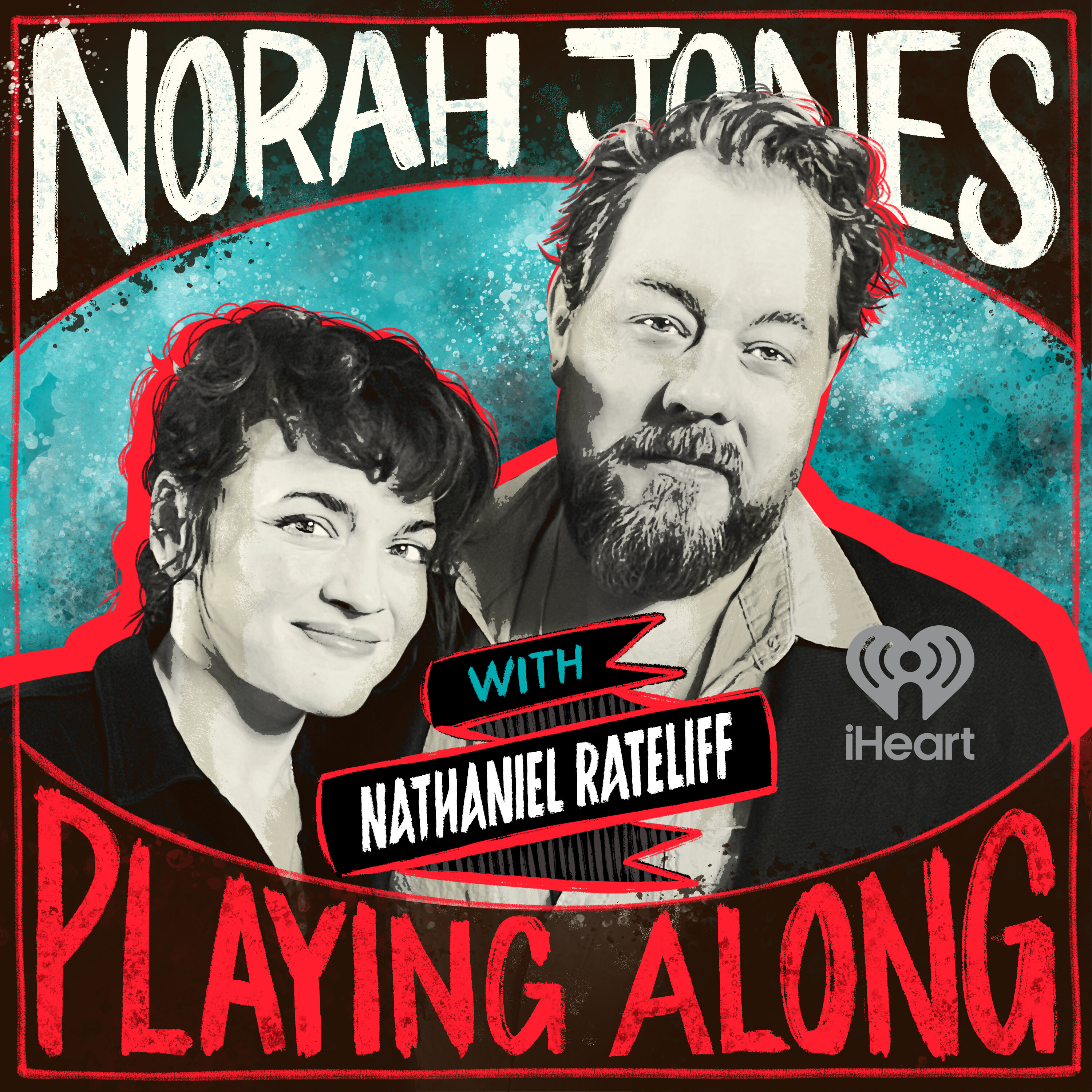
·S2 E15
Nathaniel Rateliff
Episode Transcript
This episode is also available as video on YouTube.
You can visit Nora Jones channel and be sure to subscribe while you're there.
Hey, I'm Norah Jones and today I'm playing along with Nathaniel Rightlift.
Speaker 2I'm just playing lo weusy.
Speaker 1I'm just playing lone uzy.
Speaker 3Hi.
Speaker 1Welcome to the show.
I'm Norah Jones and this is Sarah Oda.
Hello.
Speaker 4Hello.
We have a very awesome episode today.
We have Grammy Award winning singer, songwriter and bandleader Nathaniel Rateliff and his band is Nathaniel Rightliff and the Night Sweats, which is the best band name ever.
Speaker 1That's a great band name.
Speaker 4He's released several solo albums and then released The Night Sweats self titled debut album in twenty fifteen.
His latest album came out in twenty twenty four called South of Here, and alongside a steady run of touring with the band, we.
Speaker 1Had so much fun.
Every time time I hear his music, I stop and I listen and I'm so happy, Like if I hear it on the radio or something, it just always feels so good.
Speaker 4I know, I was so happy he could do this.
I know it's his songs are like stories.
Speaker 1Yeah, and his voice is incredible and it's just it was really fun.
Speaker 4Yeah, this one was great.
In this episode, you're going to hear about his sort of unexpected journey to discovering who he is as an artist.
You're also going to hear about the art of doing the cover song, which can be tricky sometimes.
And as always, there's beautiful duet performances.
And this episode has extra songs in it.
Speaker 1Yeah, it has a lot more lot of songs tuned here it is.
Enjoy the episode with Nathaniel Rightliff, all right, all right.
Speaker 5We got.
Speaker 6I'll wait till I stopped doing the lip drill.
Hey music, here we go.
All right.
I hear the sound it's going through my brain.
Speaker 7I hear talk of the people.
I feel little fall and ring.
I see a man crying cause the whole world has let him down.
Speaker 6Kids are laughing in funny faces over clown.
Speaker 8My mind is like a spring in the clock.
Speaker 2He wonn un why.
Speaker 9I can't see, I can't think, I can't feel long out of time.
Speaker 2I'm lumping now down.
Tell me where is it gone to me?
Speaker 6You see it starts at the beginning.
Speaker 2Of the end.
My friend.
Speaker 10I hear thunder, and I can feel the wind.
Speaker 2I can see angry faces, the eyes.
Speaker 11As a man, and don't forging where can lay bleeding on the ground.
Speaker 3And there's no please on and slamming.
Speaker 2We can be fine.
Speaker 12Solby stabbings and shootings and young men dying all around, and it keeps golding through my brain.
Speaker 6I can steal Look you the sound.
Speaker 2I hear talking of people.
The world is going and safe.
Oh this level is.
Speaker 10The falling ray.
Old left is the falling ray.
Speaker 3And oh, d left is the falling ring.
Speaker 1That was awesome.
Speaker 6Yeah, yeah, I like that.
What a great tune, such a good The whole record is good, so good.
Speaker 1I love that record.
Speaker 6It took me a while to find that one.
Actually, I was given that at Richard Swift's memorial service.
Really yeah.
People were instructed to like, bring a piece of vinyl and exchange it with somebody else.
Speaker 1Oh wow, what a beautiful way to yeah and do that.
Speaker 6A lot of people forgot.
But then a really close friend of Richard's gave me a copy of that, and he's like, you know, this is one Richard's favorite records.
Speaker 1You didn't know yet.
Speaker 6I didn't know it.
I knew link ray from like Yeah Rumble.
Speaker 13Don't Yeah, Yeah, yeah, yeah do such a killer three chord song.
Speaker 1Is the best, the best.
Speaker 3I remember.
Speaker 6I knew that because I used to like I got my first little Fender champ, like a silver faced one, like vibro champ from my uncle from Big Iron, my uncle Alarney, and I would just like play that on everything on tin that's great, you know, and then play to Rumble.
Speaker 1I think that's the best song for a new guitar player to learn.
Speaker 6You're slaying.
Speaker 1Yeah, it just feels like you're doing it.
Yeah, and even that little figure is not hard to get.
Speaker 6I'm like, I'm not going to attempt it right now.
Speaker 3You can do it.
Speaker 6You can go go yeah like a total ship.
Yeah, but yeah you just.
Speaker 1Yeah.
Speaker 6But it's also fun to just put like noise canceling headphones on now and listen to that record, and if you have headphones on, you can tell that, like the main vocal is just done over a scratch.
Take the double yeah, okay, doubles just.
Speaker 1I love the double Yeah, that totally makes sense.
Speaker 6But it doesn't line up, like it's really messy.
Like I think the whole record is so cool and viby and actually sounds rad but it's just so messy, And I think it's a great example of music doesn't have to It never has to be perfect, you know, like matter.
Speaker 1If it's not.
Speaker 6Yeah, well people haven't, like I feel like a lot of young people and I certainly did, like I had an expectation of what like a recording experiences is supposed to be.
Yeah, but it really is about like feel and fun, you know, like if you're having a good time, it's probably going to be what you want.
Speaker 1It's about the emotion, capturing the emotions.
Yeah, yeah, and it can be messy, but I also.
Speaker 6Feel like there's a way to make your voice very emotive, and it's like you're going there without going there, yeah you know what I mean, Like you can sound away, like you don't have to cry on every take, but those are beautiful moments when they happen.
But I certainly had an expectation when I was younger that like everything had to have that kind of feeling, it had to like really mean something.
And I think it still gets across the emotions.
Speaker 1Well, if the emotion of the song is in you, you don't have to cut yourself exactly yeah, and bleed on the tape exactly, you know.
Yeah, yeah, I love that.
I was wondering if you wanted to talk about Richard Swift a little.
Speaker 6I'd love to.
I love Richard.
I think about him every day.
I actually carry like a little traveling of frenda and I have like I set up a polaroid to Richard and my father and like little trinkets and then oh wow, and some of it is a way that like when you're moving all the time, like then there's like there's a familiar sense, you know, it takes.
Speaker 1That sense of yeah, when you're traveling.
Speaker 6And then yeah, and I just like I like that I don't do anything like that.
No, I should just get something.
Speaker 1I should you know, I think I would enjoy it.
Yeah, yeah, the ritual.
Speaker 6That kind of stuff.
So but you know, I love flowers, and you know, at a certain point you can start to ask for things and it's not like a terrible thing to ask for.
It took me a long time.
Speaker 1To make flowers.
Speaker 6Yeah, you can ask for flowers in your green room.
So I just get to I get lilies every day, and so then those are all familiar sense that I really enjoy and they're like peaceful so like to where it can be chaotic, and you know, like I feel like it was hard to even ask for my own dressing room for a long time because then I felt like I was trying to.
Speaker 1Like because you're in a band, yeah yeah.
Speaker 6But I'm not trying to like exclude myself or elevate myself to a different place.
It's really like there's different things required of me, you know.
And like even though they had a realization the other day when I was doing something with the Colorado Symphony and it was like five guys in the band, like me and four of the guys in the band and then two other singers, and I like walked into the green room and everybody was there, and there's like four conversations going on, you know, tour managers asking me questions, production managers ask me questions, assistants asking me questions.
I was like, and I got to do a twenty minute vocal warm up, and I was like, I can't.
I can't actually be in this room.
There's like too much chaos, and like I have to find my center, you know.
Yeah, And I used to never really do that.
I used to just feel like I was like kind of spinning out a lot, you know, and so all those things are like ways to to find like some sort of peaceful spot then to move outward from there.
Speaker 14You know.
Speaker 1Background noise is a problem, I think.
Speaker 6Yeah, I can multitask, but I can't have multiple conversations at once.
Yeah, you know, like I can dovetail on the stove or do a bunch of things, but like conversation with music and my hearing's a little appropriate for my age and the amount of heavy equipment and loud stuff I've been around, so like, you know, it's not like terrible, but it gets too much at once, is like sense you overload from.
Speaker 1Yeah, it gets overwhelming.
The questions, the constant questions is hard too.
Speaker 6Yeah.
Yeah, sometimes you just want to be alone, like left alone.
Speaker 1When can I be alone?
I don't know, maybe later today.
Speaker 6I know it's one of the things I worry about having kids sometimes.
Speaker 1Oh yeah, no, they won't let you be alone.
But it's fun.
Speaker 3You know.
Speaker 1They're full of struggles too, but it's pretty fun.
Yeah.
Speaker 6But back to the Richard thing.
Richard, like it was just an interesting period in my life because I'd been like a singer songwriter for years and toured, and I was kind of ready to give up, you know.
And I had been a gardener, was doing fine gardening and landscaping and touring at the same time.
Speaker 4Wow.
Speaker 6But it was nice because I could come home and do a job I really liked.
I was good at it, and so and grew up doing a lot of that kind of work.
When I was supposed to be in high school as a janitor and a grounds for a high school.
So real, it was sort of like kind of like good real hunting.
But I wasn't like solving any math problems at night.
So but that movie is definitely written about me.
Oh and I remember I was just wanted to like create something that like I always love R and B in soul and I just started doing demos in my house.
And I was on tour with somebody who was friends with Richard.
I had met Richard briefly.
We crossed paths because of Delta Spirit when I was on tour with them and we were in the UK, and he happened to be there and popped in and we hung out in the green room and chatted and the years, you know, and then it would have been several years later that I was working on these demos just kind of as a way, like a song exploration with really no like they just you know, sometimes stuff just starts to show up.
It just starts to come out of you, and so you end up being like a conduit or the vessel.
Sorry, it's a very long winded explanation.
It's seven hour.
So I ended up getting connected with Richard again because a friend who was on tour with me gave me his number after I played her a couple of the demos.
She was like, you should send this to Richard.
I send it to him, and then I just got like a cold call in the middle of the night, middle of the night, well like late at night, like ten thirty, you know, and he was like, hey, it's Richard.
Speaker 15You know.
Speaker 6I was like, hey man, how's going.
Oh good, you know, just like listening.
He's pretty cool.
What's your process?
I was like, oh, like one mic and move around the room.
He's like, it's pretty much what I do.
Speaker 1That's cute.
Yeah, it's like it's like you're a junior high.
Speaker 6Yeah, it was oh yeah, it's like cong what do I do?
And I was like it is not what he does, you know.
And then we just started to talk.
And at the time I had also like I originally got signed around to records as a singer song right, and that sort of like when I went to Present, I had like, I don't know, twenty some odd songs for my second record, and I was really excited about those demos and always enjoyed the process of demoing stuff by myself.
Speaker 1It's hard to beat those, I think sometimes.
Speaker 6Yeah, the demo itis is a real thing.
Speaker 1I mean I prefer them.
Speaker 6I do too.
Speaker 1I usually use them.
Speaker 6I use them or sometimes I've started.
I found a trick that I would just if I like the demo so much and we weren't recreating it, I would be like, play the demo and I am going to use the demo as like a scratch, yeah, you know, and then kind of follow the feel on the movie, make it a little bit exactly.
Speaker 3And then so.
Speaker 6You know, I went to like present these demos to round of Records, and they just didn't get it, and so I was that record never got made through them.
I got dropped.
And then even my whole record first release was just like kind of you know it, it kind of got shelves.
Speaker 1You went to the spin cycle of the record business.
Speaker 6Yeah, and then you know, just like hard because I had a band, but I was like signed as a solo artist.
And then your band's like resentful as well because they're like I thought we were a band.
Speaker 1That's a whole other dynamic.
Nobody really realizes.
Yeah, it's a real thing.
Speaker 6And and labels aren't really good at like they don't care.
They're not trying to bring people together.
You know, there are a bunch of squares that they don't know how a lot of people get jobs in the industry.
But there are great people in the industry and I've been blessed to work with a lot of them.
And so then I like co produced and self released with the help of my management the next record.
And it was just a struggle, you know, and I like, it's like how long can you play small rooms and not get anywhere?
And it was just like the travel is hard.
At the time, I was married and I was raising my daughter, and then Concord came to me, which was funny because they had bought round her.
And then I got dropped.
Speaker 1Then they came back.
Speaker 3Yeah.
Speaker 6After I so I released one record on my own.
It was working on EP and then started the night sweat stuff, and I was I was really reluctant to work with them because you know, to get dropped from a label is just like heartbreaking when you you know, it's just really there.
And I feel like I always right at the start of the end of artists development, you know, where like they don't they don't nurture artists anymore if you can't have a blow up hit, Like I feel so much for people that are just like in the van doing the work because I did that for so long, and like most of my career until the past ten years was that, you know, but you need time to discover like who you are as a songwriter and as a performer, you know.
And I feel for the people that go from nothing to stadiums, you know, like, yeah, but.
Speaker 1Social media, they get enough followers and then all of a sudden they're in a stadium and they barely right out playing clubs.
Speaker 6But then it's even hard to like how you build your team and the people that surround you.
Then are you like only surrounded by yes people?
Are you only surrounded by people that are interested in the amount of revenue they can generate from you?
And yeah, and you know, bolster their own careers and their own finances.
So it's tricky, yeah, and there's like so many pitfalls to that, you know.
Yeah, but I ended up signing with Concord, and Concord also ever works with Stax Records, and so in the process of making the record with Richard, I was like, I, you know, like the Stacks catalog was a huge influence in the southern soul sound on that first record, and so it ended up coming out on Stacks and Matt Marshall was my A and R guy there together, and yeah, and Matt has always been really supportive.
That's the other is like with with Concord, They've never been like, we don't like this, go back, yeah, and go back and work on more.
I've just always been like, this is the record, this is what I want to do.
It's great, you know, And I don't think people get that a lot.
So I feel blessed on that.
Speaker 1So yeah, I feel lucky in that way too.
Yeah, it's tricky people chasing things.
That's not how I feel like music should be.
Speaker 6Yeah.
Speaker 1It's one thing to be inspired or ambitious, but it's another thing to chase something that isn't inspired, you know.
Quite.
Speaker 6I know.
We were talking about Richard and I just keep telling you far more information.
Speaker 4You know.
Speaker 2It was great.
Speaker 1It was a good like lead up to how it all happened, and then worked with him.
Speaker 6Then we met.
I met Richard and it was like I went out there alone because I didn't really The Night Sweats weren't a band.
It was just me and the Attic.
Yeah, Richard and I like it was like a kindred spirit immediately.
Speaker 1Yeah.
Speaker 6And he would even be like, oh, it's like you're my twin, you know, and I would like and we were like we were partying, like you know, like just drinking like not no drugs weed, He's not drugs, you know, and we just really drank.
We really went for it.
But that aside, like our our ability to work together in his his sens of melody and his ability in the studio to just like crank shit out because essentially we would like get a song done in four hours.
Speaker 1And you would just both play everything and yeah.
Speaker 6Yeah, I started off on drums as a kid, so I can play drums.
Rich could play drums, He would play keys, and then yeah, just play guitar and bass, and then we overdubbed horns later on, we didn't even have horns on.
Speaker 1That stuff like that record.
I think that's my favorite way to work.
Yeah, if you have the right chemistry.
That's how I work with.
Speaker 6Leon, Yeah, because you can work so fast.
Speaker 1Yeah, and it's just so and then it still sounds organic and sort of off the cuff even though it's all overdubbed kind of.
Speaker 6Have you done more than one record with Leon?
Speaker 1I did two records with the most recent one was him, But I mean we did have a band on a few songs and it was amazing, But I just I think.
Speaker 6Was that like Tommy and No I used.
Speaker 1My drummer, Brian Blade, but but it's really Leon on drums on more than half of the record.
Because the demos were fun and they sounded great, so we just didn't end up redoing them.
Speaker 6I love it.
Speaker 1Yeah, I think it's I think it's just such a fun way to work.
Speaker 6You know, there's good and there's bad things about having a lot of people in the room, you know, and I even like it could be magical, but it can be.
But sometimes too many cooks in the kitchen just makes for a terrible meal.
And and so sometimes the like the two voices and two ideas.
Yeah, that was The other funny thing is like the song that Richard first chose, Like the first day, it was like I felt like the door is song I brought in that was sort of like he was like, let's do this one, Like what yeah, you know.
But but now in hindsight, I realized it was like for the first day of getting comfortable together and getting sounds and and then you know, like from a producer's perspective, watching somebody else work and then trying to understand that now it makes a lot more sense than I did then.
Speaker 1Yeah, yeah, well that's cool.
What's that song you said, get used to the Night?
Speaker 6Yeah, you want to do that?
I do?
Speaker 1I do kind of relates, it.
Speaker 6Does trying to remember is it four or five?
Speaker 1This is from the newer album?
Speaker 6This is from yeah, and so this actually I after, you know, I started working on some songs that, like, during the second record I was doing with Richard, I was actually starting to go through a divorce as well, and there's some songs that like I'd played for Richard.
I was like, this is not for the night sweats, this is like something else, and he was like, whoa, it's like I like that He's like can never be too Nielsen, you know.
And so we had plans to make this like solo record after the second one, and he was going through separation as well, and we were both struggling with alcoholism.
Like we could disappear together and get hammered, or we would be each other's support systems too, you know.
Yeah, And so I ended up making that record without Richard after he passed away, and so I kind of wrote a lot of the songs from that space of like, like how do we recognize that brokenness that's in us that I feel it's like a part of human experience without letting it like take you.
Speaker 1Drag you back in.
Do you think that the part of that cycle with the addiction was writing songs out of it on a certain part of the circle.
Speaker 6I think I think the songs because in the way I write sometimes there can be a lot of stream of conscious stuff, and so you're not really aware of what you're talking about until you like take a step back and like hear what you're saying, and that can be heartbreaking to then see yourself in the lyrics in a way that you can't in your own life.
You know.
So there's some like lines in here that I feel like reference, Like the I used to stay home and writhe in my bed is like just about having delirium trimmers.
So and then even the title and the line get used to the night that, however crass it sounds, is like it's like it used to being dead.
Speaker 1So let's do this, let's I love it.
Speaker 5All right, here we go.
Speaker 2You used to get around, You found one.
Speaker 6One to get around and wanted to.
Speaker 16Get Now feel the name like sold man, he lost day.
He used to stay on and rise in my bed.
Speaker 3I wish I could retire.
Are you still hard with?
I used to do card whills to land on my head.
Speaker 2I used to annoy it all can mess man.
Speaker 3Used to be a proud fucking fool.
You running.
Speaker 2I cat man.
Speaker 16It's still so much love for me to.
Speaker 2Do you most name.
Speaker 8This ain't your town going wrong?
Speaker 3Down the one with I gotta hide myself.
Speaker 9From the storm.
Speaker 2I don't know how long I will.
You found some.
Speaker 3One to get around, and one again used to do all.
Speaker 2A got the black down just be time been used.
You could be sere that day used to solve.
Speaker 14I used to be you.
Speaker 3It used to now.
Speaker 2Could you see the name.
Speaker 1That's beautiful.
That's a beautiful song.
Speaker 6Thank you.
Speaker 1It's crazy knowing things about a song I'm hearing it, you know.
Speaker 6Well, it's funny because I feel like, you know, even like the writers I love, Like when I was growing up, you just didn't hear the inside scoop on a Bob Dylan song or Leonard Cohen or townsmand Zant.
You know, those are all like secrets.
And now the way we work is like everybody wants to know everything and.
Speaker 1They feel like they're entitled to it.
Speaker 6Yeah, and I'm happy to share it.
Speaker 1I think if you're happy to share it, then it's great.
Speaker 6Yeah.
But it's also like but like in terms of like social media, sometimes it feels so forced or like my least favorite thing to do is like an ep k oh yeah, and they're like, tell me what this song is about.
Speaker 17I was like, like, now, why don't you use your brain?
Speaker 6Yeah?
Speaker 2I was like, it took me a long time to forgos.
Speaker 6I have no education.
This is hard for me, you know, Like, but yeah, I don't know, It's it's funny.
Speaker 1I'm not really I'm not really into sharing what things are about usually, but it might be because I find some of the things either too personal obviously, but also some things might be not as deep as people might think it is.
Speaker 6Yeah exactly, but but I like I understand like there are certain like certainly in the past, I had written stuff where I was it was stuff I was having a hard time saying in my life.
Yeah, like you don't want to like give that away and you're electronic press kit.
No, no, you know what I mean to be, like, I'm struggling with my marriage and this and that, you know business.
Speaker 1Yeah exactly, Yeah, I know.
And also I think that sometimes it's a way to deal with that stuff without having to look at it or say it out loud.
I mean, it's like therapy in a way.
But it is songs.
You know, you're writing it to get out.
I remember I wrote a whole batch of songs once and I had no idea what I was writing until a year later.
Speaker 6Yeah, you know exactly.
Speaker 1It just happens.
Speaker 6Yes, Well, you.
Speaker 1Know there's this one song in yours that I mean, I think it's it's just makes me emotional every single time I hear it, and it's the and it's still all right.
I just love this song.
Speaker 6That was also a song for Richard.
In the process of making that record, Yeah, I didn't really have that, you know, I didn't have a title, didn't have anything.
And we actually went back to National Freedom his studio, and I went with Patrick Meuse who played drums, and Patrick was the only other person I played music with that I brought to the first session with Richard.
And then once Richard figured out that Pack could also do pro tools and played drums and other stuff, then he was just like, why don't you go do that bad you know, like Mace, go do this.
So yeah, he utilized it.
Like Richard's best approach to everything was was true laziness, honestly, you.
Speaker 3Know what I mean.
Speaker 6Like sometimes like that's good, that's good, but it was really like to just go back into National Freedom, you know, Richard burns so much Polisanto, like the place smells a certain way, it sounds a certain way, and like, you know, even when I listened to like a Damian Gerardo record or other people that Richard had produced and did in that study, like you can hear the sound of the room, you can hear you I hear what the floor sounds, you know what I mean?
Like it's very familiar.
Yeah, it's a character in its own it's still there, it is, yeah okay, and it's still being used.
I've popped in since a couple of times, and there's just like a there's a spirit in the place for sure, you know.
Speaker 9Yeah.
Speaker 6I don't know if it's Richard's, but it's like maybe just all the music that was made there still lives in that room.
Speaker 1So those kinds of places are really special.
Speaker 3Yeah.
Speaker 1Absolutely, yeah, So I might cry at this one.
Speaker 6I actually I wrote this one morning.
This is like a song I kind of started in a hotel room before Richard's memorial, And I feel like it is like the observation of yeah, like humanity, human experience is difficult, but it's always going to be okay, you know.
Speaker 1I think that's why it makes me cry.
It's so emotional and so relatable, you know, and simple it is, which is the best.
That's the best kind of song.
Speaker 6I love it.
It's like, as my interpretation of John Pryan's just a couple of chords.
Speaker 18It's all you all right, you're ready.
Speaker 8Ain't all right?
Speaker 19The hardness of my head, close your right, spinning around and.
Speaker 7Say hard times when you could find it.
Speaker 6Ain't the way that you want, but it's still all right.
Speaker 8Lead at night you lay around on accounting all the lights.
Speaker 2It means so funny now say times are hard.
Speaker 3You get this far, but ain't the witch you want.
I'll be damned it's old man.
Speaker 14Don't start to count this losses.
Speaker 3But it's still all right.
Seeing learn a lot out there, all the scorch and burn.
Gonna have to bury your friends.
Then you finally gets worse standing out it.
But you know why they get darned.
Stop praying for wings scroll, I'll baby, just let gold.
Speaker 8It ain't all right.
Speaker 20I'm spending out ahead, and it was cold outside when I hit the guard.
Speaker 3See I could sleep here and get on the field of me big time.
Speaker 10To grow.
Speaker 3The limit.
I don't know.
Speaker 2Now, hey, tonight to think about.
Speaker 21Remembering all the time you pointed osa glass is clear.
But all this fear starts even Mark idle him.
Speaker 3The bullet stands for your time in the dark.
Speaker 22But it's still al right, so pretty the no tears.
Speaker 6You made it through that I.
Speaker 1Made it through.
But that's a beautiful song.
Speaker 6Thank you.
Speaker 1That's just one of those songs.
Speaker 6Thank you.
Speaker 1You hear it once and it's just like whoa kind of sticks on you.
Speaker 6Yeah.
Yeah, I feel like songs sometimes you just like a they come out of nowhere and they feel like a blessing.
Speaker 1Those are definitely the best ones.
Yeah, it's my favorite kind of songwriting.
When it just happens, I know, I love it.
I love it.
When did you start writing songs?
Were you little bitty?
Speaker 6Yeah, I would have been a teenager.
Speaker 1Yeah.
Speaker 6I first started playing drums.
I got my first drum kid when I was seven.
Speaker 1Oh cool.
Speaker 6My mom and dad played music in church and like sort of a Christian, non denominational kind of thing that was like kind of kind of radical, you know in terms of like yeah, and my dad like in the seventies was prayed for and healed of cancer were kits and foma and pancreatitis.
Speaker 1Wow.
Speaker 6And so we kind of went from church to church and my dad would give his testimony and my mom and him also wrote religious songs together.
But also like you know, my mom was like a big James Taylor, Jim Crochey, Gordon Lightfoot.
Yeah, and that was kind of like what was in the house a lot.
My dad played harmonica and saying harmony and what did she play.
She played twelve STRINGO, you know, it's all string.
Guitar was always her instrument of choice.
Speaker 1Well that's a hard choice to me.
Speaker 6Yeah, but you know I remember like, yeah, when my uncle got her her first like Martin.
And it's crazy because my parents are so young, Like I remember my mom turning twenty nine.
Speaker 1That's crazy.
Speaker 6Yeah, it's crazy to be kids having kids, but so we you know, we spent a lot of time in church and singing.
Speaker 1So did they get your drum kits so you could complete the band?
Speaker 6I think I just wanted to play drum, and then when I was probably eleven or twelve, I got interested in guitar.
But then it really took me a while to like really find my way around it.
I think like my dad passed away when I was about thirteen, and that's when I kind of got into playing guitar.
Wow, And my mom taught me a couple of chords, and then immediately I just wouldn't like make up songs.
Speaker 1That's great, but.
Speaker 6I was also like like in my younger years, like they would make me sing harmony in church, and I was like so afraid of singing really yeah, just yeah, I was very not confident and very shy about it.
Yeah, just like a scared, little chubby kid.
You know.
I have an older sister who's two years older, and then I have a half brother that is twenty years younger than me.
So yeah, but yeah, so my sister was bossy and trying to tell me what to do, I know, but then I was also like a you know, I would hum and didn't know people could hear it.
So I was definitely put in special classes at one point because they thought I was a special needs kid, and I probably was.
But luckily it was before the era of medication, and I missed out on all that free speed you know.
Speaker 17Yeah, oh my god, sorry, which I could only imagine would have really messed me up.
Speaker 1But that's a whole yeah yeah, factory.
Speaker 6But yeah I don't.
Yeah, So like guitar, it was just that I never really wanted to be a songwriter.
I like loved Kendrick and Greg Allman and and yeah, I just kind of wrote like some songs would be like making fun of my sister, Yeah, just anything, you know, yeah, like someone it would be goofy.
And then it became like love songs pretty quick because I did not know how to like.
Yeah, it was pretty lonely and and never really knew if people liked me or not, so I would just be like, there's no way that's ever going to happen.
I just want to hug you, yeah, and then just be.
Speaker 1Like and then you'd write a song about it.
But isn't that kind of what all songs?
Speaker 15Yeah?
Speaker 6And it started that way, and I'm kind of still the same really, Yeah, I just like more intense, so.
Speaker 1Yeah, yeah, wow, that's really Is this all okay?
Speaker 6Is it all seemed like too?
Because I'm not really depressed.
I just hope it doesn't seem like too much of a downer, you know.
Speaker 1It's really I think it's really special when people share.
I think what you're sharing is really pretty deep and I'm not depressed by hearing it at all.
And I thank you for sharing it all because I think, you know, if you feel comfortable sharing, that's the real stuff.
That's what people can relate to, is the real thing, And I think it's very helpful.
It's helpful for me right now.
Speaker 6Yeah.
Speaker 1Yeah, yeah, it's beautiful.
Speaker 6We still got two more.
Speaker 1Yeah, do you want to?
Speaker 6I want to do mayvis in South here?
Speaker 1Yeah, I love those.
Speaker 11Here.
Speaker 1Yeah, I love this song.
Speaker 6So you know, we both are friends with Mavis.
Speaker 1I think the last time I saw you it.
Speaker 6Was with mAb's birthday birthday.
Since saying I haven't even like Mavis and I have like our friendship has grown, you know, and it's been like years of like every time I see her, uh, you know, and she calls me montana, which I've learned means motherfucker.
Did you know that he did not?
Yeah, the spencer Spencer tweety told me that he was just like, oh, that means motherfucker.
He's like they weren't, you know, like Staples weren't allowed to curse.
So she's kind of like, man, you're a motherfucker.
Is like her being like, oh, mom.
Speaker 1Dona, that's so cute, you know.
Speaker 6And and I just I like I cherish every moment that I get with her, and and I just I honestly just like I feel like that makes me incredible.
Speaker 1I know she's the best.
Speaker 6Like I feel like people should have so much reverence for her, you know.
Yeah, And I just like anytime around her, like her to be uplifted, to like the beauty, and like I just want people to see that because the amount of influences she's had, and like I know, HBO did a documentary on her, but it like it just it doesn't tell the story that you get from Mavis when she's telling you stories, you know, And I was like, wow, I wish there was like I could hear more of that and and the beauty in that, and like just how much her and her family has had an impact on modern music.
You know, Sorry, I can.
Speaker 1I don't have Yeah, that's amazing.
Speaker 6You you know, I thought it was gross.
My dad always had one, but it's really convenient.
Speaker 1Yeah, it was great.
Speaker 5Sorry, I got all Yeah, but all right, you know.
Speaker 15The words, you know, the words being with you.
Speaker 3You know the nights.
Speaker 23Another nights that they got seen you go on away, go on the way I do not own.
Speaker 3You, and you've been last knowing the way I do.
Speaker 14I do for you, No la scene.
Speaker 24I do for you, oh man.
Speaker 2Any other times said your feet would move so fast you couldn't.
Speaker 3See gone all the days.
Speaker 9When you could started hit and no run me down on the lights, down on the lights, said even up.
I recalled the time.
Speaker 18You and my.
Speaker 3No time your bad.
Your teeth was always just a smile.
Speaker 18To me, it was I.
Speaker 6I couldn't remember how it ended the right way, So that's him.
Speaker 2That was great.
Speaker 5Yeah, because there's all.
Speaker 2The time recall it time.
Speaker 1Oh yeah, it goes up.
Speaker 6I recall the time.
Speaker 3You were man all the time you'll be.
Speaker 6Oh though, it's just a smile to me.
Speaker 1That works.
Speaker 6We also, you know, it's I feel like that song like just I think I call it maybe's because it kind of like made me feel like going to church, you know, with all the the vocals.
And when I first toured that record, it was like a solo record with a ten piece band.
Oh my god, but we didn't.
It was a bum when we only got to do that record because it came out on February fourteenth to twenty twenty.
We played ten shows and then we actually got to New York and we're already starting to get like, you know, messages from people on social media like I can't believe you guys, like I can't come, Like it doesn't feel safe.
Speaker 3And nobody knew it.
Yeah.
Speaker 6Yeah, it was just such you know, like you pour your heart into something and it means so much, and I know this happens all the time, and it happened to a lot of people who put out record at the same time.
But luckily, I feel like those records became the soundtrack to their pandemic, you know.
Speaker 1Especially that record, it had such an intimate feel.
Speaker 6You know, I look forward to making another record like that.
Yeah, And I don't know if that's what.
Speaker 1I'll do next or you know, follow the follow whatever past that you get pulled on.
Speaker 6I think it as it comes, I do, you know, I feel like for my you know, I've been really fortunate in my career and then I always just kind of like did what felt best, you know, And there's been a couple of detours where I feel like I I just didn't know any better.
That reassures that, like you should have just stuck to your gut.
That like, your initial feeling is generally the one to go.
It, like, your initial gut instinct is like, if you feel that, don't question that.
And I like want younger artists to know that, ye just be like if you feel something like, don't be misled by what someone's trying to tell you how your career could go, because there's no guarantee of any of that.
Speaker 1It's true, you don't want to do.
Speaker 6Anything you regret exactly.
Speaker 1You don't like even if it's just a bad song, especially it's a bad song.
Speaker 6But I certainly throughout my career, like earlier, for sure, like songs that like, you know, management label would be like, oh, this song could be a radio I was like, I don't want to push that, and I probably shot myself from the foot.
Yeah, you know, but I think it would have been like or not pantering to a trend at the time, And yeah, I might have elevated my career too, But I feel like it's still just been like a slow incline.
Yeah, I haven't got to the decline, you know.
I don't feel like I haven't plateaued yet, which is kind of amazing.
It's been ten years of the Night Sweats.
This August will be ten years.
Speaker 1You just played the Garden.
Speaker 6We just played the Garden and it was like, you know, it was oh, I mean it was my mom's first time in New York.
It was I mean, it's garden.
It's like the most famous arena in the world.
Speaker 1You know, like that's pretty fun.
Speaker 6Yeah, it was cool, you know, and we'd just done Fallon and honestly, Jimmy like helped launch our career and in such a way I don't think anybody knew was gonna happen.
I certainly was like sitting in meetings after that where people are like, well TV doesn't sell records, but but your that performance did.
And I think, you know, like he had a song, and you know, I feel like we'd tried to do Late Night earlier on in my career, and other than Jules Holland hadn't had like any any no break nothing in the States.
And so Jimmy had a song because he just loved the song sob and and that was really like in the process of Richard, that was like a throwaway and Richard like it was the last song we did when we when we were working together for the first record.
He was like, Okay, so label loves the song.
It was like, huh, management loves song.
I was like, yeah, he's like when you play it for people who they freak out.
I was like yeah, He's like, okay, well we should probably do it.
It's just funny what what like people latch onto, you know.
And then I struggled with for a long time, is like, is my legacy going to be this song?
Speaker 4You know?
Speaker 6You know, but at some point it doesn't really matter, because it's like giving me the ability to do everything else that I want to do, and I'm still able to create music and write from a place of honesty.
Speaker 1All right, do you want to take us out on a song?
Let's yeah, so this is south of Here from your newer record.
Speaker 6Yep, I like this one?
Okay, right on?
Speaker 2Well, dude in the corners we're having.
Speaker 3As a wand up the road.
Speaker 2See him lost but not a band, and.
Speaker 3Well it's hard for one to know.
You just find the wind and flow the bucking' ta.
Speaker 7Is no.
Speaker 3And now I would have to do.
Speaker 2Let it out here they let us be and now whatever the just go.
I may even go back home.
Remember who I was in the corner and I happen in.
Speaker 3Things about no other ways.
Speaker 2We didn't all and one left standing.
Speaker 3When everyone else saw for your game and hate the word you know under the graves were hiding you don't on do I hate and the bad?
And I would have to go.
Speaker 2There something here that let us be.
Now I won't have to just move.
I made me go back home a male.
Speaker 14Who I would.
Speaker 3I wake in the little man?
Speaker 25Where my band, where my bed, where my bed where my bed.
Speaker 2Maybe something here didn't let us be.
That was fun.
Speaker 5I loved it.
Speaker 1Yeah, thank you so much for doing this.
It's been so fun.
We never really get to play together, I know, I like on a birthday.
Speaker 6I'm I know.
Yeah, it was really specially playing with you and singing with you in this way.
So it's really nice.
Speaker 1Thanks for doing it.
Speaker 6Oh my pleasure.
Thank you.
Speaker 1Great to see you again soon.
Now we did it.
Speaker 2Now we do it.
Speaker 1We can just be friends now.
Speaker 6Yeah that's yeah, Thanks for listening.
Speaker 1This episode was super fun for us, and I wanted to tell you about the songs we played this time.
We started with a cover and the first song we did was the Great Link Ray song from his self titled album, which was released in nineteen seventy one.
The song is called Fallen Rain, one of my faves.
The second song we played was get Used to the Night by Nathaniel Ratelift in the Night Sweats from his album South of Here, which was released in twenty twenty four.
Third song we did was and It's Still Alright, such a classic.
I love this song Nathaniel Rateliff from the album and It's Still Alright twenty twenty.
That was released.
The fourth song we played was called Mavis, also from that same album, and It's Still Alright released in twenty twenty.
Fifth song we played Wow, We did a lot of songs called South of Here by Nathaniel Ratelife and the Night Sweats album South of Here released twenty twenty four.
Special thanks to Nathaniel Rateliff for joining us today, and We'll be back next week with Bridget Everett.
Norah Jones Is Playing Along is a production of iHeart Podcasts.
I'm your host Nora Jones.
Visit Nora Jones channel and be sure to subscribe while you're there.
This episode was recorded by Matt Marinelli, mixed by Jamie Landry.
Audio post production and mastering by Greg Tobler.
Artwork by Eliza Frye.
Photography by Shervin Linez.
Produced by Nora Jones and Sarah Oda.
Executive producers Aaron Wan Kaufman and Jordan Rendog.
Marketing Lead Queen Annaiki Toodles
Speaker 14H