·E129
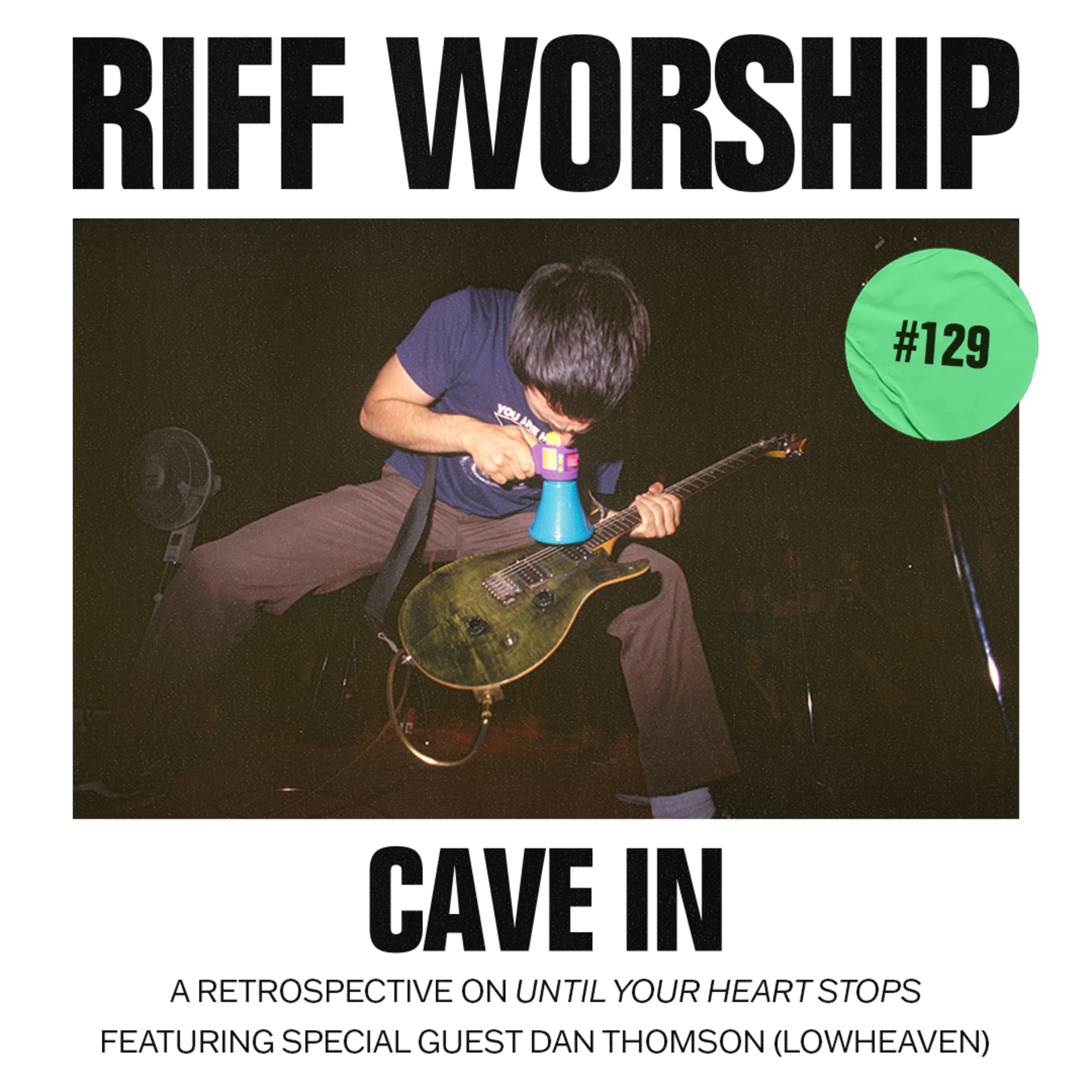
#129 - Cave In - Until Your Heart Stops w/ Dan Thomson (lowheaven)
Episode Transcript
Our first story deals with a subculture of heavy metal music that some feel is sending a dangerous message to your kids.
The forces of evil on the dark side of Devil, right?
And I want to talk tonight about the devil and demons and witches and Wizards and we just mix it up with hardcore and aggression.
And come out with something, we face an original sound.
Loud, Fast.
Heavy.
You know well what?
Do you got?
What do you got?
You're listening to Riff Worship, the podcast that attempts to answer the age-old question, what makes the riff?
Why do we care about riffs?
Talking about our favorite albums containing riffs, Talking to people who write great riffs.
I'm one of your hosts, Austin Paulson with me as always, my 2 best friends, Life Music, Justin Swindle, Dylan Adams.
What up?
Bald, beautiful here, shining, gleaming.
I got a nice glare going off on it right now.
Blinding Me got a fun record we're talking about today.
I mean, I guess technically we're talking about two debut records as well.
We have a very special guest with us today all the way from the great White N.
He is the guitarist, vocalist, lyricist of the band.
Just dropped their debut record, Ritual Decay.
It's out now through Monarch Heavy.
They have a run of dates through the United States this November.
So if you're out and about, definitely check them out.
Please welcome to the show Dan Thompson of Lohef.
Thank you so much for joining us.
You know, thank you for having us.
Although in that intro, if we had been smart, we would have done botch for this, the song that friends of our great white N.
So I'm don't get me wrong, I'm extremely excited to talk about this, but that intro, I was like, we missed one there.
My brain instantly went to the McKenzie brothers, so I was like.
OK, we went different ways.
Yeah.
I'm ashamed of that.
You're not.
It's fine.
Well, how are you?
Congratulations on the new record.
That's killer.
Thank you very much.
How does it feel?
It seems like it's been certainly several years in the making, but it's out there now.
Yeah, very truthfully, the lead up to the record coming out was extremely nerve wracking.
And we've all in previous bands been parts of this kind of thing going on.
And I'm not sure why this was so much different than any other time.
And then, you know, every time someone brings up the time frame involved in all of this, it's kind of like the putting your hat back out there like, Oh, yeah, that's why this is unnerving, you know, But it's just really great to, like, have it out.
And the response has been kind of overwhelming.
So we're just trying to enjoy that, you know, trying to enjoy the the fruits of the stress, for lack of a better term.
So.
Yeah.
Yeah, I mean, I know you guys have, you know, been around for, you know, a few years at this point.
You've had an EP.
But I, you know, I can't imagine, you know, making the call to be in a band that, you know, objectively has been around for a decade.
And then like, all right, we're starting fresh.
And, you know, I have to to wonder, like, you know, was there a specific goal in mind?
Like, why not continue maybe where the previous band Sparrows had left off?
Like what was the initial decision to kind of go in a completely different direction or start a new project?
I don't know if it was conscious, truthfully, because the way that sparrows kind of fell out was pretty sudden and unceremonious.
And Alex, who is also in low heaven, and I kind of just left that situation, I'll say.
And I was like, I'm not going to stop.
And he's like, I don't want to stop either.
And we're like, OK, so it was just a switch over at that point, but it kind of didn't feel real until we found Mikey, which is way too much ego validation for him.
But you know, having two people that work together all the time is one thing.
Having someone come from outside and begin work on that kind of stuff is a different.
Like that's really where the choices of like, oh, this is going to be something different.
And I think that's a little bit more of when I realized like, oh, like this isn't just the thing that I do now.
I've always done.
This is a new thing that I do when I have to adjust to that.
Even though arguably speaking these bands could probably be in comparison to one another, to me it feels like a completely different world.
So I mean, and and this is a essentially A pandemic band.
I mean, talk about, I mean, we all are in different states on and I mean different countries technically on this call.
But you know, were there any hurdles to kind of the writing process?
Were you able to maybe have a space to kind of hash some of these ideas out while you were kind of coming up with your sound?
It's weird cuz what I've discovered over the last few years of like re catching up with all my old friends and bands and stuff like people that I didn't see all the time is just how different the lockdown was for Canada versus the States.
You guys, it was like, oh, this happened, let's go back to doing whatever.
And we were locked down for months.
Like I, you know, I part of my job I didn't do for like a solid six months, you know, And so the kind of blessing and the curse of of trying to make all of this work is that there was just so much time to write and demo and rewrite and throw it all away because you have no confidence in anything and then bring it all back out of the trash can and like all of that stuff.
And that was a good thing, but it was also like, very tough to understand the fact that like, this is just what we're going to do for the next fucking year, you know?
Whereas like in a real band, you sit there and you jam stuff out and people have different ideas and there's a lot more going on.
But I think it also forced the three of us to really be focused.
Like when we would sit down to work, it's like, I'm sitting down to work on this song that, you know, we created two weeks ago, or I'm getting a different version of this song back.
So now I've got to, you know, figure this whole thing out and start again.
And it, it's in hindsight, it does actually feel like kind of a special, you know, experience of doing that sort of thing.
But we didn't even get together in a room properly to work on stuff for, I want to say almost a year.
Yeah, 'cause it was just, we couldn't, you know, we couldn't make it happen.
It like the summer that we get all kind of like got together.
We met in a fucking park so that we could sit far enough away from each other and have the conversation.
And then after that, it was like a good chunk of time before anybody could be around anybody again.
So, you know, it's very, like I said, in hindsight, it's very interesting to look back on and it's a very intense way of writing songs.
But I think that that the proof in the pudding came out with what we ended up creating, right?
So yeah, but I don't, I still to this day, like I know we're kind of out of it now.
The way that a lot of the states dealt with this still kind of blows my mind.
Like, I don't know what the fuck was going on in Florida, but like, they're on a different planet.
I don't know.
They're wrestling and all sorts of shit happening.
Is is anybody in Florida right now that I step on a bike?
No.
OK.
Hey, Florida, we're calling you out right now.
I have no problem.
I'm OK never going to Florida.
I love Gainesville.
I got some friends there.
But if we could take Gainesville and move it to like Massachusetts, I'd be OK with that.
You know, Gainesville, man, that.
'D be a weird accident.
I was.
Looking at the some of the previous credits by Brett, the producer of all Y'all stuff and I was very, it seems like a lot of like Midwest emo type music.
Were there any like records in specific that you liked that made y'all want to go with Brett?
So what's a little bit funny about this is when we first met, I first met Brett, it was actually previous to Low Heaven.
We had an existing relationship there, but he was at the time and still is the drummer of Crime and Stereo, which is a band that I love.
And so that was the initial draw to us working together.
But then the more and more we got to know each other, and this is pre pandemic into the beginning of the pandemic, like I realized just how much of like a musical savant he is.
You know, like he's just as good at creating like a free throw record as he is doing like a neurosis like worship record, you know, So when we would start talking about how to do these things, you know, he was from my world, he was from the thing, he would get my references.
Actually, it was perfect example of what we're doing here.
Massive fan of the band we're going to talk about.
So that was a big bonding factor on us.
But also because he's got so many other things going on, you know, he's a hot Mulligan Records and all this crazy shit that he's been involved in.
You get a different viewpoint to Heavy and I think that that was really important to us because there's a lot of great producers that do Heavy really, really well, but that's their niche.
And we wanted to do something outside of Heavy so that we could have our version of what that is.
And he's just the right guy.
But like, I would suggest him for any musician of it, like you want to do an alt country record, he'll start talking to you about Lucero and he'll just go into that zone.
Like he's just got that brain, you know.
But I know when you look at like his website, it's kind of like an odd choice for a heavy band to do, you know?
But he's just, he's awesome.
He's such a just a great musical mind.
No, I mean, we've, we've certainly talked about records where maybe like the person didn't have any sort of background within the style of music that they're doing, but it like worked out just because they were a solid engineer.
Like they just knew how to capture the sound really well.
And, you know, a similar thing came up when I was like looking at the the label for the EP Skeletal Lightning.
I'm like, you know, oh, they're in like Urbana, IL, you know, kind of American football area.
And then like a lot of the bands that you know, we kind of have heard and like saw shows of I mean, like tiny moving parts, the world is a beautiful place Island Misfit Toys.
Like I remember seeing like all these bands, like kind of at a younger age, but did you have like an established relationship with them?
Like how did that?
How did that connection occur?
Honestly, super randomly do we have a band on their label called Jillian Carter who I love.
And so I was listening to them and I was like, fuck it, I'm going to send, I'm gonna send them the EP and see if they're into it.
And I had a vibe.
I've known some other bands that have dealt with them on and off through the years.
Not to be confused by the West Coast band.
There's a band for Chicago that was called Droughts with an S like a, like a plural who really, if they had just gotten in a van and gone, they would have been really popular, but for some reason they just couldn't get it going.
But I had played with them a bunch in Chicago and Skeletal had done their record and so that had always been in the, you know, like this is just such a good release, you know.
And so we reached out, had a very brief call and just kind of we were very obviously for cut from the same piece of cloth.
And like they are nothing but supportive of any kind of music.
They're one of the best label experiences I've ever had in my life.
But they love heavy shit, even if it doesn't look like it from the roster, you know, they like they're the labels named after a Blood Brothers song, you know, like it's like a, there's references everywhere there.
But they also know when it makes sense to like sign a like pool kids, you know, like they know what they're doing, but they're just a pleasure.
And I just, I remember the, I never forget that like e-mail I got back of just like, yo, this is not what I was expecting and I'm into it like this fucking heavy.
And I was like, yes, they're like, we don't get this all the time.
But yeah, so they're great.
And I like, I mean, I already brought up Julian Carter.
There's such a fucking great band, but they've got some sneaky heavy stuff on that label and it's definitely worth checking out.
That last Jillian Carter record was nasty.
Disgusting.
I have that it's.
So good I.
Have that four way split somewhere in this pile of garbage.
Was it like Jillian Carter and Bess's Right?
And then I forget who else is on that fucking thing, but.
Yeah, that must have been like early, early Jillian Carter days.
Yeah.
Damn, fun times.
But you're new label Monarch Heavy, which, you know, objectively is just more of a straightforward heavy label.
And you know, with this relationship, it seemed like it happened like maybe out of nowhere, like they just kind of like, how did that they just kind of reach out like, had they?
We had a weird, like, personal connection through a friend of ours, but it was never he's.
He plays a band called Spotlights.
He plays in another band called On the Might of Princess, like a bunch of shit.
And like, he's in the Julia Christmas Band, which is fucking wild.
Yeah, his name's Chris.
And he sent me a message and was like, I had sent him the record just being like, hey, I think, you know, we're friends.
Check it out.
I've been sitting on this forever.
And he's like, do you mind if I send it to a few people?
And I was like, God, no, I trust you thinking that it's going to be like people he works with because at the time he was working at Revolver and like, you know, shit gets passed around in offices like that.
And about two weeks later, we got an e-mail from somebody at Monarch.
And I was like, no.
And just like, moved on with my life for a minute.
And then a couple of days later, got a text from Chris being like, yo, my friend from Monarch sent you an e-mail.
I just want to make sure that you got it.
And I was like, no.
And but it turned out to be real.
But very truthfully, it took almost a year and very truthfully, again, you know, coming from where we all come from, we tried to poke holes in this thing like fucking crazy.
Like let find a there's gonna be a reason not to do this.
There's gonna be a reason.
You know, it's, it's a fucking massive label.
You know, they've got a lot of backing.
They got a lot of their catalog is insane.
There's going to be a problem here.
There's going to be something that doesn't make sense.
You know, we had a couple great calls.
They had people come to see us play all this stuff and every time we'd get home and I'd be I'd be talking to, you know, whoever and I'd be like, no, I it's not going to happen.
Something is wrong with this.
And then even to the day of like our music lawyer looking at the contract and filling us all out, he's like, well, I think it's ready to go.
I was like, Nah, something's going to go wrong.
And I'm like, but they again, I I considered everything that's happened with Low Heaven pretty lucky, all things considered.
It has again not been nothing but a positive experience.
It's a very different world.
There was a little bit of culture shock with some of these things where we're very used to like doing a lot of things ourselves and kind of like, you know, taking control.
And they were very happy about that.
But then like money we didn't know how to use would get put behind it, which is just fucking crazy.
So But it's been great.
And I, again, have no complaints.
I think we're really lucky.
We have a lot of friends that have bands over the years have ended up in really bad spots where they just don't have anything to show for it.
And like, we very actively tried to find a reason not to do it.
And it just, it just works.
It's it's great.
I consider us very lucky.
They're very respectful of the art.
They're very respectful of our vision for the band and what we want to do.
And yeah, like I said, it's been overwhelming, but like in a positive manner, so.
Well, yeah, it it's come out great.
I, you know, I was listening to it and just enjoying, you know, one of the, some of the riffs and you know, a lot of the questions, a lot of the time we ask this, this question on the podcast is, you know, as a musician and a listener, you know, what do you look for in a Rif 'cause you know, I like listen to something like mercy death or cancer sleep and I'm like, ah, some big fucking riffs on there.
So I feel like this is something, something that you know, has certainly been in on your mind and in your wheelhouse for a long time.
But you know, what do you look for in a Rif?
What does it need?
What do you gravitate towards?
I think these are different based on whether I'm listening or whether I'm creating.
A lot of times my, the creative side of things is just, I get like AI don't know how to explain this properly.
It's like a feeling in the back of my head that maybe most people would call having a mini stroke or something, but I just, if I write something and I, I get that feeling, I'm like, that's the right way to go.
Whereas if I'm listening, you know, my listening habits versus what I write are very different.
And so a lot of times, like what draws me to a riff is kind of, you know, it's placement within the song or if it's doing something interest, you know, kind of weird or out of the ordinary.
But also like if I'm listening to Cult of Luna, I know what I'm getting myself into.
And then at that point it's just punching me in the face over and over for 12 minutes, you know, or Isis or any of those things.
So it really depends on like kind of where we're heading in that riff discussion, because I think that there there's a bunch of different versions, you know, like a riff can be a version of a hook in a song that's not going to have hooks, you know, like it's, it's all kinds of different stuff.
But as far as just writing it, it's just a feeling.
You know, there's, there's times where I like write something, I'm like, this is sick.
And then I listen to it the next day and I'm like, never mind and throw it away.
But if I get that like tension headache or whatever we want, it's a tumor in the back of my head.
I don't know.
And that goes, I'm like, OK, I've got something, you know, something in here is right.
And I I know that that's a little bit unusual.
That's not the best answer in the world, but it's very honest of like, it's just like a gut, you know, you just kind of, you just know.
I've read in one of your interviews that during the recording of this record, you like, ripped up all the lyrics.
Why?
Why in the fuck would you do that?
And also, like, do you think, do you think the record came out better for having done that?
Yes.
We spent almost a month at the studio and I am a.
But it's a contradictory but sporadic but consistent writer.
I write a lot in short bursts and the rest of the time I'm kind of like writing little things out here and there.
But our demos, admittedly, none of us really knew how to demo properly before COVID.
Like we would rent stuff to like set up in our practice space or whatever.
So I was learning how to program drums during COVID to create these things.
So while we knew we had something, hearing the things sound proper in the studio of like, oh, this is the guitar tone of the record.
This is the heavier guitar tone.
This is when things get to fucking 10.
I looked at what we had and I was like, this or what I had written.
I was like, this just isn't good enough.
Like it just doesn't match the Sonic thing that we're doing at the same time.
Is that all I had to do at night once we were done recording is I was like sleeping in the lounge in the downstairs of the, of the recording studio while everybody was up actually in the studio.
And I would just like sit up at night because I, I have really bad insomnia.
And it was like, well, I can play skate 3 or I can work.
And that's what I did.
I was just fuck this.
And I started writing and writing and writing and writing and you know, it just what was started coming out there after probably like four or five days was so astronomically better.
Not necessarily.
It was like, oh, look, I've created the world's biggest.
At least I hit the nail on the head for the emotion of what was supposed to be there.
I got the message the right way versus like some convoluted blah, blah, blah.
Like it was like, let's hit the right ways to do this.
And then once that happened it you couldn't turn the tap off.
It was like every waking night that I had, I'd go to bed if like.
4:30 in the morning because I would stay up for hours just writing and I, I mean in my little studio office thing here, I like I have the book somewhere but like I brought 2 notebooks with me and had to go buy more at the gas station down the street to like fill it all out.
But it is like a, a massive step up for what it should be for these songs.
It's not to say that like what I wrote was like, you know, elementary compared to like this.
All of a sudden I know a new vocabulary.
It was just like the emotion was there, like how it needed to be.
And then from there, transitioning into the performance was so much better because it already fit.
Just based on like what we've talked about on your own record, your debut, the debut we are talking about, I I feel like there is definitely some some crossover, especially in like just the way like the sporadic, like the writing.
Where does Cave In fit into your kind of musical journey?
I mean, I feel like every interview I've read, you've at least probably name dropped them at least once.
It seemed like a huge influence.
I mean, when we talked you were like, we got to do a cave in record and you know, where.
Where does Cave In fit in?
Where does the debut fit in?
Even until your heart stops to your kind of listening habits.
This is funny, Cave In is my favorite band by a long shot.
I have other bands that I have a pretty emotional attachment to.
Planes mistaken for Stars are a good one, but Cave In was like something switched in my brain of like I can do it this way and I was a little bit of a late bloomer to them.
I have a funny story that a friend of mine and I like to bring up all the time.
Do you remember the Plea for Peace soundtracks that used to come out, I don't know how old you guys are, CDs would come out with it was kind of like a warp tour soundtrack.
Sure, it was a different sort of thing.
So there was a cave in song on one of those.
That's the first time I ever heard of them.
And I was at the time I was like really into small brown bike and that kind of shit.
And I was like, this is way too polished.
I fucking hate it.
And I just didn't listen to it.
But I had a friend send me a copy of Perfect Pitch Black and I listened to that and was like, oh, this is this is I like this.
And then I just dove backwards.
Like I just started going into whatever was there, whatever I could get my hands on.
And obviously Jupiter is the one that people kind of get a hold of.
And that became like my benchmark for a lot of music, you know, like, oh, if a record is like there's a band from Canada up here that's got Andrew from Combat Kid in it, it's called Sights and Sounds.
And they made the best like fucking space rock record of the 2000 tens.
It's so good.
But like, that's one of a few records where I'm like, oh, that hits the Jupiter benchmark.
This record that we're going to talk about was probably the one that took the longest to grow on me because the rest of it is so strong.
Right up my alley.
All the things that I like and it probably like, I've always liked it, but it probably didn't click in my head the way the rest of the discography has until I saw them play it sometime in the last few years.
I don't even remember anymore my brain as much.
But they played a few shows at Saint Vitus and I went to two of them and they basically played the entire record over those two shows.
So they did a few shows here.
They did it.
You know, they did Ebola twice.
And it was just like, oh, I fucking get it now.
And then going back and listening to it and hearing all the stuff, like, it's definitely like it's aged, but you can hear like the magic and what was going on with a bunch of kids being like, let's fucking do something crazy.
But yeah, I just cave in is like I said, it's my benchmark for everything.
You know, Stephen Brodsky especially is like somebody that I draw a lot of influence from, but somebody that I also draw a lot of motivation from because like, nothing stops that guy, you know, he's oh, I'm gonna do mutoid man.
I'm gonna do this, I'm gonna do that.
I'm gonna do all this shit.
And to me, it's like, if I can have half of that output, I'm just stoked.
So, you know, it's, it's hard for me to just nail it down without writing a fucking book for everybody about how much I need for.
But like, it's, it's everybody.
All of my friends know that it's like an uncomfortable level of like love.
I'm glad we get to talk about it cuz I mean, you know, listening to this record, I would say probably, you know, like Jupiter, I can hear all of that on like, I think it's an amalgamation of like a lot of things in low heaven.
But I can definitely pick out where like, oh, the spacier kind of like maybe post sections and even your vocal stylings where you kind of switch back and forth like I, I can, I can understand where you might have like, Oh, this is what I need to do.
This feels natural to me, which is funny that we're talking about this record because while I feel like it is very much this band, it doesn't seem like it was a natural thing for them to do.
They would they maybe they thought they had to be fit within the certain parameters or they were influenced by people who are older than them.
But it is a very interesting record and kind of a jarring record in their discography for sure.
I know personally for me, I my first introduction to Stephen Brodsky was not cave in.
It was Mutoid Man and you know, maybe again, that's just the way it happened.
I was into a lot of like different thrash metal and somehow Mutoid Man fell in my lap.
I probably heard Mutoid Man before I even listened to Converge, to be quite honest.
Wow.
So yeah.
But I, I just said, hey, you know, people, people are gonna that's just the way, the way it was.
Listen, you you can show up at the party late, but you still got there.
That's right.
I would love to know because I know we've talked about Converge on this show before.
We've talked about lots of different bands that have been connected to this project, but Swindle or Dylan, like how'd you get into Cave In?
I definitely knew about Converge first.
I think I knew about Cave In because of Chaz.
That was like one of his favorite bands.
Shout out Chaz.
Shout demeanor.
Maybe illegally downloaded all their music they ever maybe to at that point.
First taste of Cave In was I think it was the Decibel issue where they inducted the album to the Hall of Fame.
I read that obviously knew who Converge was before that first.
The first record I ever owned from the band was Antenna was the major label record, right?
And, and much like Dan did, you go backwards, right?
You hear Jupiter, you hear this record, so on and so forth, and then you even look at where the band's trajectory went from there.
And you know, the most recent record being, you know, a really strong record.
I'll be it a little long, but a strong record nonetheless.
Relapse being able to re release the whole catalog and give it the the great treatment it it does need to get.
But I agree with you, Paulson, on this one is that this almost feels like a demo of what's to come.
It it feels very much like each person individually was like, I want this part here, I want this part here, I want this part here.
And then Caleb's just being brought in to go play this.
Please learn this and play this as soon as you can.
We like you.
And it does.
It feels like a blending of kind of the Boston hardcore metal core scene that was going on at this time.
It feels like a blending of a lot of post metal and post rock that maybe was being drawn in.
You know, we'll get into it, but there's a huge kind of like change of the Guard when they play with Neurosis going on with the band and like you can hear every bit of it in here.
You hear the huge Hard Rock harmonies that are on there.
The vocal approach.
Steven Brats.
He's got a very recognizable voice.
I I like the, I don't typically like distortion on vocals a lot on recordings, but it fits really well in this context.
But this record doesn't really sound like anything else the band has done.
It's like the outlier.
And it is funny to me because I've always thought that this was like the classic record and then you come to learn like, oh, Jupiter is always been considered the fan favorite and that and I like Jupiter a lot.
I actually first listened to Jupiter or Jupiter, Jupiter, Arkansan education folks.
I first really dug into Jupiter probably within the last year, honestly.
I guess the first time I heard Jupiter and was like, Yep, this is this makes more sense now than it ever has.
Like this is the record that feels the best and feels the most right for this band.
Yeah.
I mean, you mentioned a few things.
I mean, I, I will say there is a lot of great information out there.
The Decibel Hall of Fame, I used a lot for this through the relapse relapse reissues.
They did like some kind of like docu series on different things that was like really insightful.
So if you want to check that out, it's available on YouTube.
They go back to like all of their old stomping grounds.
So I kind of cited a lot of that stuff in in our research for this episode.
But Cavan formed in 1995 in Methuen, MA by some schoolmates, some friends, Stephen Brodsky and vocalist Jay Frechette.
Prior to Cave In, it seemed like a lot of these guys had played in just some like local neighborhood bands together.
Stephen Brodsky had met the drummer Jr.
Connors while he was in a band.
Like a kind of a duo.
They would like record stuff on a, you know, big boom box and make tapes of like, original music and covers.
It was called Paranoia.
I think they changed their name to Parasite.
But then they heard this guy was like in a bunch of bands and like, he's probably in demand, Like we should check this guy out.
So then they formed a band called New Breed.
There's another band called Bliss.
I think the most interesting thing in the maybe the most telling thing about this band was that early on, it seems like they, they were kind of like outsiders to hardcore, or at least that's the way I interpret it.
Like they kind of came from more of like a heavy metal background, classic rock.
They were into a lot of the alternative rock music that was coming out at the time.
Like, you know, Stephen Brodsky mentions like Sub pop being a big influence on him kind of hence the name Cave In in general.
I think it's a codeine song.
So so hardcore was on the radar and something I think that they were very interested in, but they were kind of like, how do we get into this?
Like, how do we like, feel, I don't know, like connected or like they mentioned some stories about like them going to a hardcore show in the local area and they show up and they're like wearing like tulle hats and like all these, you know, they, they're like, oh, we got it.
And then, you know, people from high school, they, they left early because they didn't, they just didn't understand it.
They're getting like, you know, drop kicked and like this whole thing.
And so I, I think things begin to change when they meet Adam McGrath, who another high school student that went, I think I even read like Steven and Adam did not get along at all.
They kind of like thought they knew, you know, what each other were about.
And then they get into study hall and they realize they have a lot more connected than they realize.
And Adam, it seems like was more into hardcore than any of them.
I, I think I read he got Steven and chokehold and introduced him to converge.
So I got it.
Like, for me, it probably would have helped to have the older person or another person show me like, hey, here's the you toyed man's cool.
But have you heard of the other thing that this person's known for?
But yeah, so through Adam, it seemed like they kind of were getting more into like hardcore music and they start to sell some of their metal tapes off and, you know, get hardcore 7 inches and become more involved with the scene that way.
You know, they formed this band System three I think is like maybe the first kind of dabblings with no, not a some some.
Of the people involved in this band have some bad band names, like isn't one of them like Third Strike or Third Out or something?
Like that, I think Strike, yeah, that's Caleb's band before he joins Cave In or something like that.
But yeah, I think System 3 is like, is it oil or is it like a gas?
Somebody worked for like a local Body Shop and they were just like, Yep, that's what we're gonna.
That's the name of it.
That's System 3.
That sounds like 18 year old decision making.
Yeah, right.
Yeah.
Yeah, Dan, real quick.
First, first band you were in.
What's the name?
The first real band I was in was called Drop Out.
Yeah, hey.
I'm sure there's been at least 8 bands called Drop Out.
Yeah, you could have.
In Toronto, in Toronto there's 300,000 everywhere.
Like it's fine, but.
Short lived project system 3 Cavin, I think, you know, comes together not long after that.
And, you know, they kind of describe this as really their way of trying to figure out hardcore in a way that makes sense to them and, you know, get active in the scene.
You know, it wasn't enough for them to buy records.
They wanted to play and be an active participant in the scene.
What?
Famously, hardcore is so difficult to figure out.
I.
Mean, I mean, I'm just.
Like.
Hey, how many times have you gone to a show and you're like, I feel like eyes are on me.
I I came from metal and I thought like, maybe I wasn't.
I think it as a scene that is very inclusive and you know, does have like a scene.
I do feel like it is sometimes hard and the same for metal too.
I don't want to like split hairs here or anything, but like I feel like, you know, music scenes can be hard and sometimes it's can be maybe you're not dressed as the right way or you're not doing the right thing.
So I can understand from their perspective like coming not coming from hardcore and transmit into hardcore.
There definitely was a band that I played in within quite some time ago that we definitely tried out a guitarist that had no grasp of what punk or hardcore was at any point in time.
And it was a struggle to get the feel of what was being played, a huge struggle.
And it got to the point where the vocalist, like, I had played in a band with this guy before, we pulled him to the side and he's like, hey, man, maybe you come back another day.
And we never just like, brought him back because it was very clear, like, technically proficient to play all these great things.
Like, I learned a lot of shit from him, but just couldn't get the vibe of this.
But it is funny to think that this record that we're talking about the day is literally just a bunch of guys going, this is what we think hardcore is for us, you know?
And like you hear these huge, almost borderline, kind of like I'm going to use the swindle phrase here, like cock rock parts on here vocally, Harmony's big massive guitars, right?
And it's like, sure.
Because like, can you even really call this a metal core record?
Like, yeah, it's there, but that's those aspects are there but in such a small percentage range of of what this band is.
But I guess this is the most metal corps record the band's ever done.
I think the definition of metal corps depends on how old you are right, because we just got a chokehold like not only your chokehold from around here, but imagine being into like Eric's trip or even codeine and then hearing chokehold.
Like what would your brain do all of a sudden, right, like you think about the first hardcore like this is awful, but like I've I heard bane.
I still don't fucking get it, but at the same time we had comeback kid up here.
That was my exposure in their first thing, right.
So it's all kind of like when you come into it.
But to me, this is a metal core record when I had my friends who are into like Misery Signals, I'm like, I get it, but that's not metal core to me.
You know, the earlier converge records are more metal core than what they're doing now.
It doesn't mean it's not heavy.
So it's just my only point with that is like, I think it you have to think about when you get in and that's that's my one thing.
The only thing that I can't believe is that there's like not true, you know, like a traditionally like this isn't a super heavy tuning or anything like that.
Like it's really, like we said, like kids figuring out hardcore.
So it's kind of funny in that way, but it does to me at least anyway.
Like this is a medical record, but also like, I'm old, so.
I think you're right in that aspect too, because, you know, you look at what metal core is now, right?
You look at maybe what that descriptor of is.
And I think we all have an idea of what that is in today's date.
But like my my introduction to metal core was like the melodic death metal Swedish at the gate style metal core.
So like the very like early to mid 2000s, right with like your kill switch engages and that sort of thing.
The shadows falls right.
Then I went backwards and found all the the early bands that influenced that and everything that came from it.
So like, yeah, you're right.
Especially that sub genre of all of them, like death metal's death metal, no matter what you do, post metal is post metal.
Like they're all just words to describe these sounds that we wanted the sound like, but ultimately like it.
That sub genre, the one we're talking about now, it's very based upon even just a couple of years difference, right?
You know, I'm 36, Swindle's 36.
We kind of gotten, I guess metal core it from different angles too, but we've somehow found the blending of those and you grab it from these different directions and you go, it's all kind of under this metal core umbrella, but it's just where does that angle start?
You know, what path do you lead down?
And this ultimately is it's got enough of it that makes it a metal core record.
There's as much fucking noise on this record as like metal core almost.
You're right.
Yeah.
Yeah, that's so funny.
I was listening to it on the way home from work today and the thought that popped into my head is I was like, Oh my God, there's so much failure on this record.
I don't.
Yeah, yeah, yeah.
I think because I was active listening a bit more of like I got to be ready to talk about this today.
Not only did I listen to the original and the remaster, but I'm just like the Segways and that shit.
I was like, I remember when I I saw failure when they were here and they were like they, it was like they almost a RIP off.
Like Kevin's like we're just going to take that.
We're just going to take it.
It's ours.
So but that's the one that really got me at it because I don't think I'd ever clicked in my head.
Obviously they're failure fans, but like it never clicked that like a 20 year old would be like, we're going to take Segway #2 like it's just.
It's ours now.
You know, it's, it's funny that it is like noisy as shit, but like, and maybe we can talk more about this when we when we dive in the album.
I do feel like this is somehow strangely more musical than those early Converge records in a way.
Like there's more like parts for lack of a better way to describe it, I guess.
But yeah, I don't know, Like I definitely want to touch on that when we get there.
Touch all over it because there were several releases before we got to the debut.
I mean, they did like.
A handful of splits and seven inches in a compilation record.
Early kind of initial lineup right off the back.
Stephen Brodsky, Jay Frechette, Jr.
Connors, Justin Mathis and Adam McGrath.
Their first release was a 7 inch split with Piebald, who were pretty kind of integral to this band's coming up.
Played a lot of shows with them, even shared a member with them very briefly.
I think they were almost like the connective issue that got them connected with Converge from the get go.
There's like some pool party apparently that I don't know if somebody in Piebald had a pool, but they would have like pool parties or something like that.
And that's how they met Converge.
But they played, they were very, very connected in in the early days as well.
It seemed like Piebald was like the band that was maybe doing a lot of the things first, Like they're going on tour first, they're recording first.
So they're kind of like maybe following in that band's footsteps a little steps a little bit.
Sorry, I am just I have an image of Jake Bannon in a pool.
I was just gonna say.
That Oh my.
God dude, like I was like.
Can you imagine him just like belly flopping into this like I can't?
My God, just.
Like in a big inflatable.
I'm talking water, wings, nose plugs, the whole 9 like in this pool in the shadow in with yes, with it all on.
Just heavily tattooed, standing in the shallow end of this pool, wondering when.
Like hey, when do the when's the morning star come off the grill?
I I don't, I think at this age if Bannon belly flopped in the pool, none of the water is going to move.
He just just lands softly on the top and floats.
That's what helped make Jane Doe.
But anyway, yes, so essentially the reason Steven was briefly in Converge is through Piebalds they do this split together was released off of a Madison, WI based label Moocow Records.
And I guess the connective thing there, or like the thing that stuck out was that Moocow had released the cable record.
And so that was they loved that band.
They reached out to the label and I, I guess, you know, Steven kind of thing I had like, oh, if I maybe reach out to some of these labels in other States and other areas, maybe that'll get me connected with, you know, other bands and other shows.
And they kind of do that on a few of these early releases, like the the split they did with early grace, early Grace, they did an early grace split and that was released through Hey, bring back Florida again, Tampa, FL label Independence Day.
So yeah, just the idea of just kind of like spreading yourself out and maybe getting your network kind of grown out.
But the gambit split, very interesting kind of thing there.
Jay Randall, who talked about kind of a brief member of ISIS or phobic Nosebleed Japanese comedy Torture Hour, was the vocalist of this band Gambit, and from what I understand they wanted to do the split together.
He sold fake drugs at a fish concert to be able to get enough money to get the album pressed on a label.
Son of Sam Rick.
It's the only release for this label.
I I said it in our group chat, but when, when drugs get legalized in America, this is what we're going to lose out on.
We're going to lose out on shady band members selling fake drugs to morons so that they could find their first record.
They'll always be another way they'll start selling hot dogs or something instead.
There's a fish concert.
You can make money, let's be honest.
Dude, if they start doing that, I'm done for it.
I'm fucking.
I'm out on the street.
There's a there's a fellow, yeah, an Aaron Fellow Aaron.
Turner, Speaking of hot dogs, loves loves a hot dog with grilled onion and sour cream.
Or or no, what is it?
Jalapenos isn't.
It cream cheese.
It's a Seattle thing.
I had to I had to make a hot dog run for sumac at one point and some of the bands that came through and I was like the buddy who was doing March shout out chain to the bottom of the ocean ocean.
He was like, Hey, can you get us some vegan dogs?
But Aaron doesn't.
He's like Aaron's like I don't like the typical they got.
They got cream cheese that you can put on dogs like like, I don't think so, man.
So I had to I picked up a a thing of cream cheese for her.
Dog.
Anyway that.
Doesn't surprise me at all.
It's like at all.
I guess that's a thing.
That's a see I I didn't know that, but apparently it's a Seattle dog.
I had no idea.
I think that's a that's a Turner dog.
I don't think that's I I love it.
The guy, everything that he's ever done.
But like, come on, there's there's some weirdness there.
Anyway we could.
That's a different podcast.
Well, yeah, I guess you kind of have to be weird to like, you know, to put out a record by a band like this.
So it's AI guess.
You know, we've talked about, you know, Aaron before originally from New Mexico, he moves to Boston to go to college and he'd already started to hide your head in his like, you know, fucking bedroom back in New Mexico.
He's still operating it in Boston.
So he sees cave in at like their second show, think they open for earth crisis somewhere in like 97 picked up their demo apparently and was just like, hey, let's let's work together.
So he does put out their the first release for them is like on that label is crossbar the seven inch.
And then he also does the compilation that features a lot of the different material from this kind of era of the band on Beyond Hypothermia.
And you kind of have like a revolving door of bass players.
I mentioned earlier, you know, you have, you know, basically Justin Mathis, who's a high school friend.
You have another bassist by the name of Andy Kite and Travis Shettle, who was in Piebald as well.
You also have a couple different vocalists as well.
You know, Jay Frechette at some point leaves Cave In and he's replaced by Dave Squad, who I guess was another local guy.
He's from Methuen, played in some different hardcore bands like Alert and Swivel.
So they were fans of those bands.
They'd seen those bands play.
They thought Dave had like a pretty unique vocal approach, kind of visceral.
I think he was also very into like kind of graphic design.
So they were also interested in getting him into kind of maybe have like some sort of graphic identity with Cave In.
But kind of quickly they, their personalities clashed.
It seemed like they really didn't.
I don't know if it necessarily like get along, but they just, you know, you have like 4 guys who essentially have been playing together, 3 or 4 guys who've been playing together since they were in like middle school.
And now you have this new guy who doesn't really know where he fits in the band and maybe is trying to tap into the same kind of, you know, that kind of like unspoken musical connection that those guys already have established.
Dave does record some demos during the time, like preparing for their debut record They Go to God City.
I think several of the songs that end up on Until Your Heart Stops basically like I think there's like maybe a few lyrical lines.
I think he does actually come up with the name for the title track as well.
But they just they didn't think that, you know, they had I plans to go on tour and release this album within a certain amount of time.
But the way his workflow was, they didn't think it would material materialize in like enough time to to do anything.
And I don't think it was any for lack of trying.
Like I just based off of the interviews that I saw with Dave, it seemed like he would really hone in on like one thing and you're like, oh, I really have to make this the best that it could possibly be, but it just wouldn't click.
And they'd get into the studio and maybe he wouldn't have everything prepared.
And he's just kind of, I even mentioned like performing some of these songs live and he might just be like screaming and it's like different every time.
Like, so he just was trying his best to kind of come in and, and write for this band, but it just never really like made it work.
So they ultimately did end up parting ways with him.
I should also mention Caleb also joined the band before they get rid of Dave.
I think they may have played a couple shows together but Andy Kite leaves the band I think eventually joins.
He's a keyboardist of some black metal band that I saw, that is.
That is wild.
I read that too in the notes and it's like, all right, what is going on?
Yeah, the year of our Lord.
Yeah, I think the quote was black metal core outfit.
Yeah.
So Abigail Williams comes to mind.
Oh, when I think of that, like early Abigail Williams.
But it's like I, I need to hear this.
So if that's out there, I'm finding it.
Yeah, I I'd, I'd be interested to hear what that sounds like.
But Caleb was in a band, as Swindle mentioned before strike three.
And this was like a band that I guess Cavin had toured with previously in like 97.
That band broke up.
And so they were like, hey, you should come try out with us.
They were, I think, trying out some other people.
Aaron was one of them.
Aaron was one of them.
Yeah, apparently that's according to Caleb.
He tried out for the band, but he just said kind of like, fuck it, I'm not.
I'm not going to do.
This what I don't want to gloss over like Aaron Turner, he's going to come back up multiple times, but it's so wild to think his kind of connection and what these earlier metal core records were, right?
You know, with Hydrahead and the connection there, it's so weird to think about because when you look at Sumac, old Man Gloom, Isis, especially later era ISIS, right?
It seems that stuff just feels so far removed from what early metal core is.
And maybe that's as we were, as Dan and all of us were discussing earlier, where like it depends upon the era you enter into metal core that it seems that way, but it's still just seems so far removed from that.
I mean, seeing sumac recently, it's like, how is there any connection here at all?
But it's there.
It really is there if you look down at like the guts and the skeletal structure of it.
I mean, it, it's again, this is like some weird fucking music.
And it seemed like Caleb felt the same way too.
Like, how do I, how do I even play some of the stuff?
He was kind of seemed like he was sweating going back and forth.
I think he lived even in New Hampshire at the time.
So he's like travelling back and forth to play in this band.
And, and all these guys are like about 19, I should mention.
Like it's a pretty transitional period for the band.
You know, they're exiting high school, they're going to college, they're moving to Boston.
You know, they're dealing with all these lineup changes.
And thus you have this bass player who, you know, maybe isn't as familiar with some of the music that they're playing on here, but he's trying his best.
I think he hadn't even really, like, played with a pick before.
Like, I got to play this with a pick.
Like, yeah, man, you got to do it.
The the the phrase or the quote from Kayla was like, I was shitting my pants.
What am I going to play here?
How am I going to do this?
When?
When we did I guess it must have been when when forever comes crashing when we did that episode, Caleb skipped high like left school to record when forever comes crashing like Steven or not Caleb Steven Steven skipped school one day to record this record so.
Kurt had to bail him out and dodge Truett.
That's.
Right, right, so that he was still fucking baby child when this shit was coming out.
I think my favorite part that gets mentioned in the the doc there is how Caleb, like we said he had to learn how to play with a pic, but he's still like slapped apart in something.
And they were all like really like that happened.
Like they had to revisit it.
And it makes me laugh because when I until that was mentioned, I always thought it was a guitar part.
Like I just because of the frequency of where it is in the in the recording.
And then as soon as they said I was like, oh, that fucking makes sense.
All entirely.
The guy's got to get it in there there somewhere.
Like if that's your background, you got to get one in, you know?
It sounds great.
I thought if, I mean, it's no weirder than anything else on the world, you know, But it's, you know, Speaking of a bad band names, Yeah.
He apparently played in a band called Fat Pappy, where that was kind of like the style they were doing.
So it's.
Up there at the Cherry Pop and Daddy's.
Oh God.
Yeah, yeah, no.
So, you know, I can't speak for everyone's parents here, but I guess Steve's parents were pretty cool.
They wrote a lot of this record in his bit.
Yeah, not my dad.
If you if you heard this coming out of the basement, yeah, it just wouldn't have happened.
But they wrote a lot of this record in Methuen in the Steve's parents basement and it seemed like he brought a lot of the riffs to the table.
And by God, there are so many fucking riffs.
That's what Caleb and Jr.
were saying right in in like 1 of the interviews.
Jr.
was talking to Caleb and he was like, I just don't know how I'm supposed to remember all these, all these fucking riffs.
At the at the show that we that we saw them at, he kept his Bridesky kept calling it Riff soup and and Adam at that show was like, no, that's not enough.
It's like ramen or something.
We got to get specific about it because there's just so much shit going on in there.
And then you could hear Jr.
from the stage be fuck, man, I don't know, like just I don't know what to call this.
So that's like my my highlight from one of those shows was just him being like, fuck, I don't know, I just play it.
Hopefully that's.
Yeah, I was.
I was going to say when you said you saw them play this album, I bet their right hands where Stevens right hand was fucking hurt and when in like the first practice when they he tried to learn this shit.
I I can't imagine.
I mean, he's still a mutoid man, right?
And mutoid man a lot.
So I feel like there's a little bit of that.
I think revisiting this was probably worse for Jr.
than anybody else, because there's so many weird little things going on that he's even doing.
But I can't imagine a drummer trying to relearn all of this stuff.
I would assume without, like, sheet music or anything to reference by, you'd just be like, fuck, OK, we got to start again, you know?
Like, there's no place to come back to because the part's not coming back, you know?
So, yeah.
But also, like, they're all way better at their instruments than they should be.
So this is all hearsay, I guess.
I don't know.
Learning from like we'll get into it when we get in the guts of like the production side, but learning how they had to a beat what record they a beat it with for sound like drum sounds and everything's like, OK, come on.
Like.
Oh wait, that's why the drums are fucking nuts.
Like, OK, here we go.
But anyway.
You know, I know I would.
I'm kind of a little jumbled in in here on my timeline, but you know, Caleb joins the band maybe like 2 months or so before they actually go into the studio.
Then Dave leaves maybe like 2 weeks before they actually jump in the studio with Kurt Ballou at God City.
It's like the second one.
So instead of delaying the sessions to like find a new member to do vocals, they kind of rally around Steve to take on the vocal role.
And you know, Steve mentions that he had been the sole vocalist in previous bands that, you know, we kind of mentioned before, but nothing like this.
Like, you know, it's I don't think this style was it all natural to him, Hence why, you know, the other records and other things you've done sound very much different.
But you know, he did his best.
And I mean, fuck, like some of the stories of him just like chugging honey.
You've heard that one before.
And Strawberry.
Yoohoo, just because he heard Jake Bannon would do that in the book?
The the sick feeling of chugging that sick sweet shit, like, oh, there's no way.
But also just like, not knowing how to do that, like, oh, I'm gonna scream now.
Here's my first chance.
Like you're just, you're shredding yourself.
Like there.
There's no solution to that.
And I mean, let's not pretend that Jake Bannon's doing anything properly there.
That's just, I don't know if learning from him is the right thing to go, but we're still talking about kids right now, so.
It's it brings to mind too we've we've done a a Mastodon episode in the past of that band's trajectory was before they recorded their first EP 7 inch like their vocalist leaves the band and it's like, well, we're not cancelling the time.
We've already paid for it.
Let's just do it and let's just fucking go for it.
And it's like, here's what it sounds like.
Boom.
Yep.
Yeah.
And then not to say that like some of the like vocalings, vocal stylings that would be on other stuff isn't present here, but like, yeah, you don't.
You're not going to, you're not going to get this again.
They're like, it's not the.
First, the first song is fucking crazy.
It sounds like like Pig Destroyer.
Vocals.
Like in the first track, it's wild compared to where the vocals would be at later points.
Well and just the amount of people doing vocals within the 1st 4 songs like.
Yeah, yes.
I do want to touch on 'cause there are like, you know, several you can touch on.
Yeah.
Thanks, guys.
Guest appearances on this record.
There was a pretty, it seemed like a pretty tight knit community in the Boston area.
I mentioned God City.
This was the second edition of God City at 30 Blaine in Austin, Massachusetts.
They go in in like April, I believe, to record the record.
But essentially, like so many people lived in this house.
Like Kurt had built out the basement of this house and he basically built his kind of first studio down there, Piebald.
A lot of those guys rehearsed there or the band rehearsed there and then a lot of them lived there.
So people are just like around.
And so it is very easy for them to kind of like rope some of their friends, you know, I, I think Kurt plays a few different things on the record, maybe some like guitar and percussion that mentioned like Jake Bannon doing some vocals.
I think he lived like less than a mile away from this house.
Jay Randall does some noise for some of like the bonus stuff and as well as like, I think a vocal performance on controlled mayhem.
And then Travis.
They I think they wrote vocal parts for him like on the spot for the title track as well.
So they're just people are just around.
I was hoping Jay Randall's part was going to be that like yippee yippee kiye part or.
Whatever.
That's like in the later part of the record.
But I don't, I don't think that ended up being him.
The other important thing to note too, you know, obviously Kurt being like who he is and what he's done.
This is kind of like the first real.
I would almost like full length that they that he's done at this point, because, you know, I I want to say that when forever comes crashing was recorded before this, but this that's kind of like a hodgepodge of different shit, right?
It's not like a true full length.
This is like, hey, we're going to.
This is intended to be a full length record.
And you're thinking of petitioning.
Petitioning is like 3 different records together but when forever comes crashing is like their first full length full.
Length.
Gotcha.
So it's early enough.
I'll say it's early enough.
Like they're I think they took a lot of what they had learned on that record and put in there.
And Steven obviously plays bass on that record.
So he was around he he kind of like understands the space and what they're doing, but it's still like early yet in the career.
I think somebody he mentions like some of the drum triggers that they had used on When Forever Comes Crashing they had like done for this record, which you know, interesting sound.
It's bad.
We can just say it.
It's bad.
I mean, for the time frame it's bad.
Now it's worse.
But listen, you'll live and learn, you know, you got to get there.
That's part of the charm, I think.
Isn't that what?
What Dylan was referring to is they wanted the kicks to sound like fucking Vinnie Paul from Pantero.
Yep.
They AB tested the record The vulgar display of power.
In a car, like listening to it in the car to make sure it sounded full.
And they're like, yeah, let's tape half dollars to our kick drums to get this triggered sound.
Like let's let's do this one thing.
And it was a period of time that a lot of bands did that.
Like there's a lot of early 90s records that the drums are just thin sound, the bass is thin sounding on a lot of those early 90s records too.
And it's like it was just kind of a trend in production at that point and maybe the car added a frequency to it that it made it sound better.
Well, it's funny enough about the car.
They kind of mentioned this in the dock and Dan can back me up on this.
Is that so?
They would, they would test the mixes for in like Kurt's, like Volvo or whatever.
Yeah, but the problem was that they were, they were doing it on a tape, but they just kept recording over the same tape.
So they're like, we don't know if this is literally.
Degrading on them like right.
Yeah, yeah.
So.
Another reason, it's just like kind of like, how did this come together like this?
It's kind of a shock a little bit.
I I don't know if this for sure, but I think it's also a little bit worse than that.
Like it wasn't like a ADX tape that they bought.
It was like we taped over whatever 90s like R&B thing it was.
So it was already like a pre.
So it's just a yeah.
They put the little piece of tape over the over the thing on cassette so you can record over it.
Yeah, so it wasn't even like a proper, like this was blank when we started, you know, like just wild to think about.
You mentioned kind of hearing this for the first time, it took you a little bit to kind of warm up to it.
You know what, what were the hurdles in in getting into this record and, and maybe like, what are your thoughts like when you listen to it now?
Admittedly, my big struggle hilariously comparing later cave in records to being too polished.
The recording on this was tough to get into.
And it's not so much because I feel the same way about like modern threat and Black Flag and all these things were like there's a charm to it, but it's also tough to listen to.
And I do the majority of my listening with headphones.
So that's harsh on your ears, But the more especially, you know, the the the reissues of things when they're remastering stuff and doing that, it makes it much easier.
But getting a copy that wasn't like a, a weird mixed down burn or like a badly downloaded MP3 on my iPod or whatever and getting like the actual proper copy of it made a bigger difference because I felt like that was like a little less of the harshness, a little more of the actual music.
But I, I will say as much as this might be a like a little bit of a hot take, the remaster is boat loads better just from a fan listening to.
It's just so much clearer.
It's so much you can hear so much more.
I actually kind of liken it to the the hopes fall records that they remastered.
It's all of a sudden you can hear parts that you couldn't hear in the original master.
And that really got me.
But the the, I mean, my original, you know, introduction to this in a, in a casual listening sense was not like the proper records front to back, you know what I mean?
Like I don't think anybody in our age group ever had that.
So like, you know, 128 download quality or 96 K or whatever.
It's like it's just not sounding good, you know?
Yeah.
Through and the other through MacBook speakers like I.
Didn't even have that.
I had the shitty earbuds that came with the iPod, you know?
Yeah, yeah, it's.
All highs.
There's no mids, there's no lows, there's no nothing.
I have tinnitus now.
Like it's fine, but I've I've struggled with that in in many different ways, but also the things that I originally caught on to like for example, like Juggernaut.
Juggernaut's a heavy song, but it's got some melody to it.
It's got some prettiness to it.
Whereas if you're comparing like, you know, Ebola or End of the Rope is a noose, like it's much heavier.
So if you've got this kind of jarring mix to begin with and then a lot of it is like, you know, as we were just talking about with the bass drum, like a fucking wet towel slapping against the wall.
Like you're just not getting the impact of the songs.
That's the biggest thing.
You know, once I was able to get a listenable, that's when I started.
Just kept going from there until I was able to see it live.
But yeah, it's just, you know, the for the age that it is, you can't expect it everything to be perfect.
But it was just much harsher than it needed to be as as a first or second or third introduction.
I, I think the thing about the mix that like maybe in certain parts, like I felt like the, and maybe this could have been maybe on purpose, but I felt like the, the guitars definitely dominated like over the vocal parts where like I, it's almost like kind of hard to like make out some of what's even happening.
And there are so many vocal like layers and like harmonies going on.
So I mean, especially from like the first track moral clips, like it was a little hard to like make out some of what the vocal parts exactly were, but it's just all like batshit craziness.
I mean, there's just so much going on.
I think my biggest take away from the record is that it is like a lot of it is just like kind of like a tonal Slayer riffs through Converge because like obviously they kind of just took what those guys were doing and like Converge took a lot of Slayer stuff.
So you know, I think by way of Converge you have a lot of these like different like Slayer harmonies and like galloping riffs and all sorts of stuff in that nature.
They do mention like divine intervention that Slayer record by name at a certain time and and seeing them on that.
Just a wild Slayer record, the draws like I get it with probably the most topical Slayer record of the time or the last really good one that could be drawn from, but it's such a weird 1.
You know, you hear rain and blood, seasons of the abyss, South of Heaven, like those 3, even the stuff that came before that.
And it's like that one in particular, which I I like divine intervention.
It's fucking fast and it is.
It's this records got some really fast aggressive shit.
Those Slayer harmonies are all over the record.
Just that kind of like minor third or stacked 5th kind of harmony that's there, nerd.
You know what's that?
Don't don't act like you didn't.
You didn't bring up the big top pee wee part in Juggernaut.
Oh yeah, yeah, there's they got some circus parts on this record for sure.
I'm, I'm waiting to see the clown run out on the tricycle.
Oh, yeah.
I mean, there's, there's some, there's some really great riffs, but not a ton you can really sink your teeth into, right?
Because like there's not a ton of repeating parts.
And then the songs that do have repeating parts, like they dig that into the ground.
Like you look at a track like the end of the Rope is a Noose and we talked off air of like that last riff on the song, like they beat it into the ground for about 3 minutes.
But like there's atmosphere that's added on top of that with like guitar wailing and vocal wailing and, and all sorts of stuff that's going on there.
And like that track in its own right has like Nola S grooves on there, like some I hate God style riffage that's going on in there.
There's some kind of grooves that are going on in the back half of that song that makes me think of very early every time I die, like Last Night in Town or Hot Damn, even pushing it like that.
Obviously that band obviously being really influenced by Cave In and Coalesce and Botch and all of that early era.
You look at tracks like Halo of Flies, which is just a gnarly, dissonant, massive sounding song.
But it's also got all of this great experimentation and nuance.
And I mean, hell, like uses the six pack drum beat in the center of it.
I mean, there's so much cool shit on this record that it's also, but it's also experimental in so many different ways that kind of feeds into, oh, Jupiter makes that much more sense than it came after this, right?
Like, it's all here.
All of the sums of the whole of what were to come are on here.
Oh, I, I agree with that entirely.
I just had to say like what his point was.
And especially like the like you can hear the handset at the Space Rock in a lot of these spots.
And not just the guitars, like even just the the initial sound of the drums on Halo flies.
The fact that they've got the reverb cranked up on like that.
You're not doing that on a hardcore record.
You do that on a space rock record.
So like, it's there, but it's also like kids being like, fuck it, let's do everything, you know?
Right.
The beginning riff of Halo Flies is crazy because it's so fucking long.
I think they like technically only repeat the riff in full twice, but it lasts like a minute or something.
Something crazy.
And like the chugging part in part of that riff is really fun.
I really liked it a lot.
There, I mean, there are just so many different part.
I mean, like, you know, to to Dylan's point too, I mean, it is hard to kind of like sink your teeth into everything entirely just because like, you know, I mean, even I have like one of my favorite vocal parts is in the end of our Rope is a noose.
And I was like, oh man, that's it.
Just like hit.
It's like a cleaner vocal part, maybe like just halfway or just before halfway part of the song.
And they might do it for like a second and then it's like it never comes back.
So but there is a lot of variety on this record for sure.
They're definitely wearing like all of their influences on their sleeve for this record.
I don't know if it's the same part, but there is a part in the end of Our Rope is a Noose.
That was like a vocal harmonies and it reminded me of at least the newest old Widows record, the one that we like interviewed them for.
It reminded me of that like that those vocal stylings a lot Young Widows.
I thought that was cool.
Yes, young widows.
Yeah, we are fucking.
We are.
We're free to.
Lie, we're professionals with all of the shit that's going on here.
Like I, I would.
I would hate to not mention this part, but on Controlled, Mayhem then erupts before that song fades off into like the 4th Segway.
There's a death metal riff right there.
Like that straight.
That is a death metal riff right there.
It's hard.
It's like it's not dissonant harmonies, but it's those melodic kind of syncopated tremolo lyrics.
It's like that's the one time on the record you get anything like that and it's just like, fuck it, we like Florida bands too.
We don't.
We could say Georgia, it's close enough, right?
It's I would be curious.
I mean, I already know, like people name check this band and name check this record a lot, but I'm curious to see the trickle down effect and where people would like reference, like you brought up early every time I die, like there's some obvious spots, you know, I mean, even just going to the moral eclipses riff soup to and a very every time I die away.
But I would be curious of other bands that would reference this and what they would pull from that, because you pulling the the part you just talked about, like I bet you someone else that's in that world.
It's like that's my spot, you know, because for me, like I know we're talking about this and then talking about the discography, like my Ebola is my favorite song on the record.
But the stuff that sticks out to me, like I've mentioned in juggernaut, like the melodic, like Spacey part before the breakdown and like the little parts where they get in and do like a kind of interesting melody or harmony.
There are the things that that I translate into what we do in low heaven.
So it makes me really curious cuz there's just so.
Much.
What are some of your favorite riffs on the record?
In songs I guess.
OK, so Ebola just the beginning of the and they're just chugging.
Yeah.
What it that was what they opened the show with.
Like they got up on stage.
They didn't say a fucking word.
It was just, and it was slower, but it was slower than the record.
So it was like really sludgy and whatever.
And that's like, I mean, listen to Lo Heaven.
That's kind of what we do.
Like let's play this part and then slow it down.
So I loved that, but it just brought like a power to it right away.
And so now listening to that, I have the memory trigger in my head, even if I'm listening to it.
Juggernaut is definitely my favorite song on the record as far as just like front to back.
It hits all the spots for me.
Halo flies I like a lot because of the point of like how long that fucking riff is.
I love that you think it's ending and then it just goes and then you think, OK, well, we're and then they kind of hint it sort of bringing it back, but then it doesn't quite get there.
And it's like the whole song is kind of like pulling a ball of yarn away from a cat, you know?
Like, and I really, really like that.
And also like, I like the Segways.
Like I think the Segways are super interesting when you listen to them on your like stereo versus the headphones, you get a very different experience for both of those.
But I mean like front, we're talking about my favorite band front to back.
It's still amazing.
It's just like I've got to nitpick some of this stuff.
The segue that comes out of bottom feeder is probably my favorite because it's just weird.
But like they've all just got some kind of like magic experience that's in there, you know, and especially in this time of of heavy music, there wasn't a lot of that kind of set.
Like, you know, it's not a movie clip or some exclude, you know, like that sort of thing.
So I think that also just stands out as as being something.
Different Segway one reminded me a lot of like maybe Sunny Day Real Estate or it was like almost in the emo Midwest emo riff.
And there's keyboards melody on it too.
I really like that.
I never thought of that, but that's a good one.
Right, like my notes verbatim were almost Midwest emo esque for sure.
Right.
Like for sure I heard that was like Oh yeah I've heard this with Swindle for a decade and 1/2.
Now, and it almost the way they record it too, it almost sounds like it's coming from like across the room in a way.
Yeah, like.
Because they put a mic in the other side of.
Yeah, I really like the yeah, the experimentation for one, for all of those kind of like Sig sig tracks like, because then there's just shit that sounds like fucking Battlestar Galactica sci-fi parts or whatever.
And I think there was some lightsaber, the lightsaber, yeah, and the ray gun, yeah, phaser and all this sorts of random shit going on.
But Dan, I really like that you brought up, you know, like the the headphones as far as like this is definitely like a headphones record for me because, you know, I was listening to this, you know, maybe on a speaker in the car or whatever.
But then you know, you wouldn't necessarily get like the part in Juggernaut where like each note hit is like almost going left and right in your the clown, riff the clown.
Riff the clown, Riff the clown Riff 11.
11 riff one.
I was, I was, you know, you listen to that and you like, obviously there's a lot of craziness on this record, but like when I like couldn't help but just like fucking laugh when you're going like.
So that song is so wild because there's so much shit going on it and like it fits.
What I like the most about that song is you can hear the stick clicks in between a couple parts just for keeping and it's really low.
And you're like, is this just a bad transfer to digital or is that a stick click?
Because like, I think we've all heard a digital file that you can hear like the tracking kind of clicking that's going on by mistake.
But I went, no, that's the fucking sticks going on.
Like I love this because it's just like, fuck it, go for it, right?
There's a Jesus Christ pose.
RIP.
Right.
Yep, 100%.
Of controlled mayhem then erupts.
I heard that went Oh, that's that's the exact Yep, it's there.
But also there's points on the record too that has like this Greg Ginn kind of like anti guitar thing going on end of Halo of flies that that Greg Ginn kind of influences there.
I mean you look at like the title track on here and it's there's so much going on in that track.
There's this great center kind of freak out part on there.
I mean, with a track like Juggernaut and the title track, like there's kind of some bungle esque stuff going on here as well.
Totally.
Like it's yeah, it's weird.
It's chaotic.
It it, it all fits.
I don't know if you guys like almost, it's almost like a hard.
It's like it's very difficult to do an active listen to this record because you're just like, whatever, man.
Like we're just what am I?
What am I even trying to write about?
I think at a certain point I was just like, I I was like, OK, they they switched from a Slayer riff to like some of the more like Kurt Ballew kind of Looney Tune parts.
And then by the, by the time I got to the back half of the record, I was like, I don't know, there's a million riffs on this fucking thing, like.
You just run out of references.
You can't make it into something else.
OK, I use converge.
I use this.
I use that.
Fuck, I don't know.
Now, what is it?
It's Hanson.
I don't know.
Fuck, like, but but it's it's it's a fun.
Like I don't really think there's like, you know, with some of the the records we've listened to where they do have like these kind of like seg parts and you know, like maybe not everything will flow.
And it it is kind of hard to have a record that just does have so much going on to like flow and maybe not feel like it's clashing.
But like I really I don't hate the way it sequenced.
Like I didn't.
I don't think I have a bad time.
Like it's not like I sit here and think like, I wish they would have moved this part here or that or like we got to get rid of this.
Like I feel like everything kind of fits kind of as one unit together.
I don't know how you guys feel.
I completely agree, especially when you compare it to other records that came out around that time where it just felt like a bunch of songs slapped together.
This does play if you want it to like one big track, obviously it's not, but like it, the way the sequencing works, it all fades in and out together.
There's all these kind of ways it goes.
There's not like that three second gap between the end of a song and another song.
Again, especially for this era of music, really uncommon.
So I do think it stands on top of that.
That being said, could it have used maybe a couple times where it would dip down to something maybe a little, you know, give your ears a break a little bit.
But like, we're talking about a minor complaint again.
I keep coming back to like kids writing fucking music and crushing it in this way.
Like, it's kind of a big deal.
Yeah, like 19 years old and it, you know, it's not like, I mean, it takes a lot of thought and consideration to be able to transition the way they're doing from like part to part.
And there are so many parts like that.
So yeah, I mean, what a feat to have like.
It just being that good at your Yeah, your instruments, too, at that age.
Like, I could not come close to playing this stuff until I was in my 30s.
And you're fucking 18.
Like, yeah.
Wild.
There's a lot of the being that young and flying by the seat of your pants and being able to do things just like, yeah, we're going to add a, we're going to add literally a .5 second gap for a 7-8 part and then transition to 54.
But we don't know what that fucking means.
So we're just going to do it anyway because it sounds cold our ear.
And like you look at how this record flows, right?
And then, Dan, you hit the nail on the head with this.
You know, is there anything that I would trim very minimal, minor complaints of?
Like, yeah, let's cut down a little bit here.
But that's like, purely just after getting into songwriting for so many years.
Like, it doesn't fucking matter if it's a good record.
It's a good record nonetheless.
Like, you look at how the album flows, and there's so much care put into how the album flows and how it's sequenced.
And that's really important for me as a listener.
I want to know that you didn't just slap everything on here and go, here's a product, buy it.
There was some care put into this because if you look at the transition from bottom feeder to Ebola, it I had to go back and listen to it a couple times because it transitions in such a way that like Ebola just starts, right?
But it does it does somewhat transition from the end of bottom feeder in that Segway portion into that almost like turn on a dime.
It transitions, but it flows so perfectly and so well.
You know, I think that's where this band does a really great job of all those Segways and even some of the tracks that aren't technically Segways, but have something end of it that helps flow into the next track.
Like some of the Moog synthesizer that's used at the end of until Your Heart Stops.
And that that typical Moog sound that feeds right into the Halo of flies.
As a musician that is crafting and creating very layered and dense music that has that's very tightly put together.
You know, Dan, how much does sequencing of a record or any of your music come into play?
And like, how important is that to you?
It's big.
When we went in to record, we knew the entire sequence of the record already.
I will give Mikey, our bass player, a lot of credit for that because he did not relent as far as like once we got all the demos done.
He wanted that figured out so that when we started, you know, we demoed all the songs like 4 times and he was just unrelenting with it.
Like I'm a little bit more of like, let's sit back, see where things go a little bit.
And he was like, no, we have to know what the first song is going to be, which one is going to be the first, OK, what's going to come after that?
How are we going to do these sorts of things?
And I think that that's probably the other end of the spectrum from maybe until Your heart stops where there's no flying on our pants at all.
We're literally sitting stagnant going fuck, man, I don't know.
Like it's, you know, but it needs to be done.
And, you know, as I've aged and gotten older, and as you're talking about, the more and more you get into songwriting and these things, it becomes about the subtleties of how you do that.
And I think a properly sequenced record is obvious, but it's a subtle art, you know?
I don't find that there's a lot of bands that do it really well and I I mean, at least in this is such a weird reference, but like a band that does it really, really well.
That's not quote even close to this world is the 1975.
Their records are beautifully sequenced, but also we're talking about a pop band, you know, which like that's not their world.
Pump out singles and let's go.
I think it's more common in heavy music, but even to this extent, it's not something that's focused on in the same way.
So when you hear something that's like this is how it should be presented, it just makes it that much more elevated.
Yeah, I, I think with this record, you know, it's, it's not perfect and maybe not necessarily a natural writing style or performance style for them.
Obviously, like after this record, they definitely went in a, a different direction.
And even like listening to interviews and reading some of the articles, it was like almost like they were writing, which is even funnier.
Like this isn't typically what I do.
Some of this double bass playing is not something that I would normally do.
The singing style is not normally what I do.
But they they did like kind of knock it out of the park.
I do find it kind of a lot more musical than some of their like contemporaries of this time like.
Big time.
Yeah.
I mean, there's just in in some of those kind of like posty parts and and some of the even some of the the chord phrasing.
I would, you know, you could compare to a converge, but it's like not played in like the same way that like Kurt would do it.
Like, you know, those early converge records.
There are like kind of singier parts or like cleaner parts, but it's not in the same way that like they actually are singing.
There's like vocal harmonies on here.
So it's interesting to see where that this band would kind of put some of those other influences in and make it their own thing.
But then ultimately just kind of like go and do something that was like, all right, this this is this next record is actually like us instead of just us taking from people that are in our collective scene or like maybe what we our interpretation of this genre.
But it seems like, yeah, you know, like we've done it.
We've done this and a lot of bands do it very well.
So maybe we don't even need to really like go down that that road again.
We just can do the stuff that we're like, actually really passionate about and interested in.
With that, like you, yes, I agree.
And I think we all agree that there's a little bit more melodic or musicality with this band on this release then maybe as you said, their contemporaries.
Because if you look at Converge like abrasive out the gate, there's nothing not abrasive about the this era of Converge.
Are there melodic aspects?
Yes, But is it tuneful necessarily right?
Or maybe it should be the other way around.
Is it tuneful and not melodic?
Yeah, Jake's definitely doing some vocal things that are tuneful, but it's more of like a pitched kind of scream thing where these guys are definitely approaching it with more of a melodic sensibility of, yeah, chord progression should kind of sit like this.
This is what we're into.
This is how we do it.
And you look at all of that and you look at this record and how it differs from everything else that came after.
And I don't want to say it's what what I'm about to say it is.
But it almost feels like it's a very well structured and put together demo of sorts, right?
It feels like the we've changed completely of where we're going it.
It just feels like a completely separate band at this point, or a group of guys that are really honing in on what they really want to do.
This is just the early influences we're bringing in.
New bass player Steve's doing vocals for the first time.
As as a whole for this band, he's never really done this style.
We're not really comfortable with this.
We might even be playing above our means a little bit here and our kind of skill set at the time.
So we're having to play a little catch up there.
But it does feel like maybe it's just the demo of what's to come.
The band kind of even views, I understand that they view this as their first real release, but you look at Jupiter, which came, you know, a couple years later and it's like, well, is that the first release right, 'cause did this album even release?
Do we know what year it came out?
No.
Is it 98 or 99?
Is it actually out at all?
I I think it's 98 specifically because Creative Eclipses comes out in 99.
So would you put out two records that are that vastly different that quickly?
But also, we're talking late, late 90s, like keeping track of anything.
Dude, it was so confusing because like you look anywhere.
The first I think I changed it at least once where I was like, oh, it it says 98.
But then I read a Vice article that was like, well, it says it comes out in 98, but that's a bunch of morons think that it's like it actually came out in 99.
And then I looked at their band camp.
Their band camp said 99.
But now I think it's a typo because everywhere else I look and even there was a recent interview that was unearthed by Aaron Turner that Cavin posted on their on their.
I saw it was like, hey, we here's what we have.
It's a 98 interview.
Like here's what's out right now.
So I'm assuming it, Yeah, May 20th, 98.
I wonder if there's two things where like the LP came out in 98, but then like, like some kind something else.
Do you know what I mean?
Like, cuz again, now we're getting into, you know, hide your head mysteries because again, on an Aaron Turner subject, he openly admits how ridiculously bad he wasn't keeping track of everything.
So who knows?
But yeah, it's I as it's kind of said, like I don't, as Dylan said, excuse me, I don't necessarily think I nail on the head with the demo side of things, but I think it is an experiment, you know, like, you know, let's take everything that we love, put it in a blender and then when you get creative eclipses and then you get Jupiter and it's like, oh, this is what lasted in the blender.
But also you look at every other band that came around them, you know, pummeling, pummeling, aggressive, like all this.
I don't think you start a band in that time frame in that area and not have some aggression to it.
And if they had come right off the bat with like the fucking failure worship, I don't think they they would be a band at this point.
You know, you need that starting point and you need that kind of thing.
And especially in New England around that time, like, fuck me, you started a ska band.
I'm sure you get hit by a car or something, you know, so, but there is there's when I listen to this and I, you know, kind of break it down for what it is as a a massive cave in fan, There's so much stuff like there's things that I hear in Halo of flies in Ebola that I hear in heavy pendulum, which is so many years apart.
And it just seems like this record was the definition of like, these are all the things that I we can do now.
Whenever we get back to doing them, that's the version that you're going to get, you know, because it it it really is like a signal of like they can riff with the best of them.
They can, you know, write a melody that's on par with a lot of stuff you'd hear on the radio.
They can literally do it all and they kind of show what's that in this record, which is wild to be that young and do that.
It's just still pisses me off.
To to maybe add a little confusion.
Oh boy.
To this 19981999 thing, in one of the interviews in our notes, they say they have like an early copy of the record for Crazy Fest.
They did not play Crazy Fest in 1998.
They only played Crazy Fest in 1999.
Perfect.
Dude disc if you go to disc cogs it literally just says unknown.
It doesn't give you a year it just says unknown.
Which whatever it does come out on Hydra head in CD and double LP form, which is kind of wild to think about.
I mean, a part of the doc that they did, you know, they're talking about the artwork, which of course was done by Jake Bannon, who had done the comp and as well as the crossbearer 7 inch.
Kind of like again, early in like everyone's kind of career.
You get like early Curt Blue recording, you get early Jake Bannon doing graphic design.
I think this is like Hydrahead's like 31st release.
So I just think about, you know, it's a small label to have the funds to like really put together kind of a pretty nice packaging for like a double LP.
So you got like gatefold like all of the different stuff that they put in for the record alone.
And it's like your first record.
It's it's pretty cool to have a label that like, all right, yeah, we'll, we'll make this look, we'll dress this up and make this look nice.
So I mean, usually you just like if we've talked about records again on the show where like maybe there were songs that just didn't come out on the vinyl version because they couldn't afford to do it and it's on the CD.
You got to get the CD.
People have said that if, like, Aaron is into your band, he's like, willing to put what he can into it.
Yeah, so man sticks to his beliefs.
Oh yeah.
And Speaking of Aaron, the touring for this record, we've, I think we did talk about this briefly before, but essentially Cavin does a 99 tour with Isis and they had this 91 Ford Ecoline van, like a baby blue van that they were using on the tour.
I guess they had problems with it previously overheating.
They make a stop at a rest stop on tour to like kind of reset and do snacks and whatever.
And then all of a sudden there's just people that kind of like gathered by the window or gathered around and, and realize that this this van is like overheating.
It's like on fire.
And it has like thousands of dollars of cash in the van.
It has like all of their shit in it, their gear and also a stash of fireworks.
So this thing lights on fire.
They were fucking 19.
They were 19.
And yeah, they pretty much all of their all their hopes and dreams go up in smoke and they have to, you know, rent a U-Haul to kind of like take them back home.
But, you know, they kind of mentioned this being like a pretty pivotal moment.
Not only I mean, like this would this would have killed so many bands.
Like have all of your most of your gear go up in flames and merch and all sorts of yeah, it has.
Everyone of Swindle's favorites.
Coalesce literally broke up because the van broke down.
Yep.
Can we talk about the most American thing ever to happen?
The vehicle burst into flames and you've got fireworks with you.
What a that's not a thing up here.
Let's just be honest.
It's just not.
And the idea of like, not only is your gear on fire and you're just throwing things into the middle of the highway, but fucking fireworks that you bought are going up.
Like that's that is that is pinnacle America.
I'm sorry.
No, first, it's just fucking wild.
Yeah, I so apologize somewhere.
On this date when this fire took place, Mike Watt is cackling.
Damn.
We Tammy Kano.
Yeah.
Yeah, you sure do.
Dude, he, I mean, I, I just imagine like it's already like all eyes are on you already for this van and now it's like, let's make this the loudest thing from the highway.
Like everyone's going to see this, but they do kind of mention this event, like kind of rewiring their brains a little bit.
Like this was kind of like maybe the the straw that broke the camel's back and it it kind of helped rewire their brains and like, maybe even like push them to, I don't know, do do other things as far as music.
And, you know, I think at this point too, they were maybe getting pigeonholed in this genre in the scene.
And it's not necessarily what they kind of signed up to do.
They just wanted to like have like unrestricted creation to to write.
And they also mentioned Neurosis being a big factor and playing shows with them.
Times of grace had just come out and to see how that band kind of wrote and performed.
And you know, they are certain there's no one that sounds like that band in in my in my eyes.
But so that kind of like helps influence like several of these events kind of help influence the next releases.
As Dan mentioned, creative, creative eclipses, I think that's like maybe like them kind of dipping their toe more into that.
So there's like that more of like it's not as it is pretty drastic, but there is less of a drastic.
You know, there's at least a stepping stone to get you from to and from.
And then you have Jupiter.
You know, obviously with like that to you know, you're coming up in the scene and then you drop a a record like Jupiter, like you're definitely.
I mean, they didn't play shit from the debut for like a few years, at least.
I think.
I think they did bring it.
Like funnily enough, they brought it back for some of those like antenna shows when they were on the major.
But for a while they weren't playing any of these songs either that they didn't want to or they maybe kind of couldn't or they they weren't going to try to replay that.
I did think there was a a story where people would yell, like, play some old material, play like some old songs.
And I think at this point they were covering Daisy confused by Led Zeppelin.
They were like, all right, here's an old one.
And then they would just play a fucking Led Zeppelin song.
Friend of mine is like a few years older than me, sing cave in a lot through like the heyday years and he said that I can't remember it was.
It might have been in Boston, which would make a little more sense.
He saw them play where they started.
Jupiter started Juggernaut for every song in the set and then would transition into the new song.
And so after the like the fourth, people are starting to throw stuff at them.
They're like OK, OK, OK, OK, here we go.
And then into another song and I just like.
Can you imagine just?
Poking your fan base in the eye like that, like I fucking love it, but like, what a move, you know man.
Every every musician is just searching for ways to passive piss.
People off that head is phallic shaped, every one of us.
But you know, and obviously this would kind of set them up for a major label signing and you know, there's, there's a lot of history there, but you know, with this debut and I, I feel like we've kind of talked about it.
Like what do you feel the legacy of this record is?
Like where do you think it stands?
Like, you know, Dan, I, I obviously I feel like you're much more inclined to take influence from the later records, but like listening to it now, like where do you feel like this stands?
Like what do you, what do you get out of it when you listen to it now?
It's with Cave In specifically.
Like I do admittedly have such an attachment to the band.
It's like every record brings something different to it and that's what I like.
But also this record, there's a lot of like you can get caught up in your fear of certain things or you're you're too precious with what you're writing or you get to a point where you're like, OK, I can't do anything more with this.
So it's it's not usable.
And sometimes listening to something or to this record especially is kind of like a permission for your brain to let go because there just is so much there.
So from that kind of like, you know, taking value from it as a musician, that's like right away one of the first things I think about, it's like it's OK to to do whatever it is.
You don't have to be precious with your shit.
The other side of it is that like, sometimes you need to remember where shit came from to then enjoy what's come after.
And because there is such a fast discography, there's so much, especially with the releases you're getting all these demos and all these and all this live shit.
And as like a record collector, like give it to me, feed it to my face.
I will buy every copy, but also you can get a little too deep into it sometimes.
So I, I always find as a listener, it's like sometimes I just have to go back, you know, sometimes I have to give myself permission to do that.
And this record gives me any dose of anything that I would be after.
If I'm after something that I really want that's heavy, it's there.
If I want my brain to start thinking about complicated shit and weird time signatures, it's there, you know?
And so it becomes this kind of like safety release.
That I always have in the back of my head where it's like I need a reset, I need an opportunity.
And it then does open my brain to say listening to heavier stuff or listening to more complicated things because I am of the Church of like, more notes aren't necessarily better, you know, like that's a lot of where my musical background comes from.
But sometimes you want to hear that.
Sometimes you've got to accept that, you know, I mean, like he was talking about shadows fall and that kind of stuff before they get 900 notes in every 30 seconds.
And there's benefits to that, you know, So it is, it's like an, it's like a, a brain opener.
And it gives me permission to like let go of my bullshit and kind of get back into it.
But yeah, it's like I said, I, I feel I have very strong feelings about the whole discography.
But that's really the big take away.
Non musically is like, just get over your shit.
There's no pretense here.
There's no nothing.
It's just people absolutely jamming everything they possibly can into it.
And you know, it's, it's beautiful because of that.
Beautifully said.
I I don't know if I can write.
Yeah.
Canadian education system.
Well, maybe to kind of wrap things up here, we typically like to end each episode with things we've been listening to, things we think you should check out.
Dan, do you have anything that you'd like to share?
Could be heavy or not?
It's also, you know, spoopy season.
I know you're a big whore guy.
Is there anything that you've been watching as of late?
We'd love to hear about it.
So hilariously, when you guys, I don't know how far ahead these episodes go, but you just posted the Cult Leader episode and I texted or I messaged your Instagram.
I don't know who's in charge of that.
About Ryle.
OK, so I was talking to you.
So Ryle I love, but I have not listened to Cult Leader in probably five years.
So I went in the last couple of days on like a weird Bender with them where I didn't listen to 1, like 1 record all the way through.
I was just like, OK, I'm here because I saw them a lot in a span of like 2 years.
And so as I started listening, I was like, oh, I forgot about this song.
Oh, I forgot about this song, which was cool.
But otherwise, this is a really weird week for me.
I listened to a bunch of Chevelle for some reason this week.
I have not listened to that band in 15 to 20 years easily.
But I was like, oh, remember that red song?
And then I just went on a Bender.
It's really good.
The two news records are.
They are.
Yeah, they are bangers.
I am.
I color me shocked, very truthfully.
So there's that.
I've been on a bit of a Beastie Boys kick, which I know is a little bit of an odd one.
And then Swans, I went, I was a big fan for them for a long time.
They've kind of fallen off for me the last few years, but our our current drummer in LO have and just found them.
So that was really fun to be like, oh, dude.
And then like kind of dive back into that.
So that's been the other side of it.
And then my niece asked me to learn how to play the Baby Shark song.
So I've been listening to that.
Yeah, dude, banger is it's.
Extremely annoying, but it's really catchy.
There are so many good horror movies coming out in the next three months.
I don't know if I could choose one.
I just fucking watch any preview from Air 24 or Neon that's on YouTube right now and it's just like, fucking line them up.
What is it?
I think I saw the one for keeping.
Oh yeah, that looks wild.
That's on my list for sure.
I live next door to an indie movie theater and they get a lot of that shit too.
So it's like very easy to get over for that.
And Alex, our guitar players, are also very into horror, so we go to see a lot of that stuff.
Barbarian and different movies kind of in that zone because no one else wants to go with us.
But keeping looks wild.
I started watching the Ed Gein show too.
That is a lot.
I'm not sure if that's called entertainment at this point, but we'll see, see how far I can get into it.
But yeah, that's that's that's what's been up for the last couple weeks.
Is there, you know, sometimes we have like our comfort movies.
Is there a movie that you feel like maybe best represents the season?
Is there one that you will go back to every so often?
This is a weird one, but the first Saw movie, for some reason when Halloween comes around, I really like that first one.
The rest of them are pure garbage and in the same zone.
Paranormal Activity, The first one, yeah, I, there's something about watching kind of cheesy but kind of impactful, like from that era of horror that I really get into the mood for in the fall, once the winter hits and like we get 8 lbs of snow here.
But that's when I tend to get into a bit more of the, like I've really got to pay attention.
There's a harder storyline here or I revisit old stuff like The Conjuring.
I really like those, that first one where there's just more detail to pay attention to.
But the like Halloween season around here, that's where my brain automatically goes.
And it's kind of nice to get kind of like the popcorn horror out of the way a little bit.
Just rewatched that, first saw for the first time in years recently and like it's so gritty to watch.
It's it's filmed in like 2 rooms ultimately.
I forgot Danny Glover was in it.
I forgot he was the cop.
And like, he looks like he's dying in that movie.
He was he was too old for that shit way before that.
And like, I like Carrie Oles being in there obviously and, and just watch it and going like man, this first one was fucking great.
There's something about a horror movie that does not have a lot of money where you're just, you just nail it.
Like I again, Paranormal Activity is not a great horror movie, but like for what they do with it.
And then you find out how much money was spent on it.
It's it's not.
Or even what is it 28 days later?
Like, yeah.
Yes.
Kind of a horror movie, but like there is something beautiful, but the fact that it kind of looks like shit but the story is so good so.
Austin and I went to this movie screening in Bowling Green of a really, really awful movie called Haunted Wean from like the fucking 80s.
But it was filmed in Bowling Green, KY, where like I'm from and where Austin went to school.
And the director of the movie was like at the screening and everybody was like, like thought that he had this background in horror movies or like a love for horror movies.
And he was like, horror movies are the literally the cheapest movie to film.
And that is the only reason.
I picked a horror movie.
He said I had the money to blow up a car and so I just had to make a horror.
I had to figure out how to blow up a car and the cheapest way to get there was make a horror movie.
I'm in a film program for school, so we have access to cameras and, you know, cheap labor or free labor.
There's a house in the country.
And then also, yeah, enough to blow up a car.
And it's like if, hey, if you want a good go to YouTube, I'm pretty sure it's there like in full Bowling Green history right there.
Haunted ween fucking rules.
And there's a song.
There is a song that was written for that film.
It is 100% a RIP off of the song Radar Love though.
Like 100%.
All the way through.
So what you're saying is it's a banger?
It's like, yes, it's the best movie ever made, Yeah.
This is slightly off subject.
Guillermo del Toro lives in Toronto for a good chunk of time.
My friend, one of my close friends, has actually worked on a bunch of movies with him and he came into one of my places of work.
I work at 8-9 different places and I had no idea it was him and was like brutally rude to him.
Like it's kind of the stick at my work.
We're like, you know, we're kind of overly blunt there.
And he like pulled his car up and like, like kind of bumped up on the curb and back down.
And I, he walked in the door and I was like, is this your first day driving?
What the fuck was that?
Like I just laid into him and I didn't know until a friend of mine saw that he posted on Twitter about it the next day and I was like oh I fucked up and instead he fucking loved it.
So I sent a text.
I was like did I screw this up blah blah blah blah.
Anyway Long story short he has now started coming into the restaurant pretty regularly yes but I have not been there since then and he all like because it's always on weekends I work during the week and like he comes in and asks like is the asshole coffee guy here?
Oh yes, I'm hoping this will translate into me being in one of his movies at some point.
Yes, he definitely he listens or.
It's got to, it's got to happen somebody.
That looks like you is going to be in a movie and you're going to be.
Like, oh, that's me, that's me, that's me.
He just gets hit by a car.
I'm like OK, now I know how it.
Really feels OK My my initial, my initial thought was like, oh, you work at like a Dick's last resort and like that would be his first choice for a restaurant.
It was like, I have no idea what that.
Is oh, that's beautiful.
Are we talking?
Waffle House is this kind of comparable?
Dick's Last Resort is a restaurant where they it's, they just serve like American food, but the whole stick of the restaurant is that they are outwardly assholes to you the whole time.
So when you said that, I was like, Oh yeah, he just went.
I've worked, I work at a Pole, I work at a bunch of places, but I work at a Polish restaurant.
I've worked there forever.
Like I can't get fired.
If I tried, I could light the building on fire and they'd be like, all right, come back next week.
But it became a joke that just got taken too far with a couple of people that are like one of the part owners that unfortunately has gone back to Poland over the last couple of years for obvious reasons.
But it just became a thing that we did because it's a, it's a local spot.
Like if you live within 8 block radius of this place you come in, it's pretty rare that someone even from the other end of the city would come in unless we get posted in like some kind of blog or something.
So most of the people that come in, they know what they're getting.
And I've watched their kids grow and all of this shit and it's just become funny.
Like, it's just what it is.
So every once in a while Guillermo or otherwise comes in and it's just a thing.
But like, that's not a representation of the restaurant.
It's a great restaurant.
I'm just an asshole.
Dylan Swindle, What are you guys checking out?
So start off with the movie Bring Her Back.
Most recent A-24 Will not.
Most recent Sally Hawkins.
Fantastic and depressing movie about loss and grief.
Tying it back to Guillermo del Toro.
Sally Hawkins, obviously really famous for her role in The Shape of Water, which is the best remake of the Creature from the Black Lagoon.
That is not a remake of The Creature from the Black Lagoon, but this movie is great cinematically.
It is fantastic to look at.
It shot really well.
It's not fun.
It's a terrifying movie about Lost, but that's what I love about shit like that.
So yeah, that's that's the one I've been watching recently.
Also really looking forward to this terrifying new movie called The Smashing Machine that's coming out that I'm not convinced is in a horror film.
It's been playing at the theater and I can hear it through my floor of my apartment.
And I will tell you it it sounds heartbreaking.
It sounds.
I don't know what that means in real life, but it sounds heartbreaking.
But all all kidding aside, what I've been listening to recently is 2 things.
I've been listening to the new Sing With Sugabag record Hideous Aftermath, which is exactly what you're expecting.
It is great take of modern death metal, old school influences, a little more streamlined.
Kurt Balu produced this record.
They actually recorded bass on the album due to his suggestion.
This go around.
If you know anything about the band, they're typically a four piece that just pitches down their guitars, runs it through a bass amp, so that aspect.
And then there's one record in particular that has surprised the shit out of me that I thought I'd never like, and that is this.
This is the new AFI record Silver Bleeds the Black completely caught me out of left field.
I obviously watched the hard lore interview or sequence of interviews that he did with them.
I have I don't have a ton of knowledge on AFII.
Really enjoyed their early punk stuff a lot.
Obviously I know the big records.
This record's great.
It's it's a tribute to goth music essentially.
It's like as close to like Baja Sisters of Mercy that I could grab and like even some like early Cult is on here as well.
Like it's a fantastic short, fun record.
It sounds like Halloween to me and at recording of this time I will have been able to see AFI play a lot from this record hopefully and many other classics.
And boy, were they great.
And yeah, they were good.
We.
Yep, absolutely.
Swindle.
My movie Wreck is going to be a silly movie that I watched actually before October.
It's called Grabbers from 2012.
It's very silly.
It's like kind of a sci-fi monster movie where it's set in Ireland and the monsters like wreaking havoc on the island and it somehow happens to hate alcohol so and it's set in Ireland so hilarity ensues.
People get drunk but it's fun.
Nice sci-fi comedy romp.
My music rec is not as fun.
This at a time of recording the R&B soul artist D'Angelo passed away this week and my wreck is going to be the album Voodoo by D'Angelo.
It's got Questlove playing drums.
I think for a lot of it, kind of the first half is more hip hop oriented.
In the second-half is like crazy R&B, crazy soul stuff.
Method Man, Redman or one of the songs.
It's a good album.
RIP to D'Angelo.
And also Black Messiah is a really good record too.
I love that one.
My movie wreck.
I know there's a lot of like sick perverts that probably listen to the show and I saw that Dan was a big Cronenberg fan, so it reminded me of Videodrome as the horniest, which is weird movie, one of one of his weirdest, I think, And there's there's been a lot of them.
So but it's got Debbie Harry in it.
It's got a guy who lost his brain and I won't mention his name, but it's very good.
I really like that movie a lot.
Check out all the Cronenberg stuff.
And as far as records go, I wasn't listening to anything new new as of late, but I picked up Gorgut's colored sands from Meteor Jim.
Great chicago-based record store that people should definitely go into.
Got all the it's very specific and and super well catered but or curated rather.
So maybe they got catering I don't know.
But anyway, Color Sands, great fucking record.
It's also very haunting some of the orchestral parts.
It does not have Questlove playing drums on it, but it the performances are all very, very good.
I think for a band to have established themselves through their earlier work and then come back in like 2013 and just like drop an album like this is fucking insane.
And you know, to have like almost like a a second wind in a way is is cool and anyone can hope to do that.
But bonus, I would also like to add a Ace freely solo record or Ace Fraley.
The reason I picked up guitar in general was because I was weirdly obsessed with KISS from a young age.
Actually, the first time I saw them was at Summerfest in Wisconsin and Chevelle opened and it was the weirdest thing ever.
Sorry to that band.
They no one was unfortunately there.
There was very few Chevelle fans for that one.
But yeah, I, I think a lot of the way he plays and even just like the way he composes a solo really stuck with me.
And I know a lot of the bands that we've talked about definitely have taken influence from his playing.
So check out his solo record.
I, I think it's one of the best of those four and has a lot of really, really great tracks on there.
And then last but not least, ritual, ritual decay, low heaven.
Check that out.
If you don't have it, don't be a chump.
Get the record now.
Check out Low Heaven on tour.
They're going to be hitting at Chicago, Columbus, Cleveland, St.
Louis, a bunch of dates through November.
Dan, thank you so, so much for joining us and letting us talk over you and no doubt about this record.
I really appreciate it dude.
Thank you for immediately agreeing to do this because sometimes I send people messages being like, Oh my God.
And I just, this was validating versus like being ignored.
So I like that, but also like it's, I don't know, this is kind of part of the fun of music is sharing and talking and doing all that shit and like, who doesn't want to join in with something like that?
So I just appreciate you guys having me and having like a good conversation, you know?
You, you seemed, you seemed like you were right up our alley.
So there was like, no hesitation on that.
Oh, yeah.
So, you know, as far as as far as the band, you know, I know this record just came out, but you know, and the tours coming up.
Is there anything that you hope to accomplish the remaining months of the year?
Is there anything on the horizon that you can share with people?
Like what do you hope to accomplish in 2025 and 2026 and onward?
Putting the record out was a big thing for us.
We're very happy about it.
I will point out that the shipping of it in the US is very cheap, so please buy one because shipping it to Canada is like 35 bucks, which is crazy.
But really the US makes it very difficult for us to be able to plan around certain things when it comes to our work visas.
The cold notes of this is we do everything by the book, but sometimes it just takes a little bit longer.
So unfortunately we kind of have to give ourselves a little bit of safety time.
So we like to be touring as much as we can or as much as makes sense.
And 2026 looks like it's going to be pretty busy.
But November is kind of the end of our touring for the next couple of months, which is good and bad.
You know, I don't, I mean, you want to be used in Chicago area, you at least know what snow is like.
Yeah, we get that everywhere in Canada.
But I just, you know, 2026 as soon as everything does align and we know we can get back in, it's going to be go as hard as we can do a bunch of stuff.
And in the meantime, we've got a couple little things up our sleeve that we're going to leak out at some point in time, but probably not until the new year, so.
Perfect.
Yeah, Well, I'm looking forward to it.
Check them out on tour, follow Lo Heaven social media, Instagram, check out Cavin.
I guess if we talk about that record, I guess you know.
Who?
Why are we here?
Check out Kavin.
Check out those records.
You can follow us at Rift Worship Pod, Instagram, Twitter, whatever.
We're gonna have another Halloween episode next week with a familiar guest who's also from Canada.
I'm maybe you can guess who that might be.
But in the meantime, you've been listening to Rift Worship.
I'm Austin.
That's Wendell.
That's Dylan.
That's Dan.
We'll be back next week with something else.
See you later.
Bye.