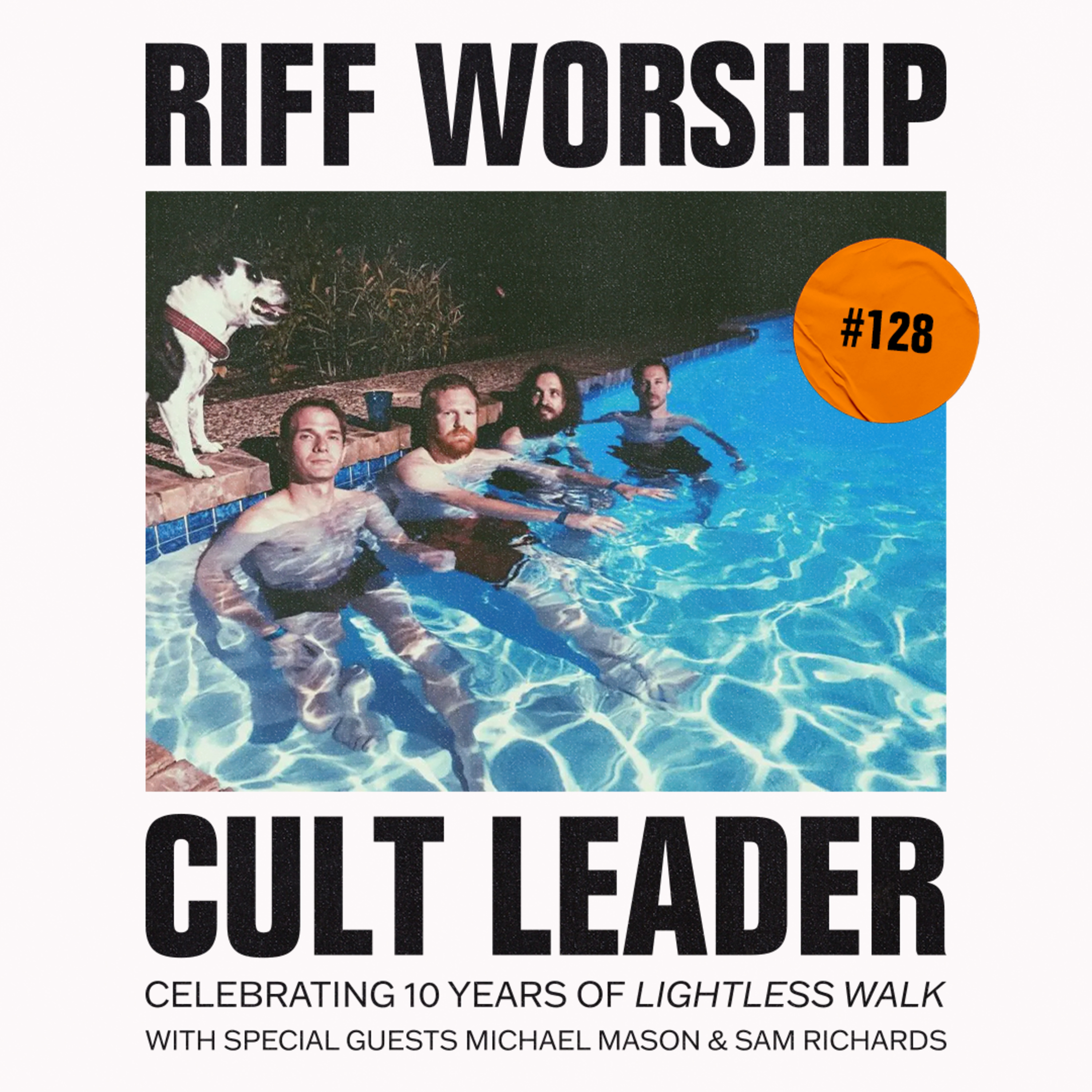
·E128
#128 - Cult Leader - Lightless Walk w/ Michael Mason and Sam Richards (Cult Leader)
Episode Transcript
Our first story deals with a subculture of heavy metal music that some feel is sending a dangerous message to your kids.
The forces of evil on the dark side of devil, right?
And I want to talk tonight about the devil and demons and witches and Wizards.
And we just mix it up with hardcore and aggression and come out with something.
We face an original sound, loud, fast, heavy, you know.
Well, what do you got?
What do you got?
You're listening to Riff Worship, the podcast that attempts to answer the age-old question, what makes Riff?
Why do we care about riffs?
Talking about albums that feature our favorite riffs, Talking to people who make great riffs, somewhat of your host, Austin Paulson.
With me, as always, are my friends in music and in life.
Swindle, Dylan, What we do.
Hanging out.
Hanging out.
Yeah, hanging out.
Very special episode.
This record, our topic of discussion today, very near and dear to my heart.
I feel like this band kind of came to me at a time when I was very young and impressionable making my way through the world.
And I, I guess I kind of have you guys to blame, but we're also kind of celebrating the the 10th anniversary of this record.
I'm of course talking about Lightless Walk by Cult Leader, the debut record from 2015.
And we got some members of the band with us today.
Michael Mason, Sam Richards, guys, welcome.
Thank you so much for taking the time to talk to us about this band and this record and kind of looking back well.
Thank you for having us.
Yeah, thanks for having.
Us I really appreciate it.
One I kind of want to start this I I definitely want to get into this record.
But one thing we like to ask a lot of people on this show first and foremost is what makes a ref.
You know, we all love them, you know, but as like a musician and a listener, what do you what do you look for in a Rif?
What does it need?
What do you gravitate towards in a riff?
Go, Sam.
I just play bass shit.
I think for me it's probably like, is it something memorable that you can repeat, you know, 'cause you could just be playing around on the guitar or something.
But if something like, you know, like in in terms of writing like cult leader, it's like if that is something Mike's playing around with perks up like Casey's ears and it's like, wait, wait, stop, try to play this thing.
And you know, same thing if you know, you'll listen to another band's riff.
I think it's kind of less of a chord progression and rung out and just something busier that's like memorable I guess.
Mike, do you agree?
Do you feel that way?
Yeah, I mean in in the general sense, IA riff is just something that makes you, makes me feel something there.
It's a rhythm or melody or a combination of both or in our band, neither.
It's yeah, it's just something that makes you feel something more than yeah.
So that's what a riff is to me.
I mean, early on with Coal Eater, and it's still may be true to this day or with any band, like when 4 dudes get in a room and you're sitting there, you know, playing, tinkering with stuff.
Usually a good riff happens when all four of you stop playing or and are just laughing like how absurd whatever you just did was.
And I mean, that's where like that's the definition of a good riff to be is where like it can stop 4 dudes that are halfway OK at their instrument to be like, what in the world?
I mean, that's the start of a good riff, so.
I like that, yeah.
Do you guys, do you remember what I did there?
Can we can we recreate that?
I.
Mean, I mean early.
So like with with Colt leader with yeah, we would, we would come to we so we'd all practice together in like light less walk time.
We practice 3 or 4 times a week back then and we would usually come like Anthony's a really good guitarist.
Sam is a really good guitarist.
KC is actually a really good guitarist.
So there's four of us and any of us could bring riffs to the to the table, but typically we would just get room to play.
So like riffs would come out of riffs.
We, we, we called an old bag of riffs.
Like I, we had riffs back when Gaza started that we hadn't that I hadn't used.
Like, like riffs can just hang around.
If they don't have any friends, they just kind of.
Go in the.
Corner but but like, like if we would have started recording back then, we would probably have 6 albums.
We just, yeah, it's riffs are a crazy thing, Songs are a crazy thing and we should have been recording a long time ago.
Recording our practices.
I mean our, our practices are three hours long and we get about 20 minutes worth of stuff done because we're usually just making shit up.
Like, usually it's a comedy comedy fest, so yeah.
But anyway, yeah, a riff needs to make you feel something.
Does it feel good knowing that you, like, can't write anything That Casey can't make up the craziest drum part to?
Like no matter what you fucking make up, he's going to come up with some crazy shit.
Yeah, I mean, there are, there are a few risks where we've had to change him because he couldn't write something too so.
There we go.
That Casey, But I mean, the with having four guys in a band that are really good at guitar, it's really easy to fix whatever whatever thing they're thinking.
So So yeah, no, KC usually makes a riff sound a million times better.
So Sam's Sam's there.
Fuck it up.
If I could take it back to like the very, very beginning for a second.
Do you remember some of, like, the first riffs that you gravitated towards that you were like, I have to learn how to do that or like, this is this is what I'm going to do.
Like, I want to try to replicate this feeling I have right now, like, like playing guitar, Like, yeah, just pick up an instrument.
Was there a particular band or riff that you maybe first sat down and learned to play or anything that sticks out in your mind?
Nothing that I was like, I want to play that.
I mean, the first song I ever learned was Under the Bridge by Red Hot Chili Peppers and.
I mean, that's a, That's a, I wouldn't call that a beginner's riff.
It's not like, you know, it's not.
But no, I just, I liked, I mean, that riff made me feel something, obviously when I was younger.
And I don't know why, but I mean, I could say the same thing about a Collective Soul in bands like that.
So, yeah.
What's the first riff you did, Sam?
I don't even know.
I grew up on Green Day, so it's just you learn when I come around and you might get the open chord version of it or the power chord version of it.
So less riffs and more just punk rock chords.
How long before you guys start playing in in bands?
Because Mike, I, I know you and Casey been pretty much playing since high school.
Was that kind of your first We're?
15, Yeah, yeah.
Was that some of your first musical outlets right there or?
I mean, yes and no.
I like he he was a grade older than me in high school and we were kind of known as like the, I don't know, the Dick heads that were good at their instruments.
And we really didn't hang out, but like mutual friends were like, you guys need to play music together.
And that's how that started.
And yeah, it's been.
It's been a long time now anyway.
Yeah, same was cool your jets like the first thing you were doing or was there something before that project?
That was the first thing I ever, like, toured in.
I wasn't ever really, like, an official member of that band.
It's kind of funny.
I was there when, like, promo pictures got taken and somehow, like, my name's in the CD and it's like, I got like, kind of listening to that.
But that was like, you know, join my friend Matt's band, help him, you know, play bass or guitar on like a tour or something.
Like right out of high school.
Same thing.
Kind of like probably O five, O 6, pretty, pretty early.
What, you know, I, I feel like I obviously knowing you guys and, and being a fan over the years, like I feel like maybe you kind of expose, expose me.
I I guess to interject myself to like the scene in general in Salt Lake, but, you know, without really having a lot of knowledge of that.
What was the scene like when you were first involved with it?
You know, how has it changed over time?
That's Sam, man.
I I've always been as far away from the music scene as possible, really.
I mean, not, not necessarily for any reason other than I had other interests.
So other than I know there's a lot of lot of talented musicians that have come, come and live in Salt Lake or Utah in general.
But yeah, I couldn't answer that question.
Sorry, was the question about like when we were starting or just in general when we were starting to go?
Yeah, I was just curious, like, you know, was there a picular particular, like, trend going on?
Like, I feel like, you know, just listening to some of the interviews, like there's definitely like some DIY spaces to go see hardcore shows.
Like, you know, just out of curiosity, like maybe when you first became involved with it, like what, what bands were you going to see?
Like what was it like?
When I first started going to shows, I mean, like I remember going to like Kilby Court when it was literally just like a garage in like a really sketchy alley and like dance practice there.
And then you could go catch like a punk or Scott show or a hardcore show or something there.
I don't know that Salt Lake's ever had like a sound or like a trend because we're kind of isolated.
We're not like in New York or in LA or something where you can just like think of like, you know, the Bay Area sound or like New York hardcore or something.
It's like, so it's kind of like, well, I like, you know, form of Rocket and I guess that's noise rock or I like Loom and that's, you know, Prague math indie rock stuff.
Or, you know, just kind of, I kind of grew up playing shows in like punk and hardcore bands 'cause that was like what was easy to pick up and play with my friends.
And so with that, you had to really be in the DIY thing 'cause you just couldn't find places to play unless you found some weird like VFW hall or flowing in the basement of a head shop or record store or something.
You know, like we just had to find places.
There are a lot of places that were not open to letting like heavy music exist or not exist or just like, you know, shows with heavy music.
Like there's a whole period of time where like Kilby Court, you couldn't play like hardcore or like heavy shows there.
So I think it's in a lot, it's been in a lot healthier space for the last 10 or so years.
Like I know I see a lot of people on their Instagram stories go into hardcore shows and it's all still alive and, and stuff.
But I mean, a lot of the venues that we grew, our Co leaders started playing like shred sheds doesn't exist anymore.
And so it all comes and goes.
It's like our town's Salt Lake's been gentrified and everything's just turning into five story condos and but, but there's places to play.
There's like all age places and bars and stuff and like a scene that's trying to hold it together and like lots and lots of incredible people and dance.
I'm sure like COVID, the shutdown didn't help with that at all.
It didn't like in any DIY community, all all kinds of spaces got shuttered because of that shit.
Yeah, like it's, it's great to think that like club sounds in the venue doesn't exist anymore.
And I'm just like, I've just gone to so many shows there, seen so many iconic, you know, bands that have worked there, you know, like, you're just like, wow, that's just now it's just condos, you know?
But that just happens as cities, cities grow, I guess.
You you mentioned shred shed that that's kind of where that's like your first show as cult leader at least was at that venue of correct.
Yep.
It seemed like, you know, and maybe just kind of transitioning into the the history a little bit.
It seemed like things happened fairly quickly after, you know, kind of Gaza dissolved.
Like how soon after what, you know, did you know, like, OK, we still want to play, you know, like how, how quickly did you start kind of forming the idea for this band?
Was there a particular goal in mind?
It officially formed before we announced Gaza was no More because there was a little transition period there.
We were trying to figure out if we wanted to keep going as Gaza or just figuring out those little things.
We knew we wanted to keep playing music, but it started really quick and yeah, I can't.
Casey was the one that brought up Sam.
We had known Sam.
I think we'd played with Reviver before.
Is that right, Sam?
Yeah.
Yeah, but we had we had known of Sam and Casey really knew of him.
And he was kind of the only guy on the list that Casey was like, hey, we need to get this guy.
And this was after like we, we were thinking about getting a new singer for a while.
And then Anthony, who was playing, who played bass in Gaza, he was like, Hey, I want to, I want to give singing a shot, which we kind of blew took us back because we're like, that's, that's not his personality at all.
That's not like, but he's like, I want to, I think I want to give this a shot and we need.
So I was like, we either find a new guitarist or another guitarist or bass player.
And then that's where case is like, Hey, this guy's this guy Sam.
He's he's toured a lot.
He's an amazing guitarist.
Like we should, we should talk with him.
So I think we, I think our friends, Russian circles were in town and we, I think we invited Sam to come with us.
Is that, is that something right, Sam?
Yeah, they were on tour with Coheed And Cambria and we went and played hooky after they're set and hung out at Gentries or whatever.
And yeah, we were still like, Cold Eater wasn't announced.
I was just some guy.
I think it's when we we first asked you like that, we were we were, we were getting the vibe check to see if this guy could hang with us dumb asses like check checking out his humor level and how low it would go.
He he passed he passed the test and yeah, we we didn't try out anyone.
We I don't even know if we had like AI mean it wasn't even a try out.
We just like, hey, you want to play music with us?
Like it's not like we turned down Les Claypool or, you know, like it was just him and like, let's, let's go, let's write some stuff.
So it happened.
I mean, it happened quick.
Sam, did you feel like, you know, obviously these guys had established A dynamic together?
Did you feel any like hurdles coming in or was it pretty seamless?
No, I felt like it was pretty natural.
I mean, I had, we, we've grown up in our separate bands and had all done very similar things with our lifestyle.
So I feel like we're very much comrades in the sense of being like the same types of people in a lot of ways.
But I was aware of their band, like their band, you know, I felt like I got it.
So to be like, oh, I get to play bass where like this is one of my favorite drummers and one of my favorite guitarist kind of thing.
Like, this is really cool.
And so I just remember like the first time we jammed, I brought like a guitar and a bass because Casey was kind of mysterious about what they wanted from me.
So, but I just remember picking up a bass and we were playing around with some riffs that would end up being in Flightless Birds on the Nothing for CODP.
There's like a part where Mike's cartwheeling out on something and I lock in on some polyrhythmic thing when Casey went halftime or something.
And that was the moment where Casey's like, I feel like he was like, you're in the band just like, we just like, we wrote a part that was just like, too weird.
And it's like almost formulaic of a thing we do in a number of songs.
And it's just where it's just like, oh, that's like fresh, even original to their chemistry, you know?
So I just feel like we bonded very, very quickly over just the bag of ribs that Mike had and just me trying to figure out where I exist between him and Casey, I guess, you know?
Early on, was there anything y'all were intentional about in your writing to like, separate the new band from the old band?
Yeah, yeah.
I mean we were intentional in like cutting out the.
We kind of, we wanted to be more straightforward in the sense of not having the really weirdo parts, you know, like we intentionally didn't do it.
Like I, I have a bag of a million riffs that have a bunch of tapping, you know, nonsense in it.
And we we're like none of that.
None of that's going in this band.
We're going to be, we're going to be straightforward in 1316 or whatever.
Times, you know.
So like, but yeah, we we, we wanted it to be to the point.
And I think that was one of Anthony's big, big pushes is not that we, we dumb things down, but we, we got rid of some of the screwy stuff early on.
And I, I mean, just the nature of me, I always try and throw it in.
But like, Anthony, Casey and Sam are both like, they're all like, Nah.
I like a little bit of circus is OK.
Yeah, that's all I got.
A circus man.
Clown riffs, yeah.
Yeah, yeah, clown riffs or boner riffs, but.
Hell yeah.
That's a new one for this show.
I love that.
Yeah, yeah.
Yeah.
So like, yeah, that would be one thing.
We'd be in practice and Casey or Anthony or Sam, they'd be like less clown.
More.
More squawk, more of the hell squawk, and less clown, Yeah.
So if we.
If we named our episodes, that would certainly be the name of this episode as Les Clown.
Less clown.
Yeah, that's.
Hard to do if you if you knew all four of us, that's hard to do.
Hard to do you.
You mentioned having some ideas from like several years leading up.
What did you how how like, I don't know if you could put it like a percentage, but like, would you say there, there was quite a lot of riffs that you've been sitting on for a while or did you mostly start fresh when you kind of wrote the EP?
I would, I mean, I would say it was like 5050.
I mean like an old riff can turn into a new riff.
So like so a lot of them were ideas, but like a lot of stuff just spontaneously happened at practice, you know, because yeah, we would.
We're not a jam band, but when we're writing, that's kind of what we're doing, you know, whether it's a part or and but yeah, so like probably 5050 on like old riffs and those could be risks from when we're doing no absolutes to riffs that were pre E EP.
Like, you know, you you never know where it when a riff might, you know, like I said earlier, find a buddy and like start to make a song.
So yeah, yeah.
And then a lot of stuff was spontaneous.
I mean, Anthony again, really, really good guitarist.
He he he wrote all of mongrel.
Like he just brought that into practice one day and it's like, hey, check this out.
And like Anthony is very he's a very interesting guitarist and that he's he has some of the best right hand technique.
Not to be nerd, but like his right hand.
I, I don't know too many pip players better with his right hand picking hand.
But like he he's very fluid.
Like he's, I think he's very emotional or emotionally driven writing music And like he'll bring riffs in, but he will never play the same riff twice.
Like if you said hey loop loop this part it's always changing whether it's.
Time, usually time signature is the weird thing with him because he's so fluid that he doesn't even give a shit like but like he'll bring a so like mongrel.
I think we had to we had to make it, you know, fit into something.
But he pretty much had that and the lyrics all ready to go on that song.
I think when he brought it in, which like early on, when we're like, do you really want do you want to sing?
I think that kind of like that didn't solidify hell yeah until, you know, the first couple shows.
But that showed that like, oh, he's serious about this.
I think he filled in the role very naturally, obviously, but you know, you guys again moving quickly.
I mean, get right in the studio with Wes.
Wes played in Reviver as well.
So was that the connection there?
Yeah, Wes, Wes was my dude.
He's like one of my best friends.
And as a studio at the time was sharing the studio with Andy Patterson.
So it was kind of like, that's why those first 2 EPS were recorded with Wes and Andy, because we were having a conversation of like, well, we need to record something.
We're not really bad until we have a recording.
And it was kind of like an obvious like that everybody's down to go record something with Andy.
But there was like also me advocating, but like we should maybe also like book some time with Wes.
So I think we booked like 3 days with each of them for different sessions.
And but that's why that's why I knew Wes.
I've known us since like 2008 or 9.
Probably and that and to yeah, Wes is pretty much the 5th member of Co leader at this point as far as like always being we don't do a tour without him anymore.
We don't do you know he's a front of a house.
He's he's a good reason why we don't sound like like if we sound like shit at at a show, it's not his fault.
You know.
So so yeah, he's an amazing dude and his studio is ridiculous.
His new one they made so anyone that wants to come record I would go to him 100%.
You just, I mean you, you know your latest single he recorded as well, correct?
Yeah, so.
I mean, it's just the whole thing there.
Did the songs from these two EPS, they are, Were they being pulled from like the same kind of like initial writing sessions?
Was it just kind of like, hey, here's what we got?
Like we'll split it up?
Was it even?
Useless animal and nothing for us here.
Correct.
It was like useless animal was kind of like one side was a cover.
So we knew we wanted to do a cover and we wanted to do a 7 inch and then the other side, the song useless animal, there's actually AB side from the nothing for us here session.
So there's another alternate recording of that that never got released when we did nothing for us here.
I think we tracked it.
We tracked 8 songs and actually we're like, well, we feel like we can release six of these.
And then we wanted to re record useless animal, do a cover and then gutter Gods was a song that we all knew we wanted to put on the next album.
And so we're kind of just like, let's just put two bangers on here and a cover.
And that's kind of how that came up.
So nothing for us here.
We didn't know if we were going to be like we didn't have a label.
We didn't have like a plan, just could have just been pre production or demo or whatever.
And just happened to be that when Jake heard that he was like done to put it out and it is a is an EP.
So but at the time we had like no money, no time.
It was just really let's get in and Wes is going to just really shake and bake this thing in a couple days with us and did did a great job get, you know, for the time crunch and everything and.
And even even that like 24, like I, I think I read it was like you send it to Jake.
Maybe like the next day he was like, all right, let's, let's get it going, let's work together.
I mean, yeah, yeah, I think.
I mean, we sent it to a bunch of friends saying, hey, we're still playing music, let us know if this sucks.
Not, I mean, not really, but like, hey, check, this is what we're doing.
We recorded that kind of as the demo, more or less, I mean, or at least that's how we're approaching it.
But yeah, we sent it to Jake just to be like, Hey, we're you know, we're not done many music.
And he got right back and was like, hey, this is awesome.
Let's if you guys want to do stuff with death wish, let's go.
And we're like, well, well, damn.
Yeah, I, I, I guess I could.
Jacob Ban.
Yeah.
Yeah, I mean, and Jake, Jake, Jake was huge at the end of like he took on a lot of stuff that black market was doing at the end of the Gaza.
So he's kind of he, he helped out that front as well.
So and we had, I mean, we met those guys from Torn with him back in, you know, with Gaza.
So like we, we were good friends with all those guys at that point.
So yeah, just felt right from the beginning.
Nice.
I I know Dylan and I caught, I want to say it was your first tour that you did with Yaocha in like 2014.
Yeah, we you guys played this like coffee house in Nashville and.
Oh yeah, right behind.
And what?
What's that?
Accident.
Accident.
Yeah.
Cafe Coco, it's like 20 for those listening.
24 hour coffee house that had like hardcore shows in the back.
So yeah, it was wireless.
I remember that show vividly, yeah.
That was.
Good, Yeah.
I mean, that whole tour, yeah.
Those those Yaucha boys are some good some good dudes.
Unreal.
Yeah.
I mean, yeah, it was Yaucha Cove and then our friends in the demeanor.
But yeah, I just remembered that place is always those guys fucking hot.
That place is always just, I mean.
Kind of a miserable show, but the miserable ones are usually worth it.
So they're either really good or dog shit.
So and then even I wish I'd caught the Oath Breakers first US run too.
I mean, I, I, we talked about it a little bit during our we did an episode on Aeros and Teros, but like both of you guys together on the same label at the same time.
I mean, it must have been a lot of fun, I'm sure.
Also really good, really good human beings.
Shared a band with them just the whole time.
Yeah, Gear, Gear band.
Because we were just starting out and they're just doing their first like US headliner.
And so it's like our second tour and they're like first US and it's just like nobody has any money.
It was, you know, like borrow our gear, ride in our van with us.
Like nobody can lay down.
It's just for for like 3 weeks.
And just now we're all like really good friends with those guys, like everybody.
Yeah, very special band.
And that's that was that was pre Reyes.
Like that's like they were already an incredible event.
And yeah, just that that that tour happened is so special.
Talk about riffs, Leonard is like.
Fucking crazy.
Yeah, yeah, yeah.
Leonard.
Leonard couldn't.
Leonard had a.
He wasn't on that tour.
Yeah, he he violated the US.
He got like banned from the States for like 5 years because he did a tour.
But he, he, he did a tour where he came to the US, went to Canada, tried to go back into the US and I was like, whoa, whoa, no.
And so and so they like he couldn't go to the US for like 5 years to tour at least or something.
So they had Levy, who is in the which which dude?
Or however you spell or pronounce that band.
Oh, I know you're talking, Yeah.
Yeah, yeah.
So, but Jills W Jills, and they're old.
Almond raw as.
Well, almond raw as well, Yeah, yeah, yeah, yeah, yeah.
So just just great group of people and really fun tour.
So how quickly do you begin writing for your your debut full length?
What was, you know, all this touring and like the recording, when do you kind of get back to Salt Lake and and begin kind of laying the groundwork for the album?
I mean, whenever, whenever we were home, we were writing at least back, you know, back then.
So there, a lot of those riffs existed in that same time frame or were being born, you know.
But yeah, so I mean, it was whenever we were home back then, we were riding for whatever was coming next, so.
Yeah, that was like, that was an era of like all four of us able to get in the room together multiple times a week and like, really get it done.
So I feel like from the very writing those first couple of EPS all the way through like this walk, it's almost like writing never stopped aside from like we, you know, you go on tour for a few weeks.
But yeah, it was just so go, go, go with writing.
We probably had a good few months between like through the winter of 2014 into 15 that we were able to like kind of really hunker down and get it because I think we we recorded in like April of 2015.
So probably what was that about the Breaker for like July or August or something?
So probably in in that window was when it was like, all right, gotta turn all these riffs into like solidified songs if we don't have, you know, a few already.
You mentioned for the first EP you had like 6 or 8 songs and cut down some.
Is that how you also wrote for the OR I guess is that how you all write for all the albums?
Do you like overwrite and then cut down the amount of songs?
No, that's the only time that we've really done that.
I mean, usually because our art, like I've like our filter for songs is tough, at least on our end, like for all four of us to, to have a song go through the election process with us, it can be tough.
So yeah, usually, usually whatever is done is what's on the record because 'cause we're assholes to each other.
And it's just like a.
It's never good enough and.
We have like a set window at least with like lightless walk.
It's like we're traveling to a studio like across the country to go record.
So it's you, you want to be as prepared as possible.
And like, should that song even be on the whiteboard being discussed by the time you're going out there in that kind of scenario?
Otherwise you're kind of just lighting money on fire.
Like, you know, we're trying to just get this record done like we can get tight in our own time.
And you know, we we tore it out there.
So we like brought our own gear and got to like be in Tor shape as we're going into the studio and.
Yeah, we we were even playing some of those songs right.
Yeah, we probably had a couple of them just in the set to see how they feel and probably also to put some minutes into the set.
I mean, nothing for us here.
It's like a 20 minute EP and it's almost like only like 3 more minutes of original material.
Yeah, I was going to ask, did the songs change at all on the tour going up?
Did y'all like play one of the songs and you're like, oh this part didn't really feel good so you changed anything?
Probably Anthony and KC the most.
Yeah, I mean, KK, like the next time, the next time we record full length, we are going to put a camera on KC247.
You can witness.
I mean, I so he's the only drummer I've ever played with, so I don't have, I don't know.
I don't know how it works, but I know how he works and that needs to be broadcasted.
So that's Casey, what's happened.
But yeah, I mean, like up until it's recorded, anything can change.
I mean, I would say mainly, mainly with Casey, mainly structurally.
Usually the songs are set, but I mean, we'll throw a curveball once in a while.
But Casey, he is always writing, always writing.
Sometimes it's a detriment when you when you have a set amount of time.
But usually the thing he's like, no, this is what I want to play is usually when he nails it, you're like, yeah, that's what you should have been playing.
So, so yeah, I mean, it's it's amazing to watch.
He's a one of one human being.
It seems like some of the more like sparse, sparser parts of the album.
It seems like his drum parts are very fluid, like they chain.
They could change like every time he plays them essentially.
Yeah, I mean he's just he's essentially.
I mean the thing I think we do with Co leader a lot of times is like the the guitar will almost be the percussion in certain certain parts and Casey Casey's more of the.
Lead Instrument.
Yeah, yeah, a lot.
I mean, a lot of times that happens, but it's, yeah, I don't know, it's weird.
I I don't know.
I mean, I don't listen to a lot of music like what Cult leader would be like, but I haven't heard too many bands that let the drums be the lead.
But if you met Casey, you'd be like, huh, makes sense.
So getting up to, you know, Massachusetts, like was that the the original God City space or it's.
It still is.
Yeah.
That's where people still record.
Yeah.
Well.
I think he recorded under the moniker God City even since he was doing like house recordings, but he he did the build out on this place and it still exists so.
I know you'd like worked with him prior, you know, on that on that last like Gaza record.
But so I'm I'm sure there was like a comfort.
But you know what?
What made him kind of the perfect person for this project, you know, And how did maybe these sessions or this experience differ from working with Andy or Wes?
I mean, Kurt Kurt's just a magician in his own right, so it was very easy choice early on.
And the fact that he knew he has a good idea of what we do and how to work with us.
So it was kind of like that.
And we just, yeah, it's great spending time with him.
So anytime you can do that, it was.
Yeah.
It's like, yeah, it's no brainer.
Yeah.
I don't know.
Like Sam hadn't recorded with him.
Yet do you feel like there were Sam?
Were were there differences with, you know, a recording with Wes and Andy, then, you know, coming into a new kind of engineer in a new studio?
Really.
Yeah, I mean, like the studio is definitely different and you know, everybody has like their own sounds and stuff, but I, I, I don't feel like he was like so like starkly different in like his approach.
Like he's very there to engineer what kind of produce on the fly, but we're not like spending a month with him writing the record.
So it's really just like he's there to set up mics and just like help you find the right tone and like run Pro Tools and like he'll make like an on the fly.
Oh, you should choke right there instead of ring out and you're like, God, you're a genius and you know, and it's really nice, but he's not telling us like you need to play the chorus a third time in the song or you know, anything like that.
It's it's very just like he if something inspires him that you should change it.
He will just bring that up.
But he's not just like talking to hear his own voice or anything.
Like he's very about like get the good sound and go.
And they're all I mean, Andy and us.
Everybody's kind of like punk enough to stay out of the artist's way, but like they're all musicians, so they can all give you a very good kind of sound board for like, hey, does this sound good?
Like did I get a good take?
You know, because sometimes I need that because I'm at least me, I'm like in the zone playing that and just trying to get through the task of playing all the parts in the studio.
And it's good to have somebody's perspective who hasn't been in the practice space and heard every variation of every riff and combo.
And they're just hearing it like as it is going into Pro Tools or whatever.
And it's just like, Hey, like I have this opinion or, or just let you do your thing, But it was super, it was super cool being there.
I I was a fan of Kurt's work with engineering and stuff.
So just felt cool being in that studio and just seeing the gear here in the tones and hearing the first mixes back.
It was just really, really cool.
This record has like the first, well I guess like the first original song with kind of more singing vocals and it's because of like the cover that you did on the EP with like the more singing vocals.
Do y'all think it opened your open songwriting for y'all to do some different shit than what you had previously done?
I mean, that stuff's kind of always existed.
We just have never made songs with them.
I mean, I think for us, if someone said, Hey, you need to write an album with these kinds of songs and then write an album with heavy stuff, we would finish the more depressive, whatever you want to call it a million times faster just because that stuff, that's the stuff that we Wang doodle at practice.
Like like that stuff just comes out of comes out of most of us.
Not to say the the heavy stuff doesn't, but like usually when we're at practice, we just place even more sad American football riffs, you know, and then and then we're like, OK, let's get serious, you know?
So, but yeah, I mean, I doing that cover, I think, I think Anthony felt way better about doing stuff like that and incorporating that live was I think the biggest hurdle we had to figure out how to do.
But as far as writing songs like that and playing like recording them, that's the, that's the, I don't want to say easier part.
That's the part that I feel flows easier with us, as weird as that may sound.
But maybe not for Sam, I don't know.
Samless is the sad boy music too, so.
Bunch of bunch of emotional, emotional boys on this podcast right now, I mean.
What is music for if not for that?
Right, right.
I definitely, I think this album definitely evokes that for me.
I mean, some of the stuff on here like Sympathetic makes me want to like drop to my fucking knees.
Yeah, I mean that that was, I mean, for me personally, that was really, really dark time for me.
So, yeah, I have the, I have the same, I, I mean, I haven't listened to that record from start to back in probably five years, but I need to do that again because yeah, I can, I can pinpoint where I was with every riff, you know, where there's writing it or I can remember certain days in the studio or not studio, but like our, our practice place and yeah, so like same like that.
That's a very emotional record for me personally, just from the writing side.
So it.
You know, I mean, there's a lot going on as far as like, you know, the themes and the and the lyrics of this record with, you know, what I've heard Anthony discuss about it, you know, does that influence the riff or vice versa?
Like when you're bringing some of the music, like, how does that kind of play off of one another, do you think?
Usually he would write all the all the I.
I assume he has a bunch of material written, but I very rarely has been song specific.
Usually.
I mean, yeah, he he's his own.
Yeah, he's his own crazy writing magician too.
So I mean, what's brilliant about his writing?
I feel it's like he never writes something that is very, very to the point, like to the point.
I mean, it's to the point, but like you can wrap anything you're going around with to his lyrics in your own life.
And like you're like, oh, that makes sense.
Where it's not like about it's not about a Coca-Cola candy kick when he was 6.
You know, it's not very it's I don't know.
He's he's ambiguous.
Yeah, he's he's very brilliant in that, in that way, but still gets the gets the point across, which I mean, there's a lot of guys that could do that, but Anthony does that very well.
And like as far as Anthony's writing, I mean, like I remember dry on that on that tour going out to record that he would he probably listened because we recorded some stuff at I don't remember.
This is the practice space or we recorded all the songs.
So he was list all the songs that were mostly done, I mean, you know, and he, he, he listened to those the whole tour and just wrote while we were driving out there.
So he had really good ideas of the songs by the time we got the studio.
We, we tend to help him as a band, help him with like placements and and stuff like that.
But otherwise he's, he's his own man.
It's rare that we would change words.
We might flip some phrases, but like usually they were locked down.
It was just trying to find since we typically are not writing in anything that I mean, the grooves are hidden sometimes.
So like the sing over something that's in a 7-8 when the drummers play in a really for feeling, you know, sometimes that's confusing to him.
But you can tell him to take a word out.
Yeah.
And all of us.
So yeah, usually we we would be, we would be pointing.
At him when he's screaming.
Like hit it right here in case he'd be like, Nah, I like it on the I like it on the up and he'd be like, God damn it.
So I don't know if I heard it was like it, you know what you were saying, Like Kurt kind of just, well, Mike's stuff up.
But I, I feel like I did hear a story where he like was in the, the isolation booth kind of like right with him, like very intimately, like kind of working him through like some of the maybe not this session, but I, I don't know, I'd heard something about that.
In for the patient man session, a lot of the vocals were tracked in an ISO booth upstairs because we're on a time crunch.
So we'd be still tracking stuff downstairs and tracking stuff upstairs like so he he was in a comically small ISO booth closet and Casey, they'd be like, you know, me and Mike are doing guitar and bass stuff downstairs with Kurt and then Chris Johnson from death Heaven was doing additional engineering and helping record upstairs.
So Anthony Anthony and Casey would be working upstairs.
So Casey would be like producing with Anthony and Casey, you'd be in there and they're both like half naked because it's so hot in there and they're just like face to face.
And Casey's like talking him through the melody.
Like Casey has a, a choir boy like brilliant brain about melody.
He can reach it over to a keyboard and play exactly what he wants you to play or like them to find the melody that you're singing.
So he's very invaluable to the singing aspect of Anthony's vocal style because Anthony's got the words.
He's got the like the vibe and the style and the voice, but then you know, you're putting it to the music.
It's really nice to have a a bandmate be like here, do this and stuff.
But anyway, anyways, the The funny thing you're thinking of I think was from the patient session, but.
Interesting.
I love that.
So what you were saying though, as far as you know it and mostly being done, what was it?
Just arrangements as far as like what needed to be like kind of fleshed out when you actually did arrive at the studio.
For vocals.
Well, Mike, you'd mentioned that like we, we showed up to the studio and it was kind of like the record was mostly done.
So I don't know if there was like little, well I mean like most of the stuff structurally was done.
Like I can't remember.
No throwaway tracks.
Yeah, I think How Deep It Runs was kind of written at the studio.
All the parts were there, but I don't think we'd solidified how we wanted to play it, which is why this song's strange.
But man, that, that I feel like that's one of Anthony's best.
Like early on I was like, like, damn, when like I heard the first, like when we heard the first, like pre like pre mixes, that's when I was like, Anthony's found his, his spot.
Because that song, I mean, everyone made fun of me when we, when we were writing it, because I, I would have to like be a conductor to play the riff.
Because it's a it's a weird.
It's a weird boy.
Time changes and trickery and really slow music is actually harder to count than in really fast music.
It turns out you get lost and the Sasha just like Cron, Cron, Cron, Cron.
And then you're like, you're supposed to be thinking of when it's switching from a three fill to a four fill or something and you're like, we're just hitting the same note.
But yeah, as far as arrangements, most, most everything was done.
I don't remember Lightless Walk all that was written, but we may have changed some stuff at the end of it.
The actual song, which is my one of it's the top, still in the top three song favorite songs of mine that we've done.
We also hadn't really heard a lot of what Anthony was doing prior to going into the studio.
It's like he was working on it tirelessly, but we hadn't like demoed out every word or anything.
So it's really just like we recorded this clean song and he's he is saying, you know, clean before and we're just hoping that it all just like lands, right.
And so it's really cool to hear, you know, that last piece of the puzzle kind of land.
Did you already know where you wanted all the songs on the album when you came in?
No.
Interesting.
We we, we do that.
Around mixing.
Yeah, I mean, we didn't, we didn't have the name of the album or any of the song names.
Any of that stuff's not done until like we the first day of mixing is when we like one of the last days.
So like Lightless Walk was recorded and mixed in 10 days.
So like maybe day, I can't remember, day 87 or 8 is when we are like, this is going to, this is going to be the listing.
I feel like case, I feel like Casey and Anthony are they have a really good vibe fill on how a record should be A&B and that they think of it in that regard.
So and so yeah, that that all gets done when we're listening to the first kind of first draft of final mixes.
Yeah.
You know, I'm I'm glad you mentioned the A side and the B side and, and how they're setting up for the sequencing and how they're putting that together, because I did notice that it does flow like a traditional A side and B side.
Each side of the record ends with a more experimental and open sounding track with like a good life on side A and then side B obviously being the the doubleheader of how deep it runs and lifeless walk.
You know, how, how did you make the decision or how was the decision made to not end the record with how deep it runs?
It's a personal favorite of mine and that's the the reason I'm asking on that one.
Whereas like Lightless Walk is obviously the title track of the record, but you could almost interchange those because they do flow very well into each other and how they play with one another.
But just I'm, I'm very keen on how albums move and how they flow.
So what was some of the decision making that goes into that?
I think with I think when we were writing light, let's walk the song, I'm pretty sure at practice we're already like, oh, that's an album ender like, and just in terms of like the dynamic, like long song, clean song, just total bummer.
So that that's kind of how I remember that one.
I I feel like we, I feel like we knew that that was an ender.
And then I feel like we all were leaning towards great.
I am being an opener because it's just slow boom crash or whatever.
But yeah, on the on the AB thing, it was very intentional.
Like make it feel like 2 solid EPS if you just were listening to one side of this record it from start to finish.
Like feels like a good dynamic experience.
And we all like, like Mike was saying like we, we got our, our, we're at the studio, we're like staying above the studio.
So we literally just got the stuff from downstairs.
We're listening to it together and we're going through Anthony's lyrics as a band, trying to find what to turn into album, the album title or what to turn into the the song titles and talking about the sequence.
I just remember having like a very as a band, just everybody's getting like, really like, yeah, on the same page and really agreeing about a lot of like how to order things.
It felt very right.
Mike, I, I saw that you'd shared some some photos from the sessions of this album.
Could you maybe share for the the dorks in this room and also the people listening like maybe some of the gear you guys were using during that recording session?
Yeah, I mean, I shared photos of Sam Semi because I didn't take any.
Oh, OK.
I don't like, I'm not, yeah, I'm not doing that shit when we're there, but.
I got pictures of everything.
Yeah.
Yeah, you do.
We had our own gear there.
So that was the first time that I had used like one of my my hex cabs that my friend Tyler and Gentry make in Salt Lake, the Eagle Twin guys and the 612 and that just sounds great on There you go.
Look at that.
Wow, look at that.
Nice work.
What amps was I using because I don't remember.
All right, so that's going to.
I know there was one of one of Kurt's Sparrow Suns.
Yeah, the Purple Sparrow Sun was like a high gain amp and then you were running a Gibson Titan like an old tube head with with a with a a prototype Stampede cloned pedal that would later become the his Brutalist pedal.
So I think he would use the Stampede pedal on the Gaza record and this was like kind of a clone based on that.
And so he used that on this record.
So that was like clean amp with clean ish amp with the pedal and then the Sparrow's phone.
And then it looks like he used the he has like a Kurt has a Marshall 810 guitar cab that's converted into a 412.
So he used the 6So he used the 6:12 and that.
Yeah.
There you go.
Thanks Tech.
And then, yeah, I played on the the same guitar I played since 2009, the very first one I built.
That was the pretty much the whole record.
And then we may have thrown in a couple of Kurt's stuff, just I don't remember why we would have done that.
But I think, I mean, we track everything twice, you know, like, but rarely did we add more sauce.
I mean, like if we had another five days, there was a lot of stuff that would like in my brain, I'd like to try.
But like when you're you have 10 days, you're like, let's get the meat and potatoes and move on.
But there's a lot of a lot of stuff on lightless flock.
I would have loved to add as far as like layering stuff, but well, almost every song.
But sometimes it's nice when you don't have to worry, worry about doing that stuff live.
So maybe 10-10 days to record a record is like perfect for us because you can't add any of the stupid shit that was in your brain, you know.
So yeah, I remember like I think guitars took a day and a half like once we got the tones.
I mean, maybe the clean stuff we we messed with a little more just because that was not something that we were very familiar with.
I mean, Kurt called the lightless walk song the pillow song.
He's like this some boring shit buddies.
I mean, he didn't say it that way.
I.
Think he said we should sell it, Sell this with a pillow or something so people can take a nap because.
He was bored.
He was getting.
Bored while we were recording it, it's like a 7 minute song.
He's got to be like, all right now, Bass, but.
Yeah, I mean, that's one thing I, if I had any regrets is like taking better notes in the studio.
I was doing, I was doing like, that's funny.
I was looking through, I had AI had a diary that I was writing in back then and none of it had anything to do with what was being recorded other than like, hey man, adjust the intonation on your G string tomorrow.
Like stuff like stupid stuff like that, like, you know, it had nothing to do with like, oh, I used this into this into this, which is stupid, but, but it's me.
Yeah.
Instead I was writing poems about dumb stuff.
Anyway, Yeah.
I mean, so like when, when at Kurt at God City, he, he, he used to live up like his apartment was above the studio and he had since moved.
So like he rents that out to bands now that are coming to record there.
So like, yeah, you're just up at
like 3like 3:00 in the morning in the, you know, like, oh, we're going to start recording in whatever it was back then, 9:30 AM or, but you'd just be up and like, he's got a room with four different, you know, 2 bunk beds.
So you'd all be in the same room.
And usually, I mean, Casey, the, the creature that he is would be up like 5 in the morning, you know, eating chips as loud as he could.
Like, but like all of us, I feel like would just be just be awake at 3:00 AM just doing whatever.
Like, I mean, once when you tour the guy with with, I mean, what the thing I found with touring is like, you find ways to have personal time even though you never have personal time, you know, touring.
So like, that would be our time to just be like, we'd all be in the same room, but like, no one's looking at one another, you know?
Like, yeah.
So like, it'd be your personal time to like reflect or like lock down what you have to do.
But yeah, I don't even know where I was going with that, but it sounds cool to end end it there.
I like that.
I think around the same time when someone was playing in a band, he's like, hey, you guys want to do like merch for us?
And I just remember sitting in that car, like having no experience.
I'm like, this is gonna be great.
It's exciting.
And then no silence.
We talk.
To each other the.
Whole I'm back there going.
I think that should be one thing that like everyone does is like a DIY tour and you have to hit 10 states.
Like just like it's got to be, it's got to be more than like, you know, just like to because I mean, what we found is like most people can't hang.
But I mean, you know, it's just, I mean, it's a dumb thing to do to like drive.
I mean, it's not it's not, you know what I mean?
I'm use, I'm saying that I don't even know what I mean by that.
But like, it's, it's touring is hard as fuck.
You know, it's, it's not an easy thing unless you, you have the mindset of what you're doing and you have to do a few of them before you can frame that mindset.
Because yeah, we, we've taken early on, we would take friends, you know, people on tour to do merch or whatever early on.
Like now we have a pretty set schedule with who's coming with us and what's going on.
But early on you'd be like you, you can come and like you get like 8 shows into a 32 show tour.
And they were just like, you could see them, the seams just falling apart.
And it's not like, like we're not crazy drinkers.
Like I, I could probably name it, you know, on one hand, how many times some of us has, you know, been drunk beyond what we should have been?
You know, like we're, we're pretty boring band of tour with probably because it's kind of business when we're on tour.
Like we're stepping away from what we do normally to do this, which is what we, you know, like to do.
But it's, it's kind of business for us.
So we want to do it as well as we can every day.
But like most people can't.
Yeah, it's, it's a, it's an interesting thing.
It's kind of like a science project to bring someone on on tour that's never been on tour and then be like, I think they got 7 days in them.
Speaking.
Speaking of touring, yeah, you guys tour with Deftones for this record.
How was that?
Played some shows right?
Like couple handful of shows after maybe like what like a handful of months after you put it out I think.
March.
The following March.
Had had that I I know Sam, I know your most your your band Ryan had had just put out a cover.
So I I'd imagine you're you're a fan or a handful of people are fans in this.
Yeah, I think all all of us are, Yeah, but Sam might be the big Sam and Casey probably are the.
I got lucky twice, Ryan also.
Ryan also played Dia della Stepstones in 2023.
Oh, sick.
So but this, this these shows that you're talking about, this was the first like us supporting another band off of lightless walk dates.
Like we did 1 tour where we did like a headliner, like go out on the US, buy our own selves kind of thing initially after we put out the record.
But it was like the following spring.
It's like we're supposed to do some dates for Sumac but they fell through.
I think maybe because their drummer's Canadian and they had an issue.
So I ended up just being like, all right, I guess we're just playing it.
It was all in Texas, but it was like several shows in Texas and like all sold out, like thousands of people, just us and Deftones.
Like, hell yeah.
So it was, it was one of those things where it's like you see the e-mail, like the offer and you're just like, somebody's fucking with me.
Like there's no, it doesn't make sense.
But yeah, they're all very sweet people.
And that was like such a surreal experience.
I think I'd, you know, having seen you guys at Cafe Coco, I think I saw I, I would imagine it was, I think it that November at at the end following the release of the record as well.
But yeah, I'd have to imagine, yeah, playing with Deftones.
I mean, when the when the record ultimately comes out, I mean, you know, you, you get an offer to do that.
Where there was there an interesting response to the album when it was released?
Like where there, you know, did you start making more connections or doors opening and more opportunities coming your way?
I mean, I think yeah, yes.
I mean, the Deftones thing I think was just kind of like a.
Just a random luck.
Yeah, random spark in that I I, I want to say Chino just happened to see a YouTube video of us playing the show.
I think that's, that's how it started.
He was like, OK, you know, and then that's how that whole thing happened.
It sounds like.
I mean, I don't know, I, I probably can't speak for them, but like, it sounded like it was Chino's thought and brainchild to have us on those shows.
And but yeah, I mean, I, I think anytime you're, you're working really hard on stuff, eventually it can, it can pay off, you know, like the opportunities will come.
Most of the time you have to make them though, so.
Is there, you know, what I know you had mentioned like, you know, wishing you could have maybe added a few things here and there, but what what is on the record?
Is there a particular like favorite section or song?
Is there a particular moment on the record you're especially proud of?
Something fun to play live, even.
All of them are.
I'm still, I'm still waiting, waiting to to play how deep it runs live.
We have never played that live because we'd all probably fall over.
And kind of count.
I mean, light, lightless walks, my favorite thing on the record.
Just from from writing it to recording it.
That one probably hits me the most in the chest, you know?
But I'm trying to, I'm trying to go through the songs on the record that I forgot.
I mean, I just, I mean from the moment it, I mean like the way the great I am just like fucking hits you in the chops.
Like as soon as you fucking turn it on is like it I mean, right.
I think it's like just such a great opener.
It kind of like get the feel of like, oh, we're like not going to feel great after this one, I think.
But I I you know, I'm a glutton for punishment, I suppose.
But yeah, I mean, there's just so many like.
It's a It's a good sign to open a set with too.
Yeah, I believe it.
That's a fun one.
That's in 55 mostly.
Yeah.
Yeah.
Was it called Five Guys?
Five Guys?
Yeah, because of the working title.
The working title.
Yeah, I think we can name, I think we'd probably say 60% of the working titles in public.
Yeah.
Yes.
Yeah, the other ones we'd have to like blur out.
I'll have to fight that.
I have.
I have a list of the white board somewhere that was like top secret.
Yeah, yeah, I'm trying to remember all the working titles now.
Man, there's some good ones.
Case that's another one of Casey's like his brain says the E dumbest stuff you've ever heard.
It's like what it makes sense.
You're like, yeah, I know exactly what song or like a lot of the working titles would be like.
Sad astronaut, Yeah.
Sad astronaut was one that was that was Gaza times and I can't remember what that morphed into, but.
I think that might be.
Was that lightless?
It might be.
It might.
I think it's one of the slow jams on my song.
It's on the whiteboard.
I have to look at that, yeah.
Anyway, yeah, the loss working working titles are amazing.
We should re release the record with just the working titles.
Figure it out.
Yeah.
You know, having this experience, how do you feel like going through the process of writing this record and recording it?
Like how do you feel like maybe it influenced a patient man or you know, some of the future things you did with, you know, like the split end and you know, single you released a few years ago.
I mean, I feel like you're always trying to learn and grow.
So that was just another step.
I don't know that it's harder to keep writing songs, but like, it seems like you raise the bar on yourself to write something that you'd be like, like to get that that feeling in your chest, like whatever.
Like the first time Lightless Walk, when we put it, you know, in one go, the first like if you want to call it the verse, like the first time, we nailed that.
I was just like, yeah, that's why we're doing this, you know, And that that bar gets, at least for me personally, I throw a lot of riffs away that doesn't give me that feeling anymore.
And I think that's, that's part of the reason why it might be difficult for us to write more songs and what a record could be just because like they have to pass a certain part with all of us to keep moving on.
And a lot of them don't do that.
So but yeah, I mean, like, you definitely keep learning every time you record, write, you know, write, record, play them live.
I mean, like we, we do stuff on Lightless Walk.
We probably there's a few songs we play like sympathetic I there's two or three guitar parts that I know and, and Casey too.
But like, I know there's guitar parts I've they've grown up from whatever kid they were in that, you know, when we recorded it.
So now when we playing live where you're like, damn, wish I would have been smarter back then to play it this way, 'cause but it's just, it's, it's that that kind of stuff's cool.
Like and like when Casey will, I mean, usually it's something he's just like, he just wings it live.
And a lot of times like me and him, me and him have code for like looking at each other, depending on how high my eyebrows raised, you know, like that was close to being no bueno or like like you, you nailed that.
And same with like, like Sam will be the first person to give me a wink if like I do something dumb, you know, but like that kind of stuff.
It's, it's cool to like see like you can play a song for 10 years, you know, or 12.
Some of these songs are older than that, but like, and they keep turning kind of the, the, the, the knob on the song keeps slightly changing.
And sometimes it's like no one would ever notice, you know, but that that's cool.
And when someone notices live, you know, you're just like, man, you're just as much as a nerd as we are.
Like.
That's pretty.
That's pretty awesome, yeah.
Sam, how do you feel?
Do you feel like this experience maybe influence how you approach future cult leader releases?
Or maybe some of your other projects outside of the van?
As far as recording and kind of like learning from that experience, yeah, I think just kind of you really have to clamp down when you're traveling somewhere to record.
And it's one of the things that I cherish about being able to record locally when I, when I do, because it's like, oh, time is so nice to not feel under the gun.
But at the same time, there's something, there's magic and like getting it done and committing.
That's like, you know, 'cause I could just sit and have open tabs all day and never close anything and never get anything done.
But you know, when you're like, all right, we have, you know, as of day 8, you know, we need to, mics are down and we're mixing and just seeing, you know, the process.
If you record this, then you do this.
And I don't know, I would not elaborate in any of it quickly in the podcast, but just the, the, the part of me that's like a little bit nerdy and interested in recording and geared stuff was just very like, how do I absorb all this?
Are there any tips and tricks that I can bring home with me that like, hey, I, I can be very hand heavy-handed when I'm recording, you know, with like Wes or somebody like, Hey, I have these ideas.
I want to do this this way.
And he's very patient and entertaining of me with that.
Whereas with like Kurt, it's like, well, I travel all the way out there and it's probably like, I'm not saying no patience, but you know, we're not there to like fuck around and let me go set up the drums outside and we'll play them out there or, you know, like shit like that.
It's very like we're focused, we're getting it done.
We're going to get best, you know, tones.
Not that it's like there's no experimentation or anything definitely, but everything necessary to get the good sounds.
But I think, you know, compared to, like, moving forward to like a patient man, you know, we did a lot of the same, you know, 10 days out at God City.
But yeah, so you kind of know what I knew what I was getting into.
We all knew what we were getting into because we had we'd done that.
So for me, it was my first time with Kurt.
So I think I had more to grow from just that experience.
Well, I don't want to take up too much more of your time, but maybe to kind of like wrap up the album discussion, just, you know, I to kind of mirror what you said earlier, Mike, Like when I listen to this record, I can kind of like picture where I was at the time when I heard it and like getting into new music and getting into underground music, especially 10 years onward.
Like how do you feel about it or how do you feel the legacy about this record?
What do you hope people get out of it when they listen to it?
I mean, I, I don't know anything about like legacy and stuff, but like, I mean, I, I, it means a hell of a lot to me, this record.
And if it makes people feel just like nice, even though like a, a sliver of how I feel when we were writing it and recording it and having to come to be, then it's a win.
Like, if it can make someone have some kind of emotional experience, you know, however that may be, that's what music's there for.
So yeah, other than that, I don't think too much about it other than like I should probably listen to it again to remember half the stuff.
Sam, how do you feel about it 10 years later?
Feel good, still really proud of it, very fond of the memories of, you know, just touring off that record.
I mean, we toured with Dillinger off that record, we toured with Converge off that record.
We went to Europe for the first time off that record.
It was so many, like first on another on another level for me, and just getting to play those songs during that time was really special.
And I don't know what everybody else you know thinks of it 10 years later, whatever, but I hope they're not bored of it.
What's your least favorite song on the record?
Let's start there.
That'll be the Pillow song.
No, I'm kidding.
No, I, I really, I really appreciate you guys taking the time out to, to talk to us about it.
And I, you know, I know you guys got some other things going on too.
I mean, I know Ryle had played some shows earlier this year or over the summer even.
You, I know you play with Coalesce and you know, a few things here and there.
Anything else in the works that you can touch on with that band as well, or maybe some of your other creative endeavors?
As far as Ryle, yeah, we have a new album that's already I, I can't like announce anything about it, but it's, you know, finished in terms of being like written and mixed and mastered and all that.
And just figuring that out for next year and how we're going to tour and support that.
And that's mostly what I got going on outside of this.
Oh yeah, Like I know MSM guitars you get you recently kind of like launched your like online store.
How are things going on on that front?
Good, good.
Yeah, I just, I mean, I decided to I mean, I've been building since I built my first guitar in O 9.
So like I find I was like, well, if I'm going to do this, let's do it right.
So it's been good.
It's been a slow build.
I haven't tried to like jump out of my skin yet, but that's coming with it.
But that and we're going to start writing new record a cult leader.
So very cool.
Yeah.
So those two things and yeah, having a, having a 2 1/2 year old running around, that's a party, so.
Yeah, I mean, I, I can't imagine how you guys, you know, I mean, you mentioned like during this album kind of being all together in the same space.
And I know Anthony's been kind of out out of the Salt Lake area for a long time, but you know, how do you guys navigate?
It like, I mean that that's what we're still trying, we're still trying to learn that, but it's going.
To be, it's going to be, it's going to.
Be yeah, we don't.
It's the the short answer, but we're going to we'll start doing the the e-mail thing and sharing riffs that way with a yeah.
I mean, it's weird for us because we've always written in the same, you know, we've always done music in the same room at the same time.
I mean, like that that EP we did with the end.
And I mean, there's a song from that we haven't released yet, but that's that.
So like, that sound we haven't released is probably the second favorite thing we've ever done.
Really.
Oh damn it.
But we haven't released, so it's just been sitting, you know, sitting for 2 1/2 years or whatever that is now.
But it's, it's, it's hard.
I don't know how bands do it.
Like unless you have one nerd that's playing and writing everything.
OK, but like.
I, I have no idea how to be democratic about it.
And a lot of like a lot of the goods come from being in a room, you know, Sunday morning after like we're, we're a breakfast band.
So like on tour, breakfast is like that's the first thing you do on the day and then the rest of the day can go downhill from there.
But you got to have breakfast.
So I got, we used to, we used to get breakfast on Sunday mornings and then go right for half a day.
And like that's where the good stuff comes from.
So like how, how do you replicate that when you're not in the same room?
You know, that's, that's the magic trick.
So put it in the comments below how you do that, yeah.
Reach reach out.
Does anybody know?
Before we go, maybe we could just end like we typically end each episode with like some recommendations of things we've been listening to.
Could be heavy, it could be non.
Maybe.
If there's even a horror movie that you like during this season, I'd love to hear about it.
We'll see.
Musically, I would give a shout out to Nex.
That's Neks, that's it.
That's a Wes Johnson band that just, he just put out an album recently.
So Nah, been listening to that.
It's pretty good.
I'm trying to think of the last audio book I listened to, somewhat like listen to all of Richard Feynman's lectures.
There's probably like 200 hours of them.
God damn.
Just just listen to those.
I've been called worse musically, man.
I don't you know who I listened to the other day who like made it?
I listened to.
I hadn't listened to weed in like, well, probably, I mean probably like 10 years.
I was just like, it's just, I used to be a huge weed fan and I listened to, I don't remember even what album it was.
So it was kind of a mixture of I think quite a few of the earliest stuff.
But man, what a what a like, yeah, Ween, listen to Ween and it's Ethel Kane.
Like just put those back and forth out.
I'll hurt your brain like the wean, the Wean country record.
And then like, yeah.
Yeah, listen to listen to Ocean Man and then listen to Nebraska just like.
Bam.
You want to get.
Punched in the gut and yeah, I don't know.
That's a good combo though.
But yeah, wean that's a weird one.
And listen to a lot of older Sunkill Moon again, 'cause if I wanted to listen to his new stuff, I'd just turn an audio book on.
Like like.
That mark.
No, I mean I mark is.
Audio books.
Yeah, I love audio books.
Like it's a compliment.
And he, I mean like, I mean a lot of our softer stuff, I mean, I'm we're playing in tunings that he wouldn't play in.
But if they were in tunings he he's written songs in, they would sound like Sunkill Moon or Red House Paint like they would sound.
I mean, he's a huge influence even even like even his vibe I think kind of slowly goes through us, at least with this the way the older material.
But yeah, I mean, he's one of my top influences, but not kind of grown.
I mean, I go stretches of time without listening to music, so like, I go straight to listening to textbooks on, you know, like dumb stuff.
But it's been a minute since I listened to Sunken Moon and God damn, that's great stuff.
What about you guys?
Give us something.
Give me, give me something.
Shit, Dylan, what do you got?
So I really I really have enjoyed the new author and Punisher record Nocturnal Birding.
I've really enjoyed the hell out of that's the first record I've really invested a lot of time with the artist and it's got it's his eighth release from I've Grasped.
It's got Dave Sabolik, formerly of a life Once lost playing guitar on the full record kind of sounds like interesting.
It kind of sounds like kind of Psalm 69 era ministry, just really chaotic shit.
And every song is about a different type of bird, which is just a weird aspect to it.
But it's it's a, it's a fucking great record and it's short.
It's like 30 minutes.
In honor of spooky season, I'm going to go with The Evil 1 by Rocky Erickson.
Hell yeah, I'm going to This is a new one.
I I kind of recommended another single from this record, but this is in the end.
The gift is death by Baron Path.
It's a newer band, features members of Grid Link and Maruda.
I think that's how you pronounce it.
I could, but they have a debut record coming up, Grieving.
It's going to be out on Halloween so I'll spoopy season again.
Willow Tip.
But yeah, I don't know, a little bit more like death metal leaning than Grid Link, I guess.
But it's it's fun as hell.
I like it a lot.
Also Lightless Walk, listen to that record.
I don't know if y'all heard about it but it's a it's a good one.
I'm still trying to remember all the.
Fucking songs.
If I if I threw out a a title really quick, could you tell me the the the working title?
Working title.
Broken blades if you gave me a second, sure.
So broke broken blades.
There was a moment in that song that would have broken a a less stronger singer and that we were all we had just recorded the the the vocals for that day and we were all upstairs in like this, the main living room and Sam and Casey may have partaked in happier things, but we were sitting around eating whatever dinner we had and broken blades has Sam had to be high.
I'm just going to put that on.
He was, he was feeling it and we're sitting around listening to whatever what mix we had of it, and there's a lyric in there that says there's a fire.
You're thinking of Walking Wastelands.
What?
What?
Oh, that's.
See, I don't even know.
What else?
I know exactly what moment you're talking.
About OK, So what?
Broken blades?
So broken blades.
I got it.
So that's another song that Anthony probably wrote half of the guitar to.
So that song, he was like, dude, I'd really like to record the guitar on the on the verses or no, He he played the song all the way through.
After we wrote it, he learned how to play the whole thing and it, one of the tracks is him playing and the other one's me.
But that's a Broken Blades.
Yeah, well, I'm thinking of Walking Wastelands.
What are the lyrics to Broken Blades?
Oh, I don't know, with Walking Wastelands, we're all in the control room.
We're like tracking and Anthony has headphones in and he's like really working on like but he's like whisper fake screaming the lyrics to himself and like Kurt just like hits space bar and stops and just like turns like all the way around to him to be like what the hell, 'cause he's just sitting there like whisper screaming and like not aware that he's like in a room with everybody.
Is that why we were making fun of them later then?
Yeah, that's.
Why we that's why we quote that there's a fire.
Yeah.
Well, there's other reasons.
There's other reasons, other fires that have happened.
Yeah, yeah.
I was thinking about the wrong song.
That's cool.
Working working title for both plates, so I'm not sure.
Do you have that photo of the whiteboard?
Probably, but I would have to scroll through a whole phone to find it.
Don't look at.
Don't look at those.
Well, before we incriminate anybody, I guess I really appreciate you guys.
Yeah, thank you guys again so much for taking the time out to to talk about this record.
It's one of my favorites.
I I really appreciate it.
We appreciate that.
Yeah.
That's, that means a lot.
Yeah.
It's, it's, it's a, it's a pretty cool thing to write music with a bunch of your friends and have people even give two shits about it.
So.
So appreciate that.
Yeah, that's very awesome.
Well, listen to it.
Stay tuned for more cult leader in the future.
You can follow us to Rift Worship pod, Instagram, Twitter, all the stuff's below.
But for myself, for Swindle, for Dylan, for Michael, for Sam.
You've been listening to Rift Worship.
We'll be back next week with something else.
See ya.