Rocketship to Nowhere
Episode Transcript
Bloomberg Audio Studios, podcasts, radio news.
Speaker 2This series features conversations about pregnancy, complications and loss.
Please take care while listening.
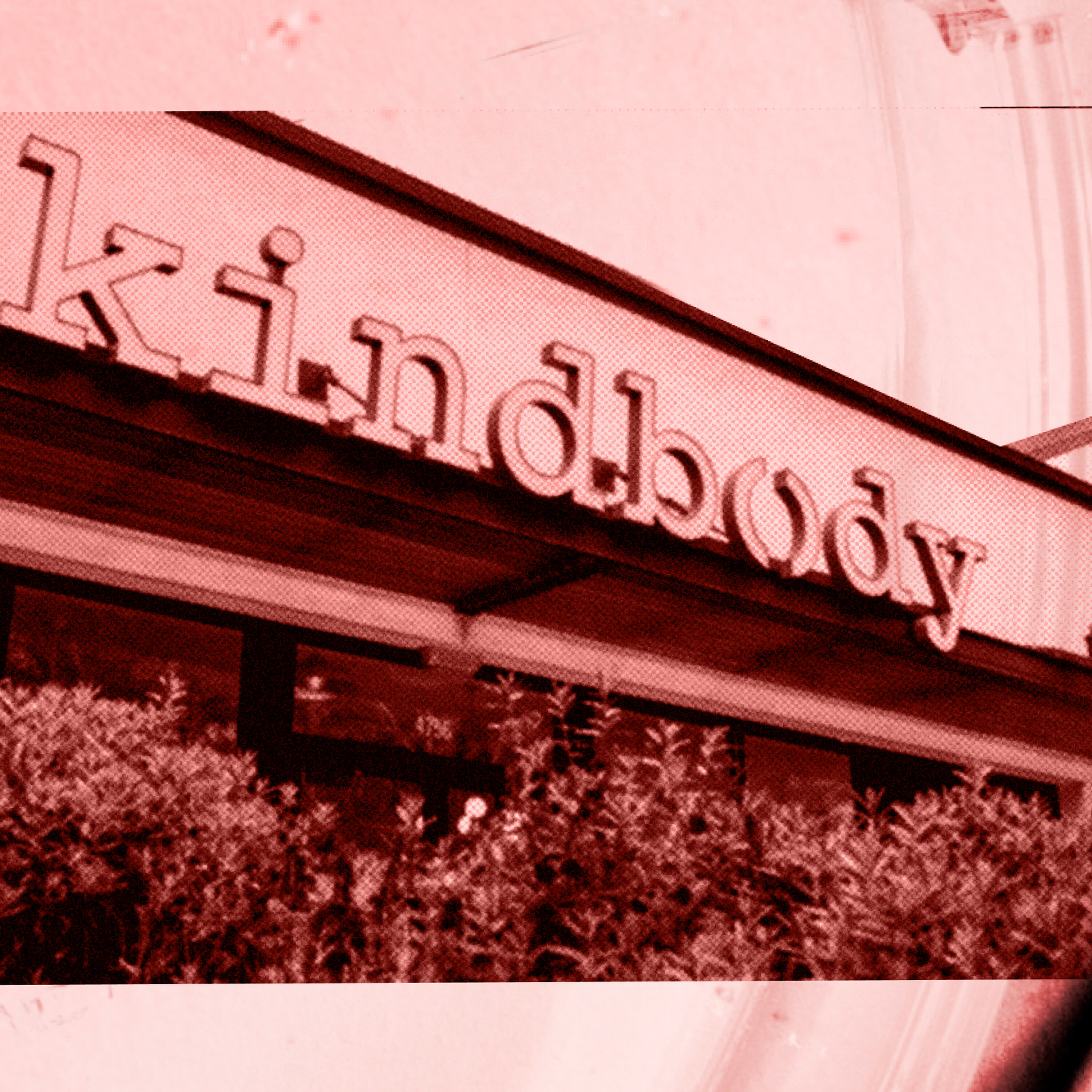
By the beginning of twenty twenty two, kind Body was riding high.
It had opened thirteen clinics in ten cities, and then in February, the company announced a plan that would double its size.
Kind Body said it would acquire a larger competitor, a fertility chain called Bios Fertility Institute.
Unlike the venture capital and corporate world that Kindbody's founder, Gina Bartesi came from, Bios was more of a family business.
It was founded in twenty fifteen by a doctor named Angie Beltzos.
Speaker 3Angie is unique.
She is extraordinarily talented as a physician, and she has even more talent it as a clinical leader, just as a leader in general.
Speaker 2That's Gina talking to Griffin Jones, host of the Inside Reproductive Health podcast, back in twenty twenty two.
Speaker 3She knows a tremendous amount about business, about productivity, about margin.
Speaker 2With Bios, kind Body immediately doubled its number of clinics from thirteen to twenty six, and Gina wasn't done.
She had her sights set on doubling the number of clinics again.
Speaker 3But we're opening Seattle, We're opening Dallas, Houston, Orange County, Miami, Charlotte, We're opening Washington, DC next week.
Our plan calls for fifty locations within the next two years.
Speaker 2In one of their first appearances as a new company, executives from Bios and kind Body ring the bell at the New York Stock Exchange.
That summer, doctors and executives from the two fertility companies gathered for a retreat in Chicago to kick off this new chapter.
At the front of the room was Gina selling a vision of the future.
A former marketing executive from kind Body remembers that day.
Speaker 4We're coming together, Bios and kind Body.
We're all on board.
Speaker 2We are not using her real name.
She and others you'll hear from in this episode asked for anonymity because kind Body has threatened legal action against employees they believed were talking to journalists.
A voice actor is reading what she told me.
Speaker 4Here's where a focus is.
Here's a motivator for the team.
I mean, Gina knows she knows how to command a room, an excited room, and it was really just focused on here's the growth.
Here's how we're going to do it, and we're all going to be so rich at the end of this journey.
Speaker 2Gina Bartesi declined to comment for this series.
A spokeswoman said this was because of quote multiple factual inaccuracies, as well as continued biased reporting given Bloomberg's lack of context provide to readers regarding the fertility industry kind body and her role as an experienced leader in the field.
Asked to identify specific inaccuracies, the spokeswoman declined to comment.
Part of the biosteal was that after the acquisition, Gina would step back a CEO.
She would stay on as chairman of the board, but would hand over the reigns of day to day operations in an effort to make room for the Bios executives.
Gina knew a lot about employee benefits, egg freezing, and how to raise money, but the next phase of growth needed leaders who knew how to grow multiple IVF clinics at once, and Gina saw the founder of Bios, Angie Beltzos, as the person who could do that.
Here's Gina again on the Inside Reproductive Health podcast.
Speaker 3Now I will tell you Angie has uped the game.
A lot of doctors I talked to are very comfortable doing one hundred and fifty cases a year, and they say that listen, I do ten to twelve cases them up.
I sell an IVF cycle for twenty five thousand dollars and that's my model.
Speaker 2With Angie's help, Gina envisioned higher volumes of IVF.
Speaker 3You look at the physician productivity of her doctors and it's extraordinary.
One of her lead physicians did more than one thousand cases last year.
That's extraordinary.
Speaker 2Kind Bodies leaders also had their site set on an initial public offering, the kind of move that can bring a big payout for those who got into the company early.
Speaker 5He is the rocket ship analogy a lot.
Speaker 4We are on a rocket ship to the moon, and.
Speaker 6Then he always talked about, like the rocket ship, we're going to like last to the moon and help everyone's fertility.
Speaker 4We're gonna get yellow planes.
Everyone's gonna have a yellow plane.
Who's gonna buy the first plane?
Speaker 2Blind Bline.
Amid all the talk of private jets and worldwide expansion, the acquisition had saddled Kind Body with more financial pressure, and it came at a time when the start up was already struggling with operational issues from Bloomberg and iHeart podcasts.
This is IVF disrupted the kind Body story.
I'm Jackie Devalos.
That spring, the two companies came together.
Employees were told it was the start of kind Body's most exciting chapter.
Speaker 1Yet.
Speaker 2One of the executives who came over from Bios who were calling Emily remembers the promises made.
An actor is reading what she told me.
Speaker 1It was a huge part of the deal was that people wouldn't lose their jobs because the two companies came together, that there was more than enough work to go around.
If we had redundant positions.
We were growing, so let's figure out how to reallocate someone, train someone on something new.
Speaker 2But the deal in kind Body's aggressive growth plans that followed it were based on overly rosy assumptions, according to what I heard from current and former executives.
The company didn't disclose how much it paid to buy Bios, but former executives tell me it was substantial.
Kind Body had used up a lot of its cash and the expectation was that the deal would result in more people coming through the doors.
The Bios locations were already up and running, and they were quickly remodeled to fit the kind Body aesthetic.
These clinics were also profitable, something kind Body couldn't say about many of its other clinics.
According to internal documents, I saw Atlanta, Austin, and some California locations were burning through cash.
This wasn't part of the plan.
When they'd originally opened.
Kind Body had expected the retail centric clinics would attract a flood of new people looking for fertility services.
They also expected deals with employers to translate into a steady flow of business, but former employees and executives told me it was more of a trick.
Part of the reason is because people just weren't using their IVF benefit at the rate kind Body had projected.
Another challenge was that IVF patients take time to cultivate to build trust with.
Even so, the company continued to spend and expand they were banking on patient volume catching up.
Here's Emily the former bios employee, again.
Speaker 1The honeymoonish period was probably maybe nine months.
We weren't getting IVF patients in the door.
We weren't building the IVF volume to then grow and hit the projections.
That we had if you work backwards.
The numbers were created on bad math.
So yes, of course you have to make hard decisions if you're not hitting your projections.
Speaker 2By the fall of twenty twenty two, layoffs began, and according to Emily, they were done in waves.
Speaker 1The first round of layoffs just laid a horrific foundation for profound anxiety.
They're often rolling layoffs.
There might have been an initial batch and then everyone felt like, Okay, I'm safe, and then two, three, four weeks later others would trickle out, and that hit to productivity cannot be understated.
People were not able to do their best work ever.
Again, really, there was always this concern that they would be next.
Speaker 2According to internal documents, the cuts hit hardest among those working directly with patients, medical assistance, billing staff, and a roll kind body called financial navigators.
Financial navigators worked remotely handling patients across all kind body clinics.
Here's one of them.
Speaker 6So I feel like the financial navigator is probably next to the doctor.
We will basically come in and we will go over your benefits, we will verify anything.
We will be the person who gets any authorizations.
If you have insurance, we will then cancel you on anything that's going into come out of pocket for you.
If you didn't pay, then you can't start your cycle.
We're essentially the last person you talked to before you start treatment.
Speaker 2For patients, financial navigators were more than just number crunchers.
They were guides through a complex and costly journey where a single cycle of IVF could cost as much as sixteen thousand dollars.
But as the layoffs continued, the remaining navigators found themselves overwhelmed.
Speaker 5Here's another There was probably ten or twelve people on our team, and then at one point there were three or four of us, and we were in charge of all of the markets, all of the offices.
And then it was just like here's more work, and here's more work, and here's more work, to the point where we were on the phone with each other and on meetings with each other just breaking down crime.
Speaker 6We had to do the phone calls, we had to cut the money, we had to check the cycles, the schedules, like, we had to do all of it, and we had no help.
I was drowning.
Speaker 7We were like, this rocket ship is like nose diving right now, and if we're not going to jump off right.
Now, we're all doomed.
There's no one on this rocket ship that is going to survive.
Speaker 2The two financial navigators said they worried the mounting workload would open them up to mistakes.
Speaker 7People are going to make errors.
Things are going to happen, The stations are going to happen.
You would quote the wrong amount, You could send the wrong patience financial estimate to the wrong patient, you could attach the wrong thing.
Like we have to double check and triple track everything, and if you didn't send the authorization with the right codes, you'd have to go and start the whole process again, which is a two week process than now, putting off the patient's treatment.
Speaker 2With IVF, timing is everything.
You're trying to sync up multiple biological processes that normally happen naturally over weeks, from getting the eggs to mature at just the right time to ensuring the uterine lining is perfectly ready for implantation.
If your timing is off even by a day or two, the whole cycle could be unsuccessful because embryos need exactly the right conditions at exactly the right moment to have the best chance of developing into a healthy pregnancy.
Speaker 5But if you made a mistake, it was the worst thing in the entire world.
Speaker 2Patients frustrations with kind Body started showing up in negative reviews online.
The company was now being criticized for exactly what it claimed to be fixing confusing bills, hitting costs, and a lack of transparency.
Patients described getting unexpected charges weeks after procedures, insurance claims that were filed incorrectly, and authorizations that arrived too late.
These weren't just administrative headaches for patients already stretching their finances to afford fertility treatment.
These mistakes could mean the difference between starting a cycle or having to wait months to save up again.
In the c suite, some executives were losing confidence.
Kind Body's high profile CFO had quit after less than a year on the job, and then the chief scientific officer left the company.
I reached out to both of them, and neither wanted to speak to me for this podcast because they signed non disclosure agreements.
In written comments, kind Body told me it hired more customer service staff and made significant improvements to its billing processes.
It disputed that the former chief scientific officer lost confidence in the organization.
And said executives leave companies for various, often innocuous reasons.
For doctors and lab staff, the chief scientific officer leaving was more than just another executive departure.
He had been the guardian of their scientific protocols, the person ensuring that the complex, precise work of creating and handling embryos was done right.
Here's Emily, the former Bios executive again.
Speaker 1I think you can see some of the personnel changes in the chief scientific officer role, and a lot of movement in terms of who was in charge of labs and people had to step in in interim fashions and people left.
Physicians were concerned.
You can't just go grab a benchtop scientist.
It takes years, years to train as skilled embryologist, and if you treat them as disposable people, the word spreads.
Speaker 2The pressure to do more with less was already trickling from the corporate offices all the way down to the labs and in at Atlanta.
Another preventable mistake would change a woman's life forever.
That's coming up.
By the time Vernita Pearsall started at Kind Bodies Atlanta Clinic in the fall of twenty twenty two, the cracks were starting to show.
Speaker 8It seemed as if there was a revolving door when it came to employees in the Atlanta office.
Speaker 2Vernita had seen her share of medical practices, but nothing quite like this.
While other kind body locations were also struggling, she says, Atlanta was in free fall.
Speaker 8At one point, a lot of the executives came to the office in Atlanta due to things occurring with so much turnaround.
Speaker 2I saw an internal presentation that backed up what Vernita was seeing.
The Atlanta clinic had a staggering sixty four percent turnover rate among its clinical staff.
To handle the volume, staff was told to move patients through their appointments even faster.
Speaker 8It was that feeling of a conveyor belt going in, going out next, going in, going out next, And it looked aesthetically like a soothing place, but in all actuality that was not the case.
It was pretty much let's get them in, let's get them out.
Speaker 2Former employees told me.
Staff inside the embryology lab, which required the most precise and time intensive work, was burned out.
They struggled to keep up with a patient load that kept growing even as their team kept shrinking.
Speaker 8A lot of times.
They were there before I started, and they were there after I would go home, and they had to work many weekends, many holidays.
Speaker 2In text messages shared with me, one embryologist in Atlanta told a fellow staffer quote, I have to be coach, quarterback and wide receiver.
We do not have the space, equipment and people for this level of volume.
It's dangerous and not sustainable.
I spoke to five former embryologists who worked in the Atlantic Clinic.
They all described the same crushing workload, the constant turnover, the feeling that it was only a matter of time before something went wrong, and then one day, in March of twenty twenty three, it did.
Among the dozens of patient reviews and complaints I encountered while reporting this story, one stood out.
A Google review that described a disappointing experience at the Atlantic Clinic.
It was a devastating error, one that would reveal just how dangerous Kind Bodies staffing crime had become.
Here's Vernita reading the review.
Speaker 8She put, I recently had a very disappointing experience with Kind Body Fertility Clinic that I cannot in good conscience recommend.
Unfortunately, they gave me the wrong measurement of medication during my treatment, which led to a lot of complications and stress.
Despite all the issues, we were able to proceed with one embryo for transfer.
Speaker 5Wow.
Speaker 8On the day of the transfer, however, things went from bad to worse.
The clinic staff were unable to identify, Oh my God, which embryo was ours because they had some unlabeled embryos in their storage.
This was extremely frustrating and concerning, and left thus feeling very uncertain about the entire process.
Speaker 2I spoke to four employees who were at the Atlanta location the day this review is about.
None would speak on the record, fearing legal retaliation from Kind Body, but the patient herself agreed to talk with me when I traveled to Atlanta to investigate what happened.
She asked not to be identified, explaining that as an immigrant in a tight knit religious community, even sharing her story could have serious consequences.
A voice actor will read what she told me.
Speaker 9We are religious people, and our community will avoid us if they hear about this.
Speaker 2I'll call her Ayana.
She was thirty nine years old when she walked into Kind Bodies Atlanta clinic that March morning, carrying with her three years of hope and heartbreak.
She'd been through multiple egg retrievals, most unsuccessful.
Out of the few eggs they'd managed to retrieve, only one had developed into a viable embryo.
She was there that day for her transfer, the culmination of a fertility journey.
Speaker 9That was our only opportunity.
Speaker 2Instead, she and her husband spent three hours in a waiting room before learning what happened.
Speaker 9On the transfer date.
When we reached there at twelve, like midday, and they told us like about three o'clock, like they were like, I don't know how to say it.
They were like messed up.
They call everyone and like put us in one room and like, I don't know.
They hold us like more than three hours.
Speaker 2When the doctor finally came in to explain, Ayana could barely process the words.
Speaker 9They just stand in front of me.
I was crying.
They told us they don't have the embryo.
Speaker 2They're one embryo.
Their only chance at having a child had been mislabeled.
The clinic had an embryo, but they said they couldn't be sure it was a Yana's.
The only way to confirm would be through genetic testing, a procedure that carried its own risks.
Many patients choose to genetically test embryos before a transfer to make sure they have the correct number of chromosomes.
It helps detect abnormalities that can result in serious genetic conditions that process, though it has its own risks.
It involves taking a little piece of the embryo and can sometimes damage it.
Some doctors recommend that patients who don't have a lot of embryos to work with skip such testing.
Ayana and her husband had opted not to do genetic testing before, and they didn't want to do it now because of her religious beliefs.
Ayana said she would have carried the baby even if they had detected an abnormality, but.
Speaker 9They told us, we have one option, which is they need to test it to know if it is ours or not.
The situation pushed us to do that.
Speaker 2Despite her misgivings, she went ahead and got the test.
A kind body doctor called and confirmed the embryo was indeed theirs, but revealed something else, an abnormality.
Ayana said the doctor didn't tell her what the abnormality was and didn't explain the results.
The doctor only told her that the embryo had to be discarded.
Normally, when an embryo is genetically tested, patients get a copy of the report, and a doctor or a counselor walks a patient through what it means.
But Ayana told me she and her husband weren't given any paperwork, and no one explained what the test had revealed about their last embryo.
Many patients who go through IVF have a hard time knowing what to ask in these tense moments.
For Ayana, she says the fact that English was not her first language made it even more difficult.
Discarding an embryo was a big decision and went against Ayana's religious principles.
She said she felt pushed into a decision she didn't want to make, but she also felt she didn't have any information to be able to push back.
The doctor was apologetic and offered a free round of IVF.
Speaker 9She told me, if you work with us, if you continue with us, we offer you another cycle.
We will take care of everything.
Speaker 2I talked to kind Body when I first learned of this incident.
A spokeswoman said that kind Body bought a tracking system to try to minimize human errors.
It's called electronic witnessing, and it gives each patience eggs, sperm, and embryos unique barcodes that must be scanned at every step.
The software tracks who handles the materials and when requiring verification before allowing procedures to move forward.
A Kind Body spokeswoman said at the time that this technology was used in ninety percent of its labs, and she says that now it's used in all of them, But former employees told me the problem was that they weren't properly trained on how to use it, something that Kind Body disputes.
My story about lab errors at kind Body was published in October of twenty twenty three, two months after I spoke with Yana.
In it, I wrote about what happened to Ayana, to Dina and b and to other patients.
I'd learned of multiple incidents of embryos being mislabeled, lost, or accidentally destroyed at four different Kind Body clinics.
After my article was published, Gina wrote a blog post in response.
It said, in part quote, I'm proud that our doctors are candid and tell the patient the truth rather than hide any mistake made by a human in the lab.
We also buy upsided the embryo to ensure its genetic material, and it came back and euploidy, which meant it was abnormal and would likely have not have been transferred anyway, So we didn't have to be honest, but we were.
The outcome would have been the same an unsuccessful IVF cycle, which on fortunately happens about one third of the time, and even the best IVF clinics, including our own.
But Ayana told me she felt robbed of the opportunity of at least trying to transfer the embryo as planned.
When we spoke about six months after the error was discovered, she said it didn't matter if it had been abnormal, that God had gifted them that one embryo and it was their choice, their chance to take.
On top of that, she had doubts about whether kind body was even telling the truth about the abnormality.
She kept thinking why had they jumped to discard the embryo so quickly, Why wasn't she at least given the chance to transfer, And unlike other patients who might have sought legal recourse, she said she felt trapped by her circumstances.
Speaker 9The situation.
If it was different people like Americans, it was different.
I think if it happened on you.
For example, I think think it was like not this.
Maybe you sue them, you do something.
But I'm a foreigner and I'm religious, so my situation doesn't allow me to do anything.
Speaker 2Ayana opted to do the free cycle kind Body offered, but it didn't yield any eggs.
By that point, Ayana was forty.
After six IVF cycles and tens of thousands of dollars spent, she and her husband started looking into adoption instead.
It's really hard to get a complete picture of what kind of errors may be happening in US fertility clinics, whether they're at kind Body or anyone else's.
It's not an easy question to answer because, unlike other types of medical facilities, there is no regulation requiring fertility clinics to track lost, mishandled, or destroyed embryos, let alone report them to any public database.
There's the Clinical Laboratory and Provement Amendments, also known as CLIA.
It's a federal statute that regulates testing and oversees some aspects of an IVF clinic, like blood and semen testing.
But crucially, CLIA does not oversee the embryology lab, where the most sensitive material is handled to fill the gap.
Nonprofits and industry groups have stepped in.
The big one is CAP, also known as the College of American Pathologists.
CAP issues guidelines like how many people should be on staff or the optimal temperature for the lab.
Clinics can get CAP accreditation if they adopt these measures, and getting the stamp of approval lends credibility, but that's really it.
CAP cannot shut down a clinic if it finds it's not in compliance.
In short, CAP has no teeth.
Speaker 10There are guidelines, but there are no requirements.
Speaker 2This is Evashennkman again.
She's the embryologist who interviewed with kind Body back when the company was just starting out.
He runs her own embryology school that trains young scientists who want to go into IVF, and she consults for clinics that want to open up labs of their own.
Speaker 10Just like you can go to a department health website and look up physicians record, you can see how often they have malpractice claims.
You don't have that for the laboratory.
You don't know who that wizard is behind the curtain.
Is that somebody you know who's been involved in several major mix up cases, and even if they're doing something egregious, there's no board that steps in and investigates.
You know, maybe this person shouldn't be working in the lab anymore.
Maybe we can do some retraining so that this mistake doesn't happen again.
And that's the part that really started to make me angry.
Speaker 2There is no requirement for fertility clinics to report incidents caused by human error or other preventable mistakes.
By contrast, Eva points out that some countries in Europe have regulatory agencies that track mistakes.
Speaker 10One of my colleagues there in Ireland sent me a text message a couple of weeks ago when we're talking about some of the issues here.
She's like, you're really telling me that you don't have to report if there's a serious error in the lab, Like there's no proactive reporting where you get somebody that comes in and investigates you.
I said, no, it is not, and that just blows their mind.
It was really shocking to them, because what prevents you from making that error once a year, twice a year every other year.
The vast majority of clinics do a very good job in providing great care to patients.
But also how do we protect against the clinics that aren't following the rules or following the guidelines.
Speaker 2Many of these errors are never known to people trying to decide which fertility clinic to go to.
You can't google their error rates, and looking up a clinic's history of lawsuits may not be that revealing.
Many errors never make it into the public record because patients sign arbitration agreements that prohibit them from speaking publicly about what happened to them.
Speaker 11And what's that about.
It's because fertility clinics operate in such a highly competitive space where a clinic never wants to be known as that entity that has dropped somebody's ex or embryos on the ground.
Speaker 2Adam Wolf is a partner at Piferwolf, a law firm that specializes in fertility cases.
Adam declined to say whether he had cases with kind Body, but he did talk about the kind of calls he gets all the time from patients of fertility clinics.
Speaker 11We get calls from people who are just devastated by the results, usually the failures of their of the fertility work from their fertility clinic.
And sometimes that is just the natural byproduct of fertility work.
It's not always successful, even under the best of circumstances.
But in many of the occasions where our potential clients call us, what we uncover is that the failure of a particular IVF cycle or other work in a fertility clinic is the result of misconduct or certain types of negligence.
Speaker 2Adam has seen some of the worst mistakes in this field happen at all sorts of clinics.
One of his clients discovered after she gave birth that the baby boy she had carried wasn't hers, and she was devastated when she had to turn the baby over to his biological parents.
Another one of his clients alleged that their clinic let seven of their embryos dry out, destroying all of them.
The couple sued the clinic, but then reached a settlement out of court.
Adam says, the majority of incidents like these never become public because.
Speaker 11We end up settling those cases with a confidentiality agreement that prohibits anybody from talking about that case or those errors publicly.
Now, that makes a lot of sense for the fertility clinic which wants to hide its errors, but it creates a big public problem, which is that the public doesn't know about the vast majority of errors that we have seen in fertility clinics and that have caused our clients to suffer.
Speaker 2Coming up on IVF disrupted the Kind Body story.
With Kind Bodies cash reserves dwindling, the question arises, do its patients really need everything it's selling.
Speaker 4At your white coat ceremony, which is the first thing you participate in before you start med school.
You take that oath, and that oath is first, do no harm.
Speaker 12My good friend who went through another clinic, she kept kind of mentioning like because I was like, so, did you pay for the extra however, couple hundred bucks for embryo glue?
She was like embryo glue.
Like I never heard of embryo glue.
And I was like, oh, like, we just paid four hundred bucks this round for embryo glue.
Speaker 3I just went through two weeks of medications and traveled here and spent thousands of dollars for this procedure, and you're telling me I didn't need to do it.
Speaker 4I'm not a salesperson when it comes to medical care.
Speaker 2IVF disrupted The Kind Body Story is reported and hosted by me Jackie Devalos.
The series is produced by Sean Len and Jilda Decarly, editing by Caitlin Kenney, Jeff Grocott and Joshua Brustein.
Blake Maples is our sound engineer.
Voice acting in this episode was provided by Diana Johnston, Tina Marie Murray, and Rosanna Pilcher.
Fact checking by Anica Robbins.
Bloomberg Senior Executive Editor for Technology is Tom Giles.
Our head of podcasting is Sage Bauman.
You can reach us at podcasts at Bloomberg dot net.
IVF Disrupted is a production of Bloomberg and iHeart Podcasts S