·S1 E30
For Good Reflections: How We Protect Our Peace
Episode Transcript
(Transcribed by TurboScribe.ai.
Go Unlimited to remove this message.) What's good, everybody?
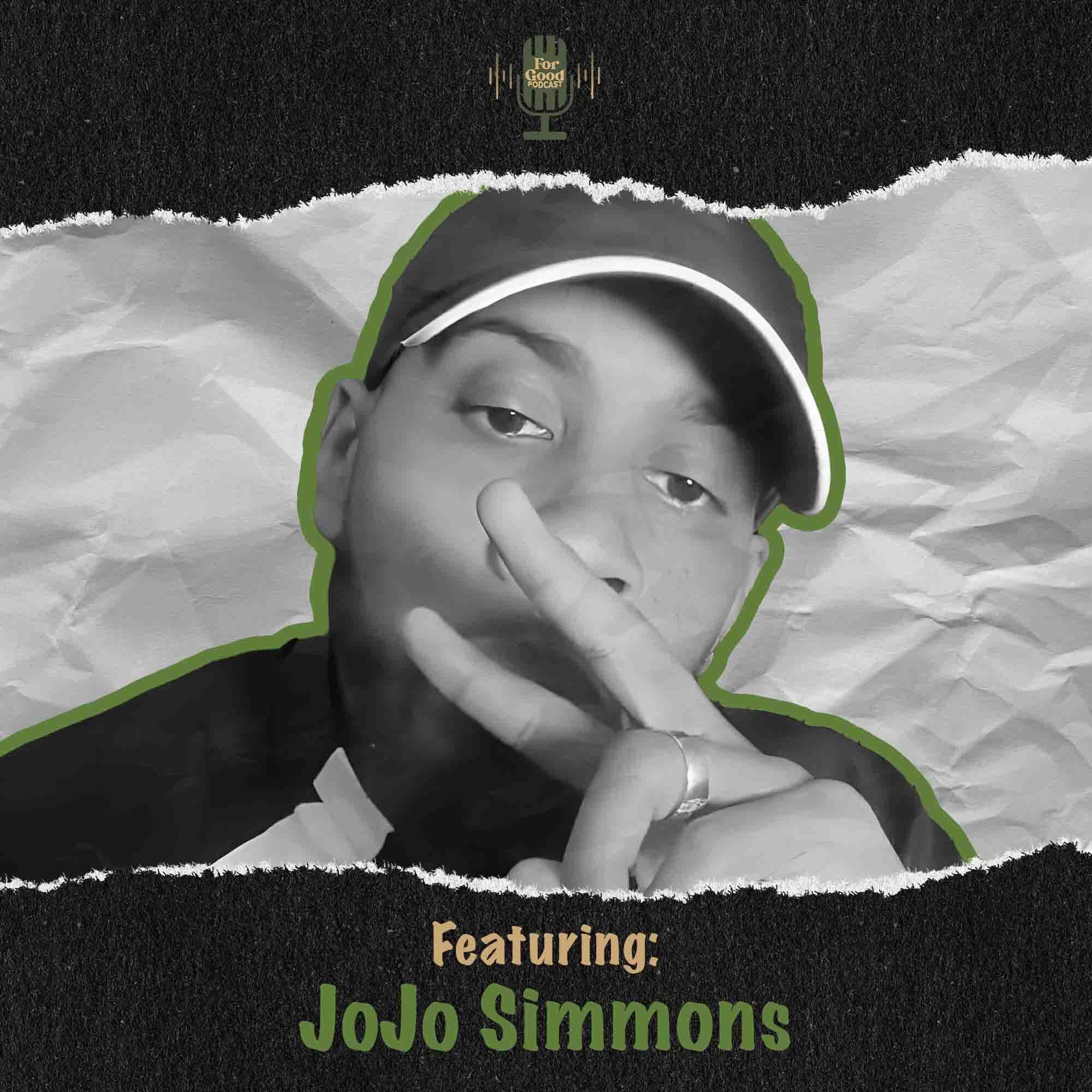
It's your guy, Jojo Simmons, and welcome back to the For Good Podcast, where we focus on the good, never the bad, and we're measured by what we do, not what we have.
Today is a special episode.
Today, I would like to call this like a mental reset, right?
On the For Good Podcast, one subject that we take very serious is mental health.
I happen to ask every guest at the end of every episode, what do they do for their mental health?
And that's because I myself take mental health very serious.
So I figured that me being vulnerable will help you guys, the listener, the viewer, the subscriber, to be vulnerable and to prioritize your mental health.
So when it comes to mental health, I make sure that I take it very serious.
I wake up every morning and I meditate, I pray, I thank God, and I make sure that I take that mental reset for myself before I enter the space or into the world so that I make sure that I'm at the calmest that I could be.
I'd like to remind you guys to make sure you take that mental reset.
So with this episode, I'd like to call it the mental health mashup, where we're gonna go into a lot of the older episodes here where I ask, what do people do for their mental health?
And the conversations we spoke about about mental health from people saying they pray, till they cry, till they write things down, burn them, if you remember the Drinking Gates episode, a lot of different practices that people use that we were able to discuss on this here podcast.
So I just wanted to bring it over to you and remind you guys to have that mental health reset.
Let's get into it, guys.
Love to know what you do for your mental health and what have you done lately for your mental health?
Working out, working out is a big thing.
Same.
Not as big as you, but I'm...
You go a couple of days without working out, you start to feel like a little brain fog and it's like, all right, let me get back into it.
But you feel great after you work out.
So I think that's a big part of it.
And that's another reason why I say like, a lot of athletes, that's all we did was work out.
And I feel like post-career, the workout slowed down for a lot of people.
And I think that's when the mental fog starts creeping in.
And now I'm trying to decide, who am I as an individual?
Because at six years old, I was an athlete, six years old all the way to, you made it to the league in your 20s or 30s, you know what I'm saying?
So now it's like, what's my identity?
They have now lost their identity because now you still have a lot more life to live, but you're in your mid 30s and you're just like, what do I do next?
Like, you know what I'm saying?
So, working out to me is like, played a big part.
And I feel like when I first retired, what else you had to weigh in every Friday?
You got fined 300 some dollars a pound.
You know what I'm saying?
So you had to stay a certain size.
So my first two years, I was like, I ain't working out.
But then after I was like- You wanted a break.
Sheesh, I said, let me, I'm not feeling like myself.
Let me get, you know, get back into the gym.
And I started doing like group activities.
We used to have like boxing classes and I would have a bunch of friends come and I would promote the boxing classes and then play tennis now.
So just different things just to keep the mind going and the body moving.
Can you tell the people as we wind down, I always ask this to all my guests, what have you done for your mental health lately and what can they do to help them with their mental health if they could follow an Angela regiment?
I get up and I pray.
I did it today.
I listened to something super positive before I do anything else.
Or I'll put on like praise and worship music with no words.
Sometimes I don't wanna hear nothing.
So it just depends on the mood.
Like, sometimes I wanna hear people talking to me about stuff and sometimes I don't.
But I did it today.
Like I got up, I did my thing.
I listened, I sat down.
I put my phone down, you pray.
Then just think and take time for myself.
I think that's like one of the things that helps my mental health.
It's like, okay, it's WUSA time.
Kid is asleep.
Nobody's bothering me now.
Let me think about me.
Let me pray.
Let me figure out how I wanna do my day.
But I prayed.
That's what I did for my mental health.
How long do you put your phone down?
Because that's hard for me to put my phone down.
When I wake up, I'm right to business mode.
Yeah, I try not to go right there.
If I wake up and there's mad text, sometimes I'm like, this gotta pause.
No, sometimes I'll put a pause on it.
And just like at least 15 to 20 minutes.
Like you can't, like I don't like to just jump in and I'm just making rash decisions.
Like I need to make sure like I'm grounded and I like woke up blinking my eyes.
I gotta like, okay, you here?
You good?
How you feel?
Yeah, I get a quick check in with myself and then I can get to it.
Like even I'll be like, give me a second if I seen something that needs my attention.
I know I'll be there in five minutes.
Also, when you hit me with give me a second, that's what that means.
It could be, it could be.
Angela hits me with the give me a second for a minute.
And then I'll call you back with a better mood.
Hey, how you doing?
That's true though.
Fresh as a daisy, good morning.
I just need a moment.
That's all what Euphoria is all about is bringing awareness and bringing different topics to the surface so people can thrive and be better.
For myself, it's the self-care regimen that I do and it's getting up, definitely working out.
So important on days when I'm not feeling so good or things are not going right.
If I just pause and go work out, you get those happy endorphins rolling and you can change the course of your day.
Meditating and prayer, very deeply spiritual and connected with God.
So that's my main source.
He gives me all the peace that I need and the clarity that I need.
So God plays a big part in community.
Being able to be able to just talk to somebody, connecting with people, that's very important.
Like-minded people.
Like-minded people, if you need to get a therapist or someone to talk through things with, it's all about connecting and being able to share your story, share bits of yourself and be able to talk and connect.
Speaking of getting the therapist and therapy, I think in our culture, and I speak about this, it's shunned upon and it used to be shunned upon to even have a therapy, like something was wrong with us or we couldn't express ourselves.
What is your feeling on therapy and why people should take advantage of having a therapist?
Therapy is so important because like I said, to thrive as humans, we need to connect and we need to be able to express ourselves freely and sometimes candidly without being judged and just getting it out.
There's so much power in just getting it out and being able to talk to somebody.
And it doesn't mean that something's wrong with you because you need therapy.
Sometimes you just need therapy to process different life triggers and different life situations, different things life throws at you.
You need someone to just talk to and it doesn't mean that something's wrong with you.
And again, that's a big part of why I'm starting Euphoria.
It's so that people, it takes the stigma off of the topic of needing therapy.
It doesn't need to be something that's negative.
It doesn't mean that something's wrong with you.
Sometimes you just need to talk it out and that's okay and you'll feel 100% better once you do that.
So I'm all about advocating for mental health awareness.
I'm all about encouraging people to talk and create communities so that they can thrive because that's the way to thrive is we gotta keep a good balance.
No one can just be all work and no play or all work.
You need a balance to make everything work.
Now that's real.
My sisters and I, we've always taken care of our mental health.
Whether we have different approaches or not, it comes back to the same thing.
Making sure you stay grounded and take time for yourself.
Now that you're out, been a few years, still have to deal with our mental health.
How do you stay mentally strong now?
It's the same way.
It's like having faith and chasing your goals.
Having a plan like, I want 40 Times to be this $100 million company.
I want the doctor to do this.
I want the book to do this.
I want to leave something or some kind of legacy for my kids.
In order to do that with living in California, one of the highest places to live in the world.
With high bills, with high gas, with inflation, with this, with that.
With taking on all the challenges of being an independent owner of a company and trying different things and trying different hustles of everything that you're trying to do.
You're trying to be independent.
So when you're trying to do everything independent, you're not a boss until you take a loss.
You know what I mean?
So it's like, you know what I mean?
So it's like, once you take the loss and once you have to climb back from that and have to deal with taking a loss, a industry that is failing.
Your family, your health.
You know what I mean?
So like dealing with all those three different things, components, your mental health is going to go through some things and sometimes you're going to have to cry and you're going to have to let them tears out and just let it out and start over because it's going to feel good.
And just, you know, talk to God in silence and let him know what your problems is and what you're trying to do.
I'm pretty sure there's plenty of people that would love to know what does Jesse Horton do for his mental health?
I could probably take some tips to be honest.
I need to watch the podcast to get all the tips from everybody else who says what they do.
I always say the life of a cannabis cultivator is a tortured life in a sense.
You know, it's cannabis cultivators and anybody out there who's a grower or knows growers, they're tortured souls in a sense in that, you know, you're dealing with this plant that is a living being on its own and it's growing each and every day.
And you might have a wind and a harvest and this strain, right?
But you know, there's a harvest coming right after it that could easily be the worst that you ever had no matter if the one you had just then was the best.
So it's this level of like, it's being even keeled and not letting anything get you too high or anything too low.
And I think you layer on top of that being a cannabis business owner on top of being a cultivator and that in itself for any of the cannabis business owners knows that that is just difficult with all the changing regulations, with all the different things that are happening, with the state of the market, it's tough.
So I would say cannabis is without a doubt my number one go-to with managing mental health.
Cannabis, you know, those talks with God, talks with the universe.
I haven't quite been able to find a great therapist, but eventually I will.
And yeah, I'm still figuring out though, brother.
I'm still figuring out.
I think we all still figuring out.
None of us truly have the answer, but it's what we do for ourselves to really keep us going and motivated every day.
How do you balance ambition with protecting your peace?
What does that tension look like in real time?
Oh, it looks like taking the time out for myself because you can reach, I'm not gonna lie, there was a point where I did reach a state of like just being completely burnt out.
I just didn't have the knowledge that I have now, but now it looks like me literally taking that time for myself.
Like when I wake up in the morning, before I do anything, I'll go and I work out at home and I'll go and work out.
I'll do some writing.
I'm sorry?
Flex.
Yes.
Got garage.
Yes.
And then I might do some writing just to get, like if I'm having any kind of negative thoughts, like I don't want to carry that into my day.
So I'm gonna write that shit out and then I'm gonna burn it, alchemize that negative energy.
Do you truly burn it?
I truly burn it.
Wow.
I haven't tried that, but it sounds- Please do it.
I don't wanna burn the house down.
Don't burn the house down.
But I do wanna try that.
Like write down what's bothering me and then burn it.
Let it rip.
Like you can curse.
It could be about your dog, your spouse, your mom, your sister, anybody.
Just write it out, burn it.
And it literally, you will feel like a weight has lifted off of you.
So I do that.
I take that time off of myself like every single morning before I interact with anybody, before I'm picking up my phone, before I'm talking to my kids, before I'm doing anything, so.
Yeah, I'm gonna try to implement that.
Because I wake up in the morning and I do get my own time, whether that's rolling up a joint and kind of like, you know, and kind of just, you know, just figuring out my day or just reading a book or reading a chapter in a book that I enjoy, just to kind of make sure I'm focused on me first before I have to focus on everybody else.
I think that's the biggest part for me is like, if I could focus on me first and everybody else can get 100% of me.
But if I don't feel like 100% of me in the morning, you're not gonna get that.
And I don't wanna give somebody that.
I wanna make sure I give them 100 % of the best part of me.
You know?
So I love that.
I'm gonna start burning papers in the morning.
Please do.
And I don't mean just rolling papers.
In a fire, yes.
You can do both.
Yeah, I could do both.
I could smoke and burn the big cigarettes, right.
See, I really love all of those answers.
You can see how everybody has a different approach, but it all comes back to one thing.
And that's taking care of yourself.
That's prioritizing your mental health and taking care of yourself first and making sure that you get the time to unload and rest before you overwhelm yourself with everything that's going on in your world.
What practices or mindset shifts have been the most important for you in protecting your own mental health while helping others transform?
You know, we're big on mental health and, you know, in the For Good universe.
So we'd love to hear what you do while also helping others transform for your own mental health.
Absolutely.
Get you some hobbies.
Some hobbies that you will not turn into a business.
Now, for me, I've tried to turn everything into a business.
I taught myself how to do nails during the panorama.
And at one point, I was, oh, I can charge people for this.
And I had to tell myself, sis, sit down.
This is a hobby.
We are having fun with this thing.
This is just for play.
So what I tell people, especially now, because there are so many things that are happening that can and do impact our mental health, get you some hobbies that allow you to just play.
To play like you are a little kid, to let go of the pretense of the perfection of the, oh, I have to be this perfect being.
Get you some hobbies that allow you to play.
How I play is I do aerial hoop.
And that's where you literally go to the studios and they have the hoops coming out of the ceiling and you have to hoist your little self up and then swing and do all the, that's how I play.
It's one of the ways in which I play.
And also I do nails.
Like I come up, I have like 500 nail designs in my little Instagram little folders.
And I just pick different designs and I've been teaching myself.
There is no actual professional teacher, but I've been teaching myself how to design nails because that's how I play.
Figure out how are you going to play and then allow yourself, make the space and time to play at least one hour a week.
I'm not asking you for a lot.
One hour a week, you just play.
There is no responsibility.
There is no, oh, I did bad.
You're just playing.
It allows you to release the pressure and remind yourself that not only are you a human doing the best you can with what you've got in this moment, but you deserve rest.
You deserve play because in that, I promise you, you will find productivity.
What have you done for your mental health lately?
Or what do you do to keep your mental right?
Man, take time for yourself.
But a lot of people that are probably going through mental health, and that's Eric, because I've learned to do that living being the only kid with my grandparents when my father before and when my father passed away.
So I've learned to sit here and cope with doing it myself.
As a man, I might take a shower.
I might just let it all out.
I can't let my little ones ever see a weak point in me.
You feel what I'm saying?
So individuals like, hey, when do you care about yourself?
I don't know.
Maybe when I get in the shower, I'll give it.
You know what I mean?
And when I do travel, it's work, but it is a peace of mind to sit here and be alone to do what rebuilds me.
Because while I was a kid who grew up, as many siblings I got, they all could tell you, like, oh, him?
Yeah, he was the only one over here.
Like, he was the only child.
He spoiled, you know, but that's me.
So if a person can't do it by getting alone and finding that time to just woosah and relax and do it, talk to somebody.
You feel what I'm saying?
About setting boundaries.
Yeah, let that person feel something off of you.
And when I say somebody, somebody that you trust and you genuinely care about that you could sit here and be that open with to sit here and let out those insecurities, stress holes or anything else.
You know what I mean?
And I would say, go there.
If sometimes people don't have somebody to talk to, then a therapist is also not a bad idea for somebody to look into.
A lot of people, our community, I think looks down on therapy.
We don't have something wrong with us or something, but we don't need to look down.
We need to look up to therapy because that's something that we can all use as a culture because we all deal with trauma.
We all don't matter if we come from a different tax bracket.
We all deal with trauma.
We all deal with PTSD of certain things.
And we need to be able to let it out, especially black men.
We need a space to let it out.
And sometimes we need a space like this where it's just me and you talking, or they need to go get a therapist or somebody that will really listen and just listen.
Because therapy, I found out, and I don't have one yet, but I'm looking for one.
It's really somebody just listening to you.
And I think a lot of men don't feel heard.
So just having somebody listen really helps.
And it goes a long way.
Even if you don't have the answer for that person, you listening and letting them just spill it all out to help somebody.
You're right, brother.
And it's crazy you say that because me and my siblings, that's what we needed.
But you're right.
In our society, you know what I mean, or living in a tough or urban area, it's looked upon as- Soft.
Soft, you know what I mean?
We don't have the resources to have or know what that is.
Because you got to think kids that age, I was 10, the rest of them were younger.
Aaron Eby was three years old.
You feel what I'm saying?
So when they go through that, they didn't ever have therapy.
They needed somebody to talk to.
You know what I mean?
And that's what messed us up.
And as we get older, we understand that that's needed.
Why?
Because- You bring it with you as, you know, like you thought, oh, I'm just sad.
But sad is something mental.
And it's a mental health thing where you need to figure out how to address it.
And you just, you know, you guys carried it.
You still carry it.
You know?
A lot of them do.
You feel what I'm saying?
I love how in every episode, you can hear how everyone finds their own version of peace.
There's no one way to take care of your mental health, whether it's prayer, crying, moving your body, or talking, or walking, or dancing.
The key is showing up for yourself.
Mental health is an everyday practice.
The habits, the boundaries, the moments.
When you say, I need a minute and actually take it, movement works for some, stillness for others, but it all comes down to choosing peace over pressure.
So if you're listening, take a moment to ask yourself, what brings you back to the center?
Thank you for tuning in to the special For Good podcast.
But like I always say, mental health isn't something you figure out once.
It's something you practice daily.
Be honest about what you need.
Give yourself space to feel, and don't wait until you feel drained to take care of your mind.
Appreciate y'all for listening.
And as always, focus on the good, never the bad.
Measure by what you do, not what you have, and make sure you take care of your mental health.
See you guys on the next episode.
Peace.