·S1 E676
Special Report: Daniel Kremer on Silvio Narizzano
Episode Transcript
Oh he is, folks, it's showtime.
Speaker 2People say good money to see this movie.
When they go out to a theater, they want clod Sodas pop popcorn in no monsters.
Speaker 1In the Projection Booth, everyone pretend podcasting isn't boring.
Speaker 2Got it off?
Speaker 1Hey, folks, we can.
Speaker 2Do a very special episode of The Projection Booth.
I'm you ost Mike White.
On this episode, I am talking with Daniel Kremer.
He has been a co host many times on the show before I sat down to talk with him all about his documentary Cruel Unusual Necessary The Passion of Silvio and Narrazano.
It is a documentary that is part of a release of Blue from nineteen sixty eight and Fade In from nineteen seventy three, all from Imprint Films that is available over at diabolicdvd dot com.
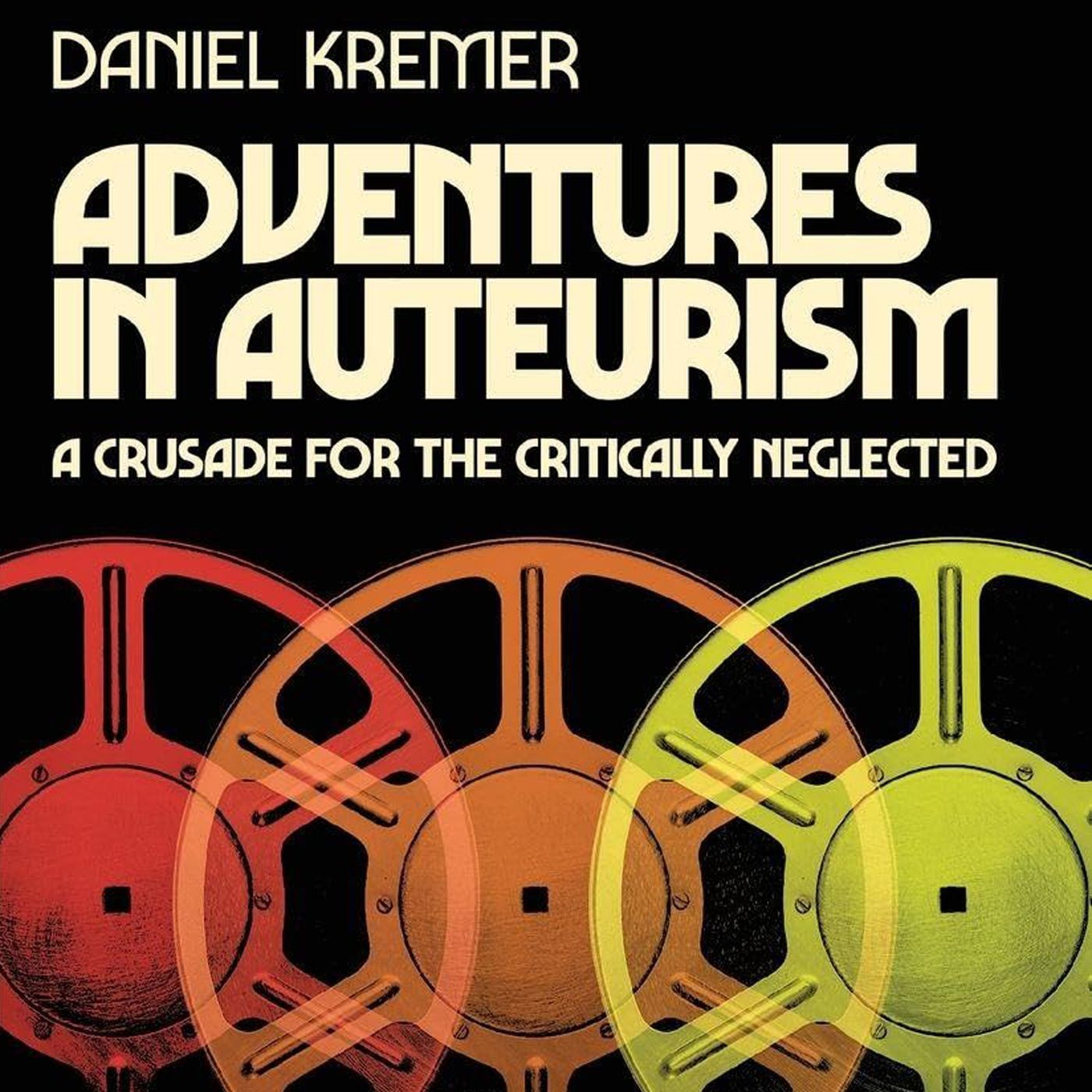
And while I was talking with Daniel, I found out that he is also writing a new book which just came out.
It is called Adventures in Auturism, A Crusade for the Critically Neglected.
If you know anything about me, you know that I love critically neglected films.
This book sounds fantastic.
I can't wait to dive into it.
I had a great time talking with Daniel.
I hope you have a great time listening to it, and I would highly recommend that you pick up Adventures in Auturism.
I think it'll make a great well, I can't say stocking stuff because this sucker's five hundred pages.
It's going to be a great book for you to read and a wonderful, wonderful gift for the holidays.
Thanks so much for listening, and I hope you enjoyed the interview.
Speaker 1Have you been I've been good.
I'd been busy.
I'm finishing this book at which I mentioned I was index which is tedious, and I'm very tired and I'm very sore.
I've been in this chair through the last two days because it's just anyway, it's almost done, so happy about that.
Speaker 2What is the book about?
Speaker 1My collected writings on Overlooked Filmmakers.
So the script for this movie that we're doing it on today is in there as like a text essay.
So he's in there with twenty four other full case studies and then dozens of other guys and girls.
It's Paul Cronin's press who's doing it.
I'm not sure if you know that press.
It's a great new imprint.
A lot of great people are publishing through him nowadays.
Jonathan Rosenbaum, Joe McBride, Major Bamulton, and Nott Sigaloff just did a volume together.
I think people are basically flocking to Paul because they've had it up to here with academic presses jerking them around the process.
Paul has been wonderful.
It's been very easy and it's been very quick.
Actually, there's no board that has to review or approve everything that you do.
That's a wonderful thing.
I love that about it as well.
But yeah, it'd be out like the end of October.
I think actually since coming up, we just did copy editing, we just did picture placement, type setting.
It's consumed two months.
I basically used what I earned my part of our wedding funds, what people gave us as gifts, and then just like taking the last two months off from doing commentary tracks and video essays for discs and then just putting it into doing this book.
So yeah, I haven't been as active, but I'm looking to get back into it after this is all over.
Speaker 2Tell me about this documentary you did about Silvio Nerizano, and I'm so curious, how did you come across him in the first place.
Speaker 1Years ago, when I was first doing the book on Sidney Fury, I always knew that Naredzano was a name out there in the ether.
I knew that, you know.
I think you hear me in the documentary itself, my recording with Sidney Fury when he's talking about there was a director at the CBC who had gone over to England to Pioneer Granada Television.
You'll know the name Sylvia Narzano.
And I guess I knew at the time because I was, Oh, yeah, the guy who did Georgia Girl.
Of Course, Sidney really talked him up, and then I got to know Ted Katcheff, and Ted also talked him up.
He was like a bit of a daddy figure in a sense to the Canadians who were coming over to the UK to forge ahead with their careers and helping them get set up, helping them get their foothold.
And I was like, oh, he seems like a sweet guy.
Of course I had seen Georgia Girl, but it took probably his most controversial movie, The Sky's Falling, which was released on VHS in the eighties under the dubious title Bloodbath, which I had seen in the VHS version, which you'll see the comparison in the documentary.
It is unwatchable.
It is so dark you cannot see what's going on.
And I was like, I can't imagine what this would look like in a good transfer, but I don't know.
It's so it's just like one of the movies that you watch in a bad bootleg and then it's like you move on, and then it's like you don't think much about it.
And then when Vinegar Syndrome came along and then they did this new beautiful film scan of it, I was like, Wow, what a fucked up, demented movie this is.
And it really fascinating film, very personal, it feels, and it also feels very gay.
Kenn Anderson says there's far more male flesh on display than female, and just the way that it carries itself off feels very gay or very queer.
And I was like, yeah, that's true.
But then, of course I had seen Blue along the Line.
I still have my VHS of Glue, which is the pan and scan this one.
It's a scope movie, so you're missing a lot in the VHS, but I got the Paramount DVD.
It's like, oh, this is a really also a pretty interesting movie, just in terms of the pictorial quality, the visual the visuals, and I want to dig a little deeper into him because he seems like an interesting type of guy, maybe just like a subject for further study, never dreaming at the time that I'd be doing this whole film about him.
And then it was around that time that I moved to LA that I caught up with my aforementioned friend, David del Valle, who does a number of commentaries and whatnot, and I was over his place and we were just hanging out.
It's like, oh, did you see that crazy DNA popper Carol Baker movie?
And I was like yes, and we talked about it, and he was also very fascinated by it, and I was like, yeah, isn't he interesting?
And I've been less in touch with Sid Fury the last couple of years because of the health issues on his part, but every once in a while I still talk to him and he can do maybe just a few minutes at a time.
But I was like one of those calls, I was like, tell me more about Sylvia and Arazzano and I came out in the course of that conversation.
It's like, oh, no, he was gay.
He had a partner before I knew that gay men could have partners, and he was married to a woman for a time, and then that didn't hand out because he was very even though I knew then that he was not interested in woman.
That's what you did.
It was kind of like a beard.
I began to dig more than like I saw Redneck.
I was like, jeez, this is another crazy one written by the guy I learned was his partner, win Wells, his life partner.
So win Wells writes these two demented movies with very strong gay slash queer undertones, and not even undertones.
It's just like the subtext became text after a while.
And then by the time I finally got to Young Shoulders, which Blew Me Away, which is his last movie, or one of the unless he cunt the Body in the Library, Young Shoulders being his last major work, I gotta do something about this guy.
I don't know what that's going to look like.
I can't imagine ever being able to sell a book on there Atsano.
No one would pay me for it.
That's for sure, and then there'd be a question about it, who would print it?
I feel like I have to do something about Sylvia.
And it was around that time that Josh Hibberd at Imprint Films, who likes to ask me every now and then, like what I'd like to see come down the pike on the label mostly from Paramount, and because they have a nice sweet deal of Paramount, I was like, if you could get Blue, and if you could get the film that was shot on the back of Blue, which is called fade in for those there's a movie shot on the set of another movie, another fiction movie shot as a behind the scenes movie on the set of this western that Sylvia Arzano made called Blue, with Burt Reynolds who's hired by the movie company as a driver and as a gopher.
He's a local cowhand in Utah and he falls in love with the film editor on Blue, played by Barbara Loden Wanda Barbara Loden, Elia Kazant's wife, Barbara Loden.
So I was like, if you can get those two movies in a pack together, I could give you something really good as an extra about the director of Blue.
So he began to poke around at paramount, what do you have is blue available?
Because sometimes the elements aren't really in good shape or whatever.
There's one title in particular that is not in good shape and it really rankles me.
But Blue they had, it was in good shape.
Fade in they also had.
It's like, okay, we're green lit, but it's not going to be for a while.
So I went to work and what I originally envisioned as a kind of extended video essay, I was like, I was quoting other people that I had right on my fingertips, like David el Val and like Howard Berger and like Nathaniel Thompson.
Was like, why don't I just interview them on camera and do something a little more formal and not just like a video essay with me narrating, but do a documentary hybridized with a kind of video essay that form and make this kind of big hoosey wats it's about the kind of the definitive text about Sivia and Rzana for the total lack of one.
So my husband went away for six months of last year because he worked on the election.
He's a statistician and very interested in political methodology and all that.
So he was off in the field and I was left all by my lonesome in Pasadena and not having an easy time of it because you begin to miss your spouse or your partner.
But I was like, oh, why don't I just sublimate all this or devote all my energy into doing this thing.
So that's what I did while my husband was away.
Movie.
Before I knew it, I had a two and a quarter hour cut and it would seem to be playing well enough where I was just like, Okay, this is probably going to be the only thing ever done about this guy, so I'm going to leave it at this length.
And yeah, that's how it happened, which.
Speaker 2Is really remarkable because so much these days when I see extras, they seem to be almost purposefully broken into small chunks, almost like we don't want to pay you for making a documentary, You're just making a short extra.
Speaker 1I'm in that market of making video essays for I guess now nearly twenty companies, and it's the pay is high and low, depending on who it is and what the movie is.
Oftentimes, if it's a movie that they think is going to sell, you can normally get a better rate but yeah, it's not a lucrative endeavor to do a documentary about a filmmaker no one's ever heard of, let's say the least.
Josh is very nice about it and very sweet about it, but you know, that's not why you at the end of the day, that's not exactly why you do these things.
I feel like I almost had to.
It's like kind of like I needed to understand this guy more because, let's say, also, as much as it's about a filmography and a filmmaker and an artist, it's a chronicle of a gay man in this time in the business and how he covertly, sometimes overtly infused his work with things that he was fired off of a movie for making it too gay, fired off of the man who had power over women because they didn't the studio didn't like that he was making it like extremely capital h homosexual and funny.
When I was at Ted Kotcheff's memorial over the summer, I got to meet the editor, Tom Noble, who is ninety years old, nearly in Knockwood.
Great shape for a guylight age.
It was pretty unbelievable.
We met at that it was gathering at the katchaf house afterwards with food and everything.
And I honed in on him like a guided missile because Tom Noble edited Redneck, and I wanted to hear everything about that crazy movie.
And he goes, if you think the movie was crazy, way do you hear about the behind the scenes.
It's like, God, damn it, I wish I had interviewed you on the camera.
But he was the editor on the man who had power over women as well, and so he was able to confirm to me that, oh, yes, the AVCO did.
There was a big edict passed down, was like, get rid of this guy.
No matter what we tell him, no matter how much we warn or admonish him, he cannot lay out all the gay stuff.
He was fired for that reason.
It's like I felt like I had to get to the bottom of a guy who felt he could be that bold with that type of thing in that era and living with his partner or partner who was very if you might want to say, flamboyant.
Tom Noble told me that win Wells, who was Sylvia's partner, wanted to open gay bar called Sissy's, and this was a long time ambition of his.
And I was like, There's really a lot of facts that are now that didn't make it into the film because I didn't know Tom at that time and there was no means to get in touch with him then.
But of course him showing up at this memorial was like, oh, I need to talk to you.
But it made its way into the book version, which is a collection of my writings on the Overlook directors.
A lot of these whole stories and factoris in the Narratano chapter make it into this book.
But yeah, Tom had a lot of crazy stories and it was very fond of Silvio.
He really enjoyed the documentary because I shared it with him later on, And yeah, I felt like it was a personal project that I had to explore what this guy was all about, how he felt so compelled to make the movies he made, really out bold and proud about it.
Speaker 2Yeah, I was so shocked to see some of those scenes from Blue and then Loot looked like an absolute just crazy hoot.
I am so excited to now.
I think your documentary is doing exactly what you would hope it is, which is now I want to see all of these movies.
Speaker 1No, that's the best that you could hope for and as I say, you might not like everything that you see, but it's it is one voice.
It's unified as one man saying there's something very consistent through the course with a particular set of vocal cords.
But no, he went from the movie was fired from too Gay on right to Loot and he put all of that spunk, if you want to call it that, and to Loot.
And then, as I say, Loot is like to stop at the amusement park before on the road to elector of shock therapy.
Because Redneck and the following are definitely cold reckonings, I guess you might say.
Speaker 2Again, even with some of the unpleasantness of Redneck, just to see that performance by Telly Savalis just looks amazing.
Speaker 1Yeah, my husband's who saw the movie.
That came out of his absence when he came back finally from the election season and everything else.
He watched it.
I wound up dedicating the movie to my husband, which is if he's watched till the very end, you'll see, but he was watching it.
This movie that is of course he dedicated to him.
And there's the scene that I showed from Redneck of Pelly Savadalis cold bloodily killing a child and saying you.
Speaker 2Made me do it?
Speaker 1Why did he run away?
And like my husband's did he just kill a child?
Yeah?
Speaker 2Sorry, but it's like Maggot from the Dirty Dozen having his own movie.
Speaker 1Yes exactly.
It is like that, and that's a good way of putting it.
Speaker 2Yeah, that's the thing that I've always admired about you, is just the way that you champion some of these underseen films, some of the stuff that we've talked about on the show.
It's so nice to give light to this.
I'm super excited about this book project as well.
Speaker 1It's my bag.
I guess he might say, that's what I do.
I'm not as interested at all in writing the thousandth book on Kubrick or john Ford or Hitchcock, one of these guys.
I really don't know what new there is to say about a guy like that, saying that there isn't it's just not my bag.
But I'm really interested in digging up buried treasure and making kind of correlations and charting the kind of constellation of a career and looking at people that most everyone is ignored and being like, there's more here that you should look closer at it, look closer at it, and you'll see.
Like I was telling, I think it was Ryan Beryl, I was not with Ryan Beryl, and I was like, the word I hate the most is journeyman.
Fuck journeyman.
I don't want to hear about Journeyman.
It's like every every scene, in every shot in a movie, there are choices being made.
Some shout louder than others.
Marizan shouted very loud, but there are things to decode at every juncture, and Journeyman, to me, is just too much of a burden.
You should be looking closer at these things.
I should be looking at what ties this all together, if anything.
And then sometimes the twenties, I think twenty six full case studies, you got guys like Clive Downer in there that Andrew Sarah's champion but dropped off the map.
You have Joe mclin silver, who I was on I've been on your show before, and I got to know Joan and was doing a book on her for a time.
And Joan is in there.
And Sidney Fury, who's Patient zero as I call him.
He's the kind of the locus of my interest in overlooked O Tears, head Catchers, Sylvia Harvey Hart is another one, Harvey Hart.
No one gave a damn about Harvey Hart, as Gibbs I should say, And maybe the hope the book will open up some eyes.
But if you look at Fortunate of Men's Eyes and the Picks, which I think is one of the great horror oddities of its day, or Mahoney's Last Stand, or bus Riley, there's a pretty distinctive voice here.
Yvonne Passer is in there, and I hope that that public is very happy and very excited about it.
He thinks it's like one of the books of the year because it's it's wow.
These are like really very the essays really make clear connections that aren't like too far fetched.
Your you're responsible, but you're also it's very observant.
Now, I hope people connect with them.
And it's like dozens of others in an appendix with short kind of capsule hey studies.
Yeah, there are a lot of people in that.
Charles B.
Pearce is one.
Philip Leacock is another, great pet cause of Mind.
Yeah, there's a lot of guys in there, Muriel Box, Wendy Coy, the great you know, they were working female feature directors in the UK in the nineteen fifties, and they're both extraordinary.
They're clearly extremely talented visually and otherwise, and they've just been by and large ignored, and there are things that connect all of them.
And I hope I demonstrate how that is with here E years ago.
When I began in twenty twelve, I guess that was I was like, I couldn't fathom how am I the first guy to ever really study him, and how he'd been this lacuna in the kind of oh tier studies that I've read so much of, And I was like, I guess more for me than more stake for me to put down on I think with Narnzana it was really like I think Sarus and a lot of these people are maybe slightly put off by the kind of blamingness of narbskay voice, so I think they just it was easier just to dismiss it rather than dealing with any of it.
I think that's why he was passed over mainly, and chatting with a big wig film a story and film scholar film critic who I will not name of the older set said some pretty alarming things to me.
When I shared the film with him, he did watch it and then it was just like basically vaguely homophobic remarks.
I was just like, Yeah, it's no wonder he's been ignored for so long when the likes of you have been the only ones to have had to go at him and deemed him too much himself for your taste.
Speaker 2It's twenty twenty five people.
Let's let's get a grip here.
Speaker 1As my husband says, they're in his field as well.
He's in academia, so sclerotic, super anuated film scholars who see what has already been carved out, what's already been charted.
If you are at the least but heterodox, then you know they might as well be the alien replacements from invasion of the body statures pointing and screeching.
As I point out in the book, is that they're not one of us.
I want to chart my own path.
There's a lot of There are thousands of filmmakers out there and millions of films to concentrate at these like koshered items at the expense of all else distinct.
There's too much out there to ignore certain things that have not been given the light.
Speaker 2They're not in the pantheon.
What are you talking about unless it's Felini or Antonio ya.
Speaker 1A lot of that.
The opening of the book is I do my own Andrew Seris list the categories as he defined them in the American cinema, and I do my own categories, my own personal pantheon, which I call the personals.
So fury is in there, of course, never really, and then I go to the solids.
Let me find the what I think I put it best in the text, quoted accurately, the generally unassailable filmmakers all are great, and they don't need me to cheer lead for them.
We know they're great.
I would never deny it, so hooray for them.
But this volume really isn't about them.
I'm not trying to be like, these guys are great and your legends are bullshit.
And I was like, no, this is these are solid I'm granting you something.
This book isn't about that.
Speaker 2They're not tearing down the old idols.
You're just trying to install some new ones in the temple.
Speaker 1I tear down a couple, but that's just out.
As I say in the opening introduction, like this is completely subjective, but as I quote him Lucas who as a quote that I love reusing and repurposing whenever I get the opportunity.
It's it's like any list of a favorite movie or filmmaker or anything could be like a mixtape that you exchange with other people, as if to say, this is who I am.
You shouldn't be afraid.
There's no guilty players.
This is me in this mixtape.
This is who I am.
Like, there shouldn't be this kind of like Leonard Zelig.
This has been sanctioned, so I should include it.
This has not been sanctioned, so I should leave it off.
Don't be Leonard Zelig.
Don't be the human chameleon.
Be like, make your own mixtape handed off with pride, and be like, this is me.
This is what I value, this is what I like.
And that's I talk about that in the intro chapter.
You might not like the fact that I don't can with these whatever guys.
I'm not going to spoil who they are.
You think up the book to find out.
But I was like, that's my reality.
This is all completely subjective.
I talk about what feeds into our subjectivity and what feeds into its experience, its culture.
I offer an example of this.
Leaving a screening of the Revenue.
At one point we were my friend and I were trying to glean why did we not connect with that film at all?
And then we had this really interesting conversation that I talk about is it's like it's where we both came from, comparing her with the other movies that I say, the same content, a man alone in the wild, fighting back the elements type of thing.
Okay, that other movie works, Why does that work?
And this one that we just saw does not?
And then we had a really great conversation about that.
It's partly its cultural, partly its experience.
It's a lot of things.
And like Joe Dante, who wrote the forward, which I was very grateful for, talks a little about this as well.
It's like where does all this come from?
And Rosenbaum and Jonathan Rosemeuld he should see films as guides for how to live, and the films that you value should show you some type of path about you know what.
It should demonstrate or give body to the values that you hold here and you Richard Rody saying the film is like a book.
It's like every film is like a book of philosophy, like what is the author or what is the directory or the filmmaker saying I put it in a Jewish mystical context, which is John Borman says that filmmaking is translating money into light and the judism I team of agent.
It's translating goshas, which is the material world, into Rooknius, which is the spiritual world.
So we're taking this cold substance of either silas assitaate or ones and zeros on the drive and we're turning that into something that is spiritual, something that connects us to dreams and dream states and everything else.
And so with that in mind, I said, if filmmakers are clergy people, what do their churches or temples look like?
And then it comes this exercise of John Ford.
He's the most ritually oriented Catholic priest you ever did meet, but his true self comes out at the church socials where the women leave early and the men sit around it in their uniforms, drinking tear infused beer, memorializing their mothers.
And that became a kind of a fun exercise to open with.
But it's all very personal and the point of the book is I value these people I've fucked them out of this obscure form, and I've given them to you, fed them back to you.
Now, if you're interested based on what I've written, seek them out and look for these things.
If not, move on and find what appeals to you.
Called adventures and o terorism, a crusade for the critically neglected, That's what it is.
Speaker 2When it came to the Arizanto films, you know, you touch about the restoration of the Sky's falling, and you know, coming out with this new version of Blue and Fade in on which this documentary lives, which is freaking fantastic having that as this kind of companion piece to those two films.
How difficult or easy was it to find the rest of these films?
Because those the clips from that clips from some of the other films in your documentary the gorgeous.
But how easy or difficult is it to find these films?
Speaker 1I'm a gray market here, so I'm constantly sourcing these things from sometimes sketchy places.
I guess you say so, d Die, my darling is out there.
You can get that pretty handily.
Georgia Girl is of course out there.
Blue is now out there again, and Redneck and The Sky Is Falling is out there, so you got a big chunk the movies that are available.
Then you have the films that I call the Trilogy of Pedagogy, which are Why Shoot the Teacher, which I'm hoping a certain company is working on finding the elements of that.
There's been the conversation about that, so hopefully maybe they'll dig that one up, which only had a VHS release in the early to mid eighties from Embassy Home Video.
You had the Class of Miss McMichael once again VHS from CBS Fox hasn't been out on video since then.
And Choices, which has been out on every fucking video label known demand.
I'm talking Bargain Bin label with Demi Moore's mug plastered on the front of it, so that one's really been that one's gotten around.
It is neither one of Narzana's better films, nor is the transfer on it very good, So that's not a good barometer for whether or not you will groove with Naratzano.
But and then Young Shoulders, which you can watch on YouTube, but which was a play for Today, which I'm convinced should have gotten theatrical oversees the much in the way that Mike Lee and Alan Clark and kind of loached it.
That one is out there.
You can watch that on YouTube pretty easily.
And then the Body in the Library I think is part of a Miss Marple set, which actually that's a very handsome Agatha Christie adaptation that na Daniel Thompson wanted to make sure that he got some nice words in for so I was happy that he was the one guy to be like, no, we have to talk about the Body in the Library.
Absolutely crucial.
I was like, oh, yeah, great, Yeah, no one's talked about the Body Library.
Let's look, let's do it.
But yeah, there are a few titles that haven't really seen the light of day since the days, and I'm hoping that maybe one day I can go back and replace a lot of the faultier clips, mainly Why Shoot the Teacher, which is an almost unsightly HS transfer but it's workable for the purposes of a documentary like this, but it's a bit of an eye sore.
So if that comes along in a nicer scan, which I'm hoping the Canadian archives, which are fairly well kept, that would be nice to go back and do some flip replacements.
Speaker 2So, as I said, the documentary's part of this larger box when it comes to these other films.
But is it going to be released separately on its own?
Speaker 1I own the rights to the documentary, so I own the license.
I never thought that.
Maybe I'm just down on the film festival scene perhaps, And I don't think the prospect of showing a two and a quarter hour movie at one of their events would really I don't think they would prick up their errors on that.
But I'm going to continue to seek out.
There is another potential offer in the workings, so hopefully that bears some fruit.
But yeah, I'll make it available on the private torn sites for people to act us.
The Church of Near Zano Gospel has to be spread somehow.
Hopefully it'll get more legs and get out there more.
You know.
Speaker 2Is there a place for people to keep up with you and your work online?
Speaker 1And unfortunately don't have much of a website anymore, been on my list of things to do.
But if you google me or look me up on IMDb or on Facebook, it's also a good way.
I normally friend people if we have enough in common.
So yeah, those are the best ways for right now.
Speaker 2Well, thank you so much, sir.
This was always great talking with you.
Speaker 1It's been a few years, so it's been nice to return.
I think the last time I was on was over on the Sky Here's twenty nineteen.
Speaker 2Yeah, I know we need to get back together and talk about some of these movies here especially, you know, I want to go through your book and pick out some titles and have a little film festival.
Speaker 1It's a big volume, I know.
I think we're going to be around like five hundred and forty pages, so it's a big volume.
Yeah, but I would like that.
Speaker 2Well, I can't wait to read it.
I've been thinking that I would love to do either a maybe both those weird PN Dennis Hopper movies, because he was in what was that one, crush Proof I think it was called, Yeah, a lot of like odd ones, and then Terrence Stamp was in a bunch of weird stuff too, like that one Human.
That's like, let somebody needs to talk about these things, So why not us.
Speaker 1Exiles of Stamp and Hopper some pretty odd results there's Stamp also did the kind of proto totally clips movie where he played Rambau to Jean claud Riali's Verlaine, and that's a Season in Hell, which was an Italian film that he made it in his European days or European exile.
So yeah, there are a lot of movies in that.
Flush Color is the one that's the lost Hopper movie in Europe, I think in mainland Europe, but which I know anyone has been able to track down.
That's another Popper out of the Henry Jaguline was a very close friend of mine and passed on recently.
And Henry hated saying passed on.
He went on the record multiple times and I don't want to pass on when I die, I want to die say that I died.
I was like, okay, Henry died recently.
I remember him telling me a story about Popper before I think it was before they went to work on tracks.
He went to lunch with Dennis and Dennis was in a kind of a hopped up state of some kind, and Henry commented or made some remark to Dennis's date, who was also out of it, and it was a pretty bit innocuous remark and Dennis, what did you say?
And then oh, I just said blah blah blah, and Dennis plunged over the table and tried to choke Henry in the restaurant.
This is Henry.
It's on tapes with him somewhere.
I taped them telling this story.
But I was like, were you ever afraid of Dennis at any point?
Speaker 2Is?
Speaker 1Of course I was.
It's like even when you were making cracks.
I was like, when he was working, he was on better behavior, But no, he was crazy.
He was crazy for a time, with no doubt about it.
Speaker 2Well, I'll let you get back to indexing.
I know there's nothing better to do.
Speaker 1I know I only have a few left, Thank god.
Hey the georgy swinging down the streets, so fancy greed, nobody you meet.
Speaker 2Alone inside you?
Hey the Georgie.
Speaker 1Come, why do all the boys just passed you by?
Couldny you just don't try?
Speaker 2Or is it the colley.
Speaker 1You're always windows shopping but never stopping you by, So just stop a little bit.
Speaker 2Georgy girl, there's another georgy be inside.
Speaker 1Bring out all.
Speaker 2The love you hide and a lot of.
Speaker 1Change that be to age a new georgy girl.
Georgy girl dreaming of of someone you could be.
Life is a reality.
You can always run away.
Speaker 2Don't be so scared of changing, envy, arranging yourself.
Speaker 1It's time for jumping down from the shell a little bit.
Speaker 2Pay there, Georgy go, there's another Georgy deep inside.
Speaker 1Bring have all the love.
Speaker 2You have a lot of change, and let's see an George George, George
Speaker 1George,