·S1 E678
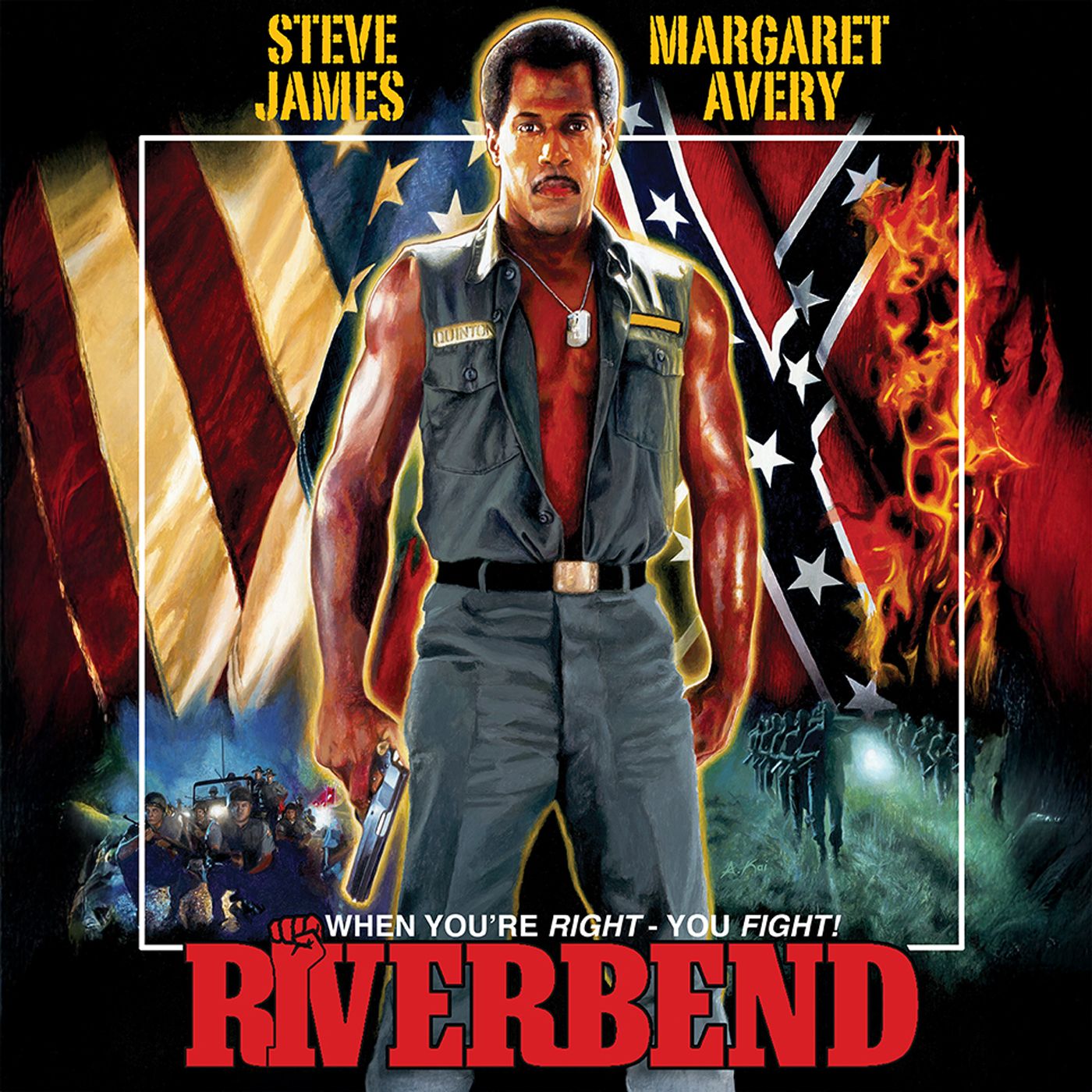
Special Report: Riverbend (1989)
Episode Transcript
Oh he is, folks, it's showtime.
Speaker 2People say good money to see this movie.
Speaker 3When they go out to a theater, they want cold sodas, hot popcorn, and no monsters in the protection booth.
Speaker 2Everyone pretend podcasting isn't boring, don it.
Speaker 1Off, turn it so listen, phyllis been a long ride.
How about to smoke my friend back here?
Speaker 4There's a fine here stop.
Speaker 2A cough.
Speaker 3Riverbend, Georgia, nineteen sixty six.
A timeless community where nothing change.
Speaker 2There'll be some.
Speaker 3Trouble if you come to town this morning, bikers, I'm wanting.
You can't just go on killing negroes.
Speaker 2Times you change.
Speaker 3Three Vietnam combat hero is falsely accused of war crimes.
Are hiding out in Riverbank.
Speaker 2It's just a place to stay for a few days, that's all.
You can't stay here.
Speaker 1We're only a mouth in town here.
I don't have time to play.
Speaker 2Where's the gun?
Speaker 5No, we all know what happened to Marcus now as the example of a man going to the laws and god damn it, look what happened to him.
Speaker 2Now, come on out here, boy, I want to talk.
Speaker 1I'm doing the talking.
I'm take care.
Speaker 4It is narrow there's only one way to save this problem.
Speaker 1That's to put a bullet in his head.
Speaker 2All right, God damn it, get back.
I swhere I can.
I don't ever ever want to hear the words boy, nigger or color to use again.
Understood, I'm talking.
Speaker 1About probably of you.
Sound like we're about to have a revolution.
Speaker 2Only one man can teach them to fight.
That's the time we need to The town will be ours.
The people are now our hostages.
We rather don't know what the uh situation in the town is.
Speaker 1We can't get close.
En'll find out.
Speaker 2We get work from you that you have located the hostages.
Speaker 1You gonna know one of that front line.
Speaker 6Try.
Speaker 4I've located and freed the hostages.
They're in the big church.
Speaker 1They're all safe.
Speaker 2You can move in now, Margaret Avery.
You don't get out of here killing Steve James, Tony Franks.
Two men locked in combat.
Speaker 1You Brad, it's been alone, Tom trummin.
Speaker 2Riverbend.
The battle for freedom has just begun.
Speaker 1Hey boy, I want to talk to you so many.
Speaker 7Hey folks, Welcome to a special episode of the Projection Booth.
I'm your host Mike White.
On this episode, it is the return of director Sam Furstenberg.
He's talking about the film Riverbend from nineteen eighty nine, which is getting a new revival thanks to the efforts of Michael J.
Dennis from Real Black Cinema.
That's our E E L B L A c K dot com.
Film is available for pre order now through Real Black dot com.
Thank you so much for listening, and I hope you enjoyed this interview.
Before we even start to talk about Riverbend, I want to know a little bit more about Steve James and when you first met him.
Speaker 1Here is the story of the relationship between Steve James and myself.
At some point was nineteen eighty five, we decided the company Kennon decided to do the movie American Ninja.
It was sequel to another kind of equal to another three Ninja movies that they produced in the previously, and we started.
We worked on a script, myself, producers and a writer, and those two characters emerged in the script, the American Ninja, Joe Armstrong and his sidekick Curtis Jackson.
So and there are soldiers in the military and both of them martial artists.
Once the script and the character was clear in our mind, what we want to do.
We started with the casting, so we decided on American Ninja.
So we decided on a casting which is called opencasting.
Not only agents usually casting auditioning in the movies, messages being sent to agents, agents sent candidates, but we decided to open it.
Anybody who wants to come in audition for these two parts American Ninja and Psyche can come in martial arts school, amateur actors, agents, people to represent by actually whoever wants to come.
About four hundred young people came.
We had two stages of First they had to meet Mike Stone.
Mike Stone was the choreographer of the movie Famous Martial Artists.
So first they had to meet with Mike Stone, and Mike Stone has to determine if they are fit to do the part.
As I said, they didn't have to be necessarily martial artists, because if somebody feits and you know, Mike Stone can teach them the moves, et cetera.
So first they had to go to Mike Stone.
If Mike Stone approved, they moved to the second room, which was to meet me, the casting director.
But lines et cetera, et cetera.
The process of choosing American Ninja was lanthy to couple of stages.
But the part of Jackson, I must tell you, Mike, when Steve James walked into the room, you know he's built.
He was built like a like an Atlas.
What a build.
And he came and he introduced himself, and I asked him, are you martial artists?
Yeah, he was a martial artist, Steve James.
Probably we talked a little bit and maybe we read we read some lines together.
I don't remember that much, and I knew right there and then we don't have to look any farther.
This is Jackson.
This is the character we are looking for.
Probably the company made an offer money offer.
I don't know how how this this side of it goes, and he accepted it.
And we liked him right away, even before we had the finalist American Ninja.
So this was Steve jack now Steve James now in a low budget movies.
As you know, we don't have time.
We don't have usually paget a hot time for pre rehearsals to meet and read the scripts.
Usually we don't.
And I was already sent right away to the Philippine to start to prepare once once we we also choose chose Michael Dudikov.
The second time I saw Steve James was in the Philippine in Manila when he arrived, and this was the first time also that he met Michael Dudekov and Michael Ludykov met with him.
The chemistry, as we know today, were fantastic, was fantastic, and uh, you know this, this this duo of American Ninja and Jackson, you know, Armstrong and Jackson worked fantastically.
So mean you know when when when the movie did well and the company you you know, Mike, we did not do American Ninja number two right away after General, but rather we we shot the movie.
We filmed the movie Avenging four in between them and Avenging Force also called for a similar situation in New Aleans political so a black candidate for city and the hero, the Michael the hero, so that it was perfect.
So Menacham Golan actually asked me, gave me the script and asked me, do you think can you read this script?
It was while we were mixing the sound one day.
Menach Golan came to the mixing stage and he gave me the script.
I didn't know anything about it at that point.
I did not know that Chuck Norris already rejected the script, and he said, can you please read it and tell me if this script is good for Michael and Steve, because by then they already saw the chemistry.
I read the script over a night that came back next next morning to the office.
I said, I said, menagaan Golan, this is a fantastic script, a fantastic script and good for both of them.
So we traveled to a to New Orleans and we filmed the movie.
While we were in New Orleans, the explosion of American Injia happened.
It was distributed all over the world.
So as we came back from New Orleans, I was in the editing.
The company already knew that they're producing American India Number two.
The day after we finished the sound mixing with the music.
The next day, I was already on the plane my way to South Africa to prepare for our American India Number two and Steve.
One day, Steve, Steve James calls me and he said, listen, you know South Africa apartheid, how is it?
Tell me I'm reluctant.
I don't know if I should come or not.
By then it was kind of the end of apartheid in South Africa.
So I told him Steve, first of all, it does not apply to America, of course, but nonetheless being in a part of it is not a pleasant situation.
But it was winding out.
It was already the end of apartheid.
Actually, the week that I arrived was the last week of different identity cars.
They used to have three different identity cars according to the races, but this was canceled.
The week I arrived was the last week of the three different So I said, no, save the atmosphere is excellent, et cetera, et cetera, h relaxive.
And he came to South Africa and the first weekend we decided to go out on the street to a market.
It was Sunday, the market.
Now, the minute we walked out with him in the street, we didn't realize he was already a hero because the kids already saw the movie American Ninja.
Speaker 2We didn't know.
Speaker 1We couldn't walk with him in the street because in South Africa he was this African hero, you know, in American African, but nonetheless for them it was this African hero.
We just couldn't walk with him in the street.
He was mapped by the children, the kids who just saw the movie America Ninja.
So this was so we became.
It was friendly.
We were you know, we lived not far from each other here in Los Angeles during the time we were in South Africa.
He married in Israeli.
His wife, Nava, was an Israeli.
So there was a lot on kamen, a lot of camen between me and Steve James.
We liked the same type of movies.
We were crazy about Akira Corosawa movies, both of us.
So there was a lot of camen, and we became very good friends.
But you know, sadly enough, as you know, he passed away two to too young, too early.
Speaker 5And how did Riverband come about?
Speaker 1So those three movies are out, you know, a big deal, America and Ninja one and two.
Riverbend was not as successful as American Ninja by any means, but maybe I directed a few movies in between one or two.
One day I received from my agent script.
It was called The Night of the Eagle before Reburban.
Night of the Eagle, big script, one hundred and sixty pages, one hundred and eighty pages, and I read it just you know offer through my agent.
Somebody sent you a script.
I didn't know anything about it.
They want you to read it and see if you would like to direct it.
I read the script.
I'm dying to direct this movie.
This is fantastic material, unbelievable, and so I gave my positive, real, you know, affirmative.
I want to do it, and I had a meeting.
It turned out the producers are from Texas.
It's money, it's the investors from Texas.
Producers are from Texas.
And my agent told me they will come to Los Angeles to meet with you, and indeed they There were four producers, two couple, and they came to Los Angeles.
They came to my house.
You know.
We arranged the meeting in my house.
And while we were talking, they wanted to sense me out if I if I understand the material.
I guess and then they while, how do you know about me?
So they saw the movies, especially Avenging Force.
They saw Avenging Force the main the writer, he was more knowledgeable, the writer, producer Sam Vance.
He saw the movie and the movie deals with white supremacy, it deals with the racial subject Avenging Force.
And then they turned to me, they say, do you think you can bring in Steve James.
We want him for the lead part.
I told him, I'm sure Steve James will be more than happy to do the script this movie.
He will be more than happy.
So it was, you know, we parted, and then I learned to my agent that they want me to direct the movie.
They want to cut a deal and and at the same time they want me to bring in Steve James into the project.
And I think, I don't remember the detail like contact Steve, you know, gave him the script.
Of course he was very very happy to do such a little They know, they didn't even need me.
They could have contacted him directly because for him this this movie was and that's this was the initial contact between me and the producers of the of Riverband eventually Ribband.
At the time, it was Night of the Eagle, and that's how we started to work on the project.
Speaker 5Mister Davis, I would love to get a little bit more.
Speaker 4Well, you know, I'm a filmmaker by train, but I have a YouTube channel called Real Black TV, and a little bit before the pandemic, I started uploading movies that I thought were falling into the digital divide, you know, because we from a black film in Philadelphia.
You know, things that if they weren't preserved or shared, they would be forgotten.
And one of those movies happened to be Riverbend, which is a movie that I didn't really know that much about until I met a gentleman named Charles Woods, who's sort of my mentor.
He does many lectures on the channel about black film history, and it was one of his favorite films.
In fact, he had five VHS copies in his collection, right, So that alone impressed me, Like, why do you have so many?
We had this at the video store, we had like one copy.
Why do you have five?
And he said, watch it and you'll understand.
Right, So when I saw it for the first time, after you know, being tutored by Charles, you understood this is a very special film.
It's one of the few films where black characters have agency over their own fate.
Most of the films made up until that point and even to today, that have black themes or majority black casts, there's always some white savior or some sort of a character where they don't really get to determine their own fate.
Even a movie like say Queen and Slim or juice, you know, the characters meet their fate through accident as opposed to deliberate decision, you know.
And it just seemed like this was one of two movies that I can think of.
And I know a lot about movies that show black people standing up for one another, teaching one another what they know to empower themselves.
It's this movie and one from nineteen seventy three called The Spooky Sap of the Door.
It's a very important film to me, and I wanted to share it.
I had on a YouTube channel, and about a year later, it's twenty nineteen, well about a year and a half later, I get an email from Sam.
The header is like, I am Sam Furstenberg, director of Riverbend.
So I'm about to open it up.
And I'm like, oh, this is gonna be a cease and desist, you know, I'm ready to take it down.
And he said, no, you're doing this film a great service.
It was produced independently and it needs all the exposure it can get.
And from there we started talking about how the film was made, how does this movie even exist?
And we started to talk.
In the process of our conversations, a thirty five millimeter print shows up as a listing on eBay, and at the time I had never bought a thirty five millimeter print of anything, you know, but I knew this was important.
It might be the only print that exists, is what I was thinking.
So I put a bit on it and we won.
It was in South Africa, so it was during the pandemic in twenty twenty one when this was happening, and it took about three or four months for the show up.
I wasn't even show it was going to make it here, and then when it finally showed up, it took another six months or so for me to raise the money to get it transferred to case Scan and it had every scratch known a man.
It must have sam it must have played through every projector every crappy grindhouse theater between New York and Johannesburg.
But fortunately found Preig Rodgers at Deaf Crocodile and he cleaned it up.
It looked beautiful.
We had to replace some scenes that were missing, but we premiered it in Denton, Texas in January twenty twenty four, and from there a whole bunch of series of serendipities happened.
That led us to be able to obtain the negative from MGM Amazon, not the least of which was meeting Valerie Vance, the widow of Sam France and co producer Sam.
Speaker 5Can you tell me a little bit more about the actual filming of the movie, because it's I mean, it's so ambitious that it's actually a period piece and it looks fantastic, really recalls the nineteen fifties, nineteen sixties.
Speaker 1As I mentioned earlier, the money the investors were from Texas, from the Dallas area, and they put the money privately.
The whole movie was financed privately, and they had one stipulation, we must shoot, we must film in Texas.
They were not willing to move with any other Now, the story takes place I think in Georgia in the south, so but this was okay.
We very quickly we found out that there is an area in Texas south of Dallas which is called Wak Sahachi.
The main town is Waxahachi, and the entire surrounding of this Wak Sahachi has very much the look of the South of Georgia.
I mean, anyway, it's the same type of more or less characteristics architecturally and atmosphere, so it was good enough, actually more than good enough.
It looks exactly like the South.
And the other time.
The other thing they stipulated the crew must be Texans.
They to hire local people cast and crew.
So the only people that came from outside was myself and Steve James.
Obviously.
They had also a production manager that came with us, Norman Stevens.
That's it.
All the casting was done locally through theater, theater from all over Texas, not only from the Dallas area, from all over Texas.
And of course the crew, including the cameraman.
The cameraman he was a Hollywood camera man, but he was a Texan.
He worked television in Hollywood, but he was local.
He was Textan.
And then only the only other thing that came up was the leading lady.
They wanted, obviously that the best thing for a movie is a name, somebody recognizable name, and they started, we all agree that we want once the name came up, we want Margaret Avery from Color Purple, and they started dealing with the agents in Hollywood.
She agreed and she came.
So except those I think four people, everybody was locally and we started scouting for locations.
We don't need.
There is not many locations in this movie.
It's basically this little town.
There is the bridge, there is the house where she lives, Margarette lives.
They are about six or eight locations, all of them we found and they were modified to look you know.
Of course, we had our department production designer, everybody local, everybody from Texas, so they modified everything to look ninety sixties.
The vehicles, you know, there was a vehicle managers, somebody in charge of vehicles.
He found all the correct vehicles that we look.
Of course, the wardrobe, the uniform of the National Guard, and the uniform of the sheriff.
Everything was modified like we do in movies, to look period, and that's basically it.
It was not difficult at all to modify this Waxahachi area, the few towns that we found.
The main city is called Venice, Texas, not far from Waxahachi, and everything was modified at just twenty years big because the movie or thirty years back.
The movie was shut was filmed in eighty nine.
We were talking about the movie in nineteen sixty six, ninety sixties, nineties, so it was not difficult at all.
Speaker 5It was easy when you have a hero as good as Steve James.
You need to have a villain who is pretty darnk good as well.
Can you tell me about Tony Frank who plays a sheriff.
Speaker 1Tony Frank is a local actor, Texan actor, and he was in movies before.
He was a television movie actor established in this area, in the in the Texas, in the Dallas area.
And he came in into the project I did.
I did not even I was not involved in casting him when when I came to I was recruited and hired a little bit late at the stage of production.
Most of the local actors were already part of the cast before I came, before I arrived in Dallas, and and Tony was was already in I never met him before the first day of shooting.
As customery in low budget movies, we don't have money in time for this, and and he was just right on spot on.
Now for people who see the movie, people who saw the movie, or people who are going to see the movie, you know how mean or you will know how mean he is in the movie.
So mean, you know, Bustard Hima.
But Tony Frank himself as a personality was completely the opposite.
He was the sweet gentle man who was friendly.
Everybody loved it, joking and jokes, and he was the exact opposite of the character of the sheriff in the movie.
Yeah, when we are looking today the movie and most of people that look at the movie, they're really commending his performance.
His performance is magnificent.
How villain villain is performance he is, But that's what he is.
He was a local guy.
Speaker 5When you ran across that YouTube channel that mister Dennis runs and you see that he's got the movie up there, I mean, what is that when you guys start talking and especially start talking about this restoration, the scanning process, I mean, what's that feeling for you?
Speaker 1Like?
The movie was distributed by Paramount as a matter of fact, big company, you know, Paramount, the major dissolution company, but they were had very few prints, never screened in the West Coast.
I hear that there were a couple of screenings in the West Coast and in Texas and in New York.
That's what I hear.
Never in the West Coast.
And then they distributed the movie.
They came up with with VHS cassettes for the rental business, and the VHS cassette was of a very poor quality.
I must say that the visual quality of the of the cassette was really really poor.
And I had a copy, one copy, and you know this, and the movie disappeared, you know, after initially, so I don't think they printed or what do you call the copy too many cassettes.
There were very few cassette you know, rental places that had it, very few and with no campaign.
They didn't put any campaign, nothing.
They just threw the cassettes to the stores.
I had one copy, probably they gave me one or whatever.
They send me one, and I had to contractually they had to give me one, so Paramon sent me one.
Now I remember they send me one copy and the copy was, as I said, poor quality.
And this always bothered me, you know, movie disappearing like one month two months after it's coming out, completely disappearing from the market, from the from the knowledge of the knowledge based nothing that and this thing bothered me for many, many years.
What can we do?
At some point I took this v Ages cassette and I digitized it.
By the time it computers.
At that time, there was no home computers, and there was no Internet, of course, no YouTube.
So at some point I took it to digitize it, and I loaded it to my YouTube channel, and I said, let's see what happened.
Let's see if anybody.
Usually, when you load the copyrighted material or material that has a contractual distribution, immediately the complaints are coming within day.
So I said, let's I'm going to upload it and let's see what happened.
And no complain, nobody, nothing.
And one day, while I'm searching googling, I see somebody else.
I realized there is another copy of Riverbend in the Internet.
I follow this route and I arrived to Reel Black dot com or Real Black TV.
That there are a couple of channels of Real Blake I never heard about before.
So I start to investigate.
I look who they are, a website, et cetera.
I said, this is a kind of an institute, kind of organization which are restoring and recovering, restoring black cinema, black history cinema.
So I just wanted to thank them first.
The first thing, I wrote a little letter I didn't know, like Dennis, just a general Real Black dot com thank you very much for loading you know, doing the I did you know, I recognize I identify myself, like Michael told you, and I did the same thing there.
Now there are two copies in the internet.
This was our meeting.
That's how our path merged together.
And at that point we only agreed that something has to be done about this movie.
Further, I didn't know which way to go because on my investigation through the years didn't bear any fruits.
I couldn't follow.
I knew that there was a company, the company went bankrupt, and this is it.
Michael, of course much more knowledgeable and experienced than me, and he took it much much farther than I could.
Speaker 5Can you tell me a little bit about that.
Speaker 4Yeah, it's interesting.
I was just checking the date.
Our upload was November twenty nineteen, and Sam he uploaded in January twenty twenty.
So within a month the Seren Deputies begins, you know.
But the scanning, you know, the first print, you know was, like I said, it was just terrible.
It was missing scene means.
But Sam and I collaborated to put together the best possible version for the festival circuit.
Speaker 1Extuly, Mega, I must tell the story that one day you contact me and you told me, wow, I found a print in South Africa.
Oh, that's true.
Yeah, you pursued it, you were you were actively looking for a print one thirty five millimeter print because of the quality of the VHS was so poor.
Speaker 4Well, I it just was serendipity.
I don't I don't know if I was looking to buy it.
I think I was just searching eBay for Riverband and one day a print showed up, and I didn't know what to do with it, but I knew I should bin on it just to preserve it, you know.
So it wasn't It wasn't like intentional, like oh I need a thirty five of Riverband.
It was more like, this seems like it's a very rare item and if I don't get on it, it's going to get lost.
Speaker 1Right.
Speaker 4So so when we got to transfer, the had every scratch.
I mean, I could show you the original scan and before the restoration that Craig did, and it was just it was unfathomable how bad it was.
But we were able to clean it up digitally and remove the majority of the scratch, isn't it It was?
Speaker 1It looked good.
Speaker 4I think we were happy with it, but we knew it wasn't marketable, Like we couldn't just put it on Blu Ray and have people happy with it because it was transitioned to VHS or this that.
But we were still taking at the festivals.
And I happened to be at a screening with my students of a movie called Naked Acts by Bridgette Daniel in Philadelphia.
And I didn't know when I brought the students to the screening that it was the world premiere of the restoration, and that the person who restored the film, Milestone Films.
Dennis and Amy were sitting literally two seats away from me the whole night.
But afterwards, you know, I was introduced to and I told him about the premiere we had in January.
This is March of twenty twenty four, and you know, Sam and I we hit all kinds of walls.
You know, we tracked down to a certain extent.
We knew that the film was an orphan film, but we didn't necessarily know if we had the permissions to be able to distribute it properly.
Dennis has been in the business forty years and I told him the story and he said, you know, I think, I said, where's the negative.
I said, well, we've been calling labs the Labs went out of business.
They became other companies.
No one seems to know what happened to any film elements.
He said, well, you know, I think I can track that down and within i'd say less than a week by the if it was Tuesday by Friday said I know where the negative is, but you can't have it.
So fortunately we had met Valerie Vance in Denton, Texas at that time, and eventually we worked out an arrangement where we could reclaim all the elements.
And then we went to another gentleman named Austin Squatieria Real Revival, and he did an immaculate transferring six K and did the restoration, which was basically light dust removal.
I mean, because the think about it, the film had never been touched.
It had literally been sitting in a vault being paid for by MGM for almost forty years and no one had ever touched it.
So it was minimum work needed to bring it to the level that we have now, which is going to be restored.
It's been restored.
Speaker 2We'll have.
Speaker 4A debut of the DCP probably in February March of twenty twenty six, and then the Blue Rao hit stores.
It'll hit people's hands.
People have been pre ordering it through shop dot real Black dot com.
It'll be in their hands on June teenth, twenty twenty six.
Speaker 5Tell me about the screaming that you guys just had and what was that print that you showed.
Speaker 4We found one print that had never been played and it's premiered at the Aero Theater on October fourteenth, twenty twenty.
Speaker 1Five, presented by the American Cinematic.
Speaker 4It was amazing.
Julius Tennant, who's one of the co stars, along with Margaret Avery and Alex Morris were there and Debbie James, the daughter of the late Steve James, were there along with Sam to participate in the panel.
And then we had a big surprise.
You know, Julius is married to and it has a production company with Viola Davis, and she does such a great gesture by coming out and giving literally handing Margaret Avery's a bouquet of white roses, and that surprised the whole audience and everybody's.
Speaker 2Like, wow, you know, this is so the spirit is great.
Speaker 4The other night, what excited me most was just to be I would say, of all the things that we've done for Riverband, to bring it back to life.
That night was the best, and this whole experience was the best because it's almost and Valerie Advants couldn't be there, but just hearing the stories and seeing how much they love one another everybody has been amazing for me.
I mean, that's the way I'm having right now.
Speaker 1It's rare anyway to see a thirty five millimeter print screening nowadays.
You know, there are a few places revival houses in many cities around the country.
American Cinema tech are trying to show movies in thirty five milimeter print, not always.
Sometimes it's a digital screening.
And Mike and we went to few screenings there were all digital screenings.
We didn't have a print with us.
So we went to a Denton Film festival, the Denton Black Film Festival in Texas.
We showed the movie digitally beautiful and they were missing scenes in the digital print that we had.
There were missing scenes.
And then we went to another festival in Boston, right Roxbury Film Festival, and it was but that night that you were talking about.
Not only it had the stamp of the American Cinema tach on it that says, okay, we recognize we want to show this movie to present it.
It was from a thirty five minimeter print in a pretty historical theater.
Eero Theater in Santa Monica is a famous revival house and four hundred seats.
So you see the movie running like the way we used to see it when we were kids or you youngsters, with the grains on the screen and all the scenes.
There were no missing scenes.
So all the scenes, all the missing link the scenes that we didn't see before, some like six or seven scenes that were missing.
Everything was there and it all makes sense.
Beautiful, glorious colors from a brand new print.
Speaker 4It was a very time the movie played in Los Angeles and it was the very first time in over thirty five years that the entire film was projected on celluloid in front of an audience.
Speaker 1It was quite Michael.
One more thing that occurred to me after we saw the movie.
There was a very important scene is a meeting of the heads of the little town Riverbend, the segregated town mayor, etc.
And the other important people in the town and the sheriff, which is an evil sheriff, you know, bigot sheriff.
He comes into the meeting and he claims that things are changing.
We are too reluctant about our black population of the town.
And some of the people in the in the meeting tells him, you know, Sheriff, times are changing because this is sixty six during the Civil rights movement, and he rejected this idea.
The times are changing, and maybe this sprint that we found in South Africa was there during the apartheid.
They couldn't show a scene like this.
There is a white people who are rejecting apartheid, you know, so maybe perhaps Michael, they cut out this scene because it was censored.
Speaker 4My understanding is in nineteen eighty nine.
You know, this is Chris Poggiali, who has a book I called These Fast Break Bricks.
He's also a researcher.
He did a lot of research for US and he said that in nineteen eighty nine all American films were contraband.
So it's hard to know when the edit the editing was happening, but I feel it was more to make the film streamline so it could double feature or a triple feature.
But yeah, we don't know when it was cut or who cut it or why.
Speaker 5What kind of reactions are you guys getting at these screenings.
I'm so curious.
Speaker 4The beauty of Riverband is that it's a period piece, right even though you know the music is very nineties, It's set in the sixties, and it's dealing with an issue that's still relevant to today, and it was relevant in nineteen eighty nine.
So when people have the distance of time and perspective, they say, wow, this is still going on, you know, the racial aspects, the fact that police are still terrorizing us.
There's very few movies offer a solution.
So this I think gets people thinking in terms of how can we empower one another to face some of these issues that continue to this day, the racial oppression, the suppression of all voices right now.
But yeah, I mean it's been tremendous.
I've not heard.
I mean, when people have a chance to see it, they kind of expect like Rambo with black people, and what they get is a little bit more.
And I think it turns on a switch in the udience's mind that they weren't expecting they have to turn on.
But Sam does it in such a way it was entertaining and you get a little bit of a message, you know what I mean.
Speaker 1The movie came out was finished nineteen ninety, let's say nineteen ninety, and it was out there.
Nineteen ninety were kind of quiet time in racial tension the way I remember it.
So the movie was, you know, okay, we're telling us a story about the civil rights movement time nineteen sixty six.
You know that's fine.
Yeah, it still exists today.
But the restoration our first screening was already after all the few things that happened in the last three or four years, George Floyd, the other killings, and Blake's like matter.
So suddenly the subject became much more intense than it was in nineteen ninety, much more intense.
And we showed it to young people.
We went to a college and we showed it to the leg Cinema Club of the university.
So those young people you're talking know about nineteen eighteen, nineteen twenty, they were shocked when they saw the movie.
Am I right, Michael?
Those young films.
And in another screening in Roxbury, there was a bunch of teachers in the crowd and they came to us.
They said, wow, you know, we must have a copy and show it in schools, etc.
How come we never heard about this movie?
Speaker 4That's to the credit of Sam and val Evans.
I think they spent ten years trying to get this movie made, and then the opportunity presented itself when they met the Dales.
They could have easily made some pablem you know, but they chose to do something that was direct from their experiences and had something to say, you know.
And I think that's that's why the film stands attest the time, because they were very brave and in terms of wanting to say something.
You know, it could have been if it was just disposal entertainment.
Yeah, what, I'm gonna straight the video and yeah, nice that it's cleaned up.
But you know, especially after George Floyd, people see this and they're like, why don't I know this already?
How come I don't know this movie?
You know, Do the Right Thing came out in nineteen eighty nine.
This movie came out a year after a few months after and it just went away.
Whereas Do the Right Thing is Champion, it's in the National Registry and all that other stuff.
It deals with the same issues in a way.
Yeah, I mean, everybody's been super positive about it.
I think it's about the rediscovery of something that was lost and I think it's very important that people understand that we're not done yet.
We still need help, and the way to help is to go to shop that Real Black dot com and support us financially by either pre ordering the Blu ray or buying some cool merch, you know.
And it's it's it's a limited edition a lot of this stuff, So they got to act.
Speaker 1Now, Pin, there is a beautiful pin.
Speaker 5Mister Dennis, do you now have a flavor for this?
Are you going to start looking for other films to restore?
Speaker 4Being in Los Angeles for this premiere, I've had a couple of meetings with people that have orphan films and or films that are rare, i should say, And we're looking to create an opportunity to build the label Real Black Renaissance around this this idea.
You know that there's work that needs to be seen, that needs to be resurrected and restored.
And Riverband is just the tip of the iceberg.
You know, there's a lot of black cinema that's in danger being lost if we don't take care of it now, you know.
So, you know, but that's that's that's another step or two away, you know, But right now, Riverband June nineteenth, twenty twenty six.
That's what we're trying to get to.
Speaker 5Mister Furstenberg, What are you working on these days?
Speaker 1I'm not working.
I'm not in the movie anymore.
But my main effort, my main is preserving the legacy of those movies that I was involved in and other directors, because in the eighties there is now we recognize a chunk of movies or pie or slice of a pie, which is called the independent law budget genre movies of the eighties and the beginning of the nineties, and it kind of it became a group by itself, Toby Hooper movies of Toby Hooper, Josito, Sam Fursenberg, Sheldon Laditch, et cetera group of directors who made law budget independent movies for those companies like Kennon Shapiro, Gligans, all the other companies.
Nowadays it's a body of work, mostly mostly action, some of them sci fi.
Of course, there was horror.
Horror was a big deal by itself, so that belongs to another group.
So I'm I'm I'm kind of busy, and I see so much interest in it.
I'm getting so so much attention and question and podcasts like you and interviews dealing with this subject.
A couple of books already came out, the book about the History of My Movies, a book about Sheldon Ledite history, and et cetera.
There are more and more interest in this group, and and nowadays it's recognized that those movies they have the look, you know, the early Van dam movies, the early Schwarzenegger movies, the early you know do the Michael Luddikov movies, and they have a look.
It's called the look of those eighties.
And and this look comes out of the fact that all the action that we have done this group.
Certainly, I can tell you my movies never used any optical effects.
Never.
Every piece of action that you see in those action movies were actually performed, physically performed.
And this is nowadays.
This is rarity when we see the today's action which obviously everything is blue screen and AI could never generated the CITYI or whatever.
So it has a group.
So that's what occupies me most of the time, the preservation of this legacy of this group of movies, including the movies that I've directed.
And I'm busy with this.
I'm not about to direct any other movie from this genre that any way disappeared.
There is no filmmaking of this type of mid budget movie.
We were privileged because it was the time of the beginning of the video video cassette business, the home viewing, so there was enough money to make movies which did not have the budget of studios.
Obviously we didn't have budget of James Bond, but we had good enough money, good enough budget that we could film for eight weeks, six days a week, all whatever we needed.
And the and the movies have been there, they look good enough.
So this was this group.
So that's what where I put my energy.
Speaker 4Sam literally is the pied piper for American genre action movies.
At the screening, he had people coming with I don't even know where they found that revenge in the ninja poster.
Speaker 1And America ninja posters, Ninja posters, I.
Speaker 4Mean, they come, they come from miles around and uh To to experience this, you know, and we want to bring this one to to people's homes, you know, in the best possible way.
So if you're watching, send it, send an email to Real Black Ink R E E L B L A C K I n C at live dot com.
You know, let us know that you watch Mike White and the first person to do so, I'll send one of those enamel pins.
Speaker 5This is not your only gig restoring incredible film films and taking them around the country.
Can you tell me a little bit more about your organization and what you're doing for the community there in Philadelphia.
Speaker 4Well, I'm just starting to get back.
Speaker 1We just did.
Speaker 4We just started to do some screenings again.
But for about sixteen seasons, I hosted a monthly screening series.
Then the pandemic hit.
Right before the pandemic, we stopped the series because of you know, just aging out of the audience and more people were wanting to see things at home.
And then eventually, you know, and then during the pandemic, the YouTube blew up and then blew back down.
Speaker 1Michael is trying to be modest.
He has one and a half million followers.
Speaker 4Yeah, on the YouTube channel, and you know, but right now it's it's real Black Renaissance and teaching adjunct film studies classes at Temple University.
So you know, everything I do is about film, you know, and I love it that way.
Speaker 5Well, gentlemen, thank you so much for your time today.
This was so great talking with you.
Speaker 1Thank you, and thank you listeners and the viewers, and hopefully, and I'm sure it will happen that this movie Riverband will be viewed and seen by many many movie lovers all over Steve James fans.
There are so many Steve James fans around the world that want to see what he has done.
Sam Furstenberg followers movies, but in general, I really I'm confident that this dream is about to be materialized.
Once the Blu ray comes out and streaming, eventually this movie will be seen the way it deserves to be seen by many, many people around the world.
Speaker 5Well, thank you, gentlemen, this was so great.
Speaker 1Okay, thank you for having.
Speaker 6Us stram.
Speaker 1Look at leave the Trample.
Thank god miss our family.
I know that place down away.
Speaker 2Some found rout, you know.
Speaker 6Then I want antiway singing Amy my song, someone that m down the way, down at the ribble, be down at the ribble, my thirty, someone at the down at beginning of the highway, down at the river beds, down at the river beds.
I'm all down at the way.
Wake more than na stay.
Speaker 2Sit me in jute can make them.
Speaker 6Not to be by face.
I know that thing away to do before then, all everywhere, seeing that.
Speaker 1My son.
Speaker 6Someone else rods down again of a highway, down at the Nporby, down at the Neponby, down at the Nemonby,