·S2025 E1204
America's Dirty Secret- It's Toxic & It Stinks with Catherine Coleman Flowers
Episode Transcript
[SPEAKER_02]: the following program contains graphic material, including offensive language.
[SPEAKER_02]: If you're in this question, it's advised.
[SPEAKER_00]: You're moving into a dimension, not only of sound and politics, but of absurdity.
[SPEAKER_00]: A journey into a land where facts are fiction and reality is up for debate.
[SPEAKER_00]: Up is down, lies disguised as truth and logic is a distant memory.
[SPEAKER_00]: You've just crossed over into opposite world.
[SPEAKER_00]: Fortunately, one voice dares to call it like it is.
[SPEAKER_00]: Welcome to the Nicole Sandler Show.
[SPEAKER_00]: You're refuge from the madness or true still matters.
[SPEAKER_00]: Even in opposite world.
[SPEAKER_05]: Ah, it is opposite world, but you know what?
[SPEAKER_05]: We're going to take a little break from...
[SPEAKER_05]: Well, the usual opposite world, you know, the one where, well, actually, you know what it all overlaps.
[SPEAKER_05]: So, no, we're still in opposite world.
[SPEAKER_05]: We're just going to take a little break today from, oh, you know, whiskey, peat, headset and Donald Trump and the craziness going on at the DOJ and the White House and all of that.
[SPEAKER_05]: And we are going to talk about, well, sort of an offshoot from yesterday, when we were talking about AI, and the bad things that it can and will, I guess, do to the environment.
[SPEAKER_05]: Because, well, yeah, because it's not good, you know, we talked about how AI uses so much power [SPEAKER_05]: and actually going to talk a bit about water today.
[SPEAKER_05]: Back in February, I, on this program, spoke with a woman who I'd never met before and frankly, I didn't know a whole lot about, but the blurb for her book, the one that had just come out then, called Holy Ground.
[SPEAKER_05]: I knew it.
[SPEAKER_05]: In fact, I've got the wrong.
[SPEAKER_05]: Oh, man, I've got the wrong notes up in front of me.
[SPEAKER_05]: That's why I'm so for clamped.
[SPEAKER_05]: If that's the right word.
[SPEAKER_05]: Holy ground on activism, environmental justice, and finding hope was the book that had just been released at that time.
[SPEAKER_05]: And so she came on the show, it was February 5th, I think.
[SPEAKER_05]: I'll actually post a link with today's show to, in case you want to hear more from today's guest, Katherine Coleman Flowers after, you know, the regular show ends, because I promise you are going to be, you're going to love her.
[SPEAKER_05]: You know, like I said, before I interviewed her, I didn't know a whole lot about her.
[SPEAKER_05]: And, you know, but the book was, you know, what I knew of it when I booked her was interesting.
[SPEAKER_05]: I knew she was doing great work for the environment, for the planet, and everything before I had her on.
[SPEAKER_05]: And afterwards, I read everything I could find about her because I was so impressed.
[SPEAKER_05]: that was in February, in April, Katherine Coleman Flowers won the, was one of, I don't know how many people they honored, but time magazine, three years running, is only the third year they've done it.
[SPEAKER_05]: They've started handing out the time magazine Earth Awards.
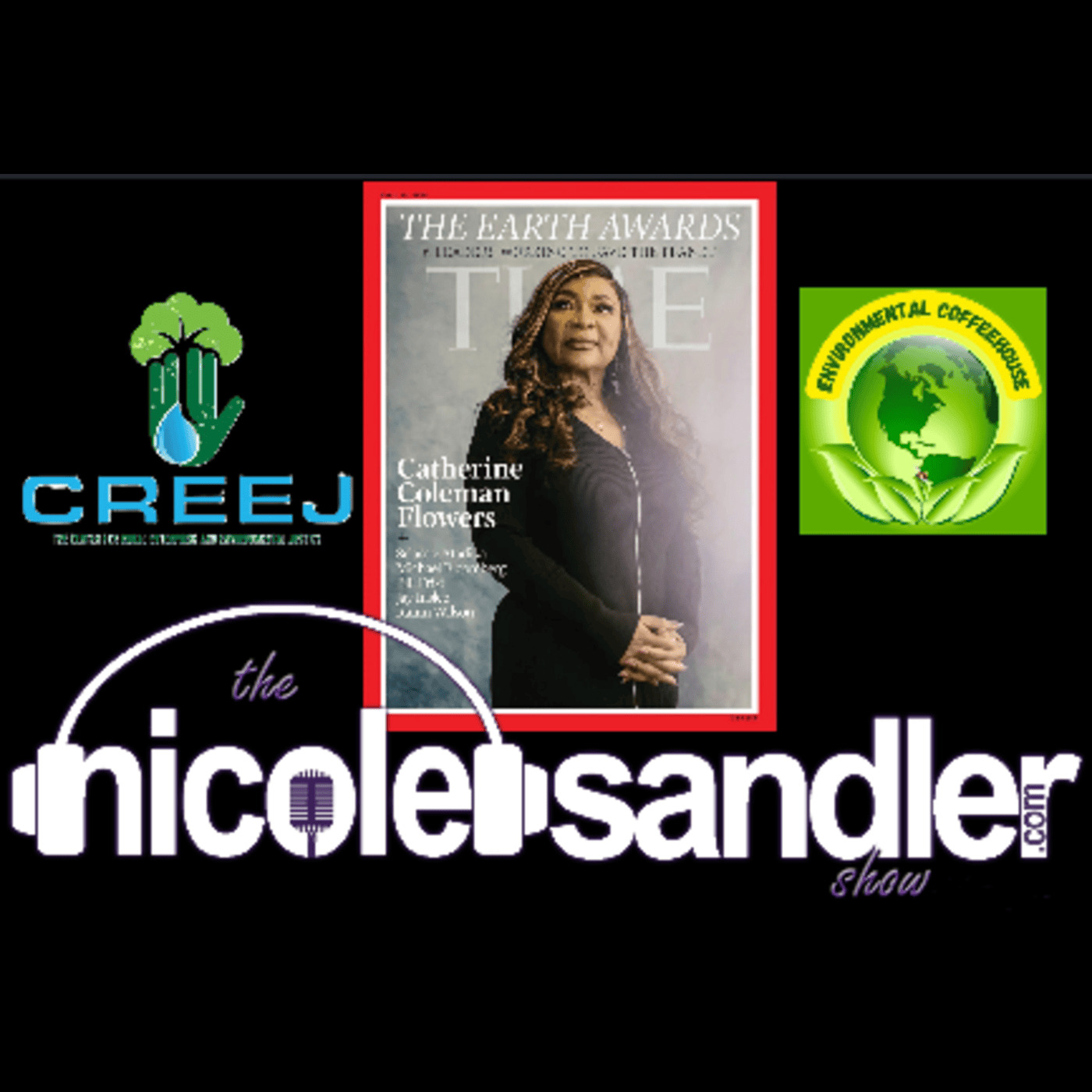
[SPEAKER_05]: And in its third year, not only did she win to be one of the people honored, but she was, I don't have it separate, but she was on the cover of Time magazine.
[SPEAKER_05]: That's what's up on the screen right now.
[SPEAKER_05]: I'll pull it out separately.
[SPEAKER_05]: But, you know, my God, and everything she's done is phenomenal.
[SPEAKER_05]: So she'll be joining us in about 15 minutes.
[SPEAKER_05]: And, you know, we have a friend of the show, our friend Sandy Shellis, who runs the environmental coffee house.
[SPEAKER_05]: She does her own show, which is back on YouTube now after being suspended and all that.
[SPEAKER_05]: And so I invited Sandy to join us because I knew that she didn't, it hadn't been introduced to Catherine and I thought, [SPEAKER_05]: I can make this introduction and plus Sandy could join me on the interview because I know she's got a great perspective on everything that's wrong with the environment.
[SPEAKER_05]: So, we welcome Sandy Shalas to the show back to the show.
[SPEAKER_05]: Hey there.
[SPEAKER_05]: And I don't hear you, is your audio mute?
[SPEAKER_02]: Yeah, I just fixed it.
[SPEAKER_02]: I did not want to be sniffling and snurfling because it's that kind of season.
[SPEAKER_02]: Yeah, it's really, and we're also expecting minus four.
[SPEAKER_02]: Oh my god.
[SPEAKER_02]: minus 16 Celsius, supposed to go down to minus two, or maybe even more than that.
[SPEAKER_02]: So it's cold.
[SPEAKER_02]: I just loaded the wood stove.
[SPEAKER_02]: I got a propane delivery today.
[SPEAKER_02]: I think God, I had a balance with them because that's expensive.
[SPEAKER_02]: Yeah.
[SPEAKER_02]: And [SPEAKER_02]: Wow.
[SPEAKER_02]: Hello, everybody.
[SPEAKER_02]: It's great to be here.
[SPEAKER_02]: I look very red, don't I?
[SPEAKER_02]: Yeah, I didn't even have time to just my color.
[SPEAKER_05]: That's okay.
[SPEAKER_05]: We're glad you're here.
[SPEAKER_05]: Thanks.
[SPEAKER_05]: So, you know, for the longest time, you were off the air.
[SPEAKER_05]: You were YouTube, band you.
[SPEAKER_05]: You got all that straightened out.
[SPEAKER_05]: And now you're back full time with the environmental coffee house.
[SPEAKER_05]: Remind everybody where they can see you when they can see you and all that.
[SPEAKER_02]: Okay.
[SPEAKER_02]: Well, it is environmental coffee house and it's on YouTube.
[SPEAKER_02]: Messing around with thinking about changing the name, but I'm not sure I'm gonna do that.
[SPEAKER_02]: I am so sorry, I have not messed with Mike.
[SPEAKER_05]: Don't worry about that, Sandy.
[SPEAKER_02]: Don't worry about it.
[SPEAKER_02]: Okay, environmental coffee asks, let me take a deep breath.
[SPEAKER_02]: It's just great to see everybody in the chat, and all this is great.
[SPEAKER_01]: Great.
[SPEAKER_02]: I'm really looking forward to Catherine.
[SPEAKER_02]: She's amazing.
[SPEAKER_02]: I was watching a video interviews with her today, [SPEAKER_02]: her book and she has she's on the N.R.
[SPEAKER_02]: D.C.
Committee and she is she's worked with the poor people's campaign.
[SPEAKER_02]: I mean she's so much and I understand a lot about what she talks about when she talks about the community and I live in a rural community.
[SPEAKER_02]: and we have issues.
[SPEAKER_02]: So I'll be asking her a question about where she is and sludge.
[SPEAKER_02]: Yeah.
[SPEAKER_02]: Okay.
[SPEAKER_05]: And putting up like that.
[SPEAKER_05]: Well, her main topic, what propelled her, [SPEAKER_05]: into the MacArthur Fellowship that known as the genius grant and to the cover of time magazine and being awarded their earth award is the work she's done and she calls it America's dirty secret and what she's talking about and in my right up for today's show you know I said in plain English [SPEAKER_05]: It's, you know, it's shit and it stinks and it's toxic and so you know what she's going to join us in about ten minutes, but I want to take a few of those minutes to play for you because I don't want to take up the time when she's here this video short video time magazine did one of these which eat with each of the The activists the climate activists that they gave this award to just a few months ago and in her company [SPEAKER_05]: Michael Bloomberg, Jay Inslee, the former Washington governor, who's really good on climate issues, climate change and all that.
[SPEAKER_05]: Former Tennessee Senator Bill Frist, who, you know, he's a Republican, but he's good on the subject, actor Reyn Wilson and others.
[SPEAKER_05]: Again, she was on the cover and [SPEAKER_03]: Yeah, but when on the sanitation problem, uh, the people that were interested in the most were the people that were not in the United States.
[SPEAKER_03]: People were just surprised and shocked that this problem existed in the US, you know, the richest country in the world.
[SPEAKER_05]: uh...
flowers great again recognition a decade ago for exposing louns county alabama sewage crisis she has led the charge in connecting environmental justice and climate change with deep-rooted social inequity not aware of the sanitation issues and how it impacts them because when they flested to all is [SPEAKER_03]: it goes away, they don't think about it, but more and more because of climate change, sanitation issues are becoming more prevalent in communities that have never experienced them before.
[SPEAKER_05]: More than 2 million people in the U.S.
lack access to clean and safe running water, flowers elevated those stories with policymakers.
[SPEAKER_03]: We're handling the national [SPEAKER_03]: And initially, they thought it was a plumbing problem.
[SPEAKER_03]: But while we have sea level rise, while we have salt-wooded excursion, when we're having more massive rainfalls, all of that is impacting sewage, and it's creating a problem for a lot of people.
[SPEAKER_03]: So far more people now understand about sanitation than ever before and how it impacts them, but not enough.
[SPEAKER_01]: People living in Lawns County, Alabama, have gotten sick with hookworm and other illnesses because of poor wastewater treatment systems.
[SPEAKER_01]: ADPH failed to act on decades-old sewages used in the county.
[SPEAKER_01]: These issues disproportionately impact and burdened black communities.
[SPEAKER_03]: The local people at Lawns County were raising their stories and telling their stories and sharing them to where people heard them around the world and it was that pushback that we got from people around the world that actually got the local officials, state officials and eventually the national officials interested in learning that there was indeed a sanitation problem in the United States.
[SPEAKER_03]: We're at a moment where we used to be able to look to the federal government to help, but it's a shame that we're at a point that the federal government is not interested in protecting the nation from all of these environmental injustices that could harm people.
[SPEAKER_03]: Nope.
[SPEAKER_03]: So we have to fight locally to change that.
[SPEAKER_03]: we can't leave our children at home when we're trying to change things.
[SPEAKER_03]: They need to go to the polls with their parents and see them vote.
[SPEAKER_03]: They need to go to the meetings with their organized and strategy to bring about changes in policies or just changing in how we build our communities.
[SPEAKER_03]: And I believe that in order for us to get to where we want to be, it has to be led by the youth.
[SPEAKER_03]: And that's what it gives me hope.
[SPEAKER_03]: In my book, Holy Greal, I talk about my faith and I think that we should not be ashamed to talk about our faith because if we support Mother Earth, I think that it is not inconsistent with the spirituality of human beings.
[SPEAKER_03]: And if we care about the universe that God created for us, we should really care about protecting it.
[SPEAKER_03]: and make it true that our children, our grandchildren, our great-grandchildren can also enjoy and have the kind of life that all of us should have because Mother Earth has made it possible for us.
[SPEAKER_05]: Well, Katherine Coleman Flowers, and she'll be joining us in just a few minutes.
[SPEAKER_05]: Again, that gives you a little, I figured that video could say more than I could, you know.
[SPEAKER_05]: eloquently expressed about what an amazing woman she is.
[SPEAKER_05]: I mean, she what happens is so she she was doing like, um, um, you know, a community work, you know, community development and stuff like that.
[SPEAKER_05]: And in her home county where she grew up in Alabama, Lounds County, one of the one of the people there, [SPEAKER_05]: invited her over to her house and she said, you know, one of the first things she noticed was the smell.
[SPEAKER_05]: What these houses from these low income residents have are, it's called like direct.
[SPEAKER_05]: piping or something.
[SPEAKER_05]: It just goes from their house out into the into the yard.
[SPEAKER_05]: They don't have sewage.
[SPEAKER_05]: They don't have a septic tank because they can't afford it.
[SPEAKER_05]: Sandy, I'm not hearing you again.
[SPEAKER_05]: Okay.
[SPEAKER_05]: Oh, there you are.
[SPEAKER_05]: Okay.
[SPEAKER_05]: So, yeah.
[SPEAKER_05]: So, that's all they have.
[SPEAKER_05]: The state won't help them.
[SPEAKER_05]: The feds certainly won't help them.
[SPEAKER_05]: The city, the county, nothing.
[SPEAKER_05]: And so the sewage goes out just onto the land and when it rains, they said it, you know, it comes back into the house.
[SPEAKER_05]: This and it's all, it's all economic.
[SPEAKER_05]: If you are poor, [SPEAKER_02]: basically that's what you get and it's insane it's horrible I mean we feel grateful that I am in New York and we have the New York State Department of Environmental Conservation because I'm on a septic I've been in a septic in other houses there are you have to pass definite regulations you can't buy a house without it passing right [SPEAKER_02]: and you have to have the tank and you have to have proper leech fields.
[SPEAKER_02]: Although not everybody does, I mean we have an example of what's happening here at a big campground where I used to have a camp.
[SPEAKER_02]: Everybody has a campground and they were all building their own septics like direct, you know, or little tanks.
[SPEAKER_02]: The whole place is polluted.
[SPEAKER_02]: The DEC closed them down this year.
[SPEAKER_02]: All the hunters were pissed.
[SPEAKER_02]: They can't hunt because and [SPEAKER_02]: They had E.
coli in the water system from all these people.
[SPEAKER_02]: It's a renegade place, but it happens, right?
[SPEAKER_05]: Well, this is the thing that I was mentioning is called straight piping.
[SPEAKER_05]: It's straight piping is when you flush the toilet and it comes out on the top of the ground or into a yard or pasture.
[SPEAKER_05]: These are her words, this is from Katherine Coleman Flowers.
[SPEAKER_05]: She says in some cases, people have dug a pit for the waste to close to the house.
[SPEAKER_05]: Another problem is when people have septic systems that fail, especially when we have a lot of rain, when they fail, the waste can go back into their homes through the pipes.
[SPEAKER_05]: A third problem occurs when a small town's wastewater treatment plant system fails, which again is often because of rain and overly saturated ground.
[SPEAKER_05]: And you know, she says it basically criminalizes poverty.
[SPEAKER_05]: So, yes, it turns, right?
[SPEAKER_05]: So she's been fighting this fight for a long time.
[SPEAKER_05]: Her first book, written in 2020, is called Waste.
[SPEAKER_05]: One woman's fight against America's dirty secret.
[SPEAKER_05]: By the way, I'll put up links to both of her books in the blog when I post the show.
[SPEAKER_05]: So if you want to buy it, it's a good link and it gives me a little kickback as well.
[SPEAKER_05]: But they're both worth reading and she's a great writer too.
[SPEAKER_05]: This group called the Center for World Enterprise and Environmental Justice.
[SPEAKER_05]: Creege, C-R-E-E-J.org is their website.
[SPEAKER_05]: And she said that this organization believes that climate change is a crisis of catastrophic proportions.
[SPEAKER_05]: But she's looking out for the poor people because, of course, in this [SPEAKER_05]: Realmen as in with everything else, it affects the poor communities more than anyone else.
[SPEAKER_05]: And in this case, it's black, it's Latino, it's indigenous communities.
[SPEAKER_05]: And under this administration, [SPEAKER_05]: They're getting no help, no health at all, getting worse.
[SPEAKER_02]: Actually, I had an experience in the way back by first house, had a failing septic system.
[SPEAKER_02]: Exactly the same thing.
[SPEAKER_02]: Backed up, oh, I have stories.
[SPEAKER_02]: And at the time, I was living like a renegade on a mountain.
[SPEAKER_02]: And it was the same type of thing.
[SPEAKER_02]: When we had it fixed at the time, we could not afford.
[SPEAKER_02]: to have it fixed correctly.
[SPEAKER_02]: We had a guy come and dig up the yard, pipe it, but he didn't do it right.
[SPEAKER_02]: It would never have passed its section, although we put it, it was fixed, a tank, and rocks at all, but it wasn't up to code.
[SPEAKER_02]: So I remember this.
[SPEAKER_02]: It happened, it happened to me.
[SPEAKER_02]: And I didn't know at the time I was 27 years old.
[SPEAKER_02]: I didn't.
[SPEAKER_02]: I knew that I had a certain amount of money to fix it.
[SPEAKER_02]: I can't even imagine these states.
[SPEAKER_02]: with no oversight, no caring about these communities, but it is rampant, right?
[SPEAKER_05]: Well, to add insult to injury in Lounds County, people were getting arrested because of raw sewage on their property.
[SPEAKER_05]: But the county wouldn't do anything to help them and oftentimes it was because the the sewage system failed, right?
[SPEAKER_05]: And so she was working in economic development.
[SPEAKER_05]: She saw people being arrested for having Ross sewage on the ground due to failed waste disposal systems.
[SPEAKER_05]: She said even then I didn't realize the full extent of the problem until we conducted a house to house survey and saw [SPEAKER_05]: There she is.
[SPEAKER_05]: Hold on.
[SPEAKER_05]: I got to set up this shot.
[SPEAKER_05]: Yeah, I do everything here.
[SPEAKER_05]: I don't have a producer.
[SPEAKER_05]: So I set up the video and I do the engineering and everything while I'm trying to speak coherently.
[SPEAKER_05]: So we'll take a quick time out and I'll be back with Katherine Coleman Flowers.
[SPEAKER_05]: I can't wait for you to meet her.
[SPEAKER_05]: She's great.
[SPEAKER_05]: I'm Nicole Sandler.
[SPEAKER_05]: We'll be right back.
[SPEAKER_00]: Reporting the news has never been more challenging, or a more important, in a world flooded with disinformation, independent voices like the Nicole Sandler Show or Vital, Nicole brings you honest, fearless coverage, thoughtful interviews, and the truth, without corporate influence.
[SPEAKER_00]: But you can do it alone.
[SPEAKER_00]: If you value the show and want to keep it going, please consider supporting her work.
[SPEAKER_00]: Every dollar helps, visit the donation page at NicoleSandler.com and stand up for independent media.
[SPEAKER_05]: Okay, we've got Katherine Coleman flowers there.
[SPEAKER_05]: It's so nice to see you again.
[SPEAKER_05]: I remind you, the listeners, yeah, we met back in February shortly after your book Holy Ground came out.
[SPEAKER_05]: And I loved our conversation so much.
[SPEAKER_05]: And I thank you for opening these doors to me because I wasn't aware of some of these problems that you've been working on for what 20 years, more.
[SPEAKER_03]: more than 20 years.
[SPEAKER_03]: Yeah.
[SPEAKER_03]: And apparently that's why we called it America's Dury Secret because a lot of people didn't know that it existed.
[SPEAKER_05]: Exactly.
[SPEAKER_05]: So you are helping to inform because everybody needs to know about the societal problem here because it really is.
[SPEAKER_05]: The poorest people are being hurt the most by the problems that you're working on.
[SPEAKER_03]: correctly.
[SPEAKER_03]: And it also one of the things that we found since we've been traveling up since June and I talked last, I had a chance to go to Italy.
[SPEAKER_03]: I went to the 10th anniversary of what that'll see and had the opportunity to be here, Pope Leo.
[SPEAKER_03]: And it was, what was interesting is that I served, I was on a panel at that conference, [SPEAKER_03]: and the young woman who was the moderator for the panel was from the UK.
[SPEAKER_03]: She was a farmer and she organizes women dealing with environmental issues around the world.
[SPEAKER_03]: And she said to me, she said, Katherine, you should come to the UK.
[SPEAKER_03]: I live in a rural community and I'll set the existence of failing too.
[SPEAKER_05]: Wow.
[SPEAKER_05]: Wow.
[SPEAKER_05]: So it's not just a US problem.
[SPEAKER_05]: It's a global problem.
[SPEAKER_03]: It's a global problem, but I think that what has happened is that the people that are selling the technology don't want to acknowledge the failure, usually they want to change it because you have to change the designs to deal with the changing climate.
[SPEAKER_03]: You know, we're getting more rain.
[SPEAKER_03]: They're more extreme high days.
[SPEAKER_03]: There are, if you're living in an area that's hurricane from this, a lot of water coming ashore, we have sea level rise.
[SPEAKER_03]: You have all these kinds of factors that influence us, whether or not sanitation be on site sanitation or big pipe system in cities are working correctly.
[SPEAKER_03]: So, but they would have to acknowledge that climate change is a thing.
[SPEAKER_05]: exactly.
[SPEAKER_05]: A Katharine I want to introduce you to Sandy Shellis, who I told you would be joining us.
[SPEAKER_05]: He runs a show and a whole infrastructure named the Environmental Coffee House.
[SPEAKER_03]: Oh, wow.
[SPEAKER_02]: How's Sandy?
[SPEAKER_05]: Sandy, we're not here anymore.
[SPEAKER_02]: No, I don't know.
[SPEAKER_02]: You are impressive.
[SPEAKER_02]: I am so thrilled to meet you and be here.
[SPEAKER_02]: I keep muting myself because I don't want anybody to hear me in the background.
[SPEAKER_02]: You know.
[SPEAKER_03]: But wonder for me a few days ago, what does that mean to you?
[SPEAKER_02]: It is understanding what's going on in Alabama is incredible.
[SPEAKER_02]: And I do have a question for you when you're ready for questions.
[SPEAKER_02]: Okay.
[SPEAKER_02]: Go ahead.
[SPEAKER_02]: Okay.
[SPEAKER_02]: Let me ask you about this down in your state.
[SPEAKER_02]: Alabama.
[SPEAKER_02]: Do they have a problem with rural farmland, right?
[SPEAKER_02]: Yes.
[SPEAKER_02]: What we are fighting here where I live in rural western New York.
[SPEAKER_02]: We call ourselves the western New York wilds.
[SPEAKER_02]: It is very rural.
[SPEAKER_02]: It's all farmlands.
[SPEAKER_02]: Right now we are fighting the sewage sludge that they put on farmlands because of PFAS.
[SPEAKER_02]: and people's wells are getting contaminated now and this is a big fight in New York state and but it's it's disgusting and I just wonder if that's something that is happening down there or is that even a thought for anybody.
[SPEAKER_03]: It hasn't become a problem yet and nobody has reported to us yet because and we actually were in New York with an activist named Tim Gini and we spent some time [SPEAKER_03]: there in Albany going to speak in the people.
[SPEAKER_03]: And it was a little bit interesting when we went to Albany, we didn't expect the kind of welcoming we received from people on the house and the general assembly side because they represented rural communities.
[SPEAKER_03]: People don't realize how rural in the [SPEAKER_03]: So all these people were telling us about the wastewater problems they were having.
[SPEAKER_03]: We didn't hear about the sludge issue, but that is an issue that we're going to rise on.
[SPEAKER_03]: Thank you for mentioning that.
[SPEAKER_02]: Yeah, and in fact, Albany just made it the town of Gilderland just voted to make it illegal to put sewage sludge on their farmlands.
[SPEAKER_02]: So it's happening, but not where I live yet.
[SPEAKER_02]: It's going to be a bit of a fight because here they're very colonialists.
[SPEAKER_02]: They're very old [SPEAKER_02]: the sophisticated nuances of things like Albany does.
[SPEAKER_02]: So, but yes, New York is very rural.
[SPEAKER_05]: I'm now living in Arizona, and, you know, we have our own issues here with water, and that's the problem that there isn't enough of it, and we did a program yesterday with somebody who is an AI expert.
[SPEAKER_05]: And I wanted to have him on because a lot of people don't realize how much of our depleting resources AI uses.
[SPEAKER_05]: And especially here like in Arizona where we have a water shortage, it uses water for cooling and power that we don't have enough of.
[SPEAKER_05]: And people think, oh, chatGPT is so much fun, I could just talk to this computer and find out everything, but we found out that just a simple chatGPT conversation uses something like 100 times or more.
[SPEAKER_05]: resources then just a simple Google search.
[SPEAKER_05]: So, you know, these are things that affect everyone.
[SPEAKER_05]: But what you've centered on Katherine really is this problem with sewage with an environmental ecosystem that works for everybody.
[SPEAKER_05]: And I was reading about some of your Q&A that you had about Lounge County, where you [SPEAKER_05]: We're raised and this is where you started really realizing how deep this problem was When you went into you got a tour of some people's homes.
[SPEAKER_05]: You went door to door.
[SPEAKER_05]: Can you tell us about how that opened your eyes?
[SPEAKER_03]: Yes, the first of all growing up in Lounds County when my family first moved there.
[SPEAKER_03]: We ain't out [SPEAKER_03]: So that that dates me, we now only had an outhouse, we didn't have indoor plumbing in the house that worked.
[SPEAKER_03]: So we had a whale outside, but my father had an electric pump, but the most of the people in the community walked in his nails house where they had to actually prime the pump, a male and pump it to get water out and they were putting water.
[SPEAKER_03]: and bucket is taking it back to their homes.
[SPEAKER_03]: So that was my experience in Wales County in the 1960s.
[SPEAKER_03]: And then at some point in the 1970s, USDA started providing funding for people to get water in their homes.
[SPEAKER_03]: And when that happened, of course, I led to some people getting bathrooms inside their homes for the first time.
[SPEAKER_03]: What was different about it [SPEAKER_03]: You know, you could just date, you would date at our house and everything would go into that outhouse, but when you start getting plumbing into a plumbing and bathroom, you have to have a way of treating the wastewater in cities.
[SPEAKER_03]: Most people can flush and forget.
[SPEAKER_03]: Right.
[SPEAKER_03]: So flush and it goes to a treatment plant somewhere and it's treated and supposedly it's cleaned by the timely dumping into their river.
[SPEAKER_03]: However, with a safety tank, it's treated on site.
[SPEAKER_03]: And once it's treated on site, generally, they say that by the time it leaves, that was the theory that it should be clean water.
[SPEAKER_03]: But what I found out when I started doing this work is that a lot of these septic systems were not working.
[SPEAKER_03]: First of all, people didn't have them.
[SPEAKER_03]: A lot of people didn't have them.
[SPEAKER_03]: They were fleshed their toys and going straight out until the ground was just a little bit.
[SPEAKER_03]: And then the second problem that we found this, even more prevalent since we've been doing this work is that not just in Lounds County, but around the country, we're hearing from people some from a foreign community who are living in homes that they bought when they were told that septic systems would work and trip their sewage and vest failing to it.
[SPEAKER_03]: And when it fails, the way they know this is not working properly, it usually comes back [SPEAKER_03]: And Lowe's County people were the first, I think, to make it cool to talk about the problems that we're having with our plumbing beyond and just to told us that working problem with how is it treated once it leaves the toilet.
[SPEAKER_05]: Right.
[SPEAKER_05]: And that leads to disease.
[SPEAKER_05]: I mean, and the thing is, this issue really doesn't get a lot of publicity, frankly, because people are uncomfortable talking about raw sewage backing up into their house or [SPEAKER_05]: permeate the entire area.
[SPEAKER_05]: As you said, it's not a sexy topic.
[SPEAKER_03]: So I think that what has happened is that we have all.
[SPEAKER_03]: We have made it where we have shamed people for talking about fairies, making them think that they're responsible.
[SPEAKER_03]: When they're not the one that wants that design needs systems, we don't feel that way like my stove just broke.
[SPEAKER_03]: I bought this house in 2021, and my stove is not working.
[SPEAKER_03]: It's a high-end appliance.
[SPEAKER_03]: Is that working a mother board when I don't want it?
[SPEAKER_03]: But I don't say that my stove broke because I did something wrong, because I don't cook it off.
[SPEAKER_03]: Because it's not as wrong, and I think the best of problem we don't transfer that when we talk about sanitation, when we talk about how we've grown plants, when we talk about the fertilizers that we use, because it's not as wrong, they've just done it the same way for so long and it's cheap, and they want to continue to do it without thinking about the harm that is doing the people and to the planet.
[SPEAKER_02]: Absolutely.
[SPEAKER_02]: Absolutely.
[SPEAKER_02]: And the sludge is the fertilizer here on the farmlands, but we all have septics here.
[SPEAKER_02]: I do.
[SPEAKER_02]: And you always think about the fact that it could back up or break.
[SPEAKER_02]: I've had another house where I was saying earlier, it did back up in the house.
[SPEAKER_02]: We had to have that dug up.
[SPEAKER_02]: So, I mean, I'm very familiar with this shitty topic.
[SPEAKER_02]: I guess what can't there.
[SPEAKER_02]: I have an outhouse [SPEAKER_03]: Well, I do it one week.
[SPEAKER_03]: That's good.
[SPEAKER_03]: I think it's OK if you want one.
[SPEAKER_03]: Right.
[SPEAKER_02]: So which would you go about those, but you're better off with their outhouses than with those failing septics.
[SPEAKER_03]: Well, you know what, I haven't grown up with the outhouse.
[SPEAKER_03]: I just remember we can go out into the outhouse at night.
[SPEAKER_03]: We still have to use a slot door.
[SPEAKER_03]: I just remember that because I was a child during that time, you didn't want a child to sit on the outhouse because the child could end up in the outhouse, you know?
[SPEAKER_03]: Well, the stuff.
[SPEAKER_03]: And then the other part was that in the summertime because we, you know, we're in the south where he's more and most of the time in very high in the summertime, he has to worry about snakes.
[SPEAKER_04]: Oh, yeah.
[SPEAKER_03]: So you want to sit on the toilet and end up getting bit by my cousin or a rattlesnake.
[SPEAKER_03]: So for us, a lot of us that have that memory out of necessity don't really want it out house.
[SPEAKER_03]: I guess my question, but I think that the choice should be.
[SPEAKER_03]: If you want one, it's okay.
[SPEAKER_03]: If you don't, one, you should have the option.
[SPEAKER_03]: Sure.
[SPEAKER_03]: Getting that works and functions will ever text the environment.
[SPEAKER_05]: And shouldn't that be part?
[SPEAKER_05]: I mean, maybe I, you know, I grew up in New York and, you know, South Fort Lauderdale, suburb.
[SPEAKER_05]: You know what?
[SPEAKER_05]: So, but I think that should be part of why we pay taxes that you should have infrastructure, basic infrastructure, [SPEAKER_05]: So if something goes wrong, you know, you can call the city or the county or the state that there would be some help for you there, but you told about how people were getting arrested in Lawns County because there was raw sewage on their property.
[SPEAKER_05]: The government wasn't helping them, and I'm guessing that things are even worse now because the D.C.
and the guy in the White House has cut funding for everything.
[SPEAKER_03]: Well, it is bad, and I think that the governance responsibility should be to protect and promote the general welfare for everyone.
[SPEAKER_03]: And that's not happening.
[SPEAKER_03]: The problem in smaller communities is that they are expected to have a tax base when they don't have it's their poor.
[SPEAKER_03]: They don't have the tax base to pay for the infrastructure.
[SPEAKER_03]: But think about it, I did an economic development before I started doing this work.
[SPEAKER_03]: That was between teaching and what I'm doing now.
[SPEAKER_03]: And what I learned at economic development is that there's a lot of money there for factories want to locate.
[SPEAKER_03]: They can put in place infrastructure.
[SPEAKER_03]: There's a lot of money if you want to put a data plan, a data, or yeah, oh yeah, well come on Monday for the infrastructure.
[SPEAKER_03]: Why can't we do that for families?
[SPEAKER_03]: Why can't we do that for communities?
[SPEAKER_03]: And I think that that is part of the problem.
[SPEAKER_03]: I think we have, we have come up with these paradigms that simply don't work.
[SPEAKER_03]: You know, why are we paying for farmers to come to this country from another country?
[SPEAKER_03]: And we have farmers here that are failing because of the cuts and programs.
[SPEAKER_03]: it doesn't make sense.
[SPEAKER_03]: So we have to come up with we have to get back to common sense.
[SPEAKER_03]: Common sense is one of the things I love about being in the rural community is that we have to look out for each other.
[SPEAKER_03]: We have to work together and and that hasn't been I don't see that transferring to other places in terms of government people that suppose to have all the knowledge.
[SPEAKER_03]: need to spend some time in a rule community for five years of being going to wash and see it like and figure things out because you have to figure things out if you live in a rule community.
[SPEAKER_03]: But what was happening in Lawns County, I think was a atrocity.
[SPEAKER_03]: It was just forcing people into the closet to arrest them because they could not afford my own stuff.
[SPEAKER_03]: But the other information that I found out since doing this work is that in this country, [SPEAKER_03]: We get a deep plus from the American Society for Civil Engineers for our infrastructure, especially our wastewater infrastructure.
[SPEAKER_03]: We have built wastewater treatment plants, even in big places like New York City.
[SPEAKER_03]: But those wastewater treatments plants in most places are not supposed to last more than 25 or 50 years.
[SPEAKER_03]: Most of our infrastructure is already past there.
[SPEAKER_03]: Yeah, but also, it also makes me question when I went to Rome and I was living in a hotel that was built, you know, like over a thousand years ago and still standing, why can't we build stuff that lasts, we build stuff that breaks so we can buy it again planned.
[SPEAKER_02]: I'm so blessed.
[SPEAKER_02]: That's it.
[SPEAKER_02]: That's what it is a financial mantra.
[SPEAKER_02]: buy it, it breaks you go back to the store because that's what, you know, our country's capitalism on steroids and the same part about it is that we're talking about the public health.
[SPEAKER_03]: Yeah.
[SPEAKER_03]: I think one reason that more people are listening to me, Nicole, never before, is because of COVID.
[SPEAKER_03]: Right, because COVID taught us that it can start somewhere else and impact us in our homes, because I don't know about you, but I lost a lot of people that I knew to cope doing a pandemic and supposedly started in China.
[SPEAKER_03]: But think about it, we are raw soldiers on the ground here in the United States.
[SPEAKER_03]: That's what the next pandemic can start, and that's the rules on why we need to not treat this like a money-making opportunity.
[SPEAKER_03]: We're not selling cars here.
[SPEAKER_03]: We're trying to protect the public health.
[SPEAKER_05]: Right.
[SPEAKER_05]: And that's where I had to say it, but that's where politics comes in.
[SPEAKER_05]: That's why people have to get out and really look at what the candidates are offering, what they're saying.
[SPEAKER_05]: You know, you say one of the bios I read of you said one of your most notable appointments yet was vice chair of the Biden administration's inaugural White House Environmental Justice Advisory Council.
[SPEAKER_05]: That was awesome, and that must have been a great experience.
[SPEAKER_05]: I'm guessing that advisory council no longer exists under the current administration.
[SPEAKER_03]: I know it doesn't.
[SPEAKER_03]: And even on the White House, environmental justice advisory council, there was a class between the people that want environmental justice issues to just deal with urban communities versus rural communities.
[SPEAKER_03]: We still have that.
[SPEAKER_03]: And all those that only thought environmental justice should just deal with air pollution and not water pollution or soil pollution.
[SPEAKER_03]: and the environment and they're in a real way.
[SPEAKER_03]: So one of the things that I think that we were able to do because I continued to push back on that, was to bring it to the attention of people at the highest levels of government.
[SPEAKER_03]: And now nobody can say what is the previous White House, what this White House can say that they don't know that this problem exists.
[SPEAKER_05]: Oh, sure.
[SPEAKER_05]: You sit on the board of directors for the Climate Reality Project and the National Resources Defense Council.
[SPEAKER_05]: Do either one of those still exist?
[SPEAKER_03]: Yes, they still exist.
[SPEAKER_03]: I'm going to point what the project was founded by Al Gore and I'm proud to sit on that board.
[SPEAKER_03]: He's doing also work in terms of talking about the issues around the climate changing and also getting young people engage and giving them hope as well as the skills that they need to be, you know, to be involved in their communities.
[SPEAKER_03]: And Dean McCoy, I think he used to be the head of the floor.
[SPEAKER_03]: So at some point, and doing my work, I'm sure that my work crossed her death loss, she was at EPA, but when she got to a point where she can make decisions in this administration, she made sure that I was in place to be able to talk about this issue.
[SPEAKER_05]: great.
[SPEAKER_05]: And then now you've gone on, you're the founder of the Center for World Enterprise and Environmental Justice.
[SPEAKER_05]: I told people before, you can find the website at c-r-e-j.org.
[SPEAKER_05]: I'll put links to all this on the blog where I post the show.
[SPEAKER_05]: But so tell us about the work you're doing there.
[SPEAKER_03]: Well, we're really what we're doing is trying to we're still doing the work because the work has not gone away.
[SPEAKER_03]: The administration took over.
[SPEAKER_03]: And it was actually doing.
[SPEAKER_03]: Valentine's week and I never forget because I was on my way to West Coast.
[SPEAKER_03]: When I reported start reaching out to me telling me that that the resolution that we had reached with DOJ to deal with the wastewater problem in Lounds County had been cast aside.
[SPEAKER_03]: I think it was cast for tail who may have put it on the web site and said that it was illegal DEI.
[SPEAKER_04]: Oh God.
[SPEAKER_03]: Oh, but I knew [SPEAKER_03]: I knew they were going to, I knew it was going to be a fight, I knew it was going to be a fight.
[SPEAKER_03]: It's always going to be a fight, always see that the people that we were working with or not the wealthy people in this country, and they also have traditionally been cast aside when it comes to their needs.
[SPEAKER_03]: So we knew we had to continue to work.
[SPEAKER_03]: So we are continuing the work.
[SPEAKER_03]: We continue to collaborate.
[SPEAKER_03]: Some things I'm not a liberty to talk about.
[SPEAKER_03]: But the problems that they have in the lives can't be treating waste, what it is, the same problems on the space mission.
[SPEAKER_03]: Stay, they can deal with the liquids they can't deal with the solid.
[SPEAKER_03]: So if they plan to land, have a, [SPEAKER_03]: a man's mission, where they actually land a human on another planet or on the moon, they got to treat wastewater as well.
[SPEAKER_03]: So we're looking for new partnerships, whether they're in academic institutions, whether they're private institutions, and in some cases, just people that have just had this problem, and they're ready for a solution.
[SPEAKER_05]: Yeah.
[SPEAKER_05]: Well, I'm glad you're doing the work.
[SPEAKER_05]: Again, if there's no money involved, meaning incoming for them, this administration has no use for it.
[SPEAKER_05]: And their stance on DEI is just is sickening.
[SPEAKER_05]: You know, you talked about a new pandemic could happen here with raw sewage out there.
[SPEAKER_05]: Yeah, it's hookworm which we that problem was or was it eradicated at one point now it's back.
[SPEAKER_03]: You know, it's debatable, it's debatable about whether it was ever completely eradicated because when I went back and I looked at the hookworm.
[SPEAKER_03]: study at the Rockefeller Sanitation Commission, which gave rise to the Rockefeller Foundation.
[SPEAKER_03]: When I really looked at it, I went to see, I looked for research to see what was done in communities like Wales County.
[SPEAKER_03]: And what our family was, they had hired a doctor who was at Tusey, [SPEAKER_03]: Tuskegee College, Tuskegee Institute at the time is now Tuskegee University.
[SPEAKER_03]: And this doctor was supposed to help them do surveys that are determined the extent of hookborne that was in black communities.
[SPEAKER_03]: But what he did was he accessed on a survey to doctor black doctors.
[SPEAKER_03]: And only I think one doctor maybe in St.
Louis came back and said he had treated someone with hope on.
[SPEAKER_03]: I felt that that was an invalid city.
[SPEAKER_03]: Sure.
[SPEAKER_03]: First of all, how many black doctors were in rural communities?
[SPEAKER_03]: So, that's the most of the people that the doctors that we would have had to monitor the CO doctor were in communities where they probably had some formal faithful to treat me.
[SPEAKER_03]: And they didn't have doctors out in these rural areas.
[SPEAKER_03]: So that's why I debate whether or not it was actually eradicated.
[SPEAKER_03]: It probably was eradicated a lot of areas, but certainly not in the same rural communities that we're dealing with.
[SPEAKER_02]: They find COVID.
[SPEAKER_02]: They do COVID.
[SPEAKER_02]: They study treatment and water.
[SPEAKER_02]: Right.
[SPEAKER_02]: Yeah, they study it for that.
[SPEAKER_02]: And when you have a septic, like where I live, there is no study.
[SPEAKER_02]: It goes whatever goes right out into the ground.
[SPEAKER_02]: There is something.
[SPEAKER_02]: But what really shocks me about where I live and about the fertilizer, the affluent, the sludge from the treatment plants is, [SPEAKER_02]: really who knows how well they are treated and why do you use this as fertilizer if it's treated with any kind of chemicals and there's no way the PFAS are going to come out.
[SPEAKER_02]: So we're ingesting all of the microplastic and I'm sure it's worse in the communities that you live they you live in the people that I have one more question.
[SPEAKER_02]: If something gets funded to help people in your community, how is that done with bonds or anything like, you know, what's the funding mechanism?
[SPEAKER_03]: The only way that we want to be able to get this done because first of all grounds County is one of the poorest places in the United States.
[SPEAKER_03]: So, we're going to have to have private donations because the government is not taking a responsibility, but we look at the sustainable development goals, you know, the nations, these were goals that were put in place in poverty.
[SPEAKER_03]: One of them was the human right to water and sanitation.
[SPEAKER_03]: That's the sustainable development goal in the receipts.
[SPEAKER_03]: And we, and this government's responsibility, [SPEAKER_03]: to make sure that these things are addressed and that has been addressed.
[SPEAKER_03]: So we feel like we're not going to wait because we can't we don't do something happens.
[SPEAKER_03]: There's a crisis in being trying to put the genie back into the Bible.
[SPEAKER_03]: That's not going to happen.
[SPEAKER_03]: So we're continuing to work [SPEAKER_03]: We're continuing to look for funding, we're continuing or we can't, we're putting in place at least providing funding for said that citizens were still talking about it and letting people know about this and hopefully they'll contribute.
[SPEAKER_03]: I just have one little short story to share with you.
[SPEAKER_03]: Someone sent this to me on social media because it was about a story in Florida.
[SPEAKER_03]: natural lagoon and the sewage from this from the safety tanks they were poisoning the lagoon and killing a man.
[SPEAKER_03]: So they decided they decided that they would replace the safety systems and put in place the sort of treatment plan which they could do because we were talking about a community where people were more fluent.
[SPEAKER_03]: So they did, they didn't want to put in [SPEAKER_03]: there was a community that was located very close to them and that community wanted to put in place.
[SPEAKER_03]: They want to replace their stuff, the systems.
[SPEAKER_03]: But in this community, you had people like Jared Kushner and Tyler Woodley in there.
[SPEAKER_03]: But they wanted to connect to that new system that was put in place.
[SPEAKER_03]: And the managers said, no, you can connect for 10 million dollars.
[SPEAKER_03]: They decided not to pay them 10 million dollars.
[SPEAKER_03]: Instead, they paid for a lobbyist who went to Tallahassee, who had to put taxpayers money in place to pay for it.
[SPEAKER_03]: That should happen for a lot of security.
[SPEAKER_03]: If they can't pay for it, the more full and people can't pay for it, then all the states thought there was a good idea for them to pay for it, then we should do the same thing in places throughout the United States, where people cannot afford it.
[SPEAKER_05]: absolutely you know that that's country and that's really said we are the richest nation on the planet and this goes on and that that's where the word justice comes in to environmental and climate justice and you know what what we're talking about you know is connected but [SPEAKER_05]: This isn't really a product of climate change.
[SPEAKER_05]: This is man-made.
[SPEAKER_05]: This is something we could control.
[SPEAKER_05]: Climate is another issue.
[SPEAKER_05]: And in fact, when we spoke in February, it must have been right before that February 14th, when things started turning sideways.
[SPEAKER_05]: You were, we had talked about the cop conference, and you were, at that time, planning to go, [SPEAKER_05]: Which is what prompted my reaching out to you again last month to try to get this together and You wound up not going to cop because you went to to Europe Good, but but there was you know nothing happened.
[SPEAKER_05]: I mean it was it was not only Nothing no solution.
[SPEAKER_05]: It seems like they moved backwards so if and here in the US [SPEAKER_05]: frankly, a lot of the energy that maybe was going towards alleviating the effects of climate change.
[SPEAKER_05]: Now is working on fighting back against this administration and the shit they're spewing at us.
[SPEAKER_05]: So, but you are doing the work and you are getting recognized for it.
[SPEAKER_05]: I've got to congratulate you at the time magazine honor the Earth Award.
[SPEAKER_05]: is just awesome.
[SPEAKER_05]: The cover of Time Magazine.
[SPEAKER_05]: Is it getting, is it getting you more attention?
[SPEAKER_05]: Are people, you know, helping anymore?
[SPEAKER_05]: If, you know, the more attention you get are people reaching out and maybe donating to try to get some help for the work you're doing?
[SPEAKER_03]: Well, we're encouraging people to donate to continue to donate.
[SPEAKER_03]: I think a lot of people don't know what to do at this point because they assume that this administration being in place is all for meal, but we're still doing work.
[SPEAKER_03]: We're still doing, we're still encouraging people to donate, we're still working on strategies and we're still making sure we get sewage off the ground.
[SPEAKER_03]: and get people into situations where they're protected and that the public health is protected as well.
[SPEAKER_03]: So the work continues, I was just as surprised as anybody else when I was kind of texted by the time.
[SPEAKER_03]: And I was even more surprised as they put me on the cover because you were thinking about it.
[SPEAKER_03]: You know, we were talking early about, you know, one of what outhouses, you know, my parents never could have imagined.
[SPEAKER_03]: I think that I would have, you know, gotten that kind of honor.
[SPEAKER_03]: And I always know that I always know that when it's something that's significant, when the young people start paying attention, because then when all my nieces and nephews start posting on Facebook, I know I'm doing something good.
[SPEAKER_03]: Yeah.
[SPEAKER_03]: Well, they're paying attention to it.
[SPEAKER_03]: So the time that I was even when was when they were proud of, so let me know that I am making some strides and and I'm going to continue to see what we can do.
[SPEAKER_03]: to get the switch off the grant, I think that when I retire, it would be when we come up with a solution, a long-term solution, hopefully, that'll come up with a way to treat wastewater and long-term.
[SPEAKER_02]: Play people.
[SPEAKER_02]: People don't understand also as the climate warms.
[SPEAKER_02]: You're talking about a southern state that's on the front lines of warming.
[SPEAKER_02]: If this does not get addressed, it is going to be worse and possibly unlivable for the people in these counties.
[SPEAKER_02]: and potentially in other places in the United States.
[SPEAKER_02]: So what you're doing is so meaningful and so important.
[SPEAKER_02]: You're the salt of the earth.
[SPEAKER_02]: You are the person that should be celebrated.
[SPEAKER_02]: And I'm glad time magazine did it because we are in a warming climate and it is going to make everything exponentially worse.
[SPEAKER_05]: And again, I'll go back to the political side of it, is we have a president who says climate change is a hoax.
[SPEAKER_05]: Then again, that word is meaningless at this point because everything's a hoax.
[SPEAKER_05]: You know, he says meaningless.
[SPEAKER_05]: He says a affordability is a hoax.
[SPEAKER_05]: What?
[SPEAKER_05]: I mean, so a democratic hoax, affordability is a horse, democratic hoax.
[SPEAKER_05]: It's a scam.
[SPEAKER_05]: Yeah.
[SPEAKER_05]: But still, there are people who listen to him and think that climate change is not real.
[SPEAKER_05]: I've lived through two summers now in Arizona where it gets up to, you know, 118 degrees.
[SPEAKER_05]: I'll tell you, it's real.
[SPEAKER_05]: You can't walk outside in the middle of the day.
[SPEAKER_05]: And again, I'm really disappointed and I know Sandy really covers [SPEAKER_05]: cop it was this one was cop thirty right and and I know she's just she's very discouraged and and I guess you are too because on the global stage these these these problems that you're working to mitigate are happening everywhere and and again there are a lot of countries that are a lot poorer than we are and this stuff is probably more common than we know.
[SPEAKER_03]: So I think that the whole girl like to bring to this conversation is something we went to Italy.
[SPEAKER_03]: OK.
[SPEAKER_03]: The reason I didn't want to go to the cop because when I went to Italy, there's a global audience that was there.
[SPEAKER_03]: There were a lot of people that there were from Brazil and other parts of the global south that are dealing with the changing climate right now and we were able to learn a lot from that and also get hope and hope from the fact that the Pope who I didn't realize how wide his influence was globally.
[SPEAKER_03]: He was speaking to this so where there may be lack of leadership on the federal level in the United States, there is spiritual leadership on the level of of the Vatican and that gives me hope.
[SPEAKER_05]: great.
[SPEAKER_05]: I know when we spoke it was for your book had just been published your second book holy ground on activism environmental justice and finding hope.
[SPEAKER_05]: And that's really where I wanted to wrap things up with you today because we need hope.
[SPEAKER_05]: We need not only to aspire to something great.
[SPEAKER_05]: We need something tangible to hold on to to say, you know, [SPEAKER_05]: I've got her daughter.
[SPEAKER_05]: I know Sandy's got her daughter.
[SPEAKER_05]: Catherine, I don't know if you have children but you've got family, right?
[SPEAKER_05]: We want we want we all have daughters.
[SPEAKER_05]: We want the world to be the planet to be here for them.
[SPEAKER_05]: We don't want to leave them in a world where you know people don't want to have children because they're afraid that the planet is not going to exist much longer.
[SPEAKER_03]: Yeah, I think the planet would be here.
[SPEAKER_03]: We were supposed to do that.
[SPEAKER_03]: We would be here.
[SPEAKER_02]: Yeah, exactly.
[SPEAKER_03]: We would be more radical than it's going to be here.
[SPEAKER_03]: We have to have a livable plan.
[SPEAKER_03]: Yeah.
[SPEAKER_03]: And I think that's where we need to be.
[SPEAKER_03]: That's what we fall short.
[SPEAKER_03]: And even as we talk about these things, I think we still have to talk about them and the language that people can understand.
[SPEAKER_03]: One of the words that I've been using more is environmental stewardship, about also been coming from a spiritual point of view.
[SPEAKER_03]: because a lot of us have been in common, but it also gives us hope and just being a woman of African-American descent growing up in the rural south, who saw segregation, saw it was at the inauguration for the first black president and went on to serve a president of recent president.
[SPEAKER_03]: My parents could have imagined any of this, but they were always loved.
[SPEAKER_05]: Yes.
[SPEAKER_03]: And we have the remaining hopeful too.
[SPEAKER_05]: Great.
[SPEAKER_05]: I know you're traveling a lot, speaking at different places or anything coming up.
[SPEAKER_05]: We should know about.
[SPEAKER_03]: Yes, tonight.
[SPEAKER_03]: I know I'm going to be in a soon as soon as this podcast ends, but a lot of stuff I'm doing now is local, but here in the state of Alabama, but starting next year, I will be touring again and going to different places and giving me an invitation to give me a reason to come there and zone.
[SPEAKER_03]: I love to go back to New York again as well.
[SPEAKER_05]: Okay, well, let's try to find a way to get you out here because people need to hear what you're doing and what the why you're doing it what the needs are because if a lot of people are if it doesn't affect me, you know, I'll deal with something else, but this does all of us.
[SPEAKER_02]: And local action is where it's at.
[SPEAKER_02]: I mean, we really don't have control of the bigger picture, but we have control or can try to influence what happens in our communities.
[SPEAKER_02]: And this is where I think what you do is so important, and so critical, so thank you.
[SPEAKER_05]: Yep.
[SPEAKER_05]: Thank you.
[SPEAKER_05]: Thank you.
[SPEAKER_05]: Catherine Coleman Flowers.
[SPEAKER_05]: So good to talk to you again.
[SPEAKER_05]: And yes, thank you for the work you're doing.
[SPEAKER_05]: And we will talk again.
[SPEAKER_05]: I hope.
[SPEAKER_05]: And I hope.
[SPEAKER_05]: Oh, it's my pleasure.
[SPEAKER_05]: Thank you for joining us.
[SPEAKER_05]: I know you need to get to the airport.
[SPEAKER_05]: So you run and and yes, I will we'll be in touch.
[SPEAKER_05]: It's great to hear you too.
[SPEAKER_05]: Take care.
[SPEAKER_05]: Bye bye.
[SPEAKER_05]: Katherine Coleman flowers.
[SPEAKER_05]: Sandy, you know, I told you.
[SPEAKER_05]: She's one really amazing.
[SPEAKER_02]: Yeah, the local activists are where it's at.
[SPEAKER_02]: You know, the thing about Cop and I'm glad she didn't go.
[SPEAKER_02]: It was run by the fossil fuel lobby.
[SPEAKER_02]: They have nothing about reducing emissions or getting rid of fossil fuels.
[SPEAKER_02]: It's a force.
[SPEAKER_02]: And what we have to do is make sure our communities, our, our, we are adapting to what's coming because actually what is coming is here.
[SPEAKER_02]: I am more radical in my thinking.
[SPEAKER_02]: But what she is doing is the exact type of work that in this country is needed and all over the world.
[SPEAKER_05]: Yeah.
[SPEAKER_05]: So, and she really is amazing.
[SPEAKER_05]: She's very humble.
[SPEAKER_05]: I mean, she seemed like she didn't want to talk about all the accolades, but she was honored by the time magazine thing.
[SPEAKER_05]: And I'm glad.
[SPEAKER_05]: But because, look, I was going to say, [SPEAKER_05]: You know, unlike times person of the year, which is not an honor, this award that she got was, and is, because it's honoring people who are actually doing something about the problems that were facing on the plan.
[SPEAKER_02]: Don't much more to talk about about it.
[SPEAKER_05]: Yeah, so what do you have coming up on the environmental coffee house?
[SPEAKER_02]: Five o'clock today, I'm on right after the end of an hour, but I'm doing it's ask-ass or grass nothing comes for freight from the old slogan and I'm going to go through let's not actually environmental it's on this space TV and my channel and I'm talking about historical abuses of underage of children throughout history leading up to where we see [SPEAKER_02]: Nothing, though.
[SPEAKER_02]: Oh yeah, you know.
[SPEAKER_05]: You know, we really didn't cover any of the current news today, so you can do that.
[SPEAKER_05]: You know, there were new revelations on the Epstein stuff today.
[SPEAKER_05]: Good thing Marcy Wheeler is here tomorrow, because I've been, you know, I've been sort of out of it this week, again, still dealing with [SPEAKER_05]: The loss of my dog, Jackson, the sadness over that, but also the joy, I don't know if you can see him lying here behind me.
[SPEAKER_05]: That's Charlie, and he is, you know, rarely leaves my side, and if he's not with me, he's with David.
[SPEAKER_05]: I mean, he is most lovable, loving animals, so I'll say it again.
[SPEAKER_05]: He's six years old, adopt.
[SPEAKER_05]: There are amazing animals who need homes.
[SPEAKER_05]: Don't go to our breeder.
[SPEAKER_05]: Don't buy up there from someone who's breeding them to make money.
[SPEAKER_05]: Don't do a verb.
[SPEAKER_05]: Thank you, Nicole.
[SPEAKER_02]: Yeah, so go to a rest for asking me.
[SPEAKER_02]: This was really very well.
[SPEAKER_02]: It was great to see.
[SPEAKER_02]: I brought people from the climate crisis club into the chat.
[SPEAKER_05]: Awesome.
[SPEAKER_05]: Well, welcome, everybody.
[SPEAKER_05]: And come back.
[SPEAKER_05]: We do this every day.
[SPEAKER_05]: Live at three o'clock on the East Coast, noon.
[SPEAKER_05]: on the west coast and where I am in Arizona, whatever, depending on what the time zone is, I actually go by eastern time and Pacific time because we don't change.
[SPEAKER_05]: So when you guys change, I have to change my show time.
[SPEAKER_05]: So instead of going on it, [SPEAKER_05]: 12 I now go on at one, but when you when you spring forward, I'll go back to 12.
[SPEAKER_05]: So I don't even deal with it or so in your time because I I get confused.
[SPEAKER_05]: So anyway, I'm here, you know, every day.
[SPEAKER_05]: All right, Sandy will see you environmental coffee house on YouTube and what's the other one?
[SPEAKER_05]: Oh, God.
[SPEAKER_02]: My face is a progressive platform of all kinds of podcasters three days a week 18 hours of podcasts.
[SPEAKER_02]: Wow.
[SPEAKER_02]: Okay.
[SPEAKER_02]: Yep.
[SPEAKER_02]: Cool.
[SPEAKER_01]: Right.
[SPEAKER_01]: It'll last.
[SPEAKER_01]: We're like in all kinds of space.
[SPEAKER_01]: This space.
[SPEAKER_01]: Just this space TV.
[SPEAKER_01]: It's on YouTube.
[SPEAKER_01]: Oh, oh, it's on YouTube.
[SPEAKER_01]: Okay, cool.
[SPEAKER_01]: We want you to take my show progressives.
[SPEAKER_05]: Just tell me what to do.
[SPEAKER_05]: I'll be there.
[SPEAKER_05]: All right.
[SPEAKER_05]: Absolutely.
[SPEAKER_05]: All right.
[SPEAKER_05]: Sandy Charlottes, it's so good to see you.
[SPEAKER_05]: Everybody will talk.
[SPEAKER_05]: We'll talk soon.
[SPEAKER_05]: I'll see you on the interrupts.
[SPEAKER_05]: And everyone, Marcy Wheeler right here tomorrow, empty wheel Friday.
[SPEAKER_05]: Be there.
[SPEAKER_05]: And until then, peace out.