·S1 E28
28 | Bulletproof Love
Episode Transcript
You're listening to Alive Again, a production of Psychopia Pictures and iHeart Podcasts.
Speaker 2There are a couple of moments that just really stood out to me because I was having almost like out of body experiences.
A lot of it for me was just like the mental anguish and the anxiety and then just being like kind of angry, you know, like no one will talk to me about it because everyone's afraid of dying.
Speaker 3My name is Eileen Murray.
Speaker 2I guess I've almost died twice, although I don't really think of it that way because I'm still alive, and I think people have these anchor moments that are critical.
Speaker 3In your life's journey.
Speaker 2Like being able to recall those anchor stories kind of just like I think helps propel me forward and like, Okay, yeah, I feel like should now, but remember that that was awesome.
Speaker 1Welcome to a Live Again, a podcast that showcases miraculous accounts of human fragility and resilience from people whose lives were forever altered after having almost died.
These are first hand accounts of near death experiences and, more broadly, brushes with death.
Our mission is simple, find, explore, and share these stories to remind us all of our shared human condition.
Please keep in mind these stories are true and maybe triggering for some listener, and discretion is advised.
Speaker 3I'm in my mid thirties.
Speaker 2I'm at the top of my ultimate frisbee playing career.
I go to a tournament in Hawaii called the Kaimanaclassic like ten fields across the street from a beach, surrounded by mountains.
Everybody's just in this joyous, beautiful location in Hawaii.
It's tremendously gorgeous, and you have like beautiful weather, and all your friends are there and everybody's partying and it's super fun.
And I was actually playing on a team from the Northwest, so I wasn't playing with my Atlanta friends.
I was playing with some other friends and we wound up playing Atlanta in the finals.
So I'm playing against my best friends with my new friends from the Northwest in the finals of this amazing, beautiful tournament in Hawaii, and I feel like shit.
I've already like coughed of blood several times.
There are a couple of moments during that game that just really stood out to me because I was having almost like out of body experiences.
It was one of those times where you just are so in touch with your surroundings in your body, and this one specific play I just remember being amazing.
So I'm a deep cutter, basically a wide receiver.
I start taking off deep.
They throw it to me and it's coming and in my mind's eye, it's going like one hundred miles an hour.
I'm running down the field and I jump, and when I caught the frisbee, it was as if the disc carried me forward.
It was just a slow motion, amazing feeling of athleticism.
I land Lisa Kator was guarding me because she was on another team, which was a long time teammate of mine, and you know, I pass it, we wind up scoring, and it's just amazing.
I don't know that I never had such acute experience on the frisbee field before.
And I remember thinking that all of these things were signs.
Speaker 3Go back in time.
Speaker 2About a month and I was at a show at the Tabernacle, which is a music venue in Atlanta, and we're going to see the jam band Mo.
Speaker 3And we go.
Speaker 2With a bunch of ultimate frisbee friends and one of our friends has a bag of psychedelic mushrooms and starts stoling them out to people.
Speaker 3I did not know how strong these mushrooms were.
They were very strong.
Speaker 2And I start having an intense hallucination around death and dying.
My eyes were open and I was awake, but I was visualizing this new thing.
Speaker 3It's sunny and they're vibrant colors and it's the beginning of something.
Speaker 2And I remember not feeling scared, feeling nervous, with kind of feeling this sense of peace.
I was just going to fall asleep and I was going to wake up into this new reality.
But then, you know, coming back out of it and then being with the friends and then starting to hear the music and the crowd.
I then became so completely overwhelmed with everything that I just started weeping.
And it wasn't from sadness.
It was just from being overwhelmed with the experience and like the understanding of death in this new way, and then this music.
And I start seeing high school students who I actually teach.
I see one student and then I see another student.
I'm like, I'm out.
They're like, oh, miss Mary, you're here, and I'm like, uhha, and much like be like the other direction.
I say to my partner Chris who's living with me at the time.
I say, we got to get out of here, and so we wound up leaving.
I don't even know that I saw any of the music, to be honest.
We find a cab and the cab driver says where to and I don't remember my address because I just bought a new house.
So I just had to, through my sobbing tears, tell the cab driver the direction to go so we could ultimately get home.
This is before Chris had moved in.
He also couldn't remember the address.
I mean, we were just like a mess.
I have this experience at the Tabernacle, then I have this experience playing Ultimate Frisbee in Hawaii.
I come home knowing really at my core something was wrong, which is why I was thinking.
I was having this experiences, like the subconscious awareness that my body was battling itself.
So I'm working out, I'm, you know, really big into my fitness for every metric I should be at the top of my game, and I started not being able to perform and not knowing why, and so it took me down this path of seeing doctors.
Maybe I'm allergic to things, Maybe I don't have the right diet, and it.
Speaker 3Just kept getting worse and worse.
I'm now coughing up blood and having night sweats.
Speaker 2But being a thirty three year old woman who is fit and like outwardly seemingly healthy, doctors aren't trusting me.
Doctors are, you know, thinking I am being a hypochondriac, and they're not connecting the dots and they're just sending me on my way.
And so that's why it took about a year for me to be diagnosed.
My friend Druth, who is a physician, I told him like I wasn't feeling well and he's like, well, how are you feeling?
I said terrible, and he's like, ah, that's not good.
You should go see my friend.
This personal care of you, because I was just being passed along doctor to a doctor, but I got in right away.
Speaker 3He took a chest X ray and then called me.
Speaker 2I did not accept the call because I think at that moment I knew whatever was going to be said was going to.
Speaker 3Be life changing.
Speaker 2So I'm in a classroom with all of my students because that's the best time to call a doctor and get bad news, and I say hello, and he said, I'm glad you called me back, you have lymphoma.
And my question was, what's lymphoma?
Speaker 3And he says it's it's cancer.
Speaker 2And I said, okay, I'm going to have to call you back, hang up my classroom phone, and just be lined out of there.
Speaker 3And as I'm leaving the room, I hear when my students say we love you, miss Marie.
Speaker 2I go home and I wake up my boyfriend Chris, who's living with me, and I wake them up and I say I have cancer, and then we just sat there and cried.
Twenty years ago, there's not social media, and so people find out very slowly through word of mouth.
I called a couple of very good friends in the Ultimate Community let the note was going on, and immediately it was like people just rallied, both my school community and the Ultimate Community.
I'm getting phone calls like every five minutes.
People are asking what they can do, and so very quickly I had to like kind of protect myself about who I was sharing with, because I need to save my emotional energy for myself in this moment.
A lot of it for me was just like the mental anguish and the anxiety and then just being like kind of angry, like angry that this is happening, Like, I don't fucking have time for this shit, Are you serious?
My early thirties, that's when I was gonna make a World's team.
I was gonna be on a national team, like we were gonna win.
I'm like priding myself on my fitness and my athleticism, and all of a sudden, I'm not gonna be able to do that.
My body very quickly started to not work for me.
Things just kind of hurt, and I was very tired.
The chemotherapy is really difficult.
You're basically putting poison in your body every other week.
I don't know I have Hodgkins lymphoma at this point.
I just do know I have lymphoma, and it's fucking scary because there's non hodgkinslm foma and hodgkinslum foma non Hodgkins lymphoma, like that's less treatable and stuff.
So I'm like thinking I'm immediately going to die, you know, Like no one will talk to me about it because everyone's afraid of dying.
I remember very explicitly thinking like I'm ready, Like I'm only thirty three, but I've done so much good, you know, I'm clearly loved by this community.
I'm super tight with my family.
If now's the time, then now's the time.
Speaker 3And I felt okay.
Speaker 2I think part of me being as physically fit as I was potentially helped the chemo therapy work, and so I only had to have that treatment for.
Speaker 3Just six months.
Speaker 2So I finished my chemo therapy in August, and the national championship for my team is in October, and I decide I'm going to play, and I'm fat, out of shape, but I did play some points and I was able to score, and a friend on the other team says, I can't believe I just got scored on by cancer girl, which I loved.
Leading up to cancer, I was like overscheduled, you know, doing everything, and then after I did have a much better balance.
Letting go of all those things was the most difficult and the best learning for me, just to figure out, like, you don't have to do everything.
Other people are going to care for you, and it's okay.
So twenty years later, I'm now married to my partner who was, you know, with me through cancer.
We have two children who are at this point seven and ten.
If this is twenty eighteen and we come to Atlanta for an Ultimate Frisbee wedding.
Our dear friends are getting married.
All these people are converging into Georgia to go to this wedding, people from all over the country, because Ultimate Frisbee is a is a big community, but small, right.
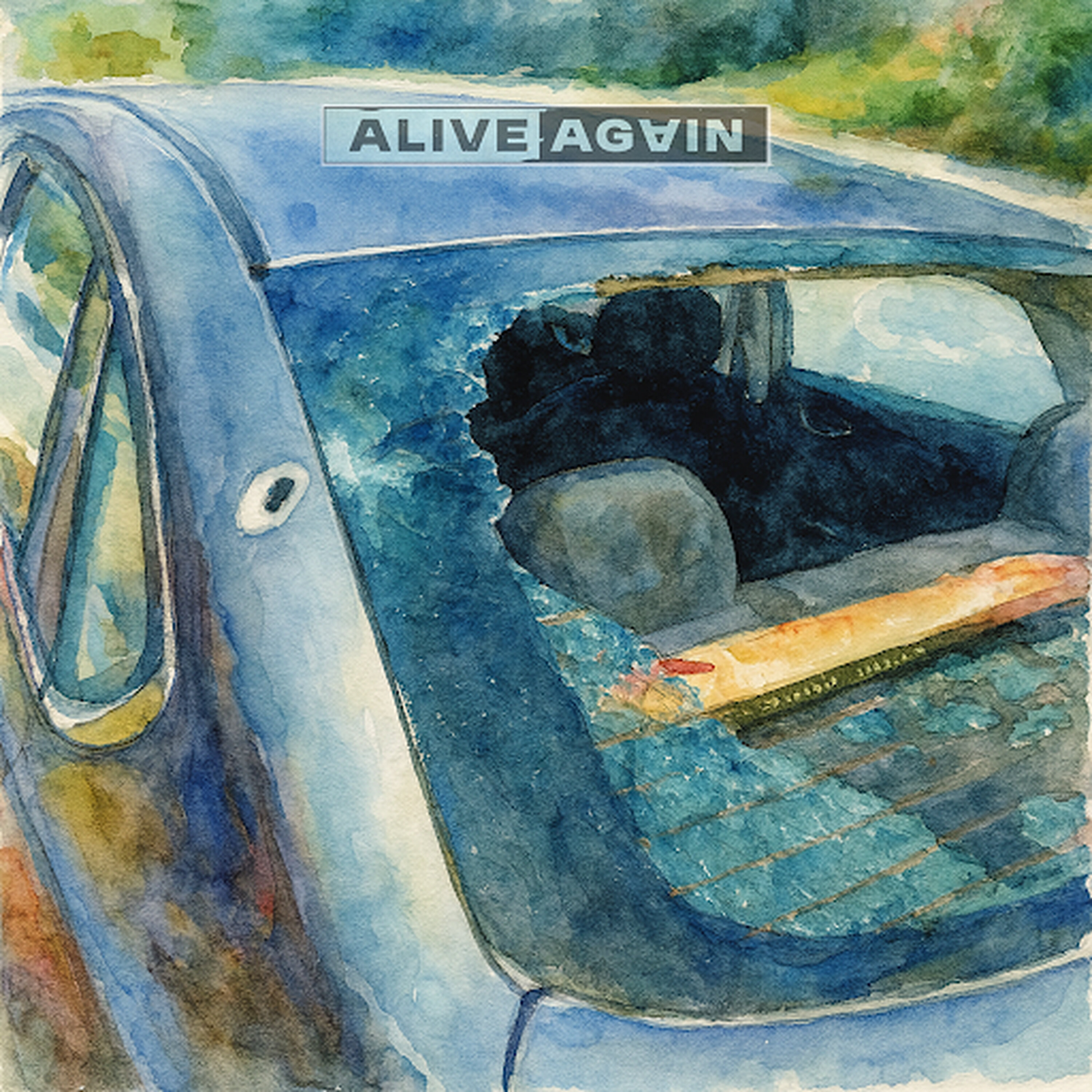
So we're driving up this divided highway, two lanes and all of a sudden, our back windshield shatters, just explodes and shatters all over my children in the backseat.
Maxwell has a cut on his cheek, and I just pull over into the grass, like, oh my gosh, what just happened.
Chris and I get out of the car and there's a hole on the driver's side where the back windshield and the back window meet.
There's a hole right there, and Chris says, that's a bullet hole.
Get back in the car, and about twenty five yards up on the right there's a deserted gas station.
Speaker 3So I went behind the gas station.
Speaker 2My kids and I get out of the car and we shelter next to the building, and Chris is like, I'll be back, and I'm like, what the fuck are you doing.
Turns out he was leaving to administer first aid on someone he had seen on the side of the road.
We were the fifth car that was shot.
This other person they had shot through the door and so this person so Chris went to like to administer first aid.
He's not a fucking first responder, but whatever.
We immediately heard sirens and so the police were very quick to the scene.
Speaker 3I'm like crying, I don't know what's going on.
Speaker 2I'm really nervous, and I just remember turning around and seeing Maxwell and Joseph sitting against the building and Maxwell has his arm around Joseph just kind of comforting him.
Speaker 3And what was so tremendously sad.
Speaker 2About it was that Maxwell said that he didn't feel scared because his father and I seemed to be in control and that we were taking care of them, and that it wasn't unexpected and that he fully expected to have another experience like that in his lifetime.
I was terrified in the moment, but then it was like I couldn't even really think about it because the police showed up and the ambulance was there, and then our friends were there to pick us up, and we had to like call Hurts and figure out how they're going to getitar and then suddenly it was just like everything was happening.
We show up at the wedding and there are all these people there that we've played with against that were some of the same people who were the ones calling me when I was sick.
This could have very easily been a funeral for me, and these would have been the same people who would be attending.
The bullet if it was just a millisecond earlier, like it would have gone in my temple.
Thankfully, no one died that was shot at by the sniper, but the sniper took his own life.
The first car that was shot had called nine to one to one, and so by the time we had pulled over, it was very quick that I heard sirens, so I think he shot two more cars then heard sirens, and he was shooting with his family's hunting rifles as far as I remember, So it wasn't even like he, you know, went and bought a gun, like these were guns that were accessible.
Speaker 3There were family guns.
Speaker 2So he gets into his pickup truck and starts driving south.
So we were driving north.
So he starts driving south on the highway and realizes at some point that he's not going to get away, and so he shoots himself while he's driving down the highway and winds up, you know, obviously swerving off and into the medium.
They airlift him to a hospital and he dies in the hospital.
That person shot at I think ultimately eight cars.
I think two people wind up actually getting bullet wounds, but no one died.
Now I'm another, you know, victim of gun violence.
And since it's so common in our country, it's like, well, this isn't a story because no one died.
It was not in the news cycle.
People didn't hear about it.
We actively looked up the information and we wound up reading an article about the shooter, and I remember just feeling a lot of sadness for this person and his family.
The picture in the newspaper was him sitting around at dinner table with his family, everybody smiling, like having a family meal.
He It was one of those stories where it's like, we didn't see it coming.
This kid was apparently motivated by the Parkland shooter.
Why what was the manifest that that shooter had.
How is it speaking to that person and what need was it filling?
Like was that person thinking this is a way I'm going to be seen, this is how I'm going to be known.
I actually have never felt angry.
Speaker 3With the shooter.
Speaker 2I felt angry with the insurance company and the car company, you know, angry well, like at our politicians.
But yeah, I never really felt angry towards that person because I believe people do those things because they are just in a tremendous amount of pain.
Every time I am in need, I have support.
I am so tremendously lucky.
And maybe luck is not the word right because I've cultivated this throughout my life.
The message is that a lot of our young folks are getting causes, separations, sadness, radicalization.
Speaker 3Having two boys who.
Speaker 2Are now thirteen and sixteen really paying attention to do they feel connected because it's so easy to disconnect.
And I think especially the messages we give to young boys and our society is like you go it alone, man up, do it on your own, and to really trying to be intentional about how I'm raising them so that they are connected and they do feel like they have support from a community, because I don't want that to be them.
I don't want it to be like I never saw that coming.
Speaker 3And so that's something that kind.
Speaker 2Of like changed potentially the way that I parent and the way that I interact with my kids.
You know, there's like no subject that's off limits, right I am checking in on them.
You know, Maxwell plays a lot of shoot games.
I remember asking him like, do you ever think about that experience?
Speaker 3No, that was just something that happened, doesn't think about it.
Speaker 2And knowing that he is like the target for radicalization in our country, young white sis male, So making sure that I'm consistently challenging them, asking them like presenting new views, trying to like help them diversify the content creators that they follow and things like that.
And it also made me start to journal a little bit more.
So I try to a couple of times a year, like write a letter to my kids.
This is who you are right now, this is where I see you going.
I'm so proud of you.
Speaker 3And it's in this book.
So that when I leave this.
Speaker 2World, they have something in my voice for them that can hopefully like continue to guide them.
So I'm a huge fantasy TV show watcher.
I love all of the vampire ghosts after Life, you know, which is like all that shit and it's mostly like teen angst shows.
And I would love it if I was a ghost and could still watch over my kids and you know, maybe still have interaction with the living and things like that.
I don't think that's true.
I think that we are organic material that have consciousness and that you know, we live, we you know, die.
I do think that that's it.
The shooting was definitely harder for me to deal with than cancer because in some respects I believed I had control over the cancer.
Obviously I didn't, but it just felt like I was more in control.
I could go to these treatments.
I was still you know, trying to remain active, like do it like like I just could control that.
Shootings are totally out of control, like just totally out of control.
There's no preparation, Like it's totally random.
I have no control.
I don't know what's happening.
Speaker 3So I didn't.
Speaker 2Have that same thought process of am I ready to die?
Like what is it going to be like in the aftermath and the like the PTSD of it.
So it's like, not only do I not have control and I'm not processing my emotions, but other people didn't seem to really put the weight on the event that it felt I felt a weight like this was traumatic because we've been so desensitized as a society to this because no one died and because I didn't actually get injured, like just it's fine, and that's that was really hard, just like not having people understand there are particular moments that stick out in my life.
And I think this is true for everybody.
You can't remember your whole life if we just simply can't have memories of everything that happens.
And I think people have these anchor moments that are critical in your life's journey.
And so that moment in Hawaii, I think was one of those moments where it was like, yes, I lean, your body is fighting itself.
You know, obviously I don't know this consciously, but subconsciously I'm like, the body is fighting, and look what you can still do.
You can still do these things, you can still have these moments.
And so you know, when I'm like in my seventh treatment, I don't even think I can get up.
I can't walk more than like twenty feet before sitting down.
Like, being able to recall those anchor stories kind of just like I think helps propel me forward and like, Okay, yeah, I feel like shit now, but remember that that was awesome.
Speaker 4Welcome back, this is a Live Again joining me for a conversation about today's story.
Are my other Alive Again story producers Nicholas Takowski and Brent Day, And I'm your host, Dan Bush.
Speaker 5I met Eileen playing Ultimate Frisbee.
I moved to Atlanta.
I didn't really know anybody.
I joined an Ultimate Frisbee team, and within a weekend I had forty five friends.
Speaker 3You know that.
Speaker 5And she she talks about, she talks about when she got cancer, how she really relied on the Ultimate Frisbee community, how she relied on the her teaching community to kind of pull her through that.
And then she contrasts that with, you know, the the lack of community that this kid who took pot shots at her and her husband and several other people on the road one day and almost killed them.
Speaker 6She also, it's it was a great story, Brint, when we when we we have the Delane Guitar story, and she was a Parkland shooting survivor who went on to be one of the students who founded March for Our Lives and became a student activist, and that story is fantastic and and and hs I remember Delaney saying, we don't say the name of the shooter, you know, because that's what they want, the shooters.
They want some sort of validation or some sort of you know, I don't know if it's a mark of fame or something to some stamp.
But Eileen says in this story, she says that they found out later that this bridge shooter had been inspired by the manifesto of the Parkland shooter.
So that story has waves across into Eileen's life, into our lives.
And we've talked in the Delane Guitar story about how pervasive mass shootings have become in America and how we all have either the chances of you experiencing a mass shooting or knowing someone who has.
It's just terrifying that we're growing up in this strange, conflicted world.
But what Eileen points to not only with the shooter, but she says, I didn't feel angry.
I never felt angry at him, at this bridge shooter.
You know, she wondered what support that kid might have not had.
She you know, she's she said, you know, I was mad at the politicians, I was mad at the insurance company, I was mad at everybody.
I wasn't angry at that child.
To her credit.
Eileen goes on to say, well, I check on my boys.
I asked them if they feel connected.
You know, there's this idea of man up, go it alone that is so ingrained in our culture and what we think we need to instill upon our kids.
But for most of our lives, what we really need is connection.
What we really need is love, and what we really need is a sense of community.
Speaker 4We were supposed to survive with each other.
Speaker 5Well, I love that she says, even the little things like she says, you know, I'll put down my phone when they're around me.
You know, I'll show them that they're important.
You know, I'll a lot of these problems.
You know, it's easy to blame everything on the cell phone, but I do think that creates a wall where it's kind of like, don't talk to me right now.
I'm engaged doing something else and this device that I'm holding in my hand is more important.
And I think just being intentional about it the way she is where she puts it down.
Speaker 7You know, when you are online, even in social media, you're not really interacting with the human being.
You're interacting with your phone.
You're interacting with a system that is designed to keep you there.
It's it's as addictive as any drug that we've ever found in history, and what and what ends up being.
And the thing is loneliness is one of the most pervasive problems of gen Z and jen alpha coming up right now.
Speaker 5One thing I will say though about Eileen is she said that, you know, I feel very lucky for the community I have, and then she kind of corrected herself and said, no, that's not really luck.
This is something I cultivated, you know.
I went out there and made the friendships and joined the groups and made a commitment to other people.
And it does take work.
So if there's anything to learn from her, I think, yeah, I think that's a good lesson.
Speaker 7When you have no tools to deal with your mental health problems and your loneliness and you feel like you've been like sort of turned out by society, Like when you find somebody who's like, let me tell you what the real problem is, you're gonna you're gonna latch onto that.
And I do think that like the way to fight that is to just you know, make sure kids have like healthy, meaningful interactions through school, through family, to make sure that they're actually like getting out and having friends.
Speaker 5Not only is it that sense of community, it's having a passion something you really love.
The way the way I Lean loved Ultimate Frisbee, I mean the way she describes that feeling of that last place that she was fully present for in Hawaii at that tournament where she catches the disc and it feels like the disc is carrying her down the field.
That moment just really hung with her, and then a week later she finds out she's got cancer.
The love of the game, in addition to her community, pulled her through because she was able to look back on those moments where she was fully living life.
Speaker 7So what we've got to do is what I'm getting here, is what we've got to do is take the phones out of the hands and replace them with the frisbee I love.
Speaker 6There's one other thing that Aileen said that speaks to what you were saying.
She has her kids analyze whether it's a TV show or whether it's a you know, a video game or something on YouTube.
She's constantly asking them.
I think that's what I gleaned from what she said, is she's asking them, you know what, these content creators, what is their goal?
What is the purpose of the content you're looking at, you know, and these people are putting out this content, what is the function of it?
Is it to make a buck?
Is it to make a profit?
Is it like, are they doing it to to better your life?
Are they doing it, like you said, Nick, to keep you, keep you LinkedIn in it?
Speaker 3They did.
Speaker 7I think we should be teaching media literacy from preschool.
Speaker 6Yeah, you know.
Speaker 7I I try to be very careful about what my kid watches.
I try to understand why the thing exists as well, because there is some very meaningful like children's programming out there that teaches valuable lessons that can be used as a tool in the toolbox of parenting.
And then there's and then there's people who are literally online for clicks and and ad sales and and you can tell.
Speaker 6My kids have started watching the last year or so, they catch them, they keep sneaking onto YouTube, and I catch them watching these guys that are just playing video games.
So they're watching other people play video games while talking about like, hey, look at this, I'm going over here, and it's just and it's just I can't I just can't allow them to watch that shit, just like no, well, no, you have to it's not a buffet.
This is not you know that you have to be more selective and intentional with the stuff you're consuming.
Speaker 5Well, I think that also just an example of how intentional Eileen is and the way she lives her life is that she takes the time to write a letter to her kids every year, right because, as she acknowledges, she's like, I'm not always going to be here for them.
If anything ever happens to me, I want to still be able to guide them.
And I just think that it was really a really cool example of how even when you're not physically there, you can be a presence in somebody's life.
Speaker 2You know.
Speaker 5But I think that takes time, that takes some thought, but those moments are really worth it, you know.
But contrast what you're talking about, Dan, Contrast watching somebody play a video game with being a member of a summer league ultimate frisbee team actually playing a game that you didn't necessarily have to be any good at.
I should maybe explain what ultimate frisbee is for those who don't know.
It's a lot like football or soccer, where you move the disc down the field.
It's not frisbee golf, which a lot of people confuse it for you have two teams.
You're moving the disc to an end zone, just like you would in football or soccer.
But the difference is you referee yourself.
If you make a foul, you raise your hands, say I fouled the other player, and it's called spirit of the game.
Sportsmanship is the spirit of the game.
Including people in play is a spirit of the game.
Calling yourself out when you fail or foul is spirit of the game.
Speaker 6That's cool.
Speaker 5The sense of building up somebody who isn't as strong as you.
It's a really beautiful Maybe you.
Speaker 7Should write a manifesto about Ultimate Frisbee.
Speaker 4Next time I'm Alive again, we meet Brandon Dinsmore, who survived an overdose and near death experience in twenty fourteen.
Given a second chance, Brandon has transformed his life.
Now a business owner, husband, and father, He's dedicated his journey to empowering others.
Speaker 8After I saw like this funeral, I was transported to another vision where my mother walked into the apartment where I was dead.
It's like a quantum leap, like moving from one reality into a completely different reality.
Now I'm going through a other major spiritual awakening I've had faith following this vision right and trying to develop myself and heal from the past, and it's required a great deal of faith.
Speaker 4Join us as he shares how his profound experience led him to his mission.
Our story producers are Dan Bush, Kate Sweeney, Brent Die, Nicholas Dakowski, and Lauren Vogelbaum.
Music by Ben Lovett, additional music by Alexander Rodriguez.
Our executive producers are Matthew Frederick and Trevor Young.
Special thanks to Alexander Williams for additional production support.
Our studio engineers are Rima el Kali and Nomes Griffin.
Our editors are Dan Bush, Gerhartslovitchka, Brent Die, and Alexander Rodriguez.
Mixing by Ben Lovett and Alexander Rodriguez.
I'm your host Dan Bush.
Special thanks to Eileen Murray for sharing her story.
Eileen also posted a blog about the shooting incident, which you can find in our show notes.
Alive Again is a production of iHeart Radio and Psychopia Pictures.
If you have a transformative near death experience to share, we'd love to hear your story.
Please email us at Alive Again Project at gmail dot com.
That's a l i v e A g a I N p R O j E C T at gmail dot com.