Breast Cancer Now
·S6 E20
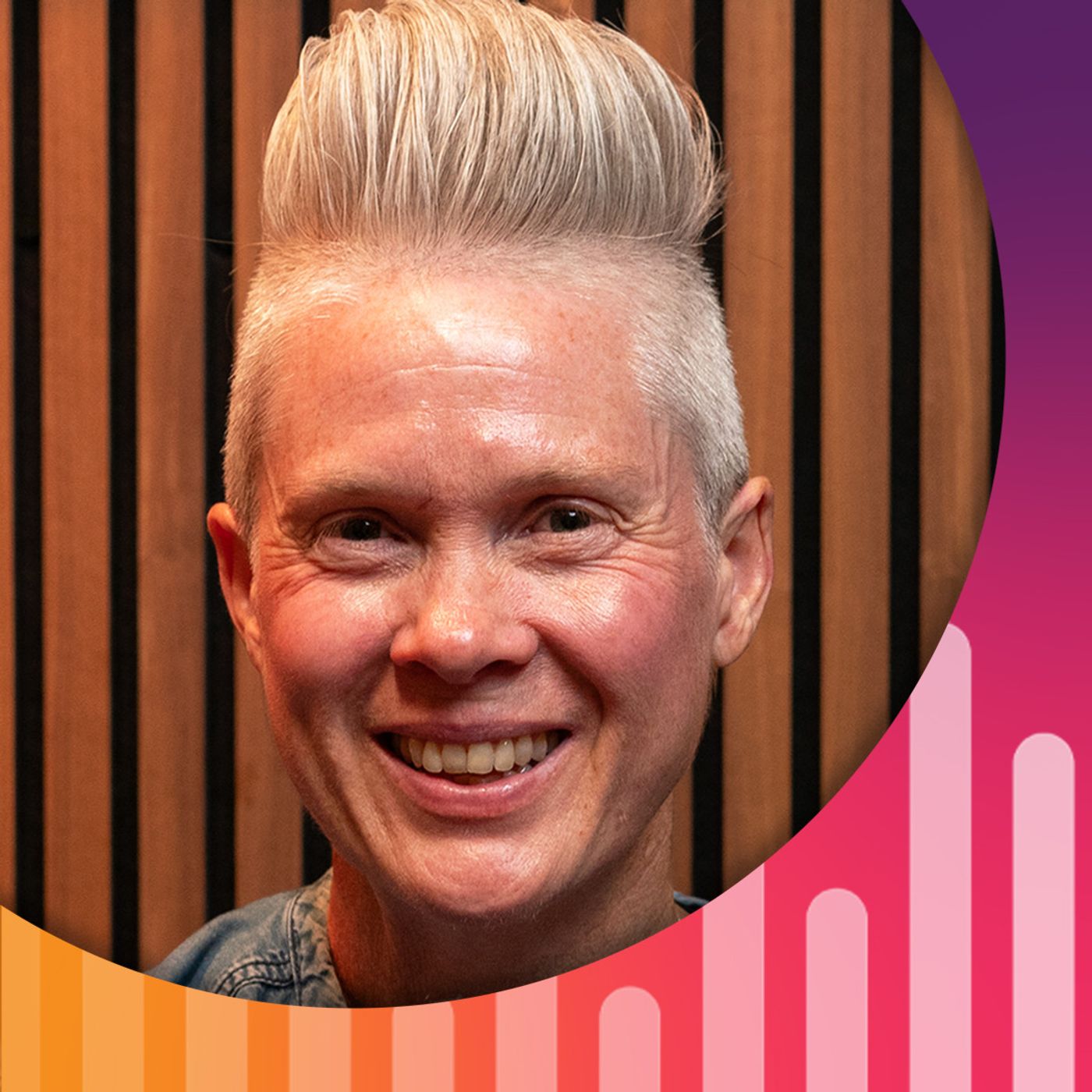
Caroline on talking with children about death and grief
Episode Transcript
This podcast contains the personal stories, opinions and experiences of its speakers, rather than those of Breast Cancer Now. Today's episode focuses on talking to children and teenagers about death and grief and how to communicate with the children in your life if you or a relative or friend have been diagnosed with incurable cancer. Our guest today is Caroline Leek, the founder of Fruitfly Collective, which empowers people with a cancer diagnosis to navigate family life and to support their children. Caroline's father died from cancer when she was 12 and she set up Fruitfly Collective after she had kids herself to help other families to navigate cancer and grief. This conversation actually continues on from an episode we did with Caroline earlier in the year where we discussed more generally talking to children about cancer. If you haven't listened to that episode and you'd like more general information about parenting when you've had a cancer diagnosis or just generally breaking the news about a cancer diagnosis, then do listen to that episode. It's season 6, episode 3, Caroline Leek on parenting with cancer. And you'll find the link in the show notes. This episode goes a bit deeper into talking to kids about when cancer can't be cured. So it's relevant for those of you who have had an incurable or terminal diagnosis, or perhaps a family member has already died from cancer, and you're looking for ways to talk to the children in your life about death and to help them and you cope with that grief. One of the things that really stood out to me in this conversation with Caroline was how important it is to be child led. So listening to your child, observing their behaviour and responses to grief and adapting your conversations and behaviour according to that. Caroline also talks about honesty with kids and whether it's ever okay to lie or tell a white lie to perhaps soften some really difficult news. She also talks about the miracle strategy for communicating with teenagers about feelings. And she tells us about Pip, a cuddly little monster that you can order from Fruitfly Collective as part of a kit that contains loads of brilliant, really helpful tips and prompts to help children with death and grief. So let's go straight into that conversation with Caroline. So there are two sides to death and grief when a person has cancer. One is the lead up to them dying. And one is of course, after they've died, talking about the grief with kids. In the case of you and your father who passed away when you were 12, was it ever mentioned to you in the run up to him dying that he was going to die?
I have no memory of that. Yeah, I have no memory of any conversation. And then I think I went to see him the day before he died and I just thought, oh my God, and that was probably the most scariest thing. So again, it's about preparation. So this might lead onto another conversation, but we suggest to parents who are dying, if their children aren't in frequent contact with them, is to try and keep that the physical changes that happen quite rapidly and to keep them in the loop. So when they do come and visit, it's not such a huge shock. But yeah, so I went to see him the day before he died. And then we didn't know he was going to die the next day. But I just remember thinking, this is just mad. And then he died. But no, there wasn't any, any word about what to expect, what to anything, to do anything at all. I think about maybe about a few years later after we've moved to Devon, my mum said the doctor had offered her antidepressants and I think that was it. So no, there was no mention of grief, there was no mention of support, there was nothing at all. On that first point, so perhaps if you're, the other, if there is another parent, if the other parent is in, on the way to the hospital in the car or the hospice or whatever it is with the child, can sort of prepare them on the way and say, okay, your mum or whoever it is, looks a little bit different because she's getting a bit more poorly now. They might have tubes, she looks a little bit thinner, she might be a bit quieter, then you remember, things like that. Preparing them, using photos can be good if that's not too, usually you can make it look like it's a bit nicer, you know, not so many invasive tubes and things like that. But yeah, so trying to give them kind of a gradual sort of observation of what's happening with them. We also say that when the kids come in, they don't have to sit on the bed and stare at their parents' face or anything, because that can be really alarming. So we often say this to sort of healthcare workers that perhaps have a little space at the end of the bed, at the bottom of the bed, like a cushion on the floor so they don't actually see the parent. But they can connect with them, they can still have that chat, but it's not frightening. And when they are ready, they can then sit on the chair that might be at the side. So sort of think about those kind of positions, because it can be really, really frightening and a huge expectation on a child to go, right, you're going to sit there and you've got half an hour to just, you know, look at your parent who is extremely unwell. And perhaps have their favourite toy or a book or something that they can give them something to do as well. And we did a wonderful project with St. Joseph's Hospice in Hackney in London where we created a kit for them, a bespoke kit, and they had their kind of cuddly thing was an elephant. But it was about having the elephant around the hospice. So they did a treasure hunt. So they were very much part of the hospice. So it helped the kids, obviously, but it also helped the parents and the visiting parents to go, you know, most people think that children, they shouldn't really be in a hospice or they shouldn't be allowed and definitely not allowed to laugh and you're not allowed to run around and all those kind of rules. So it actually helped the hospice saying, no, we welcome the kids in. You go and explore the garden. You're a part of this as much as anyone else. And that obviously really helped the parents themselves. They weren't threatening that, you know, their child was, I mean, fair enough, you can't run around. That might be one rule, but you're allowed to laugh. You're allowed to use the space and that sort of stuff.
And how can you approach the idea with a child that the parent is dying, that they are going to die eventually from this cancer?
Yeah. So presumably, not presuming, but say that they have already known about their cancer diagnosis. So sometimes just starting those conversations again and using all the same tools as we said, any difficult conversation, but it's about that treatment is no longer working. So sometimes it can be, I mean it's an incredibly difficult conversation that no parent wants to ever, ever say, but trying to put a kind of a statement at the end, like, treatment's not going to work anymore, that means my body won't work anymore and eventually I will die. And then having a kind of statement afterwards to say, the doctors are going to be looking after me and make sure I'm not in pain. So something like that can help sort of almost kind of, it's not sugar coating the information, but it's giving like, there is an action that's going to happen. And after those conversations have been had, and again, you can get lots of people to support that. So the Ruth Strauss Foundation is an amazing charity that help around that. But also to plan something afterwards, and it might just be a jigsaw puzzle, it might be a milkshake, it might be a film, but just to have something that's normal after those big conversations. And then expect, maybe not expect, but think that there probably will be questions from your children. And again, they might pop up all over the place. So to try and have something in place where you can manage all those conversations, all those questions. So an idea might be a book that you keep on in the kitchen that you, everyone puts their questions down and then when people are able to answers can be said, you know, have family meetings, that sort of stuff. So although it's incredibly hard to have those conversations and to even think about those things, to have people prepared and plan, have things in place, can feel like you have a little bit of control in a situation where you often don't feel like you are in control. And be child led. We assume that the children are going to be absolutely hysterical and crying and everything, and they might not be. But to manage that and to make sure that they have the support that they need.
When your child says, are you going to die? It's really easy to just say, no, no, no, of course not. Of course not. I'm going to be fine. Regardless of what situation you're at. So whether you're in palliative care or not. Is it ever okay to tell that white lie? And what are the alternatives?
I wouldn't advocate for lying that lie because when you do die, then they're going to go, why did they lie? When they're rational and older, they can go, well, I obviously know they were trying to protect me. But at that moment, often lots of children feel very, very angry if they've been lied to because, as we said before, it's that not being able to have agency themselves and ask, do whatever they need to do just to have that closure and say goodbye. So white lies, I would say reframing that to be quite vague. Or to say, we don't know yet. Absolutely fine, that might be valid. But when we do know, we will get back to you. So that gives space and time for the parent to go away, get their thoughts together, get their support network in action, get what they need. And it might be another supportive person or a counsellor or a psychologist or whoever to come with them to have those conversations. But it gives them a little bit of time. So they haven't lied, but they've kind of just given them that moment and space to be able to really get things together so they can feel more comfortable having those conversations.
Can you sort of say, yes, eventually, but not anytime soon?
Yeah.
And we're going to do everything we can.
Yes.
We've got this amazing medical team. They're going to do everything they can to keep me alive for as long as possible.
Absolutely. Absolutely. Because unless you know you're going to die, you might not know, you might be in palliative care, but you might be manageable. It might be. So children often don't want too much information. And so it's got to be delivered in a timely way. So if they do say, if you've given had a secondary diagnosis and you've decided to tell your children that treatment is no longer an option or sort of curative treatment, but you know, we're to manage this or whatever, and they say, are you going to die? Your answer you've just given is perfect. You say, well, eventually, you know, at the moment we have all these doctors and, it's again, it's having that action. So there's a bit of hope, you're living in hope, but you're also being practical and honest as well.
Yeah. So that's the lead up to dying. We then have the part that comes after someone has died. As we've discussed before, we often when someone dies, we kind of stop talking about them. What issues can that lead to?
Well, I suppose, depending on the age, well, I suppose all the children really. Children just learn from what's going on around them. So they think, oh, OK, this is the way to grieve. We just stopped thinking. Well, no one stops thinking about it, but we stopped talking about them. And then that's just really, really sad, isn't it? And then, I mean, for me personally, then it comes out in loads of different ways. Whereas if it's kept, the memory is kept alive, then you feel and you don't feel, I think that continuity bond, that model of grief where you feel still have that person in your life. They might not be. They won't. They're not there, you know, in their physical sense, but actually they can feel, it can be a massive comfort and it can be a real help. I wonder whether I would have felt that, whether I felt that to have sort of dad, carry dad, like all the stuff that I've done in my life, think about how he would have thought, but I didn't. I was like, no, you're over there kind of thing. So I think, yeah, having that, continuing those conversations, continuing them to be a part is a really healthy way to be and we can see it, the evidence is that if you continue to have that, the person that is no longer there, especially if they're a parent in their life, then it can be hugely beneficial. And also there's that sort of, I think lots of people think that when a parent dies, a child has a period of grief and then they get on with it. And obviously they show up totally different at their grief. But often it might be 5 years down the line and often it really occurs during transition periods.
What do we have in our toolkit to encourage those ongoing conversations? So is there something that you can, is there an easy prompt that you can start a conversation with a child about the parent who has died?
Yeah, well, I mean, I think everyone's heard about the memory boxes as well. So having things that might not be a memory box, might be, so there's sort of activities that we suggest that if the parent can do before they die. So it might be making a scarf out of their t-shirts. It might be doing, you know, writing down the recipes or getting the child or the teenager to write down the recipes that they love and all those kind of things. So it's a sort of part of their life. So when they leave home and decide to cook or whatever, they can reach for that recipe book. And again, it's just them, you know, it's a part of them. But yeah, just keeping those conversations. So at any point, just saying, your mum would have been proud if the mother has died, what do think she would have thought? Or just keeping those memories alive and her being a part of that child's life. And sometimes... and it's again, it's always be child led. Some teens need that space and they don't want to hear that. So always check in. Little kids, you know, just keeping the conversation around the person that's died, having mementos, having things, doing, celebrating, sorry, birthdays and things like that can be really a lovely way to just bring in rituals that help a family. But to know that rituals also, you don't have to, because some people are feel wedded to those things and actually become quite a burden. But if your family like the ritual, then that'd be really nice that every year we go to the seaside and we put a stone down and you know, that's for mum or whatever. So children really need security. They thrive on security. A lot of kids, as they get older, want to push those boundaries, and that's just normal child development. But actually, if they feel secure, we often think of it as a big hug. That's a big boundary. But actually, they will bounce against that hug. But if the hug starts to open up, then that can feel frightening, because they can slip through and whatever. However, keeping those boundaries and those structures in place when you're going through cancer is sometimes completely impossible. Move those boundaries and talk to your children about why you've moved them and how you're moving them and if that's okay with you and how do you feel about those boundaries moving and then we put some different boundaries in place. Those boundaries can change every week or every month or whatever and it will be dependent on what's going on in the family life and with the diagnosis but they can feel really loved and secure once they know what's going on. So one tool we often talk about is having calendars or daily timetables for little kids so they know what they're going. So if so-and-so is picking them up from school, then they're going to grandma's, then they're going to have sleepover at so-and-so's. If they know what's going on, it can really help them feel a lot more confident and less anxious about that they're going to be taken here, taken there, someone else that they don't really know is going to pick them up from school. Because as a parent, we just want to make sure that all those things are covered. But actually the children can be really, it can be a frightening experience if they don't really have a handle on what's going on. Because they often don't have much control over their life. And actually we remove all of that when something chaotic happens in our life. Putting in those boundaries, giving them a lot of love and know that they will be okay.
And what's an example of a boundary in this case?
So a boundary might be that we always do homework after school and then we have dinner and then the homework is done. That's how we've always done it. So this might have to change now. So this boundary might now be we can't do the homework at school. Get them to ask the children how would you like it? Do you think we need to do the homework? Do you think you can do it at school? Do you think we could ask the school to help you in lunchtime to have somebody there so you can do the homework because we can't do the homework at home now. So changing those boundaries. So they just have no, know what's going on and they're not second guessing. They're not becoming these hyper-vigilant kids where they just don't, they've got to sort of basically be on guard because they don't quite know what's happening. So we often as parents forget to do that just because we are living in our chaos or we're living in our stressful lives that we forget to actually need to actually need to tell the children what's going on.
It's basically about changes and it's about communicating those changes. So it might be our routine is going to change, who picks you up from school is going to change and maybe it's about having a shared family calendar. Maybe it's about having something on the wall or whether it's on mobile phones or whatever. It's about saying every day, is what's changed, this is what's happening. Just keeping them in the loop, I guess.
And we also talk about feelings. So there might be boundaries around how you emotionally work as a family. For example, a kid might kick their parent or whatever, and that's crossing a boundary. And that's fine to say to a child, what you're experiencing is anger, if they are experiencing anger, and that behaviour itself is fine, actually, sorry, the emotion behind that behaviour is fine, but actually that behaviour is not acceptable. So putting, solidifying those boundaries that don't need to move, but might need to be reinforced and might need to be explained in different ways.
Yeah, and that's where we talk about having the outlet, like the swear tunnel or whatever.
Yes, absolutely.
So we've acknowledged that you're feeling real anger. We're going to have an outlet for that. However often it might be. But outside of that boundary, these are the acceptable and unacceptable ways to deal with it.
And having those conversations. So being open and communicative with your children, especially teens get a bad rap, really, because they think they're uncommunicative or they're just sort of moody or whatever, but that's them showing, they're communicating through that behaviour. So one parent recently hadn't told their 13 year old that their diagnosis had now changed to secondary, but their 13-year-old knew something big was happening. And so the 13 year old started going out later and later and not coming back and not responding to the texts. that the parent was sending out. So when the child came back, there would be arguments and that continued, was just a cycle over and over again. So we were saying about how to put this strategy in place. It's like using the I statement. So it's basically rather than saying, you're late, you're always doing this, you're in the wrong, saying, I feel really worried when I can't contact you. I feel. And she said, using that strategy, she said, it's just like a miracle. And then suddenly, because the child or the teenager could see the vulnerable side of their parent that changed the dynamic and the communication and she said it was just like a life changer.
Amazing.
You might have heard Caroline mention a swear tunnel. That was a reference to our previous episode on parenting with cancer where Caroline talked about strategies for allowing and encouraging kids to communicate and to let off steam. The idea of the swear tunnel is to create a specific time or space where your teenager or child can take perhaps 5 minutes to just scream and shout and let it all out, perhaps even swear, even if they're not allowed to swear ordinarily at home, and just give them that space to express themselves and express their grief and anger about what's happening. In that previous episode, Caroline also explained that because her father's illness wasn't really communicated well to her when she was a child, she missed out on the chance to say goodbye before he died. Now she tells us how that gap in communication affected her both when she was younger and later in life.
Did that come up as a regret to you, like not being able to say goodbye to your dad?
Yeah, absolutely. And a guilt really. I just had guilt, which I obviously put in that box of grief for many years. But when it came tumbling out, was like, oh, I'm sort of angry that I wasn't allowed to say goodbye. And again, sort of that feelings oh of guilt of, I do remember my mum saying to me, can you go and see dad? And I was like, in my head I was like, well no, because I'm going to go out with my mates. And I didn't realise how unwell he was. Had I known that, then I hopefully would have changed my decision at the time, so there were things I could think back and go, I know mum was trying to do her best and trying to get me there, but I just didn't want to go. And maybe it was a coping mechanism as well. It was like, I don't want to see that. I don't want to be there. If I don't see it, then it's not happening, that sort of thing. But I didn't have that much information because I do remember being out with my best friend at the time. And we were having this slight disagreement about what video film to watch. I wanted a comedy. She wanted a horror. And I remember her mum really yanking her to one side and doing that angry whispering that parents do. Let Caroline have the film because her dad is really, really ill. And I'm, is he? I didn't know that. And I'm thinking, well, if no one's told me that, then I can carry on denying that I don't know that. But also, if no one has told me that's close to me, ie. my mum, then perhaps there's something that we can't talk about. Perhaps I can't bring that up because she hasn't brought that up to me. So this is our way that we're gonna operate this thing. I mean, this is probably all unconscious anyway, but this is in hindsight thinking back. That's perhaps maybe how I internalised all of them.
It's really, really complex and deep. Just, you're making me think about my best friend when I was 14, lost her dad when we were 14. And I remember my reaction to that. I didn't know how, I didn't know what to say to her. I was actually with her when we found out he died, we were having a sleepover. And I just remember, it's making me emotional even thinking about it now, but I remember thinking like, I just need to keep her happy, keep her laughing, have fun. But we never talked about her dad at school in the weeks following. We never talked about him. And you just didn't, did you?
No. And she might not have wanted that.
And now I know that you have to talk about someone, if someone has lost someone, you have to talk about them afterwards because that's just, you know, that's a good thing, isn't it? But we didn't then.
Well, she might not wanted it then anyway, and it might have been the right thing that she wanted to do. I mean, I didn't want that. I wanted my friends just to like how you were acting. I wanted them to be, keep me happy and let's not talk about it because I can't go there. It's too painful. And in time, so your friend might in time have found other people to talk and her family themselves might be talking about the dad. But it's really hard for an outside person from a teenager's, if you haven't experienced it, then how are you known how to react?
So you have older teenagers now.
Yes.
What point was it where this thing kind of hit you and you realised you hadn't processed the death of your own father? Was it when they were born or was it when they started to get a bit older?
No, when they were born, actually probably in pregnancy, I had a bit of a weird, oh, what's this feeling? I don't know. I don't understand what's happening. And I just thought hormones, hormones, know, pregnancy hormones. And then my first baby was born and I was like, I don't know, something's wrong. But again, I had the art and the experience and the skill of 20 odd years of putting that grief in the box. So was very, very happy to continue to do that. And it was a friend who just mentioned, oh, know, like, oh, something, I can't remember something about my dad. And I was like, I can't go there. She was like, oh, I'm sorry. I said, you've opened my little grief box in a nice way. And she's like, what's this? And I was like, oh, and that's when I first started to sort of think, oh, there's something. And then I just started to read other people's experiences and then it all came out. And I was thinking. And there's probably stuff that I still haven't processed. And then working with Fruitfly Collective. And there was a long time because we did stuff when people were newly diagnosed. And nurses and other health care professionals saying, can you do something in palliative care? Can you do something at end of life? And I just thought, no, I can't yet because that's something I can't go there. And that was about probably about 7 years ago. And then eventually I was like, oh, I think I'm ready now. So actually, it's been really cathartic, starting up an organisation and being thrown into it, you know what I mean? And hearing other people's experiences and understanding more about my own experience, really, and how children grieve very differently from adults.
Before we talk about your recommendations for other people and other families and everything, can you tell me what you have done to, you know, process your own grief and what you've done to support your own mental health, I guess.
Well, as I said, so I started because I thought because it was safer, mentally safer for me to go, right, well, I'm just going to read this for work or I'm going to listen to this podcast for work purposes. And then suddenly it all came tumbling down. I was like, that's me. So I think it was Griefcast. I think it was another person who had lost their parent as a teenager to cancer and I was like, oh, all of that is just me and I can't believe that's true. And then I started reading and then I had friends and colleagues in that kind of area and I said, can you recommend some books? So I kind of did it by myself and then I thought I need some therapy. So, but when you've got little kids and no money and just no time and I was like, oh, that can wait because it's waited for like 30 years or whatever. And then I ended up doing this thing for work where I needed a clinical, a psychologist to just to do a bit before and after this bit of work. And I was like, it's fine, I don't need one. But she was like, oh, let's just talk. You've got an hour to do. So I started talking about stuff and I'm talking about validation and stuff like that. And she was like, were you not validated when you were a kid because your feelings were validated? And I was a bit like, oh. Oh, yeah. And then we spoke a bit. And then I said, do you think I need, is it imperative that I have therapy? She said, no, do it in your own way. She said, I think you what you've done over time is just work through it you don't necessarily need to go and see somebody because you're the expert of your own grief and your own experiences. Now you're becoming more self aware and understanding. Then that is fine. So at the moment, I think I've just done it by myself and then done it through. learning through listening to other people. I think, I mean, who knows? I don't know. If you are open and curious, which I wasn't at all for a long time, because it served me better because I couldn't go there. But once you become curious and self aware, then it's hard to close that box. It's hard to sort of close that off because you're suddenly now questioning or being curious about how you behave and how is that behaviour linked to because of my learnt behaviour when I was younger and I had to do this and do this. So yeah, if you're in a happy safe place now, then it's easier to then go back and look and kind of rummage through all this stuff. And of course, when you've got kids you want to be able to be the best parent that you can. And sometimes that's sorting out your own stuff first.
Yeah, absolutely.
In the previous episode, Caroline talks about various resources that Fruitfly Collective can provide when you're going through cancer, including the Cancer Cloud Kits. She also has resources specifically for kids whose parents or family members having curable cancer are in palliative care or even who have already died.
So one of your main resources that you provide is something called a Pip kit, which is an amazing little pack with cuddly monsters and some reading that helps families process everything to do with the parental illness. Tell us about those Pip kits.
Yes, a Pip kit is designed for children aged between 5 and 10 when their parent is in palliative care and it has a little cuddly monster. So Pip is a cuddly monster. And then inside the kit there is lots of different coping cards and strategies. There's loads of activities about how a family can communicate and connect with each other as well as cope with the family changes. And there's also information as well, information for the child and information for the adult. So we created that because the coping skills and the emotional wellbeing kind of tools and activities are all pretty similar to what any family could do for any challenges in that. But some of them are slightly different. We talk about children understanding what grief, dying and death is. And of course, everyone experiences differently. Every culture experiences differently. So what we've done is do it very age appropriate. So this is for children between the age of 5 and 10. And so we've done it in a very scientific way. This is what happens with death happens and that's it, that's leaving, you know, and other people deal with, you know, their death and their loved one pre and post that, you know. And we wanted to just to mention it, to acknowledge it and this is what happens and about grief as well. It's about like, there is, you know, it's an ocean basically. But really wrapped up on all that is really to help the parent to understand that their child might be feeling this, they might be feeling that and actually there's no right or wrong way. So acknowledging that all feelings are absolutely valid. There's also, so Pip is a monster and you get a big one and a little one and the idea is that a parent will have the big one and the little one to the child and it's that continuity of sort of bonds. So if the parent is in hospital, in a hospice or away, they can feel that connection so they've both got that kind of cuddly thing. And it's a character that goes through all the resources. So it feels like they get to know. So Pip actually can get furious and again it's a kind of way of actually anger is a really normal and valid emotion so be angry and you can throw Pip across the room. We've given you permission to do that. Or Pip can be anxious, Pip can be happy and actually happiness is absolutely fine because there are moments of joy in life. But it was interesting because we did a project with Maggie's where they took – so Maggie's Centres, the cancer support – the clinical psychologist took some of the Pip kits and they used it in all different ways. And it was really interesting, we all got back together and how different families or different sort of centres use them. For example, so one parent who died, Pip went in the coffin with them and the child had the other remaining Pip and that continuity of bonds continued. And we were like, oh yeah, of course we hadn't thought about that. It was amazing to see how they were used and some places it was just like we're going to take one tool because it's too overwhelming and we're just going to use this and it's not prescriptive, the activity's in there, some kids will resonate with, some kids won't, some parents will be like, hmm. And then we did do an online version as well because we wanted to make it accessible to everyone so this is like completely free. They can download all the resources, they can find all the different stuff. They don't get the cuddly monsters, but there is a pattern that they can download if they want to. But the idea really behind that, apart from it being accessible and free to anyone, was that the palliative care workers that we were working with when we did the pilot for Pip said that sometimes they can see a family would really benefit and the children in particular would really benefit from all the activities and information and coping skills. But the family, the parent can't take the kit on because in one piece it says death, grief and if they haven't accepted where they are at or they just feel like they can't have something in the house that has those words on, then they won't engage in the kit at all. So what we were able to do online was to sort of have all that information there but keep the death, dying, grief a little bit away so the parent could when they're ready, if they are ever do become ready, they can navigate in their own pace and find that information when they need to. But other than that all the other stuff is right at the front, you know, doing lots of different activities and different coping skills in different circumstances like school and friends and hospitals and visiting hospitals and things like that.
First of all, Pip kit sounds absolutely incredible. I think that even if you don't have kids, it just sounds like lovely thing for adults. That made me think, so if the parent who has cancer or the partner of hasn't accepted their own diagnosis, does that make it almost impossible to talk to the child about it?
So often we work with the healthcare professionals in that space and that's the question that they always ask. We know that they have children but they can't, they don't want to accept what's happening. How can we help them? Like, you probably can't, there's only so much you can do. But sometimes having things, resources that look friendly, that look colourful, that look engaging, that looks like, oh, I'd like to pick that up as opposed to a green text, know, heavily text kind of PDF of something quite dull. That sometimes is the first step where it's engaging somebody in something that doesn't look frightening, that doesn't look clinical. So we have resources that look like that. So it can be just, oh, perhaps here's why children should know about what's going on. And that can sometimes be the first step. Sometimes we ask questions like putting themselves in their children's shoes. Sometimes that works. So that can might be going, oh, I think my child does need to know, don't they? Sometimes we ask about children's behaviours. So they can start talking, oh, my child started to act up or they're starting to have more tantrums or they've suddenly started wetting the bed again, all those sort of things. Sometimes you can be the person or the healthcare professional can be the person to kind of join the dots up and go, they know something's happening. This is their behaviour, it's expression of their communication. And sometimes so giving, it's almost like coaching really, empowering them to basically make the decisions for themselves. And that often works quite well because saying to somebody, you've got to accept it or you've got to talk to your children now won't work, you know. So actually getting them to realise how they can do it with support and also that they are able and capable of doing it themselves.
I also wondered if an auntie or best friend of the person, the parent with cancer, if that parent with cancer is having real difficulties acknowledging it, talking about it with their kids. If there is a very close person, very close adult to that person who perhaps really recognises what's going on and that the child is struggling, could they reach out to you and ask what resources you might help?
Yeah, absolutely. Absolutely. I mean, we have so many parents that say that they feel like they're doing it on their own. So actually to find a group where there's always a diversity within a group. So secondary cancer group or whatever, or might be something different. To see somebody, there's always somebody that's done it or done it this way and it worked or it didn't do it, did it this way and it didn't quite work, but they wish they'd done it that way. So to be able to find a network is so supportive and to be able to just to listen to other people and how they've their experiences of it.
Where can people find out more about Fruitfly Collective? If you go to www.fruitflycollective.com You can find everything there. If you are a parent, you can self-refer to the free coaching programs that I've been talking about. You can sign up to the 1-day workshops that we can do. We are developing lots of new things. We've just got a lovely award for 5 years of funding. So we're going to be looking at more targeted parenting communities and how to support them. So that's parents with neurodivergent children, that's single parents, that's parents with incurable cancer, parents from a global majority family background and another one. Oh, we're looking also into how to support parents that are the surviving parent. So we're doing research around that. So over the next few years, we'll be developing courses and things like that. So if you go on there, there's tons and tons of resources, loads of stuff you can download for free, loads of different amazing stuff from different charities around the world that we pull together. So there's a great app if you haven't started talking to your children about cancer yet, I definitely advise you to go and see the Kids' Guide to Cancer app there, all free, download that, have a look, have an explore. There's lots of videos on there from workshops that we've done with experts on different topics, so dealing with pre-breathing and all of that. So go and have an explore. And if there's something that's really missing, please get in touch with us and we'll see what we can do to fill that need.
And obviously we'll put all those links in the show notes as well so that people can find the right resources. I just wanted to say thank you so much for all that you're doing. Like this is such incredibly useful work that you're doing. Like it's so, so, so needed in the cancer community and beyond. So thank you so much.
Thank you.
And thank you for coming on the podcast.
Thank you for having me. It's been great.
If you found that conversation helpful, I would really recommend you also listen to Caroline Leek's previous episode on the Breast Cancer Now podcast, which we published in March 2025. That's a much more general episode on talking to kids with cancer. So for example, if you or a close friend or relative have been diagnosed with cancer and want general information on how to talk to kids about it, but also how to manage your own stamina, how to entertain kids when you're struggling with chemo or how to help children cope with things like losing your hair, then Caroline covers all those things and it's a really, really useful chat. She also gives us all the background on why she started Fruitfly Collective after losing her own father when she was younger. If you want to find that episode, it's season 6, episode 3, Caroline Leek on parenting with cancer. Or you can click into this episode where you'll find some notes and you'll find the link to that episode. You can also just google 'Caroline Leek Breast Cancer Now podcast'. It's something that affects so many of us in the breast cancer community and so many of our listeners. So if you are wondering how to talk to your kids about a cancer diagnosis or a change in your health or your treatment, then I really highly recommend that episode and Caroline's resources. I wish you loads of luck and all the best with those conversations with the important children in your life.
If you enjoyed this episode of the Breast Cancer Now podcast, make sure to subscribe on Apple Podcasts, Spotify or wherever you get your podcasts. Please also leave us a rating or review on Apple Podcasts and perhaps recommend it to someone you think would find it helpful. The more people we can reach, the more we can get Breast Cancer Now's vital resources to those who need them. You can find support and information on our website, breastcancernow.org and you can follow Breast Cancer Now on social media @BreastCancerNow. All the links mentioned in this episode are listed in the show notes in your podcast app. Thank you for listening to the Breast Cancer Now podcast.