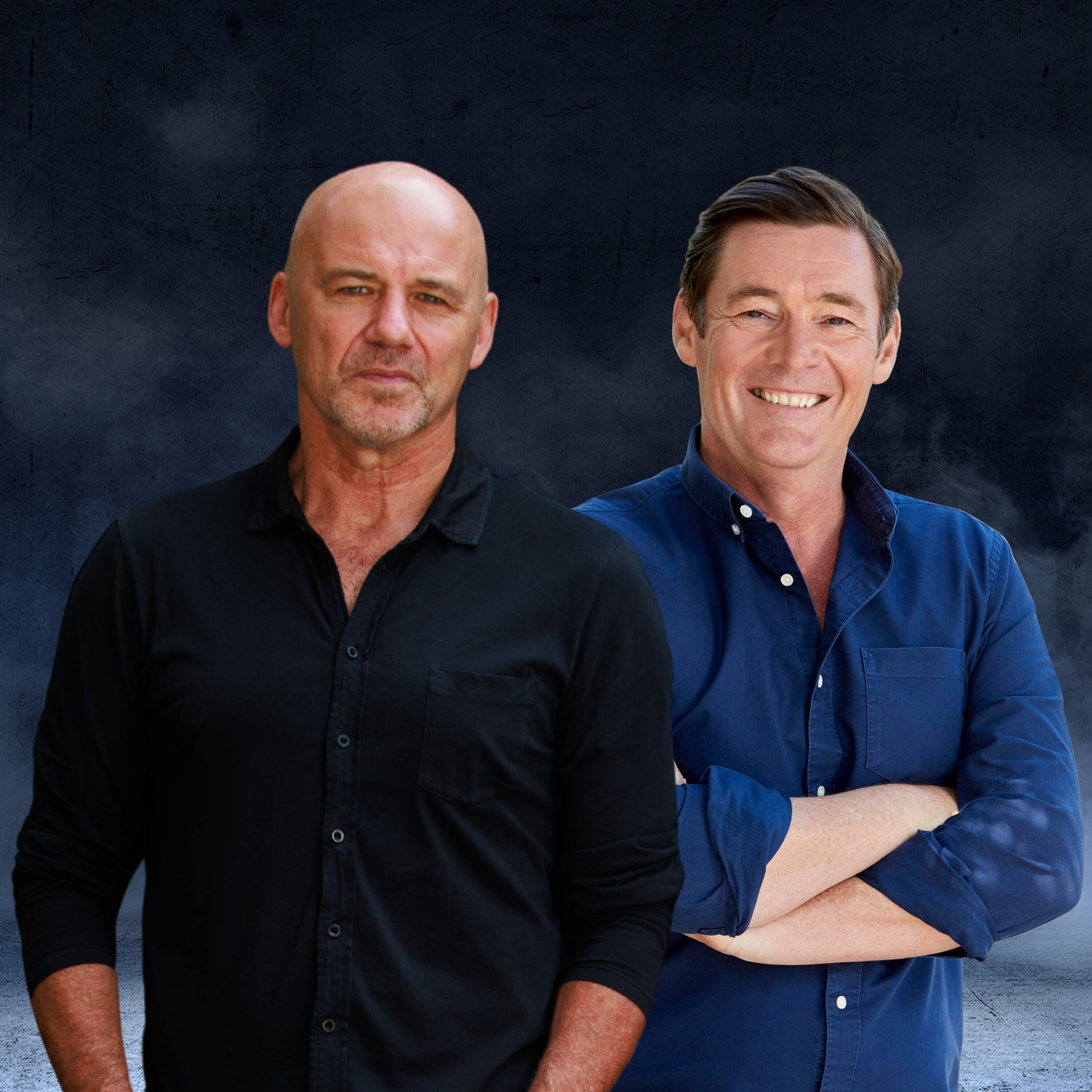
Murdered out of boredom: Mike Amor Pt.2
Episode Transcript
The public has had a long held fascination with detectives.
Detective see a side of life.
The average person is never exposed her I spent thirty four years as a cop.
For twenty five of those years, I was catching killers.
That's what I did for a living.
I was a homicide detective.
I'm no longer just interviewing bad guys.
Instead, I'm taking the public into the world in which I operated.
The guests I talk to each week have amazing stories from all sides of the law.
The interviews are raw and honest, just like the people I talk to.
Some of the content and language might be confronting.
That's because no one who comes into contact with crime is left unchanged.
Join me now as I take you into this world.
In part two of my chat with award winning foreign correspondent Mike Amore, Mike told me more stories about his life on the road as a foreign correspondent.
He gave us a fascinating insight into the tragic murder of young as Is Slaine, who was randomly shot by three young men.
What it was like on the ground in New Orleans after Hurricane Katrina, the devastation and horror of the Haiti earthquakes, what it was like in Guatanamo Bay terrorist prison where David Hicks was serving time, and a whole lot more, including his thoughts on the COVID lockdown and the impact the horror as he has seen has had on him personally.
Have a listen, Mike Amoor, Welcome back to part two of I Catch Killers.
Speaker 2Great to be here, Gary.
Speaker 1Well, you know, I'm a little bit annoyed at you because all the stories and adventures you've got.
I think I made the wrong, wrong career decision as a foreign correspondent, But when you became the US correspondent for Channel seven, it sounds like you were frowned in the deep end.
If you're reporting on the September eleven and you went over there in two thousand, you're right in the thick of it right from the start.
Speaker 2Like everything I've done in life, I learned on the run, for sure.
And we were the only My cameraman and I were the only crew in the US, and for a time we were the only overseas crew for Channel seven.
They closed their London bureau, so we were flat out.
We were bouncing from story to story to story, from country to country to country, exhausting but amazing.
Speaker 1Well, I suppose you've got to jump in the deep end to see if you can swim, and you hit me, learned how you kept your head above water.
That's just the sure.
I remember Ashley Mulaney.
You would have worked with her over in the US.
She's amazing, she's great, And I remember when she was a young journalist, I think with the Telegraph, and I was speaking to her and she just got a job in the for Channel seven with Channel seven, and she was asking me on advice about I'm a bit nervous in front of cameras.
You do a lot of interviews.
How do you do this?
I'm thinking, you know, well, you practice and giving advice.
I was sort of a bit shocked that she was asking advice from me.
I was still learning my way.
But she was only there a relatively short time.
Then I saw her pop up there, and now I see her strut the stage as if she was born into this, and.
Speaker 2She's annoyingly natural at it for someone who has to work super super bloody hard and make lots of mistakes and make a fool of themselves repeatedly.
I hate people like that.
I do love ash but yeah, she's a good lady.
Speaker 1But yeah, I had to laugh when she was so I'm not sure if I'm making the right decision wherever I can do it.
And I think it was about twelve months a then months later and she's walking the world stage and looking very comfortable in what.
Speaker 2She's really good and she's kicking goals.
Speaker 1So I'll say, good Aida if you're in contact with her, because I had fond memories of her when she was working the crime rounds in Sydney the murder of Chris Lane.
Do you want to tell our listeners and viewers that don't know about what the circumstances were in that crime and then your involvement in it, because it was a deep dive that you had in that particular murder.
Yes.
Speaker 2So we got reports of an Australian who'd been killed in a very small town called Duncan, Oklahoma, just over ten years ago.
And you know, part of what we did was see Australians in terrible situation, so that this was just another report, unfortunately of Australian coming to grief in a tragic way.
In America.
We reported it gunned down while running and not realizing how quickly the story would spin out of control.
So Chris Lane was a young man from Melbourne who'd gone to Oklahoma on a baseball scholarship, met a girl over there and fell in love.
He'd only just returned to Melbourne, brought his girlfriend back here, Sarah, to be with the parents, had just gone back to Oklahoma getting ready for that year's baseball season, and was running off some jet lag in the afternoon and three kids, literally kids, drove pass and shot him in the back.
They were aged fifteen, sixteen, and seventeen.
They were arrested.
One of them told the police officers when asked why he did it because they were bored.
And that statement that they did it because they were bored quickly gathered not only Australian attention, but international attention.
Barack Obama spoke about it, so it was a story that really grabbed the attention of even a gun weary country like America.
And I initially, honestly had it underplayed it, so I didn't move very quickly on it, and I found myself kind of trying to play catch up with other TV networks who had gone to Oklahoma earlier than I did.
I was there when they appeared in court.
Michael Jones was a seventeen year old, James Edward was fifteen year old, and there was a sixteen year old Chancey Luna and they just like babies, just seeing them faces like babies.
So we covered the court case and eventually they were sentence.
Chancey Luna was the gunman.
He was sixteen, sentenced to life without parole, even though he was sixteen at the time.
He'll die in prison.
Michael Jones was sentenced to life with parole.
He will be in his fifties when he gets out.
And James Edwards has since been released.
He served about five years.
But in the aftermath of it, we decided to write a letter all three of them while they're in and lo and behold Michael Jones, the seventeen year old he was the driver.
He responded and said he'd like to talk to us.
So we agreed to sit down and do a prison interview, and we found ourselves in Holden, Oklahoma to do this prison interview with Michael Jones, and all of a sudden, we were kind of engulfed in Chris Lane's story that the local police had been very reluctant to really cooperate with the media because any more than they had to, because they were embarrassed by it.
This horrific crime had happened in their community and it was somebody from overseas.
We sat down with Michael Jones in prison and spoke to him at length, asked him why he did it.
He cried and f crocodile tears, beg forgiveness, and then we spoke to the local police force and said, well, we've got this interview with Michael Jones.
We don't want it to be about Michael Jones solely.
Will you finally talk us.
They opened up, They were terrific, gave us all the evidence and vision that had never been seen before.
So we started to piece together what turned out to be a documentary.
Spoke to the witnesses on the ground, the people that tried to revive or Chris.
He fell to the side of the road.
Basically the bullet rattled around in his lungs and killed him almost instantly, and these poor people were driving past and tried to save him.
And then ultimately we spoke to Chancey Luna's parents, mother and grandfather, and that led us to Peter and Donna, Chris's parents who were very reluctant understandably to talk to us.
Just terrific people still absolutely traumatized by what had happened, the loss of their son, and they don't just seen him off.
In fact, Peter got a call from from the area code from Duncan, Oklahoma, and thought it was Chris just checking in with him.
Speaker 1It was.
Speaker 2His girlfriend's parents to ringing to tell Peter that he'd been killed.
And I think it was a very powerful piece of television.
It kind of showed I think both sides of a tragan I think you would have seen it too, Gary that you know.
Yes, Peter and Donna and Chris's sisters suffered tremendous loss, but it's not black and white.
Also, Michael Jones's parents suffered tremendously.
You can say they were bad parents, they seemed like loving people.
The people who assisted Chris on the side of the road as he took his last breath, they're victims of all of this.
The stupid antics of three drugged up teenagers who had a weapon and thought it was fun to just shoot this poor kid that was out on an afternoon job.
Speaker 1And it's interesting you're telling the story and get that appreciation of how many lives are destroyed.
And you know, I get that when in homicide, when we're locking people up, and if it was a young offender, you know that you're destroying Yeah, his family's life as well or her family life.
Whoever.
It might be the ripple effect from senseless crimes like that, but it's and at that age the stupidity of kids like you look back and I'm not saying we would do things like that, but some of the crazy things that you do that could result in consequences.
And America, it just seems hard that they're they're my observation and speaking to people who have spent time in American prisons, it just seems like a brutal system that they go in there and there's in there for life or there's no rehabilitation that they're aiming for.
It's just punishment.
It's pure.
Speaker 2Yeah, And to think, and I'm not defending it at all, but a sixteen year old boy ends up dying in prison for something he did as a as a kid.
He ended up joining gangs and all of that.
I mean, he's not innocent.
He became a gang member while in prison, and he may have been already made.
There's lots of stories that it was an initiation.
But the stupidity of kids, and that's that's a that's a harsh penalty.
I mean, Peter Lane says they deserve it, and I don't disagree.
Speaker 1With him, but then you can understand.
Speaker 2Absolutely and you'll appreciate this from an investigator's point of view.
They shot him, took off, they only had that was a black car in a sea of black cars.
They only caught him, caught them.
They dropped James Edwards off at the police station for a bail reporting he was seen dancing, who was going into into the police station after being involved in the death of Chris Lane.
They later picked him up and they were caught because they were going to fight another kid and they wanted to shoot him.
The father had called the cops.
The cops turned up, there's the black car, there's these three kids.
Bang gotcha.
And it's the stupidity of kids.
Speaker 1Pitoty of the crimes getting access in the prisons like that in America.
I know it's something that would be very difficult over here in this country, but there seems to be availability that there's no issue with prisoner has been spoken to by the.
Speaker 2Media in state prisons.
In federal prisons, it's different, But in state prisons, most state prisons, you can get access to them if they want, if they agree to talk to you.
So there was a process to go through, and I think he got some counseling as well to make sure that he was fully understanding what he was doing was.
We had to be there at eight o'clock in the morning, and my cameraman decided they were going to get a sunset over the prison shot sunrising over the prison.
So we were there at six o'clock in the morning and all of a sudden, the sirens started blaring outside this prison and two truckloads of prison guards with their guns hanging out and spotlights come racing towards us.
They thought were there as part of a breakout.
So it was a pretty rocky start to our prison interview, and I thought it was going to be over before it even started.
But yeah, that's tough time there.
You know, you're talking about Oklahoma.
They had been over the age of eighteen.
They may have even gotten the death penalty.
Speaker 1Yeah, yeah, well that's the reality of it.
We had a guest on here, Evaristo Salis.
He was I think it was fifteen or sixteen, an adult prison for a murder that he didn't commit.
He was acquitted, subsequently acquitted, but something like twenty five years later, and he told us his journey.
He was only a little kid.
He was heading down the wrong track, but he certainly wasn't guilty of the crime that he was charged and spent the greater part of his life in prison.
We he interviewed him from his bedroom that he was in.
There's a fifteen sixteen year old kid thirty years later after he's been released from prison, and the way he came out it was amazing.
But the stories he was telling us about what happened in the prison was just quite frightening.
And he had to make a choice to step away from the gangs and suffer the consequences when he got old enough in prison to be able to look after himself or spend the rest of his life in prison.
Speaker 2We covered at rodeo in the Louisiana prison where basically once a year they allow prisoners to take partner rodeo, even though most of them are from urban areas and it's kind of the enjoyment of the public come in and watch these well buggers get thrown off bulls and gored by bulls.
But they hardcore.
The majority are in there for life.
That's it.
They're never getting out.
They're dying there, no matter what age they were there.
I think we can greed to disagree, but we're too soft in this country but on crime, but way they are very hard on crime in America.
Speaker 1Yeah, I think we can find that middle ground.
And we're starting to learn here about the way people are treated in prison can make a difference.
You treated people like animals and they'll come out like animals, and so we're making headway there.
I think the Scandinavian countries have got a model that the recidivism is much lower, extremely low, compared to what more traditional prisons provide, whether it be in the US or Australia.
That way of rehabilitating people, so it's not yes, they're taken away from the community and the community are protected from them, but making them be able to function in society when they get out, which I think is a step in the right place.
Let's talk Hurricane Katrina.
Now again the power of the forces of nature, but the floods that flow from that, but the aftermath of that, what occurred in the isolation that community down in the New Orleans and you hear stories on that know where the fact or fiction lies about what took place in the football stadium where people were hold up.
But you're actually there, Can you take us through that story?
Speaker 2Well, just to backtrack, I wasn't there when the hurricane hit.
I was actually on a driving trip with my dad.
We've gone it, I forgot you took your dad to Yeah.
Look, yeah, we drove to Vancouver, driving back and we're in Napa Valley.
I'd been keeping an eye on the hurricane.
It had been a really busy hurricane season.
I'd covered several so it wasn't out of the blue, but there was a lot of forecasts about how dangerous it was going to be.
So I was keeping an eye on in between drinking with Dad, and we had a crew there and for some reason they were cleared to come home because the initial aftermath wasn't too bad.
And then I got a call from my cameraman from the airport and he said, we're coming home and the levees have just broken, and I think we're making a mistake.
I'm like, oh God, he said you know, about to board.
Sure enough, hang up.
The boss calls and said, we need you go to New Orleans.
I god, well, we've got dad here.
He's not comfortable driving back, and he goes, don't worry about it, mate, let's take it.
Take him with you, dad.
Do you want to go to New Orleans?
Oh yeah, all right, poor dady.
Yeah here next minute, poor Dad's lands in New Orleans with me.
Our first experience of New Orleans.
We were at a kind of a freeway overpass which normally be packed with cars.
Instead it was black hawk helicopters landing on the freeway dropping people.
They were plucking off rooftops that you know, were flooded.
We'd heard on the way that there were two Australian couples that were trapped at the convention Center.
There were two kind of points where the people were evacuated, the football stadium the convention Center.
Trapped at the convention Center.
Simple word from Sydney was go find them.
And so we're watching these black Hawk helicopters landing plucking people off, and they're like, yeah, yeah, we want you to go in there and find them.
It's like all right, So I go up to this copper on the side of the road and use my Australia next thing, mate, we need to go into New Orleans.
And he said to me, son, I got every gun I on in this car and I wouldn't go in there.
They're killing people.
And he goes, but if you need to go, just go down here, left right then, you know, So jump in the car with my cameraman Trent, and off we go.
And Dad goes, Mate, he just said, don't go in there.
Sit in the back, mate, shut up.
Here were we drive through the start driving through the streets of New Orleans and you know, obviously trees are down and power lines are down, so it was, you know, we have to go around and really and we're worried that we'd go we'd be confronted.
And sure enough, this guy comes running down the street brandishing a gun and we're like, oh god, here we go.
It turned out he was an off Judy cop who owned a business who had just fired shots at looters who had broken his window.
And you know, we drove up very you know, with a lot of trepidation, and then we kept going and the cops were hanging out windows with their pump out action shotguns and you know they were meant business.
Poor Dad says, oh, look there's some mannequins on the side of the road.
They weren't they were bloated bodies.
And drive in and cops are pulling guns off people, and there were people walking around obviously having just looted.
We get to the convention center and said to Dad, stay near the car.
The cop was there and he said, don't drive in.
They'll take your car whatever you do.
Get out before nightfall.
It's too dangerous.
So we go in looking for the two Australian couples into the conventions and it was just like hell on earth.
These poor people.
We saw a number of bodies.
People were dying from things like diabetes because couldn't get their medication.
People were asking us for help.
They were just desperate, and we couldn't find these Australians, who are thousands of people there.
Couldn't find it these Australians, and were starting get dark.
The warning was ringing in my ear for about cop telling us to get out.
Just as we were leaving, I noticed there was an overpass and there were a group of white people because predominantly they were black, and I thought's walk up there and there were these foreign tourists that were kind of huddled together, and we found these two Australian couples who were just ecstatic to see us.
But it was getting dark and they were too frightened to leave, so we left.
Speaker 1It was dark.
Speaker 2Poor Dad was frantic at the car.
Speaker 1Left back at the car.
Speaker 2I was going to drive you in there and save you.
Oh yeah, sure mate, right dude.
Anyway, so we camped in the street that night and we were protected by MBC who'd hide these off judy cops from Texas.
You know, they had these big magazines on their guns, like you sitting there, and yeah, the real tough guys.
So Dad took some comfort in that.
And in the middle of the night, we're sleeping in the car and a paint factory across the Mississippi blew up and it felt like the Space Shuttle was taking off against us near us, And so Dad's had this horror day.
He's gone from Napa Valley to New Orleans, sleeping in the car with us, to this explosion rocking the car, and poor old Dad, forgive my language, he goes, what the fuck is going on now?
So anyway, this black plume of smoke starts rising up.
The cops, the big, big brave cops.
They took off.
They didn't they didn't worry about protecting anybody.
They protect on.
So Dad came back and said they're gone, mate, were gone.
They weren't gonna get out of here.
I said, come down, they come down, right.
We have to go back and get the Australians in the morning.
I can't leave them there, So things come down.
We went and got the Australians.
We got them out under a convoy.
It was like driving out a bag Dad, these poorest rings.
We actually found another couple huddled nearby and we went and grabbed them, and these plain closed cops came and grabbed us, started jumper punching us.
So what's going on.
We're going to arrest you for what.
They were angry because we were plucking two tourists out and they were worried that the rest of them would be cranky with them.
Ah.
So anyway, we got the tourists out, We put them all all on a plane and put poor old Dad on the plane and back to Australia, muttering, these Americans are mad, mate, They're just mad.
Speaker 1As your dad been on holidays with you since.
Speaker 2Or that he has, he has, he dines out on it now, I tell you.
But he was quite shocked.
But we spent another couple of weeks there and I made light.
It was a horrible story that stuck with me because predominantly the people that had been abandoned there were African American and there was a bridge like the Anzac Bridge or the Boulty Bridge leading out of New Orleans where people could have been could have walked across, but in many cases they were met by police from other jurisdictions who'd fire shots over their heads because they were black.
They didn't want the problem in their neighborhood, so they left for days.
Speaker 1That's the horror of it, isn't it like the natural disaster?
And that was the Levy breaks, And I think my understanding of it is the actual town in itself was below the sea level, so once a broken, yeah, just paused out.
Speaker 2They were there for five days.
People were dying, and yet we were able to drive out and file our story and see people in restaurants having cocktails and steak and how far are we talking?
Speaker 1Like that?
Speaker 2We'd drive out twenty minutes thirty minutes, and it only went when the political pressure became too much for George W.
Bush.
They decided to send an National Guard in and they cleared them out within hours.
But there was this lot of folklore about people being murdered and raped in the in the I never found any evidence of that, and in fact, I think it's it was based on racism.
The reports that they shots were being fired at the rescue helicopters, well it turns out they weren't.
They were people so desperate to be to be rescued were firing shots to attention.
Yes there was looting, there's no question about that.
But mind you cops.
Cops were taking cars from dealerships to get the hell out of there.
They you know, that's how desperate things were.
I was it really showed a bad side of America.
They'd forgotten those people just based purely on the color of their skin.
Speaker 1Do you think it was a race based No question.
Speaker 2It would never have happened in Boston.
You know, a white city like Boston.
Speaker 1You can see why the anger and the divide in the absolute country when that type of thing happens, that people could be forgotten them.
That's why I found the story just following it over the years was quite amazing, like, how did this happen?
This is America.
They can fight wars anywhere around the globe, but they can't look after their own people in a situation.
Speaker 2We went back a decade later to the ninth Ward, the lower ninth Ward, that's where the levee broke.
That broke in several places, but that was the worst of it, and it just basically it was an African American working class community basically just wiped the homes off, their foundations and the people in them, and a decade later, pretty much abandoned people moved to other communities.
They couldn't afford to rebuild.
They get fines for not cutting the lawn on their abandoned lot, to the point where the fines would mount and they'd have the land seased and then they'd be sold to white people.
And so it was kind of like you could see why they were so angry.
Why Black Americans can.
Speaker 1Be shown is there is there still a lot of divide and anger.
Your observations of it, I know you're going to interest in it too.
Speaker 2That, yeah, my son's African American.
Undoubtedly there is systemic racism.
I thought perhaps out of Barack Obama it would change.
I think it probably is gone.
It's you know, it's certainly under Trump.
It's gone backwards, no doubt about it.
Speaker 1Well it's these extreme views, isn't it that polarizes people and divides people.
It's a shame.
But well that's an interesting story.
And I'll have to get your dad on here and he can tell me the story how he saved these Australians.
Speaker 2So, yeah, he dines out on it.
Speaker 1Now it's a big explosion.
My son, Mike, he was scared.
I said, don't worry, your dad's here.
We'll get the true, true story.
Another one that yeah, and this is again the impact of nature.
But the aftermath is the Haiti earthquake.
Talk us through that, because I know that left an impression on you and the circumstances surrounding it and what happened when you were there.
Speaker 2And I think a lot of people have forgotten that story too.
Speaker 1Again it's just, yeah, we can't relate to it because they're not you know, we don't understand their world.
Speaker 2We remember the Boxing Day tsunami and maybe as many people died in the Haiti earthquake, but it's such a remote, often forgotten part of the world.
Plus seven magnitude earthquake hit Porter Prince, and you know, this is an impoverished country said to be one of the most dangerous countries in the Western Hemisphere.
Certainly is now.
We got this call that this terrible earthquake had struck, and to be honest, I wasn't quite sure.
I knew it was in the Caribbean somewhere, wasn't quite sure where.
We've tried to get there the airport again, you know, the trying to get to these places often the biggest challenge.
We flew into the Dominican Republican in across the border at night despite being told not to, and got into Porter Prince, and you know, thousands of people were sleep in the city center in makeshift camps because all their homes had been destroyed.
Early reports were three hundred thousand people that died in Porter Prince.
It may be less than that, but it was significant.
Anderson Cooper from CNN had booked out an entire hotel.
We arrived late at night and told a fib to the hotel staff that we were part of Anderson Cooper's CNN crew, so we stayed because it was massive hotel.
We stayed in this hotel for three or four days, pretending that we're CNN's crew and hoping we weren't going to get caught.
We eventually fest up to scene and they thought it was funny, thankfully, but Porter Prince had been absolutely destroyed.
From the Parliament homes.
We went to inn you an Australian Aid worker who's working in the suburbs of Porter prints and when we were there, someone tugged on the on the arm of my cameraman and said, we can hear a baby screaming from the ruins.
And the Australian Aid workers said, don't go down there because if you get a tremor, everything's going to go and you'll go with it.
But we're like, So we went and the society of a hill all these kind of pieces of concrete which obviously been a home.
We walked down the side of the hill.
Sure enough, out of this kind of hole, you could hear this baby screaming, crying faintly, but you could hear it crying.
The security guard that we were with was a little feller.
He started very bravely digging deeper into into the hole, kind of going around the big pieces of concrete, and over several hours saying, I think I'm getting closer.
I'm getting closer.
There's a body there.
Hang on, there's I think I see her.
I think I see her.
Next minute out comes this little girl had been there, I think four days.
Pull this little girl, you know, her eyes are trying to adjust to the light.
She was covered in dust, and hands her to me, and you know, I'm like, whose baby is this.
This guy emerges out of the crowd and says, she's mine, and I'm like, well, what's her name?
What's your name?
He couldn't remember her name.
Turns out he was the uncle who'd been walking past every day since the family home had disappeared in the earthquake, in the hope that his family would come out of there.
They were all dead, including his parents, and he had there was winning.
Her name was Whinny.
She was sixteen months old, and yeah, she was alive.
It was quite remarkable.
I copped a bit of flat gary over that story because people, you know, some people claim we put the baby in there.
Some people say, well, why did you film it?
I stand by what we did because what And harkening back to what we spoke about in the last episode, people had started to move on from Haiti.
It was three or four days later there was out you know, there was a shock that started to move on that image of me holding Winnie.
You know, how can a journal be pulling a baby out of the rubble, you know, in this earthquake zone.
All of a sudden there was an influx of international rescue crews who should have been doing this stuff, and you know, hopefully more people were saved as a result of that.
I mean, I'm not a rescuer, and I in fairness that the security guard, he was the guy that was brave.
I was just on the side of the hill.
Speaker 1But again, and taking it back to where we started in part one, the importance of covering that and if you don't cover that type of thing, you're not going to get the responses neied because it can be it's easy to forget about.
Speaker 2Well that's it.
The whole world would have just moved on, you know.
And the following day we went to an orphanage where half of the children had been killed and the other half were just laying on the street.
Some of them seemingly with horrific injuries, in absolute pain, but there was no medical help available to them, so we had to leave them there.
They looked like they had broken legs and arms, you know, talking toddler's three year olds.
We were about to be adopted by American families.
Horrific, horrific stuff.
But if we don't bring that, if we don't show that the world doesn't see it, that turn a blind eye to it, it's only haiti.
We'll move on.
Speaker 1Yeah, it must be hard for you in that situation.
Like I won't say survivor guilt.
You weren't there at the start, but there is I speak to people that have survived tragedies where other people are being killed or walking away from stuff.
You must, in your quiet moments, have to process what you see when you see instructure on the scale that you've seen.
Speaker 2Yeah, that one hit me really hard because I again, my son's African American, he's adopted.
We were at an orphanage.
They were of similar age, so it was you know, I couldn't help but put my boy there.
Totally different circumstances for him, clearly, but I couldn't help but see his face even in Winnie, So that really hit me hard.
And walking away from those children and we tried to call people, people were being turned away from hospitals.
I was really traumatized by that.
Plus I was copying flak in the media at home, you know, about our coverage.
So yeah, that was the only time when someone said to me, do you need any help?
I'd said, yes, yeah, maybe I should speak to someone, and they gave me like a one eight hundred number and I said, yeah, okay, I'll deal with it.
Speaker 1So HR must have come into play at that stage, because oh, no, we've ticked the box, We've offered help.
Speaker 2They're much In fairness to them, they're they're really really good.
Speaker 1Now I saw I saw that in the cops, like a shooting inside or whatever.
Has anyone got the problem with that?
As you're see in a room with twenty cops sitting around, they're all staring at each other trying to be tough guys or girls, And no, we're fine, and well we've offered them counseling.
But yeah, I.
Speaker 2Mean, and that's that's what we did.
That's what you you.
I mean, I don't compare what I went through to what you've been through.
Speaker 1Because you know, well, each is different in different ways.
But I think and I get and I like journalists, and I think that's why cops and journalists get along.
Well.
They can understand the humor.
Like we're talking talking something horrendous, but you could be in fear of your life, but you can still sit there and have a laugh about something.
And that's a survival, it absolutely is.
Speaker 2And that lack humor dark humor.
If you heard that from the outside, you think these guys are heartless.
But that was the way we dealt with it.
And often over a beer you wouldn't talk about you know, you don't say to your cameraman.
It was predominantly me and a cameraman.
Are you okay, mate?
That's not the way we spoke, you know, we just you know, as you say, you know, ah, we're tough guys, but we'd push stuff down.
And in writing this book, I had to kind of revisit it, and that kind of brought it back to the surface.
It's like, you know, Mike, you're probably not okay with what you saw.
They probably hit you more than you realize, and that stuff just chips away your soul.
And I think I'd had enough of it.
You know, I'd seen enough.
I'd had enough that, you know, and again I don't want sympathy, but because you know, I chose to be that, that's the lifestyle I chose.
I chose to put myself there.
The people are recovering.
Never chose to be there.
But you know, we we were bouncing.
You know, I'd go from Haiti earthquake to Oscar's red carpet, interviewing George Clooney, to covering politics, to go into the Olympics.
It's like break next speed.
You didn't have a chance to sit there and you know, feel sorry for yourself.
Speaker 1That's that is a bit of a mind fuck for you, like from this that who the hell am I?
Speaker 2Not even that Gary, not even that.
Go from from you know, these poor little orphans in Haiti, you know, dead and seemingly really bad shape, to all of a sudden back bouncing on the trampoline with my same age son, you know, and back to dad duty.
And my wife had spent spend a lot of her time she's so patient with me, and a lot of her time by herself.
And I missed so much of my son's growing up that you know, it was you don't have time.
You just got to get back into being being a parent and that it is a mind fuck.
Yeah, and you just try to move on because you do don't want to waste the time limited time you have with your family talking about what you just saw.
Yeah.
Speaker 1I picked that theme up in your book and it sort of made me reflect.
And that's right.
When I was away from my family for the extended times on different jobs, you knew you had limited time and you had to make the most of it when you were back there, or try to make the most of it, and you can't.
Well, you try not to carry what you've seen or done into that environment.
Speaker 2And that was kind of the therapy for me too.
I think is like I had two lives, and you know, I kind of jumped out of that life where I saw some terrible stuff into the simple life of you know, being on a trampoline, going to soccer practice, dropping him off at school, and I missed so much that I didn't want to waste that time.
Speaker 1Hey guys, it's Gary jubilin here.
Want to get more out of I Catch Killers, Then you should head over to our new video feed on Spotify, where you can watch every episode of I Catch Killers.
Just search for I Catch Killers video in your Spotify app and start watching today David Hick's story.
But again that this is all stems from what happened in the Towers in New York.
But tell us a bit about that, because you went to where he was being detained and I just find I just find that fascinating.
The stories that have come out of that horrifying, fascinating, and everything else in between.
Tell us of your experience there.
Speaker 2So just a reminder.
David Hicks from Adelaide, he got swept up in the aftermath of September eleven when the Americans went into Afghanistan.
He was actually picked up by the Northern Alliance and handed over to the CIA.
He was fighting for the Taliban.
He later admitted he'd met a summer bin Laden.
He was a thrill seeker.
That's not to say that he didn't come under plays what you know.
He'd gone in search of adventure, I think, and found himself tangled up in something I don't think he fully understood.
Picked up by the CIA, taken to Black Sides, ended up going to Guantanamo Bay where they were taking all these enemy combatants, as they called them to this small naval base part of Cuba.
Americans deliberately dropped them off there because they were not part of the American justice system, so they could take them there.
They were tortured, and so we were among the first media crew to go to Guantanamo Bay, Cuba, this military base.
So we were landed with the military and the initial prison was like a dog pound.
It had wire fences, narrow wire fences with a rudimentary rooftop open to all the conditions were the conditions down there, and they were in orange jumpsuits.
Deplorable conditions.
But obviously they weren't getting any sympathy from the Americans because they were part they thought of the responsibility for the attack on the World Aid Center, which only just happened.
So we followed David Hicks through this military tribunal system.
So he was down there for many years.
So we went there three times in total.
He did plead guilty and they sent him back.
He actually went into a jail in Adelaide and served some time from the memory, but at a later stage the charge was overturned.
Speaker 1His conviction was overturned because the law under which he was charged had not been passed at the time the actions he was arrested were committed.
Was it confronting scene that I know when the images first started coming out, there was outrage.
How could people be treated like this?
Balance it out with the understanding America was at war things needed to be done.
What was it your personal impression?
Speaker 2I couldn't believe that you would keep humans like that, no matter what they're accused of.
And there were no doubt there were some evil people, They're no doubt at all, but there were also some people that were swept up who were at best bit players.
The mastermind of the September eleven attacks eventually was housed down there, but really most of them were later released back to their home countries.
They eventually built a proper prison down there, which is still there today.
But to see that rudimentary prison, I couldn't believe how they were keeping people.
But again there was no sympathy or outrage from Americans because they were still deeply mourning what had happened, So the government was using that.
Speaker 1Well.
Again, just an experience seeing something like that, and I think you've also managed to find some fun on the on the island.
Is that in the book where you as he's managed to find the bar even in a place like that.
Speaker 2I was with a bloke called Karl Stefanovica.
Speaker 1I've heard of that bloke that he's got a reputation that he'll get you in the trouble out with.
Speaker 2You will find he'll find trouble even in Guantanamo Bay.
The base, the naval base is split in two by the bay itself, so they kept the journos, the trouble makers on one side of the bay where there was not that not much but local workers and journos were constantly chaperoned, and the prison and the rest of the population was on the other side of the bay.
But there was one bar, and we went there one night and there were these Filipino workers who were you know, they're helping maintain the bass.
And they decided they were going to have a beach party, and of course our ears pripped up beauty beach party.
So we went down to the Caribbean and I'm scared of sharks.
I didn't go in, but the other fools did.
And there was a pier and I was walking on the pier giving them a mouthful of lip.
And I still have my sunglasses on.
I had too many beers and I didn't see the end of the pier and it was like a six foot drop to the hand.
So I was given the mouth of the lip and as I did that, I walked off the end of the pier and face planted straight into the sand, you know, to their cheering, got up the glasses all bent out of shape of my sand on my face and you bloody idiot, aim or Well.
I woke up the next morning had two black eyes.
We were with American reporters who are much more serious in that kind of regard, and they like, did you did you end up getting a black eye?
So we found fun where we could.
I mean, we took our job seriously.
Speaker 1That'll that'll teach you to try to look cool with your dark sunglasses on.
Speaker 2Yeah, drinking too.
Speaker 1Much again, you do that and you look back and you've got to take some joy and all the things that things that you've done.
There's so many other areas that you've been to.
I'm fascinated by the favelas in Brazil, and you've spent some time over there, the tunnels in Mexico.
Just give us a couple of anecdotes of those locations.
Speaker 2Well, I fell in love with Mexico for a start.
I love the community, but I also love the juxtaposition of America's wealth.
Just across the border.
There's this community, it's held ransom by the cartels.
And I always wanted to do a story on the drug tunnel.
So I've done a lot of stories on the border area, which is fascinating for Australians who don't have a hard border.
And I got a call from America, our Mexican fixer, who said, they've just found a drug tunnel.
Can you get down here.
We happened to be in San Diego, just across the border, and so we were able to get there within an hour, and so we ended up on the back of this army truck taking us to this drug tunnel that had just been found.
It was run from a kind of a wreckage yard in the Mexico side, and we climbed down It's like a maybe fifteen meter drop, using rope, climbing down and then crawled through this tunnel and in one part there was rock on top of the tunnel and they couldn't get under.
Obviously, couldn't get through the rock, so they went under and it was maybe, oh maybe fifty centimeters high, so you'd have to go on your stomach.
It was a bad time to find out that I'm actually coastaphobic.
Speaker 1When you discover that.
Speaker 2Oh my heart started beating out of my chest.
The tunnel widened to you you could virtually walk in it.
But I was done.
I had to get out of there.
I thought I was going to die.
Left my cameraman and the poor old Mexican fixer.
But I love those kind of adventures because I think that's what foreign correspondents should do, is take people to places that they're fascinated by but not necessarily would like to go to, like the favelas, which had been part of They've been pacified by the Brazilian police in the lead up to the World Cup.
So basically the favalas are on hillsides, so the drug cartels, the drug gangs would have their headquarters on the top of the hill because the police would have to fight their way up to them.
And they had all out war to try and pacify these favalors, these slums, and they were kind of successful, although we went in there at night and still spoke to the drug gangs who basically just blended into the community and waited them out.
Speaker 1Fascinating, but there is it's like a wall zone.
I've heard of stories from policing point of view and also from the gang's point of view over there, and yeah, it's just it's incredible all the things you've seen and done.
You would have been in some pretty dangerous situations anytime you feared for your life or how did I get through that?
Speaker 2Yeah?
I think during the overthrow of Libya, we're in a firefight in the Sahara desert during a sandstorm, and we knew there was fighting.
We could hear it, but we couldn't see it.
And we're a pack, part of a pack of media, and I guess they were local fighters, you know, people were the butchers and builders suddenly turned into soldiers.
And we're going towards the front line and we're going over these little hills in this dust storm, and all of a sudden, the word would get back that I know that Goaddafi's forces are just over the next rise.
So they'd be a mad panic going back the other way in the middle of this dust storm.
And this kept happening, and we'd go back and we'd go forward and the people panicking.
We went back the next day and we saw the aftermath of the fighting.
We realized how close we had come to being caught.
And what I heard the other security guards say the kill zone, that you could wander into the kill zone this in this sandstorm and not know that you were there until you were there, and then you were too late.
So I think we're pretty pretty lucky there.
And at the same time, we went into a village that had been liberated from Gaddafi.
I mean, they're all happy.
That was the village that had been was bombed by Gaddafi forces while we're there.
The next day, crews went back and we were going to go back, and they had a change of heart overnight and suddenly found themselves back on the Gaddafi side and opened fire on the crews that were dropping into the village thinking they were safe.
So that they're the kind of dangers that you face.
Speaker 1And if your name's on the bullet, your name's on the bullet in those situations there.
Speaker 2Yeah, And we caught a taxi by the way, That's that's how we got there.
So we were with a driver who didn't speak any English, so we were basically doing the thumbs up, thumbs up, good down, we're going, We're getting out of there.
That was the rudimentary way we were communicating to this guy in the middle of this sandstorm, in the middle of this battle.
He probably thought this was the hardest fair he's ever had in his lifetime.
Speaker 1The glamour lifestyle of a foreign correspondent.
Yeah.
Right, So you're traveling the world reporting on these jobs are highs and lows and different things, and you get back here and then you're in Melbourne Base and we have COVID pandemic and the lockdown thoughts.
We touched on it very briefly about before we started recording, about the lockdowns and the lack of accountability.
Speaker 2Well, Gary, it was one of those stories.
When I was a foreign correspondent, I'd go and do stories, but I'd come back to normality.
Whereas COVID lockdowns we were living and breathing it.
We were lucky enough to be able to continue to work, but this was a story that we couldn't escape.
It was hard on my family because they had just moved from America.
Was very hard on my son.
I saw it firsthand and he just started high school.
Basically spent two years out of school.
My wife's father had cancer and we didn't know whether it was going to survive.
So typical of so many stories in Melbourne during lockdown, it was a really confronting time to be a journo.
And I wonder, and I've put a lot of thought into this, did we do enough as a profession to hold the powers that be accountable for the steps that they were taking because they went too far.
There's no question about that.
History already tells us they went too far, locking kids out of schools, out of playgrounds, you know, curfews, police interviewing grandmothers on park benches to find out where they lived and should they beat it together?
And you know, even the protests, even the crazy COVID deniers, and you know, the police cracking down on the protests and using rubber bullets, and they just went too far.
And I think the police force down here certainly would admit now that they regret being the ones to enforce a lot of that.
And I think that we didn't question hard enough the daily dan, the press conferences that were held every day.
We were trying to question them.
But I you know, I think perhaps it was a great example of a community just falling in line with something that just went too far.
Speaker 1To Mike, I'd also say that the Daily, Dan, I'd call it.
The headmistress was speaking to us at eleven o'clock waiting for and we allowed out in the playground today with our premiere.
To me, I agree with the I had just left the police, so I could see it from the police point of view.
I don't think the police would have been in joining enforcing the rut.
Then I see it from the journalistic point of view, and I was working in the media now and I was hearing the talk on the floor about people thinking this is ridiculous, but no one's really brave enough to put it in writing or report.
But then you had the lockdowns, that curfews.
Half of it didn't make sense, like the initial lockdown.
Yeah, I understood they're saying we've got to we've got to prepare for it.
That made sense.
Then I just saw people that had power were enjoying the power.
And I reference your mate down there, Dan.
He just seemed to lap it up the locking, the state down and the power the Queensland premiere when there was a State of Origin game.
This is my gift to the people like, oh, are you the emperor?
Like, what do you mean?
This is your gift to the people opening the state?
Shouldn't it?
The state should have never been locked down.
Speaker 2Well, I think one of the driving forces here, and I don't want to get too political, but one of the driving forces here was they were concerned that the health system would collapse.
Yes, and I think what initially, You're right, the initial lockdowns made sense because we didn't know what we were facing, and we saw what was happening in Italy and New York and that was horrendous.
We didn't want that here.
But they were concerned that the health system wasn't sturdy enough to stand up to and I think what became health decisions became political decisions that they were saving their political backsides in the end and destroyed, you know.
I mean even my son, I still see it in him.
You know, he was a great sportsman, stopped sport, quit school.
And we're seeing a whole generation.
And I wonder whether the crime that we're seeing down here is partly among kids, partly to blame, because all of a sudden, you lock kids in their room, all they're doing is following, you know, social media, trends getting out of healthy habits is what we're seeing in part due to those lockdowns, and we should have we should have pushed back harder.
We tried, but we're also we were kind of caught.
You know, We've got to that.
I stand with Dan Crue and the dictator, Dan Crewe, Dictator, Dan Crew, you aren't going hard enough for I stand with Dan Crue saying you're you know, you're putting public health and at risk here, you know, so we were getting caught.
Speaker 1And look, I share share your views on that, and I wonder the damage that has been done for people like your son at the age he was, but also the infants, the ones that you know, for the first two three years in those formative years weren't allowed to socialize or play with other kids or everyone walking around in the mask like reading facial expressions like these are these.
Speaker 2It was a terrible time.
And you know, for for a while I regretted coming back.
I really did, you know, because it's not what I can't and everywhere was suffering, no question about it, but certainly victorious.
Speaker 1I was surprised.
And then like the curfews, I'm trying to work out if someone could explain to me the logic between the nine pm lockdown, Like if I want to go for a walk at nine pm, or I was living on my own at the time, and I'd go out and I'd be stopped by police.
Am I outside the five klome of the radius of where do you live?
It was crazy, But I'm glad we're talking about it now.
Maybe something more should have been done at the time, But if we learned lessons from it, I don't think will be as compliant.
If this type of thing comes in now.
That might be problematic, depending what situation we're dealing with, but I think they overstep step the mark.
But I picked up on that in your book, and it's something that I've been troubled troubled with about the way that we responded, and I think we are still paying for a lot of the problems we're seen in society now from what happened there taking everyone out of circulation.
Personally, you look back at your career any regrets, Oh no.
Speaker 2Not really.
Speaker 1No.
Speaker 2I feel very fortunate for all the opportunities that have been afforded me.
I mean again, I almost failed Year twelve English.
I went to a tech college, you know, a boy from Bendigo.
I probably shouldn't have seen what I've seen and been afforded the opportunities and the experiences.
So I feel very fortunate.
Yes, I've made some missteps along the way, we all do, don't we, But I've been nothing but lucky, and journalism has been wonderful to me and I love I love the industry.
You know, yes, you know, it's changing, but I still fundamentally believe in those lessons taught to me by the cranky old journals in the Bendigo Advertiser that what we do is important, is crucial in any healthy democracy, and how we do it holding the core beliefs that we should uphold that, you know, chasing the truth is what we're our fundamental job.
I fundamentally believe despite all the changes in the industry, we're still maybe we're even more important now with social media.
I still think we play a very important role.
Is an important role.
I agree with you.
Speaker 1Would you recommend the career that you've had for you, let's say, your son or someone else that was interested in pursuing that path.
Speaker 2I'd rather be a doctor or a lawyer.
Speaker 1Very good lord to charge a lot of money well, yeah, yeah, is it we could take the conversation that we'd be lost in that.
I've been going down the rabbit warren of AI.
What is going to be the profession like a lawyer, like just what's available now?
We had a dean, a law faculty, former magistrate and talking about about law, and I was saying, with what we've got with AI, Like the solicitor's part of it was researching case law, the statutes and different things.
Now with AI, it's a click of a button.
And he made the point that he thinks law schools or law getting your law degree should be more sort of based on in the courts, time in the courts and only do theory for a day.
So four days in the courts, that practical experience and then theory because we don't need three years of theory now because it's readily available.
And it made me think about how much of the world is going to change with AI developments.
Speaker 2Yeah, I wonder what journalism is going to be Like, I mean, obviously when I first started, you know, it wasn't the Internet, So if you wanted to find an old story, a file story, you'd have to bumb your way through musty old additions of the benigoaddi you know, even phones and the world is changing and some ways it's making our job as journalists is yet in some ways it's making it harder.
And maybe I can't.
Maybe I'm a newsreader.
Now, maybe there'll be AO and news readers.
They'll probably be much better than I, but hopefully make it.
I'm gone.
Speaker 1I'm worried about my gig here.
Surely they can create something smarter than than me without any mistakes or the starters.
But no, look, it's been been great, great having the chat with you.
Thanks for taking the time, and I thoroughly recommend the book, and yeah, where do you get the book with any good bookstore?
News cowboys.
But yeah, it's been great having having a chat and a lot a lot of fun and a lot.
Speaker 2Of thank you Gary.
Yeah, I really appreciate you doing it, and thank you for picking it up at the Adelaide Airport.
I appreciate it.
Cheers, Thanks Garry,