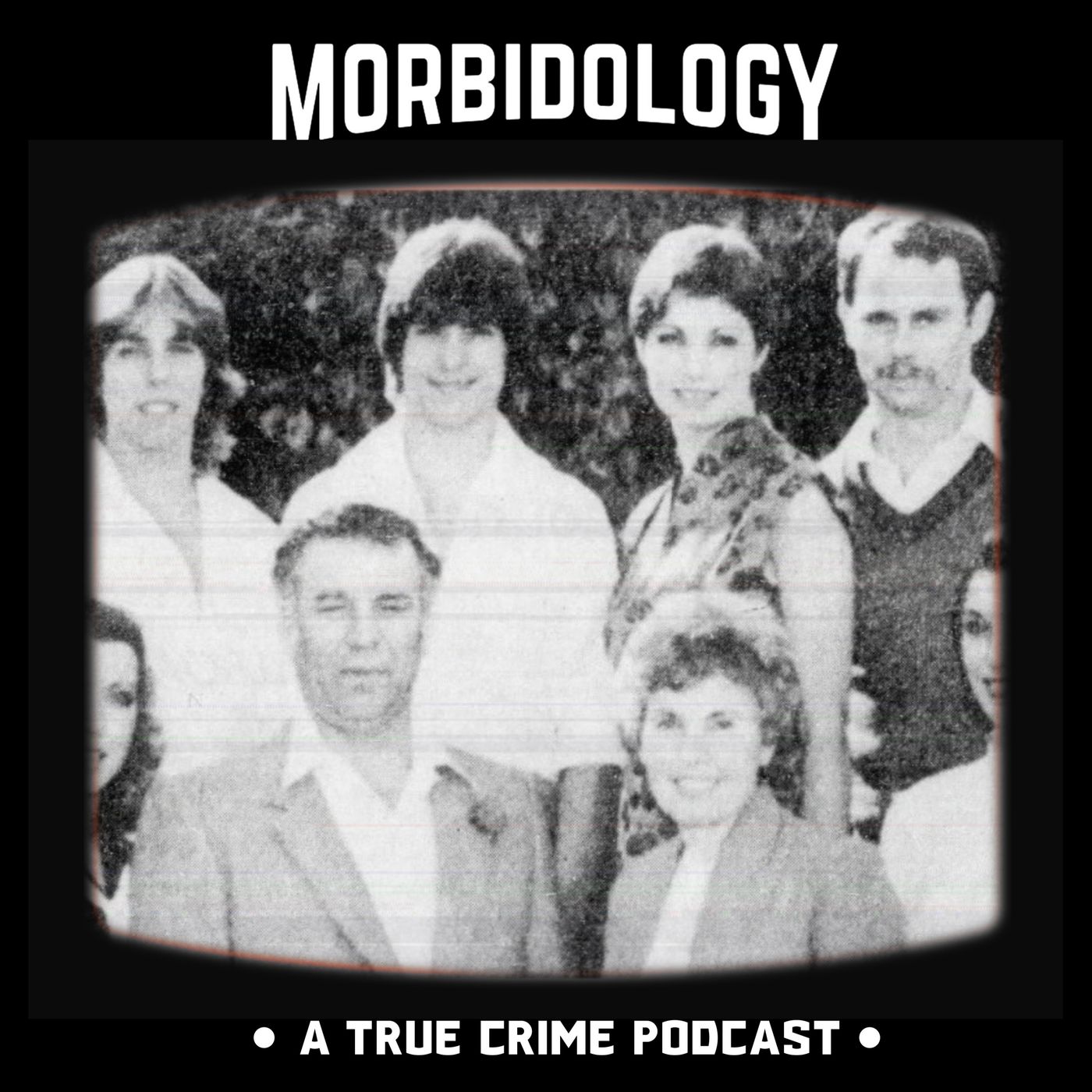
338: The Blackman Family
Episode Transcript
Nestled in the heart of British Columbia's Lower Mainland, Coquitlam has always been a city call between worlds.
Once the traditional territory of the Coast Salish peoples, this community of one hundred and forty thousand has grown from a logging and forming settlement into a sprawling suburban haven.
For decades, families have been drawn here by the promise of quiet neighborhoods, good skills, and tree lined streets.
Spurway Avenue embodies everything that makes Coquitlam so appealing to young families and retirees alike.
This peaceful residential street winds gently through an established neighborhood, flanked by well maintained split level homes from the nineteen seventies and nineteen eighties.
The strait itself curves just enough to slow traffic to a crawl, with manicured lawns, carefully tended gardens, and driveways where suva sit waiting.
It's the kind of street where garage doors rumble open at seven a m shop, where weekend mornings are filled with the distant hum of lawnmower.
Most residents have lived here for years, watching each other's children grow up, sharing tools and small talk about the weather.
But on early winter morning in January of nineteen eighty three, Spurway Avenue knew would be forever changed.
At five point thirty a m.
The street lay shrouded in that peculiar breedawn darkness that seems to muffle even the slightest sound.
Most of the houses stood dark and silent, their occupant step in sleep, still hours away from alarm clocks and coffee makers.
The only movement came from the occasional car on the distant main road.
In one of those split level homes, a man slept peacefully until something jolted him awake.
His eyes snapped open in the darkness of his bedroom.
For a moment, he lay still, trying to identify what had disturbed his sleep, And then he heard it again, the unmistakable crack of gunshots.
His heart was racing as he slipped out of bed and moved quietly to his bedroom window.
Peering through the blinds, he looked across to his neighbor's house, a modest, two story home, identical the soil many others on spur Away Avenue, but something was different.
Every light in the house was blazing, every single window glowed bright yellow against the pre dawn darkness, as if somebody had frantically flipped on every switch in the place.
And then he saw movement.
Through the illuminated windows.
He could make out the silhouette of a man moving quickly through the house.
The figure appeared in one window, then disappeared, then appeared again in another room.
He was moving with purpose, urgent, determined movements that suggested he was looking for something or someone.
The neighbor pressed closer to his window, his breath fogging up the glass as he tried to make sense of what he was saying.
And that's when he realized the man wasn't alone.
There was someone else in that house.
Someone the man was pursuing through the brightly lit rooms with a relentless predatory intensity.
The chase was on and on quiet Spurway Avenue.
Someone was running for their life.
In January of nineteen eighty three, the Blackman's were exactly the kind of family you'd expect to find in Coquitlam's Ranch Park subdivision.
Their split level home on Spurway Avenue fit perfectly into the neighborhood's orderly rows of suburban houses.
Richard Blackman was fifty years old, with the calloused hands of someone who'd worked his entire life.
He'd spent years as a marine engineer before joining the Vancouver Fire Department in nineteen seventy eight, where he worked on the fireboat.
The transition from Pacific towing services to public service suited him.
He was the kind of man who found purpose in health helping others.
Bill Jones, the Fireman's union president, knew Richard well.
He later said, we all see him as a very stable guy, competent and good inner crisis.
That stability showed in everything that Richard did, from his reliable work ethic to the way he spent his weekends meticulously trimming his lawn and tending his garden.
His yard was a surpride and joy.
His wife, Irene Catherine, was forty nine and worked as a pattern's clerk at the Vancouver Province newspaper.
She'd been there for three years and her colleagues adored her.
Irene was the kind of person who remembered everyone's birthday and always said have a nice night before leaving work.
She was beautiful as well.
She'd even been chosen to pose for posters on the sides of Pacific Press delivery trucks to the younger staff.
Iren was like a mother figure, always ready with a listening ear or an encouraging word.
Together, Richard and Irene had raised six children, each finding their own way in the world.
The eldest was twenty eight year old Roberta Lynn Davies, who had married John Davies the previous summer.
The newly Weeds lived on East eleventh Street and with a kind of couple that neighbors loved having a round.
Luigi Lepacho, who lived near by, couldn't say enough good things about them.
They were so friendly and nice every time I would drop in to see them.
They were fine people to me.
Roberta and John were already talking about starting their own family.
Then there was twenty five year old Karen Dale Rhodes, who was going through a rougher patch.
Her recent separation had left her living alone on Secret Court, but she was handling it with grace.
Her neighbor Brad, remembered her fondly.
Karen was so nice.
She was also very good looking and had the personality to go with her looks.
Despite the divorce, Karen seemed optimistic about her future.
The family's third daughter, twenty six year old Kathy Wiley, had moved to quincill and was building her own life there.
Back home on s Burroway Avenue, three of the Blackman children still lived with their parents.
The youngest was sixteen year old Richard Junior.
Everybody called them Rick.
He was a student at Sir Frederick Barring Junior Secondary School, where he made a name for himself in sports.
Rick had that kind of energy that comes with being sixteen and having your whole life ahead of you.
His friend Christer Riddell would later say he was the best am guy in the world.
The life of the party.
Rick had been dating Caroline Waters for a round ten months and according to her, he got along with everyone.
He was just that type of kid.
Then there were twenty two year old twins Bruce and Barry, who couldn't have been more different despite sharing the same birthday.
Bruce was outgoing and mechanical, spending his time playing soccer or working on his car.
He had plans to take a mill ride's course at Selkirk College in Nelson, a solid trade that would set him up for life.
His twin Barrie, had chosen military service instead, working as a finance clerk at Canadian Forces Base Rockliffe and Ottawa.
It made sense their father had worked in the Canadian Forces more than thirty years earlier.
The distance between the twins didn't break their bond, though.
Family's family, and what brought the black Men's all together was their love of the outdoors.
They had a camper that regularly took them to Harrison Hot Springs, where they owned a campsite.
The wilderness of British Columbia was where the family felt most at home.
The men especially shared a passion for hunting.
Richard, Rick, Bruce, and Barry when he was visiting, all participated, and they kept an impressive collection of rifles locked in the basement.
It was a hobby that connected generations, father teaching, sons, brothers bonding over shared expedition into the woods.
This was the Blackman family in January of nineteen eighty three, hardworking people with strong roots in their community, the kind of family that made neighbors think about what they wanted their own lives to look like.
Stable, loving, secure, But of course, no family is perfect.
Every household has its tensions, its quiet struggles, its moments when the carefully maintained surface threatens to crack, but from the outside, the black Men's looked like they had it all figured out.
Sometimes, though, the people who seem to have everything together are the ones with the most to loose.
Edfield had always been a heavy sleeper.
His wife used to joke that a freight train could run through their bedroom and he wouldn't stir.
So when that first gun shot pulled him from sleep at five point thirty am on the eighteenth of January nineteen eighty three, he knew that some was very wrong.
He lay for a moment, wondering if he dreamed it.
The house was quiet, Spurway Avenue was quiet.
Everything was as it should be in the pre dawn darkness of a Tuesday morning in Coquitlam.
Then came the second shot.
Ed sat up in bed, his heart race picking up.
By the third shot, he was at his bedroom window, looking directly across the street at the Blackman House.
Every single light was on.
At five point thirty in the morning, every light was blazing.
That's when he heard the screaming.
It was a man's voice, desperate and raw, calling for help.
The sound carried clearly across the empty street.
Ed opened up his window and leaned out the january air, biting his face.
Through the lit windows, he could see two figures moving inside the house.
One was chasing the other through the rooms.
Of them running.
The chase led them to the garage, where Ed watched one man fall to his knees on the concrete floor.
The garage door was open, the overhead lights harsh and unforgiving.
Ed later recalled, I heard a couple of shouts for help.
The guys came back, one leading the other, and one guy fell down on his knees in the garage.
Ed watched as the standing figure walked to the workbench and picked something up.
Then both men disappeared back into the house.
Ed ran to his kitchen and dialed nine one one.
The police arrived quickly, their sirens cutting through the quiet neighborhood like knives.
Ed stood on this front steps, still in his pajamas, watching the chaos unfold in his peaceful street.
Then the front door of the black Man house opened, a man walked out.
He moved down the front path with the casual pace of someone leaving for work, then continued down the hill away from the house.
There was something unsettling about his composure.
The way he seemed completely disconnected from what had just happened.
Ed called out to the approaching officers that that was the man he had seen inside the house.
The police caught up with the man easily.
He didn't resist when they told him to stop.
He simply raised his hands and allowed them to cuff him.
With the suspect secured, officers approached the house, they found a twenty two caliber rifle lying on the front lawn.
The garage door remained open, light still on, revealing two bodies on the concrete floor surrounded by blood.
Inside the house they found four more.
Richard Blackman was dead in the kitchen, having been shot while doing a crossword puzzle.
Forty nine year old Irene had been shot dead in the bedroom.
Sixteen year old Rick was killed with a gunshot blast doundstairs.
Twenty eight year old Roberta was found dead in the garage, having been shot and bludgeoned with a hammer.
Her husband John was found dead alongside her, shot and bludgeoned, and then twenty five year old Karen she too was in the garage.
Six people an entire family, wiped out in a matter of minutes.
When officers returned to question the handcuffed man, they asked for his identification.
The answer would send shockwaves through the community and raise questions that would haunt everyone who heard the story.
It was twenty two year old Bruce Blackman, son brother twin, the young man who had been planning his future as a mill write, who loved soccer and working on cars, who went hunting with his father and brothers.
The same person who had just destroyed his entire family in the quiet suburban house where they all lived together.
As the sun rose over Spurway Avenue that morning, it illuminated a crime scene that would challenge everything people thought they knew about family, about mental illness, and about how quickly a normal life can turn into something unrecognizable.
The question everyone would ask was simple but devastating.
How does this happen?
The news spread through Coquitlam like wildfire.
The black Men family, the quiet people who kept their lawn Tiday and send out Christmas cards, had been murdered by their own son.
For two years, the black Men had been the kind of neighbors that everybody appreciated.
They kept to themselves without being unfriendly.
Their yard was well maintained.
They participated in the small rituals of suburban life that make a neighborhood feel ill, safe, and normal.
One neighbor said to reporters there were no hints of problems in the family.
They were just a very nice family, and they were Richard and Irene maintained close relationships with all their children, even the ones who had moved out, came home to visit regularly.
From the outside, they looked like exactly what they were, a tight knit family who genuinely enjoyed each other's company.
But something had been going wrong with Bruce until recently.
He had been living in North Vancouver with his friend Terry in a one bedroom apartment.
They'd known each other since high school, but over the past few months, Terry had started to worry.
The trouble had begun in nineteen eighty one when Bruce lost his job at a plant that manufactured plastic booms for oil spill containment.
Being unemployed hit him hard.
He felt like he was in a rut.
Terry remembered Bruce stet out of work for a year.
Finally, in August of nineteen eighty two, he found a job as an on call garbage collector.
It wasn't glamorous work, but it was something, and for a while things seemed to stabilize.
Then, around two months before the Murderspruce started changing.
He began reading the Bible obsessively, which was strange because he'd never been particularly religious.
But stranger still was what he claimed to find in those pages.
Terry recalled, he would see messages, subliminal messages in many things.
We'd be sitting around watching television and he'd see something in a show that he thought was a message.
Bruce started telling Terry that the world was going to end soon and that he had some kind of role to play in that ending.
The conversations became increasingly disturbing, Terry said.
Then, about a month and a half ago, he told me one night, about midnight that if he went to sleep, he knew he was going to die.
Concern, Terry contacted the crisis center.
They gave him the name of Jehovah's witness who might be able to help.
The man came to the apartment, but Bruce refused to engage with him.
He dismissed the visitor, saying he was full of it and didn't know what he was talking about.
Then, about a month before the murders.
Terry's concern reached a breaking point.
He called Bruce's parents.
The decision was made quickly.
Bruce would move back home where his family could keep an eye on him.
It seemed like the right thing to do.
Richard and Irene were the kind of parents who would do anything for their children.
Bruce continued going to his garbage collection job after moving home.
Then on the tenth of January, just eight days before the murders, he suddenly quit.
He told his boss he was planning to take some college courses.
He told Terry the same thing, that he was finally going to start that mill write program, the plan he'd been talking of aut for months.
When Bruce came by Terry's apartment to pick up some of his belongings, he seemed different, better, Terry remembered.
He said he was feeling much better.
He said he was turning his life around, and for a brief moment, it looked like Bruce might be pulling himself out of whatever dark place he'd been inhabiting.
He talked about the future, about the courses he would take, about building a career as a mill write, but he wasn't getting better.
The truth was much more frightening.
Bruce couldn't get better.
Whatever was happening in his mind was beyond his control, beyond anyone's control.
Eight days later, the Blackman family would pay the ultimate price for a mental health crisis that nobody fully understood.
In an era when the tools to help somebody like Bruce barely existed, sometimes the people who seemed to be turning their lives around were actually saying goodbye.
After Terry's phone call, Richard and Irene knew they needed professional help.
They contacted doctor Harvey Brain, a Vancouver psychiatrist, and tried to explain what was happening to their son.
Bruce had been taking drugs heavily.
They told him, he'd been engaging in bizarre rituals involving body fluids.
The young man who used to spend weekends working on cars and playing soccer was becoming somebody that they didn't recognize.
When doctor Brain arrived at the family's home, he found Bruce in a state of obvious distress.
The twenty two year old was reading the Book of Revelations, his attention completely absorbed by the apocalyptic text.
He seemed frightened, paranoid.
Doctor Brain's diagnosis was swift.
Bruce appeared to be in a paranoid schizophrenic state.
He gave him an injection of long acting tranquilizers and left oral medications for ongoing treatment.
For a while, it seemed to work.
A month later, Richard reported that Bruce had improved significantly.
The family allowed themselves to hope that maybe they'd caught this thing in time, but their son might be okay.
But by mid January, Bruce was deteriorating again.
He had an appointment scheduled with doctor Brain for the sixteenth of January, but he never showed up.
That same day, his sister Roberta, called the psychiatrist.
She was worried about her brother.
He seemed very confused, she said, and she suspected he might have taken marijuana, cocaine, and LSDA on top of whatever was already wrong with him.
Doctor Brain made another house call.
Once again, he found Bruce reading revelations, but this time Bruce's delusions had become more elaborate and more disturbing.
He was obset with the number seven.
He wanted the doctor to call a church and find out how many candles were on the altar.
Bruce then told doctor Brain that he was possessed by an all powerful female entity.
He said that he was lost in time.
Most chilling of all, he claimed that he was the Antichrist.
Doctor Brain's assessment was clear.
Bruce was in a full psychotic state.
He signed commitment papers.
Bruce needed to be hospitalized immediately, but the family refused.
They didn't want their son committed to a psychiatric facility.
Maybe they thought they could handle it themselves.
Maybe they believed love and family support would be enough.
Maybe they were afraid of the stigma of what hospitalization might do to Bruce's future.
Whatever their reasons, they said no.
Then ours before the murders, Doctor Brain's phone rang once more.
It was Roberta.
She was terrified Bruce had a knife.
She told him the family had changed their minds and they wanted Bruce committed now.
They needed help immediately.
Doctor Brain's advice was simple and urgent.
If Bruce had a knife, they needed to call the police right away, But by then it was already too late.
Just two hours later, Bruce Blackman was under arrest for murdering his entire family.
He had killed his parents and his brother Rick first.
Then he had called his sisters, asking them to come over.
Roberta arrived with her husband John, walking unknowingly into a scene of a massacre.
When police found Bruce walking calmly down the hill from his house, he was covered in blood.
He was wearing a makeshift headband that he claimed was Jesus's crown of Thorns.
His words to the arresting officers revealed the complete break from reality that had consumed him.
I'm saving death.
When they die, they become everything, he said.
He said he needed to see his remaining brother and sister, Barry in Ottawa, and Kathy and Quinceil to complete his mission, and then, in a voice that officers described as earily detached, Bruce Blackman said, I'm possessed by the devil.
The six bodies were transported to the morgue at the Royal Columbian Hospital in Westminster, where coroner Diane Messier would perform the autopsies.
In her fourteen years on the job, she'd seen plenty of death, but she said that this case shook her.
She recalled, when you go from room to room and you continually find bodies, it's really devastating.
The autopsy results painted a picture of overwhelming violence.
Irene had died from two gunshot wounds.
Richard had died from multiple gunshots.
Rick had been shot in the head.
Karen had been shot twice.
But it wasn't just the shooting that made the case so disturbing.
Roberta had been shot and then beaten with a hammer.
Her husband John had suffered the same fate.
It was the same for Karen.
The level of violence went far beyond what was necessary to kill.
It suggested a complete break from reality, a rage that couldn't be satisfied by death alone.
When detectives interviewed Bruce after his arrest, they tried to ask logical questions about what had happened, but Bruce wasn't interested in logic.
He wanted to talk about possession, about the devil, and about being the Antie Christ.
He told them, I feel so bad about what I've done, but I am totally possessed.
When they asked erectly if he had killed his family, his answer revealed the depth of his delusion.
I love my family very very much.
I never killed them.
That thing that was in me made me do it.
Bruce claimed he had been speaking to his father, who was worried about him.
Then he said revelation stuck.
Suddenly it came to me, I must kill to say the universe, the universe, not the world.
Who cares about the world.
Bruce Blackman was charged with six counts of murder in order to undergo a thirty day psychiatric examination.
Meanwhile, the community was left to grapple with a tragedy that seemed to make no sense.
On the twenty second of January, around sixty people gathered for a private funeral service for the Blackman family.
It was a thirty minute ceremony attended by the only two survived having children, Kathy and Barry, who had to bury their entire family at once.
Reverend James RB of the United Church conducted the service.
Harold Atchison, the funeral home manager, described it as intimate and personal.
He said he didn't deliver a eulogy, it was more like a family chat.
He spoke of family love and made the point that a funeral didn't have to be the end of everything.
Six caskets adorned with white, red, and yellow roses sat in front of the small gathering.
Reverend Herb later reflected on the family he'd come to know through the tragedy.
He said, they are a fantastic family.
I'll tell you that there's just a tremendous closeness.
How many families do you know who are close?
How many husbands, wives and kids are like one.
After the service, all six family members were cremated at Victory Memorial Park in Surrey.
Then, on the tenth of February, Bruce Blackman was declared legally insane and unfit to stand trial.
It was revealed that three separate psychiatrists had examined him during his stay in the psychiatric hospital, and all of them reached the same conclusion.
Bruce still believed his family had represented the Antichrist and that the killing them had been necessary to save the universe.
The delusions that had driven him to murder remained intact, he told one psychiatrist.
I tried to resist the voices.
I thought it was the voice of God, but the devil tricked me.
He was ordered hell that the Forensic Psychiatric Institution until doctors deemed him competent to stand trial.
Prosecutor Pedro Decudu was candid about the uncertainty, and he said, we don't know how long his treatment will last or if he will be brought back to court.
I suspect he will be brought back to court to face the charges in the future, and two months later, Bruce was declared fit for trial.
When he appeared in court, he sobbed openly, prompting his attorney to hand him tissues.
He waived his preliminary hearing and pleaded not guilty to all six murder charges.
While psychiatrist had determined he was competent to understand the prosadings, his defense would argue that he had been legally insane at the time of the murders.
The trial was initially scheduled for October of nineteen eighty four, but it was pushed back to November.
The question that would dominate the pre sadings was one that haunted the case from the beginning.
Can somebody be held responsible for actions committed during a complete psychotic break?
And if Bruce Blackman wasn't responsible for the murders, then who was.
On the third of November nineteen eighty three, a jury was selected and seated in the New Westminster courtroom.
What they were about to hear would be Unlike most murder trials, Justice Lloyd Mackenzie addressed the twelve jurors directly explaining that their job would be unusual.
They wouldn't need to determine if Bruce Blackman had killed his family that wasn't in dispute.
Instead, they had to decide something much more complex.
The judge explained, as I understand that there's going to be only one issue.
That is the question as to whether this accused was insane at the time of the offenses with which he is charged or alleged to have occurred.
He then read the legal definition of insanity from section sixteen of the Criminal Code of Canada.
A person is insane when he is in a state of natural imbecility or has disease of the mind to an extent that renders him incapable of appreciating the nature and quality of an act or omission, or of knowing that an act or omission is wrong.
Bruce sad in the prisoner's stock, clean cut and wearing a gray sportsc blue shirt and tie.
He looked like any other young man facing trial, except for what he was accused of doing.
In the front row of the public gallery, his twin brother, Barry, listened intently as the proceedings began.
Prosecutor Barry Sullivan outlined the case for the jury, Sullivan said that Bruce had believed he was possessed by the devil.
He had killed his family because he thought it would prevent the end of the world.
He had heard voices telling him to kill.
But the prosecution's case took an unusual turn.
Sullivan explained that Bruce had interpreted the six points of the Star of David as representing the six members of his family.
Bruce was convinced the world was going to end, and it could only be prevented if his family died so that they could take their places at the six points of the star.
What made the trial extraordinary was what happened next.
The defense agreed with everything the prosecution said.
Both sides were arguing the same thing, that Bruce Blackman had been legally insane when he committed the murders.
The adversarial system that defines most trials was set aside.
Everybody in that courtroom, from the prosecution to the defense, believed that Bruce had been too mentally ill to be held responsible for his actions.
The testimony that followed painted a picture of a young man's complete mental breakdown.
Terry, Bruce's roommate, described how his friend's personality had shifted dramatically around October of nineteen eighty two.
Bruce had become severely depressed, then would laugh hysterically at things that weren't funny.
The change had been sudden, and it was frightening.
Curtis Rhoades, Bruce's brother in law, testified about Bruce's obsession with the Book of Revelations and his fixation on the Big Bang theory where two heavens collide.
Bruce had started wearing a makeshift headband that he called the Crown of Thorns Jesus war.
In one disturbing incident, Curtis recalled, Bruce had blended liquid with two pages from the Bible and then ordered his sister Karen to drink it.
Doctor Harvey Brain took to the stand and explained his efforts to help Bruce.
He had wanted to commit him to a psychiatric facility, but the family had refused.
While he had the legal authority to force commitment, doctor Brain testified he hadn't felt Bruce was a danger to himself or others at the time.
He seemed highly frightened and excited, Doctor Brain said of his patient.
Three psychiatrists testified that Bruce had been legally insane when he killed his family.
Doctor Derrick Eves provided crucial context, explaining that Bruce's mental illness had roots in his religious studies.
About eighteen months before the murders, Bruce had started reading Jehovah's witness pamphlets and became fixated on the idea that only certain people would enter heaven.
Bruce had told doctor Eves that he felt the devil would prevent him from reaching heaven, but that the voice of Jehovah had instructed him to kill his family to prevent the end of the world.
He had been prescribed antipsychotic medication that was working, but he had stopped taking it on January sixteenth, just two days before the murders.
By that point, Bruce had become completely consumed by the delusion he needed to deliver his family from the Big Bang.
He believed that by killing them they would become the eternal family of God.
The trial lasted only a few days.
When the jury retired to deliberate, they took just forty minutes to reach their verdict.
Everybody was called back into the courtroom for the announcement.
The fore man then stood and delivered the unanimous decision, Bruce Blackman was found not guilty by reason of insanity.
Justice Lloyd Mackenzie then addressed Bruce directly.
He was commit getting him to strict custody at a psychiatric hospital, where he would remain until the provincial Cabinet, acting on recommendations from a review board, decided he could be released.
A special committee appointed by the cabinet would review his case annually.
As the gavel fell, Bruce Blackman's fate was sealed.
He would spend the foreseeable future in psychiatric care.
A young man who had destroyed his entire family during a psychotic break that nobody had been able to stop.
The verdict satisfied nobody completely.
Justice had been served according to the law, but six people were still dead, and the two surviving Blackman children were left to rebuild their lives knowing that their brother was both the perpetrator and in many ways another victim of this tragedy.
The verdict sent ripples of fear through the community.
In the days following Bruce Blackman's acquittal by reason of insanity, the Canadian Mental Health Association's phones wouldn't stop ringing friends and relatives of people with mental illness cult worried that they might become victims of violence, but their fears were based on misconceptions that persisted in nineteen eighty three.
People with mental illness actually have no greater rate of criminal activity than the rest of the population, and Bruce Blackman wasn't a typical case of schizophrenia.
Doctors explained.
His psychotic break had descended quickly and violently, a perfect storm of untreated illness, drug use, in a family's understandable reluctance to institutionalize their son.
The Blackmans have been trying to help Bruce the only way they knew how, by keeping him close by believing that love could be enough.
They couldn't have known that someone's love isn't enough.
Diviided disease that transformed somebody into a stranger.
Bruce's drug use had been a significant factor in triggering his mental breakdown.
The combination of hallucigens and an underlying vulnerability had created a psychosis so severe that Bruce had lost all connection to reality.
For the next eight years, Bruce remained at the Forensic Psychiatric Hospital.
He took his medication, he attended therapy sessions, He examined in microscopic detail the enormity of what he had done to the family he had loved during those years.
Bruce legally changed his name to Richard Bruce James, honoring his father Richard and his brother Rick, two of the people he had killed.
In August of nineteen ninety one, Bruce was granted a conditional discharge.
He was allowed one or two weekly on super trips outside of the hospital.
Doctor Derrick Eves, who had testified at his trial, supported the decision.
He said one can never give guarantees, but if it were felt that there was a substantial risk, that never would have been approved.
Bruce had improved tremendously over the years, but not everybody was comfortable with the decision.
Jack Fraser, a former neighbor of the Blackman family, expressed the conflicted feelings that many people had.
I don't like the business of him being released entirely.
The woman next door is quite upset about it, but I don't think he's going to harm me or my family.
But Bruce had something crucial the support of his remaining family.
Barry, his twin brother, had stood by him, helping him integrate into society.
He understood what the rest of the world struggled to accept that the person who had committed those murders wasn't really his brother.
His brother had been consumed by something that had made him off unrecognizable.
In nineteen ninety three, Bruce became practically a freeman.
His supervised releases increased over time.
He hadn't shown symptoms of mental illness for years.
He found work in a computer related field in Victoria and moved into a four bedroom half way house.
He still had to return to the Forensic Psychiatric Institute, but only three or four nights a month.
Victoria had been chosen because he had family there.
As spokesperson Guss Richardson explained, reactions were mixed.
He said, understandably, some of them are upset about the concept of Bruce's release.
Others had been able to make peace with him.
Those who knew Bruce during his recovery saw a different person than the one who had committed the murders.
Judy Shipper, who had become a friend, said, Bruce's really bright, intelligent and articulate, and he became a very good friend of my family.
I trusted him with my kids.
He played baseball with them.
Even Curtis Rhodes, Bruce's former brother in law, who had witnessed his deterioration first hand, continued to support him.
Then, in June of nineteen ninety five, a five member review board made a unanimous decision Bruce posed no risk to society.
They also made an important discovery about his original diagnosis.
Bruce hadn't been suffering from chronic schizophrenia as initially thought.
Instead, he had experienced a one time drug induced psychosis.
This revelation reframed everything.
Bruce's mental break hadn't been the beginning of a lifelong illness.
It had been a catastrophic reaction to drugs combined with psychological stress.
Once the substances left his system and he received proper treatment, the person he had always been began to emerge again.
Bruce credited his twin brother, Barry, and his cousin for helping him transition and back into the community.
When he spoke to the review board, his words revealed both his recovery and his ongoing struggle to understand what had happened.
He said, to this day, I can't comprehend it.
There were warning signs, how it developed to the stage it did.
I can't comprehend.
What I remember is the drinking.
I can remember the sequences.
It should never have happened.
The case of Bruce Blackman raised uncomfortable questions that society continues to grapple with today.
How do we balance compassion with public safety?
How do we distinguish between someone who is dangerous and someone who was temporarily consumed by illness?
How do we help families recognize when love alone isn't enough?
For Bruce now Richard Bruce James, the answers came through years of treatment, the unwavering support of his surviving family, and the gradual recognition that the person who had committed those murders with someone he himself could barely recognize.
The tragedy of the Blackman family wasn't just about the six lives loss that January morning in nineteen eighty three.
It was also about a mental health system that wasn't equipped to help, a family that did their best with limited understanding, and a young man who lost himself so completely that it took over a decade to find his way back.
Well, that is it for this episode of Morbidology.
As always, thank you so much for listening, and I'd like to say as if.
Thank you to my newest supporters up on Patreon, Janine and Dan Dan.
The link to Patreon is in the show notes.
If you'd like to join, I upload ad free and early release episodes behind the scenes, and I also send out merch along with a thank you card.
I also do bonus episodes of Morbidology Plus that aren't on the regular podcast platforms, and these are also available over on Apple subscriptions, so feel free to join over there if you're interested.
Remember to check us out at morebidology dot com for more information about this episode and to read some true crime articles.
Until next time, take care of yourself, stay safe, and have an amazing week.