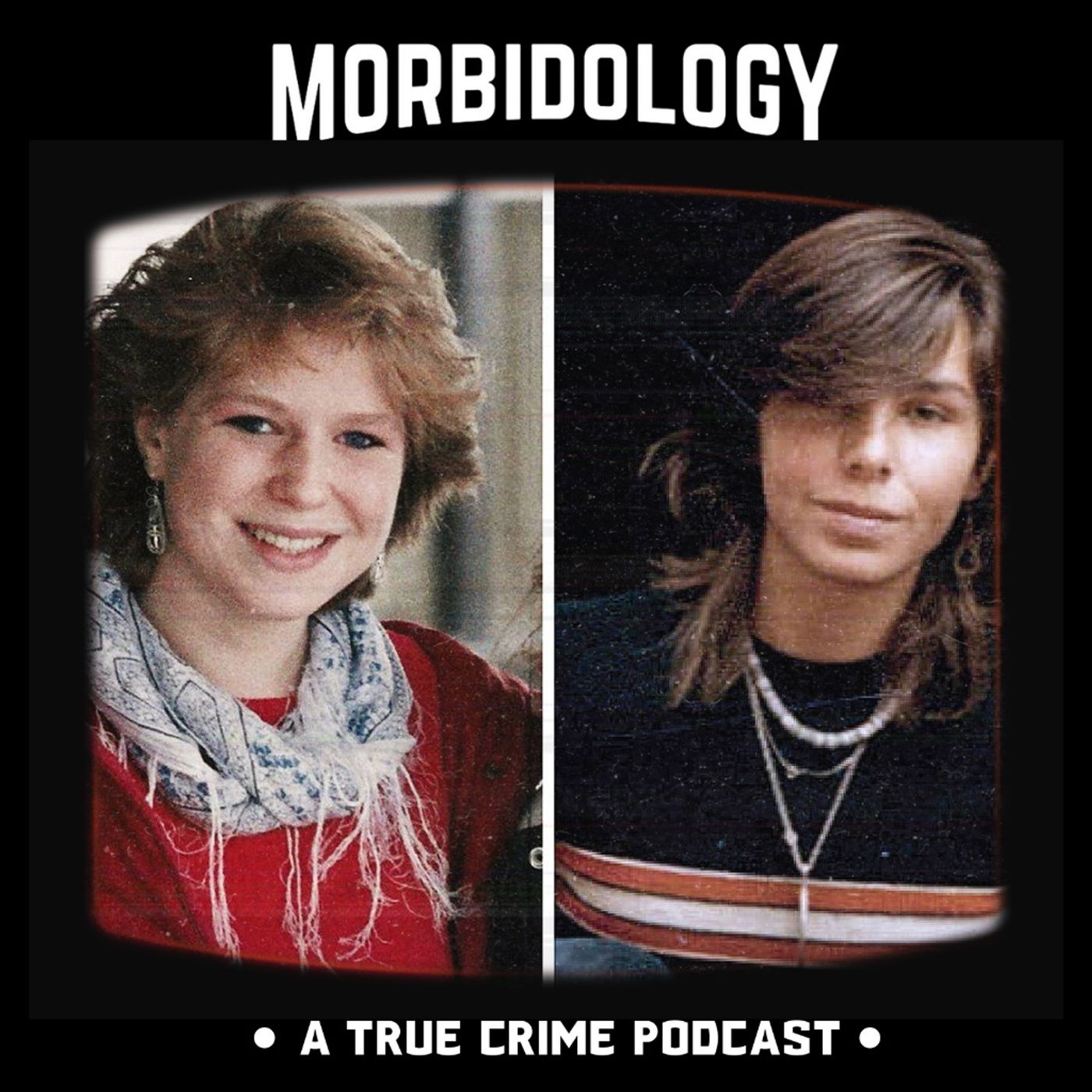
344: Jay Cook & Tanya Van Cuylenborg
Episode Transcript
Victorian British Columbia sits on the southern tip of Vancouver Island.
In November of nineteen eighty seven, the city was settling into the gray stillness of Pacific Northwest autumn.
The tourist season had ended months before, leaving the Inner Harbor quiet except for the gulls and the rhythmic churn of ferry engines.
Rain fell steadily just so outside the city.
In the bedroom community of Saanich, life moved at a slower pace.
The ferry route between Victoria and Washington State had been running for decades, a crucial artery connecting Canada to the Olympic Peninsula and beyond.
Every day, vehicles lined up at the Coho Ferry terminal, work trucks, dan's, motor homes, fans.
Some passengers were commuters, others were tourists eager to explore Seattle or ventured deeper into the American wilderness.
On the morning of Wednesday, the eighteenth of November nineteen eighty seven, a Braun nineteen seventy seven Ford Club wagon joined the queue.
Behind the wheel was twenty year old Jay Cook.
Beside him sat eighteen year old Tanya van Kulemborg.
They were heading to Seattle on an errand for Jay's father's heating business.
A simple overnight tree to pick up a furnace.
They had blankets and foam paths in case they wanted to sleep in the van.
They had cash and travelers checks in case they fancied a motel.
They had a plan to call home once they picked up the equipment.
The four o'clock ferry pulled away from the dock, carrying them across the Strait of Wandy Fuca towards Port Angele's.
The water was choppy, the sky heavy with clouds.
By the time they reached the American side, darkness was already settling over the forested coastline.
Somewhere along the roads between Port Angeles and Seattle, between the ferry terminals and small hounds that dotted Highway one oh one, Tanya and Jay disappeared.
Tanya van Kulenborg was born in Victoria, British Columbia, Canada, on the seventh of March nineteen sixty nine, to parents Willem and Jan.
She had one sibling, an older brother named John, and they had grown up together in Vancouver Island in the close knit community of sanich By the summer of nineteen eighty seven, eighteen year old Tanya had graduated from Oak Bay High School, located just a few kilometers east of Johntown, Victoria's Shocks.
She was in that strange spot between adolescents and adulthood, just trying to figure everything out.
That summer, Tanya was saving for a trip to Holland, where she had family on her father's site.
Those who loved Tanya said that she was someone who loved deeply and cared for things that needed her attention.
She cared for many pets over the years, cats, fish, gerbils, and, after constant appeals to her mother, a beloved golden retriever she named Tessa.
Tessa was more than just a pet.
Tessa was her companion, her confidant, the kind of presence that made coming home home feel warmer.
Dania had dreams of working with animals one day, but right now she was working part time as a waitress to earn some money for college.
She was nicknamed Swede and was known for her sarcasm and many different laughs.
She was a competent sailor on family trips, comfortable with the wind in the water at ease in the natural world that surrounded her island home.
Music was another part of Tanya's life.
She was a casual guitarist whose favorite band, You Two, had just released their first number one record.
Danie wasn't performing on stage as her chasing fame.
She just pled for herself for the joy of it.
Danya's focus campaign to get a family dog or even start a girl's basketball team at her high school showed her determination and willingness to fight for the things she wanted.
When she wanted something, she pursued it with quiet persistence.
Daniel wasn't de typed to back down from a challenge, even when the odds weren't in her favor.
She was dating twenty year old Jay Cook.
Jay had been born in the Greater Victoria area of British Columbia and Canada, and he grew up in Sanach with his parents, Leona and Gordon.
Gordon worked in the family business, Cook and Talbot Heating Limited.
Jay had two sisters, Laura, Lee and Kelly.
At twenty years old, Jay stood at six foot four inches tall, but he hadn't quite beefed out yet.
His family always choked that he was gangly, but he was sweet.
The kind of person whose presence felt uncomplicated, and Jay wasn't one to sit still.
He'd worked on a fishing boat, in a pizza restaurant, picked up bass guitar, and loved boating with his family.
He had ambitions to one day become a marine biologist.
He was left handed, broad shouldered, and carried himself with an easy, unassuming confidence.
It was also a sweetness to Jay that his family and friends remembered.
One night, after a shift at the pizza parlor, he wrote his bike three hours through rain and darkness to a cabin where his friends were staying for the weekend.
He had balanced a Pete's on his head the whole way there to bring them food.
Jay had no rough edges, his uncle recollected, while his friend dor And Schiller said Jay was very warm.
He enjoyed meeting people, but he didn't like hanging around with people who brought him on happiness.
Tanya and Jay were high school sweethearts.
They spent all of their free time together, mostly at each other's houses.
Jay's sister, Laura fondly recollected Tanya was very sweet and caring, and they looked up to each other.
Jay's mother Leona believed that Tanya was quite special to him.
Tanya's father, Willem, felt that they seemed to be good for each other.
He had no apprehension about them being together, and was in fact, very comfortable with it.
In family photographs from that summer, Tanya and Jay looked to be two young people on the cusp of their lives.
They had no way of knowing that time was running out.
Tanya and Jay had been dating for several months when November arrived, bringing with it the gray skies and persistent rain that defined Pacific Northwest autumns.
The trees had long since shed their leaves, and darkness came early, swallowing the afternoon by four point thirty pm.
It was during this time that Jay asked Tanya to accompany him on which it had have been a routine trip to Seattle.
He needed to pick up a furnace for his father's heating business.
Not exactly the kind of adventure that teenage dreams were made of, driving south to collect industrial equipment, But Jay had an idea.
It didn't have to be boring.
If they were together, they could turn the mundane into something memorable.
An overnight trip a small adventure, time away from parents and sibs and the familiar rhythms of home.
Gordon Cook, Jay's father, saw no reason to refuse.
He later recollected, Normally I would have gone down myself on a weekend, but I just thought, why not let Jay do it?
Seemed reasonable.
Jay was responsible, twenty years old, more than capable of handling a simple pickup and delivery.
Gordon gave his son some extra money so they could stay overnight and drive back the next day.
On the morning of Wednesday, November eighteenth, nineteen eighty seven, Jay pulled up to the Vancoulenburg home in his father's company vehicle, a Broun nineteen seventy seven Ford club Wagon.
The plan was straightforward.
They would catch the four o'clock ferry to Victoria to Port Angele's in Washington.
From there they would drive to a second car ferry.
They would take them from Bremerton across Puget Sound to Seattle.
They'd pick up the furnace, call home to confirm everything had gone smoothly, find a place to sleep, and return to Victoria by Thursday night.
They'd packed phone pads and blankets in case they decided to sleep in the van, but they also had cash and travelers checks.
If they fancied the comfort of a motel room.
The options were open, the trip flexible to young people with a simple errand and a dead of themselves.
After they picked up the furnace, they were supposed to call home, But that phone call never came.
At first, neither family worried.
Tanya and Jay were young and in love.
After all, maybe they decided to explore Seattle for a few hours.
Maybe they'd found a diner with good food, or walked along the waterfront, or simply gotten caught up with each other's company and lost track of time.
The plan had been loose.
Anyway, sleep in the van or get a motel their choice.
They had the resources to handle either option.
Missing one phone call didn't necessarily mean catastrophe.
It could simply mean teenagers being teenagers, living in the moment, forgetting the smaller obligations to worried parents.
But when Thursday night arrived and neither Tanya nor Jay returned home, concern began to form into something sharper.
They should have been back.
The trip wasn't meant to last more than a day and a half.
The furnace pickup was a simple transaction, there was no reason for delay.
On Friday, the twentieth of November, two days after Tanya and Jay had left, their families reported the missing.
The search titanniaan Jay got underway with the methodical procedures that mark missing person investigations back in nineteen eighty seven.
This was before cell phones, before GPS tracking, before the digital breadcrumbs that would later make disappearances somewhat easier to trace.
The tectives began with the basics, retracing the couple's intended route.
They quickly learned that Tanya and Jay had indeed arrived at the ferry from Victoria to Port Angele's on Wednesday afternoon.
Witnesses confirmed their departure.
The ferry manifest included their vehicle.
They had made it across the Strait of Wan de Fuca without incident, but after that the trail went cold.
They never made it to Seattle, at least not to pick up the furnace.
Whatever had happened to them had occurred somewhere between Port Angeles and their destination, somewhere in the tangle of roads and small towns that dotted Washington State's Olympic Peninsula.
Detectives started checking local motels and campgrounds, thinking perhaps there was an innocent explanation.
They were teenagers, after all, young in love on their first trail trip alone together.
Maybe they'd simply decided to extend their adventure to steal a few more days of freedom.
It was a comforting theory that Tanya's family knew better.
Her father, Willem said, I know she would have called home if she could.
She always calls home when she's away.
When she went to Europe, she always called, and whenever she goes over to Vancouver, she always calls.
It wasn't just parantel anxiety.
It was knowledge based on pattern, on the established rhythms of his daughter's behavior.
Dania was responsible.
She understood that silence created worry.
She wouldn't disappear without word, not willingly, not by choice.
Jay's family echoed the same certainty.
Gordon Cook insisted to detectives that his son had no intention of going on a prolonged trip.
This was supposed to be a quick errand not an escape.
Jay was reliable, the kind of young man who showed up when expected, who kept his word.
But the days pressed forward and nobody could offer any insights into the couple's whereabouts.
Fort Angele's police chief, Mark Clellan addressed the media, stating, they have never reached Seattle, and that's all we know.
There's no indication of file play, no indication, but also no answers.
The search continued.
William couldn't sit idle while others looked for his daughter.
He drove to Washington State himself, scarring the Olympic Peninsula's winding roads, searching the streets for Seattle for any sign of Tanya or Jay.
He walked neighborhoods, showed photographs to strangers, asked questions until his voice grew hoarse.
Police forces throughout Canada and the United States were alerted to be on the lookout for the couple or their van.
The alerts went out across radio frequencies and fox machines distributed to jurisdictions that stretched from British Columbia to Oregon.
Somewhere someone must have seen them, somewhere, there had to be a witness or a clue.
But the days continued to pass with no word from the couple.
The silence stretched from ours into days, from days into a wis and with each passing or the likelihood of an innocent explanation grew smaller.
It had been a week since Tanya and Jay left for Seattle.
The morning of November twenty fourth dawned cold and overcast, typical weather for late autumn in Washington State.
Around eleven thirty, a man was taking his daily walk along an isolated road near Alger, a small community just south of Bellingham.
The area was quiet, rural, the kind of place where you could walk for miles without seeing another person.
As he made his way down the road, something in a ditch caught his eye.
It was difficult to say it.
First fall had stripped the trees bare, and leaves had accumulated in thick, wet layers along the roadside.
But there was something there, something that didn't quite belong, something unnatural against the landscape.
He moved closer, trying to get a better look.
Then he stopped in its tracks.
It was the lifeless body of Tanya van Kulemborg.
She was lying faced down over an embankment, her bodily partially obscured by fallen leaves and branches.
She was made from the waist down, wearing only a pair of socks, her shoes were gone, her bra had been pushed up over her breasts.
She had been shot once in the back of the head at close range.
The bullet was still lodged in her skull.
Nearby, there was a shell casing from a small caliber gun.
The area was quickly cordoned off with crime scene tape.
As detectives descended on the location.
Debuty Jim Muherer would later recall the difficulty of processing sing It rains a lot up there, and the leaves were wet and it was hard to see.
You couldn't see the head or the shoulders of the body because of the leaves and branches.
Crime scene experts arrived and documented everything as they found it.
Once the immediate area was secure, they expanded their search, coming through the brush shoulder to shoulder, looking for any evidence, any clue that might explain what had happened.
They also believed that Jay's body must be somewhere nearby.
The theory that Jay had killed Tanya and then fled was briefly considered and quickly dismissed.
The location where Tanya was found wasn't on their route to Seattle.
There was no logical reason for them to have been in that isolated road near Alger.
Furthermore, the evidence told the darker story Tanya had been sexually assaulted.
Near her body, detectives found the zip pies.
The evidence suggested that Tanya had been killed by a stranger, and most likely Jay was dead as we well.
The surrounding area was meticulously searched, but Jay's body wasn't there.
Detectives put out an urgent appeal asking anybody who had seen Jay or the family's brought on ford van to contact them immediately.
The next day, the Texas received their first significant hip.
Strange items had been discovered underneath the porch of a local tavern in Bellingham, close to the bus station.
Among them, they found Tania's ID card, keys to the van, an ammunition that mashed the bullet that had killed her.
There were also zip ties and disposable surgic gloves.
Detectives immediately shifted their focus to Bellingham.
In a parking lot downtown, they found the van.
Inside was even more crucial evidence, more zip ties, Tanya's black pants, a blood stain on a car seat, another blood stain on a comforter.
The van was a crime scene, but still there was no sign of Jay.
The next day, November twenty sixth, Scott Walker and a friend were hunting pheasants south of Monroe, about seventy miles from where Tania's body had been discovered.
They were walking near High Bridge when Scott's dog, Tess, suddenly rushed into the tall brush beneath the wooden planks on the eastern approach to the bridge.
She didn't come back right away, which was highly unusual.
Tess was a well trained hunting dog, responsive to commands, but now she just stood there close to the bridge, almost in a daze.
Scott recalled, she was standing at a distance, I think trying to figure out what she was looking at.
You could tell she didn't want to get any closer.
Scott approached his dog and looked in the direction of her gaze.
Through the brush, He could see an ashen gray human or protruding from the undergrowth.
He didn't get any closer.
He and his friend immediately reported the discovery to the nearest Washington State Police station.
Sheriff Rick Board arrived at the scene with other officers.
They were directed to the location and moved cautiously towards the body.
It was Jay Cook.
He was lying in a fatal position, his face and upper body covered by a tattered blue blanket.
He was bonded with the ziptize and gagged.
Jay had been beaten over the head with a rock and strangled to death with twine and a dog collar.
The missing person's investigation had just become a double homicide.
Sergeant Dave Richardson said in the media they were clean cut individuals.
It was a statement meant to emphasize the senselessness of their deaths, the randomness of the violence that had found them.
Detectives began piecing together a theory with what had happened.
They speculated that Tanya and Jay had possibly offered their killer a ride, perhaps picking up a hitchhiker, common enough occurrence in nineteen eighty seven, especially for young people who saw helping a stranger as an act of kindness as opposed to a risk.
Detectives believed that Jay had been killed first.
Their theory suggested that the killer had ordered him to park the van out of sight in a location where the violence could unfold without witnesses.
While Tanya was zip tied and gagged in the van, unable to help or escape, the killer took Jad the isolated spat beneath high Bridge where he was murdered.
Sergeant Rick Bart noted there wasn't much of a struggle.
Whoever killed him knew how to park the van out of sight.
He was fairly confident nobody was going to see what he was about to do.
Afterwards, the killer returned to the van where Tania was held captive.
She was sexually assaulted there, then she was driven to the isolated road near Alger and shot once in the back of the head.
Detectives didn't believe that this was a robbery gone wrong, even though some items were missing.
Tanya's from an old camera had been taken, a black and red jacket, a green backpack, but the violence spoke to something darker than simple theft.
Jay's father, Gordon, examined the fan with the detectives, looking for anything out of the ordinary.
He said that everything seemed normal, nothing obviously disturbed beyond the bloodstains and the evidence of violence.
A crucial part of the investigation was determining where Tania and Jay were last seen alive, to narrow Down, where they had encountered their killer.
Detectives soon learned that the couple had purchased gas in the small Mason County town of Alan on November eighteenth.
Witnesses confirmed that they were together and they seemed to be in high spirits.
There was nobody else with them, nobody else in the van, but Alan wasn't on their planned route.
Detectives believed they had taken a wrong turn, a simple navigational error that would prove to be fatal.
Records showed they had purchased a ticket for the ferry from Bremerton to Seattle at ten sixteen p m.
It was presumed that they made it on to the ferry, but nobody could say for certain the crossing would have taken about an or they may have met their killer there or perhaps on the roads afterwards.
Dania's father, Wilhelm, had his own theory.
He remarked, in my mind, I'm satisfied they met their misfortune on the eighteenth.
They would have picked up two hitchhikers as readily as one.
They trusted the whole world.
If the hitchhikers were in the same age group, I guarantee you that van would stop.
It was the kind of heartbreaking observation that only a parent could make, knowing your child's kindness, their generosity of spirit, and recognizing how those very qualities might have made them vulnerable.
Detectives weren't quite sure whether there was one killer or multiple.
Posters featuring photographs of Tanya and Jay were printed and distributed along two routes they or their killer may have taken.
The posters went up in store, service stations and businesses along Interstate five and Highway nine.
The investigation was then ramped up.
A fifteen thousand dollars reward was offered for information leading to the conviction of the couple's killer, but detectives admitted it wasn't going to be an easy case.
Tania and Jay were believed to have been killed by a complete stranger in an area that neither of them knew.
There were no obvious witnesses, no clear motive beyond random violence.
Police spokesman Roy Reid acknowledged the difficulty and set and I understand it's a pretty cold trail at this point.
While detectives worked around the clock processing evidence and chasing leads, the community gathered to mourn.
Around two hundred and fifty people assembled at the University of Victoria Chapel for a memorial service for Tania.
The chapel was full standing room only, filled with classmates and teachers and neighbors.
Reverend Francis a Day spoke to the assembled mourners with words meant to transform grief into purpose.
Tanya and Jay will not have died in vain if each of us is motivated to go from this room to try to make the world a safer place in which to live.
She urged everyone to work towards raising children who wouldn't need violence, who could resolve conflicts without brutality.
It was not domestic message delivered into her room that was heavy with loss.
Tanya was fondly remembered as the sort of girl who was there whenever he needed her.
Oak Bay High School Principal Court Brusom recalled her as the Jorden who had persuaded him to form a senior girls basketball team and coach it himself.
It was classic Tanya, saying something that should exist and refusing to accept its absence.
Jesy's memorial service followed.
He was remembered as a peaceful, easygoing young man who enjoyed meeting people and a good joke.
His friend Kathy Clark said simply, he was a warm, peace loving person.
Very easy going and mild tempered.
These were the testimonials of lives cut short.
Not the grand eulogies of people who had lived long enough to accumulate impressive achievements, but the smaller, more intimate observations of character.
Tania and Jay had been killed before they could become whoever they might have been, before college, before careers, before the life they might have built together.
In early December of the investigation struggled to gain traction, detectives started looking outward, searching for patterns that might connect Tanya and Jay's murders to other unsolved cases.
What they found was disturbing.
There had been several unsolved double murders in Washington State over the past two years.
Since nineteen eighty five, three other couples on sightseeing or camping trips had been found killed, or disappeared under mysterious circumstances.
Deputy Pete Panissy had investigated the August nineteen eighty six disappearance of sixty four year old Robert Linton and his sixty two year old wife, Dagmar.
He said he had a gut instinct that the cases were somehow connected.
Robert and Dagmar had been on their way to Vancouver when they parked their trailer at the Naco West Camground near Brennan.
They took their truck on a day trip and were never seen again.
An unidentified suspect produce their gasoline card and was tracked the previous year through Alger just north of where Tanya's body had been found.
Then the suspect dropped out of sight.
The deputy noted the similarities.
Tanya and Jay had a van, the Lintons had a truck with a canopy.
The Linton's truck was left in a public parking lot.
The van belonging to his Tanya and Jay was found in a parking lot.
The suspect in the Linton disappearance was described as a tall, bulky man in his early to mid forties.
A composite sketch had been compiled from descriptions provided by clerks in two stores where purchases were made with the missing couple's credit cards.
There were two other cases under review as well, the March nineteen eighty five murderers near Vantage in Grand County of twenty five year old Edward Smith and twenty six year old Kimberly Diane Levine of Kent.
Newly arrived from New England.
The engaged couple had been on a sightseeing trip to eastern Washington.
Their car was discovered at a scenic overlook near Vantage Edward's body was found on the tenth of March in a gravel pit several miles south, his hands bound and his throat cut.
Kimberly's skeletal remains were found ten miles further south in August of nineteen eighty five.
Sheriff's deputy said she might have been sexually assaulted, but they couldn't determine how she was killed.
The only similarities with Chany and Jay's case, officials noted were that they were a young couple traveling in an area they were unfamiliar with.
Then there was the August nineteen eighty five disappearance in Slang near tul Lake in Pierce County a forty three year old Ruth Cooper and twenty eight year old Stephen Harkins of the Coma.
The two had left on a camping trip on August tenth.
Four days later, Stephen's body was found inside their car, wrapped in a sleeping bag.
He'd been shot in the head, where of nineteen eighty five, roofs remains were found in heavy brush in a timber area about a mile and a half away.
Bob Keppel, an expert in serial murderers who had worked as a consultant on the Green River case, the Atlanta child murderers and served as lead investigator in the Ted Bundy case, urged caution.
He remarked, whether the person who killed Cook and Van Kulenberg killed in the past or will kill again, we just don't know.
Eventually, it was determined that the cases weren't connected.
Whatever patterns detectives thought they saw dissolved under close scrutiny.
Tanya and Jay's murders stood alone.
The investigation continued.
Just before Christmas, the reward was increased to fifty thousand dollars, offered by a committee headed by the president of the Victoria Bar Association and funded through private and corporate donations.
New posters were printed displaying the updated reward amount.
Tanya's father, William, personally put some up in bars around Pioneer Square and the Pike Place Market.
This is where he believed his daughter and Jay had met their killer.
He said, the apprehension of this individual will do nothing to diminish our anguish over the loss of Tanya.
But we don't want to repeat.
We don't want someone else to suffer at the hands of this crazed man.
William speculated that Tanya and Jay had met someone in a bar after the ferry and offered to drive them somewhere.
He was determined to find his daughter's killer, but soon enough Willim found himself the focus of something sinister.
The letters started at Christmas.
Tanya and Jay's parents received Christmas cards from somebody claiming to be the killer.
The sender wrote that he hated all Canadians and threatened to kill again.
One card read, in part, you and ever going to apprehend me?
Good luck?
Do the Mounties always get their man?
The card contained details of the murders, but detectives cautioned that it could be a hoax.
The information could have been learned from newspaper articles that had covered the case.
But the letters didn't stop.
They just kept coming.
They were harassing and mean.
Detectives set They arrived on Father's Day, Mother's Day, and Christmas.
They had specifically chosen to maximize pain.
Another letter was sent to the RCMP, mocking them for their inability to solve the case.
The letters came from several US cities, suggesting someone who moved frequently or was deliberately trying to obscure their location.
In the new year, crimestoppers ran a report on the unsolved murders, hoping to generate fresh leads, but time pressed forward and the case grew colder with each passing month.
The months eventually dragged into years.
The letters continued.
The families received an average of one per month for an entire year.
Sometimes they were signed Tanya or Jay, a particularly cruel touch seeing their children's names scrawled by the hand of someone claiming to have killed them.
Detectives weren't sure whether the letters were genuinely from the killer or from someone else, perhaps a transient who traveled along the West coast and had read about the case, someone disturbed enough to torment graving families for their own twisted satisfaction.
In October of nineteen eighty nine, nearly two years after the murders, Unsolved Mysteries ran a segment on the case.
Elliot Wirrell, the Sheriff's offices public information officer, admitted the frustrating truth detectives really have been unable to determine the exact movements of the pair and whoever they may have been in contact with.
They don't know whether they picked someone up.
For the first time publicly, detectives shared their working theory of what happened.
They believed that Tanya and Jay were killed by a serial killer, someone who had come well equipped, carrying his own surgical gloves, septies, and a gun.
They believed the motive was sexual and that he had made up his mind when he saw them somewhere in or around Seattle.
One detective said, we spent a lot of time on the ferry, going back and forth and showing pictures of the two, but we couldn't find anybody who saw them.
Detectives also believed that the killer was taunting them by dumping items underneath the tavern porch near the Bellingham bus station.
The ID card, the van cays, the ammunition, the gloves.
It was a message.
Under Sheriff rom Panzero said, the obvious thing he's telling us is that here you can have the gloves.
You're not going to find any prints, have the bullets and shells, because you're not going to find the gun.
He revealed for the first time that A fine coating of talcon powder had been found inside the glove.
The killer knew that the powder would make it almost impossible to lift fingerprints from the latex surface.
Panzero continued, we did everything we knew to the gloves, fumed them, and lazered them, but we found no prints.
Sergeant Rick Borr wasn't entirely convinced by the serial killer theory.
He instead believed that two people were involved.
He said, they got Jay away from Tanya and killed Jay.
I don't believe Tanya knew that Jay was being killed.
I don't think they wanted her to know.
They killed him away from the van and dragged him into the bush.
Further, both investigators believed that a gun wasn't used on Jay because the killer or killers didn't want Tanya to know he was dead.
They wanted to give the impression that he'd been left alive in the brush, that maybe there was still still a chance she might survive if she cooperated.
Sergeant Bart added, he died slow.
Whoever did it didn't show much mercy.
It was very sloppy.
There was another disturbing detail.
Jay's body had been found inside of the Washington State Reformatory, Honor Form, a medium security prison.
Detective Ron Perniasso said, the way he dropped Jay off near the prison Honor Form, this guy's telling us things.
There's a good possibility he has done this before, and he has probably served time before.
It was the kind of criminal signature that suggested confidence, even arrogance.
Someone knew how law enforcement worked, someone who wanted them to know.
He was smart enough to get away with it, but knowing that didn't help them catch him.
It wasn't until March of ninety ninety the detectives got their first handible lead.
Tanya's stolen Camra lens was found in an Oregon pawnchop.
It should have been a promising development, but the trail quickly grew complicated.
Detectives learned it was the second time the lens had been pawned in the same area.
The first time had been within six months of the murders.
They were only made aware of it after the serial number was entered into the National Crime Information sent their computer.
From there, they hit another dead end.
Six months later, detectives turned their attention to suspected serial killer Charles Sinclair.
He was being held in Alaska awaiting extradition to Billings, Montana, where he was charged with the murders of Charles Barbot and Catherine Newstrom.
Charles owned a coin shop in Billings and Catherine was his assistant.
Sinclair was suspected of killing up to twelve people, and crucially, he had been living about twenty kilometers from Bellingham, close to where Tanya was killed at the time of the murders.
The families were hopeful.
William stated there's more than a fifty percent chance it's him.
I want this thing finished so we can make a new beginning.
At least we can come to the end of a long, dark tunnel.
But in the end, detectives couldn't find any connection between Sinclair and the murders of Tanya and Jay.
However, he remained the leads suspect in the disappearances of Robert and Dagmore Linton, who was mentioned earlier.
He'd been using the Elias Robert Linton, and a clarinet found in his home linked back to the Linton stolen credit cards.
Unfortunately, however, no convictions ever claim.
Charles Sinclair died of a heart attack in jail on the thirtieth of October ninety ninety The years continued to drag past.
In January of nineteen ninety six, it was announced that detectives were turning to a new technology.
DNA's asking had advanced significantly over the DECKAD DNA and semen had been discovered on Tanya's black pants in the van and on her body, but there had been no technology back then to do the DNA patterning that was required now.
The DNA was retrieved and detectives began monitoring databases in Washington, Oregon, and California, hoping for a match.
No match came, However, the DNA testing did answer one lingering question.
The profile didn't match the DNA from the letters that had been sent to the families.
That meant that the letters were indeed a hoax, just as some investigators had suspected.
Detectives asked the letter writer to come forward before the families knew that ten years had passed since the murders.
Jay's father, Gordon said at the anniversary, I keep hoping something will turn up, but you have to be realistic.
After ten years, I think we're continuing to deal with it.
Tragically, Tania's father, Williem, died from a stroke on the fourteenth of May nineteen ninety six.
He was sixty two years old.
Friend said that he never recovered from his daughter's murder.
He'd spent nearly a decade searching for answers, putting up posters, driving through Seattle neighborhoods, carrying photographs of Tanya wherever he went.
He died without ever knowing who killed his daughter.
The next year, the FBI established a national DNA bank.
The killer's DNA was uploaded, but detectives hit another brick wall when no match came back.
That meant that the killer hadn't been arrested for another crime since the murders.
In August of twenty ten, detectives finally tracked on the person who had sent the letters, and it wasn't the killer.
It was a mentally ill Canadian man who was now in his seventies.
He had been identified after detectives released more information about the letters.
A man in Canada had recognized the handwriting and called police.
The letter writer had been a transient man who had roamed between Canada and Washington for decades.
He'd lived on the streets, disconnected from family and community, nursing grievances that had festered into something cruel.
He admitted descending the letters and was said to be apologetic.
He revealed that he had once even called Jay's father with the intention of apologizing, but couldn't reach him.
He said he had read about the murders and was at a low point in his life and wanted to lash out.
He was angry about how he had been treated by his fellow Canadians.
The statute of limitations had passed, so the man was never publicly identified and never charged.
He had tormented Graving families for years, adding an extra layer of pain to their loss, and there was no legal recourse.
The years continued to pass, the case grew colder with each one.
Detectives had everything they needed to solve it.
They had DNA, they just needed a match.
They didn't know it, but a breakthrough was finally coming.
By twenty eighteen, DNA technology had advanced even further.
A composite sketch of the suspect was created through a process called snapshot DNA phenotyping by parabonde aanolobs.
DNA phenotyping analyzes pieces of DNA code to predict a person's appearance, including eye color, skin tone, hair color, facial features and ancestry.
The sketch was released by the Snowhomish County Sheriff's Department during a Facebook livestream.
The composite showed what the killer might have looked like at the ages twenty five, forty five, and sixty five.
It depicted a white man with fair hair and green or hazel eyes.
Jay's sister Laura made a public appeal.
If these new pictures that this amazing new technology created triggers a memory you had, perhaps of someone who said something odd that lived in or near the Snawhomish area or even Vancouver in late nineteen eighty seven, please for the sake of my brother Jay, Tanya and all of our families call it in.
But in the end, it wasn't the sketch that led to a suspect.
It was DNA.
Just days after the composite sketch was released, fifty five year old William Earl Talbot was arrested and charged with the murders of Tanya and Jay.
The suspect's DNA was uploaded to the public website geed match by parabomb.
The website contained about one million genetic profiles that people had uploaded after having their DNA analyzed by companies like twenty three in me.
Ged Match had updated its privacy policy following the Golden State killer case to explicitly state that law enforcement could access a person's profile to solve murder and sexual assault cases.
Privacy advocates had expressed concerns about whether such techniques violated rights or whether their use by law enforcement should be restricted.
Genetic genealogists C.
C.
Moore built family trees using people who shared promising amounts of DNA with the suspect.
Two close matches were discovered from people who had married and produced only one son.
She then used a process called reverse genealogy, where researchers look for living matches that fit DNA profiles.
They were led to William Earl Talbot.
Talbot was put under surveillance.
Detectives collected the DNA sample from a cup he had used.
It was a match.
After more than thirty years, they had found the killer.
When he was stopped to be arrested, Talbot refused to hand over his identification.
At first, he wouldn't even turn around or put his hands behind his back, but eventually he complied.
Back in nineteen eighty seven, William Earl Talbot had been a twenty four year old delivery driver in Seattle.
One of his routes at the time went along sixth Avenue South in Sodo, a destination that Tanya and Jay apparently had in mind.
He had lived in the Woodinville area of Washington State, and his parents' home was about ten kilometers away from where Jay's body had been found.
According to a friend of Talbot's at the time, he recalled seeing a distinctive van at the Talbot home that year.
This friend also recalled seeing a blue blanket in his car, similar to the one found with Jay's body.
Some people described Talbot as a hard worker and a kind man.
Not everybody saw him that way, Michael said.
A former roommate said that Talbot had a tumultuous relationship with his father.
He'd once gotten into a fight with his sister and broke her arm.
He was said to be like a jackal in hide when he drank alcohol.
Another person described him as a scammer who was good at lying, and crucially, he was known to hitchhike.
William Earl Talbot pleaded not guilty to the murder charges against him.
Prosecutors announced that they wouldn't be seeking the death penalty.
The state Supreme Court had ruled that Washington's death penalty law was unconstitutional.
The murder trial began on June fourteenth, twenty to nineteen, more than thirty one years after Tanya and Jay's murders.
Prosecutor Justin Harlman led out the details of the case, describing Tanya and Jay's ill fated trip.
The lights were turned on low so the jury could see the photographs of the couple smiling, alive, full of potential.
Then they saw the copper Ford club wagon that Jay had been driving, and finally the photographs of their discarded bodies.
Prosecutor Hollman said, this is a case about two lives lost far too young, and two extremely violent acts.
The evidence in this case will show you that there is only one reasonably possible perpetrator of those acts.
Talbot's defense attorney, John Scott told the jury in his opening statements that the presence of his client's DNA didn't make him a killer.
I have re offered no explanation of how the DNA got there.
He described his client as a blue collar guy who worked in construction and as a truck driver.
He said that Talbot had lived a quiet and unremarkable life.
He said to the jury, the evidence doesn't tell us anything.
We know at some point during that time they were killed.
We don't know how, We know the means of their death, but we don't know the context.
The jury heard testimony from Tanya and Jay's family members before testimony turned to the evidence.
It was revealed that in a draft report in twenty eighteen, a forensic scientist named Angela Hilliard had ruled Talbot out as a possible match for a handprint found in Jay's van.
She then realized she'd been looking at one of the samples upside down, changed her opinion and said that it was Talbot's hand.
She explained, Unfortunately, it's because I'm human.
Sometimes you just don't see things at the time.
You're evaluating and looking, and you can search and search and search, and sometimes you just don't find it.
My original opinion was wrong, and the new information and data showed that the information was indeed there.
The jury heard about the DNA evidence and how it was connected to Talbot all those years later.
The odds of a random match were one in one hundred and eighty Quadrillion.
They also heard from Michael Sayat, Talbot's one time roommate.
He said that Talbot was familiar with the fields where Jay's body was found, and that his mother had a dark room about seven miles away.
It was used to develop photography, and Talbot had an interest in photography.
He said Tanya's camera had been stolen and never recovered, although the lens had appeared in a pawnshop years later.
Michael admitted he had never seen Talbot with a gun and had never heard him talk about guns.
He said that Talbot declined invitations to shoot clay pigeons.
Another roommate, Timothy Macpherson, said that Talbot didn't smoke cigarettes and that he had never seen him with a camera, a blue blanket, dog collars, or zip ties.
The defense called only one witness, a defense investigator, who answered questions for about ten minutes.
Todd Reeves testified that Talbot's past driver's licenses showed an address in Riverside and that he lived in Sea Tack at the time of the arrest.
That was it.
During closing arguments, prosecutor Matt Baldock dimmed the lights and projected high school portraits of Tanya and Jay.
He asked what might their lives have looked like?
Would they have traveled the world?
Would they have had children?
He then said these are all questions that their family and friends have asked more than once in the softer moments, But there are also questions that they have asked over and over again over the past thirty one years, questions that framed their grief and their loss.
Did they know they were going to die?
Did they suffer?
Defense attorney Rachel Ford said during her closing arguments that Talbot Seaman could have ended up with the crime scenes from consensual sex.
She said that police had developed tunnel vision over the years, clearing people as suspects because their DNA didn't match the DNA in the van or on Tanya's body.
She said they never stopped to consider that perhaps the person who left the DNA was not the murderer.
She noted that in the ninety nineties, Talbot had rented a room from a police officer.
She then said, someone who has just brutally murdered two people and gone undetected would not rent a room from a police officer.
He just wouldn't.
The jury was sent off to deliberate.
They found William Talbot guilty of aggravated murder.
When the verdict was announced, Tabot looked surprised.
He flinched and then gasped before he was passed out of the courtroom in a wheelchair.
After the verdict, Tanya's brother John remarked, it's been such a long wait for all of us.
It feels great to have some answers.
We don't have all the answers, but we have a lot more than we had thirty one years ago.
After the conviction, a lab report was unsealed that revealed even more DNA evidence linking Talbot to the murders.
His also discovered on the zip ties of the crime scene.
The odds of a mismatch were one in ninety million.
Before the DNA had been far too complex and degraded for a meaningful comparison, but since then the lab had started using new software, the Cadizai, for individual profiles from a mixed sample of several people.
It was retested and came back as a match to Talbot.
William Talbot returned to court on July twenty fourth to be sentenced.
He addressed the judge, telling her the level of violence in This is something that I cannot comprehend.
I've got all my life as a passive person.
He didn't explain how his DNA ended up at the crime scenes.
The judge then handed him a sentence of life in prison without parole.
That should have been the end, but it wasn't.
In December of twenty twenty one, an appeals court overturned Talbot's conviction, citing juror bias.
They found that one of the jurors should have been dismissed during jury selection because she said she didn't know if she could be fair.
She had experience with violence against women and didn't know if she, as a mother, could be unbiased.
That juror was still selected.
The families were devastated.
After thirty four years, justice had finally been served, only to be snatched away on a technicality.
But a year later, the State Supreme Court reinstated the murder conviction.
They found that the defense had peremptory challenges available.
This meant they could have dismissed the juror, but they had opted against it.
William Earl Talbot remains in prison, serving life without parole for more than three decades.
Tanya and Jay's families lived with unanswered questions.
Tanya's father, Williem, died without ever knowing who killed his daughter.
Jay's parents grew old, waiting for justice that seemed like it might never come.
The case went cold because detectives didn't care, but because the technology didn't exist yet to match the killer's DNA.
The evidence was always there, preserved in a crime lab, waiting for science to catch up.
Tanya in Jay's lives were stolen on a dark road in Washington State by somebody they likely tried to help.
The case is closed now the killer's in prison, but the loss remains permanent, irreversible, a wound that time can only dull, never heal.
Tanya and Jay deserved better than they got.
Their families deserved answers sooner than thirty one years.
But in the end, justice delayed, complicated, imperfect did come, and sometimes that has to be enough.
Well that is it for this episode of Morbidology.
As always, thank you so much for listening, and i'd like to say a massive thank you to my newest supporter up on Patreon, Rosie.
The link to Patreon is in the show notes.
If you'd like to join, you can join for as little as one dollar a month, and there are absolutely new obligations.
You're free to cancel your subscription at any point.
I upload a free and early release episodes behind the scenes, and I also send out some cool Patreon exclusive merch along with a thank you card.
I also do bonus episodes of Morbidology Plus that aren't on the regular podcast platforms, and these are also available over on Apple subscriptions.
Remember to check us out at morbidology dot com for more information about this episode and to read some true crime articles.
Until next time, take care of yourselves, stay safe, and have an amazing week.
Ble