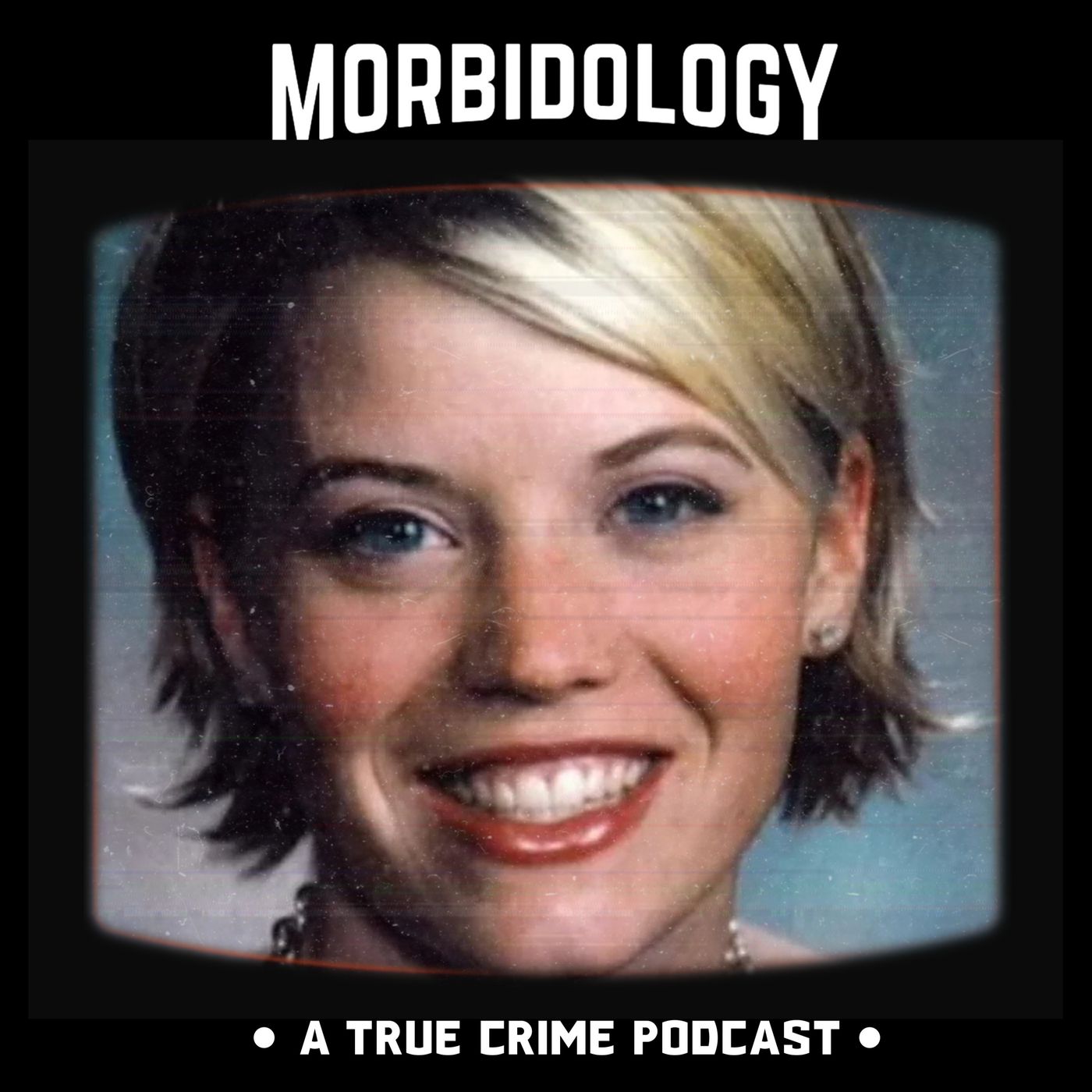
336: Dru Sjodin
Episode Transcript
Okay, I'm calling one of my actually, my roommates both most of the on like a couple of hours ago.
Speaker 2M Ground Forks in North Dakota is a city shaped by both natural beauty and natural disaster.
Founded in eighteen seventy, this prairie community grew from a humble frontier trading post into a thriving university town.
It was home to the University of North Dakota and almost sixty thousand residents by the early two thousands.
The city had weathered the devastating flood of nineteen ninety seven, which forced the evacuation of fifty thousand people and left much of downtown underwater, but Grand Forks rebuilt stronger and more resilient.
By two thousand and three, life had returned to normal rhythms in Grand Forks.
The Columbia Mall had become the heart of the community's retail life, a sprawling complex that opened in nineteen seventy eight and served not just the city but shoppers from across the region.
On any given day, you'd found families browsing the anchor stores, teenagers gathering at the food court, and workers grabbing lunch between shifts.
The mall's vast parking lot buzzed with activity, a safe cars under the endless Dakota sky.
But on one cold November evening in two thousand and three, that familiar scene would become the backdrop for something far more sinister.
The temperature had dropped well below freezing, and a bitter wind swept across the parking lot as shoppers hurried to their vehicles, breath visible in the frigid air.
Among them was a young woman making her way across the asphalt towards her car.
She had her cell phone pressed to her ear as she spoke with her boyfriend.
Their conversation was routine, the comfortable chatter of two people who talked every single day.
She was telling him about her day, about heading home, about the cold, but then suddenly her voice changed.
She said, oh my God, in a panic tone.
Then the line went dead.
Drucia Dane was born on the twenty six of September nineteen eighty one in this quiet town of Pequot Lakes in Minnesota.
She was the daughter of Alan Shedane and Linda Walker, and from the beginning, Drew radiated at warmth that seemed to draw people in.
She had an older brother Sven, and the two were inseparable.
More than just siblings, they were best friends.
Sven would later recall, she had that ability to attract people.
People just loved who she was.
We were both extroverted, but she had this smile, this way of leaning in when she talked to you, that made you feel like you'd known her your whole life.
Although Alan and Linda's marriage eventually came to an end, it never fractured the family.
They remained close friends, even attending dinners together after they remarried.
That sense of harmony in love was something that Drew carried with her into every corner of her own life.
As a child, she was spontaneous and endlessly kind.
She was a kind of girl who would sit at the kitchen table making little cards and drawings for her friends and family just to brighten their day.
Her artistic strake earned her the nickname Doodles, while others affectionately called her Drowsy.
At high school, Drew's energy and spirit shawn even brighter.
She excelled academically, becoming an honor student, and her classmates crowned her homecoming queen.
But she wasn't just the picture perfect student.
She was also a dedicated athlete with the love for basketball, volleyball, and golf.
By the time Drew graduated in two thousand, she had already built a reputation as someone who could balance grace, intelligence, and athleticism without ever losing her dawn to earth nature.
She went on to study graphic design at the University of North Dakota in Grand Forks.
There she joined the Gama Phoebeta sorority.
One of her sorority sisters, Randy, said of her, even if she didn't know you, she'd give you a smile.
Randy admitted the Drews beauty was the kind that might have intimidated others, but it didn't.
She explained, she was one of those girls you wanted to hate, but you just couldn't.
Another friend, Odo van Hoff remembered how quickly Drew connected with people.
She said, you could get to know her instantly.
You could talk to her about anything.
While balancing her classes, dre report herself into causes that mattered.
Through her sorority, she worked with underprivileged teens, helped kindergarteners and first graders learned to read, and raised money for organizations such as the American Diabetes Association.
She even volunteered for events that raised awareness about violence against women and children.
Drew also worked two jobs, one at a Victoria's Secret store in the Columbia Mall and another as a waitress at a local spot called El Rocco.
Somehow she managed to carry a full course load, give her time to others, and still make space for joy.
She loved learning, always eager to ask questions, always curious print production, electronic publishing.
Anything that allowed her to bland art with technology fascinated her.
She even interned with the university's aviation program, which gave her the chance to travel.
By the spring of two thousand and three, Drew was twenty two years old and on the cusp of finishing her degree.
She had been set to graduate in May, but when she learned of a special opportunity, a photography class that would take her to Australia, she chose to delay her graduation until August.
At the time, Drew lived off campus with her close friend Meg Murphy.
Her days were filled with lectures, studying, work, and volunteer projects, but she always found time for the people who mattered the most.
Among them was her boyfriend Chris Lang.
Drew had met Chris the previous summer in her hometown, where he had taken a seasonal job.
Chris was from the Twin Cities area.
Unlike so many others, he had been drawn to Drew's smile, but it was more than that.
Chris recalled how Drew made him feel seen, valued, important.
He later said she was just a great example of somebody raised by a wonderful, loving family, and for Drew, the feelings were mutual.
She told friends that she might have met the man she was going to marry.
She could see a future with Chris, but Drew had no way of knowing that she wouldn't live to see a future with anybody.
It was an ordinary Saturday afternoon on November twenty second, two thousand and three, at the Columbia Mall in Grand Forks, North Dakota.
The holiday shopping season was already beginning to stir.
Inside the Victoria's Secret Store, Drew Shdaine was finishing her shift.
She was known for her bright smile behind the counter, but at around four o'clock she clocked out and slipped into the cool air of the early evening.
Before heading home, Drew stopped at Marshall Fields, a department store just across from where she worked.
She picked out a new purse, patted the register, and then walked back across the parking lot towards her car and nineteen ninety four old mobile Cutlass.
Somewhere along that walk, Drew's phone rang.
On the other end of the line was her boyfriend, Chris.
The two shatted casually.
Drew told him that she was heading to her car, but then there was silence.
Chris said her name a few times, confused.
That's when he heard her voice again, quick and sharp as she said okay, okay, Then just a breath later, oh my god, then the line went dead.
Chris stared at his phone.
He tried to call Drew back.
Each time it just rang and rang.
Drew never answered.
Worried, Chris reached out to Drew's roommate, asking her to let him know when Drew got home, but she never came back.
Ours passed.
Chris's anxiety grew heavier, and then another phone call.
It was Drew's number, really flooded him as he picked up, but there was no voice on the other end of the line.
All he could hear was static and the muffled sounds of buttons being pressed.
By then, Drew should have been starting her evening shift at Al Roccu, the local bar where she worked part time, but Drew never showed up.
Now Chris's worry turned to fear.
Drew wasn't the kind of person to ignore her phone.
She wasn't the kind to just vanish.
He called her friends, hoping that somebody had seen her, but nobody had.
He in her roommate, Meg then called nine one one.
Speaker 1I'm calling one of my actually, my roommates was most to be all like a couple hours ago.
Speaker 2The search for Drew began immediately.
Detectives knew that the first hours after a disappearance were critical.
With Drew's abandoned phone calls in her sudden silence, they quickly suspected the worst that Drew had been abducted.
Their first stop was the Columbia Mall.
Her automobile was still there in the parking lot.
The passenger door was unlocked.
A shopping bag from marshall Field sat inside the front seat, untouched.
But behind the car, detectives found something that stopped them in their tracks.
It was a black nylon sheathe marked with the Words tool shop.
It belonged to a folding lock blade knife.
It was a small clue, but it painted a grim picture.
Drew had made it safely back to her car, and then something happened.
Detectives pulled security footage from inside the mall.
Drew could be seen walking through Victoria's Secret and later at Marshall Fields.
She was alone and nobody appeared to be following her, but outside the cameras were sparse the parking lot offered little hell.
Investigators turned to the strange second call, the one that Chris had received ours later with nothing, but the static celtar data showed that the call pinged off atar near Fisher And, Minnesota, around twenty five miles from Grand Forks, and for nearly twenty four rs, druce phone remained in that area, but Tree had no reason to be there, and if she wasn't in her own car, it meant that somebody else had taken her there.
Detective Mike Sholes explained, it's not uncommon for people to go missing for a variety of reasons, but certain characteristics of this case demand immediate attention.
So in all points, bullet And went out.
Law enforcement agencies across the region were notified.
Speaker 1The U.
S.
Speaker 2Border Patrol joined the effort, deploying aircraft to search from above.
You know, in True Crime, we spent a lot of time exploring the darkest corners of human behavior, and honestly, that can take a toll whther it's the weight of the stories we cover everyday, stress or struggles you've been caring for years, Sometimes you need somebody to talk to who actually gets it.
I'll be real with you.
I've needed therapy before, and finding the right therapists felt like another full time job.
I wish I'd known about growth therapy back then, because they make the whole process so much easier, whether it's your first time in therapy or your fiftieth.
Grow makes it easier to find a therapist who fits you, not the other way around.
They connect you with thousands of independent, licensed therapists across the United States, offering both virtual and in person sessions nights and weekends.
You can search by what matters like insurance speciality, identity, or availability and get started in as little as two days, and if something comes up, you can cancel up to twenty four hours in advance at no cost.
There's no subscriptions, no long term commitments, You just pay per session.
Grow helps you find therapy on your time.
Whatever challenges you're facing, Grow Therapy is here to help.
Sessions average about twenty one dollars with insurance, and some pay as little as zero depending on their plan.
Visit growthapy dot com slash more Biology today to get started.
That's growthapy dot com slash more Biology.
Growth Therapy dot com slash more Biology.
Availability and coverage vary by state and insurance plan.
On the ground, deputies from Polk County and Grand Forks County, University, Police, and even the FBI coordinated search efforts.
They began in Fisher, sweeping in eight mile radius around Fisher's Landing, a small riverside community on the Red River lined with woodland and marshland.
Bloodhounds traced sends along the water's edge, their handlers pushing into the dense underbrush ATVs roared down dirt tracks where cars couldn't go.
Searchers spread out across farmland, abandoned buildings, and roadside ditches.
We're going to find this girl, Officer Trent s Sheckler told reporters that were gathered at the scene.
Meanwhile, Drew's face filled the media.
Flowers went up across North Dakota and Minnesota.
News broadcasts describe her in careful detail the day she vanished, who had been wearing black slacks, black loafers, and a pink and purple v neck blouse over it.
She wore a black blay as her style jacket, and she carried a small black handbag.
But despite the urgency, the days dragged on without any answers.
Detectives widened the search.
Volunteers joined in, coming through back roads, drainage, ditches, and fields.
Lieutenant Byron Sever voiced what everyone was thinking.
We're going to search every inch of the ditches.
You don't know where she might be at.
You just hope for the best, but every minute is precious mean.
While Drew's family issued a plea for help, offering a twenty thousand dollar reward for her return, her mother Linda, spoke through tears, she's very responsible.
This is totally out of character for her.
But as each day passed, the hope of finding Drew safegrewed dimm What began as a regular Saturday had turned into a nightmare that now stretched across two states, and as the search widened, so too did the questions, who had taken Drew Shadeen and where was she now?
At the University of North Dakota, the mood was heavy.
By Monday morning, the story of Drew's disappearance had spread across the campus.
Students whispered to one another in hallways asking the same question, did you hear what happened to Drew?
Drew had been so well known, so present, that the news felt unreal.
She wasn't just another face in the lecture hall.
She was the person who smiled at you in passing, who leaned in when she talked to you, like you were already friends.
Brae Hearing, a junior, tried to put it into words.
You hear about this stuff on the news, but it doesn't hit home because you don't know a person who was abducted.
When you can put a face to the name and picture her sitting in class, it's strange.
Her sorority sisters hung a sign that read Pray for Drew.
The university announced counseling for students, and that night, around three hundred and fifty people crowded into the Christus Rex Lutheran campus, sent there for a vigil Candles flickered in the dim room as voices rose in prayer.
But beneath that grief there was fear.
It hadn't been midnight in some deserted alley when Drew vanished.
It was broad daylight, five o'clock on a Saturday evening in a busy mall car park.
Whoever had taken Drew was brazen, and that meant they could do it again.
Drew's friends insisted she had no reason to be near Fisher, in Minnesota, where her cell phone had last pink.
Her family said that she didn't know a soul there.
Her friend Adam Shotts commented, she just wouldn't take off without letting anybody know.
She's a great person.
I don't know why anyone would want to do anything to hurt her.
The shock rippled beyond the university across Grand Forks Fair translated into action.
Seals of pepper spray stun guns and other self protection items exploded.
It's beyond belief, said Jason Schultz at Home of Economy.
He said that they normally sell some when college is back in season, but they'd sold eight years worth in just ten days.
Meanwhile, the search around Fisher continued The town itself was little more than farmland, woods and the winding Red River, a quiet place that was now transformed into the center of a desperate man hunt.
Hundreds of volunteers poured into help.
People were bossed in from Grand Forks every hour, braving the biting cold.
Drew's family searched alongside them, trudging through snow drifts, refusing to stop, but the elements worked against them.
Temperatures plunged, the wind slicing so sharply that it felt like ten below zero.
Still, volunteers were on their hands and knees combing frozen ground for the smallest clue.
Investigators warned that the ping from Drew's cell phone didn't necessarily mean that she'd been in fissure at all.
Sergeant Michael Hedlund explained, it could have been someone driving down the road and throwing the phone out the window.
We don't know she's been here.
We know the cell phone has been here.
Still, the search pressed on the perimeter widened, reaching out to surrounding towns.
Among them was Crookston, a small city twelve miles away, and on the twenty fifth of November, detectives found something beneath the Highway seventy five by pass Bridge lay a discarded shoe.
Drew's family identified it immediately it belonged to Drew.
The discovery brought no comfort, only dread.
Two days later, as Thanksgiving approached, Drew's family and investigators renewed their play for information.
Her father, Alan said, were overwhelmed by the generosity and the support of the Grand Forks community.
There is in our hearts and our thoughts and prayers.
We would like to have her home for a Thanksgiving reunion.
But Thanksgiving came and went.
While most students returned home, some of Drew's closest friends stayed behind, refusing to leave while she remained missing.
Her family launched a website, found drew dot com, which featured her photographs, details of her abduction, and the number for the tip line.
They also raised the reward fund dramatically, up to one hundred and forty thousand dollars for her safe return.
Detectives now turned to another pressing question, who could have wanted the hurt Drew.
By all accounts, she had no enemies.
She was kind and welcoming.
Nobody could think of anybody who would wish her harm.
But then, as investigators began sp speaking with her co workers.
One detail caught their attention, a victorious secret.
Somebody had called the store in recent weeks.
The caller had a foreign accent.
He'd asked to speak to Dry directly.
The call had been harassing in nature.
Detectives began to dig deeper.
They decided to come through the sex offender Registry for the area, a routaining but critical step in cases like this.
It didn't take long before one name leapt off the page.
He was local, he was high risk, and his PAS suggested he was capable of far worse than harassment.
Alphonso Rodriguez Junior was born on the eighteenth of February nineteen fifty three, the second oldest of five children to a family of migrant workers.
His father, Alphonso Senior, had only a third grade education, and he spoke Spanish.
His mother, Lauris, had attended school only until the fourth grade, but she taught herself to Reid and speak English.
For fifteen years, the family moved back and forth between Texas and the Red River Valley before settling in Crookston in Minnesota.
Both parents worked long, grueling ours in the fields, leaving little time for the children, Rodriguez had a difficult start in life.
He was small, fussy, and sickly.
He couldn't tolerate breast milk, and doctors advised his mother to feed him rice water instead.
By four months old, he was on the verge of starvation and diagnosed with failure to thrive.
That early fragility seemed to shadow him throughout his life.
He never learned to read or out properly, and struggled to meet basic developmental milestones.
While his family was hard working, they were plagued by poverty and a range of physical and mental health challenges.
Rodriguez himself would later be diagnosed with depression, diabetes, hand tremmers, and chemical dependency.
Dolores described him as different, quiet, withdrawn out of step with the rest of the world.
Once she worked in the fields, she would bring the children along, leaving them to play in the ditches.
His sister, Sylvia recalled chasing frogs into tunnels and hiding from the crop dusting plains, whose chemicals sometimes landed on their skin and left a sticky residue.
By the age of five, Rodriguez and his siblings were sent to a migrant children's camp while their parents worked.
It was here that the first sexual abuse occurred, perpetrated by an older female.
Sylvia later recounted witnessing the assault.
Not long after, a man who rented their home forced Rodriguez and Sylvia into an outhouse and coerced them into fondling him.
Rodriguez had tried to protect his cyst there, but even at such a young age that trauma began to shape him, and the abuse didn't stop.
At age six, Rodriguez was molested by a college aged woman at a church camp.
The next year, a teenage boy sexually assaulted him.
The repeated trauma, combined with the childhood of neglect, left deep scars that would follow him into his adulthood.
By age nine, the family had relocated to Croxton and Minnesota.
Dolores worked evening shifts in a restaurant kitchen, leaving the children largely to their own devices.
Their father arrived home late and was physically abusive, frequently beating Rodrigurez and calling him stupid.
In response, Rodriguez often retreated further into himself.
He self medicated with alcohol and drugs, including acid, hash, and marijuana, and he scavenged for food and entertainment.
At the local dump school was said to be another battlefield.
He walked with a limp, one leg shorter than the other, and his hands shook form tremors.
He was an easy target for the bullies, who kicked, pushed, and mocked him relentlessly.
One cruel episode involved classmates threatening to paint him with white paint because of the color of his skin.
Rodriguez had few friends and often sat on the sidelines watching the other children play.
His younger siblings quickly surpassed him in school, and his brother Paco later admitted he was embarrassed by him by every measure.
He was an outsider, small, fragile, lonely, and haunted by the hardships and abuse of his early years.
It was a childhood marked by deprivation, cruelty, and isolation, one that would later leave its shadow on the choices he made as an adult and the crimes that he would commit.
By the time Alfonso Rodriguez Junior reached the age of eighteen, the first cracks in his violent trajectory had already begun to appear.
In nineteen seventy four, he was arrested for kidnapping and sexually assaulting two women at knife point.
His methods were opportunistic but terrifyingly calculated.
His first victim had agreed to give him a ride home, Trusting a stranger's polite demeanor, Rodriguez directed her to a secluded driveway.
Then he grabbed her by the throat, pulled her into the back of the car, and attempted to rape her.
Just a month later, he found another woman stranded outside a theater and offered to help her start her car.
When she accepted, he forced his way into her vehicle, drove her into a remote area, threatened her with a knife, and then sexually assaulted her.
After these attacks, Rodriguez was sent to the State Security Hospital in Saint Peter, Minnesota.
There, he revealed to a psychologist that before the assaults, he had made numerous obscene phone calls to women.
Look, I've seen a million ads for hair growth products, and I used to roll my eyes at every single one.
But after having my baby, the hair sharing was honestly rough.
I'd find hair everywhere.
That's when I decided to actually research what might help.
A nutrifol kept coming up.
What made me pay attention.
It's physician formulated, clinically tested, and dermatologists actually recommend it.
I've been using Nutrifol's postpartum formula quite a while now, and I can genuinely say I've seen improved hair growth and much less sharing.
It's made such a difference in my confidence.
Neutrafoil is the number one dermatologist recommended hair growth supplement brand, just by over one and a half million people.
You can feel great about what you're putting into your body since Neutrafil hair growth supplements are backed by peer reviewed studies and NSF content certified, the gold standard and third party certification for supplements.
While many supplements rely solely on ingredients studies, Nutrafhil clinically tests final formulations to ensure their efficiency, using a variety of hair measurements hills like hair counts and pull tests to assess growth, quality, sharing, and texture.
Plus, they have formulas for everybody, not just postpartum women.
Adding Neutrofil into your daily routine is simple purchase online, no prescription required.
See thicker, stronger, faster growing hair with less sharding than just three to six months with neutrophil For a limited time, Neutrofol is offering my listeners tend dollars off your first month subscription and free shipping when you go to nutrofil dot com and enter the promo code morbidology ten.
Find out why Nutrifil is the best selling hair growth supplement brand A nutrifoil dot Com spelled n ut r fol dot com promo code morbidology ten.
That's neutrophil dot com promo code morbidology ten.
The assessment painted a troubling picture.
He was diagnosed with an alcoholic personality disorder with some paranoid, schizoid and antisocial tendencies.
Rodriguez himself admitted he had sexual aggression issue, although he claimed he could control his impulses, but his past actions suggested it otherwise.
On the ninth of April nineteen eighty, he was released on a pass to his parents' home in Croxton.
Only four days later, he approached a woman for directions.
When she refused to cooperate, he grabbed her arm and threatened get in the car or I'm going to kill you.
She struggled, and in response, Rodriguez stabbed her in the arm AND's stomach.
By some stroke of luck, she managed to escape.
Rodriguez was convicted of kidnapping and aggravated assault.
During a sentencing hearing, he requested a return to Saint Peter rather than be sent to prison.
He told the court, well, I guess I will always need treatment of some kind and I would benefit from it.
The judge told him, I don't know whether it's emotional or whatever it is, but it's something that you apparently have no control over.
Until such time as there is some medical proof, mister Rodriguez, that saw something has taken place with you that will prevent you from acting out in this way.
You should not be allowed to roam free in our society.
Rodriguez was sentenced to twenty three years in prison, yet in those decades behind bars, his treatment was minimal.
He received chemical dependency counseling, but he refused programs designed to address his sexual aggression.
Prison offered structure but no real rehabilitation, leaving the underlying pathology unaddressed.
Between the ages of eighteen and fifty, Rodriguez would spend all but approximately three and a half years incarcerated.
By the early two thousands, he had become all too familiar with the routines and rules of the penal system, but freedom remained an alien concept even he feared it.
He confided to a prison psychologist, I want to be locked up, but not locked up.
This revealed the anxious tension that would follow him into the outside world.
His family was also on it easy They contacted the Minnesota Department of Corrections to voice their concerns over his eminent release and lack of supervision.
His sister called local police repeatedly and pleaded with them to monitor him.
She feared that he would strike again, but Sergeant Jerry Moreno informed her that once a person had served their sentence, there were no ties to probation, no system in place to enforce oversight.
The Department of Corrections had the option to civilly commit Rodriguez given the risk he pose, but they chose not to their own experts had warned that his untraded sexual aggression, combined with a return to an environment lacking structure, could actually encourage further criminal behavior.
Yet prison officials concluded that there was little in his conduct during incarceration to suggest imminent danger.
So in May of two thousand and three, just six months before dru Shadin would be abducted, Rodriguez was released.
He moved into his mother Dolores's home on Adams Street in Crooston, a tidy, quiet neighborhood where families had lived for decades.
Dolores, who had once labored in the fields alongside her husband and children, was now well known in the community.
She was polite, soft spoken, and always shared homemade Tomali's with her neighbors.
Her husband had passed away, leaving her to manage the household alone, with Alphonso's presence now a stark reminder of the past.
Rodriguez's release came with conditions.
As a Level three sex offender, he was required to register with law enforcement for ten years, reporting his address, vehicle, and employment.
Neighbors initially noticed little out of the ordinary.
Alissa Cardinal, who lived nearby, recalled, you never saw him unless he was mowing the lawn or trimming the plants in the front.
Appearances were deceptive.
Behind the quiet, methodical routines of his days, Rodriguez carried a history of unchecked aggression, devian impulses, and violent urges.
For decades.
His life had been a cycle of abuse, trauma, and institutionalization, leaving him ill equipped to navigate the world safely.
The calm he projected in the neighborhood masked the danger simmering beneath, a danger that just months later would erupt with devastating consequences.
Once detectives discovered that Alphonso Rodriguez Junior had been in the Vicinityond the day that Drew vanished, he quickly became the focus of their investigation.
His history of abducting women he didn't know made him a person of interest, and investigators were determan to learn exactly where he had been that afternoon.
Rodriguez had been scheduled to work hanging drywall at a construction site in Macintosh, Minnesota, but he hadn't shown up.
Detectives contacted him and requested he come in for an interview.
They asked him to account for his whereabouts on the evening of November twenty second, the day that Drew disappeared.
Rodriguez initially claimed he had been at the cinema watching Once Upon a Time in Mexico from four point thirty eight to seven thirty pm at a theater not too far from the mall.
He said he had stopped for a quick meal at McDonald's before heading back to his home in Crooston.
On the surface, it seemed like a plausible alibi, but when detectives checked the story quickly unraveled.
The movie he claimed to have seen that day hadn't been playing in any Grand Forks theaters.
When confronted with this discrepancy, Rodriguez offered no explanation.
Speaker 1Tell us that you into the movie theater, but that doesn't really pair out.
Speaker 2We're having trouble finding me on.
Speaker 1The McDonald's videotape, to think maybe you were acted.
Speaker 2Somewhere else and.
Speaker 1I don't know.
Speaker 2All he said was that he wasn't at the mall, but detectives had footage of him inside the mall.
Authority soon obtained a search warrant for Rodriguez's car, a two thousand and two Mercury Sable sedan.
The vehicle appeared clean, almost meticulously so, suggesting somebody had recently attempted to remove evidence.
Inside the spare tire well, detectives found a black folding lock blade knife, the type that would normally have a tool shop sheath, but there was no sheath to be found.
The knife was also found lying in a pool of household cleaner, as if somebody had tried to scrub it.
Spotless bloodstains were discovered.
On the back seat near the rear passenger window and in two other areas.
DNA testing confirmed the worse.
The blood and the knife contained Drew's DNA, with the evidence minding.
Rodriguez was charged with kidnapping an order to be held on five million dollar bill.
In court, his lawyers argued that he wanted to remain behind bars at least temporarily, citing concerns for his own safety.
The arrest brought a chilling reality to Drew's family and friends hoped that she might still be alive plummeted.
Her cousin Jason Nelson expressed, we're human, so we're scared when we learned of his history, But his history is also that he is not escalated to murder, so that leaves the family with hope that drystol out there.
Winter tightened its grip on the region.
The bitter cold and deep snow forced volunteer searchers to step back, leaving the National Guard to continue the efforts in humvies and insulated suits.
Rob Keller, a spokesman for the North Dakota Army National Guard, said cold weather does make the job harder.
One of the things we don't want to have happen is one of our soldiers get injured.
By the twenty seventh of December, Drow's family had raised almost sixty thousand dollars to support search efforts, a testament to the community's determination and dedication.
But beyond the immediate search, the case sparked broader conversations about public safety and legal protections.
By January, lawmakers and prosecutors began examining the state's laws regarding repeat sex offenders.
Cass County State's Attorney Birch Burdick explained the significance of the case.
I don't think there's a prosecutor anywhere that isn't aware of what's going on in the Dru shadaiin matter and hasn't had an opportunity to think about what that means in their own community.
The focus was on North Dakoda's nineteen ninety seven law, which allowed people deemed sexually dangerous by at least two experts to be held in definitely in the state hospital.
In Jamestown.
District judges preside over these civil commitment hearings, which can be initiated either before or after a criminal conviction.
State penitentiary officials often evaluate sex offenders before release, assessing the risk they might pose.
Since the laws enactment, twelve offenders had been committed under this provision.
The shitting case prompted prosecutors in larger North Dakota cities to consider recommending more prisoners for civil commitment.
By March, Drew's family, friends, and supporters appeared before the Senate Crime Prevention and Public Safety Committee and urged lawmakers to pass legislation imposing tougher penalties for sex offenders.
Drew's boyfriend, Chris, spoke plainly about the gaps in the system.
Somehow he got through the cracks of a system that doesn't seem to work.
These people are walking time bombs.
The resulting legislation created longer sentences for all sex offense and life sentences without parole for those who committed crimes targeting children or other vulnerable people.
It also allowed for indeterminate sentences for individuals charged with lesser sex crimes.
By the next month, the House had approved the bill, a somber legislative response to a tragedy that had already devastated a community.
By spring, the relentless grip of winter had finally begun to loosen.
The snow that had hindered so many search efforts slowly started to melt, revealing the frozen earth beneath.
With the thaw came a renewed focus on a specific area west of Croxton, a site that had previously drawn the attention of search teams.
It was in this area that a bloodhound named Calamity Jane had alerted to a cent.
During the cold winter months, the snow at the time had been thirst searching almost impossible.
On the morning of the seventeenth of April, searchers returned to the area, determined not to let another opportunity slip by.
The focus was north of Polk County Road sixty one, roughly two miles from where Drew's shoe had been found months earlier.
Among the searchers was Dick Roue, a retired debuty who had joined the effort early on.
For Dick, the search had become personal.
After months of scoring the countryside, Drew's case had come to feel like looking for his own daughter.
That morning, Dick and a fellow searcher were navigating a steep ravine that fed into the Red Lake River.
Dick had walked roughly seventy yards from the country road when something on a small plateau caught his eye.
The plateau was about thirty feet below a steep drop, the kind of hidden vantage point that could easily be missed.
I was up on top, and I just saw something black, Dick later recalled, carefully making it his weight on the slope.
He approached the object, initially thinking it was a coat discarded by the wind, but as he drew closer, the horrifying reality became clear.
Beneath the coat lay the body of Drew shading.
She was nude from the waist down, with her hands bond behind her back.
A rope ligature encircled her neck, remnants of a plastic Kmart shopping bag still clinging to it.
Her body bore slash and stab wounds to the throat and side, as well as bruises across her right arm and the right side of her face.
Nearby lay her cell phone and the other missing shoe.
Dick remembered the moment vividly.
I stood there and let it sink in a little bit.
Even though that was what we were looking for, it was still a shock.
The news of Drew's death spread like wildfire.
While many had feared this outcome, its confirmation still hit the community like a physical blue.
Drew's father, Alan expressed the mixture of grief and grim inevitability that the family had felt.
It's bittersweet.
It's kind of what we've been preparing ourselves for.
We were waiting for that call, and when it came, we all stopped living for a second.
Her boyfriend Chris echoed the same numbness.
When I woke up this morning, I knew it would be today.
With all these resources, we said we were going to bring her home, and we did.
Now I know she's been at peace for a long time.
A few days later, our friends and family gathered to celebrate Drew's life across Sagg Lutheran Church.
The parking lot overflowed, cars lined the streets, and the solemn possession of mourners reflected the depth of the community's loss.
Pink floor surrounded Drew's silver casket, and above it was a photograph of her smiling face.
Following the public viewing, her funeral was held at the Grand View Lodge in Niswa, where her family and friends paid their final respects.
While the community grave, federal prosecutors were already preparing a case against Alphonso Rodriguez Junior.
In May, it was announced that he would be federally charged with kidnapping resulting in death, making him eligible for the death penalty, a rare and significant development.
Neither North Dakota nor Minnesota, where Drew's body was found, allowed for capital punishment under state law.
The trial would mark the first federal death penalty case in North Dakota in over a century.
The case had repel effects far beyond the courtroom.
Bob Hales, a private investigator who worked closely on Drew's case, began lawbying federal lawmakers to establish a national sex offender registry.
The proposal aimed to provide the public with accessible information about sex offenders living nearby, a direct response to the tragedy that had struck Drew's family.
The legislation, which was dubbed Drew's Law, was approved by House panel in July two thousand and five.
The law became part of the Adam Walsh Child Protection Act, signed by President George W.
Bush almost a year later.
Drew's Law created the first national sex offender database, enabling the public to see where offenders lived and providing mechanisms to trace them.
It established new minimum sentences for crimes against children, mandatory prison time for failing to register as a sex offender, and funded the use of GPS monitoring.
It also mandated routine DNA collection from convicted sex offenders and created a federal database to match genetic material from child molesters.
Victims of child abuse were granted the right to sue their abusers, marking one of the most sweeping legislative efforts to protect children in decades.
Through the tragedy, Drew Shadein's name became a catalyst for change, a legacy that extended beyond grief, ensuring that future commit unities would have the tools to track and monitor those who preyed on the vulnerable.
The federal kidnapping trial began on the fifteenth of August.
During opening statements, defense attorney Robert Hoy attempted to dismantle the government's case before it even started.
He told jurors that Druscha Dein had died too quickly for this to qualify as the federal crime.
According to Hoi, prosecutors would never be able to prove that she was alive when Alphonso Rodriguez transported her across state lines the technical detail required for the charge of federal kidnapping.
He claimed that Drew had been killed within minutes of her abduction, and that the transportation of a dead body simply didn't meet the definition of the statute.
He argued, this is the wrong case in the wrong court.
Even if jurors believed that Rodriguez was responsible, he said, they should acquit him on the federal charge.
The government has to prove she was alive when transported, he told them, But prosecutor Keith Reisner flatly rejected this argument.
He said that the evidence would prove beyond doubt that Rodriguez took Drew across state lines while still alive before raping her, stabbing her, and leaving her to die in the ditch.
Forensic evidence soon painted a disturbing picture.
Fibers from Drew's black coat were discovered in Rodriguez's car, while a hare on her coat matched his.
DNA.
Fibers from a blanket on Rodriguez's bed were consistent with those recovered on the knife sheaf found behind Drew's car.
A pink cotton shirt found on Drew's body carried fibers that matched those from Rodriguez's car, his boots, and a pair of gloves seized from his home.
Drew's blood was also discovered in his car and on the knife itself.
Doctor Michael McGee, forensic scientists, presented damning testimony.
His autopsy report made it unlikely that Drew had died in the parking lot where she was abducted.
Instead, he concluded that her wounds were most likely inflicted at the ravine where her body was found.
Blood patterns on her clothing and inside the car suggested she had been alive when she was transported.
Defensive wounds on her forearms showed that she had fought back.
McGee told jurors that she ultimately died from suffocation, a neck wound, or exposure, possibly a combination of all three.
The evidence was overwhelming.
After less than four hours of deliberation, the jury returned with a guilty verdict against Alphons over Driguez Junior, clearing the way for the penalty phase of the trial.
Before sentencing began, the judge ruled that Rodriguez's family wouldn't be allowed to make emotional plays to save his life.
Their statements, like those of Drew's family, would be stricted.
During the penalty phase, the defense attempted to humanize Rodriguez.
Psychologist Marilyn Hutchinson told the court that there were three Rodriguezes, one kind and thoughtful, another cocky and boastful, and a third angry and dangerous.
She testified that Rodriguez had endured severe physical and psychological trauma from birth, leaving his brain and personality stunted at the level of a ten to thirteen year old child.
She diagnosed him with post traumatic stress disorder, explaining the identity he established by default is I'm a failure.
Living in the world day to day is impossible for him.
Testimony about Rodriguez's upbringing also revealed sexual assaults he experienced as a child.
Case worker Ted Michelson, who once supervised Rodriguez, said bluntly that he never should have been released from prison.
The prosecution counjured this narrative with their own expert.
Doctor Stephen Pitt, told jurors that Rodriguez didn't suffer from PTSD at all.
Instead, he argued, Rodriguez displayed traits of paraphilia deviant sexual behavior, including phantasies involving humiliation and force.
This time, the jury deliberated for longer, but in the end they determined that Rodriguez deserve the ultimate punishment.
He was sentenced to death for the abduction and murder of dru Shaedeen.
It's out of court.
Drew's mother, Linda said, Drew's voice was heard today and hopefully we'll be sounded around the world because we don't tolerate any longer the violence against women, much less our children.
Her father, Allen, who had been present for every moment of the trial, added, it's been almost a thousand days since Drew's disappearance and death.
It's her strength that has driven us, her compassion, her serious love for everyone, that give us the qualities to continue this battle.
He said.
The family would have been equally satisfied with life in prison without parole, a punishment that, unbeknownst to him at the time, would eventually replace the death penalty.
In October two thousand and eleven, rodriguez defense team filed the Habeas corpus motion, arguing that he was mentally disabled.
Habeas corpus petitions allowed prisoners to challenge their imprisonment or sentence, often by raising claims that their constitutional rights were violated.
Years later, In two thousand and twenty one, the same judge who had once sentenced him to death, Ralph R.
Ericsson, who was now serving on the Escort of Appeals, overturned the death sentence.
He ruled that the testimony of doctor Michael mc gee, the medical examiner, had been unreliable, misleading, and inaccurate.
Erickson also found that Rodriguez's lawyers had failed him by limiting his mental health evaluation, which could have allowed for an insanity defense.
On the fourteenth of March two thousand and twenty three, prosecutors formally announced that they were no longer seeking the death penalty.
Two months later, on the eighteenth of May, Rodriguez was re sentenced to life in prison without the possibility of parole.
For Drew's family, it was the final chapter in a decades long battle for justice.
While the punishment had shifted from death to life, their daughter's voice had still been heard in the courtroom, just as Linda had said all those years earlier.
Rodriguez would spend the rest of his life behind bars, but Drew's legacy lives on outside the prison walls, in the memories of her loved ones and Drew's law that is it for this episode of Morbidology.
As always, thank you so much for listening, and I'd like to say a massive thank you to my new supporter up on Patreon, Emily.
In exchange for your support off on Patreon, I upload ad free and early release episodes behind the Scenes, which includes bonus videos, audio, and case files that I get via freedom of information requests.
And I also upload bonus episodes of Morbidology Plus that aren't on the regular podcast platforms.
You can also get these bonus episodes of Morbidology Plus up on Apple subscriptions.
Remember the checks out at morbidology dot com for more information about this episode and to read some true crime articles.
Until next time, take care of yourselves, stay safe, and have an amazing week.