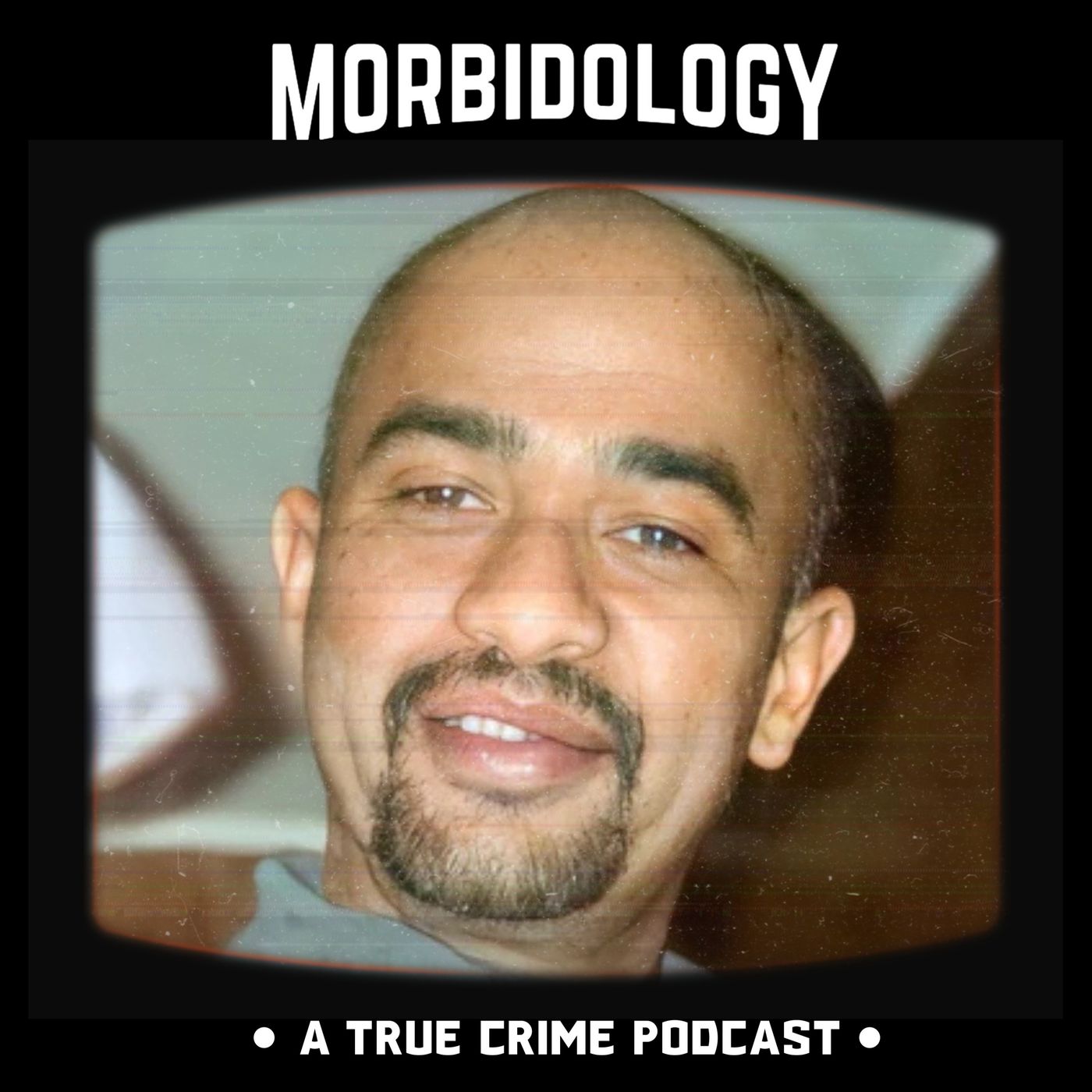
346: Roberto Caraballo
Episode Transcript
I swung the bat, I hit the post, I broke the bat.
He was kind of at his knees.
Speaker 2Grand Even in Michigan sits where the Grand River meets Lake Michigan.
It was founded in eighteen thirty five as a lumber town, a place where pine forests were cut and then shipped across the Great Lakes.
By the early nineteen hundreds, when the timber ran out, Grand Haven reinvented itself.
It became a resort town, a summer destination, a place where families came to escape the heat of Chicago and Detroit.
The lighthouse still stands at the end of the pier.
In summer, the beaches fill with tourists.
But drive just a few miles inland away from the lake and the vacation homes, and Grand Haven becomes something else entirely.
Its rural, quiet and agricultural.
Here the land stretches out in parcels measured by the acre.
It's the kind of place where people know their land intimately, where they walk it daily, check on it, notice when something changes.
On the afternoon of the eighth of May two thousand and two, a man drove his usual route through his property, but as he drove near the two track, he saw smoke.
The blueberry fields of West Michigan were preparing for another season.
Spring had arrived in Ottawa County, bringing with it the promise of the nation's leading blueberry crop.
The rolling farmland between Holland and Grand Haven was a patchwork of orchards and berry fields.
It was Wednesday afternoon on May the eighth, two thousand and two.
Around two thirty pm, A nine one one call came in to Ottawa County Central Dispatch.
The man on the other end of the line was Gordon Devrees.
He told the operator he'd found a body, a badly charred human body, on his property.
Gordon owned a sixty acre wooded parcel that sat about a quarter mile east of one hundred and fifty second the Avenue.
He used the land primarily for hunting turkey, and he checked on it daily.
That morning, he'd driven his usual route, a two track road that worn through scrub growth woods near one of his blueberry fields.
He turned from the country dirt road onto his property, passing the familiar trees, and that's when he saw it.
Something that didn't belong, something that his mind initially refused to process.
He just kept driving.
Only later, when Gordon circled back, did his brain confirm what his eyes had told him.
About fifty yards off Winning Street, near the two track lay the remains of a human being.
They were still smoldering, and they were burned beyond recognition.
Gordon was certain that the body hadn't been there the previous morning.
He called an eye one one report that he had found the body.
Speaker 3What do you mean, aboudy a dead person?
Okay, we're at okay, granted, even Tom chip uh huh uh.
Let's see one hundred and fifty second and winning.
Okay.
I brought one hundred yards to the eighth of one hundred and fifty second on Winning, east of one hundred and fifty second on Winning, yep, and I'll be there with a pickup setting waiting for someone to it, and then went there it.
Then it's in my uh inn sin right field and it's burned, and I work with there yesterday.
Do you take up to nailor nailer?
It's pretty badly burned.
Speaker 2Within twenty minutes of that nine one one call, the scene had been cordoned off with crime scene tip forensic exporths to send it on the remote location.
They moved methodically photographing the body is was found, documenting every detail before anything was disturbed.
What they discovered was disturbing.
The victim was an adult male.
The body had been set on fire at the precise location where it was found.
The trees and undergrowth around that were scorched.
Marks on the surrounding trees indicated the flames had reached about ten feet in height, but that was nearly all they could determine.
By side a loom, the body had been burned beyond recognition.
They couldn't even identify the victim's race.
They couldn't see his face, whatever made this person identifiable, whatever made him someone, had been consumed by flames.
But there were small clues.
It appeared the victim had been transported to the location in an army style foot locker.
It lay burned underneath his body.
He was wearing a TIMEX exhibition wristwash, and there were remnants of a black and tan pattern knit shirt manufactured in Oceanside, California.
His body was on top of a section of burned cushion, likely from a chair or a couch.
An accelerant had been used to feel the fire.
Somebody had wanted this body destroyed.
Somebody had wanted this person a raised, and they'd almost succeeded.
After the crime scene was analyzed, the body was transported to Blodge At Hospital in Grand Rapids.
The detectives knew what came next the difficult part, the part where they had to try and figure out who this person was.
Because you can't solve a murder when you don't even know the victim's name, The investigation got under way immediately.
Detectives needed to identify the body, and they knew that dental records would be their best chance.
The dental matching takes time, time to search records, time to make comparisons, time they didn't want to waste, so they started working other angles.
In the hours after the body was found, a missing person report came in.
For a moment, there was hope perhaps this was their victim, but as investigators drug deeper, it became clear that it was in a match, so they began to score missing person reports more widely.
Surely someone somewhere was looking for this man, Surely someone had noticed his absence, but there were no obvious matches, nobody who fit the description.
The detectives then reached out to the public for help.
Lieutenant Greggs de Gina addressed the media and said, we're screening calls, trying to get input from the public.
We're looking for someone who has knowledge of somebody who's been missing for some time or a few days.
While the phones rang at the Sheriff's office and autopsy was performed on the victim, results gave them a little more to work with, but it wasn't much.
The victim had died from repeated blows to the head with a heavy object.
He'd suffered four severe injuries to the left side of the head and another severe injury to the right side of the back of the head.
One area of the left side had depressed, fracturing from an external blue and it was driven into the skull and came into contact with the brain.
However, the extent of the burning may have totally destroyed certain superficial injuries.
There were rope segments recovered from the back of his neck, and it had been burned from the front.
The fire had been set after the victim was already dead.
He stood approximately five feet seven inches tall and weighed between one hundred and thirty and one hundred and forty pounds.
And then there was the dental work, the detail that should have made identification straight forward.
The victim had an upper dental plate, false teeth.
He also had gold capped teeth.
It was distinctive dental work, the kind of work that leaves a paper trail.
But unfortunately they had been fitted before a ten year old law that required dental plates to have the name of the owner engraved on them.
Lieutenant Dell South was confident, as he said, there has to be dental records someplace because of the work that was done.
So detectives checked with local dentists, but they couldn't find the match.
Some suggested that the work had been done south of the border.
Lieutenants South remarked, could it be someone up here that nobody knows?
That's possible.
Could it be somebody from out of state?
Yeah, Identifying a body found in a different state from where somebody went missing is extraordinarily difficult.
Missing person reports or filed locally.
Dental records are stored locally before nationwide databases and digital systems.
Connecting these dots across state lines required someone a detective, a dentist, a family member to actively make that connection.
If a person disappeared in one state and their body turned up hundreds of miles away in another, they could remain unidentified for years, sometimes forever.
They became what detectives call John Does or Jane Does, nameless victims, their stories, untold, their killers, unpunished.
In two thousand and two, those databases were improving, but they weren't perfect, and this victim, whoever he was, had fallen through the cracks.
The detectives sent out a statewide broadcast asking police departments with missing persons who fit the description to get in contact.
They waited for the phones to ring.
Meanwhile, they pursued another angle.
The body had been found near several nurseries aka businesses that employed migrant workers.
Migrant workers were particularly vulnerable.
They moved frequently off and lived far from family, sometimes lacked documentation.
If one went missing, it might be weeks or months before anyone noticed.
Before anybody filed a report.
Investigators interviewed workers.
They checked with nursery managers.
They asked if anyone had failed to show up for work, if anyone had simply disappeared, but again nothing.
No migrant workers had been reported in the area.
Detective set up a direct line on the eleventh of May, as they waited for tips of forensic anthropologists became involved in the case.
He said that the victim was a white or Hispanic man somewhere between the ages of thirty five and fifty five.
His information was placed in a national database extended to law enforcement agencies throughout the United States, but still it seemed that nobody could identify him.
As days turned into wigs, the case began to cool.
The public's attention drifted, the phone stopped ringing.
The detectives continued to work the case, but leads were drying up.
A two thousand dollars reward for information was announced.
Then in July, a composite sketch if the victim was released, a face constructed from measurements and educated guesses, an approximation of someone real.
But the tip line wasn't flooded with leads.
Detective Bob Donker, who was leading the investigation, encouraged anybody, even those who thought their information might not be significant, to call.
He said, we would rather do the extra work.
The composite sketch was shared far and wide.
Detectives posted it at local fat food restaurants, convenience stores, and gas stations, Hoping that somebody somewhere could identify him.
They covered the area, Holland, Grand Haven, every small town in between.
The Whigs gradually turned into months, and the man remained unidentified.
By September, a decision had to be made.
The body couldn't remain at the hospital indefinitely.
Someone whoever he was, deserved better than a refrigerated drawer.
The man became known as Jack in the Box, and on Friday, the twentieth of September two thousand and two, Jack was led to rest at Lake Shore Cemetery.
The rain was heavy that morning for Ottawa County Sheriff's detective stood in the downpour along with a funeral director and a clergyman.
They were the only ones present.
There were no friends, no tearful stories of remembrance, no family to say good bye.
Reverend Jim Yerk of Jamestown's Baptist Church delivered a short eulogy.
He felt that the man deserved that much.
He'd never performed a funeral service for an unknown victim before.
He said, we might be able to conclude he was in the wrong place at the wrong time, maybe doing the wrong thing.
We just don't know, he paused, and then added, but God knew every moment of this man's life.
There's no mystery to him.
He knew exactly who this man is and who his relatives are.
The reverend printed a short program for the funeral, just in case Jack was ever identified and his family wanted one.
Jack was then buried in a simple casket made of particle board and cardboard.
It was placed in a plot in a brushy area just off the well manicured lawn of the main burial grounds.
The casket, heart, and transportation were provided by Fred vander Lan, owner of vander Land Funeral Home.
He said, it's not a matter of him having a poor burial.
He at least had a proper burial.
This is somebody You can't just throw them in the ground and walk away.
They deserve more dignity than that.
This is somebody's child.
Somebody has to be missing him somewhere.
After the service, Detective Jack Brack acknowledged the sadness of it all that a man was buried with no friends or family.
He said, I've been the lead investigator in unsolved thomicides.
It's something that never leaves you.
Burials of unidentified murder victims were uncommon in West Michigan.
Lieutenant South said he could only remember three, including Jack's.
The others were in nineteen sixty seven and nineteen ninety three.
So Jack went to his grave and unknown man, and the months gradually dragged on into years.
With each year that passed, the case only got colder.
The detectives moved on to other investigations, other murders, other victims with names and families and lives that could be reconstructed.
But Jack remained a mystery, a placeholder, a name that wasn't really a name, at least until two thousand and five.
In the fall of two thousand and four, doctor David Shock, an associate professor of communication at Hope College, proposed an unusual assignment to his documentary class.
The year before, his students had produced a documentary about the nineteen seventy nine abduction and murder of Hope's student Janet Chandler, a case that had remained unsolved for twenty five years.
That documentary had won awards and more importantly, renewed interest in the case.
It would eventually play a role in law enforcement, forming a co case team to reinvestigate the murder.
Now, David Shock wanted to try again, this time with Jack.
Sheriff Gary Russima was willing to cooperate, willing, in fact, to take some risks.
His goal was to identify the victim, and if a documentary d could help accomplish that, he'd provide unprecedented access.
Doctor Shock later said, there was no questions off limits in our pursuit of this story.
There was no question that wasn't answered.
In my career relating stories, I've never encountered this level of access.
It's unprecedented.
So the students got to work.
They toured the site where Jack was found.
They examined all of the evidence.
They viewed the grime scene, photographs and video.
They interviewed detectives who worked the case.
Then they spoke with doctor Steven Cole, the pathologist who performed the autopsy.
The result was a fifty minute documentary that was titled Jack in the Box, and it was extremely graphic.
Doctor Shock warned, you don't want to watch this if you have a sensitive stomach.
Certainly this is not appropriate for young viewers, but it's likely not appropriate for some adult viewers too.
People see stuff like this every week on CSI or law and order, but this is real.
In May of two thousand and five, Jack in the Box premiered at the Knickerbocker Theater in downtown Holland.
The screenings ran Thursday and Friday, May fifth and sixth, at seven and nine pm.
The public was invited and admission was free.
The response was immediate.
People came, they watched, they were horrified and moved.
Later that year, on the twenty fifth of September, the documentary aired on WGVUTV in Grand Rapids and WGVK TV in Kalamazoo at eleven thirty pm.
Lieutenant Steve Crumb commanded the students for their work, stating, we thought they did a quality job.
Only detectives were so impressed, in fact, that they put the documentary on DVD and sent copies to sectors of Mexico, Guatemala, and other countries south of the border, places from where the victims have come.
They hoped someone would recognize him, would come forward, would give Jack his name back.
But the months passed, then a year, then two, then five, then ten, and Jack remained unidentified.
The documentary had done everything it could.
It had shown people the reality of the case, the horror of it, the sadness of it, the injustice of a man dying and being buried without a name.
It was twenty fifteen, ten years after Jack and the Box had premiered at the Knickerbocker Theater, ten years of the documentary sitting online, waiting, ten years of Jack's grave at Lakeshore Cemetery, a plot in the brushy area, with known to visit it, ten years of silence, and then in April of that year, Detective Bob Donker of the Ottawa County Ship Griff's Office received an email that would change everything.
It simply read I'm scared.
Then came another which read I've got information about a case somewhere in Texas.
A woman had been searching online.
Perhaps she couldn't sleep, Perhaps she was thinking about someone from her past.
Perhaps she typed in the right combination of words burned body, Michigan footlocker two thousand and two, and the documentary appeared in her search results.
She clicked play as she watched.
As she saw the crime scene photographs, the metal foot locker, the composite sketch, something clicked into place, a terrible recognition, a memory she had been carrying for thirteen years, she knew who Jack was.
She believed that Jack in the box was her stepfather.
Her name was Diane de charm and the man in that foot locker was Roberto Carabello.
He'd been thirty seven years old at the time of his disappearance in two thousand and two.
His family was from the Dominican Republic, but he had come to Michigan and made a life there.
He had a wife and daughters.
Just before Roberto disappeared, he had been released from federal prison.
He was trying to start over.
He started working two jobs, one as a handy man and another the local newspaper.
He returned to his house on her Ratio Street in Charlotte, Michigan, a modest home around one hundred fifty miles northeast of Detroit.
The house was crowded.
There was his wife, Beverly mc callum.
She had two daughters from a previous relationship, Deand who was twenty one years old at the time, and eleven year old Tasha.
Then there was nine year old Sicily, Roberto and Beverly's own daughter.
It was a blended family, a complicated one at that.
Then one day after Roberto returned home from prison, he simply disappeared.
Cecily remembered that day she'd come home from school and her father was there.
Her mother, Beverly, told her to go to the neighbor's house to bake cookies.
Her father had wanted her to stay home, but her mother was insistent that she leave.
When Cecily arrived back home, her father was gone.
That night, she was rushed in the middle of the night into the family's farm.
She said they were driving for quite some time, and she eventually fell asleep in the back.
She woke up to the sound of an explosion.
Speaker 4I noticed my half sister running from the woody area away from the fire.
Our van was already pretty much moving.
The door was open, and she was trying to catch up to the vehicle as if it was a getaway van.
Before I could ask or even be too concerned about what was going on, my mother told me to lay back down, go to sleep, so I did.
Speaker 1Again.
Speaker 4I was used to the turmoil, so I was too scared to ask questions.
I laid back down and went to sleep.
Speaker 2The next morning, her mother, Beverly, told her that her father had abandoned the family.
That he'd left them, gone back to his old life of selling drugs.
It was strange because his car was still in the driveway years past.
Cecily grew up without her father, thinking that he had abandoned her, thinking that whatever happened that night in the woods, the explosion, the fire, her sister running, had nothing to do with her father's disappearance.
She was only a child, after all.
It was around two thousand and fifteen when Cecily decided to try and find him.
She reached out to his family in the Dominican Republic, hoping to reconnect with him, but she was told that they hadn't heard from Roberto since two thousand and two either.
That's when Cecily confronted her mother.
She asked her directly, and where's my father.
Beverly looked drained.
She said to her daughter that Roberto was dead.
But not only that.
Beverly said that she had killed him.
She said she pushed him down the basement stairs of their home, then bade him repeatedly on the head with a hammer.
The attack was so violent that the hammer had become stock in Roberto's skull.
But Roberto wasn't dead yet, Beverly said She then wrapped a plastic bag around his head.
The wheels of justice were finally moving, and Roberto's family were putting two and two together.
Detectives Bob Donker of Ottawa County and James matt Bay of Easton County traveled to Houston.
They needed to interview Deane de charm and Roberto's daughter, Cecily.
Cecily described the disappearance of her father, the cookies at the neighbor's house, coming home to find him gone, the strange middle of the night, night drive, the explosion in the woods, her sister running back to the van.
Then she stunned them.
She said that her mother, Beverly, had confessed to killing him, but that wasn't all that Cecily told them.
She said that Diane was there, that she had seen her running from the woods as the fire erupted behind her.
The detectives turned their attention to Diane.
According to Diane, her memory was hazy because of drug use, but she described what she could remember.
She said that Beverly and Roberto had gotten into an argument and Roberto escaped by going into the basement.
She said that Beverly became increasingly angry and said she was going to kill him.
Beverly went downstairs, Diane said, and returned a few minutes later and said she had just killed Roberto.
According to Diane, there was another person present that night, Christopher mac millan, often stead at the family's home.
He'd been there when the murder occurred.
After the conversation, detectives didn't believe that Dian was telling the truth.
Detective Jim might be recalled.
By the end of the interview, it was clear she was in on it.
They believed that she too, was somehow involved in Roberto's murder.
Cecilia told them about the strange ride in the van into the woods.
The detectives needed Diane to tell the truth, so they spoke with her once more.
They said that there were numerous traffic cameras in Ottawa County and asked if the footage would show her in the van along with Beverly as Roberto was disposed of.
It was a bluff, but it worked.
Dian broke down.
She said that she might have been in the van that night, that she might have helped get rid of Roberto.
The detectives wanted to speak with Beverly, but she was already gone When she learned that the investigation was progressing, She moved to Pakistan.
Her family said she'd met a man from there on the internet, packed up her life and fled, put half a world between herself and what she'd done.
The investigation took detectives across the nation.
Eventually did the scene of the murder in the basement of a residence on Horatio Straight in the city of Charlotte.
Detectives and forensic experts descended on the family's home.
Years had passed, but if blood had been spilt there forensic science could hopefully find it.
In the basement, they spread luminol, a chemical that makes blood glue.
In the darkness.
The entire floor lit up.
It was clear that somebody had died there.
Police found remnants of Roberto's DNA in the basement, beneath pain on some surfaces, and a concrete patch on the floor.
A portion of the concrete was removed to be analyzed.
The sample was sent to the Michigan State Crime Lab, and when they couldn't complete certain tests, it was sent to an independent laborator, cyber Genetics.
The results came back definitive DNA was a match to Roberto Carabello.
Detectives then compared dental records of Roberto to the dental records of Jack in the Box, the gold cap, teeth, the upper dental plates.
It was a match.
Jack in the Box was Roberto Carabello.
After thirteen years, the man buried in the brushy area of Lakeshore Cemetery who finally had his name back.
There was another person detectives wanted to speak with, Christopher McMillan.
They were able to track him down through Facebook.
He was living in Grand Rapids in Michigan, just forty five miles from where Roberto's body had been found burning in that foot locker thirteen years earlier.
Detectives arrived at his front door.
He didn't seem too surprised to see them.
It was his if he already knew what they were there for, as if he'd been waiting carrying the weight of what he knew what he'd done.
He sat down with the detectives and opened up.
He implicated not only himself in Roberto's murder, but the Anne as well.
He described how in early two thousand and two, he spent time with Diane and Beverly at their home in Charlotte around a week before Roberto was killed.
The two women told him they wanted to get rid of Roberto.
He said they wanted to do it in the basement.
They wanted to knock him unconscious and put a bag over his head to suffocate him.
He said that they had done a test run in the days leading up to Roberto's murder, a rehearsal for murder.
Then on the day, Christopher and Diane were in the basement smoking when the door opened.
Speaker 1The basement door opens, down comes Robert and Beverly was behind him and come down a few steps.
Robert down the stairs.
I swung the bat, I hit the post.
I broke the bat.
He was kind of at his knees and he wasn't really getting up.
He had his hands out like he was going towards Deaneen was right in front of him, and Beverly starts to tell Deaneen, give me the hammer, give me the hammer.
Daneen takes the hammer and with their right hand wants to hit him a couple times on the left side of his head.
Beverly jerks the hammer away and with their left hand on to the left side of the head, hits him like three or four more times until the hammer was in his head.
So he was on his knees with the hammer sticking out of his head.
I took the hammer, I pulled the hammer out.
I'm holding the hammer.
There's a hole about half dollar size.
I turned back around and there's a bag on its head.
Danien's behind him.
He's laying on its back with a rope.
Danian was holding the bag.
Beverly was sitting up on top of him to keep you from moving.
And he laid like that until the bag putn't moving in and out and he quit breathing.
Speaker 2After Roberta was dead, Dian and Beverly went to the store and got cleaning supplies.
They cleaned the basement and his remains were then stuffed inside the metal foot locker.
After that, they all climbed into the van, children included, and drove out to the blueberry field, where Roberta was jumped.
He was then set on fire.
In April of twenty nineteen, forty year old Christopher McMillan and thirty eight year old Diane de charm were arrested.
Seventeen years after Roberto's murder.
Fifty eight year old Beverly McCallum still hadn't been tracked on the Tectives believed she was somewhere in Pakistan and they were working with federal authorities to try and find her.
It was difficult because she had five or six aliases, different names, different identities, a woman trying to disappear.
Nevertheless, all three of them were charged with homicide, conspiracy to commit homicide, and disintermine a mutiliation of a body.
In October, Christopher macmillan appeared in court and pleaded guilty to the second degree murder of Roberto.
It was part of a plea deal.
He was sentenced to at least fifteen years in prison.
As part of the agreement, he needed to testify against Beverly and Diane, the two women who had planned it, the two women who wanted Roberto dead.
In February of twenty twenty, Beverly was finally arrested, but she wasn't in Pakistan.
She was tracked down to Rome after she and her teenage son checked into a hotel on the northwest Outskirts.
Italian hotels are required to register guests in an online system that's linked to ALICE database that revealed that Beverly had an Interpol arrest warrant against her.
After years on the run, years of new identities, new countries, new husbands, Beverly McCallum was finally in custody.
Dianne de charm stood trial before her mother in December of twenty twenty one, and the evidence against her was overwhelming, the confessions and the DNA evidence in the basement.
Christopher macmillan also testified against her.
He described the detailed planning of the murder, the test run, the hammer, the plastic bag.
She was found guilty.
Afterwards, prosecutor Douglas Lloyd said, I think what needs to be remembered here is that even if it takes twenty years to get a conviction, it's not okay to kill someone.
Diane was handed a mandatory sentence of life in prison.
After the sentence was handed down, Beverly was extra die to the UAS from Italy.
She was ordered to be held on a ten million dollar bond and was rand on charges of second degree murder a mutiliation of a balde.
The murder trial for Beverly McCollum began in March of twenty twenty four, twenty two years after Roberto Carabellu's murder.
Prosecutor Doug Lloyd said that she wanted to get rid of Roberto after he came home from prison.
Speaker 5On that day, though, people had already put a plan into place to kill him, and when he arrived home they put that plan in action.
Robert came in his home at three point thirty four Horatio and began to go to his basement.
As he started down the stairs, he was pushed at the bottom of the stairs.
People waited for him with a bat and a hammer.
A bat was swung, a hammer hit him so hard that it stuck in his head.
To finish him off, a bag was placed over his head and a rope around his neck.
Robert died in the basement that day.
Speaker 2He said Roberto being around was cramping her lifestyle.
He noted how she'd moved to Jamaica within weeks after Roberto's murder.
She'd met a new man she would later remarry and have a son with him.
Defense attorney Timothy Havis said that Beverly didn't have a role in the murder.
He said that it was all Dianne and Christopher, and that Beverly just got lured into helping dispose of his remains.
Beverly testified on her own behalf during the trial, and she denied that she had killed Roberto.
She said that it was Dianne and Christopher.
Speaker 6I remember Janine coming upstairs and she she said that she needed help.
Then something happened.
She said that we did then killed Rabert.
Speaker 5Okay, what time was this?
Speaker 6I left?
Speaker 3Okay, Robert?
Speaker 5Were you aware of anyone else in the house during.
Speaker 6That period of time?
I'm sorry, led two daughters?
Okay?
Speaker 5Was there any description of how this happened?
Was there any explanation of a circumstance?
Speaker 2He testified as well, describing the murder in great detail.
He said the Beverly and Roberto were always getting into fights before the murder.
Speaker 5Did Robert and the defendant argue a lot, Yes, verbal arguments, physical, verbal, physical and verbal?
Speaker 6Yes.
Speaker 5Did you ever see any physical.
Speaker 1I've seen a lot of running mascara, running man, her makeup.
Speaker 5Would that would be undefendant?
Yes, like she was crying.
Yes, But did you actually ever see any physical altercations between its?
Speaker 1Never saw him hit each other.
Speaker 2Cecily Caraballo, who was now thirty one years old, was called to testify against her own mother.
The jury deliberated for just two hours before they returned with a verdict.
They found Beverly McCallum guilty of second degree murder.
On the twenty third of May twenty twenty four, judged Johnis Cunningham sentenced Beverly to forty to sixty years in prison.
Beverly, who was now sixty three and sat in a wheelchair at her sentencing hearing, would likely spend the rest of her life behind bars.
At the sentencing, Cecily spoke on behalf of her father, who she said had been ripped from his family.
Through tears, she said.
Speaker 7While you may have taken my father's life, you will have no hand in his legacy.
I am his legacy, My children are his legacy, and his legacy will live on through us.
Your legacy will end with you, Beverly.
Speaker 2Well, that is it for this episode of Morbidology.
As always, thank you so much for listening, and I'd like to say a massive thank you to my new supporters up on patroon Bean Karen, Angie, Gwen and Sarah.
The link to patron is in the show notes if you'd like to join, and I upload Adfrey in early release episodes behind the scenes, and I also send out some merch along with a thank you card.
I also do bonus episodes of Morbidology Plus that aren't on the regular podcast platforms, and these are also available over on Apple subscriptions for those who like to listen there.
Remember to check us out at morbidology dot com for more information about this episode and to raid some true crime articles.
Until next time, take care of yourselves, stay safe, and have an amazing week.
Speaker 1M