Inside The Kidnapping Where 26 Kids Were Buried Alive
Episode Transcript
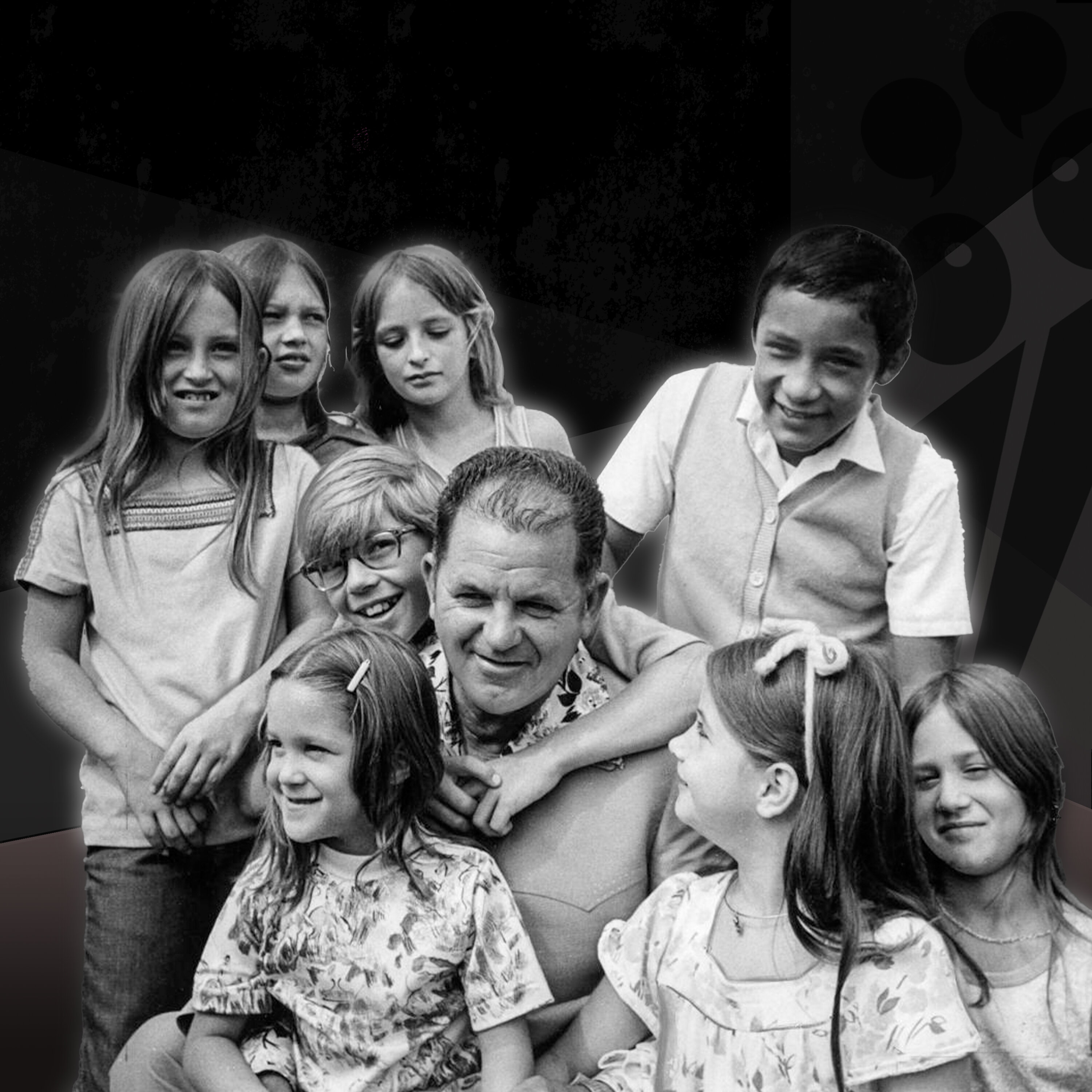
On July fifteenth, nineteen seventy six, kids from a school in the tiny regional town of Chowchilla, more than three hundred kilometers north of la in California, are getting ready to head home from summer school.
It's hot and they've been swimming that day.
Some wearing their swimsuits still holding their towels, jump on the bus that will take them back home to their families.
Sitting behind the wheel of the bright yellow school bus is Frank Edward Ray, known to everyone in town as Ed.
All the kids know and love Ed.
He's been driving the school bus for so long he knew the kid's parents from when he drove them when they were kids too.
They climb aboard and settle in for the trip back home.
They turn onto Treeline Avenue twenty one, where the bus abruptly comes to a stop.
Sitting in the middle of the road is a white van.
Its door is wide open and it's blocking the bus's path.
Ed waits patiently.
Maybe they've broken down and need a minute to push the van out of the way, But instead, a man wearing a stocking over his face and holding a sworn off double barrel shotgun emerges from the van and points the weapon at Ed through the driver's window.
Open the door, he commands, and moved to the back of the bus.
I'm Claire Murphy and you're listening to True Crime Conversations, a podcast exploring the world's most notorious crimes by speaking to the people who know the most about them.
When the gunman boarded the bus alongside another to drive it away from the scene, the twenty six kids on board and Ed the driver had no idea where they were headed or why.
Pretty soon after they'd been intercepted, the bus, followed by the van that had stopped them on their journey, was eventually driven into the dry bed of what's referred to as a slew, a natural irrigation channel with sky high bamboo growing in its sandy bed, a perfect place to hide a bright yellow vehicle of that size.
Another van was there waiting for them, and one by one, the children and Ed were transferred into the two vehicles.
The windows inside were blacked out, the interior line with soundproofing their ability to communicate with their kidnappers.
Cut off by plywood barriers.
They could see nothing, but they could hear each other.
Some of the children were crying and calling out for their mothers.
Some threatened the kidnappers with the wrath of dads who would not rest until they were found and justice handed out.
Others sat in silence, too scared to make a sound.
The next more than thirty hours would leave those kids with a lifetime of trauma that they still deal with to this day, a fear stemming from the time that they were buried alive.
Fox News Channels San Francisco based senior correspondent Claudia Cowan is the host of the podcast Nightmare in Chowchilla, telling the chilling story of twenty six children one bus driver held for ransom by men with a very surprising background.
She joins us now, Claudia, thank you so much for joining us to tell us the story about the Chowchilla bus kidnapping.
I would love to first get your perspective on what the town of Chowchilla is actually like, because you have physically been there, although it was, you know, forty five years after this incident occurred.
But do you feel like it's changed a lot, as those small regional towns tend to not do since the nineteen seventies when this happened.
Speaker 2Well, it's still an agricultural, mostly farming community.
It's still a small town.
It's got that small town charm and feel.
A lot of American flags, a lot of churches, not many buildings over three stories tall.
But obviously you have a lot more retail, a lot more hotels, a lot more businesses coming in.
But it really is still quintessential, you Knowentral Valley of California and the vibe, the smells, the heat during the summer, you know, and I was there in July and it does get hot and you know, the tumbleweeds are blowing around.
That I think was very much the scene back in nineteen seventy six as well.
Well.
Speaker 1Your podcast definitely sets that scene with you know, you can almost feel the heat through the audio because there's like the crickets chirping in the background and you can feel that kind of it's very Australian to hear that too, in that heat of the middle of summer, which is when this occurred.
When these children were kidnapped from their bus ride home.
They're on summer camp and then they're transferred into vans and taken away.
And you did actually speak to at least three of the children who were on the bus that day, Mike, Larry and Jennifer.
Can you describe from what they told you the conditions inside those vans when they were first kidnapped?
Speaker 2Oh?
Well, the vans were black.
All the seats had been taken out of these vans and then plywood or paper or something was put in front of the windows so that there was it was completely pitch black in there, and there were there was no water, no food, certainly no bathrooms.
At one point, Jennifer remembers, the vans stopped and she smelled gasoline, so they obviously fueled up during their eleven plus hour jaunt, with no idea of where they're going, why they've been taken, and the little you know, this was summer school and a lot of the kids in these vans were little, I mean, you know, five, six, seven years old, and they were all clinging to each other, and they were clinging to this bus driver Ed Ray as the only other adult, and it was just frightening for them.
I mean you imagine a child's worst nightmare, you know, locked in a moving car with no idea, where you are not being able to see, getting no breaks, very little air, no water, no food.
It was just horrendous for these kids.
Speaker 1It's interesting to the way that the kidnap is transferred them from that bus to those vans, because it really left little evidence for the police when they did actually locate the bus.
Speaker 2Well, one of the vans had somewhat side swiped the bus and left a little bit of a blue or green, dark colored paint on the bus, So officials knew that they were looking for a vehicle that might be a dark color.
But what's interesting is that shortly after the discovery of the bus in that river slough, it rained and that little bit of evidence, that little discoloration of paint was washed away.
This was nineteen seventy six and forensic evidence gathering has changed a lot.
But it's a good thing they found that bus when they did, so that they knew that they were going to be looking for a dark colored vehicle.
Speaker 1So these kids in these vans, as you mentioned, it's the middle of Samma, it's very hot.
They haven't been given a break to go to the toilet.
Even they're having to do that in said the van with they literally cannot see their hands in front of their faces.
Nearly twelve hours passes and they finally pull up.
What actually happens to them when they arrive at their destination?
Where even are they?
Speaker 2So they end up after this long, you know, eleven hour drive, just willy nilly around northern California, they end up in a rock quarry in a city called Livermore.
And this rock quarry was owned by one of the kidnappers father fred Wood's father owned this rock quarry.
Of course, the kids and ed Ray have no idea where they are, but they're ordered to get out of these vans, and one child at a time is taken out of the van and ordered to climb down a ladder into a hole that's been carved out in the ground.
And this is a gunpoint, mind you, These kidnappers have guns.
And so one by one the children come out.
They are told to say their name and to give some sort of an article a personal effect to their kidnapper, and then they are told to climb down a ladder into another larger van, one big moving van as it turned out, that had been buried under the ground inside this rock quarry.
So one by one the kids all climb down the ladder, and after the last one, the kidnappers throw down some flashlights, and they pull up the ladder and they seal up the top hole with a manhole cover, and then they put heavy, heavy truck batteries on top of the manhole cover, and then they build a box and fill it in with dart above that.
So essentially, these twenty seven people, these twenty six kids and their bus driver are buried alive.
It's just like, you think about this, right, and you think, you know, in what nightmare scenario does something like this happen, But it happened to these kids.
It's just incredible.
What happened to them.
Speaker 1What did these survivors, he spoke to, describe the conditions as being like when they were inside that moving van under the ground.
Speaker 2Well, at least in this situation, they had some light, They had some flashlights, and they had some batteries for these flashlights.
There were a tables set up with some cereal cheerios, life cereal things like that.
There were jugs of water, and there were a lot of mattresses, so you know, clearly this had been planned out for some time.
Also, some makeshift toilets had been kind of carved out in the wheel well of the tire of this moving van.
That had been buried.
So they did have you know, if you can call them amenities, I don't know, but they did at least have food and water and light, and there was also a fan to recirculate, so they had some sort of air to breathe.
But I tell you, the batteries on you know what started to happen over time.
The dust started to fall, that fan started to not work so well, the batteries you know, started to go out on these on these flashlights.
So so the the these small creature comforts did not last a very long time.
And of course the kids went through the water and the food right away because they were starving.
You know, they had been on their way home from summer school and hadn't eaten probably since lunch that day, and now it's late into the night and they're probably starving.
So all of all of the food and water disappeared pretty quickly, and then the lights started to go to.
Speaker 1You're listening to True Crime Conversations with me, Claire Murphy.
I'm speaking with journalists Claudia Cowen, host of the podcast Nightmare in Chowchilla.
Up next, Claudia tells us how exactly police were able to start investigating a case as unusual as this one.
So while this is happening, what's happening back in chow Chilla.
The bus is found fairly quickly, as you mentioned it rained, so some of the evidence gets washed away.
What are the parents being told?
And how a police actually even starting this investigation because it is such an unusual event.
Speaker 2Well, when they found the bus kind of shielded in this river slough and no kids on it and no bus driver, the parents were what in the world is going on here?
Where are they?
So the sheriff at the time was this real character named Ed Bates, and he always wore a cowboy hat and he had, you know, a hole stern cowboy boots.
He was the right man for the job, and he was on this case right away, and he told these parents right away, we're going to find these kids.
And so he you know, there was no cell phones and no GPS in those days.
He had to rely on relationships and gut instinct, and he had a lot of luck on his side.
He put out something of a description because they did know that there were two tracks of tire tracks leading away from the bus, and they knew that they were looking for some sort of a dark colored vehicle.
That information went out and a real estate woman who was very smart, and of course this is all over the news right now, but she remembered seeing suspicious men acting weirdly around a couple of dark colored vans and she wrote down the license plate.
If you can believe that, that's the luck part of this whole story.
So then from that Ed Bates was able to track down where these vans originated, who they were sold to.
They had some names to go on, and that was definitely that part of the investigation.
Meantime, the kidnappers had been driving around, obviously with these kids all night in these vans, and they were trying to call into the sheriff's office to make a five million dollar ransom demand because they felt that this would be easy money.
They had heard that California had a state surplus, a budget surplus of five million dollars in that the money wouldn't be missed.
But because all the media and the parents and all the attention on this store sor was tying up all the phone lines at the police department, the kidnappers couldn't get their calls through, if you can believe it, So they decided to go back to their homes closer to San Francisco and take a nap, and that's when Mike Marshall and Ed Ray managed to pull off really the miracle of the century and devise an escape from this underground tomb where they've been buried alive.
Speaker 1I think this is something we have to understand too.
It's nineteen seventy six.
So the police department that they're calling into, which is also in a regional area so it's not a big centralized city, had like one or two phone lines at the time, and you've got twenty six missing kids with twenty six sets of parents and other family and members of the public all calling into that one police station.
So the chances of those kidnappers ever getting through on that phone line were almost.
Speaker 2Zero, exactly right they had.
They kept stopping and trying to phone in theirs and they just couldn't get through.
So they went home, took a nap, and when they woke up and turned on the television, that's when they got the shock of their lives.
Speaker 1Yeah, Okay, we'll find out who these people are in just a second, but let's go to what actually is happening underground.
So twenty six kids and their bus driver ed.
They first of all go through the motions of like, oh my god, this is it, We're going to die to then at least one of those kids saying not today, can you talk us through exactly what happens in that moment?
Speaker 2So yeah, and they would console each other by singing and praying together.
I think they took turn sleeping when they could.
So the kidnappers had done a dry run on this and they had really, you know, specifically chosen this particular bus to take hostage because they saw that it was almost always a filled with little kids.
What they didn't count on was on July sixteenth, one kid named Mirk Marshall would be on this bus.
And he was on this s bus because he was in trouble with his mom and his mom was I'm not picking you up.
You got to take the bus home from summer school.
So Mike Marshall ended up being on this particular bus on this particular day.
And he's not a little kid, and he's fourteen years old, and he's strong.
He's a rodeo, a rodeo kiddie comes from a rodeo family.
Strong, strapping kid fairly new to Childchilla, braver than anybody I've ever met.
And he's on that bus that day.
And Larry Park, another survivor that I spoke to, said he doesn't know what would have happened if Mike Marshall was not on that bus that day, But because he was on that bus that day, Larry is alive.
So ed Ray, the bus driver, was pretty much of a mindset of we're down here, kids, get used to it, We're never getting out.
Say your prayers.
In his words, according to Mike and Larry, we're going to kick the bucket down here.
So Mike Marshall said, well, if we're going to die down here, we might as well die trying to get out, And he found some deep reservoir of courage and bravery to devise a plan to break apart the mattresses, the box springs and to stack them up on top of each other so that he could climb and try to touch the ceiling and try to figure out about this manhole cover that was covering the hole where the latter had been where they all climbed down.
And over a period of I think thirteen fourteen fifteen hours, this kid, Mike Marshall kept pushing at the manhole cover, and remember they're heavy truck batteries on top of it.
But he managed, ever, you know, one inch at a time, to move this manhole cover to the side, and then the kids were cheering him on.
Dust was falling, and all of a sudden the manhole you know, and he slipped his arm even past this manhole cover.
It could have if it had fallen, it would have broken his arm off.
These things are so heavy.
Anyway, he finally manages to move the cover aside, get the batteries off, and then he's looking at the inside of this box that had been built on top of this whole manhole cover battery setup, and he takes some plywood from the mattresses that the kids had broken up, and he's digging at this dirt and it's falling down on him, on everybody, but he keeps digging, digging, digging, and finally the last piece of dirt falls in, and as Larry describes it, it was a shaft of sunlight that with the dust in the sunlight sparkling and fresh air.
He said, in that moment, there was hope.
There was hope.
And after that Mike was able to poke his head out of the ground, look around, see there were no kidnappers there, and finally start pulling the kids out one at a time so that they got above ground.
Every one of those kids survived, and ed Ray survived too, And it was just a miracle that Mike was on the bus that because the next oldest kid, I think, was like ten, and without Mike, there was just no way that they would have been able to devise that escape.
And clearly the kidnappers had gone home and gone to bed with you know, no care in the world for these kids.
It was just a miracle that they all got out.
And what's interesting when they finally did make it back to Chowchilla, one of the reporters there wanted Mike because all the kids were like Mike, Mike, Mike, and one of the reporters was about to get the story from Mike himself, and I believe it was the school principal who said, hey, enough you reporters, these kids have been through enough.
Let Mike get his rest, let them be with their families.
And you know, Mike was listening to the grownups in the room and all the kids.
That's what they did and Mike never got to tell his story.
And so all the people, all the reporters, the school, the parents, they all thought that it was because of completely because of ed Ray that they escaped from this underground dungeon, this tomb, when in fact, there were other heroes that day.
I don't want to discount ed Ray, not at all.
He was a huge part of all these people getting out, but really the credit should go to a large, large extent to this kid, Mike Marshall.
Speaker 1Well, let's go back to the kidnappers for a moment.
What do we know about them and why were they motivated to actually do this?
Because it was so premeditated.
They put a lot of effort into kidnapping these kids.
Speaker 2You know, they did so.
The ringleader was this man named Fred Woods.
He's twenty four, and he gets his buddies, these two brothers, James and Richard Schoenfeld, twenty two and twenty four.
And you know what's interesting is that all three of these young men came from well to do family and lived in Portola Valley, which is a very wealthy enclave of the Bay Area.
The Schoenfeld's father was a doctor, and Fred Woods his family, you know, struck it rich during the during the gold Rush, and had a lot of money and owned land and all kinds of real estate interests.
And of course this rock quarry in Livermore where Fred Woods had worked, and that's why he knew it well, and that's why he decided to bury this load of kids there.
But they, you know, they were scrappy kids.
They often were in debt, and they'd made some bad investments over time, and they wanted some quick money.
I mean, that's the bottom line.
They really wanted some quick money.
And they thought that kidnapping a busload of of helpless, defenseless little kids precious lives, you know, they thought precious lives for you know, lots of millions who wouldn't fight back or resist would be the best way to do it.
And so that's that's why they devised this plan.
And again about this five million dollar budget surplus, that that's how they struck on the number of a five million dollar ransom.
Speaker 1What's really interesting is when police do finally actually track them down and they go through their home, the sheer amount of evidence that they found is quite amazing.
Speaker 2Really.
It is, oh, diagrams on like fast food wrappers, I want to say, or bags of fast.
These kidnappers were very organized in some ways and you know, Keystone cops in other ways.
So yes, lists of how they were going to pull this off, what they were going to do.
Eventually they were going to set the kids free.
But there was a lot of evidence, just a treasure trove of evidence.
And of course when the kidnappers realized that the kids had escaped, they all fled.
They all tried to escape to Canada or to various parts.
Eventually, Richard Schoenfeld, the younger brother, a few days later, he turned himself in.
You know, he was young, just twenty two years old.
You think about you know, these guys were young.
And then the other two were caught within days as well.
There was not a long manhunt that stretched out for weeks and weeks.
It wasn't like that.
These kidnappers were found pretty.
Speaker 1Quick after the break.
We hear what happened when police finally tracked down the kidnappers and what evidence police found in their home.
What was their trial like, because I understand some charges were brought against them that at that time in nineteen seventy six, required a lot to be proven.
And so that's why they first of all ended up with life without parole.
But then that change, didn't it?
Speaker 2It did, It did, and we know so much more today about childhood trauma.
But back in those days they were sentenced to life without parole because there was a charge of bodily injury.
One of the chill on the bus, Jennifer Hyde Brown, had suffered an injury to her foot or her ankle.
But later on appeal, the defense argued, well, it wasn't that serious, and none of the other kids were injured, so really that point that led to the life in prison without parole should be dismissed, and a judge agreed.
So now their sentence is a life in prison with the possibility of parole.
And what we know now, of course, is that kind of trauma does cause physical injury to the brain.
It may not be a mark on the skin, but that was, you know, and all these survivors have had some degree of trauma later in life.
But at the time it was, oh, they're young, they're little, We'll just put them on a trip to Disneyland and they'll forget about it and move on with their lives.
But of course now we know so much more and especially based on studies of these particular kids that were kidnapped about child trauma and the real lasting, you know, physical and emotional damage that something like this can cause and did cause in this case.
Speaker 1We did speak to some of the survivors.
What did they explain to you was their experience like after going home after everything had happened.
Speaker 2Well, Jennifer Hyde Brown, who was I think she was just nine years old to this day, she has tu She lives in an area of the country where there's tornadoes and she sometimes has to go down into storm cellars.
She needs to fortify herself with a stiff drink before she does that.
She never sleeps in the dark.
She always has a light on.
She doesn't like airplanes or elevators or any kind of enclosed spaces.
That has been part of her lasting trauma.
Now with that said, she's raised a beautiful family and has a thriving career, so she's doing well.
But those are just some of the things that she's still dealing with to get over that trauma.
And as for Larry and Mike, you know, it's really tragic, you know what happened with them because they both fell into into alcohol and substance abuse.
Especially, Larry had demons haunting him for many, many years and was in and out of institutions and recovery homes.
He was getting into fights and it was really really bad until he rediscovered his faith and went into a Christian ministry to serve others.
And what's interesting with Larry is that he became involved in what we're calling restorative justice, where he felt the need to meet these kidnappers that had caused him so much distress as a young man, and he did.
He met with them and he forgave them.
But what's really shocking to me is that he told these kidnappers of his that he needed them to forgive him for hating them for so many years and being so angry with them for so many years.
He says, I was your prisoner for thirty hours, but I hated you for thirty eight years and no one deserves that.
Do you forgive me?
And this kind of healing that he needed to do is really quite astounding.
Mike Marshall doesn't quite feel the same way, although he has found his faith too and is it about christian But he's not quite ready to forgive these men the way that Larry has, but it was really something to see.
Now, as your listeners may know, all three men are now free on parole, living somewhere in northern California.
We think the details of where they are and what they're doing have been kept very private, like no information really on what they're doing, except we know they've stayed out of trouble.
They haven't been arrested, no court hearings, anything like that.
But Larry told me that once enough time had gone by, he wanted to take Fred Woods out for a steak dinner and talk to him and just kind of get to know this man that has loomed large over his whole life.
I don't think that has happened yet.
I think Larry would like to find out where Fred is, and yet he just hasn't found out that information yet.
But I just thought that was so interesting.
That was so interesting.
Also, in the aftermath of all of this, Ed Ray went right back to work driving that bus, same bus.
He went right back to work driving kids.
That's what he loved to do.
And years later, after he retired and he found out that the bus was heading to the junkyard, he bought it.
And I always thought about that connection he had to that school bus and his need to to keep it safe, and so he bought it and he put it in his barn.
I think it's been moved now to a different location, but I always thought about that.
Isn't that interesting?
Speaker 1It is interesting, and the fact that it's tied to such trauma now interesting that he still felt that connection to it even after everything that happened.
He mentioned that, oh, three of those men have been paroled now.
The Schoenfeld brothers got out earlier, and it seems like their life behind bars was failing on eventful.
But fred Wood stading for a lot longer, and he applied for parole, obtained times and was denied because he was running businesses from behind bas Is that true?
Speaker 2Yes, yes, yes.
When we originally did our podcast, we didn't think he would be paroled or come up for parole until twenty twenty four.
In fact, he was paroled in I believe twenty twenty two, after being denied like seventeen times.
But yeah, you know, he ran into some trouble behind bars.
I believe he was running a Christmas tree farm and he had a cell phone, and I think he was getting married over and over again.
And he didn't always have the warden's permission for some of the things that he was doing there.
And you know, as the district attorney or will say, it's like a preview of how somebody will behave once they're out of prison.
Is their history in prison and how they behave in prison.
So you know, it was a dicey move, but he is now.
He is now free and living a crime free life for as far as we can tell.
One thing that's interesting too, is that when he got out of prison, the first thing that he did after being behind bars more than four decades, he wanted to go to the beach, and so the police or whoever took him out of the jail drove him to the beach.
And you can imagine how that must have been for him after all those years behind bars, to feel his toes in the sand and to breathe that fresh air.
And now after that, we don't know where he is or the Schoenfeld brothers, they both had family, a large families that were willing to take them in and give them jobs and support them.
So it's likely that these men are all with their families.
Speaker 1What's been the lasting legacy on the town of Chowchilla after this happened.
I imagined the parents of not just those twenty six children, that the parents of every child who lived anywhere remotely close to this incident changed behaviors in the wake of this, or were at least more scared for their children.
But what's the lasting legacy of this kidnapping event on the town's there?
Speaker 2Well, I think across the country, because this was a huge national story really around the world.
Even I think that was the time after that where parents were, you know, telling their kids, you can't play outside after dark, you can't ride your bike, you know, if I don't know where you're going, we need to stay in touch with you more.
It was a loss of innocence in many ways.
And I think Chowchilla, you know, like so many places like Valdi's, Alaska.
You know, it will always be synonymous with this kidnapping, but it is a thriving community and people are moving there with their families, with their children.
There are parks there, including an ed Ray Park, and they celebrate ed Ray Day with the town coming out with a little parade for that.
But I think that, you know, it's a sad chapter, but in many ways, you know, this story could have turned out so much worse.
And there's a plaque in front of the police department with giant boulder, with a plaque with a picture of the school bus and the list of all the kids' names in ed Ray, and it's a beautiful commemoration.
I don't know how many young people growing up today even know about this story because it happened so long ago, more than forty five years ago.
But I know when our crew met with Mike and Larry on the forty five day anniversary in Chowchilla, there was really nothing happening to commemorate the day there, but I can tell you it was an emotional reunion, and especially for Larry to meet his hero, Mike Marshall, who helped save his life.
I asked Larry, how long has it been since you've seen Mike.
He's like forty five years.
Forty five years.
You know.
It's a little bit of a heart scratch think about that.
Speaker 1I must admit when I was listening to that episode of your podcast, I was in tears in the car just listening to the gratitude come from Larry and then the real kind of humbleness of Mike who I think sounds like he felt like he just did what he had to do in the moment.
He doesn't feel as heroic as Larry sort of holds.
Speaker 2Him up to be.
Speaker 1Do you find like in speaking to those two men that they're still kind of grappling with what their role was and the response was from that.
Speaker 2Day, absolutely absolutely.
I think they will always still be grappling.
It was nice to know that both of them at that time and hopefully still are sober, they're doing well in their recovery.
I think Mike appreciates, after all these years to tell his side of the sport, to have his side of the story told.
He's very humble, a little bit shy.
He has a support animal with him all the time, his beloved dog Blue.
I don't think he's one to clamor for attention, but I think now all these years later, it's not like stolen Valor here or anything, but I think he's glad that he's had a little bit more of the whole story come out.
And as for Larry, he was overwhelmed to meet the man he calls his hero and to thank him repeatedly, over and over, thank you, thank you, thank you, and also to try to impart some of his own personal belief that Mike could benefit from this idea of forgiveness just as he had.
I don't know.
We'll see.
We'll see where Mike goes with forgiving his kidnappers.
I think Larry might be maybe one other of the survivors has also forgiven them, because forgiveness is a tough thing for some people, but for Larry it was a life saver for him because he said, once he was able to forgive and let go of that anger and resentment, he was able to spell these demon voices that had told him so many terrible things and to do so many terrible things.
And he wanted Mike to know that part of his story, and he was glad to be able to share that.
Speaker 1Thank you to Claudia for helping us tell this story.
You can find the podcast Nightmare and Chow Chiller at the link in our show notes.
If you want to see images from this story, here to our Instagram page at True Crime Conversations.
True Crime Conversations is hosted by me Claire Murphy.
Our senior producer is Talie Blackman.
The group executive producer is Alaria Brophy, and there's been audio designed by Tina Madloff.
Thanks so much for listening.
I'll be back next week with another True Crime Conversation.
True Crime Conversations acknowledges the traditional owners of land and waters that this podcast was recorded on