Open Source And Auditable Chip Embedded Into Trezor Safe 7. Matej Zak and Tomáš Sušánka. #585
Episode Transcript
all right we are recording guys great to see you good morning no swearing from now on yeah hi thank you for having us yeah exactly it's usually a family show because lauren generally comes on to ask the first question uh but uh yeah she's not around today unfortunately but she'd like to know what's going on over your shoulder there thomas what do you have back there you have the plushie oh yeah and well she would have been drawn to that obviously because you know she's a young girl but uh the the little cabinet there i think that's pretty cool so for those that can you grab that and and just yeah that's gonna set this up nicely i think because what you have there is the cabinet i believe so for those watching on video this is the i hope you can see it well the history of evolution right the it's not a theory this is yeah exactly um so it's been quite some time since i saw that actually so let me let me check what was here actually yeah it's the the model one and and all the prototypes like this dates back to 2012 i think something like that right where there was this first prototype and then yeah it kind of evolved into yeah into the model one that you know there are also some metallic ones yeah i think this one was sold for one bitcoin and this one for for three bitcoins i think so maybe we should have kept the prices the same uh but unfortunately i yeah it's probably no one would buy that anymore that that was the price of a hardware wallet back in like two between 2012 and i think 2012 or 2013.
i think something like that yeah it was like a pre-order back in the time and i think it was one for the the white one and three for the metallic one we actually still have some of the screenshots screenshots of the early website with the prices and stuff yeah that's cool yeah you'll have to send me those uh perhaps i'll link them to the show notes if you've got them somewhere because yeah people for i mean that just goes to show you right like uh you were selling a hardware wallet back in the day around 2012 2013 and the price the equivalent price all you were actually selling them for bitcoin of course was one bitcoin yeah i think was it how much was it back then like 100 maybe um yeah i don't remember either i was we were we weren't at the company obviously at that time but i think it was around that prices uh 100 100 or something like that yeah well it was nice the reason i wanted to get you guys on was obviously you had the event a few months ago which was a big success where you showcased and launched the latest Trezor hardware wallet and to the casual observer on Twitter I think just you're mixed up with it being the launch of a new wallet that you know the latest upgrade i think a lot of people have missed you know the deeper story here of of the chip and how important that is and uh when and thank you for uh inviting me along i had a great time it was uh really cool i loved both of your presentations uh matthew you you had a great presentation which i'll come back to actually a nice bit of history and uh thomas you you talking about the chip and the challenges and everything that you guys went through to try and find, how do you make that leap forward rather than just the incremental upgrade?
How do you make a leap forward in privacy and everything related around the chip, which obviously, correct me if I'm wrong, but we've never had a free open source chip before.
Yeah, so maybe I can share just briefly the story.
So basically, we had the model one that we showed earlier, and then we followed up with the model T, and those didn't have a secure element.
And back in 2019, or something like that, we wanted to add one because that's where the industry was going, and we wanted to improve the physical security as well.
So we were actually looking into the secure elements that are on the market you know we did some research and like we we looked into it for a few months and at the end we found one that we simply believed uh you know fits our needs and you know like feature wise it looked pretty pretty good so we started to implementing that and yeah long story short after a few maybe weeks i don't even think it was months just after some security evaluation we were basically able to uh break it apart so to speak uh we we were not using any like hardcore hardware equipment you know there is a lot of like laser injections or some you know huge hardware equipments where you're doing some very sophisticated stuff we haven't done anything like that we just simply you know used some features that the chip offered and we abuse them in the cryptographic way to be able to withdraw any secrets that it was supposed to store very secretly, right?
And so that's the first part, right?
That we were able to, yeah, withdraw the secrets.
You've got this chip and you're testing it and testing it and testing it and you realize, oh shit, we can extract secrets from this.
So this is not going to be...
Exactly.
Exactly.
Without any, you know, information like the pin or something, right?
Like it was only just the chip and we're just like testing and we're able to withdraw it.
Yeah.
Wow.
And if I can throw a little bit of a Hollywood spice onto the story.
Please do.
And keep a long story long.
Yeah, sorry.
No, no, no, it's just...
So, so yeah, these specialized chips are protected as Tomáš said, or as we call him Sushi, because he's called Sushankas, here comes Sushi.
Sushi, brother.
Sushi, brother.
Anyway, so as these are specialized chips that protect the secrets from any physical attack, right?
So you would need to get hold of the hardware device.
You would try to extract the private keys at the hardware level, right?
And Model 1 didn't have this kind of chip.
So that's why we are even considering it because we are actually getting attacked by direct competitors for not having the secure elements.
Our answer to that, by the way, was passphrase because passphrases are not stored on any device, therefore you cannot extract them possibly, right?
So our answer, our sort of feature to that problem was, well, use passphrase because then you don't even need a secure element to begin with.
But anyway, we moved on and we realized like we might consider it and the secure element we that sushi i mean that we have chosen and and tried was actually at the time used by our direct competitor that was pretty vocal about us not having secure elements and the story goes in the way that we uh we were sort of obliged or the the supplier of the secure element told us you can get the documentation, you can get the chip only if you sign an NDA.
So we did.
We signed the NDA reluctantly, but there was no other option because there was no other vendor, right, that would do otherwise.
And as Tomáš said, within weeks, our back cryptographers found pretty trivial way how to extract the secrets from this chip.
And yet we knew it was used by the direct competitors, right?
like shitting on the language yeah yeah on you know like uh on daily basis on this and then uh but because we signed the nda we were not allowed to talk to them and to even tell them that we we found this problem so we talked to the supplier and we said look guys we found this problem uh this this vulnerability so we would like to announce it right because like ethos of you know open source development and then bitcoin etc if there is a problem like the community wants to talk about it and everybody wants to know about this and they basically said no uh you signed the nba and you cannot do that so that's how this whole story kind of so you couldn't even inform the the other hardware wallet uh companies that were using this trip no we couldn't we really just informed the supplier and i'm not even sure whether they informed their no i mean we we pushed them to do so like to inform their clients but you know we're at that time we were like a small fish to them so i mean then it was on to them but i'm yeah i have my doubts that they did but we we couldn't do that directly yeah like we we were not uh legally allowed to do so this is wow like the i mean we see the hardware wallet uh hardware while it was right uh on on twitter and And we've seen in the past, company XYZ attacking company ABC for not doing this, that, and the other thing, or not being fully private.
You know, I'm more private than you, bro, and you're not doing the right thing.
So you obviously suffered that, acted on it, and then found a vulnerability in it, but then were unable to share that.
I mean, this is why everything needs to go free open source, right?
It's just crazy.
Yeah, exactly.
The story doesn't get more self-explanatory than that, right?
Like it's so obviously exactly as you say, the open source is the way.
And also I would add to this also attacking your direct competitors.
I mean, it's not something we want to do and we don't really do.
We've never done it as a company as our marketing strategy, because honestly we think it's completely stupid.
It's not good for, it's like doing disservice to the whole self space right So self of a hardware wallet it still fairly niche in the sense that you know just few percent of people are actually storing private keys in their hardware wallets And so just like doing this kind of um I not talking about just information about that there's vulnerability.
That's definitely good, right?
Like if, if you find a problem, we want to talk publicly, talk about it.
We do it even with our own, you know, potential issues in the past, like if there would be some vulnerability, we actually openly proactively talk about it.
And do you want to bug bounty as well?
I know some people do that.
Yeah, yeah, yeah.
Right, okay.
Exactly.
So that's a good thing.
But like viciously sort of attacking each other is not helpful, I believe, because it's ultimately scares people from a security that is by default, even without secure elements, already much stronger than any software or hard wallet can provide, right?
So it kind of gives this like bad PR to the whole space, which is, I think, counterproductive for everybody.
And why I'm saying it because mind you, these devices by nature of a hardware wallet, these are long term sort of private keys storage solutions, right?
Like you would not buy hardware wallet every year or something as with your consumer electronics product.
And therefore, these devices that we just talked about by these direct competitors are definitely still on the market, like are being used by people, right?
And whether this patch has been done on some software level or not is, let's say, unclear.
We don't know because like nobody could really talk about it.
And that's by definition, this sort of obfuscation is by definition wrong, right?
Like in the principle of full transparency.
So the best case scenario here with your feedback to the chip supplier is they took this very seriously.
They informed their existing clients.
They figured out a patch and then they've moved on and upgraded their chip.
The worst case scenario is, oh yeah, whatever, guys.
Yeah, exactly.
And I believe they upgraded the chips in the new generations.
But the problem is, again, with hardware wallets, it's already there.
the hardware level so that's one and secondly uh it is their business right so so and because they are protected by these ndas uh and we can then talk about the solution right like why what we think is the superior solution to this space but by because they are protected by dndas they don't really probably didn't reach out to all their customers and said oh guys we have sold you like a shitty product so uh sorry about that um other than other than hardware wallets what what would their other list of potential clients be just out of interest that uh i we don't know for sure because obviously again this is not a public information right who the customers are but i think it's anything that goes to uh that needs some secure elements So this can be maybe IDs, passports, credit cards, second factor tools.
Yeah, it can be anything.
Wow, I mean, that's pretty serious stuff.
How many chip makers are in this business?
Like how many competitors would they have?
Like how many did you have to choose from?
It really depends how you count it.
um because so i i think the the big hardware names you know maybe there's like five of them um like you know st micro nxp and all of those um so i would say like maybe five companies but really it depends how you count that and then because like the usage the the way we use the secure elements is somewhat um particular to the hardware wallets so if you narrow it narrow it down for for that usage which by the way is that the user enters the pin and it gives them some secret uh yeah it narrows to i think we were looking into like three options that was basically what we were working with and some we didn't like right away and yeah then like this was at that time i think the best of those um but all right so take me back to trezor hq when you guys have because you know this this takes a long time to plan right this is this doesn't just happen overnight you've got to do a lot of due diligence a lot of research you've got to come up with design and everything like that and you know make the decision right we're making this upgrade this is exactly what we need this is what we want we've pinned it down to this company then your guys come to you and say yeah this is it doesn't work yeah that's basically it that's basically it no i mean so by the like in retrospect i think that because it was really exactly like that like i really think that's what basically happened like at that time uh so we were we were in the company but we were not in the c-level positions obviously we're not in the leadership but it was basically that like uh the we basically as a company concluded okay this doesn't like let's let's let's not do that like everything all vendors are uh bad let's just use the passphrase right that was the the idea till 2000 till three years ago or so two years ago and something like that um the problem with passphrase is that people forget it that's basically that you know that's unfortunately the reality of things um that's where my my favorite security motor comes in where there's this saying that the security at the cost of usability comes at the cost of security right that if you improve security but decrease the usability then you know it doesn't work out and i think this was exactly that because unfortunately the passphrase is great because it's not stored anywhere as much as sad but you know that's also the problem that it's not stored anyway because people unfortunately simply forgot forgot it right and i've that there were cases um you know that we unfortunately saw in our support that people were forgetting it or they mistyped because it was so complex that you know they were not able to to retrieve the funds so um this was a good idea a bit problematic on the usability side and then what i wanted to say like back in that time it was really as you've said that we're just like okay let's let's just not use it i think maybe back in time we should just move on to another vendor and like keep keep trying till we find some decent one uh because i think what we didn't realize at that time that the tropics square chip the our solution that we've made is going to take a really long time right i think we sort of believe that it will be in two years and it's going to be done like at the end it was five because yeah as i said somewhere you know hardware is hard and the the chip design is even harder like this takes a lot of money and a lot of knowledge and you know a lot of time so maybe back in time we we could have you know used something else maybe we would find some decent one i'm not sure uh maybe we should have kept trying but we wanted to have our own tropics square chip which we finally you know launched in the safe seven so tropic square let's let's talk about these guys um how yeah five years in the making this was the announcement that you made at the uh the event um it was look i've never looked into like chip industries that's why i've got so many uh questions about it and it's so important right in in bitcoin not only in our hardware wallets but also in in the mining realm where they're always trying to improve the chip technology so what is Tropic Square what have they managed to achieve and why is it so important yeah so there was actually this idea of a you know some kind of NDA free and open and transparent chip even before this whole story right like already maybe in 2018 our founders were thinking about okay let's make let's bring the open sourceness also to the hardware level right because we our code is open source everything is on github but of course that always meant the software part right we always had to use some some chips that are on the market and uh so this was the idea was maybe a year before this whole story happened but i think that was like the crucial point when when they were like okay let's really really do this because they like we really need to disrupt this industry and so that was like the final nail in the coffin in like let's do this and that's basically where the story starts in 2020 and uh also the maybe the original idea was to let's create uh you know a generic chip but then because of the story they they pivoted into let's make a secure element chip that is you know able to be it's able to be obtained without any ndas so you don't have to sign anything you just obtain the samples you can do whatever you want with it of course if you crack it hack it then again like feel free to talk about it because there's nothing restricting you to do so and uh that's one part and the other part is the opens openness right unfortunately tropic square is not fully open source you cannot really see like the details of everything because it's just not it's just not viable for medium-sized company like you would need a lot of more zeros at the at the end of your bank account and but what it is is that the vast majority of or or the the digital design is again available on github right so it's not that just the software part it's also that the hardware part is now available on on github so it's a it's a really huge shift in the industry that suddenly a you don't need to sign any legal documents and b the independent researchers can have a look on github and they can actually investigate and and you know uh look into the security itself, right?
Maybe just to describe it better, maybe imagine academia, right?
Or like some university researchers like they cannot sign papers They cannot sign legal papers with some big companies right that just that not really possible to them but here they can really just buy them and they can do whatever they want so it's way more open in the nature and they can do whatever they want with that right and that's basically how we believe that the security should be done that there is no obscurity there is no cloud of uh whatever obscurity is just yeah out in the open and can Anyone can have a look and investigate.
So traditionally, if you're a fiat-run company and you had competitors out in the marketplace and you found this one particular solution, you would patent that thing up to the absolute eyeballs.
You would have that company signed up in NDAs.
You would have exclusivity agreements put in place.
And then you would go out and market yourselves as the only company that can offer you.
But no.
You now, what can happen now is all of your competitors in the market can go and get that exact same chip and put it in their product as direct competition.
Yeah, exactly.
And by the way, it goes both ways.
I mean, they are, you know, like we want to, because as Mati said maybe 10 minutes ago, so there is about, and correct me with the numbers, okay.
There's maybe 300 million or 400 million of people in some sort of self-custody, right?
That they have 500 million.
No, no, no, three.
Okay, so you said self-custody.
Sorry, I meant all crypto.
No, no, no, I mean like self-custody, right?
So maybe, you know, software wallets, like big software wallets, but no hardware wallets.
And only a tiny portion of that, like 10, 20 million out of that is actually the hardware self-custody, right?
So like our goal is really to bring people into self-custody and it's less, it's way more that than, you know, fight all the competitors, right?
So what I'm trying to say that if our competitors, you know, like Tropic Square, like they can use it as well because that exactly comes with that, right?
Like we want to improve the industry as a whole, not just like a tiny thing in the Trezor device, right?
So that's how we look at it.
also goes the other way that if they break it apart like if they find some vulnerability inside the chip then you know we're gonna proudly stand by it and we say we're gonna say hey like that's totally that's the idea of it right like that's we're not gonna hide behind some uh documents or whatever if anyone finds anything we're gonna share it we're gonna talk about it publicly and we're gonna fix it right i'm not saying that there are any issues right because we've tested it quite extensively and really the best of best researchers had it on their desks and you know investigated it but i just want to also say that it goes both ways they are more than welcome to use it but they are more than welcome to break it as well because that's how we how we accomplish the best security that's possible let's say could you give us a little history about tropic square because obviously you know they're on your doorstep as well yeah so the i think it was pretty much summarized by Tomáš, but the main story from, I mean, let me say they're a different company than Chaser, right?
So they're a separate team, they have their own management, etc.
But from my perspective, I led the product team in Chaser before I became the CEO.
And so I was really looking at it from the, let's say, angle of view of the story I described, right?
So it was like, like let's try to get open source at the hardware level.
Well, there are no solutions on the market, so let's figure it out, right?
So that's pretty much how I view world in general.
Like if there is a problem, you know, we should probably fix it.
Of course, with the focus within the boundaries of our mission and vision, because there's thousands and millions of other problems that are just beyond what we can do as a company.
But yeah, this felt something like we could, we could potentially tackle.
I know from the founders view and stories that of course they were told the classical story of like they were told, guys, this is not possible.
Just ditch the idea, you're stupid, right?
So, and I think they've been told this many times before even including Trezor.
So yeah, so I'm really glad the sort of the perseverance is there and that we actually delivered it to the market.
And I'm also, by the way, super glad that we managed to implement it in Trezor Safe 7, which is our now flagship product.
And I think possibly, quite frankly, one of the best hardware wallets on the market now.
I mean, of course I'm sitting in the chair where, you know, I would be expected to say that, but I genuinely believe that like the feature set is pretty solid.
And I'm glad, yeah, that the open source secure element made it to this product and that we were able to launch it.
Because as Tomáš said, hardware is hard.
There is this famous saying and the timelines there are super long and super sort of waterfall-ish in a way that you have to plan everything carefully.
There is no space for an agile development as much as you could see in software.
So I think that was the challenge as well.
But again, yeah, we're very proud and happy that we made it.
Yeah, like the fact that those two timelines, I mean, of Tropic Square and of Safe7 actually met at the end was pretty amazing to us as well.
Of course, that was the goal, but yeah, it's hard because, of course, you need to rely on a lot of vendors, you know, and a lot of third parties and suppliers.
Yeah, so we're really glad that we've made it.
And of course, you're also aligning it with the bull market, right?
so you're you're planning the blue market carefully for the q4 to happen well is there it didn't didn't really but i'm just kidding of course you cannot plan those things but uh but yeah i mean but quite frankly we uh we saw you know there was like uh this peak around let's say summer whatever and and and we were like uh yeah maybe some delays in the in the project could be playing to our benefit that we will launch you know the the product at the and sort of the peak uh season but um but yeah that's a different story so about the seasonality of the bitcoin price and it's and i think another cool part of the story is they are from the czech republic yeah so um yeah oh and and by the way that wasn't the the key part of my sort of keynote presentation uh at the at the day um because i was i myself asked the question okay what i'm going to talk about right so i don't like the idea just to like come out on the stage and say well this is the best product we built and these are the features we'll buy it here click here and boom so i was really looking for some something more meaningful honestly not just for just the media influencers just for myself for the company and to kind of show some bigger perspective how how we view things And this idea kind of led me to, okay, how come there are so many Bitcoin companies in the Czech Republic, right?
To begin with, like, how come there are, I mean, there's a huge conference that is Bitcoin only, the mining pools were invented here, right?
There are Bitcoin ATMs, there are paywalls.
I mean, really, really a lot of companies.
I was like, well, maybe when we invite, you know, uh, people such as yourself and, and all the other guests, maybe they would be wondering like, why the hell are we in Prague?
Right.
So, and I, and I strongly believe that it really has to do something with the communist era that has been here, you know, basically since the second world war till the 89.
and the monetary reforms that was it called, which was basically, I mean, I called it like a robbery of a century, which is basically what happened because the long story short, the regime was going bankrupt and they tried to like sort of hash it and be like not to really publicly say, okay, we fucked up.
And now this was the famous, I didn't know about this, but it was in your in your speech where the you have a president right or a prime minister but what's yeah yeah both both okay uh one of them announced like one day like everything's fine bro don't worry about the currency right what year was that it was 53 and 53 and you've been under communist regime since what 45 or uh i think later somewhere later yeah 48 or something like a few years after that yeah right and you both have grandparents i'm assuming that can tell you the stories of and perhaps even your parents might remember it from a very young age or the stories that they were told from their parents you know living under that regime yeah exactly during the the research for this keynote i actually talked to my grandparents and i really wondering i was wondering how how they felt my grandpa who is 93 actually worked at one of the uh because he was at the army it was like a compulsory you know like uh that you had to go to like exercise you need to go to the army and get the training so um so yeah he he worked even at one of these sort of exchanges so so yeah the the the president and i says like you don't have to worry like he says that it says it on the public radio by the way there is a story uh there's still that sort of like dispute how much of uh he said exactly those words because it's interesting there are accounts that they actually deleted it the actual recording so it's basically like like a knowledge that everybody knows about and they're like written articles around this but then the regime actually tried to delete it from like the official records or whatever because they were basically crooks you know they're trying to kind of hide their um how to say like a checks.
And what was the currency at that point It was Czechoslovak Koruna Right Okay Yeah it was the official name And so we had banknotes etc And so I think it was like whatever, like Friday or something, the president to calm everybody down because mind you, there was like these monetary reforms were happening in the countries of the Soviet Union and around the Czech Republic, Czechoslovakia at the time, in other countries.
So people were getting kind of scared and there was like shortages of food, you know, like, uh, electricity would be turned off and stuff like that.
You know, after second world war, obviously, yeah, it was a lot of things were broken.
Right.
Exactly.
So, so things were broken in general.
So, but well, yeah, the communist ruling party definitely didn't help because everything was extremely like centrally planned.
Um, the fifties were super tough in, um, like in terms of oppression of like freedoms as well.
So people would be, you know, like, uh, imprisoned and killed for just speaking publicly about certain issues.
Right.
So they, uh, like really like these kind of, uh, super harsh.
Yeah.
Operations of freedom.
And then while the state was going bankrupt, so they decided they will print a completely new currency.
Uh, and they did it basically overnight.
Right.
Because they, they, they didn't, they wanted to, um, avoid the bank run.
So they wanted to avoid people like freaking out and running on the bands and exchanging money or pulling out the money, et cetera, because the whole system would collapse like even more or it would be in more problems.
So yeah, they printed a new currency and they announced it in a way actually on Saturday, I think 5 PM or something like this after everything, after all the shops closed and the banks closed.
So nobody could really like do these rounds.
roads, right?
So, so kind of the level of how to say like crookedness or like, you know, it's like, it's, it's really unheard of.
I mean, I was reading about this.
I mean, we, we get thought about this also in school.
So I actually remembered even from school somewhat, well, not, not in detail, but like, I remember we, we were taught about this, but anyway, I'm reading about this and it really makes you so fucking angry.
You know, it's like, it's like, how come, how is it possible, you know, that these people were, yeah, crooks.
And by the way, even at the highest level of the regime, they were not even educated people.
They were like, you know, like they didn't have like a university degrees, etc.
So basically everything was based on connections and like pro bono relationships, etc.
And they were Czechoslovakian people in charge, but they had very direct relationships and probably very controllable by the regime.
Is that the kind of people that would have been...
running this at the time exactly so there was a huge influence by the the russians you know and the the the soviet union basically i mean the the new currency got actually printed i think in romanian if i'm not mistaken which was under the rule as well in secret yeah in secret so nobody knew about this and so they printed it all in secret in romania they had it all stacked up ready to go and then so he comes out on a friday and says don't worry everybody everything's fine you know, we're safe here, you're protected, don't worry what's going on in the surrounding countries because obviously the surrounding countries are just getting rug pulled and the Czechs can see what's going on.
And then wait till 5 p.m.
on a Saturday, rug pull everybody, you can't do anything on a Sunday, all the shops are closed, all the banks are closed, and then come Monday morning, I mean, just crazy.
Yeah, people had just one month to exchange their cash holdings.
at a rate, what was it, like five to one, I think, up until the amounts of just 300 korunas, which would be like 100 bucks of today's value, right?
So if you had that value, you could exchange it for the new currency, but you would get only one-fifth of that value back, right?
So you would get 60 korunas back.
And everything that was sitting in a bank account just got switched automatically.
But even at higher rates.
So it was, I think up to 50 to one depending on, it was like done progressively.
So it was, so at the worst cases, you would retain only 2% of all that value.
And then even the products that would, you know, would be considered like super safe investments, like state issued bonds and life insurances were actually pronounced like voided.
So, so basically the state would say uh i actually have a also like a print of the of the article like that i think was issued on sunday morning they basically it was like a state controlled media so it's like a newspaper and i still have i mean not the physical newspaper but they found it in the in the archives and then yeah it basically says like well these products are voided so so if if you had any life insurance and like there's it doesn't count any longer state bonds avoided as well which by the way again like um the it was uh the state was doing everything so to speak for the working class right that was the their messaging and so they were trying to also sell these products to the working class like that like that like the bonds right so so imagine and that gets me back to the story like why bitcoin and why there is so much skepticism because i think that's the answer i think there are so many bitcoin companies and um like freedom technologies in and built in czech republic and the czech republic because i believe there's like a huge skepticism towards the establishment towards the the government and and and yeah like i i i think i wonder what what tomas's uh experiences are but like in my family you know we would always talk about it since the childhood like the communists were bad you know and they've done all these things wrong and and yeah so i think that's that's how we how we how we got here yeah um i mean it's also because uh like every time i've heard these stories you know it can feel a bit abstract to you know to listeners and whatever but what i feel is really crazy that it's 70 years right and 70 years it's nothing it's two generations right or like exactly like it's our grandparents you know lives so it is not that far away right and um that's always you know it's really good to to remind this to ourselves because you know there is a lot of uh you know a lot of scam and a lot of weird projects in the whole crypto industry like a lot of craziness and now the politics are getting into it you know institutionalization of that and it is really getting a big industry and of course there is a lot of uh scam and bad bad stuff inside that.
But then I think it's really important to also remind ourselves these roots, right?
Because Bitcoin started as some kind of sort of, you know, it went against the governments and institutions as well, right?
So I think it's kind of important to remind ourselves these stories because, you know, I'm not saying it's going to happen next year, but like, who knows what's going to happen in five or 10, right?
Like these changes, these things can change very drastically so i think it's important to to remind ourselves these stories yeah absolutely and they can change even quicker now because of technology and we know the central banks around the world are piloting cbdc central bank digital coins so you could literally have christine lagarde tell you on a friday night don't worry everybody the world isn't going to and uh your euro is going to be you you know, one euro is one euro, like everything's fine.
And then all the same shit on Saturday night, everything's a CBDC.
Everything in your bank account is now equal to, you know, maybe, like you said, choose a ratio.
But you've now been converted to a central bank digital coin.
And that is now worth a fraction of what you had stacked your euro throughout the last 10 to 15, 20 years of your work in life.
Yeah.
And by the way, easy for them to implement.
Yeah, exactly.
And by the way, there were stories in the 50s where people were, you know, because they were these rumors, right, that it could happen and all that.
So there were people that were actually considering buying a furniture, some unique furniture or paintings or like whatever that holds value, like, regardless of the currency.
But then they've heard the president saying, hey, don't worry.
So maybe they didn't, right.
And then the other day, they were screwed.
So that's exactly where Bitcoin comes in.
right because that's just exactly why we have that because paintings and whatever they are a bit more complicated to transact and and buy and all that but with bitcoin this really changes the game so um yeah yeah and all this these talk people the the uh the naive or the uneducated us i guess that they will hear like the term a debt jubilee and think oh yeah that'd be great i won't have to pay my money no no no guys it's a debt jubilee for them not for you like they cancel your insurance policies, your life insurance, you know, your bonds and whatever else, they're gone.
It's their debt that they're going to set themselves free of.
And you're just going to get wrecked.
Yeah, it was a great talk.
And there was one very poignant moment when all of this started coming to an end.
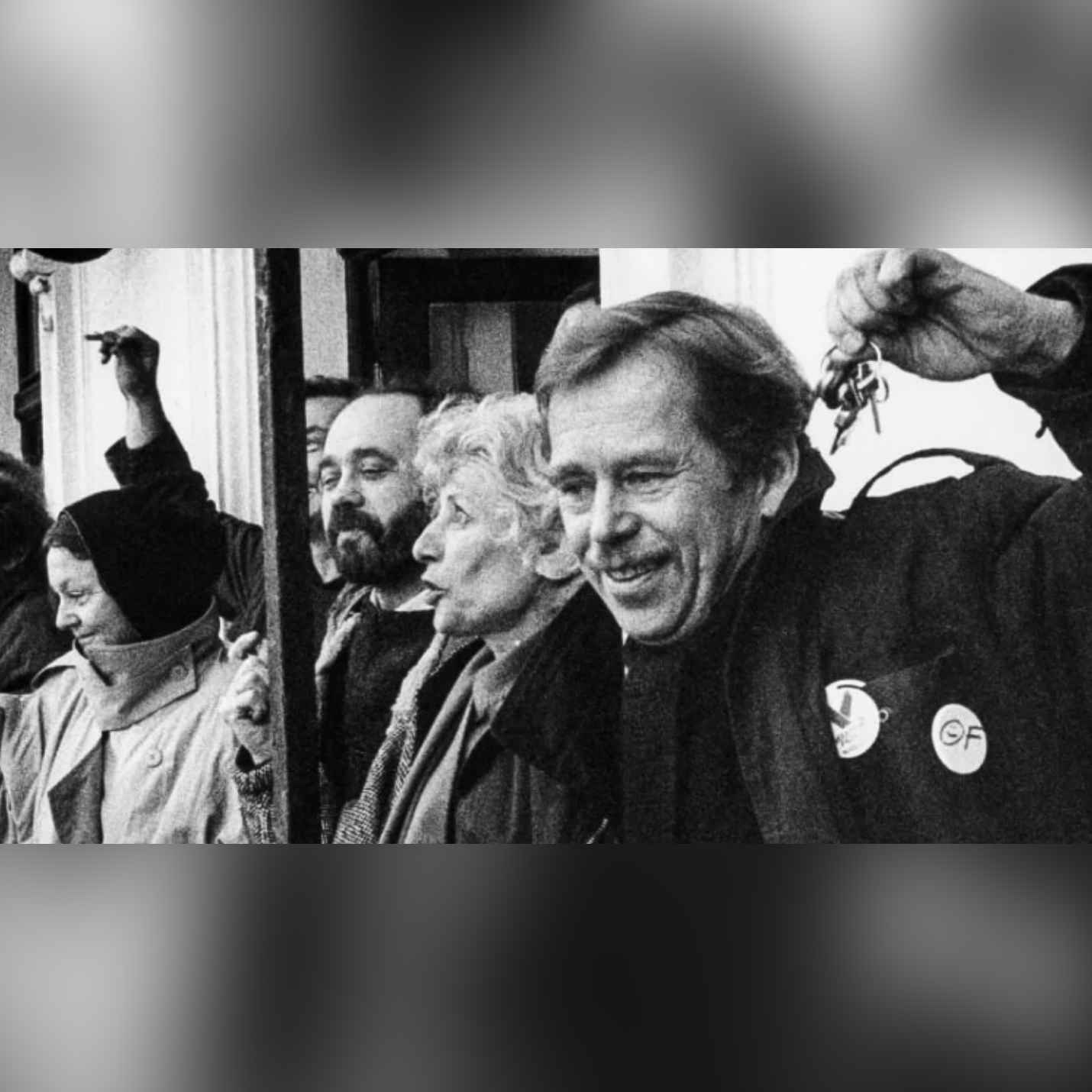
And how did they how did they celebrate that when they finally kicked out the regime, because they were dangling something on in the streets and on the balconies that was very, um when it brings us full circle to where what what you're doing today and why we have private keys yeah i thought it was a beautiful symbolism honestly so during the demonstrations uh the leading to um yeah 17th november for 89 um or like demonstrations and stuff and people would be jingling the their keys because it was like making this rattling noise and the message was like for for the communists to finally go home.
So that was the idea.
And there are obviously like a lot of photos and there are heroes that they were celebrated back in the day.
So I just thought it was like a nice symbolism for like a freedom technology and now we can do it digitally, right?
So, so the cool thing is, you know, as we are talking about the paintings or some memorabilia or whatever.
So, well, what if we had, uh, amazing, you know, star value digitally and what do you think would protect it?
Right.
And, and our answer is, well, you do that, I have that.
I mean, it's called Bitcoin and it's called hardware wallet.
So, so, uh, so I think that's very cool and that's ultimately why we are here and why, I don't know, this is our mission favorite job, I would say.
How to say it?
Yeah, our really passion to do this, right?
And to tie it all together as well, like the idea of the keys and jangling them.
I thought I'd love to say, do you have any videos of that?
Or I know you had a picture in there.
Yeah, absolutely.
there, if you go on YouTube there, you will definitely find, you know, if you if you put Velvet Revolution, you will get a lot of it.
It's called Velvet because, you know, it was nonviolent.
So that's that's basically that.
But yeah, you find a lot of people in the street.
So the Velvet Revolution is 17th November 1989.
Obviously, there's like the square you can visit in Prague.
For those that aren't aware, what happened that day?
yeah so if i'm uh if i how old were you how old were you at that at that point well i was two two years before being made so right okay yeah i was i was not there uh i would have been 13 by the way nice um so um yeah so i basically as tomar said it was relatively peaceful so there demonstration there were people you know that got some beating and stuff like that but it was relatively peaceful compared to other countries uh you know where the police would i don't know open fire into like crowd of people etc that didn't happen here um but yeah basically the soviet union was scrambling like the their influence in the region were were crumbling and that's why ultimately the regime here basically gave up and and kind of said okay you're okay to go full democracy now by the way i even read some books around this but like it's not also like the story is also not as how to say it was beautiful that like one day they would leave everything and everything was perfect because the 90s were pretty crazy pretty crazy i think here as well like it was like so much corruption right because you have again like years and years, like two generations or more of people basically trying to, like first they are like super like secretive because there you had a lot of sort of the, the, the secret police, you know, listening to your conversation and et cetera, again, like big operations of freedoms.
So people would like keep, so, so to speak, the cards to their chest.
So that's one.
Uh, but also yeah like a lot of corruption were doing was obviously i mean the state was kind of uh there was so much like black market stuff and and these things and of course that like you you're not able to eradicate that like one day right like from one day on it would say okay this is new thing the whole constitution needs to change you know like the new yeah so so yeah the 90s were also i think quite quite crazy uh but again i was just reading from books right so i was just i was born in 91 um yeah i mean it doesn't happen from day to day right they were like already in the november there were like student marches like already a lot of them and there was some beating of the students so it kind of you know uh got together and then on the 17th of november i'm not even sure why we date it to that day uh because you know it happened throughout november and the months around and so so did it in in the rest of the the east block right so um yeah it didn't happen in one particular day but uh what is somewhat uh unusual maybe is that yeah it was really the the government basically handed power to you know to the protesters if i simplify things a lot right it was not no shooting or and stuff so in that sense it was kind of common that's that's why it's velvet revolution but exactly as matthi said and it took a very long time to to improve a lot of stuff.
So yeah, back to the private keys.
Like the final cherry on top of the cake is BIP39 came right out of Prague again, right out of, well, Satoshi Labs.
Yeah, so again, I think it was one of the biggest, the most impactful innovation that came into the crypto world and it was born here by the founders of the Satoshi Labs group, by the same guys that also started Tropic and that started Chazer and that started Vexel.
And yeah, that was the idea how to make the private keys readable, how we can make sure that we are not going to make any mistakes in that super long Wi-Fi password, as they call it, to simplify it.
and uh and yeah now as we said 300 plus million users use it not just in hardware words obviously but in in the software uh wallet space which is quite uh quite cool and because it was given to the world uh as a open source innovation uh this is this is not that known fact i actually try to like remind everybody this is where this innovation came from but uh well yeah we we are not in control of this right at least in in its own life and that's what's kind of beautiful about this because again it's open source and anybody can use it and they can build their products on top of it so so i think this impact has been huge for uh for for the whole crypto industry not just security hardware was but for everybody in the software space as well yeah and maybe just if i if i can add actually before i joined trezor i was always like contemplating and thinking okay so you have it on this device okay that's cool but what if i lose it right or how do they do the backup and i before i joined i always thought okay but they can they're sending it to to to dropbox or some cloud solution anyway right like they have to because otherwise like like you need to put the backup somewhere right and then i when i've joined and i've learned about the the standard and just the fact that you've write down some some words and then everything is derived from those words i i was pretty astonished so uh yeah i i know i've read some stories that you know 15 years ago like or whatever like at the beginnings people when they were using bitcoin core like the original wallet it always created like a file that contained 50 addresses or something like that and people usually did back up that file somehow they somehow managed that but every time it you you used more than 50 addresses it created another file which kind of people didn't know or they forgot and they didn't back up that part right and i think there was a lot of bitcoin lost in that way that people backed up just the first part but not the second which doesn't happen with the standard right like you just write down the words and then you have as much addresses as you need so i think it's it's a great concept you need a really great um you know push for the industry or something the industry can use also a bit tough to explain i think we're also you know because i i didn't know myself before i joined the company so that's also what we're trying to do is educate the users that okay you really need to treat this with with respect that you really need to hide it well don't you know don't give it to anyone and all that because i think for a lot of people the concept is very tough you know of of something like that that you you have 12 words that are actually representing your whole wealth that's yeah a bit unusual so what were you doing before trezo then you just hinted that uh i didn't do origin stories yet i completely forgot about that we were talking too much yeah sure so i actually um i'm here from the from like the technical side of things so i've actually studied uh computer security and cryptography so i'm actually from from that area i remember already at the end of the university you know there was some professor that that mentioned that there is this bitcoin it was in the very early beginnings it was pretty cool um unfortunately i was spending uh money on beer and not on bitcoin uh so that was the biggest mistake and uh yeah and then i then i went to cloudflare uh you know the cdn provider for a brief for some time uh again doing mostly cryptography and security and then i've joined trezor um eight years ago which you know in the in this industry eight years is like 50 years in the normal world so yeah that's my story matter well uh my background is in music so i actually studied music in high school and then i moved to um like music business education um so i actually went through went to berkeley college of music in in boston for some for just like a semester was like my dream you know to because it's like the mecca of jazz and i was always interested in just quite a lot so uh so yeah i've done that and then um were you playing instruments or was it more yeah yeah so i started with classical guitar so that was my background now i may mostly play uh yeah like wannabe jazz but uh i'm not like professional in it but i play with my friends who are professionals we actually have a gig tonight so uh so so i've been practicing lately uh somewhat uh so it's a it's something i still keep uh you know in my life which which i'm I'm super happy with because it's like a great, um, how to say like activity, you know like uh it just like people management and leadership but like it completely something different else And uh but yeah I was always interested in also like entrepreneurship you know startups, uh, scaling companies.
Yeah.
People management, that's something I've always done even at school and I would organize like projects and people around some ideas.
So I guess that was kind of natural in that sense.
And, and, and yeah, because I mean, I was always interested in like in technology in general.
Like I really liked tech startups.
That was my, yeah, my thing at school.
And then, yeah, one thing led to another and I simply applied for a job.
So Trezor back then had maybe 30 plus people, just engineers and outsourced the kind of the design and product management function completely.
So I actually became the first product manager and I built the product team.
And then, yeah, with Sushi, we just kind of kept fixing more and more stuff.
And we also like broke some, probably probably some as well.
And we, the company was growing.
Right.
So it's like, I, I generally, it was like probably 30, 35 people.
Now we are 200 plus.
So, so that's yeah.
Yeah.
Yeah.
We actually grew, grew together, right.
That I I've joined as an engineer or programmer slash cryptographer and Maty joined as a product manager and then we went the managerial way.
So yeah, we're here.
It's like a marriage.
It's funny.
That's what my wife says that Maty is my second wife.
Yeah, well, it's really, it's quite, it's super nice because I mean, I was speaking for myself, but it's quite, it's quite cute almost like because I would think something, I start writing the message to Sushi or I will mention something to him and he would be like, oh yeah, I was just about to say, you know, so, and it just keeps happening to us.
So like, because I think we are seeing the company for the same time from the same perspective, you know, so, so it's kind of nice.
So we really are partners in crime for in the sense.
So, yeah.
Good to hear.
Now, to bring it back to the chip.
A lot of people might just think it's a buzzword marketing ploy, but the term quantum ready.
Oh, yeah.
So maybe let me start broadly.
So the discussion about quantum computers, you know, is kind of heating up.
So as I've mentioned, I've actually studied, you know, computer security.
And I remember already, you know, at that time, you know, there were these mentions about these problems, but like really, let's say 20 years or 15 years ago, like it was always in the sense of, okay, maybe in next generation or in far far future this is going to be a problem right but it was never tangible at all it was always very abstract well which it is still this day but at that time it was even more right and at that time i was really okay this is cool but you know that doesn't really make much sense to worry about that now because that's just for for the future generations to to look into um that sort of changed and really there is some progression in the in the world of quantum computers um you know we're still they are still not around the corner we we cannot still we don't have them it's very tough to build them uh it's really they are the best researchers all over the world looking into this but uh you know the consequences if there would be one are really enormous right so i've been to a conference years back and i really like the the talk that there was one slide which said don't panic quantum computers are not there it will take a long time for for everyone to build them you know it's it's really far away and all that and then there was the other slide which said panic maybe a little bit because the consequences of those quantum computers are enormous right and the consequences of those are that there are algorithms that are basically able to crack the the current cryptography that bitcoin is built on but not just bitcoin right everything the whole e-commerce internet uh government stuff whatever like really it's used everywhere right so it is not problem particular to bitcoin or cryptocurrencies it's a problem uh you know to society as as in general and that's basically why there is a there was a competition already since 2016.
or no apologies 2019 well i don't remember the dates but there was a you know competition by the national institute for standardization like a u.s entity that is actually asking for so-called post-quantum algorithms which are special algorithms that are not vulnerable to these quantum computers right so they just use different types of cryptography that is not uh vulnerable to to these quantum computers and it's a competition that finished just last year it's just still evolving to to some degree uh i've just last week there was a conference uh here in prague that was meant for cryptography and there was one of the co-authors of one of those winners of this competition.
And he was, you know, talking about the algorithm.
So it was pretty cool.
Of course, you know, my brain is not functioning that well as when I was at university.
So it's kind of hard to grasp, but I'm still at least, you know, getting some pieces.
But yeah, back to it.
So there are algorithms that are, you know, able to withstand the quantum threat.
and now i'm getting back to the to the quantum readiness uh we were thinking basically we're just talking with our cryptographers here in the company okay so is there something that we could do already right because we we felt that the discussion is starting up and and which is a good thing and the thing is that bitcoin is not yet quantum ready right like bitcoin doesn't have any quantum protections at this point um there are discussions now in place which i'm really glad so there is the bib 360 you know that is in draft but there is some work on that and basically the idea is to bring a new type of addresses into bitcoin that would be you know resistant to the to this quantum computers uh it's gonna take some time because of course bitcoin is conservative which which is a good thing.
So I think we're gonna discuss the BIP for next year or two.
And then the implementation, it's gonna take time, right?
But it's gonna be a similar upgrade as there was SegWit and Taproot.
So now we're gonna have some quantum upgrade later on.
So we cannot really make a quantum resistant hardware wallet because the underlying technology is not quantum resistant, right?
It doesn't make sense for the attacker to attack the treasure itself they can attack the blockchain right away right it doesn't make sense so we're thinking what we can do and that's how we came up with the quantum readiness which is that we've prepared the device already from the manufacturing that they are a that the device is able to receive any updates in this quantum safe manner right so once there is bifur 360 once there is this quantum upgrade in bitcoin we can support it in firmware and we can send it to the device again you know in a way that is quantum resistant so we can provide the update in a safe manner even in case there would be quantum computers same goes to the fact that we can prove the device authenticity using uh you know a quantum certificate or there is a certificate inside the device that is signed again using these post quantum algorithms meaning we can approve the authenticity even in case there would be quantum computers right so it is a bit tough to explain like every time i start i i feel the need that like i would need to talk for another hour to at least you know dive more into it but in a nutshell you know the idea is that we've we've tried to do as much as we can to make the device ready for any future updates and make it ready for the time when bitcoin actually does this uh you know post quantum uh upgrade then we can support it and we can bring the update in a in a quantum safe manner as well so the only only only wallet on the market ready for that or because of the chip yeah yeah so um it is the only hardware wallet on the market that has this i'm i'm not aware of any other i don't think there is it is not in in particular connected to the tropic uh chip uh the tropic secure element is doing you know a lot of great stuff on the security but it doesn't have support for the quantum post quantum algorithms either so we we have to do this in the other chip in the in the more generic one so it is not connected together uh by the way we would of course love to bring the post quantum algorithms to tropic as well but again you know it's gonna take some time so uh it's something that i think the team will work on as well um so yeah it is not not connected but it is the only hardware wallet that that has this and we by the way we also and that's not very visible to the users but we are actually also doing a lot of benchmarks on the device uh because the the downside of those post quantum algorithms is that they take longer they take longer to to to create the signature so it takes uh you know way more time than the ones that we have now so we're also doing a lot of benchmarks again because we are open source everyone can actually check it out on github so we're you know trying to help here as well we're also in touch with the authors of the bib you know to try they're really nice that they're thinking about hardware wallets as well because this by the way you know the new algorithms are probably not a problem for the software wallets because they have way more resources right like they have your generic cpu in your computer so they can calculate these signatures faster but for the hardware wallets it could be a problem right so it's great that we're We also uh yeah that that that the BIP is taking this into account and we trying to help with the benchmarks and to see where we hit And we should be fine like the whole SAFE series I believe and even Model T should be able to support this But we need to wait for the BIP to be finalized.
Okay.
And for those wondering what BIP means, it's Bitcoin Improvement Proposal.
What number was it?
360.
360.
And again, anyone can go and look at that and provide feedback to it.
if you're quantum ready with your brain yet, because mine isn't.
Yeah, I mean, I have to learn how to explain this more because I've actually been talking about conference about this, I don't know, a month ago.
And every time I prepare the slides, you know, I start at some assumption that, you know, the audience knows.
And then when I start to speak, like in minute number two or three, I realize, oh.
Everyone's left the room.
Exactly.
I've missed it.
So, yeah, it is a bit of a rabbit hole that you need to dive into to grasp.
I think we're probably guilty of that in the Bitcoin space as well.
I've noticed that at conferences this year.
I even got feedback directly from a lady at Riga.
She said, you guys are using language that's going over people's heads.
And you think, yeah, of course we are.
Just because we're at Baltic Honey Badger doesn't mean everybody's a freaking toxic privacy maxi.
You know, this is some people are here for their first ever conference.
and we're using acronyms and parlance that we're all used to using.
But so, you know, it's always good to just to, you know, lay out these acronyms so people are up to speed with that.
That's a great point, by the way.
And yeah, again, like we're going back to the education or, you know, explaining these things in a great manner, which is, by the way, funny because about the quantum ready, I didn't really like the term much because like what it means, right?
It's very abstract.
And that's what our CCO came up with.
And it was like, really, I told him like, Hey, we have this post quantum signature.
And I tried to give him, you know, the 15 minutes talk.
And I was like, please market it sensibly.
Like, don't do anything crazy.
And he was like, Hey, and the other day, you know, quantum ready stickers and all that.
I was like, Oh, But I'm actually really glad we've done it because like we are really doing a lot of great innovation and, you know, like me going on in a podcast for 15 minutes is great.
But then you also need to have, you know, the shorter versions for the broader audience.
So I'm actually glad that we are also pushing this part of, you know, trying to reach more people, you know, have some some maybe simplified terms for the general audience and then provide good materials that where they can learn more.
And by the way, speaking of acronyms, Tropic Square, the name Tropic stands for Truly Open IC, Integrated Circuit.
Which is true, but I've told someone in the company just a few days ago and they were like, no, you just made that up.
That's like, what?
No, what?
I'd never even thought of it.
I mean, why use the word Tropic if you're based out of Czech Republic?
Of course, it makes no sense.
And the name of the chip is the...
Tropic 01.
Tropic 01.
Yeah.
And they had, isn't there a palm tree?
Is that the company logo?
Yeah, it's all very confusing.
Yeah, it's Tropic Square is the name of the company and Tropic 01 is the first chip.
Because we would actually, you know, or that's the general idea to innovate there as well.
So for example, in the Safe 7, we have more chips, right?
We have the generic MCU, we have the Securella Man, another Securella Man, then we have Bluetooth chip, you know, there's way more chips.
And it would be nice to consolidate maybe all of this into one very big Tropic chip, because that would be the best.
But again, realistically speaking, it's just a function of time and money.
So yeah, we want to innovate there as well eventually.
What did you say it was?
Truly open protocol integrated chip?
Truly open integrated circuit.
Yeah, integrated circuit means chip.
That's the academic way to say a chip basically but yeah very complex so what's next lads i mean you can't rest on your laurels here like uh you know this isn't how companies are run mate you know you don't launch the last thing and then like all right that's great let's watch the money roll in you got to have another another trick up your sleeve uh another big idea what's going on yeah so uh we would actually like to use this momentum because i can definitely feel like there's a lot of now positivity floating around the company because it was really like a milestone because I think success for for Trezor and the industry and the security so so yeah we'd like to build on on this and we are actually just tomorrow we have a big meeting around what the next hardware product is going to be the hardware wallet so we would like to also innovate more in the let's say entry level space as well because right like chaser save 7 is our flagship product but we want to also bring the price down um and to be truly like a mobile first and wireless there so so yeah that's the kind of the space that we are looking into uh because you know we have on the market well these these guys but also chaser save 3 and chaser save 5.
they don't have any bluetooth so we'll probably go with another wireless device in that space but but again like we don't have the full spec yet locked but we have already pretty solid ideas um so that's that's one secondly we want to still make our backup experience better as well so because the wireless technologies also bring us some um some possibilities how we can also um not just replace but made let's say some do some complementary products to um the whip the bit 39 so the words could be also done we believe with reasonable security and privacy um digitally as well with some wireless uh accessory let's let's put it this way um and then finally software is becoming more and more important for us as well in terms of like revenue and what the users are asking for so we are building basically richer ecosystem of services right so we have buy sell swaps and all those things in in our ecosystem but we can always add more now we have staking products as well so we are basically bringing more partners you know it's um more coins yeah so that's that's part of the game basically because if we didn't do it then then uh yeah people would not use us as a product as well so But again, still in the realm of self-custody, proper security, and stuff like that.
So yeah, those are the kind of high-level roadmap items for the next years.
So Bluetooth, does that, because there's always been this debate around air gap, to air gap or not to air gap, and you have some people say it's absolutely essential, and other people will say, well, actually, it doesn't add any extra layer of, privacy.
So is Bluetooth, does that solve that problem?
I mean, obviously, everything comes with trade-offs.
Hopefully now most people understand that.
And whatever you do, there will be some kind of attack vector or unintended consequence.
What was the thinking around Bluetooth in implementing that?
Yeah.
Yeah, I just wanted to mention first that like the whole narrative of air gapness, it's making me angry.
The idea that, you know, inherently there would be something secure about scanning QR codes, like that's not air gap either, right?
Like you still have a camera, you still have some QR code that you're scanning, you're still parsing the image, right?
You still need a lot of code for that.
How is that more air gap than Bluetooth?
Right.
Like it's over the air.
Both of those things are over the air.
Right.
Okay.
Maybe you have more code in the Bluetooth area, but still, you know, the fact that you are scanning the QR codes, like you still have to pass on the information somehow.
Right.
So it's, to me, it's very debatable whether scanning QR codes is air gapped or not, or what's the difference to the Bluetooth.
Right.
Because it's still both goes over the air.
um we that being said uh we we we chose bluetooth because of the usability because like scanning the qr code you know is cumbersome i really think you know bluetooth experience is way better to be really sure on the security side of things we've actually introduced our own treasure host protocol which is like another you know tunnel inside the bluetooth connection so you have the bluetooth connection that is secured by the bluetooth protocol and inside that you have our own again open source protocol you know that is providing the encryption and authenticity and all of those nice things it actually goes directly from the app into the treasure itself you know so so uh the it's end-to-end encrypted um bluetooth security is somewhat decent in the like back in the time I think it was a bit more chaotic but now it kind of stabilized but again like we wanted to do more so that's why we have our own protocol so i really think the link is is secure and uh yeah it goes back to what i've said before like the security at the cost of usability comes at the security and i think that's the same thing with air gap like the most secure setup is that if you hide yourself in a cave and you calculate elliptic curve scriptography in your head yes that's probably the the most air gap, right?
If you don't, if you don't have any device that you do the math on your own, is that usable?
It isn't, it doesn't make sense.
Right?
So it is always trade and with the air gap there was actually a very nice article uh on the internet that that compared the you know the attacks on hardware wallets throughout some years And basically none of them there was like five of them maybe And basically, none of them would be circumvented by the air gap.
It's just, there's just some transport protocol that really, you know, it's more important that you have the display on the device, that you actually confirm what is, you know, on the display and all that.
The fact how you connect to the computer or to the mobile phone.
I'm not saying it's not important, of course it's important.
I just really strongly believe that the Bluetooth or some sort of technology that is meant for that is just way better than scanning QR code.
Interesting and Matej, you touched on it there and we've been over it before but yeah you said there are other coins available to self-custody on on the treasure devices and obviously as a business you have to listen to the market and unfortunately yes there's still millions of people that are um speculating i will use that word on on the other things um looking for solutions in in in a safe way for them to self-custody that stuff but you guys have a bitcoin only version which i think people should be you know made aware of as well.
Yeah, absolutely.
So by the way, that's sort of almost like cultural debate we have in the company as well, because we have some, I would say Bitcoin maxis that are not super happy with, you know, anything in that space of not being Bitcoin.
And I get it.
I get it.
I really do.
But I always tell them, but please guys, stay with us because we need Bitcoin experts as well.
as much as the altcoin crowd and the altcoin experts that really care about these products.
The way I look at this and how I justify it, not being Bitcoin only as well, is simply because by making the ecosystem richer, still again, within the security of the proper self-custody of a hardware wallet, we onboard a lot more people to Bitcoin, by the way, in the end as well.
And simply not just that, but simply we it's a free market.
Like, who am I to tell to anybody like use just this, right?
Like, or use just that.
I think it's perfectly fine.
I think it's morally perfectly correct.
Like from from even Bitcoin Max's standpoint of view, like the non-toxic, let's say, because I think there is also a crowd that is like way more extreme about this but i do really believe it's a it's a free market and if we can do it within the boundaries of you know of our security principles and privacy principles then uh then we should do it and then ultimately i think everybody benefits from it as well because we as a company can then earn more but also reinvest it again like into making better products right because it would not be possible simply if we if we didn't if we weren't profitable um and but yeah back to your question yes we also have bitcoin only products because again free market we know uh there there are customers asking for for this and um simply disallow you from you know to install anything else than um then than the bitcoin only only version and maybe last point to this like what's coming through my head also i think speculation is one of the use cases on the market that's simply the reality uh if we measured what would be a bitcoin only would be probably 10 of the size of the company and the product we are today since that's simply the reality but on the other side um i saw some uh some some like macro research and and bitcoin it's obviously still the majority in terms of like people's usage and storing the value as well so so i think it's it's fine if it's like a gateway to uh store value as well and you don't have to have either or solution i think you can have actually both and it's perfectly fine and so it's a speculation but there are also stable coins right which are not bitcoin only but uh but they're perfectly say perfectly solid sound use case as well i believe and then they're a store of value and in bitcoin and and again i think i i believe these can perfectly live next to each other uh and it's people's and users choice to to you know do as they wish yeah well i have the choice yep yeah i just wanted to add that i really think there's quite a lot of people you know that they find bitcoin but it's too expensive so they buy whatever that come along and they buy a piece of that they do some gambling but then you know they actually gradually become the bitcoin maxis as well but they're gonna buy the treasure at the beginning right not they're not gonna buy a new device when they become a bitcoin maxi i believe or of course some maybe tiny percentage does but not majority right so yeah i think it's exactly that and yeah we see the trends of stable coins of course you know they are uh they work well until there is a monetary reform as we talked about one hour ago but yeah i think it can be a good gateway that you know people learn because we're still used to price stuff in us dollars or whatever they can learn how to use stable coins and then you know down the line they they they find out what bitcoin is and they're going to be orange built at the end as well so i think the last topic we need to touch which is check based is the central bank stacking bitcoin uh as far as i'm aware i don't know the ins and outs of it i believe a million dollars i think as a so-called pilot program i have also heard rumors that that may or may not have pissed off a certain lady who heads up the european central bank what uh what do you guys know what what's going on on the ground in uh in the czech republic with regards to the central bank they're stacking bitcoin so you see we as i said we have a lot of bitcoin companies and um bitcoin banks now uh i'm just kidding but like yeah i think it's it's the same story honestly i think it's the same story there's an interest in in Bitcoin in general.
I'm not an expert on like central banking and on none of that stuff, but I can at least, what I can see, there is like, yeah, the guy's like pro Bitcoin and he's been publicly talking about it.
And there is also like, let me mention one another, sort of use case of being kind of Bitcoin big.
And it's like, we have an influencer who has 100K followers just by doing a Bitcoin content.
And I think actually he played a huge role in explaining it to this tiny country of just 10 million people.
So he has 100K, there's 10 million people in this language only.
It's like a language only Czech speak, like nobody else.
So yeah, I believe he might actually onboard it even people like such as the boss of the central bank here.
I really believe that might be the case.
So yeah, I think that's all I can say to this.
And you have a new president in place as well, about a year into his term, is that correct?
Yes, yes.
I don't know if he's a Bitcoiner, but he will be, hopefully.
Yeah, I don't know.
Yeah, I just wanted to answer that.
So in general, I have mixed feelings about this.
On one side, yes, it's kind of cool, you know, that the governor of Czech National Bank is talking about it and the stacking sets and all that.
That being said, you know, like, I mean, if I should choose, like having Czech National Bank without Bitcoin and Czech National Bank with Bitcoin, I do choose the latter because yes, it's better, you know, if the currency is covered by at least some Bitcoin.
But that being said, you know, I'm not someone that would be cheering for this.
like my mission is to give, you know, to give the Bitcoin to the people, like the individuals, you know, so they can store it securely.
I don't really care about any national banks whatsoever.
Right.
So of course, Bitcoin is for everyone.
So, you know, even the national banks, you know, of course, will start to stacking it up.
I'm just not the one that's going to cheer in the first row because again, like the mission is to put it into the individual's hands instead.
unless they make an order for a hundred trevor safe sevens to keep their bitcoin safe then you know yeah it's um i'm with you because they are just a node on that central banking network which is all subservient to the bank of international settlements ultimately you know the the big Well, the final boss, I suppose.
So it is a strange one.
And, you know, what money are they using to buy it?
Where did that million dollars come from?
Was it just printed and created out of Diné?
And has that, you know.
Yeah, I mean, they actually also own some stocks, which I'm not sure if the other national banks do, which is kind of also kind of weird.
I don't know, should National Bank invest into stocks?
It's another rabbit hole, right?
But I just wanted to mention that we actually consciously made the decision not to enter the institutional custody market as well.
So when you mentioned that if they bought like 100 treasures, you'd be happy.
Well, we would be happier if individual people bought those.
So you're not in the instance.
So, and that's been one of the stories of 2025, right?
The amount of Bitcoin treasury companies that now have just completely appeared out of nowhere.
Exactly.
And that's why I mentioned it, because there is a market for sure.
Would we know how to do it?
Most likely, security-wise, definitely.
But do we want to go to the rabbit hole of like the whole legal institutional setup?
Not at all, right?
Because like, I believe it would really defocus us from the pure mission, from the core mission of what we are trying to do.
And it's almost like a, yeah, a contract if in that sense, and it's like a whole new company.
So we kind of made the decision, let's not do that because that's not interesting for us.
Again, like, is there a business?
Most likely, you know, could we do it?
Like, yes, but so we could do like washing machines, but we are not doing washing machines, you know, because that's not our business.
But now we have some ready washing machines.
Let's go.
All right, guys, final question.
If you had one last orange pill left to give to somebody, who would you give it to and why?
I'm going to start, I would give it to my mom because I've tried to persuade her already since the university times to lend me some money to buy Bitcoin and she never did.
And every time when I ask her today, she tells me it's too expensive and I keep asking for the last eight years I'm in Trezor and she still haven't bought anything.
Sorry.
Oh, I got all this time to figure a name and I didn't.
I was just thinking somebody the most impactful, but I really don't know.
Yeah, because I was just thinking like, for example, I talked about this with my grandma and it was amazing.
She got it instantly.
She was like, oh, this is so cool.
You know, like, and she's the one I was also talking about the monetary reform.
So yeah, maybe let me say just another person I meet on the street, because I think that's quite important as well.
So for everybody from all of us to kind of talk to also like the people we meet And by the way i super happy there are people in this building that are doing this basically still you know like uh they handing out flyers yeah handing us flyers stories of like there's like a restaurant close from our office and i think one of our colleagues was basically trying to orange pill the guy to accept bitcoin and and uh finally he did after a few few years after years and i think now now he's quite happy with that so so yeah and you got grafton you got you got grafton out there doing the vexel thing like he is an absolute force of nature but he he's so full of energy yeah absolutely well so my answer would be like the next person i talk to today excellent love it well thank you so much uh to both for coming on and congratulations on this uh you know few years long journey of of getting that all together and what a way for it to come together.
Like you said earlier, you got the, you know, the seven comes together just at the same time as the chip, you know, this, I mean, coincidence, there is no such thing as coincidence, right?
It all happens for a reason.
And you guys are, yeah, you, you're really driving this kind of ethos.
So yeah, well done.
And thank you for all the education and everything that you've put out in the past and look forward to see what you come up with next and see how you continue to grow.
And I'm sure we'll cross paths at B2C Prague in June.
Absolutely.
Thanks for having us.
Thanks for having us.
It was a great chat.
Thank you.