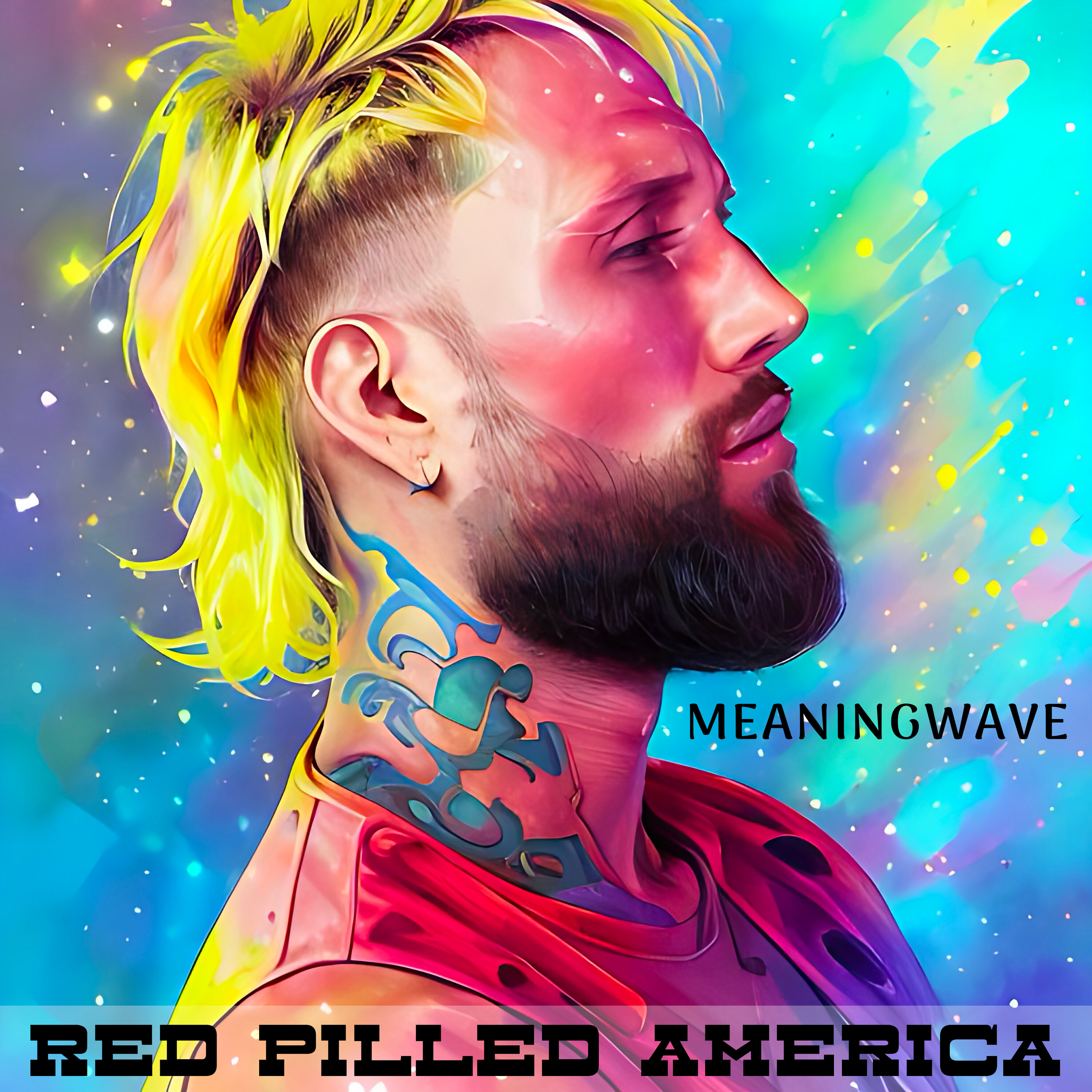
Meaningwave (uncensored)
Episode Transcript
This is Red Pilled America.
Hey guys, there's still time to buy some RPA holiday gifts.
Just go to Redpilled America dot com and click shop at the top of the menu.
Speaker 2We've got some great deals on the perfect gifts for the Patriots in your life.
Speaker 1We're selling a physical version of both the Fighter series and the Woke Army series.
You can get both series on an RPA branded flash drive.
Speaker 2Consider getting these for maybe someone in your life who needs a lesson in the real story of Richard Nixon and the origin of Wokeness.
Speaker 1And we have a bunch of other things at the shop as well, including hats, candles, t shirts, a book, a gift certificate, membership to the show, and a bunch of other things.
Go to Redpilled America dot com and click shop in the topmenu.
That's Red Pilled America dot com and click shop at the top menu.
Now on with the show.
This episode was originally broadcast in March nineteenth, twenty twenty one.
I often find myself saying, what did they just say?
If you spend any time on social media or watching the news or just listening to people, you get the feeling that bad ideas are pretty widespread.
Speaker 3All white people are racists, Not all boys have a penis, and not all girls have a vagina.
Speaker 2Destroying property which can be replaced is not violent.
Speaker 3We have to say yes to socialism, to the word and everything.
The fact that as a nation we celebrate Abraham Lincoln's birthday and have whitewashed the exploits of a racist.
Speaker 1Many Americans seem to be brainwashed by odd beliefs.
How did this happen?
How have bad ideas become so widespread?
I'm Patrick CARELCI and I'm Adriana Korti, and this is Red Pilled America, a storytelling show.
Speaker 3This is not.
Speaker 2Another talk show covering the day's news.
We're all about telling stories.
Speaker 1Stories.
Hollywood doesn't want you to hear stories.
Speaker 2The media mocks stories about everyday Americans that the globalist ignore.
Speaker 1You can think of Red Pilled America as audio documentaries, and we promise only one thing, the truth.
Speaker 4Welcome to Red Pilled America.
Speaker 1Bad ideas seem to be in high circulation.
No matter where you turn.
People appear to be brainwashed by a system of beliefs that are simply an American.
How did this happen?
How have bad ideas become so widespread.
To find the answer, We're going to follow the story of an artist that found himself under this spell of ideas that held him back and how he finally broke free.
Speaker 2In our hyper connected, copycat world.
It isn't often that someone creates something novel, but Akierra the Dawn has done just that.
Speaker 3I was always way too ahead of.
Speaker 2My time, That's Akira of the Dawn, and I was.
Speaker 3Really wanting to not be too ahead of my time so that I could make a bit of life for my family.
Speaker 5You know.
Speaker 2The good looking, bleach blonde DJ music producer has been pioneering a type of music that takes the words of thought leaders like Jordan Peterson, Elon Musk and Scott Adams and marries them with low fi hip hop beats that matches the rhythm of their speech.
The result is a message infused music he calls meaning wave and it's a sound that was a long time in the making.
Akira the Dawn entered this world from across the Pond.
Speaker 3I was born in the Midlands, the middle bit of the UK.
Speaker 2When he was around two years old, his family moved to the small community of Snowdonia, which is a valley in Whales.
Speaker 3And everyone spoke Welsh and no one spoke English, so I was a bit confused.
But it was cool because you know, it was very beautiful and everything looked like Lord of the Rings.
It was very, very small.
The first school I went to, you had two years taught in one class because there was just hardly anyone there.
You know.
Speaker 2Kira actually took a liking to music while he was still in the womb.
Speaker 3Apparently I used to kick along in my mum's Tommy to add him in the ants and tom Petty and shit like that.
I would like start kicking like rhythmically when that stuff would come on.
My dad was really into music, and you know, as you always look up to your dad, you know, he was He was a bit of a sort of distant kind of guy sometimes, but with music, you know, when he would sit there and play music and I was really interested, Like he really loved that I was interested and there was a connection there, and he used to sit me down, you know, he took me up to the attic.
I remember I was like seven.
He'd be like, get out a box of Motown records and be like, all right, son, this is motown or like a box of like new wave or punk records and be like, this is punk or this is whatever you know.
And I treasured that shit and I loved it.
Speaker 2His father introduced him to artists like Billy Bragg, a folk punk artist whose music was infused with socialist ideas.
Aspects of the artist's ideology were seated in his brain at a young age, and they formed the lens through which he'd see the world as he grew up.
He was drawn to youth music and the look that accompanied it, but in his neighborhood that style was considered an oddity.
Speaker 3Listia in the UK.
I'd walk it around and people'd stop a car and wind down the window and throw some shit at me and shout faggot.
Speaker 2But it wasn't just his look that was causing him grief.
There was also something about the nature of the British system that began to knock him as well.
Speaker 3They have this thing in the UK.
It's like, you're not supposed to get above your station.
Speaker 2Akira's parents were both born in UK slums.
Speaker 3You're not supposed to transcend your meager origins.
If you're working class upost to stay there, you know, what I mean, they have this tall poppy syndrome thing.
Speaker 2The tall poppy syndrome is a phenomenon where people mock those who think highly of themselves.
In essence, they're cutting down the tall poppy.
Speaker 3And my realization was that in the UK we got a monarchy right this level that you can never transcend, and you know it's there, so on a subconscious level, you always know that you ain't shit, really and you should just stay where you are.
Speaker 2It was likely this class structure that pushed a cure to daydream about the States.
Speaker 3I was always just fascinated by America and it always kind of stood for the things that I believed.
In America.
It's like any motherfucker could be president, is what they tell you.
So a waitress in America is always on their way to something great, and that's why they treat you nice.
In the UK, a waitress will spit in your drink and glare at you because they're just they know that that's where they are forever, and that's that.
Speaker 2As his sixteenth birthday approached, Akira left home and embarked on a series of adventures in the UK.
He dabbled in music journalism, then eventually picked up music making.
He was creating hip hop music that just wasn't being made at the time, and the Brits weren't really digging his vibe.
Speaker 3I was making weird rap music, and it was like people like me weren't supposed to make rap music at that point.
I was kind of doing rock influenced stuff and wearing like makeup and shit and being quite clam and talking about my actual life rather than pretending to be some kind of gang banger or something, you know, which at that time just wasn't done.
Speaker 2Of course, white artists rapping about things other than the hood would later become a popular hip hop niche, but in the late nineties a Curra the Dawn was ahead of the times.
By the turn of the millennium, he wasn't sure where he should go with his music next.
That's when an American rock band began to make waves in his neck of the woods.
Speaker 5Thanks again, I want to I want to thank everyone for coming to you tonight.
You guys have been really nice test in England since we got here.
Speaker 3You know, the Strokes really blew up in the UK because people in the UK were like, hey, these guys are really cool.
They're American, Oh my goodness.
But no one gave a shit about to me in New York, I realized because I had friends over there.
But anyway, so I thought, shit, maybe if I go to America, they'll think I'm cool.
Speaker 2The idea percolated.
Akira continued pushing his career in the UK.
He made a mixtape in two thousand and three and released it online when no one else was doing it.
It got over a million downloads, so from the boost from this Inner and Hype.
In two thousand and four, Akira decided to take the plunge.
He begged his bank into lending him money to buy a plane ticket to the.
Speaker 3US, and I arrived in Miami with no money whatsoever, And within two weeks I was being signed to Interscope Records, and Jimmy Ivan from In a Scope was telling me that I was going to do some rap music what the Beatles did to rock music.
Speaker 2After he signed to the label, Akira says he immediately began to see the strange economics of the music industry.
Speaker 3And they would do weird stuff like try and get me to spend my money on cocaine, and I didn't want to because I didn't want to do any cocaine, and they were really perturbed by this.
And then they would do weird stuff, like if I had to go to an airport, they'd hire a limo.
I'd be like, I don't need a limo, and they're like, just take the limo.
It's like aye, and all this weird stuff, and you know, it's their money.
They pretend it's your money, but it's all alone, right, and they do this weird stuff, like they want you to record in their recording studios, so they like double dip on the money.
They didn't want to allow me to spend my advanced money on building a home studio.
They were trying to stop me doing that because they wanted to retain complete control over everything you're doing.
Speaker 4You know.
Speaker 2He tried to ignore the dark side of the industry and began making his first album.
Speaker 3It was about being an individual.
It was about the importance of being an individual.
It was about standing up for your individuality in the face of the world that wants to turn you into fucking the same thing as everyone else.
Speaker 1You know.
Speaker 3To me, then what happened was they didn't like my lyrics, you know, and they wanted me to change the lyrics.
I had a song call Thanks for all the Aids, you know, So it was like talking about Bob Geldof and Live Aid being hypocrites and stuff.
Speaker 2Bob Geldof was a songwriter and producer behind the hit song do They Know It's Christmas?
Speaker 3And they're like, you know, you need to change these lyrics, and I was like, huh.
Bust Rhymes was on that record label at that time, and he'd recorded three albums for them, and they wouldn't put them out.
They didn't like his lyrics either, you know.
I was like, shit, if Bust Rhymes can't get his record put out here, I what am I doing?
Speaker 2As Akira was seeing the realities of corporate music making, the entire industry was imploding.
The MP three was making the CD obsolete, and music sales were plummeting.
Speaker 3Just in this short time I was with them, most of their A and R department got sacked.
It was just as the whole NAPSTERA thing was really kicking in.
Speaker 2So after about a year of trying to work with the corporate system, Akira decided he wanted out.
Speaker 3One of my songs was in that movie My Super Ex Girlfriend, So I took the money I got from that, and I bought the rights to the album back and went independent.
And then since then was this long process of kind of building this independent machinery and essentially building a kind of parallel music industry.
Speaker 2Music industry was collapsing, but at the same time, the technology was removing the need for a major record label.
Speaker 3I was one of the first people like making records without machinery and distributing them and having a career and being able to survive just doing that outside of that machine.
Speaker 2So he decided to get back to his roots.
Akira the Dawn returned to the UK and continued making music.
He plugged away for about seven years, building a parallel music industry.
He also began experimenting with his sound by infusing hip hop beats with the spoke word audio of people that inspired him, people like famed comic book writer Grant Morrison.
As he evolved his sound, the glass dealing of Great Britain's class system continued to bother him, so he turned his eyes back to the US.
Speaker 3In around twenty twelve to twenty thirteen, I came out to Vegas because Grant Morrison, who's a comic book writer.
He had this festival out in Vegas and he had me and Gerard Way from my Chemical Romance come out and do the music.
And I dropped in on my friend, an old friend of mine who lived in Los Angeles, on the way back, and I've just had such a wonderful time.
And it'd be like I just walked down the street and people had stop their cars and be like, hey, you look cool.
What are you doing.
We're going to a party, come and do this party or whatever.
And I DJ'ed a few places and everyone loved it, and everyone was just so nice.
All these crazy ideas I had and my general sort of sunny, optimistic disposition was met warmly.
Speaker 6But in the UK, they ain't like them.
Speaker 2Juxtaposing his life experience in Great Britain with what he'd experienced in Los Angeles reminded him of something he'd recently read.
Speaker 3And I was reading this Charles Pokowski short story collection at the time, and there's a story where he talks about he goes to some orgy and like someone tries to stab him or something, and like he tries to get with a girl and then a guy tries to jump in and he's not happy about this, and he has all this and he ends up.
He has some messed up time, and he goes back and he vomits all over his house and he goes to bed, wakes up the next afternoon, it's like midday.
He gets up, he takes a piss, he goes back to bed, He draws the blinds and says, life is as kind as you lets it be.
I was like, oh shit, yeah, good point.
I don't need to be here in the UK, where shit is miserable and people throw bricks at me and I'm constantly banging my head against the wall and everyone thinks what I'm doing is weird, and like it's raining all the time and fucking there's princes and queens and stupid shit running around like he's looking like like I like he's medieval England or some shit.
Like I could go over there where it's sunny and everyone seems like excited to do things, you know what I mean.
And so that's what I did.
I was like, I had to work with my wife and we just had a kid, and it was like, you know, what do we want for our future?
What do we want for our kid's future?
What do we want for our dynasty, you know what I mean, what kind.
Speaker 2Of environment America was calling.
Speaker 3We agreed that it was the right thing to do.
It was a hard thing to do.
Getting into this country legally is very very difficult and very very expensive, and staying here for any period of time, it's very very difficult and very very expensive.
And you know, I didn't have anything going on, and I didn't have any money.
I came over here, and I slept on a friend's sofa and got DJ gigs and just kind of like built myself up, and while my wife and son spent most of the first year sleeping in like a small room at her mum's house, while I got enough working things together so I could then get them out here, and eventually we were able to get our first one bedroom flat.
Speaker 2Now in America, he felt the freedom to experiment more with his music until one night, while unwinded after Miley Cyrus stole his phone charger, he stumbled on a sound that he'd been unconsciously developing for fifteen years, and in the process, he'd practically invent a new genre of music.
Speaker 1Life can be pretty stressful these days.
You want to know what makes me feel better?
Licorice from the Licorice Guy.
Call me crazy, but it's true because I love licorice.
Longtime listeners of Bread Pilled America know that licorice is my absolute favorite candy, and the very best licorice, hands down, comes from the Licorice Guy.
I know licorice, and it doesn't get any better than this.
What truly sets it apart is its flavor and its freshness.
The softness of this licorice will blow your mind.
I've never had anything like it.
The Licorice Guy offers jumbo gourmet licorice in nostalgic seasonal flavors a red, blue, raspberry, cinnamon, watermelon, black, and apple.
Trust me, they are all delicious.
What I also love about the Liquorice Guy is that it's an American family owned business, and you all know that I'm a big proponent of supporting American companies.
Right now, Red Pilled America listeners get fifteen percent off when you enter RPA fifteen at checkout.
Visit Licoriceguide dot com and enter RPA fifteen at checkout.
That's licoricegui dot com.
They ship daily, treat yourself and those you love, and taste the difference Welcome Back, So a cur of the don got tired of the class structure of the UK that created a permanent glass ceiling for the common man.
After a trip to America, he decided to move his family to the States and continue to experiment with his music until one night, while unwinding after Miley Cyrus stole his phone charger, he stumbled on a sound that he'd been unconsciously developing for fifteen years, and in the process, he'd practically invent a new genre of music.
Speaker 3So when I was first thought I was making these mixtypes, there'd be some rap songs and I'd be rapping, and then i'd have a beat, and then i'd just like put like Jack Kirby, who's the guy who invented the Marvel Universe, And you know, I'd put him just talking for three minutes.
People used to do stuff like that on rap albums for like fifteen seconds.
You know, it'd be like a skit, or it'd be a bit at the beginning of a song.
But I'd be like, I'd just do like the whole thing.
I'd have like a three four minute thing and i'd have a guy, you know, a sample of someone talking, and i'd make it a bit rhythmic sometimes, like chop bits of it up so it almost had like a chorus or something.
So that was just something I always did occasionally.
And then in twenty seventeen, I think it was I was djaying in Hollywood and I was djaying and all these really boogie like places, like where the Kardashians had go and shit like that.
You know, I'd come back from DJing.
I've been djaying.
A whisky leaf is in my booth, just like blowing smoke in my face all day and I can't see shit, and I'm like, i come back at like three four in the morning and I'm like stone from whisker leaf as secondhand smoke, and like Miley Sarrus had stolen my charger and all this ridiculous shit, you know, And i'd come back and you try and decompress from that ridiculous world.
You've got a wife and a kid, you know, and like you're you know, engaging in being responsible grown up and you're surrounded by this Hollywood lunacy and it's quite weird.
So decompressing from that, I'd always come back and I put on lectures and stuff i'd have to speak projector and I'll put on lectures.
And Jordan Peterson comes on and he was talking about the importance of hierarchies of competence.
Speaker 5You hear the egalitarian clarion call everywhere everything should be equal, everything should be equally distributed.
Speaker 7We should strive for equity.
Speaker 5It's like wrong, what we want are just hierarchies of competence.
Speaker 7Not everyone's a neurosurgeon.
Speaker 5If your father has a brain tumor, you probably want a hierarchy of competence for neurosurgeons so you can pick the one that's the best so that he might not die.
That's what a hierarchy of competence is for.
For the postmodernists, there's no hierarchy that isn't based on power.
Well, because they think the world runs on power, and that's why they're willing to use power to get what they want, because it's the only thing they believe in.
But a valid hierarchy of cam but it says God, we need those things, man.
We need the best plumbers, we need the best contractors, we need the best carpenters, we need the best lecturers.
Speaker 7There has to be a hierarchy of quality.
Speaker 5Not only so that we know who the best are and can reward them properly, but so that we can reward them so they keep being the best.
It's like, you know, if you have a great educator, if you have a great leader, if you have a great thinker, you want to reward them so they keep thinking and they keep educating so they can tell you something.
It's not a reward for their intrinsic being.
It's a calculated move on your part to suck everything out of them that's valuable as fast as you can.
Speaker 7That's what a hierarchy of competence is for.
Speaker 3He came on talking about that, the importance of hierarchies of competency.
You know.
He's like, be a plumber, you know, be a good one.
We don't need people to cause problems, you know, we need people to sell problems.
Speaker 5If you're going to be a plumber man, be a good plumber, because otherwise all you do is go out there and cause trouble.
We don't need people to cause more trouble.
We need people to solve problems, you know.
And so you can be a tradesman and you can be can make a lot of money as a trades person.
It's a bloody, reliable, honorable, forthright, productive way of making a living.
And there is a hell of a lot of difference between a working man who knows what he's doing and one who doesn't, both in terms of skill and ethics, right, and you work with someone who knows what they're doing, it's a bloody pleasure.
They tell you what they're gonna do, they tell you how much it will cost, they go and do it.
It works, and you pay them perfect everyone's happy.
And that's what happens when you have genuine hierarchies of competence.
Speaker 3He's talking about the importance of picking an honest things to do and doing it really, really well.
And I really resonated with my half stone self at four o'clock in the morning, and I was like, I need to turn that into a song immediately, and I turned it into a song.
Speaker 5We need to know who the competent people are and we need to reward them, and even more importantly, we need to tell young people, hey, there's some hierarchies.
Speaker 7There's confidence out there.
Speaker 6A thousand of them.
Speaker 5Go be a plumber man, but be a good one, you know, be an honest one.
Because Otherwise, all you do is go out there and cause trouble.
We don't need people to cause more trouble.
We need people to solve problems.
Speaker 7Solve problem a problem.
Speaker 5We need people to solve problems, solve problem.
Speaker 1Plenty of hip hop artists have used short spoken word samples in their music, and electronic music producers like David August occasionally employed the technique as well.
But what a Cure of the Dawn was doing was a much bigger commitment to the style.
He was learning that there was an inherent rhythm in the way good speakers spoke.
He'd also rediscovered something he'd learned as a teenager.
Speaker 3I realized very early that music was incredibly powerful.
Speaker 1Before he'd left school when he was sixteen, he'd record himself reading his class notes over ambient music, then played them back when he went to sleep.
Speaker 3I always knew that if you combine something with music, you could integrate it way easier.
It was like this hack.
Speaker 1In other words, if you could fuse a meaningful statement with music, you could hack the human brain and implant ideas powerful ideas.
Marrying this realization with this new approach to music caused an awakening moment.
Speaker 3For a cure.
My parents are both like socialist types, you know.
And I used to listen to Billy Bragg when I was little.
Speaker 1As we mentioned earlier, Billy Bragg is an English singer, songwriter and far left activist that infused socialist ideas into his music.
Speaker 3And I used to love Billy Bragg, these wonderful melodies and this ridiculous voice Billy Bragg singing about like just how just the very concept of making money is inherently evil while simultaneously being a rich rock star obviously, but he's just basically he just brainwashed me into being broke for most of my life.
But you don't think about it when you were a kid, you know what I mean.
And then it goes in and then it just wires you into this thing, and you just I had such a terrible association with money and success that I realized in retrospect I completely sabotaged my own career multiple times.
Every time I started to get to a certain level, a Coca Cola wanted to offer me shit loads of money to use one of my songs, and I was like, oh, that's evil.
You know, any kind of opportunity that would come along and I'm not saying now, by the way, that I would give my music to Coca Cola, but I'm saying that I would just outhand reject any kind of situation that would come close to getting me anywhere near any kind of monetary success, purely out of the programming, most of which was done through music.
On programming myself from this ridiculous ideology that I was programmed with through music was one of the most difficult things I ever did.
Speaker 1Akira saw that if put in the wrong hands, marrying a catchy melody with a bad message could spread evil, but this same technique could also be used as a force for good.
It was a life altering realization.
If he could use the same approach but instead saturate his music with positive motivational affirmations, it could improve humanity.
He knew he was onto something.
Akira called his music meaning wave, and the new approach just flowed right out of them.
Speaker 3It was very very simple, joyful process, and it came out just like I had it in my mind, you know.
And then people liked it, People really liked it, and I was like, Okay, I'll do some more of this.
So I did some more of that and people loved it.
Speaker 1He produced other songs using Jordan Peterson's messages.
Speaker 3Yeah, and I realized.
So I just realized very very quickly the potential of power of it.
And I took James Talitis's device to just go all in and refine this and just how could I make it more and more powerful?
And I had this whole grand narrative I wanted to go through that was essentially the school I wanted to go to.
Speaker 1From an early age, Akira enjoyed the superhero universes of comic books.
He wanted to create something similar for his motivational music.
Speaker 3And so I had this like cast of humans who had all these various keys.
Speaker 1You know.
Speaker 3I used to think about it like sort of shoulder angels, Like you're out there in the world and like you get the cartoon angel pop up.
You know, you have a situation where you look over there and Jordan Peterson's saying this, and you look over there and Jocko Willinks saying that, and you look over there and Alan Watts is saying other thing.
And you look over there and there's Marcus Aurelius from two thousand years ago, and he's got this insight and Plato's over there and he thinks this.
And Robert Anson Wilson's over there and he thinks that, and Terence mckennon's there and he thinks that.
And I had all these things and all these people who was interested.
Speaker 1In He viewed them all as his cast of superheroes that he wanted others to learn from.
Their teachings represented a kind of school he wanted to attend.
But to tell this grand narrative, he thought there needed to be a progression.
Speaker 3And I knew I couldn't just do it all straight away.
I approached it a bit like the way that the Marvel Universe.
I basically I realized that what I wanted to build this meaning wave universe that was going to tell this epic story and essentially integrate the wisdom of the ages into this psychotechnology which people could use to integrate all of this stuff that normally you'd have to be one person studying a whole lifetime to get.
But I realized this was an opportunity right now, at this juncture in history, for his essentially to become superhumans by being able to do that neo and the matrix position, I know, kung fu thing you can literally do that.
You could put You can listen to a podcast once or twice, right, but if you turn that podcast into a pop song, you could listen to that thing fucking a million times, and then you'll integrate that, you will know it, you'll think about it, you'll think about it, and then one day you'll be on the treadmill or something you'll be like, oh shit, now I understand, you know.
I get people right to me every day saying I've been listening to this Alan, what's album of yours?
For two years?
I just worked out.
I just understood what he meant or whatever, you know.
So anyway, it was like, Okay, that's what I'm doing, and I'm going to tell this story, and there's these things I need to get to and I've got to do it.
And in order it's got to be fair, I've got to the way the Marvel Universe start with Iron Man.
You don't start with Doctor Strange.
That's some weird shit, right.
You start with something that's relatable and feels like it could happen in the world, you know, So I start with Jordan Peterson.
Speaker 1He expanded out to other speakers like entrepreneur and investor naval Ravi Kant, retired Navy seal Jacko Wheelink, and comedian Joe Rogan.
Speaker 3He's gone cloud, Gone cloud.
Speaker 8Everybody's different, everybody's similar, but everybody's different, And your attitude has a giant effect, not just on your life, but on other people's lives around you.
That's the other thing about it.
Speaker 7Those I can't catch a break guys, get them the fuck away from me.
I can't be around those guys.
Speaker 6I don't want to hear that show.
Speaker 3I don't want to hear that shit.
Fuck.
Speaker 1Kira discovered a powerful mind hack that many with perverted ideologies have been using for decades to program the masses, and that hack is if you imbue a catchy tune with a message, that message is quietly seated in the mind of the listener.
Speaker 7Because everybody has bad breaks.
Speaker 8I've had a shit ton of bad breaks, so you know what I'd do, right, stay up data.
Speaker 1Seeing this phenomenon was part of my personal awakening when I realized how the media, Hollywood, and music industries used racial tensions to gain power.
It made me revisit the content I'd consume throughout the years, and one band from my college days stuck out a group called Brand Nubian.
This nineties hip hop band spoke about empowering the black community, a seemingly positive message about a culture I felt connected to through growing up in an all black neighborhood as a young twenty year old.
I knew every word of their debut album One for All, But when I revisited the album two decades later, I'd realized that while mouthing their lyrics, I was actually rapping about the demise of American culture, and I didn't even realize it.
Brand Nubian talked about the white man as the devil that needed to basically be destroyed.
I really wasn't even paying attention to the meaning of the song.
I just thought it sounded cool.
And you see, that's why it's so important to imbue movies, books, and music with positive messages, because these stories go on to create American culture.
The ideology that Brand Nubian got white folks to sing would become the same ideology that justified the Black Lives Matter riots of twenty twenty, and it would be that ideology that would force Akira to make another major life decision.
Speaker 2Do you want to hear red pilled America?
Speaker 3Stories?
Speaker 2Ad free.
Then become a backstage subscriber.
Just log onto Redpilled America dot com and click join in the top menu.
Join today and help us save America one story at a time.
Speaker 1Welcome back to Red Pilled America.
As a cure, the Dawn was expanding on his meaning wave universe.
From his studio in downtown Los Angeles, he began to see the signs that everything that he loved about the city of Angels was about to change.
Speaker 3I had a studio in downtown Los Angeles, and by the time I left there, the place was just swarming with smackheads and crackheads and philth and horror the guy there would be.
I'd literally like step out of my studio and there's a guy pooping in the street.
I remember the first time I saw that guy.
I'll look across the road and there's a fashion show going on, you know, and they're filming this fashion stray.
Right on the other side of the road is a sneaker still called Nice Kicks, and people are queuing up to get this new yeezy drop.
And then in the middle of the road there's a guy poopy and everyone's pretending that guy isn't there, and I thought, this kind of says everything about what's going on with the city.
You know.
Speaker 1A few years later, major cities all across America began to burn, and Los Angeles was hit especially hard.
Speaker 2In many moments of fear and violence throughout Los Angeles.
Speaker 7Today, yes clashes all day between protesters and police.
Speaker 3The protests turned violent as police vehicles were set on fire near Pan Pacific Park in the Fairfax District.
I'm doing a live stream.
I'm in Melrose, and my son and wife come up and they're scared, you know, It's like what's going on?
And I opened the door and my studio fills with smoke, and there's a building just over there.
They've set fire to the whole building.
You know.
I look out my window and there's literally outside my window these Antifa types, so like organizing.
They've got their cars parked there.
They're pulling all their shit out there and all that type of thing.
You know.
I live off Melrose.
It was like the shopping censor of Los Angeles.
Everyone goes there to get their cool clothes, you know.
I used to go down there and I'd meet members of Odd Future.
When I first came to LA it was an exciting place.
You'd meet fun musicians, and none of them gave U about any of this ideological stuff that they care about.
Now, at that point it was gone.
I remember those they had laughed at the idea of racism.
It was just like kids of every different kind of denomination and they like rot music, rap music, everything.
They thought that was some dumb shit that their parents cared about, and they didn't give a shit about it.
And to watch that forced back into culture and weaponized.
It's such an aggressive fashion.
Between late late twenty twelve and then what it became in twenty twenty.
It was just an incredible thing to win it because it was gone amongst us.
Speaker 1Which leads us back to the question how have band ideas become so widespread in America.
The answer is that people with band ideas got monopoly control of the machines that feed our minds.
These anti American forces took control of Hollywood, the media, the publishing industry, education and music, and then pumped their poison to our bloodstream.
It's truly the source of most of our problems.
As a cure of the dawns studio filled with smoke, these bad ideas seeped into his home in more ways than one.
Speaker 3You know, I'm go out there with my kids and he's like, what's bullum?
I don't like bullum?
And He's like, seeing there bla'm written on everything and people, these people are smashing everything, and they're all pissed off and angry, and I'm like, I shouldn't be having to explain shit like this to my seven year old.
Speaker 1Within a matter of months, he packed up his family and moved to Texas.
Speaker 3And my son is able to run around outside and breathe like a human being.
Speaker 1Now, Akira is busy creating music to help reverse the damage.
Speaker 3What is the way out?
And that's again, part of what I'm doing with Many Wave is creating the ways out.
I focus on the culture side of it, and I'm actively making stuff that transcends political stuff and could be useful too and enjoyed by anybody.
Speaker 1As Andrew Breitbart once said, politics is downstream of culture.
Every time you hear about another ridiculous cultural norm, understand that the only way out of this mess is to create.
To create stories, create films, create books, create music, create the things that define our culture, and imbue those things with truth.
Then flood Americans with that antidote because the ideological poison plaguing American minds doesn't stand a chance against the truth.
Speaker 2To support a cure of the dawn, visit his website meaningwave dot com.
Well you'll find an awesome album called The User Interface for Reality that was inspired by a Red Pilled America episode.
Red Pilled America's an iHeartRadio original podcast.
It's produced by me Adrianna Cortez and Patrick Carelchi for Informed Ventures.
Now, our entire archive of episodes is only available to our backstage subscribers.
To subscribe, visit Redpilled America dot com and click support in the topmenu.
Thanks for listening.