·S1 E8
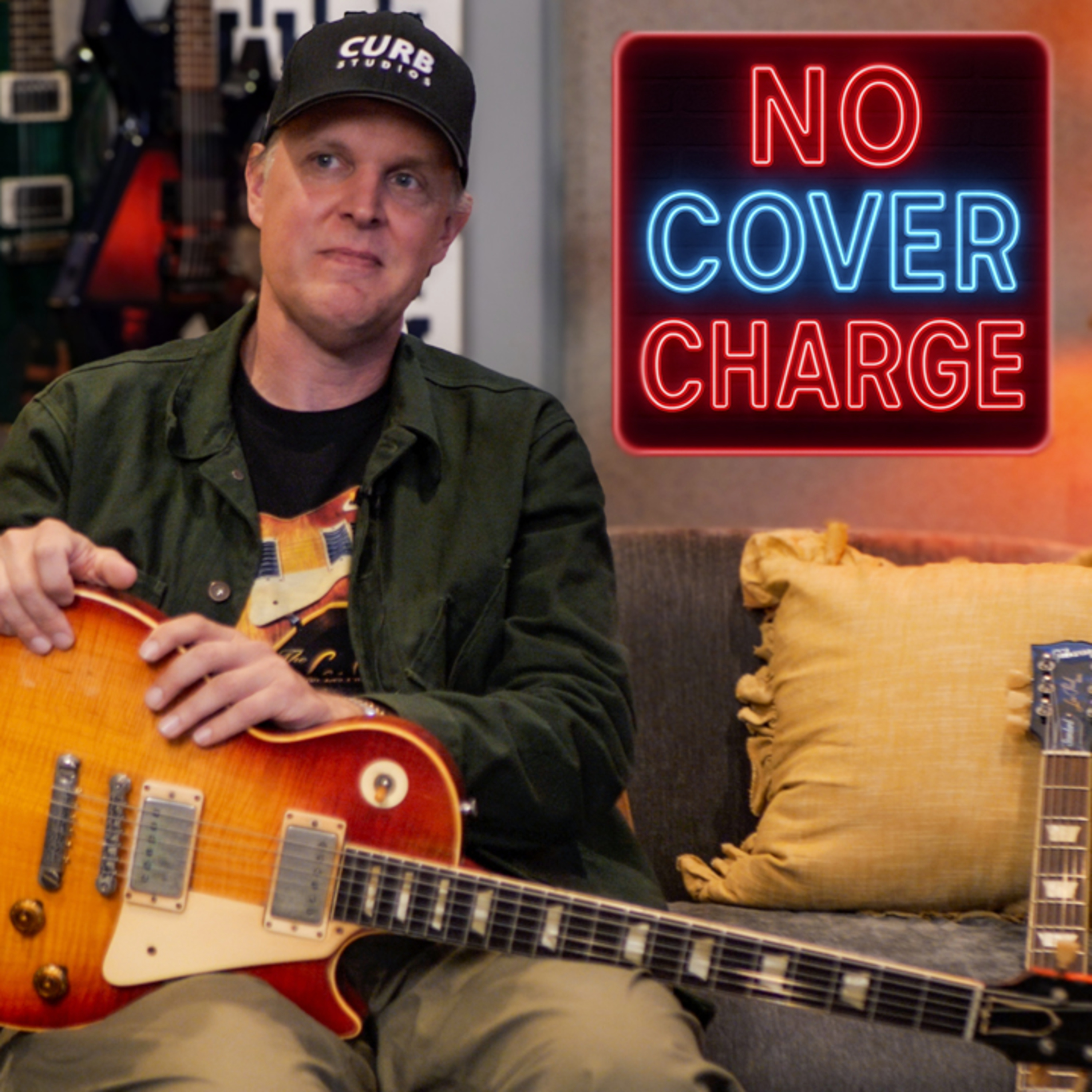
Episode 8 - Joe Bonamassa
Episode Transcript
Oh shit, oh mother and little baby polytune can't handle the strength.
I'm going to tell you something about those polytunes, those little baby petals they can't handle, you know, a big old click.
Sometimes you put your foot down on them and they just.
I sacrificed my larger chromatic tuner for shoes rig here.
Here's the thing though.
I walked in and you had Joe's rig sorted.
You built a stereo rig.
I call it a baby Bonamassa rig.
He didn't have any complaints, as you'll as you'll see, he actually just left.
We've already recorded this episode with Joe Bonamassa told us how he really feels.
The No Cover Charge podcast is a safe space for you as a guitar.
Player Joe would want us to say this.
It's very controversial and he really cares what you have to say about everything that he thinks.
So make sure to leave your comment.
In all seriousness, Joe is a master guitar player, incredible musician, songwriter, singer, just the whole package and really nice to spend some time.
He brought an incredible guitar.
And we did the cool thing with your Les Paul on his, which was like, yes.
Dude, there's so much jam packed into this episode.
Without further ado, Joe Bonamassa.
The.
It's like driving an old car there.
There are pros and there are cons.
The the in my and in my world the pros outweigh the cons.
But there are some days when when just things will just fight you.
So what?
What is this old car?
This is an old car.
It's a very old vehicle.
How old is it?
Jared, Jared texted me and he said Joe said he's down to plug into whatever and he's going to bring a special guitar.
This is PJ.
PJ got its name because it's it's on the case and the original owner's name is PJ starts with an A Abrams or something like that.
And PJ Abrams was from Johannesburg, South Africa, and this guitar spent most of its life in Johannesburg, South Africa.
I have two of these old ones from South Africa.
There was actually a lot of gear traded during the late 50s and 60s in South Africa.
They had money.
I know a friend of mine here in town has a a Neve console in Afrikaans.
Nice.
Yeah, it's an old broadcast console.
They've married together, but it's in Afrikaans.
You hear these stories of people going down there and finding sunburst.
Les Paul's like our friend John Schultz from Birmingham, AL.
He found this during COVID, asked me if I wanted to go, and I said, John, that's a young man's game.
Operation PJ.
Operation PJ, but I mean.
Not many people are willing to go down.
But we pulled it off and he pulled it off.
And this is, there's a Les Paul on the wall.
And we could do this, you know, we could, we could, we can, we can finally put this to rest.
This is a sunburst Les Paul made in the USA factory.
Yep, it's like a.
2017 or 2017, and this was of Les Paul Standard Sunburst made in Kalamazoo, MI in 1958.
Now we'll play a couple of couple of things on both and then we'll see.
OK?
Now 1 is worth a lot of money.
Got it.
Put that there and 1 is worth a couple two $3000.
I'll give it to you for 22.
2222 somebody was drop D.
Somebody was rocking.
Somebody was rocking.
Anyway, Zach Wilde was using that one.
Yeah, let's I can't get, I can't get his squeal out of it now.
OK, since we're, we're, we're three guys talking and I always say when you buy an Epiphone or something like this or R9 or something like that, it it, it, you can rule the world.
But any of them now they're all based on what they're, you know, what's this guitar worth?
Well, some could say somewhere between 400 and $450,000 based on that top that wood and the color, OK, and the originality.
It's a house in most places in the United States of America, it's fucking house.
Oh yeah.
House Guitar.
It's a house guitar now.
Are you getting $398,000 more in sound?
I don't think so.
No, you're not.
And, and you know, what you do get with these is you get, you get a, a totality of craftsmanship that, that like the pickups and, and the electronics are all from the late 50s and they're all military specs.
So, so yes.
Are the potentiometers better on an old guitar 100% as the taper better.
I, I struggle all the time with, with, with the taper of the new pots because it's not Gibson's fault.
It's not Fender's fault.
It's not anybody's fault.
It's not even CTS's fault because if you think about it, the guitar business really is one of the few businesses where these are still required.
Yeah, exactly.
This cable, this is was 1/4 inch cable was used 100 years ago by by operators.
Yeah.
OK, so we're we're we're.
Already out.
We're out.
I mean, so, so you cannot blame CTS for going, hey, listen, we don't use these, these potentiometers and B52 bombers anymore.
So we're only making them for Gibson, Fender and a few other people.
So yeah.
Is do they come from China?
Is the taper weird?
Yes.
OK, that's it.
That's the, it's actually not bad, you know, so and, and people go, well, what, what kind of pickups are you using?
Stock.
Right, they sound like humbucking pickups, and you know what these sound like.
Humbucking pickups.
They sound like humbuckers.
And now are there magic?
Are there some some of these old ones that we've done this a bunch?
There's some of them that are like, OK, yeah.
It's, you know.
Now, is that a little clearer, maybe a little less output?
Is that a little bit maybe fatter in in some ways, yes.
Is it $398,000 better than that?
No.
About 390.
2 So we can, we can, we can once and for all.
You know you have the king cork sniffer in the middle seat here, OK?
That's a reserved spot.
Yeah, your guy, you're talking a guy who brings multiple versions of this on the road, probably 2 and 3 dumbbell amps.
OK, Why?
Because a if I don't use them in a practical application like on the road or in the studio, what?
Why bother having it?
How long did it take you?
Were you always this way when you had nice instruments?
You're like, they're coming with me.
Yeah.
There was never any sort of hesitation with any nice stuff.
Like what was the the breaking point when you're like, if I can take this out, anything's coming out.
Well, I got the first sunburst Les Paul about 15 years ago.
We called it Magellan and I got it from a guy here in town.
Elliot Michael at Rumbleseat Music when my friend for over 30 before.
I got that Strat, yeah.
And he comes to my show in Albuquerque when he was living there, and he's like, it's like, you need to play a 59 Les Paul.
I also need an Aston Martin.
You know, like a house in Beverly Hills, right?
Right.
Yes, I do.
I said I agree with all these points because why don't you take, I have a burst and at the time in 2009, a sunburst.
Les Paul's was right after the financial crash and these were dead.
There was that they've gone, they were free fell.
I mean, it was just just where it started.
There was nobody buying them.
They they've since recovered a bit and he goes, well, why don't you do this?
Give me a dollar a week and I'll give you this 59, but just, you know, pay me off on time.
But you got to play it every gig.
I'm like OK.
A dollar a week.
Yeah, I did better than that.
Didn't.
Like that.
He's a nice guy, Ellie.
Yeah, he's a great guy.
He's a great guy and.
I still could.
I could have held him to his word and still be paying this thing.
Huh.
Still, he's that cool.
$4.00 a month.
So I take the guitar and I'm I do a whole run from the East Coast to the West Coast.
I then fly with it to Australia and I'd do a whole run and I fought Virgin Australia, I fought Qantas, I fought getting guitars on the plane.
Oh yeah.
Finally, to the point I was just buying seats.
Which is now your MO from your Instagram posts.
You want a guaranteed outcome.
Yeah, buy a seat.
Buy a seat.
It's unfortunate, but you want a guaranteed outcome and they still try to bump the seat.
They they still try to bump the guitar if they're oversold.
Oh my God.
So they come up, they're like, so I know you have that seat, but we're oversold.
Since I've had them come up to me, I had AI, had AI, had AI, had a flying V next to me, big big brown fly V.
How do you say no?
Because I'm I'm, I'm not a pushover, but God, I don't like confrontation in that way where especially you're in a plane.
What's the Joe Bonham?
Ticket.
Gentle No.
Well, well, a lot of times you like when you're when you're carrying something like a flying V case is big, yes.
They want to.
But you know, like A5 LATCH, you know, lift and it's not that big, but a lot of times you're just sitting there waiting for your gate, your group to be called, and you'll see the gate agent and you'll see that little red tag and they come right over to you.
And that's when you fan out two seats.
Yep, and you're like, I have AC for it.
So I remember I was flying a flying V here and it was in LA and, and the, the, the, the stewardess comes over with the gate agent saying, Hey, listen, we're oversold and and we we need that C for for a passenger.
And I said, OK, I said, but we have to put the guitar in the closet.
Well, the guitar doesn't fit in the closet.
I said, well, where are you going to put a guitar?
He goes, we'll have to check it.
I go, it's not going to happen.
No way.
And the worst thing you could say to airline personnel is you don't play the don't you know who I think I am Card.
You don't play the don't you know what this thing is, Card?
Because they don't really care.
They don't really care about you.
They actually hate the passengers.
They despise us.
If you had to deal with the general public on a on mass every single day with their quirks and you know, you've ever seen those, those, those, those people raging on air.
Oh, yeah, Every single day.
They hate you.
They hate folks, OK?
They prefer flying cargo or cattle.
OK, we are easier.
So anyway, I explained to I'm, I said, I said, here's we have two options.
I said, you can bump me off the flight.
I said, I cannot, I cannot let this guitar out of my sight is it is too, too valuable.
It's like, well, we'll take take extra special care of it.
I said, obviously this thing has value enough to me that I purchased a seat for it, right?
And I said, so I bought a seat so you can bump me, you know, or whatever I said, or you can, this guitar can stay and you can put a red tag on me and I'll ride down.
That's pretty good.
And they finally, they, they, they finally just gave up, you know, and, and I just said, you just bumped me off the plane, right?
You know, you can do that.
I mean, they can, they, they have the right to refuse service to anyone.
And, and, you know, but if, if you're a traveling musician, I know this is really, really tough.
I mean, especially now there's all this stuff going on, but cost, you know, this, the cost of being in the guitar business and, and being in a band and out there on the road is, has gone up exponentially in the last 36 to 48 months.
And unfortunately you hear the horror stories of like people giving up their guitars and they come in and it's like complete just.
Or having their stuff stolen when they're on the road and then how can they recover from that at the time?
To the point of like we can get to this point like this is a good lead into like, OK, why are amp modelers so popular on a live stage right now?
For this reason, because you can make a, you can make a pedal board that's smaller than this put.
It in your backpack.
That has a, a neural or a, a line 6 or whatever those those amp modellers are and a little Seymour Duncan power amp.
And all you have to rent is a 4 by 12 or a cabinet.
And that's a whole rig that fits into the front pocket of a backpack of your gig bag that fits in the overhead.
And you don't have any of these issues.
And, and, you know, if you're going to, I'm going to check my head or, you know, then you start getting to these, these, these, these costs and, and fragility issues that, that are just ultimately, ultimately, don't you know, you, you end up just eating into your money and you come home, you know, having cut a check, right?
Absolutely.
So that's what, you know, I, I think some of the popularity of the, of the, of the modeling amps, it's, it's, it's, some of it is because they're pretty good and some of it is because of just sheer necessity.
Do you own any modeling?
No, you don't have any in Nerdville.
Here's here's my thing.
I'm terrible with technology I have I have this Tesla coil effect on on digital electronics.
I can shut my phone down just just my or I'm.
Looking at it.
And I have very little patience and like if I'm going into a machine like a Fractal or whatever and I have to make decisions of what mic I want to use, what position of the mic I want to use, what cabinet, what speaker, what you know, what version of the AC 30 or Fender Twin And then have to get all these parameters.
I can just go up to a Fender Twin and just.
Just do it.
Or just it?
In three seconds it it seems like but but I'm also A1A very one-dimensional type of player, a very one-dimensional kind of artist.
I I do what I do that's I'm the bull in the China shop.
I play too many notes.
It is what it is.
We can discuss ad nauseam.
Don't care anymore.
It's I, I'm self aware of what I do.
Now, if you're in a, if you're in a side man or woman situation and you have to have access to all the tones, of course, then those things are great.
But you have to be prepared to spend hours and hours and hours of programming.
I had to do a date in New Orleans and the gear never made it.
And the guy goes, don't worry, I have a Kemper.
I've listened to how you play and I'm going to have you lined up so quick.
And I looked at him and I said, I'm not sure about that man because I don't know how to use one.
I was really nervous.
And he goes, trust me, we're going to put it through the monitor.
So we get to the sound check.
The first thing that happens is he puts it through the monitor and it was like an ice pick.
And I was like, Oh no, Oh no, no, turn that down.
And I had him like cut all the treble off.
I was like crank the mids and of course it's like a crappy monitor.
So then it.
Sounds like how the monitor sounds.
Yeah, So then we get into the show and I'm playing and I was like, just give me the most basic sound.
So I get there and I'm doing it.
We're in the first song and I'm like, all right, cool.
And I don't even know how to turn the thing up.
I don't know how to do anything.
Well, something happened where unfortunately, the power cable popped out of the Kemper.
Now there's I look back, no guitar, no sound.
The Kemper looks like a VCR that's been shut off and I go, OK, cool.
So then they.
Look like that.
I try and look for the guy and he's over there drinking a beer and he's like, what's wrong?
And I was like, your machine is broken, Sir, you're the X-ray machine.
He goes and plugs it in and this is the best part that the band's still acting like, oh, we'll just keep playing through the solo.
All of a sudden it goes loading and it's got a little bean bean like a little bar for loading.
Your nightmare scenario.
Restarted.
The best part is when it came on, it was like ADI tone.
And I was like, oh, cool, so now the guy's got to reset up my tone.
Dude, I remember the days of a PD classic when that thing would stop working and you just start hitting it.
Yeah, Albert Collins style.
Do you hit it with the guitar?
And all of a sudden, there it is.
Bang into it, God, man.
I think also too, when you rely too much on one entity, you know, and if that entity decides to take an unauthorized union break, you're, you're, you're kind of aft with a capital.
Totally, dude.
You know, I've had it where the power conditioner, the Kikatsui, when I used to run the whole rig on one, one night in Vegas, kept just defaulting it and it's and and shut the whole thing down.
I was like, like, we can't do this anymore.
So during the set.
During the set and I said after that night, I said we can't do this anymore.
So I have now two of them, half the rig runs on on one, the other half of rig runs on, on, on the other and the pedal board doesn't run on either one of them.
So if one goes down, I still have half the rig pass and signal through a pedal board, right.
And I can, I can get through the songs, you know what I mean?
I can get through the night.
But but if you're, if you have just one thing, you know, it's, it's, it's, it's a, it's a very lonely feeling when you're up there going.
I can't get anything out of.
Anything and a moment could feel like an eternity.
It does, it does.
And then you're playing sufferers.
And if you're half playing through a rig, you're like, at least I can limp through it.
But if you can't even do that, then it's just like.
What's the practical application are we talking about?
Like does this pedal sound great just in a, in a controlled space or does it work in a gig or in a studio?
It's like, it's like it's sometimes I, I, I just, I don't, I never get the reference point.
It's like, well, what's a good?
So people send you stuff and they they want, they want gear reviews.
They ask for different things, so some of them want gear reviews, some of them just want me to have it, so maybe I'll use it unless I want to sell out, right?
Have you ever sold out?
You're looking at a fucking back.
Scratch, you got a, you got a Joe Bottom.
Lots of back scratcher, my guy.
Well, dude, you know what always pisses me off with gear reviews is when someone, let's say they take a Tube Screamer or a Fuzz Face or something, they're doing a gear review on it.
And it's like, I don't know what it's going to sound like when I play it.
I don't know what it's going to sound like with a band, you know what I mean?
You're in a controlled environment.
What does this sound like through a loud amp or through a tube amp or on a stage?
You know, that's the big gripe.
I always have.
I think it's more about demonstrating the inspiration potential right, of the gear more than if you're looking for how is a piece of gear going to sound through a YouTube video.
I think at this point we become educated to know that that's not going to happen.
Yeah, maybe that was how things started, but at this point, gear reviews, anybody in my space will take concepts and work the gear into them.
It's not just straight up you put this knob here and this knob here.
This happens at least as far as I'm not saying that doesn't exist, but that type of content used to be popular.
Now, for some reason, it's not really in vogue.
I was with Paul Gilbert and we were talking about stuff and I was like, I don't know, man.
I was like, I just use really basic stuff.
And he goes, yeah, that's because you need basic tones.
And I was like, Ouch.
But he said it in a nice way because he was like certain songs, you need certain pedals.
He he was talking about like Univibes.
So he did like this big Univibes shootout, but I don't know.
Have you ever been convinced by a gear review?
No.
I, I basically what I, what I try to do is whatever, whatever the review says or the, the suggested application, I try to do 180° opposite of that.
Yeah, my, my thing is extremes with, with amps and, and even some of this stuff.
It's like, you know, I've had many a boutique amp builders bring an amp to a gig, you know, going hey, you know, check out, check out my whatsoever, you know, whatever it is.
And I'm like, well, that's cool.
And I'm like, how many watts is it?
And there's like, well, we do it.
We do a 30 with a half power.
I'm like, dude, there's 7 amp, there's 700 Watt amps up here.
It's like you don't even hear it, right.
So we're not going to, and then I'll turn it all the way up and just see what it does, where I get it up to like 3/4.
And sometimes you just hear them, they start burning out, you know, like or like start like.
Warbling.
Yeah, and, you know, giving up and then the guy freaks out.
It's like, well, it's not really designed to run that loud.
I'm like, well then make 410 and you know, it's like, it's like don't put these numbers on the pot.
You know what I mean?
Don't put them on the knob if you don't expect somebody if you can't use them.
When I watch you play like, or when I played through your rig, you played through Joe's rig.
There's a power and there's something that that it just can't be replaced.
It's like that sun amp I got from you when you turn it on and it's at a a certain volume, it's doing things sonically that can't be done at lower volume.
So I think it is kind of funny when people do have rigs where they're like, oh, this is a 15 Watt amp, but you know, it's going to have everything you need in it and it's like, well, it's not one-size-fits-all I feel like with with amplifiers.
There's there's an application to it.
It depends on how large your drummer is.
You know, a prison reverb is a great amp.
It's a, it's a, one of Leo's best inventions, but with a, with a big drummer, with a Bigfoot in a snare, that 15 watts is going to get eaten alive, right?
You're going to be like, and then you're going to be on 10 the whole night.
And you don't want that.
You're compromising your dynamic ranges.
You know, there's so many different sounds just being able to turn up and down, you know, conversely, you know, if you're playing, you know, the Catalina Jazz Club in LA or baked potato and you decide to use 7 amps, I mean, it's going to be overkill.
Yeah.
I mean, you got to read the room.
You know, now it's now with the invention of like more, more, more bands are are either no stage volume or very minimal stage volume.
And so you can get away with a lower wattage amp, you know, in the years, but you know it.
It just depends on the application and and the kind of music.
At the moment what?
How many amps are you running on stage right now?
7 they're not all on at the same time, but they're but they're mid drivers.
It's it's, it's something I came up with years ago, like, like, like, you know what, I'd use the silver Jubilees only I was like, man, if it just had a little bit more of a mid, you know, just like just something in the mid middle that, that get a little less squished and more articulation.
But then you then you find out you cut it.
You know, I used to cut it with a blackface Showman.
Yeah, I'm like, OK, but we're getting, we're getting somewhere.
And then I used to use those, those JCM 900 or JCM 2000, the stereo straight cabs.
Yeah, dude.
And I'd use those things until the baffle boards would give out, the speakers would fall out, and then I would.
I found that I like the sound of Marshalls through two twelves versus vis a vis 412, which is which is somewhat of a contradiction in terms.
Most people like associate a Marshall ample of 4 by 12 and that's great and it and they do a thing.
But I like the sound of less speakers, more power.
And then being that I'm, I'm, I'm an opposite guy through our friend Zach Wylde discovered that these kind of JCM 800 silver Jubilees kind of amps that he was running at the time sounded way tighter and more articulate with Electro voice speakers.
So now you're sitting there going, OK, OK, Joe, you don't like 4 twelves.
That's, that's, that's common practice.
And Celestions in Marshalls are like peanut butter and Jelly.
And I'm like, no, I, I like the EVs with, I like 212 EVs with Marshalls and in 4 by 12 cabinets split in the center.
That's just something I came up with.
And then when I went to deal with the Fender component, I found that I like Celestions in the Fenders.
But how funny, man.
How long were the swaps and do you think about the time you spend swapping things out?
Because to me, swapping speakers, pickups, etcetera, etcetera.
We're different guitar players, of course, but do you factor that into your routine or is it just like this is happening?
Well, you know, I found that.
You got a guy for it?
Well, we have we have people for these things.
If I'm not hearing something or if I'm hearing something that's that's a little bit off to me, meaning that this that the mids are not because you a first of all, when you're running 7 amps, look, your biggest challenge is earth and phase.
Is it buzzing because it will buzz.
So you, I use these Layla P splits.
I love those dude, and they're great.
They're passive.
There's no, so there's no power and it does earth and it does a phase.
So the first thing you're doing when you're running 4 amps at the same time, it's basically what I do is 4 amps at the same time.
You want to get them all moving air in the same direction and then you start hearing deficiencies in your speakers because I run everything as loud as it'll go.
The Jubilees are as loud as they go, Not as game, not as much game, but it's I mean, it's there's loud, they're wide open.
The twins, the high-powered twins are basically wide open.
The dumbbell stuff is pretty much as loud as it goes.
And so when you're bashing on that kind of equipment for five nights a week doing them, you know, five week tour and there's 20/24 shows, the fatigue is going to, you know, you're going to run through some selections.
You know, the EVs tend to tend to be OK, but I have ripped.
I both on the selection side and the EVs I have.
I have ripped baskets out of the cones.
Wait, So what?
Does that look like in the physical world?
It looks like when you can look through the amp drill and see the other side or see the drums.
There's a straight hole went through it.
Yeah, I went up.
A Bonamassa cannonball.
I can feel like a, you know, like you feel like a sag on the tone.
I'm like something's weird with the twins today.
And I thought maybe we'd kill the speaker because the high-powered twin has two taps and it's I believe it is 4 ohms and so it's 24 ohm taps.
Don't quote me, I'm sure the Internet will be.
Oh that let us know bro.
24 ohm taps and originally Leo used RCA jacks on the original ones, but on my signature one that Fender did a few years ago, we used quarter inch because it's a lot easier.
But sometimes so one of the speakers will kick off, but the amp's still functioning with one speaker because it's not the OR not in the series.
I mean, it's one time I was just playing.
I just went for a lead or something.
I was like, this sounds weird and squishy.
He said sound check.
And then I looked through the top twin and I can see the drum kit and I go, I think we have A and you know, it's, if you watch when you're running at high, high volume, you, you, you and you have, you know, an amp that's 100 watts that has a lot of articulation and it's, you know, tight on the, the low end.
You the violent movement of those speakers.
I mean, it's a surprisingly last to show, you know, because it that it is, it is, it is absolutely pushing as much air.
It's like so percussive, man.
It's.
So percussive.
And, you know, and that's why you have to, like, our cabinets have way too many screws in the back, right?
Because it'll rattle off.
Yeah.
You just like getting to secure it.
So, you know, I mean, it's a way of doing things.
Is it the right way?
I am not sure, but the but the end result is is an interest people who play through the ring.
If you play through my ring, both you guys, you know, it's addicting.
You know, once you harness the volume and understand that, that, that it's all symbiotic, everything like, like, like there'd be nights even with using the power, the Kikasui power conditioners, there's nights when Reese Wines will hit his Leslie switch like a foot switch and it comes through the rig.
It's all related.
Wow, it's all positive.
It's like a living.
Breathing.
And when it's angry, it will.
It lets you know it lets you know when it's when it's not happy and it's and it because you'll just get weird buzzes and things.
Sometimes you got to shut an amp off, start again and reset it.
We find ourselves sometimes in situations just like this, where we're playing through unfamiliar gear.
What are some of your strategies for sounding like yourself?
What what do you find that could be like a sound check style riff or some way to kind of get locked into whatever you're vibing with?
Well, what you want to do?
I mean, like, I don't like a lot of treble and you know, and so you know, charity, I always say charity starts at home.
Is, is like, like PJ's bright.
It's a bright guitar.
So I, I keep the tone pilot like 7 and very rarely do I do, I find myself soling all the way on 10 because that's when it's, it's the brightest.
And you know, so I, I'll tend to, I'll tend to knock it back to 8 1/2 or 9 and just kind of vacillate between those.
Sometimes you go all the way up if you playing like these five, these fifths, because what I really like to do is, you know, and the sound that I hear in my head is not a lot of difference in the midrange and the base response between the wound strings and the unwound strings.
So when you have like, I mean, it's not you can get a real good human voice sound out of the the wound strings obviously, but you can't bend the D string.
I guess you can, but you wouldn't want to put that down you.
Must put it off the neck.
So notice the transition between between.
I just keep moving the tone and the volume to where the transition between the wound string and the unwound string kind of feels the same underneath the string while you're playing.
And the faster I play, conversely sometimes the lower I put the volume on the guitar because I want it super articulate like my kryptonite has always been.
Too.
Too much gain, too much squish and the recovery rate.
Yeah, you're not using any of the gain pedals that I have set up here, but there's just like a bass Marshall sound kind of.
Which is perfect.
I feel like your magic, though, lies in your articulation and your playing.
It's it's, it's not even a volume thing.
It's it's almost like you said, when I play your rig, I go, wow, he doesn't use a lot of treble or it's always dialed back.
But what it is, is your accuracy of your playing.
I feel like that's what translates to give it that bigger sound.
Yeah, and it's slower than you think.
It's just accurate and I'd rather be way slower and but accurate in where everything you know, because there's nights like there's a couple of settings in my rig where it's really honest and I do it on purpose and and it's like fucking hell.
It's like you just if you don't have it, see, I'm dumping out of that setting.
I mean I have AI have a squish setting.
I mean I.
Have an escape route for moments like that.
Or yeah, it's called.
I point to Reese Wine as I go.
It's Reese.
Take it.
Take it, take it, take it.
That's a pretty good one.
There are nights where you think, you think you need to return all the money because you just go, Oh my God, I'm terrible, just terrible.
And, and, and then there are nights where you think, OK, I can really, I can see the Fingerboard and the time compression like on stage is you're like you're playing something that's going by to the audience really fast.
That's I don't think I've ever heard that kind of term time compression like when you're on stage.
That's where the 10,000 hours comes in.
So imagine if you're a tennis player, you know, you're pretty good hobbyist level tennis player.
You get out there with a real pro, Next thing you know, this, this tennis ball is flying by your your head at like 150 miles an hour.
Yeah.
And you're going, how does this person like, live in that world where they can actually see the ball?
Yeah, that's enough, enough to return it.
And same thing with baseball, same thing with golf, same thing with with driving a race car.
OK, I I could, I could Lewis Hamilton can hand me the keys to his Ferrari F1 car and then I can hand him the keys to a Toyota Prius and he'd still beat me.
But also he, he, he lives at 200 plus miles an hour.
That's not a big deal.
I go 200 miles an hour.
I'm like, oh, yeah, it's like I'd be in an airplane.
It's time compression.
So you see, you're hearing things and you're living things much slower on stage than it's going by to the audience.
Like if you ever watched a clip of you've ever broken a string on stage.
Oh, of course.
OK, The time that it takes for you to unplug, get another guitar, put it in.
You think?
20 minutes.
20 minutes has gone by, but if somebody happens to video it, it's seamless.
There's that very famous footage of Stevie Ray Vaughan on Austin City limits.
Renee Martinez.
Puts the guitar over.
Him, he breaks the string and it's seamless and he gets a big round of applause.
To Stevie.
That probably felt like a lot longer than it actually.
Took.
Yeah, he was probably sitting there going let's go, let's go.
Let's go feel what you're going to play going into the next bar before the next bar hits.
If you're, if you're, oh shit, what am I going to do?
Right now?
It's going by you're, you're on the backside of it.
You want to, you want to lean forward and, and you know, you know, totally, you know, take control of those because this, this way you could tell more stories.
What would you describe the physical feeling of being in that kind of flow state?
Well, I I would imagine imagine Adderall would help.
OK.
Yeah, imagine.
That like that could give you a nice idea you.
May you may get a little little jittery, the vibrato may get.
We don't.
We don't.
Endorse and Spearman with Adderall unless you know, like you.
Know like Haight Ashbury 1967 anyway, when you when you when you get in, when you different artists have different sayings.
Some people call hit in the note or whatever, but it's it's part of part of this, the same thing.
It's you're one with the songs that you're making and one with the audience, which is also a big part of the show.
The audience audience makes or breaks the show.
A quiet audience.
You're like, you can do whatever.
You can be banging it out and killing it.
But if they're if they're not, you know.
No feedback.
And that's the 30% that they give part of the show.
So you know, ultimately for me, when when you when you find yourself kind of on the backside of that wave, you know, the way to shake that off is don't double down and go for weird things.
Go back to the basics and nail those you know and then and.
Then for your own artistic expression, it's not, it's.
Not fuck the artistic expression I got paying customers.
It's kind of like if someone was like on a bike and you did a trick and everyone was just kind of like, yeah, that's cool.
And they're like, you know what's really going to get them when I try this double backflip that I've never landed.
That's where a lot of people, it's the simplest thing I do that's devastatingly effective dynamics, is you pull them forward, you make them lean forward in the chair, and then if you want to sting them, you know?
But I mean, the band is simmered.
There's there's quiet, there's bringing it down, there's Blues quiet, and then there's Buddy Guy quiet.
Those are the four stages of quiet.
Exactly.
The Buddy Guy quiet is the world I like to live in.
I see where it's it's.
Buddy Guy quiet would be like.
Buddy Guy quiet is barely you're barely touching A3000 seat theater.
You could.
You could.
Basically if I stand close enough to the Vulcan mic I can.
They can almost hear the acoustic string.
Yeah, yeah, exactly.
Gorgeous, even in a big venue like that.
Yeah, and it's because you get people listening and it's really on the for them.
It's really a thing where they're leaning for because it's like watching someone walk over the Grand Canyon on a on a high on a tightrope.
Yeah.
And and it's, and that's, you know, that's, that's one of the things that's also this style of music.
You want some variety in the show.
It can't just be an assault all night because it's like after three songs, you've kind of heard it, done it.
You know, we have about 75 songs in our book that we can pull out.
If we're going to pull out some stuff from way back, We'll we'll sound check that.
But a lot of times I'll, I'll switch the show 3040% a night just just honestly for no other reason, just for to keep the band engaged.
You know, you don't want it to become like Broadway, You know, where it's the same, the same marks.
It's it's not a play, It's a, it's a, it's a snapshot in time.
Here's something, though, about Joe that I think blows my mind more than anything is the whole thing of all the country stuff and the Danny Gatton stuff and how I feel like with you, something that a lot of people brush over is that whole side that you had in your playing from the beginning, basically.
He taught me, yeah, he taught me when I was a kid.
And, you know, he, he, he was the one that made my whole, my whole world go from mono to stereo.
He was like, he's like, he goes.
You know, kid, you know what a Les Paul is?
How old were you I?
Was 12 when I meant wow at the Silver Lake Blues Fest and hog roast in Silver Lake, NY.
That's awesome.
And it was Danny Gaton and Clarence Kate Mel Brown.
Wow, that was and the Coal Shop Blues man, which I was sitting in with as a 12 year old and and you know this guy, you know, just, I just remember sitting inside the stage watching me play.
After I get off he goes, hey, hey kid, you want to see a cool Telecaster?
Because I was playing this Japanese reissue red telly I still have.
And so he pops over this road case and it's that beat up 53 and I'm like, I'd never seen a black guard.
You're like I.
Was like, holy crap, this is like cool.
He's like, come on, you want to sit with us?
It's it's like my name is Danny and I used to do stuff like this, you know, when I was a kid.
Is his father used to bring him out to like bluegrass festival.
He was a banjo player.
Wow.
And so I mean, he was, he would be gone, his Winnebago, I mean.
I mean, he was, he was so he was so fast, you know, and yeah, but he would, he would, you know, he, he would talk.
He taught me how to use the hybrid.
The the a little rusty on this.
Oh no, it's good.
But he also taught me how to use the volume like the Buchanan thing.
Another epic moment of your show.
Just that.
That's so cool.
There's no ambiance in this amps and that's really difficult to do without some kind of help.
There's some over there, but.
Well, we're talking about taper in the pots.
It's it, it helps.
It helps when you have the taper and you need, you need a little something and and Les Paul's a little harder because it's because it's front pickup only.
Easiest to easiest guitar to do it is on a strap.
Is that right?
Because the blind's right there.
Steve Morse was just over a few days ago.
He's got like the ultimate tone pinky I've ever seen.
It's like.
I saw I saw that clip where he's he's doing wah, it's.
Like an old Steel player, Man, it's crazy, yeah.
It's really.
Yeah.
A lot of my favorite guitar players though, are very complimentary of the actual instrument.
How much value they find in these knobs here?
Infinite amount of sounds.
I did this whole thing years ago for guitarists I remember.
Seeing that dude.
And, you know, it was one of those like, you know, those European press tours that you do.
And we had a long day and, and at the end of the we had a long day.
And I was there with my tour manager Clay, and we're at John Henry's in London and they're like, OK, now that we're done with all this, we were promised 1/2 hour guitar lesson on camera.
And I'm like, nobody told me that.
And I go, I could teach you everything I know in like 15 minutes, OK?
It's just I can't teach you how to apply it.
That's that's a personal thing.
So I I'm like, I'm like, oh shit, what am I?
What am I going to do?
And I just, somebody handed me, it was like a Dicky Betts.
I remember this bro, yeah.
And some some lazy J amp.
The lazy J.
They didn't hook you up with the dual marshals.
What stood between me and a martini was this 30 minute lesson.
He's like, let's get this over.
With but you know the feeling of course, when you've checked out.
And like I said, so I quickly I come up and I completely blagged the whole fucking thing.
And then it was one of the first videos of mine that went viral.
And there was polarizing like everything I do, just because I have an opinion, it's polarizing.
Well, it's my opinion that I I put into practical use.
And I said, hey, kids, you know, you know.
Uncle Joe here.
Uncle Joe on the Internet there the.
Affirmation of how you don't know your own fucking instrument, you know, and and I'm like check this out.
You want, you want, you know, you want, you know, fresh cream.
You know you want fresh cream.
Go.
You want, you want, you want, Bloom did.
You see your lesson?
Yeah.
And I'm like, I'm like and I'm like going, I got 1 cable, I got 1 amp.
I'm too lazy to because the amp was in the shop and it was way back.
So I just turned the whole thing up and I was just using the volume.
I said, I said, you realize that all of the sounds in your head can come out of this little this thing right here, not forget these, this it's just how you tweak the how you tweak the sound and how you tweak you know, and what how what are you hearing in here and how are you channeling that through the guitar?
So it's and then, you know, then the comments, it's like, well, I would do it this way.
I'm great.
That's amazing.
Great, that's amazing.
Please do it your own way and disregard everything.
Don't you think it's way more fun and easy to talk about how you do it than to actually do it though?
Well, I would, you know, just comment.
My I'm choosing my words very carefully.
I'm.
Tread lightly, everything can be edited.
I respect anyone who goes out there on a stage, puts themselves out there.
My hat's off too, OK, Because it is very, very difficult.
Where I draw the line is in the phone and the platforms has given everybody a voice in which some of them upon having a a couple of old REH instructional videos.
Arlen Roth.
Dude I got 2.
I'm the troll.
OK, OK.
Couple REH you.
Feel yourself that.
Is so funny because they're.
Not ready for prime time, You know, because Arlen Roth's they're there with their better production I.
Did one dude.
Arlen was a legend.
He's a.
Legend, rudimentary basic knowledge of of guitar and three whole gigs under their belt.
Reactions these things elicit they all of a sudden think that we're peers we're not because I've been doing this 37 years you've been doing this your whole life over probably 30 years and and we've learned how to to adapt in situations when the shit hits the fan that's when you make your money that's how it's like OK amps out how are we going to do this yeah OK how am I going to entertain these folks when when we've you know our our our drum snare drums like all those things don't factor into someone's opinion until they actually get some real life experience and and then then by all means tell me what you.
Do I consider myself a very hard worker on the road and all of the things I look directly at you for the amount of shows that you've played over your time, But also every single time I talk to you, you're on tour, you're always working.
So it's really hard to listen to someone say something or even to tell me about, well, you know, if I were you, I wouldn't be using that amp.
I'd be using this or I'd be doing this and I would never do a vibrato like that.
Or, you know, Leslie West.
Oh, he, he wasn't good, man.
Have you ever heard of, you know, and then you go, OK, cool, this is great.
But also you're talking to someone that has spent their whole life playing on a stage and dude.
Everyone's opinion's the same, man.
Bro it's just something.
I'm allowed to have one.
You're allowed to have one.
It's music, man.
Yeah, I'm embodying the trolls, by the way.
That's completely right.
Everybody's entitled to their opinion and not everything that we do as musicians or artists, it's for everyone and you have to retake that criticism.
I can describe the troll that we're thinking about.
OK, said troll.
Personify the troll.
As he does it, can you try and make the troll on the side?
I remember we were working at Ocean Way Studios in in Nashville.
Josh, Josh Smith our my Co producer on all these records.
We were doing, I want to say whatever we were doing, one of Reese's records or Reese's record or something like that.
And I pick them up from the hotel downtown Nashville and we come down 3rd Ave.
and I make a right on Broadway.
We're just heading towards Ocean Way.
And it was about 10 O clock in the morning.
And I think, I think they start early down there.
They start.
Early down there on Broadway.
Shift start at 10:30.
Rumor has it Wagon Wheel 10Rumor has it Wagon Wheel 10:30 on the dot we're.
Hitting at 1031 Wagon Wheel.
Come on, it's Bloody Mary's and Luke Bryan coverage.
You know, Anyway, I saw this guy pull up.
He had like this like beat down Toyota Rav 4.
And he pulls up to one of those honky tonks.
He gets out and he's, you could tell he's visible, you know, visibly angry.
And he has a guitar and he's got one of those little Music Man combo amps, maybe like an HD30I mean it's like beat the shit.
And he's got a cart like those.
Oh yeah, like a like a buggy.
Buggy, yeah.
You got to have good tires on those things these days.
Broke the cart falls out of his vehicle and you could tell he at one point he had real like lush 80s long hair that had, you know, receded and but he never cut it, you know, and the years the cart, the cart falls out.
And I'm watching this with Josh.
And then this guy just loses his shit.
He takes his guitar, his pedal board and his aunt sans car and he just flings it onto the sidewalk.
He's back into his car, drives up 5th Ave.
N to find parking his.
Gear.
Oh, he just left it.
Like somebody wants to take to take this.
Shit.
That's, that's when you've reached saturation point on Broadway.
That's that's when you've decided that, like the reality of your situation, the gravity has finally hit you.
10:30 AM on a Monday hungover.
Hungover again.
But I know people that have played Broadway and they enjoy it, you know, and I would.
Say this though man, above all with what you said and what we were talking about.
Like, all jokes aside, I often think to myself when people have so much hatred or so much to say or so much to defend with music, I always think in my head, I'm like, relax, it's guitar.
It's music, the one thing in this world that I love and it's so personal to all of us.
Why would you ever be a bully, a cyber bully, or like defend things that are just so guitar's fun.
This is meant to be.
Music's fun when you see people like going because of something that goes on in the world.
I'm taking my music and my bat and ball and I'm going.
You assume that the sun won't rise tomorrow, right?
It's so it's like you become so self obsessed and thinking what you're doing is so fucking important.
It's it's not, it's important in the sense that you, you, you're be able to entertain people and, and, and provide an escape hatch for a very crazy world.
That's it.
Other than that, enjoy it or don't, you know, people take the piss out of me all every day.
I'm happy to take the beat down.
And you know why?
Because because at the end of the day, it doesn't matter People still somebody likes this shit, you know, and, and, and you know, that's, that's the bottom line.
And and everybody has a lane you created, you know, you Jared, you've created a great lane for yourself.
I've created a lane, you've created a lane.
And anybody who hates on either all three of us on the lane itself, you know, obviously does not have a, the number of a good, you know, a good pave and cement guy, you know, it's like.
Yeah, yeah, we're driving, We're flying past them.
Well, it's also too you did something positive as opposed to dwell on the negative and be bitter about it, right?
You know, a lot, a lot of the vitriol is just people are bitter because they, they want to blame someone else for their lack of not accomplishment, but just the, the being able to live that dream that that we all did when we sat in our bedrooms and playing guitar.
And some people go further than others.
And the ones that are really bitter are the ones that go like, well, I, I didn't get that because it was political or I didn't get, well, no, that's, it's probably not.
There's probably some you're probably hard to work with.
Yeah, yeah.
There's some more stuff going on.
You know, you've got Salieri syndrome or you have, you know, Yoko syndrome.
And it's like, you know, it's like you can't be, you know, if you're in a band, you can't be toxic.
You know, you don't want to just, you know, you got to work well with others.
If you're the band leader, even more important, you got to work well with others.
You got to keep people inspired and, and morale up.
And you know, you know, especially in those days when you have to like, you know, you have a 900 mile drive.
Oh yeah, five in a row.
And, and the, and the cats are beat down.
And it's like, it's like, hey guys, Cracker Barrel on me go.
Yeah, we're going to the Cracker Barrel.
Anyway I I have to split because I I have some home stuff to do.
Jam really quick two-minute jam with us.
OK, I'll play rhythm, you play Lee J.
Oh God, here we go.
How about something like this?
The.
The.
The.
The.
Thanks.