Leading Nitric Oxide Scientist: The Unseen Factors Affecting Your Health!
Episode Transcript
Why should people care about nitric oxide?
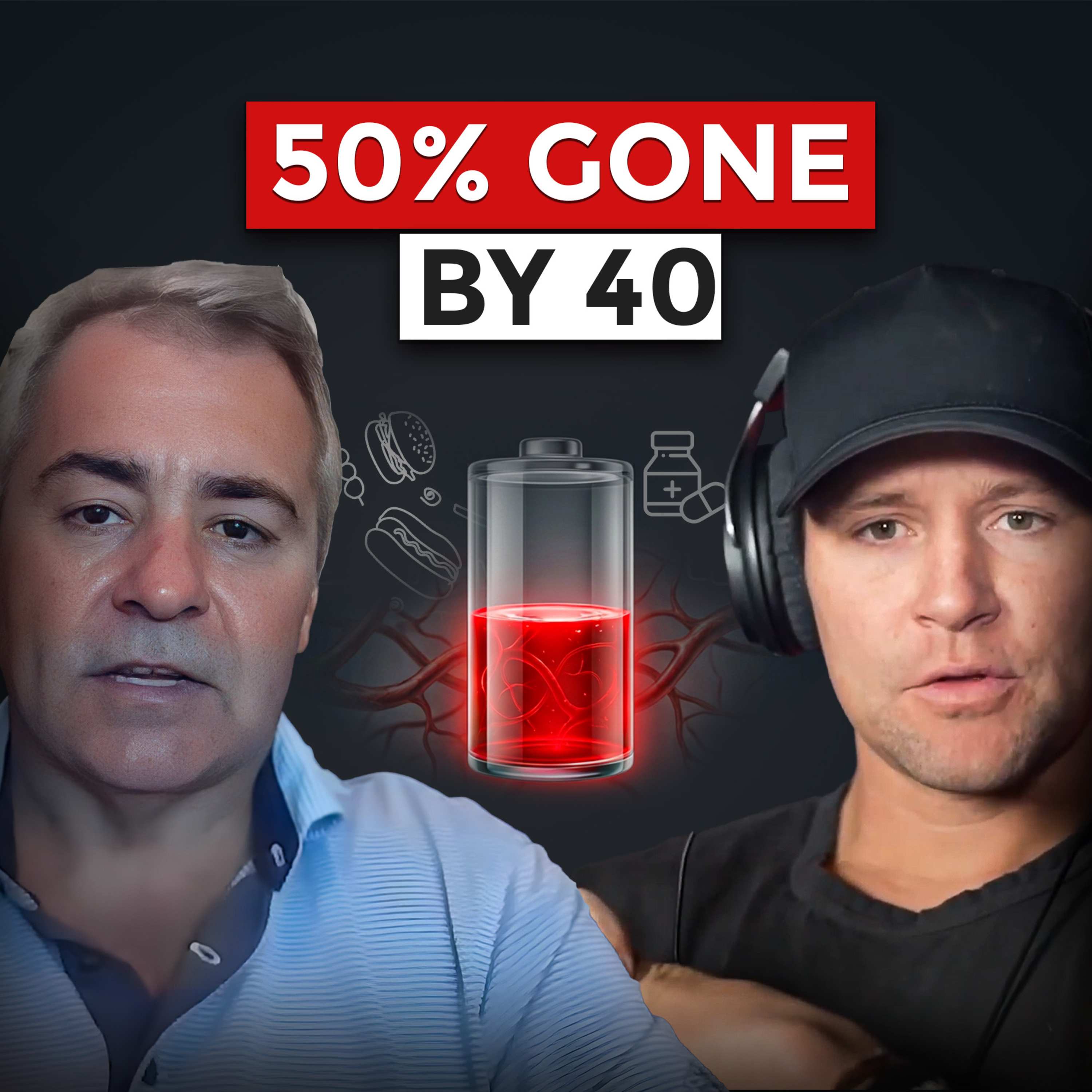
The older you get, typically the less nitric oxide you're making.
By the time you're 40 or 50 years old, you've lost, you know, 50% of the nitric oxide you had when you were younger.
You know, that's about the age that people start to feel the effects of aging.
What leads to that loss of decline?
It's the American livestock.
It's poor diet.
It's a diet high in sugar and simple carbohydrates.
It's lack of any physical activity.
It's an inflammatory diet.
Use of mouthwash, fluoride in the drinking water, fluoride in your toothpaste, the use of antacids, other drug therapy.
Everything we know about health, longevity, disease prevention, human optimization, athletic performance is all dependent upon the body's ability to make nitric oxide.
And we are live, Doctor Brian, How are you, Sir?
I'm doing great, thanks.
How are you?
Good to be with you.
Good to have you, man.
Good to have you.
So I'm excited to learn about nitric oxide today in the lifting space, the bodybuilding space, nitric oxide is prevalent in many supplements, but you're kind of tapping into different markets.
So I, I just want to feel the curtain back and learn about it, man.
What what got you interested in nitric oxide to begin with?
We know I was.
I just graduated with a degree in biochemistry from the University of Texas at Austin.
I was a student at LSU School of Medicine working on a PhD in molecular and cellular Physiology.
And the Nobel Prize was awarded for the discovery of this molecule they called nitric oxide.
And it was known to be a vasodilator to improve blood flow and circulation throughout the body.
And so I got interested in it and spent the next 25 years understanding how this molecule is produced in the human body, what leads to its loss of natural production, what are the consequences.
And then once we understood that, we we understood that we could develop product technology to overcome the loss of its production.
Is there a like common denominator as far as what leads to the downward trend in natural production?
Is that something that's typically correlated with age or is it more so lifestyle factors like what are the big hitters in reducing its prevalence?
Well, I mean, what we see in the clinical data is that the older you get, typically the less nitric oxide you're making from the lining of your blood vessels.
And so we see about a 10 to 12% on average lost per decade.
So really, by the time you're 40 or 50 years old, you've lost, you know, 50% of the nitroxide you had when you were younger.
You know, that's about the age that people start to feel the effects of aging.
But, you know, to answer your question, what leads to that loss of decline?
It's it's the American lifestyle.
We're finding it's, it's poor diet.
It's a diet high in sugar and simple carbohydrates.
It's lack of any physical activity.
It's, you know, an anti or it's an inflammatory diet.
And then what else we, we see that use of mouthwash destroys the microbiome, disrupts nitric oxide production, fluoride in the drinking water, fluoride in your toothpaste, the use of antacids, other drug therapy.
So a lot of things.
And we just, we kind of peel the onion back and figure out how each of these and many people are doing many of these that are leading to a more rapid decline in nitric oxide production than what we see in the general population.
And then to the contrary, if you don't do any of these, we can actually prevent the age-related decline, which which is the goal.
So in a healthy individual that's producing ample amounts, they're younger, How is it produced and how is it used by the body and what what benefits are people saying?
Why should people care about nitric oxide?
I guess first and foremost.
Well, interestingly, it's a gas and it's a gas that's produced by the lining of the blood vessels.
And then once it's produced, it's gone in less than one second.
So it's this fleeting gas that once it's produced, it activates what we call second messenger systems that then that then then transduce the signal cascade.
So it's known as a vasodilator.
So it causes smooth muscle relaxation, dilates the blood vessels.
So now we get more blood flow, more oxygen to tissues, which is extremely important in in, you know, athletic performance or even sexual performance or cognitive performance.
It improves the energy production in the mitochondria, the energy producing organelles of the cell.
And then long term, it induces mitochondrial Biogenesis.
So the net effect of ample nitric oxide production is you have more mitochondria per cell that generate more energy more efficiently, even with less oxygen.
And that's why athletes are so in tune and, and, and, and why this is so important in athletic performance.
But when we look, when we look beyond athletic performance, if we look at longevity, how do we live a longer, healthier life free of disease?
Nitric oxide is the signal that tells our own stem cells to mobilize and differentiate, and it's the signal that activates an enzyme called telomerase, which prevents the shortening of our telomeres.
And so the science tells us the shorter telomeres, shorter lifespan.
So everything we know about health, longevity, disease prevention, human optimization, athletic performance is all dependent upon the body's ability to make nitric oxide.
So in the functional loss of its production precedes the onset and development of symptoms and disease by many, many years, sometimes decades.
So everyone should be concerned about micric oxide.
And so we have to pay attention to our body because at different stages our body tells us that we're not making enough micric oxide.
And those are symptoms that manifest at different stages.
And if we don't pay attention to it, we get cardiovascular disease, which is still the number one killer of men and women worldwide.
Is there a way to test 1's levels of nitric oxide to see kind of at if they're at healthy baseline, if they're trending low, trending high?
There are really the only true measures of endothelial nitric oxide production or medical devices called and they utilize a concept called flow mediated dilatation.
But in essence what you do is you put a blood pressure cuff typically on your arm and you break your ordering, then you occlude blood flow into the forearm for 5 minutes.
Then when you release the cuff, you can look at how well the blood vessels respond.
So it's called reactive hyperemia.
So if they dilate, that tells us your blood vessels make sufficient nitric oxide.
If they don't dilate in response to that brief ischemia or a period of no oxygen, then your body's, your blood vessels aren't making nitric oxide.
So that's the only true functional measurement.
Unfortunately, there's no labs, blood labs we can draw like cholesterol or triglycerides or vitamin D.
So we really have to rely on functional devices, but more importantly, we rely on symptoms.
And so today we understand there's a there's a kind of high hierarchy of symptoms that manifest the more compromised your body becomes a nitric oxide.
And the first one is typically erectile dysfunction.
And when you think about that, it makes perfect sense because to get an erection in both men and women, we have to dilate the blood vessels.
And that blood vessel dilation comes from the production of nitric oxide.
So if the blood vessels aren't making nitric oxide, you get no vasodilation, you can't get engorgement.
And that's erectile dysfunction.
And that's really what we call the Canary in the coal mine because it's it's a systemic disease.
It's not just the dysfunction in the sex organs.
It's the same dysfunction as we see in the coronary arteries and their sibal arteries.
So that's number one.
Number two, your blood pressure starts to go up because when you can no longer dilate the blood vessels, you have the same volume of blood going through smaller pipes.
And the simple laws of physics tell us that pressure has to go up.
And two out of three Americans have an unsafe elevation in blood pressure, irrespective of age.
So that tells us we have a huge problem.
And then #3 you start to get metabolic disease, insulin resistance, and diabetes because nitric oxide is required for insulin signaling and to get glucose into the cell.
The cell can't make nitric oxide.
Insulin resistance #4 you start to develop exercise intolerance.
Even if you can't jog or moderately exercise for 20 or 30 minutes or walk up the flight of steps tells us your body's not making nitric oxide.
And then lastly, you'll get brain fog, mild cognitive impairment, dementia and eventually Alzheimer's.
But in each step we can take corrective measures and prevent those further symptoms and and basically reverse and regress disease.
So it sounds like this kind of goes hand in hand in tandem with symptoms that one would experience from, you know, metabolic syndrome to some degree, insulin resistance, diabetes.
Like if you're portraying the symptoms that accompany those diseases, then the likelihood of you also being deficient in nitric oxide is probably part and parcel.
No, that's spot on.
I mean, that's why diabetics are so poorly managed, because metformin or glucophage activates a molecule called AMP kinase and then that's supposed to turn on the Nos enzyme.
But if the Nos enzyme isn't turned on, you can't clear glucose from the cell.
So if you restore nitric oxide, now you can you can improve insulin sensitivity and you can make Glucophage or metformin more potent and you can actually enhance the effects.
But insulin resistant is a symptom of nitric oxide deficiency.
I mean, obviously you need to control your diet and quitting a lot of sugars and simple carbohydrates.
But more importantly, we got to understand the signaling cascade to where we can maintain that and get glucose into the still.
So insulin can do its job.
So when it comes to to treatment, what what's typically the standard of care like?
Are people supplementing exogenous nitric oxide or is it more selective?
That's what we hope one day to be the standard of care.
But today, you know, look, everybody knows type 2 insulin resistant diabetes is treatable, it's preventable and it's curable, but it's all based on diet and lifestyle.
But yet people don't want to be compliant.
So the standard of care is when they put you on metformin or Glucophage, then they tell you to reduce your sugar intake.
And if that doesn't work, they give you insulin and you give yourself an insulin shot to help clear the glucose.
But again, if you're insulin resistant, you can take insulin to the cows come home, but the end signal of glucose uptake isn't there because there's a block in the signal, and that block is nitric oxide.
So the best thing to do is to physically exercise because not only does exercise improve the burning of glucose, but actually helps get glucose into the cell because it stimulates nitric oxide production.
You need to do an 18 hour fast every day and that completely changes your metabolic flexibility.
And then just eliminate simple carbs and sugars.
It's really that simple.
We have to eat right, we have to fast and we have to exercise.
And if people just did those three things, there would be no diabetes, There'll be no type 2 diabetes.
I totally agree with you.
I mean, this is it's, it's funny because I have so many guests on the podcast, biohackers, doctors, athletes, performers of all the different kinds.
And when you distill like the core messaging down to its essence, it's always that same advice.
And I've had to like shift gears because people know this stuff.
Like I think we all inherently know that we need to eat right.
We need to move our body.
Like this is not news, but why do people not do it?
Like do people not recognize the the cascade and negative effects that's going to plague them going forward if they don't take action?
Like with the people that you're working with, like what's the motivator to get them to actually take action?
Well, fear.
It's always fear.
Fear is the greatest motivator.
But people don't have fear until they have a heart attack.
They have a toe amputated, a foot amputated, A limb amputated.
Well, they didn't get introduction.
It's a pretty good motivator.
Yeah, of course, because they're fearful.
They're fear of death, they're fearful through their change of life.
But until there's fear, people aren't motivated.
I mean, because medicine for the past couple, 100 years is a reactive practice.
You don't take action, you don't go to the doctor until you're sick.
We have to change that.
We have to be proactive instead of reactive.
Understand that we, we know the science to the extent that we know if you don't change your way and do this, you're going to develop high blood pressure, diabetes, you're going to have a heart attack or stroke and you're going to die or you're going to get Alzheimer's disease or you're going to get cancer and you're going to die and you're going to die a horrible death.
I mean, the, the, the objective is to live as long as you can free of disease and then just not wake up 1 morning, but die healthy.
That's not what we're seeing.
I mean, Americans are the sickest people on the planet, and we're the most advanced industrialized country on the planet.
And so it's clear that medicine is not making anybody better.
And Americans are conditioned to want to take a pill.
They don't want to change your diet.
They want to change what they're doing.
They want us to create a pill that magically makes them better.
And that pill doesn't exist and it will not exist.
Totally agree.
Is there any talk of peptides as it pertains to nitric oxide?
And I mean, I feel like I'm hearing conversation with peptides around everything these days, yeah.
Peptides are the flavor of the day.
Now look, peptide, peptides are signaling molecules, but there's no peptide out there that's going to improve nitric oxide production, despite what you hear, because you can hear, you hear everything right in a lot of it's just a lot of misinformation.
But the enzyme that makes nitric oxide, we have to understand that biochemistry.
A lot of these peptide, so-called experts don't understand biochemistry.
We're not criticizing them just because they just don't understand it.
So we understand the enzymology of what it takes to make nitric oxide in the lining of the blood vessels.
So we understand the biochemistry of what it takes to make nitric oxide through the diet, through the oral saliva, the oral bacteria, and then through stomach acid production.
But no peptide.
Peptides do other things.
I think there's some clinical utility for them.
Obviously the GLP will enter are peptides.
Insulin is a peptide.
So we know that there's therapeutic benefits of certain peptides.
We just got to harness them and give them a doses that recapitulate normal production and normal signaling.
Totally from an environmental standpoint, you referenced, you know, oral microbiome quite a few times.
If as far as like things that we can do, things that we have put in our body or don't put in our body, is that where the magic happens?
So to speak from a signaling standpoint of what we, you know, use as a toothpaste or as a mouthwash, like that's going to have the biggest, lowest hanging fruit impact on natural nitric oxide production.
And why is that?
Yeah, no doubt.
I mean, look, what we're trying to do is, is understand the science to the extent that we can make good recommendations to people to maintain adequate nitric oxide production.
About 30 years ago, it was discovered that there's oral bacteria that live on the crisps of the tongue, the dorsal part of the tongue.
And their job is to take inorganic nitrate that's found primarily in green leafy vegetables or from the production of nitric oxide that's oxidized to nitrate and then recycle that back into nitric oxide.
So the best example is we eat a salad, eat some spinach, 90 minutes after we consume that, that nitrate is a reabsorbed 25% is reabsorbed in the kidneys.
It's concentrated in our salivate glands.
Now each time we salivate, we're secreting nitrate in our saliva.
These bacterium metabolize that nitrate into nitrite.
So now our saliva is enriched in nitrite.
We swallow our saliva, that nitrite becomes nitric oxide gas in the lumen of the stomach provided their stomach acid production.
So what we're finding is if you don't have these bacterium, then you don't get the nitric oxide benefit from the diet, from the recycling aspects of endogenous in O production.
What we see is your blood pressure goes up, you lose the protective benefits of exercise and bad things happen.
So then we started asking the question, well, what's disrupting these bacteria?
We published this more than 10 years ago, mouthwash.
I mean, you see the commercials, this mouthwash kills 99.99% of the bacteria in your mouth.
And that's a bad, that's a really, really bad idea.
I think anyone would agree you, you shouldn't take an antibiotic every day for the rest of your life because we know that it kills the gut microbiome called biosis, causes leaky gut, causes autoimmune disease, and causes systemic disease.
So by the same principles, we should not sterilize our mouth.
And two out of three Americans are using mouthwash every single day, sometimes multiple times a day.
So that's number one.
Then #2 we started looking at fluoride because fluoride's in drinking water, it's in toothpaste and it's in mini mouth rinses.
So we we asked ourselves, why do we put fluoride in the drinking water?
And we have to go back more than 100 years when the dentist first started recognizing in the physicians that people who died from sudden cardiac death, you could culture oral bacteria in the thrombus that caused their heart attack.
And so the dentist were knew if they were treating oral pathogens through bleeding gums.
Those paths, those bacteria enter our bloodstream cause systemic inflammation 'cause plaque to vulnerable plaque to rupture and that's your heart attack.
So the the the therapeutic solution 100 years ago, well, let's sterilize the mouth, let's use Chlorhexidine, let's use alcohol based mouthwash, let's use stringent antiseptics and kill everything in the mouth.
Well understand that was before we ever discovered there's a microbiome, there's bacteria that live in and on our body that are actually good for us.
They're not pathogenic.
They're, they're symbiotic commensal bacteria that are responsible for doing things that we as humans can't do.
And so now we, we have to stop doing the things we did 100 years ago because we know better, we know more and we must stop.
So not only is, and so they put fluoride in the drinking water because it kills the bacteria in the pipes.
So when we drink the bacteria, when we drink the water, it kills the bacteria in our pipes.
We bathe in it kills all the bacteria on our skin.
We get eczema, we get rosacea, we get acne, and when we cook in it, we drink it, it kills all the bacteria in our GI tract and it kills your thyroid function and it's a neurotoxin.
And a study just late last year published by the National Toxicology Program revealed that fluoride provides 0 benefit and it can lower IQ and kids by as much as seven points.
So now we have a preponderance of evidence that shows that there's no benefit from fluoride.
It's all risk.
And so when that's an easy quotient, you just you, you remove it.
You remove it from everything humans are ever exposed to.
And hopefully I think we're on the right track, but fluoride's an extremely toxic, dangerous molecule.
Yeah, we've definitely tried steering and cleared of it.
And I mean, we filter our water and then we use all toothpaste that don't contain fluoride.
You have to kind of like seek those out though, because if you're going to the grocery store and just looking for toothpaste, generic toothpaste, it's always got fluoride in them.
Yeah, well, you know, I've, I've been using a fluoride free toothpaste for more than 20 years.
But as we learn more, as we started to culture these bacteria and understand their activity in the ecology, you know, there were still things in these fluoride free toothpaste that I didn't like that was still causing dysbiosis.
So about six months ago, I, I launched, I created my own toothpaste that focuses on restoring these essential nitric oxide active bacteria.
Now what we're finding, you know, 10 years ago we published that if you take normal intensive patients and you give them mouthwash, kill their bacteria, we see an increase in blood pressure.
Now the question was can we take people with an increase in blood pressure and target their microbiome, get rid of fluoride, give them things that restore the oral microbiome and can we bring their blood pressure down?
And that's what we're finding now.
So simply switching from a non fluoride base from a fluoridated toothpaste to our non fluoride toothpaste that specifically is targeting the oral microbiome, we improve nitric oxide production and blood pressure comes down.
What is the name of that toothpaste?
I'm going to check it out.
No, it's called cardio smile.
But when you think about the the public health implications of that high blood pressure in two out of three Americans have an unsafe elevation of blood pressure, and that's the number one driver for the number one killer of men and women worldwide.
And people.
You know, if you go to your doctor and you have a high blood pressure, he puts you on a blood pressure medicine.
But we know that 50% of the people that are given prescription medication for the blood pressure don't respond with better blood pressure.
And why is that?
Well, it's because it's not a Renan angiotensin problem.
So ACE inhibitors and Arbs aren't going to affect it.
It's not a disruption of calcium regulation.
So ACE or calcium channel blockers aren't going to affect it.
And those are your kind of first line therapies for blood pressure.
So what we're finding now is their hypertension is a symptom of oral dysbiosis.
We overcome the dysbiosis.
We improve nitric oxide production by restoring the bacteria.
Blood pressure comes down.
I mean that that's a simple fix.
And now for the first time, at least in the history of Western medicine, we can have the conversation of how do we get patients off of drugs?
Because now it's never, how are we going to get you off drugs if this drug doesn't work, come back.
We're going to put you on more drugs.
And then you wake up, you're 40 or 50 years old and you're on a dozen, two dozen different medications.
And people wonder why they're sick.
When it comes to optimizing oral microbiome, obviously get rid of the fluorinated stuff is key.
When it comes to the diet you mentioned, like salads, spinach, things of that nature, are there other dietary preferences that one can opt for to maximize the good bacteria?
Or if someone doesn't eat any vegetation, like someone's falling on a carnivore diet for instance, is that going to impair microbiome health orally?
No, because what we're finding is, and you know, we've, we've had this question and we've actually investigated it in the in the research lab, but you know, nitrate is found primarily in green leafy vegetables.
But what we're finding is it may not be the nitrate that is as important as the elimination of, of sugar and simple carbohydrates.
Because when you eat sugar and it's converted to sugar, it completely changes the ecology in the mouth that lower salivary pH and then creates an environment for these opportunistic pathogenic bacteria carries causing bacteria, periodontal disease, causing bacteria to to to populate and overgrow and out compete the good guys.
So I think what we're finding in people who eat a mainly keto kind of a carnivore base diet and lifestyle.
Number one, these people are more health conscience.
So they're not doing the things that most people do that are unhealthy, but it's the simple elimination of sugar.
So you're you maintain coupling of the Nos enzyme, you're maintaining a normal healthy microbiome.
Your salary pH is optimal and that's what we're finding.
And then so if you make and make sufficient nitric oxide in that nitrate that's produced from the oxidation of nitric oxide is going through the saliva recirculated and you probably can get away with not eating any vegetables because your body's optimized to make nitric oxide on its own.
So from a I'm totally on board with that.
I mean I follow a ketogenic diet, so I'm not going to give you any grievances there.
When people prefer or argue in favor of more of a mixed diet, everything in moderation approach and they are training, they are insulin sensitive, they're healthy by all metrics.
Their consumption of carbohydrates and sugar, even in light of their health, is still going to impair optimal or a microbiome though, correct?
Well, it depends upon how they handle and metabolize the sugar.
You know, athletes, well trained athletes carb up, right?
Because it's a fuel, it's a primary energy source for the cell.
But so, So what I recommend is if you to, to use a continuous glucose monitor because anything that shows a spike in blood sugar is going to disrupt nitric oxide production.
And some people can eat simple carbs and sugars and they're metabolically active or they're athletes and they burn it.
And so it's always this balance of production versus consumption.
And if you're insulin sensitive and you and, and you're responsive to insulin, then whatever sugar is made from the food you're eating is quickly metabolized.
It's utilized by the cell or it's stored as glycogen in the muscle and it's not stored as fat and it doesn't cause a hyperglycemic hyperinsulinemic response, which is the problem.
That makes sense.
Yeah.
I feel like people are wildly misinformed when it comes to how many carbohydrates they actually need to perform and so many people that are not athletes are carving up unnecessarily for sure.
Or people who think they're athletes.
You probably don't need to carve up to do the laundry that day or anything like that.
Stay away from the carbs.
Yeah, what what about?
So in the bodybuilding realm, there's, you know, tons of supplements that are touted to improve nitric oxide production and, you know, vascularity and things of that nature.
Is there much merit behind those?
No, there's really not.
I mean, because most of those products, and I've been looking at these products for the past 25 years since they've been on the market, but what most of these products contain are L arginine.
So they're giving the precursor to the enzyme that makes nitric oxide.
But here's the problem.
And again, these companies, I think most of these companies are well intended, but they just don't understand the science to the extent that they can develop a product that actually works.
Because the we're never deficient in L arginine.
The human body is never deficient in this amino acid because we get it from the breakdown of proteins, whether it's a animal protein or plant protein.
But every cell in the body has the partial urea cycle present in it.
And that partial urea cycle makes its own arginine.
And so #1 the cell doesn't use extracellular arginine to make nitric oxide.
So taking it as a pre workout or in the form of a capsule or a powder or whatever is not going to enhance nitric oxide production.
So because it's the enzyme that becomes dysfunctional and loses the ability to convert arginine to nitric oxide.
So if you're taking arginine as a pre workout, it's like putting gas in a car with a blown up engine.
If you, if your enzyme isn't working, you're not going to get any nitric oxide.
But there's so many and, and I've investigated these.
In fact, BSN, which came out with probably the first pre workout called NL Explode maybe 25 years ago, reached out to me probably 25 years ago, maybe 30 years ago and wanted me to investigate their powder.
And I go, we have to take caffeine out of this product because caffeine's a vasoconstrictor.
If you're producing any nitric oxide, it's going to be counteracted by the vasoconstrictor fix of caffeine.
And they go, oh, we've, we've tried that.
But if we take caffeine out of the product, then the product doesn't work.
And I go.
Caffeine the whole time.
But then you don't have a nitric oxide product, you have a caffeine product.
So change the label and call it a caffeine product.
And that's the problem.
Almost all of these products have caffeine in them, have stimulants in them, have a boatload of B vitaminism and you're getting the effect.
People may feel the effect and they may be getting a benefit from it, but that benefit is not from nitric oxide.
And I think that's the thing that I, that's the distinctive that I try to make.
And I tell people, look, if you're taking a product and you like it and it works and you think it helps your performance, then who am I to tell you not to take it?
But what I will tell you is the benefits that you're receiving from that product are probably due to something that's not nitric oxide because the chemistry, biochemistry makes no sense.
It can work.
When it comes to, I've just got some vain questions, you're trying to optimize performance as a bodybuilder, but when it comes to maximizing, you know, vascularity, when it comes to that, I mean, obviously electrolytes going to play a role.
Hydration levels.
Is there like a perfect formula so to speak, with regards to what you found in sodium, potassium, hydration levels to give the pathways for nitric oxide the best bang for the buck?
Yeah, I created a product of fermented beet powder several years ago.
It's called No Beat and we designed it specifically with that in mind, because whether you're the bodybuilder or you're the well performing athlete or you're just the, you know, the, the weekend warrior, the, the average Joe out there trying to compete in pickleball or tennis or, you know, softball or, or baseball.
And so we, we put electrolytes in them.
And here's the problem with beets.
And you know, I talk about this all the time.
One of the biggest myths in nitric oxide is the beets are nitric oxide because beets are probably the poorest source of any nitric oxide of any vegetable out there.
And so, but again, these companies are selling you beet products because they don't understand what they're doing.
It's not the beats that are providing the benefits, it's what's in the beats.
And So what I've been able to do is distill out what's in the beats, the active component.
So what we do is we ferment our beats, we pre convert them into a more active nitric oxide source.
We remove the oxalates, we take out the beat pulp, the beat color, the beat taste, so crystal white powder and then we add electrolytes to it and dose is sufficient to improve cellular hydration.
So now we're going to, you know, that have adequate volume and improve vascularity and then we put up a patented peak ATP in the product.
So again, if you're a mitochondria or dysfunctional, you can't make cellular energy ATP, we're providing it for you.
So just like if your body can't make nitric oxide, we're providing it for you.
If your mitochondria can't make cellular energy ATP, then we're providing it for you.
But that product right there is you know, I've tested, I've put it to the test and and you know, uninterested third party validation.
And I mean it is the probably the best, not probably it is the best pre workout nitric oxide energy product on the market.
And that's how we position either as a pre workout.
And you don't have to take it 90 minutes, 2 hours before, because the minute you put it in water, it starts generating nitric oxide.
Yes, In fact, about 20 parts per million.
That's the same amount they use clinically in it through a nasal candling, cardio pulmonary bypass surgery.
So we're delivering clinically therapeutic amounts of nitric oxide through this fermented bee powder.
And so you put it, it's one sachet, you put in 2 to 3 ounces of water, you mix it up, take it as a shot.
It's not meant to be sipped on in a 16 ounce glass of water, little bit of water, mix it, take it as a shot.
And now it's releasing nitric oxide and you can feel it.
In fact, you can see the vascularity within minutes.
Interesting.
And I'm assuming that's like all you know, third party tested and cleared from a water standpoint, like no athlete would have an issue.
No, there's nothing.
It's, it's a, it's a fermented beet powder.
It's got electrolytes in it and it's got a peak ATP product.
There's no stimulants in it.
There's no additives.
There's, you know, we put a sweetener in there, so it's a mixed Berry flavor.
So even though it's a fermented beet powder, it doesn't look or taste like beets.
You don't get the red powder, the mess.
But now it's a clean product that's positioned as a nutritional product.
It's not even a dietary supplement.
Interesting.
What's the ratio of sodium to potassium out of curiosity?
You know what I don't recall right off hand?
I can look at the label but.
Yeah, I'll, I'll check that out because I'm always playing around with electrolyte levels.
It's it's interesting, you know, obviously people that are eating less carbohydrates typically are supplementing more electrolytes, but something like that from a performance standpoint would be it's piqued my interest for sure.
Yeah, yeah.
We.
Have my opinions?
Yeah.
Do you have any opinions on structured water like in your research have I've had a few guests on there.
I'm not it's, it's that's also piqued my interest.
But when you're talking hydration, dilating blood vessels, nitric oxide, is there any any science or validation behind structured water as pertains to that?
No, there is probably not as it relates to nitric oxide.
I mean if you have structured water, helical water, you know it can, you can typically get more oxidation reduction potential and it dissolves more oxygen.
You know, the potential hydrogen of the water, if it's more structured, it typically has the higher pH, which is the potential hydrogen.
So now all of my, my home water system, I've got, you know, a chemical free pool that uses structured water and an ozone and, and UV light and carbon dioxide to, to adjust the pH.
I've got a drinking water system that uses structured water, hydrogen water.
And then I have a shower system that actually uses structured water that delivers nutrients directly through the skin.
So now I'm a big fan of it and I don't profess to know all the chemistry and the physics behind it, but I'm a huge user and a huge subscriber.
But I think it's completely separate.
I don't think it has any effect on nitric oxide.
I think it's just for me it's about drinking pure water re mineralize free of fluoride, chlorine, chloramines and all the drug metabolites found in municipal water.
Totally agree.
What what is the out of curiosity like if I want to put that system in my home?
Is it like a specific brand that you've used personally and would vouch for?
I use for my home filtration in the, the shower that I have.
It's a company out of Florida called pH Prescriptions.
Then my pool system is the company out of Arizona called Exceptional Water Systems, but it's a chlorine free pool.
It's, you know, during COVID, we'd have people come in with blood oxygen saturation of, you know, in their 80s, that jump in the pool, you can actually see the fine bubbles and their oxygen.
Blood oxygen saturation will go up to the high 90s.
Same thing with chronic cancer patients who come in, jump in the pool, fully oxygenate.
It's really, really remarkable technology.
It is, it is pretty wild how things are going.
And it's, it's, it's, I don't know, I'm optimistic about it 'cause I feel like people are honestly just fed up with the sick care as opposed to healthcare mentality.
And I think the the tables are starting to turn, which is good because we're about to hit this implosion point where we get too many unhealthy people relative to healthy ones.
That's right.
Now look, I've waited to sit over the past 25 years, you know, I spent about 1520 years in academia, teaching in medical schools, researching in medical schools and, and seeing how we train physicians and get them out and, and, and practice the, the, the financial model of medicine and not the altruistic, what's the best for the patient type of medicine.
And I think that model has ran its course and we have to do different.
But now I'm with you, you know, I, I lecture 30 to 4030 to 40 lectures every year all around the world.
And I'm seeing the tide turn.
I'm seeing more people showing up at functional integrative medicine conference, physicians who practice for 20 years in the allopathic model.
Now coming back and, you know, getting back to the root cause medicine and start doing these very simple things of just elimination of toxins and your exposure toxins and, you know, getting off medication and starting to move and, and breathe clean air and, and drink clean water and eat good whole, whole based diets and foods.
And it's amazing it it's transforms their health more than anything they've ever seen in medical practice.
No doubt.
Out of curiosity, how do you personally structure your your nutrition like your food choices?
What does that look like?
You know, I have a 800 acre ranch out in the middle of Texas.
So we grow our own beef.
It's not grass fed.
What I do is I take the calf straight from the from the mom, so it's only had grass and breast milk.
And then I have a custom nutritionist.
I put it in a feed lot for 150 days and I feed it non-GMO, a certain protein, carb, fat mixture.
It's a growth ration and I feed them for 150 days and that allows for the marbling and allows for the fat deposition in the muscle.
And every time we we slaughter a calf, it's graded as USDA prime beef.
But it's it's not grass fed.
I don't like grass fed beef.
Anybody who says they like grass fed beefs have never had a really good steak because it's the sign that it's all marketing.
And then I grow my own vegetables.
You know, I plant a garden every year and we, we, we eat the vegetables that we grow and what we don't eat during that growth season, we can or we freeze and put up.
So that's how we, but mainly it's, it's, it's a high meat, low carb, some vegetables.
And then I do intermittent fasting every day.
You know, every day I do an 18 hour fast.
Once a week I do a 24 hour fast and once a quarter I'll do a 48 or 72 hour fast.
But not only.
See?
Numbers specifically.
I just found that that really had the biggest effect on me and my metabolism.
So I eat my last meal at 6:00 PM and then I don't eat again till noon the next day.
And to me, that's not that difficult because I I've never been a Big Breakfast eater.
Even when I wake up, one or two cups of coffee, black coffee, put a dab of locally grown honey in my coffee and then I'm fine.
But you know, I wake up, I work out, you know, do 1520 minutes of high intensity interval training, push ups, squats, stretching, jump rope and get my blood flow going.
And then, you know, I sit in a sauna and infrared sauna for 30 minutes at 170°.
During that 30 minutes, I've got an ozone generator in there, low dose ozone.
And then I, you know, I'm reading scripture, I'm doing my prayers.
I'm, you know, starting today with gratitude.
And then I'll typically do a cold plunge 2 minutes and 40°.
And then once I start shivering, I, I got an LED light bed that I'll go and lay on my light bed for, you know, 20 to 30 minutes.
So that's my morning routine.
And I, it's my non negotiable, no matter where I'm at.
That's what I do.
And I only stay in hotels that have access to those type of facilities.
It sounds like you got it dialed in pretty good there.
I like.
It, you know, I'm 51 years old, I feel battered at 51 than I did when I was in my late 20s, early 30s.
And I look back at pictures and I'm, I'm certainly more fit.
I can do things more 2025 years later.
And I think it's that routine.
And it, you know, it takes us a while because we have to experiment with what works for us.
But that I think I've, I think I've got this dialed in to where, you know, I wake up every morning and I'm ready to hit the ground running.
And, and I look forward to working out and look forward to this routine because I know how it makes me feel.
You know, this past week I was taking red eyes and I was, you
know, I have to get up at 3know, I have to get up at 3:00 AM to catch a 430 flight.
And you know, I missed two days in a row where I didn't get to do this routine and I suffered.
I mean, my body punished me for that.
So, you know, it's like my body told me I've I've got to do that.
So now it's, you know, I look forward to it because I know how it's going to affect my day.
It's going to, how it's going to affect my productivity.
And when I don't do it, I I just feel awful.
That's the key.
I think, you know, kind of going back to what we were saying earlier about where's the tipping point going to going to occur?
And I feel like so many people are just hopeless.
But I've got, I mean, most of my clients are 20 years older than me and they're, you know, competing and looking better now than they did 15 years prior.
And when you can legitimately believe that you're going to look better, feel better and perform better next year than you did 15 years ago, like you've got hope in your life again, you're excited about tomorrow.
And I feel like some people just lack that.
Look, hope is a is a very powerful force, but you also talk about we talked about the motivation, the fear is the number one motivator, but the other thing that's motivating was seeing and feeling the changes right before your eyes in a relatively short period of time.
And I think that's why people, you know, always fail diet diets and fail to maintain an exercise regimen because they do it, they don't see the benefit, they don't lose weight, they don't feel better.
It's a, you know, it's a burden on them time wise because they're not doing it right.
But when you do things right, that's custom tailored for you and you start to feel better.
You start to see your body composition change.
That was the biggest thing for me.
And I'll go, well, I'm starting to see some 6 pack abs again.
I haven't seen that since I was in high school.
And I go, that's motivating.
Not only that, it's, it's how I feel.
And so that's the motivation for me to keep doing it.
And I feel like I've had like an epiphany couple weeks ago trying to figure out what it is to get people's buyer lid under their ass, so to speak.
And I feel if people are healthy, like if you have a fundamental baseline of health, which that being healthy shouldn't even be the goal.
That should just be the responsibility.
Like we're born with it.
Let's do the best we can to maintain and improve upon it.
But the more that's dialed in, the better everything else in life becomes.
I mean, you're able to serve others at a higher capacity and live a more fulfilling life if you're not a Leech on society because you can't be self-sufficient with anything.
You know, like if you're able to move, function and perform, you're going to have a better relationship with your spouse, with your kids, with your grandkids.
You can help your community more like that to me is a pretty selfless, selfless desire.
Like to be able to help more than you then you hinder.
Now look, that should be all of our goal.
I mean, we're here to serve others, right?
I mean, that's, that should be our goal.
And if we can't even serve ourselves and take care of our health and take care of our self, how are we going to take care of other people, help other people?
I mean, being unhealthy, this may offend a lot of people, but it's, it's very selfish.
If you are unhealthy, it it's a very selfish thing because you're overindulging, you're not taking accountability, you're not taking responsibility, and it's a selfish act.
So get off your ass, start moving and, and it's very simple.
We have to exercise, you have to eat right, you have to do intermittent fasting.
Those are the three basic things and you don't even have to do them all at the same time.
Take one step at a time, but over time you're going to see the cumulative effects and then now you're going to be motivated.
Totally agree this little random, but with things like occlusion training where you're doing like blood flow restriction training, does that have a direct impact on nitric oxide and whatsoever?
Like you're creating more, you know, blood flow in a given region.
Does that have a physiological impact on the actual production of nitric oxide?
Or does that simply provide more room for nitric oxide to exist if it's given that spot?
Now there's been a number of of studies published on that.
So it's called ischemic preconditioning.
You know, we see it in the heart if you include people who have like small occlusive transient exclusive events in the heart and they have a heart attack later on, there's less injury to the heart.
And so now you can do ischemic preconditioning or you would call it blood flow restriction when you're working out, but it's stimulating.
So it's causing hypoxia and then you get up regulation of what's called hypoxia, inducible factor alpha that stimulates nitric oxide production.
Nitric oxide induces angiogenesis, the formation of new blood vessels.
So what it's doing is that brief period of ischemia is telling that tissue, hey, I don't want to be without oxygen ever again, so I need to create more blood vessels.
I'm going to be able to dilate those blood vessels and that's all nitric oxide mediated.
OK.
So there is definitely a benefits to occlusion training at the base level of improving the pathways for nitric oxide.
For sure, I use, I use these blood, blood stroke, blood flow restriction devices myself when I work out because if you have only got 15 or 20 minutes to work out, I want to maximize that effect.
How do you recommend structuring that?
Like is there a a given protocol that's going to be the most bang for the buck in a short period of time?
Like that's something that you should do as a final set, as a burnout or what's the what's the best way to tackle it?
You know, I haven't really investigated that the best protocol what I do is because only, you know, I try to spend 15 or 20 minutes working out every day.
And I use, I use the blood flow restrictions of ice about twice a week.
I don't do it every time because I don't think you have to.
You have to fool the body and what, what you think it's going to do.
And the body always reacts and adapts to what you give it.
But typically I'll use the, the upper one, I do push ups, I do 100 push ups and I do those blood flow restricted.
And then I do my upper thighs try to decrease the, the blood flow through the femoral arteries.
And I do 100 squats.
And so that's what I do.
And I'll typically I do that every day, but you know, maybe twice a week I'll put the blood flow restriction devices on.
But when I do that, I mean, it's much more difficult, obviously, because you're decreased blood flow.
But I'll tell you what, your veins pop and afterwards the best get pretty.
Yeah, it's.
I mean, you can see the difference.
Yeah, it's it's very painful too.
I've done it a few times.
Yeah, no, it is.
And you can't overdo it.
Yeah, yeah.
And it's, I feel like that would also be a great use case.
If you're injured and you're wanting to stimulate that tissue as much as possible without subjecting it to a heavy load or you know, spinal weight or anything like that, you could put those on and really create a new stimulus for that that tissue.
Absolutely now.
But look, it's scientifically validated in the basic science in terms of signal transduction and what it's doing, and you see the clinical benefits of it.
Interesting, Interesting what?
What does the future look like for nitric oxide research in general?
Like is there anything specific that's on the pipeline that's gets you excited?
Yeah, like there's, there's a lot coming.
You know, I'm hosting the International Nitric Oxide Meeting in Austin in April of 23rd through 25th next year.
So we'll have the world's experts come together for a three day symposium to talk about really where nitric oxide is, where we come from and where we're going.
But you know, for me personally, I've got a drug company called Brian Therapeutics and we're developing drugs for heart disease.
We've got a, a drug we're developing for Alzheimer's.
You were making a topical drug for diabetic ulcers and non healing wounds.
But the future of medicine is going to be dependent upon nitric oxide based therapies.
I think it's going to completely eradicate Alzheimer's because it fixes the vascular and metabolic aspects of Alzheimer's.
You know, we've, this topical drug we're making for diabetic ulcers and non healing wounds is, you know, going to revolutionize wound care.
You know, 65,000 Americans die every year in nursing homes from wounds that get infected and they get septic and die.
And that's unacceptable because nitric oxide kills the bacteria, kills the infection in the wound.
It forces blood flow to the wound bed, mobilizes stem cells, and heals the wound.
From a, an Alzheimer's dementia standpoint, they're they're kind of coining that as type 3 diabetes right now.
It's just kind of akin to, you know, the glycation that's a cap that's happening in, you know, the, the capillaries of people's eyes and toes which are getting amputated is basically happening there in the brain.
I guess if nitric oxide is in abundance, then there's just simply more pathways opened up, more blood flow in the brain for synapses to take place, and that kind of eliminates the Alzheimer's dementia to begin with, correct?
Now, for sure, if you look at either functional MRI or spec scans and people who have either mild cognitive impairment, early signs or dementia or even Alzheimer's, there's reduced blood flow to the brain.
So there's parts of the brain that we call focal ischemia, the parts of the brain that aren't getting any oxygen or blood supply.
And so obviously, if you're not delivering oxygen, then the cells can't perform.
And then as I mentioned earlier, nitric oxide is required for insulin signaling.
So you get insulin resistance in the brain.
Diabetes type 3, if you can't get glucose into the cell, the mitochondria can't perform, the cell can't do its job.
You get proteins that misfold, and that's the amyloid plaque and taltangles.
So if we give nitric oxide, we dilate the blood vessels.
Now we're refusing the brain.
We're potentiating the effects of insulin.
So now we're getting glucose into the cell.
We're activating the mitochondria.
The cell can do its job.
You don't get misfolding of proteins, you don't get taltangles, you don't get amyloid plaque, and you don't lose cognition.
I mean that that explains everything we know about Alzheimer's and these yahoos out there developing drugs for monoclonal antibodies against the amyloid plaque and taltangles.
That's the consequence of the disease.
That's not the cause of disease.
So of course these drugs don't work because they can't work.
And they spent billions and billions of dollars of taxpayer money on government grants, on investors.
You know, they've, it's just, it drives me crazy because it can't work.
They should have consulted with me 25 years ago.
Giving me the money would already cured Alzheimer's.
If, if, if nitric oxide is like the precursor to it all, why has there not been more money invested towards like?
Is that just like what?
Why is that not where the focus is?
Well, because most drug companies are interested in synthesizing a drug that inhibits A biochemical reaction.
So diseases are associated with an over an adaptive response to that disease.
And so the best example, when our body is stressed, there's an adaptive response where we increase the production of cholesterol.
So people tried to convince us years ago that cholesterol causes heart disease.
So let's create a a synthetic compound that inhibits the rate limiting step of cholesterol synthesis.
These are HMJ Co a reductase inhibitors, what we call statins.
There's never a disease where there's an overproduction of nitric oxide.
So you can't make an inhibitor of nitric oxide, which is most drugs out there are either what we call biologics.
They're monoclonal antibodies targeted to a specific target or their synthetic compounds that inhibit A biochemical reaction.
And nitric oxide is it, it doesn't fit that model.
So what you have to do is you have to give nitric oxide, recapitulate nitric oxide production and signaling in most drug companies.
You know, 25 years ago, most drug companies had a nitric oxide development program, but they were putting nitric oxide on a Cox 2 inhibitors like Celebrex or Viox, putting it on aspirin, naproxen, and those drugs all failed.
They, they have been made it through a safety study through FDA.
So most companies abandoned their nitric oxide drug drug pipeline.
And then I came along, you know, 20 years ago, started developing technology, filing patents, getting patents where I can make nitric oxide.
So now we have to figure out how much nitric oxide is needed for this particular indication in this particular patient.
And that's, that's my job in developing these these drug studies.
But, you know, we're, we're leading the charge.
We're leading the way.
We're in phase three for ischemic heart disease drug study.
We'll start the Alzheimer's drug study next, next couple of years.
And then our topical drug probably end of next year.
But, you know, these, these drug companies have come after me.
I've been sued by my competitors.
And you know, I'm not going away.
I'm not building this company to sell it.
I'm building it to do the right thing.
And so I'm not for sale.
So yeah.
I love it, man, I love it.
We are fighting the fight for the right reasons.
Tip the spear.
So I'm I'm in full support of you there, man.
I'll check out the beet powder and that's got my interest and the toothpaste as well.
So keep doing what you do, man.
Keep keep changing lives.
Thanks very much.
It's been, it's fun.
You know, it's been challenging, but nothing worth doing is ever easy.
Amen to that, brother, Amen to that.
Where do people go to find out more about you and dive into your world?
You know, I would recommend people read my latest book called The Secret of Nitric Oxide, Bring the science to life and tells the story of nitric oxide.
You know what it is, what led to a Nobel Prize and why everybody should be concerned about it.
And then it tells my own personal journey of discovery.
You know, how we got to where we are today.
That's number one.
You can find it on nathansbook.com or Amazon, Barnes and Noble, wherever books are sold.
I encourage people to subscribe to my YouTube channel, Dr.
Nathan S Brian, Nitric oxide.
Learn all about nitric oxide, the real science around it.
You know, there's a lot of misinformation out there, a lot of companies out there trying to sell you a bill of goods, but we we, we communicate the real science.
I'm on Instagram, Doctor Nathan S Brian, same on LinkedIn.
What else?
For products, you can go to n1o1.com.
That's the letter N #1 letter onumberone.com.
Awesome.
Well, I will certainly link out and make it easy for people to find you.
If there's ever anything I can do for you Sir, just let me know.
All right.
Appreciate you.
Thanks so much.
Appreciate you man, take care.