·S5 E13
S05E13 - Liminal Space Invaders
Episode Transcript
S05E13 – Liminal Space Invaders
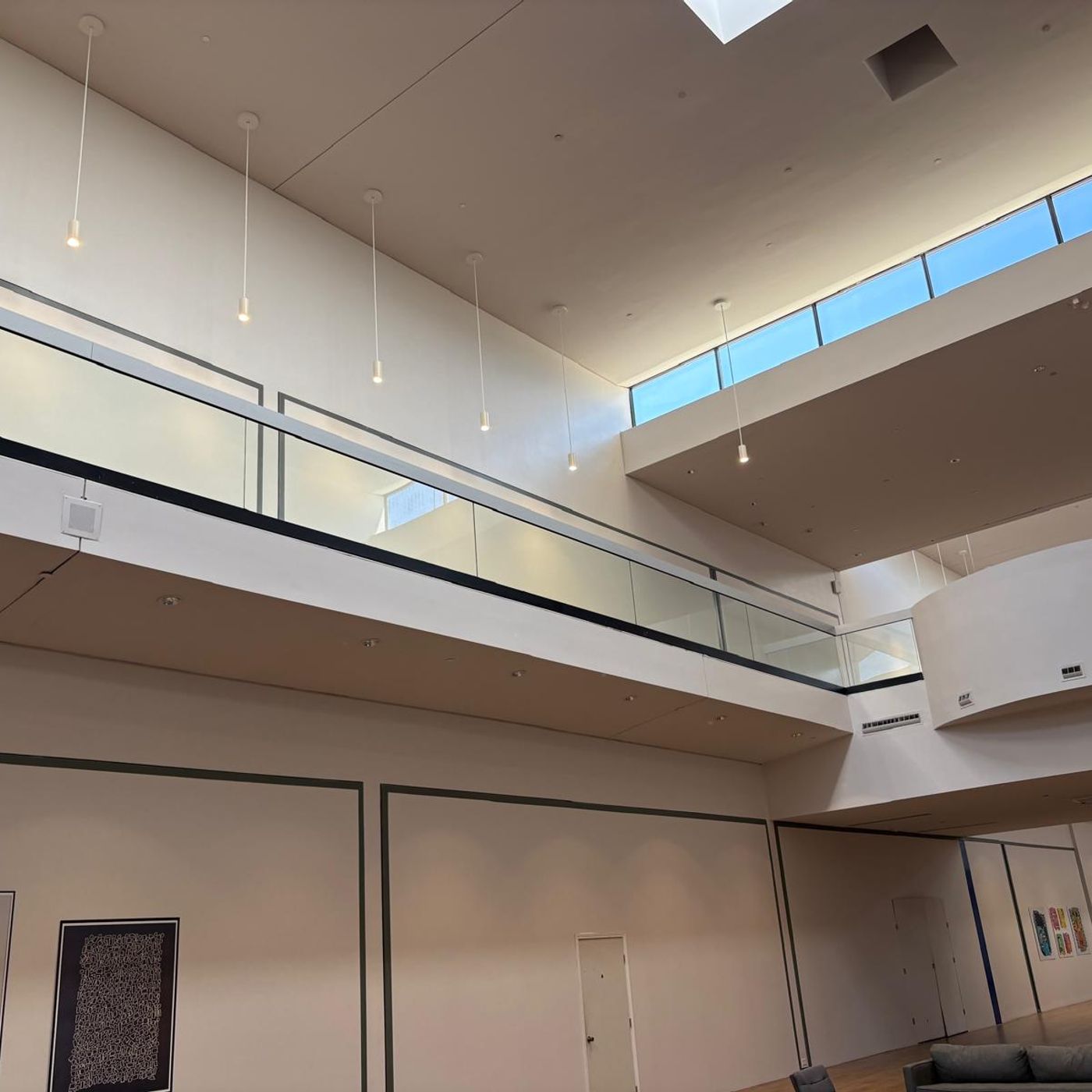
We talk with journalist Lana Hall about her piece The Dead Mall Society, which details her journey to decaying malls in the Toronto area in search of Liminal Spaces.
Victor Turner: Liminality and Communitas (PDF)
The Backrooms CreepyPasta (Wikipedia)
SEO Transcript
This is not a fully accurate transcript, and was machine generated. It’s here for helping search engines find the episode but not intended to be a faithful transcript of the episode. (But it’s not AWFUL.) Some of the material in this transcript only exists in the Patreon/Premium edition of the show and was excised for the commercial version.
———————
Monster House presents.
This is the ad supported version of Monster Talk.
We’re dependent upon the revenue from these ads and from the support of our patrons at patreon.com forward slash monster talk to continue making this show.
As a disclaimer, your hosts are unable to control what ads you will hear.
And while we have done what we can to avoid ads that are divisive, the system that injects them sometimes ignores our preferences and always seems to ignore our efforts to not interrupt the conversational flow.
While we understand this can be disruptive, we’re trying our best.
Patreon remains the best way to enjoy commercial-free listening to our content.
Plus, you generally get extended coverage of the subject.
We’re working on other ways to consume our content as well, so please stay tuned.
In today’s episode, we’re going to be discussing a couple of esoteric concepts you may not have heard of.
First up, liminality.
From the Latin leman, meaning threshold, the word entered modern scholarship in the early 20th century.
French ethnographer Arnold Van Gannep used it to describe the culturally consistent ways people move from one state to another, transitioning from childhood to adulthood or single to married.
If you haven’t heard of Van Gannep, you’ve certainly heard the title of his most famous work, which has become an idiom, The Rites of Passage.
In the 1960s, British anthropologist Victor Turner focused on that in-between phase.
He gave us the framework for the liminal, a state of being between identities.
It’s a period of expectation and possibility, disorienting yet essential.
But the concept eventually escaped the surly bonds of academia.
It filtered through coffee shops and online message boards, becoming a beloved staple of paranormal discussions in pop psychology.
Today, the idea of liminal spaces has exploded in popularity.
Across Reddit and YouTube, people are obsessed with creepypasta stories and eerie photography that seeks out more than just doorways and hallways.
They’re looking for the evocative, the dead mall, the deserted airport, or the brightly lit office building at midnight.
By crossing the line between the fandom for abandoned ruins and the safer world of under-traveled retail, the indoor shopping mall has become a fascinating nucleation point for exploring liminality in our modern urban setting, which brings us to the second esoteric concept, shopping malls.
What the hell is it?
It looks like a shopping center, one of those big indoor malls.
It’s actually quite unlike anything we’ve ever seen before.
A giant hairy creature, part ape, part man.
In Loch Ness, a 24 mile long bottomless lake in the highlands of Scotland, it’s a creature known as the Loch Ness Monster.
Monster Talk.
Welcome to Monster Talk, the science show about monsters.
I’m Blake Smith.
And I’m Karen Stolznow.
Hey there, Monster Talkers.
Today we’re going to be talking with Canadian journalist Lana Hall about a piece that she wrote for Hazlit titled The Dead Mall Society.
It’s a beautiful piece discussing the ideas of liminal spaces and the people who seek to explore them.
As we talked, I kept finding myself ruminating on the nature of these places.
I couldn’t stop myself from wondering the metaphorical landscape that these places hold in my mind.
Like that little clip from Dawn of the Dead hinted, big indoor malls were still novel and new in the 1970s, peaked in the 1980s, and then began a slow slide into irrelevance soon after.
And you have to know that the sad parallels between this and my own biography is noted.
Malls have become a nexus for nostalgia, even as some still manage to keep anchor stores open.
More often, they end up like the giant skeletal remains of a long extinct dragon in a fantasy novel or the rusting hulk of a Star Destroyer in the background of some Star Wars tale.
Malls were real enough, but the vibrant representation of them in movies like Night of the Comet or Mallrats or Terminator 2 clashes with the decaying ruins or barely sustained ICU patients that are littering suburbia today.
In her piece, The Dead Mall Society, Lana Hall describes joining a tour group called Liminal Assembly to visit such places.
And Karen and I really enjoyed talking with her about this piece and about this experience.
And I hope you enjoy listening to our conversation.
So, Lana, I’m pronouncing your name with an Australian accent.
I hope that’s okay.
Yes, that is exactly how it’s pronounced, actually.
Perfect.
Great.
So I came across your article, The Dead Mall Society, and that was on Hazlet.
And that was just a couple of days ago.
And I was really excited to read your article because so it’s about liminal spaces.
And my 10-year-old is obsessed with this kind of thing.
So it’s very cute to hear a 10-year-old talking about liminal spaces and, in particular, the back rooms from Creepypasta.
And there’s another place called the Valley View Mall that’s in Dallas and other places anyway that he’s found on YouTube.
And so we wanted to bring you on the show because we’re talking more and more about liminal spaces.
And I’ve just realized we haven’t done an introduction.
So I wonder if at first you could tell us just a little bit about who you are and what you do, and then we’ll get into the topic.
Sure.
That’s a great idea.
So I’m Lana Hall.
I’m a writer and a reporter based in Toronto in Canada.
And I specialize in long form journalism for newspapers and magazines.
And I’m very fortunate in that I get to write about a lot of interesting things.
But I do tend to write primarily about cities and sort of the social and behavioral and political forces that shape them over time.
Yeah, so Lana, you had written an article about the liminal appeal of places like abandoned malls and empty schools and playgrounds at night and so other places like that too, especially when they’re devoid of people and activity.
But it seems like there is, I guess, a lot of confusion over the definition of liminal spaces or a lot of different views, a lot of subjectivity.
So could you tell us a bit about liminal spaces, what they are and why?
What is this hard to name sensation?
Yeah, I mean, I can try.
I think there are a lot of different definitions about liminal spaces and also a lot of misinformation about what they are.
But based on the research that I put together over the years,
course of researching this article it seems like the most accepted definition is is that a liminal space is is a kind of space that for one reason or another is kind of transitionary so these are spaces that either link to destinations but they aren’t really a destination unto themselves so that would be like a highway or like a long hallway or something
Or they are spaces that kind of straddle two worlds or two different experiences, almost like they’re sort of sitting in purgatory.
And I think a lot of the confusion comes because that is, in fact, a really broad definition.
And within that, there’s all kinds of spaces that could meet that criteria.
Right.
You know, if you go on some of the social media communities or the digital platforms, you’ll see people sharing all kinds of photographs about liminal spaces.
And they range from like, you know, abandoned parking lots to houses that have been kind of paused in the middle of demolition or schools in the summer when there’s nobody in them and they’re kind of just sitting there between seasons.
And then there’s also this, this is sort of the subsect that I was writing about in this piece is the idea of abandoned shopping malls, which many of many of which look as though they haven’t been touched since the 70s or 80s or the 90s.
And yet they also haven’t been turned into whatever is going to be their next iteration.
So they are kind of straddling those two worlds.
And
As I was researching this, I became really curious about what the appeal of these spaces were.
I don’t think I had quite realized what a strong and almost protective cult following these spaces had.
So I started sort of asking the question, you know, what is the appeal of these liminal spaces?
Why are there people that seek them out?
And why are there people that will spend their spare time…
you know, walking around in them or experience them?
What is it that they’re getting from this?
And the answers were also complex and surprising and thoughtful.
But what I kept hearing consistently is that.
sometimes when people are in these liminal spaces, they have this feeling of being a little bit unsettled, a little bit disquieted.
And it’s not like the same kind of feeling, like a jump scare feeling.
It’s not as though these people really think a zombie is going to jump out at them from like a abandoned mall bathroom or something.
It’s more that there’s just, it’s almost as though your body knows something is not quite right, but you can’t put your finger on it.
And I gather because of that, it sort of calls you to be really grounded in your body and the way you feel and the way you respond to these spaces.
And I think because there’s also a little, you know, a little thrill of the unknown of this, you know, this world that maybe came before you.
It’s, you know, there’s a bit of an appeal to it.
And then the most fascinating thing I heard from an anthropologist on Reddit was that
Because these areas, these liminal spaces indicate, you know, an in-between or a transitionary phase that on some kind of a cellular level, our bodies know we’re not supposed to be dwelling in them.
They’re not destinations.
They’re places that sort of link destinations.
So that’s another reason that we kind of feel unsettled because we’re like, no, no, no, we’re not supposed to be.
stuck here we’re supposed to be moving through this space so when you purposely and intentionally force yourself to be in a space like that you know it’s it’s your body’s way of saying like something’s not quite right here something’s you know a little out of the ordinary there’s a lot of poetic gravity to a place like that i mean it’s it’s it seems like
These are places that were once thriving, you know, and then now they’re not.
And when I was preparing for this, I couldn’t help but think about this in terms of how the space of the shopping mall.
is somewhat akin to the way that there are abandoned cathedrals and abbeys in England, where after the fall, after the split, after the Reformation or after the… Oh, disillusion of the monasteries.
Yes, exactly.
These places were left.
They were the sort of skeletal remains of this former cultural center.
And in some ways, the mall is sort of the sort of skeletal remains of a religion of materialism, of commerce.
And it’s like heavy.
It’s like heavy with nostalgia.
It’s heavy with memories for me, for my age.
But my kids love it, too.
And they love going to these places, especially when they’re not quite dead, when they’re like on life support, like held together by weird little stores instead of the big anchor stores.
And this is not really a question, but I guess I wanted to say that, that like as I was reading your piece, this was what I was thinking about.
But these people that you’re covering, they’re going out and exploring these places, experiencing them, but yet not solo.
This is a curated group.
Like, it’s a group activity.
Can you talk a little bit about that?
Like, what is it you think they’re getting from that?
What’s the appeal?
I mean, I know my appeal, but I want to know what you thought the appeal was to those people.
Yeah, that’s a really good question.
I mean, I’m sure there are lots of solo adventurers that seek out these places on their own.
But this particular…
organization does this as a group and i think there’s a certain appeal of that i think for those folks there is something about doing it as a communal activity because you know as unsettling as it is you are then with other people that are also sharing that same sensation as you are and when i was talking to um aria who’s the the organizer of this tour that i went on
he told me that the sort of unsettled feeling that people get in liminal spaces kind of seems like a universal feeling, like people all over the world report it and don’t always have a way to describe it.
And then they meet this community of people and they find out there’s a name for it.
And they’re like, Oh, thank God.
I thought I was losing my mind.
So I think that the idea of being with these like-minded people is, is definitely part of it.
I mean, we all we had such a great time on the bus, like just, you know, shuttling around between these malls.
And there was something that was kind of fun about, you know, we’re all like roughly the same age group, I’d say maybe like late 20s to early 40s.
And so we were experiencing these malls together and also just having a good time sort of talking about the nature of change and nostalgia and, you know, how weird it feels to be a millennial sometimes as we
You know, we entered different eras and it’s for many of us, these malls are like really markers of our childhood.
So it was a way of revisiting that communally.
So I think that was like, it’s a different experience than it would have been, you know, if I had just been walking around this mall by myself with a camera.
Well, Blake and I have been interested in things like ghost hunting for decades.
And on this show, we talk a lot about paranormal claims.
from a sceptical perspective, but it seems to me like this whole idea of liminal spaces is intertwined with the idea of ghost hunting and that strange feeling that you get when you go into a spooky-looking house or an abandoned hospital or a church or a cemetery or a place like that.
Is there a connection, do you think, between ghost hunting and…
uh liminal spaces and does this have anything to do maybe with the the start of this trend um that’s an interesting question too i mean i can see why there would be i can see why people do make that connection but i feel like the true die hard liminal space fanatics if you can call them that um
They’re very, like, protective of the term, and I don’t think they do like to associate it with that.
I think there’s a bit of, like, derision on their part, because they’re like, oh, it is spooky, but it’s not spooky in, like, a sort of cartoonish, you know, ghost-huntery, Halloween-like way.
It’s spooky in more of a, I don’t know, like a psychological and a sociological way.
More Henry James than Scooby Doo, is that what you mean?
Exactly.
More intellectual.
When you were comparing the idea of these semi-abandoned mouths to cathedrals, or the ruins of cathedrals, which I’m sure that’s like a totally egregious comparison for some people.
But there was a theory that I came across when I was researching this.
I didn’t really include it in the essay because I wasn’t sure how well accepted it was, but…
Someone else was saying that the reason we do feel unsettled in liminal spaces.
is because, again, on some cellular level, our bodies look at these sort of, you know, this wreckage and thinks, oh, my God, something terrible must have happened here.
Like a civilization must have been wiped out.
As opposed to just thinking like, oh, I guess there was a Walmart here and it closed 20 years ago and no one replaced it.
That’s not how our bodies react.
Our bodies are like, oh, my God, a plague must have come through here or some terrible war occurred.
and entire civilizations were decimated and we have to leave right now we can’t be here it’s not safe and so that feels a little more aligned with the ghost hunting theory right because that’s a little bit more about residual energy perhaps and maybe our
are conscious reacting on some level to that kind of sensation.
Yeah, I don’t know why, but for some reason, I’m having these really poetic responses to this tonight.
Normally, I don’t feel this way, but I can’t help but think combining ghost hunting with these liminal spaces.
I’m thinking about the movie Poltergeist and how…
There’s this point during a housing development when you can see what’s coming, like you can see they’re building the structures.
There’s these skeletons of things that shall be right.
And then later, this is the other end of that is the the neighborhood that’s falling into disrepair or, you know, it’s falling.
It’s falling apart.
It’s abandoned.
People are selling it off.
They’re going to destroy it, whatever.
There’s this whole lifespan, this life cycle of human occupancy.
And at.
from a chronological perspective, there’s a liminal segment of that from when you’re transitioning from there is nothing there to there is something there to then there’s nothing there again.
So that whole transitional phase is not just merely about entering and leaving physical spaces.
It’s leaving psychological spaces, entering psychological spaces and that cognizance of it.
And so I thought your piece kind of captured that.
But the idea of people combining that with a group
mentality of tourism and that sort of communal experience was really interesting.
So what made you decide to write about this, though?
I mean, it’s it is a it’s a little bit an unusual topic, I guess, for a journalist to tackle.
Yeah, I think it is unusual to go this deep into a topic like this.
But I got really lucky.
I was just doom scrolling on Instagram one day and I got this ad.
advertising a party that was going to be held at this like 70s era retail complex in one of the neighborhoods in downtown Toronto.
And it’s kind of a weird retail complex.
It’s been there for a long time.
It’s kind of mostly been empty for the past like decade or two.
Yeah.
And yet I think it’s still a landmark unto its own because people walk through it all the time and are probably like, what’s up with this weird mall that has like three stores, one that sells pantyhose, one that sells sheet music and one that sells fake 16th century Chinese pottery.
Why has it not been demolished yet?
And so I guess what had happened was that it finally was going to be demolished.
And Aryeh, who was the same tour guide I was speaking about before, he wanted to throw kind of a celebration for it because it was still open to the public.
So the idea was that he would fill it with people the way it may have looked in its heyday in the 70s and 80s and, you know, just sort of usher off into its next era.
And I was like, oh, that sounds kind of fun and quirky.
I know that building.
So I decided to go and I sent off an email to an editor I know at the Toronto Star, which is our largest daily paper.
And I said, hey, I’m going to go to this thing.
What do you think if I write a short like 700 word article just about the event and, you know, people’s memories, I guess, of the retail complex, which is known as Cumberland Terrace?
And she said, sure, that sounds great.
So I did that.
I went to the event, you know, walked around a little bit.
And then I think a couple days later or so when I was writing the piece, I called Arie just to ask him some follow-up questions.
And one of the questions I said to him was like, why do you think people like to come to these spaces so much?
What would be the appeal for folks to come and walk through this weird 70s mall once again?
And by this time, I knew that he actually…
he did a lot of events like this.
He, he would organize like day long tours and take people around to multiple different semi abandoned shopping malls.
So I knew that he had quite a lot of experience with these kinds of spaces.
And I asked him that question and I thought he was just going to say like,
I don’t know, people are nostalgic.
They can’t get with the times.
90s kids, you know, want to revisit like some marker of their youth.
And he kind of did say that, but he also said something that surprised me, which is that people go to those spaces because they’re craving that sensation that we talked about earlier, that sensation of like, you know, feeling a little bit unsettled and just really feeling the weight and the heaviness of…
you know, this once grand, once vibrant space that is now kind of sitting like a skeleton.
He said that is the same kind of feeling people sometimes get once they’ve heard a really powerful piece of music or a really like impactful piece of literature or something.
They want that feeling because it’s…
you know, we don’t get those sensations when we’re immersed in our phones and we’re dealing with technology and we’re seeing things like through the screen.
We don’t have those same grounded in body feelings.
And he said, I think in people search for that, they end up at these places because they give them those sensations.
And I was like, whoa.
What are you even talking about?
What does this even mean?
This is like way above my pay grade for this piece.
And so I filed the piece that I was writing and I was like, oh my God, okay, I have to go on one of these tours.
I have to talk to these people and I need a huge word count and a publication that’s gonna give me like the freedom to explore this with sort of the depth and the nuance that I think it needs.
Cause this is unexpectedly becoming very, very weird.
So that’s kind of how that happened.
Yeah, I really enjoyed the piece so much.
And one of the first things that made me think of is that a lot of people are doing this kind of thing, but visiting sites like this illegally, trespassing and breaking into places and that this can obviously be illegal and very dangerous too.
So you went on a tour that this was all legit.
What’s the right way?
to do this kind of thing.
I’m wondering with Arye how he set up these tours because it’s just such a very specific thing.
Yeah, that’s a good question.
I mean, we do have a problem here with people, you know, trespassing in buildings that are maybe unsafe or not open to the public.
So Arye, by this point, Arye has developed a pretty strong community.
And so I think he gets a lot of suggestions for different ways
places, especially malls that should be on his list.
I know that he has at least three separate routes that he does.
One is in sort of the sort of a bit West of Toronto.
One’s a bit East of Toronto and one’s a bit North of Toronto.
And he curates the list pretty carefully.
Like all of the malls that we went to are in fact open to the public.
They’re just.
not used like there’s nobody there’s really no customers in them there’s maybe one or two stores that are open they’re sort of sitting in limbo like awaiting their next iteration whether that’s like a condo development or a fancy or a mall or something so there’s you know there’s no concern about like trespassing or anything like that um
But I think he really is relying on the people that live in those communities who are maybe like, oh, there’s this weird mall in my neighborhood that totally meets that criteria.
And it seems like the liminal space community is so broad and so enthusiastic about this that it seems like they’re always on the hunt for these kinds of spaces.
And they’re always eager to share that information with other people who are also seeking out those spaces.
So interesting.
Interesting.
Yeah, it really is.
You mentioned, you literally mentioned zombies.
And it’s like, when these places were at their peak, they were such an important part of culture.
They were showing up in movies and all sorts of things.
But like for me, Dawn of the Dead, which is all really, you know, it’s a zombie movie, but it’s really about consumerism gone, you know, gone crazy.
And…
Chopping Mall, 1986.
Night of the Comet also has a big section of people.
There’s this sort of fantasy people had in the 80s, which is really indicative of how important consumerism was.
So this idea of what if everybody was gone, but all the stuff was still here, right?
I sometimes call it a libertarian apocalypse where you could just, you know, you could go out with a little bit of grit and a whole lot of leftovers.
You could really have a great life.
But in that past, I think like, for example, Stranger Things has a very big nostalgia play.
I don’t know if you watch Stranger Things, but Starcourt Mall.
That’s all filmed in Georgia.
I’m from Georgia.
So like that’s a real mall that I used to go to.
Right.
And so I took my kids on a big tour of all these places.
And, you know, there’s just real.
odd experience of being able to go and see the exteriors and you can sort of see how Hollywood or Netflix in this case constructs a reality based on a real reality celebrating
maybe a nonsense reality.
Like, you know, there’s like all these layers of recursion and weirdness all filmed on the cheap to avoid tax costs and other things in real abandoned spaces that failed, you know, economically, yet we celebrate them as though they’re really great.
There’s so many layers of meaning and it’s really complicated.
Totally, totally.
Even with like 3,000 words, there were so many layers that I couldn’t even get into with this piece about like consumerism and like why in fact we are nostalgic for consumerism and is that problematic?
And also just like how kind of wasteful it is that these spaces still exist and that someone…
You know, someone’s paying cleaners to like dust off these plastic palm trees every day and scrub the tiles and keep them pretty meticulous looking, even though no one’s in them.
Like they could be used for so many useful things.
Housing.
I don’t know.
All kinds of infrastructure.
Like there’s all kinds of things.
And instead they’re kind of just sitting there like these weird, fenty.
Yes.
And if you try to get into them, the rent’s still very extraordinarily high, which is really weird.
I bet.
Yeah.
There’s a place called North Lake Mall near here, which is really down to just like five or six stores.
A portion of the mall has been carved off and turned into a health facility.
And big chunks of the stores are just blocked off with like drywall.
But there’s a few really interesting spaces in there where there’s a comic book shop where it has a huge, interesting community that comes there to play games and buy comics and interact, which you can’t get at a normal retail outlet.
And there’s a few specialty places.
But every time I go into one of these malls that’s not completely abandoned, I keep thinking this amazing space with great parking, good central location.
But they keep trying to recreate that 80s place where you’d go there for things you could get now online.
And it feels to me, and this is really not the point of this conversation, but it feels to me like if you want to get these spaces to come back, you need to provide something that can only be had in the real world.
Live performances, really great, unique restaurants, you know.
It’s a great place.
You could have live music and great food.
There’d be a reason to go.
You could have specialty shops that don’t sell the same things you can buy online.
I don’t think we all need to go drive to basically buy stuff we could get at Timu for $3.
It seems kind of dumb.
I think that’s the question that most retailers are grappling with.
How do you make the brick and mortar experience something you wouldn’t get from…
the online experience, if it’s the same product, right?
That’s why, you know, some like higher end boutiques now have like espresso bars in their store.
Just, you know, trying to get people to come back in person and kind of linger.
But what I do keep hearing, which makes me laugh, is that like, you know what, eventually…
Amazon is just going to be like, what if there was online shopping, but in real life?
Yes.
Yes.
It does feel like that often.
It’s all like the cycle of life.
It does.
What goes around comes around.
I have to say I’m in Colorado now.
I have been for quite some time, but in Australia, we’ll turn anything into a coffee shop, whether it’s a bank.
or a surf shop, there’ll be a coffee shop in there.
And I’m seeing more and more of that here in the States, but that’s very much a thing.
But I wanted to ask too, we’re focusing a lot on abandoned malls and that seems to be a kind of prototypical liminal space.
But if you go and look on YouTube…
you’ll see lots of images of people’s personal interpretations of liminal spaces.
And I’m just wondering, are they all real places or could they be invented as well?
I’m not too sure about the back rooms, if that’s based on an office, based on an actual place or not.
But can any place potentially be a liminal space or is it only certain types of places?
That is an interesting question.
I feel like there probably are some people who, as you say, they have their own interpretations of things and perhaps to them based on their own memories or their own life experiences, they feel as though something’s a liminal space.
But I feel like I spent so much time on like ARB slash liminal space on Reddit.
Spicy debate about what is a liminal space and people get really angry when someone puts a photograph of something in and someone else is like, that’s not a liminal space.
So I think the generally accepted theory is that no, there are certain criteria that have to be met.
But it is interesting to think about who owns the term liminal space?
Who makes that criteria up?
Disney?
Soon enough.
So, Karen, you brought this up and I have to say one of the most fascinating and I guess it’s actually relevant here experiences is something that I’ve seen here in the Atlanta area.
And I’m sure there are other places, too.
I’m sure there are.
I haven’t even gone to look, but I’m sure there are.
And these are pop up goblin markets.
And so they are.
events where people plan to come and meet, but you’re meeting almost like a combining a cosplay fantasy event with a shopping event.
So the retailers are selling again, things you wouldn’t find in a normal store.
These are not, you know, cookie cutter, Amazon stuff.
It’s handcrafted things, but people are also.
dressing up as though they’re going to a Ren fair or, or some sort of fantasy event.
And there’s fairy lights everywhere and weird live music and, and interesting smells.
And chitlins.
No, it’s, but, but I think that, that, that probably emerges from that sort of merging of the merging of that desire to have a magical experience.
And a social experience.
But with the need.
to take home something when you’re done.
And I think it really happened.
Yeah, it really happened.
And it wasn’t just me going to Dragon Con or, you know, it’s a little different and it’s unique.
It’s a one-time thing.
You only see it once.
It’s only there.
Then you won’t see the same experience twice.
And again, it’s why people go to live music.
It’s, it’s, there’s, it’s caught in time for this brief moment.
You get this really strange experience.
That’s.
That’s, you know, how you get your experience points.
I think Lana spoke about that too in your article talking about people taking away souvenirs.
So I’m not sure if they’re things that people just grabbed on the fly or if they purchased them at those few stalls that were left.
Yeah, that is an interesting concept.
The idea of like…
Did it really happen unless I have physical proof?
But yeah, so one of the assignments we got at the beginning of the tour was that Arye had asked us to try and pick a souvenir of some kind.
And so people were…
trying to find things throughout the various tours.
There was one mall that had this whole bank of, you know, those machines where you put in a coin and like it spits out a little plastic gumball and inside the gumball, there’s like a little toy.
People had lines over those because we hadn’t seen them in so long.
So a bunch of people took some of those.
One woman, I guess she had grown up not too far from one of the malls.
And so she went through a phone book, a actual real phone book that we found.
that had clearly not been replaced since the 90s.
And she found her actual home address in it.
And so she ripped the page out and that was her souvenir.
That’s cool.
Other people were just buying like random things.
Like there was one mall that had this really strange department store in the basement.
Like one of those stores that just sells everything from like bedsheets to like construction uniforms to like…
perfume and I don’t know, cutlery sets.
So people were, you know, buying knickknacks sort of from there and stuff.
But it was funny because I was so busy talking to people and writing things that I alone did not even think to, to get a souvenir.
And I’m like, Whoa, did that even happen?
I don’t know.
Maybe it didn’t.
I have no proof.
You’re off.
Cool.
Maybe I hallucinated at all.
I don’t know.
So what do you think about the future of these physical spaces?
Like, what do you think they signal?
I mean, I think they signal that we try to be so organized and strategic as humans.
And ultimately, we’re just kind of like clumsy and stupid.
And we’re kind of just like doing the best we can, you know, while the winds blow around us, you know.
So many people want these malls to become…
you know, these master plan communities, they have these grand plans for them, you know, beautiful luxury towers.
But things just don’t always pan out the way we want them to.
And I think that there’s, you know, some like kind of beauty in that, you know, that despite our best efforts, sometimes we just have to like,
bumble through and see what life throws our way.
I think there is like one of the malls in particular, actually, I thought was really interesting because it clearly is awaiting demolition or, you know, something.
But it had kind of in the interim become what I think its neighbors probably really needed it to be.
It had, there was a church that had taken over one of the upper floors.
There was a bunch of like cash only noodle joints on the bottom floor that seemed to be really well utilized by people in the community, by some nearby construction workers.
And then all the stores were selling things that I would consider to be kind of strange.
like bootleg DVDs and like discount vacations to the Philippines and stuff.
But I just had this sense that like, that’s what the people who live in that neighborhood want to buy.
So now, you know, unconnected from all the big chains that usually we see in malls, it had kind of like,
been reverted to a really strong community resource and I think that’s like kind of lovely and organic when that happens and I secretly love it that it you know somehow it is succeeding despite all these plans yeah
Neat.
Well, yeah, I think this is just such a deep topic.
And I know that you needed more than 700 words, 3,000 words.
I think I’d love to see you write a book about this because I think this is just becoming more and more popular.
And again, really enjoy the article and would urge our listeners to go and check it out.
But we need to wind down the interview.
And we’ve got a final question that we’d like to ask all of our guests the first time that they come on the show.
And that is, what’s your favorite monster?
Okay, well, fortunately, I feel like that’s an easy answer for me.
My favorite monster is the Sasquatch, of which I have also written about.
Now, we’ve not heard of this before.
What is that?
Hundreds of times.
Many aliases.
I kind of don’t believe that this, I don’t like, I don’t see how the Sasquatch could possibly exist, but I hope that it does.
And I wish that it did.
I love this idea that there’s this like mysterious entity in the forest and somehow we’ve never come across it.
And then it’s just like living its life deep in the woods somewhere.
um it it’s um it is a liminal creature in a lot of ways because exactly it only in theory it could hypothetically live anywhere but we only see it where we interface with nature at that boundary level you know so i had not considered that but you’re right yeah yeah yeah and also also on the liminal the liminal side of things like
I feel like we are always going to be in limbo with the question of the Sasquatch, because unless we can definitively prove it doesn’t exist, we’ll never know.
And we can’t, right?
So it’s just going to always be this unanswered question that kind of just hangs there in the void.
And I sort of love the mystery behind that also.
Schrodinger’s Squatch, right?
That’s why we have this show still.
It’s true.
We never get tired of talking about Bigfoot, Sasquatch, monsters.
You know, they don’t have to literally be real to be important.
And they obviously, they do a lot of heavy lifting when it comes to meaning.
Absolutely.
A lot of things.
Well, golly, thank you so much for talking with us tonight about your article, your work, these ideas.
So interesting.
Yeah, absolutely.
Thank you for inviting me.
This has been so fascinating.
I love talking about this.
It’s a really complicated and rich topic, I feel.
It is.
They just give us a good treatment because we’ve just been mentioning the topic more and more.
It comes up a lot, I think, philosophically, psychologically, spiritually.
This whole idea of these liminal is getting a lot of cultural cachet, I guess.
It’s really becoming a popular concept and people are starting to recognize it.
I don’t think it’s going to be one of those things where liminal’s over.
Like, no, it’s an important psychological thing to recognize and realizing when you’re entering a space like that.
Whether that’s all in your head, you know, that’s something that as a skeptic, I tend to think it is, but it doesn’t matter.
These subjective experiences are powerful and important to you.
Yeah, it’s true.
Well, thank you so much for joining us tonight.
Thank you.
Yeah, happy holidays.
Indeed.
And good luck up there in Canada.
I hope your winter is mild.
Thank you.
It’s not looking that way so far, but who knows.
Monster Talk.
You’ve been listening to Monster Talk, the science show about monsters.
I’m Blake Smith.
And I’m Karen Stolznow.
You just heard an interview with journalist Lana Hall about her Haslit piece, The Dead Mall Society.
A link to that is in the show notes, along with some further links for additional reading.
Thinking about this topic and preparing for the show, I considered a lot of clips and references, but honestly, Dawn of the Dead seems to be my go-to mall cinema.
it somehow captured the essence of malls, including what they’ve become today.
And while it may have a few more exploding heads and cannibally frenzied disembowelings than, say, I don’t know, Wall Street, it still is an apt commentary on humanity, and especially on consumerism, as anything I’ve seen or read.
You’re still here.
They’re after us.
They know we’re still in here.
They’re after the place.
They don’t know why.
They just remember.
Remember that they want to be in here.
What the hell are they?
They’re us, that’s all.
There’s no more room in hell.
What?
Something my granddaddy used to tell us.
You know Mukumbo?
Furu.
Granddad was a priest in Trinidad.
Used to tell us…
When there’s no more room in hell, the dead will walk the earth.
This has been a Monster House presentation.
They broke into the mall for the wildest all-night party of their lives.
Dead meat.
But you’re never alone in the Chopping Mall.
Post navigation
Contact [email protected] to advertise on this show.
MonsterTalk is a proud member of the Airwave Media podcast network.
MonsterTalk is an Amazon Affiliate and where possible we will utilize Amazon Affiliate Links to provide financial support for the show. Your purchases through our affiliate program provide a tiny but helpful method of support. Please consider becoming a MonsterTalk Patron for more substantial assistance in sustaining our mission of promoting science and rationality while celebrating the mysterious and exciting mysteries of the world.