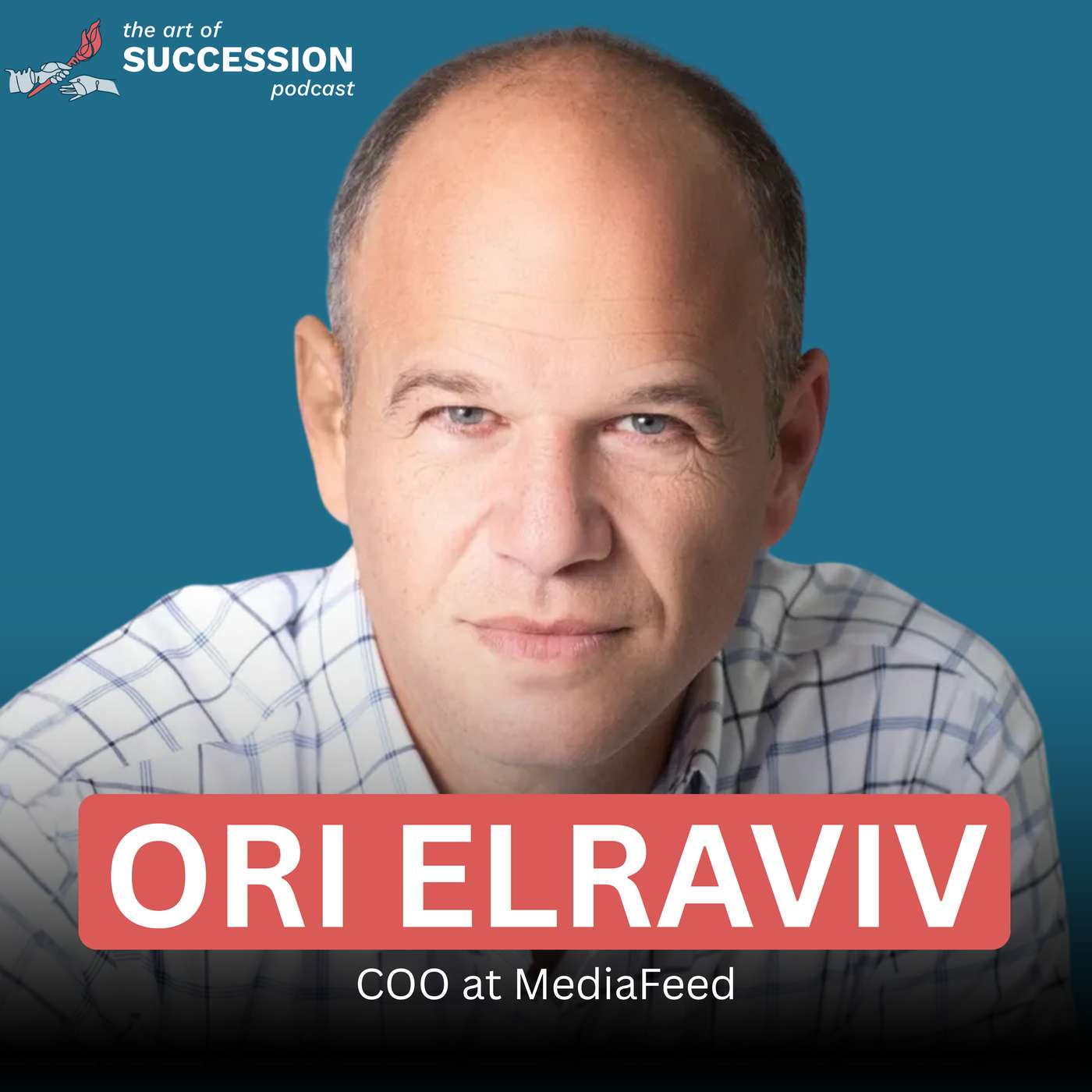
How Operators Rescue Failing Businesses and Rebuild Culture That Drives Profit with Ori Elraviv
Episode Transcript
0:00
Small companies have limited amount of resources. You want to be able to be profitable and
0:05
sustainably profitable. You would have to invest a certain kind of amount for it to actually make
0:10
sense. The type of people you want to re-invent things are different from the people that you
0:15
want to operate in the company. So let's get into your history. How far back do you want to go? Where
0:19
do you want to start with that? Right. So I meet Ori El Raviv, the CEO of Media Feed, a
0:24
multicultural turnaround executive CEO with a sharp intuition and market perception with
0:29
expertise in finance, operations, sales and business turnarounds, he excels in creating
0:35
sustainable growth and focuses on impactful objectives to lead companies towards success. A
0:41
lot of entrepreneurs that are like, it needs to be my way or the highway. They hate structure, they
0:46
hate preexisting anything, and they just want to create everything from scratch. I'm the type of
0:50
entrepreneur that just prefer to work out of existing things. I like finding the things that
0:55
need some adjustments. It's important to know that not everyone can be salvaged. You're you going to
0:60
a place, and some people that work there do not fit your management and culture aside, what are
1:04
the keys, do you think, to get everybody on board? That's a good question. And I think that if you're
1:10
like most of our listeners, you love the idea of running the show, but you're constantly second
1:15
guessing yourself if you're ready or the person for the job. Are you missing a key skill? Are you
1:19
aware of the things you need to know, like reading a financial statement or financing the operations
1:24
of a business? We are here to solve that for you. Our new Free Ownership Readiness diagnostic will
1:30
rank you from 1 to 4 on five foundational pillars of successful business ownership. It is the
1:36
ultimate confidence builder that will tell you, yes, it is time to have that conversation or know
1:42
these are the areas that you might need a little bit more time to develop. If you're interested in
1:45
taking that assessment, you can find the link for that down in the description below. Welcome to the
1:50
Art of succession podcast with Barrett Young. Join us as we explore the strategies, stories and
1:56
insights that shape the journey of leadership, transitions and business success. No matter where
2:00
you find yourself along the journey, this is the podcast where you'll find the tools to make it
2:04
happen. My name is Barrett Young and this is the Art of succession podcast. My guest today is Ori
2:09
El Raviv, who styles himself a small to medium size operator and turnaround specialist. Over the
2:15
past 20 years or so, Ori has found himself in the midst of massive shifts in a number of various
2:20
organizations, ranging from mobile game development in China to the company behind one of
2:25
the first internet meme depositories, IBMs world. Ori welcome to the Art of succession. Thank you
2:31
Barry, it's a pleasure to be here. I want to start off with just a question for you. Like what brings
2:36
you to the art of succession today? What do you really want to, like, convey to our listeners from
2:41
this conversation? First of all, the art of succession is very much in line with what and who
2:46
I am as a succession. I really like to get into existing organizations. I just love the existing
2:52
organization and the small to medium size of it. So this is my passion and this is where I feel I
2:57
am best. So I think that was just a natural kind of thing for me. This is just a fun thing to go
3:03
and just share conversations and experiences and mostly mess and failures. That's a lot of fun.
3:09
That's the reason why I'm here. Turnaround specialist is the title that you're working
3:13
through and you say you like to go into existing businesses. What is it specifically about existing
3:18
businesses that appeals to you? Because I know a lot of entrepreneurs that are like, it needs to be
3:23
my way or the highway. They hate structure, they hate preexisting anything, and they just want to
3:28
create everything from scratch. So what is it about the preexisting business that draws you in?
3:33
I think I'm the type of entrepreneur that just prefer to work out of existing things. If you
3:38
remember the show hero, when there was that one villain that he used to correct the clock or
3:44
something like that? Oh yeah, Sky, Sylar. And I don't know why I'm Canada, but I just like
3:51
existing clocks, and I like finding the things that are in there that need some adjustments, and
3:56
that's what I do now, I think. Similarly to other entrepreneurs, I like my own way. I don't think I'm
4:02
not a bull in a China round, so I don't really go and smash everything around to do it my way, but
4:07
it's definitely something that I want to be able to impose or bring in my own way of working in
4:14
culture, it is a fairly lean way. I'm not strongly going into things to just impose everything, but
4:20
there is definitely a style that I like to work in and the style of people that I like working
4:25
with, and this is where I bring. So unlike other entrepreneurs, I just prefer to work into an
4:31
existing thing and, you know, bring me the mess or bring me just things that need adjustments. And
4:37
that's my entrepreneurship style, I guess. So let's get into your history. Like what brought you to
4:42
this point? How far back do you want to go? Where do you want to start with that? So I think I'm
4:46
defining myself as an operator and turnaround specialist. It's something that I my career
4:51
brought me in. The career has. This is what has been established. It's not that I started early in
4:56
the days. I was like, this is what I want to do. This is why I'm what I'm good at and more like,
5:01
this is how it evolved. And when I look back actually later in my career, actually quite
5:07
recently, and I tried to establish who am I because I've had troubles with my identity, like I
5:13
did not like what I answer. When people ask me what I do, it was always like, I'm a CEO of this,
5:18
whatever that. It took some time to just evolve into who I am regardless of where I work. And I
5:24
think that was a very important thing for me. So my career dates back probably from the China days.
5:30
I moved into China in 2003, and in the midst of that time, I had a very good friend that I played
5:35
basketball with, and it was after three years in China. It was an intersection point for me, and he
5:40
was the one who got me into being my first CEO role. And I went to a mobile gaming company. And
5:47
honestly, until then, the only thing I played was snake. I had no technical background, nothing in it.
5:54
And the thing that he told me that I know how you play basketball, I see you play basketball. You
6:00
will be great. It's one of the foundation things is that there is certain kind of characteristics
6:05
of people that really define who they are also at work. So I think this is not about a
6:12
CEO is better than other things. It just imposes a different role. A lot of things that I learn from
6:17
him, also because I didn't have any background, I didn't know anything. He pretty much told me, don't
6:21
worry, after three months you would know more than anyone else. And that is a key thing for people, is
6:28
not to be afraid because they don't know. You know you need to be your some sort of a self-taught or
6:33
autodidact. You're not very, very quickly, you kind of learn what it is around. You don't really need
6:39
to come with all this massive kind of background and stuff, because I think often this is something
6:44
I don't like in the market when they find is because they try to find Experience, and I think
6:51
I try to find character and people. I think that character and people are more important to me
6:57
than specific experience dates back to then. That's when I started on mobile, porting QA with
7:03
nothing. When we eventually work with the Electronic Arts and Disney and we had a mobile
7:08
game studios, we created 3D games for Electronic Arts. Uh, didn't work with Sony Pictures.
7:15
I also made massive mistakes over there that I, you know, shared in different things. I probably
7:20
was the reason of how he got us there, and I was the reason that it all kind of fell apart, you
7:26
know, it was all me, you know, like I made mistakes that are still painful today. I mean, when you took
7:32
the role of the CEO, was it a turnaround like your your friend saw your your position,
7:38
but I assume a previous CEO had been removed or it had grown to the point of needing a CEO. Like
7:45
where was that company at? And was it just like, optimize it or. Yeah. Talk to me just a little bit
7:52
about what was needed there. China was really the only time when when I was a CEO from scratch
7:57
where we actually built it from scratch. Um, my later in the career, when I
8:04
got into the digital media, into the adtech world, that's where it kind of started. I took more of a
8:10
VP role and then very, very quickly after kind of opportunities presented themselves. At some point,
8:17
I took over a company of a mass email marketing company that was in Serbia. Uh, the company that I
8:24
worked with acquired. And but it was just there and somebody needed to somebody nobody knew what
8:30
to do about it because nobody had the patience or or anything for it. And I took over as a CEO, and
8:37
that was my first real turnaround opportunity. It took something that was losing money. And within a
8:43
year, you know, we turned around to a profitability and for several years. It is done well. So that was
8:50
my first one. And then after that there were all sorts of other kind of opportunities where I took
8:57
over. You know, you don't have to take a company. You know, you sometimes, you know, you take over a
9:02
position, you know, you take over a team, you know, and it's not always a turnaround where everything
9:08
is just a mess and everything is collapsing. It doesn't need to. A turnaround is not a negative. It
9:14
shouldn't be a negative thing. You're not really saving the day. You know, sometimes it's just stuck
9:19
or sometimes, you know, there's too much of the day to day. Sometimes there are areas where it's just
9:27
sliding. It's like a downhill slide. Where are we at now with the company in Serbia about how much
9:33
time is past in China at this point? All right. So China was 2003 to 2009, right. So after that I
9:39
moved back to Israel. That's 2010 ish is around the time where I took over the company in Serbia.
9:47
And then I've been around that for several kind of years. And then, you know, came over the bombs
9:54
where all kind of opportunity. That's when I shifted over to the digital publishing. We there
9:60
was an acquisition of IBM's world. I can offer to step in as a CEO, working with a team in San
10:07
Francisco. Um, there are a lot of kind of challenges in the play, but that was the early
10:12
days of after a couple of years, we established a company that is called literally media, which is
10:17
still, you know, exists today. It's a phenomenon kind of company that basically, you know, gotten to
10:23
a point where it's leading in the humor and entertainment space and is doing tremendously
10:30
well. And I'm no longer as a CEO in the company. I left out in
10:36
2022, but there are wonderful people around it and a very strong kind of CEO that kind of succeeded
10:42
me. And he's brought an amazing kind of things to the place. Talk to me about the shift from.
10:49
Because you said while you were in China that there were highs and that there were lows, like
10:54
you're responsible for the successes. You're also responsible for its eventual failure to go from
10:59
that to now, the company in Serbia that needs somebody to step into failure and turn it
11:06
around. Just talk to me how mentally and emotionally you prepare yourself for that and and
11:12
how your identity is shifting and how you shrug that off and say, I can. I can get it right this
11:18
second time around in a different context, I think I didn't have. That's interesting. I never really
11:24
thought about it that way. But when coming into Belgrade and Serbia, right, the company and you're
11:29
now meeting the team and not really thinking about, oh, can I do it? Can I not do it? I'm, I'm
11:35
going in and I'm, I'm learning. And what is it, what's going on there? What are the people. What is
11:41
the business, you know. What's the current status of it? I don't think I had anything in the back of
11:47
my head like, oh my God, can I do it? It was never really a thing. Um, I went in there
11:54
and it's establishing relationship. It's understanding the landscape, you know. It to me, the
11:60
very first step is, is understanding how the machine works. And, you know, sort of like the hero
12:05
and the clock. You just you want to understand what what makes this thing tick, what does it work?
12:11
And then according to what my own kind of observations are, where do I feel are the
12:16
challenge? I need to understand intersection points. And, you know, intersection points to me are
12:22
stuff that you when you push, you know, things happen. Right. So that's I want to understand where
12:29
are the key kind of points in the business that we need to adjust, or we can adjust that. If we
12:35
would change something then, then it would change course. So in this kind of particular
12:42
space, you know, case, the main thing that we did was a business model. You know, the company back
12:48
then, um, had a business model that had like a lifetime licenses to it. And while the
12:54
lifetime license has a benefit by you're able to sell it for more money.
13:02
Um, at some point, if the market is, is not really good or is not really big,
13:09
then you're sort of like, I'm not saying you're running out of clients, but there's no consistency
13:13
of things. All right. And I like things that operate on a monthly basis. I want to see monthly
13:18
recurring kind of revenue with it. And that was a big issue. So we decided to change the model from
13:24
a lifetime kind of license to a monthly license. And I know that's a very small or
13:31
sometimes maybe obvious kind of adjustment, but it was an adjustment that we needed to make. Uh, we
13:36
had to piss some clients off. You know, not everybody were extremely happy with what we did
13:42
because we sold the license. All right. So we had existing customers that we now had to change a
13:49
model. Now we didn't change the model to them. They bought it and they got some technical support. But
13:53
what we then changed that we said, all right, like we're going to start paying fees for technical
13:59
support. And we also we're starting to work on the
14:06
versions of the technology that we had. And, you know, so we said, all right. Like at some point
14:13
we told them we're no longer going to support this kind of version of it because it's already
14:18
going to be on that. And you need to do this. And if you want to be able for us to upgrade this,
14:24
you're going to pay us a monthly recurrent kind of fee. Um, we had to make some steps that were not
14:29
very popular, you know, among clients, but they were necessary in order for us to be able to
14:36
get new clients, to get something that is sustainable and recurring and to be able to
14:40
evolve on it. So that was on the business front. You know, there's obviously people.
14:47
People are always a thing, you know, when coming to a company, always a thing. Right. Like that's an
14:54
obvious right. But when when a company is uh, is struggling or when it doesn't really go or like,
15:01
the people are unhappy, you can't avoid it. Like, if a company's customers. But team members to team
15:07
members. Yeah. So you have to team members and how they do or are unhappy or unfulfilled or anything
15:14
like that. Now, it's also interesting going into people in Belgrade and Serbia because the
15:19
character and all people, the culture is different, you know, the so you have to adjust yourself to
15:25
the type of people that you are working with, and they're very loyal and that they don't like to
15:31
change kind of jobs. And that is for good or for worse. Us, all right. Some people don't want to
15:37
change jobs, and you're kind of stuck with someone who, you know, is there in their own head. But in
15:43
other kind of scenarios, when they change jobs, you know, it's a little bit of a headache because they
15:47
constantly kind of want more money. Da da da. It's always like, oh my God, you're like this, this kind
15:53
of thing. How is the CEO coming in to this company that's always had a lifetime model, that's had
15:59
some of these employees and they're like, no, this is the way we do it. I mean, how long does it take
16:03
you? Did they recognize that the ship was going down, that there was the need for the turnaround
16:08
here? How quickly are you able to turn around something like that. And what are the keys, do you
16:14
think, to get everybody on board? Yeah, that's a good question. And I think that really depends on
16:18
where where you are. First of all, I think it's important to note that not everyone can be
16:23
salvaged when you go into a place. Right? Um, and there are several reasons to it. One, uh, you
16:30
go into a place and some people that work there, you do not fit your management and culture style.
16:35
Um, that just do not, um. Other people are too far gone. Meaning they're they're just tired
16:42
or they're exhausted or they're mentally kind of in a, in a different kind of place, and there is no
16:47
restriction to it. So there are it's not everyone is created equal. Sometimes you would find your
16:54
the people that are like inspire you. And those are the people that you want, you want to keep. And
16:59
it's a lot of it is a leadership style. Like, I, I, I really want to be able to surround myself with
17:04
people that inspire me because I know for myself I have limited amount of energy, so I need people
17:10
to energize me. Otherwise I'm like, you know, going down in energy and that
17:17
that's not a good thing. So I know that sometimes leaders are supposed to energize
17:24
worries, which I think is totally legit. Right? It's my role as well. But you would be surprised
17:31
how like to me how important it is for me to have people that would energize me back. Yeah. I'm also
17:37
believe that the sum of people are what makes the company. And for me, it's one of those roles,
17:44
is to get people to lift the lids, you know, get them to grow as an individual, as
17:51
people, as influencers inside of the company. If they grow, the company would grow. And
17:57
I often went over and told them that I'm the least important person in the company. You know
18:03
that everybody else is. And it's not necessarily because I diminish the what I the
18:10
importance of what I do, but honestly, it comes from a position that I really, really do believe
18:14
that the people that are in the company are, are more important in terms of their being able to
18:21
elevate the game are just more important for us to be successful. So you're in the company, you're
18:26
talking to people, you're noticing which ones energize you, which ones have that their eyes
18:32
light up when you're talking about the possibility of the future and everything, and so
18:35
you just start winning them over. How do you dislodge the ones that are not only
18:42
unmotivated or too far gone, but are also in positions of power where they actually have like
18:49
an entire department or they're, you know, a VP or something like that in that position where it's
18:55
like, no, this is going to really disrupt the company. And there could be good people that leave
18:59
because of how this fallout happens. How do you work around that? I think one of the things I you
19:05
probably encountered it, right, but you have an eternal feeling that that's this is not going to
19:10
work. Right. But we sometimes we fall into the trap to still continue to let's
19:17
give it a chance. And that's where there is a true. Like, I don't know whether there is a right and
19:22
wrong in it. I only know that that the gut typically tells us the right thing. Like if
19:28
something in your God told me you that this is not going to work, this is very likely not going
19:35
to work. And if there's some sort of an internal kind of intuition that I think happens to us when
19:41
we're open, and that internal intuition is definitely spot on is typically spot
19:48
on. So I think if you we often have to remember when people are not are not good
19:54
fit. Um they're unhappy also. So for them to move on
20:01
like it's sometimes taking the approach where if you fire someone, if you let go someone, you're
20:07
it's like you're in a position of power and you're opposing something on somebody else, and
20:12
they're not the victim. I often don't look at it that way. I look at it in a way, in a truly way
20:17
that that person is very likely unhappy. And that is a good thing for them, that we're that they're
20:24
just going to be able to move on. They're going to be happier. They're going to find something that
20:29
is a better fit for them. I honestly think that way. Now, granted, it may take them time. It's it
20:36
might be painful to begin. Uh, nobody who likes to get to be let go. There is a pride element to
20:42
it. And there is like, it's just not fun. You know, like, you would want to quit rather than being let
20:48
go. There is a certain element of I did it, not somebody else to me, but one of the day. It's not a
20:55
good fit for both sides. So I think the best way to do it
21:02
is, is to act on it faster than, you know, as fast as you can. And now,
21:08
granted, you have to you have to think about all the outcomes. You have to think about your
21:13
communications. I strongly suggest that before doing something like that, there's something that
21:19
is written about how it's going to happen. Who do you need to tell? What is the message that we want?
21:25
Like it's written so it's not going to be somewhere loose, you know, and those are important.
21:31
But now to answer your question, I, I would, I would head on. You know as quickly
21:38
as I can once I identify it, okay. It doesn't happen overnight, but it will happen after a while.
21:44
Talk to me about the shift. I mean, as presume that company's now successful and you've got an
21:49
opportunity at this other company in San Francisco. What are you coming into there? And is
21:56
it now? Are you starting to, in retrospect, see this position as a turnaround executive at
22:03
this point? No, it's still it's still a place where, hey, there's an opportunity a really, you know, had
22:09
enough of Aztec. I would love to do publishing. That sounds really great. I'm going to go over to
22:13
the size of the publisher. This is a fantastic opportunity. And then. And yeah, we encountered this,
22:19
uh, this opportunity to acquire a company that happened the broader kind of organization level,
22:25
and I offer to take it as as a CEO. And it was not an easy ride.
22:32
Um, there are a lot of kind of things around that kind of transaction that happen, which may or may
22:38
not be relevant to this one, but, um, it's it is a very similar kind of
22:45
approach to, to what I had also in Serbia. You you go and meet the people
22:52
and, uh, and you try to win them even though it's hard, you're halfway across
22:59
the world from them. Um, they're googling the name of the company that you work with, and they
23:06
they don't like what they see. Um, and, and you have to build trust, which is not very easy to do.
23:13
Were you working from Israel for this? Yeah, I was working from Israel in that, and they were in San
23:19
Francisco. I go and visit them every now and then. We try to establish kind of coalition
23:23
relationships, you know, and I think it's a I have to be honest, at that point, it was more on me to
23:29
win their, their trust than it is the other way around, because I want that
23:36
kind of to work. And, and they're very good at what they do from an editorial kind of standpoint
23:42
distribution. And, and I bring in my own kind of value from understanding the business and the
23:48
market and so on. And and yeah, we do, we do we do make a change and it does it does kind of work. We
23:55
do grow the company not to the expectations of some of the people that were involved, because
23:60
there are a lot of, uh, problems that happen around it. This is a different kind of topic about how
24:05
you assess and what are the pitfalls. Right? But it does work. And and from them from there, uh, later
24:11
on in after a few years, we encounter another opportunity and we acquired the cheeseburger
24:17
network with the icon Hash Cheeseburger. We also had another meme kind of brand abandon it, which
24:22
is another phenomenon kind of gem with a team that we're actually in Brooklyn. Cheeseburger team
24:28
were in Seattle. So now you're talking about almost like three different kind of teams. And
24:35
how do you kind of orchestrate between them different kind of cultures, stuff that, you know,
24:40
and stuff that you don't know? It's a there's a lot of fun in it. And this is about ten years ago
24:45
at this point when you moved over to this role about 15, 16. So in 2016, I moved over to the
24:52
US. We started in Seattle. That was when we acquired cheeseburger. They had an established
24:57
executive team. You know, the CEO, um, that was there, uh, back then was still a good friend of
25:04
mine. Um, he ran it until kind of point when I, when I came, kind of came in and decided that the best
25:11
thing for him is just to move on, to do other things. But we were left with, uh, a couple of very
25:16
senior executives in it, and it worked like I was excited that we have executives
25:23
that worked with us. You know, suddenly I was like, oh my God, executive. That will also help me kind
25:29
of move the things kind of forward. Uh, but, um, while, again, wonderful people, not
25:35
necessarily at the same type of, um, thinking or, uh,
25:42
just culture, the way that the organization that I kind of came from. And after a while it was just,
25:49
uh, we decided to take a different kind of approach. So they, I think they stayed with
25:56
us for, I don't know, maybe six months. And then we've moved on from, from that. What was the change
26:03
of pace like going from the Serbia company to a Silicon Valley company? And what was your like
26:10
your directive coming into that role? What were you tasked with? You know, figure out how this
26:16
works and then do X with it. The first thing that comes to mind when it comes to test is that is my
26:22
first encounter with the investor that I had in China, which didn't agree to give us a lot of
26:27
money, but it was like part of the investors. And, uh, the one thing that he told me was, here's my
26:33
expectations. And he drew this graph that goes, you this. So when you
26:40
asked me that question, I think this is this is sort of the answer. What is the expectation? You
26:45
know, this, you know, making money and make a lot of it at the height of internet meme culture ten
26:51
years ago, I mean, yeah, look, the the digital media and the digital publishing space is a very fast
26:57
moving industry where every year, every month, everything that it changes a lot from
27:04
the way people are consuming content through the different kind of platforms that control it,
27:11
like you name it, there are fires, like every day there is something else like this works, this
27:16
doesn't work, and so on. Right? There are also successes. We've had our share of success a lot,
27:21
like the company has grown and become a dominant kind of force in it, and still probably not
27:26
recognized enough for what it is, you know, wonderful people on board of a great investors,
27:30
great people and founders behind it. We've done well and it still continues to do really well. You
27:36
know, after I kind of left. So it's a proud place. I'm basically tasked to grow the company and
27:43
I'm tasked to grow the company and grow it, though profitably. This is also an important kind of
27:48
thing and a distinction. Okay, I'm a sustainable growth person. I don't know how to grow companies,
27:54
not profitably. I don't know how to grow revenue just to get it. For example, I don't know, acquire
28:00
the Nasdaq or anything like that. So a venture capital firm would probably not be. They would not
28:06
like my style too much as I'm conservative. I'm not going to conservative venture capital. The
28:12
model is the 0 or 100. You know, you. They would rather have you crash than being sold for two x,
28:19
you know, so they go. The entire business model is there. They're going to invest and put it on, you
28:24
know, their chips in a lot of kind of places. And they're going to bet that one chip that makes it
28:30
big. So if it would be a roulette, that would be the ones that are doing the red and black. There
28:35
would be the all end or not all end. They would get their chips on the 20 and now 18 and
28:41
whatever 19 that right. That's going to be their model. I would rather grow profitably. They
28:48
would rather get hits. And I think that's fine. You know, there's no right and wrong behind. It's just
28:53
a completely different approach to how you do business. What other kind of problems are you
28:58
encountering there? I mean, on Serbia's side, the lifetime subscription, switching to a monthly
29:03
subscription. That makes a little sense. I mean, obviously you're dealing with people now at this
29:08
company as well, but like, what are the challenges in the daily life of an executive? You said every
29:13
day there's something, you know, on fire. What are some of those challenges that people don't
29:17
realize when they go on a website and they see funny stuff, they don't realize there's like real
29:22
executives behind that making decisions. This is more specific to the digital media kind of space.
29:28
So it really is. It's not a specific for a certain kind of company. It's more of a space. Right. So
29:33
that space has. Right. There's content kind of creation and which has evolved. That
29:40
means take 20 years ago there was only World Wide Web. That's where you would go. You would go to
29:45
your browser and you would type IBMs world.com, and you would go there as you move
29:52
along, kind of change. Suddenly there is other things that come up like Facebook is coming up,
29:57
you know, there's Instagram and so on, and suddenly World Wide Web, you know, as like younger
30:03
generation do not even go to a WWE site like that doesn't even exist. They consume content through
30:09
Facebook and Instagram and TikTok and maybe YouTube, Snapchat and so on. Right. So instead of
30:15
having one core place where content kind of exists and now exists in various kind of
30:21
different ecosystems, and it's controlled by platforms, some of them, when you put your content
30:27
in them or pay you, some of them do not. Some of them used to refer traffic to you and then
30:32
stopped, and some of them allow you to do something and then decide to change their mind.
30:38
And no, you can't do it anymore. It is a very, very challenging environment that's from that kind of
30:43
site. And now there is the rise of various kind of companies of various kind of sorts like content.
30:50
There's endless amount of content. So it's really a battle of being able to be seen. There is a
30:57
question of where brands importance inside of digital media. You know, there's we can probably do
31:03
a whole episode on digital kind of landscape, how it evolved and what are the challenges today, what
31:09
are also the dangers? Kind of besides it. What in my eyes is legit? What is a real problem in it and
31:15
where is it also going? How do you get up to speed as a new executive in something that this big,
31:21
moving this fast, acquiring other companies? You get in there and you see how the clock works. But
31:26
I mean, specifically, who are you talking to? What are you looking for? Because so much of it is like
31:31
this has never existed before. We can't just say what what worked in 2005 is going to work in 2015.
31:37
It's changing as you're learning how it's done also. So who are you talking to? How are you
31:42
learning? Let's go to it. To any business like my approach to any business that you would go, it
31:46
doesn't really matter. Digital or whatever it is. Right? And you got to be able to learn how the
31:50
business operates. That my that's my style, right? It's about operating. It's about understanding.
31:55
First of all, how does that operate? Right there is the PNL, the profit and loss. It's not only an
32:01
Excel sheet. You want to understand what's behind the Excel sheet. You know, it's not about just
32:06
plugging in numbers. You know. How are those being created? What are the dependencies? What are the
32:12
forces that are being that? And then you go on also the expenses coincide. What are the expenses?
32:18
What are we spending things on? What is required in order to generate kind of the revenue? What is
32:24
the trend? That's the inside. Then the people that kind of operate it, then you go outside to the
32:30
market and the market trends. And where are we inside of all of it? I think that's kind of the
32:35
fundamentals of it. In many ways. Businesses operate on a very similar kind of basis. They
32:42
eventually everything is about, you know, you're generating money and you're there are some kind
32:47
of expenses to it. And there is a certain kind of sales marketing business kind of cycles to all of
32:53
it. Right? So understanding the fundamentals of the business is what skiing here. And once you
32:59
understand the fundamentals of where it is, what's happened, what works, what doesn't, then you need to
33:05
deduct from it your next step. All right. You want to be able to get. All right. Like this is the
33:10
direction that we're going into. My style is a direction. And I told again I'm not the VC. Let's.
33:16
How do we get to 100 x? It's less my style. I want to know. Right. Like, what is our next logical step?
33:22
Where do we want to go? The logical steps has to comprise by your current status and
33:29
capabilities, the market realities, as well as who do you have to work with and the ambition and
33:35
appetite of the people behind it. Like so, for example, it is great if someone was like, I want to
33:41
do this, you know. But if they don't have the appetite, the intention and the integrity or, you
33:47
know, just the will to do it all through. Yeah, yeah. Because, you know, like they're just saying things,
33:52
you know, there's no point. Let's connect the dots between the capabilities, the situation, the market
33:58
and the these the will and desires of the people around them, then paints the picture of the next
34:03
steps and what's possible and what's not possible. I really like working as a yearly kind of roadmap.
34:09
That's the priorities and kind of goals, and I don't get too obsessed over it, but I want to be
34:15
able to know the direction then I like it that I have. How does those kind of break down into
34:19
quarters? That's something that really helps me because it helps define for me and the team what
34:24
is important, what is not important, what is that that we say, like if we want to go there, what does
34:30
that mean for us? Now that's what it's supposed to picture for you. But again, it's an evolution. It
34:34
didn't really happen to me overnight. It's just over time as experience is going to grow. This is
34:39
sort of like what I've learned that works for me. One of the challenges I have with coming into
34:44
broken situations. So I want to get pick your brain on this as a turnaround artist, when you're
34:49
identifying what makes the business run, how do you know this is the reason it's broken versus no,
34:56
this is necessary in this context is just different from what I've seen before. So, you know,
35:01
surface level example a Silicon Valley company, you know, the whole idea of like the ping pong
35:07
tables and the cafeteria and the massage chairs and everything like that. Somebody coming in and
35:11
not used to that culture could be like, well, this is waste. It's, you know, it kills the bottom line
35:16
of the company. Whereas somebody in the company could say, no, this spurs creativity. And so this is
35:20
essential here. When a company is broken like that and you're getting down to the nuts and bolts of
35:26
what makes it run, how do you identify what's broken and what's not in that situation? Does it
35:31
make sense? I'm not stepping into situations where the problem is that they're playing too much ping
35:36
pong, but and the companies that I had, you know, we had a ping pong table at some point you have like
35:41
overpaid people or you have excess benefits or you have things from a PNL standpoint that's like
35:46
we're paying way more than normal for this, but then you find out, no, that's purposeful. That's
35:52
part of the what makes the company successful. And if you cut it, you rip out the engine. I'm not sure
35:56
there is an easy answer. Okay. Because there's your side of what you believe. So for example, you could
36:03
be a scenario that in the company that you kind of go in and operate a certain kind of thing cost
36:09
whatever to x of what you saw experience in a different kind of that cost. And to you it's like,
36:15
well, I just don't get why it costs that much more. We've ran into those kinds of things where
36:22
insights that we acquired in the literature, media kind of side. We saw that
36:29
the opex or the cost of operating the company, as opposed to what it produces, was just did not make
36:35
sense to us. Like, we could not understand how those people would. That kind of thing
36:42
produced this. Like it just did not make sense. Okay. And the only logical kind of thing for us
36:49
to to say was that, well, either they're very things like that. You go down to your logic,
36:55
right? If things cost you way more, then there are a few, Then there are several reasons.
37:02
A one you pay a lot to a person that produces x, uh, or
37:11
the the stuff that you produced. X is a way higher quality than where it is and it's just more
37:18
expensive to produce it. There is. Well, you know, people just are either, you know, the amount of
37:25
time invested into it, it doesn't really occupied kind of that space. Well people well, you know,
37:30
they're just it's ineffective or they're tired and unmotivated or something like that.
37:37
Right. There's you have to understand what are the reasons that things go on. And it's not a right
37:44
and wrong, but sometimes it really shares you in the face, like definitely when it comes to your
37:49
style, you know, like in this style and the way that you operate like this, this just a this just
37:55
doesn't add up. You know, I think a lot of times in these situations that the company
38:02
is maybe stagnant or, or whatever it is. Then when people are tired, you know, then people that are in
38:08
it are tired and not motivated and so on. You can't blame them. You know, it's uh, you can't you
38:14
know, it's the energy inside of the company. And it's not it's not their fault, you know, but. And
38:19
the situation, can you change it or can you not? Sometimes you pay for something for
38:26
an equal quality. You pay. You pay too much. And then it also is then you
38:32
run into the issue about, well, who says this is equal quality or like one say like this is better
38:39
if one says it's like, no, this is not better. Who is right? And you know, there is probably no right
38:45
answer to it because there is just, you know, that's my opinion. You know, that this is just I
38:49
don't really see the difference. You you created this these two things. And I think content is a
38:56
very good example of it. What makes this content better than this content? You know what makes it
39:02
better? You know, and a lot of it is opinion. And I think it's a very it's a very it's a very tough
39:08
one because there's like there is going to be people who went through journalism kind of
39:12
schools and they're very proud and of what they do and they're amazing kind of people. And what
39:19
they ended up kind of do versus someone that I don't know, you found in a different kind of
39:24
country and so on. And, you know, I don't know, for the average Joe. Well, I don't know if this is
39:30
better than the other. You know, at the end of the day, it's it's a challenge, you know, and, uh, I think
39:36
navigating it, this is not necessarily an easy thing, but I think you have to go with your truth.
39:42
So this is this is what you believe in. This is the choices that you made. Uh, this is not a right
39:48
or wrong. I don't I'm not saying there are no other ways. This is just my way. And it's not that
39:55
others are. Don't know what they're doing. Um, although you often think that sometimes things
40:01
like. Oh, my God, I don't even know what they're thinking. You know, obviously there are sometimes
40:05
that's the situations where the tough decisions, there are some things that are just more obvious,
40:10
where you identify areas that obviously you have the expertise and you know more. Your
40:17
guys will step in and make it better. That's. These are the easy things that you identify inside of
40:22
the company where like, this is just this is like a slam dunk kind of improvement. Like, I know
40:28
things could be done better. We just know from experience, you know, we know better. Part of turn
40:33
around. I mean, you can't always just come into a new company and change it. Part of turnaround also
40:37
happens has to happen in an existing role. So you've seen the graph go up like your investor
40:44
told you he wanted to see. But then you're starting to see signs of the landscape is
40:49
changing. Something's shifting. We need to we need to act now. So talk to me about that. How
40:58
innovation sometimes happens when you're comfortable has to happen when? When everything is
41:04
no. Let's just milk it for a little bit longer. If you're not paying attention to that, to the
41:08
horizon. So talk to me about your, your your thoughts on that. And in that position, the company
41:14
at this point, my gut tells me that that's a very, very challenging thing, especially when it comes
41:19
to a small companies, because small companies have limited amount of resources, you want to be able
41:25
to be profitable and sustainably profitable and going after stuff that you
41:32
think would get you to the next step is a risky one. There is a thought process that you should
41:37
always have this, what you would call more of an innovation team. And depending on the size of the
41:43
company, that innovation team would be small or bigger. There is very likely to be a minimum
41:50
set of requirement for that to even make sense, meaning you would have to invest a certain
41:57
kind of amount for it to actually make sense. The type of people that you would involve in it would
42:04
be different because you want it does just different people. You know, those are not your the
42:10
ones that sustain kind of the company and operators. And now you want people to to
42:14
experiment and break and move, right. We've dabbled in it. I, uh, I don't know that I have the magic
42:20
from kind of formula. I think that having that kind of innovation commando,
42:27
if you want to call it that way, is likely an important kind of thing, like an R&D budget, even
42:33
in the smallest kind of company of, yeah, you can call it R&D of hours or time or costs should be
42:40
allocated over here to new and efficient. So here is here the challenge. Okay. I'm not like. So that's
42:46
why I think that the the commando team I'm not sure. Can do also regular like I'm not sure that
42:53
you can go and get an engineer and you get into port. This time you would do commando, right? Like,
43:00
it's like 20% of your hours innovation. There are some companies, right, that they allow people or
43:07
even mandate people that 20% of their time they want you, that you want them to do something
43:11
different. Is that because they want them to be more just to have more fun? Feels to
43:18
me like that's the reason rather than, you know, that this is going to reinvent the wheels. Maybe
43:24
they think they do. I personally think that the type of people you want to reinvent things are
43:29
different from the people that you want to operate in the company. So I that is my opinion.
43:36
Kind of like at a very high level. There's a switching cost there, right? So even if it's just
43:40
one day a week that you have to turn off this efficiency side of your brain and turn on the
43:44
creative side, you're saying that's going to be too hard for most people to Actually produce
43:50
something that changes the business model. I think it's more than the changing cost. I think it's
43:55
about the person, the way that they are comprised. Like the type of person. It's just not like there
44:01
are people that are really good at what they do. Um, they're just if you're going to try to make
44:07
them something that they're not, they're going to be miserable to do, you know. Do you know how the,
44:11
the challenge of, of people that you would want to, you know, they've been around, you want to
44:16
congratulate them and you raise them to be a manager. That person is really good at their job.
44:21
I'm going to dam them to manage their whatever. And that ends up to be a disaster because they
44:27
were really good at this. And now you move them to be a manager and you completely kind of bomb like
44:33
they completely suck at it. You know, they just they're not good managers. They're not happy in it.
44:39
The people that are underneath them are unhappy. Everyone is unhappy at disaster. But you're sort
44:45
of. But how do I how do you avoid or identified? It's also a question because what is then the
44:51
path? You know, sometimes people also want them to be promoted because it's good for their ego, it's
44:57
good for their salaries and so on. But um, but then you promote them and that ends up being a mistake.
45:03
It's not the same thing of what I mentioned to you in terms of the commando team, but it has a
45:09
similar principle to it. That means that, you know, you would I would ideally want people that just
45:16
fit to be a commando team. And some people that really are what good is, is to go and and run the
45:22
existing business. All right. Tell me about wrapping it up at IBMs world at this company. And
45:28
you know, which now I, I assume or I hope that you've seen yourself as this turnaround
45:35
strategist. Uh, what have you been doing and how did you like, shift to, to doing this for,
45:42
for smaller businesses, non VC funded businesses. And yeah talk to me just a little bit about where
45:47
you're at today. It first started with myself. It's not about otherwise. It's about myself, you know. Um,
45:53
I took some time after, uh, I stepped down as a CEO, a little media, and I needed
45:60
to recalibrate myself. You can call it. I did a turnaround for myself, you know, but,
46:07
uh. And I needed someone to help me on that. It's, um. Some of it has to do with, uh, getting to know
46:14
who I am, what I am, what I like to do, what I believe I'm good at, and. And then how do I frame
46:21
it? And it was it's been an interesting kind of process to it because inside of it, you know, it's
46:27
not only what what I'm good at and why I'm good at it and, and what I love to do, it's also what,
46:33
what do I need, you know, to succeed. Um, and that was like an honest kind of assessment of like,
46:39
look, if you want me to succeed, like, what is it that I need? You know, and there are some kind of
46:44
requirements for me that I need and certain kind of things and people that I want to work with,
46:48
certain kind of personalities. So this may seem obvious, but for me, if I
46:55
need the space and I need a mandate, um, I need some time, you know, give
47:02
me some time. Like, don't. It's not. It doesn't happen overnight. It doesn't happen for a month,
47:07
you know? Give me some time. Give me the space to operate, give me the ability to kind of make the
47:12
changes that I need to kind of make. Um, I don't want to say move out of the way, but in a way, move
47:18
out of the way. Not because of me, just because I just need I need the ability to kind of do my
47:23
thing. Then it's people like, I, I like to work with people who are that are passionate, that go hard
47:29
and inside of it, uh, that's important to me, various kind of things around it in
47:36
terms of myself. Right. So I'm, I'm at a space that I'm kind of opening myself to those kind of
47:42
opportunities where I'm, I'm best brought in to a place where it's a small to medium size kind of
47:48
opportunity. I'm working with some, as is almost like a shadow kind of advisor to them, shadow kind
47:53
of partner as a CEO, one of the things because I learned that as a CEO myself, this is something
47:60
that was really important to me. Like, I need someone kind of to really talk to an advisor and
48:05
someone that doesn't really have, you know, that doesn't have any emotional attachment to the
48:11
below and to to do the above, you know, that can can just really be there as, as clean as possible.
48:17
That's kind of where I stand right now. I'm I'm extremely passionate. Like I love that. Like I
48:24
loved coming into businesses. I love the the challenge, I love people, I love working with
48:30
people. I love making them, you know, bigger than what they are and stronger and more passionate
48:36
and happier. Um, I love the sustainable kind of environmental business. I love the challenge. I
48:42
love the next step and that's just what makes me happy, you know? So I think the best thing for you
48:49
to do is what makes you happy and what fulfills you and everything like that. And that's the
48:53
journey that I'm at. You said, uh, let me in and get out of the way, kind of jokingly there, but I
48:60
know one of the big shifts that you've had to adapt to here is in small and medium sized
49:05
businesses. You're not just working with the CEO. In many cases, you're working with the owner and
49:11
you. They can't be removed by the board and let you step in and become the CEO. So talk to me
49:17
about how you've approached that conversation where the person who hires you, you look at all
49:23
the you look into the company and you're like, you're the problem here. You're, you know, similar
49:29
to your own situation. You're the reason this company has done well and you're the reason that
49:33
this company is no longer doing well. Um, because that's a very difficult conversation. I think
49:38
that's a very, very first statement. First of all, I think this is about, um, being sensitive
49:45
to it, right? Um, I think that in general, it's not their fault. Like me, I mean,
49:52
people, everyone is doing their best. And over time, you know, you it's you get with clutter,
49:59
you know, just like in a, in a, in a house or anything like that. There's just clutter. That
50:03
clutter kind of interferes with the way that you kind of operate. That is probably a message that I
50:08
will say. It's not that he is the problem or she is the problem the founder is about. It's not that,
50:14
you know, it's not like, oh my God, you're the problem. Get out of the way. It's not that. It's and
50:19
it's not just about people moving because you're you're in my way. It is more of a statement where
50:27
I need, I need I need some space kind of to operate, and I need some space to look into things.
50:32
And it could definitely be in the collaboration. What is a problem, though, As if I would go into a
50:39
space and I would be asked kind of to to go and take it forward. But I will have all those
50:46
types of conditions that I will have to operate with. You know, no, you can't do this or no, you
50:52
can't do that, or this is the way that we do things here. Like, it's not that I can't operate
50:56
with it. Um, but I've learned that this this really limits
51:03
my ability, you know? And again, like I said, there is no right and wrong, but there is a way that I
51:09
can, um, use to running things. And if I'm, if I if it doesn't really happen, then it makes it really,
51:15
really challenging for me to make a difference. And I think that is going to be true to anyone.
51:20
Like one of the things it's probably going to be the number one kind of thing is that you have to
51:25
stay true to yourself and the way that you run things. It's not a right and wrong. You don't have
51:31
to adapt. You know that if you're the leader in it and you're sort of like that, that's what needs to
51:36
be there. Like, you can't be adaptable to others. Actually, I think the business have to shape after
51:42
your own company identity. That's there. It's almost like the heart and soul of it. That's how
51:47
it's going to run. And. And you find the people that are going to be right for you, and you're
51:52
going to be right for them. And I think that's probably the conclusion to it. I'm not kicking
51:58
aside founders. I'd like to work with that. I'd like to elevate what's best for them. But I also
52:03
want to help them. I want to help them get out of you know, I'm assuming that they're also stuck. I'm
52:10
assuming that they're also want some sort of a change. I'm assuming that they're kind of running
52:14
around their own tails, and I'm going to calm down. Let's look at
52:21
things. What is the next step? Let's focus. Um, I'm really going to be about what
52:28
what what is what is important. What is noise? It's going to be a critical element inside of it.
52:35
Everything that resides that is outside of our priorities will be immediately flagged as noise.
52:39
And I'm really looking at its calm down. This is not important. This is important. That's good. I
52:46
mean, sometimes it's just that outside perspective to be honest with them because nobody's ever told
52:50
them they're the problem, but because you can't remove them, it's like, no, you do have to shift. You
52:57
do have to be more firm. In some cases, your company is running itself or your employees are
53:02
running your company for you, but you're diagnosing it. Not to say get out of the way, but
53:08
how are you going to adapt knowing this information? Right. Diagnosis before prescription.
53:15
Yeah, it depends on the situation. Right. Sometimes there's maybe there's owners who, you know are
53:20
ready to move on, or maybe there's owners that still want to be there. And again, if you're not
53:26
really are ready for a change, it's just not going to happen. Right. And I think
53:32
each of us understand that. They know that and have that from experience, not only in business, in
53:37
anywhere. Like you, if you want to change, you got to be able to. It needs changes coming from inside
53:43
that doesn't go from outside. Outside doesn't really change, really. It's a mask. It's a cover up.
53:49
You know, if you want to change, it has to be coming from the inside. Once you're open to it,
53:56
then good things. Well, I'm not sure good things, but change will happen, you know, good or not is is
54:02
the eye of the beholder. Yeah. Or. This has been a great conversation. Um, before we move on to the
54:07
lightning round, is there anything that you wanted to add that I. That I haven't touched on or
54:10
haven't asked? No, I think that's it. I think, um, it's important message to say that nobody is at
54:16
fault for anything. You know, nobody's wrong and everybody is, you know, you would you would find
54:21
yourself that you're in the same boat as others. You know, it's almost like, uh, join the club. It's
54:26
probably a a good message to it. You know, everyone is struggling. It's not something that is unique.
54:33
To some individual, it's a struggle. And it's a and it's a journey that everyone goes through. It's
54:40
not it's not you're not at fault. It's not your problem as you're sometimes something else is
54:46
required. Well, let's get into the lightning round then. Are you ready to go? Yes. All right. Uh, coffee
54:53
or tea? And how do you like it prepared? And that's easy. I'm a coffee person. I would say. Look, I'm
54:58
lately on a cappuccino kind of thing, but but I do. I do prefer the Americano with a little bit of
55:03
milk. It has to be a strong Americano. And I take it with sugar. So I drink coffee with sugar.
55:10
Okay. Um, pie or cake? And do you have a favorite kind? Absolutely. Cake. I don't even know who likes
55:16
pie. You know, I guess cake, but I don't really get. Oh, man, we were doing so well. Uh,
55:23
but I'm chocolate cake, and it could be kind of layers of chocolate mousse. That would be good.
55:30
I'm very much a foodie, so. But. So that would have to be good. Like, I, I would rather not eat a cake
55:37
if it's not, you know, like really well done. I would rather just eat it. Do you have a favorite
55:42
holiday and why? That's a tough one. I think I will still stick to Passover, which was, uh,
55:49
which was a holiday that I like that, uh, when I was young. But I think I still like it because
55:54
Passover has that Passover in a dinner, and everybody kind of comes together and they're all
55:59
preparing their own special kind of dish. You end up the evening when you're not able to move. You
56:04
know, but until then, you're very excited about what you're making, what everybody else is making,
56:09
and hopefully you're able to enjoy it, uh, rather than being stuffed. Yeah. Do you consider yourself
56:14
a morning person or a night person? And do you have a favorite routine? Yeah. Morning. So I love
56:19
getting out of Luxor, so I have to get out of the house. And I like to get my coffee, the coffee
56:24
place. And I like working in a coffee place for, you know, a couple of 2 or 3 hours. That would be
56:29
my best morning kind of routine. Is it just the buzz of the early morning coffee rush that helps
56:35
your head with creativity and stuff like that? Being around other people like that, I need to get
56:39
out of the house like this is not I hate being in the house too long. So to me, that's the best kind
56:45
of morning routine. I do have a morning routine on Saturdays where I go to my CrossFit as at 830 in
56:51
the morning. I love that that's probably the best day of the week when it comes to 830 CrossFit.
56:56
What's a common belief among entrepreneurs that you would want to challenge? I'm not sure this is
57:00
a common belief. I do want to challenge. Entrepreneurship to me is not a doing, it's a
57:05
being. I don't like the idea that entrepreneur has to be defined as someone who is building or
57:11
creating a businesses. I think entrepreneurship is a spirit. So to me, entrepreneurs can definitely be
57:17
people inside of the organization that there are just entrepreneurs there. We don't have to be told
57:22
they want to be able to move kind of ahead. They're creative in what they do. That type of
57:26
people inside of organizations are equally important as as just those are just building
57:31
businesses. Yeah, I love it. I mean, that's the heart behind the Art of succession is a lot of people
57:35
think if you didn't found the company, you're not an entrepreneur. You're second or third generation
57:40
owner. It's like, well, no, there's decisions that have to be made that are not same as last year. Or
57:46
you know, what got us here won't get us there kind of thing. So yeah, I love it. That's awesome. What is
57:52
one thing that you would want your successor to remember you for? Probably that I did what I could.
57:57
I did my best, stayed calm and collected and did what I thought was right. Ori, where are you
58:02
finding creativity right now? Pickleball. Yeah, I know that's
58:09
a funny kind of element to it, but yeah, I can play it for the first time. A couple of months ago, we
58:13
had a company picnic and we got trained on it. So I can now see the process. So I look at videos and
58:19
YouTube videos, and I keep on analyzing what I had to do, what I need to do and how do I need to
58:24
respond. And even within games. I'm obsessed and stuff like that. I get it. I've made fun of a
58:29
couple friends a couple of years ago for being obsessed with it, but then I played once and I'm
58:33
like, oh man, there's leagues. And I could get into all sorts of stuff, so I definitely get the appeal.
58:38
What do you have coming up in the next year that's got you really excited? It's coming up. A
58:42
trip to Orlando Disney with both of my older boys, with a 20 year old and an 18 year old, and it's
58:48
something that I owe to the 18 year old because we were at Orlando in Disney when he was younger,
58:53
like at five, and he still, when he thinks about Disney, he still thinks about that. Where's that?
58:59
You know, you remember the Hollywood studios. There's the guitar roller coaster. There's the
59:03
Rolling Stones kind of guitar roller coaster. And the stuff that you remember is where all of us
59:08
going on. I think he's like waiting outside. He was too short for them. Can't do it. So he is
59:15
leaving. That's his. You know, he just finished high school and he's leaving for, you know, university
59:20
slash college. That's something that I'm looking forward to. It's to correct that impression. I
59:25
don't want it. This is what he will remember out of Disney in Orlando. Is this. So I'm on a mission
59:31
to change that. My only memory of Disney in Orlando is it's something my parents talked about.
59:35
My entire childhood will go someday. And when did they end up going? They took my brother while I
59:40
was in boot camp, and I'm like, are you kidding me? I mean, it's my fault. In the 25 years since then, I
59:47
haven't gone back. But that's like that thing that's scarred in my brain. They took the younger
59:52
favorite son while I was enlisting. Where can people find out more about you? Probably best is
59:58
getting touch on LinkedIn. I am very much available over. I just put a message over there so
1:00:04
it's not going to get overlooked and specifically over that. I'm very passionate, love helping. And if
1:00:11
I can, it'll be an honor. Well, thank you so much for being a guest story. This has been a great
1:00:14
conversation. I've appreciate it. I appreciate it.