·S2 E8
S2 E8: The Lord's Avenger
Episode Transcript
Rip Current is a production of iHeart podcasts.
Speaker 2The views and opinions expressed do not necessarily reflect those of the host, producers or parent company.
Speaker 3Listener discretion is it fived.
Speaker 1On November twenty fourth, nineteen eighty eight, The Yukaia Journal, a local newspaper in Mendocino County, ran a letter to the editor from a man named Bill Staley under the heading evil Lurks in Ukiah.
In the letter, Staley railed against the opening of a planned parenthood clinic in Yukaia.
Specifically, he was angered by their providing abortions.
At the end of the letter, he encouraged pro life advocates to show up at the clinic every Friday afternoon at three point thirty for a non violent protest rally.
The following day, November twenty fifth, one hundred people, roughly split between pro life protests and pro choice counter protesters, showed up at the clinic.
The atmosphere was tense.
The pro life side was led by Bill Staley, the letter writer.
Staley had played professional football as a defensive lineman for the Chicago Bears and Cincinnati Bengals in the late sixties and early seventies.
Journalist and filmmaker Steve Talbot.
Speaker 4He was a very big man.
He was an intimidating guy when you first met him, that's for sure.
And he was extremely opposed to abortion.
Speaker 1This is Bill Staley talking to Talbot in the documentary Who Bombed Judy Barry.
Speaker 5My statistics tell me that one hundred percent of the ladies that have abortions have some kind of difficulty down the road.
Maximum difficulty is nightmares of their sailine saluted baby coming out of a garbage scan.
Speaker 4And you know, he would intimidate women going in for pregnancy counseling or medical care or abortions, and a lot of people, I think correctly came to the defense of these women.
Speaker 1Among the counter protesters that Friday were Judy Berry and Darryl Turney.
They were outraged by the intimidation of women trying to access the clinic.
They arrived at the plan to be non violent but provocative.
Author and investigator David helvarg.
Speaker 6Judy and Darryl Chaney were self felt folk singers kind of you know what he got through your phill oaks, but maybe not quite with the lyrical polish.
They were doing some outrageous singing at this anti abortion rally in front of the local clinic.
They were pretty outraged at what these people were doing in terms of blocking women's access to healthcare.
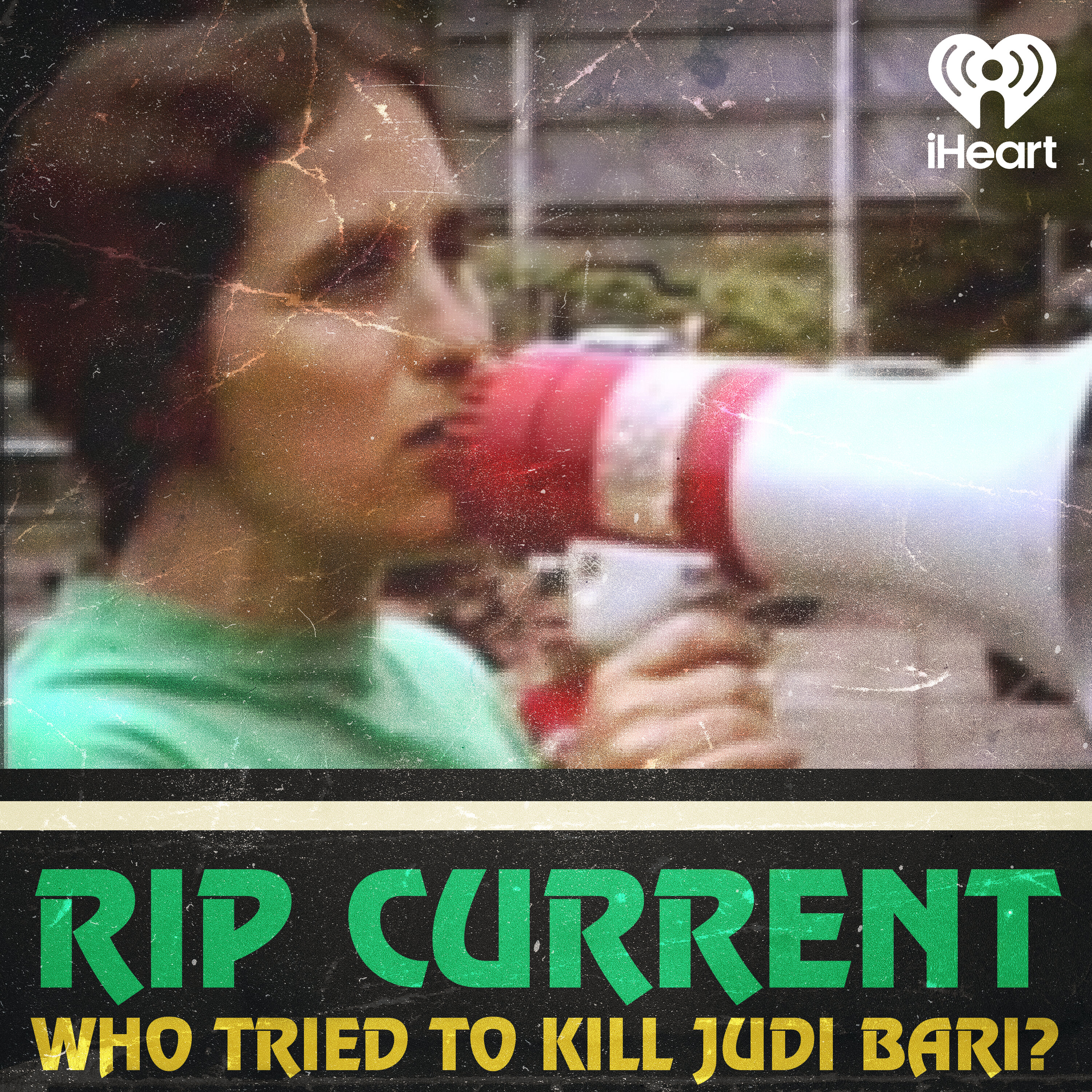
Speaker 5There was a whole lot of noise coming out of Judy Barry, and she had a bullhorn and she was spouting all kinds of very gross things.
They had a little choir they put together with songs that would make a normal person sick, and they were singing them with glee and revelry.
Speaker 7They even wrote a song called will the Fetus Be Aborted?
Sung to Will the Circle Be Unbroken?
Speaker 1Longtime Earth First activist Andy Caffrey.
Speaker 7Darryl and Judy wanted to write a song that was the equivalent of the big posters of bloody fetuses that the Operation Rescue people were called up.
And again this is part of them trying to become famous.
So the verses were descriptions of scenes that those people wouldn't like, Like Tanya had no abortions, but she had twelve commy babies, isn't that great?
Speaker 5Reggie had kids?
Speaker 6And that a barge watchie job, that Christian show her bloody.
Speaker 8Me And.
Speaker 7So they wanted it to be really insulting.
In fact, Daryl said that they wrote the song so that when they sang it at their demonstration to defend the Planned Parenthood Office, that the Operation Rescue people would get so pissed off at them that one of them would grab Daryl's guitar and he bought like a twenty dollars guitar for this purpose, and smash it over his head and get a UPI wire photo out of it.
Speaker 9We were really outrageous at this demonstration.
In retrospect, I probably would have done.
Speaker 1It differently, but this is Judy talking about the event for Steve Talbot's documentary.
Speaker 9Because of the way that they were acting, we decided if they were going to be bullies, we'd show them what their tactics.
Speaker 5Were like.
Speaker 1The pro life demonstrators would not be provoked to violence.
Speaker 7It turned out that the Operation Rescue people were trained in nonviolence practice just like we were, and so they didn't do anything like that.
But Judy said that this one guy, Bill Staley, I think his name was, that when they were singing this song, he was shooting needles from his eyes at her.
Speaker 1According to Andy Caffrey, after the bombing of her car, one of the first people that Judy suspected was Bill Staley.
An anonymous letter sent to a prominent local journalist then seemed to further implicate Staley.
But it was not that simple, and this was just the beginning.
I'm Toby Ball and this is rip current episode eight, The Lord's Avenger.
If there's one thing that everyone agreed, it is that there was no real law enforcement investigation undertaken once the FBI had determined that Judy Berry and Darryl Turney had not placed the pipe bomb in their own car.
After that determination and even before, nothing much happened.
Not in Oakland and not in Mendocino County, which are the two places where the bomb was most likely planeted.
Speaker 3The MENDO authorities have never looked into it.
Most of the MENDO authorities on the law enforcement side did not like her at first, did not like Judy Barry, did not like any of it.
Speaker 1Editor of the Anderson Valley Advertiser, Mark Scaramella.
Speaker 3Not that that should have mattered, but to me, it obviously did.
And in their opinion by the ones, the law enforcement people I know locally who have an opinion on the subject of all thought that you know, she was carrying her own bomb and it went off, and so there's no there's no crime.
Speaker 1With law enforcement seemingly uninterested, Steve Talbot and David Helvarg, who we've already heard from, undertook their own investigation right after the bombing.
The result was the documentary Who Bombed Judy Barry, which was aired in nineteen ninety one by the San Francisco public television station WQED.
Speaker 4Stephen Talbot, David and I did a very serious investigation.
We took the case as far as we possibly could.
We suggested who might be worthy of further investigation.
We did not solve the case.
We did not solve the case.
I wish we had been able to, but we didn't.
Speaker 6David Helvarg, It's interesting that X cops tend to make bad private investigators because they go in with this badge of authority.
They think they can knock on any door and make compel people to answer their questions.
Nobody has to talk to PI, you know, it's completely All you can do is use persuasion and make your case.
As journalists pride investigators, all we could do with the Judy Barry bombing was asked questions.
We didn't have the authority to use search works issues of kenas I paddle Grand Juries.
Speaker 4We turned up new evidence.
We made the strong argument that it was not Judy and Darryl's bomb.
We kind of defanged the FBI and Oakland Police Department case.
Speaker 6If law enforcement had done their job, I'm pretty convinced that the actual bomber would.
Speaker 5Have been caught.
Speaker 1The most significant piece of evidence in the case came in the form of an anonymous letter addressed to Santa Rosa Press Democrat reporter Mike Janella.
We've heard from Mike throughout this season.
Speaker 10The whole outside media world is focusing on this case, and I'm finally getting back to my Press Democrat office here in Yucaia.
Was like a week later, and the day I'm arrived back, I'm sitting at my desk collecting my thoughts, trying to figure out what's next, and the office person walks in with the day's mail and there was the brown envelobe that says, mister Janella.
No one ever calls me mister.
This is a very casual community up here, anyway, to make a long story short, and I opened it, and initially, I have to be honest, I read it.
I kind of slid it to the side.
Speaker 1Again.
Speaker 10I'm in this ketchup mode, but it was full of God, Jesus the Devil.
It was in that terminology to a jaded reporter by there and saying a great some fucking whack job.
Speaker 11The letter begins, I built with these hands the bomb that I placed in the car of Judy Barry.
Doubt me not, or I will tell you the design and materials such as only I will know.
I come forward now, emboldened by the spirit of the Lord, to spread the message spoken by the bomb, so that all will hear it and take it into their hearts.
Speaker 1There was something about the letter that stuck with Mike, and he reconsidered his initial read.
The letter seemed to have specific information about the construction of the bomb.
Speaker 10ID five minutes later, ten minutes later, I'm thinking, boy, it really describes this device.
I mean in great detail, as if you had to be there when the device was made then to write about it.
Speaker 1From the letter.
Speaker 11It was two inch galvanized pipe eleven inches long with black iron end caps, one drilled for wires to go to the matchhead, igniter bottle, a POxy glue in the drill hole.
Speaker 10The thing that my attention at the time, and this was a week later.
It was a rolling mechanism that if you went around the corner in that metal ball roll, they could trigger the device.
So it wasn't a device that you or I had to reach over and flip on or trigger.
It could trigger itself.
Speaker 1It signed off, I have spoken.
Speaker 11I am the Lord's Avenger.
Speaker 1It included six Bible passages set off from the rest of the text.
Mike Janella brought the letter to his editor to discuss what they had and what they should do.
Because the letter contained so much information about the bomb, it was likely a crucial piece of evidence.
Speaker 10I had mixed feelings then I still have mixed feelings.
But we did contact the FBI office in Santa Rosa.
It kind of a little comedy unfolded.
They sipped up the highway.
It takes them an hour, came into my office, this guy FBI agent, and he does his little finger printing thing, putting it in the plastic bag.
But he's not asking one question, who I am?
Do you do you recognize anything here?
Speaker 7What was it?
Speaker 10An addressed?
Not one question?
And I finally looked at him, I said, you're taking this for face?
He said, oh, yeah, no, finger printing is our top first top action.
And I said, well, my fingerprints are probably all over this because I opened it, I held it, I read it.
I read it three tons and I said, so are you going to do it?
Do you need a comparison fingerprints?
Oh no, and he walked out the door.
Speaker 1If this seems strange, it is.
And if you're thinking that the letter sounds as if it was written by someone with religious fervor someone like Bill Staley, that's probably what the letter writer wanted you to think.
David Halvarg on the content of the letter.
Speaker 6The lords Avenger letter was probably written by the bomber or by somebody who was standing next to the bomber when the bombs were constructed.
It described in detail the two pipe bombs, the one that was in Gdy Battery's car, and one a couple of weeks earlier that had been at a lumber mill, or rather the offices of a lumber company.
It had exploded but failed to set off a can of a gas or kerosene it was next to it.
The idea was to burn the building down instead, it had a little effect.
Speaker 1This bomb had been placed on the porch of a lumber mill in Cloverdale, the northernmost town in Sonoma County, just miles from the Mendocino County border.
The bomb had only partially detonated and the damage was minimal.
A mill worker had merely reported that someone had strewn garbage on the porch.
The remains of the bomb were found, but the incident didn't even merit a mention in the local newspapers until it was connected to the bombing of Judy's car in the following weeks.
The key thing, though, was that almost no information about the Cloverdale bomb had been publicized, but the letter writer was able to describe how it was constructed.
It was fairly conclusive evidence that the writer had made that bomb.
Speaker 6The Lord's Avenger letter said I was going to set off a bomb and blame Judy, but the Lord told me that I should instead get the devil herself.
The rhetoric in the letter was very questionable.
It referred to her paganism, and there was language that just didn't sound like a right wing extremist.
It sounded like somebody imitating a right wing extremist.
But the details of the two bombs, it was clearly that it was written by the person who did the bombs.
Speaker 1Halvarg and Talbot questions Dally about the letter in their documentary.
Speaker 5If I had written the letter, I would have had it much more biblically based and reason and logic.
But it didn't seem to have any of those real qualities of presenting some of the sensitive issues on abortion.
Speaker 6And he also thought the Lord's Avengel letter didn't really sound like a true anti abortionist and is a true hardcore anti abortionist.
That was an interesting perspective he had.
Speaker 4Everybody who looks seriously the case came to realize this was somebody who was not Bill Staley, but it was someone trying to imitate Bill Staley and cast dispersions on him.
We didn't entirely dismiss him, but it seemed to me after interviewing him, that he just was not the kind of person who would do it.
He did have a temper, so that's where the idea emerged that he might have been so enraged by that that he might have actually tried to kill her.
Again, talking to him and talking to the people around him, it just didn't seem like he was going to do it.
I do not think that he I shouldn't say that he wasn't capable of doing this, but it was very, very unlikely.
Speaker 1The police also took a cursory look at Staley and determined that he was not the bomber.
The letter was still a critical piece of evidence, probably the critical piece of evidence, but it wasn't treated that way, and this would have dire consequences for any chance of finding who had planted the bomb.
After the break, the FBI was able to pull fingerprints from the letter, but without Mike Janella's prints on file for comparison, they were left at a dead end.
Speaker 10The FBI analysis who had done all this stuff Back in Northern DC.
He was asked what did you find and said, well, we found finger prints and a thumb print.
Do you know who they were?
No, did you take examples of the guy who actually held the goddamn thing?
It was just it seemingly small at the time, but as time's gone by, I just see it as sloppiness.
Wouldn't you want to rule out the guy who handled it, so you're going to hopefully identify the person who wrote it.
Speaker 1When they were done with the letter, the FBI returned it to the Press Democrat.
Speaker 10I immediately talked to Susan about it, and she knew some people back your way in New England who did the high tech analysis.
Speaker 1The Susan that Mike refers to here is the influential feminist author Susan Faludi.
She spent time researching a book about Judy Berry and attended the two thousand and two civil trial, though she never actually wrote the book.
She and Mike Janella became acquainted during this period.
Speaker 10So I wrote the newspaper the editor at the time, and I said it was addressed to me, but I know it's your property, Susan Flute, and I would like to obtain that letter for testing.
We'll return it, of course to the Press Democrat, and we will actually to take a suite and the follow we will share any of the results, we will write it to you first and then wherever this analysis leads to.
Speaker 1They didn't get the letter.
Speaker 10I was stunned.
A week later, we have lost the letter.
We can't find it.
The one single piece of evidence in this high profile case was quote lost by the editor who have been in charge of it.
Had it been returned to there's never been any excellent I checked the Press Democrat had a wonderful research a library.
Most people could find anything.
They've took care of sensitive matters.
It was a first rate library archive system.
And I talked to the woman in charge of it at the time.
She said, I was never given that or asked to secure that letter.
So FBI returns it high profile, woof, it's gone.
The single piece of evidence in this case banished.
Coincidence?
Are we back to coincidence again?
You know, it's a case full of coincidence.
The simple explanation from the people involved that the newspaper was well, it just must have gotten misspiled, maybe tossed the way.
You know, it's just too incredible.
Speaker 1Whatever happened to the letter, the most promising avenue for investigation was gone.
It had been tested after it was received and determined to have DNA traces from both a man and a woman.
But a new round of testing with more sensitive and effective techniques would likely find new information.
But that is not possible.
Speaker 3That was sort of the last chance of what's left of the evidence to pursue.
But without that letter and using perhaps using new DNA techniques, they could have done more with it than what was done with that first attempt.
But I'm afraid that the case is now pretty cold.
Speaker 1The loss of the Lord's Avenger letter ended any hope to get forensic evidence from it, but the search for who might have written the letter continued.
One person who drew attention was a strange and marginal character named IRV Sutley.
Again, Steve Talbot.
Speaker 4RV was a strange guy.
He was a pretty dedicated Peace and Freedom Party guy.
That was a party back in the sixties, and he always saw himself as someone fighting for social justice.
Speaker 1The Peace and Freedom is a socialist political party whose presidential candidates have included black panther Eldridge Cleaver, pediatrician doctor Benjamin Spock, and consumer advocate Ralph Nader.
Speaker 4He had odd jobs.
He hung out with whatever sort of lefty group was happening in Santa Rosa in Sonoma County, up in Mendocino at the same time.
He liked guns and he always had guns around.
Speaker 1David Helvarg.
Speaker 6Yeah, there are right wing gun nuts and they're left wing gun nuts.
And IRV was a marginal person and yet a type that we found up in Mendocino and Humboldt at the time.
I mean, this was a time when the logging industry was playing out, and the pot growing industry was just emerging as kind of what would eventually be the substitute main industry for that part of the world.
Cannabis replaced logging, but it was a tough transition.
IRV wasn't out of place at ment too at the time, or was sort of within Judy Barry's sphere of friends and acquaintances.
Speaker 10He was a gadplay that's that old term I would use.
And that incident of the machine gun or whatever the hell was the aka the photo of Judy holding that that he supposedly took or gave then turned around and sentenced to the police's example of how dangerous she was.
Speaker 4And he got close to a woman named Pam Davis who was very close to Judy Barry, and at a certain time all of them were mixed up together in her first demonstrations.
The thing that got IRV into trouble was that he and Judy and Darryl and Pam all decided it would be fun to pose Judy holding weapons rifles for the cover of an album that she was going to do with Darryl.
Speaker 1This was for an album that would be titled They don't make hippies the way they used to.
Judy described the incident in her nineteen ninety seven deposition.
She began by talking about how she connected with IRV in nineteen eighty eight, after a period in which she had not seen him.
Speaker 9In November of nineteen eighty eight, he traveled to Yukaypa and what happened in that occasion.
Afterwards he stayed and he had a camera, and who stayed with Pam Davis, who he was living in her house at the time, friend of mine, and he stayed overnight because he was traveling north, and he stayed at Darryll's house.
And while we were at Darrell's house, we had certain conversation which are reflected in the flutter.
And also he would lazy out of his trunks and suggested to us that it would be fun to pose with it, imitating a famous Patty versus pope.
Speaker 1This is the famous photo of hers in fatigues and a beret standing in front of a flag of the Symbionese Liberation Army holding a machine gun is the ready to shoot.
Speaker 9And we took turns posting and they took photos.
Actually this photos of four people of Pam me and Darryl each holding easy.
Now this photograph contends to go on that's owned by Earth that he suggested that we post that he placed it in my hands.
I had a hard time even looking serious.
I kept laughing and not holding it right.
He placed it in my hands and he actually lowered it.
I now believe so the Earth's First symbol would show on my shirt.
Speaker 2Have you ever fired an uzi ya?
Speaker 5Now?
Speaker 1In January of nineteen eighty nine, a letter addressed to Chief Fred Kaplinger arrived at the Yukaya Police station.
The envelope was marked personal confidential.
Inside was a brief typed letter and one of the photos of Judy holding an uzi posed like Patty Hurst.
The letter began, I joined.
Speaker 11Her First to be able to report illegal activities of that organization.
Now I want to establish a contact to provide information to authorities.
Speaker 1The writer was offering to be a police informant.
The letter contained several claims, among them that Earth First had recently begun automatic weapons training.
This was not true.
It also claimed that Judy financed Earth First activities by selling marijuana.
Specifically, it said that on December twenty third, Judy had mailed a box of marijuana from the Yukayah Post Office.
Judy admitted to sending marijuana through the mail to a friend, but denied being a dealer and was never charged with that crime.
The letter ended with the writer saying that when police made contact, the writer would identify themselves as Argusts.
The letter became known as the Argus Letter.
Speaker 10The antiques were goofy and I don't believe Judy barry knew one end of a gun from the other.
Frankly, she was a master of antiques like the rest of them, Darryl, all of them.
But I never took that seriously.
The Yukaya police, if I recall correct, they did look into that, tried to make a serious is there a connection to some radicals and guns?
And even they left it alone, walked away from them.
I might add small town cops would have seized on that probably at the time.
Speaker 1But even though the letter led to nothing, Judy believed that Subtley was the author.
Speaker 2Do you have a belief as to who wrote that letter and sent that picture to the Yukaya beliefs.
I believe it was our Subtley And what the basis of your belief?
Speaker 9The information contained in the letter is all things that he would know from a certain weekend that he spent up here.
He owns the UZI, he placed it in my hand.
He had access to the photographs, and he attempted to get me to sell him marijuana right around the time that that ed WASLM.
Speaker 1In a nineteen ninety five interview with the Santa Rosa Press Democrat, Sutley denied being the author.
Speaker 11Judy makes everything that happens part of a conspiracy against her.
Maybe things happen to her that are coincidental and she can't sort them out.
Speaker 1Of course, when someone tried to murder you with a pipe bomb, seeing conspiracies is understandable and not necessarily misguided.
Regardless, Suttley was angry that Judy had publicly accused him of being a police informant and was not going to take her accusations lying down.
In the same nineteen ninety five interview, he made another claim.
Speaker 4Now he also and this was even more troubling.
He later said that Judy had asked Pam or asked him directly to kill her husband ex husband, Michael Sweeney, and that she had offered him money I think was five thousand dollars or something to be a hitman.
Speaker 1Suttley claimed that in March of nineteen eighty nine, Pam Davis told him that Judy wanted her ex husband Mike Sweeney killed, she would pay Subtley five thousand dollars to do it again.
According to Sutley, that figure amounted to ten percent of what quote Judy would get by Sweeney's demise.
He also claimed that Davis told him that Judy thought quote that he was brutal to her.
Now, it's important to keep in mind that Sutley, who died in twenty four, was not a very reliable source.
But a couple of things.
The first is that Judy acknowledged that this had in fact happened.
Speaker 4Now, he said that was serious.
Judy said it was a joke.
Was all a misunderstanding, she said, if I ever said that it was a joke.
Speaker 1The second is that claims that Mike Sweeney was abusive to Judy were extremely controversial.
A number of people claimed that Judy had personally told them about being abused.
Judy adamantly denied it.
We will look at this issue more carefully in a future episode.
Judy's accusations against Sutley caused turmoil within the left wing activist community.
Speaker 9She and some of her.
Speaker 1Allies tried to have him kicked out of the Peace and Freedom Party, even though he had been the state's first party chairman in nineteen seventy.
A friend of Barry's name, Mary Moore, told the Press Democrat that.
Speaker 11Quote, the real problem is making allegations that are unproven and hurting somebody's reputation in our circles.
It is not okay to say another activist is an FBI informant.
Speaker 1So Judy's penchant for seeing herself as the target of plots was received with some doubt, even amongst some of her allies.
Ultimately, Subtley was largely dismissed as a suspect.
Speaker 4So IRV was.
He was a complicated character.
He was a bit of a sad sack character.
I was very suspicious of him and pushed him very hard.
He did agree to be interviewed down the road.
After I was done with the case.
He submitted to an eye detector test.
I came to believe that IRV Subtlely was not the culprit.
IRV Subtlely didn't quit the bomb in the car, but that was only after a long time.
I was suspicious of him for quite a while.
Speaker 1Bill Staley and RF Sutley had, at various times seemed like real candidates to be the person who planted the bomb in Judy's car, but in the end neither seemed to be the perpetrator.
But there were other possibilities, and Judy and her allies settled upon a theory that showed the danger they felt they represented to the timber industry and the dominance of capitalism in American life.
Next Time on Rip Current.
Speaker 8Rip Current was written and hosted by Toby Ball.
Our executive producers are Trevor Young and Matt Frederick, with supervising producer Rimat el Kyali and producers Nomes Griffin and Jesse Funk.
Original music by Jeff Sanoff.
Our voice actor for Judy Barry is Gina Rickikey.
Editing and sound design by Nomes Griffin, Rima Elkyli and Jesse Funk.
The show is mixed by Rima el Kyali.
For more podcasts from iHeartRadio, visit the iHeartRadio app, Apple Podcasts, or wherever you get your podcasts.