·S2 E5
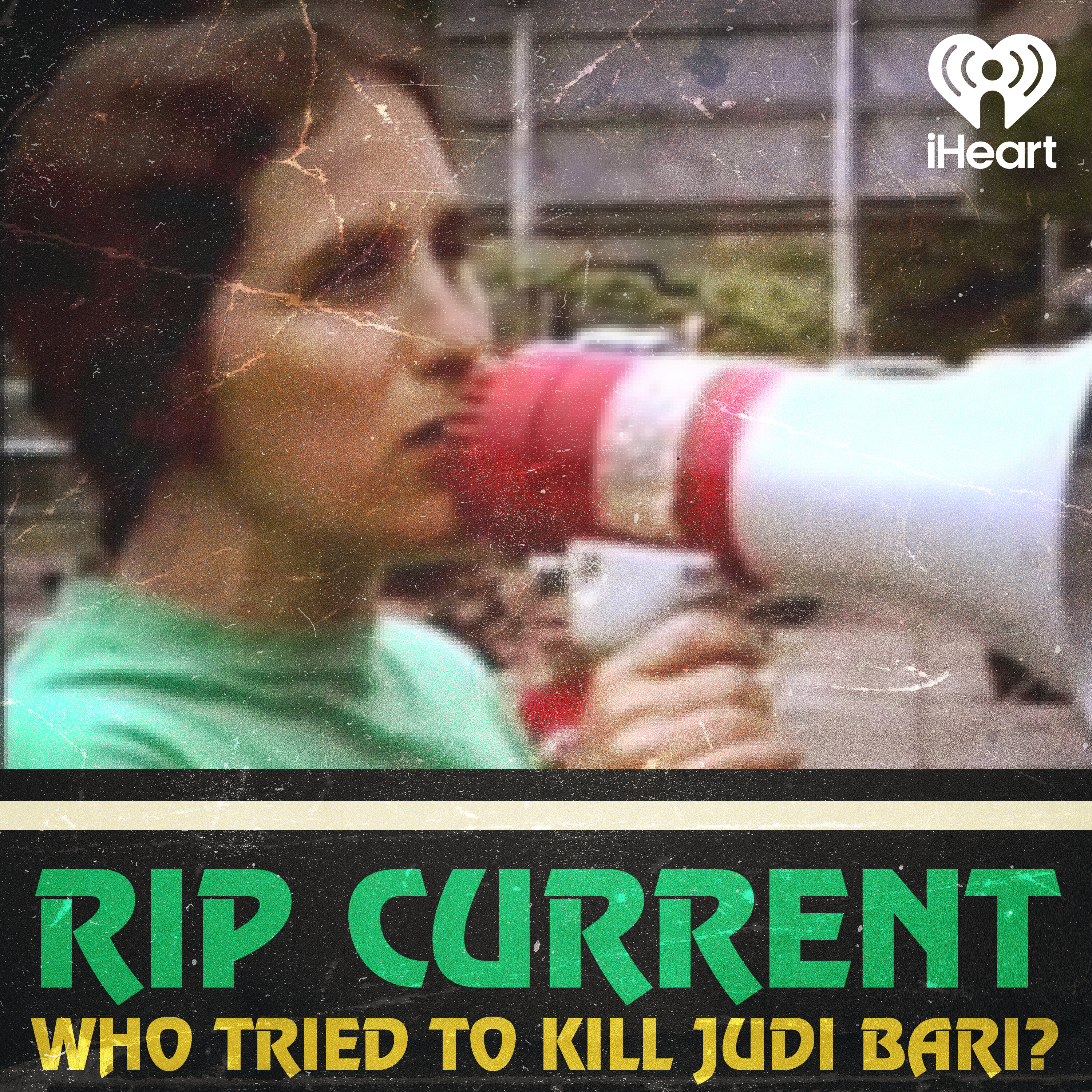
S2 E5: Spotted Owl Week
Episode Transcript
Rip Current is a production of iHeart podcasts.
The views and opinions expressed do not necessarily reflect those of the host, producers or parent company.
Listener discretion is it vised.
Speaker 2Judy Berry's background was in labor organizing.
She had done it back East when she was college aged, and it was her entree into political action.
Up in Kotopia, she thought there was an opportunity to unionize timber workers.
She believed that environmentalists and timber workers had similar interests in preserving the redwood forest from being overcut by the large timber companies.
Environmentalists wanted to preserve the unique ecosystem.
Timber workers, she felt, should want these companies to use sustainable cutting strategies so that the industry would remain healthy in the future.
The new overcutting strategy would defeat both of these goals, but it wasn't that simple.
Speaker 3There's two categories of workers in the timber industry.
Speaker 2This is Mark Scaramella, the managing editor of the Anderson Valley Advertiser, an eccentric weekly newspaper out of Boonville in Mendocino County.
Speaker 3And you have the forest workers, the loggers and laggers by larger family operations.
They're the typo loggers, they're contractors who did the work for the timber companies.
They're family operations, and you're not going to organize family operations.
That's just an inherently hard task.
They're not susceptible to standard union tactics.
Speaker 2An added barrier was that these family operations competed against each other for contracts with the mills.
It was not a situation that would easily create allies.
Speaker 3A lot of the mills did have unions, but they intended to be to these corporate unions.
They were just needed to make sure the corporation was sustained so their jobs would be sustained, and that's all understandable, and they wanted better wages and working editions and so forth.
But they were not anti timber industry.
Certainly were not environmentalists.
But the meal workers that I knew who had interest in the environmental activity were also cut off by the hippie thing.
Speaker 2Mark is talking about the counterculture aesthetic that characterize Earth First and Ecotopia.
Speaker 3I mean, they were working class people and they'd go to an organizing meeting now and then and show up and there was all this hippie wu stuff that went on and turn me off as well as them.
Like I said, almost a cult, and it was off putting, and so you didn't get very many meal workers.
Occasionally they would agree with the environmentalists, but they wouldn't participate in any effective way, and that was unfortunate.
Speaker 2Journalist Mike Janella.
Speaker 4By now the big corporate companies were shutting down mills, accelerating the cut.
So she understood, go to the communities where these workers live and talk to them.
They are the ones who lost their jobs.
They're the ones who are out there cutting like hell before they lost their jobs.
Speaker 2She began talking to people where they lived and where they worked.
It was something that by all accounts, she was very good at.
She had a unique and genuine manner.
This is musician and writer Larry Livermore.
Speaker 5She was very charismatic.
She was the kind of she would just say things off the top of her head.
There was a certain element of adventurism, and you know, they unjustifies the means.
But I did see that element of her that she was basically at least thir up some shit.
You could see where she could accomplish a lot, but you never knew when she might go too far.
Speaker 6You have to understand that her whole life was politics, and she always liked to push things to the extreme.
I'm Steve Talbot and I'm a journalist and filmmaker.
I would have conversations with her, and she told many others that she imagined herself as a wobbley, you know, from the industrial workers of the world back in the beginning of the twentieth century, and that she was going to go in and organize the workers of her era into a group like the IWW.
Speaker 4What's your name, Sam Scotlett, what's your religion?
The IWW that ain't no religion, the only one I got.
Speaker 7Are you a citizen?
Speaker 4No?
Speaker 8I am an industrial worker of the world.
Speaker 6Now, she met a few people, and she got a few loggers to be interested in what she was saying, to take an anti corporate stance, a pro worker stance.
It was more of a dream than a reality, and this outreach.
Speaker 2Could involve putting herself in tense and potentially dangerous situations as she spoke to people who might very well be inclined to dislike her.
It me adventuring to very remote sites where the timber cutters, in particular worked.
This could lead to tense discussions.
Here, Judy, accompanied by a small group of supporters, meets on a dirt road with about a half dozen stone faced laggers.
One is holding a sign that says timber industry replants the forest, not earth First.
This is Judy speaking to those laggers.
She's wearing a camouflage baseball cap and an Earth First T shirt with the sleeves cut off.
She is physically dwarfed by the men.
Speaker 9Let's you know, keep in mind what's going on here.
When that band comes out here, try to liquidate their r growth to finance their jump on.
I'm sorry that said doesn't make it an That's why are here.
Speaker 10We're not here because of the loggers.
Speaker 9We're here because the trial her with some flime bitter from Pegnant never gan redwood in his life.
Speaker 3They for million dollars a year.
Speaker 9That is ten times what the average new work who were making on lighte coming.
Speaker 4Some people want to suggest that she made this coalition.
I'm still unclear how affective the coalition was, but there is no doubt that she reached out to timberfallers communities and then start badgering local political figures to do something the first environmental leader to go to the source.
Speaker 3Judy had this fantasy of organizing mill workers and loggers, and it was a fantasy.
There was inherent splits in the whole approach which made that basically impossible, but it was worth a try.
I never disagreed with the try, but I don't think their tactics were the kind that would work.
Speaker 2Her allies in Earth First felt that her labor organizing efforts were more effective.
This is Darryl Turney talking with West Brain on the radio show Brain Labor Report in twenty thirteen.
Speaker 10What made you unique was her labor background had her reaching out to the timber industry to build bridges, to say that Earth First was opposed to corporations and the overlogging, not to simply the use of wood and this sustainable use of wood.
And she was organizing actual unions under the Industrial Workers of the World.
Speaker 2The International Workers of the World, as Steve Talbot mentioned, is a radical one hundred and twenty year old union that was created with the idea of organizing all workers, skilled and unskilled, racially integrated into one big union.
Its heyday was at the beginning of the twentieth century, though it is still active today.
Speaker 10The ISWW course is founded in nineteen oh five by Mother Jones, Big Bill Haywood, Eugene Debs, and other noted labor radicals and really fine activists of their day.
In a sense, Earth First as an environmental movement was predicated all the principles of the ISWW, only applying them to environmental organizing.
And so you know, it had a lot of sense of humor, a lot of music, a lot of radical activities and going where nobody had gone before.
Speaker 2Really, this effort to form common cause with timber workers sat uneasily next to the direct action that Earth First was also engaged in.
While this was targeted at the corporations, in practice there was no way to avoid butting up against the workers.
It was a very delicate balancing act.
I'm Toby Ball and this is rip current Episode five Spotted Owl Week.
In nineteen seventy three, a University of Tennessee biologist named David Etnir was snorkeling the Little Tennessee River surveying the fish population when he discovered the snail darter.
The snail darter was a tiny fish that had never before been seen.
Its only habitat it was believed was the Little Tennessee River.
In nineteen seventy five, the snail darter was listed as an endangered species.
This was important because the Little Tennessee River was about to disappear.
Construction on the Teleco Dam had begun in nineteen sixty seven, and its completion would turn the river into the Teleco Reservoir.
The University of Tennessee Law School sued the Tennessee Valley Authority, who were building the dam, under the Endangered Species Act.
The suit argued that completing the dam would cause the previously unknown snail darter to become extinct.
The suit didn't stop the construction of the dam.
Construction was delayed for about two years and completed in nineteen seventy nine.
But a new tactic had been employed, using the Endangered Species Act to try to save wilderness areas.
Snail darters, by the way, were transplanted to other rivers, and their population grew to the point where they are no longer endangered.
In nineteen eighty nine, environmentalists in the Pacific Northwest followed this strategy by arguing that the population of the northern spotted owl, which lives in the Redwood forest had diminished to around fifteen hundred pairs.
If the US Fish and Wildlife Commission decided to designate the owls as endangered or threatened, it would cut the amount of timber harvesting allowed on public lands by roughly one half.
The timber industry argued that the effect of listing the owls as threatened would cost jobs and destroy the local economy.
The lines were drawn as part of the deliberation process over the owl's designation.
The US Fish and Wildlife Commission scheduled four public hearings to take place in the Pacific Northwest during the week of August thirteenth to twentieth, nineteen eighty nine.
It was a week when the eyes of the national media would be on Ecotopia, and Earth First planned a series of actions to garner attention.
It was a week when tempers ran high and violence followed.
Monday, August fourteenth, Around five am on the morning of August fourteenth, three women ascended redwood trees on a remote ridge seven miles outside of the coastal town of Fort Bragg.
A group of more than a dozen people had worked through the night to set up in the trees.
The three three foot by five foot platforms more than fifty feet above the ground.
The women had trained for this action, which was planned to last for a week.
One of the women, Pamela McManus, told the Santa Rosa Press Democrat, that she'd extended her vacation in order to participate.
The trees were on the property of the corporate timber giant, Georgia Pacific.
That morning, their people showed up at the site.
This is how Carlstad, a radical activist, talking about that morning as he introduced Judy Barry, who's giving a talk on Earth Day nineteen ninety three.
He had helped set up the platforms in the night.
Speaker 8Came back the next morning and they were up in the tree set and the George Pacific people came in and said, you people are truspassing, aren't you, And said we know that.
In fact, there's three people in the tree and they're trustpassing two.
And the George Pacific heads timber worker or the one that was managing the forest.
He says, I said, this looks awful, that clear cut over there.
He says, this is a good one.
I said, what's a bad?
Speaker 4Look like?
Speaker 8This is a good one.
And he says we come in and we cut everything down, and then we waited to the fall, and then we came over with the blowtorches and whatever was left, we burned everything down to the ground.
Everything.
Speaker 2It was an encapsulation of the practices that had brought the protesters there in the first place.
Complete clear cut.
This tree sat accomplished its most important goal.
It got public attention.
The next day, the Santa Rosa Press Democrat ran an article by reporter Pat McKay about the three tree sitters on the front page.
McKay reported that the Georgia Pacific employees did not seem to be too concerned about the tree sitters.
Speaker 7A spokesman said, we told them it was private property and that's about it.
We're not going to try to pull anybody out.
Speaker 3Of a tree.
Speaker 2He also expressed amazement that the logistics needed to set up the platform.
As for a comment about the tree sat, Judy Barry focused on Georgia Pacific's cutting of young trees.
Speaker 11This is a slaughter of babies.
Speaker 2It was a kind of rhetoric that she would sometimes use in the years to come.
She would answerpomorphize the trees and use incendiary metaphors to make her points.
Also on Monday, a dozen earth Firsters climbed on a one hundred and twenty year old English walnut tree during lunchtime at the home of an assemblyman named Dan Hauser.
Howzard earned the attention of earth First for his opposition to legislation protecting old growth forests.
The action ended peacefully with no arrests.
This was the beginning of a week of earth First actions in Ecotopia.
Other earth First cells and other environmental groups also planned events for this week to coincide with federal hearings being conducted on a recommendation from the Fish and Wildlife Service to ban logging in large parts of the Redwood Forest to preserve the habitat of the endangered spotted owl.
As the week went on, tempers ramped up and Judy and other earth Firsters would be confronted with violent resistance to their efforts.
The next incident would occur two days later, and it was violent Wednesday, August sixteenth.
The original plan for this earth First action was to set up another tree set, but that was scrapped and Judy, Daryl, and about twenty other supporters barricaded a road in the remote, unincorporated town of Whitehorn.
The road was used primarily by a small logging business run by the Lancaster family.
This is how carlstat again he was with the group in Whitehorn that day.
Speaker 8But then in the middle of the week Darryl Cherney and Judy said there was going to be a little action over at Whitethorn and it might be a little bit rough.
And I said, oh, I like that.
So I went over to Whitethorn and there was a family tree operation doing some pretty ugly cutting of second or third cuttings.
They were going to cut everything down again.
Speaker 2An article in California Magazine, journalist Jonathan Littman thought there might be a motive beyond saving the trees behind choosing the small Lancaster operation to disrupt.
In his article, Litman notes that the Lancaster land was mostly other types of trees, and the few redwoods that they did have were not old growth.
So why of all the possible roads to blockade did Judy choose one serving the Lancasters in tiny Whitehorn.
Litman quotes Gladys Lancaster as saying that the reason why they were targeted was that one of their neighbors and a buddy had been quote growing pot on that property for years.
Judy, according to this article, often told reporters about how she enjoyed smoking fat joints that she called hooters.
The timber harvest preparations being made by the Lancaster operation would make it impossible for their neighbors to plant that year's illegal marijuana crop.
Environmentalist and reporter Greg King pointed out that the Lancasters were in fact causing environmental damage with their timber efforts, including bulldozing a stream bed that fed them a tolly river a salmon run.
What it started as a relatively peaceful standoff turned when a man known as lumber Larry drove his pickup close to the side of the road where Earth First demonstrators and their children were standing.
The demonstrators yelled at lumber Larry that there were children present and he shouldn't drive like that.
As demonstrators got out their cameras to document the moment, lumber Larry got out of his car and held an act threateningly above his head.
Mendocino County Sheriff's Department Lieutenant Larry Gander described what happened next.
Speaker 7A lagger repeatedly asked an Earth verset photographer to quit taking his picture.
Allegedly, the photographer came within one foot of a lagger still taking pictures.
The lagger became angry and through the camera to the ground.
Speaker 8That was taking pictures of a little confrontation between the Earth Firsters with all their signs, and they were playing their instruments and singing.
But these timber workers were very unhappy with this.
Speaker 2Earth Firsters would later say that law enforcement seemed to take the Lancaster's side in what followed, so the photographers of noxiousness may be overstated, and it wasn't the lagger who threw down the camera but Gladys Lancaster.
Speaker 8Anyway, missus Lancaster grabbed my camera and Judy put down her violin and went after my camera.
But then one of the other sons came along and says, no one touches my mother, and he takes his fist by the side of my hand and he lands right in the middle of the damil's face.
Speaker 2This was the son David Lancaster, who punched an activist in her fifties named mem Hill, breaking her nose.
Speaker 8Was a little bit of a dotty broker.
Fortunately there were more Earth firsters said the loggers and the laggers ended up at the bottom of the pile, but one of the sons of the family went back to his pickup truck and got the rifle, and fortunately he was the sober and he just fired a shot in the air.
Speaker 2According to Judy, David Lancaster's brother got the rifle and yelled, you fucking commy hippies, I'll kill you.
He later told the San Francisco Examiner that he fired the rifle quote to break up a riot when lady attacked had hit my mom and some guy hit my uncle, Larry upside the head with a chunk of wood.
Speaker 8The Sheriff's fighting come out there with their dogs and their tear gas, and all the whole riot patrol come out and they didn't even bother to talk to their first year They just talked to the laggers.
The Sheriff's department out there was totally on the side of the operation.
Speaker 2Darryl Turney told the Examiner that nobody touched anybody from his family.
I swear on Mother Earth we didn't start it.
Judy told the Santa Rosa Press Democrat that she was punched and bruised, which may have happened in the melee, but is not mentioned in any descriptions of the altercation.
No arrests were made.
Memhill was taken to a local hospital to get treatment.
Speaker 4On her nose.
Speaker 2Judy was furious that the landcasters were allowed to get away scott free.
Speaker 11We can't tolerate violence against us.
Earth First doesn't attack people or living beings, only inanimate objects.
Speaker 2We'll talk about the organized opposition to Earth First in next week's episode, but to understand some of what happened the rest of the week, you need to know about the yellow ribbon coal.
Speaker 4It reminds me where we are in the political devising us of.
Speaker 2Today again, Journalist Mike Janellan.
Speaker 4Because at the time on the North Coast, this was really the turmoil was unheard of.
We had environmental activists willing to go to any stretch, I mean, occupying company offices, chaining themselves, sabotaging equipment, doing all of those things that had just never been heard of.
In the meantime, the timber communities by and large were not only disturbed by this, they were angered, varying, and it was that US versus them mentality.
So whatever, there was a protest anywhere near a community, there was always a turnout.
It was called the Yellow ribbon.
They were hanging yellow ribbons on trees in their front doors, and it was like a maga movement.
So it was quite intense.
Speaker 2The Yellow Ribbon Coalition and had the appearance of a grassroots group supporting the timber industry and timber workers, and this was true to an extent, but they also received their funding from the timber industry and were just one of a small handful of groups with a similar arrangement.
Judy talked to Industrial Worker magazine for their October nineteen eighty nine edition, published two months after these events.
Judy described the Yellow Ribbon movement as Nazi like and said that it was dangerous not to fly a yellow ribbon outside your business in some small timber towns.
Judy didn't usually underplay or hand, suffice it to say that the yellow ribbon and the color yellow in general were donned to signify the wearer's allegiance to timber and antagonism towards the environmentalists in general and Earth First in particular.
Thursday, August seventeenth, the seventeenth found the US Fish and Game Commission holding a hearing and Reading, a town in Shasta County, just east of the towns that Earth First was most active in.
The hearing, was one of the four offering a chance for the public to weigh in on whether the northern spotted owl should be designated as threatened, but everyone knew the real stakes.
If the owls were deemed threatened, logging operations in their habitat area would have to stop.
The timber corporations were determined to have a big turnout at the hearing as a show of industry solidarity.
Louisiana Pacific had sent a letter to employees telling them that they would be shutting down the mills on Thursday and urging workers to travel to Redding to attend the hearing.
The company in fact would run buses to the event.
The letter said, we want to send a message across the country that this is not acceptable, and we can do it by pulling out all the stops and descending upon Redding in force.
Louisiana Pacific also distributed yellow ribbons so workers could identify themselves with a yellow ribbon coalition.
More than a thousand wood and mill workers left their jobs to join the protest.
According to the Chico Enterprise record.
Thousands of laggers and those relying on the timber industry for jobs, wearing yellow hats, shirts, and carrying yellow balloons to signify their solidarity, flooded reading Thursday in a massive rally against the US Fish and Wildlife Service plan to list the northern spotted owl as a threatened species.
Estimates of the crowd ranged from forty five hundred to six thousand.
The public hearing lasted seven and a half hours, and eighty nine people spoke.
Of those eighty nine, only five supported listing the owls as a threatened species.
The timber industry had bankrolled a study of the owls.
That study had found, perhaps not surprisingly, that the owls were far more numerous and widespread than the US Fish and Wildlife Service claimed.
This study, the industry funders, conceded, had only done two of the required six field visits, but stood by their findings.
Environmentalists were very dubious, but it provided the basis for the pro timber speaker's arguments against protecting the owls.
Earth First and other environmental groups avoided the scene.
The Santa Rosa Press Democrats summed it up with a remark from an attendee.
Speaker 7The timber industry rolled up its sleeves and flexed its muscles.
Speaker 2Friday, August eighteenth.
After largely sitting Thursday out, Earth First was back at it on Friday, though with less drama than earlier in the week.
Protesters attempted to hang a banner from a bridge over Highway one oh one near Rohnert Park.
The plan was to hang it facing north flowing traffic so that motorists heading up for the weekend would see the sign, which read save our Forests, earth First.
Gusty winds made it difficult to attach the banner, and it had only been unfurled for about a minute before a passing police officer had them take it down.
Also on Friday, Earth firsters including Judy, blockaded a road at a Louisiana Pacific operation near the town of Navarro.
The blockade, which the Press Democrat described as log and twig barriers, did not disrupt the timber operation, which simply re routed the trucks to different highway access points.
One of the logging trucks they did encounter was driven by a man named Donald Blake.
They would see him again the following day, Saturday, August nineteenth.
The final event of the week of earth First actions was to be a demonstration in the coastal town of Fort Bragg, home to a Georgia Pacific mill and the town closest to the Trisett that began the week, Judy set out on the drive to Fort Bragg with a car full of people.
In her car were Darryl Churney and another Earth First activist named Pam Davis, Judy's two daughters and two of Pam's children.
Judy talked about this incident to Beth Bosk during an interview with New Settler magazine.
Her words are read by an actor.
Speaker 11So we were driving down the road and when we got to Filo there were a lot of pedestrians and I was slowed down.
There was a logging truck following us.
It was not failgating, and I was looking at the pedestrians.
I wasn't looking in my rear view mirror at the time, none of us were.
When, with no warning whatsoever, that there was no squeal of brakes, we were hit full force by a logging true which fortunately was not loaded.
My car left the ground, sailed through the air and hit another truck which was twice the size of my car and pushed that truck up two steps and took out a post holding up the porch in front of a bar and filo.
Speaker 8The people who owned the.
Speaker 11Truck that was pushed up the porch were a Georgia Pacific employee and a Department of Forestry employee who were doing a spotted owl hunt on Georgia Pacific property.
Except they weren't in the forest.
They were there at a bar and filo.
The coincidences were pretty astounding.
A group of earth Firsters hit by a logging truck knocked into a truck carrying people doing a spotted owl search.
It was really terrifying.
I haven't gotten past it.
I still flashed back on that feeling.
It is a really violent feeling to be hit like that by a big piece of metal and to leave the ground, and to have no control at all of the car, and to know I was hitting into something else.
It was a pretty terrifying thing.
We all got concussions and we were all out of commission for a month after that, so we didn't really think clearly about what to do about it.
Yeah, at the time, we thought it was an accident, and that is what we said publicly.
But afterwards we saw a video of our demonstrations at Navarro and we realized that the truck was from the same company we had blockaded the day before, and then we got a description of the driver and it matched exactly the driver we had blockaded the day before.
Speaker 2The driver was thirty nine year old Donald Blake, from the Navarro blockade.
Judy later claimed that Blake got out of his truck shaken, saying that he didn't realize that there were kids in the car.
The implication was that he had rammed the car on purpose.
Law enforcement treated it as a traffic accident, and my.
Speaker 12Car was total turned into an accordion and we were all sent to the hospital, and they refused to investigate it as anything but a traffic accident, despite photographic evidence that we showed them to prove that it was the same croup.
And I think that what was happening was a real pattern of non enforcement of law regarding Earth firsters, and what this did was it gave a green light to anybody who would attack us.
Speaker 2Donald Blake was never charged with anything associated with the crash.
Judy, Darryl, and the other passengers didn't make it to the culminating event of the week, the demonstration in Fort Bragg.
That event turned out to be low key in comparison to what had come before.
The Santa Rosa Press Democrat reported that fifty demonstrators, including earth First activists as well as other environmentalists, gathered in front of the gates to Georgia Pacific's mill.
Apparently, beyond a few cat calls, there were no confrontations, and with this, the week of earth First actions and the timber industry response came to a close.
After Spotted Owl Week, any suspicions Earth First might have had that law enforcement would not seriously pursue cases of violence and threats against activists had been proven true.
They were essentially on their own in Ekotopia, and as they planned their largest and most ambitious effort yet, the atmosphere of looming violence they had just experienced was about to get more intense, much more intense, next week on Rip Current.
Speaker 11Rip Current was written and hosted by Toby Ball.
Our executive producers are Trevor Young and Matt Frederick, with supervising producer remet El Kylie and producers Nomes Griffin and Jesse Funk.
Original music by Jeff stoff Our.
Voice actor for Judy Barry is Gina Rickikey.
Editing and sound design by Nomes Griffin, Rima el Kylie and Jesse Funk.
The show is mixed by Rima el Kylie.
For more podcasts from iHeartRadio, visit the iHeartRadio app, Apple Podcasts, or wherever you get your podcasts