·S3 E2
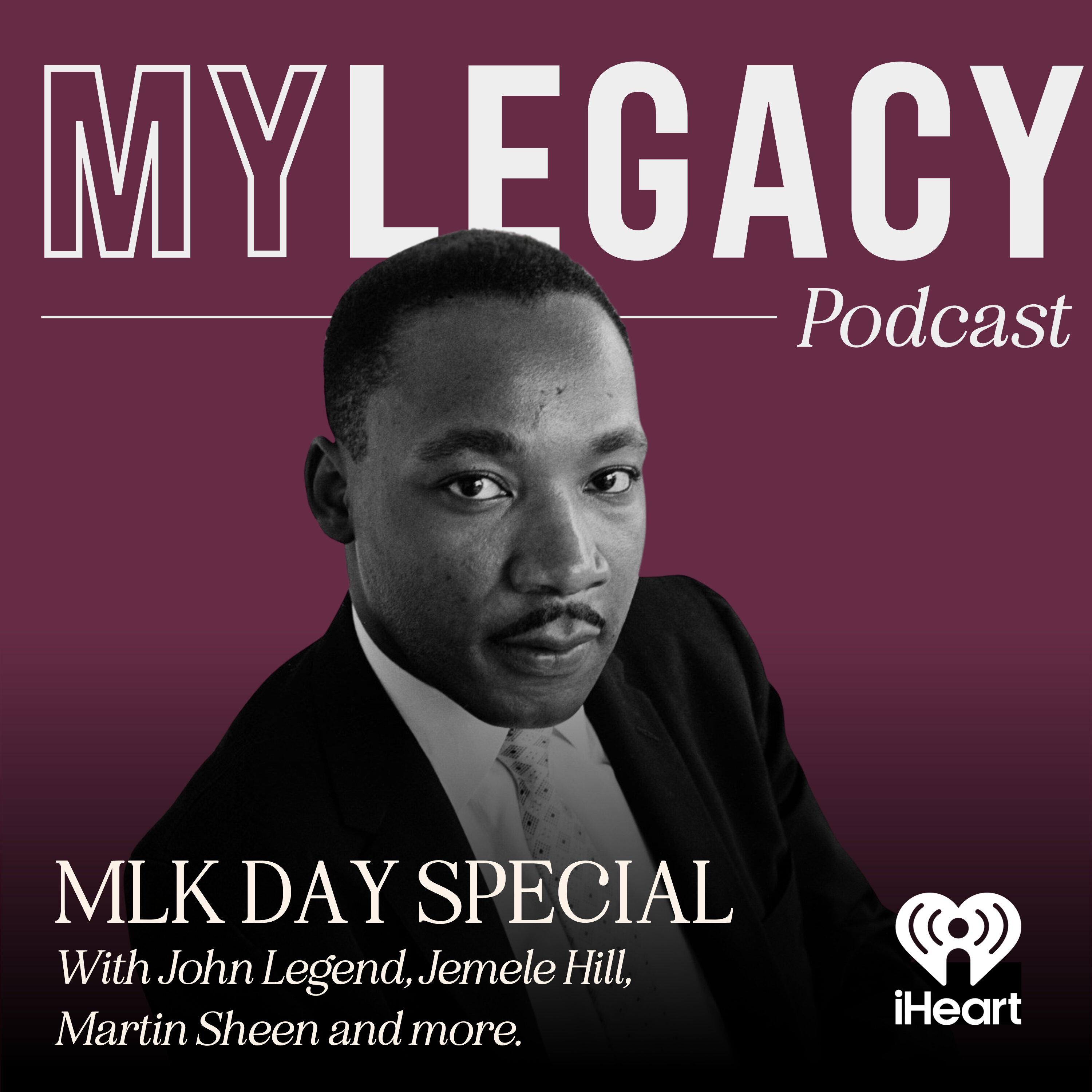
MLK DAY SPECIAL: THE MAN, THE MOVEMENT, THE LEGACY
Episode Transcript
Our experience was whenever Dad came home, his entire attention was devoted toward fulfilling us as his children.
So it was like, I gotta play with them.
And this is looking back thinking about it, because I'm gone all the time and I don't have a large quantity of time, but the quality of time I want to use to fulfill my kids.
So we wanted to play and he was asleep, so somebody, it wasn't me, but somebody with a smart idea, let's pour water in Dad's ear.
And then that was not a good experience.
Speaker 2This is my legacy.
On this mlkday, we're reflecting not just on doctor King as a leader, but the life he lived in moments both ordinary and extraordinary.
Hosted by his son, Martin Luther King the Third with Andrea Waters King, Mark Kilberger, and Craig Kilberger, this episode explores the man behind the movement, the values he lived by, and why his legas see still calls each of us forward with hope.
Speaker 3Let's jump in.
Speaker 1Sixty two years ago my father delivered Yeah, I have a dream speech, and every year I ask myself, if we're closer toward achieving his dream, are we getting further away.
What is the one thing, and this is actually to both of you that would have the greatest impact on making my dad's dream a reality.
Speaker 4Your father's phrased the beloved community and what it means to have love for one another and how that love is translated into policy.
And we can translate love into fair housing policy and thinking about community building, but we can also translate it into issues like war and peace, whether or not we are sending bombs to destroy communities that aren't part of our country but are part of a larger beloved community.
When it comes to discrimination, doctor Perry said, there's nothing wrong with black people that ending racism wouldn't fix.
Part of what it means to love one another is to not be racist.
It sounds so simple, but to not discriminate against people because of the color of their skin, to not treat them worse, to not deny them resources, to not praise their home at a lower level because of the color of their skin.
It sounds so simple and maybe even pedantic.
Speaker 5But if we were to love one.
Speaker 4Another in that way, that we stopped being racist and stop making black people pay for racism, we would be a lot closer to Doctor King's dream.
And then you would see the impact when it comes to how we treat our Latino brothers and sisters, when it comes to immigration, and so many problems that we have in our country and in our world would be solved if we took your father's advice and created a beloved community that included everybody, and we treated all of our neighbors with love and care and valued their lives.
Speaker 6Wow, you know, that's that's big.
I tend to focus on housing largely because it's it's connected to so many other social systems.
When you live in an area where home ownership is higher, you literally live longer, you have higher levels of well being, less likely to be incarcerated, more likely to own a business.
We know what equity equity can can do.
Home Ownership is such a critical piece of excelling as a community.
And I think doctor King would would have wanted and he did want housing equity making sure that people had an opportunity to own a home, not just from the wealth building aspect of it, that it really does build community.
Speaker 7And then related to that, and I mentioned it, I do believe that we can build enough wealth where people can have well being that every the kind of well being that everyone deserves.
Speaker 6Closing wealth gaps.
We talk about closing the wealth gap that will that's going to take some time and some generations to do to do that.
In the meantime, we can expect people to have a certain quality of life that that where they're fulfilled, that they're enriched, where they can pass on something to their children.
So this work that John and I are doing, it's around well being because as a metric, we don't have to wait for generations for people to have the kind of well being they can get tomorrow.
We can implement housing policy, we can implement education policy.
We can do some things today that will provide the kind of well being that's will sustained families and entire communities.
Speaker 8Overall.
Speaker 9I don't want to be unsaid by either my father or I.
There is no legacy at all in America, let alone Black America that does not have your father in law, your father as an inspiration.
There's not one.
There's not a single moment I think any of us can reference where we don't go back and say, well, I can, I must, and I will because of what he endured.
I mean, Daddy, you went to Atlanta and I remember you time me to go visiting the center, which I've now been to obviously, but and you said, brought tears to your eyes, or.
Speaker 10Walk us through.
Speaker 9They remember that into the number time a number going to jail because I mean just that, I mean he called me emotional about that.
We were at a conference call together because he wanted to share it because at once all his children and his wife of course, about what that was like to just see do you have any idea what this man had been through and you had lived through the era and just seeing it up there.
Speaker 10Twenty nine times arrested and some say thirty, but twenty nine times arrested, sitting in a jail cell, one time being sentenced to four months of hard labor while I'm playing soccer on a field, you know.
And he and he was the he's like the domino, you know.
He could think of mcgonney and then the dominoes start to fall, and then you've got Martin Luther King and and Nelson Mandela and everyone else until we get to the CRA in nineteen sixty four and then from you know, we had Title six and we have fair housing, all of which Martin Luther King was instrumental in making sure it got passed.
And uh, you know, outlawing redlining, real realty redlining, as well as our neighborhood providence, you know, providences so that people could live in certain areas that can be traced back to m OK and even Title nine and the ADA and gay rights just discriminating against people based on their sexual orientation all go back to that cra although they you know, they were different laws that would pass because of them, but it still starts with the argument that you cannot discriminate against people, no matter who they are.
And I think he said in his letter from Burmiam him that injustice for one is in justice for all, and that again part of the Martin Luther King legacy.
And even as far as the fact that University of Alabama can call themselves a football powerhouse, still goes back to MLK because you wouldn't have those athletes in that school if he hadn't fought for the right for them to be there.
So I agree with Laura that mlk's legacy is one that you should always be proud of, that we should always bring up and we should always remember, and.
Speaker 11That's why we also are very passionate about having everyone see themselves as part of the king legacy and to see what our role is in creating that beloved community.
That's one of the reasons that collectively the four of us have the realized the Dream initiative of which we want to have one hundred million hours of service completed across this country by Martin Luther King's junior's one hundredth birthday.
We believe now is our turn, each of us, our turn in that long walk towards freedom.
Speaker 3Well, I've heard you speak many times.
The part of the reason why this work Realized the Dream is so important is because America is one of the great inflection moments since the days of doctor King.
Speaker 11I think people are surprised to find out that, first of all, that your father actually had a sense of humor and bought a sense of laughter and lightness to the house.
And then even you know amongst you know, people on the road with them, and like they would find ways.
Speaker 1To laugh, and you know, Dad is seen as extraordinarily serious.
But as a as a minister, I guess you're always bringing humor to the two life experiences.
So while the public didn't necessarily see that all of his colleagues, including you know, others who happen to be around, would see that, and I guess it's I mean, some of the things they joke about would make one think are you joking about this?
But if they didn't, I'm not sure how they would have made it through it.
Speaker 12It's interesting because I think it was last year I was asked to be in a documentary about your father that focused on his relationship with basketball and about how he used basketball to connect with people, and I thought it was a great perspective and a great entry point into talking about his legacy because you know, it's sort of hard for people to imagine, you know, doctor Martin.
Speaker 10Luther King Junior playing basketball.
Speaker 12And I think I made the joke during the interview, like, I mean, was he out there hooping in church?
Who's like what.
Speaker 10Did his jumper look?
Speaker 8Like?
Speaker 12I need to know this, you know, but it is, you know, just what you said is that you have to have some levity even in the seriousness stuff.
And we see this from black people like all the time, you know, you see it on social media.
It would be the most serious situation, and the jokes that our community will have is a way of us trying to balance out something that might be terrifying with also saying like, hey, we can't stay in a constant state of being paralyzed in fear, so let's just get these jokes off right now and try to diffuse the situation.
Speaker 13A little bit.
Speaker 11And one thing I would like to add as well, because just like you, Jamelle, I love all of our conversations on this podcast.
I think we're incredibly blessed to have such phenomenal guests.
One of the things that I love the most about this conversation is the celebration and the look into black love.
I think that a few years ago in Boston there was a monument that was dedicated to Martin's parents that here you had on the oldest public park, the Boston com and you had this monument to black love, and that conversation was missed.
And so it's wonderful to have this conversation and to celebrate you all and to celebrate black love.
Speaker 8Yeah.
Speaker 12I would even take it a step further and say I think that part of the story of doctor Martin Luther King Jr.
The love that he shared with KURTA.
Scott King, is like a major component that I think often gets overlooked, and having done extensive reading, I read Cretit Scott King's the biography she wrote.
I read it a like, maybe like five or six years ago, and it was very eye opening.
And I think generally the appreciation for the woman that she was gets often overlooked.
But yeah, their story is a love story.
Speaker 1We're building something real here, one episode at a time.
If you want to be part of it, subscribed, it's free, it matters, and we're just getting started.
Speaker 11Now back to my legacy.
Speaker 1It reminds me really of something my father went through in relationship to just non violence, because he immersed himself in it and never deviated from it.
Not sure what would have happened if he chose a different path.
What we know is what he chose transformed this nation in the world.
And you know, Dad was personally attacked.
Everyone knows he was assassinated, but people don't remember he also was stabbed in nineteen fifty eight in Harlem with his first book, Stried Toward Freedom.
Now I share this story because it was what he said after he was stabbed that I think is prevalent, and that is that he had not recovered it was just to day, and if if the stabbing had been just a few inches lower, he would have died that day.
Well, he was able to be salvage and the next day he'd said, it's the climate of the rhetoric that and by the way, this happened to be a black woman who stabbed him.
She was going to shoot him, but she didn't have a chance to get her gun.
She pulled a letter open out of her purse and stabbed him.
And so he talked about the climate and saying, we've got to change the climate.
It's relevant today.
Yeah, we've got to change the climate and the rhetoric.
Speaker 13Since we're talking about your father and nonviolence, I wondered if you could share, since I never got to ask you this anything about what you learned from him personally about nonviolence?
How do we teach nonviolence and live nonviolence?
And it seems to me sometimes your dad had it in his dna to be gentle.
For me, it's kind of a struggle.
I'm thinking of that time you were marching with your father and you held his hand.
I read in a book and you you felt the peace that he knew.
Can you tell me what you learned from your dad about nonviolence.
Speaker 1Well, I think first of all, what was learned was this has to be a way of life, a commitment.
You can't practice it one day.
Except for that one time where he became angry with us because we poured water in his ear, I mean kids' children, and so he was That's the only time I really ever saw him angry.
He didn't get he didn't quite whip us, but he was on the.
Speaker 14Way what you have to do.
Speaker 3I never heard that.
Speaker 13You have to tell us that because you're saying you never saw him.
Speaker 1No otherwise, I never remember seeing him angry.
I always saw him.
He was always very measured and disciplined.
And I think that's what in a relationship to nonviolence.
It has to be a discipline because we human beings, We're going to be upset, we're going to be angry.
And as I said, now he was asleep and he was exhausted, and because our experience, you were fine.
Well, yeah, I guess that the way.
We didn't see it that way at the time, but our experience was whenever Dad came home, his entire attention was devoted toward fulfilling us as his children.
So it was like I gotta play with them.
And this is looking back thinking about it, because I'm gone all the time and I don't have a large quantity of time, but the quality of time I want to use to fulfill my kids.
So we wanted to play and he was asleep, so somebody, it wasn't me, but somebody with a smart idea, let's pour water in dad's ear.
And then that was not a good experience.
It was.
It was frightening because of course we did that and ran and he ran after us.
That he didn't whip, he didn't catch us that day.
I qualified that day.
Speaker 13But the rest of the time he was no he was.
Speaker 1He was always measured and always the same kind of love that he provided for us as a father, although it was a father son for the daughter relationship he provided to every sense.
Speaker 13That's the one time in your eleven years you saw him get even like upset.
He was gentle, non violentce he was practicing what he preached right, And I think that's what the movement needs today.
We all have to reach doctor King's level of non violence.
Speaker 1I think, yes, ideally, but I also think there's a practical and real side of human beings.
And it doesn't mean we can't get there.
We have to always aspire.
Just like you know we talk about a perfect union, Well we're never going to be perfect, but we can always aspire to that.
Speaker 3Martin.
We've had this, Martin, We've had this conversation that one time you were arrested and you went to jail right next to people who were cold hard killers.
And John you know, I know that for half a year you had to stay in prison after one of those arrests.
Like this is like for our listeners, don't think you're just walking in and walking out, Like there's real consequences of how you have put your lives on the line in extraordinary ways.
Speaker 8If what we believe is not costly, we're left to question its value.
That's the bottom line.
I think.
So that if we if we really has one more tame, if what we believe is not costly, we're left to question its value.
And I think that that is the core of nonviolence, that it's going to cost you something the other side of that coin.
And and and Martin King, I wanted to just mention a very very important, UH story that I learned about your father in incarcerated is how much he cared for the other prisoners.
There's I don't remember where he was.
He had so many and he was in there for so long sometimes, but his main concern was how is so and so and so and so had needon this day, and so and so didn't have their pills, and is so and so being looked after.
That makes the point I think of, you cannot and you should not do this alone.
You prepare yourself alone in the sense that you have to go inside yourself in order to go out and carry what's inside, and that is your humanity, your compassion, your joy, your realization of a problem that needs to be made public.
But if you go alone, don't expect to change the world.
But I think you have to do it, and not expect to change the world.
All of the issues that I have been involved in about you, John, but all the issues I've been involved with, and all the times that I've made a public statement in protests, not one of them has improved, not a single one.
And so it's a lesson to me that I'm not responsible for making that change.
I'm just for possible, for showing up and joining the community that continually shows up.
Speaker 7Put your doctor hat on, take out your prescription pad, take out a pen, and what's the prescription of solving this connection?
Speaker 14Well, since you asked a prescription, it turns out the final document that I issued when I was search in general was actually called a parting Prescription to America.
It was about what you're getting at, which is there was this deeper question that had been bothering me for years when I was in office, meeting people talking to them, which was this The question is why are so many of the people that I meet struggling with a sense of unhappiness and emptiness?
Why do so many of them feel like something is missing in their lives?
And I realized that many of the narratives that were told that it's due to economic challenges, security challenges, These are real.
Actually, these really contribute to the unhappiness and anxiety and pain that people feel.
But even one of those needs were met, I was finding there was something else that was missing, that people were still feeling that sense of unhappiness, they were still suffering.
And what I came to understand through many conversations and research and data, et cetera, was that there is a story that we have told ourselves, and young people in particular, a narrative that society has created about what constitutes success, and young people would often say this to me most eloquently and clearly, because when I would travel, I would always ask the same question, how do you define success?
And they would say, well, society is defining for it.
Is it for us as money, power, and fame, And if we can achieve those three things, then we will really have made it.
People make documentaries about us or our books about us, it'll be great.
It's why I met so many people who were saying that.
What I would say, what are you focus on right now?
They would say, I'm focused on building my brand right And there was a small part of me which died every time like somebody said that, because it's I think it's emblematic of a broader problem.
But when you look at what really leads to fulfillment, it's actually remarkably consistent in research in life experience and history and in scripture across faiths, which is that it's a different triad that try to modern day success maybe wealth, power and fame, but the triad of lifelong fulfillment is actually relationships, purpose, and service.
It's the people we love, the people we help, and it's how we find purpose in our lives and lifting each other up and being a part of something bigger than ourselves.
That's actually how we find fulfillment the core though, the key about the try to fulfillment is it has to be rooted in a core virtue, and that virtue is love.
Love and all its manifestations of generosity, kindness, but also hope and courage those come from love as well.
And in writing this parting prescription, I was deeply inspired by Reverend Martin Luther King, by your father and father in law and he his call for the beloved community because I saw the beloved community, and Alison I we'd spend a lot of time talking about this, because we talk about this in the context of what when you become a parent, you start realizing that your child is going to need a lot more than you can provide to live a fulfilling life.
They're going to depend on the world around them, and the question for us is what can we do to help make sure that that world is going to be there for our kids and for all kids, that it's going to be a nurturing world where if they fall down, somebody is going to be there to help them up.
If they make a mistake, somebody is not going to judge them in the worst possible bay way, but give them the benefit of the doubt and where they will do the same for others.
And to me, that beloved community is about belonging.
It's about making love the ethic and the compass through which we are guided in our lives.
It's about building a life rooted in relationships, purpose and service.
We want to also build out this narrative and conversation around how to live better life right because people want to live a better Many people in their gut are saying, right now, is it is this all?
Speaker 3Like?
Speaker 14Isn't there something more?
There is something more right, and we can find it together, but only if we talk about it, only if we are open about it, Only if we come together and start creating opportunities for ourselves and for our children to engage in a life that's rooted in relationships, in service, and in a sense of purpose.
And when you keep in mind the fact that right now, more than half of eighteen to twenty four year olds say they have little to no sense of meaning or purpose in our in their lives, that tells us that we've got some work to do to make the future brighter for current and future generations.
Speaker 3Scrolling won't change your life, but subscribing just might tap that button and stay connected to conversations that can't.
Now back to my legacy, you being a philosopher and an incredibly practical leader.
Speaker 6So putting those two hats.
Speaker 3On a practical philosopher that I love that you can coin that in your opinion based on your experience, how does one live and lead a fulfilled life?
Speaker 15So I think fulfillment comes from knowing that your life and or your work are contributing to something bigger than yourself, and that is relative to one zones, ambitions, and goals.
You know, somebody who's devoted themselves to parenthood and sees a child flourish and going to be something bigger than themselves will find that feeling.
But coming to work simply to make money, it's exciting at the beginning, but it doesn't contribute to a feeling of lifelong contribution.
And this is where vision matters.
Speaker 13You know.
Speaker 12Vision is.
Speaker 15An idealized version of the world we want to live in.
And when your dad said I had a dream, he was articulating a world that did not exist.
Still doesn't exist.
It's an ideal state that we strive towards.
We'll never get there, but we'll die trying.
And that's sort of the point.
And all of the markers, all of the progress, all of the waypoints, you know, three steps forwards, two steps back, three steps forwards, are proof that we're getting closer and closer and closer to this idealized state.
And that's what leads to a fulfilled life.
That I'm making progress to a world that is better than the one we live in now.
Speaker 3And how do you find fulfillment in your own hurt?
Speaker 15So I have a vision of the world that doesn't exist.
I imagine a world in which the vast majority of people wake up every single morning inspired, feel safe wherever they are, and end the day fulfilled by the work that they do.
And I strive to build that world in my work.
You'll see it in my writing, You'll see it in my speaking, you'll see it in the products that we sell on our website.
They're all contributing to advancing towards that vision.
But it's how I work very hard to show up as a person.
That's how I am as a friend.
You know, if you ask my friends.
What do you love about Simon?
You know, invariably they'll set something to the effect of I can sit in a room with him, I don't even have to talk to him, and I feel inspired.
You know my standard.
When I come off a stage, I don't want to be It's very nice when people say that was interesting.
It's very nice when you say you are entertaining.
You know, that's all lovely and I appreciate those those compliments.
But the one that but that that fills me is when you when people tell me that was inspiring, and so it's work.
You know, it's work to do those things.
But when I'm advancing that and it's imperfect, and I'm imperfect, and it sometimes doesn't work, and sometimes I'm grumpy and sometimes I forget, but when it works, it is deeply satisfying on a very very deep, deep, deep level.
Speaker 11Thank you, Simon.
I don't know if you realize this, but I used to monitor the klu Klux Klan and Neil not seasoned skin hit.
Speaker 10I tell you that.
Speaker 11You know, one of the things that we we play a lot when things get very heavy in our home is Doctor King's speeches and sermons.
And I love the way, there's one in particular that that I that charges me.
And he talks about the fact of liking and loving.
He says that you know, you that he's glad, he's happy that in the Bible it says that you don't have to like your enemies.
And he went on to say, because there's some people that you just won't like.
And he said, you know, I won't like the man that bombed my home and almost you know, killed my child.
Speaker 5You know, I won't like them.
Speaker 11I can't like the man who you know, bombed the church and killed you know, four children.
But then he went on to talk about love and I and I think that it always is a misconception when we talk about love because people automatically think about the sentimentality of love.
It's an acknowledgment.
And when we start from number one, separating if we're talking not from our friends and those who we have love for, but society at large, it starts with separating the evil act from the individual.
And I also think it for me, it gives me great relief to know that I don't have to like everybody, you know, and that's okay to not have to like everybody.
It is the acknowledgment of our shared humanity and coming I think from that place, which I think is another way of what you're saying, that's.
Speaker 15So good and it's so right, which is, you know, we're supposed to love our fellow human being, but we don't have to like everybody.
I think we conflate and confuse these words and these feelings because we add the sentimentality.
Speaker 12You know.
Speaker 15Is an interesting comparison.
Have you ever watched the TV show First forty eight.
It's kind of an insane show.
It's reality TV where it's basically following homicide detectives.
And homicide detectives are not like regular beat cops.
You know, cops are some of the most cynical people you'll ever meet because they generally see people at their worst on a day to day basis, you know, But homicide cops are completely different breed, and they have the sense that everyone, no one deserves to have their life taken and like they'll investigate the deaths of drug dealers.
No one's gonna miss.
They've been a blight on society, they've done damage.
They may have caused harm themselves, but damn it, it's not for another person to decide when they live or die, and they seek justice, and I just I'm always fascinated how they seem to have love, but they definitely don't have.
Speaker 3Like you've actually used your character as to almost full a mirror to society, to challenge to question, Like I look at the description that you have the very deep divide in America right now between America and America and America we're.
Speaker 5Okay, but we need that.
Speaker 3Can you can you explain though a little bit, but.
Speaker 5The difference America.
I love the promise of America.
I think America is the light on the hill.
Merca, on the other hand, has a lot of issues, you know, because where division comes is where hatred comes.
Where we're separated, is where we don't come together, where people get in bubbles, it's where they divide and all those things.
But America is the thing that we should always be shooting for, that perfection of an idea that unites people that isn't tribal, you know, it's it is freedom of expression, you know, all these things, freedom of speech, you know, the you know, the ability to be a unique person in the world and not be threatened by government has never happened before.
You know, but America tends to threaten those things in different ways, you know.
And so I did a show early this year where I made that distincsion through a show where I did both political commentary and magic tricks, which a lot of people didn't know that I did magic.
Speaker 3So we all have been friends for years, the four of us here, but we recently wrote a book.
We talked a lot about the disconnection.
We talked about the solution being the blood community, but the disconnection, frankly, in America ran around the world.
So when you look at that division, do you have hope or what gives you hope?
Speaker 5Well, I'm a hopeful person, but I'm a realist too.
Look, I was very influenced by you know, doctor King.
I mean, here's a man that understood that division.
He relied on America to get us out of the worst in saincts of America, you know, I mean it's very people don't realize, they don't appreciate today how revolutionary not a non violent approach actually is.
You know, because we allow oppress people to fight back everywhere in the world.
Why was it not allowed here?
What's the difference?
Speaker 1You know?
Speaker 8What?
Speaker 5You know, we expected everywhere in the world.
Why did we not expect it here?
Speaker 13You know.
Speaker 5So there was a bigger idea that he was working at, and that idea was the promise of something that people actually had an agreement upon.
It just hadn't been cashed in yet.
As your dad said, the promisory note is the way that he put it, you know, and that is inspirational and it's asked.
It's different.
It's a different thing when you're doing that, and that's how you that's how you bring people into something as opposed to you get something.
You know, you want to bring people together.
You're not just trying to get something.
When I whenever I talk about when I'm talking to young people about show biz, I say, look, let me give you here's the best advice I can give you when you're in the business.
But you can use this in any business.
Don't look at it as something you could get something out of.
Look at it as something you could put something into.
What's the contribution you can make that is a unique contribution because you can't lose with that.
You're going to lose eventually.
When you're trying to get something out of something.
You know, maybe I can get this or maybe I can extract this, don't extract, make a deposit.
You know's the what's the thing of value that I'm putting into this, the contribution?
And that's what your dad did.
Speaker 13You know.
Speaker 11One of the things that is interesting that you talked about oppressed people because one of the things that he said was the greatness of America is the right to promote for right for rights.
You know, so that was foundational to all of his work, and you know why he did what he did.
And you know, right now though, we're seeing an all out attack really on diversity, equity and inclusion, and it's hard not to think about your role as mister Brown, the diversity educator on the office, you know, a character he's trying to cut through both the workplace absurdity and the uncomfortable, unspoken realities of the racial bias.
You did a brilliant job, I think, you know, bringing that into the conversation.
But looking at where we are today twenty years from that role, are we any father ahead or does it feel like we're falling father behind?
Speaker 5I mean, it's always a difficult question to ask.
In some aspects, you always are In some aspects you have to keep your eye on it.
You know, there's a you know, many times we have to separate something that feels like a program or a prescription for something versus what's happening in the culture and keeping your eye on the culture.
What's a political movement, but what's a cultural movement?
What's a political change?
What's a cultural change?
Speaker 13You know, the.
Speaker 5Culture actually is moving forward, but there's been a political change where it's trying to be a check on that culture moving forward.
And so we're at an inflection point right now, you know, and that's why it feels very intense, you know.
But it's rare that culture goes backwards.
It's very rare.
Sometimes it goes forward in a way that isn't necessarily good, you know, but it's still kind of moving forward.
So it's up to us to steer that and be stewards and be mindful of the ways in which it is tumbling forward, you know, because bad actors are always all around for you know, things that are self serving that you know, we have have to be a check on.
Speaker 2Thank you for joining us.
If you enjoy today's conversation, subscribe, share and follow us on at my Legacy movement on social media and YouTube.
New episodes drop every Tuesday.
At its core, this podcast honors doctor King's vision of the beloved community and the power of connection.
A Legacy Plus studio production distributed by iHeartMedia creator and executive producer Suzanne Hayward come executive producer Lisa Lyle.
Listen on the iHeartRadio app or wherever you get your podcasts.