·E122
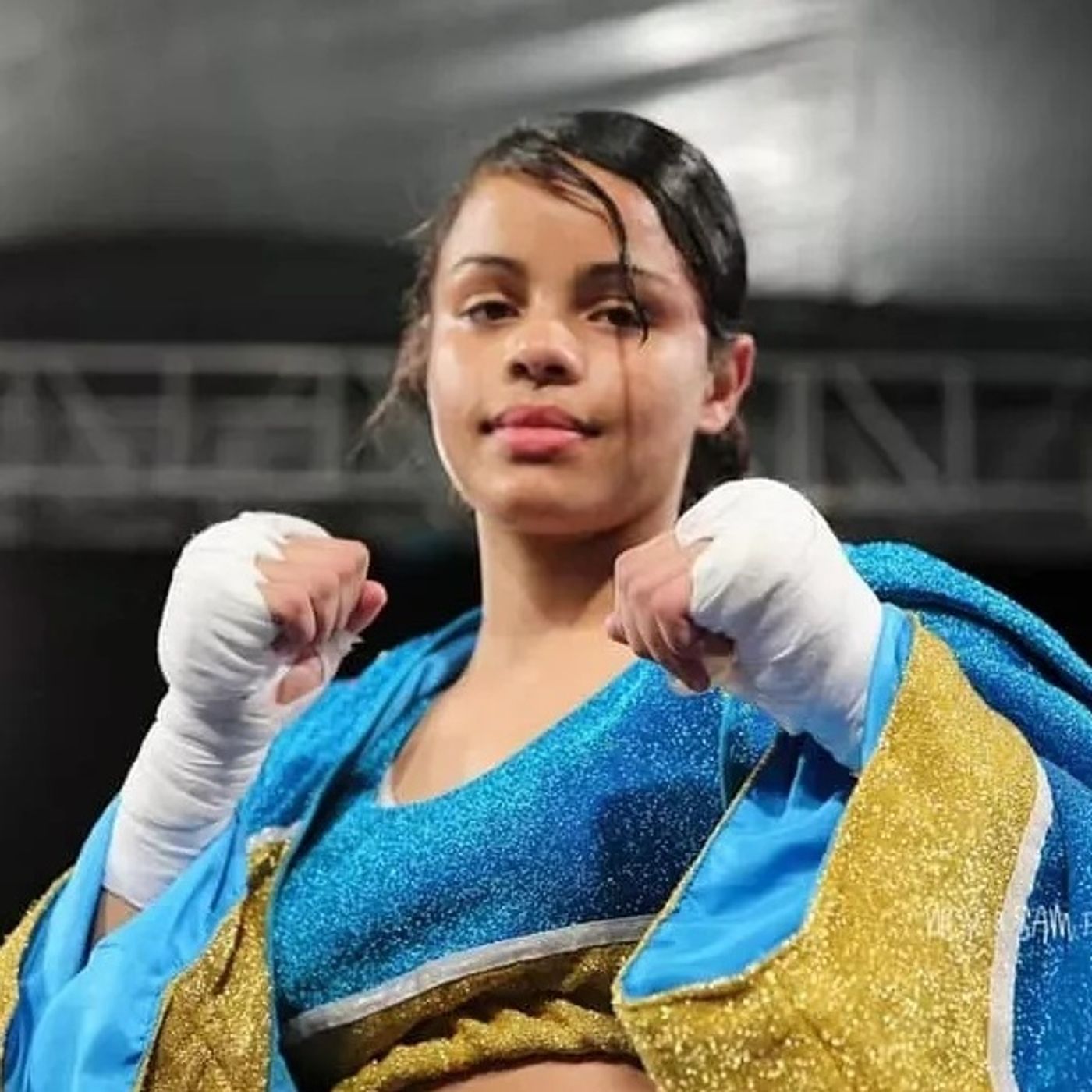
Chapter 122: A South African Champion Silenced-The Murder of Leighandre 'Baby Lee' Jegels
Episode Transcript
Every story has a beginning, but not everyone has an ending.
In the shadows of headlines and buried police reports lay the voices of the missing, the murdered, and the forgotten, waiting to be heard and have their stories told.
This is the Book of the Dead, a true crime podcast where we remember forgotten victims of heinous crimes, reopen cold cases, re visit haunting disappearances, and uncover the truths buried beneath the years of silence.
I'm your host, Courtney Liso, and every week we turn to another chapter, one victim, one mystery, one step closer to justice.
Brought to you by Darkast Network INDEP Podcasts with the Twist.
Speaker 2Hi everyone, I'm Cindy, the host of True Crime California, a weekly podcast about murders and other true crime that takes place in the Great Golden State.
Join me every week as I talk about a new case, some very well known and others not so well known, but always coming straight out of California.
True Crime California is a proud member of the Dark Cast Network.
Speaker 1Hello, Hello, Welcome to the next chapter in the Book to Dead.
There are countless sports around the world where women's participation is either not encouraged or it's not taken seriously.
For example, there are those that do not consider women's basketball a quote real sport.
While female athletes have made great strides in being recognized for their athletic abilities over the last few decades, there are those that have not acknowledged women in traditionally male dominated fields until the last ten or fifteen years, even though there are women who have been dominating their respective industries per far longer.
Specifically, I mean women in boxing.
Boxing has long been considered a male specific sport, and anyone could see why.
It involves a lot of power.
It's a violent and dangerous sport and not one that many would consider a woman capable of excelling in.
Women were unable to train seriously to enter the ring until the nineteen seventies, even though women have been documented as participating in amateur fights as far back as the seventeen hundreds, and they were featured as a display event in the nineteen Zeo for Olympics.
However, boxing did not truly start becoming more accessible for female fighters until the nineteen eighties, when women submitted gender discrimination lawsuits against organizations like the Golden Globs Tournament arguing for the right for women to participate in amateur matches.
By nineteen ninety three onward, the US and other European nations sanctioned women's amateur boxing and they were permitted to compete in tournaments, though women's boxing was not recognized as an Olympic sport until the two thousand and eight Olympic Games in Beijing, one hundred and four years after men's boxing was introduced in the Games.
As women's boxing, both professional and amateur, has evolved over the decades, there are various women who have helped shape the sport as we know it today and have excelled in being a reckoning force with in the ring.
Women like Leila Ali, Christy Martin, Lucia Reischker, and Katie Taylor helped propel women's boxing from a novelty to a sport finally beginning to be taken seriously and inspiring young women and girls to recognize and build upon their own strength and capabilities.
One such woman who was just starting her career being recognized for her skill in the ring by the likes of Floyd Mayweather and was set to participate in international matches, her eyes on making her family and her home in South Africa, proud when her life was taken from her by the very man she begged police to protect her from.
This is the murder of Leandra baby Lee Yehls.
Leandre Yehils was born on February sixth, nineteen ninety four, in East London, in the Eastern Cape of South Africa, to Ansel and Rita Yehols.
From the moment she was born, she was a fighter, born two months premature and weighing only one point five kilograms or just over three pounds.
Though she was so small and struggled to feed, she would ultimately thrive and indicator that she was far stronger than anyone could have ever realized.
She was the youngest of three children, and from a young age she excelled in her studies and athletics.
She was consistently at the top of her class, balancing her coursework with her countless extracurricular activities.
When Leandre was ten years old, according to Katee Town Girls, she began training in karate and she thrived.
She went on to earn her black belts and held the national Karate Champion title for four years straight from two thousand and nine to twenty twelve.
Also in twenty twelve, she graduated from high school again at the top of her class, and went on to get her Bachelor's of Science and Education degree from the University of Fort Hare.
After university, Leandra became a primary school teacher, but she was still incredibly passionate about karate.
However, as much as she loved it, she did want a new challenge.
While at Fort Hare, boxing promoter and Deile Sidinile saw Leandra practicing her karate at the university's boxing gym and admired her clear talent, which was so apparent at just nineteen years old.
And Delay urged Leandre to consider making the transition to boxing, an idea her father, Ansel, was not thrilled with, but at the encouragement of her mother, Leandra agreed to try it out.
According to an article for Iowel, Leandre told and Delay quote, just one fight.
If I like it, I'll do it.
That one fight open Leandre's eyes a whole new world.
She loved boxing, but not only that.
She was a phenomenal fighter.
In just two years, Leandra catapulted herself from an amateur boxer just starting out to an honordefeated champion, winning all nine of her fights from twenty sixteen to twenty seventeen.
In June of twenty sixteen, she won the South African Junior Bantomweight championship at twenty two years old, dominating against her more experienced opponent.
With her journey to a global title well within her horizons, she told News twenty four quote, I am extremely happy with the way my boxing career is shaping up.
Not so long ago, I was an unknown contender in the ratings, and now I'm a national champion.
My aim is to punch my way into winning the world belt championship.
She also credited much of her success to her new trainer, boy Boy Mpulampula, who took her on as a mentee after she cut ties with her last trainer, former International Boxing Federation Junior featherweight champion, Vollani Bungu the previous November.
She said, I'm a pull and Pula he helped me with the psychological aspects, like believing in myself so as to get motivated for the fight.
This helped me win.
I believe this will lead me to being crowned the world queen soon.
Her clear potential attracted attention from boxing legends all over the world, and in twenty seventeen, she was invited to Las Vegas by Floyd Mayweather to train at his gym, an opportunity Leandra couldn't pass up.
After training and sparring with boxing legends in Vegas, she returned home excited for her next fight, though Leandra also had something else to look forward to a new relationship.
In twenty eighteen, when she was twenty four years old, Leandre was training her local gym when she met thirty six year old Bulilani Mayanka, a police officer who was as dedicated to the sport as she was, though he was twelve years her senior.
They bonded over their love of boxing and karate, and Leandra was impressed with Bulilani's focus and hard work ethic.
When Leandro and Bulilani started dating, the Yechels had some concerns about the relationship.
They worried about the age gap between the two and also found the comments he made where he seemed to be proud of people he had killed in the line of duty troubling.
However, Leandre assured her parents that she really liked Bulilani, and since their daughter had always displayed very good judgment and trusted her instincts.
They relented and supported her new relationship.
Bulailani at first seemed very encouraging of Leandra's dedication not only to training but to her job as a teacher, and they even moved in together.
But soon the facade started to crack and a darker side of him started to show.
Pretty quickly, Leandre's relationship devolved into something terrifying.
Bulilani was manipulative and controlling, taking Leandra's bank card, refusing to allow her to drive her car, and took over every aspect of her life until she was let go from her job.
According to an interview Rita Yehls did with The Daily Dispatch, he was also incredibly violent, not only psychologically abusing Leandra, but sexually and physically abusing her as well.
On the rare occasions that the two would visit on DeLay's boxing gym, he said he noticed that Leandre would be quote shaking in his company.
I knew something wasn't right.
Finally, after months of abuse, Leandra was able to find the courage to tell on Delay and her parents what was going on in her relationship.
The threats to take her life at least once made in the presence of her parents.
The beatings the control all of it, and Leandro was urged to take out an order of protection against Bulilani.
After months of enduring abuse at the hands of her partner, Leandra went to the police and filed the order of protection.
According to an interview on Selenriita gave to SABC News, the police were less than accommodating about serving Bulilani with the order.
Rita said when they arrived at the station, the officer, who was a female, seemed reluctant to bring the papers to Bulilani as he was currently working and didn't want to embarrass him, so the officer called him to inform Bulilani who was being served.
This infuriated the Yehls, as the threats Bulilani had made against Leandre had become increased terrifying.
Ansel said, quote, this guy threatened her prior and he said he will kill her and himself.
After he said if he can't have her, no one will.
One would hope that based on the information the Yahals provided to get the order of protection, the police would do something productive.
In response, Ansel said that he had hoped Bulilani's superiors would at minimum relieve him of his weapon and perhaps put him on desk duty or provide him with some sort of counseling, But Bulilani was permitted to continue working out on the streets with the gun and seemed to have no sort of restrictions placed on him to make sure people were kept safe.
Unfortunately, the situation Leandre was experiencing, with the police's lack of initiative in helping her, as well as the domestic violence situation itself, was not abnormal.
South Africa, while ab beautiful country with the robust wildlife, stunning beaches and vineyards, and a vibrant culture, is also a country with the highest rates of gender based violence in femicide.
In a study presented by doctor napum Milelo Zungo, who is the Strategic Lead in the Public Health Society's and Belonging Research Division of the Human Sciences Research Council, during the twenty twenty four to sixteen Days of Activism campaign, it was found that thirty three point one percent of all women aged eighteen years or older had experienced physical violence in their lifetime.
If you break this percentage into a number based on South Africa's population.
This is estimated to be seven million, three hundred and ten thousand, three hundred and eighty nine women who have endured violence, regardless of their relationship status.
Lifetime physical violence was higher among Black Africas women and higher among women who were not married but living with their partners compared to those who were married or single.
Additionally, nine point nine percent of women, regardless of their relationship status, experienced sexual violence in their lifetime, which would translate to roughly two million, one hundred and fifty thousand, three hundred and forty two women in South Africa.
The rate of violence against women in South Africa is so high, in fact, that on the twentieth of November, six days ago as of one year hearing this, the National Disaster Management Center called gender based violence a national disaster following a quote thorough reassessment of previous reports and updated submissions from organizations of state as well as civil organizations after countrywide protests this past Friday, as well as the participation from those living in Eswatini, Kenya and Namibi.
Gender based violence, according to South African President Cyril Ramaphosa, was previously declared a national crisis in twenty nineteen, according to the BBC, women are killed at a rate five times higher than the global average.
While there are laws and policies in place to try and combat the alarming increase in violence against women in South Africa, the study conducted by the Human Scientists Research Council showed that the data reveals deeply ingrained gender norms and power dynamics, with strong cultural reinforcement of traditional gender rules and a troubling acceptance of male aggression and dominance.
In a twenty twenty four article for Human Rights Watch, this study also showed that men had disturbing opinions surrounding women in violence perpetrated against them.
Almost seventy percent of men quote said a wife should obey her husband, and fifteen percent felt a husband had the right to punish his wife for wrongdoings.
Nearly ten percent held the false idea that women are often to blame if they were raped, and twelve percent wrongly believe if a woman does not physically resist it is not rape.
Gender based violence is an increasingly growing problem, and as of today, there's not enough being done to combat it by police or the government.
Women have resorted to obtaining gun licenses so that if they are attacked, they have something powerful to fight back with.
Leandre Yechels didn't have the opportunity to fight back.
She had trusted the police to enforce the protective order, and they didn't.
After Bulilani was served, or more accurately warned, Leandre attempted to resume her day to day life, but she remained fearful of her surrounds, as did her parents.
Bulilani was furious about the restraining order and had resorted to stalking Leandra as she ran errands and went to the gym.
She never went anywhere by herself.
Typically Rita or Ansel would accompany her where she needed to go.
But as the months passed, it seemed as if Bulilani had lost interest and suddenly his presence wasn't a constant threat.
Leandra started to get her spark back.
She had a renewed interest in training again and looked forward to getting in the ring for a fight schedule to take place in July twenty nineteen in Saudi Arabia, a country where women's boxing seemed to finally be getting approval from their government.
However, the match would go on to be canceled after a ban on women's boxing was implemented, and though disappointed, she looked towards a different fight to make her comeback, this time scheduled in October in India.
She started training Missilani Tete, the WBO bantamweight world champion, to prepare for the match and was excited to further her boxing career when everything changed.
On August thirtieth, twenty nineteen, the second to last day of Women's Month in South Africa, Leandre called Tete and asked if he would bring her to the training gym in Indensane, but he wasn't planning on training himself that day.
He suggested that Rita drive Leandra instead.
According to Rita, as the two drove into Indensane, they noticed the white Mercedes Benz tailgating them.
Initially, Rita assumed the driver was just trying to pass them and she moved over to give them space, but the driver stayed behind them, and Leandra realized that the driver of the Mercedes was Bulilani.
She told her mother and Rita sped up, attempting to lose him, but he was able to open take them, and Rita attempted to make a U turn, but due to the heavy traffic, Bulilani had enough time to exit his vehicle and approach Leandra's car, a gun clearly visible in his hand.
He went to the driver's side and shot at Rita three times, hitting her once near the eye and once in the arm.
Rita managed to start driving again, and Leandra begged her mother to pull over so she could drive instead, but Rita refused, saying they would waste precious time switching seats.
Rita was able to drive a bit longer, but as she lost more blood, she started to lose consciousness and pulled over, fearing that she would put others in danger if she attempted to continue on.
According to a witness named Ben Rexana, who had been behind the Bulilani's car during the shooting, He said that Bulilani quote got out and slowly walked toward her car with a gun in his hand.
He just fired three shots at her in the driver's seat, as if there was nothing wrong with what he was doing.
He then turned around and looked at the other cars before going back to his vehicle.
Rickxana confirmed that Bulilani got in his car and followed Rita and Leandra as they drove away.
Pulling off and getting out of his Mercedes.
After Rita stopped driving, Biandra got out of the car to face Bulilani, but before she could reach him, he fired three more shots and she collapsed, dying at the scene.
Bulilani then got back in his car and drove away.
Now witnesses had called police when the first shots were made, but even as police officers demanded he pull over, Bulilani continued to drive, leading them on a forty mile chase before he was ultimately apprehended when he crashed into another vehicle, killing twenty nine year old petty clinic nurse Aulta Alatta and twenty nine year old Hamburg Liberians see Asanga Deyamani.
A third passenger was unnamed but survived the crash.
Bulilani was arrested and taken to the hospital for his injuries, and Rito was also brought to the hospital, where she was sent to the intensive care unit.
According to the Daily Dispatch, when asked why Bulilani was permitted to keep his firearm after a restraining order was issued against him, Independent Police Investigated Director at spokesperson Santanga Sesa said, quote that is the internal processes of SAPs and we do not get involved in the operational dealings of SAPs and SAPs is the South African Police Service.
Two days after Leandre's death, the Parliament of the Republic of South Africa's Committee on Education and Technology, Sports, Arts and Cultures released a statement extending their condolences to Leandra's family, friends and colleagues, with the committee chairperson Mama gasse By Naka Belongs saying quote, this shocking incident has robbed a young woman of a bright future, a family of a beloved daughter, and the world of a boxing star.
Baby Lee was not just a hero to many women across the world, but shattered the opinions of those who think that females do not belong to boxing.
As the Women's Month draws to an end, this incident is an example of the harsh realities of abuse and violence against so many women.
Ahead of Bolilani's quarte, the Monday after Leandra's murder, Boxing South Africa chair person Melfistani Nakatani made a statement acknowledging the devastating loss of Leandre, who had worked so hard to make her country proud in the ring, also acknowledging how cruel it was for her to lose her life during a time quote when the entire nation is busy bracing itself to celebrate the last weekend of the month of Women.
He went on to say, quote, it is disturbing that as we end the month that is supposed to honor women, we have seen more death, more abuse, and more missing young women.
It is also disturbing that violence has been normalized in this country due to a lack of law enforcement and of the judicial system in playing their roles.
Now, Buolilani Manyaka would never much to the dismay of those that loved and warned Leandra nake it to his court date.
On the day he was to appear in court, Bulilani died as a result of his injuries from the car crash, and while it was comforting to know that he would never have the opportunity to harm another woman, the Yachls were denied an opportunity to face their daughter's killer.
Rita, who had thankfully made a full recovery and ansel, told SA NBC that they would be pursuing legal advice about what could be done to hold the SAPs responsible in some way for failing to protect their daughter and enforce the order of protection, though whether or not they proceeded with a suit is unknown.
In the immediate aftermath of Leandra's death, thousands of protesters gathered on the streets of Cape Town, demanding the government do something about the rampant violence being perpetuated against women.
Leandra was the second woman killed in a matter of days at the hands of a man, and citizens were outraged and wanted action taken.
President Ramafosa acknowledged that quote, it is a crime against their common humanity.
We have heard the calls of the women of our country for action and justice.
He also said, according to the Richmond Times, quote violence against women is a man's problem.
It is men who rape and kill women.
Let us not look away.
Unfortunately, as I mentioned earlier, violence against women in South Africa has only gotten worse.
The year after Leandre's death, Rita spoke of how she and her family still struggled to cope with their loss and except that their daughter is gone, She said she was unable to watch boxing, the sport Leandre loved so much, and that Rita loved watching her daughter excel at because it was too painful.
A memorial ceremony was conducted on the one year anniversary at the spot where Leandra died, attended by her family, her trainer, fellow boxers, and promoters to honor the anniversary, and in twenty twenty three, the Leandra Baby Lee Yuhles Recreational Park was opened as a way to honor her memory.
Leandre Yuckles did everything a woman is told to do when they are in a domestic violence situation.
She confided in those that could love and support her.
She went to the police, she got the restraining order, and still, even with her being an active and deliberate threat to her life, the very people that were supposed to protect her didn't.
She was failed miserably by the police who chose to warn a violent man about an order of protection against him, instead of making sure he stayed within its parameters.
They allowed him to retain his firearm, and they did nothing to deter him from going after her.
Leandre had so much life left to live at only twenty five years old, and a career that she thrived and excelled in, and the person that was not only supposed to love her but keep her safe as a police officer, ripped it all away.
I know I have at least a few listeners in South Africa, so for those that are or may know someone experiencing domestic or gender based violence there, you can call the Gender Based Violence Command Center hotline at zero eight zero zero four to eight four two eight.
You can also text the line at three one five three one or visit their website at GBV dot org DOTZA.
You can also call the Stop Gender Violence Helpline at zero eight zero zero one five zero one five zero, or visit their website at lifeline essay dot co dot CA.
And I'll put the links in numbers as well as the ones for the US and the UK and the source notes below.
As always, I thank you so much for listening.
It was pretty appropriate to cover Leandre Yahol's story this week as this week is the annual sixteen Days of Activism in South Africa, whose purpose is to raise awareness and put a stop to gender based violence in the country.
When I was researching her case, I didn't do it with the intention of posting it during the sixteen Days of Backism, but it was pretty serentipitous when I realized that it would be coming out or this episode would be coming out at the same time.
As always, I hope you have a wonderful week.
For my American listeners, Happy Thanksgiving and I will see you in the next chapter of the Book of the Dead.
Bye, guys.
Another page closed, But the story isn't over.
For the families left behind, the pain doesn't end when the headline's fade.
And for the victims, we owe them more than silence for our on solved cases.
If you have any information, please reach out to local authorities or visit our show notes for links and resources.
Someone out there knows something, maybe it's you.
Thank you for listening to the Book of the Dead.
If this story moved or spoke to you in some way, talk about it, share it, keep the thing names alive.
Until next time, I'm Courtney Liso.
Stay safe, stay curious, and stay vigilant, and remember the dead may be gone, but their stories will not be forgotten.