·S6 E17
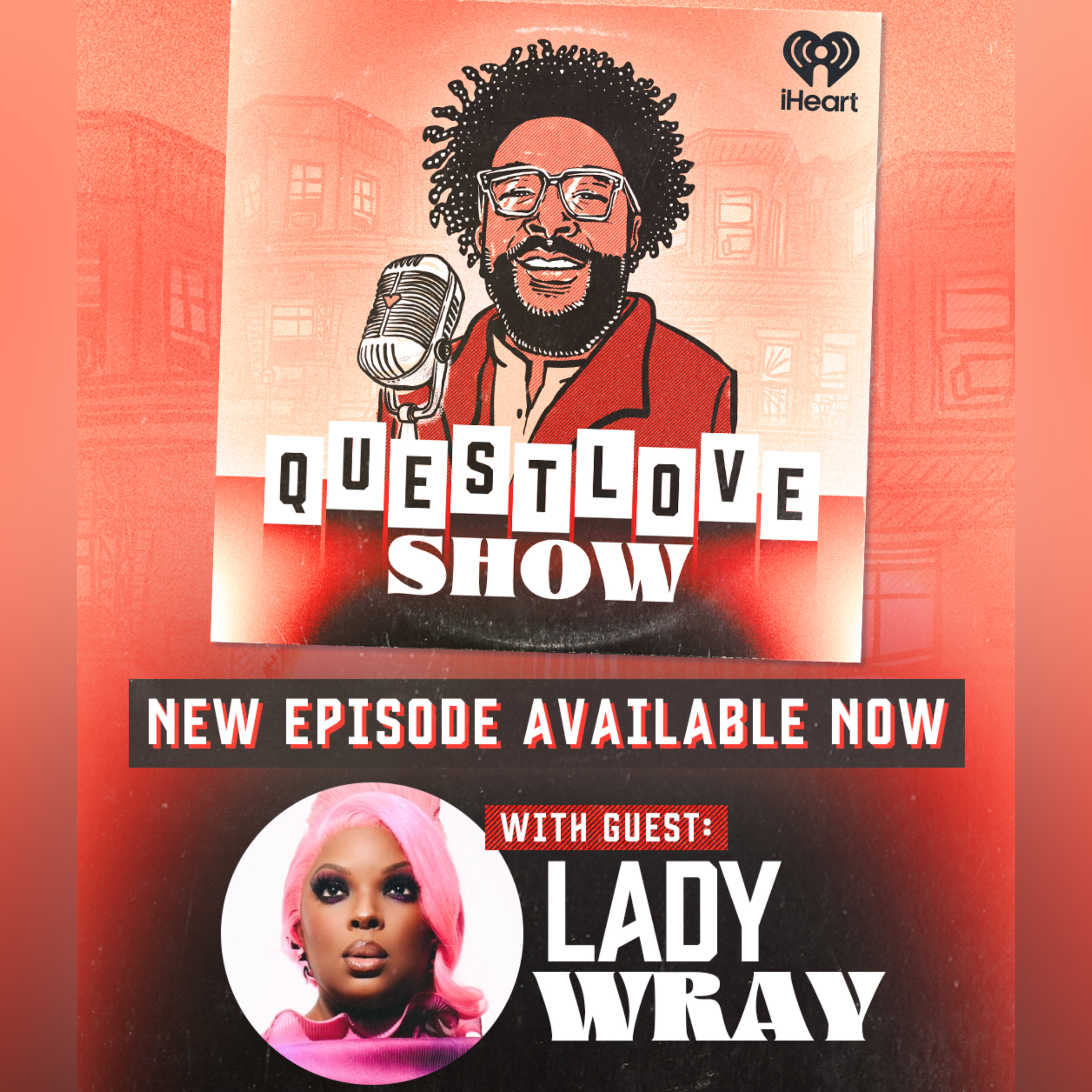
Lady Wray
Episode Transcript
Request Left Show is a production of iHeart Radio, Ladies and Gentlemen.
Speaker 2I will say that James Todd Smith famously yelled in nineteen ninety don't call it a comeback.
Our guest today has probably been hearing that term for at least the last ten years, which means it really isn't a comeback.
She's had quite the journey in her music career.
She rose to fame in the late nineties under her birth name Nicole Ray.
Of course we all remember make It Hot top five hit with Missy Elliott's gold Mine imprint.
She experienced the challenges of navigating the music industry, including shifts and label support and evolving musical landscapes.
We are definitely gonna get into that, and after a period of personal reflection and growth, she basically returned to her roots, embracing her authentic, soulful self and redefining her sound, starting with twenty sixteen's mind blowing Queen alone album.
There's also Piece of Me in twenty twenty two, and now her new album entitled Cover Girl, which is on Big Crown Records.
I can personally attest that her discography might be the unofficial roots background Dressing Room soundtrack.
I've been a longtime fan and I would like to welcome Lady Ray to QLs.
Speaker 1How are you.
Speaker 3Today, I'm great, Thanks Ques for having me.
I'm a longtime fan of you guys and of you as well.
This is just a pleasure today.
Speaker 1Yeah.
Speaker 2I was gonna say, there's a difference between the two dressing rooms of the Roots and usually before a show, I wanted real quiet and zen and in the opposite room where the rest of the guys are, you know, they gotta it's almost like a football atmosphere where they got to get each other hype.
And I remember sometime like maybe two or three years ago, I popped my head in but there was something different about this was soulful, but it was almost like this one sounded young.
I was like, yo, who the hell is that?
And they were like Lady rayn.
I was like I never heard of her.
He's like, oh, you remember Nicole Ray from Da Da Da Da Dad, And I was like, no, there's no way that.
Like I was flabbergasted and shocked that I wasn't up on your your pivot, get your information or like what I feel is like really your your true arrival.
And so yeah, I will say that Tariq pretty much keeps you in rotation for like the last two years, like.
Speaker 3Just kind of love to love to reak.
Speaker 2Yeah, so it's an honor to talk to you.
Okay, So my first question to you, in the first twenty minutes of your day, what is your routine?
Speaker 3Wow, first twenty minutes of my day routine?
Speaker 1Well, specifically this.
Speaker 3Morning, well this morning it does not include my daughter because she's at home with family and I'm here in La getting ready, gearing up for my tour.
So this morning I kind of slept in late because I was out a little late last night in a writing session which I had a great time worked with Raymond Nominee Josh Grant, and I think I slept a little late this morning.
I skipped breakfast, and when I did wake up, I immediately reached out to my husband and told them, you know, I'm getting ready to get myself together, you know, and did my makeup of my hair because I knew I was going to see you today.
So I was like, I can't go in there looking busted.
I gotta get myself together.
And it always takes me a minute to get the eyebrows.
I'm not like a professional makeup artist, but I mean, you know, doing makeup for myself on tour for the last two years, I kind of like perfected the eyelashes and the eye brows.
So that takes me a good little minute to get that perfected, because without that, my day is not It's going to be off, especially if I have to do it like interviews and to actually be seen.
Got myself together.
Listen back to the song that I created last night, which is a Monster A Beast.
Kind of got hyped for the day and got some lunch and got my room cleaned and kind of got ready to get all t minutes.
Speaker 1I was like, you did all that in twenty minutes.
Okay, I get it now.
Speaker 3That was your day, Yeah, that was my day.
Speaker 2If I were to ask you pre tend like, what is a typical memory of your childhood?
I never know that you were born in California but later moved to Virginia.
Give me a picture when I ask you, like, just give me a random memory of your childhood.
It doesn't have to be something like monumental, like the time that you know they took us to see the Victory tour or something like that.
But right no, give me a happy moment of your childhood.
Speaker 3Happy happy moments are church, church, church, church, church, birds, a lot of doll I had a lot of dogs growing up.
My three my two siblings, my oldest brother and my youngest sister, us just hanging out outside all day and toil.
My mom would yell our names to come in.
We would ride our bikes, we would go to church.
We had like an apple tree.
We had a great tree.
My brother would flip learn he was learning how to do backflips in the yard, and we just we had each other.
So those were my best memories as a kid growing up.
Would be church.
Baptist church with my grandmother.
Speaker 1What's your denomination, Well, it was.
Speaker 3Pentecostal and Baptist.
My grandmother, she was devoted to the Baptist church.
And then my mother and father, you know, kind of grew out of that and we went we started the Pentecostal church.
Yeah.
Yeah, So it felt like every day we were in church, and we did vacation Bible school, like the summer, being in a choir, and just growing up in the church background.
Speaker 1Roots for me.
Speaker 3It's always been something that I can look back and smile and I could be anywhere, and I will hear these lyrics from so many years ago that I didn't even think that I was listening to as a child, like these old like gospel lyrics which just come in my head.
I could be like cleaning up.
I'm like, oh my god, I did a lot of church, so it's there.
Speaker 1Got it.
Speaker 2The song that first brought you to my attention, it was your twist on Sunshine.
Speaker 3Yeah.
Speaker 1Everyone always asks you about this, right yeah.
Speaker 2Yeah, So I was explaining to my friends when I was playing it for them.
You know the story behind that was even an artist loved this.
Stevie Wonder wasn't allowed in the Clark household because it was secular mm hmm, devil's music.
So thus they would have to disguise their fandom for you know, regular songs and put a twist on it.
But I want to know for you, was outside music allowed in your everyday week life or was it also a strict Christian music only household.
Speaker 3It was not only strict Christian music household.
My father welcomed Jackson, Five, Whitney, Houston, Aretha Franklin, Marvel, Gay, Sam Cooke.
The list goes on.
But my pastor in the Pentecostal church would not have agreed.
I remember being fourteen years old, after my mom and dad got a divorce, we still would go to the family church, and I remember my mom asked for prayer.
You know, the lady with the big flower hat.
You put your name in the thing and she gets up there and say, sister.
Speaker 1Every report card Monday, I'd ask for prayer and get born again.
Speaker 3Yeah before yeah, yeah, but my pastor was not having it.
He was not having it.
My pastor, he had these like gazelles and he got up.
All he heard was Jimmy, Jame and Terry Lewis, and he stood up.
He says, disregard the prayer.
They're serving the devil.
And I was like fourteen, about to be fifteen, and I was shattered.
I think right there was a pivotal moment for me in my career.
That's probably why I never went gospel.
I didn't feel welcome as a teen, and I really wanted to be a gospel singer and my pastor was not having it, and it just pushed me into secular music.
So yeah, but yeah, it was not a thing to not listen to second music in my house.
Speaker 2The elders once asked me once we got a record deal in a kind of backwards way.
Speaker 1They were like, so are you uplifting the Lord in your music or are you uh.
Speaker 3Yeah, yeah.
Speaker 1I never went back after that after twenty.
Speaker 2Years, right, what three songs would you say is the soundtrack to your first ten years of life?
Speaker 3Tony Braxton for sure, Baby Breathe Again.
Mary J Blige was the four to one one okay, and Wu Tang Clan for sure.
That's in the whole, like mixture of you got some hip hop, you got some and probably a little bit of Whitney Houston and Mariah Carey.
But I know you asked me for three bus.
Speaker 1Everyone who would you say your north star was?
As far as your craft.
Speaker 3Is concerned, I'm gonna tear up my idol has and always will be married j Blige.
She was the soundtrack to my my ten their youth, me being inspired, me learning things for the first time, me having boyfriends for the first time, getting yelled at by my mom, running into my room with my radio that she would sometimes pawd for to pay a light bill, and I would come home like, where's my radio?
She said, don't worry about it, We're gonna get it back, and I was like, I have my Mary J.
Blige cassette in there.
But we did get my radio player back.
But it was always Mary J.
Blige in my life and my world as a young girl growing up in Portsmouth, Virginia, it was always Mary.
And I had an opportunity to meet her, and nobody believed me because when I met Missy Elliott, you know, she was hanging out with Mary, and I met Mary at a young age.
I was still a young teen when I met Mary.
So I was like sitting there like shaking inside, like I couldn't believe it.
And she said, oh my god, I love you.
She told me she loved me.
She had heard my music, she knew who I was, and I almost like fainted, like I was like, oh my god.
So it's always going to be Mary J.
Blige for me.
Speaker 1Okay, So my life was like your ear.
Speaker 3That was my soundtrack.
Speaker 1Yes, and you were open, like one of the percent open.
Speaker 3And one open.
I think the drink back then was gin and juice because I think Snoop Dogg and we were young and we were like trying to, you know, sneak around and you know, but it was always my life listening to those songs.
I was young, and I just some of those lyrics when I was young, and I didn't understand, but I think it hit different for me because my mom was a single mom and my brother was holding down the household, and just those lyrics just resonated in my soul as a young girl.
Speaker 2I specifically remember the day that that album came out.
You know, it's like ninety four and we're in DC and we were like doing promotion around the Howard area and our label rep haded and started playing it, and it's so weird.
Speaker 1We sat there frozen in the car.
Now, had he said, yo.
Speaker 2Like I got the new NAS album, or here's the new Brand Nubian album, or here's the you know, yeah right, I mean, it would have just been like, oh, we're open for business.
But I remember by the time we got to the title track, when we got to My Life, I noticed that we were all looking at each other the way that our parents looked at us listen to hip hop, because we said.
Speaker 1She's a singer, like she's not allowed to sing over samples?
Like it was hard.
Speaker 3It was so hard.
Speaker 2Well, I will say that I was maybe for like four months, like I didn't realize that this new movement, this this bad boy movement was coming in kind of a lot of the traditional unspoken rules of what we thought, like singers should never sing over a sample, like you can sing anything, make up your own melody like rappers gotta have.
Speaker 1So for me at.
Speaker 2Least, like I was arms crossed only because I was like, well, if singer is gonna make me music like rappers, dude, then who's going to make the music that we're going to sample in the year two thousand or two thousand and five or two Yeah.
But you know, also as a DJ, I'm seeing the effect that this this new style of music's coming, and so I gave in.
Speaker 1I mean, of course now it's classic.
Speaker 3We just you welcomed it.
Speaker 1We played with her a.
Speaker 2Week ago and it was where her band like one show a year where she'll join us and we're her band for that show.
Speaker 1And it's like, oh my god.
Speaker 3I love that you you guys and Mary, Oh my, I gotta get a ticket.
I gotta get there to see that.
Speaker 1So wait, we're in California.
Were you born?
Speaker 3I was born in Selinas, California, on an army base.
My dad was an army so they traveled a lot, and I was born here and then raised Enforcemouth.
Speaker 1How old were you when you came to Virginia.
Speaker 3I was a baby.
Yeah, I was still a baby.
Yeah, I was a.
Speaker 1Baby from Virginia.
Okay, yeah, I'm from Virginia.
Speaker 3Yeah.
Speaker 2Now where does Portsmouth fall into the proximity of you know, I know di'angelo like his Richmond and Virginia Beach and well, it is.
Speaker 3Definitely part of the d MV.
It's like right near like Norfolk.
It's like right under the water.
It's under the bridge like as a tunnel that always for years it's like how do they build this?
It's like under it's water under there, it's it's it's so wild.
But it's like it's right like next door to to Norfolk, Newport News, bad News where Alan Iverson is from.
So we're kind of like right next door.
And Portsmouth is has always been known for its a lot of talent that gets unseen, got it?
Like they say something's in the water that's everywhere in like kind of like Norfolk, Hampton, Virginia Beach, Portsmouth and Newport News.
Speaker 1So okay, I know for like a New Yorker.
Speaker 3Mm hmmm.
Speaker 2Anything south of Philadelphia and their eyes is down south.
Like I know people that actually think that DC and Maryland are that's down south even though southern.
Speaker 1No, are you more northeast or north of North Carolina?
Speaker 3Yeah, I feel like growing up when I say Wu tang, we will always like connect ourselves to New York.
Like we would go to New York when the Timberlands would come out and the music would come out, we would always go.
I mean I have family members that would just go and drive to New York and say, I'm in Brooklyn, I'm going to get some jewelry.
I'm going to get the front somewhere in Brooklyn at this big mall.
And we will always like just go back and forth to New York.
So I feel like we're close more close to you know, a lot of people say that I sound like I'm New York.
I sound kind of like country.
My accent is all over the place.
I will tell you that.
Speaker 2So when you first came out, of course you've been on Missy's label.
I was like, Oh, she must be from VA.
Speaker 1I know.
Speaker 2The irony of this story is that the second album didn't come out but I will say that the street promoters when you signed to Rockefeller were like heavy on me as far as like spinning you.
Speaker 1So then I thought, well, well, damn, maybe she's.
Speaker 2From Philadelphia like I right, right, no, because I was like, wait a minute, I thought she was down with them.
So first of all, I want to know for you, what were the first steps and you wanting to pursue music as a career, Like was there another option?
Did you have another passion or desire when you were younger.
Speaker 3My story for wanting to embark in this crazy music business has always pointed at my dad.
My dad was a singer in the church.
You had inspirations to be an R and B singer, Like my dad's voice was similar to my Gay and Sam Cook.
He had a strong voice.
And then his life kind of took a turn and he kind of he was homeless for about twenty years and he had a drug addiction.
And I think as a young child when my mom and dad got a divorce, I think for me it was like this hunger to find my dad.
And when I did find my dad, I wanted him to hear me sing, and so I was always singing loud and until he came home, and he didn't come home to like maybe like over twenty years, he didn't come home and get himself cleaned and off drugs and homeless.
It felt like two lifetimes.
And I think that was the goal for me, is to sing as loud as I could and so my dad would hear me and come back into my life.
And it didn't work right away because he was out there in the streets and I was trying to focus on my career.
When I met Missy Elliott, I kind of started young in the music business.
I got my deal when I was I think just turning like seventeen years old, and my dad was out there and I was trying to focus on my career.
Helped my dad get his life back together.
And I think for me, initially in the beginning, it was me calling out to my dad and for him to, you know, come back into my life and to know that I'm pursuing the same dreams that he had.
So that was my ultimate goal.
Speaker 1What would you say your first creative project was, and this way before the record deal, but like when did you discover that you were at creative Like what was the first real creative project that you put together.
Speaker 3I had quite a few.
My mom was like my manager many years ago.
She was the momager.
And I had like a few, like producers that are no longer living that I worked with when I was young, anywhere from twelve to fourteen, and I would go in the studio and make records and sing, but I wasn't writing.
I think the beginning creative thing for me was when I was eight and I had to learn lyrics to a song.
I was eight years old, one year older than my daughter is now, and I could imagine her, you know, the age that I was in the room listening to a gospel song and write.
I wrote them down and nobody helped me.
And that Sunday I got up there and I sung that song by myself because I had been practicing.
Speaker 1That was lyrics.
When you performance eight, Walk me through that?
What was it like?
Speaker 3I remember getting to choir rehearsal early Saturday, maybe like we got there maybe like around eleven.
I think rehearsal started about twelve, And I remember it was a group of all of us little kids.
We were all little, and my brother was in the choir with us as well, and I remember the choir director was like, anybody want to lead a song, raise their hand.
And I was standing there like I knew I could sing, but I didn't have the nerves too, And my friend just raised my hand up.
She was like, Nicole wants to sing, and she's like Nicole and she says, come over here.
And I remember the name of the song was titled I might as well Think Big, and I remember, like, I have to sing this song in front of the whole congregation.
But the lyrics of that song, it hits crazy today because I've been thinking big ever since I was like eight years old.
And that was the moment that I knew I was gonna be a singer, that this is gonna be the love of my life and I would be doing this for a while.
Speaker 2So kind of without knowing it, you subconsciously manifested where you are right now.
Correct, There is no trepidation or nervousness about it at all.
Speaker 3I still get nervous today, Like when I was eight years old.
My dad used to tell me, I still get nervous, and everybody like why they come to see you do what you do?
And I just feel like I am a ball of nerves, like I can be backstage and I'm like, I'll ask the band, I'm like, how's it looking out there, and they're like, they're out there, they're rated for you.
And then my stomach will just get it still like I'm eight years old.
Like my dad will say this.
When I was younger, he would say, look up at the clock, just don't look at the crowd.
But I can't do that now.
I'm gonna grown up, and you know, you gotta engage with the crowd.
But sometimes I get so nervous.
I just kind of look above the crowd until I get in my zone and the energy is there and the vibe is there, and then I'm in it and I feel great.
But initially going out there, I'm nervous.
As I'm so nervous.
Speaker 1How did you get the attention of Missy Elliott?
Speaker 3Well, this is like a story from out of one of those movies like Ray Charles, Like, I've always been an artist that like looking at those enjoy looking at the bios of the artists, how they got started and their journey.
I think for me this was in the late nineties.
I don't even know if they do this anymore because artists kind of get famous off TikTok YouTube.
This is like organic, the most organic of organics.
Missy Elliott lived right down the street from me.
I had no idea who she was in Portsmouth.
She lived in the house and I lived in apartments right and she lived across from my middle school.
My brother went to a talent show that Missy.
She graduated from Churchland High School and she was a judge at the school.
And my brother was in a singing group, a boys group.
They sung, they won.
They met Missy and she says, I I like you guys.
You guys sound amazing, but I need a girl artist.
And my brother goes, He's like, I got a sister she can sing, and she goes okay, And so he gave her our house number, our landline, and she calls our house and talks to my mom and I think I had a little key.
She was not Missy Ellie by then.
She was working with Jodysy Timberland and all of those guys.
And so my mom paged me and says, is a girl over here, she wants to meet you.
I walked over, came to the house and walked in.
Missy's there.
She had her finger waves and she has a magazine and she's like, she's telling me all about who she is, what she does, her group sister, she knows Jodasy.
She told me I worked with TLC and that was like my favorite group, like back in the day.
And she's like, sing something for me, and I sung week by s w V.
I get so, and she says, you remind me of Mary.
I mean, everybody was always comparing me to Mary J.
Blige as a young girl.
And when she saw it, she's like, I'm taking you with me.
And my mom was like, just make sure she's okay.
My mom would let her drive the car.
We would drive to Philly in the snow.
Speaker 2Wait, I got a question.
So I kind of wound up going backwards.
I'm also friends with the Skills, okkk yeah, And so the thing one is I wasn't aware of the mixtapes that they were making in the basements, yeah Davante, Yeah.
So I was fully of board by the time one of the million came out, Like once Elia's record came out, I was like, yeah, and go backwards like, oh, it's a.
Speaker 1Guy named similar, Missy.
Speaker 2But when I got wind of those mixtapes that they were making, like were you ever eyewitnessed or worked in that basement.
Speaker 3I didn't work in that basement.
I think Missy was on her way out.
She had told me so many horrible stories, and she was kind of like becoming stronger as a writer, as an individual, as an artist.
And I think she took all that thissh she learned from that and put it into herself, into her career and all the other artists like myself that she began to work with.
But I remember her telling me the wild stories about those days in the basement, and I'm kind of glad I did not kind of come up in that because I would probably not be here talking to you today from some of the things that I've heard that she told me that was going on back then, which is horrible.
But look where she is now.
You know, she's you know, she is on top of her game, a trendset of icon iconic.
Yeah.
So I think when I met her, she just wanted to get out of that and pull her her talents into you know, something else and something fresh.
And I was I was like her little sister.
I went everywhere with Missy, everywhere, like I said, would we would drive to Philadelphia and it would be cold, like on the weekend, my mom would let her take the car.
We would drive and we would go in the studio and just sit there all night and just I mean I was the like studio rat, like lab like muse.
Like she would write songs.
I would sing them, pumping them out, singing them, pumping them out, singing them.
Speaker 1How are songs crafted back then?
Speaker 3Yeah, back then it is, So it's not quite as similar as it is now, Like more like now writing is more of a jam Like back then, you would get the.
Speaker 1Stand in the room and just add to the pot.
Speaker 3Yeah, Like this was not what Missy was like or creative on her own.
She would get in there and make like beats with the producer and sit in there and write songs like all day.
Like her, she would get the track and sit in there and like listen to the actual track and write lyrics.
Like now it's more kind of jamming and organic and you're coming up with the track all together and not like kind of like sitting there listening to the production and coming up with lyrics.
That takes a lot today to sit I mean some artists do it.
I kind of got out of that writing style because it's that was a little.
It seemed like it took so long for me to kind of I think I wanted the music to speak to me as it's happening and in real time, and that's how I write now.
But for me, I learned the importance of melody and harmonies working with Missy.
She could come up with harmonies, I mean, like stacking vocals, and I learned all of that from her.
Like today, I can't be I mean, I could work with artists now and they're like, wow, like you helped me.
But that's what Missy was doing and preparing me as a you know, a songwriter today.
And I look back on those experiences as well.
Speaker 2I know it's really weird to say, but I realized in the pandemic, I didn't know.
Speaker 1How to write a song.
Speaker 2Oh you know, Tarka and I started well when we started in high school.
So our high school experience was basically just limited to beating on the desks, right, do an occasional talent show and when you do someone else's song and he rhymes over it.
And then when we really got serious as the roots, we were like busking.
Speaker 1On the street corners m hm.
Speaker 2And you kind of have to think off the top of your head, whatever's happening.
And so it wasn't until when I started DJing in the pandemic in which I'm spinning records that I'm not spinning in nightclubs.
It's not like I'm spinning records to make you dance.
I mean, you know, we're locked in our houses.
Son think I'm like a radio station.
So I'm like doing an hour of Marvin Gaye, an hour of Bill Withers.
And suddenly, in subjecting myself to five hours a day DJ online, I was like, oh now, and reading the comments that are coming up, that was a backwards way for me to learn how a song works actually in the pandemic where you know, I mean there was a point where I play a radio hit song people are like yo, like crying, and yeah, I'm seeing like what emotionsly touch, like what touches them emotionally and hour shot day and somehow I realized maybe like by July twenty twenty, oh snap, I know grooves and I know like the backdrop of rhythm, right, but never once did I think can you whistle this song?
And there's a melody to it?
And I was like, oh my God, like for seventeen albums.
I don't wait, it like, how do we get here?
Speaker 1So?
Speaker 3How do we get here?
Speaker 1Now?
I know the importance of it.
So that's that's basically what you learned.
Speaker 2Like when you're crafting making Hot the record, how much agency are you given as far as like what your vision is for this record?
Or was it just like all right, I'm open and I'll listen to whatever you say and I'll do what's necessary.
Speaker 3I think back then you had to do what was necessary, you know, being a new artist and coming up under Missy Elliott and Timberland, and I like, I had no voice.
I was young, I was new, I was fresh, I had no story.
I wasn't a writer.
I hadn't been through I had been through stuff.
But I think at the time, I think they were trying to mold me as what they saw me to be.
Speaker 1Right.
Speaker 3So Make It Hot was a song that was written by me and had vocals that was already in there.
And I remember when I first heard it, I didn't like the song.
It was just like, I don't know if I liked this song.
That wasn't the last song that I made you that was.
Speaker 1A hit single.
It was always the last song, the last three songs, but it was.
Speaker 3Not that everybody was excited.
I remember Sylvia Rown being in a studio.
I remember Timbaland being there and Missy and I come in the studio.
I flew to New York from Virginia, and I get to your studio and everybody's excited about this record, because Missy would get so excited.
And I get in there, I'm like, I'm ready to hear some you know, And I'm like the tone was like very like outte and I kept trying to get it, and I remember Missy said, you take this to your hotel room and you listen to this song over and over, and when you come back tomorrow, you're gonna have it.
And I remember getting back.
I was just like I remember telling my mom.
I was like, I don't know if this is the one, but it's probably all.
Always that second guess in yourself is always that hit record, you know.
Like I wasn't bonded to it, but after it was recorded and I heard everything that they had done to it, and Timbland added some more stuff to it, and I was just like, oh my, when it was all said and done, I just fell in love with it, but initially I did not like it.
Speaker 2I was going to ask you, you know, Neptunes also do this as well.
There are songs that sound like the Neptunes, like off right, that's the Neptunes.
Timbaland had a rept like whoa, that's instantly Timberlin.
It's almost like they were crafting a new sound also, right, And I actually went through this with the Neptunes because you know, we finally went down there to the studio.
So in your mind, you're like, you're thinking of like your top ten Neptune songs and this is what this has to match, right, and then he gives you some of the total opposite of that.
Speaker 1You're like, wait a minute, that's not Nord's nothing like wait a minute, wait a minute.
Speaker 2In your mind, all of your expectations, their hopes for to receive, like what was your tip.
Speaker 3I wanted something like sw V.
I wanted some more like more singing, less, less breathy songs because I always had a voice.
They didn't let me flex ever, and I was all And that's probably what you hear today when you said I didn't know I had that in me.
It was always there, but I was being molded and created the way what they saw for me.
But inside it was a girl that just wanted it just belt out and just singing some like Mary and just sing like Keisha Cole when she first like, they wouldn't kind of let me go off like that.
It was always kind of like just relaxed, breathy, and then every time I would try to, they like, that's not the vibe.
That's not the vibe for this song.
So it's always been living inside of me to just bring out those strong roots and kind of write my own story and sing the songs that I've always wanted to sing, not no shade to them, because I wouldn't be here today without that make it hot so and being able to even sing that tone and have that breathy, almost Tony Braxton tone, because that's what I was listening to a lot of Tony Braxton and Mariah has that like low key tone as well.
So I've always could do it, but Missy kind of pulled it off, and I always really wanted to go in there and sing some like SWV stuff.
Speaker 2You know, when you get this deal, what was your definition of making it like right when you get your record deal, not like once you're in it, but before, like for me, it was like having eight pairs of Puma sneakers in every color.
Speaker 3It was never money for me because that money was not there.
For some it was.
It was not there for me.
I think it was being around the other artists I would meet, go on to meet Jana Jackson, I would go on to meet Buster Rhymes and Mary J.
Blige and some members of TLC, and just to be in the room with these artists.
That was the definition of me making it, because I never thought a little girl from Virginia Concrete Jungle that would be sitting in the room next to Janet Jackson, Michael Jackson's sister and having a conversation and she's looking That's how I knew I made it, because Misi had took me in that room with these artists that had already been made it, and they've already like they were already millionaires.
And to me, I felt like, I'm here, I must have made it because I'm not sitting at home anymore.
I'm in this room with Jane Jackson, or I'm sitting right next to Mary J.
Blige and or Beyonce Destiny's Child.
I'm here so it wasn't money, and it wasn't closed.
It wasn't fame.
It wasn't like fortune.
It was just it was fame.
It was like, I'm around surrounded by my peers, and that's what let me know I may had made it.
Speaker 2How does your life change in terms of like having made it?
How jarring was it to your personal circle?
Your high school friends, your cousins.
Speaker 1Mm family.
Speaker 3I had a long talk with an old friend that had she passed away about I want to say seven years ago, and she and I before my career were really tight growing up in the concrete jungle of Portsmouth.
She was really like a friend to me.
I was the girl that everybody like, they liked me, but they couldn't understand, like how is she Like she's pretty, but she's like hard and she she's like us, but she's something about her.
She was at gap in between, like don't mess with her.
She is special.
And I think when I talked to her after my career, she kept asking me why didn't I come back?
When I got out of school and I moved and it was just on tour, right and I wasn't home for a while, so I missed a lot of engagements that was happening around my way, and I was just suddenly pulled out of this zone to like this famous thing that I had no idea about.
And I'm still trying to be I'm hard.
I'm from Portsmouth, you know, I'm this girl.
And she would always say, I wish, you know, you would have came back or came back to visit.
So it broke my heart that my peers were looking for me to come back and I didn't make it back in time.
And then by the time I made it back, she wasn't around long enough for us to kick in and hangout and for me to tell her my experience and my journey coming from Portsmouth and being in the industry to share that with her, and that kind of broke my heart just to hear that they were rooting for me.
They were rooting for me, and they didn't understand why I didn't make it as far as they thought that I should make it.
Speaker 1How hard is.
Speaker 2It to explain or convey to them what it is that you're in because again, like when people see from a far they're like, well, damn, she's not with them, and then where's your maid back at.
Speaker 1Where's your you know, your beach house.
Where's your and how did you deal with the stress of trying to maintain it once you got your foot in the door.
Speaker 3I asked myself that a lot.
And I think for me, I started writing.
I started cooking.
I know it sounds really strange, but that's what's happening.
I met this lady and she was like a mother to me, and we would talk and I would see her.
We would be talking and she's cut up onions and she's got the seasonings and she's we're talking, and she came like a mother to me.
And I saw how effortless it was for her to just cook and talk to me, and it started to calm me.
I just started doing what I saw her doing and that really eased my and everybody like, how can you cook so good?
And you're so young, and where did you learn this from?
And it's so crazy.
I didn't even know that was That was my like therapy, cooking and bringing people together.
That's what it was for me, because it was very stressful.
Speaker 2It was if you are creative nine times out of ten, just to stay creative, you sometimes have to do creativity in other areas, like God right, there was one point where I started taking up photography.
There was a point when I started doing artwork, and yeah, so for you, it was the culinary arts.
Speaker 3It was culinary arts.
I was even thinking about going to culinary art school, and at the time, my boyfriend which is now my husband, he was taking me while I needed to go to get the credentials and everything that I was going to do to join to be into culinary school.
But then they were like, let's get you here and work on this music again.
See, I keep getting pulled out of something that I really want to do for this music, and it's just like wow, I was really about to go to culinary art school in Atlanta, Georgia, and I got pulled out to work on Queen alanaw them Oh man, Okay, what.
Speaker 1Is your go to dish?
Speaker 3What is your I love a roasted chicken and I have so many ways of did I do it?
And I'm working on a cookbook as well.
And I'm also into interior design.
So those are things that calmed me down and my mind goes somewhere else with color and fabrics and just putting things together and just seeing something from nothing and turn into like so whimsical and colorful.
That makes my heart smile outside of doing music.
Speaker 1What is your go to comfort food at two in the morning.
Speaker 2Artists are always eating at odd hours.
Speaker 3For me, it'll probably be shrimping grits because it's so fast, and I've always got some oats somewhere for the grits.
I always have grit somewhere, and I'll always make a nice route very fast, and I have shrimp, so I do it shrimp and grit like really quickly, or maybe a taco.
Speaker 2I wanted to know why you tiele your album electric Blue.
Speaker 3My brother and I are huge outcast fans, right got it, And it's this song and one hundred three thousand is yelling something something in the sky is electric Blue, and he's yelling it, yelling it, yelling it, and we were just like, this would be so cool as an album title.
And what my brother was like, what you're going through right now because he always felt like I was kind of like this voice and this like meling infinite sadness.
That was a young girl trying to get everybody to understand who I was.
And then because I had hip hop living inside of me, I had church living inside of me, and he would be like, you know, this would be so dope if you name your album electric Blue, and we just named it Electric Blue and for all my Electric Blue fans.
One day, I'm gonna I'm gonna release this album.
Speaker 1How many songs were done?
Speaker 3At least?
I have about fourteen songs on there?
Go ahead, Yeah, yeah, about fourteen songs and I don't know I have it and they really want me to release it.
So I got to figure out what I need to do to release this album.
Some songs already have been released on YouTube.
I don't know who released them, but I need to do it professionally and get it out there for my fans.
Speaker 1After the Rockefeller situation didn't work out.
Speaker 3Hmmm, that broke my heart.
Speaker 1Yeah.
Speaker 2I was gonna say, can you walk us through what you felt your world was going to be like this?
Where you like, I got to be a civilian again.
I gotta like, what's the journey of dealing with it and then what was the journey in picking up the pieces and starting all over again from scratch?
Speaker 3Oh my gosh.
I think when I first had the idea that I wanted to be part of Rockefella, I thought it was Gonna.
I thought, I that light bulb went off in my head.
One night I had was I was back at home.
I wasn't doing too good and I was staying over at my for a while and I remember I think BT was on late night and they were showing like some hip hop videos and I was like, I want to be signed to Rockefeller Records.
It was that light bulb that went off, like I don't think they have any like girls singers that you know that's kind of got a little hip hop, you know, kind of thing going on.
And I just manifested that.
And then it happened.
I was working with Kenny Barnes.
He introduced me to Damon Dash and they loved me over there.
They were like, we got you, don't worry about it.
And then I started working on music and the music was great.
I made all these great relationships and I get home, I'll go back to Virginia and I read on the internet that Rockefella is splitting up, and I'm like, I felt shattered.
I was like, here we go again.
I'm just like, what is happening with my luck?
You know?
And I just wasn't feeling what they wanted to continue to do.
Like I was cool with Damon Dash and we were like, you know, he was like, I got something else I want to do with you, and I just felt like down.
I was just like I'm back at home again, and I don't know where to pick up the pieces from.
But I do know.
I kept my relationships with Damon Dash and he would call me maybe a few years later and say, I got another situation for you.
And this was the Black Key situation, which opened up a.
Speaker 1Whole nother How did that even come to be?
Speaker 3The Damon Dash called me and like I said, I'm glad I project.
Yeah, he was doing nothing.
Speaker 1Yeah, I was part of.
Speaker 3The black rock I was the girls singer that was doing all that's me.
Yeah.
And and then the Black Keys asked me to come to Muscall Shows, Alabama to work on the Brothers album.
And then that's where the thought of this soul thing that was always living in me it just woke up.
It just woke right on up, and I was like, this is what I want to do.
Speaker 1What was it like to be.
Speaker 2In the studio, the same studio that I believe Aretha Franklin created her Landmark never loved demand the way I loved you, respecting all those classic songs like Muscle Shoals is probably haunted, legendary, legendary.
Speaker 3It is legendary, it is.
It had its moments.
It felt a little creepy, but you can feel the vibe of they left.
I mean, everything is still the way it is.
They have the old pictures, they have Atta James, they have Aretha, they have Sonny and Share even record there and it's given this ghost there for sure, it's giving.
Speaker 2Yeah, here's a fun fact that not many people know.
George Michael wrote Careless Whisper mm HM in nineteen eighty two and right before whim becomes an idea.
Speaker 1Hmmm, I believe that.
Speaker 2Jerry Wexler, you know, Riata Franklin's producer, decided to fly George over to America to record some demos, and the original Careless Whisper was recorded in Muscle Showl's studio as a you know, a totally different song, like different than the saxophone thing that we know, right, but yeah, he not many people know that that's like one of the uh that's where kind of where Careless Whisper was born.
But for you, how did you in terms of joining the well what I call the dap King cult of Brooklyn.
How familiar were you with those guys as far as their vindage?
Speaker 1Shund was concerned and I.
Speaker 3Had no idea about dep Tones, deb King, Sharon Jones, Lee Fields, Charles Bradley.
When I heard Charles Bradley and Sharon Jones for the first time, I thought that they were artists of yesteryear.
I was like, who is this?
And this song is hitting me, It's bringing out all these emotions.
It was like, no, he's alive and he just recorded this last I'll say, get out of here.
Speaker 1Who put.
Speaker 3One of the girls that was hanging out with Damon Dash?
She put me on because I think Dan from Black Keys have put her on because they were huge fans of Lee Fields.
And it's so crazy because it's parallel because I met Leon Michaels, who produced Lee Fields, and I didn't know Leon when I was working with the Black Keys, so it's kind of parallel.
And I'm just like, I think it was all meant to be.
It was all manifested in itself, and they are still working together today and we all know each other, we all work together, and it's just like, I don't know It's just so crazy that when I first heard Lee Fields and then I met him and then Leon asked me if I would come and write on his album Faithful Man, I was just like, nobody has ever asked me.
Everybody always, you know, when I was coming up, like you need writers, you need help, and he let me do my thing.
And I take my head off to him, because I think initially Michael Blue Williams, who managed Outcasts, once told me the best advice that I ever could have gotten in my career, was like, Nicole, what you need to do is get a pin and get some paper and start writing.
And I was like, what does that mean?
What does that look like?
For me?
When I think about it now, I just look around and observe everything, my feelings, my emotions, my family, my friends, out of my window.
Whatever I see, I put it on paper and it's my heart and my emotions.
And I think that's what kind of saved my career, is becoming a songwriter.
Speaker 2What was it like at least the beginning of presenting this live presentation like the Soulful Live thing.
Speaker 3I think presenting the Soulful Live Show was something new for me because I had been singing for many years, and I didn't really perform as much as I felt like I should as an artist.
I kind of was always like put in the background somehow.
I'm like, why am I alway back here?
I would always ask myself.
I would see other artists doing a lot of things and performing and all over the place, and I was always this girl that was eager to just get and do the music and not always be in the studio.
I would write a lot of music, but a lot of that music would never see the light of day.
You know.
I have a lot of music that it's somewhere in a laptop, somewhere on a dat somewhere that's somewhere, or it's just lyrics and a notebook.
So when it was time for me to do a live show, like I said, I get really nervous because it starts first with the writing and you got to write these songs that are you know, transparent, and I felt like I've been doing that for the last five years.
It's just writing stuff that people want to hear, because I'm actually a living proof and that's living these things, right.
And so when you get the ticket sales and you get there, you get the outfit, you get the rehearsal, and then you get out there on that stage and it's like and I I'm overwhelmed because I, like I said, I have never really experienced it until now, the love that people have for me as an artist.
And they're singing these not they're not singing they know, make it hot, but they're singing songs after make it hot?
What was made?
You know what I mean?
I feel like I'm blessed of a blessed artist to not be still singing the same tune as some I see some artists that I came up with, they're still singing the same songs.
And I don't know if me being such a creative person, I don't know.
I gotta do something new always, I gotta have something fresh, and to see these even when I go overseas and it's like hitting me that I'm in another country.
I'm not singing make it Hot.
I'm singing maybe guilty, and these people are yelling these lyrics back at me.
And I'm overwhelmed because I wasn't the artist that was getting the love and the platform that I should have been getting many years ago to perform at places and to do shows I was always kind of like in the background, So it makes me feel.
Speaker 2Great that said in your live presentation, do you now present your second act?
Mm hmm, like the Make It Hot the album, Like, do any of those songs ever find their way back in the set list sort of refiltered and oh.
Speaker 3Yeah, oh yeah, we do like a mash up.
We do like a sort of a mash up of the nineties.
I let people know I'm about to take you on a journey from the nineties, and they get so excited because they know what that means.
Because you have some people that are there that has no idea that I'm Nicole Ray Cole Ray, and they're like they're trying to like connect the dots, like is that her or I don't know?
And then when I'm start saying I see people kind of like confused and they're like, oh, Mike, that is her.
Speaker 1You know.
Speaker 3It always makes me smile and laugh that I have my older fans and I have new fans that are they know I'm Lady Ray, but then when they find out I'm the Cold Ray, It's a whole nother like thing happening.
Speaker 1What would you say that cover Girl represents in terms of where you are now today.
Speaker 3I think Cover Girl is that little girl that was so eager and bright eyed, ready for the business, ready for the music business without getting my heart broken, and just brave right that I felt like I was so brave before any of all of this, and I wanted to bring that spirit back into the music and my church roots and how I preach about, you know, self care and taking care of yourself.
And I think that's how Cover Girl was born.
Like I'm like, I need to get back to where I was because Peace to me was so serious.
I was pregnant with my daughter.
I was about seven months pregnant with her when I was working on that album, and I didn't know what I was gonna do, but she gave me everything that I needed to give for that album, and I felt like I'm raising a young child.
I'm a new mom.
And I think now with Cover Girl, she's here, my daughter, she's seven, she's my inspiration, she is the light of my life.
She's given me all the courage and everything that I need, and that little girl that lived inside of me is her And so I wanted to kind of just pay homage back to that and get back to that free vibe, being brave, not caring about anything, and just looking right at myself and saying this is who I am.
Speaker 2Is she putting two and two together of what you do and what you do for a living.
Speaker 3Yeah.
She took one of my albums the other day and put it in her book bag and she's like, Mom, can you sign this?
This is for my teacher?
And I signed it for her, she said, and I was like, she got home, she said, my teacher said she's going to listen to this on the weekend.
And I was like, oh, so she knows.
She see my merch.
She sees the merch.
She sees me like rehearsing my songs.
She's even been on tour on the tour bus and got on stage and sang with me.
So she's putting too one two together.
A voice, she has a voice, she is, Oh, I can't believe it.
Speaker 2Well, obviously if she has a voice, then you know she'll follow the lineage, what was the best advice that you were given and what was the worst advice you were given?
Speaker 3Hmm.
The best advice that I was given was to become a songwriter, and the worst advice I was given was to to It's kind of crazy because it kind of is in the same vein as being a songwriter, Like take your artist out of being a songwriter and be a songwriter, and I'm like, I'm still an artist, got you know?
So it was the first advice, the best advice was to be a songwriter, and that's what you need to do.
And then as I, you know, start writing and I was writing so good, everybody's like, you know, you're a good songwriter, but you need to take your artist.
Just take your artist out of being a songwriter.
And I'm like, I can write songs all the time.
I want to give the artist the best song that I can give them, not because I'm trying out.
I want to not be an artist.
So it's just strange.
Yeah, got itself.
Speaker 2For your daughter, do you have dreams or wishes for her to also follow in your footsteps if that's what she wants to do, or.
Speaker 3I want her to be free at whatever it is that she does.
And I would not be a mom manger.
I would if she was to get in the industry, I would find her the best team that she could ever have.
But I think for me, I want her to be happy and whatever it is she wants to be a neuroscientist.
She wants to be a veterinarian.
And if that's what she she wants to get on stage with her old mom when I'm about sixty seventy and come and sing with me.
She can, and that would make my heart smile.
But I want her to be happy and to do what makes her happy in life.
I would not stop her, but I would encourage her to do whatever makes her happy.
Speaker 1Beautiful.
Speaker 2What I like about your projects is that you're able to somehow musically astro travel to different eras you know, sounds like the sixties, late sixties, seventies, hearing traces of disco and whatnot.
Speaker 1What is your life like?
Speaker 2Dream conquering kind of mountain to climb as far as your creativity is concerned.
Speaker 3I think for me, my first love would be hip hop, right, so I think next I'm definitely going on this hip I am.
I.
I am a very secret MC and a lot of people they like, I want to see what you do, and I'm like my brother, you know.
He he was the man of the house for a long time as a kid, and he was the one who put me onto like leaders of the new School and Wu Tang and like Heavy D and the Boys and and all of these artists.
I think Pete Rock can see smooth like I'm a rap head, you know.
So I think next for me is like going back to my hip hop roots for sure.
That's that's what I That's what I really would love to do.
Oh yeah, that would be beautiful.
Speaker 1When you get in mind.
Because you know is a big fan of yours.
Speaker 2I really want to thank you for taking the time out and speaking to us here at the Quest Love Show.
Speaker 1And I'm such a fan of yours and I love a good pivot.
Speaker 2To me, that's one of the main subjects that I try to convey with every episode that I do to the audience, which is basically oftentimes we might hit a dead end wall or a street and just be like, well, that's it, it's over.
Speaker 1I'm really glad you didn't give up.
Speaker 2And I love your your your patience, and I love the pivot that you've done with your creativity.
Speaker 1And forever fan of yours and I thank you, oh, thank.
Speaker 3You, thank you.
I'm a forever fan of you guys, and you thanks for having me.
This has made my week.
I'm excited.
I was so excited about this, and I would love to work and do some music with you.
I would love to It would just be an honor.
Speaker 1Yes all right, Lady ray Ladies and gentlemen, see I almost Sittingnicole ring.
Lady Rayleies and gentlemen.
Speaker 3Thank you.
Speaker 1Thanks.
Speaker 2Quass West Love Show is hosted by me a Mere quest Love Thompson.
The executive producers are Sean g Brian Calhoun and Me.
Produced by Brittany Benjamin and Jacob Payne.
Speaker 1Produced for iHeart.
Speaker 2By Noel Brown, Edited by Alex Conroy.
iHeart Video support by Mark Canton Locals Graphics and animation by Nick Lowe.
Additional support by Lance Coleman.
Speaker 1Special thanks to Kathy Brown.
Speaker 2Special thanks to Sugar Steve Mandel.
Please subscribe, break review, and share The Quest Love Show wherever you stream your podcast.
Make sure you follow us on socials That's at the q LS.
Check out hundreds and hundreds of QLs episodes, including The Quest Love Supreme Shows and our podcast archives.
Speaker 1The Muslim Shows a production of iHeartRadio