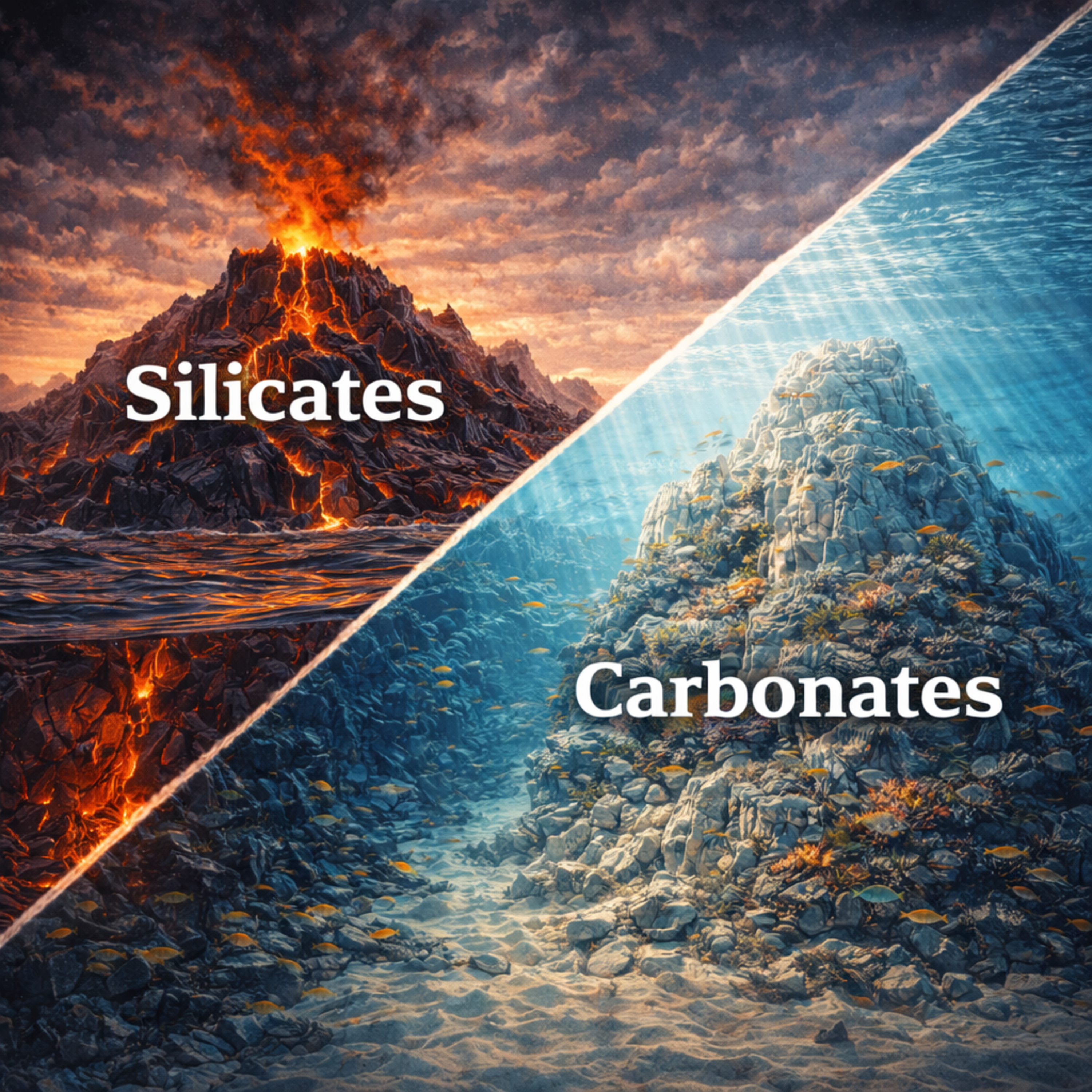
·S1 E382
382: Silicates vs. Carbonates: How the 1996 IPCC Report Created Enhanced Rock Weathering Path Dependency—w/ Dr. Tyler Kukla, CarbonPlan
Episode Transcript
Hey, thanks for listening.
This is Ross Kenyon.
I'm the host of Reversing Climate Change, the podcast you are listening to right at this very moment.
Before we get into the bulk of today's show, I'd love to tell you about our sponsor, Philip Lee.
LLPI really like doing shows about the law.
I think the law is such a fascinating part of our shared social life.
It structures so much of it.
It's badly understood by most people.
And just structuring deals within carbon removal is hard.
I'm talking grown up deals here, like when you're trying to put together an enormous package, complicated structuring, a lot of money, changing hands, The stakes are high.
You really do need a good lawyer.
I'm sorry to tell you that if you are a startup out there in carbon removal, you're going to probably pay a fair amount of money to lawyers.
There's just no way around it.
Your choice is basically, do you get a bad lawyer or a good lawyer?
One really cool thing I can say on Philip Lee LLP's behalf, Well, one, Ryan Covington and I did a very fun show about how basically no one except for an elite few really know what bankability and project finance even mean.
And he lays it out very clearly.
If you'd like to go listen to that show, it's awesome and it's LinkedIn the show notes.
And also we end up talking about Ernest Hemingway of firm not too.
So it keeps with the tradition of reversing climate change.
One also really cool thing is that they just won Environmental Finances, VCM Law Firm of the Year.
They put it three years in a row, 2023-2024 and 2025.
It's the only award for legal teams operating in the DCM, and they have offices in the US, Europe, and the UK.
You should check out Philip Lee LLP.
Thank you from the bottom of my heart for listening to this, and thank you to our sponsors.
You really make this so that it's something that in a busy life with lots of competing priorities, I'm able to keep coming back and making more, reversing climate change.
Thanks so much for what you do.
And now?
Here is the show.
Hey, thanks for listening to Reversing Climate Change.
My name is Ross Kenyon.
I'm the host of the show.
I'm a carbon removal entrepreneur, and I'm very happy to have an alumnus of the show back on.
Tyler Kukla is a research scientist at Carbon Plan, where he's working on enhanced weathering, which if you're not familiar with, is one of the main carbon removal pathways which is being commercialized and researched right now.
I'm going to explain one paradigmatic version of it.
So much of carbon removal deals with putting alkalinity in different places and configurations, but one of the main ways of using enhanced weathering that is being commercialized by companies right now is the laying down of silicate rocks on croplands.
That silicate rock captures carbon dioxide from the atmosphere, and then it washes through the hydrological cycle out to rivers, out to the ocean, and then it is stored in stable forms in the ocean.
There's another class of rocks called carbonates that can also remove carbon dioxide from the atmosphere and store it, but it's a little bit more confusing because carbonate already has carbon in the rock itself.
Some of that will likely be released in the application of it to soil.
It's currently being used for AG line purposes right now for pH management.
So there's also a question of additionality with regard to carbonates.
And for all those reasons and probably some others, but also this next reason, carbonates have not been as thoroughly investigated as silicates have for enhanced rock weathering.
And that reason is that in 1996, there was an IPCC report which made a conservative assumption about carbonate rock releasing all of the carbon that is stored in the carbonate back in the atmosphere when it's applied to croplands for pH management.
What's so interesting about this story that Tyler turned me on to is that when we don't have good information, it makes sense to have a conservative estimate.
And so the scientists working on the carbonate and AG line portion of this IPCC report, they decided to make the conservative assumption that 100% of the carbon of the carbonate will be released back into the atmosphere when applied.
That means that AG liming is likely and inherently emitted process.
And maybe it is at best carbon neutral, but certainly would not be carbon negative.
And what's interesting about this is that that is a responsible decision that was made, gosh, how long ago?
30 years ago now.
And that has led to effects that have shaped the commercial routes of carbon removal.
We have spent way more time on silicate rock for enhanced weathering than we have for carbonates, at least partially as a result of this conservative assumption, which has been challenged by science and is undergoing revision now.
And there's debates happening within certain communities within carbon removal and in the Academy.
And we'll see which way this all pans out.
And if that sounds really nerdy to you, fine, I understand.
But I think what I want you to keep your eye on here is not necessarily the state of the science of the silicate and carbonate debate for feedstocks with an enhanced weathering.
That's of course interesting and very important.
But what's more interesting to me is how one decision that probably didn't feel super relevant at the time of the 1996 IPCC report, I doubt the scientists working on this.
We're thinking that 30 years from now, this will potentially distort the carbon removal marketplace and which types of rock are eligible to be used as carbon removal and will lead people towards silicate rock rather than carbonates.
It's just funny.
It's not like there's silicate scientists and business people on the grassy Knoll or anything like that.
Like these are good reasons that this is made for.
And it's just one of those things that history, causality, contingency, entropy, and how that affects things over the course of decades are really unpredictable.
I doubt any of the people working on this had an inkling of their responsible conservative decision about how to estimate the carbon reversal of AG liming would lead us down this path.
And that's what's so interesting to me too.
It's not that anyone did anything wrong.
It's not even about weighing in on which rock is best in which cases.
It's just about how many decisions do we make now will impact our future decisions, which is especially important because so much of carbon removal right now is early days.
And there is a desire to regulate things and to have stable expectations of what is acceptable and what is not.
And we will almost certainly be making rules that our descendants will look at be like, wow, that really sent us down a wrong path.
That was incorrect.
And it was really hard to change even once we knew it was incorrect or was not the whole story.
I think that's a thing that should encourage us to try really hard to get things right now, but also to have mercy for ourselves and for the people who came before us trying to do their best, and also knowing that causality is an unpredictable thing.
Tyler and I dig into so many more details about this in particular, and some of the philosophical historical linkages here that endlessly fascinate me.
Thank you so much for listening.
If you want to open up your podcast app and give the show 5 stars may be ready to review on your podcast out, that would be great.
But also I, I think I just want to start the show today.
So I'm not going to, I'm not going to stick my hand out today.
You get a free pass, $5 a month.
You can be a paid subscriber.
Blah blah blah if you.
Want to support the show?
Go check out the show notes.
I think I'd rather just get you right into the heart of the conversation with Tyler, so here I go.
Here it is, Tyler.
You were brave and you decided to come back into the lion's den where you're going to get grilled by me about.
Silicates for having us.
Yeah, I'm so happy to have you.
I think this is one of those things that's been percolating for a long time.
I've been hearing people talk about this issue for seemingly years.
It's maybe coming into the mainstream of carbon removal more seriously now.
There's so much to talk about.
I also don't even know how to start this conversation because some parts of this are science related, but this podcast is also about the downstream effects of policy and like design decisions that impact how science and markets are built downstream from that.
Do you even agree with that framing?
Is that the correct way to understand this?
I think that makes sense to me.
I, I would think about this through kind of the lens of past dependence, which is something that we've talked about before.
And I think that through that lens, like if you want to talk about how do you get stuck doing one thing that maybe isn't the thing you want to be doing?
Like the first thing you need to do is identify that you're trying to get somewhere, right?
You have a destination or a goal that you're trying to achieve.
And it's hard to talk about the path that you're on unless you have agreement around what that goal is or where you're trying to go.
But once you do have that and you open up the conversation to to think about like, where should we be going with this, then you have to think about, well, how do we recognize that?
Like, the thing that we're doing maybe isn't the thing that we want to be doing or we are ignoring a parallel path that could be really useful.
And I think that's kind of what's happening in the world of enhanced rock weathering right now.
And that's what I think would be fun to dig into.
Yeah.
What do you think when you think about like past dependence and carbon removal?
So many things.
I'm, I'm almost flabbergasted that you asked me because so many of the things that I think about relate to, is it better to have a rule here or no?
And I think the default assumption for a lot of people is like more regularized assumptions and behaviors would be good.
But you also never get to see what are the things that you designed out ex ante because you forbid them before they had a chance to be tried out.
So whenever there are rules that are really strict, are we limiting the innovation space in ways that it might get us to a local optimum, but not the global optimum?
And the thing that's hard about it is that it was probably entirely rational for many of these path dependencies to exist when they started.
But you don't necessarily know that you're in a cul-de-sac until you're there.
And then you're like, oh, crap.
Like that was like medium term, correct, but long term it was incorrect.
Now what?
And then you talking to me about this like, wow, is enhanced weathering in one of these two?
And it's also so hard to talk about this because so many people's livelihoods depend upon it, and therefore we need to be very careful unless we are prepared to receive very annoyed emails.
Tyler, are you really putting me in this position right now?
I mean, I guess I also have that to stake as well.
So it's it.
Hopefully you're you.
Got carbon plans?
So like your e-mail is already full.
Like you're fine.
Yeah, exactly.
Don't.
Worry about it.
I think one thing that gives me hope is that like we are in the early stages of developing enhanced rock weathering in particular and open system carbon removal and carbon removal more broadly.
And it's not like the path is necessarily an emergent property as this like innumerable actors that are all playing the game and like we nobody is really driving the ship and it's just kind of going where these like forces that we have no control over are dictating it.
I think we do have a little bit more control over where we explore, where we look and what we're doing.
And we can't really exercise that control unless we're having conversations like this about where should things be going and, and how to do it.
You and I maybe don't have that control, but there are small enough number of actors in the game right now that and it's early enough on that I think that it's not too hard to solve problems of like, Oh no, maybe we're a little bit stuck somewhere that we don't want to be.
Why do you think we get stuck specifically within enhanced rock weathering?
I, well, I don't think enhanced rock weathering as a whole is stuck.
I think there's one specific piece of enhanced rock weathering that like maybe we should be looking in a parallel direction somewhere else.
And the thing that makes me think that is that anytime that I think you see a divergent between like where investment is going and what research says might be promising, anytime that divergent emerges, it's worth thinking critically about whether or not that's justified, right?
Do we want that gap to exist?
Does it make sense that it exists?
It's not inherently bad, but like it should set off alarm bells.
It should force us to think a little bit more critically.
And I think that that's what's happening in enhanced rock weathering.
And what I mean by that is that we have built the entire field around one kind of rock or one set of minerals.
And these are silicate minerals.
And we know that carbonates, which is another kind of rock or mineral set of minerals, can also do carbon removal.
And we have largely ignored carbonates.
And that's not what I think.
If you, it's not like we looked at the research, like a decades of research and said, OK, well, silicates are the only way to go or even just like the optimal way to go.
That's not it.
There isn't like a good scientific justification for building and coalescing this entire field of enhanced weathering around silicates and largely ignoring carbonates.
We know that these rocks have their own strengths and weaknesses.
It's not like it.
It's not that it doesn't matter which one you choose.
It definitely matters.
But we also know that there are examples in the literature of each one of these types of rocks winning out over the other.
And so I think there's a good case to be made that if we want enhanced rock weathering to contribute the most that it can to our our climate goals and our carbon removal capacity, we need to be exploring both carbonates and silicates.
That's not the world that we live in right now, right?
I, what we don't want to end up in is a world where, you know, we could be doing 1 unit of enhanced rock weathering for carbon removal, but we're doing half because we kind of let this entire side of the field kind of it, we, we ignored it And I, I don't have a good answer as to why we're here.
I think there's a million reasons as to why the field has built itself around silicates.
I think a lot of it has to do with one.
That's where we started.
And there are a lot of positive feedbacks that emerge around the thing that you start with.
And they are really complicated and there's no simple answer.
But I think that like the the overarching theme that emerges for me that is maybe so vague to the point that it's not not useful is that silicates offer this really easy and simple story.
And that story is the story that we tell ourselves and enhanced rock weathering.
And there are a few elements of that story that are particularly good for silicates.
But the the big picture is that there is a really nice story, and these easy early stories tend to stick for a whole bunch of reasons.
I'll tell the story, Tyler.
Well, I mean, I it's worth thinking about the narrative itself, right?
Anytime you have a really nice story and you get little quick tag lines for podcasts and news articles.
But researchers also have an easy job framing their research project.
And when the field is over here, you want to ask research questions around where the field is going already.
And attention attracts attention.
So it's really easy to to kind of build stuff around that.
The first piece of like why carbonates, I think are a tough story has to do with something that the Intergovernmental Panel on Climate Change, the IPCC wrote all the way back in 1996 when they weren't talking about carbon removal or enhanced rock weathering at all.
And it's a really.
My Tamaguchi.
Back then, I wasn't.
Even.
Yeah, I know.
And what even is it called?
Tamagotchi.
Few.
Few people were thinking about Nan stock weathering at that time.
It's, it's, it's not the IPC's fault that they weren't thinking about it.
But so the IPCC, they put out this report every 10 years or so, which is is not frequent.
And we're coming up on the next round right now.
So this is going to be coming full circle.
The report is the National Greenhouse Gas Inventory Report, guidelines for how you calculate as a country, how you calculate emissions from your country, basically.
And one of the guidelines that they have in this very long, very dense report has to do with what happens when you spread carbonate rocks on fields.
Because the kind of kicker here, and one of the things that makes carbonates and silicates different in enhanced rock weathering is that we're already spreading carbonates on agricultural fields, not just in the US, but in a bunch of places around the world.
And we're not doing that for carbon removal, even though carbonates can be used for carbon removal.
We're doing it because there are agronomic benefits, because it neutralizes acidity in the soil.
The plants like that they can release calcium and and plants need calcium.
So there are clear benefits to spreading carbonate on fields.
And IPCC says, well, we want to make sure that we're accounting for any emissions that are associated with this, not just the trucking emissions, which is dealt with elsewhere like the shipping emissions, but also like if the carbon in it, carbonates have carbon in them.
And we'll get more to this in a moment it.
Better, but it better have it in there they.
Better have carbon in them because the name, the name that says so if the carbon in that rock is released to the atmosphere, we want to make sure that we're accounting for that.
And the ITCC in 1996 in the their greenhouse gas inventory guidelines said, look, without any better information about what's going on, the safest assumption is just that all of the carbon in this rock is going into the atmosphere.
Just just go with that in 2008.
So that sparked a bunch of Geo chemistry.
Like this isn't really how it works.
Like we know that a lot of the carbon that's in the rock can be stored in the water durably along with carbon from the atmosphere, which is how carbonates do carbon dioxide removal.
They store their own carbon, but also atmosphere carbon when they dissolve.
And they, a handful of papers came out looking at what is the carbon effect of adding carbonate to fields even when we're not trying to do carbon removal.
Some papers found that you get carbon removal, which is great.
Other papers found that like if we want to update an emissions factor and we're being kind of conservative about what's happening with the balance of carbon into the system and carbon out of the system, that it's easy to with an error like land and that carbonates are emitting carbon to the atmosphere.
So one of the papers that came out updated the emissions factor for the United States to about half of the carbon gets emitted to the atmosphere rather than all of it.
And this is the one the United States has mostly used since then.
But what this also means in that paper is Weston McBride 2005.
For any mega nerds out there, what this also means is that when we started thinking about enhanced silicate weathering, we have this like really nice win win narrative that we're presented with.
Which is on the one hand, if you spread silicates on the street, on the field, you can get carbon removal and that's a win.
And on the other hand, if you stop spreading carbonate in order to spread the silicate, then you avoid all of the emissions that are associated with the carbonate that the IPCC and Weston Mcride and a handful of other papers have said exist.
The complication to that narrative is that other papers will say, no, we have good evidence that spreading carbonates on Shields is actually doing carbon removal.
It's not emitting carbon to the atmosphere.
And so it's the story isn't that simple.
But early on in the world of enhanced silicate weathering, it was easy to say, look, if we stop spreading carbonates, we avoid those emissions and that's good.
So the IPCC kind of unwittingly played a really big role in in the early narrative of enhanced silicate weathering.
And we're getting over that now.
Like, I think as a field, we understand pretty broadly that it's more complicated than that.
And the bread crumbs have been there all along, but what gets picked up early often tends to stick.
So that's the first prong of maybe one of the reasons why carbonates aren't getting the attention that silicates have been getting an enhanced weathering.
That's so fascinating.
It's one of those things that was rational at the time.
If you don't have great information and you assume the most conservative case, we would typically say that's an example of responsible behavior.
So we can just infer from that that these people are behaving responsibly and conservatively in appropriate ways.
But it also seemingly delayed carbon removal research into carbonates and favored silicates in a way that may not have taken place where this one note in a 96 IPCC report.
If that didn't exist, we might have a more balanced picture of enhanced weathering with mineral types.
Do you agree with that?
I think that's fair to say.
I think that like it, it's not like a scientifically rigorous reason why we're not doing carbonates, but the narrative is really there and it's compelling.
And it's easy to tell that story.
And there have been papers all along.
Like it's not a mystery to us that carbonates can do carbon removal, especially on human timescales like hundreds to thousands of years.
But there, there was this little tricky piece.
One thing I want to add is that the IPCC updated their methodology in 2006 to say, look, we're going to add these extra tiers so that you can choose different numbers for how much line their carbonate is emitting carbon.
If you have better information and you can get better information by better data.
And so the Weston McBride paper I talked about, that's what's used in the US, that's the better data that we use for the kind of slightly more sophisticated methodology.
And the most sophisticated, I don't know if anybody uses this, is to run like a complicated model and figure out what is the fate of the carbon in the system.
But one thing that we've gotten stuck on, and then this is a bit of an aside, but for the mega nerds out there, is that there are system boundary questions wrapped up in all of this too.
So the IPCC, when they're talking about what happens to the carbon in the carbonate, their system boundary is defined to be just around.
They were drawing a box around the rock.
That's all that they care about.
So they are not tracking what happens to the carbon in the atmosphere, at least not in the methodology that talks about how to handle spreading carbonates on fields.
So even if you did account for it, they would say that the the best you could ever do is 0 emissions.
You could never do carbon removal with this specific methodology.
You can account for the carbon removal somewhere else in their methodologies, but it's not where we're talking about spreading rocks on fields essentially.
So this wasn't, I don't think the Super well.
I think the authors that kind of tried to amend the early 96 statement by the IPCC understood this more or less, but wanted to write a fuller picture.
And so all of these papers that followed looked at the full system and looked at the carbon coming out of the atmosphere as well as the carbon in the rock.
But the IPCC itself, for the purpose of that methodology, they only care about what's in the rock.
So it's either going to be emitting or at best no emissions and never removal under that specific rule, which is a tricky piece.
It seems that way to me too.
As a non scientist I look at something like that and obviously any sort of system boundary question is contested because if you were extremely holistic, the entire planet is part of the same system and you should include all of this.
But like that makes science probably impossible.
Like you need to, you need to truncate and you need to simplify to like make models work.
Otherwise it would be the map in the territory would be the same thing.
And then what's even the point of having one?
I don't know.
This is by open system.
Carbon removal is so hard because we're doing things out in a world where we can't put our finger on the carbon that we're removing, and we need to have some understanding of what happens to the carbon that we just send into the broader earth system.
And it's very hard to draw those boundaries.
And we frankly don't have the models yet that are like really, really good that we feel very confident about that can trace those carbon flows super reliably.
They're being developed and we need more data, and the data is being developed as well.
But this is like one of the fundamental challenges with open system carbon removal.
Where do you draw the system boundaries, and then how do you simulate them and account for them and understand what's happening in places that you can't actually make the measurements in the first place?
Well look I am very smart so why would you just draw the boundary around the rock itself?
Obviously the atmospheric relationship is very important for understanding.
Like does this actually exist or not?
Because it changes the net carbon removals that can be accounted for and would change the math of seemingly everything downstream of it in a very radical way.
Teach me as a non scientist?
Like why would you choose to define it so narrowly?
I don't think that you would.
In the world of carbon removal, you wouldn't.
I don't think it makes sense.
The IPCC report in their Greenhouse Gas guy inventory guidelines, It makes sense only because they're trying to discretize the problem to make it easy to do in small chunks.
So they has the effect of spreading carbonate unfilled in one place and then the effect of interactions between the soil and the atmosphere coming somewhere else.
And so they're saying, look, don't worry, you can account for it.
But like maybe the person that's doing the inventory about spreading rocks on fields is not the same person doing the inventory about what's happening at that interface elsewhere.
It's just somewhere else in this very dense volume of all of the different ways that you might calculate your emissions.
So it does exist, but at a certain point, they just needed to discretize stuff to ideally make these chunks simple.
And that's what happened.
I don't know if it was the right call or not.
It's hard to say, but as we're thinking about what I can say is that in this next round of updates to the greenhouse gas inventories with ITC, CS, TFI or task force on, on inventories, they're thinking about adding carbon removal methods to these methodologies and asking, well, what would, what rules would we need in order to figure out like national scale removal estimates from different in different, including open system carbon removal approaches.
And in that world, if, if enhanced rock weathering is built into the, the next round, we're talking about doing it in that other box, not in the box about spreading rocks on fields, but that other box that I've been hinting at.
So it, it, it has to live somewhere.
And the conversation right now is to put it there, but it's really hard.
It's like.
Yeah, I'm trying to think of what the alternative is because even the way that I framed it makes it sound like, well, obviously you wouldn't want to discretize this and make it discreet in this like nice little box way because that's not the whole story or you're missing things that should actually be in relation to one another.
But I think if you didn't do that, I imagine there's pathologies the other directions to where because you do not discretize, you have some larger amorphous system where the causality is confused and maybe it's harder to do productive climate science in some other way.
Surely there are good reasons.
It's not just, you know, very well educated people who are passionate about this subject are corrupt or foolish in some way.
Like, is there some other corollary to this on the other side of go too far and then it's impossible to do good science or something like that?
You can go too far in the direction of of just taking on the whole system rather than discussing.
Is that the?
Alternative to making things more discreet is that you would have to have a much more holistic model, but then that would make it, you know, much more difficult to write a report or to make sure that all of the various bureaucratic levels of this report composition sign off it in the right ways.
Do we just not understand the relationship between all these discrete parts and that's why it's not written in that way?
Like why isn't the science done in that way?
The science of the IPCC or the science of enhanced rock weathering?
I, I think both of those layers are important.
I think the the IPCC is just like I've edited books and anything where you have or made documentaries, anything when you have lots of stakeholders, everyone's got opinions on how it should be and they often times will call each other names and it gets really nasty.
I imagine being the stakeholder manager of any IPCC report or any sufficiently numerous co-author situations it gives you know, makes people go bald probably.
It sounds really, really hard.
I've been there.
It's not fun.
So I imagine, like part of that is bureaucratic, political, diplomatic, and I imagine like the enhanced weathering, part of this faces its own challenges between commercial interests and doing science on a time scale that's appropriate for companies that are funding this, that are for profit.
Basically any of these approaches probably have their own pathologies that are inherent to them.
And I'm just wondering of the IPCC specifically, why do it in this way that prioritizes what can be made discrete rather than something that is maybe truer and more holistic but was not chosen?
I don't know.
I wish I had.
Miles, you're on a podcast.
Tyler, this is what we do.
I mean, I, I, I kind of think it doesn't matter too much, to be honest.
I think that like it, the IPCC decision to draw the brat boundaries where they did is one thing.
And, and it's been misunderstood, frankly.
Like the the papers that have come out that tried to correct the original statement include a different set of boundaries.
And one of them like coincidentally ignores the quote UN quote ignores the carbon dioxide in the atmosphere because they assume that all the carbon dioxide that's taken up is eventually re emitted.
So it cancels out or whatever.
So by accident, they land in the same exact boundary that the IPCC wrote, but it's completely by accident.
So it's, you know, the boundary that they drew matters for the purpose of like somebody deciding how much carbonate emits carbon in their country that year.
It I don't think it matters for the purpose of like either way, however they drew their boundary, I think they still would have landed in a world where you have to account for emissions of spreading carbonate on fields.
And they probably they were thinking about emissions at the time, not removals.
So they probably would have conservatively landed in a world where there are where carbonate is an emitting process.
And that is that's the piece that gave everyone talking about enhanced silicate weathering the ability to say, look, if we stop spreading carbonate, we'll avoid those emissions that are really pesky.
So I think that that that element is the, the, the tricky piece, the fact that they're writing in emissions inventory is kind of the the nature of why we're in this world.
Back to the the narrative question here.
I had thought you were going to go for, I don't know, like if you were in biomass sinking, you would point to the Azola event and be like, isn't that cool?
Like that's what we're doing, but smaller.
And if you're involved in silicate weathering, you would go to the Deccan traps or the Siberian Traps and be like, look, this can change the entire climate of the planet in the largest way possible.
That's so cool.
And if I was doing something with cyanobacteria, I would be making the same case the other direction.
Like, you know, like those like major, like biogeochemical things that happen.
Like, it's cool to be able to point to things that made eras and epochs like, happen.
So I thought you were going to be talking about that.
So apparently that's just for people who like geological deep history stuff.
But it's not, it's definitely not.
Yeah, it's not just for those people.
I.
Don't even know.
I, well, a couple of years ago at Carbon Plan, we put out an article that the title is does enhanced rock weathering work?
Does enhanced weathering work?
And the question that we were asking is like, look, there's still a lot of science that needs to be done.
Do we have an answer to this question of does it work or not?
And the response that we got from a few folks was we know that it works.
It obviously works because enhanced weathering is the thing that has kept our planet habitable for billions of years of time, not quote UN quote enhanced.
What I mean by that is that over the course of geologic time scales, when too many greenhouse gases build up in the atmosphere, the weathering of silicate rocks picks up and that scrubs that excess greenhouse gases out of the atmosphere.
And over the course of, you know, millions and billions of years, This is why we still have liquid water on our planet for all of this time.
We haven't boiled away the oceans.
And it's not like Venus where you can melt lead on the surface of the planet like we we live in a different world because this negative feedback exists that prevents the over accumulation of greenhouse gases in the atmosphere on very long time scales.
The thing is that that takes place on time scales of like 10s to hundreds of thousands of years.
And on those long time scales if you weather like carbonate rock for example, the carbonate that you weather ends up re precipitating or reforming in the ocean where it locks up that carbon that you weathered on land permanently.
And so on long time scales, the effect is 0 of weathering carbonate rock on carbon dioxide.
And the effect of silicate rock is not zero because silicates don't have carbon in them.
So you weather a silicate rock on a very long time scale, it forms carbonate in the ocean and that locks up the carbon in the carbonate that you form.
And that is the geologic mechanism of carbon removal that has kept our planet habitable more or less for for billions of years.
And so when you're telling this story about like does enhanced rock weathering work, it's very easy to say, obviously it works.
We're here like we have wonderful evidence that the planet has been inhabitable more or less for so long.
Exactly.
But the the tricky thing about that story is that story too makes it difficult to kind of weave in carbonates because that story is built around silicates.
It's what we call the silicate weathering sheet back.
Carbonate weathering on those long time scales cancels out to the point that it really doesn't matter for carbon removal and it does matter on short time scales.
But when we also, we often say enhanced rock weathering just takes Earth's natural thermostat and speeds it up.
That natural thermostat process is the silicate weathering feedback.
And it's easy to make that case.
It's, it's a wonderful, compelling story that like This is why our planet exists the way it does is silicate rocks.
But that story doesn't extend to carbonates.
And it's really hard to, you know, tell such a nice story around carbonates because of that.
I've never heard anybody who's a proponent of enhanced carbonate weathering frame the problem in this really nice simple way that, look, we're just speeding up Earth's natural thermostat.
But a lot of those folks talking about enhanced silicate weathering, that's like the first line of the conversation is precisely that.
So the narrative in like a bunch of subtle ways is really difficult for carbonates to to expand on.
And that's that's maybe the second pillar of why the silicate story is easy.
The first pillar is, look, the IPCC said a long time ago that carbonates emit carbon and that that is maybe true in like the very specific way in which they've drawn their box.
But it's not true in the way that it's like we care about carbon removal is like a broader process that accounts for what happens in the atmosphere.
It's easy to say, look, stopping adding carbonate will avoid those emissions.
That's the prong number one.
I guess prong number 2 is like one of the most fundamental stories of enhanced rock weathering as we're Speaking of Earth's natural thermostat, and that narrative starts to break down when you want to apply it to carbonate rocks.
Then there's a third prong we can get into, but we can stop here if we want to take a moment and dig deeper into that narratives.
Yeah, I'm in favor of a prong break.
Yeah, the the advantages and disadvantages for the various mineral types here is is super interesting.
It also faces problems for carbons because it is used for pH management and unlocking micronutrients and on agricultural lands as AG lime.
So therefore like using carbonism this way may not qualify as additional because no one's putting silicate rock on farm lands typically for.
Ross, that's the third.
Trong, That's the third.
Narrative.
Should that be in front?
Of the Yeah, well, no, no, I think those are distinct things because the, the idea that like we're speeding up Earth's natural thermostat, that exists regardless of how you decide to do the carbon removal.
But the, the question of like whether or not that carbon removal is additional in that that question is a challenge in the context of the carbon market, which is the way that we're trying to do the carbon removal right now for enhanced rock weathering.
And so I think that the last piece of like why?
And then again, there are many more, there are others are going on.
These are the three things that float to the surface for me.
But the last piece for bicarbonates are difficult to support narratively is that we're already doing it.
We're already spreading rock, carbonate rocks on fields for agronomic purposes.
When we're talking about enhanced rock weathering, terrestrial enhanced rock weathering, we're usually talking about spreading it on agricultural fields.
So is it any different?
Is it, are you doing something that wouldn't have happened already if you're spreading carbonate rock?
The answer is, like, mostly probably, yeah, because we're not spreading at carbonate rock everywhere.
It's a common enough practice, but it's not universal.
So you can find places where it would be new.
But we've talked to a number of buyers and other folks who want to support enhanced rock weathering who say, well, I'm just worried that it's hard to sell the story that what you're doing is additional because we know that we're already spreading carbonate rock.
It's a little bit of like, like showing up to a job interview and they're like, oh, I'm sorry, you have a lot of experience in this jobs like we can't, we can't hire you.
But this is one of the other pieces like why it's hard, I think, narratively to support carbonates.
To be clear, like the same problems apply to silicates.
If you like, mathematically, if you want to spread silicate rocks on a field that has been limed or where carbonate has been used historically, you need to make sure that the silicate rock is doing something additional relative to what the carbonate that you've historically applied would have done.
But narratively, it's easier to say that this wouldn't have happened because so few people are spreading silicate rocks on their fields as it is, but more are spreading carbonates.
My understanding of the possibility for carbonates to become additional is that since they are used primarily or mostly primarily for pH management, but that too much acidity or the wrong types of acidity caused the carbon to be more emitted than it would otherwise be.
That's my understanding of the the chemical feedback here.
In which case the field that you would be using for agronomic benefits are potentially different from the ones that you would be using for the carbon removal benefits.
Is that true?
Is my understanding correct?
When you say the field you would be using for agronomic benefits, I I think maybe one way to think about it is like the way that you optimize how you're spreading rock is going to look different for agronomic benefits than it would for carbon removal benefits potentially in many cases.
What we know is that, like, in many cases, we're spreading carbonate on fields already in a way that is removing carbon from the atmosphere.
And we're doing that accidentally.
Like we're not trying to remove carbon from the atmosphere.
But that raises exciting questions about like, wow, what could we do if we were actually trying to remove the carbon from the atmosphere?
But you're bringing me to like, I think it's worthwhile taking a break here to say what are the differences between silicates and carbonates?
I mentioned upfront that like, they're not like interchangeable necessarily.
They have their own strengths and weaknesses.
And there are important differences.
And the two things that I think are the most important to focus on are how fast they weather and whether they have carbon in them or not.
So carbonates, they tend to weather really, really fast, often an order or two orders of magnitude faster than a lot of silicate minerals do.
So they much, much faster.
But they have carbon in them, which means that that that limits how how effective and efficient they are at removing carbon from the atmosphere because that has to compete with the carbon that's already in the rock when that rock dissolves.
Silicates on the other hand, pure silicate minerals don't have carbon in them and so they tend to be more efficient at removing carbon from the atmosphere, but they dissolve more slowly.
So often it it matters a lot more like how finely you grind your silicate rock in order to increase how quickly that rock is going to dissolve or weather.
Then it matters for carbonates.
But you have this trade off where carbonates go really quick but they have this carbon in them.
Silicates tend to go more slowly, but they don't have carbon in them.
And the issue with carbonates having carbon in them is that if you're in a really acidic field, it's very likely that you're not going to be able to get your carbon removal.
And instead you might just admit that carbon that was in the rock into the atmosphere.
Now, there are questions about like, you know, depending on where you draw your boundary, that could be really bad for the climate or just a little bit bad or maybe not that bad at all.
Maybe it's net zero, depending on how do you draw the system boundary, which is really complicated and we don't need to get into, but it it it is one of the concerns around like the narrative of carbonates.
It's like, look, there's a potential that carbonates are emitting carbon to the atmosphere and that creates this risk.
I think in my mind, like that same potential sort exists for silicates.
If you expand the system to have very long it wide enough, like we're always trucking rock and crushing rock and radiant to the field.
And though that requires emissions, you could all that like you need to outweigh those emissions when you spread rock on your field.
So just because you can have emissions with carbonate that is like downstream as what happens with transporting the rock, doesn't mean that like you can ignore the problem of emissions in a silicate deployment.
I don't know if that made sense.
I answered my previous question to were yeah, field sufficiently acidic or with certain kinds of acidity?
It might just negate the carbon removal potential of carbonates because it doesn't play nice in the kinds of ways that we need for.
There's like perfect 1 to 1 overlap, which may help the additionality story, but it's one of those things where it's like the details matter, which is a hard thing to explain to buyers.
You typically want to be talking about.
We're enhancing the natural cycles of the earth.
There's no fancy footwork here.
We're just purely natural, and natural is always good.
Don't you know, like a thumbs up?
This is also why silicate weathering tends to take place in the tropics where there's more rainfall so that you can, you can get around some of the issues of the slower weathering rate because you have things that are, they'd be there increase the surface area so much or they just have more interaction with water and things like that.
And that's why people who are interested in carbonates are more tolerant of temperate zones.
And it's, it's a latitudinal almost more than anything else.
I want to think about who's involved in and the people I have in mind.
Depends on where they're doing business, basically.
It does.
I think one thing we over index on a little bit is the idea that carbonates don't work in acidic soils.
And it's true that like in really acidic soils, spreading carbonate probably emits carbon to the atmosphere and we don't want to do that.
But the fact of adding rock to soil changes the pH conditions of that soil itself.
So over time, you could totally add the rock amendments that makes the soil amenable to continued carbonate carbon removal, even if today that soil is really acidic.
And so it, it where we are now doesn't necessarily we don't have to draw firm boundaries around where it works and where it doesn't.
And carbonates more so than silicates, at least in the models that I've been running are much more responsive to increases in rainfall or water infiltration in the soil.
So one of the tricky things for the the real, again, like the mega nerds out there is that in the models that we've been running, this hasn't really been super well validated in shield studies yet.
In the models even running carbonate has a little bit of an upper limit.
So you can only add so much rock before it saturates and you don't get more carbon removal for more rock.
And you can overcome that upper limit by dumping more water on it.
It's very, it really likes having more water.
Carbonates do.
And so if you have a, a soil that's not too acidic and it's it's well watered, carbonates are going to be very happy there.
Silicates don't seem to have that same like saturation limit, at least in the models that we've been running.
So you can add more and more rock and you tend to get more and more carbon removal.
The question though, is like, how much rock can you actually spread on a field?
And does that additional rock?
Like is that an amount that's reasonable for what farmers are going to be comfortable adding on their field?
Or, you know, one of the big questions is how many times can you drive a spreader over a field before you've compacted the soil too much that you're not happy with the outcome?
So there, there are limits and how much Rock You can spread already that are built into the system.
But carbonates also have this limit where they tend to saturate quicker.
And so there there's all of these questions around like which rock is better?
There's no simple answer to that, but it seems that they they sit different niches.
OK.
So we've heard the the silicon story that has been sort of the canonical position for a long time.
We've heard some of the changes that come from carbonate research and maybe how that can play a role here or can also be a part of carbon removal in ways that previously it was not.
Make the case back if you're working in silicates or thinking about silicates, for why silicates are still the way to go and carbonates are not nearly as rosy as you paint a picture of Tyler.
You actually aren't.
You've actually disabused me of several assumptions that I've made during this conversation.
But try and set the record clear for why silicates still.
Yeah.
So I think to be really clear, carbonates aren't like inherently better and silicates aren't also inherently better like these are.
There really are just different strengths and weaknesses here.
And one of the issues is we don't know it as much about carbonates because the research has coalesced around silicates.
The papers that look at carbonates tell us that it could, they could be really promising.
But one thing that is nice about silicates is that you don't have to worry about emitting fossil carbon to the atmosphere.
A tricky bit of that is you need to really know what your rock is because you can have carbonate that is cementing inside of a silicate rock.
And if you don't know that it's there, I know it really shouldn't.
But if you don't know that it's there, you might you might think that it's delicate weathering when it's actually carbonate weathering and that that's a big issue that we need to deal with and.
Like in the various mineral compositions of the the queries that people are are drawing from, is that a common thing or is that just like in Wyoming in one particular place?
I think it's relatively common.
It's definitely not unheard of.
And one of the things is it's often in a small enough amount that it might be hard to detect with like course resolution, mineralogical analysis.
But it, it is when you have carbonate in your rock, it's the first thing that's going to dissolve.
And so you, if you're measuring a really rapid pulse of weathering, you might be, it might be worthwhile just double checking that you don't have carbonate in your rock.
Because if you think that it's carbonate rather than, or you think that it's silicate rather than carbonate or use the use the wrong assumptions about the efficiency of carbon removal.
Essentially, because as we said, carbonate has carbon in it and silicates don't.
But the silicates have, you know, they, they don't have carbon in them, which is really nice.
You can, when you grind them up really finely, they do weather faster.
And much the same way that like if you crush your ice before you put it in a drink, it's going to dissolve faster.
It's by like when you go to a fancy cocktail bar, they give you a really big ice cube so that weather dissolves very slowly.
It's the same kind of principle.
And we know a lot more about silicates now because we've been doing it for, so we've been researching it for a while.
I think there are still a lot of open questions around silicates, but we know more there.
One additional thing that I think if enhanced weathering folks are listening to this, they might be screaming at the like, oh, they're definitely.
Doing that.
Right now, yeah, they might be screaming at their at their phones or laptops or whatever saying like no ion exchange, Matt, you're not talking about ion exchange processes, which is another issue that is really in the weeds.
But the key take away is that when you start doing enhanced rock weathering at a place that you haven't been amending with rock in the past or amending very minimally, one of the first things that happens is that when the rock dissolves the stuff, the cations, which is the thing that removes the carbon from the atmosphere by charge balance, those cations knock off acidity from the absorb to the soil.
And that acidity limits how much carbon is removed from the atmosphere because you, you neutralize that acidity, which is not carbon dependent first.
And then later you do the carbon removal.
And when you're adding silicate rocks, neutralizing that acidity means that you just don't do carbon removal that much.
You you kind of hit zero.
But when you're doing it with carbonate rocks and neutralizing that initial acidity means that you're emitting carbon to the atmosphere.
So that is also narratively a really difficult story to tell.
However, like what what we need to keep in mind is that it takes emissions to transport rocks to your field.
So if you're hitting zero carbon removal with a silicate rock, you're net emitting.
The process as a whole is net emitting because you have to use emissions to grind the rock up and to transport it to your field.
And the question becomes, is it more net emitting than your carbonate rock counterparts?
And will that lag before you kind of neutralize all that acidity be shorter or longer than if you were using carbonates?
So the ion exchange component, it looks really good for silicates.
It also because you're not emitting carbon when you're neutralizing that initial pool of acidity, but also you're still emitting carbon through your upstream processes.
And we haven't had done, I don't think any analysis yet has factored that in.
We're looking at that right now.
I don't it's too early to have like clear answers.
And the answers are going to be really dependent on how you run the model like because we there's a lot of tunable parameters here.
So there's no universal answer to this question.
One thing that I've heard is that, well, I also just know it from touching things like basalt versus limestone, where limestone is just so much softer and basaltic rock and silicates are harder and like the amount of grinding and energy to grind is much greater for silicates.
Is that broadly true?
That is true.
All of our estimates of how much energy it takes tells us silicates are harder to grind up, but also like the grinding emissions are thought to be relatively like a smaller component of all of the upstream emissions.
So in my models and in the simulations I've been running, like the big thing that matters is how are you transporting the rock?
Are you using a truck, a barge?
And how far are you moving it?
And the grinding emissions are, you know, a smaller fraction of that.
So it's not, it's not a make or break.
What is kind of more of a make or break is that in my simulations at least, and a few others that I've seen, in order to achieve the same carbon removal, you need more silicate rock because it weathers more slowly.
So any given year, if you want to do X amount of carbon removal, you probably need more silicates than you do carbonates.
And that means you're transporting more rock and you're grinding more rock to make all of that work, which carries with it that emissions burden.
So you're kind of you have to chase that emissions burden as you add more and more rock essentially to make those things kind of balance out.
Tyler, I have friends who are on both sides of this one where some people I know are extreme partisans of the carbonate insurgency.
I guess you could say I probably shouldn't characterize it that way.
I'm, you know, friends with many people who are doing business in silicates and to me it doesn't necessarily seem like this has to be business make or break.
I can imagine that they're like one of the the business models.
I think is is so clever in carbon removal is Charm's ability to do bio oil and biochar depending on the feedstock and the relative values of those products and being able to split the difference.
How I think it's like such a smart idea.
Is there not an opportunity for enhanced weathering project developers to say like in this geography with we have a quarry over here for great carbonate rock in the field that we're going to put it on as a great fit for it?
Like does it have to be so contested a ground?
I feel like in different circumstances, different types of rocks can make the LCA and system boundaries work in ways that still be commercially viable.
I don't know that project developers in enhanced weathering have to be silicate or carbonate exclusive.
They could probably be good at both of these things.
Or maybe you just need too many geochemists on staff to figure out the rock types.
By the way, does that how it works with like you get some geochemists here, like I only do carbonate, I only do silicate stuff?
Or could there not be productive overlap here?
There's a lot of productive overlap.
There's no reason, yeah, no reason that you need to do just one.
I think that the reason that there's tension right now is precisely the fact that there is this divergent between where investment is going and where the evidence is that like, hey, look, carbonates could do really well, especially in certain environments.
And so it feels like there has to be tension because you're fighting for silicate money, money that's going to silicate deployments when we could just be in, you know, putting in research and development money into both.
I think like the thing that brings them together.
Also, companies are thinking about maybe I do both.
Maybe I do one rock type for my early stage, or I'm trying to neutralize that initial pool of acidity and then I transition to a nut.
Like there are ways to optimize here that we're just starting to scratch the surface of, but it's not super common to be in a place where you have access to both types of rock that you can ship to your field.
It's just too disparate and too.
Formal, exactly.
Yeah, Yeah.
So it's not, that's not super not often in like direct local competition.
But I think one of the challenges is that like regardless of where you go, whether silicates or carbonates it, what appears to be the case.
What we're learning right now is that the way that we've built out the market so far, we're going to be restricting some potentially good projects from happening, whether that's because you are in like a really noisy quote UN quote noisy field.
So it's hard to detect the carbon removal signal with measurements, whether that's because maybe you're using a rock feedstock that doesn't have the right tracer elements in it that you need to do the type of measurement that you want to do, even if that rock weather is really shast and can do really good, but it's just hard to do the measurement that way.
Or maybe, you know, you're in like a region that historically farmers have been spreading carbonate and so it's hard to demonstrate that what you're doing is new above what would have happened already.
There's a whole bunch of reasons why the way that we're doing things are potentially limiting really good projects.
And that is creating this like push toward thinking about, OK, what are other ways we can support enhanced rock weather.
And, and there's increasingly a push toward thinking about policy mechanisms like subsidies and pay for practice models that are really exciting because they could let you sidestep some of the constraints of the market and and potentially support projects that just aren't viable in the market to help enhance weathering reach that broader potential.
But I think like a really tricky thing with that, that in something that we have to think about with any path dependence question is that if you are on a path, you have the destination, a goal, a place you want to go.
In theory, adding policy mechanisms will expand how much types of enhanced weathering we can do.
But in practice, at a certain point, like if you have a subsidy for spreading rocks on fields everywhere at every country, that raises questions about how much of the carbon removal that you're doing in the market is actually additional relative to what would have happened without the market practice.
So what we're doing right now is we're seeing this push for more policy mechanisms.
But at a certain point, if that's very successful, you can imagine a class between how we do, whether we do enhanced lettering in one way or in another way.
And there's no, I don't think there's a simple answer to that either.
But whether you're working with silicates or carbonates, what we're seeing is that the market, the way the market has developed so far, it's likely that potentially good projects are going to be left on the table from that decision alone.
And it's hard to open the door to other things at scale, I think.
But I think we used to be very clear, I think that we would be a mistake not to be exploring policy mechanisms.
I just don't think that they're a silver bullet for the problems that we're seeing right now in the market.
Yeah, they're all good points.
I love questions like this that touch upon the political economy of decision making where like you can see this and how much permanence is necessary to qualify as durable carbon removal.
And if you happen to work at a dot company, you probably think it's longer than someone who works at a biochar company.
And you might not even know that part of the reason why you think that is because you know that you will harm your rivals and help your potential allies or your own business by thinking this.
I think that's what makes this really difficult here too, is, you know, that once companies have money coming in, that is a downstream of important design decisions, like for registry says that oh, this process is actually at best net zero and is not carbon removal.
That has an enormous impact.
And once you lock that in as oh, this is actually carbon removal, given how we've developed the system boundary changing that becomes politically very difficult.
That registry might lose business, they might get sued.
The project developers are often backed by powerful venture capitalists who have connections and, you know, wealth beyond many.
And these decisions are no longer purely about the science or something else.
It's all about political economy.
And whose feathers can you effectively rustle and get away with it, even on the name of science?
Gosh, I'm like, stressing myself even talking about this, Tyler.
But yeah, how are we supposed to make good decisions given that those pressures exist for us?
I think that like what where you're getting, where you're bringing my brain to is that like this is not a problem that's ever going to go away in carbon removal.
How could it in enhanced weathering?
Like I think what and across the board, what we probably need is flexibility and foresight, right?
You need the flexibility to build rules in such a way that don't make everything like that, that don't rule out a bunch of viable projects and need the foresight to start investing in stuff before there's even like a clear space or place for it in the market more broadly, or any kind of clear policy or broader support for that activity.
And that's because like, as you mentioned, there's a bunch of things that just don't work now.
But we're not building carbon removal for like right now necessarily.
We're building carbon removal for a decarbonized world.
If you want carbon removal to, to balance hard to abate emissions and to, to neutralize legacy emissions, those are things that at least I think it's going to be very hard to accomplish that without mostly decarbonizing already.
So if we're building out carbon removal infrastructure to be at scale in a decarbonized world, I mean, we have path dependence problems built in because right now one of the biggest constraints on what carbon removal works and what carbon removal doesn't are the emissions of the non decarbonized sectors, right?
So we're going to have to keep having this conversation over and over again.
And the evolution of carbon removal over time is going to follow this like really used to queue in this path that just tracks whatever decarbonization is doing that might unlock new types of things that don't make any sense right now.
And I think it's really hard to build things in a way that makes it super easy for those things to reach their potential quickly as decarbonization progresses, as new things become possible.
Like, I don't know what the right answer is, but it's hard to build in flexibility early on because it requires a lot of resources to build something that is flexible.
You need to talk to a lot of experts.
You need to do a lot of research.
It's very easy to write rules and build infrastructure in a very defined way.
And I just don't know how to balance like the need to, to build something at all with the need to build something that that we know needs to be flexible because this problem isn't going away.
And it's not limited to enhance weathering.
In some cases.
I think there's like a story element to it.
Like like, you know, if you're learning physics, you don't, you don't start with like tensor calculus and relativity, right?
You start with like spherical cows and frictionless planes.
And that's kind of what's happening in enhanced rock weathering right now.
We have a really nice story around silicates and silicates I think are a simpler story to tell.
But at a certain point you need to have room to like build the narrative out and learn more and move on and expand our definition of enhanced rock weathering.
And that narrative piece feels like kind of the first thing that needs to be solved in order to build in flexibility into how these different pathways evolve.
Like you need to be able to tell a good story about why we want to go a different direction.
And it's hard to tell those stories.
For sure it is, and if you're able to do it, it's a lot of power one can wield by being an effective storyteller in this way.
Totally.
Oh.
Tyler, thanks for teaching me science all the time.
Like whenever we hang out, I just buttonhole you.
I'm like, all right, what about this getting free, free explanations of scientific papers?
I appreciate you.
Oh, I feel like it goes both ways.
I always appreciate when you're like, oh, well, this philosopher says this one specific thing that's relevant to the way that we're progressing and carbon removal in this way.
I my reading list has gotten so much longer through conversations with you and I do appreciate that.
Complimentary skills, I think.
Yeah, it's my pleasure.
Thanks for coming back on.
We should definitely do some more of this.
Links to everything are in the show notes if you're listening, and we reference a bunch of different papers.
Tyler sent me papers that help prep for this show that I'll put links to in the show notes if you want more detail on this.
Thanks again for being on Tyler.
Thank you Ross, it was a lot of fun.