·S1 E374
374: Mining with Microbes: Biomimicry in Copper Extraction—w/ Liz Dennett, PhD, CEO & Founder of Endolith
Episode Transcript
Hey, thanks for listening.
This is Ross Kenyon.
I'm the host of Reversing Climate Change, the podcast you are listening to right at this very moment.
Before we get into the bulk of today's show, I'd love to tell you about our sponsors, Absolute Climate and Philip Lee LLP.
I've made great radio with both of them.
They should be familiar to you if you listen to this show, but I want to tell you about why you should learn a little bit more.
The first sponsor is Absolute Climate.
I did a show with their founder Peter Miner few months back and a lot of people love that show.
I was asking a question of can registries design their own methodologies for carbon markets without it being a conflict of interest?
An absolute climate's thesis is no, they shouldn't be in the business of doing that.
We actually need to disintegrate functionality within carbon markets even further.
They are literally the only independent standards body for carbon removal that exists.
Their name is very well chosen.
I think they are some of the most aggressively idealistic people within carbon removal.
It's come up on reversing climate change so many times about how and why there's tension between commercial teams and science teams within carbon markets.
There's some fundamental tension between the rules of running a business, or I should say the rules of running a profitable business is maybe a better way to put that and climate impact.
And I think Absolute is one of those companies that, at least from my experience of what I know of them over there, I think they're going to be some of the staunchest holdouts just trying to make sure that there can be a justified true belief that a ton purchase is a ton truly removed.
They're betting big on not compromising.
It's a bold strategy.
I respect the absolute hell out of that.
Absolute is very much doing things their own way, and they stand out to me and I will never mistake them in a lineup.
Go check them out.
I really am endlessly fascinated by what they're doing.
And that's also true of our other sponsor, Philip Lee LLP.
In fact, I told him to pitch me on some weirder legal shows.
I really like doing shows about the law.
I think the law is such a fascinating part of our shared social life.
It structures so much of it.
It's badly understood by most people.
Just structuring deals within carbon removal is hard.
I'm talking grown up deals here, like when you're trying to put together an enormous package, complicated structuring, a lot of money, changing hands, The stakes are high.
You really do need a good lawyer.
I'm sorry to tell you that if you are a startup out there in carbon removal, you're going to probably pay a fair amount of money to lawyers.
There's just no way around it.
Your choice is basically do you get a bad lawyer or a good lawyer.
One really cool thing I can say on Philip Lee LL PS behalf.
Well, one Ryan Covington and I did a very fun show about how basically no one except for an elite few really know what bankability and project finance even mean.
And he lays it out very clearly.
If you'd like to go listen to that show, it's awesome and it's LinkedIn the show notes.
And also we end up talking about Ernest Hemingway for him not to.
So it keeps with the tradition of reversing climate change.
One also really cool thing is that they just won Environmental Finances VCM Law Firm of the Year.
They put it three years in a row, 2023-2024 and 2025.
It's the only award for legal teams operating in the VCM, and they have offices in the US, Europe and the UK.
You should check out Philip Lee LLP.
Thank you from the bottom of my heart for listening to this and thank you to our sponsors.
You really make this so that it's something that in a busy life with lots of competing priorities, I'm able to keep coming back and making more.
Reversing Climate Change.
Thanks so much for what you do.
And now here is the show.
Hello, and welcome to the Reversing Climate Change podcast.
I'm Ross Kenyon, I'm the host of Reversing Climate Change, and I've been working in climate tech and carbon removal for the better part of the last decade.
Today's show is cool.
It's about bio mimicry, it's about mining, it's about processing ore.
I'm going to tell you all about it, But first, if I can make a quick ask of you, if you love this show, open up your podcast app right now.
Give it a great rating or review or both.
It really helps a lot.
Also, for $5 a month, you can become a paid subscriber.
You get bonus content.
It gets rid of all the ads except for the ones that I read at the beginning of the show myself, and you get to be a power supporter of the show.
Today's show is with Doctor Liz Dennett.
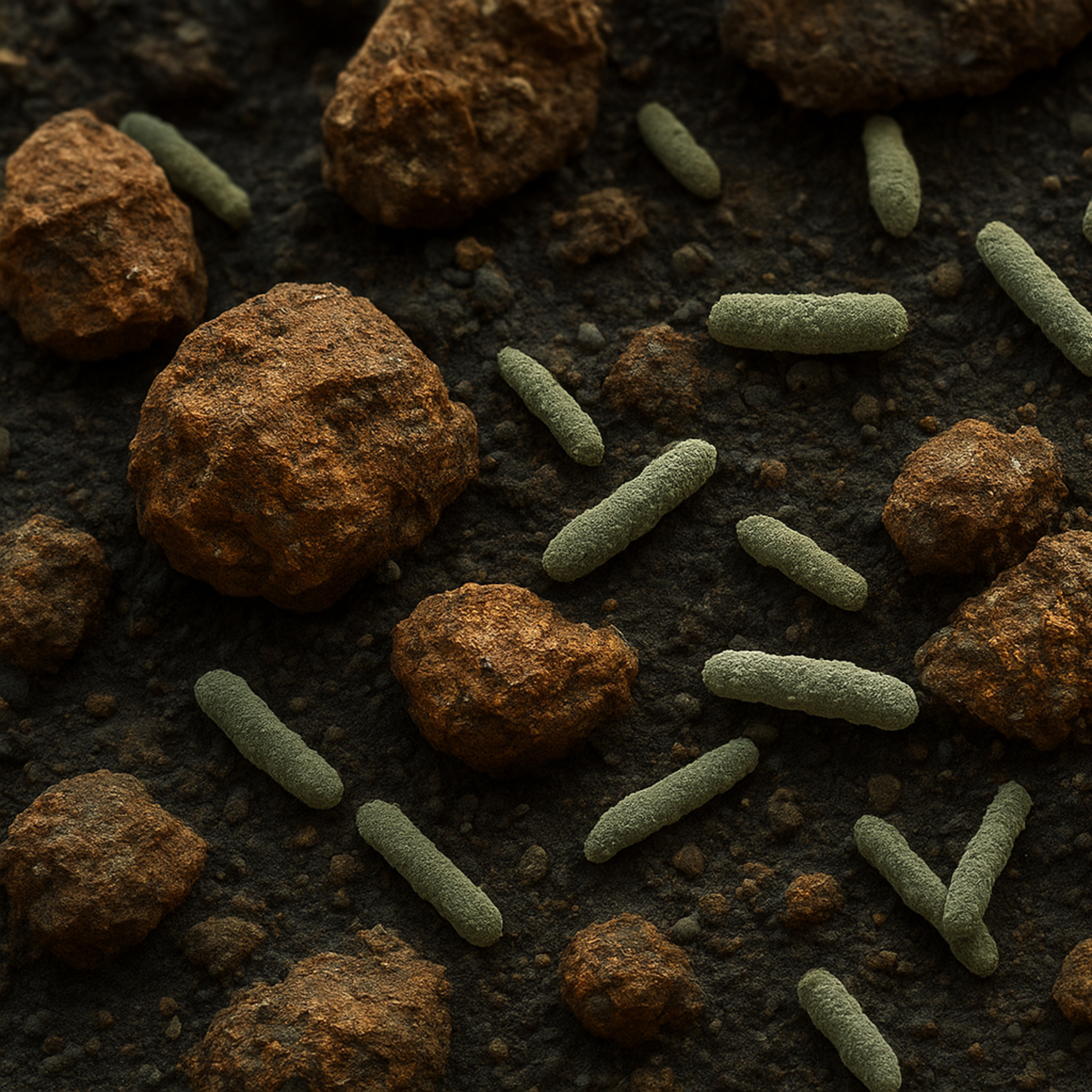
Liz is the CEO and founder of Endalith, which is a company that is using microbes to better extract copper from ore.
Much of the copper inside of the ore is wasted.
It's just not worth the effort of pulling it out of the ore.
But with endless system, they can use microbes to make much of that copper much more available.
And we need enormous amounts of copper.
Liz and I talk about this in the show.
Almost no matter what else happens, we're going to need more copper, especially as we begin to electrify so much about our world.
One cool thing about Endolith is that literally today they're announcing that they just raised $13.5 million in a Series A.
At least from the press release I'm reading that there is potentially an oversubscription at hand, and there may even be more funds coming in a second tranche.
I love plays like this.
I love when you're able to use biology to enhance a process and that's what's happening here.
Liz is a multidisciplinary person, has had a fascinating career.
We start off by talking about how did life originate at all, some of the basic biochemistry of the world.
That's a cool show.
We also explore what it's like trying to transform an extractive industry and which levers the pole.
At which point should you be trying to change the entire mining industry?
Can you change a plug and play process that makes it much better without trying to change any of the fundamentals?
How does one begin to transform an industry as old as civilization itself?
Great questions.
I hope you enjoy.
Here's the show with Liz Dennett.
Liz, thank you for being here.
It's.
Truly my pleasure.
I'm very excited to be here.
I'm so happy to have you.
God, you have so many board games behind you.
I don't think I've ever interviewed someone with with the background first time.
Which is funny because you have so many books behind you.
And then you said it wasn't even a real background.
I'm saying.
Riverside is lying to you.
We will get you a copy of this and you 2 can have the same background.
Although I can touch these, these are actually real board games.
People are gonna be like, are you weirdly obsessed with Liz Dennett?
Like, why do you have her background?
And people are gonna make this connection.
I'm gonna look like strange.
If they do, it'll be amazing.
Are you kidding?
I'll be like Dad, you're president of my fan clubs.
Oh, which we if you're less podcast and want to be part of my fan club.
Wow, that's the egotistical thing I've ever said.
And I am a micro influencer on LinkedIn, so I yeah, I always like more than just my mom following me on LinkedIn.
I have, I don't know, probably 15,000 people that follow along for my stream of consciousness musings that are not written by AI.
That's.
That's the fair amount.
I feel like there's LinkedIn influencers who are obviously bigger than that, but probably for the specialized field in which you traffic, that's probably like very impressive.
It is, actually.
It's pretty.
It's pretty novel, given that most of my postings are like, I have strong thoughts about this niche topic about copper markets or about microbes or about whatever the daily topic is.
I.
Love that about people though.
I think basically everything is interesting and if you can get passionate about it.
I always loved the Martin Luther King junior line where you said if you sweep floors, you sweep that floor like Michelangelo painted ceilings and if you love bio mimicry for mining and and mineral extraction, then you paint that ceiling that that's you.
These are these are the friends that I run with.
I have a really cool group of friends out here in Denver and I've had some incredible friends my whole life.
And we have the nerdiest convert.
I mean, I don't think they're nerdy.
I think they're fascinating, but they go down into the weeds very, very quickly.
I like those people too.
I mean, some of them can be can wear my patients.
It depends on how good of a listener they are.
They're the pair of the the combination of the things are they're just exhausting but.
You need the IQ and the EQ, both of them at the same time.
I know.
I think the longer in life I I hang in there, the more I'm like, balance is key.
One of those dominates over the other life outcomes decrease in some way.
You've clearly discovered something as well parallel to that.
My my friends here and the people that I spend time with have much higher motional intelligence that I do and I'm constantly learning from them and being like, hey, how would I navigate this situation?
There was 1 executive coach I once had that pretty much said, you know, you are the 10 people you spend the most time with.
And that's resonated a lot because I don't want the 10 people I spend the most time with to be the random Jim Bros at the 24 Hour Fitness down the street that don't know my name.
I want them to be people that can actually challenge me and push back on how I'm thinking about the world and navigating it at large.
It's.
A good policy.
I think that's that's pretty wise, Liz.
When I look at companies like yours, I have a hard time.
Let me put it this way.
If it turned out that there was a hidden camera and this was all made-up and I just did a podcast with something that doesn't actually make sense, I wouldn't be surprised.
I'm like, how could how could microbes possibly enhance mineral extraction?
I just it seems sounds made-up I think.
Without so many of the pita bee sauces that I hear or like so many of the probably some.
Of.
Them are made-up that come out.
I'm like, wow, you're one person.
You're valued at like hundreds of millions of dollars.
This is crazy.
So quick.
Quick little expose about microbes.
Microbes have been around for billions of years.
They're the oldest form of life on earth.
If your body was a timeline.
The earth is 4.6 billion years old.
If you were to condense that into the height of humans, microbes would evolved around your knees and single celled organisms would be around until your chin.
So the vast majority of time on earth is just in microbes.
They live pretty much everywhere on earth.
Dinosaurs came in here around your nose.
Eyebrows died out right before your head.
All of humanity is a single hair on the top of your head.
So humans are a little blip in terms of geologic time, but microbes are the O GS.
They have been doing so much stuff they are able to oxidize and reduce all redox sensitive elements out there.
My PhD was in astrobiology where I worked for NASA.
Looking at how they could oxidize and reduce iron and sulfur phases on early earth is a proxy for life on Mars.
What did you do head around that?
Using them and harnessing them to get more copper out of low grade ores is is not actually that crazy.
OK, I have to ask you, are you friends with David Grinspoon?
Are you guys pals?
We went way back.
We first met at this Fame Lab competition in 2010, 2011.
Nice.
He's been on the podcast a couple of times.
I'm one of the like top percentile of Earth and human hands fanboys out there.
I think he's just a yeah, the view from space, planetary science.
It's kind of represented in this space.
I don't know why it, it calms me.
It encourages me.
It doesn't it, it helps me.
I don't know why people don't lean on it more.
One of my life goals was completed at New York Climate Week about two weeks ago when I got to meet Bill Nye in person.
How was that?
I knew that I was going to meet him all day, and so I had the full day to prep and mentally, like rehearse what I was going to say.
I was so ready to play it cool.
And there's a series of pictures in a video of him being interviewed and me going up there and just being like, I'm sure.
You get that a lot.
Yeah, but normally not for like almost 40 year old CEOs that have also done a fair number of things and her PhDs in their own right.
And I was just like.
Well, he's sort of in the millennial pantheon, I think.
Everyone.
Really is and like they always say, never meet your heroes and that that is a lie.
It was one of the best moments my entire.
Life.
Wow, do you?
I get, I get kind of spiritual, kind of just just wowed and and my mind gets blown by just thinking about how eukaryotes came around.
Like does that, does that do something to you when you look at that too?
Yeah, yeah.
And like, here's the reason that I grew up in this little tiny town in Alaska, middle of nowhere.
My undergrad was in geology, which is actually really funny because I was back up in Alaska last week working with the same geology professor, Doctor Leanne Monk, that I first started with 20 plus years ago.
So, so many of these are full circle moments, but I fun story.
Once Upon a time in college, I was an RA in the dorms and I picked up some extra shifts during college to make money.
And I was a big fan of science fiction.
So I read like every Michael Crichton book that was out there.
I read the Andronomist train, I read Jurassic Park.
And then I was like, I don't really know much about DNA in general.
I just take a biology class and that led me into taking chemistry classes, which eventually led me into this this astrobiology field when I was like, this is the coolest thing I've ever done.
And there are still frequently not just the development of eukaryotes, which if listeners are not keen on the ways of eukaryotes, they're actually thought that one prokaryote gobbled up another one and that became the mitochondria.
But so much, so many of these pieces of life and how crazy life is just still give me goosebumps thinking about them.
A few of them.
Us as humans, We are star stuff.
We are carbon, hydrogen, oxygen, nitrogen.
The planet is a rocky body mass, is oxygen, silica, aluminum, iron.
We are not of this planet, we are of the stars.
If you look at the elements made by Big Bang nucleosynthesis, they are the carbon, the oxygen, the nitrogen.
They are what we are made of.
So we are much more like these stars than of the planets.
Also every life Organism on
Earth had to evolve from 1Earth had to evolve from 1:00 universal common ancestor.
And about 3 point something billion years ago the earth had this thing called the late heavy bombardment which meant that the surface of it was was bombarded pretty much liquid.
Lots of liquid magma and microbial life survived through that.
And if you look at the traits that all life has in common or the if you look at phylogenetic trees, the things that are deeply rooted are thermophilic organisms that can oxidize and reduce iron.
And it's thought because those are the only thing that survived that late heavy bombardment.
That's why I went on to study them.
And that's why we think they could have evolved on Mars.
Another one is that Mars was more Earth like.
Before Earth was Earth like.
Mars had running water, it had rivers, it had the atmosphere, it had everything that we think of as early Earth.
Earth, late heavy bombardment.
We were getting the crap beat out of us.
Whereas Mars was beautiful.
And so there's a whole thought called Lithopan spermia that life evolved on Mars and came over to Earth, which actually isn't that crazy because if you look at things like lustrids and planetary bodies, they have the building blocks of life.
They have amino acids, they have DNA and nucleotides on that.
They're not uncommon in the universe, but creating them into self replicating molecules is very uncommon.
Or at least that's what we think given the Hermi paradox and some of the other paradoxes is the uncommon block.
I mean in just case the can though abiogenesis trips me out as well just as much.
And how could you get amino acids and heat whatever and somehow it becomes self replicating?
How could how?
Just what's like the best theory for why that even happened?
Is Shakespeare what's just saying about the monkeys and Shakespeare's No.
I think it's more that entropy always wins and self regulating molecules typically, and I've friends that are massive experts at this, but if if you look at conservation of energy, if you have a system that is going to ultimately be able to have the optimized energy systems, it's going to win out given time.
And also we're not looking at all the times life didn't start.
It had potentially a billion or half a billion years to try and try and try and try again.
It's still mind blowing and still crazy though.
But also keep in mind that we all use one chirality of amino acids.
We are not evil Star Trek.
We're the other universe is an evil Spock use the one handed amino acids.
I think they're right-handed.
We all use left-handed amino acids here.
So there really is an order to how life has evolved on this planet.
Oh my goodness.
I mean, how long was it between prokaryotes and eukaryotes?
It's like a billion years or something where there's like one out.
1.3 billion years.
3 billion years.
OK.
And then one of them ate another one and somehow it didn't get digested.
It just became like teamwork, collaboration.
And that was exactly one time.
One time it took 3 billion years.
It happened one time potentially.
Well, maybe, maybe multiple times.
They just never divided.
In the IT only survived one time and then once we had eukaryotic cells, which all but pretty much one Organism that's eukaryotic uses.
Oxygen is a terminal electron acceptor.
So all life on Earth you need an electron donor, an electron acceptor.
Oxygen is the electron acceptor.
It's why we breathe oxygen.
It gives us so much more energy than anything else.
Since microbes are so small, they don't have to use oxygen.
Most of them actually thrive in places without oxygen.
But to support the cellular mass that you need to be a eukaryote, you need oxygen if you want to get big and strong.
And.
We yeah, we didn't have oxygen until the microbes did it.
So this is inspiring for you.
You're looking at all of these planetary impactful biological processes.
You're have a geology background, a biology background and you're you're just thinking how can these things combine in this way that can unlock in a bio mimicry orientation mining.
No, no, that no way too much sense that that is like us as evolved humans looking back on three, 84 billion years of evolution and being like obviously you did it in this organized system.
Nice narrative for you that makes it.
Apparently there's no narrative.
It's chaos.
It mimics so much of the evolutionary pathways we're going to talk about Where if you look at how microbes, for instance, microbe single celled Organism doesn't have cell brain cell, it doesn't have membrane bound organelles.
If you remember back to your biology, mitochondria powerhouse the cell.
They don't, they don't know mitochondria.
But the way microbes move through space is typically there will be like a chemotaxis gradient.
Microbe will pick a direction and it'll go in that direction and be like, is it better here?
Is it better there?
And it'll walk in that direction and be like, OK, it's better here.
I'm going to stay here and I'm going to keep doing it like the optometrist.
Better one, better 2 microbes will do this somewhat random walk that ultimately moves them in the position towards whatever chemical or whatever stimulus they want to move in.
Not till my career is so after my PHDI was an oil and gas geologist in Houston for a few years, then left for a start up that came to pitch to us.
It was the coolest start up I'd ever heard of at the time.
Did that for a few years.
Was going to get an MBA but instead decided to learn more about computers and the clouds so I went to work for Amazon Web Services as an architect.
Completely pivoted my career.
Did that for a few years and then left to join a company based in Scotland as a VPA, data architecture and Data engineering.
Then became a CTO of a company called Senvita and then spun this out and decided to become a founder and CEO of Endless.
Yes, you're making me feel bad.
You're keeping good at all these things, Liz.
Like, can you chill out a little bit?
I never thought I was great it's any of these.
I have been surrounded by absolutely incredible people at all of these who have taken chances on this girl from this Old Town in Alaska and that my my superpower is not that I it's very rare that I am the smartest person in the room, but I will work my ass off.
Like I like to think I'm a duck calm on the surface, but underneath like nice weekend, 4:00 in the morning.
So I'm an early morning person.
I will outwork anyone I permit.
So that's the only thing you can control is your work effect.
Huh.
OK, interesting.
Well, you're almost too specialized to be a generalist, but it seems like being able to weave together a bunch of these things is probably how you put together the pieces of endola, is it not?
I have a little too much ADHD to be anything other than a generalist.
Not a lot of generalists with PhDs in this way, certainly not stem PhDs.
Well, science is so cool though.
We got to talk about astrobiology.
Like, I don't remember what we're supposed to be talking about, but I'm pretty sure it's the origin of life and and all of those things.
That's why we're here.
I guess so.
Why end of it though?
It sounds like you could have gone a lot of different directions.
A lot of things probably could have captured your attention.
Why did this seem like the most fun, the most important?
Probably both.
Why?
This Once Upon a time I was sitting in a pub in Scotland, it was raining outside.
I had a podcast I was doing about the energy transition and we recently recorded one about copper and I was sitting with some brilliant research analysts.
About what what's going to fuel the zombie apocalypse.
And that was really a proxy for what is going to trigger these big challenges in the planet.
And I kept thinking it was going to be the lack of potable water, like the lack of fresh water.
I know how many gallons of water are going to making my my the chips on my phone.
And one of them was like, no, is it's going to be copper.
And it's like, what are you talking about?
We'll just recycle pennies and they're like, First off, pennies have no copper.
Secondly, you don't know about recycling, but we're talking at each other through conductive copper wires.
My electric car takes 5 to 12 times more copper.
Copper is the backbone of literally everything in the energy transition.
It's very easy to think through Rarer's elements being the critical limiter or things like nickel or lithium, but those have much more volatility.
There's a lot of other ways we could potentially get to those.
But copper, that's the rising tide that lifts all ships.
And humans have been using copper since the Bronze Age.
Bronze is mostly copper.
It has been part and parcel to human development and evolution, pun intended, back to our evolution earlier for for thousands and thousands of years.
And because of that, all the good copper's gone.
And so at this pub, we were talking about how right now mining companies take rock.
They crush it, they spray sulfuric acid on it.
They only get about half the copper.
And I was like, oh, why don't they just take microbes like to engineer them to get more copper out.
Bing Bing, boom, Bob's your uncle.
We're off to the races.
And someone looked at me and was like, I don't know, where is maybe drinking here with us instead of actually doing that.
And I was like, spoiler alerts, incredibly difficult.
But that was one of the nights that I just didn't sleep at all when I was like, well, this is an inflection point in my life.
I'm not getting any younger and I'm child free by choice.
So like, what is the impact I want to have on the planet?
What is my calling?
What is my meaning?
And turns out it has to do with bugs and copper.
Is there a synthetic biology component to this?
Synthetic biology component to everything.
Oh wow, people.
Don't want to know that by the way.
I see that half jokingly.
We are not using engineered microbes like the CRISPR CAS 9.
We're not using tweezers to go in there and augment the DNA.
We've tried it.
We've thought about it.
It for our techniques, is not the best.
I have two wonderful dogs here.
Here, let me show you.
I have flux and delta, both chaotic agents of change down here.
They're hypoallergenic, bougie ass labradoodles.
I love both of them very much.
If we were at a zombie apocalypse though, the these guys would be the first ones out.
They'd run up to his army, roll over.
They want tummy rubs.
The worst thing that ever happened to Flux is that his dinner was 20 minutes late one day.
Growing up in Alaska, the dogs that we had were these brown mutts from the pound that would thrive in any conditions.
They were so great and they were the best dogs I ever had.
That is how I think about these types of microbial communities.
Engineered microbes are my wonderful Labradoodle, Cocker spaniel, Bernadoodle mixes that are specifically designed for very specific conditions, like living in a townhouse in downtown Denver.
So microbes that we want are not domesticated, they are ones that can thrive.
They have cell to cell signaling pathways.
And so we use this tool called adaptive laboratory evolution, where we take communities that know how to work in a team and we just give them different stimuli so that they can thrive even more.
For instance, we'll make the sulfuric acid they're growing in, we'll make it a little bit saltier, or we'll expose them to more and more arsenic so that eventually they can thrive in high arsenic ores.
OK, I'm sure that calm the nerves of some people who are thinking about it.
Oh, sorry, were you going to say the thing I didn't?
Mean to oh like it's it's an evolutionary biology technique but it's not synthetic biology.
It also is a lot more effective.
There are some cool start-ups out there that are working with synthetic biology.
I tend to find though that nostal organisms tend to be the best.
Those brown mutts going back to my dog analogy.
In waste rock and and waste ore from copper, are these microbes already present?
Are you just enhancing them in some way?
So there are a lot of bugs that are already pleasant, and we've been fortunate to work with mining customers to just do depth studies of what bugs are there.
The right bugs typically are not there.
There's massive dysbiosis.
Think of it like if you were on a course of antibiotics and your gut microbiome is just completely messed up.
That's what these heaps look like after they've been subject to lots and lots of sulfuric acid.
So we come in with the right bugs at the right time, and we use cloud computing to make sure that we can optimize and change these microbes over time.
It's not one bug, it's not one chemical.
It's a continuous system that is governed by the same types of cloud architecture practices I learned when I was at Amazon for a few years.
Are these tailings and waste rock?
Are they just a waste product for these mining companies?
Is there any value at all?
So what's interesting is that when you go into these massive heaps, so just to take a step back, do you crush massive amounts of rocks and you pile them the size of larger than my house?
Think of like Empower Stadium.
I'm going to use another Denver analogy, but think about any large sports ball arena.
These are massive, massive heap bleaches where they use irrigation systems to put sulfuric acid on them.
Now the way it works now is these live for upwards of 1020 years and only between 20 and 60% of the copper comes out.
By putting microbes in with the sulfuric acid and doing that original production, we're able to get significantly, significantly more copper out.
Are these microbes that do they qualify as extremophiles being in?
Sulfuric.
Yeah, They're in sulfuric acid.
They're elevated temperatures.
Sometimes they're in elevated pressures.
All the cool bugs are extremophiles.
Can you not just get rid of the sulfuric acid?
Is it necessary for even this process?
Well, so the sulfuric acid is what mining companies already use.
And our North Star, my North Star is a human.
We've talked about this, is to fundamentally get more of these critical minerals like copper into the estate.
The best way to do that with mining companies is to be plug and play with what they're already doing.
There's some great start-ups out there that want to completely reinvent the value chain, but mining companies are historically slow moving.
They're super cautious and so we need to go in there and say, hey, we got you, Boo.
Let's do this.
Like, let's pair where you are and make it as easy as possible so that your entire workflow stays the same.
We just pump in our bugs, which we've shown are safe.
If you were to put a handful of them outside on my patio, they would die very quickly.
They're not optimized for these conditions.
I see a lot of start-ups fall on those rocks pretty hard actually, of trying to reinvent the entire value chain.
And yeah, customers that are slow plugging and playing in that kind of way.
That seems like the way to go.
And it seems like the go to market has served you well sounds like.
We've been really fortunate to have some incredible customers.
We are publicly working with BHP, with Rio Tinto.
We're working with six of the other largest copper customers.
We have line of sight of at least one field deployment in the next few months.
We'll be starting in the US and that really is a great culmination.
There's a lot of tailwinds in terms of the critical minerals industry and we've been able to work with our customers to really leverage those those the need for additional critical minerals in a more clean way.
What's it like working with an industry that has not the nicest reputation?
Well, I started this my career in oil and gas, so.
Down somehow, somehow, you found one that was even even more beloved.
Which is actually, it's, it's an interesting cultural paradigm shift because living in Denver, I'm definitely in a different world than I've been anywhere else.
And initially when I moved here a few years back, and I would tell, trying to make those friends that I talked about, I was like, yeah, I work in mining.
They'd be like, oh, mining, why?
What's wrong with you?
And I was like, oh, but I used to work in oil and gas and they're like, oh, why would you make such a bad light decision?
And I'm like, oh, you guys just don't get it.
Like it is not a value judgement.
It is an educational opportunity because First off, oil and gas we are using, we're using petrochemicals and so many pharmaceuticals and so many plastics and so many things.
Like when I'm climbing mountains with my friends, I'm wearing vortex.
I am using hydrocarbons through and through.
But secondly, when we think through the metals and mining industry, there is so much power that comes from meeting customers where they are.
For instance, these large mining customers, they have really amazing internal policies around things like child slavery, which I love that I say that half with a smile on my face.
But we spend a lot of time as a startup figuring out how we can be the change we want.
And as an American that likes to sometimes Amazon Prime stuff, and I use a lot of technology, here's my remarkable that has a fair amount of copper and critical minerals in there.
It is not fair to abdicate the production of those two developing nations or countries that we don't have oversight on.
For instance, if all of our mining was to take place in sub-Saharan Africa and it wasn't light of sight, it wasn't in my mind.
That I don't actually think is a great outcome.
Part of the reason I'm so keen on domestic critical minerals production is because I liked having grown up in Alaska, knowing that we can go and see the mines.
I like being in Colorado and knowing that we can go and see the mines.
It is not an eyesore.
It is part of responsible consumption.
We have regulations in the US, we have OSHA, we have lots of things like child slavery laws and making sure that our consumption is tied to how these critical minerals are being extracted in a way where we can have control over it.
I think it's absolutely critical.
As soon as you advocate that and say, you know, not my circus, not my monkeys, not my backyard, that's where people that don't have power can have very bad impacts to their life.
I mean, what you're saying is broadly in line with what I understand about harm reduction philosophy, But there are some cases where you don't want to be harm reducing, you actually want abstinence, you want to go cold Turkey.
Are there any places like that where you think your line of reasoning might lead us to some bad places for your ultimate goals?
I think that we should be doing more for recycling.
Recycling is a huge opportunity and that is not one that our domestic supply chain and even the production lines that we have are not set up to.
When you order a USB cord, it is covered in plastic.
It's not easy to recycle any of the critical minerals out of that.
I think that we could do a lot more in that space.
And I think some laptop brands, for instance, have tried to make parts that are replaceable.
But we just have so much planned obsolection space in everything we do to grow our GDP.
So that is 1 saying where I think policy and other people above my pay grade could help, and also looking at how you can reduce your own individual consumption is always really, really important.
So I've read a lot of horror stories, especially about artisanal cobalt mining in the Congo, and that that sounds truly hell on earth and awful and children being in tunnels that are collapsing.
It's horrifying.
What would happen though if they just didn't have a cobalt industry.
Would they on net be better off?
Like would it not be better to buy from them but have much better standards that are somehow enforced by the purchasers of this?
Maybe that's just impossible and that's a pipe dream, but if it's just going to wealthier Americans for mining, they might on net be worse off at their safety.
We're covered under an alternative regime.
How do you make sense of that?
Yeah, I like honestly, it comes down to a lot of yes, in my backyard, yes, innovations, the more that we can control our own supply chain.
And this, this is a position where I find myself existentially aligned with people that I'm not necessarily politically aligned with in other ways.
Because the more that we can drive our own destiny here, the more that we can have say over things like who is working in the mines, which sounds like a meme from somewhere, who is working in the mines.
But there are atrocities.
And the worst thing that happens in mining, like the worst thing that happens if you're any B2B SAS startup is like maybe your cloud compute goes down.
The worst thing that can happen in a mining custom like a fighting company is people die.
We have a safety first culture because it's a real risk when you are out there dealing with these very large, large mine sites.
By focusing on new technologies like Endolith, like some other ones, there's a slew of startups that are happening and bringing those from the idea stage to the actual commercialization stage.
That enables us to get net access to more resources in places like the US where we can actually drive it.
It's a tough Rd.
though.
Being ACEO of a mining start up is incredibly, incredibly daunting and challenging, especially since customers are typically not used to change.
But going back to the comment you made earlier, starting my career as an oil and gas geologist in Houston and growing up in Alaska, I had to live in a place that didn't necessarily reflect my values.
I had to show up with a reusable water bottle and reusable coffee cup and drive my electric car to the office.
Actually, I walked to the office.
And that was such an outlier.
And so I think there is something to be said for figuring out where you can act locally.
Like what is the boundary of things you can do regardless of anything else?
How can you reduce your own consumption?
Do you need that extra USB cable?
Do you need that new cell phone every six months or every two years?
There are still small micro rebellious activities that we as American citizens with a disproportionate use of these critical minerals can do that aren't always part of the conversation.
But every little bit does help.
If we got better at extracting copper out of ore, would it solve the problem?
Or would we just Kuznets curve ourself into using so much more copper and just kind of kick it down the road?
Are we going to be satisfied with the amount of copper or do we just need so much that it doesn't even matter?
We just need an enormous quantity, which is like Ernest Scheider's book and the War Below really seen a lot of how much copper we're going to need and some of those YIMBY, NIMBY fights that are happening over.
Maybe we just need so much that it doesn't matter if it Kuznets curves, we just need it.
The answer is probably both.
I mean between now and 2050 you need more than any history of human civilization.
Some like chip manufacturers are looking at ways that they can reduce their demand on copper some places.
But the reality is it is the best non precious conductor.
So anytime you are channelling electrons like the power or like through I guess we're probably doing bits through my Internet which is fiber optic.
I don't think it has any copper, but any time you relay that there's always going to be a need for copper, even if we can invent our way around it.
However, it's it's humans.
We have been evolved to very think to think in front of us.
We are used to like is a predator running at me, Am I stressed?
Am I going to make it to see tomorrow?
We are not the best at long term strategic planning beyond what we can immediately see.
So balancing those two is something that is probably more for the philosophers.
Oh, you're on.
Right, Sir, you know where you are right now.
But yeah, that that's the kind of thing that we often.
Within during the podcast and we started talking about astrobiology and like space impact like.
Like at all.
It's all cool.
There's nothing.
There's basically nothing I don't think is cool so.
Yeah.
And like the reality there is we can't just keep using technology as a Deus Ex machina to say that we are somehow going to be OK.
We need to start with our consumption patterns.
We need to start at what we ultimately need.
Those are very unpopular things to talk about though, because no one likes to hear that.
Well, I was asking about harm reduction because a lot of it sounds like you want to enable better use of existing supply chains so that we can either keep our current consumption or even grow it in the future when we need a lot more copper.
But it seems like maybe your heart is split on that, and maybe you actually wish that we could look inside, like, why are we doing that to ourselves in the planet?
I mean, the reality is we need so much more copper and the current way that we get it, half of the copper is just waste.
It immediately gets sent to the ground.
That's like ordering takeout and throwing away half of it.
Like there is immediately a way that we can solve that problem.
And so that is to me a low hanging fruit that the microbes can easily help us get more copper on.
And for me going back to my sphere and things we can influence, if we can do that domestically here in the US, places where we can see the safety, we can see that we are able to comply with things like OSHA, that's a no brainer win win.
Are there parts of those extractive industries that are resource oriented that maybe make you feel a little bit icky?
Are there things that you see where you're like, I have to do business with people that maybe I don't always see eye to eye with and maybe that that's a very light way of putting it.
Maybe you think what they're doing is ultimately, you know, putting shareholder value above people or the planet or something else.
What do you do with?
Those and then the option is, do they not?
I wanted to make a joke about from a young age, all I ever wanted to be was someone that could maximize shareholder value.
That's what I've always want.
But the reality is I am a founder and CEO of the coolest company I've ever been part of.
We have some incredible board members and we don't have to work with customers that we don't want to.
And this is the first time in my life that we've been able to do things like our team is 60 or 70% female, non binary.
I have purple hair.
We don't look and talk like people that aren't like us.
And so we are able to align with our values and our code of conduct in a way that I've never had the freedom to do that at any other job I've ever had.
And that comes from the top, too.
You work at a company where the CEO just wants to get the deal done.
The deal's probably going to get done.
Say what you want in the meeting, in the all hands, the meeting's still going to feels.
Going to get done and we have, we have an incredible team.
We're 15 people now.
We recently brought on board CFO slash slash Chief Commercial Officer Andrew, who's based in Brisbane.
Christie, who leads technology, has been in mining for her entire career.
We're in the office culture, even though I'm calling in from home today, but like we are white boarding out ideas.
We are very blunt.
I always tell people our core values, our safety, critical feedback and snacks, but that critical feedback goes both ways.
There are times where I have thought something is the best idea and Christy has sat me down and said, hey, boss man, absolutely not.
That's what she calls me is boss man or Andrew is much more diplomatic and is like, let's think about the holistic ramifications of this.
And I think especially at small companies where you you are more nimble and able to do those having that no.
Approach is absolutely key because we don't ever.
The worst thing that could happen is someone gets hurt on the job and we don't want to paint ourselves in a position.
We're working with companies that make us feel icky because we don't have to.
Have you said no to opportunities like that so far We.
Say no to a lot more opportunities than we say yes to just in general.
When I was at Amazon, one of my one of my mentors told me that your career at Amazon is covered not by things you say yes to, but by things you say no to because there's always so many opportunities.
And we have incredible, incredible investors around the table.
We are just working and closing out our Series A and I've told every investor I've met with that like right now we get a lot of good critical feedback and we have no massive around the table, which means we can continue to have these conversations and weigh what our North Stars are, what our One North Stars is a company with how we're able to innovate our technology and we've we're going to be able to do that continuously.
I imagine you're probably pretty well positioned for acquisition or to remain independent.
I don't know if you do license or do you actually operate your technology to?
Operate that.
That they go long term too.
Yeah.
Cool.
What's next?
Well, after the round it closes.
I I'm so excited to be done fundraising and go right back into execution mode.
I'm actually hopping on a plane to Australia in a few hours and then I'm going to present at a conference and then we are heads down getting to the field.
Yeah.
You get 18 months off and then you're back to fundraising again.
So like, enjoy it.
I know I love that you say 18 months is if our series B does not start like the week after I.
Was being I was being generous.
Probably, maybe, maybe you get a year.
It's like being a politician.
You know you're back on the road here real soon after you get elected.
Which fundraising is is the worst?
But in many ways it's also living in Denver.
We love our Type 2 fund.
We love things that aren't fun when they't doing it, but are fun after the fact.
And so there is nothing again to that point about living your values like pressure testing your commercial models, your business models by investors who mining typically moves like this.
And VC is typically designed to move like this.
And so squaring that circle in a way that aligns with what you want to build is a really cool challenge.
And even on the worst days, there's no job I'd rather have.
This is this is the job I've been working my entire life for.
The first thing I did when we kicked out for Series A, aside from like obsessing over our pitch deck and stuff, was I made a Spotify playlist.
I made our road to Series A playlist.
And I will unabashedly say my shots from Hamilton is on there because it really does feel like this is this is our shot.
This is our chance to do it.
In terms of what's the future of the company looks like, I have no idea.
I have a fiduciary obligation to do to deliver shareholder value like we've talked about and do what's best for the company.
But it's really fun to grow.
It's really fun to build.
We ultimately just want to get more of these critical minerals minerals out using these microbes or Earth's oldest miners.
What?
What did you say something or was that your dog?
What was?
No, those are my two dogs who have decided to play right now.
See.
Say hi guys.
Oh, that's Oh, yeah, that's very cute.
OK, I got to ask you to how does, how does endolith play with the geopolitics of the current moment, with reshoring, with critical minerals?
How do you fit into that?
That's good for you, I imagine.
I mean, when there were first announcements coming out and you can check the newspaper every day and see new big announcements, the first quote that immediately came to mind was like, this is our shot.
This is our chance to drive this.
But also like, why let a good crisis go to waste?
Like this is our, this is our time to really have a seat at the table.
One thing that's been really monumental for us is we are part of this Alaska critical minerals accelerator.
So my first geology professor, Doctor Leanne Monk, I had her as a professor over 20 years ago.
And now we are Co P is together on a grant.
We were just named an NSS engine finalist.
It's a massive 100 + 1,000,000 dollar grant with Nano Native Corporation, a lot of the stakeholders up in Alaska to bring our technology to some of these rural environments.
And that is something that I've been dreaming of doing since I was a kid, is helping these rural places get access to technology and mining to make their workflows more seamless, more environmentally efficient.
And that wouldn't been possible without the current administration.
So that is an unexpected upside.
Also the investors we have around the table, Overture who came in and Co LED our seed round is very connected to the administration.
And then Squadra, who is leading our Series A round is, has done so many amazing things in terms of helping us to unlock how we can leverage current policies to get to our field deployments in the US Wow, that's.
Even the right way to put this, Liz, sounds like you have to live in multiple worlds here.
It's a human.
It's a.
Human We all live in multiple worlds.
Even if I don't know to what degree you're supportive of the administration or not, but even if you have to play along to do business, it seems like maybe you're even able to do that pretty well.
I I once an investor tell me on our first or second call that he wasn't sure I look like someone who could be the face of a billion dollar company because he did not see me playing nicely with certain politicians.
If I discriminate against your hair, I feel like like blue hair is a joke among conservatives.
I think it's it's different, it's more pastel now, but I have had a lot of very religion's comments asking for my thoughts about those things, so it's always funny to hear the different perspectives.
Well, what you just gave me was such a diplomatic answer and the composition of the company too.
It sounds like the company is intentionally progressive, at least internally, working in an extractive industry.
That is someone that I expect most people shop at either like Brooks Brothers for like the accountant types and then more of like Carhartt for for the non.
It's like it's, it's right coded.
You work in a right coded field.
You're left coded.
But yet Gangels is coming into this round and they are an incredible syndicate that is based in bringing a lot of diversity into early stage start-ups, which in many ways to me like this, this amalgamation of America, this is how it should be.
The best technology, solving the best problems in a way that absolutely makes sense.
Like the the domestication and reshoring for me is really about having safe access and have making sure that we are able to move away from child slavery.
It's such an interesting dichotomy.
Culturally, Endolith might be some Jackie Robinson for mining kind of kind of play here.
Are you?
Are you expecting to?
I'm trying to look at the stickers I just put on the back of my remarkable.
I think we're just like this Unicorn riding this triceratops.
Yeah, Yeah, I imagine there might be some cultural bumps.
You seem, you seem pretty good at negotiating that I could.
I could see you pulling it off and being charming and exuberant in the exact way that you are being to certain to certain people.
But I'm serious.
Like, a lot worse.
Did you, do you feel like you maybe lose opportunities because of some of those attributes that either politically or aesthetically, maybe turn off some of the more conservative members of your industry?
I honestly don't know.
And I whenever I start to think about that and start to think about, oh, should I dye my hair a different color, should I do this?
I just kind of set it down and I'm like, I'm going to continue to focus on our North Star and what we want to do and hire the absolute best team around me.
Our team are mining engineers through and through and with that critical feedback culture, I mean, there have been times they're like, hey, we got this meeting, like we're going to the field.
They have their M shot training.
I don't know my M shot training.
They are able to operate safely.
They run the point on our customer conversations.
So it really is just keeping the dialogue and keeping it open to figure out how we can optimize.
I think that's potentially one of the coolest things about Endolith because I don't know that many people who are going into an industry that maybe feels as distinctly something else.
And then seems like you're, you have enough capacity.
It seems like, I mean, granted, we're both on stage right now, but you seem like you have enough capacity to have a big enough heart here to maybe try to like slowly change some of those attitudes or maybe make some space for yourself and your and your colleagues.
And maybe I'm being unfair to the mining industry.
Maybe actually there's like a lot of progressive elements in that.
I just don't know, this is a reputation and maybe I'm being unfair to them but.
I will say I am on a panel at Imark.
It's this big international mining conference I'm going to Australia for.
I'm on this panel.
I am there with BHP and Rio Tinto and Eremet.
And it's actually an all female panel.
And I didn't even realize that until someone in LinkedIn commented all female channel go rock stars.
And I was like, is it?
I guess it is, which is actually interesting because less than 15% of the mining workforce is female.
Are one side one side okay?
Gosh, okay, that makes more sense.
Yeah, our companies more than 50%.
But at the same time, like if you are going to sacrifice everything in your life to be a startup founder and CEO, you kind of got to take it to the to like your internalized, internalized values, which is surrounding myself with the coolest people having a culture where we laugh.
We are going to celebrate closing our Series A round by ordering Domino's and watching K pop demon hunters just because that's that feels genuine to what we want to build and who we are.
And we take our work incredibly seriously.
But you don't have to take every aspect of life so seriously.
You don't have time to laugh or make jokes.
Liz, thanks so much for being here.
Love learning more about Endola.
Really respect what you're trying to do.
That's what, well, what I got.
Some biology we got some biology, states you.
Didn't expect David Grinsbin to show up, but no one ever expects David, yeah.
That's the best timeline.
It's fun so much, Ross.
Thanks, Liz.