Social Media Ban: Everything to Know Before Deactivation Day
Episode Transcript
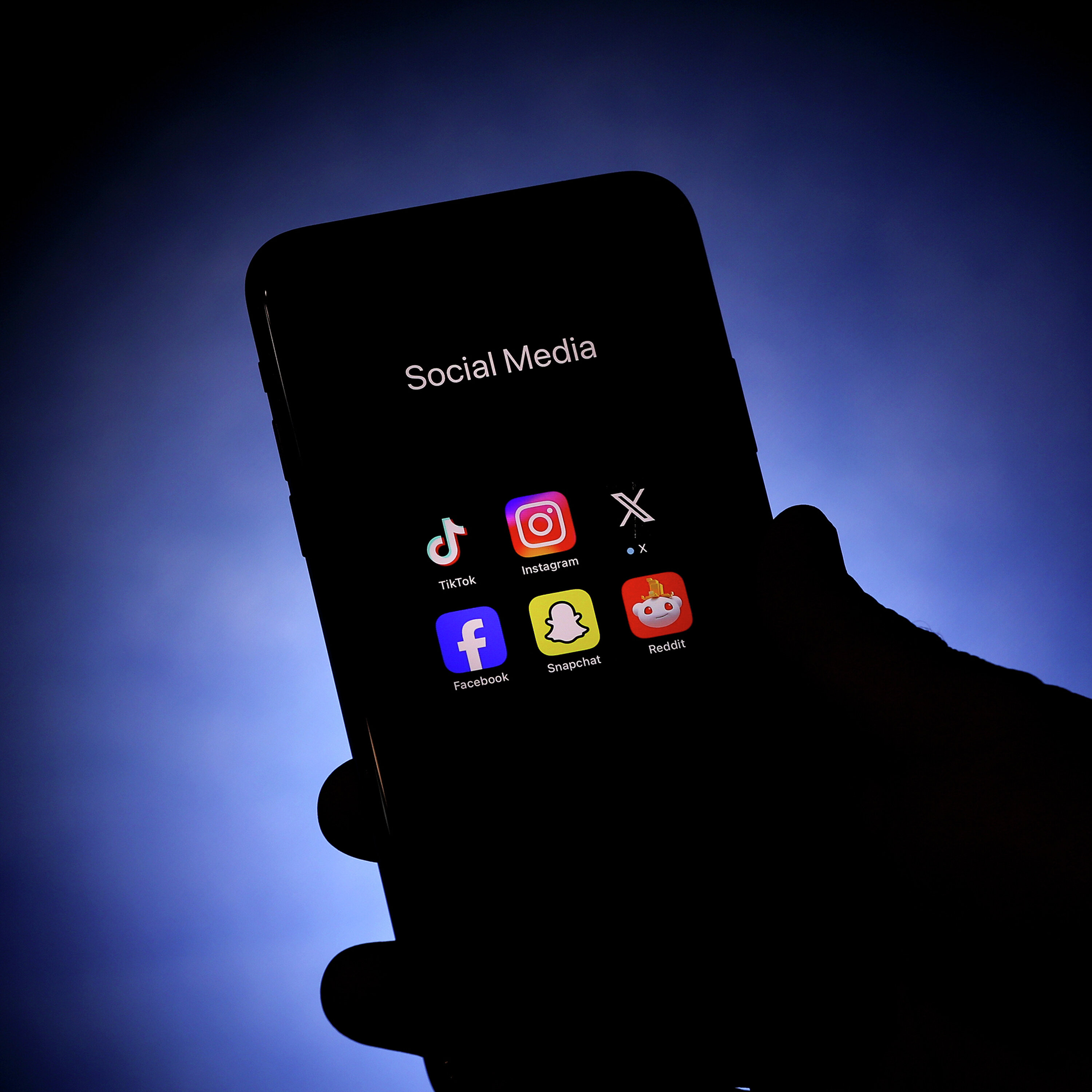
Next week, Australia is set to become the first democracy to ban kids under sixteen from using social media TikTok Instagram, Facebook, the lot.
Speaker 2Are you under sixteen and on Snapchat?
If so, now's the time to start saving all your memories because your time on the app is almost dark.
We want Austrayan parents and families to know that we've got you back.
Young people under the age of sixteen will not be able to have accounts on YouTube, Facebook, Instagram, Snapchat, TikTok x, amongst other platforms.
Speaker 3Something I definitely agree.
I agree with it that they'll find a way around it, for sure.
Speaker 2It doesn't really deal with the root causes of why social media is not a safe place for young people.
Speaker 1Hello, I'm Rebecca Jones and this is the Bloomberg Australia podcast, where each week we go behind the biggest stories shaping Australia's place in global business.
This week, kids use social media.
It's about to be banned in a huge swing from the Australian government to try and limit the harm these platforms cause.
But not everyone is convinced this is going to work, and the debate has been fierce.
One thing, however, is undisputed.
The world is paying attention right now to Australia today.
I'm joined by someone who's been watching the back and forth between big tech, worried parents and the Australian government.
Angus Whitley is a global business reporter based in our Sydney newsroom.
Angus, Welcome back to the podcast.
Speaker 3Thanks Bet, good to be with you again.
Speaker 1Angus.
A lot of us are addicted to our phones and apps and things, and so it does make sense that our kids are going to follow suit.
What's your relationship like with social media?
Could you use some time out?
Speaker 3You know what, I think I could probably use some time in.
Speaker 4I'm not sure I have a relationship with social media, and I think people who would like to get hold of me more often probably say I should be addicted to my phone more so.
Yeah, I think I'm probably not the right person to ask there.
Speaker 1So I have no comment if the same question is asked back at me.
But you know, I'm I'm trying to get better.
Let's take a step back at this issue to start with, Angus, can you talk me through the origins of this groundbreaking legislation that's coming into effect on December tenth here in Australia.
Speaker 4I think this is a story that perhaps some people in Australia might have heard.
I doubt if many people outside of Australia would have heard this story about the origins of Australia's nationwide social media band that, as you said, will kick in on December the tenth.
And you really have to go back back in time to twenty twenty four and to Adelaide in South Australia, where the wife of the Premier Peter Malinus was reading Jonathan Height's best selling book The Anxious Generation, which came out in twenty twenty four.
And in this book he argues that essentially excessive phone use by children and excessive social media access by children had triggered an unprecedented mental health crisis.
And shortly after this book was released, Peter Malanaskus' wife was reading it.
And I interviewed Peter Malanaskis and said, just you know, tell me the story again.
Is this really true?
And he said, I'll never forget it.
My wife put the book down one night they were in bed one night in Adelaide at their home, and she said, you've got a bloody do something about this.
She put that, and Peter malan Askus said, you never forget that moment, and he thought about it, and he thought, maybe there is something I could do about that, and shortly after that he proposed statewide age restrictions.
That was in September twenty twenty four, and within two months the law had passed federally.
So that's what malanask has described as warp speed reform, and it is for something of the significance that is just incredible.
So there was there was real momentum behind this legislation.
It had been brewing, but from a period of I guess middle of twenty twenty four until November twenty four, it went from this kind of idea, this moment, if you like, late at night in Adelaide between a Bremi and his wife into federal law that was pretty consequential and it's turning out to be that way.
Speaker 3That was incredible that story.
Speaker 1I want to pick up on a few things that you just mentioned there about the origins, but I do want to ask you first about these kids that are affected by this band that's coming into effect next week.
What happens to the ones that have already got social media profiles?
Under this new legislation.
Speaker 4Yeah, it's worth looking at the fine print, I think, because it's kind of how'd you say, it's shorthanded, and it loses a bit of detail as people pass it around.
Speaker 3But the law is quite simple.
Speaker 4It bans under sixteens from having social media accounts from December tenth, and it prescribes that, and it details ten social media platforms i think from last count that are banned and a bunch that are allowed.
So if you're under sixteen, your account will be closed and you may have the choice of archiving the content or putting it in the freezer if you like, until you're over sixteen.
If you're on sixteen, you won't be able to open a new account.
And if you're over sixteen and you get told you're under sixteen, you'll be able to challenge that decision as well.
Speaker 3So that's the process.
Speaker 4And how will these big tech firms including Instagram, Snapchat, TikTok YouTube as well, how will they determine this?
Well, they'll be using a variety of techniques and tools, if you like, ranging from video sel fees that look at your mannerisms you're trying to voice your face to determine whether you are sixteen or not.
They might look at some government identification, although that can't be your only option under the law, or they might look at simply the way you behave online if they don't have enough evidence, if they don't have an identification piece of identification, they might just look at who your friends are, like, when are you on, when you're off, does your sort of access follow that the hours of school perhaps, or what kind of language do you use, what kind of sights are you browsing?
So that may take a little bit of time.
So it'll be interesting to see what happens on December tenth, because there will be some kids who clearly are under sixteen because they've declared themselves to be over thirteen, which of course is that the legal access age at the moment.
So it could be a bit messy from December tenth, but it may take a bit of time before tech platforms determine who is what age.
Speaker 1And as you say, I mean, it's really it's impressive that this legislation has passed, you know, in warp speed time.
But what has big tech had to say in response to this?
You know, surely this is putting like a Big dent into its pipeline of users and future users.
Speaker 4Big Tech has not liked this legislation from the outset and from late November when it passed okay what Malnascus would describe as warp speed pace that they have complained that this legislation has suffered from a lack of consultation.
I put that to Malnascus when I interviewed him and said what course he said.
Of course, they'd said that Big Tech would like to consult for a decade.
Endless consultation would suit them.
But you know a lot of people other than big Tech.
Speaker 3Have said this.
Speaker 4This passage of law was accelerated and accelerated and rushed through in faster than usual timeframe.
But more specifically, their arguments are that bands are broadly blunt and ineffective, and there's there's little evidence that bans around the world have actually worked.
They also argue that having kids access social media in a logged APT phase, which Australia's law prescribes, will not make them safer because they will be outside the sort of the safety perimeter, if you like, of social media.
They won't have the safeguards that the regulation.
Perhaps the features of an account that come with being logged in.
And there's also an argument that if they're not allowed to be on Snapchat, where will they go?
They need to communicate, they need to chat, they need to form communities.
Will they disappear into darker corners of the Internet that are frankly dangerous and we won't know and they won't be able to raise the alarm because there won't be the means, or they may not feel.
Speaker 3Safe saying they're there.
Speaker 4So that there are plenty of arguments against this ban, but it's wildly popular with parents, or at least it was when it was passed through parliament.
Speaker 1Australia is not the country that's been looking at this problem for quite some time.
In the recent story that you did for Bloomberg, you mentioned other countries are also looking into limiting access for kids on social media.
I'm interested to hear a little bit about your reporting journey there.
Speaker 4Yeah, this was a big focus of our reporting Newly or now which is my who is my I should say my tech knowlogy reporting colleague Newly and I really got to grips with this and we thought, well, is there a risk of regulatory contagion?
Speaker 3As you might call it or is there not?
Speaker 4Are genuinely our countries looking at Australia's lead and thinking, yeah, I fancy that.
So we got together and we deployed considerable resources around the world which Bloomberg News have.
Let's get hold of policymakers and see what they're saying.
And really the findings were quite remarkable.
We were surprised at how many countries, how many communications ministers are either monitoring Australia's law, have engaged with Australia in some level to find out how they went about enacting this law, or they are imitating Australia's law in some fashion, maybe not exactly the same way, but in some detail, or they're plainly following in Australia.
And I would say from Australia December tenth, you're looking at Brazil next March will determine that under sixteens accounts must be linked to legal guardians.
For instance, Malaysia plans to ban under sixteens in twenty twenty six.
Indonesia has said under eighteens will need parental approval.
Singapore has talked to Australia.
They're looking at minimum age limits, and more recently the end of November, the European Parliament voted in favor of an EU wide minimum age of sixteen, with thirteen to fifteen year olds requiring parental consent.
So I think whether they're copying Australia exactly, I think the pattern is clear.
There is undoubtedly a wave of countries looking to rain and social media in some fashion.
They're imposing age limits or they're planning to impose age limits.
So there's a recognition.
I think that social media is doing some harm.
That's the conclusion among many policy makers, and they have to do something about it.
Speaker 1So if Australia does become the test case for banning under sixteens from social media, what is the worst case scenario for big tech?
If this really does go global.
Speaker 4It's difficult exactly to know how many under sixteens there are on social media, partly because it's been very easy to sign up if you're under thirteen.
It's an age declaration that hadn't really been these age checks in place, so you know depending on who you speak to or what data you look at.
Speaker 3There are about.
Speaker 4Two million accounts that won't be monetized from December tenth in Australia alone, if you talk to the Safety Commission, which is the set the online safety regulator, and if you look at the data worldwide eMarketer Heer says about one in ten users in the US are under eighteen and in some markets like Brazil, more popul more populous emerging markets, I should say under eighteens or maybe as much as twenty percent of the social media can't be so if you put that into the perspective, there are four billion social media users worldwide, so you can do the maths.
You know, if it's between ten and twenty percent, that is hundreds of millions of users potentially that maybe beyond the reach of social media platforms.
If if you're enactor an age limit or an age.
Speaker 1Band, I do want to ask you a little bit more about that from the lens of parents and beus.
I know you spoke to some as part of your reporting for this article.
One of the big questions that all people have, irrespective of whether or not there are parent is is it even possible to keep kids off social media?
Come December tenth, we've talked through what's going to happen on that day.
They'll be the ones that have already admitted that they're under the age, but there's going to be a lot that aren't.
What did the parents that you talk to tell you about the dangers if we don't manage to get this.
Speaker 3Right, Well, this is a very emotive subject.
Speaker 4I interviewed Amma Mason, who is the mother of Tilly who took her own life in twenty twenty two at the age of fifteen.
Tilly had been bullied on social media, on Snapchat, on Instagram, and it was clear that this was a death by bullying, but in Amma Mason's words, it had been exacerbated by social media.
So there are real life stories that are arrowing no matter what side of the debate you learned that's around this law.
And it's very hard not to be moved when you hear these stories of children suffering.
Speaker 3The ultimate harm.
Until he's case.
Speaker 4Now, Emma Mason would argue that it's not worth not trying, you know, just because kids might get round these restrictions, it's not an argument not to try so, and that is also an argument that the government has made on several occasions that we have laws barring kids from tobacco from alcohol.
Now, just because some kids get round those laws is that a reason not to have the laws in the first place, which you know is a reasonable argument.
I think it's hard to get round that, just because there will be people at the fringes that get round it.
So when you look at the social media band, yes, there will be kids who creates fake VPNs to get round it so to obscure their origin of access if you like that.
Kids are talking about fake masks AI generated for instance.
And you know, we all know that a teenager can look twelve or eighteen depending on the day, right if they can be the same age.
So even if you do a selfie of a kid, very hard to know exactly how old they are.
So it's not water tight.
The government has never claimed it to be water tight the law, and there will be kids that get round it, but the government has said it's too important an issue not to try.
Speaker 1Look, I think you'd be pretty hard pressed to get any parent so they're prepared to roll the dice with their child potentially being bullied online, and the Mason families experience truly horrific.
Nobody at all wants this and becus from a policy perspective, What did you learn through the course of your reporting about whether or not banning young kids from social media really addresses the root cause.
Speaker 4I would say back that one of the the biggest weaknesses of the law it is not that kids might get round it.
But in the eyes of experts, kids I spoke to or I interviewed along along the way, is not the fact that it's you know, ineffective and blunt.
It's the fact that it doesn't actually target the problem of harmful material in itself and the algorithms that funnel that harmful material into kids' accounts.
And I interviewed a schoolboy called Patrick Jones in Lennox's Head, which is about eight hours drive north of Sydney if you're not from Australia, and he perfectly summed it up and he said, it's the content that's the problem, not our access to that content.
So you know what you are you actually solving a problem, a perceived problem at source, or rather you just closing the door on it until kids turned sixteen and then opening the door again.
Speaker 3Many people would argue that.
Speaker 4The law is really flawed because it doesn't address that basic problem of harmful material.
Speaker 1And perhaps the most important sources in both our notebooks is our own kids, you've got some angers, and said do I.
Mine are a bit younger.
They do online safety as part of their school curriculum, and you know, we talk about phones being tools, not toys, but these new laws for them are still a really long way away.
Yours are slightly older, though, So what do they make of it all?
Speaker 3Yeah, well they're going to have to deal with it, aren't they.
Speaker 4They've got a little way to go before they turned sixteen.
Actually was a far longer way to go now come to Sember tenth.
But they're all over the detail.
And I put it to my eldest.
He said, oh no, Dad, it's only account holders that will be banned under the law.
Because I said, and you won't be able to access social media?
Says it's only account holders.
I'll still be able to watch YouTube.
It's not in a logged in state, so you know, he's pretty smart.
I was quite impressed at that.
But unfortunately him, I've already locked YouTube so he won't be able to access it either way.
Speaker 1If you found today's conversation insightful, be sure to follow the Bloomberg Australia podcast wherever you listen, and check for more reading on Australian politics, the tech sector, and the latest reporting from Angus Whitley at Bloomberg dot Com.
This episode was recorded on the traditional lands of the w Wandery and Gadigall people.
It was produced by Paul Allen and edited by Chris Burke and Ainsley Chandler.
I'm Rebecca Jones and we'll see you next week.