Why Rate Hikes Are Back on the Table for 2026
Episode Transcript
Justin we thought our minimum mortgage payment might keep getting lower.
It turns out twenty twenty six could see them.
Speaker 2Start going up.
Merry Christmas.
Speaker 3Indeed, I don't think they are in straight cuts in the horizon for the foreseeable future.
The question is is it just an extended hold from here or is it possibility of a rate rise.
I couldn't put a probability on those, but I think they're the two things that the board will be looking closely at coming into the new DYEA.
Speaker 2Hello.
Speaker 1I'm Rebecca Jones, and this is the Bloomberg Australia podcast, where each week we go behind the biggest story shaping Australia's place in global business.
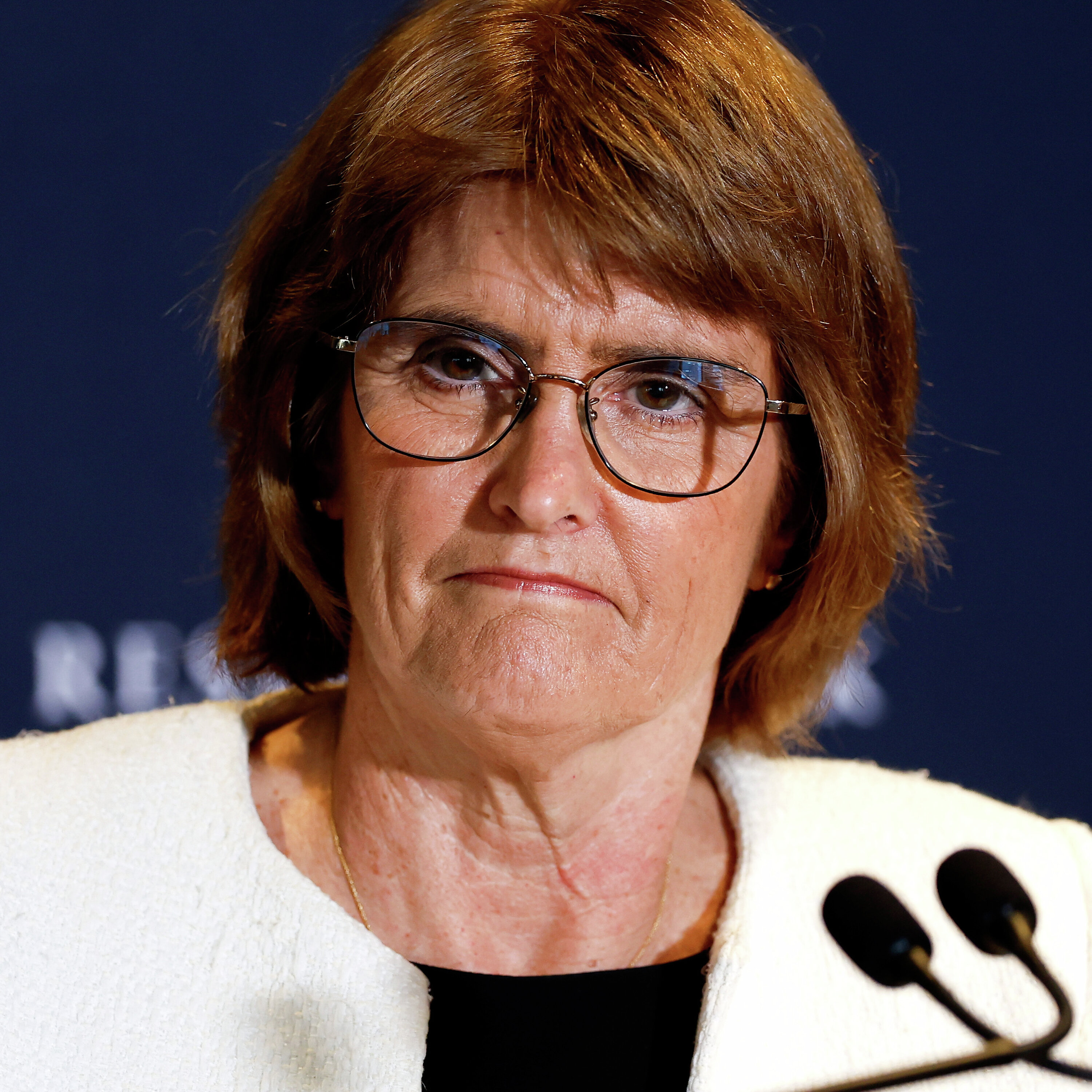
This week we were told by RBA Governor Michelle Bullock the rate cuts were pretty much off the table and now it looks like we could instead have a rate hype by June.
I don't know about you, but that wasn't exactly the festive surprise I was hoping for this week to take us through the reasons why and what the coming year holds for the Australian economy.
I'm joined by Bloomberg's APEC Economy reporter Swatty Pandy from our Sydney newsroom.
Swatty, welcome back to the podcast.
Speaker 4Thank you, Beck.
Speaker 2Delighted to be here, so Swarty.
Speaker 1It was widely expected that the RBA would keep interest rates on hold at this week's meeting, which was of course the last one for twenty twenty five.
That is exactly what happened.
But what everyone was waiting to hear was are we going to get another rate cut?
You were at the press conference on Tuesday.
What did we hear instead?
Speaker 4Yes, you're right back.
Expectation was that the Reserve Bank will leave interest rates unchanged for the Third Street meeting at three point six percent, and there was not a lot of clarity around what the governor's press conference would bring.
So it was quite surprising to a lot of people when she gave a very clear signal that further interest rate cuts are off the table.
And given where the economy is tracking, given where inflation was and the upside risks to both, it looks like forget about interest rate cut.
In fact, it's interest rate hike that we will be staring at for twenty twenty six.
Speaker 1And so when you heard that at the presser, you've got your phone in your hand, you start messaging your contacts, what did I tell you?
Speaker 2Yes?
Speaker 4Yes, So as as soon as that was the very first question in fact that the governor Bullock was asked whether they considered a cut or whether they considered a hike, and she said they did not explicitly consider a cut, but they discussed the circumstances under which interest rates.
Speaker 2Could go up.
Speaker 4And then I follow that up by asking what those circumstances were that they discussed, if she could provide some more color.
Following that, I started messaging some economists, just trying to understand how they were reading the comments, because you know, when the press conference is on, everybody's watching it.
By everybody, I mean people who are interested in this, right, so from economists to traders, people overseas as well, and I think half of our newsroom watches it as well, and so a lot of these people kind of commented.
So there's kind of like a big bit of back and forth in messaging that also helps in understanding how people are viewing it from outside as well, and also helps shape the story, shapes the thought and the thinking that goes into writing the story.
Speaker 1After the press conference, so the group chat went crazy because I can imagine, like looking at the first part of Tuesday's event is the written statement from the RBA, and that was pretty pretty short, pretty you like.
But then the real surprise at a cymat the press conference.
Was it a surprise to the economists that you talked to?
What did that have to say?
Speaker 4Yes, it did come as a surprise to people that that Michelle Bullock was that clear in signaling that interest rate cuts were off the table and in fact preparing the groundwork for a hike.
And in fact, one of the economists I spoke with during the press conference said that the governor was laying the markers for a full pivot towards a tightening bias.
They there is a kind of view was that it's a conditional tightening bias right now.
So what that means is if we have a bad inflation report in January and the RBA has to raise interest rates in February, nobody is going to say that, oh my gosh, this came as a shock, This came as a surprise.
The rb is not communicating this just came out of nowhere, So that criticism is unlikely to happen because, like the economists from Westpac pac Bester Monte I spoke with who he said that, you know, the governor was laying the markers for a full pivot tightening bias, right, and that was the inference a lot of people in the market and economists drew as well from her remarks.
So the onus, as Sulenong from RBC told me, is on data, and if inflation continues to surprise on the upside, the RBA will not hesitate to raise interest rates.
Speaker 1From here, I want to pick up on something that you've just mentioned, that is inflation, because I think that's where the story gets messy.
Speaker 2Swadi.
Speaker 1We've all noticed price pressures picking up over the last couple of months, Like when did things get so pricey?
Speaker 2What is actually drive inflation?
Speaker 4Yes, so the past maybe three months of inflation reports have surprised on the upside, and in fact, the very latest report had broad based price pressure.
So by that I mean everything from housing costs, clothing and footwear, education, recreation and culture, eating out, buying, food and groceries.
Everything showed a big jump in price increases.
And obviously the biggest driver has been housing costs, which includes the construction cost of a new property, new development but it also includes things like electricity.
As we know, treasure charmers this week announced the end of electricity rebate that had helped to put some downward pressure on prices, and those rebates are now going away, So we are going to get a sticker shock in the fourth quarter inflation report and maybe in first quarter inflation reports as well.
The good thing is that the RBA knew that would happen, so when they release their forecasts in November, they had already priced that in.
So the RBA is expecting inflationary pressures to remain high through at least the middle of next year.
If inflation is higher than they're already lofty expectations, that is when we see the risk of interest rate hikes happening.
If I think, if inflation is tracking around their lofty expectations, the RBA would just probably want to keep interest rates on hold.
So if the upside surprise, if it's an upside shock, that is when interest rate hikes become a real possibility.
Speaker 1And Swadi, there's a view out there that the RBI is completely done aasing, and of course by aasing, I mean cutting interest rates.
Speaker 2There is also running.
Speaker 1Along the same track, another very live debate that suggests that if inflation stays sticky, that means keep on going up.
Right, Governor Bullock may in fact have to pivot and tighten, that is, raise interest rates to try and bring inflation down.
And then there is another track, which is people who believe that one or two cuts are still plausible in twenty twenty six.
What does the data suggest is most likely at this point in time.
Speaker 4That is a very complicated question only because the answer to that is not easy.
So we are in an economy where productivity growth is very low, and what that has done is it has brought down our potential rate of growth.
So when during the mining boom, Australia's gone let's say, was growing at four percent, it was able to grow at that pace without really sparking inflationary pressures.
Right now, if the economy grows at let's say two and a half percent, there is fear that it may spark inflationary pressures, only because the potential for it to grow without sparking inflation has reduced because of lower productivity growth.
And that is where this discrepancy arises between how economists are looking at this.
So some economists are saying that the supply constraints that we have seen in our economy which have led to higher housing construction costs.
For example, it's very hard to find tradees and likewise, right the economy has not been able to supply enough to meet the demand that there is in the economy.
And some economists believe that this supply demand conundrum will be resolved eventually.
Speaker 2Or soon enough.
Speaker 4And those who believe that feel that the RBA will not end up raising interest rates.
The way it will resolve is that demand will come down, the labor market would slow.
We are already seeing signs of slowness in labor market.
We are hearing about companies laying off employees.
Unfortunately, we are seeing moll increase in the unemployment rate.
So some economists believe that that would be enough to cool demand, and so the supply demand mismatch that we are seeing now could be resolved.
Some economists believe that no, we started the year in a situation where we were talking about a global tariff war, there was concern about a global slow down, in fact, global recession.
All of those risks have subsided.
Those risks did not come to pass, so things are looking brighter for twenty twenty six.
Some of the geopolitical cuss have also resolved, are kind of not resolved is not.
Speaker 2The right word, but have cooled.
Speaker 4So it looks like from a global perspective as well, things are better, and domestically as well, there are not many reasons to worry about.
So this camp feels that inflation will be a problem.
Inflation will remain a concern, Housing costs will be sticky or elevated, and people will continue to spend in eating out, going to concerts and stuff like that.
So these other people who believe that the RBA may then have to increase interest rates next year.
And then there are some people who feel that things are going to kind of wobble along, which would suggest that the current interest rates setting where interest rate is at three point six percent, is fine, so you don't touch it.
You don't do anything to keep watching data, and then every time the RBA meets, they would probably say that, okay, we are watching everything.
We are looking at inflation, we are looking at GDB, we are looking at employment.
Things look fine.
We don't need to change anything.
So they don't do anything.
So economists, the median economists.
Speaker 2In a Bloomberg.
Speaker 4In our Bloomberg survey, they are expecting no change at all.
In fact, so they're expecting interest rates will remain at three point six percent through twenty twenty six all of next year.
There are only a handful of economists who are predicting an interest rate hike, and there are only a handful of economists who are predicting an interest rate cut.
So the majority is still sitting on no change.
Speaker 1It is such a complicated recipe to get right.
And as you describe three very distinct schools of thought around what's going to happen next year, Swati, I want to talk to you a little bit now about a topic that makes Australians collectively inhale.
Speaker 2You can guess it's housing mortgage stress.
Speaker 1It's rising, APRA is tightening lending standards, and yet prices is still muching higher.
We're sort of getting to the tail end of the so called spring selling season right now, Swati, how big a risk is the housing market heading into next year?
Speaker 4So one of the biggest problems with Australia's housing market is the lack of supply, and we are not seeing that being resolved very quickly.
In fact, it takes forever to build a house in Australia, and you would know that when you're trying to get renovations done.
It's very hard to find trade e's and then even when you find it, it's very hard for them to stick with their timelines.
Either it's difficult to get the right supply, it's difficult to get the right people.
But whatever it is, it takes longer, and that is what the country is facing.
In general.
We are much behind our timelines to build enough housing to meet the growing demand of our people.
And as long as that remains the case, housing prices are going to be elevated or rise.
In fact, in some markets like Sydney, for example, affordability constraints mean that house price growth is not as rapid as it is in some other places like Adelaide or Brisbane or even Perth.
Perth in fact has seen that is seeing a big boom in housing prices, and there's big demand as well in Perth in Western Australia and the same as Brisbane and Adelaide.
Speaker 2So yes, it is.
Speaker 4A concern for people who want to buy a house, but it is also a concern for the Reserve Bank because housing costs is a big part of the inflation basket, and if we are not able to bring that cost down, it would keep inflation sticky, which means elevated.
Speaker 2Let's so mad a little bit now.
Speaker 1The fetter reserved in the US cut rights this way, and that was widely expected, swari.
How does Australia's trajectory compare with the US right now?
Speaker 4So in the past, Australia and most countries used to follow what the FED would do, but that's not the case anymore.
For example, the RBA started cutting rates much later than the FED.
In this current cycle, Australia has only cut by seventy five basis points.
FED has cut by more.
The RBA left interest rates unchanged this week for the third straight meeting, and so the FED has cut for the third straight time, so they are completely diverging.
FED is still cutting and the RBA is on hold, but is signaling that the next move will not be a cut but a hike.
And they don't want to act too quick, too fast, and which is why the bar to raise interest rates next year is very high as well.
A key thing to watch out for is the inflation report for fourth quarter for the December quarter, which will come out at the end of January, and that is actually going to be really critical in deciding what the RBA does in February and the year ahead.
Speaker 1So there might be a few economists recalled back a little early from their summer holidays here in Australia.
Speaker 2So Swati, let me get this straight.
Speaker 1We've got an inflation that won't go quietly, an RBA that may not be finished moving, a housing market that is continuing to defy both gravity and policy, plus a FED that's cutting why we stay put.
It is really complex picture, isn't it, But very fascinating As we head towards twenty twenty six, I want to finally ask you about something completely different, and that is AI and how that relates to Australia's economic prosperity.
There is a view that twenty twenty six could be the year that AI starts to show up in the real economy, in earnings, in efficiencies, in growth.
We saw just last week how heavily the government is supporting the OpenAI next DC linkup.
Is AI genuinely a bright spot for Australia or is the hype still running ahead of reality.
Speaker 4Look, Michelle Block was asked this question at the press conference on Tuesday, and her response was that the data centers are being fitted, they are not being constructed here.
So you are importing the required machinery from overseas and then you're getting them fitted here.
You obviously need people to set them up.
But then how many people would you employ in data centers?
Speaker 2Right?
Speaker 4Is it a very labor intensive industry?
Maybe not right?
So for now, with the investments that we are seeing, it is a good thing.
And AI investments are expected to lead to greater productivity benefits as well, so from that point it's good too.
One thing that Governor Bullock did not address, and I think is something to watch out for, is the renewable energy transition which may happen finally for Australia as a result of this.
Because data centers are extremely energy intensive and they are very water intensive as well.
Australia has been trying forever to do this transition from basically coal to renewable, so whether it's solar or wind, and if we start seeing the use data center investments spur huge demand for energy, then that will probably lead to that renewable transition that we have all been waiting for and that is going to have a huge impact for the economy, even in terms of productivity.
So that is something that I would say we should watch out for and something to end the podcast on a positive note as well.
Speaker 2We love that Smarty Panty.
Thank you for joining me.
Speaker 1Thanks mag If you found today's conversation insightful, be sure to follow the Bloomberg Australia Podcast wherever you listen, and check for more reading on Australia's economy, including the latest reporting from Smartypandy at Bloomberg dot com.
This episode was recorded on the traditional lands of the War Wundery and Gettigo people.
It was produced by Paul Allen and edited by Chris Burke and Ainsley Chandler.
I'm Rebecca Jones and we'll see you next week.